Yesterday was the Massachusetts primary and, as expected, 80-year-old Ed Markey defeated 47-year-old Seth Moulton in the contest for U.S. Senator nomination. I voted for Moulton, even though I agree more with Markey’s politics; because I really believe we need to get younger people into Congress. I knew Markey would win anyway. Our other Senator, Elizabeth Warren, is 77. Her term will not be up until 2031. Stephen Lynch, 71, also defeated a younger opponent for his House seat. I don’t have as much of a problem with that. His term is only 2 years. But we really need new blood in Congress–not to mention the White House!
Massachusetts, as it turns out, is a good state in which to be a very old Democratic incumbent.
Three Democrats who have been in office since long before the iPhone was in stores all won renomination Tuesday. Senator Ed Markey, 80, and Representatives Richard Neal, 77, and Stephen F. Lynch, 71, are all likely to return for additional terms.
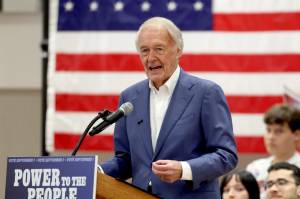
Ed Markey
Each faced challengers who had called for a new generation of leadership. Mr. Markey coasted past Representative Seth Moulton, 47, who ran to the middle, while Mr. Neal and Mr. Lynch both fought off progressive challengers.
Mr. Markey has been in office for 50 years. Mr. Neal has represented western Massachusetts since 1989. Mr. Lynch first won election from South Boston in 2001. The state’s Democrats do not seem inclined to reject their incumbents….
The party still scarred by former President Joseph R. Biden Jr.’s public meltdown during the 2024 campaign was not convinced that an octogenarian senator should not serve another six years.
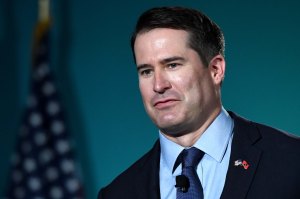
Seth Moulton
Perhaps if Mr. Markey, 80, had faced a younger challenger with better political relationships than Mr. Moulton, he would have been in trouble in Tuesday’s Democratic primary. But Mr. Moulton has spent his career challenging his party’s orthodoxy and its leaders.
That record left Mr. Markey the political space he needed to paint himself as the progressive in the race, campaigning on the ideas of the future — even though he has been in Congress for 50 years.
In the waning days of the Massachusetts primary, several Democrats described Mr. Moulton as having the generational change message the party needed but being the wrong messenger to deliver it.
Mr. Markey said throughout the campaign that he would resign his seat if his advanced age left him unable to properly fulfill his Senate duties. He is now favored to win in November, which would have him serve in the Senate until he is 86 years old.
Moulton also hurt himself with his remarks about trans athletes.
…from the moment Mr. Moulton entered the race last October, Mr. Markey used his remarks questioning transgender girls’ participation in girls’ sports as a battering ram against him. Not only did it galvanize the L.G.B.T.Q. vote for Mr. Markey, it also helped frame him as the progressive candidate.
It was the same formula that powered Mr. Markey’s last primary triumph in 2020 against another younger, more moderate Democrat, Joe Kennedy III.
Mr. Moulton eventually offered a qualified apology for his remarks, which came the day after President Trump won a second term in the 2024 election. But by then the state’s progressive voters had heard for months from Mr. Markey and his supporters that Mr. Moulton, during tough times, was willing to toss trans people aside.
Use the gift link to read more if you’re interested.
Rep. Stephen Lynch and Rep. Richard Neal also defeated younger opponents.
Democratic Rep. Stephen Lynch has defeated a younger, more progressive primary challenger, NBC News projects, in the highest-profile test remaining for House incumbents after a turbulent primary season.
Stephen Lynch in 2025
Lynch, 71, won renomination over Patrick Roath, a 39-year-old former aide to former Massachusetts Gov. Deval Patrick. With his win, Lynch staved off an attempt to add him to the list of Democratic officeholders dethroned by rivals pushing for generational change.
Elsewhere in the state, fellow veteran Democratic Rep. Richard Neal also secured renomination, defeating teacher Jeromie Whalen in another Democratic primary.
On the other side of Massachusetts, Roath outraised Lynch, outspent him significantly on the airwaves and scored The Boston Globe editorial board’s endorsement to go with backing from Patrick, progressive activist David Hogg’s group, Leaders We Deserve, and key teachers unions.
That support helped Roath press Lynch for months in one of the toughest fights of his political career. He highlighted Lynch’s various breaks with his party in the past, including votes against the Affordable Care Act and, more recently, for the Laken Riley Act. Roath also called for progressive measures like “Medicare for All,” abolishing ICE and restricting military aid to Israel.
But Lynch persevered, trumpeting work that he says held the Trump administration accountable and leaning on his decades of experience, including deep relationships with unions and other fixtures in the district….
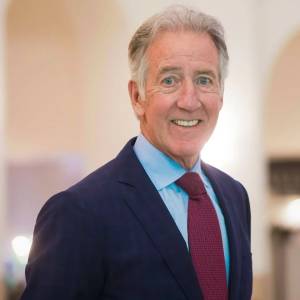
Richard Neal
Neal also avoided defeat in another primary marked by arguments over generational change and progressive policy proposals. Whalen, 39, a high school teacher, ran a campaign decrying the “old-school political entanglements that got us into this mess” and called to abolish ICE and cut off U.S. military aid to Israel.
Neal spent more than $1 million on campaign ads, according to the ad-tracking firm AdImpact, about 10 times what Whalen spent.
The United States and Iran exchanged a barrage of strikes overnight, an outburst of violence that killed both military personnel and civilians in Iran, including four people at a wedding, according to Iranian news media and officials.
U.S. Central Command, which oversees the military’s operations in the Middle East, said that it had struck Iranian military targets in retaliation for attacks on ships and American forces in the region.
Four members of the aerospace division of the Islamic Revolutionary Guards Corps were killed in a U.S. strike in the western city of Kermanshah, according to a Guards statement published on Wednesday by Tasnim, an Iranian news agency. At least 12 people were killed in strikes across Iran’s southern region, the Iranian state outlet Press TV reported on Wednesday.
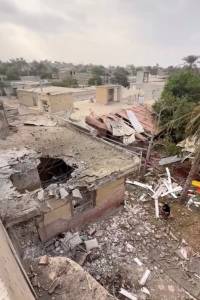
A still from a video provided by the Iranian Red Crescent rescue service showed damage in Kuhestak, southern Iran, on Wednesday.Credit…Iranian Red Crescent Society, via Reuters
In response to the latest attacks, the Revolutionary Guards said in statements Wednesday morning that they had launched missiles overnight at an American military base in Jordan, at U.S. military equipment warehouses in Iraq and at an air base in Kuwait hosting American forces.
A U.S. official, speaking on condition of anonymity to discuss operations, said Wednesday all American service members were accounted for but declined to share any damage assessments.
The deadly back-and-forth overnight was a demonstration of the stalemate between Washington and Tehran, more than six months after President Trump launched strikes on Iran, saying that he expected a quick resolution.
Among the locations hit by the U.S. military was a wedding in a residential area in the small port town of Kuhestak in the Hormozgan province of southern Iran, according to Iranian officials. Four people, including a child, were killed in the attack, with around 50 others wounded and hospitalized, Iranian state media reported.
Use the gift link to read more if you’re interested. The NYT now allows subscribers unlimited gift links.
Iran fired on U.S. allies in the Gulf early Wednesday following a night of American bombardment that Iranian officials say included a deadly strike on a wedding party.
The latest violence came after a monthlong lull in fighting. The six-month war has led to a spike in oil prices, roiled the global economy and posed increasing political problems for U.S. President Donald Trump’s Republican Party ahead of November midterm elections.
Fighting has escalated since the American military hit Iranian rocket launchers on an island in the Strait of Hormuz over the weekend, saying Iran was planning to use them to shoot mines into the waterway. Iran retaliated by firing missiles at American bases in Jordan that were intercepted.
American military resources are stretched and political pressure in Washington is mounting, while Iran’s economy falters. Iran’s currency hit another record low on Wednesday, with traders in Tehran exchanging 2.20 million rials for one U.S. dollar, a 10% hike from last week’s record.
Neither side can continue indefinitely between full-scale war and a truce, said Hamidreza Azizi, senior Iran analyst at the Crisis Group, an international think tank.
“At some point, one of the sides may see a need to escalate in order to break this cycle,” he cautioned. “So that could bring the two sides to a point that they have been trying to avoid until now, which is a full-scale war.”
Trump made a bunch of insane threats on Truth Social, including that he would completely destroy Iran’s civilization. Then he suddenly switched gears and announced another cease fire.
President Donald Trump announced a two-week ceasefire with Iran on Tuesday night — hours after he’d threatened “a whole civilization will die tonight” and about 90 minutes before a deadline he set for Tehran to reach an agreement with the United States.
“Based on conversations with Prime Minister Shehbaz Sharif and Field Marshal Asim Munir, of Pakistan, and wherein they requested that I hold off the destructive force being sent tonight to Iran, and subject to the Islamic Republic of Iran agreeing to the COMPLETE, IMMEDIATE, and SAFE OPENING of the Strait of Hormuz, I agree to suspend the bombing and attack of Iran for a period of two weeks,” he wrote on Truth Social.
Earlier in the day, Trump had warned on social media that “a whole civilization will die tonight” if there was no deal between the two warring countries.
That threat, Trump’s most extreme public rhetoric in the conflict to date, had included a vow to launch attacks on Iran’s infrastructure over its continued disruption of shipping through the Strait of Hormuz.
The two-week ceasefire, Trump said, is contingent upon Iran reopening the strait. For its part, Iran proposed a 10-point plan to end the war, which includes “controlled passage” through the strait, coordinated by Iran’s armed forces.
Iran’s plan also calls for compensation for damages and the withdrawal of U.S. forces from “all bases and positions in the region.” On social media, Trump called the plan “workable.” [….]
After he extended the deadline multiple times for Iran to reopen the vital shipping route, which about a fifth of the world’s oil and natural gas usually passes through, Trump announced 8 p.m. ET Tuesday as the final deadline for Iran to come to a deal.
In a post Sunday, Trump threatened Iran’s power plants and bridges if it did not reopen the strait by the Tuesday deadline, using expletives and invoking Islam.
It was the latest in a series of escalating threats by Trump against Tehran, including threatening to bomb the country into “the Stone Ages” and calling the Iranian government “crazy bastards” while demanding that it open up the key shipping route.
Trump’s threat Tuesday morning sparked a wave of fierce and immediate condemnations from Democrats, who said such strikes on infrastructure would constitute war crimes.
Trump is psychotic and should be removed from office. He’s a danger to the U.S. and the world. He has completely out of touch with reality.
President Donald Trump on Wednesday floated renaming the Strait of Hormuz — the central point of contention in the ongoing war against Iran that the U.S. and Israel started — after himself.
The proposal via a Truth Social post came less than a week after Trump, who is locked in an intensifying feud with Canada, signed an executive order to change the name of Lake Ontario to “Lake America.”
“Now that we have it under U.S.A. control, should we change the name Hormuz Strait to TRUMP STRAIT???” Trump wrote in the post Wednesday morning.
“Like America itself, it would be ‘hotter’ than ever before! Thank you for your attention to this matter. President DONALD J. TRUMP,” he wrote.
It was not immediately clear how the president would attempt to implement a name change in the strait, which is not near the U.S. The order renaming Lake Ontario directed Interior Secretary Doug Burgum and his department to update the Geographic Names Information System with the new name. Canada rejected the change, though Google and Apple have recently updated their maps. Early in his second presidential term, Trump also declared he was renaming the Gulf of Mexico as the Gulf of America, a change also rejected by Mexico and other international counterparts. The U.S. borders Lake Ontario and the Gulf of Mexico, both of which have had their names for centuries….
The Strait of Hormuz yestereday
Trump and his administration have repeatedly insisted that Iran has lost control over the strait, which carried one-fifth of the world’s oil trade before the war began in late February.
But transits through the waterway remain far below prewar levels, and ship-trackers say they have dropped further in recent days, as military strikes in the region have resumed following a weekslong hiatus.
Again, Trump lives in an alternate reality. He is insane and should be removed from office immediately.
Meanwhile, Pete Hegseth is destroying the Department of Defense.
In the aftermath of the resignation of Army Secretary Dan Driscoll, multiple sources told CNN they believe Defense Secretary Pete Hegseth is damaging the Army’s efforts to adapt to the modern battlefield as he focuses on culture wars and prioritizing his own image of the “American warfighter,” and pushes out leaders who don’t align with his vision.
In submitting his resignation, a source familiar said Driscoll brought up “concerns with the administration surrounding Army transformation and readiness and Hegseth’s blocking those efforts specifically by firing the generals who were responsible.”
Driscoll announced Tuesday evening that Wednesday would be his “last full day in the role.”
Multiple sources agreed with the concerns Driscoll raised: that Hegseth is damaging the Army’s efforts to modernize and adapt to the 21st century battlefield environment – where drone warfare is becoming increasingly important – by firing or pushing out leaders who were spearheading those efforts.
“It’s critical that you have key leaders that understand technology and have the temperament to deal with industry and turn that into the formation,” a former senior Army official said. “When you fire these guys for arbitrary reasons, it creates confusion and a void … the Army is enduring turbulence right now.”
Senior US military officials have privately acknowledged they have come under what could be characterized as political pressure during Hegseth’s tenure — particularly when he has prioritized culture war issues — and voiced concerns about the secretary’s recent efforts to fire or push out uniformed and civilian leaders.
A defense official in Europe told CNN that even though Hegseth has spoken about technology reform and even previously released guidance on unmanned systems, in practice they see a secretary and Pentagon leadership more focused on cultural issues than modernization.
“It’s conflicting because yeah he put out a memo saying this is important, but … he’s talking about muscles, dudes in dresses, testosterone,” the official said. “We don’t see a change at that level.”
Pete Hegseth is accused of setting the military up for potential disaster as the fallout of his ego-driven overhaul of top leadership spills into public view.
The 46-year-old former Fox News host has masterminded a massive purge within the Defense Department that saw Army Secretary Dan Driscoll walk out on Monday, raising fears about a lack of experienced leadership at the top of the military.
It comes as the Pentagon burns through resources—both material and human—in its fight with Iran, which has now dragged on for over six months despite President Trump initially projecting it to last four to five weeks.
Army Secretary Daniel P. Driscoll submitted his resignation to President Trump.Credit…Haiyun Jiang for The New York Times
The fight is thought to be exacting a heavy toll on the nation’s weapons and munitions stockpiles, which the Center for Strategic and International Studies says will last for the war in Iran, but which pose a threat to the U.S.’s ability to fight future wars. The Associated Press, however, reports that the war has used around 65 percent of Patriot interceptor missiles.
Driscoll said he feared that Hegseth’s leadership of the Defense Department could cause “generational damage,” a person familiar with the close JD Vance ally told the Financial Times.
He “had tried so many different ways and so many different times, but it was just clear that… Hegseth wasn’t willing to listen to the facts or the truth, or the reason, or any of that, because of his personal animosity,” they said.
Reflecting on his exit, Brookings Institution senior fellow Tom Wright told the FT that it was a “revelatory moment, and I think it illustrates that the Pentagon is in disarray.”
Defense Secretary Pete Hegseth has fired or blocked the promotions of more than 80 generals and admirals, a purge that has hit about 10 percent of the military’s top officers and shows no signs of slowing.
In recent days, Mr. Hegseth targeted seven Army officers who had been selected for two-star general rank by a board made up of senior Army leaders, according to current and former military officials, who discussed sensitive personnel matters on the condition of anonymity.
The moves come at a time when the military is badly strained by the Iran war, which has gone on far longer than administration officials anticipated.
Pete Hegseth
The military, especially the Army, is also racing to keep up with the proliferation of sophisticated drones and precision missiles that have exposed the vulnerability of its overseas bases and weapons systems.
The firings and Mr. Hegseth’s refusal to explain the logic behind them are dividing the Pentagon and alienating many in Congress, the officials said. The latest to register his disapproval was Army Secretary Daniel P. Driscoll, who recently submitted his resignation to Mr. Trump.
In a meeting with the president, Mr. Driscoll complained that Mr. Hegseth had fired some of the Army’s most combat-tested leaders, imperiling its efforts to modernize the force, military officials said.
He also warned Mr. Trump that the firings and blocked promotions have damaged morale, causing some in the military to question the fairness of a promotion system that is supposed to be apolitical and merit-based, senior officials said.
Mr. Hegseth’s purge does not appear to be driven by job performance, but rather is part of a broader effort by the defense secretary to fashion a force, particularly at senior levels, that is aligned with his political and ideological views, according to military officials.
Also his preference for white males.
Sean Parnell, the Pentagon spokesman, defended Mr. Hegseth’s decisions as normal Pentagon business. “The idea that these lists cannot be altered is ridiculous; every single secretary has exercised this exact prerogative,” he said.
But senior officials and members of Congress have said that Mr. Hegseth’s moves are without precedent. In the past, the defense secretary and service secretaries have removed officers for moral or ethical breaches. But officials said that these officers have behaved in accordance with Pentagon policy.
Senator Jack Reed of Rhode Island, the top Democrat on the Senate Armed Services Committee, has called Mr. Hegseth’s removals “illegal.”
More than half of the officers affected by Mr. Hegseth’s dismissals are Black or female in a force whose senior ranks are dominated by white male officers. Of the seven officers Mr. Hegseth removed from the Army two-star promotion list, two are Black and two are female.
Use the gift link to read more if you wish.
Those are my recommended reads for today. Thoughts? What other stories are you following?
Did you like this post? Please share it with your friends:
The disastrous floods in Nepal have been dominating the news for the past few days. This is a tragic story that has implications for all of us, because of what it tells us about the effects of global warming. Meanwhile, Trump promotes fossil fuels and tries to stop the development of alternative energy sources such as wind and solar.
KATHMANDU, NEPAL — Anjana Raja had long dreamed of traveling to Nepal as part of a spiritual journey to Mount Kailash ever since she was a teenager, she said.
When she and her husband finally got to make that dream a reality this month, the California mom of two told ABC News she could not have imagined that trip would force them into survival mode as they found themselves nearly swept up in the deadly landslide flood that hit the region Wednesday.
Raja recalled sitting on a bus with her husband traveling to the Chinese border on Wednesday when, all of a sudden, the driver and front passengers fled the bus and she saw the landslide coming toward their vehicle.
“It was water mixed with the mud that was a good 50 to 60 feet high. It stood like a serpent right there staring at us,” Raja told ABC News. “Like a cobra’s head staring at you.”
Raja said she didn’t hesitate and grabbed her sling bag and turned to her husband, Pattabiraman Venkatesan.
“I grabbed him by the collar, and I said, ‘Run, we need to go right now,'” she said.
“I didn’t even give time to act. I just said, ‘Leave the bus right away or we’re gonna die,'” Raja added….
Faced with the huge wall of water and mud, the couple and other bus passengers ran to a camp right next to the bus and made their way to higher ground as the water hit and completely flooded the streets, she said.
“We just blindly…climbed. We didn’t even know what direction … There was no guide for us, there was nobody, we were just frantically running. Running, literally running. It was slushy, it was muddy, we were climbing rocks, which was slippery. We just ran for our life,” she said.
“When we reached the second level … I saw the water come up to the slope and move our bus. I told my husband ‘That’s it, we’re gone. We’re going to die,'” she said.
They ultimately made their way up to the third level of the camp and they watched in shock as the wall of water rushed past them.
From their point they could see vehicles, objects and even people be taken in by the water’s power, although the water never reached their level.
“It just came like a roar, it sucked a bunch of buses, SUVs, people, the basecamp, everything — took it in, turned it, turned it all upside down and dumped it into the ground,” Raja said.
That’s a vivid and terrifying description. There’s more at the ABC link.
Posters of missing people line the wall of the hospital, the glue still fresh beneath. A schoolgirl smiling in her uniform; a beaming, chubby-cheeked baby; a couple smiling on their wedding day; a young man, hands on hips, atop a mountain peak; a young girl with flowing hair, peaking out from behind a door.
These faces are just a fraction of the thousands who have not been seen since deadly flash floods coursed through the Himalayas and wiped away entire villages. By Saturday morning, the toll of the missing had risen to almost 3,000, in both Nepal and Tibet.
Woman with a cat, by Lina Rivo
So far, Nepal has recovered 669 bodies, but many remote areas have only been accessed by army helicopters on the hunt for survivors. Rescuers said it was too difficult to assess how many more people might be buried beneath the mud….
The task of identifying the dead is also gargantuan.
In the Nepalese city of Chitwan, the morgues have been overrun by the sheer number of bodies and a makeshift building has been set up to house the dead.
Some of the bodies were carried so far down the river by the force of the floods, they were recovered in neighbouring India.
At Tribhuvan University teaching hospital in Nepal’s capital, Kathmandu, desperate relatives gathered in the hope of news. Four days on since the disaster struck, people continued to crowd round the police desk to register the names of missing family members. Hundreds of the injured are recovering in the hospital’s wards and people were frantically checking lists of patients, desperate to find a sign that their loved ones were still alive.
In the absence of information and with affected areas almost completely cut off, many families have resorted to making posters to appeal for information. Yavraj Lama said his sister, her husband and their two children were missing after their village of Jaydada, in Rusawa district, had been entirely washed away.
His eyes filled with tears as he glued a photo of one-year-old Sijan Tawang, a baby in the arms of his mother, to the hospital wall. A picture of 12-year-old Sahil, his brother, hung next to it.
“We are numb, we don’t have words to say how sad and distraught we are,” said Lama. “Our main focus is trying to find baby Sijan. He was so sweet and innocent; it’s impossible for us to think he is not with us any more.
“But their whole village has disappeared,” he added, “so we have no hope left that any of them survived.”
The agency initially recorded a magnitude 4.4 earthquake along the Nepal-China border, north of Kathmandu, at about 8.37am local time on Wednesday, before revising its assessment in a statement issued that evening.
It said the seismic signal had come from “a glacial collapse and debris flow” rather than a tectonic quake, and that the collapse alone had caused the catastrophic flooding downstream. Once reclassified, the event registered at magnitude 5.2, a measure of the force of the ice and rock striking the valley floor rather than of any movement underground.
An initial study of satellite imagery from Planet Labs showed a large section of the lower end of a glacier breaking away at an altitude of about 5,200m and falling roughly 1,200m onto the valley floor, gathering rock and debris as it went.
By Bobbie Russon, British artist
The resulting avalanche struck the Lhende river in Tibet, about 20km northeast of the Rasuwagadhi border crossing with Nepal, temporarily damming the water before the barrier gave way and released a powerful flood downstream.
The surge fed into the Bhote Koshi river and crossed into Nepal at around 9am local time, then continued into the Trishuli river, where water levels rose by as much as nine metres in just half an hour.
Officials were caught off guard because there had been no rain, according to local news reports, and some residents ignored early warnings from neighbours precisely because the danger did not resemble the monsoon flooding they were used to.
On fears it could happen again:
Why are experts worried a second flood is coming?
Both Nepal and China have issued warnings about fresh flooding in the Himalayas as two lakes that have developed on either side of their border threaten to burst.
Experts were assessing whether debris from the flood had temporarily blocked Nepal’s Trishuli river at a narrow section, forming a landslide dam, the Nepal-based International Centre for Integrated Mountain Development said.
Such a blockage can create a secondary hazard if impounded water is suddenly released.
“With a blockage still lodged upstream on the Nepal-China border, authorities warn a second flood is imminent,” Qianggong Zhang, head of climate and environmental risks at ICIMOD, said.
He added that evacuation orders were in place for Jilong Port along the border based on the risk of a second wave of flooding.
BOSTON (AP) — Climate change has been the backdrop to Charles Hughes’ entire life, from kindergarten lessons about disappearing habitats to wildfire smoke billowing through the air he breathed while growing up in Colorado. But now that he’s a college student in Massachusetts, he said global warming is rarely a top issue.
“Honestly, it doesn’t come up as much,” said Hughes, who chairs the state’s chapter of the College Democrats.
What a difference six years makes.
Willem den Ouden (NL 1928) Ferry with cat, 1964
During President Donald Trump’s first term and especially during the Democratic primaries to determine who would run against him in 2020, Democrats spoke constantly about climate change. They used it to rally young voters such as Hughes, fueling protests and sweeping demands to remake the economy with proposals like the Green New Deal.
But there has been a national shift in the conversation that is sharp enough for some researchers to coin the term “climate hushing” to describe it. The Searchlight Institute, a Democratic think tank, urged the party to stop mentioning climate change because it is not a priority for voters. The Sunrise Movement, a left-wing group that pushed global warming as a top issue for young people, switched its mission last fall to a broader mandate of fighting the Republican president.
The shift is encapsulated by the Democratic primary for U.S. Senate in Massachusetts on Tuesday as the incumbent, Ed Markey, 80, tries to fend off a challenge from U.S. Rep. Seth Moulton, 47. Although Markey still talks about sponsoring the Green New Deal, his campaign is more focused on other issues to burnish his left-wing bona fides and prove to voters that he is not too old for the job.
It is the latest example of how climate change has been eclipsed by issues such as affordability, U.S. support for Israel and, above all, how to confront Trump.
“Six years ago, Green New Deal was every phrase out of Ed Markey’s mouth every chance he got. That is not the case now,” said Mary Anne Marsh, a veteran Democratic strategist in Massachusetts. “It’s about who’s best to fight. Period, full stop. Everything falls under that.”
Because we’re stuck with an insane authoritarian thug in the White House and that’s a more immediate emergency. There’s more at the link.
Our focus lately has been on Trump and the damage he is doing to democracy as well as his obsessive efforts to remake Washington DC in his own image.
Across East Potomac Golf Links, amid golfers squeezing in late-summer rounds and wondering what will become of the beloved D.C. course, newly cut stumps and bare patches of dirt mark the places where dozens of trees recently stood.
The Trump administration’s promised overhaul of the course has not officially begun. The trees, however, have been coming down for weeks.
Woman and Cat Stretching, after Edouard Manet’s Woman With A Cat of 1880, Holly Frean
President Donald Trump said June 28 that work on the historical public golf facility would begin Sept. 1, but days before that date, his administration has released no final design, construction schedule or estimated cost. Officials have not said whether the course will close next week, what work might begin, or what golfers and other visitors to the national parkland should expect.
An informal count Thursday found that more than 60 trees appeared to have been removed in recent weeks. Many were around the perimeter and parking lot, but others had been removed from playing corridors on the Blue, Red and White courses.
Among the most conspicuous was a cherry tree near the 14th green of the Blue Course, one of East Potomac’s most picturesque holes, framed by cherry trees near the southern end of Hains Point. Nearby, two large sycamores had been removed around the fourth hole.
Tree removal is common in major golf course renovations, often to widen playing corridors, improve sight lines, and allow more sunlight and air to reach the turf. But the Interior Department characterized the activity as routine maintenance and did not connect it to the proposed redesign, nor did it answer questions about whether notice of the work had been provided to the federal court overseeing a legal challenge to the administration’s plans.
Naturally, Trump just ignored instructions from the judge in the case.
During a May hearing in the lawsuit,brought by preservationists seeking to block the course overhaul,U.S. District Judge Ana C. Reyes declined to stop the government from performing necessary maintenance but warned administration lawyers against presenting the court with a fait accompli. She said she wanted advance notice before the government removed more than 10 trees or brought equipment larger than a sedan onto the property.
That direction was delivered orally and was not included in a formal written order. A person familiar with the legal proceedings, who spoke on the condition of anonymity out of fear of retribution, said the government has not notified the plaintiffs or the court about the recent tree work.
Use the gift link to read the rest, if you’re interested.
And then there’s Trump’s ugly ballroom construction. Naturally, he lied to the Supreme Court justices about it.
The Trump administration told the Supreme Court two weeks ago that construction of a new White House East Wing was “65% finished,” part of its argument that the work was too far along for the court to halt.
But by the White House’s own standard for measuring the project’s progress, established in a confidential agreement with contractor Clark Construction that was reviewed by The Washington Post, work on the controversial project was far less complete.
Barbara Perrine Chu
The agreement, finalized before Clark began demolition last October, stipulates that payments to the contractor be proportional to the amount of work completed, and that work cannot begin until the government approves spending for it. Based on that, if 65 percent of the work has been done, then the government should already have paid 65 percent of the total cost of the project.
Publicly available appropriations data shows that as of the end of July, the White House budget office had approved $144 million in spending from an account used to pay for the East Wing and other White House projects. Even if that entire amount were spent on the East Wing, it would come to only about 24 percent of the $600 million estimated construction cost that Clark provided the White House in March. The Post has previously reported that cost estimate.
In the same mid-August court filing in which the administration claimed 65 percent of the project was done, it said that it had already spent “around $200 million.”
If the government had spent $200 million on the East Wing project, the work would be just 33 percent complete, based on the $600 million budget estimate….
The 65 percent claim was made in a sworn declarationby Joshua Fisher, the director for White House Management and Administration, who is overseeing the construction project. In the declaration, Fisher did not explain how the percentage was calculated but said, “Work has progressed too far to go back to the drawing board.”
His assertion came as the administration asked the Supreme Court to allow work on the ballroom to continue after lower courts ruled that the project was probably illegal without congressional approval and that construction must stop. The administration argued in part that stopping work while courts considered the merits of the case brought by the National Trust for Historic Preservation would cause “chaos in service of nothing” because the project had already progressed “beyond the point of judicial intervention.”
Just looking at photos of the mess Trump has made at the White House, it sure doesn’t look like the project is 65 percent done. Trump lied. So what else is new?
The National Park Service released a report Friday in support of President Donald Trump’s proposed arch, while acknowledging the adverse effects the new monument could have on the district’s most iconic memorials and landmarks.
The arch project is part of Trump’s push to reshape D.C. in his image by leaving a visible mark on the nation’s capital. Critics of the arch and Trump’s other beautification initiatives have argued that the renovations obstruct the district’s sightline — concerns validated throughout the agency’s report — while Democratic lawmakers say the president is bypassing necessary congressional approval to proceed with construction.
NPS’ review was mandated by the National Historic Preservation Act, which requires agencies to evaluate how proposed new construction could directly or adversely affect any nearby landmarks and provide solutions to minimize future harm.
The proposed 250-foot arch will be located at Memorial Circle, near Arlington National Cemetery, and the agency analyzed the surrounding 3.5-mile radius as part of its study. The 133-page report says its construction will likely disturb dozens of historic sites in the area, including the Arlington Memorial Bridge, the cemetery, the Lincoln Memorial and the National Mall.
The monument will adversely affect six out of 31 National Historic Landmarks in the proposed area, including the U.S. Capitol and the Pentagon — though the effects will mostly stem from altered sightlines and plans to light the area at night, rather than physical damage, the report noted.
While the panel acknowledged the “sensitive” nature of building an arch in the Memorial Circle landscape, the area’s significance makes it an “historically appropriate location” to build, the agency wrote.
This is all so sickening. Trump is acting like a tin-pot dictator. And here’s more proof. Normal presidents don’t kidnap a country’s leader and then strong-arm the new government into giving up the country’s natural resources.
President Trump said late Friday that the United States had struck a deal to take majority control of a huge portion of Venezuela’s oil reserves, pointing to a sweeping effort to assert U.S. dominance over energy in the Western Hemisphere.
Gertie Young, Hanging About
The agreement amounts to a highly unusual foray into another country’s oil fields through a partnership with a private company, the State Department said through a U.S. official.
That firm is affiliated with a Venezuelan businessman, Alejandro Betancourt López, according to two people familiar with the partnership.
Venezuela’s president, Delcy Rodríguez, said the “historic” agreement would involve developing 17 oil fields and have a “significant impact on our nation’s revival.”
The aim of the deal, Ms. Rodríguez said, is “putting our immense reserves at the service of national development.” It would draw more than $100 billion of investment, she said, and generate an estimated $209 billion for Venezuela’s strapped government, which has been struggling to improve living conditions after earthquakes in June left more than 6,500 people dead.
Details were sparse, however, and the text of the agreement was not immediately available. Mr. Betancourt did not immediately respond to a request for comment, and the State Department did not respond to questions about Mr. Betancourt’s potential role in the arrangement.
Inside Venezuela, Mr. Betancourt is often called a “bolichico” or “Bolivarian boy” — a term used to refer to Venezuelan businessman who are favored by the government, and who have profited immensely during the country’s socialist revolution. (The government named the revolution for the country’s independence hero Simón Bolivar.)
A bit more:
Previous U.S. leaders often shied away from any suggestion that gaining sway over another country’s natural resources was a primary objective of U.S. military and foreign policy, wary of the international backlash, doubts over the legality of doing so and the potential for such moves to generate security threats against the United States.
But Mr. Trump and some of his top advisers have made it clear that oil is an important part of their foray into Venezuela.
Even before the removal of Mr. Maduro, American officials bluntly claimed that the United States had created Venezuela’s oil industry and that the country’s government had effectively stolen U.S. oil fields through nationalizations.
Trump is a gangster and a thug. We have to get rid of him.
Those are my recommended reads for today. What are your thoughts? What else is on your mind?
Did you like this post? Please share it with your friends:
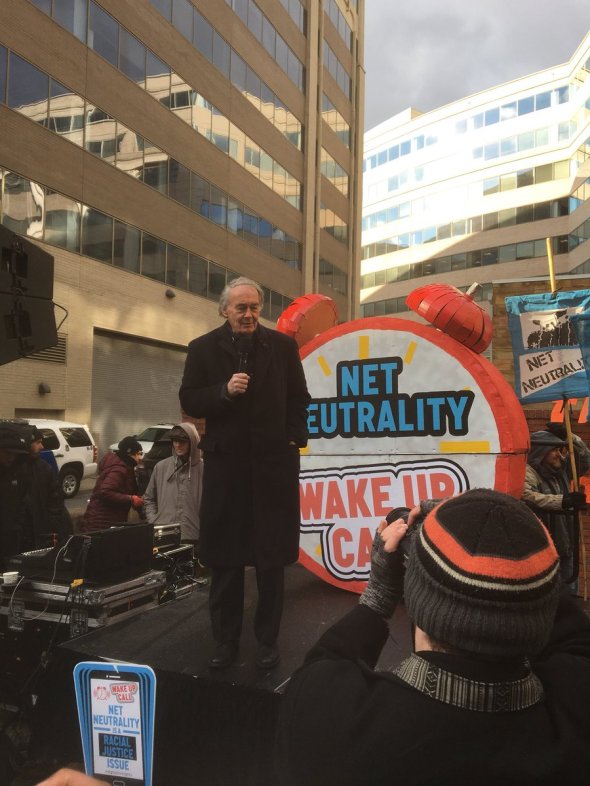
MA Sen. Ed Markey speaks at net neutrality rally outside FCC headquarters this morning.
Good Morning!!
Today the FCC will vote to kill net neutrality rules. That should set off a number of lawsuits and protests. The Commission meeting is happening right now.
Your future internet experience now rests in the hands of the Federal Communications Commission, which is expected to vote on Thursday to end rules requiring internet service providers to treat all traffic as equal.
The five members are expected to vote 3-2 along party lines to scrap Obama-era net neutrality rules, returning to a “light touch”approach and ending what Chairman Ajit Pai has called the federal government’s “micromanaging” of the internet.
“Prior to 2015, before these regulations were imposed, we had a free and open internet,” Pai told NBC News. “That is the future as well under a light touch, market-based approach. Consumers benefit, entrepreneurs benefit. Everybody in the internet economy is better off with a market based approach.”
The end of net neutrality rules will mark a huge victory for the big internet service providers. Depending on how they decide to act, the vote could have massive implications for the way you use the internet.
On Thursday, the Republican-dominated Federal Communications Commission and its chairman, Verizon BFF Ajit Pai, will hold a vote on whether to repeal Barack Obama-era net neutrality rules. If passed, the FCC would allow ISPs to begin setting up a tiered internet designed to suck as much money from customers’ pockets as possible while screwing with their ability to access competitors’ content, or really anything that might suck up amounts of bandwidth inconvenient for their profit margins.
The plan is immensely unpopular, even with Republicans. This type of situation would typically call for a charm offensive, though Pai has apparently decided to resort to his time-honored tactic of being incredibly condescending instead. In a video with the conservative site Daily Caller’s Benny Johnson—the dude who got fired from BuzzFeed for plagiarizing Yahoo Answers—Pai urged the country to understand that even if he succeeds in his plan to let ISPs strangle the rest of the internet to death, they’ll let us continue to take selfies and other stupid bullshit.
Gif source: Daily Caller
“There’s been quite a bit of conversation about my plan to restore Internet freedom,” Pai says in the cringe-inducing clip. “Here are just a few of the things you will still be able to do on the Internet after these Obama-era regulations are repealed.”
Pai then pantomimed things users will supposedly still be able to do, like being able to “gram your food,” “post photos of cute animals, like puppies,” “shop for all your Christmas presents online,” “binge watch your favorite shows,” and “stay part of your favorite fan community.”
“You can still drive memes right into the ground,” Pai added before breaking into a literal Harlem Shake segment. Astute viewers may remember that this was an intolerable meme from all the way back in 2013 which has not grown any less intolerable in the intervening four years.
Please click on the link to read the rest and watch the clips.
In defending his proposed rollback of federal net neutrality rules, Federal Communications Commission Chairman Ajit Pai has repeatedly said that he’s merely trying to return to the “light touch” regulation that helped make the internet what it is today.
That’s transparently false, and Pai knows it. The deregulation of AT&T, Comcast and other broadband providers that Pai and the commission’s other Republican appointees are expected to approve Thursday is a dramatic abdication of authority that could usher in an ugly new era for individuals and companies that offer content and services online, and for the people who rely on them.
It’s hard to know at this point how altered the internet will be after the dominant local providers of high-speed internet access services are freed to meddle with the traffic on their networks. But merely giving them that freedom could discourage innovation and investment online by creating potential new obstacles to start-ups and others that would compete with deep-pocketed sites and services….
The obvious problem there is that broadband providers could pick winners and losers online and stay out of trouble for it simply by disclosing that they are, in fact, prioritizing traffic for any online site or service that can afford the fee. No deception and no unfairness, but no neutrality, either. There’s also a realistic fear that broadband providers would favor their own sites and services because some are doing it already — for example, AT&T effectively exempts video streams from its DirecTV subsidiary from its wireless data caps.
Read the rest at the LA Times.
Today is also the fifth anniversary of the Sandy Hook massacre.
Charlotte Daniel Rachel Olivia Josephine Ana Dylan Dawn Madeleine Catherine Chase Jesse James Grace Anne Emilie Jack Noah Caroline Jessica Avielle Lauren Mary Victoria Benjamin Allison
5 years after Newtown, Congress has failed to confront gun violence. https://t.co/ZzPRxNDtTs
“After Newtown, nothing changed, so don’t expect anything to change after Las Vegas.”
How often have you heard that said? Yet it’s not true. The five years since a gunman killed 26 at Sandy Hook Elementary School in Newtown, Connecticut, have seen one of the most intense bursts of gun legislation in U.S. history—almost all of it intended to ensure that more guns can be carried into more places.
In the aftermath of the Newtown massacre, gun-rights activists assertively carried openly displayed weapons into more and more places. Many national chain stores banned weapons, but at least one—Starbucks—did not. In August 2013, gun-rights activists declared a “Starbucks Appreciation Day.” They made a special point that day of carrying weapons in Starbucks outlets nationwide, including the Starbucks in Newtown itself. (The store closed for the day to avert the demonstration.)
Since Newtown, more than two dozen states have expanded the right to carry into previously unknown places: bars, churches, schools, college campuses, and so on. The most ambitious of these laws was adopted in Georgia in April 2014. Among other provisions, it allowed guns to be carried into airports right up to the federal TSA checkpoint.
In the final days before Donald Trump was sworn in as president, members of his inner circle pleaded with him to acknowledge publicly what U.S. intelligence agencies had already concluded — that Russia’s interference in the 2016 election was real.
Holding impromptu interventions in Trump’s 26th-floor corner office at Trump Tower, advisers — including Trump’s son-in-law, Jared Kushner, and designated chief of staff, Reince Priebus — prodded the president-elect to accept the findings that the nation’s spy chiefs had personally presented to him on Jan. 6.
They sought to convince Trump that he could affirm the validity of the intelligence without diminishing his electoral win, according to three officials involved in the sessions. More important, they said that doing so was the only way to put the matter behind him politically and free him to pursue his goal of closer ties with Russian President Vladimir Putin.
“This was part of the normalization process,” one participant said. “There was a big effort to get him to be a standard president.”
It didn’t work. To this day, Trump stubbornly refuses to accept reality.
The result is without obvious parallel in U.S. history, a situation in which the personal insecurities of the president — and his refusal to accept what even many in his administration regard as objective reality — have impaired the government’s response to a national security threat. The repercussions radiate across the government.
Rather than search for ways to deter Kremlin attacks or safeguard U.S. elections, Trump has waged his own campaign to discredit the case that Russia poses any threat and he has resisted or attempted to roll back efforts to hold Moscow to account….
U.S. officials said that a stream of intelligence from sources inside the Russian government indicates that Putin and his lieutenants regard the 2016 “active measures” campaign — as the Russians describe such covert propaganda operations — as a resounding, if incomplete, success….
…overall, U.S. officials said, the Kremlin believes it got a staggering return on an operation that by some estimates cost less than $500,000 to execute and was organized around two main objectives — destabilizing U.S. democracy and preventing Hillary Clinton, who is despised by Putin, from reaching the White House.
This is horrifying:
U.S. officials declined to discuss whether the stream of recent intelligence on Russia has been shared with Trump. Current and former officials said that his daily intelligence update — known as the president’s daily brief, or PDB — is often structured to avoid upsetting him.
Russia-related intelligence that might draw Trump’s ire is in some cases included only in the written assessment and not raised orally, said a former senior intelligence official familiar with the matter. In other cases, Trump’s main briefer — a veteran CIA analyst — adjusts the order of his presentation and text, aiming to soften the impact.
“If you talk about Russia, meddling, interference — that takes the PDB off the rails,” said a second former senior U.S. intelligence official.
I’ve quoted quite a bit, but it’s long piece. Please go read the whole thing at the WaPo.
We already know that President Trump’s narcissism and megalomania threaten our democracy in multiple ways. His intolerance of critical media scrutiny fuels his systematic campaign to delegitimize the free press. His inability to acknowledge that his own conduct led directly to the special counsel’s Russia probe fuels a deep grievance and rage over it, making it more likely that he can be goaded into trying to close the investigation down.
Now a blockbuster new Post report shows how these traits are coming together to expose our democracy to danger on another front. Just before Trump was sworn in as president, the report says, his advisers urged him to publicly acknowledge U.S. intelligence findings that Russia tried to sabotage our democracy. But Trump “became agitated,” the report notes. “He railed that the intelligence couldn’t be trusted and scoffed at the suggestion that his candidacy had been propelled by forces other than his own strategy, message and charisma.” [….]
As I’ve argued, we have done a poor job of accurately capturing the true nature of Trump’s position on Russian interference. It isn’t simply that Trump denies his campaign colluded with that interference. Rather, it’s that this interference never happened at all, irrespective of whether any collusion with it took place. (We now know that collusion did happen; at this point the question is how serious the misconduct was.)
Though Trump has at times acknowledged that such sabotage did take place, he has mostly refused to do so. This has long appeared to reflect an inability to view discussion of Russian interference as about anythThing other than himself. To acknowledge Russian meddling can only be an acknowledgement that his victory may have reflected unsavory external factors along with his blinding greatness, and thus may have been in some sense tainted, and since in Trump’s mind that cannot be true, it also cannot be true that Russia meddled at all.
Those are the top stories today, IMHO; but there’s plenty more happening. What stories are you following?
Did you like this post? Please share it with your friends:
Glenn Greenwald got a big scoop in the Guardian yesterday, and for once even the corporate media in the U.S. is covering it. Not that any of us is really safe from government spying, but if you’re a Verizon customer you now know that all of your phone records are being handed over to the FBI and the NSA. Here’s the top secret court decision. Greenwald writes:
The National Security Agency is currently collecting the telephone records of millions of US customers of Verizon, one of America’s largest telecoms providers, under a top secret court order issued in April.
The order, a copy of which has been obtained by the Guardian, requires Verizon on an “ongoing, daily basis” to give the NSA information on all telephone calls in its systems, both within the US and between the US and other countries.
The document shows for the first time that under the Obama administration the communication records of millions of US citizens are being collected indiscriminately and in bulk – regardless of whether they are suspected of any wrongdoing.
The secret Foreign Intelligence Surveillance Court (Fisa) granted the order to the FBI on April 25, giving the government unlimited authority to obtain the data for a specified three-month period ending on July 19.
Under the terms of the blanket order, the numbers of both parties on a call are handed over, as is location data, call duration, unique identifiers, and the time and duration of all calls. The contents of the conversation itself are not covered.
Good thing they’re not recording the content of my calls with Verizon customers; because if the government spies had to listen to what we talk about, they’d probably be bored to tears.
The four-page order was disclosed Wednesday evening by the newspaper The Guardian.Obama administration officials at the F.B.I. and the White House also declined to comment on it Wednesday evening, but did not deny the report, and a person familiar with the order confirmed its authenticity. “We will respond as soon as we can,” said Marci Green Miller, a National Security Agency spokeswoman, in an e-mail.
The order was sought by the Federal Bureau of Investigation under a section of theForeign Intelligence Surveillance Act, the 1978 law that regulates domestic surveillance for national security purposes, including “tangible things” like a business’s customer records. The provision was expanded by Section 215 of the Patriot Act, which Congress enacted after the 9/11 terrorist attacks.
The order was marked “TOP SECRET//SI//NOFORN,” referring to communications-related intelligence information that may not be released to noncitizens. That would make it among the most closely held secrets in the federal government, and its disclosure comes amid a furor over the Obama administration’s aggressive tactics in its investigations of leaks.
The collection of call logs is set to expire in July unless the court extends it.
The collection of communications logs — or calling “metadata” — is believed to be a major component of the Bush administration’s program of surveillance that took place without court orders. The newly disclosed order raised the question of whether the government continued that type of information collection by bringing it under the Patriot Act.
This morning the White House is defending the order for Verizon phone records. From Politico:
The Obama administration is defending itself against charges it secretly obtained records for Verizon phone calls made in the United States, arguing that the policy is a vital tool in monitoring terrorists and has the approval of “all three branches of government,” according to a senior administration official.
“On its face, the order reprinted in the article does not allow the government to listen in on anyone’s telephone calls,” a White House official said. “The information acquired does not include the content of any communications or the name of any subscriber. It relates exclusively to metadata, such as a telephone number or the length of a call.”
Still, the White House official declined to confirm the legitimacy of the classified Foreign Intelligence Surveillance Court order published Wednesday by Britain’s Guardian newspaper, which described a wide sweep of Verizon calls both domestic and international by Americans by the National Security Agency.
“Information of the sort described in the Guardian article has been a critical tool in protecting the nation from terrorist threats to the United States, as it allows counterterrorism personnel to discover whether known or suspected terrorists have been in contact with other persons who may be engaged in terrorist activities, particularly people located inside the United States,” the official said.
Six people are now reported dead and fourteen injured in the collapse of a building in Philadelphia yesterday, according to Reuters.
Six people were killed and 14 were injured yesterday when a four-story building under demolition collapsed in downtown Philadelphia, burying a neighboring thrift store in concrete and debris, officials said.
Search and rescue efforts continued into the night for more victims of the collapse, which occurred around 10:45 a.m. EDT, and Mayor Michael Nutter suggested at a late night news conference that the number of casualties could rise.
“We still do not know how many people were inside the thrift store or possibly on the sidewalk” at the time of the collapse, Nutter said. “If someone else is in that building, they will find them.”
Shortly after the mayor concluded his press briefing a 61-year-old woman was pulled from the rubble alive, more than 12 hours after the collapse, and taken to a hospital in critical condition….
Dozens of police and firefighters were still sifting through the chunks of concrete and splintered wooden boards past midnight, the scene lit by large spotlights as residents stood by watching. Several streets remained blocked off.
When I first heard about this, I thought it was a controlled demolition and wondered why the area hadn’t been cleared of people first. Apparently, the collapse was completely unexpected.
One witness, 31-year-old Dan Gillis of Cinnaminson, New Jersey, a construction worker on a job across the street, said he saw a crane remove a supporting beam from the front of the building and then the wall next to the thrift store started swaying.
Jeffrey Fehnel, 48, of Philadelphia, said a backhoe hit the rear side of the building at about the same time.
“The building came down. It was like a big blast,” Fehnel told Reuters.
When Gloria C. MacKenzie went to a Florida supermarket near Tampa last month to buy a Powerball ticket, another person in line did something nice for the 84-year-old widow.
‘‘While in line at Publix, another lottery player was kind enough to let me go ahead of them in line to purchase the winning Quick Pick ticket,’’ she said in a statement Wednesday.
The nice gesture turned out to be a life-changing one for MacKenzie and her family. She came forward Wednesday to claim the biggest undivided lottery jackpot in history, $590 million.
A retiree from Maine and a mother of four who lives in a modest, tin-roof house in Zephyrhills, Fla., where the lone winning ticket in the May 18 drawing was sold, MacKenzie took her prize in a lump sum of just over $370 million. After federal taxes, she is getting about $278 million, lottery officials said….
MacKenzie bought the winning ticket at a Publix supermarket in the town of about 13,300, which is 30 miles northeast of Tampa. It is best known for the bottled spring water that bears its name — and now, for one of the biggest lottery winners of all time.
The family of a dying ten-year-old girl with cystic fibrosis yesterday won the chance to live with an adult lung transplant after HHS Secretary Kathleen Sibilius declined to make a rule exception for her.
(CNN) — The father of a 10-year-old Pennsylvania girl who desperately needs new lungs told CNN on Wednesday night the family was “very excited” after a judge’s ruling that could help his daughter get a transplant.
Sarah Murnaghan’s father, Fran, said on CNN’s “Anderson Cooper 360” that his daughter, who has cystic fibrosis, has declined slightly in the last two days.
“But we’re very excited with the news today, that she will have the opportunity to be equally judged and have the opportunity to receive lungs,” he said.
On Wednesday, the family asked a federal judge to issue a restraining order to block U.S. Health and Human Services Secretary Kathleen Sebelius from having the agency that oversees transplants apply a policy that keeps children younger than 12 from being prioritized for available adult lung transplants.
The judge granted the injunction and ordered Sebelius to direct the Organ Procurement and Transplantation Network to waive the rule in Sarah’s case. The injunction is valid for 10 days.
Last night Rep. Ed Markey and his Republican opponent Gabriel Gomez debated for the first time in the important Massachusetts Senate race. With so many Democratic senators retiring, there is a real danger that Republicans could take control of the Senate. From The Boston Globe: Gomez, Markey spar over D.C. gridlock, Benghazi
An aggressive Gabriel E. Gomez wasted no opportunity to mockingly highlight Democrat Edward J. Markey’s nearly four decades in Washington while Markey used the first debate of the US Senate race Wednesday to paint his Republican rival as dangerously out of step with Massachusetts values.
During an hourlong face-off, Gomez repeatedly sought to link his opponent to a Congress mired in dysfunction and deeply unpopular with voters. Markey countered those attacks by arguing that for all his claims of bipartisanship, Gomez would join a GOP that has lurched to the right on issues such as gun control and abortion.
Gomez had difficulty articulating a coherent position on abortion.
Gomez said he could support a mandatory 24-hour waiting period for women seeking abortions, saying that “is not asking a lot.” He also said he could vote to confirm a Supreme Court nominee who opposes Roe v. Wade.
“I don’t believe there should be a litmus test,” he said. “If a judge comes in front of me and they follow the Constitution, and they’re ethical, and they’re prochoice, and they’ve done a good job, I’ll vote for them. If they’re prolife, I’ll vote for them.”
At the same time, he sought to defuse the issue, saying that while he was “personally prolife,” he was not planning to go to Washington to make any changes in abortion rights law.
Markey scoffed at that assertion, arguing that the confirmation of a Supreme Court justice who opposes Roe v. Wade could jeopardize legalized abortion. He said he would not vote to confirm Supreme Court nominees who oppose abortion rights, saying that was the same test espoused by senators Edward M. Kennedy, Kerry, and Elizabeth Warren.
The special election to fill John Kerry’s Senate seat will be held on June 25.
Early in the morning of July 16, 1979, a 20-foot section of the earthen dam blocking the waste pool for the Church Rock Uranium Mill in New Mexico caved in and released 95 million gallons of highly acidic fluid containing 1,100 tons of radioactive material. The fluid and waste flowed into the nearby Puerco River, traveling 80 miles downstream, leaving toxic puddles and backing up local sewers along the way.
Although this release of radiation, thought to be the largest in US history, occurred less than four months after the Three Mile Island partial nuclear meltdown, the Church Rock spill received little media attention. In contrast, the Three Mile Island accident made the headlines. And when the residents of Church Rock asked their governor to declare their community a disaster area so they could get recovery assistance, he refused.
What was the difference between the Church Rock spill and the Three Mile Island partial meltdown? Church Rock is situated in the Navajo Nation, one of the areas in the US sacrificed to supply uranium for the Cold War and for nuclear power plants. That area and many others in the Navajo Nation are contaminated to this day. Another sacrifice area is the Great Sioux Nation, a region in the western part of the country comprising parts of 5 states, where thousands of open uranium mine pits continue to release radiation and heavy metals into the air, land and water.
This poisoning of the people in the Navajo and Great Sioux Nations has been going on for decades and has had serious effects on their health. Even today, it is unknown what the full effects are and what the impact is on the rest of the nation and world because the contaminated air and water are not limited by borders.
Please go read the whole thing.
Now it’s your turn. What are you reading and blogging about today? Please post your links on any topic in the comment thread.
Did you like this post? Please share it with your friends:
I got an e-mail this morning from Dakinikat saying that she arrived safely late last night and is completely exhausted. Hopefully, she’ll get to see her Dad today and give him a great big hug.
Now let’s see what’s going on in the world this morning.
I’ve got to be honest, I’m confused about the latest GOP Benghazi hearings. I have no idea what the fuss is all about, and I really don’t even want to try to figure it out. Apparently, car thief and arsonist Darrell Issa just can’t let go of Benghazi, and is going to keep right on harping on it until someone figures out a way to stop him. I’m going to highlight some articles on this “controversy,” but, as I said, I can’t really explain it.
A veteran diplomat gave a riveting minute-by-minute account on Wednesday of the lethal terrorist attack in Benghazi, Libya, last Sept. 11 and described its contentious aftermath at a charged Congressional hearing that reflected the weighty political stakes perceived by both parties.
During a chaotic night at the American Embassy in Tripoli, hundreds of miles away, the diplomat, Gregory Hicks, got what he called “the saddest phone call I’ve ever had in my life” informing him that Ambassador J. Christopher Stevens was dead and that he was now the highest-ranking American in Libya. For his leadership that night when four Americans were killed, Mr. Hicks said in nearly six hours of testimony, he subsequently received calls from both Secretary of State Hillary Rodham Clinton and President Obama.
But within days, Mr. Hicks said, after raising questions about the account of what had happened in Benghazi offered in television interviews by Susan E. Rice, the United Nations ambassador, he felt a distinct chill from State Department superiors. “The sense I got was that I needed to stop the line of questioning,” said Mr. Hicks, who has been a Foreign Service officer for 22 years.
He was soon given a scathing review of his management style, he said, and was later “effectively demoted” to desk officer at headquarters, in what he believes was retaliation for speaking up.
After the disrupted phone call with Ambassador Stevens, Mr Hicks said he received calls from Libyans using the ambassador’s phone who said they had the envoy with them.
But Mr Hicks decided not to act on the calls, fearing an ambush.
So the “whistleblower” chose not to do anything? What is his complaint then?
UN Ambassador Susan Rice has been the focus of outrage from Republicans in Congress, for giving the news media what has been acknowledged as an incorrect explanation for the attack.
She said on a Sunday chat show on 16 September that the attack had grown out of an anti-US protest, while other officials have said they knew at the time it was an organised, armed assault, possibly by an Islamist militant group.
“My jaw dropped and I was embarrassed,” Mr Hicks said on his reaction to her interview.
I guess it’s still about Susan Rice. . . Or more likely, it’s about Hillary Clinton and attempts to hobble any plans she may have to run for president.
Three State Department officials on Wednesday provided a riveting, emotional account of last year’s fatal attack on U.S. installations in eastern Libya as they accused senior government officials of withholding embarrassing facts and failing to take enough responsibility for security lapses.
The testimony provided new details on the Sept. 11, 2012, assaults on U.S. installations in Benghazi and their aftermath. But the new information failed to break the political logjam the attacks spawned, with Republicans and Democrats offering starkly different interpretations of what happened and who within the U.S. government is to blame.
Chairman Darrell Issa (R-Calif.) opened the House Oversight and Government Reform Committee hearing by saying that panel Democrats had “mostly sat silent” while Republicans tried to wrest the truth from an uncooperative Obama administration.
Rep. Elijah E. Cummings (Md.), the senior Democrat on the committee, countered that Issa’s GOP majority had launched a “full-scale media campaign . . . of unfounded accusations to smear public officials.”
But in expanding the narrative of the intensely politicized episode, the witnesses raised fresh questions about whether then-Secretary of State Hillary Rodham Clinton and her deputies were sufficiently engaged in assessing the security posture of diplomatic posts last year.
The hearing by the Republican-led House Government Oversight & Reform Committee was not the first on the events surrounding the death of the U.S. Ambassador to Libya, Christopher Stevens, and three other Americans. Hillary Clinton, who was running the State Department at the time of the attack, testified for hours back in January. But the story was given fresh dramatic life and new narrative details through the testimony of two self-described whistle blowers who had not previously spoken in public: Mark Thompson, acting deputy assistant secretary for counterterrorism; Gregory Hicks, the former deputy of mission in Libya. Joining them was Eric Nordstrom, a former regional security officer in Libya, who had previously testified on the issue.
But “[c]ould the U.S. military have done more to help?”
Not according to the Pentagon – and the hearing’s key witness. Aircraft that might have buzzed the compound where the second pair of Americans died – and scared the militants away — were 900 miles north in Italy. “Time and distance are a tyranny of their own,” Admiral James Stavridis, who responded to the attacks as the NATO commander, told Congress earlier this year. Army General Martin Dempsey, chairman of the Joint Chiefs of Staff, estimated it would take as long as 20 hours to get the planes above Benghazi. Hicks testified that he asked the U.S. defense attaché in Tripoli if planes could be scrambled to help those under attack in the CIA annex in Benghazi, a battle that unfolded hours after the initial assault on the nearby U.S. consulate, which killed Stevens, and led to two more American deaths. “He said that it would take two to three hours for them to get on site, but that there also were no tankers available for them to refuel,” Hicks said Wednesday. “And I said, ‘Thank you very much,’ and we went on with our work.” Hicks also testified that a four man team of Green Berets in Tripoli were denied a request to deploy to Benghazi the morning after the attack began, though officials doubt they could have arrived early enough to save lives at the CIA annex.
Apparently the complaint is that the State Department didn’t order all military resources to get to Benghazi even though there was no way they could have gotten there in time to do anything to help?
So we’re back to preventing Hillary 2016?
Whether or not Republicans intended it, the shadow of national politics loomed over Wednesday’s hearing. Hillary Clinton completed a generally well-reviewed tenure of Secretary of State, as evidenced by her sky-high public approval ratings. But Benghazi is a clear black mark on her Foggy Bottom record, one that could haunt Clinton if she runs for president in 2016. Conservatives seized on Hicks’s testimony that, in a call with Clinton on the fateful night, he told her that a terrorist attack was underway–a fact that was slow to appear in the administration’s public rhetoric. Still, despite repeated discussion about what Clinton knew and when she knew it, no smoking gun emerged from Wednesday’s hearing, leading one Congressional Democrat to dismiss questions about her role as a “witch hunt.”
I guess that’s pretty much what it’s all about . . . A few more links:
“I think the notion of a quote, cover up, has all the elements of Pulitzer Prize fiction attached to it,” former Ambassador Thomas Pickering said on MSNBC. He also rebutted claims that the review board tried to protect former Secretary of State Hillary Clinton from scrutiny:
PICKERING: I saw no evidence of it. She did publicly take responsibility for what happened below her and indeed one of the things the Congress did in preparing the legislation that established the Accountability Review Board was to say we don’t want a situation where heads of agencies take responsibility and then nobody who made the decision in the chain has to suffer any consequences for failure for performance. I believe in fact the Accountability Review Board did it’s work well. I think the notion of a quote, cover up, has all the elements of Pulitzer Prize fiction attached to it.
Pickering offered to testify at the latest hearing, but Chairman Issa wouldn’t let him.
The “whistleblowers” at today’s House Oversight Committee hearing on what really happened in Benghazi, Libya last September were supposed to break the dam that would lead to President Obama’s eventual downfall, in the eyes of conservatives. Instead, these witness actually served to debunk several theories that the right-wing has pushed on Benghazi, leaving the hearing a fizzle for the GOP.
Senate Foreign Relations Committee Ranking Member Bob Corker (R-TN) said Wednesday that he’s “fairly satisfied” with the Obama administration’s account of events that led to the deaths of American diplomats in Benghazi last year.
“We need to know were these people culpable or not. If they were, why are they still on the payroll? Other than that, I’ve been able to read all the cables. I’ve seen the films,” Corker told MSNBC. “I feel like I know what happened in Benghazi. I’m fairly satisfied.”
He cautioned House Republicans to be “respectful” if they probe the issue further.
“Look, if the House wants to have hearings,” he said, “I hope they’re done in a respectful way and hopefully it will shed some light on what happened.”
I guess that’s enough about Benghazi. I apologize for giving it so much space, but I thought if I were confused about this, some of you might be too.
The Sky Dancing banner headline uses a snippet from a work by artist Tashi Mannox called 'Rainbow Study'. The work is described as a" study of typical Tibetan rainbow clouds, that feature in Thanka painting, temple decoration and silk brocades". dakinikat was immediately drawn to the image when trying to find stylized Tibetan Clouds to represent Sky Dancing. It is probably because Tashi's practice is similar to her own. His updated take on the clouds that fill the collection of traditional thankas is quite special.
You can find his work at his website by clicking on his logo below. He is also a calligraphy artist that uses important vajrayana syllables. We encourage you to visit his on line studio.





















 peej
peej Carissa
 bostonboomer
 dakinikat
 ecocatwoman
 jjlo
jjlo mablue2
 Mama Lopez
 peggysue22
 quixote
 skydancingguestblogger
 Mona (aka Wonk the Vote)



 Sky Dancing
Recent Comments