We are in deep trouble as a country. Trump hasn’t even been in the White House for 100 days, and he has made rapid progress toward turning us into a dictatorship. I think Congressional Democrats are beginning to wake up, but not nearly quickly enough. Too many of these elected Democrats still aren’t taking the danger seriously enough. In my opinion, they should calling press conferences at least every few days to explain how Trump is destroying our government.
Look around, take stock of where you are, and know this: Today, right now—and I mean right this second—you have the most power you’ll ever have in the current fight against authoritarianism in America. If this sounds dramatic to you, it should. Over the past five months, in many hours of many conversations with multiple people who have lived under dictators and autocrats, one message came through loud and clear: America, you are running out of time.
Maria Ressa
People sometimes call the descent into authoritarianism a “slide,” but that makes it sound gradual and gentle. Maria Ressa, the journalist who earned the Nobel Peace Prize for her attempts to save freedom of expression in the Philippines, told me that what she experienced during the presidency of Rodrigo Duterte is now, with startling speed and remarkable similarity, playing out in the United States under Donald Trump. Her country’s democratic struggles are highly instructive. And her message to me was this: Authoritarian leaders topple democracy faster than you can imagine. If you wait to speak out against them, you have already lost.
Shortly after Trump was reelected last fall, I called Ressa to ask her how she thought Americans should prepare for his return. She told me then that she worried about a failure of imagination. She knew that the speed of the destruction of institutions—one of the first steps an authoritarian takes to solidify and centralize power—would surprise people here, even those paying the closest attention. Ressa splits her time between Manila and New York, and she repeatedly warned me to be ready for everything to happen quickly. When we spoke again weeks after his inauguration, Ressa was shaken. President Trump was moving faster than even she had anticipated.
I heard something similar recently from Garry Kasparov, the Russian dissident and chess grand master. To him, the situation was obvious. America is running out of time, he told me. As Kasparov wrote recently in this magazine, “If this sounds alarmist, forgive me for not caring. Exactly 20 years ago, I retired from professional chess to help Russia resist Putin’s budding dictatorship. People were slow to grasp what was happening there too.”
The chorus of people who have lived through democratic ruin will all tell you the same thing: Do not make the mistake of assuming you still have time. Put another way: You think you can wait and see, and keep democracy intact? Wanna bet? Those who have seen democracy wrecked in their home country are sometimes derided as overly pessimistic—and it’s understandable that they’d have a sense of inevitability about the dangers of autocracy. But that gloomy worldview does not make their warnings any less credible: Unless Trump’s power is checked, and soon, things will get much worse very quickly. When people lose their freedoms, it can take a generation or more to claw them back—and that’s if you’re lucky.
Trump’s methods clearly mirror those of authoritarian leaders in other countries.
The Trump administration’s breakneck pace is obviously no accident. While citizens are busy processing their shock over any one shattered norm or disregarded law, Trump is already on to the next one. This is the playbook authoritarians have used all over the world: First the leader removes those with expertise and independent thinking from the government and replaces them with leaders who are arrogant, ignorant, and extremely loyal. Next he takes steps to centralize his power and claim unprecedented authority. Along the way, he conducts an all-out assault on the truth so that the truth tellers are distrusted, corruption becomes the norm, and questioning him becomes impossible. The Constitution bends and then finally breaks. This is what tyrants do. Trump is doing it now in the United States.
Philippines, it took about six months under Duterte for democratic institutions to crumble. In the
Rodrigo Duterte
United States, the overreach in executive power and the destruction of federal agencies that Ressa told me she figured would have kept Trump busy through, say, the end of the summer were carried out in the first 30 days of his presidency. Even so, what people don’t always realize is that a dictator doesn’t seize control all at once. “The death of democracy happens by a thousand cuts,” Ressa told me recently. “And you don’t realize how badly you’re bleeding until it’s too late.” Another thing the people who have lived under authoritarian rule will tell you: It’s not just that it can get worse. It will.
Americans who are waiting for Trump to cross some imaginary red line neglect the fact that they have more leverage to defend American democracy today than they will tomorrow, or next week, or next month. While people are still debating whether to call it authoritarianism or fascism, Trump is seizing control of one independent agency after another. (And for what it’s worth, the smartest scholars I know have told me that what Trump is trying to do in America is now textbook fascism—beyond the authoritarian impulses of his first term. Take, for example, his administration’s rigid ideological purity tests, or the extreme overreach of government into freedom of scientific and academic inquiry.)
Between the time I write this sentence and the moment when this story will be published, the federal government will lose hundreds more qualified, ethical civil servants. Soon, even higher numbers of principled people in positions of power will be fired or will resign. More positions will be left vacant or filled by people without standards or scruples. The government’s attacks against other checks on power—the press, the judiciary—will worsen. Enormous pressure will be exerted on people to stay silent. And silence is a form of consent.
This article is essential reading. I hope you’ll use the gift link to read the rest at The Atlantic.
In the 2024 presidential campaign, Democrats’ warnings that American democracy was in jeopardy if Donald Trump was elected failed to persuade a majority of voters. Our guest, Steven Levitsky, says there’s plenty of reason to worry about our democracy now….
In a new article for the journal Foreign Affairs, Levitsky and co-author Lucan A. Way write, quote, “U.S. democracy will likely break down during the Second Trump administration in the sense that it will cease to meet standard criteria for a liberal democracy – full adult suffrage, free and fair elections, and broad protection of civil liberties,” unquote. We’ve invited Levitsky here to explain the threats he sees to democracy and to talk about dramatic developments in the Trump administration’s confrontation with Harvard University.
DAVIES: You note in this article that Freedom House, which is a nonprofit that’s been around for a long time, which produces an annual global freedom index, has reduced the United States’ rating. It has slipped from 2014 to 2021. How much? Where are we now, and where did we used to be?
Steven Levitsky
LEVITSKY: Freedom House’s scores range from zero, which is the most authoritarian to a hundred, which is the most democratic. I think a couple of Scandinavian countries get scores of 99 or 100. The U.S. for many years was in the low 90s, which put it broadly on par with other Western democracies like the U.K. and Italy and Canada and Japan. But it slipped in the last decade, from Trump’s first victory to Trump’s second victory, from the low 90s to 83, which placed us below Argentina. And in a tie with Romania and Panama. So we’re still above what scholars would consider a democracy, but now in the very low-quality democracy range, comparable, again, to Panama, Romania and Argentina.
DAVIES: And does Freedom House explain its demotion? Why? Why did this happen?
LEVITSKY: Oh, yeah. Freedom House has annual reports for every country – the rise in political violence, political threats, threats against politicians, refusal to accept the results of a democratic election in 2020, an effort to use violence to block a peaceful transfer of power are all listed among the reasons for why the United States has fallen. I should say that even in the first four months of the Trump administration, it’s quite certain that what’s happening on the ground in the United States is likely to bring the U.S. score down quite a bit.
DAVIES: You say that the danger here is not that the United States will become a classic dictatorship with sham elections, you know, opposition leaders arrested, exiled or killed. What kind of autocracy might we become?
LEVITSKY: I think the most likely outcome is a slide into what Lucan Way and I call competitive authoritarianism. These are regimes that constitutionally continue to be democracies. There is a Constitution. There are regular elections, a legislature and importantly, the opposition is legal, above ground and competes for power. So from a distance, if you squint, it looks like a democracy, but the problem is that systematic coming (ph) abuse of power tilts the playing field against the opposition. This is the kind of regime that we saw in Venezuela under Hugo Chavez. It’s subsequently become a full-on dictatorship. It’s what we see in Turkey under Erdogan. It’s what we see in El Salvador. It’s what we see in Hungary today. Most new autocracies that have emerged in the 21st century have been led by elected leaders and fall into this category of competitive authoritarianism. It’s kind of a hybrid regime.
DAVIES: So free and fair elections lead us to a leader which takes us in a different direction?
LEVITSKY: Right. And because the leader is usually freely and fairly elected, he has a certain legitimacy that allows him to say, hey, how can you say I’m an authoritarian if I was freely and fairly elected? So citizens are often slow to realize that their country is descending into authoritarianism.
You can read the rest of the interview or listen to it at the NPR link.
The American constitutional system is built on the theory that the self-interest of lawmakers can be as much of a defense against tyranny as any given law or institution.
As James Madison wrote in Federalist 51, “The provision for defense must in this, as in all other cases, be made commensurate to the danger of attack. Ambition must be made to counteract ambition. The interest of the man must be connected with the constitutional rights of the place.” Our Constitution is nothing more than a “parchment barrier” if not backed by the self-interest and ambition of those tasked with leading the nation.
One of the most striking dynamics in these first months of the second Trump administration was the extent to which so many politicians seemed to lack the ambition to directly challenge the president. There was a sense that the smart path was to embrace the apparent “vibe shift” of the 2024 presidential election and accommodate oneself to the new order.
But events have moved the vibe in the other direction. Ambition is making a comeback.
Last week, Senator Chris Van Hollen of Maryland traveled to El Salvador, where he met with Kilmar Armando Abrego Garcia, a victim of the Trump administration’s removal program under the 1798 Alien Enemies Act….
Abrego Garcia is one of the men trapped in this black zone. Despite his protected legal status, he was arrested, detained, accused of gang activity and removed from the United States. At no point did the government prove its case against Abrego Garcia, who has been moved to a lower-security prison, nor did he have a chance to defend himself in a court of law or before an immigration judge. As one of Abrego Garcia’s representatives in the United States Senate, Van Hollen met with him to both confirm his safety and highlight the injustice of his removal.
Sen. Chris Van Hollen
“This case is not just about one man,” Van Hollen said at a news conference following his visit. “It’s about protecting the constitutional rights of everybody who resides in the United States of America. If you deny the constitutional rights of one man, you threaten the constitutional rights and due process for everyone else in America.” [….]
The goal of Van Hollen’s journey to El Salvador — during which he was stopped by Salvadoran soldiers and turned away from the prison itself — was to bring attention to Abrego Garcia and invite greater scrutiny of the administration’s removal program and its disregard for due process. It was a success. And that success has inspired other Democrats to make the same trip, in hopes of turning more attention to the administration’s removal program and putting more pressure on the White House to obey the law.
Senator Cory Booker of New Jersey is reportedly organizing a trip to El Salvador, and a group of House Democrats led by Representative Robert Garcia of California arrived on Monday. “While Donald Trump continues to defy the Supreme Court, Kilmar Abrego Garcia is being held illegally in El Salvador after being wrongfully deported,” Representative Garcia said in a statement. “That is why we’re here, to remind the American people that kidnapping immigrants and deporting them without due process is not how we do things in America.”
“We are demanding the Trump administration abide by the Supreme Court decision and give Kilmar and the other migrants mistakenly sent to El Salvador due process in the United States,” Garcia added.
All of this negative attention has had an effect. It’s not just that the president’s overall approval rating has dipped into the low 40s — although it has — but that he’s losing his strong advantage on immigration as well. Fifty percent of Americans disapprove of Trump’s handling of immigration, according to a recent poll from Quinnipiac University, and a new Reuters poll shows Trump slightly underwater on the issue with a 45 percent approval to 46 percent disapproval.
These lawmakers are getting positive attention for standing up to Trump, and their actions are waking up Americans who may not have been paying enough attention to Trump’s illegal and cruel deportations.
A delegation of congressional members traveled to Louisiana Tuesday to demand the release of Mahmoud Khalil and Rümeysa Öztürk and inspect conditions at the two Immigration and Customs Enforcement detention facilities where the two remain in custody.
It’s the first time a congressional delegation has met with Khalil or Ozturk.
Khalil, a Columbia University graduate, and Ozturk, a Tufts University PhD student, have been in ICE custody for more than a month after being arrested near their homes by federal agents.
The Democrat delegation, led by Rep. Troy Carter of Louisiana traveled to Jena, where Khalil is being held, and then two hours south to Basile, where Ozturk is detained. The group included Reps. Bennie Thompson of Mississippi, Ayanna Pressley and Jim McGovern of Massachusetts and Sen. Ed Markey.
Mahmoud Khalil
The facilities were clean but “chilly” according to Carter, who said detainees complained of cold temperatures at night, making it difficult to sleep. Carter said the facilities appeared to have been cleaned prior to their visit and that conditions appeared to be “fine” while they visited.
Following the visit, lawmakers said the detainees they met with also complained about a lack of medical care, food and religious accommodations.
“I really worry that this administration is ushering in a new era of McCarthyism. And unless Congress and unless the American people stand up and push back, they will succeed,” McGovern said during a press conference after the visits.
Markey accused the Trump administration of wanting to “make an example” out of Khalil and Ozturk in an effort to chill free speech. Markey also said ICE had intentionally transferred them to Louisiana for political reasons.
Through the Trump administration, ICE feels “they have a right to take people from across our country, and to put them into facilities like this here in Louisiana,” Markey said. “And why did they do that? They have done that in order to go to the single most conservative Circuit Court of Appeals in the United States of America.”
Again, these Congress people received positive media coverage. As Jamelle Bouie wrote (see above article), perhaps their ambition has led them to publicly oppose Trump’s dictatorial actions.
Imagine that you were a high-ranking official in Donald Trump’s administration. Imagine that you believed in the Dark Enlightenment dream of dismantling liberal democracy itself—of “killing the woke mind virus,” ending birthright citizenship, and using federal power to suppress dissent. Now imagine you’re openly defying the Supreme Court, declaring that protest aids and abets terrorism, directing the FBI and IRS to target political enemies, and seriously considering invoking the Insurrection Act on flimsy pretexts. What would stop you?
Certainly not impeachment. Not with a compliant Republican Congress. Not with a conservative media ecosystem ready to justify any abuse of power as a patriotic necessity. The only thing that might give you pause is the possibility that Democrats would regain control and then do to you what you’ve done to them.
That fear of reciprocal power and legal accountability was once enough to preserve American political norms. It was the logic of mutually assured destruction: if you break democracy now, they’ll break you later. That’s how informal guardrails were enforced, even through dark chapters like Watergate or Iran-Contra. But those norms no longer hold because no one believes Democrats will retaliate.
This is the context for the quiet battle raging within the Democratic Party leadership. A few anonymous but influential centrists are urging party leaders to soft-pedal Trump’s detention of legal residents in foreign internment camps and pivot to kitchen-table economics instead. Even as constituents demand action and donors grow restless, Senate Majority Leader Chuck Schumer and House Minority Leader Hakeem Jeffries still signal caution, urging patience and restraint…..
Rumeysa Ozturk
There have been some bright spots. Senator Cory Booker broke Strom Thurmond’s filibuster record in a marathon floor speech denouncing Trump’s abuses. Senator Chris Van Hollen forced a meeting with abducted U.S. resident Abrego Garcia in El Salvador, delivering proof of life and drawing global attention. Senator Chris Murphy’s rhetoric has been sharp and effective. House Democrats like Alexandria Ocasio-Cortez (along with her “anti-oligarchy tour” partner Senator Bernie Sanders), Jasmine Crockett, and Robert Garcia have been doing excellent work. Their energy and determination carry the tacit message that those who broke the law and tried to impose an authoritarian regime on the U.S. will face appropriate justice at the end of the day. Representative Jamie Raskin was explicit about warning El Salvador’s leader: “Look, President Bukele—who’s declared himself a dictator—and the other tyrants, dictators, autocrats of the world have to understand that the Trump administration is not going to last forever,” Raskin said. “We’re going to restore strong democracy to America, and we will remember who stood up for democracy in America and who tried to drive us down towards dictatorship and autocracy.”
But these have been exceptions rather than the rule. Most Democrats in leadership and positions of power have stayed quiet—avoiding press conferences, shunning symbolic actions, and allowing business to continue as if the country weren’t barreling toward authoritarianism.
When pressed, party leaders often respond that they can do little substantively. That protests are performative. That voters are tired of drama. But that’s not the point. The point isn’t what Democrats can do today. It’s what they’re signaling they’re willing to do when they return to power.
If Trump and his allies face no meaningful consequences, they have no reason to stop. If Republicans don’t believe that Democrats will act with equal force to protect democracy—legally, aggressively, unapologetically—then there’s no deterrent to further escalation.
Throughout the Trump era I’ve been firmly in the camp unaffectionately dismissed as ‘alarmist’ by most commentators. Put simply: It is that bad. Liberal democracy is in danger. Fascism is a reasonable term for what we’re fighting.
For veteran ‘alarmists’ this is a strange moment. People are at a loss. It seems wrong, given all that is at stake, to say “I told you so”. I’ve felt that discomfort. For the longest time I avoided saying that. It felt . . . petty, childish, gauche, it just wasn’t the done thing. One of the big political awakenings I’ve had over the last year, and particularly since Trump’s 2024 victory, is realizing that it’s OK to say “called it”. More than OK. Even if it feels awkward, it’s actually important, perhaps necessary, that we do.
My view has not been, to put it mildly, the mainstream position. You’re allowed, with a certain amount of resentment, to say it today. But that wasn’t always the case. I recall first voicing it as the antecedents of Trump, the tea party and growing white supremacy, started to arise. Obama’s “the fever will break” seemed hopelessly naive to me. The press treated them either as legitimate libertarians or an eccentric curiosity, not a threat. To the activist left, what would become the Bernie movement, they were a joke—the punchline to a Jon Stewart monologue. Nothing more. When Trump first rode the elevator down to announce his candidacy, it was entertainment, not omen.
If you saw in any of this a threat to liberal democracy writ large, much less one that could actually succeed, you were looked at with the kind of caution usually reserved for the guy screaming about aliens on the subway. Trump’s election in 2016 was a shock to people who insisted it could never happen. But those most complacent before quickly found their way back to complacency after. For a certain type—specifically, the type who has a column in legacy media despite never having written an interesting or original paragraph in their lives—smug condescension became the order of the day: yes, Trump is bad, but dear me those liberals are being hysterical. As late as the last election they were writing pieces with titles like “A Trump Dictatorship Won’t Happen” or “No, Trump won’t destroy our democracy.” Even after the election, as the scale of the incoming lawlessness became clear, we were dismissed: “Trump Is Testing Our Constitutional System. It’s Working Fine” respected legal commentator Noah Feldman told us—the legal rationale for his actions was very flimsy. Courts would strike it all down. And certainly the administration would not ignore a court order.
One thing I’ve always wondered about the anti-alarmists during this decade was, to put it bluntly, weren’t they worried about looking stupid? The path we were on seemed clear enough to me, but I didn’t know the future. I always stressed that my predictions were one of any number of possible outcomes. They didn’t. What I was saying was dismissed, not just as unlikely, but impossible. Did they not want to hedge their bets even a bit? And it’s not as if the liberal democratic collapse happened all at once. The last decade has been a steady drum beat of them being wrong, again and again. Yet it never shook them.
Read more at Liberal Currents.
I have been fearful of Trump’s authoritarian tendencies since the 2016 campaign and so have most Sky Dancers. It does feel sometimes that people who didn’t see it are stupid, but I’m willing to welcome people who are beginning to change their minds to the resistance. We need as many resisters as possible. Trump’s polls are dropping now, as more people begin to see what he’s really up to–and it isn’t about bringing down grocery prices. I want to believe there is still hope for our democracy. Lately, it looks like some Democratic leaders are ready to fight back. Some of that fight must have come from seeing the protests all over the country. Now we need a few Republicans to grow spines and stand up to Trump.
That’s all I have for today. What do you think? What’s on your mind?
Did you like this post? Please share it with your friends:
Val Kilmer, a homegrown Hollywood actor who tasted leading-man stardom as Jim Morrison and Batman, but whose protean gifts and elusive personality also made him a high-profile supporting player, died on Tuesday in Los Angeles. He was 65.
The cause was pneumonia, said his daughter, Mercedes Kilmer. Mr. Kilmer was diagnosed with throat cancer in 2014 but later recovered, she said.
Youthful Val Kilmer
Tall and handsome in a rock-star sort of way, Mr. Kilmer was in fact cast as a rocker a handful of times early in his career, when he seemed destined for blockbuster success. He made his feature debut in the slapstick Cold War spy-movie spoof “Top Secret!” (1984), in which he starred as a crowd-pleasing, hip-shaking American singer in Berlin unwittingly involved in an East German plot to reunify the country.
He gave a vividly stylized performance as Jim Morrison, the emblem of psychedelic sensuality, in Oliver Stone’s “The Doors” (1991), and he played the cameo role of Mentor — an advice-giving Elvis as imagined by the film’s antiheroic protagonist, played by Christian Slater — in “True Romance” (1993), a violent drug-chase caper written by Quentin Tarantino and directed by Tony Scott.
Mr. Kilmer had top billing (ahead of Sam Shepard) in “Thunderheart” (1992), in which he played an unseasoned F.B.I. agent investigating a murder on a South Dakota Indian reservation, and in “The Saint” (1997), a thriller about a debonair, resourceful thief playing cat-and-mouse with the Russian mob. Most famously, perhaps, between Michael Keaton and George Clooney he inhabited the title role (and the batsuit) in “Batman Forever” (1995), doing battle in Gotham City with Two-Face (Tommy Lee Jones) and the Riddler (Jim Carrey), though neither Mr. Kilmer nor the film were viewed as stellar representatives of the Batman franchise….
But by then another, perhaps more interesting, strain of Mr. Kilmer’s career had developed. In 1986, Mr. Scott cast him in his first big-budget film, “Top Gun” (1986), the testosterone-fueled adventure drama about Navy fighter pilots in training, in which Mr. Kilmer played the cool, cocky rival to the film’s star, Tom Cruise. It was a role that set a precedent for several of Mr. Kilmer’s other prominent appearances as a co-star or a member of a starry ensemble. He reprised it in a brief cameo in the film’s 2022 sequel, “Top Gun: Maverick.”
He played the urbane, profligate gunslinger Doc Holliday in “Tombstone” (1993), a bloody western, alongside Kurt Russell, Sam Elliott and Bill Paxton as Wyatt, Virgil and Morgan Earp. He was part of a robbery gang in “Heat” (1995), a contemporary urban “High Noon”-ish tale that was a vehicle for Robert De Niro as the mastermind of a heist and Al Pacino as the cop who chases him down. He was a co-star, billed beneath Michael Douglas, in “The Ghost and the Darkness” (1996), a period piece about lion hunting set in late 19th century Africa. In “Pollock” (2000), starring Ed Harris as the painter Jackson Pollock, he was a fellow artist, Willem de Kooning. He played Philip of Macedon, the father of Alexander the Great (Colin Farrell), in Oliver Stone’s grandiose epic “Alexander” (2004).
Val Kilmer had such intense magnetism that he could make a flyboy villain charming. He could make a smug young genius endearing. He could make a frontier gunman dying from tuberculosis not just tragically romantic but somehow sexy. In a career spanning four decades, the actor both embraced and shattered the expectations of a Hollywood leading man. Even after years battling throat cancer, which robbed him of his voice and heartthrob physique, Kilmer still managed to deliver one more emotional performance that bookended his adventurous onscreen life.
That was Top Gun: Maverick in 2022, in which Kilmer reprised his role as Tom “Iceman” Kazansky, the fighter pilot who serves as the chief rival to Tom Cruise’s naval aviator in the blockbuster 1986 original. Both men were still just starting out as actors at that point. Kilmer had broken through as a spoof of Elvis Presley in the 1984 spy farce Top Secret! and was the high-IQ slacker in 1985’s Real Genius when he took on the role of the hotshot antagonist. In the sequel, set decades later, Iceman is an admiral in charge of the Navy’s Pacific Fleet, and he and Maverick have long patched over their youthful clashes to become not just friends but brothers in arms. Kilmer was several years into his cancer treatments in real life, and no longer able to act full time, but Cruise went to great lengths to incorporate him in the story, making Kilmer’s declining condition a part of the character. It brought an emotional closure to a pop culture story that had already resonated with millions around the world, and was the last time moviegoers saw Kilmer onscreen. It was not just a goodbye to Iceman, but a goodbye to the actor as well.
Kilmer succumbed to pneumonia and died on Tuesday at the age of 65.
He never tried to hide his health struggles, and in 2021 participated in the documentary Val, which chronicled his day-to-day activities recovering from various treatments that left his voice a raspy whisper and drained his strength. His son, Jack Kilmer, narrated the story by reading his father’s words. “I have behaved poorly, I have behaved bravely, I have behaved bizarrely to some,” read one self-reflective line. The movie included old VHS footage Kilmer recorded of himself and his friends, documenting his life on movie sets and his wild-child approach to creativity. It was that willingness to take risks and challenge himself that made him unpredictable and surprising as a performer. Kilmer was many things in his life, and those watching him never knew what to expect.
Read the rest at Vanity Fair.
Democrats had a good day yesterday. Senator Cory Booker inspired with a record-breaking filibuster, and Democratic candidates overperformed in special elections in Florida and won control of Wisconsin Supreme Court with the election of liberal judge Susan Crawford.
Sen. Cory Booker, D-N.J., wanted to do something extraordinary. He knew Democratic voters were desperate for it.
So he took to the Senate floor with little fanfare and went on to deliver a marathon speech — excoriating the Trump administration for lawlessness and undermining American values and in the process breaking the record for longest Senate speech ever, yielding Tuesday after 25 hours and 5 minutes.
It was a cathartic moment for a vast swath of demoralized voters across the country, who tuned in amid hunger for some action by the opposition party beyond the traditions of business as usual.
And for a Democratic Party that has been lost in the wilderness since its bruising defeat to Donald Trump last fall, it offered a rare moment of hope to pursue what may be its only chance of slowing Trump down: inspiring a mass popular uprising against him.
“There’s a lot of people out there asking Democrats to do more and to take risks and do things differently,” an exhausted Booker told reporters after he walked off the floor. “This seemed like the right thing to do. And from what my staff is telling me, a lot of people watched. And so we’ll see what it is. I just think a lot of us have to do a lot more, including myself.”
Throughout Tuesday afternoon, Booker was trending across social media, including on TikTok, BlueSky and even Elon Musk’s X.
The speech got over 350 million “likes” on Booker’s TikTok livestream of his remarks, according to his office, including more than 300,000 people viewing them across his platform at once. It prompted over 200 stories from New Jerseyans and Americans in response. And it drew over 28,000 voicemails of encouragement on Booker’s office phone line, along with public accolades from Democratic luminaries like former Vice President Kamala Harris and Rep. Nancy Pelosi, D-Calif., the former House speaker.
Heather Cox Richardson at Letters from an American: April 1, 2025.
For more than 25 hours he held the floor of the Senate, not reading from the phone book or children’s literature, as some of his predecessors have done, but delivering a coherent, powerful speech about the meaning of America and the ways in which the Trump regime is destroying our democracy.
Senator Cory Booker
On the same day that John Hudson of the Washington Post reported that members of Donald Trump’s National Security Council, including national security advisor Michael Waltz, have been skirting presidential records laws and exposing national security by using Gmail accounts to conduct government business, and the same day that mass layoffs at the Department of Health and Human Services gutted the Centers for Disease Control and Prevention (CDC), the National Institutes of Health (NIH), and the Food and Drug Administration (FDA), Booker launched a full-throated defense of the United States of America.
Booker began his marathon speech at 7:00 on the evening of March 31 with little fanfare. In a video recorded before he began, he said that he had “been hearing from people from all over my state and indeed all over the nation calling upon folks in Congress to do more, to do things that recognize the urgency—the crisis—of the moment. And so we all have a responsibility, I believe to do something different to cause, as John Lewis said, good trouble, and that includes me.”
On the floor of the Senate, Booker again invoked the late Representative John Lewis of Georgia, who had been one of the original Freedom Riders challenging racial segregation in 1961 and whose skull law enforcement officers fractured on the Edmund Pettus Bridge in Selma, Alabama, in 1965 as Lewis joined the marchers on their way to Montgomery to demand their voting rights be protected.
Booker reminded listeners that Lewis was famous for telling people to “get in good trouble, necessary trouble. Help redeem the soul of America.” Booker said that in the years since Trump took office, he has been asking himself, “[H]ow am I living up to his words?”
“Tonight I rise with the intention of getting in some good trouble. I rise with the intention of disrupting the normal business of the United States Senate for as long as I am physically able. I rise tonight because I believe sincerely that our country is in crisis and I believe that not in a partisan sense,” he said, “because so many of the people that have been reaching out to my office in pain, in fear, having their lives upended—so many of them identify themselves as Republicans.”
A trio of elections on Tuesday provided early warning signs to Republicans and President Donald Trump at the beginning of an ambitious term, as Democrats rallied against his efforts to slash the federal government and the outsize role being played by billionaire Elon Musk.
In the marquee race for a Wisconsin Supreme Court seat, the conservative judge endorsed by Trump and backed by Musk and his groups to the tune of $21 million lost by a significant margin in a state Trump won in November. And while Florida Republicans held two of the most pro-Trump House districts in the country, both candidates also underperformed Trump’s November margins.
The elections — the first major contests since Trump’s return to power — were seen as an early measure of voter sentiment as Trump works with unprecedented speed to dramatically upend the federal government, clashing with the courts and seeking revenge as he tests the bounds of presidential power.
The party that loses the presidency in November typically picks up seats in the next midterm elections, and Tuesday’s results provided hope for Democrats — who have faced a barrage of internal and external criticism about their response to Trump — that they can follow that trend.
On the Wisconsin Supreme Court race:
Trump won Wisconsin in November by 0.8 percentage points, or fewer than 30,000 votes. In the first major test since he took office, the perennial battleground state shifted significantly to the left.
Sauk County, northwest of the state capital of Madison, is a state bellwether. Trump won it in November by 626 votes. Sauk shifted 14 points in the direction of Judge Susan Crawford, the liberal favorite backed by national Democrats and billionaire donors like George Soros.
Besides strong turnout in Democratic-heavy areas, Crawford did measurably better in the suburban Milwaukee counties that Republicans rely on to run up their margins statewide.
Elon Musk in Green Bay, Wisconsin pretending to be a Cheeshead
Crawford won Kenosha and Racine counties, both of which went for Trump over Democratic nominee Kamala Harris. She was on pace to win by 9 percentage points.
In interviews with more than 20 voters in Waunakee, a politically mixed town north of Madison, several Democrats suggested without prompting that their vote was as much if not more of a repudiation of Trump’s first months in office as it was a decision on the direction of the state high court….
Others disliked the richest man in the world playing such a prominent role.
“I don’t like Elon Musk spending money for an election he should have no involvement in,” said Antonio Gray, a 38-year-old Milwaukee security guard. “They should let the voters vote for who they want to vote for instead of inserting themselves like they have.”
Elon Musk went all out trying to win Republican control of the Wisconsin Supreme Court.
Musk and his related groups dropped more than $20 million on boosting the conservative candidate, a former state attorney general, Brad Schimel. (Those $1 million sweepstakes giveaways were especially shameless.) Musk held a town hall/rally in Green Bay on Sunday, where he urged folks to back Schimel, and he pitched the race as “one of those things that may not seem that it’s going to affect the entire destiny of humanity, but I think it will.”
In helping make this probably the most expensive court contest of all time, Musk also turned it into a referendum on himself and his role in the Trump administration. Schimel, bless his heart, could have been the greatest candidate in the history of democracy — he wasn’t — and it wouldn’t have mattered. This became all about Elon, with a dash of Donald Trump thrown in.
Wisconsinites’ response: No, thanks, bruh. Despite Musk’s hysterical warnings and cheesehead preening, Schimel’s opponent, Susan Crawford, won by about 10 points, securing the court’s liberal majority.
Cottle says that anxious Republicans should grasp this opportunity to get rid of the unlikeable multi-billionaire.
Musk has his money-drenched tentacles wrapped tightly around the president. To start disentangling him and moving him toward the door, Republican lawmakers need to make the case that he is hurting Trump’s popularity — and threatening the G.O.P.’s unified control of Washington. Musk’s expensive Wisconsin flop is a big, red warning flag for Republican members to wave. They’d be wise to seize the moment while this failure is raw, missing no opportunity to remind the president what a political loser his buddy is turning out to be.
Waiting will only make the situation worse. DOGE is just getting warmed up. There’s no telling how much more damage Musk will do — to the nation and to the Republican Party — by the time a smattering of elections are decided this November. The mass layoffs of federal workers are already expected to damage Republicans’ fortunes in the Virginia governor’s race, seen as a key political bellwether.
And by next year’s midterms? Let’s just say voters can go to bloodthirsty from adoring in a flash when people start messing with their Social Security and Medicaid.
“I don’t know when it was signed, because I didn’t sign it,” President Trump told reporters on March 22. In the span of a week, the president “forgot” that he invoked the Alien Enemies Act to summarily deport hundreds of people to a Salvadoran gulag.
“Other people handled it, but Marco Rubio has done a great job and he wanted them out and we go along with that,” he mumbled vaguely.
The media framed the debacle as a clever effort to “downplay his involvement” in the ugly episode, rather than evidence that the president is totally checked out and letting other people run the government.
And yet, just five days before his own memory lapse, Trump “declared” his predecessor’s pardons of the January 6 Committee “VOID, VACANT, AND OF NO FURTHER FORCE OR EFFECT” because Biden was too senile to understand them….
The post is part of an ongoing campaign to undo Biden’s presidency by claiming that he was too incompetent by the end to exercise actual power, and some unnamed, shadowy figure was running the White House instead. It’s shockingly inappropriate, of course. But the juxtaposition is even more jarring as we are daily confronted with a president who is disengaged from the details of his job, preferring to outsource most of his authority to an unelected billionaire….
Undoing pardons is not a thing. Not even if Biden used an autopen. As the Supreme Court made clear in Trump v. US, the president’s exercise of his “core” powers, specifically the pardon, is unreviewable. But Trump is captured by internet memes, and so he’s thrilled to amplify the “autopen” conspiracy currently flooding the rightwing media ecosystem.
Old Man Trump
“The person that operated the autopen, I think we ought to find out who that was because I guess that was the real president,” Trump said in the Oval Office on March 20.
Read the whole thing if you have time, but here’s the meat of it:
Trump, who, at 78, is just three years younger than Biden, is clearly decompensating before our eyes. And yet, even as he free associates on live television, back-formulating justifications for orders he’s obviously never read, the right leans ever harder into the story of Biden’s supposed incompetence….
Trump doesn’t know what he’s signed when it comes to pardons, executive orders, or anything else. He’s outsourced the job to an unelected billionaire who is currently slashing through the government, bragging on social media about feeding entire federal agencies “to the woodchipper.” Elon Musk leads cabinet meetings, dispatches his henchcoders to take over agency after agency, and purports to cancel federal contracts at will. He has no statutory authority, but claims only to be acting as an extension of the president….
In short, Musk is the autopen, illegitimately usurping executive power while claiming to be a mere extension of the president, mechanically recording his wishes and codifying his orders. And so, to compensate, Trump leans into the old, familiar foil.
It’s not the Trump kids who are trading on their father’s position to enrich themselves. It’s Hunter Biden. It’s not the Trump administration storing classified information on unsecured devices. It’s Hillary Clinton. And it’s not Donald Trump who signs whatever his aides put in front of him, no matter how corrupt. It’s Joe Biden.
I think she’s right. Trump is spending most of his time posting on Truth Social, playing golf, and fantasizing about annexing Greenland.
The White House is preparing an estimate of what it would cost the federal government to control Greenland as a territory, according to three people with knowledge of the matter, the most concrete effort yet to turn President Donald Trump’s desire to acquire the Danish island into actionable policy.
While Trump’s demands elicited international outrage and a rebuke from Denmark, White House officials have in recent weeks taken steps to determine the financial ramifications of Greenland becoming a U.S. territory, including the cost of providing government services for its 58,000 residents, the people said.
At the White House budget office, staff have sought to understand the potential cost to maintain Greenland if it were acquired, two of the people said. They are also attempting to estimate what revenue to the U.S. Treasury could be gained from Greenland’s natural resources.
One option under analysis is to offer a sweeter deal to the government of Greenland than the Danes, who currently subsidize services on the island at a rate of about $600 million every year.
“This is a lot higher than that,” said one official familiar with the plans, who like others spoke on the condition of anonymity to discuss plans that remain in the works. “The point is, ‘We’ll pay you more than Denmark does.’”
Trump has said repeatedly that the United States will “get” Greenland.
“100 percent,” he told NBC News on Saturday. Asked whether it would involve force, he said that there is a “good possibility that we could do it without military force” but that “I don’t take anything off the table.”
If only the Democrats could take the House and Senate in 2026, they could impeach this insane monster.
I know this is getting long, but I need to include one more outrage: the decimation of public health infrastructure.
The Trump administrationgutted federal health agencies on Tuesday morning, as thousands of employees received layoff notices, following Health and Human Services Secretary Robert F. Kennedy Jr.’s announcement last week he was planning to lay off nearly 10,000 workers.
More than 7,000 workers at the Centers for Disease Control and Prevention, the National Institutes of Health, the Food and Drug Administration, and the Centers for Medicare and Medicaid Services were cut. Staffers with decades of experience received emails at 5 a.m. on Tuesday that they were being placed on administrative leave and would no longer have access to their buildings, effective immediately. In the Washington D.C. area, thousands of federal workers lined up outside office buildings to see if their badges worked, as they hugged each other in tears.
Robert F. Kennedy, Jr.
Kennedy, a vaccine skeptic, is attempting to gut the agencies and remake them in his image. These cuts will allow HHS to consolidate not only authority but messaging, as many of the departments affected involve communications departments. The massive layoffs are part of Donald Trump’s broader purge of the federal workforce, and parallel what Elon Musk is doing with his so-called Department of Government Efficiency (DOGE), which claims to be streamlining the federal government, but is gutting entire agencies. Musk’s DOGE has celebrated the cancellations of NIH grants, something Senator Cory Booker decried during his record-breaking filibuster on Tuesday.
On Tuesday, entire divisions were completely obliterated in a move that shocked HHS staffers. Hundreds of researchers studying diseases like HIV and other sexually transmitted diseases were laid off. “I cannot think of a worse idea than firing the people who help keep us healthy and safe from disease,” Senator Raphael Warnock said on X. This comes at a time when the U.S. is suffering from a nationwide measles outbreak….
“It’s so chaotic,” says a CDC employee who received notice Tuesday morning that she was being placed on administrative leave and would be terminated in June. (She asked to remain anonymous for fear of legal retribution, so she’ll be referred to by the pseudonym Samantha.) “The amount of knowledge that is being purged today at CDC is just tragic.” [….]
Samantha, who worked at the CDC’s Division of Environmental Health and Science Practice (DEHSP), says her entire division was eliminated. That includes the Asthma and Air Quality Branch, the Lead Poisoning Prevention and Surveillance Branch, the Climate and Health Activity branch, and the Water Food and Environmental Health Services, among others. Approximately 2,400 employees have been impacted in the CDC.
“They are firing whole organizational units,” says Samantha. “These are people that have 30 years of service, people with children, veterans, there was no thought put into trying to retain people that have institutional knowledge.”
Several top scientists charged with overseeing research into disease prevention and cures at the National Institutes of Health (NIH) were notified that they were subject to a reduction in force on Tuesday as part of a devastating purge of federal employees carried out by US Health and Human Services secretary Robert Kennedy Jr., WIRED has learned.
Multiple sources at the NIH, granted anonymity because they were not authorized to talk to the media, confirmed Tuesday afternoon that at least 10 principal investigators who were leading and directing medical research at the agency had been fired. Among them is Dr. Richard Youle, a leading researcher in the field of neurodegenerative disorders previously awarded the Breakthrough Prize in Life Sciences for his groundbreaking research identifying mechanisms behind Parkinson’s disease.
The Breakthrough Prize ceremony, often referred to as the “Oscars of Science,” was last year attended by Elon Musk, whose Department of Government Efficiency (DOGE) has served as the tip of the spear in President Donald Trump’s campaign to eliminate large swaths of the federal workforce….
Multiple NIH sources tell WIRED the layoffs include—in addition to labor, IT, and human resources personnel—several accomplished senior investigators at the National Institute of Neurological Disorders and Stroke (NINDS), top scientists at the National Institute on Aging, and several researchers noted for their work in HIV, emerging infectious diseases, and child brain and neural disorders.
At an NINDS town hall meeting on Tuesday, leadership at that institute expressed confusion about the cuts, saying they were blindsided by firings of principal investigators, or PIs, who lead research teams. NIH has approximately 1,200 PIs across its 27 centers and institutes. “To get rid of 11 of our senior PIs … we’re hoping that’s a mistake, because we can’t figure out why they would want to do that,” said Walter Koroshetz, director of the NINDS, according to a source present at the meeting.
The labs affected by the layoffs include those involved in clinical trials as well as preclinical studies. It is unclear, NIH staff said, what the plans are for the data they’ve accumulated or what will happen to patients involved in ongoing trials.
I’ll end there. What do you think? What’s on your mind today?
Did you like this post? Please share it with your friends:
A full-scale model of The RQ-4 Global Hawk unmanned plane
Iran’s Revolutionary Guards said on Thursday that they had used a surface to air missile to shoot down what they called a US “spy” drone they claimed was flying in the country’s airspace.
US Central Command confirmed that one of its unmanned aircraft had been taken down, but said it was in international airspace. A CentCom spokesman, Capt Bill Urban said it was a US navy Global Hawk surveillance drone, which had been downed by an Iranian surface-to-air missile over the Strait of Hormuz at 11.35pm GMT.
“Iranian reports that the aircraft was over Iran are false. This was an unprovoked attack on a U.S. surveillance asset in international airspace,” Urban said.
The US military accused Iran last week of firing a missile at another drone that responded to the oil tanker attacks near the Gulf of Oman.
Tensions in the Gulf have been heightened since 13 June, when the US accused Iran of attacking two tankers in the the Gulf of Oman with mines. The US military released footage it said showed the Iranian military removing an unexploded mine from the side of one of the tankers. There have also allegedly been Iranian-inspired attacks on US oil and military assets in Iraq, and increasingly sophisticated weaponry being fired into Saudi Arabia by Houthi rebels.
The Iranian state news agency said the downed drone was an RQ-4 Global Hawk. “It was shot down when it entered Iran’s airspace near the Kouhmobarak district in the south,” the Revolutionary Guards’ website added.
Now here’s a delicious story about how karma caught up with fake christian Jerry Falwell Jr.
Giancarlo Granda and Jerry Falwell Jr. at Cheeca Lodge
The photograph shows Giancarlo Granda, a handsome, 20-something pool attendant whom Jerry and his wife, Rebecca, 52, befriended at the Fontainebleau hotel in 2012, and within months, would set up as part-owner and manager of a $4.7 million South Beach hostel.
It was an unusual partnership: The president of the largest Christian university in the world, a school that prohibits gay sex, agreeing to operate a Miami Beach hostel, regarded as gay friendly, in conjunction with a “pool boy” with virtually no hotel management experience after they met at the storied Fontainebleau, a favored South Florida vacation ground for the Falwells. Yet there they were, not only business partners but mingling socially at Cheeca, an idyllic, exclusive resort in the Keys.
The relationship between the Falwells and Granda forms the backdrop of an improbable Miami story that is causing political ripples beyond South Florida. It involves a multimillion-dollar lawsuit, the “pool boy” as he is described in the lawsuit, the comedian Tom Arnold, Michael Cohen, President Donald Trump’s now imprisoned political fixer, nakedphotographs — and a Miami father and son who say they were defrauded in a real estate deal then forced to change their names due to “threats.”
The gist of the story is that photos of Falwell’s wife in “various stages of undress” have turned up in the court case. The Herald has seen three of them. These are the photos that Michael Cohen supposedly helped Falwell cover up.
Jerry Fallwell Jr. and his wife Becki
The timing of Cohen’s alleged photo-recovery mission roughly preceded Falwell’s pivotal evangelical endorsement of Trump in the 2016 Republican primary, which Cohen says he helped engineer. Ted Cruz, who became the last candidate standing in the fight to deprive Trump of the Republican nomination, wanted to land that endorsement for himself. That he didn’t get it remains a sore point with some of his backers and a source of curiosity, including speculation that the “pool boy” saga and the presidential endorsement could be somehow related.
“You have the chancellor of the largest Christian university in the world in South Beach, which is not exactly a hot spot for evangelicals to take a vacation, [who buys] a piece of property for someone with no business experience. There is something odd there,’’ said Rick Tyler, former spokesman for Cruz.
Tyler said that Falwell assured him that he had no intention of endorsing anyone in the primary in part because his board at Liberty University wouldn’t permit it. So Tyler and others on the Cruz campaign were caught off guard when Falwell suddenly endorsed Trump in January 2016 — a week before the crucial Iowa caucuses and at a time when Cruz and Trump were mounting a fight for key endorsements from powerful leaders on the religious right.
“Clearly, something changed that led him to endorse Trump, and I would like to know what that was,’’ said Tyler, who is now an MSNBC commentator.
Read the rest at the link above.
Joe Biden continues to get shoot himself in the foot with his 1970’s attitudes.
Joe Biden faced a growing backlash Wednesday from prominent Democrats — and a bit of second-guessing within his own campaign — over comments in which he proudly described his history of working hand-in-hand in the Senate with avowed racists.
Biden’s remarks, which came at a fundraiser Tuesday night in which he said one segregationist senator “never called me ‘boy,’ he always called me ‘son,’ ” seemed intended to highlight a central argument of his presidential candidacy: that he knows how to bring unity to a polarized nation.
Interestingly, segregationists Biden talked about working with–James O. Eastland and Herman Talmage– were Democrats, so he wasn’t even working “across the aisle.” Even Biden’s advisers were disturbed by his remarks.
As seemingly random as it was for Biden to reference Sen. James O. Eastland, a long-ago deceased segregationist senator from his own party, some in Biden’s campaign had heard him discuss this relationship before — and warned him against mentioning it in public. Eastland, who represented Mississippi in the Senate from the early 1940s to 1978, often said that African Americans were “an inferior race.”
Aides said they had urged Biden to find a less toxic example.
Apparently, another way that Biden resembles Trump (besides being an old white man who excuses racism) is that he doesn’t listen to his advisers.
Senator Kamala Harris of California said the former vice president “doesn’t understand the history of our country and the dark history of our country,” and Senator Cory Booker of New Jersey said Mr. Biden should immediately apologize for using segregationists to make a point about civility in the Senate.
Senator Kamala Harris of California said the former vice president “doesn’t understand the history of our country and the dark history of our country,” and Senator Cory Booker of New Jersey said Mr. Biden should immediately apologize for using segregationists to make a point about civility in the Senate….
Yet for much of the day, Mr. Biden and his campaign appeared publicly unbowed and intent on defending, or at least explaining, his worldview of politics, which is rooted in his early days in the Senate when, he said, legislators who disagreed still worked together….
“Apologize for what?” he said Wednesday evening before appearing at a fund-raiser in Maryland, adding that he “could not have disagreed with Jim Eastland more.”
Asked by reporters about Mr. Booker’s demand that he apologize for his remarks, Mr. Biden said: “Cory should apologize. He knows better. There’s not a racist bone in my body. I’ve been involved in civil rights my whole career, period, period, period.”
Calling an African American Senator and presidential candidate “Cory” is not a good look either. If Biden keeps this up, he’s going to crash and burn just like he did in 2008 and 1988.
More karma: another white male candidate faces a reckoning on race.
Lowery writes that Pete Buttigieg was “the surprise success of the 2020 presidential campaign” until he got bad news from South Bend, IN, where he is mayor.
A white police officer had shot and killed a black man early Sunday. Buttigieg canceled several days of campaign events — including an LGBTQ gala in New York — and rushed back to Indiana to “be with the South Bend community,” in the words of a campaign spokesman.
Pete Buddigieg faces his worst nightmare
Instead of showcasing Buttigieg’s ability to lead through a crisis, however, the shooting is exposing what has long been considered an Achilles’ heel of his candidacy: his frosty relationship with South Bend’s black residents. Since arriving on Sunday, Buttigieg has alienated the family of the dead man, Eric Logan, 54, skipped a vigil at the scene of the shooting, and sought advice from outsiders, including the Rev. Al Sharpton of New York.
On Wednesday, Buttigieg finally made his first extended public remarks about the shooting, appearing at South Bend police headquarters to lecture the city’s new cadet class about the importance of turning on their body cameras when they interact with members of the public. During Sunday’s shooting, the officer’s camera had been turned off.
“This is his nightmare,” said Jorden Gieger, a community organizer who is close to Logan’s family. “You have to imagine the first thing he said to the police chief was, ‘You all had one job: Don’t shoot a black guy while I’m running for president.’ ”
The Trump administration argued in front of a Ninth Circuit panel Tuesday that the government is not required to give soap or toothbrushes to children apprehended at the U.S.-Mexico border and can have them sleep on concrete floors in frigid, overcrowded cells, despite a settlement agreement that requires detainees be kept in “safe and sanitary” facilities.
Trump concentration camp for immigrant children
All three judges appeared incredulous during the hearing in San Francisco, in which the Trump administration challenged previous legal findings that it is violating a landmark class action settlement by mistreating undocumented immigrant children at U.S. detention facilities.
“You’re really going to stand up and tell us that being able to sleep isn’t a question of safe and sanitary conditions?’” U.S. Circuit Judge Marsha Berzon asked the Justice Department’s Sarah Fabian Tuesday.
U.S. Circuit Judge William Fletcher also questioned the government’s interpretation of the settlement agreement.
“Are you arguing seriously that you do not read the agreement as requiring you to do anything other than what I just described: cold all night long, lights on all night long, sleeping on concrete and you’ve got an aluminum foil blanket?” Fletcher asked Fabian. “I find that inconceivable that the government would say that that is safe and sanitary.”
The settlement at issue came out of Jenny Lisette Flores v. Edwin Meese, filed in 1985 on behalf of a class of unaccompanied minors fleeing torture and abuse in Central America.
Read more at the link.
I’ll add more links in the comment thread. What stories are you following today?
Did you like this post? Please share it with your friends:
Once again, I hardly know where to begin. Yesterday Cover-Up General Barr made a complete ass of himself during his testimony to the Senate Judiciary Committee. Here’s a good summary of what happened from NBC News:
Just to put all of the news of Barr’s Senate testimony yesterday into one place, here are our seven highlights:
1. He said a president could replace an independent counsel if he thought in the investigation was unfair: “If the president is being falsely accused, which the evidence now suggests that the accusations against him were false, and he knew they were false, and he felt that this investigation was unfair, propelled by his political opponents, and was hampering his ability to govern, that is not a corrupt motive for replacing an independent counsel,” Barr said.
2. He admitted he didn’t review the underlying evidence in the Mueller report on whether Trump committed obstruction of justice: “We accepted the statements in the report as the factual record,” Barr said in an exchange with Kamala Harris. “We did not go underneath it to see whether or not they were accurately accepted as accurate.
3. He indicated he didn’t read the full Mueller report or even its executive summaries: “Polling data was shared, sir,” said Cory Booker. “It’s in the report; I can cite you the page.” Barr responded, “With who?” (Answer: Paul Manafort shared polling data with Konstantin Kilimnik – revealed on page 7 of Mueller’s executive summary of Russia’s interference in the 2016 campaign.)
4. He dodged Kamala Harris’ question on whether the president or anyone at the White House asked him or suggested to him to open an investigation into anyone: “I’m trying to grapple with the word ‘suggest.’ I mean, there have been discussions of matters out there that… they have not asked me to open an investigation,” he said.
5. He said the Mueller report was his “baby” after Mueller submitted it: “At that point, it was my baby… It was my decision how and when to make it public.”
6. He said Mueller’s concern to him about his March 24 summary was inaccurate media reporting: “And I called Bob and said, you know, what’s the issue here? Are you — and I asked him if he was suggesting that the March 24th letter was inaccurate, and he said no, but that the press reporting had been inaccurate.” (But here’s Mueller’s letter complaining about Barr’s summary: It “did not fully capture the context, nature, and substance of this office’s work and conclusions.”
7. And/but he called Mueller’s letter “snitty”: “The letter’s a bit snitty, and I think it was written by one of his staff people.”
Afterward, he announced that he would refuse to attend a scheduled hearing before the House Judiciary Committee today.
Kamala Harris was the star of the show. Here’s her full examination of Barr in which she got him to stammer and stumble and finally admit he never looked at the evidence of Trump’s obstruction of the Russia investigation.
Here is the complete exchange, via CSPAN, between Kamala Harris and Bill Barr — including the part where Barr couldn't say whether Trump or anyone in the White House has ever suggested that he open an investigation into anyone. It's worth a watch. pic.twitter.com/wJOdSFR7JR
As noted in the NBC list, Cory Booker got Barr to admit that he didn’t know that Paul Manafort had shared internal polling data with Konstantin Kilimnik–who is connected to Russian intelligence services–indicating that Barr didn’t even read Mueller’s report or even the executive summaries! In fact, in his exchange with Nebraska Republican Ben Sasse, it appeared that Barr did not even know who Oleg Deripaska is!
I don’t think we fully realize the profundity of Barr’s assertions yesterday. The ideas that a president can determine whether or not he ought to be investigated or that a president is incapable of committing obstruction are not just outrageous assaults on Constitutional values.
Taken in the context of this administration’s systematic rejection of the oversight role of Congress and of the law–whether it is the emoluments clause of Constitution or the obligation of the IRS to hand over tax returns to the Chairman of the Ways and Means Committee–what we are seeing is nothing less than a coup, to use a word the president has grown fond of. Trump and Barr are seeking to eliminate the checks and balances that are a hallmark of our system and to effectively render the Congress subservient to the presidency.
Combine this with the efforts of the Senate to load the courts with judicial candidates loyal to the president and the implication of McConnell, Graham & Co. that they will not fulfill their own Constitutional obligations, and you see a devastating picture.
Many who watched Attorney General William Barr’s testimony on Wednesday before the Senate Judiciary Committee, which followed the revelation that the special counsel Robert Mueller had expressed misgivings about Mr. Barr’s characterization of his report, are despairing about the rule of law. I am not among them. I think the system is working, and inching, however slowly, toward justice.
When it comes to investigating a president, the special counsel regulations I had the privilege of drafting in 1998-99 say that such inquiries have one ultimate destination: Congress. That is where this process is going, and has to go. We are in the fifth inning, and we should celebrate a system in which our own government can uncover so much evidence against a sitting president….
The underappreciated story right now is that we’ve not only learned that it was Mr. Barr — and pointedly not Mr. Mueller — who decided to clear President Trump of the obstruction charges, but also discovered the reasoning behind Mr. Barr’s decision. The American public and Congress now have the facts and evidence before them. The sunlight the regulations sought is shining.
Mr. Barr tried to spin these facts. He hid Mr. Mueller’s complaints, which were delivered to him in writing more than a month ago, even when Congress asked in a previous hearing about complaints by members of the special counsel’s team. And the four-page letter that Mr. Barr issued in March and supposedly described the Mueller report omitted the two key factors driving the special counsel’s decision (which were hard to miss, as they were on the first two pages of the report’s volume about obstruction): First, that he could not indict a sitting president, so it would be unfair to accuse Mr. Trump of crimes even if he were guilty as sin; and second, Mr. Mueller could and would clear a sitting president, but he did not believe the facts cleared the president.
These two items came out because the special counsel regulations allowed for public release of this information (and not, as Mr. Barr testified on Wednesday, because he “overrode” the regulations to give the information to the public). The attorney general was misleading through and through, not just about the investigation, but about the special counsel regulations themselves.
Read the rest at The New York Times. I hope Kaytal is right; I’m having a little trouble being optimistic right now.
As the political world struggles to digest the enormity of Attorney General William P. Barr’s profound corruption of his role on President Trump’s behalf, it’s worth stepping back and surveying a distilled version of what we know, now that special counsel Robert S. Mueller III’s redacted report has been released:
Russia launched a massive attack on our political system, undermining the integrity of our elections, to elect Donald Trump president.
U.S. law enforcement launched an investigation primarily aimed at getting to the bottom of that attack so that we could fully reckon with what happened and ensure the integrity of future elections.
Trump tried in multiple ways to derail that accounting of this massive attack on our political system — and then tried to bury the truth about that derailment effort — in a manner that was at best corrupt, and at worst criminal.
The simplest way to understand much of what Barr has done — and what Trumpworld will be doing to impede inquiries going forward — is that it’s mainly aimed at obscuring the broad contours of that larger story.
The point here is not that everything they’re doing is deliberately aimed at this end. It’s that this bigger story is at the center of everything — and by “biggest crime of all,” I mean Trump’s most monstrous wrong — and thus efforts to keep smaller truths from coming out will inevitably be about obscuring that larger story.
Speaker Nancy Pelosi on Thursday accused Attorney General William Barr of committing a crime by lying to Congress, blasting him in a closed-door meeting and later at a news conference.
“We saw [Barr] commit a crime when he answered your question,” Pelosi told Rep. Charlie Crist (D-Fla.) during a private caucus meeting Thursday morning, according to two sources present for the gathering.
“He lied to Congress. He lied to Congress,” Pelosi said soon after at a news conference. “And if anybody else did that, it would be considered a crime. Nobody is above the law. Not the president of the United States, and not the attorney general.“
Pelosi’s comments were an apparent reference to Barr’s response to Crist last month during a House Appropriations Committee hearing, during which the attorney generals aid he was not aware of any concerns that special counsel Robert Mueller’s team might have expressed about his four-page summary of Mueller’s findings.
I would like to think we’re closer to neutering the crazy in Drumpfistan but we’re not. Each day it becomes radically clear that world order is being upended and that most third world nations have a better grasp on economic and foreign policy than our executive branch. Again, what fresh hell is this and how much longer can our country and the world tolerate this ignorant and rogue administration that lurches from the creation of one disaster to the next.
Pompeo first announced the U.S. intention to withdraw in December, giving Russia a 60-day window to come back into compliance, and that window runs out on Saturday. Withdrawal now requires an additional six-month window, according to the treaty’s terms. The agreement, signed by President Ronald Reagan and Soviet leader Mikhail Gorbachev, banned ground-launched cruise missiles with a range between 310 and 3,100 miles.
While Pompeo spoke only of Russia, U.S. officials have been concerned about China’s growing military prowess as China is not a party to the Cold War pact. Officials worry that puts the U.S. at a military disadvantage, although a senior administration official denied Friday that the decision was made because of the actions of any other country besides Russia.
President Donald Trump issued a statement saying Russia had violated the INF Treaty with “impunity, covertly developing and fielding a prohibited missile system that poses a direct threat to our allies and troops abroad.”
The U.S. first accused Russia of violating the pact in 2014, but Russia first denied it possessed the weapon in violation and then later said that weapon didn’t violate the treaty’s terms.
Kremlin spokesperson Dmitry Peskov said Friday Russia regrets the U.S. decision and accused the U.S. of being “unwilling to hold any substantial talks.”
But the top U.S. diplomat for arms control had met with Russia repeatedly in the last two months, saying after each meeting that Russia continued to deny its deployment and the U.S. had no other choice.
I frankly wonder if these actions were taken because the President wanted some action that looked like he didn’t favor the Putin Regime over American interests. There appears to be no diplomatic path to resolution. It just seems one more act of chaos on the international stage.
Unfortunately, @jensstoltenberg termination of #INFTreaty will not bring RF back into compliance & #NATO has no viable "plan B" to prevent new Euro-missile race. Diplo options that could bring RF into compliance are possible but haven't been explored. https://t.co/EEmawODQTT
US Under Secretary of State for Arms Control and International Security Andrea Thompson on Thursday held last-ditch talks with Russian Deputy Foreign Minister Sergei Ryabkov in Beijing ahead of the expiration on Saturday of a US 60-day deadline for Moscow to return to compliance with the treaty.
Thompson and Ryabkov said afterwards that the two countries had failed to bridge their differences. They met on the sidelines of a meeting of the U.N. Security Council’s five permanent members – the United States, Russia, China, France and Britain – all nuclear powers.
European officials are concerned about the treaty’s possible collapse, fearful that Europe could again become an arena for nuclear-armed, intermediate-range missile buildups by the United States and Russia.
In an interview, Thompson said she expected Washington to stop complying with the treaty as soon as this weekend, a move she said would allow the US military to immediately begin developing its own longer-range missiles if it chose to do so, raising the prospect they could be deployed in Europe.
“We’ll be able to do that (suspend our treaty obligations) on 2 February”, she told Reuters in Beijing. “We’ll have an announcement made, follow all the steps that need to be taken on the treaty to suspend our obligations with the intent to withdraw.”
Once announced, the formal withdrawal process takes six months. Halting treaty compliance would untie the US military’s hands, Thompson said.
“We are then also able to conduct the R&D and work on the systems we haven’t been able to use because we’ve been in compliance with the treaty,” she said. “Come 2 February, this weekend, if DoD (the US Department of Defense) chooses to do that, they’ll be able to do that.”
Washington remained open to further talks with Moscow about the treaty, she added.
Ryabkov said Moscow would continue working toward an agreement but accused Washington of ignoring Russian complaints about US missiles and of adopting what he called a destructive position.
With the Fox News host's help, Trump is leaning on the support of his evangelical base as pressure mounts against his administration.https://t.co/6uYtjZewCn
We’ve already been treated to grisly rape fantasies about women seeking US asylum on the border. What horrid and particularly heinous lies will we hear on Tuesday? From the Politico article:
President Donald Trump is telling conservative allies he wants to incorporate firm anti-abortion language into his State of the Union address Tuesday, and potentially include an anti-abortion figure among his list of invitees, according to four sources familiar with his plans
Trump sees an opening to energize his evangelical supporters and capture moderate voters who administration officials believe may be turned off by widespreadcoverage of New York’s newest abortion law, which allows for termination of some pregnancies after the 24-week mark for health reasons.
Tran’s bill wasn’t as salacious as its detractors insist. It would have reduced the number of doctors required to sign off on a third-term abortion from three to one, and it would have allowed that physician to approve a late-term abortion for any medical reason, including harm to a woman’s mental health. This provision would have altered the state’s existing statute, which currently allows a team of three physicians to approve third-term abortions for women whose health would be “substantially and irredeemably” harmed by continuing their pregnancies. The bill would have also allowed second-term abortions to be performed outside licensed hospitals, in facilities like clinics. A House subcommittee rejected the bill, but if it had become law it would not have licensed Virginia physicians to perform abortions as a fetus enters the birth canal. Tran’s bill resembles New York’s Reproductive Health Act in that it expands access to later-term abortions, but partial-birth abortion, or “born-alive abortion,” as GOP chairwoman Ronna McDaniel called it in a tweet, is already illegal. RHA didn’t legalize it, and neither would Tran’s bill.
In other news, Cory Booker announces his candidacy for the Democratic Nomination for President.
From The Atlantic: “Cory Booker Launched His Presidential Campaign in the Most Cory Booker Way Possible”. He spent last night at his church. I’m still thinking on that one. I like deeply held beliefs guiding people’s individual choices in a sincere way and in private. It’s sort’ve like the difference between knowing you have a penis or vagina tucked away down there that influences your life and whipping either of them out for public display and commentary. I hate it when sanctimony gets on a public stage. But, we’ll see what he does.
The New Jersey senator announced his presidential campaign hours later on Friday morning, the first day of Black History Month, with a run of early-morning appearances on black and Spanish-language radio. His first big interview would be across the river in Manhattan for The View.
After a break for the Super Bowl, there will be more next week, then a swing to South Carolina and Iowa next weekend. His launch video, set to the snare drums of a high-school marching band, runs through his own family’s story of white lawyers helping his family break through a pattern of local housing discrimination in a way that changed the course of his life. It splices together clips of resistance marches and civil-rights marches, and talks about collective action and interwoven destiny, panning from shots of the homeless on a city street to a field growing corn.
Booker’s campaign will roll out big lists of staff hires and supporters in all the early-presidential-primary states, years of preparations unleashed for a show of force he and his aides think is going to pave the way for a traditional ground game, despite being built around a black man obsessed with the “conspiracy of love” who is not a traditional candidate at all. But before it began, he brought together a group of friends, supporters, and current and former aides for what the reverend described on Thursday night as an intimate prayer service. Booker’s Senate office in Washington is filled with religious books; last week he quoted the Torah in a speech to the U.S. Conference of Mayors. He’s comfortable sitting for six hours in a church service, head bowed, nodding along. Even as other plans shifted, he knew he wanted this to be where he spent the night before everything became official.
It’s one thing to use a belief system to extend civil rights to all individuals. It’s completely another to use it to deny others’ humanity. I’ll personally be watching Corey’s campaign carefully.
Disappointed in how normalizing NYT’s coverage of Trump interview was this morning. He was talking complete megalomaniacal gibberish, they make it sound like he was answering their questions.
Anyway, it’s warming up a bit down here in New Orleans but I still keep hearing how frigid it is up there north of me. Stay Warm if you’re still deep in the Polar Vortex.
What’s on your reading and blogging list today?
Did you like this post? Please share it with your friends:
The Sky Dancing banner headline uses a snippet from a work by artist Tashi Mannox called 'Rainbow Study'. The work is described as a" study of typical Tibetan rainbow clouds, that feature in Thanka painting, temple decoration and silk brocades". dakinikat was immediately drawn to the image when trying to find stylized Tibetan Clouds to represent Sky Dancing. It is probably because Tashi's practice is similar to her own. His updated take on the clouds that fill the collection of traditional thankas is quite special.
You can find his work at his website by clicking on his logo below. He is also a calligraphy artist that uses important vajrayana syllables. We encourage you to visit his on line studio.


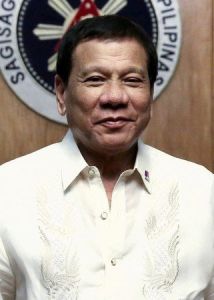
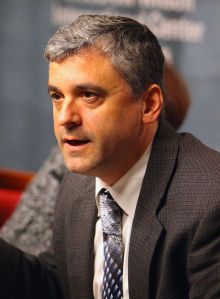





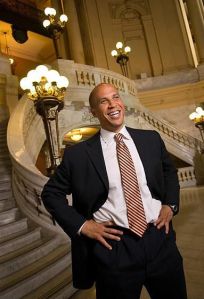


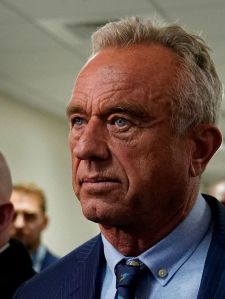
















 peej
peej Carissa
 bostonboomer
 dakinikat
 ecocatwoman
 mablue2
 Mama Lopez
 peggysue22
 quixote
 skydancingguestblogger
 Mona (aka Wonk the Vote)



 Sky Dancing
Recent Comments