Posted: October 16, 2024 | Author: bostonboomer | Filed under: 2024 presidential Campaign, Donald Trump, Kamala Harris 2024 | Tags: cognitive decline, dementia, Donald Trump, economics, Kamala Harris, November 2024 Elections, politics, tariffs, Trump, violence |
Good Day!!

Weeping Woman, Pablo Picasso
There are only 19 days to go until November 5. I believe that Kamala Harris will win, but I was also sure Hillary Clinton would win in 2016.
Both Harris and Trump have been holding rallies and giving interviews. She speaks in complete sentences and discusses her policies in a coherent fashion. He can’t complete a sentence, mispronounces words, rambles nonsensically, and has no understanding of his own policies. And, of course, he is a pathological liar.
Harris is a former prosecutor who is committed to the rule of law. Trump is a convicted felon out on bail, with multiple indictments hanging over his head. How can the race be close?
One positive development is that Trump’s dementia and his violent rhetoric and threats are getting more attention in the media. He and his advisers may well live to regret driving Joe Biden out of the race.
I feel as if my life is on hold until I know who will win this election. If Harris wins, my life will continue on its current track. If Trump wins, everything will change–and not in a good way. In addition, the chaos we have all lived through in the past 9 years will continue and most likely get much worse. That’s where things stand right now, as I see it.
State of the Race
In the latest national polls, Harris leads by a few points.
Marist Poll: Harris +5 Points Against Trump Nationally.
In the presidential contest, Vice President Kamala Harris leads former President Donald Trump by five points among likely voters, including those who are undecided yet leaning toward a candidate. The race gets closer, however, among registered voters nationally. Here, three points separate the two candidates.
- Harris (52%) leads Trump (47%) among likely voters nationally, including those who are undecided yet leaning toward a candidate. Earlier this month, two points separated Harris (50%) and Trump (48%) among likely voters.
- The contest is tighter among registered voters. Among the general electorate, Harris receives 51% to 48% for Trump. In early October, the same margin separated Harris (50%) and Trump (47%) among the broader electorate.
- Trump (54%) leads Harris (44%) among independents who are likely to vote, widening the 4-point edge Trump (50%) had against Harris (46%) previously.
- Trump (53%) leads Harris (47%) among men who are likely to vote while Harris (57%) has the advantage over Trump (42%) among women.
- While members of Gen X divide (51% for Harris to 48% for Trump), Harris has majority support among GenZ/Millennials (53%) and among Baby Boomers/the Silent-Greatest Generations (55%).
Read more details at the link.
Reuters: Exclusive: Harris holds steady, marginal 45%-42% lead over Trump, Reuters/Ipsos poll finds.
Summary:
— Harris leads Trump by 3 points in Reuters/Ipsos poll
— Voter enthusiasm higher than in 2020
— Harris favored on healthcare, Trump on economy
Democratic Vice President Kamala Harris held a marginal 3-percentage-point lead over Republican Donald Trump – 45% to 42% – as the two stayed locked in a tight race to win the Nov. 5 U.S. presidential election, a new Reuters/Ipsos poll found.
While the gap between the two remained steady compared with a Reuters/Ipsos poll conducted a week earlier, the new poll, which closed on Sunday, gave signs that voters – particularly Democrats – might be more enthused about this year’s election than they were ahead of the November 2020 presidential election when Democrat Joe Biden defeated Trump.
Some 78% of registered voters in the three-day poll – including 86% of Democrats and 81% of Republicans – said they were “completely certain” they would cast a ballot in the presidential election. The share of sure-to-vote poll respondents was up from 74% in a Reuters/Ipsos survey conducted Oct. 23-27, 2020, when 74% of Democrats and 79% of Republicans said they were certain to cast ballots.
The poll had a margin of error of around 4 percentage points.

Tension in Red, Wassily Kandinsky
Early voting has begun. CNN reports: Record number of early votes cast in Georgia as election gets underway in battleground state.
A record number of early votes have been cast in Georgia on Tuesday as residents headed to the polls in a critical battleground state that is grappling with the fallout from Hurricane Helene and controversial election administration changes that have spurred a flurry of lawsuits.
More than 328,000 ballots were cast Tuesday, Gabe Sterling of the Georgia secretary of state’s office said on X. “So with the record breaking 1st day of early voting and accepted absentees we have had over 328,000 total votes cast so far,” he said.
The previous first day record was 136,000 in 2020, Sterling said.
The swing state is one of the most closely watched this election, with former President Donald Trump trying to reclaim it after losing there to President Joe Biden by a small margin four years ago, leading Trump and his allies to unsuccessfully push to overturn his defeat.
Those efforts have loomed large this year as new changes to how the state conducts elections have been approved by Republican members of the State Election Board, leading Democrats and others to mount legal challenges, many of which have yet to be resolved even as Election Day nears.
Despite the massive turnout on Tuesday, the process appeared to go smoother this year for some Atlanta-area voters who spoke with CNN.
“Last time I voted, I voted in the city and the lines were out the door. They only had like, maybe like three people working,” said Corine Canada. “So people honestly just started leaving because it was like that. Yeah, like, ‘This is too long. I can’t sit here (and) wait, I have to go back to work.’ But here, no, it was easy.”
Dementia Don
Yesterday Trump appeared at the Economic Club of Chicago and gave a disastrous interview. He mostly talked about his plan to put high tariffs on imports, and continued to claim that these tariffs would be paid by foreign countries and not by Americans paying higher prices. Other news from the interview: he would not commit to allowing a peaceful transfer of power if he loses the election.
Nikki McCann Ramirez and Ryan Bort at Rolling Stone: Trump Crumbles When Pressed on Economic Policy in Tense Interview.
Donald Trump continued his pre-election economic event tour on Tuesday with a lengthy interview with Bloomberg at the Economic Club of Chicago. It was a total mess.
Bloomberg Editor-In-Chief John Micklethwait did not take it easy on Trump, and it quickly became clear that the former president has no conception of the mechanics of or the potential ramifications of the economic platform he’s running on. Bluntly, the former president was incoherent when pressed with real questions about his policies.
Micklethwait spent most of the interview attempting to break Trump out of what the former president repeatedly referred to as “the weave,” his term for his rambling digressions — with ever-decreasing intelligibility — and general inability to focus on a given topic for more than a few seconds during his rallies and interviews.
Micklethwait didn’t weave along with Trump, however, repeatedly working to bring him back on topic and answer the actual questions. The grilling exposed Trump’s total cluelessness with regard to his own economic policy, and led Trump to attack Micklethwait as biased….
The central pillar of Trump’s economic plan is widespread tariffs on all imported goods, with penalties appearing to increase depending on how much he dislikes the country. Economists have warned that such a policy could have devastating effects on American consumers, who would be saddled with increased costs for all imported goods.
When questioned about the specifics of his plan, and if he was aware of its pitfalls, Trump seemed ignorant of basic economic principles, insisting that other countries, not American consumers, would pay for the tariffs.
A bit more:
Micklethwait tried to explain the actual impact. “Three-trillion worth of imports and you will add tariffs to every single one of them, and push up the cost for all of these people to buy foreign goods,” he said. “That is just simple mathematics.”
Trump countered that he was “always good at mathematics,” and that high tariffs — and thus costs — would force companies to move production into the United States.

Anxiety, by Edvard Munch
“That will take many, many, many years,” Micklethwait said, to which Trump replied that high enough penalties would make the move immediate as if companies could simply wand wave production plants, orchards, wineries, factories, and the like into existence.
The former president also insisted that his tariff proposal would not result in the loss of jobs that are dependent on trade, because companies that moved to the U.S. would not be subject to the tax. “All you have to do is build your plant in the United States and you don’t have any tariffs,” he said…..
Micklethwait’s attempts to keep Trump on topic earned him no grace from the former president, who hates few things more than being contradicted.
When Micklethwait asked Trump to address a report by The Wall Street Journal estimating that his economic proposals would raise the national debt by upwards of $7 trillion, the former president fell back on his standard playbook: bashing the interviewer.
“What does The Wall Street Journal know? They’ve been wrong about everything, and so have you by the way, you’ve been wrong,” Trump replied, crossing his arms and curling into his seat.
“You’ve been wrong all your life on this stuff,” he added.
There’s more at the link. I didn’t encounter a paywall when I clicked on the link at Memeorandum.
At The Washington Post, Jeff Stein and David J. Lynch write about the effects of Trump’s proposed tariffs: ‘Off the charts’: How Trump tariffs would shock U.S., world economies.
Former president Donald Trump is campaigning on the most significant increase in tariffs in close to a century, preparing an attack on the international trade order that would likely raise prices, hurt the stock market and spark economic feuds with much of the world.
Trump’s trade plans, a staple of his stump speeches, have fluctuated, but he consistently calls for steep duties to discourage imports and promote domestic production. The former president has floated “automatic” tariffs of 10 percent to 20 percent on every U.S. trading partner, 60 percent levies on goods from China, and rates as high as 100, 200 or even 1,000 percent in other circumstances.
These proposals would go far beyond the disruptive trade wars of his first term even if they are only partially implemented. They would wrench the nation out of the system of global interdependence that arose in recent decades, making the U.S. economy much more isolated and autonomous, like it was in the late 19th century. (Trump last week falsely claimed that the United States was never richer than in the 1890s, when it had high trade barriers.)
“To me, the most beautiful word in the dictionary is tariff. And it’s my favorite,” Trump said in Chicago on Tuesday. “I’m a believer in tariffs.”
The consequences would be far-reaching: Americans would be hit by higher prices for grocery staples from abroad, such as fruit, vegetables and coffee. Domestic firms dependent on imports would need to either figure out new supply chains or raise costs for consumers. U.S. manufacturers would almost certainly see sharp declines in orders from abroad as foreign nations impose retaliatory tariffs.
“We are talking about a plan of historic significance: It would be enormous, and the blowback would be even more enormous,” said Douglas A. Irwin, an economist at Dartmouth College who authored a 2017 book on the history of U.S. trade policy. “This would stand way off the charts.”
Companies and governments around the world have begun preparing contingency plans for the potential Trump tariffs. Diplomats and business leaders from Latin America, Europe, Asia and even Canada have in recent weeks asked their U.S. counterparts about Trump’s intentions and authorities, according to interviews with several domestic and international economic advisers, some of whom spoke on the condition of anonymity to reflect private planning.
While some business leaders and congressional Republicans remain optimistic that the former president is engaged in election-year posturing, Trump has repeatedly insisted that tariffs represent an unmitigated positive for the U.S. economy, recently calling them “the greatest thing ever invented.” Tariffs have been a constant bedrock of his economic agenda since he first ran in 2016, along with lower taxes, increased energy production and deregulation.
William Kristol and Andrew Egger write at The Bulwark: The Delusions of the Donald.
You should watch the interview Trump did yesterday at the Economic Club of Chicago. You might think you’ve got a pretty good idea of the big guy’s solipsism, his buffoonish overconfidence, his utter inability to engage on matters of policy. Watch a few answers, and you’ll be forced to conclude: It’s way worse than you thought.

Victor Wang, Emotional tension and psychological drama
Bloomberg News editor-in-chief John Micklethwait began by asking Trump simple questions, like how he plans to pay for the $7 trillion hole his proposals would blow in the federal deficit. Trump responded with his ordinary magical thinking about making that sum back through a combination of growth and tariffs. “To me, the most beautiful word in the dictionary is ‘tariff,’” he said. “It’s my favorite word . . . the most beautiful word.”
Micklethwait asked how Trump planned to follow through on his promises of trimming the fat of wasteful spending. Trump responded with a lengthy story about him personally spending months negotiating with Boeing over a contract for new planes to serve as Air Force One, which ultimately saved the government more than a billion dollars. A cool story—until you remember the federal government spends an average of nearly $17 billion a day.
It takes a certain amount of ego and delusion to run for president. Trump has those characteristics in excess. But what stood out at the talk yesterday was the degree to which these are now the only elements undergirding his vision. Gone is the talk about surrounding himself with the best people. Dropped is the pretense that his answers are coherent. (Trump has started referring to his meandering logorrhea as “the weave.”) The pitch instead is that some sort of mad genius remains within him: Trust me, I’m the deals guy! I’ll get the best deals!
But there’s a lot more to guiding the economy than dealmaking, and even the most capable, hard-nosed, mano-a-mano negotiating with individual vendors can only take you so far.
There’s more about the interview at the link. There’s no paywall.
More news from the Micklethwait interview from Mini Racker at The Daily Beast: Trump Gives Ominous Clue About What May Happen If He Loses.
Donald Trump on Tuesday dodged the question of whether he will allow for a peaceful certification of election results if Kamala Harris defeats him in three weeks.
During an interview at the Economic Club of Chicago, Bloomberg Editor-in-Chief John Micklethwait asked Trump if he would commit “to respecting and encouraging a peaceful transfer of power,” especially in light of Jan. 6, 2021, which the journalist called “unruly and violent.”
Trump didn’t answer the question. Instead, he rejected the premise and blamed Micklethwait as “a man that has not been a big Trump fan over the years.” He also falsely claimed that he allowed for a peaceful transfer of power in 2020, when Joe Biden defeated him.
“Come on, President Trump, you had a peaceful transfer of power compared to Venezuela, but it was by far the worst transfer of power for a long time,” Micklethwait insisted.
The audience booed and Trump thanked them. The former president then admitted that people were angry when they arrived in Washington to protest the results that January—but according to him, they were perfectly behaved.
“It was love and peace, and some people went to the Capitol,” Trump said. “And a lot of strange things happened there, a lot of strange things, with people being waved into the Capitol by police.”
For perhaps the first time, Trump downplayed his crowd size.
He added that he left the White House the morning he was supposed to and that only a fraction of the protestors were among those who breached and defaced the Capitol.
“Not one of those people had a gun, nobody was killed, except for Ashli Babbitt,” he said.
That is a lie, of course. A number of guns were confiscated, and there were probably many more, since none of the insurrectionists were detained and searched. As for deaths, four of his supporters died that day, and a capitol police officer died from injuries inflicted in the riot.
There is a growing discussion in alternative media of Trump’s age obvious cognitive decline, and some in the legacy media are also beginning to call attention to it. Examples:
Aaron Rupar at Public Notice: Trump’s campaign is trying to hide his sad state from voters.
MAGA-friendly CNBC host Joe Kernen dropped an interesting nugget right as Squawk Box went to commercial break on Tuesday.
“Well, Trump canceled, and he was going to come on,” Kernen said.
Not only did Trump once love going on CNBC, but Kernen’s revelation comes on the heels of Trump declining or canceling a number of other high-profile opportunities to make a pitch to voters on mainstream TV. Trump refused to debate Kamala Harris a second time, which would’ve aired on CNN. Trump then refused CNN’s offer to host a town hall. And Trump of course also recently backed out of a 60 Minutes interview.

Still Tension, Wassily Kandinsky
The explanation for all this is not that Trump has suddenly become camera shy. It’s that his campaign undoubtedly realizes his rapidly degrading condition doesn’t play well with audiences beyond the MAGA cult. As a result, they’re retreating to the safer terrain of nonstop rallies and fawning Fox hits….
The reason Trump’s campaign isn’t keen to get him in front of swing voters on mainstream platforms was on stark display Tuesday when Trump did a rare event that wasn’t a festival of sycophancy.
By any objective standard, Trump’s Economic Club of Chicago interview was a disaster. He came out of the gates with an asinine proposal for 2,000 percent tariffs on imported cars, then was quickly reduced to insulting the moderator, Bloomberg’s John Micklethwait, when Micklethwait rightly pointed out that his his economic proposals are an inflationary disaster. (Watch below.)
Trump repeatedly refused to answer questions Micklethwait asked him, instead going on self-absorbed rants about how Google is unfair to him or about how he could do a better job as Federal Reserve chairman than Jerome Powell.
By the end of the event, Trump had veered into making an impassioned defense of the big lie and his coup attempt, bragging about his crowd size on January 6 and absurdly claiming the events of that day were just “love and peace.” (Watch below.)
Marianne LeVine at The Washington Post: Trump sways and bops to music for 39 minutes in bizarre town hall episode.
OAKS, Pa. — The town hall, moderated by South Dakota Gov. Kristi L. Noem (R), began with questions from preselected attendees for the former president. Donald Trump offered meandering answers on how he would address housing affordability and help small businesses. But it took a sudden turn after two attendees required medical attention.
And so Trump, after jokingly asking the crowd whether “anybody else would like to faint,” took a different approach.
“Let’s not do any more questions. Let’s just listen to music. Let’s make it into a music. Who the hell wants to hear questions, right?” he said.
For 39 minutes, Trump swayed, bopped — sometimes stopping to speak — as he turned the event into almost a living-room listening session of his favorite songs from his self-curated rally playlist.
He played nine tracks. He danced. He shook hands with people onstage. He pointed to the crowd. Noem stood beside him, nodding with her hands clasped. Trump stayed in place onstage, slowly moving back and forth. He was done answering questions for the night….
As Trump stood onstage in his oversize suit and bright red tie, swaying back and forth, it was almost as if he were taking a trip back to decades past. Trump’s decision to cut short the question-and-answer portion of the town hall and instead have the crowd stay to listen to his favorite songs was a somewhat bizarre move, given that the election was only 22 days away. Vice President Kamala Harris has called Trump, 78, unstable and questioned his mental acuity.
Some in the crowd began to leave. Some looked around, wondering whether he was done speaking for the night and how much longer the dance — or sway — session would last. Many stayed holding their cameras and watched as Trump took in the music, at times looking over at a screen beside him that showed videos of James Brown singing “It’s a Man’s Man’s Man’sWorld” and Sinéad O’Connor performing “Nothing Compares 2 U.”
Eric Schmeltzer at Newsweek: Dancing Donald Trump Is Clearly in a Steep Decline | Opinion.
For 38 minutes or so, former President Donald Trump was in a happy place. After some people collapsed at his town hall, Trump got frustrated, decided he’d had enough softball questions from Gov. Kristi Noem (R-SD) and asked to play music. For nearly 40 minutes, Trump kept asking for more music, swaying oddly in front of the crowd, occasionally closing his eyes, and retreating to a comforting place in his mind, like being wrapped in a warm blanket.

The Anxiety Monster, by Jeremy Campbell
For those of us who’ve had family members slip into dementia, it was a familiar sight. Both of my grandmothers suffered it near the ends of their lives. Even before they were sent to nursing homes, they started to exhibit increased frustration and even anger. My maternal grandmother accused her caretaker of purposely turning the shower knob too tight so she would have to come in and see my grandmother naked. But she also liked to sing old-time songs she remembered. She had her happy place—an oasis in a time of increasing confusion. Then, there were other times she was completely lucid. She would talk about the situation in the Middle East (which was still a thing back then, too) with total clarity. There were good days and there were bad days.
It isn’t like we haven’t seen Trump’s behavior with our own eyes. It isn’t like media hasn’t noticed it, either. And yet, no one seems to want to talk about the distinct possibility that Trump is well on the way to the same state my grandmothers found themselves in and that millions of Americans find friends and family in – severe cognitive decline, if not outright dementia.
For 38 minutes or so, former President Donald Trump was in a happy place. After some people collapsed at his town hall, Trump got frustrated, decided he’d had enough softball questions from Gov. Kristi Noem (R-SD) and asked to play music. For nearly 40 minutes, Trump kept asking for more music, swaying oddly in front of the crowd, occasionally closing his eyes, and retreating to a comforting place in his mind, like being wrapped in a warm blanket.
For those of us who’ve had family members slip into dementia, it was a familiar sight. Both of my grandmothers suffered it near the ends of their lives. Even before they were sent to nursing homes, they started to exhibit increased frustration and even anger. My maternal grandmother accused her caretaker of purposely turning the shower knob too tight so she would have to come in and see my grandmother naked. But she also liked to sing old-time songs she remembered. She had her happy place—an oasis in a time of increasing confusion. Then, there were other times she was completely lucid. She would talk about the situation in the Middle East (which was still a thing back then, too) with total clarity. There were good days and there were bad days.
It isn’t like we haven’t seen Trump’s behavior with our own eyes. It isn’t like media hasn’t noticed it, either. And yet, no one seems to want to talk about the distinct possibility that Trump is well on the way to the same state my grandmothers found themselves in and that millions of Americans find friends and family in – severe cognitive decline, if not outright dementia.
Politico noted that Trump’s language is getting darker and angrier than it used to be. Doctors have noticed his speech patterns point to decline, as well. His campaign has bizarrely and very abruptly canceled interviews with 60 Minutes and CNBC. He confuses the gender of people he talks about. He keeps saying that he is running against President Biden. He confused the name of his doctor, when talking about his cognitive test.
Clips of him in 2016 and now show a very sharp decline and inability to maintain a train of thought.
Angry, frustrated, confused, unable to focus. And now, he retreats to his happy place in a time of stress. Put it all together and ask yourself if that’s someone you’d trust to take care of your kids in a house with a working stove.
Lisa Lehrer and Michael Gold at The New York Times on Trump’s violent rhetoric: Trump Escalates Threats to Political Opponents He Deems the ‘Enemy.’
With three weeks left before Election Day, former President Donald J. Trump is pushing to the forefront of his campaign a menacing political threat: that he would use the power of the presidency to crush those who disagree with him.
In a Fox News interview on Sunday, Mr. Trump framed Democrats as a pernicious “enemy from within” that would cause chaos on Election Day that he speculated the National Guard might need to handle.
A day later, he closed his remarks to a crowd at what was billed as a town hall in Pennsylvania with a stark message about his political opponents.
“They are so bad and frankly, they’re evil,” Mr. Trump said. “They’re evil. What they’ve done, they’ve weaponized, they’ve weaponized our elections. They’ve done things that nobody thought was even possible.”
And on Tuesday, he once again refused to commit to a peaceful transfer of power when pressed by an interviewer at an economic forum in Chicago.
With early voting underway in key battlegrounds, the race for the White House is moving toward Election Day in an extraordinary and sobering fashion. Mr. Trump has long flirted with, if not openly endorsed, anti-democratic tendencies with his continued refusal to accept the results of the 2020 election, embrace of conspiracy theories of large-scale voter fraud and accusations that the justice system is being weaponized against him. He has praised leaders including President Vladimir V. Putin of Russia and Prime Minister Viktor Orban of Hungary for being authoritarian strongmen.
But never before has a presidential nominee — let alone a former president — openly suggested turning the military on American citizens simply because they oppose his candidacy. As he escalates his threats of political retribution, Mr. Trump is offering voters the choice of a very different, and far less democratic, form of American government.
“There is not a case in American history where a presidential candidate has run for office on a promise that they would exact retribution against anyone they perceive as not supporting them in the campaign,” said Ian Bassin, a former associate White House counsel under Barack Obama who leads the advocacy group Protect Democracy. “It’s so fundamentally, outrageously beyond the pale of how this country has worked that it’s hard to articulate how insane it is.”
Harris and Waltz are also calling attention to Trump’s cognitive issues and threats. They have three weeks left to educate the public an get legacy media to focus on Trump’s age and obvious dementia.
Take care everyone and keep hope alive, as Jesse Jackson used to say.
Did you like this post? Please share it with your friends:
Posted: March 13, 2024 | Author: bostonboomer | Filed under: 2024 presidential Campaign, Donald Trump, Joe Biden, just because | Tags: Adam Schiff, Bill Barr, classified documents, cognitive decline, Eric Swalwell, House Judiciary Committee, James Comey, memory issues, President Joe Biden, Special Counsel Robert Hur |
Good Day!!
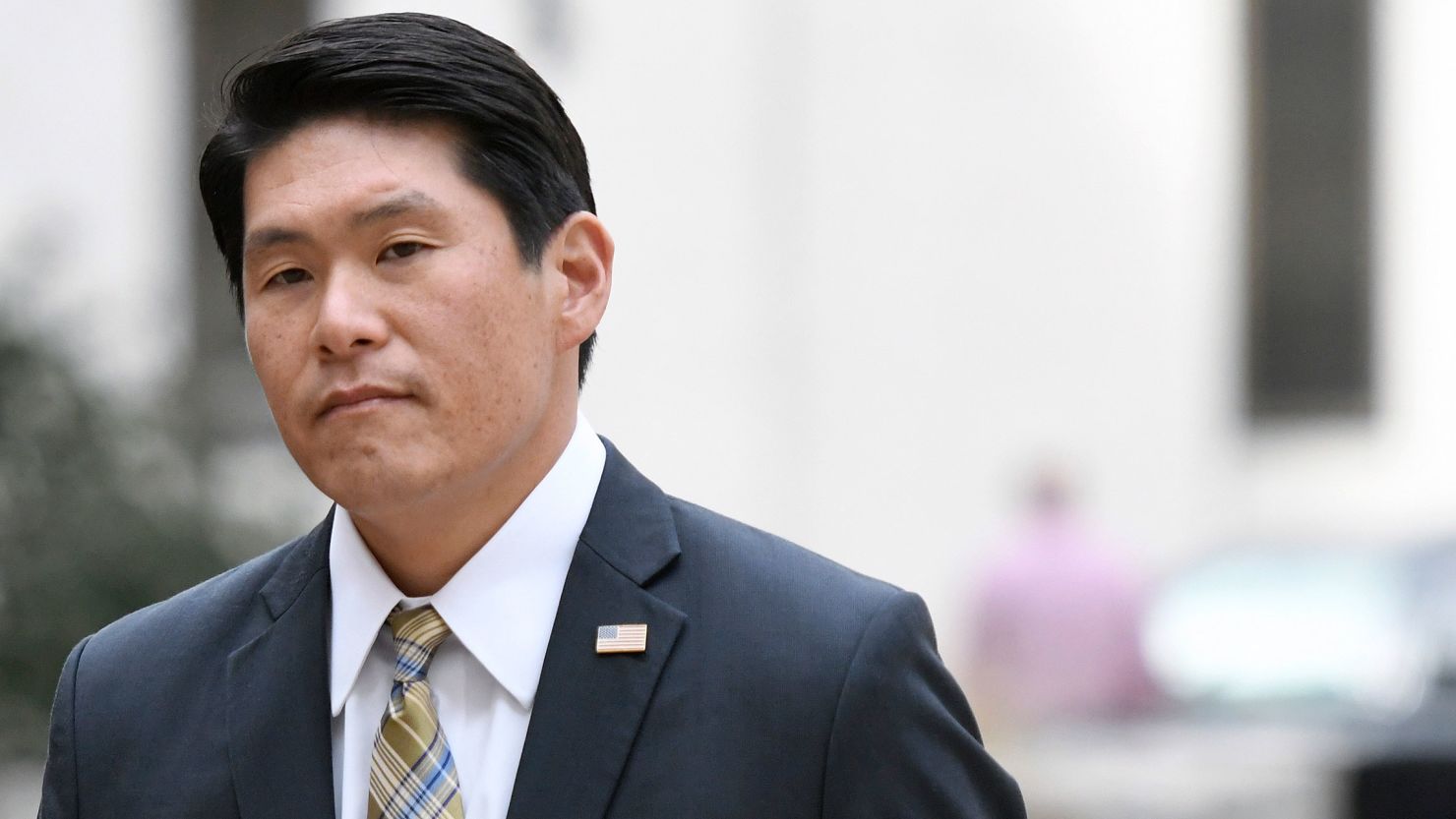
The self-satisfied Mr. Robert Hur
Yesterday Robert Hur testified before the House Judiciary Committee. Before his appearance, Hur resigned from the Department of Justice and reportedly worked with Republicans in preparing his testimony. Hur and his Republican pals made every effort to make Biden look bad, but Democrats were well prepared to counter those efforts. And, unfortunately for Hur, the transcript of his interviews with Biden was also released yesterday.
You probably recall that Hur’s final report included gratuitous claims about President Biden’s age and cognitive abilities. Some observers have compared Hur’s behavior with that of James Comey’s attack on Hillary Clinton just before the 2016 election. Fortunately, we are months away from the 2024 vote.
Molly Jong-Fast at MSNBC: Robert Hur took a page from the James Comey playbook — and made it worse.
I remember where I was on Oct. 28, 2016, the day James Comey released his letter. I was at a health food restaurant with a Republican friend of mine. “This is going to lose her the election,” I told my friend. I felt like I was going to throw up. I knew what a Donald Trump presidency would mean for women, for all of us.
“Don’t be silly,” said my friend, who I suspect later voted for Trump. The New York Times had the story on the front page: “Emails in Anthony Weiner Inquiry Jolt Hillary Clinton’s Campaign.” On Nov. 8, 2016, Clinton lost the election to Trump 304 to 227. The Comey letter had created just enough muddiness to make it seem like both candidates were ethically challenged. It was the false equivalence that Trump was able to ride to the White House. Data guru Nate Silver wrote that the Comey letter “was probably enough to change the outcome of the Electoral College.” Not only did Comey make Trump president but then he wrote numerous very tedious books. He became a resistance hero, riding his regret all the way to the bank.
Fast-forward to Feb. 8, 2024, when Republican special counsel Robert Hur released his 345-page report. The report is being seen by some as an exoneration, saying that no criminal charges are warranted in the classified documents case against President Joe Biden. But Hur, who used to work for the Trump administration, couldn’t let Biden off the hook entirely, especially 269 days before an election. Hur, a member of a Republican Party that now largely works as a campaign arm for the former president, delivered the goods for his party. Sure, he found no legal basis to charge Biden, but but but… Hur proceeded to editorialize ad nauseam about Biden’s mental acuity, delivering right-wing talking points up on a platter. He wrote, “[At] trial, Mr. Biden would likely present himself to a jury, as he did during our interview of him, as a sympathetic, well-meaning, elderly man with a poor memory.”
Saying you don’t remember stuff in a deposition is pretty much standard. For example, Dr. Anthony Fauci said “I don’t recall” 174 times during a deposition about alleged collusion between the Biden administration and social media platforms — but because there isn’t a narrative about Fauci’s age crafted by Trump World, no one thought this had anything to do with his mental acuity….
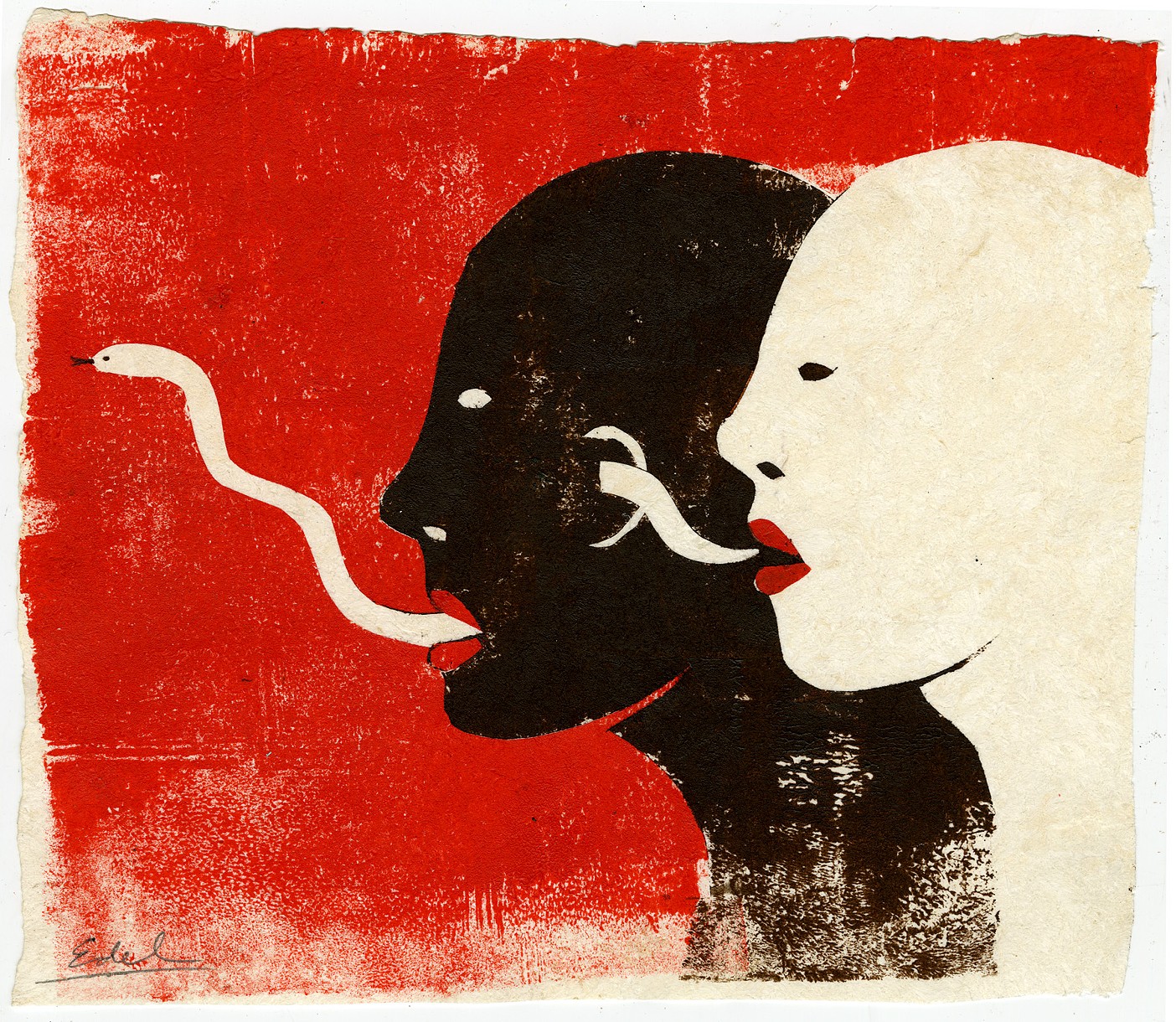
Lies, by Edel Rodriguez
Hur’s report was a partisan hit job, but it didn’t matter, as former Obama chief of staff Jim Messina tweeted: “Let’s be clear — the special counsel isn’t a dummy and we should be very careful not to take the bait after Comey pulled this in 2016. Hur, a lifelong Republican and creature of DC, didn’t have a case against Biden, but he knew exactly how his swipes could hurt Biden politically.”
Joe Scarborough put it even more succinctly: “He couldn’t indict Biden legally, so he tried to indict Biden politically.” Yet again, a Republican special counsel had put his finger on the scale, just like Comey did in 2016. Hur isn’t a neurologist; he has no idea what Biden’s mental acuity is. Former attorney general Eric Holder condemned the report: “Special Counsel Hur report on Biden classified documents issues contains way too many gratuitous remarks and is flatly inconsistent with long standing DOJ traditions,” he posted on X, adding: “Had this report been subject to a normal DOJ review these remarks would undoubtedly have been excised.” Shame on Attorney General Merrick Garland for letting this partisan hit job be released.
Some background information on Hur from AP (written before yesterday’s testimony): Who is Robert Hur? A look at the special counsel due to testify on Biden classified documents case.
The special counsel who impugned the president’s age and competence in his report on how Joe Biden handled classified documents will himself be up for questioning this week.
Robert Hur is scheduled to testify before a congressional committee on Tuesday as House Republicans try to keep the spotlight on unflattering assessments of Biden.
Some Biden aides and allies have suggested that Hur, a Republican appointed to his role as U.S. attorney by Donald Trump, is a political partisan. Hur’s defenders say he has shown throughout his career that his work is guided by only facts and the law — not politics.
A review of Hur’s professional life shows he’s no stranger to politically charged investigations. He prosecuted former elected officials as Maryland’s chief federal law enforcement officer. And as a Justice Department official, he helped monitor special counsel Robert Mueller’s investigation into Russian interference in the 2016 presidential election….

The Naked Truth and the Masked Lies, by Rosita Allinckx
Hur held one of the most powerful jobs in the Justice Department during a tumultuous time in the Trump administration, serving as the top aide to [Rod] Rosenstein, the department’s second-in-command.
As the principal associate deputy attorney general, Hur helped run day-to-day operations of the department in 2017 and early 2018. He also helped Rosenstein stay on top of Mueller’s progress in the Russia investigation. Hur held bi-weekly meetings with the special counsel’s team and reported back to Rosenstein, the former deputy attorney general said in an interview.
Rosenstein said he hired Hur because he knew he would maintain a calm and steady demeanor and “approach cases in a nonpartisan way.”
Um . . . Sure, Jan. Read more background at the link.
Why did Hur resign from the DOJ before testifying? Doesn’t that seem suspicious?
Igor Deyrsh at Yahoo News: Biden special counsel Robert Hur’s resignation from DOJ makes his testimony “even more problematic.”
Hur, a Trump-appointed U.S. attorney who was tapped to lead the Biden probe by Attorney General Merrick Garland, formally stepped down one day before his Tuesday appearance at the request of Republicans led by Chairman Jim Jordan, R-Ohio. He drew criticism from Biden and the Democrats for criticizing the president’s memory in the report even as he declined to charge him.
Former Mueller prosecutor Andrew Weissmann explained that the Justice Department “cannot give instructions” to a former employee about what he “can and cannot testify to.”
“That makes it even more problematic from our perspective … if he was still a federal employee, DOJ would have to approve his testimony and they’d be involved in his appearance tomorrow,” a Democratic Judiciary Committee source told The Independent.
“It’s hard not to anticipate some real ugliness with Robert Hur’s testimony,” tweeted former U.S. Attorney Harry Litman. “He already showed his partisan colors in the inappropriate parts of his report. And he and the [Republicans] obviously contemplate he can vilify Biden now that he’s testifying as a ‘private citizen.’”
So it appears Hur’s motivation was to have the freedom to attack Biden without any DOJ influence on what he would say. Before I get to the testimony, here are some stories about Hur’s final report:
Adam Serwer at The Atlantic: How Hur Misled the Country on Biden’s Memory.
“First impressions stick,” writes Serwer. No matter that clarifications follow–it’s what people hear first that stays with them.
Five years ago, a partisan political operative with the credibility of a long career in government service misled the public about official documents in order to get Donald Trump the positive spin he wanted in the press. The play worked so well that a special counsel appointed to examine President Joe Biden’s handling of classified documents, Robert Hur, ran it again.
In 2019, then–Attorney General Bill Barr—who would later resign amid Trump’s attempts to suborn the Justice Department into backing his effort to seize power after losing reelection—announced that Special Counsel Robert Mueller had not found sufficient evidence to indict Trump on allegations that he had assisted in a Russian effort to sway the 2016 election and had obstructed an investigation into that effort. Mueller’s investigation led to indictments of several Trump associates, but he later testified that Justice Department policy barred prosecuting a sitting president, and so indicting Trump was not an option. Barr’s summary—which suggested that Trump had been absolved of any crimes—was so misleading that it drew a rebuke not only from Mueller himself but from a federal judge in a public-records lawsuit over material related to the investigation. That judge, Reggie Walton, wrote in 2020 that the discrepancies “cause the court to seriously question whether Attorney General Barr made a calculated attempt to influence public discourse about the Mueller report in favor of President Trump despite certain findings in the redacted version of the Mueller report to the contrary.”

Truth and Lies, by Louise Fletcher
As my colleague David Graham wrote at the time, the ploy worked. Trump claimed “total exoneration,” and mainstream outlets blared his innocence in towering headlines. Only later did the public learn that Mueller’s report had found “no criminal conspiracy but considerable links between Donald Trump’s campaign and Russia, and strongly suggested that Trump had obstructed justice.”
Now this same pattern has emerged once again, only instead of working in the president’s favor, it has undermined him. Hur, a former U.S. attorney in the Trump administration, was appointed by Attorney General Merrick Garland to investigate Biden for potential criminal wrongdoing after classified documents were found at his home. (Trump has been indicted on charges that he deliberately mishandled classified documents after storing such documents at his home in Florida and deliberately showing them off to visitors as “highly confidential” and “secret information.”)
In Hur’s own summary of his investigation, he concluded that “no criminal charges are warranted in this matter,” even absent DOJ policy barring prosecution of a sitting president. But that part was not what caught the media’s attention. Rather it was Hur’s characterization of Biden as having memory problems, validating conservative attacks on the president as too old to do the job. The transcripts of Hur’s interviews with Biden, released yesterday by House Democrats, suggest that characterization—politically convenient for Republicans and the Trump campaign—was misleading.
Read the rest at the Atlantic.
And how did Hur mislead?
Andrew Prokop at Vox: Robert Hur’s report exaggerated Biden’s memory issues.
When special counsel Robert Hur released his report last month explaining why he wouldn’t charge President Joe Biden with mishandling classified documents, his claim that Biden displayed a “poor memory” and “diminished faculties” in their interview received enormous attention.
But now, the full transcripts of Hur’s interviews with Biden have been released — and they make Hur’s claims about Biden’s memory appear cherry-picked and exaggerated.
Biden sat for more than five hours with Hur’s team over two days. In that time, he said he did not recall specifics about how particular boxes ended up in his residences or offices after his vice presidency. But he engaged at length about his process for handling classified information and many other topics.
Hur’s claim that Biden had demonstrated some sort of general “poor memory” hangs almost entirely on mix-ups by Biden about in what specific year several years-old events occurred. The transcript makes clear Biden remembers all those events. But it seems Biden just doesn’t pay a lot of attention to which specific year stuff happened in.
So why did Hur hype this up so much?
His report and his House testimony Tuesday suggest one reason. Hur proposed a theory, outlined in the report, about Biden’s deliberate wrongdoing — that Biden kept classified documents about Afghanistan policy deliberations to help burnish his reputation and legacy.
However, Hur couldn’t prove this theory, in part because Biden said he couldn’t recall why these documents were in his garage. Hence, the special counsel bashed Biden for his “poor memory” — knowing full well how that would play when the report became public.

Truth Hidden Between the Lies, by Jeff Klena
This is a good article, and it also deals with Hur’s testimony and how Democrats’ countered his claims. After breaking down problems with Hur’s report, Prokop quotes Adam Schiff:
Hur’s report looks less like a smoking gun proving Biden’s supposed age-related decline, and more like dirty pool, Rep. Adam Schiff (D-CA) argued.
“You know this, I know this, there is nothing more common with a witness of any age, when asked about events that are years old, than to say ‘I do not recall.’ Indeed, they’re instructed by their attorney to do that, if they have any question about it,” Schiff said.
Hur argued back that his consideration of Biden’s memory was relevant to his charging decisions, and that he was perfectly willing, indeed required, to explain his thinking on that topic in his report to the attorney general.
Schiff disputed this. “What is in the rules is, you don’t gratuitously do things to prejudice the subject of an investigation when you’re declining to prosecute. You don’t gratuitously add language that you know will be useful in a political campaign.”
“You were not born yesterday,” Schiff added. “You understood exactly what you were doing. It was a choice.”
Why on earth did Merrick Garland appoint this guy?
Chris Megerian at AP: Hur said Biden couldn’t recall when his son died. The interview transcript is more complicated.
The White House knew it had a political problem on its hands when a special counsel report questioned President Joe Biden’s memory last month, but Biden saw a much more personal affront as well.
Robert Hur, who had been appointed to investigate whether Biden mishandled classified documents, wrote that the president couldn’t recall in an interview with prosecutors the date when his adult son, Beau, died of cancer. It was a shocking contention about a keystone event in Biden’s life, and it fed into questions about whether the 81-year-old president is fit to serve another term….
Hur didn’t ask the president about his son’s death; Biden brought it up himself during a discussion about how he stored documents at a rental home in Virginia after leaving the vice president’s office in 2017.
And Biden recalled the specific date that Beau died, although he briefly wondered aloud about the year as the conversation toggled between various events.
“What month did Beau die?” Biden mused. “Oh, God, May 30th.”
A White House lawyer interjected by saying, “2015.”
“Was it 2015 he had died?” Biden asked. When someone responded affirmatively, the president added, “It was 2015.” [….]
Hur, in his testimony before the House Judiciary Committee, said his report’s discussion of Biden’s memory was “necessary and accurate and fair” because his state of mind was an important part of evaluating whether he committed a crime.
“I did not sanitize my explanation nor did I disparage the president unfairly,” he said.
What an asshole! As Adam Serwer wrote, Hur made sure that the first impression he gave of Biden’s interviews was on of a doddering old man with cognitive issues.

Fraud, by Carl Bowlby
Yesterday, Eric Swalwell got Hur to admit that during one of the interviews he characterized Biden as having a “photographic memory!” From HuffPost, via Yahoo News: Robert Hur Admits Telling Biden He Seemed To Have ‘Photographic Recall.’
Although special counsel Robert Hur impugned Joe Biden’s memory in his investigation over whether the president mishandled classified documents, he actually told Biden that he appeared “to have a photographic understanding and recall.”
The comment, which appears in transcripts of Hur’s interviews with Biden, did not make it into Hur’s final report. Hur concluded in the report that Biden should not be charged over the documents, but made sure to mention his doubts about the president’s memory.
But Hur admitted he made those comments during an exchange with Rep. Eric Swalwell (D-Calif.) during his Tuesday meeting with the House Judiciary Committee.
The California Democrat asked Hur about a comment that appears on “Day 1, Page 47” of the transcript.
“You said to President Biden, ‘You appear to have a photographic understanding and recall of the House,’” Swalwell said. “Did you say that to President Biden?”
Hur conceded that “those words do appear on Page 47 of the transcript.”
Swalwell pressed further.
“‘Photographic’ is what you said, is that right?” he asked.
“That word does appear on Page 47 of the transcript,” Hur responded.
“Never appeared in your report, though. Is that correct? The word ‘photographic’?” Swalwell asked.
“It does not appear in my report,” Hur said.
Interesting that he chose to leave that out.
Andrew Weissman and Ryan Goodman at Just Security: The Real “Robert Hur Report” (Versus What You Read in the News).
The Special Counsel Robert Hur report has been grossly mischaracterized by the press. The report finds that the evidence of a knowing, willful violation of the criminal laws is wanting. Indeed, the report, on page 6, notes that there are “innocent explanations” that Hur “cannot refute.” That is but one of myriad examples we outline in great detail below of the report repeatedly finding a lack of proof. And those findings mean, in DOJ-speak, there is simply no case. Unrefuted innocent explanations is the sine qua non of not just a case that does not meet the standard for criminal prosecution – it means innocence. Or as former Attorney General Bill Barr and his former boss would have put it, a total vindication (but here, for real).
But even without the prompting of a misleading “summary” by Barr, the press has gotten the lede wrong. This may be because of a poorly worded (we’re being charitable) thesis sentence on page 1 of Hur’s executive summary. Hur writes at the outset: “Our investigation uncovered evidence that President Biden willfully retained and disclosed classified materials after his vice presidency when he was a private citizen.” You have to wait for the later statements that what the report actually says is there is insufficient evidence of criminality, innocent explanations for the conduct, and affirmative evidence that Biden did not willfully withhold classified documents. Put another way, that same sentence about “our investigation uncovered evidence” could equally apply to Mike Pence, who had classified documents at his home, which is similarly some “evidence” of a crime, but also plainly insufficient to remotely establish criminality.
The press incorrectly and repeatedly blast out that the Hur report found Biden willfully retained classified documents, in other words, that Biden committed a felony; with some in the news media further trumpeting that the Special Counsel decided only as a matter of discretion not to recommend charges.
Read a details analysis of the report at the link.
Charlie Savage has a very detailed comparison of Robert Hur’s claims about Biden’s memory and the transcript of the interviews: How the Special Counsel’s Portrayal of Biden’s Memory Compares With the Transcript. It’s too long and detailed to excerpt, but it’s worth a read if you’re interested.
One more article that addresses yesterday’s testimony:
Jeremy Herb and Marshall Cohen at CNN: Takeaways from Robert Hur’s testimony on Biden’s mishandling of classified documents.
Former special counsel Robert Hur appeared before Congress on Tuesday to explain his investigation into President Joe Biden’s handling of classified documents – which led to no charges against the president but plenty of consternation among Democrats when Hur described Biden as a “well-meaning, elderly man with a poor memory” in his report.
While Hur came ready to defend his investigation, outlining a specific, legal case — or lack thereof – the members of the House Judiciary Committee were fighting a battle over the much more subjective political consequences to Hur’s report just months before the 2024 presidential election.

Truth Lies at the Bottom of the Well, by Frances MacDonald
Republicans attacked Biden as they pressed Hur on his decision not to prosecute the president, while Democrats criticized Hur for his comments about Biden’s memory – while also focusing much of their attention on former President Donald Trump and the differences in the former president’s classified documents case, which led to an indictment last year.
Hur tried his best to stick to what was in his report, even as he was pushed to go further either to criticize Biden – or to declare his innocence.
Hur was clear on Tuesday that he did not want to play ball with Republicans on whether Biden is “senile,” given the former special counsel’s decision to describe Biden as an “elderly man with a poor memory” in his investigative report.
“Webster’s Dictionary defines ‘senile’ as exhibiting a decline of cognitive ability, such as memory, associated with old age,” Republican Rep. Scott Fitzgerald of Wisconsin said. “Mr. Hur, based on your report, did you find that the president was senile?”
“I did not. That conclusion does not appear in my report,” Hur replied emphatically.
Rep. Pramila Jayapal, a Washington state Democrat, tussled with Hur over his conclusions, claiming Hur “exonerated” Biden. But Hur immediately took issue with the term during a tense exchange in which they both repeatedly cut each other off.
“This lengthy, expensive an independent investigation resulted in a complete exoneration of President Joe Biden for every document you discussed in your report, you found insufficient evidence that the president violated any laws about possession or retention of classified materials,” Jayapal said.
“I need to go back and make sure that I take note of a word that you used, ‘exoneration,’” Hur said. “That is not a word that is used in my report and that is not a part of my task as a prosecutor.”
“You exonerated him,” Jayapal retorted.
“I did not exonerate him,” Hur said. “That word does not appear in the report.”
Okay then. But he didn’t charge him either. What can I say. Hur is just an asshole. Also, please note that Hur was question about whether he would accept a role in a second Trump administration, and he refused to answer. We can only hope that this controversy will be forgotten by the time we get to November.
More stories to check out today:
Lisa Needham at Public Notice: “Trump Employee 5” details Trump’s mob-like management style.
AP: Judge dismisses some charges against Trump in the Georgia 2020 election interference case.
CNN: Georgia judge says he’s on track to rule this week on whether to remove DA Fani Willis from Trump election case.
Allison Quinn at The Daily Beast: Putin Recalls Trump Acting Like Jealous GF in Private.
HuffPost: Donald Trump Flips Out At Democrats’ Mocking Montages With Massive Self-Own.
David Graham at The Atlantic: Trump Repeats Obama’s Mistake. Political parties suffer when their focus narrows to the presidency.
Roger Sollenberger at The Daily Beast: ‘Make the RNC White Again’: GOP Ends Minority Outreach. Program.
Martin Pengelly at The Guardian: Brett Kavanaugh knows truth of alleged sexual assault, Christine Blasey Ford says in book.
That’s it for me. What other stories have caught your interest today?
Did you like this post? Please share it with your friends:
Posted: December 30, 2017 | Author: bostonboomer | Filed under: morning reads, U.S. Politics | Tags: boring, cognitive decline, Donald Trump, evil, moron |
Good Morning!!
Maybe it just the holiday blues, but I’m bored with Trump. I’m bored with with the advance of authoritarianism and outright fascism in the United States of America. It’s ugly as all get out and I’m sick and tired of it. After one year of this shit, I just want to resign from the human race. I guess that’s how it happens. The fascists wear you down until you just want to escape into books or music or art or anything that isn’t about Trump. Is this something like what Hanna Arendt meant by “the banality of evil?”
Of course I know I can’t escape Trumpism. I will continue to wake up every day fearful of what he might have done overnight, of what idiotic tweets he may have already sent out, of what evil deeds he may be plotting. I can’t let myself sink into despair.
Michael Gruenwald writes about Trump’s first year at Politico: Donald Trump Is a Consequential President. Just Not in the Ways You Think.
On January 20, 2017, as President Donald Trump began his inaugural address, a cold rain began to fall.
A few hours later, Trump claimed the rain had not begun to fall.
“The crowd was unbelievable today,” Trump crowed to revelers at the Liberty Inaugural Ball. “I looked at the rain, which just never came. You know, we finished the speech, went inside, and it poured!”
 It wasn’t a consequential falsehood. And neither was Trump’s claim that his inaugural crowd was the largest ever, a whopper he sent his press secretary out to defend the next day in the face of overwhelming photographic evidence. Neither the meteorological conditions at his swearing-in nor the size of the audience that witnessed his swearing-in altered the remarkable fact that he had just been sworn in as the president of the United States. So why would the holder of the most powerful office on Earth insist on juicing his narrative with petty embellishments, especially when his propaganda could be so easily and objectively disproved?
In retrospect, it’s obvious that Trump was starting to construct an alternative reality for his supporters, establishing himself (rather than the “enemies of the people” in the “FAKE NEWS” media) as the only reliable source of truth. Really, it was pretty obvious at the time. Trump aide Kellyanne Conway was already spinning that the administration was helpfully supplying the media with “alternative facts.”
I wrote back in the Week One edition of the Did-It-Matter-Meter that the crowd-size episode “laid down a marker about the irrelevance of facts to this White House,” and “staked out new territory in Orwellian up-is-down-ism, forcing Americans to choose whether to believe Trump or their lying eyes.” A year later, Trump is still spinning an alternative reality in which he’s achieved more than any other first-year president, he doesn’t watch much TV, the Russia investigation is nothing but a partisan witch hunt, the successive defeats of both candidates he endorsed in a Senate race in Alabama actually demonstrated his immense popularity, the coal industry is coming back, Americans are finally free to say “Merry Christmas” without fear of persecution, and legislation that would slash taxes for the rich in general and real estate developers in particular would somehow hurt his bottom line. No matter how often the fact-checkers fact-check him, he sticks with his alternative facts.
And so it has continued. Is Trump doing this to our country as part of a deliberate plan or is it just who he is? I can’t help wondering when I hear and read his garbled words in interviews like the one with the New York Times a couple of days ago. I think he’s just behaving according to his fascist instincts, but maybe it doesn’t matter; because there are people around him who seem to be just as ignorant and just as evil, and for now they are making progress. Check out this video of a Republican lawmaker, Rep. Robert Pittenger of North Carolina.
https://twitter.com/amplifirenews_/status/946859622094139392
Where do the Republicans find these people and what kinds of people vote for them?
Back to the Politico article:
The most consequential aspect of President Trump—like the most consequential aspect of Candidate Trump—has been his relentless shattering of norms: norms of honesty, decency, diversity, strategy, diplomacy and democracy, norms of what presidents are supposed to say and do when the world is and isn’t watching. As I keep arguing in these periodic Trump reviews, it’s a mistake to describe his all-caps rage-tweeting or his endorsement of an accused child molester or his threats to wipe out “Little Rocket Man” as unpresidential, because he’s the president. He’s by definition presidential. The norms he’s shattered are by definition no longer norms. His erratic behavior isn’t normal, but it’s inevitably becoming normalized, a predictably unpredictable feature of our political landscape. It’s how we live now, checking our phones in the morning to get a read on the president’s mood. The American economy is still strong, and he hasn’t started any new wars, so pundits have focused a lot of their hand-wringing on the effect his norm-shattering will have on future leaders, who will be able to cite the Trump precedent if they want to hide their tax returns or use their office to promote their businesses or fire FBI directors who investigate them. But Trump still has three years left in his term. And the norms he’s shattered can’t constrain his behavior now that he’s shattered them.
 If the big story of the Trump era is Trump and his unconventional approach to the presidency, two related substories will determine how the big story ends. The first is the intense personal and institutional pushback to Trump—from the otherwise fractious Democratic Party; the independent media; independent judges; special counsel Robert Mueller; advocates for immigrants, voting rights, the poor, the disabled, the environment and other #Resistance causes; and ordinary citizens, who have made Trump the least popular first-year president in the modern era.
The second substory is the sometimes grudging but consistent support—the critics call it complicity—that Trump has enjoyed from the Republicans who control Congress. The uneasy marriage of convenience between Trump and the congressional GOP explains his two big legislative victories, the confirmation of Supreme Court Justice Neil Gorsuch and last month’s $1.5 trillion tax cut. It also explains Capitol Hill’s see-no-evil approach to investigating activities that would have triggered endless outrage and probable impeachment hearings in a Hillary Clinton administration.
I hope you’ll go read the rest.
Dakinikat covered the NYT interview thoroughly yesterday, but I want to share a couple of reactions that came out yesterday.
John Harwood at CNBC: Trump displays delusions in his New York Times interview.
President Donald Trump says so many things that are untrue as to complicate attempts at explaining them. Did he know better? Was he uninformed? Should he be taken literally?
What made the president’s year-end New York Times interview notable was repetition of a particular brand of untruth. Even as his administration struggles with historic unpopularity and extraordinary dysfunction, Trump ascribes to himself qualities that surpass all predecessors – even reigning Republican icon Ronald Reagan.
Call them “delusions of omnipotence.”
Over and over during the 30-minute session, Trump cast his performance in terms so grandiose and extreme as to be self-evidently false. Taken together, his comments signaled an inability to grasp conditions in the country, the limitations of his own capacities and the nature of the office he holds.
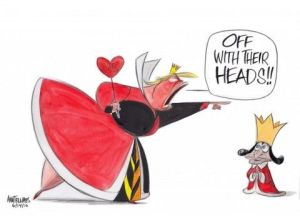 Harwood gives a number of specific examples. Here are the first three:
– He attributed his 2016 victory over Hillary Clinton to skill in overcoming the pro-Democratic tilt of the Electoral College. There is no such tilt. The electoral college system provides a path to victory for the party losing the popular vote. Republicans lost six of the last seven popular votes in presidential contests, but they won the Electoral College in two of those six instances.
– He insisted his Democratic adversaries on Capitol Hill have absolved him of “collusion” with Russia on election interference. They have not. They have said they haven’t yet seen conclusive evidence from Congressional and Justice Department investigations that remain ongoing.
– He declared, “I have absolute right to do what I want with the Justice Department.” He does not. He holds executive branch authority over the Justice Department, but under America’s constitutional system, executive power is not absolute and no one is above the law.
Click on the CNBC link to read more.
Ezra Klein: Incoherent, authoritarian, uninformed: Trump’s New York Times interview is a scary read.
The president of the United States is not well. That is an uncomfortable thing to say, but it is an even worse thing to ignore.
Consider the interview Trump gave to the New York Times on Thursday. It begins with a string of falsehoods that make it difficult to tell whether the leader of the free world is lying or delusional. Remember, these are President Donald Trump’s words, after being told a recording device is on:
Virtually every Democrat has said there is no collusion. There is no collusion. And even these committees that have been set up. If you look at what’s going on — and in fact, what it’s done is, it’s really angered the base and made the base stronger. My base is stronger than it’s ever been. Great congressmen, in particular, some of the congressmen have been unbelievable in pointing out what a witch hunt the whole thing is. So, I think it’s been proven that there is no collusion.
It almost goes without saying that literally zero congressional Democrats have said that there was no collusion between Russia and the Trump campaign during the 2016 election. Zero….
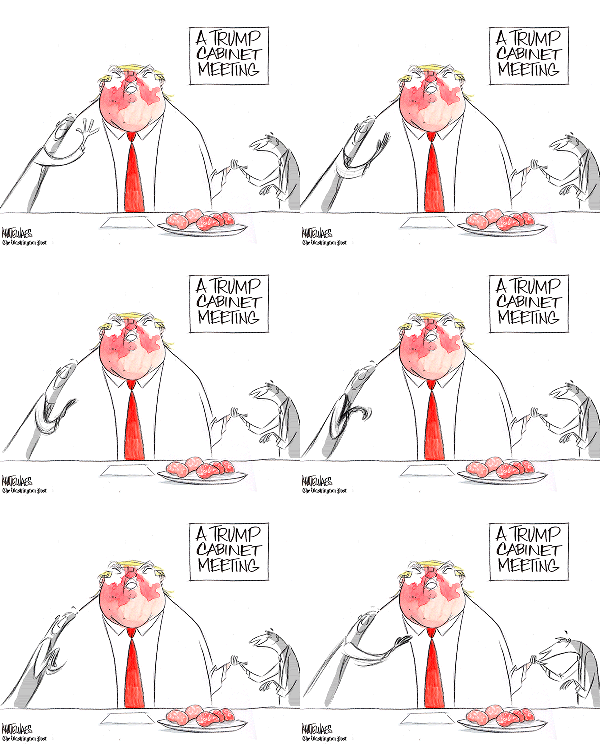 Nor is Trump’s base strengthening, or even holding steady. In a detailed analysis of Trump’s poll numbers, FiveThirtyEight’s Harry Enten concluded that the president is losing the most ground in the reddest states:
In states where Trump won by at least 10 points, his net approval rating is down 18 percentage points, on average, compared to his margin last November. In states that were decided by 10 points or less in November, it’s down only 13 points. And it’s down 8 points in states Clinton carried by at least 10 points.
The fact that Trump has lost the greatest number of supporters in red states is perhaps the clearest indication yet that he is losing ground among some form of his base, if you think of his base as those who voted for him in November.
CNN took a different angle on the same question and also found slippage among Trump’s base. It looked at the change in Trump’s approval ratings from February to November among the demographic groups that formed the core of Trump’s electoral coalition — in every group, there’d been substantial declines. Trump’s numbers have fallen by 8 points among Republicans, by 9 points among voters over 50, by 10 points among whites with no college, by 17 points among white evangelicals. “It has become increasingly clear that even his base is not immune to the downward pressure,” CNN concluded.
Head over to Vox to read the rest.
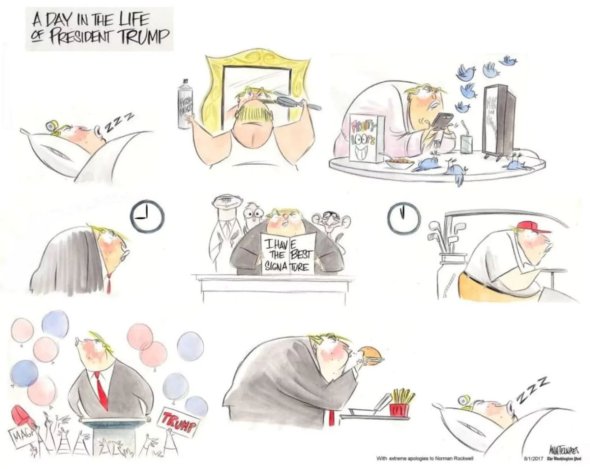
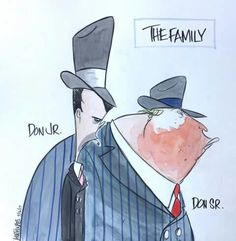
NOTE: The cartoons in this post are by Ann Telnaes of The Washington Post.
It appears that we have a “president” who is both evil and cognitively dysfunctional. For now, it’s up to the Republicans in Congress to hold him in check and they’re not doing it. There’s a good chance the Democrats will be able to take over Congress in 2018, but can we last another year with Trump in charge? I hope we get through it, that’s all I can say.
What stories are you following?
Did you like this post? Please share it with your friends:
Posted: July 4, 2013 | Author: bostonboomer | Filed under: Barack Obama, Egypt, Foreign Affairs, France, health, Italy, medicine, morning reads, NSA, National Security Agency, science, Spain, the internet, U.S. Politics, Violence against women, War on Women, Women's Rights | Tags: Adly Mahmud Mansour, Bolivia, cognitive decline, dementia, Evo Morales, gang rape, Groundhog day, HIV treatments, marrow transplants, mental stimulation, Mohammed Morsi, national anthem, reading, sexual assault in Egypt, The Star Spangled Banner |
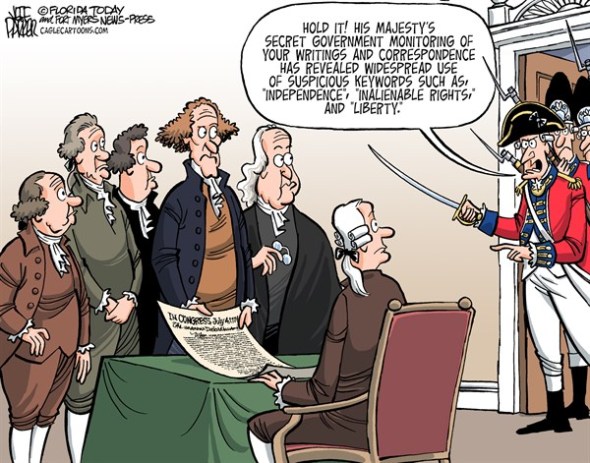
Good Morning!!
So Egyptians staged a whole lot of protests and with the help of the army, overthrew the president they elected about a year ago. From the Boston Globe: Egypt’s army ousts Morsi, who calls it a ‘coup’
CAIRO (AP) — Egypt’s first democratically elected president was overthrown by the military Wednesday, ousted after just one year in office by the same kind of Arab Spring uprising that brought the Islamist leader to power.
The armed forces announced they would install a temporary civilian government to replace Islamist President Mohammed Morsi, who denounced the action as a ‘‘full coup’’ by the generals. They also suspended the Islamist-drafted constitution and called for new elections.
Millions of anti-Morsi protesters around the country erupted in celebrations after the televised announcement by the army chief. Fireworks burst over crowds in Cairo’s Tahrir Square, where men and women danced, shouting, ‘‘God is great’’ and ‘‘Long live Egypt.’’
That sure sounds like coup. The army overthrows an elected leader and appoints a new one, while suspending the constitution. What else would you call it? And then there’s this:
The army took control of state media and blacked out TV stations operated by the Muslim Brotherhood. The head of the Brotherhood’s political wing was arrested.
It’s like Groundhog Day. A year from now will the whole thing happen all over again?
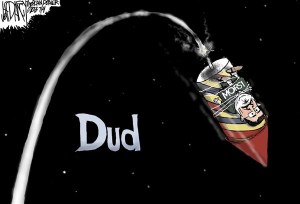
From BBC News: Egypt swears in Mansour as interim leader after Morsi ousted
The top judge of Egypt’s Constitutional Court, Adly Mahmud Mansour, has been sworn in as interim leader, a day after the army ousted President Mohammed Morsi and put him under house arrest.
Mr Mansour said fresh elections were “the only way” forward, but gave no indication of when they would be held.
Mr Morsi, Egypt’s first freely elected leader, is under house arrest after what he says was a military coup.
The army said he had “failed to meet the demands of the people”.
So it’s as if the Pentagon overthrew President Obama and installed Chief Justice Roberts as temporary president, while at the same time suspending the Constitution and shutting down the media.
The Dark Side of Egyptian “Revolution”
There’s also another similarity to the previous Egyptian “revolution” an outbreak of sexual assaults and gang rapes targeting women in public. From Human Rights Watch:
Egyptian officials and political leaders across the spectrum should condemn and take immediate steps to address the horrific levels of sexual violence against women in Tahrir Square. Egyptian anti-sexual harassment groups confirmed that mobs sexually assaulted and in some cases raped at least 91 women in Tahrir Square, over four days of protests beginning on June 30, 2013, amid a climate of impunity.
“The rampant sexual attacks during the Tahrir Square protests highlight the failure of the government and all political parties to face up to the violence that women in Egypt experience on a daily basis in public spaces,” said Joe Stork, deputy Middle East director at Human Rights Watch. “These are serious crimes that are holding women back from participating fully in the public life of Egypt at a critical point in the country’s development.”
The Egyptian group Operation Anti-Sexual Harassment/Assault, which runs a hotline for victims of sexual assault and seeks to intervene to stop attacks, has received scores of reports of attacks on women in Tahrir Square over the past three days. The group confirmed 46 attacks on June 30, 17 on July 1, and 23 on July 2. The group’s volunteers intervened to protect and evacuate women in 31 cases of sexual assault. Four of the women needed medical assistance, including two who were evacuated by ambulance. The women’s rights group Nazra for Feminist Studies had confirmed another five attacks on June 28.
One woman required surgery after being raped with a “sharp object,” volunteers with the group said. In other cases, women were beaten with metal chains, sticks, and chairs, and attacked with knives. In some cases they were assaulted for as long as 45 minutes before they were able to escape.
Please go read the rest at Human Rights Watch.
At CNN, writer Nina Burleigh puts the sexual violence in Egypt in the historical context of male efforts to control women’s access to the public sphere.
Last week, a 22-year-old Dutch journalist was gang-raped in Tahrir Square and had to undergo surgery for severe injuries. The assault reminds us yet again of an often overlooked aspect of the Egyptian revolution.
When Egyptians overthrew their dictator in 2011, one of the first celebratory acts in Tahrir Square included the gang beating and sexual assault of American journalist Lara Logan, who, like the Dutch journalist, landed in the hospital.
The Logan rape has always been portrayed as another unfortunate byproduct of mob violence. In fact, it was much more than that. It was a warning shot fired by men whose political beliefs are founded on a common pillar: Women must stay out of the public square.
One of the hallmarks of revolutionary victory in Tahrir Square has always been rape and sexual harassment. Mobs of men routinely set upon women, isolating, stripping and groping. No one is ever arrested or held accountable, and elected officials shrug their shoulders and blame the victims….
Egyptian women are the primary victims of sexual violence, and ultimately they are the intended recipients of the message: Stay home, your input in government and politics is not wanted.
Read the rest of Burleigh’s analysis at CNN.
In other news,
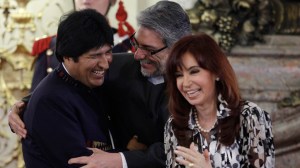
Bolivian officials laughing hysterically at the media for buying their tall tale
We learned yesterday afternoon that the claims that Bolivian president Evo Morales’ plane was refused permission to fly over France, Italy, and Spain were totally false and that no one forced his plane to land in Austria. See this article at The Atlantic for a complete debunking of the story.
But many so-called progressives are still pushing the false narrative that President Obama somehow was responsible. I was surprised to see Taylor Marsh hyping it this morning, and there has been no correction to Kevin Drum’s nasty claim that Obama behaved like “a Chicago thug.” That was originally in Drum’s headline until commenters told him he was pushing a Tea Party meme and he moved the accusation to the end of his post.
Marsh is also claiming we didn’t know about the extent of NSA spying a year ago. Really? If you agree with her, you might want to check out this detailed article on the NSA spying programs in the Wall Street Journal–dated March 10, 2008. And of course that wasn’t the first time the corporate media covered the story either. All the progs claiming utter shock and awe over Snowden’s revelations should be ashamed of themselves.
I don’t want to completely depress you, so let’s turn to some non-political news. I found a couple interesting science stories on Google this morning.
Here’s some exciting news out of Boston (NYT): After Marrow Transplants, 2 More Patients Appear H.I.V.-Free Without Drugs.
Two H.I.V.-infected patients in Boston who had bone-marrow transplants for blood cancers have apparently been virus-free for weeks since their antiretroviral drugs were stopped, researchers at an international AIDS conference announced Wednesday.
The patients’ success echoes that of Timothy Ray Brown, the famous “Berlin patient,” who has shown no signs of resurgent virus in the five years since he got a bone-marrow transplant from a donor with a rare mutation conferring resistance to H.I.V.
The Boston cases, like Mr. Brown’s, are of no practical use to the 34 million people in the world who have H.I.V. but neither blood cancer nor access to premier cancer-treatment hospitals.
But AIDS experts still find the Boston cases exciting because they are another step in the long and so-far-fruitless search for a cure. They offer encouragement to ambitious future projects to genetically re-engineer infected patients’ cells to be infection-resistant. At least two teams are already experimenting with variants on this idea, said Dr. Steven G. Deeks, an AIDS researcher at the University of California, San Francisco.
It’s real progress, even though the treatment won’t be widely available for a long time.
From BBC News: Active brain ‘keeps dementia at bay’
A lifetime of mental challenges leads to slower cognitive decline after factoring out dementia’s impact on the brain, US researchers say.
The study, published in Neurology, adds weight to the idea that dementia onset can be delayed by lifestyle factors….
In a US study, 294 people over the age of 55 were given tests that measured memory and thinking, every year for about six years until their deaths.
They also answered a questionnaire about whether they read books, wrote letters and took part in other activities linked to mental stimulation during childhood, adolescence, middle age, and in later life.
After death, their brains were examined for evidence of the physical signs of dementia, such as brain lesions and plaques.
The study found that after factoring out the impact of those signs, those who had a record of keeping the brain busy had a rate of cognitive decline estimated at 15% slower than those who did not.
That’s some impressive empirical evidence for something many of us have long suspected. So maybe we are helping keep our brains young through our obsession with reading and arguing about politics on the internet!
I’ll end with a recommendation that you listen to this NPR story on the history of “The Star Spangled Banner” and how it became our national anthem. It’s only about 8 minutes long. Or you can just read the article. I thought it was really interesting.
Now it’s your turn. What stories are you following today? If you’re headed out for barbeques and family gatherings instead of surfing the net, have a wonderful time and drop in for a minute if you can.
HAPPY INDEPENDENCE DAY EVERYONE!!
Did you like this post? Please share it with your friends:






 peej
peej Carissa
 bostonboomer
 dakinikat
 ecocatwoman
 mablue2
 Mama Lopez
 peggysue22
 quixote
 skydancingguestblogger
 Mona (aka Wonk the Vote)



 Sky Dancing
Recent Comments