
Friday Reads
Posted: August 30, 2013 Filed under: morning reads, open thread, Republican politics, U.S. Economy, U.S. Politics | Tags: Burger King, Eric Cantor, fast food workers' strike, fund-raising, GLBT rights, hurricane katrina, IRS, John Boehner, living wage, lobbying, McDonald's, New Orleans, North Dakota, Rush Limbaugh, same-sex marriage 27 Comments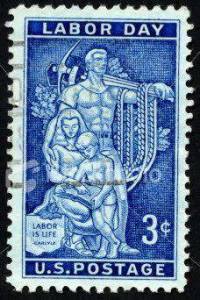
Good Morning!!!
Since it’s the beginning of the Labor Day weekend, I thought I’d start out with some Labor News. There are so many jobs these days that don’t really pay a living wage in the US that it’s really astounding. Fast Food Workers are among the lowest paid in the country.
Fast-food workers went on strike and protested outside McDonald’s, Burger King and other restaurants in 60 U.S. cities on Thursday, in the largest protest of an almost year-long campaign to raise service sector wages.
Rallies were held in cities from New York to Oakland and stretched into the South, historically difficult territory for organized labor.
The striking workers say they want to unionize without retaliation in order to collectively bargain for a “living wage.”
They are demanding $15 an hour, more than twice the federal minimum of $7.25. The median wage for front-line fast-food workers is $8.94 per hour, according to an analysis of government data by the National Employment Law Project (NELP), an advocacy group for lower-wage workers.
“It’s almost impossible to get by (alone),” said McDonald’s worker Rita Jennings, 37, who was among about 100 protesters who marched in downtown Detroit Thursday. “You have to live with somebody to make it.”
Rush Limbaugh was all agog and demagogue about the striking workers
LIMBAUGH: If you want a “living wage,” if you don’t like what fast food restaurants pay, then do something else. It’s just that simple. Go to a trade school. Go to another business. Start your own business. Maybe the work that you are capable of isn’t yet worth $15 an hour at a fast-food restaurant. Maybe the consumer doesn’t want to pay $10 for a Big Mac so that people working at McDonald’s make $15 an hour. It’s not just a one-way strata.
You don’t just sit there and double what the employees at McDonald’s make and keep the prices the same. Now, you may think this is obvious, folks, and you may think, “Come on, Rush,” you’d be amazed at how many people do not understand the push-pull in economics. You’d be amazed at the number of people who have taken economics courses who think that the truth about headaches is that the boss is a cheap skinflint and wants his employees to starve and wants to screw his customers.
That’s the basis of their understanding, and they go from there, and they are applauded by left-wing Democrat politicians for holding that belief, and they’re encouraged to have it. Now, to those of you who, like Sean from San Diego, are sympathetic to this demand for the minimum wage at Mickey D’s to go from $7.15 or $7.25 an hour to $15, let me ask you this: When you buy a meal, do you make sure that you’re paying a fair price for it?
When you walk in there, do you ask the employee, “Look, am I paying enough here so that you can get a livable wage? When you go in and buy a Big Mac or a Quarter Pounder with cheese or a double Quarter Pounder with cheese, do you look at the price is and say, “Are you sure that this costs enough that you can make a livable wage?” Or do you just get a little upset when you think it’s a little too expensive?
Limbaugh was lecturing fast workers on getting a better job as he sat in his mansion with no clue what it is like to work and survive on minimum wage. Limbaugh’s lecture was centered around a couple of the Republicans favorite falsehoods. Rush was pretending that there are better jobs out there for minimum wage workers.
Some happy news for married GLBT workers! The IRS and the US Treasury will recognize your marriage. You get the standard marriage deduction!!
The U.S. Department of the Treasury and the Internal Revenue Service (IRS) today ruled that same-sex couples, legally married in jurisdictions that recognize their marriages, will be treated as married for federal tax purposes. The ruling applies regardless of whether the couple lives in a jurisdiction that recognizes same-sex marriage or a jurisdiction that does not recognize same-sex marriage.
The ruling implements federal tax aspects of the June 26th Supreme Court decision invalidating a key provision of the 1996 Defense of Marriage Act.
“Today’s ruling provides certainty and clear, coherent tax filing guidance for all legally married same-sex couples nationwide. It provides access to benefits, responsibilities and protections under federal tax law that all Americans deserve,” said Secretary Jacob J. Lew. “This ruling also assures legally married same-sex couples that they can move freely throughout the country knowing that their federal filing status will not change.”
Under the ruling, same sex couples will be treated as married for all federal tax purposes, including income and gift and estate taxes. The ruling applies to all federal tax provisions where marriage is a factor, including filing status, claiming personal and dependency exemptions, taking the standard deduction, employee benefits, contributing to an IRA, and claiming the earned income tax credit or child tax credit.
I joined the Sisterhood of the Pink Shoes this weekend. Meanwhile, the real sister with the pink shoes is doing really well in the fundraising arena.
In the six weeks following her headline-grabbing filibuster, Wendy Davis raised $1.2 million — nearly 40 percent of it from outside Texas. Davis drew national attention following the filibuster against an abortion-restriction bill that helped shut down the Texas Senate and prompted Gov. Rick Perry to call lawmakers back into another special session. In the wake of Davis’ new-found fame, Davis has been urged by some Democrats to run for governor next year. She says she will announce her political plans — whether to run for reelection as a senator from Fort Worth or as a Democrat for governor — in a few weeks.
Martin Luther King was fighting for working folks when he was assassinated. We’ve already said that no Republicans showed up to commemorate the March on Washington. Where were they?
So what was did they do instead? Well, Boehner was in Jackson Hole, Wyo., and had no public events scheduled, but he has been headlining GOP fundraisers all this month, so it’s a fairly safe to assume that he was raising cash at the time. Cantor, meanwhile was touring an oil field in North Dakota. The Grand Forks Herald reports:
Cantor, hosted by Rep. Kevin Cramer, R-N.D., met with energy industry and community leaders at a crew camp in Williston, toured a drilling site and other oilfield locations in the Bakken and met with North Dakota Petroleum Council members in Watford City.
Cantor praised North Dakota’s approach to energy development and said the country needs to follow the state’s example and adopt a national energy policy.
“I hope to be able to tell the president that there’s a lot for him to learn here as far as energy production here in America,” Cantor said. “North Dakota seems to have gotten it right.”
The North Dakota Petroleum Council, by the way, is a lobby group that represents the state’s oil and gas industry. That’s what Cantor was doing on the day of the march.
Here’s a little bit of News on New Orleans 8 years after Katrina.
Now optimism is rising as a rebounding city approaches the 300th anniversary of its 1718 founding.
“The city is a much better place than it was eight years ago. The biggest challenge we have is blight,” Landrieu said, adding that 10,000 blighted properties have been removed from the cityscape.
A thriving downtown and newly vibrant neighborhoods contrast starkly with the city’s appearance eight years ago. When Katrina hit, thousands of people who couldn’t escape New Orleans in time were trapped in homes as levees broke and floodwaters rose. Helicopters plucked the desperate from rooftops as chaos spread. The damaged Superdome became a refuge of misery for thousands as tempatures and tempers soared.
Days afterward then-President George W. Bush promised the nation’s full attention. But federal authorities were sharply criticized for their early response and local and state authorities as well. And though billions of federal dollars have helped to rebuild a strengthened levee system, many locals remain bitter with the Army Corps of Engineers for the failure of the levees.
Landrieu said he’s intent on moving forward.
“I think that we have successfully done the most important thing, which was to think about building the city back the way she should have always been and not the way she was,” he said.
Landrieu said rebuilding has even meant re-organizing government operations, streamlining finances, curbing waste and fraud and reorganizing the city’s education system – even adding new fire and police stations, parks and libraries.
The weird thing about the blight is that it’s in areas that you wouldn’t necessarily expect to have ramshackled buildings and over grown lots. Every time I go from my home near the Mississippi River towards the Lake I see blight on the way. It pops up in the newer suburban areas as well as older neighborhoods. There are still a lot of eye sores and it appears it’s going to take a long time for many of them to be torn down or restored. Thankfully, the historic parts of the city appear to be well on the mend. Unfortunately, the infrastructure is so gone in many areas that the blight will remain for some time.
That’s my offering today! What’s on your reading and blogging list?
Tuesday Reads: The Agony of Glenn Greenwald, The Ickiness of Ted Cruz, & Other News
Posted: August 20, 2013 Filed under: 2016 elections, Egypt, Foreign Affairs, Great Britain, morning reads, Pakistan, Republican politics, U.S. Economy, U.S. Politics, US & Canada | Tags: Bob Cesca, David Miranda, Glenn Greenwald, Muslim Brotherhood, Pervez Musharraf, Ted Cruz, the 24-hour rule, The Guardian UK 29 Comments
Good Morning!!
As of yesterday, we’ve reached the point with the NSA leaks story that the entire focus is on Glenn Greenwald and his martyrdom. Even Edward Snowden has now faded into the background.
On Sunday, Greenwald’s domestic partner David Miranda was detained for nine hours by UK authorities as he passed through Heathrow Airport on his way from Berlin to Rio de Janeiro where he and Greenwald live. Miranda was finally released, but his laptop, an external hard drive, a number of memory sticks and other electronic devices were confiscated. Greenwald reacted by threatening the UK government with harmful revelations from the Snowden stash.
As with previous Greenwald stories, this one quickly evolved from a tale of horrendous government repression as reported by the Guardian to a more complex story reported by other news outlets–forcing the Guardian to walk back or provide more details on aspects of its original reporting. Bob Cesca does a good job of summarizing the process.
Like most people, Cesca was at first shocked by the news of Miranda’s detention. Then he began reading the stories under the headlines.
When I read The Guardian‘s article about the incident, however, more questions popped up — as with much of The Guardian‘s reporting on this topic, the publication’s tendency for coy, smoke-and-mirrors reporting invariably raises more questions than it answers. The article was credited to “Guardian staff,” for one, there weren’t any quotes from Miranda himself and the only source for the article appeared to be Greenwald, who, from my experience covering this story, tends to be incendiary and misleading.
The wailing and garment rending was underway — the predictable group freakout we’re forced to endure every time a new article is published. Greenwald himself wrote that the U.K. authorities were actually worse than the Mafia because the Mafia doesn’t target family members. (Clearly, Greenwald knows less about the Mafia than he does about political realities or history.)
An aside: Cesca coined the term “the 24 hour rule” after a the first few Greenwald NSA “bombshells.”
The 24 Hour Rule: 1) A wild claim is made via a news article, most often The Guardian, about the U.S. government or related entities. 2) The article sparks wild fits of outrage. 3) Then, within 24 hours, a mitigating detail is added, undermining or totally debunking one or more of the central claims contained with the article. Related quote: “A lie can travel half-way around the world before the truth gets its pants on.”
Back to Cesca’s take on the Miranda story:
As the hours rolled by, Charlie Savage, reporting for The New York Times, began to revealmore details about the trip — details which The Guardian mysteriously didn’t include in either of its articles….
First, we learned from The New York Times that The Guardian financed Miranda’s trip to Germany and back. This means Miranda was conducting some sort of official business for the publication. Around the same time, Amnesty International referred to Miranda as “a Guardian newspaper employee.” Combined with the Laura Poitras detail, it’s obvious that Miranda was commissioned to do some serious leg-work on the Snowden/NSA reporting, the extent of which was unknown at the time.
And then, late in the evening east coast time, The New York Times revealed the purpose of Miranda’s trip to Berlin:
Mr. Miranda was in Berlin to deliver documents related to Mr. Greenwald’s investigation into government surveillance to Ms. Poitras, Mr. Greenwald said. Ms. Poitras, in turn, gave Mr. Miranda different documents to pass to Mr. Greenwald. Those documents, which were stored on encrypted thumb drives, were confiscated by airport security, Mr. Greenwald said. All of the documents came from the trove of materials provided to the two journalists by Mr. Snowden.
So Miranda, Greenwald’s spouse, served as a paid courier to transfer stolen, top secret national security documents from Greenwald to Poitras, and from Poitras back to Greenwald.
While I’m not defending UK authorities for their ham-handed treatment of Miranda–and neither is Cesca–it’s really not surprising that Miranda was stopped and questioned. It also later came out that Miranda had been offered an attorney, but he refused the offer (Greenwald had originally said his partner was refused access to legal advice). From The Guardian on Monday:
He was offered a lawyer and a cup of water, but he refused both because he did not trust the authorities. The questions, he said, were relentless – about Greenwald, Snowden, Poitras and a host of other apparently random subjects.
“They even asked me about the protests in Brazil, why people were unhappy and who I knew in the government,” said Miranda.
He got his first drink – from a Coke machine in the corridor – after eight hours and was eventually released almost an hour later. Police records show he had been held from 08.05 to 17.00.
The questions about the Brazilian government weren’t actually that outrageous, since Glenn Greenwald had contacted high level officials there and they had tried to intervene.
So the “24-hour rule” still holds. This entire story turned around in 24 hours, but many news outlets are still reporting information that is either wholly or partially untrue. After it became clear that their original reporting on the Miranda detention was problematic, the Guardian released another bombshell article written by Guardian editor-in-chief Alan Rusberger in which he claims that two months ago GCHQ (Britain’s version of NSA) agents forced the Guardian to destroy their hard drives and computers unless they turned over their NSA materials. Again Bob Cesca has a good summary. Please read the whole thing if you can–it’s not long.
We’ll have to wait another day to see if this story also morphs into something different. Cesca has a list of questions for Rusberger. My big question is why wasn’t this reported immediately after it happened, and why didn’t the Guardian go to court over it?
And so Glenn Greenwald and his victimization remain the center of international attention. I have to wonder why Greenwald arranged for his partner to travel through Heathrow in the first place. Was he deliberately inviting something like this? He couldn’t have asked for better free publicity that he and the Guardian are getting right now.
Meanwhile, any discussion of NSA spying is hindered by so much inaccurate information; yet the NSA story is distracting Americans from focusing on equally important and even more pressing issues like jobs, the economy, voting rights, the war on women’s autonomy, the environment, and the upheavals in the Middle East. So now I’ll move on to some other news–I’ll add more links on the Miranda story in the comments.
In other news,
The Atlantic has a good story on economic inequality: Are the Rich Getting Too Much of the Economic Pie?
When one of you asked, “Are the rich getting too much of the economic pie?” the team behindEconomics in Plain English got pretty excited. Because you said “pie.” So we headed toDangerously Delicious Pies in northeast Washington, D.C., with business editor Derek Thompson to explain income inequality over dessert. We ordered three pies — peanut butter, blueberry, and something amazing called the “Baltimore Bomb” — to make three charts that illustrate the income and wealth gap in the U.S. We’re not the first to mix math and pastry, as we discovered recently, but we hope this video offers a tasty perspective on a complex economic question.
Watch the video–and others by the same group–at the link.
In Pakistan, Pervez Musharraf has been indicted in the 2007 murder of Benazir Bhutto
ISLAMABAD, Pakistan — A Pakistani court indicted Pervez Musharraf on Tuesday in connection with the 2007 assassination of former Prime Minister Benazir Bhutto, the first time that a former military leader has faced criminal proceedings in Pakistan.
The court in Rawalpindi, near the capital, Islamabad, filed three charges against Mr. Musharraf, including murder and conspiracy to murder, said a prosecutor, Chaudhry Muhammed Azhar.
Mr. Musharraf, who has maintained that the charges against him are politically motivated, pleaded not guilty, his lawyers said. Reporters were excluded from the hearing. Afterward, police commandos and paramilitary rangers escorted Mr. Musharraf back to his villa on the edge of Islamabad, where he has been under house arrest since April in connection with other cases stemming from his rule from 1999 to 2008.
The sight of a once untouchable general being called to account by a court had a potent symbolism in a country that has been ruled by the military for about half of its 66-year history. While the military remains deeply powerful, the prosecution has sent the message that Pakistan’s top generals are subject to the rule of law — at least after they have retired.
In Egypt, a leader of the Muslim Brotherhood has been arrested. The LA Times reports:
CAIRO — Egyptian authorities early Tuesday arrested the leader of the Muslim Brotherhood, another demoralizing blow to the Islamist organization amid a crackdown by the military to silence dissent and build support for its control of the nation.
Supreme Guide Mohamed Badie was arrested in a Cairo apartment. Dressed in a gray tunic, the 70-year-old spiritual leader looked shaken, sitting next to a bottle of water in police custody. The image distilled the desperation the world’s most influential Islamist organization faces against an army that appears determined to crush it.
Most of the Brotherhood’s top leaders, including Khairat Shater, its chief strategist and financier, and former Egyptian president Mohamed Morsi, who was overthrown in a coup last month, are in detention or have gone underground. Much of the group’s strategy appears to have shifted to the Anti-Coup Alliance, an umbrella group the Brotherhood organized to protest Morsi’s downfall.
The army’s crackdown on the Brotherhood has been ferocious. Police raids on two Brotherhood sit-ins last week and the protests and violence that ensured killed more than 900 Morsi supporters, many of them shot by live ammunition fired by security forces that have shown little restraint.
“When the hand of oppression extends to arrest this important symbol,” the Brotherhood said in a statement regarding Badie, “that means the military coup has used up everything in its pocket and is readying to depart.”
I’ll be honest–I’m really clueless about what’s going on in Egypt right now. I just hope the situation doesn’t descend into a Syria-like civil war.
Texas Tea Party Senator Ted Cruz is back in the news. The Dallas Morning News revealed yesterday that Cruz holds dual citizenship in the US and Canada.
Born in Canada to an American mother, Ted Cruz became an instant U.S. citizen. But under Canadian law, he also became a citizen of that country the moment he was born.
Unless the Texas Republican senator formally renounces that citizenship, he will remain a citizen of both countries, legal experts say.
That means he could assert the right to vote in Canada or even run for Parliament. On a lunch break from the U.S. Senate, he could head to the nearby embassy — the one flying a bright red maple leaf flag — pull out his Calgary, Alberta, birth certificate and obtain a passport.
“He’s a Canadian,” said Toronto lawyer Stephen Green, past chairman of the Canadian Bar Association’s Citizenship and Immigration Section.
The circumstances of Cruz’s birth have fueled a simmering debate over his eligibility to run for president. Knowingly or not, dual citizenship is an apparent if inconvenient truth for the tea party firebrand, who shows every sign he’s angling for the White House.
Cruz has decided to renounce his Canadian citizenship, according to CNN:
“Because I was a U.S. citizen at birth, because I left Calgary when I was 4 and have lived my entire life since then in the U.S., and because I have never taken affirmative steps to claim Canadian citizenship, I assumed that was the end of the matter,” Cruz wrote in his statement.
“Now the Dallas Morning News says that I may technically have dual citizenship. Assuming that is true, then sure, I will renounce any Canadian citizenship,” he continued. “Nothing against Canada, but I’m an American by birth, and as a U.S. Senator, I believe I should be only an American.”
Too bad he didn’t decide to run for office in Canada. I guess we’re stuck with him now.
I’ll end with this Daily Beast story about what Ted Cruz Princeton roommates recall about him. Some excerpts:
When Craig Mazin first met his freshman roommate, Rafael Edward Cruz, he knew the 17-year-old Texan was not like other students at Princeton, or probably anywhere else for that matter.
“I remember very specifically that he had a book in Spanish and the title was Was Karl Marx a Satanist? And I thought, who is this person?” Mazin says of Ted Cruz. “Even in 1988, he was politically extreme in a way that was surprising to me.” [….]
“It was my distinct impression that Ted had nothing to learn from anyone else,” said Erik Leitch, who lived in Butler College with Cruz. Leitch said he remembers Cruz as someone who wanted to argue over anything or nothing, just for the exercise of arguing. “The only point of Ted talking to you was to convince you of the rightness of his views.”
In addition to Mazin and Leitch, several fellow classmates who asked that their names not be used described the young Cruz with words like “abrasive,” “intense,” “strident,” “crank,” and “arrogant.” Four independently offered the word “creepy,” with some pointing to Cruz’s habit of donning a paisley bathrobe and walking to the opposite end of their dorm’s hallway where the female students lived.
“I would end up fielding the [girls’] complaints: ‘Could you please keep your roommate out of our hallway?'” Mazin says.
Eeeeeeeeek!!
OK, now it’s your turn. What stories are you focusing on today? Please post your links on any topic in the comment thread.
Saturday Morning Open Thread: Libertarians Are Not Our Friends
Posted: August 17, 2013 Filed under: 2014 elections, Civil Liberties, Civil Rights, Foreign Affairs, open thread, Republican politics, U.S. Economy, U.S. Politics, Women's Rights | Tags: Julian Assange, libertarians, Martin Luther King, Rand Paul, Ron Paul, Wikileaks 40 Comments
Good Morning!!
Sorry I’m posting this so late today. I’ve been pondering some issues that have been troubling me for a long time, and I keep getting stuck about how to write about them.
I’m beginning to see the libertarian influence on so-called “progressives” as a very serious problem for the future of our country. Here’s a somewhat incoherent beginning to a discussion of this problem. I’m putting this out there in the hope that I’ll get some feedback from you that will help me sort this out. So here goes…
Partial transcript:
“I’m a big admirer of Ron Paul and Rand Paul for their very principled positions in the U.S. Congress on a number of issues. They have been the strongest supporters of the fight against the U.S. attacks on Wikileaks and on me in the U.S. Congress. Similarly, they have been the strongest opponents of drone warfare and extrajudicial executions.
And so, that’s quite an interesting phenomenon in the United States. The position of the libertarian Republican–or a better description [right?]–coming from a principle of nonviolence, the American libertarian, that produces interesting results.
So, nonviolence, not going to invade a foreign country. Nonviolence, don’t force people at the barrel of a gun to serve in the U.S. Army [?? The U.S. doesn’t have a draft]. Nonviolence, don’t extort taxes from people to the Federal government, with a [policeman?]….
Similarly, other acts of nonviolence in relation to abortion that they hold. I think that some of these positions that are held by Ron Paul…I can see how they come from the same underlying libertarian principle. I think the world is often more complex. By taking a laid out principle but sometimes simplistic position, you end up undermining the principle. In the short term, visions of the principle are one thing, visions of the principle…it’s quite hard to know [inaudible].
A few comments…
It’s not clear to me whether Assange supports the Paul’s position on abortion, but clearly it’s a side issue for him–not nearly as important as the Paul’s support of Wikileaks and Assange himself, since he later said that both political parties have been compromised and the only hope for the future comes from the libertarian portion of the Republican Party. HuffPo:
He then put forth an argument against both established political parties in Washington, claiming that nearly all Democrats had been “co-opted” by President Barack Obama’s administration, while Republicans were almost entirely “in bed with the war industry.”
The current libertarian strain of political thought in the Republican Party was the “the only hope” for American electoral politics, Assange concluded.
Assange sees federal taxes as “extortion.” I assume that includes the payroll taxes that support Social Security and Medicare. He never mentions social programs at all; as a libertarian he probably opposes them. This is in line with other libertarians who are leading the fight against the U.S. government keeping any secrets whatsoever, e.g., Glenn Greenwald, Edward Snowden, Conor Frierdersdorf, and David Sirota (I’ll have more about this in a later post).
Not only does Assange not know that the U.S. doesn’t have a military draft, he’s pretty mixed up about recent U.S. history. In praising right wing racist news aggregator Matt Drudge, Assange said, via Raw Story:
“Matt Drudge is a news media innovator. And he took off about eight years ago in response to the Monica Lewinsky scandal.”
(Eight years ago was 2005, the first year of George W. Bush’s second term, when President Bill Clinton had been out of office for five years and the Lewinsky scandal and subsequent failed impeachment attempt were a matter of history.)
Assange claimed that Drudge made his name by “publishing information that the establishment media would not. It is as a result of the self-censorship of the establishment press in the United States that gave Matt Drudge such a platform and so of course he should be applauded for breaking a lot of that censorship.”
Assange says he supports non-violence. I’d like to point out that in U.S. history, one of the leading advocates of nonviolence and civil disobedience was a man named Martin Luther King. Fifty years ago King led a “March on Washington for Jobs and Freedom.” But Assange favors the Pauls’ notion of “nonviolence.” (Assange doesn’t appear to know that Ron and Rand Paul are the recipients of vast corporate donations from the defense industry.) I wonder if Assange knows that Ron and Rand Paul oppose Civil Rights laws? I wonder if he cares?
Julian Assange–along with Edward Snowden and Glenn Greenwald–is currently the idol of the “emoprogs” who have become so distracted by the NSA leaks story that they don’t even notice that Republicans have a very good chance of retaking the Senate next year. These supposed “leftists” have forgotten all about jobs, protecting social programs, women’s rights, civil rights, economic inequality, and our crumbling infrastructure in order to follow a handful of privileged, young white male libertarian pied pipers who are focused only on their own personal “liberties.”
What ever Happened to “We” the People?
Posted: August 7, 2013 Filed under: U.S. Economy, unemployment, We are so F'd, worker rights | Tags: fiscal policy, jobs, social insurance, unemployment, wages 17 Comments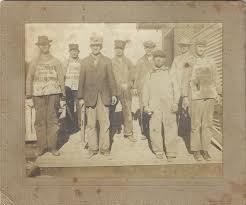 I am writing a post today as an outcropping of my professional pursuits, my status in life, and about the person I love who is mired deep in the kind of long term, blue-collar unemployment that didn’t used to exist in this country. I am underemployed at the moment because I don’t want to jump out of my sustainable life here to something that is risky and might not work out for me at my stage in life. I am trying to set up my end game and feel like I really can’t afford the risk of moving someplace for a job that may or may not pan out or some place where I basically suffer to exist. I am in a state of perpetual hunker down because of this. It is stressful and eating into my investments which I am fortunate to have but are not inexhaustible. I will not talk about my friend’s situation because, of course, it is personal. But, I will say watching some one so beautiful struggle with self worth issues because this economy only works for a few and because our government persistently sticks to such an untrue narrative about our economy just keeps me on the edge of tears. I am not an overly emotional person at all. Living in the USA should not mean living in a state of risk avoidance, depression, poor shaming and poverty creation.
There are many things that I grew up with and assumed would be there when I grew up that I despair frequently at their loss and threatened existence. My kids,as you know, are doing fine. My father got his degrees on the GI Bill and saw to it that my sister and I were educated. As a result, my girls and I never even considered not going to university. Doctor Daughter is now a full-fledged OB-GYN in the process of getting board certified in Washington State where she will undoubtedly become very rich very quickly with her soon-to-be radiologist husband. Youngest daughter just took her GMAT and is headed for her MBA in the fall. She and her boyfriend of three years have very good jobs and make great money. But the deal is, that was the path set before us because our families can now chose further upward mobility through higher education and jobs in the right sectors. We are all there. For my son-in-law, it is because his parents had access to immigration to the US and US public universities. For us, it was because my father who comes from a railroad worker and Oklahoma/Kansas dirt farmers could go to university. That happened because my granddad had a great blue collar job that began with digging ditches for the Atchison, Topeka, and the Santa Fe and my dad’s access to the GI bill. The real success stories of last century come from the many of us who got access to what we did because “we” the people invested in ourselves and each other. We also decided to jointly insure ourselves against personal and community disasters. All of these accomplishments are under direct assault today and we are failing ourselves and each other in many ways.
There used to be an alternative path through good, stable, well-paying jobs that took training, skill, hard work and experience. Original socioeconomic status wasn’t all that relevant. That path has dried up. The heart wrenching stories told in this NYT article about the crumbling city of Port Clinton, Ohio are typical of many midwestern, formally thriving industrial cities. The article contrasts the life of the author’s grandchildren and those of his blue collar classmates who went to school in the small town. This narrative is one played out all over the country. The conclusion is compelling.
The contrast with the egalitarian ethos and reality of the 1950s — the contrast between the upward mobility experienced by J and the bleak prospects of R — vividly captures Port Clinton’s transformation in the last half-century, much like that of the rest of the country. My research team has talked with dozens of R’s from Austin, Tex., to Duluth, Minn., and from Atlanta to Orange County, Calif.
The crumbling of the American dream is a purple problem, obscured by solely red or solely blue lenses. Its economic and cultural roots are entangled, a mixture of government, private sector, community and personal failings. But the deepest root is our radically shriveled sense of
“we.” Everyone in my parents’ generation thought of J as one of “our kids,” but surprisingly few adults in Port Clinton today are even aware of R’s existence, and even fewer would likely think of her as “our kid.” Until we treat the millions of R’s across America as our own kids, we will pay a major economic price, and talk of the American dream will increasingly seem cynical historical fiction.
Yes. We have a “radically shriveled sense of we” these days and it is killing the economy for all but a few of us. It is fueling racial resentment. It is even leading to a zero sum game for the folks reaping the benefits right now even though they adamantly refuse to see that future. Much of the problem is because The Pay is too Damn Low. More and more of productivity gains and corporate income gains are going to a small number of passive investors and not to the people involved in producing the gains. It is upending classical labor theory and actually invigorating the old ideas of Karl Marx as I have written before. Please remember, I am not a Marxist but I and others see the coming fruition of many of his philosophical points on how capitalism would eventually self-destruct. The New Deal did not bring about radical change. It brought about upward mobility and societal safety nets so we did not get radical change. Nothing fuels revolution like national despair.
The workers’ grievances are simple: low wages, few (if any) benefits, and little full-time work. In inflation-adjusted terms, the minimum wage, though higher than it was a decade ago, is still well below its 1968 peak (when it was worth about $10.70 an hour in today’s dollars), and it’s still poverty-level pay. To make matters worse, most fast-food and retail work is part time, and the weak job market has eroded what little bargaining power low-wage workers had: their earnings actually fell between 2009 and last year, according to the National Employment Law Project.
Still, the reason this has become a big political issue is not that the jobs have changed; it’s that the people doing the jobs have. Historically, low-wage work tended to be done either by the young or by women looking for part-time jobs to supplement family income. As the historian Bethany Moreton has shown, Walmart in its early days sought explicitly to hire underemployed married women. Fast-food workforces, meanwhile, were dominated by teen-agers. Now, though, plenty of family breadwinners are stuck in these jobs. That’s because, over the past three decades, the U.S. economy has done a poor job of creating good middle-class jobs; five of the six fastest-growing job categories today pay less than the median wage. That’s why, as a recent study by the economists John Schmitt and Janelle Jones has shown, low-wage workers are older and better educated than ever. More important, more of them are relying on their paychecks not for pin money or to pay for Friday-night dates but, rather, to support families. Forty years ago, there was no expectation that fast-food or discount-retail jobs would provide a living wage, because these were not jobs that, in the main, adult heads of household did. Today, low-wage workers provide forty-six per cent of their family’s income. It is that change which is driving the demand for higher pay.
The situation is the result of a tectonic shift in the American economy. In 1960, the country’s biggest employer, General Motors, was also its most profitable company and one of its best-paying. It had high profit margins and real pricing power, even as it was paying its workers union wages. And it was not alone: firms like Ford, Standard Oil, and Bethlehem Steel employed huge numbers of well-paid workers while earning big profits. Today, the country’s biggest employers are retailers and fast-food chains, almost all of which have built their businesses on low pay—they’ve striven to keep wages down and unions out—and low prices.
The deal is that big businesses are making record level profits and the record-setting levels of the DJ industrial average show that we are not failing the largest businesses and the richest people in the country. They do not need to be exempt from more taxation or responsibility from the moral hazard and the social costs they inflict on society. The benefits of their existence do not trickle down on us. What trickles down is their costs to society like those of the last financial crisis and that of oil spills, chemical company fires, and toxin produced illnesses. A strong economy comes from jobs and middle income prosperity and spending. Many private sector jobs are so bad they no longer do anything but sustain people in intense suffering.
One of the big reasons the U.S. economy is so lousy is the American companies are hoarding cash and “maximizing profits” instead of investing in their people and future projects.
This behavior is contributing to record income inequality in the country and starving the primary engine of U.S. economic growth–the vast American middle class–of purchasing power. (See charts below).
If average Americans don’t get paid living wages, they can’t spend much money buying products and services. And when average Americans can’t buy products and services, the companies that sell products and services to average Americans can’t grow. So the profit obsession of America’s big companies is, ironically, hurting their ability to accelerate revenue growth.
One obvious solution to this problem is to encourage companies to pay their people more — to share more of the vast wealth that they create with the people who create it.
The companies have record profit margins, so they can certainly afford to do this.
But, unfortunately, over the past three decades, what began as a healthy and necessary effort to make our companies more efficient after the malaise of the 1970s has evolved into a warped consensus that the only value that companies should create is financial value (cash) and that the only thing managers and owners should ever worry about it making more of it.
This view is an insult to anyone who has ever dreamed of having a job that is about more than money.
People take risks when they feel they have adequate safety nets to do so. We are ripping apart the nets that let people try new things and move to do things. We are losing opportunities to educate and advance our society and our people.
As Jared Bernstein, an economist at the Center for Budget and Policy Priorities, told me, “The best friend that low-wage workers have is a strong economy and a tight job market.” It isn’t enough to make bad jobs better. We need to create better jobs.
That simple statement and the politics of right now have led Robert Reich to suggest that some policy makers actually want high unemployment to suppress wages and keep the profits trickling up to big investors. All the while, these same politicians fuel racial resentment. They tell formerly well-off white blue collar workers that it is immigration and and reverse racism in civil rights legislation that has hurt their livelihoods. Meanwhile, the media keeps up the false narrative that it’s the defict, it’s social security, and it’s medicare that is hurting us. Putting money into the group of people most likely to spend it is the way to drive the American Economy. We economists have known that for years. Hoarding money at the top and refusing to use the governments power to tax and spend is bad economic policy. Our fiscal policy is killing the American Dream instead of driving it.
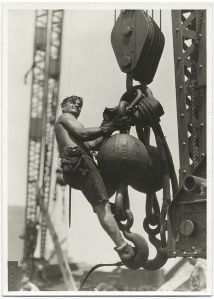 There are other examples besides our labor market. Health insurance is just one more market where “we” the people can do right by each other and can actually improve outcomes. I want to point you to the irascible Andrew Sullivan who uses Hayek–the economic god of the libertarian cult–to explain why social insurance –like Social Security and Medicare–actually stops freeloading off the economy rather than encouraging it. In this situation, he explains why Obamacare actually forces us to take personal responsibility. It is a argument from a different perspective on why “we” the people have to act on economic principals to preserve our society and way of life. In this essay, he criticizes the right wing radical group Freedomworks. The groupis trying to get 20somethings to burn their Obamacare cards which is in itself pretty crazy because the cards are nonexistent. Actually, what this does is wreck the risk pool for all of us. But, here is an argument for the leverage of government on a market that has failed so many people from another vantage point.
It is not being independent; it’s being potentially dependent on others while giving nothing in return. And insurance is an inherently collective endeavor. That’s how it works. It’s one area where going it alone makes very little sense. And, of course, the bigger the insurance pool, the lower the premiums. This is not socialism. It’s a simple insurance principle, used by free countries for centuries. It certainly passed muster with Friedrich Hayek, a man you would think would be an influence on the Tea Party’s political program. I’ve cited this before but it’s worth citing again:
Nor is there any reason why the state should not assist the individuals in providing for those common hazards of life against which, because of their uncertainty, few individuals can make adequate provision. Where, as in the case of sickness and accident, neither the desire to avoid such calamities nor the efforts to overcome their consequences are as a rule weakened by the provision of assistance – where, in short, we deal with genuinely insurable risks – the case for the state’s helping to organize a comprehensive system of social insurance is very strong … Wherever communal action can mitigate disasters against which the individual can neither attempt to guard himself nor make the provision for the consequences, such communal action should undoubtedly be taken.
That’s from The Road To Serfdom, one book of the libertarian and conservative Bible. And it’s common sense. It’s leveraging a simple principle – pooling risk – and extending it as far as possible to guard against the “common hazards of life.” There is nothing leftist or socialist about it. And it demands that each of us be personally responsible for the costs our own encounters with illness or accident impose upon our neighbors, rich and poor, young and old. If FreedomWorks were consistent, it would encourage twentysomethings to “burn their Obamacare card” while simultaneously pledging never to seek medical care under any circumstances. That would be coherent, if bonkers. What’s incoherent is claiming that refusing to contribute to a system you nonetheless intend to use is anything but a scam.
In fact, what FreedomWorks is encouraging is the real socialism. It’s using the 1986 law to force hard-working Americans to pay for free-loaders’ care.
The deal is that when labor markets or social insurance markets or health insurance markets fail a group of us, they fail and cost all of us one way or another. The cost us through increased crime, mental health issues, drug and alcohol abuse, family instability. People losing homes costs us. When houses go on the market at fire sale prices, it drags down the home prices of every one in the neighborhood. When wages are low, people don’t spend money at the the local businesses who cannot afford to hire more people or order inventory. Children raised with poor educational opportunities in crime ridden areas most likely become problems that cost us dearly in our incarceration nation. We fully know that there are places where the government can act and change the momentum. Yet, our government fails us. The government of “we” the people is not using the known and available tools to correct things. It is, in fact, actively undermining economic health. Economists known that deficit reduction is impeding the economy yet that is not the conventional wisdom floating around the beltway. Pundits and Policy makers are either being deliberately ignorant or lying.
Hardly a day goes by when either government analysts or the macroeconomists and financial forecasters who advise investors and businesses do not report on the latest signs of economic growth — in housing, consumer spending, business investment. And then they add that things would be better but for the fiscal policy out of Washington. Tax increases and especially spending cuts, these critics say, take money from an economy that still needs some stimulus now, and is getting it only through the expansionary monetary policy of the Federal Reserve.
“Fiscal tightening is hurting,” Ian Shepherdson, chief economist of Pantheon Macroeconomic Advisors, wrote to clients recently. The investment bank Jefferies wrote of “ongoing fiscal mismanagement” in its midyear report on Tuesday, and noted that while the recovery and expansion would be four years old next month, reduced government spending “has detracted from growth in five of past seven quarters.”
We know that insurance is by definition a collective effort because of its pooling of risk. Its goal is risk mitigation and therefore, cost reduction. Yet, here we go down the path of bringing down the government for an effort to reign in the dysfunctional health insurance industry. Not only are some policymakers willing to blow up our social insurance programs, they are doing so at the high risk of blowing up the entire economy when so many folks are still suffering from the last blowup and their inability to do something to stop the suffering. This kind’ve foolishness really needs to come to an end. There is nothing to be gained by any of us for this type of incessant nonsense. Many policymakers and their pundit enablers are putting themselves and their friends’ interests above that of the country’s and that of “we” the people. It is hurting many of us including a huge number of children whose lives look pretty bleak at the moment. Spend some time reading the narratives of folks in that top story that these guys poor-shame daily and then think of the possible programs that would actually put the cost of market failure back on the companies and people that caused it to start out with. It would also put people back to work. Then, start to wonder if our country can ever look like it did when it was truly the land of opportunity instead of the land of “we” the few, powerful, and rich. It is a very American ideal to think we could have a country where every one can find a well-paying job and join together to pay to insure against and provide for the risk of disasters.
Tuesday: Something’s Gotta Give!
Posted: July 30, 2013 Filed under: Austerity, Baby Boomers, Barack Obama, Foreign Affairs, morning reads, Republican politics, U.S. Economy, U.S. Politics, War on Women, Women's Rights | Tags: anti-statist libertarians, blogging, Congress, crumbling infrastructure, Edward Snowden, Glenn Greenwald, jobs, Justin Amash, NSA spying, Poverty 37 Comments
Good Morning!!
I’ve finally reached a point of such frustration with politics, with the do-nothing Congress, and the mostly unserious media, that I wonder if the bottleneck of corruption, incompetence, and stupidity in Washington DC will ever be broken.
Congress–particularly the Senate–is populated mostly with old, rich white men who work about two days a week at most and take so many vacations that it’s hard to keep track of when they’re actually on the job. When the rest of us have a day off, they get a week. And for major holidays like Christmas, they take a month. It’s sickening.
The Republican House spends its two days a week mostly taking votes to repeal or defund Obamacare or finding new ways to wage war on women’s individual freedom and autonomy. The rest of their time is spent trying to take food out of the mouths of poor children by cutting food stamps and other safety net programs. Then there are the states where Republican governors and legislatures are waging all-out war on women and pretty much anyone who isn’t in the top 1%.
Meanwhile, our roads and bridges are falling down all over the country. Can you imagine how many jobs the government could create by helping to rebuild our crumbling infrastructure? Not only that, but baby boomers like me could be put back to work helping in the schools. The government could create a WPA for the growing ranks of seniors instead of attacking us for collecting the Social Security and Medicare we’ve paid into for our entire lives!
Will the logjam ever break? Will we ever see the slightest focus on jobs and economic equality for the vast majority of Americans?
Back in 2000, after the Supreme Court designated George W. Bush as president, I despaired and ignored politics for awhile. But after 9/11 and the lies that dragged us into two wars that ended up being longer and more pointless than the war of my youth–Vietnam–I began to follow politics closely again. I felt it was my responsibility as a citizen to pay attention to what was being done in our name. And I did.
I had gone back to college in 1993 and got into using computers again. In 1997, I started graduate school, and got my first PC and immediately got my cable company to hook it up to the internet. I joined internet mailing lists where I could discuss issues that interested me.
Around 2003, I heard about “weblogs,” and I set out to find some that discussed politics. Every day I read and commented at Daily Kos, Talking Points Memo, and dozens of other liberal blogs. Most of you know the rest. In 2008, I was driven off DK after I failed to drink the Obot Koolaid. I wrote for a small blog for a couple of years and then finally Dakinkat and I joined up here at Sky Dancing, along with Mona and JJ.
I’m here and I want to keep on writing here. I love learning about new subjects when I research news stories. But Goddammit, I want something new to happen. I want our government to be functional and have positive effects on my life and the lives of other ordinary people.
Back in 2008 I pretty much shut off the TV and focused on getting my news on the internet. But for the past couple of weeks, I’ve been escaping into detective novels and watching old movies on the tube. It’s difficult to find things blog about when the news is the same every day–the war on women and working people and Congress refusing to lift a finger to improve the economic situation for the vast majority of Americans.
As you know, lately I’ve become fascinated by the case of Edward Snowden and his leaks about NSA spying. Previously, I had focused on the bombings that took place in Boston and that had led me to do a lot of research on Russia, where the accused bombers’ roots were. So when Snowden ended up in Russia, I had a little bit of background on the place.
When the NSA leaks first broke, I thought it was possible we might get some real movement on the issue of domestic spying, but once Snowden revealed himself the story became mostly about him and his mouthpiece Glenn Greenwald.
Now the Snowden story has also settled into a holding pattern. The Russians are enjoying playing with their new toy and sticking it to the Obama administration, and Greenwald isn’t even writing about leaks anymore. He just writes long, angry lectures about how Democrats and liberals are the root of all evil.
Speaking of libertarians, have you noticed the Ayn Rand crowd is taking over and brainwashing a lot of so-called “progressives?” Last week there was an effort to pass an amendment that would have prevented NSA from collecting any telephone metadata. Instead of having an intelligent discussion about how to carefully regulate electronic surveillance, we would have simply ended it–and gone back to where we were before 9/11 in terms of identifying terrorist threats.
That bill was named after an Ayn Rand worshipping wingnut from Michigan named Justin Amash whose goal is to remove all power from the Federal government except the power to control women’s bodies! Did you know that Amash wants to ban abortions as of three days after conception? This reactionary who is being called “the next Ron Paul” was actually named “Truthdigger of the week.” Are you kidding me?
Have we finally reached the point where the “progressives” of 2008 are joining with the anti-statist libertarians? Sorry, but I’m not down with that. I believe in government, and I believe we need a strong Federal government. I think the states have too much power over people’s lives right now. I think we need a national equal rights amendment to end the constant ridiculous efforts to control the lives of women and LGBT people!
Now I’ve ranted away much of the space for this post, and I haven’t really given you any news. I’m going to post a few links, and I will put up another post a little later on. And If you have any suggestions for how I can deal with my Political Affective Disorder, I’ll be very grateful to receive them.
President Obama has been trying to put some focus on economics, and will make his fourth speech on the topic today. A few links:
The Windsor Star– Analysis: Obama tries to shift focus to economy, faces withering Republican opposition
WSJ– Obama Economic Proposals Face Long Odds in Congress
Dean Baker– Cruel Arithmetic and President Obama’s Big Speech
The Hill– Obama to propose ‘grand bargain’ on jobs, corporate tax rates
Other News
Fox News– 8 injured, including 4 critically, after dozens of explosions rock central Florida propane plant
Amy Davidson at The New Yorker– Waiting for the Bradley Manning Verdict
Vanity Fair– Anthony Weiner’s Cringe-y New Sexts Reveal Request for “Daily Shoe Update”
USA Today– San Diego mayor wants taxpayers to foot legal bills

 peej
peej Carissa
 bostonboomer
 dakinikat
 ecocatwoman
 jjlo
jjlo mablue2
 Mama Lopez
 peggysue22
 quixote
 skydancingguestblogger
 Mona (aka Wonk the Vote)





Recent Comments