Posted: August 11, 2015 | Author: bostonboomer | Filed under: Criminal Justice System, Democratic Politics, morning reads, U.S. Politics | Tags: #BlackLivesMatter, Bernie Sanders, Hillary Clinton, Martin O'Malley, Obamabots, Racism |
Good Morning!!
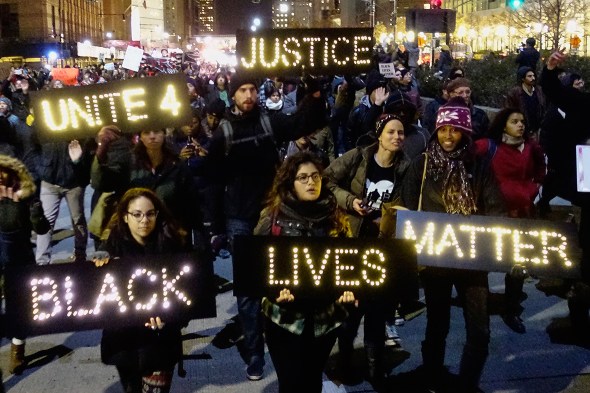
There has been quite a bit of discussion the past couple of days about the protesters who have been disrupting speeches by Bernie Sanders and Martin O’Malley. Why aren’t they doing this to Republicans? Why are they being so rude to Bernie Sanders, who many years ago marched for civil rights? There are people responding to these questions. Will the white people doing the questioning listen to the answers?
Here’s one response from Jamil Smith at The New Republic: #BlackLivesMatter Protesters Are Not the Problem. One year after Michael Brown’s death, both liberals and conservatives are still getting it wrong.
The activist group #BlackLivesMatter emerged out of the rage and mourning that accompanied George Zimmerman’s acquittal for the murder of Trayvon Martin more than three years ago. However, the first time that the hashtag—and its accompanying message—entered the American lexicon to stay was one year ago this past Sunday, when Michael Brown, another unarmed black teenager, was gunned down by a Ferguson, Missouri police officer, less than one month after an NYPD chokehold took Eric Garner’s life. On Sunday night, Ferguson reverted to its younger, violent self again, complete with a commemorative protest on West Florissant Avenue being met with police and things turning tragically violent in short order. And two days before the anniversary of Brown’s death, Christian Taylor became the 24th unarmed black man killed by police in 2015.
We might not have heard about Taylor in previous years because attention on black men, women, and children suffering violence and death at the hands of police, in particular, is now at a level unseen perhaps since the 1999 killing of Amadou Diallo. That’s backed up by a new Gallup pollindicating that Americans describing themselves as “satisfied with the way blacks are treated in U.S. society” is lower than it’s been since before the turn of the millennium. Ever since Ferguson, it’s evident that #BlackLivesMatter, in many respects, has worked.
In the last year, #BlackLivesMatter has—much like Occupy years beforehand—fundamentally changed the national conversation about a major societal ill. The movement has made millions of people aware of the white supremacy they either perpetuate themselves or support with their silence. With the emergence of the 2016 presidential campaign, #BlackLivesMatter’s demands have become more acutely focused on the candidates, pushing for policy platforms that address structural racism. Yet, as we mark one year since Brown’s death, we’ve seen both liberals and conservatives—from Senator Bernie Sanders’ supporters to Dr. Ben Carson’s—painting #BlackLivesMatter as a divisive force in U.S. racial relations. That someone might consider those fighting racism to be more divisive than racist people or structures would be laughable if black men in America weren’t seven times more likely to die by cop than white men.
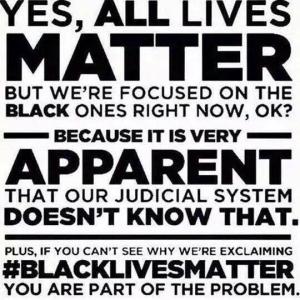
Yes, supporters of Bernie Sanders are upset that his events have been disrupted by black women protesting the killing of black men and women by police officers. Supposedly Sanders wants radical changes in the system, buit what are his proposals for changing structural racism in law enforcement?
More from Jamil Smith:
Sanders, given to touting his record of working for civil rights and uttering names like Sandra Bland since the Netroots incident, experienced a second interruption during a planned event in Seattle on Saturday. Two women and one man claiming affiliation with #BlackLivesMatter disrupted the event before the Vermont senator could speak. Some Sanders backers in the crowd booed when they were told that one of the women, Marissa Johnson, would get her say before the candidate. “Bernie, you were confronted at Netroots at by black women,” Johnson said before adding, “you have yet to put out a criminal justice reform package like O’Malley did.”
Having already responded to the crowd’s boos by telling them that they proved how “racist” the reputably liberal Seattle is, Johnson also called for a four-and-one-half minute-long moment of silence for Brown. Instead, more shouting from the crowd followed, including, per reports, shouts of “arrest her.” Sanders, rather than letting the protesters have their say and responding, left the stage. The event concluded without him speaking. A chorus of his supporters took to social media to question Johnson’s tactics—as if that’s what mattered most—and to tell anyone who dared question why Sanders didn’t have a set of racial-justice proposals that they somehow already existed. They were wrong.
A page entitled “Racial Justice” only appeared on his site early Sunday morning, containing a long list of proposals. A campaign representative reached out to me to say that those proposals, in the works for the three weeks since Netroots, were derived from a speech that’s been on the site since July 25. Given the pressure being put on them and the urgency they showed in creating the platform, it’s odd that the campaign put it online, essentially, under the cover of darkness.
The policies on Sanders’s racial justice page, while surely more welcome than none at all, are undeniably blurrier than those O’Malley put forth, and need considerably more specificity and clarity. There’s a lot of the typically forcefully liberal language Sanders likes to employ in order to inspire, but it seems even more fanciful than the O’Malley plan. But those ideas are certainly signs that he is hearing #BlackLivesMatter’s message. The problem isn’t so much him as it is his supporters, cursing protesters and later, on social media, touting their guy’s record whenever they are challenged on his (heretofore) lack of a platform regarding structural racism.
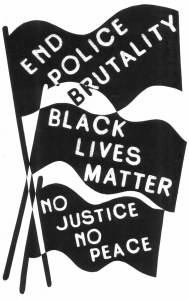
Please go read the whole article if you want to understand the anger of the #BlackLivesMatter protesters. Personally, I didn’t know that the movement began long before the killing of Michael Brown. Here’s some background from one of the founders in a piece at The Feminist Wire dated October 7, 2014: A Herstory of the #BlackLivesMatter Movement by Alicia Garza.
I created #BlackLivesMatter with Patrisse Cullors and Opal Tometi, two of my sisters, as a call to action for Black people after 17-year-old Trayvon Martin was post-humously placed on trial for his own murder and the killer, George Zimmerman, was not held accountable for the crime he committed. It was a response to the anti-Black racism that permeates our society and also, unfortunately, our movements.
Black Lives Matter is an ideological and political intervention in a world where Black lives are systematically and intentionally targeted for demise. It is an affirmation of Black folks’ contributions to this society, our humanity, and our resilience in the face of deadly oppression.
We were humbled when cultural workers, artists, designers and techies offered their labor and love to expand #BlackLivesMatter beyond a social media hashtag. Opal, Patrisse, and I created the infrastructure for this movement project—moving the hashtag from social media to the streets. Our team grew through a very successful Black Lives Matter ride, led and designed by Patrisse Cullors and Darnell L. Moore, organized to support the movement that is growing in St. Louis, MO, after 18-year old Mike Brown was killed at the hands of Ferguson Police Officer Darren Wilson. We’ve hosted national conference calls focused on issues of critical importance to Black people working hard for the liberation of our people. We’ve connected people across the country working to end the various forms of injustice impacting our people. We’ve created space for the celebration and humanization of Black lives.
As their slogan spread to the mainstream, the creaters of the #BlackLivesMatter movement saw others trying to change the meaning of their words:
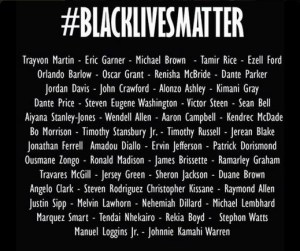
The Theft of Black Queer Women’s Work
Suddenly, we began to come across varied adaptations of our work–all lives matter, brown lives matter, migrant lives matter, women’s lives matter, and on and on. While imitation is said to be the highest form of flattery, I was surprised when an organization called to ask if they could use “Black Lives Matter” in one of their campaigns. We agreed to it, with the caveat that a) as a team, we preferred that we not use the meme to celebrate the imprisonment of any individual and b) that it was important to us they acknowledged the genesis of #BlackLivesMatter. I was surprised when they did exactly the opposite and then justified their actions by saying they hadn’t used the “exact” slogan and, therefore, they deemed it okay to take our work, use it as their own, fail to credit where it came from, and then use it to applaud incarceration.
I was surprised when a community institution wrote asking us to provide materials and action steps for an art show they were curating, entitled “Our Lives Matter.” When questioned about who was involved and why they felt the need to change the very specific call and demand around Black lives to “our lives,” I was told the artists decided it needed to be more inclusive of all people of color. I was even more surprised when, in the promotion of their event, one of the artists conducted an interview that completely erased the origins of their work–rooted in the labor and love of queer Black women.
Read more at the link.

Has Bernie Sanders responded to the prosecution of African American journalist Wesley Lowery yet? From yesterday’s Washington Post:
A Washington Post reporter who was arrested at a restaurant last year while reporting on protests in Ferguson, Mo., has been charged in St. Louis County with trespassing and interfering with a police officer and ordered to appear in court.
Wesley Lowery, a reporter on The Post’s national desk, was detained in a McDonald’s while he was in Missouri covering demonstrations sparked by a white police officer fatally shooting an unarmed black 18-year-old.
A court summons dated Aug. 6 — just under a year after Lowery’s arrest — was sent to Lowery, 25, ordering him to appear in a St. Louis County municipal court on Aug. 24. The summons notes that he could be arrested if he does not appear.
“Charging a reporter with trespassing and interfering with a police officer when he was just doing his job is outrageous,” Martin Baron, executive editor of The Post, said in a statement Monday. “You’d have thought law enforcement authorities would have come to their senses about this incident. Wes Lowery should never have been arrested in the first place. That was an abuse of police authority.
“This latest action represents contemptible overreaching by prosecutors who seem to have no regard for the role of journalists seeking to cover a major story and following normal practice,” Baron continued.
It seems the powers that be in Ferguson have learned very little. Democratic candidates should address this issue and so should Bernie Sanders, independent socialist.

I’ll end with this post by Melissa McEwan at Shakesville: Sanders and #BlackLivesMatter, Again.
I can understand why Sanders was aggravated that his event was disrupted, and I can understand why people who had been waiting for an hour and a half to hear him speak were aggravated that his event was disrupted. But here’s the thing: If you are positioning yourself as a candidate who advocates for radical change, or you are supporting a candidate on the basis that he advocates for radical change, then surely you should be able to get on board with providing space to people who are involved with a campaign that advocates radical change.
If disrupting a rally is too radical for you, I don’t know how you expect to disrupt systems of institutional oppression, which will take way the hell more than an unexpected change in a campaign event schedule.
Don’t pretend you’re supporting revolution when you’re really just supporting a change in management.
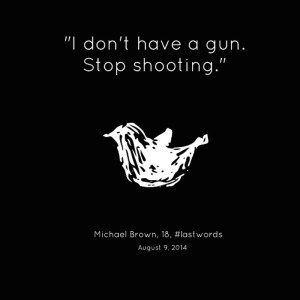
Sanders then released a “Statement on Seattle Protesters,” reading in total: “I am disappointed that two people disrupted a rally attended by thousands at which I was invited to speak about fighting to protect Social Security and Medicare. I was especially disappointed because on criminal justice reform and the need to fight racism there is no other candidate for president who will fight harder than me.”
I’m going to go ahead and say: Maybe that’s true! Maybe there really is no other candidate currently running for president who will fight harder for dismantling racism than Bernie Sanders! Maybe it’s also true that each of the candidates currently running will take different approaches, and, because the activists involved with #BlackLivesMatter aren’t a monolith, there will be disagreement on whose approach is best. And maybe, no matter how good any of the white Democratic presidential candidates are on racial issues, it won’t be good enough. Maybe the inescapable fact is that white people must let black people speak on the large platforms created by and for white candidates.
Again, please go read the whole thing, especially if you are supporting Sanders. Personally, I support Hillary Clinton. I like Bernie, but I think it’s time for a woman President of the U.S. Sanders has no chance to win the Democratic nomination–he’s not even a Democrat! But he isn’t the problem. The problem is his supporters, who remind me of the Obamabots of 2008. Let Bernie handle this situation. My guess is he’ll respond to the #BlackLivesMatter movement, because he’s an intelligent man. He’ll probably get it right in the long run. I think Hillary Clinton will too.
This is an open thread. Please post your thoughts and links on any topic in the comments to this post, and have a great day.
Did you like this post? Please share it with your friends:
Posted: August 8, 2015 | Author: bostonboomer | Filed under: morning reads, Republican politics, U.S. Politics, Women's Rights | Tags: culture of misogyny, Donald Trump, Erick Erickson, Megyn Kelly, Paul Krugman, Red State, Republican Debate |

Good Morning!!
I’d love to be able to transport myself to a beautiful, peaceful place and isolate myself from current events. The reality of what is happening to our politics as our country devolves into a place where mass shootings are common, racism, xenophobia, and misogyny run rampant, income inequality is destroying the economy, and and the environment is rapidly deteriorating is just too much. I feel emotionally overwhelmed by it all.
At times, it’s easy to laugh at the insanity of today’s Republican Party and the complete incompetence of the mainstream media, but today the ugliness of what’s happening makes me feel like crying. Is there anything that can be done to turn this devolution of our country around?
I guess I reached the breaking point when I came home last night to the news that Republican presidential candidate(!) Donald Trump had attacked Fox News reporter Megyn Kelly by suggesting her questions to him during the debate on Thursday night were “mean” because she was menstruating. Can this really be happening?
Philip Rucker at The Washington Post: Trump says Fox’s Megyn Kelly had ‘blood coming out of her wherever.’

Republican presidential candidate Donald Trump said Friday night that Fox News Channel anchor Megyn Kelly “had blood coming out of her eyes” when she aggressively questioned him during Thursday’s presidential debate.
“She gets out and she starts asking me all sorts of ridiculous questions,” Trump said in a CNN interview. “You could see there was blood coming out of her eyes, blood coming out of her wherever. In my opinion, she was off base.” ….
In Thursday’s debate, Kelly questioned Trump over his history of offensive statements about women.
Calling in to CNN for a 30-minute interview on Friday night with Don Lemon, Trump hurled insults at Kelly, calling her a “lightweight,” and bashed her co-moderators, Chris Wallace and Bret Baier, as well as other Fox talent.
“I just don’t respect her as a journalist,” Trump said of Kelly. “I have no respect for her. I don’t think she’s very good. I think she’s highly overrated.”
Trump said he is considering skipping the next debate hosted by Fox News Channel, scheduled for January in Iowa, because he believes he was treated unfairly by the network’s moderators.
This pathetic excuse for a human being has been leading the national polls in the race for the GOP nomination for more than a month!

Oliver Willis writes: Trump: Megyn Kelly Asked Tough Questions Because She Was On Her Period.
Donald Trump, the Republican presidential front runner, suggested that Fox News anchor Megyn Kelly asked him tough questions because she was on her period.
Appearing on CNN, captured by Think Progress, Trump said that Kelly, who questioned Trump about past misogynistic statements where he called women pigs and cows was asking “ridiculous questions” because she had “blood coming out of her eyes” and “blood coming out of her whatever.”
Trump’s fellow Republican candidates did not issue statements or condemnations of him when he promoted a tweet earlier in the day that called Kelly a “bimbo.”
Those candidates did however, issue various policy statements insensitive to women’s issues during the debate, as Republican insiders feared that this presidential campaign would once again bring the Republican Party’s “War on Women” to the forefront.
It looks like Trump is doing just that.
Most Americans–even Republicans–probably understand that Trump is a clown who simply blurts out whatever comes into his sick mind without any concern for the consequences. But what about 16 other Republican candidates? Are most of them really any better?

Paul Krugman has a brilliant column today in which he points out that to be a Republican candidate today means that you must spout complete nonsense.
From Trump on Down, the Republicans Can’t Be Serious.
…while it’s true that Mr. Trump is, fundamentally, an absurd figure, so are his rivals. If you pay attention to what any one of them is actually saying, as opposed to how he says it, you discover incoherence and extremism every bit as bad as anything Mr. Trump has to offer. And that’s not an accident: Talking nonsense is what you have to do to get anywhere in today’s Republican Party.
For example, Mr. Trump’s economic views, a sort of mishmash of standard conservative talking points and protectionism, are definitely confused. But is that any worse than Jeb Bush’s deep voodoo, his claim that he could double the underlying growth rate of the American economy? And Mr. Bush’s credibility isn’t helped by his evidence for that claim: the relatively rapid growth Florida experienced during the immense housing bubble that coincided with his time as governor.
Mr. Trump, famously, is a “birther” — someone who has questioned whether President Obama was born in the United States. But is that any worse than Scott Walker’s declaration that he isn’t sure whether the president is a Christian?
Mr. Trump’s declared intention to deport all illegal immigrants is definitely extreme, and would require deep violations of civil liberties. But are there any defenders of civil liberties in the modern G.O.P.? Notice how eagerly Rand Paul, self-described libertarian, has joined in the witch hunt against Planned Parenthood.
And while Mr. Trump is definitely appealing to know-nothingism, Marco Rubio, climate change denier, has made “I’m not a scientist” his signature line. (Memo to Mr. Rubio: Presidents don’t have to be experts on everything, but they do need to listen to experts, and decide which ones to believe.)
The point is that while media puff pieces have portrayed Mr. Trump’s rivals as serious men — Jeb the moderate, Rand the original thinker, Marco the face of a new generation — their supposed seriousness is all surface. Judge them by positions as opposed to image, and what you have is a lineup of cranks. And as I said, this is no accident.
Please go read the whole thing.

And what about the views on reproductive health that were expressed during the debate? Here Iris Carmon at MSNBC, GOP candidates: Ban abortion, no exceptions
At the first debate among candidates vying for the GOP presidential nomination, the question was not whether or not to ban abortion or to defund Planned Parenthood. It was about whether exceptions in the case of rape, incest, or a woman’s life endangerment are legitimate. Their answer: No.
Moderator Megyn Kelly asked Scott Walker how he could justify opposing an exception to an abortion ban in cases where a woman’s life was in danger, though he did sign a bill with such an exception. Then she turned around and asked Marco Rubio how he could support exceptions in the case of rape and incest if he believed abortion was murder….
Walker, who asked the Wisconsin legislature for a 20-week abortion ban that had no exceptions for rape and incest but ultimately decided not to heed the anti-abortion activists who begged for a no-exceptions bill, replied, “I believe that that is an unborn child that’s in need of protection out there, and I’ve said many a time that that unborn child can be protected, and there are many other alternatives that can also protect the life of that mother. That’s been consistently proven.” The claim that an abortion is never needed to save a woman’s life is a common one in anti-abortion circles. Medical experts disagree.
As for Rubio, he denied he had ever advocated for such exceptions. “What I have advocated is that we pass law in this country that says all human life at every stage of its development is worthy of protection,” he said. “In fact, I think that law already exists. It is called the Constitution of the United States.” In fact, Rubio was a cosponsor on a 20-week abortion ban that contained rape, incest and life endangerment exceptions.
Meanwhile, Mike Huckabee did him one better and actually named which amendments of the constitution he believes already ban abortion. Specifically, the fifth and fourteenth.

These kinds of attitudes toward women and their rights to control their own bodies are now in the mainstream of Republican ideology. The New York Times suggests that while some argue that Republican candidates will hurt themselves with women voters by expressing these misogynistic views, this may not be true, at least for now.
In the short term, however, the political peril for the Republican candidates may not be so grave. They are largely focused now on winning over likely Republican voters who will decide the party’s nomination — an electorate that tends to skew male and older in many key states.
Recent polls of Republican voters indicate that Mr. Trump is performing strongly among men and to a slightly lesser extent among women, though sizable numbers of women also say they would not support him. It remains an open question whether Mr. Trump offended his supporters, or many other likely primary voters, by refusing to renounce his past descriptions of women as “fat pigs” during the debate; indeed, pollsters say he may have struck a chord with some voters by saying he doesn’t “have time for political correctness” when he was asked about his remarks.
The 2012 election was a case in point: Even though Mitt Romney, the Republican nominee, won white women with 56 percent of their votes, he lost over all with female voters. A Republican nominee would be hard-pressed to improve that if the 2016 Democratic nominee is a woman, many Republican pollsters believe.
So they’re going to try to win the presidency by appealing to white male woman haters? Okay. Read about what Republican women think and much more at the link.

Trump’s attack on Megyn Kelley was too much even for ultra right wing nut EReaderrick Erickson. From The Washington Post: Donald Trump disinvited to speak at RedState event; Megyn Kelly invited.
ATLANTA — Conservative commentator Erick Erickson on Friday night disinvited GOP presidential candidate Donald Trump from speaking at an activist conference he is hosting here this weekend, citing disparaging remarks Trump made hours earlier on CNN about Fox News Channel anchor Megyn Kelly.
In an interview with The Washington Post, Erickson said Trump had been scheduled to speak at his RedState gathering on Saturday at the College Football Hall of Fame, but he told Corey Lewandowski, Trump’s campaign manager, about an hour before midnight that Trump was no longer welcome.
Trump’s campaign said in a statement that Erickson’s decision was “another example of weakness through being politically correct. For all the people who were looking forward to Mr. Trump coming, we will miss you. Blame Erick Erickson, your weak and pathetic leader. We’ll now be doing another campaign stop at another location.”
Trump’s CNN interview Friday evening instantly drew controversy and criticism after he said Kelly, one of the moderators of Thursday’s Republican presidential debate in Cleveland, “had blood coming out of her eyes, blood coming out of her wherever.”
On Saturday morning, Trump tweeted that he was referring to Kelly’s nose. His campaign also issued a statement, claiming Trump said “whatever” instead of “wherever,” again repeating that the reference was to her nose.
Erickson, a Fox News regular and face of the popular RedState blog, has long been a foe of congressional GOP leaders and an ally of conservative grass-roots organizers. He has also drawn criticism for saying impolitic things, once calling retired Supreme Court Justice David Souter an “[expletive] child molester” and First Lady Michelle Obama a “Marxist harpy.” He has since apologized for both comments.
Trump’s words about Kelly simply went too far, Erickson said Friday, making him, someone who enjoys and appreciates barbed political rhetoric, uncomfortable and queasy. And with his invited guest dominating the 2016 race, and few if any conservatives reining him in, Erickson thought he’d try.
We’ll have to wait and see if that has any effect on Trump. But Republicans will still be stuck with several other candidates whose attitudes toward women aren’t really any better than Trump’s and whose ideas, as Paul Krugman points out, are completely incoherent and nonsensical.
Now I’m going to a peaceful place in my mind and try to pretend none of this is happening for today.
Remember, this is an open thread. Please post your thoughts and links on any topic in the comment thread, and have a nice weekend.
Did you like this post? Please share it with your friends:
Posted: August 6, 2015 | Author: bostonboomer | Filed under: Republican politics, U.S. Politics | Tags: first 2016 GOP debate, live blog |

This is it, folks–the main event. What will Trump do? Will the other candidates attack him or try to ignore him? Will the moderators be able to stop him from hogging all the airtime? Document the atrocities in the comment thread.
A few people have mentioned they might need to imbibe some spirits in order to get through tonight’s debate. I found a few suggestions for GOP debate drinking games.
Alternet: The GOP Debate Drinking Game: Special Trump Edition.
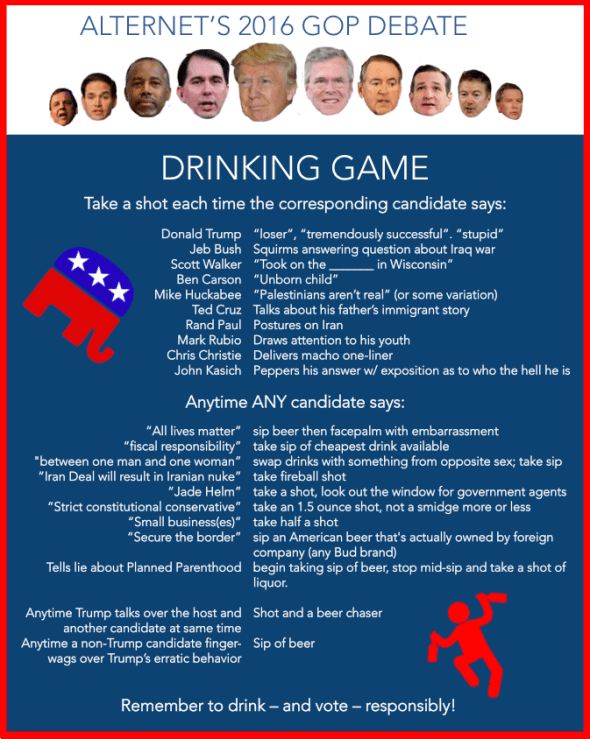
Matt Taibbi at Rolling Stone: The Official GOP Debate Drinking Game Rules.
Drink THE FIRST TIME:
1. Donald Trump mentions his wealth, or how smart he is.
2. A candidate mentions Benghazi
3. A candidate says, “This president…”
4. A candidate whines about not getting called on enough.
5. Someone promises to “take America back.”
6. Trump interrupts someone by saying, “Excuse me, let me answer that…”
7. Anyone mentions Hitler, Nazis or Neville Chamberlain. Includes related imagery, e.g. “ovens.”
8. The crowd cheers a racist/bigoted statement by a candidate.
9. A candidate mentions his poor/hardscrabble upbringing, or a parent who “worked every day of his life.”
10. A candidate talks about “stopping Hillary Clinton.”
11. Anyone warns the U.S. is becoming Greece.
12. Trump refers to himself in the third person.
13. Anyone invokes St. Ronald Reagan.
Drink EVERY time a candidate:
14. Claims a positive relationship with a minority. Also known as the, “Some of my best friends are…” rule.
15. Tries to speak Spanish
16. Tries to warm up to the Ohio crowd with an awkward LeBron shout-out.
Drink EVERY TIME you hear the word(s):
17. “I’m not a scientist.”
18. “You can keep your doctor.”
19. “ACORN.”
20. “The war on Christians.”
21. “Thug.”
22. “Right here in Ohio.”
23. “Culture of dependency.”
TAKE A SHOT OF JAGER AT ANY MENTION OF:
24. “Kenya.”
25. “All Lives Matter.”
Mashable: Dan Rather’s Debate Drinking Game. You’ll want to go look at this one, but here are a few of Rather’s suggestions for Trump keywords:
While many candidates are trying not to admit it, this debate is shaping up to be Trump vs. The World. It’s like some sort of WWE Grudge Match. None of the normal debate rules apply to Trump, so he has to be in his own category (thus no one draws his name from the hat). One thing’s for certain, Trump will go on the attack, often personally.
Here’s a short list of shot-worthy Trump-isms”
“Stupid”
“Loser”
“Stupid Loser”
“Completely Idiotic”
“Horrible idea”
Finally, from USA Today: It’s time to play debate bingo! There are six Bingo cards. Here’s one:
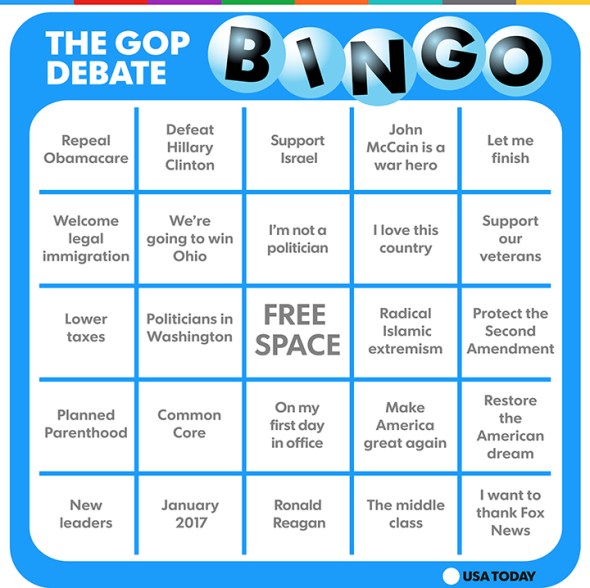
Check the others out at the link, and of course take a swig of your chosen beverage as you place your Bingo markers.
Pick one of these games or mix and match! But don’t forget to add your commentary below.
Did you like this post? Please share it with your friends:
Posted: August 6, 2015 | Author: bostonboomer | Filed under: Republican politics, U.S. Politics | Tags: Fox News, Happy Hour Debate, live blog |

Fox News is calling the warm-up debate among the Republican presidential candidates who have poll numbers from around zero to three percent the “Happy Hour debate.” It begins at 5PM Eastern, and the participants will be Rick Perry, Rick Santorum, Bobby Jindal, Carly Fiorina, George Pataki, Lindsey Graham, and Jim Gilmore.
‘Happy hour’ debate holds big potential for GOP ‘underdog’ to shine.
It’s been called the “happy hour” debate — the 5 p.m. face-off that precedes the prime-time showdown among the top-polling Republican presidential candidates in Cleveland.
But the stakes for those invited to “happy hour” could be even higher.
Seven lower-polling candidates were invited to the 5 p.m. ET Fox News/Facebook debate stage. The smaller pond, it’s an opportunity for at least one of the candidates to make a big splash — and start the buzz that builds a fledgling bid into a serious campaign.
“An underdog is going to emerge from this first debate,” Craig Shirley, a conservative strategist and Reagan biographer, said.
Texas Gov. Rick Perry, who flamed out of the 2012 race after an infamous debate gaffe, is looking for redemption. Former New York Gov. George Pataki, even though he won’t be on the big stage with Donald Trump, appears poised to hammer the billionaire front-runner. Former HP exec Carly Fiorina has been blunt in saying that, as the only woman in the field, she would be a potent adversary against Democratic front-runner Hillary Clinton.
Any of the seven could have a break-out moment Thursday afternoon that catapults them into the upper mix of the 17 candidates now on the field.
I don’t know. It’s hard to imagine any of those losers breaking through. But another conflict could be between Rick Santorum and Lindsey Graham over this claim from Santorum:
Santorum told Fox News on Thursday he plans to just be “authentic.”
“I did this 22 times the last time around,” said the former presidential candidate.
He said he’ll be able to stand out by pointing to his legislative record as a former senator, fighting to ban partial-birth abortions, enact welfare reform and impose Iran sanctions.
“They’re really isn’t anybody else up there on the stage who has a record of accomplishment in Washington, D.C.,” he said.
Graham has been in Congress a lot longer than Santorum was. He must have a few accomplishments.
I hope I’m not going to be alone in watching this thing. If you’re doing so, please share your observations in the comment thread below.
I’ll put up a separate post for the 9:00 main event.
Did you like this post? Please share it with your friends:
Posted: August 6, 2015 | Author: bostonboomer | Filed under: morning reads, Republican politics, U.S. Politics | Tags: Donald Trump, GOP debate in Cleveland |

Good Morning!!
Today is the day the GOP clown car empties out onto a stage in Cleveland for the 2016 first debate of the 2016 presidential election season. Will it be a hoot to watch or will the pain of watching and listening to a bunch of loonies outweigh the pleasure of mocking their insane ideas? We’ll find out tonight.
Judging by the stories highlighted on Google news and Memeorandum, Donald Trump will eclipse every other candidate. It’s ridiculous, but the Republicans brought it on themselves.
Politico lists “Five things to watch” in the clown show tonight. Here are the highlights of their scouting report.
Trump
Advisers to several candidates said they’ve been closely examining Trump’s caustic statements and have concluded his bomb-throwing fits a pattern: He’s at his most inflammatory — for example, giving out Lindsey Graham’s cellphone number, making fun of Rick Perry’s glasses or criticizing John McCain’s past as a prisoner of war — when he’s responding to an attack against him. Graham, Perry and McCain had all gone after Trump aggressively before he had turned his fire on them.
If he’s not put on the defensive, Trump — who recently said that he hopes the debate stays “on a high level” — could be far less belligerent.
That’s assuming the rest of candidates, e.g. bomb throwers Ted Cruz and Chris Christie stay “on a high level.” Highly unlikely.
Jeb Bush

While Bush is typically more at ease with himself than many of his opponents, he can be awkward and uncomfortable when put on the spot. In recent days, advisers to one rival candidate examined a 2013 interview Bush gave to NBC’s “Meet the Press” and concluded that one way to get under the former governor’s skin is to compare him to his Florida protégé Marco Rubio.
Then there’s the rust factor. While many of Bush’s rivals — nearly all of whom are sitting governors or senators — have recent experience on debate stages, he doesn’t: Bush hasn’t faced an election since 2002. Bush aides say they recognize the problem and have taken steps to fix it. They recently brought on Beth Myers and Peter Flaherty, both of whom helped Mitt Romney prepare for the 2012 debates, to assist.
Watch for Jeb to commit another “unforced error” like his recent comment about women’s health not being an important issue.
Scott Walker
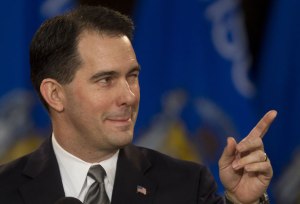
During a trip to New York City last week, the Wisconsin governor spent much of the day in debate prep with a group of advisers that included Mari Will, the wife of conservative columnist George Will, and campaign manager Rick Wiley. Walker has been criticized for being overly scripted and lacking policy expertise — he bobbled several times when discussing foreign policy and national security issues early in the campaign — and is under pressure to show that he can go toe-to-toe with his rivals.
There’s much more worth reading at the Politico link, including possible conflicts between Rand Paul and Chris Christie and what to expect from the Fox moderators.
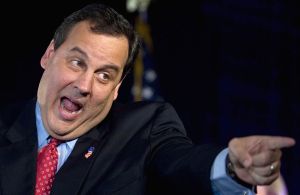
Also from Politico, Jack Shafer writes: The GOP Pre-Season Begins. The candidates in Thursday’s debate would do well to remember it’s a long campaign.
Try thinking of Thursday’s presidential debates on Fox as tryouts for the next round of GOP presidential debates, which CNN will stage in September, and CNN’s presidential debates as tryouts for CNBC’s debates in October, and CNBC’s debates as tryouts for the Fox Business Channel’s debates in November, and so on and so on, until you reach the state of attentiveness that you apply to the MLB Cactus and Grapefruit league matches or NFL exhibition games.
It’s not that the early debates—and pre-season games—don’t matter. They do, but mostly to weed the real prospects from the position fillers and to help the veterans refresh their skills for the big season. But the crests and troughs produced in pre-season recede in importance as the days pass and the next contest is joined.

Sen. Ted Cruz (R-Texas) speaks during the Family Leadership Summit in Ames, Iowa, on Aug. 10.
The Cleveland 10 candidates—who will appear on Fox at 9 p.m., after the undercard event featuring the seven junior varsity candidates going through the motions at 5 p.m.—will have little time to talk, says Fox co-moderator Bret Baier. Each of the 10 candidates will get 10 to 11 minutes of speaking time over the two-hour event, which is the baseball equivalent of playing less than an inning. Baier says he hopes to elicit something “interesting, but illuminating” from the candidates and to shove them off of their talking points. This will require interruption, as each candidate has filled his (and, in JV candidate Carly Fiorina’s case, her) brain with canned responses. The 2012 debate between Barack Obama and Mitt Romney set some sort of modern interruption record, as moderator Candy Crowley short-stopped on Romney 23 times and Obama 15 times to get the debate on track. (The candidates also interrupted one another repeatedly, making for a total average of 1.4 interruptions per minute.)
Another interesting article, well worth reading.
Naturally, most pundits are writing about Donald Trump. Joshua Green has two good pieces at Bloomberg.
1. It’s Wrong to Call Donald Trump a ‘Fringe’ Candidate.

Donald Trump’s rise to a position of total dominance in the Republican presidential field has been accompanied by a dismissive snort from Beltway mandarins that Trump is merely a “fringe” candidate. The idea, in essence, is that Trump has a strong but narrow appeal to a group of mouth-breathing xenophobes and practically nobody else.
But a new Bloomberg Politics poll of Republican and Republican-leaning voters demolishes this claim. Trump not only laps the competition—he has twice the support of the second-place candidate, Jeb Bush (21 percent to 10 percent)—but he also leads among every demographic subgroup, but one (self-identified “moderates”).
Let’s break it down. Trump leads with male voters (Trump 24 percent, Bush 11 percent, Walker 10 percent) and female voters (Trump 18 percent, Bush 10 percent, Huckabee 10 percent). He leads with voters younger than 45 (Trump 15 percent, Bush 10 percent, Rubio and Paul at 9 percent) and voters older than 45 (Trump 25 percent, Bush 11 percent, Walker 9 percent) and seniors (Trump 23 percent, Bush 14 percent, Walker 9 percent).
Trump wins voters with no more than a high school degree (Trump 27 percent, Huckabee 13 percent, Bush 11 percent) and voters with a college degree (Trump 19 percent, Walker 12 percent, Bush 11 percent). He leads among affluent voters who earn $100,000 or more annually (Trump 18 percent, Bush 14 percent, Walker 13 percent) and those who make less than $50,000 a year (Trump 19 percent, Bush 11 percent, Walker 9 percent).
The thrice-married Trump, who recently told a Christian forum that he “never” asks God for forgiveness, wins “born-again” voters (Trump 16 percent, Huckabee 14 percent), as well as Catholics (Trump 27 percent, Rubio 9 percent) and Protestants (Trump 18 percent, Bush 12 percent). And he also wins “Tea Party” conservatives (Trump 24 percent, Walker 11 percent).
2. The GOP Is About to Become the Party of Trump.

When Donald Trump takes center stage at Thursday’s Fox News debate in Cleveland, it will be a critical moment for the Republican Party. Until recently, Americans mentally categorized Trump as a celebrity entertainer and interpreted his madcap antics and controversial pronouncements accordingly. But on Thursday, voters will experience Trump in a much different context: as the standard-bearer of the Republican Party, who not only leads the presidential field by a wide margin but, asa new Bloomberg Politics poll shows, has a powerful appeal to every segment of the Republican electorate.
That’s great news for Trump. But if voters start associating his demagogic rantingsabout Mexican “rapists” not with Trump alone but with the broader Republican Party, his presence in the field could doom the GOP’s efforts to extend its appeal to new voters. “If he got the nomination talking like that, it would be a big problem,” says Grover Norquist, the conservative anti-tax stalwart. Even Trump’s current standing could tarnish the Republican brand, says Michael Steele, the former chairman of the Republican National Committee: “It’s something very scary for the party establishment.”
Before Trump formally declared his candidacy in June, the American public held a firm opinion of him that has been remarkably consistent through the years. The deepest examination of Trump measured steadily over time is probably his Q Score—the entertainment industry’s popular measure of celebrity, television, and brand appeal. “Trump has consistently been in the category of celebrities that people love to hate, love to criticize,” says Henry Schafer, executive vice president of The Q Scores Company. “With the success of his TV show, he’s very controversial, intentionally marketing himself in a waRewas 7 and negative Q Score was 45 when last measured in January-February. The average celebrity, says Schafer, is about 15/26.)
There’s more good stuff at both of those links.
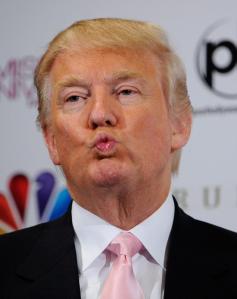
Paul Krugman points out that Donald Trump is not the only GOP candidate who is completely nuts:
Just about the entire political commentariat has been caught completely flatfooted by Donald Trump’s durable front-runner status; he was supposed to collapse after being nasty to St. John McCain, but nothing of the sort happened.
So now the conventional wisdom is that we’re witnessing a temporary triumph of style over substance; Republican voters like Trump’s bluster, and haven’t (yet) realized that he isn’t making sense.
But if you ask me, the people who are really mistaking style for substance are the pundits. It’s true that Trump isn’t making sense — but neither are the mainstream contenders for the GOP nomination.
Read the rest at the NYT.
More useful stories, links only:
Washington Post: Donald Trump talked politics with Bill Clinton weeks before launching 2016 bid.
Politico: How Jeb and the GOP Got Trumped.
Ezra Klein at Vox: The media’s 5 stages of grief over Donald Trump.
Time: How to Watch Tonight’s Republican Debate Online.
Business Insider: Republicans outside Washington are urging the party to take Trump’s campaign seriously.
Bill Schneider at Reuters: Why Donald Trump’s hostile takeover bid for the Republican Party is a loser.
American Prospect: Why Jeb Bush’s Pitch to the Koch Brothers Should Scare You.
Norm Ornstein at The Atlantic: The Republican Road Block Ahead.
Remember this is an open thread. Post your thoughts and links on any topic in the comment thread, and please come back later this evening for live blogs on the second tier and first tier GOP candidates debates. The first one starts at 5PM and the main event will be at 9PM. I hope you’ll join us!
Did you like this post? Please share it with your friends:


 peej
peej Carissa
 bostonboomer
 dakinikat
 ecocatwoman
 jjlo
jjlo mablue2
 Mama Lopez
 peggysue22
 quixote
 skydancingguestblogger
 Mona (aka Wonk the Vote)





Recent Comments