
Tuesday Reads: The Republican Party’s Mess
Posted: June 23, 2015 Filed under: Barack Obama, morning reads, Republican politics, U.S. Politics | Tags: Civil Rights era, Civil War, Confederate flag, Racism, South Carolina, Tea Party 69 Comments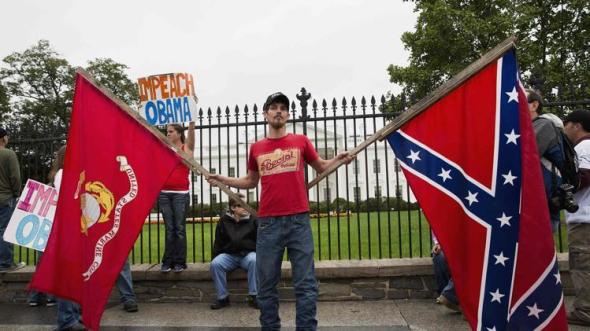
Good Morning!!
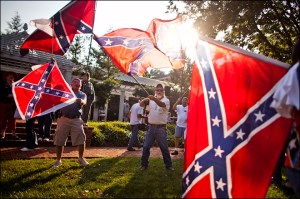
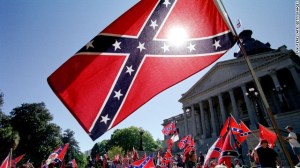
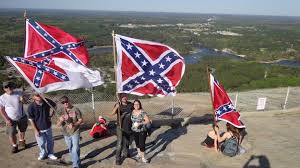
I’m sure you’ll recognize the image at the top of this post. The photo was taken at a Tea Party rally in Washington, DC, a couple of years ago. I’ve included other similar photos in this post. Don’t tell me the people holding these flags don’t understand that it is a symbol of racial hatred.
Since Barack Obama was elected President of the United States, we have seen shocking overt racism on display by right wing Republicans, and so called “mainstream” Republican elected officials have done nothing to stop it. The simple truth is that the Tea Party is a racist hate group that was formed in reaction to the election of a black president.
As a consequence of Republican officials’ refusal to call the Tea Party what it is, we have seen extreme right wing candidates like Ted Cruz elected to high office and stupid and hateful people like Sarah Palin and Michelle Bachmann treated seriously by the media. It’s a national disgrace, and we should begin to hold Republicans responsible for it.
Nikki Haley was elected governor of South Carolina in 2010 as a Tea Party candidate, although she has since fallen out of favor with the group. Yesterday Haley made a cowardly, mealy-mouthed public statement calling for removal of the Confederate flag from the state house grounds, and yet today she is being celebrated in the media for her “courage.” Here’s part of it:
For many people in our state the flag stands for traditions that are noble. Traditions of history, of heritage and of ancestry.
The hate-filled murderer who massacred our brothers and sisters in Charleston has a sick and twisted view of the flag. In no way does he reflect the people of our state who respect, and in many ways, revere it.
Those South Carolinians view the flag as a symbol of respect, integrity and duty. They also see it as a memorial. A way to honor ancestors who came to the service of their state during time of conflict. That is not hate, nor is it racism.
At the same time, for many others in South Carolina, the flag is a deeply offensive symbol of a brutally oppressive past. As a state, we can survive and indeed we can thrive as we have done whilst still being home to both of those viewpoints. We do not need to declare a winner and a loser here.
We respect freedom of expression. And that for those who wish to show their respect for the flag on their private property, no one will stand in your way.
But the statehouse is different. And the events of this past week call upon us to look at this in a different way….
One hundred and fifty years after the end of the Civil War, the time has come. There will be some in our state who see this as a sad moment. I respect that. But know this, for good and for bad, whether it is on the statehouse grounds or in a museum the flag will always be a part of the soil in South Carolina. But this is a moment in which we can say that that flag, while an integral part of our past, does not represent the future of our great state.
It is South Carolina’s historic moment, and this will be South Carolina’s decision. To those outside of our state, the flag may be nothing more than a symbol of the worst of America’s past. That is not what it is to many South Carolinians. The state house belongs to all of us. Their voices will be heard, and their role in this debate will be respected….
But we are not going to allow this symbol to divide us any longer. The fact that people are choosing to use it as a sign of hate is something that we cannot stand. The fact that it causes pain to so many is enough to move it from the capitol grounds.
Why couldn’t Haley just admit that the flag on the her state house grounds is a symbol of resistance to integration and to legal recognition that African Americans should have equal rights; and that decades after the changes brought about by Civil Rights Movement they are still not treated equally by many, including police officers? By the way, maybe she should also consider opposing the efforts of Republicans in South Carolina to prevent African Americans from voting.
Last night I watch Rachel Maddow’s show for the first time in months, and I’m very glad I did. Maddow presented a detailed history of the Council of Conservative Citizens, the group whose website inspired Dylann Roof to murder nine African Americans at a prayer group meeting at the Emmanuel AME Church in Charleston, SC last week. The Council of Conservative Citizens grew directly out of the White Citizens Councils that fought to maintain racial segregation in Southern cities in the 1950s and 1960s. From Wikipedia:
The Citizens’ Councils (also referred to as White Citizens’ Councils) were an associated network of white supremacist organizations in the United States, concentrated in the South. The first was formed on July 11, 1954 After 1956, it was known as the Citizens’ Councils of America. With about 60,000 members across the United States, mostly in the South, the groups were founded primarily to oppose racial integration of schools, but they also supported segregation of public facilities during the 1950s and 1960s. Members used severe intimidation tactics including economic boycotts, firing people from jobs, propaganda, and occasionally violence against civil-rights activists.
By the 1970s, following passage of federal civil rights legislation in the mid-1960s and enforcement of constitutional rights by the federal government, the influence of the Councils had waned considerably. The successor organization to the White Citizens’ Councils is the Council of Conservative Citizens, founded in 1985.
Maddow pointed out that in 2010, Haley Barbour was quickly eliminated from the race for the GOP nomination when he publicly praised the White Citizen Council in his home city of Yazoo, Mississippi. Maddow also interviewed SC Rep. James Clyburn about the history of the Confederate flag that still flies on the SC state house grounds. He explained that that flag was a Virginia flag flown by Robert E. Lee and that it has nothing to do with South Carolina history. It was put up over the SC state house in 1962 as a direct response to the battle for civil rights for African Americans.
Why couldn’t Nikki Haley simply admit that in her statement? Frankly, the Republican Party has allowed itself to become the party of racism and hatred; and it’s time for decent Republicans to face up to that and and deal with it honestly.
Here’s what Melissa McEwan wrote about Haley’s statement:
She couldn’t even be bothered to say that the thing is a racist symbol. Which has nonetheless not stopped members of her party from celebrating her courage.
The thing is, it’s not really “brave” to take down a flag that never should have been flying in the first place.
I see what Haley is doing as approximately as “brave” as when I clean up cat vomit. You’re supposed to clean up gross messes in your home….
let’s not pretend that it’s a Great Leadership moment, when it took 150 years of fluttering insult, and nine deaths in the last week at the hands of one of the many white people to embrace that contemptible symbol of white supremacy, to pull it off the flagpole.

I completely agree. As I wrote in a comment yesterday, the Confederate flag is a symbol of hate and fear that should be in the same category as the Nazi swastika and the “n” word. Why should people be allowed to fly it on their own property? Why should more intelligent and sensitive neighbors or even people driving by have to see it?
It’s way past time for Republicans to stop beating around the bush and clean up the disgusting mess in their party, and it’s time for all Americans to recognize that racism in any form is evil.
Here’s a more serious discussion of the meaning of the Confederate flag by Ta-Nehisi Coates at The Atlantic:
This afternoon, in announcing her support for removing the Confederate flag from the capitol grounds, South Carolina Governor Nikki Haley asserted that killer Dylann Roof had a “a sick and twisted view of the flag” which did not reflect “the people in our state who respect and in many ways revere it.” If the governor meant that very few of the flag’s supporters believe in mass murder, she is surely right. But on the question of whose view of the Confederate Flag is more twisted, she is almost certainly wrong.
Roof’s belief that black life had no purpose beyond subjugation is “sick and twisted” in the exact same manner as the beliefs of those who created the Confederate flag were “sick and twisted.” The Confederate flag is directly tied to the Confederate cause, and the Confederate cause was white supremacy. This claim is not the result of revisionism. It does not require reading between the lines. It is the plain meaning of the words of those who bore the Confederate flag across history. These words must never be forgotten. Over the next few months the word “heritage” will be repeatedly invoked. It would be derelict to not examine the exact contents of that heritage.
This examination should begin in South Carolina, the site of our present and past catastrophe. South Carolina was the first state to secede, two months after the election of Abraham Lincoln. It was in South Carolina that the Civil War began, when the Confederacy fired on Fort Sumter. The state’s casus belli was neither vague nor hard to comprehend:
…A geographical line has been drawn across the Union, and all the States north of that line have united in the election of a man to the high office of President of the United States, whose opinions and purposes are hostile to slavery. He is to be entrusted with the administration of the common Government, because he has declared that that “Government cannot endure permanently half slave, half free,” and that the public mind must rest in the belief that slavery is in the course of ultimate extinction. This sectional combination for the submersion of the Constitution, has been aided in some of the States by elevating to citizenship, persons who, by the supreme law of the land, are incapable of becoming citizens; and their votes have been used to inaugurate a new policy, hostile to the South, and destructive of its beliefs and safety.
In citing slavery, South Carolina was less an outlier than a leader, setting the tone for other states, including Mississippi…
Please go read the whole thing at the link.
Republicans are now arguing that Democrats are responsible for the confederate flag symbolism and for the South’s history of racism. It’s true that Dixiecrats fought to maintain segregation, but most of those old guys switched to the Republican Party back in the Civil Rights era. The Republicans own the mess now, and they need to get busy cleaning it up.
As always, this is an open thread. Please post your thoughts and links on any topic in the comments below.
Reactions to Hillary and Her Speech: The Good The Bad and The Ugly
Posted: June 15, 2015 Filed under: Barack Obama, morning reads, Republican politics, U.S. Economy, U.S. Politics | Tags: #HillaryMen, 2016 presidential race, Chris Christie, Clinton Foundation, Hillary Clinton, Mitt Romney 45 Comments
Good Morning!!
Dakinikat will try to put up a post this afternoon if she can find time, but in the meantime, here are a few reactions to Hillary’s speech from the media and other politicians, as well as her interview with the Des Moines Register and a good article on the Clinton Foundation for us to discuss in the meantime.
The Good
From The Des Moines Register: Clinton hears ‘eagerness’ for talk of female presidency.
Hillary Clinton did not win the Democratic presidential nomination in 2008, but her campaign succeeded in addressing concerns about whether a woman could be commander in chief, she told The Des Moines Register on Sunday.
“Part of what I tried to do in that campaign was to begin to answer that question,” she said. “Now I feel like the question’s been answered.” ….
“There is an eagerness that I sense coming at me from people in my audiences, in my conversations, to engage with me about that more than I felt in ’08,” Clinton told the Register on Sunday, one of two sit-down news interviews that were the first for this presidential bid.
In the 15-minute interview at the Iowa State Fairgrounds, Clinton defended the presidencies of Bill Clinton and Barack Obama, said she’ll propose improvements to the Affordable Care Act, and expanded on her views about the proposed Trans-Pacific Partnership trade pact. She landed on the side of House Minority Leader Nancy Pelosi over Obama in wanting to ensure stronger protections for American workers.
Read the rest at the link.
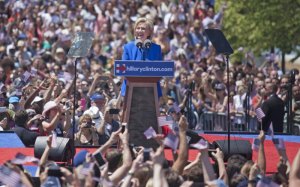
Inside Philanthropy: Shut Up About the Clinton Foundation’s Problems for a Minute to Look at It’s Programs.
With all the hype in the media about the Clinton Foundation, we wonder how many Americans actually know what the foundation does—or how many members of the media, for that matter.
Listening to news reports, you’d think the sole purpose of this outfit is to help the Clintons get rich and do favors for their shady friends. And while, to be sure, some of the reports about specific donors have been troubling—and suggest questionable judgment by the Clintons—what’s missing is a broader, more balanced look at how the foundation mobilizes money for good causes and who, in reality, puts up most of that money. (Hint: It’s not dictators looking for favors from the State Department.) While people shouldn’t stop asking hard questions about the foundation, they should pay more attention to its approach and programs.
In fact, the Clinton Foundation stands as one of the more successful efforts of recent years to mobilize new resources for philanthropy. Since its founding in 2001, it has raised nearly $2 billion, according an independent review by the Washington Post. Yes, chunks of that money have come from the Clintons’ network of political donors and corporate friends, which is how fundraising often works: You hit up the rich people you know for your causes. And, sure, some of them may not have the purest motives for ponying up, especially if you’re someone who can return favors later, but that’s the nature of the game.
Philanthropic fundraising is more like political fundraising than many may imagine. You think every hedge fund guy who gives big at the Robin Hood’s annual gala is solely focused on poor kids in East New York? Or that every tech leader who recently listened to Marc Benioff’s pleas and chipped in to fight poverty in the Bay Area has a heart of gold? Or that everyone sitting on MoMA’s board is only there because they love art? Come on.
Much more at the link.
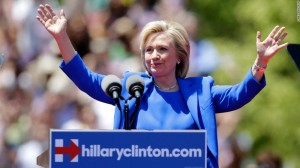
Matthew Yglesias at Vox gets it: Hillary Clinton has always been to Obama’s left on economics.
At a dramatic weekend rally on Roosevelt Island, Hillary Clinton unleashed a speech that was in some ways strikingly liberal, especially for a candidate who’s not facing meaningful opposition in the Democratic Primary. Politico’s Glenn Thrush says it shows that “the Democratic Party is moving left fast” and Clinton knows it, which is why she uncorked “economic-inequality rhetoric could have been comfortably uttered by the likes of Elizabeth Warren, Joseph Stiglitz, Bernie Sanders, or Martin O’Malley.”
The truth, however, is that on the kind of pocketbook issues that Clinton spent most of yesterday’s speech discussing, she’s alwaysbeen on the left wing of the Democratic Party. She’s been in the public eye far too long to have avoided inconsistencies over the years. But in positional terms, somewhat to the left of Obama — or Bill Clinton — on economics is where she’s been this whole time.
Yglesias goes into plenty of detail on Hillary’s record. Good piece!

The Washington Post: Hillary Clinton won the weekend on social media.
According to an analysis by Zignal Labs, The Washington Post’s campaign analytics partner, 59 percent of all 2016 chatter during the weekend was about her. That means three out of every five stories or posts written about any presidential contender mentioned the former secretary of State. By comparison, the week prior, she commanded just 20 percent.
A June 11 post from Peter Daou and Tom Watson at their new site #HillaryMen: A Woman Leading America – If Not Now, When?
Our premise is that Hillary’s inclusive vision, unwavering commitment to public service, progressive policies and unparalleled experience make her one of the best (and best qualified) candidates ever to seek the presidency. If Hillarycannot become the first woman in history to cross the presidential finish line, who can? If not now, when? When will we show our daughters that a woman can be president?
Viewing the 2016 election through an explicit gender lens, the ferocious attacks against Hillary are not just about her, but underscore the deeply ingrained resistance to any woman with a viable path to the White House. Does anyone believe that another female candidate could get within reach of the presidency without running headlong into the same double standard and institutional resistance confronting Hillary?
Spotlighting the gender aspect of the 2016 race does not mean we discount the centrality of issues and competing ideologies or the complex information processing that leads voters to choose a candidate. Nor is it our intention to make specific accusations of gender bias. We are simply acknowledging the political, social and cultural barriers that have resulted in a complete shut out in national U.S. politics, at 44-0. In nearly a quarter millennium, not a single woman has occupied our nation’s highest office.
This is going to be a great site to read for inspiration during the upcoming campaign. Thanks to Beata for posting about it in the comments on Saturday.
Tuesday Reads: GOP Anxious About Upcoming SCOTUS Decisions
Posted: June 9, 2015 Filed under: Barack Obama, morning reads, Republican politics, SCOTUS, U.S. Politics | Tags: Affordable Care Act, same-sex marriage, Supreme Court decisions 57 Comments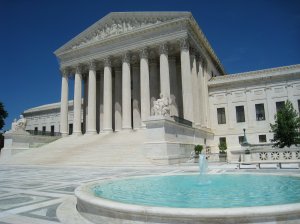
Good Morning!!
The Supreme Court is in the news today, as its current session approaches its end.
The two most consequential decisions to be announced will have serious implications for the health care system and settle the question of same sex couples should have equal rights to marry and have the same benefits of marriage as heterosexual couples. Some other important decisions have already been announced.
The Obamacare case is the one making news today, after President Obama spoke publicly about the upcoming decision on the Affordable Care Act yesterday at the G7 Conference in Germany.
Politico reports, Obama: Supreme Court shouldn’t have heard Obamacare challenge.
President Barack Obama expressed deep frustration with the U.S. Supreme Court on Monday, questioning why justices even took up a case that imperils his signature health insurance reform plan.
The high court is set to issue a decision on the case, known as King v. Burwell, by the end of the month. A ruling against the government would mean that 6.4 million people in the 34 states relying on the federal Healthcare.gov website would be at risk of losing subsidies that make their insurance affordable.
“This should be an easy case. Frankly, it probably shouldn’t even have been taken up,” Obama said at a news conference after the G-7 summit in Krun, Germany. “Since we’re going to get a ruling pretty quick, I think it’s important to assume that the Supreme Court’s going to do what legal scholars would expect them to do.”
Obama repeated the administration’s contention that there’s no contingency plan or fix to keep insurance markets from going into a tailspin, predicting that the justices would decide in his favor. And in any case, he added, Congress could fix the ambiguous phrasing of the health law “with a one-sentence provision.”
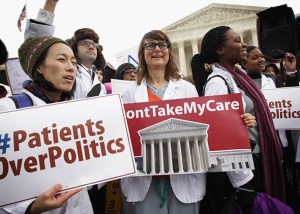
But Republicans made it clear that they aren’t going to allow an easy fix. From Bloomberg, GOP Swiftly Rejects Obama’s ‘One-Sentence Fix’ to Obamacare If Supreme Court Voids Subsidies.
“Let’s be clear: if the Supreme Court rules against the Administration, Congress will not pass a so called ‘one-sentence’ fake fix,” Wyoming Senator John Barrasso, who is leading Republican efforts to craft a contingency plan, said in a statement.
At issue is whether a handful of words in the Affordable Care Act mean the government cannot provide insurance tax credits for millions of Americans in 34 states enrolled through HealthCare.gov, rather than a state exchange. Without the subsidies, insurance will become unaffordable to many and premiums are almost certain to skyrocket across the board. Even so, Barrasso and his fellow Republicans say Obama acted illegally by doling out the subsidies. A victory in the case King v. Burwell would probably create chaos, and ironically put Republicans on the hook for resolving it.
In his statement, Barrasso accused Obama of “bullying the Supreme Court” and said the Republican-led Congress is “prepared to help” Americans who may be harmed.
But is it? Republicans have struggled to coalesce around a contingency plan if the ruling goes their way. A victory could backfire on the GOP without a viable response, as Democrats would be armed with attack ads accusing them of pushing for a ruling that threw millions of Americans off their health care plans without a plan to help them.
Even a simple fix is dangerous for Republicans. Conservative lawmakers in the House worry that a such a move to clarify that the subsidies are available in all 50 states would be attacked by their base as a vote for Obamacare.
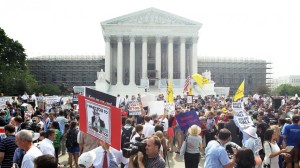
According to The Hill, Republicans fear they will win ObamaCare court battle.
Republicans in Congress are worried the Supreme Court will hand them a major headache this month if it rules against the federal health insurance exchanges in more than 30 states, ending subsidies for millions of people.
While the Affordable Care Act remains broadly unpopular, two new polls show a majority of Americans don’t want to do away with its subsidies, a core component of the law.
This poses a conundrum for Senate Majority Leader Mitch McConnell (R-Ky.) and Speaker John Boehner (R-Ohio). They are under pressure from colleagues up for reelection in swing states and districts to extend the subsidies, at least temporarily, if the court strikes them down. But doing so would risk a backlash from the conservative base.
The Supreme Court is expected to hand down its decision in King v. Burwell, which could strip 6.4 million people of health insurance subsidies, in late June.
States that would be hardest hit by a ruling against the law include the Senate battlegrounds of Illinois, North Carolina, Ohio and Wisconsin.

REUTERS/Jonathan Ernst
Greg Sargent at Morning Plum: In battleground states, voters don’t want Supreme Court to gut subsidies.
As your humble blogger has tirelessly reiterated, the states with the highest numbers of people who stand to lose subsidies if the Supreme Court guts them also happen to be the main presidential and Senate battleground states. That overlap could increase the political stakes in the battle that will follow any Court ruling against the ACA.
Now a new Washington Post poll confirms the stakes here. It finds that in many key battleground states, a majority says the Court should not end subsidies for those on the federal exchange.
The Post poll finds that among Americans overall, 55 percent oppose a Court decision killing the subsidies, while only 38 percent support it. Independents oppose such a decision by 57-36, while Republicans are alone in supporting a decision against the ACA by 55-34.
Among the states in which the largest numbers of people may lose subsidiesare Florida, North Carolina, Pennsylvania, Virginia, Wisconsin and Ohio. Those are key presidential battlegrounds, and Republicans are defending Senate seats in five of them.
The upcoming marriage equality decision could also backfire on Republicans:

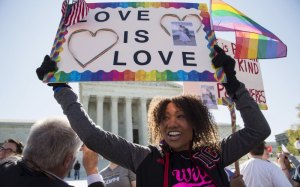
The LA Times: GOP’s same-sex marriage trap: Conservatives oppose it intensely.
The Supreme Court may be just weeks away from declaring a nationwide right to same-sex marriage with a ruling likely to trigger public opposition — and private sighs of relief — from most Republican presidential hopefuls.
Why relief? The marriage issue increasingly has become a trap for Republicans, and a Supreme Court decision that takes the matter out of the political process would provide the easiest exit. The court is expected to rule this month on whether the Constitution protects marriage rights for gay couples.
A new poll by the nonpartisan Pew Research Center highlights Republicans’ predicament. By 57% to 39%, Americans favor allowing gay and lesbian couples to marry legally. But among Republicans, only about one-third agree.
Moreover, among those who describe themselves as conservative Republicans, 40% say the issue is “very important” to them, and they overwhelmingly oppose marriage rights for gay couples.
Overall, the poll found, opponents of same-sex marriage are more likely than supporters to describe the issue as “very important.” In part, that may be because about two-thirds of white, evangelical Protestants, who make up a large share of the opposition, say there is “a lot” of conflict between homosexuality and their religious beliefs.
For would-be Republican presidential nominees, that sets up a difficult problem. Support for same-sex marriage rights would put a candidate at odds with a huge bloc of voters in GOP primaries on an issue they deem “very important.” But vocal opposition to those rights would put a candidate out of step with a large and growing majority of the public.
Recently announced SCOTUS decisions:
Yesterday the Supreme Court decided that U.S. citizens who were born in Jerusalem cannot list their birthplace as Israel on their U.S. Passports. Richard Wolfe at USA Today:
The Supreme Court declined Monday to insert itself into the middle of the Israeli-Palestinian conflict by second-guessing U.S. policy on Jerusalem.
Ruling just a few months after a feud between President Obama and Israeli Prime MinisterBenjamin Netanyahu, the justices refused to allow Americans born in Jerusalem to have their passports changed to reflect Israel as their birthplace, as Congress demanded more than a decade ago.
In denying the challenge waged by the Jewish parents of a 12-year-old almost since his birth in 2002, a majority of justices heeded the State Department’s warning that a simple passport alteration could “provoke uproar throughout the Arab and Muslim world.”
Justice Anthony Kennedy wrote the 6-3 decision for the court, which needed more than seven months following oral arguments in early November to decide the congressional law was unconstitutional. It was the longest-pending high court decision.
“The power to recognize or decline to recognize a foreign state and its territorial bounds resides in the president alone,” Kennedy said, citing examples from the French Revolution in 1793 to President Jimmy Carter’s recognition of the People’s Republic of China in 1979.
Lyle Denniston has a detailed analysis of this decision at SCOTUSblog.

In another interesting decision, the Court let stand a San Francisco gun control law. NPR reports, Supreme Court Rejects NRA Challenge To San Francisco Gun Rules.
The U.S. Supreme Court has declined to block two San Francisco gun control measures that were fiercely opposed by the National Rifle Association. At least one veteran court observer says the high court’s decision raises questions about how the justices interpret the Second Amendment.
First, the basics: A 2007 San Francisco ordinance requires residents to keep handguns under lock and key or to use trigger locks when they are not carrying their weapons. Another law, dating to 1994, bans the sale of ammunition that expands on impact, or hollow-point bullets.
Plaintiff Espanola Jackson and seven other petitioners, including the NRA, filed suit in 2012. They sought an injunction to keep the lockbox law from being enforced. But in March 2014, the 9th U.S. Circuit Court of Appeals sided with the City and County of San Francisco and left both measures intact.
Read more at the link.
Finally a new CNN poll shows that Americans don’t trust the current Supreme Court on “key issues.”
With major Supreme Court decisions on health care and same-sex marriage expected this month, many lack trust in the Supreme Court’s handling of those two issues, according to a new CNN/ORC poll.
Yet most approve of the way the court is handling its job generally.
A majority, 52%, say they approve of the way the court is handling its job, while 41% disapprove. That’s an improvement from an even 48% to 48% split two years ago. Still, when Americans are asked how much they trust the court on a range of issues it will be considering this term or the next, the worst ratings come on health care and same-sex marriage. Only about half say they have at least a moderate amount of trust in the court on health care (50%) or same-sex marriage (49%). There is more faith in the Supreme Court on other key issues on the docket, with most saying they trust the court at least a moderate amount on freedom of speech (69%), voting rights (65%) and the death penalty (60%).
Read the rest at CNN.
What else is happening? As always, this is an open thread, so please post your thoughts and links on any topic in the comments.
Lazy Saturday Reads: D-Day Edition
Posted: June 6, 2015 Filed under: Civil Rights, Crime, Criminal Justice System, Foreign Affairs, morning reads, Republican politics, U.S. Politics | Tags: Adolf Hitler, D-Day 71st anniversary, Dennis Hastert, Josh Duggar, Jr., Lonnie Franklin, sexual molestation, Tales of the Grim Sleeper, The Longest Day, World War II 38 Comments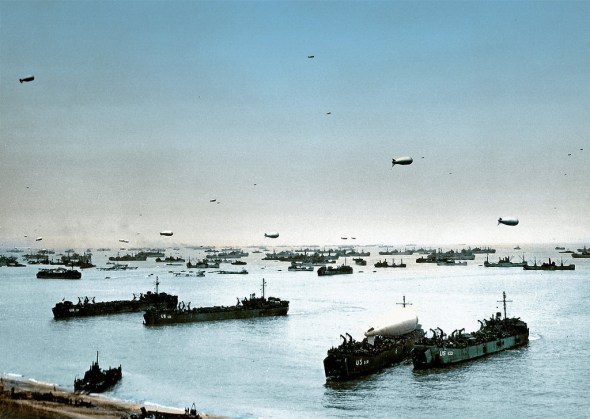
Allied ships, boats and barrage balloons off Omaha Beach after the successful D-Day invasion, near Colleville-sur-Mer, Normandy, France on June 9, 1944. (Photo by Galerie Bilderwelt/Getty Images)
Good Morning!!
Today is the 71st anniversary of the D-Day invasion of Normandy. I found some stunning original color photos at The Denver Post, and I thought I’d share a few of them here. Go to the link to see the entire collection. I’ve also gathered some interesting articles on the “longest day” along with remembrances from survivors.
From The Charlotte Observer: D-Day: Only the beginning – with the end nowhere in sight, by David Perlmutt.
With Saturday comes another anniversary of D-Day as the light continues to dim on the generation that fought it.
Seventy-one years have passed since Carolinians such as Andy Andrews of Black Mountain and Walter Dickens of Monroe got their first taste of combat when they rushed ashore at Normandy, France, on June 6, 1944, the pivotal day historians tag as the beginning of the end for Nazi Germany.
It was more of a beginning than an end. Long after D-Day’s first anniversary, the bullets would continue to fly in the Pacific theater and other parts of the world.
A year ago, I wrote a series of stories to honor the 70th anniversary of D-Day through the eyes – and distant memories – of Andrews, Dickens and others like paratroopers Harold Eatmon of Mint Hill and E.B. Wallace of Waxhaw. The fighting took another 11 months and horrific losses during battles in countries such as France, Holland, Belgium and ultimately Germany before the Germans surrendered.

Planes from the 344th Bomb Group, which led the IX Bomber Command formations on D-Day on June 6, 2014. Operations started in March 1944 with attacks on targets in German-occupied France, Belgium, and the Netherlands. After the beginning of the Normandy invasion, the Group was active at Cotentin Peninsula, Caen, Saint-Lo and the Falaise Gap. (Photo by Galerie Bilderwelt/Getty Images)
Fighting continued in the Pacific, where my Dad was stationed, for a long time after June 6, 1944. He was on a ship traveling to Japan when the U.S. dropped the bombs on Hiroshima and Nagasaki. He said they celebrated–not knowing the horror the bombs would unleash–they were saved. My Dad might not have come home if those bombs hadn’t been dropped.
A year after D-Day, thousands of U.S. Marine and Army troops were still two weeks away from capturing Okinawa, the last in a hopscotch of islands that Allied forces needed for a plan to force Japan’s unconditional surrender. Offshore, U.S. Navy ships absorbed daily attacks by Japanese kamikaze (suicide) planes as their guns pounded hills above the landing beaches. Army Air Forces planes bombed targets inland to soften the Japanese defense.
As they fought to take control of Okinawa, hundreds of thousands of U.S. soldiers, Marines and sailors prepared to take part in what would have been history’s greatest battle – Operation Olympic, code-named Downfall, the invasion of the Japanese homeland.
They knew the fighting would be fierce.
Much more at the link. It’s a very good piece.

British Navy Landing Crafts (LCA-1377) carry United States Army Rangers to a ship near Weymouth in Southern England on June 1, 1944. British soldiers can be seen in the conning station. For safety measures, U.S. Rangers remained consigned on board English ships for five days prior to the invasion of Normandy, France. (Photo by Galerie Bilderwelt/Getty Images)
CNN: He got to witness ‘The Longest Day,’ by Val Lauder.
Cornelius Ryan was a 24-year-old war correspondent when he had a chance to see a defining moment in the defining event of the 20th century — the Allied landings on the coast of France to retake France and bring down Hitler.
Ryan at first witnessed the invasion from a bomber that flew over the beaches. Then, back in England, he scrambled to find the only thing he could that was going to Normandy. A torpedo boat that, he learned too late, had no radio. “And if there’s one thing that an editor is not interested in,” he said, “it’s having a reporter somewhere he can’t write a story.”
Recalling those five hours off the coast, watching the struggle on the beaches, he remembered “the magnitude of the thing, the vastness. I felt so inadequate to describe it.”
But today, as the 71st anniversary of D-Day approaches on June 6, Ryan is most likely to be remembered for being the one who did describe it, who told so many millions the real story of what happened that day, in his book which became the famous movie, “The Longest Day.”
Lauder was a young woman headed to journalism school at Northwestern when the invasion took place.
In September 1962, I interviewed Cornelius Ryan before the New York premiere of the film. Ryan had become the authority on the events of June 6, 1944, following publication of his book. And as he himself noted, in the 10 years it took him to research and write the book, he became “a veritable depository of D-Day memorabilia.”
He shared some of what he’d learned as we talked in the study of his home in Ridgefield, Connecticut, that Sunday afternoon.
Read her remembrances at the CNN link.
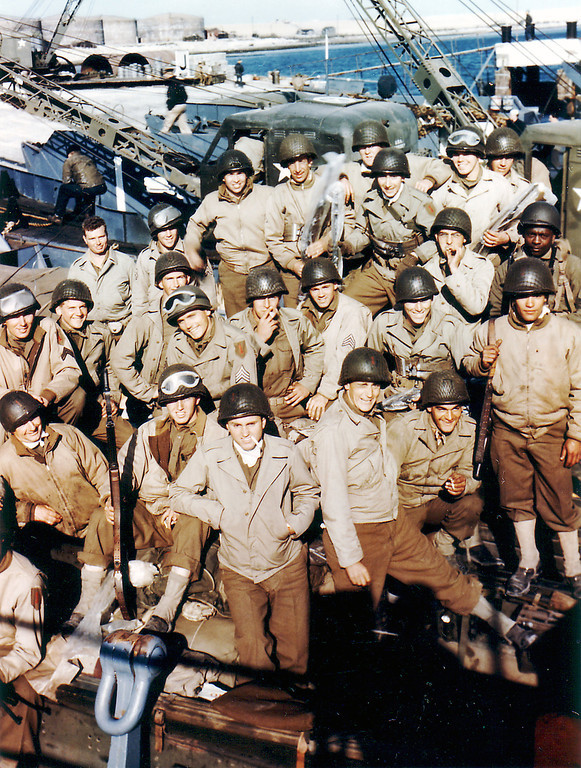
The 1st Infantry Division of the United States Army (The ‘Big Red One’) in Dorset, United Kingdom on June 5, 1944 before departing for Omaha Beach. (Photo by Galerie Bilderwelt/Getty Images)
The Christian Science Monitor: D-Day June 6, 1944: How did Hitler react?
Considering the pivotal nature of June 6, 1944, how did Hitler react to the attack? Did he rant, did he rail? Did he move with focused calm to try and repel the invaders? [….]
In the early days of June Germany’s Fuhrer was at The Berghof, his residence in the Bavarian Alps. Everyone there knew an invasion was likely in the near future, but the atmosphere was not nervous, according to contemporary accounts. To the contrary it was relaxed, and in the evening, almost festive. A group of guests and military aides would gather at the complex’s Tea House and Hitler would hold forth on favorite topics, such as the great men of history, or Europe’s future.
On the evening of June 5, Hitler and his entourage watched the latest newsreels, and then talked about films and theater. They stayed up until 2 a.m., trading reminiscences. It was almost like the “good old times,” remembered key Hitler associate Joseph Goebbels.
When Goebbels left for his own quarters, a thunderstorm broke, writes British historian Ian Kershaw. German military intelligence was already picking up indications of an oncoming Allied force, and perhaps landing troops, in the Normandy region. But Hitler wasn’t told. The Fuhrer retired around 3 a.m.
German headquarters confirmed that some sort of widespread attack was in progress shortly thereafter. At sunrise, around 6 a.m., the defenders knew: Allied ships and planes were massed off the French beaches in astounding strength, and men were beginning to come ashore. It was a sight many would never forget.
But the German reaction was slow and befuddled. Was this the real thing, the main invasion? Or was it a feint, with the real force to land elsewhere, probably Calais?
Read more at the link.
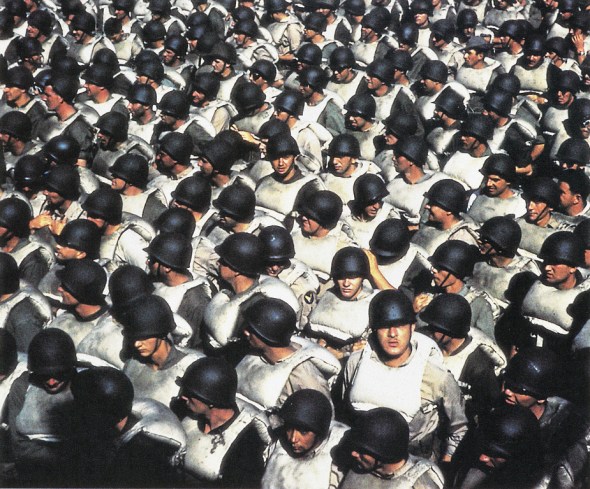
A U.S. Landing Craft Infantry (LCI) filled with invasion troops approaches the French coast from the sea in June of 1944. The GIs wear life vests in preparation for the landing. (Photo by Galerie Bilderwelt/Getty Images)
More D-Day stories:
The Daily Mail, D-Day heroes’ courage remembered.
AP via The Miami Herald, Vets, visitors return to Normandy to mark D-Day anniversary.
Constitution Daily, Ten fascinating facts on the 71st anniversary of D-Day.
The Daily Beast, The Stacks: A D-Day Vet Shows Normandy to His Son.
Pittsburgh Post-Gazette, Veterans of D-Day mark 71st anniversary: 4 will be honored today at Heinz History Center.
The Nation on what was happening in Congress on D-Day–a bunch of nonsense, just like today. June 6, 1944: D-Day Invasion of France.
Heavy, D-Day Invasion: Top 10 Best Quotes & Sayings.
A Recommendation
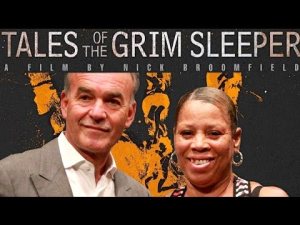
Before I get to the rest of the news, I want to highly recommend an HBO documentary I watched a few days ago called Tales of the Grim Sleeper. It’s the story of how serial killer Lonnie Franklin, Jr. murdered as many as 100 African-American women in South Central LA over more than 20 years while the LAPD ignored what was happening.
This isn’t the story of a serial killer–it’s about police attitudes toward the poor and people of color; and it fits right in with recent events in places like Ferguson, Cleveland, Staten Island, and Baltimore and with the Black Lives Matter movement.
This story could have happened in a poor neighborhood in any major American city. In fact, there was a similar case in Cleveland where Anthony Sowell murdered poor black women for years without getting caught because the crimes weren’t taken seriously.
If you have HBO or can get access to it, please watch this outstanding film.
Other News, links only
News News
Brian Beutler at The New Republic, Hillary Clinton’s Grand Strategy to Beat the GOP: Take Bold Positions Early and Often.
Politico, 2016 field descends on Iowa for Joni Ernst shindig.
New York Times, Beau Biden Funeral Draws Many Mourners, Including Obama.
LA Times, LAPD finds officers were justified in fatal shooting of mentally ill man, sources say.
Politico, Anti-war activist confronts Sen. Tom Cotton.
Paul Krugman, Lone Star Stumble.
Voice of America, Death Toll Jumps to Nearly 400 in China Ship Sinking.
BBC News, President Vladimir Putin tells West not to fear Russia
Sexual Molestation News
AP, via AOL, Sister: Brother had sexual relationship with Hastert.
NBC News, Dennis Hastert Case: Abuse Group Wants Congressional Portrait Removed.
Huffington Post, Dennis Hastert Hid His Skeletons As He Helped Push GOP’s Anti-Gay Agenda.
Fox News, Jessa: Josh Duggar was ‘in puberty and a little too curious about girls.’
ABC News, Duggars Put Locks on Doors as a Safeguard Following Alleged Molestation.
Is a crime still “alleged” after the perpetrator and his parents acknowledge that he did it? Just asking.
Time, Josh Duggar’s Sister on Molestation: ‘It Wasn’t Like a Horror Story.’
Yibada, Josh Duggar’s Sister Jill Dillard: My Parents Did Such An Amazing Job.
Gawker, The Truth About Josh Duggar’s Sham Cult-Center “Counseling.”
What else is happening? As always, treat this as an open thread.
Thursday Reads: GOP Clown Car Update and Other News
Posted: June 4, 2015 Filed under: 2016 elections, morning reads, Republican politics, U.S. Politics | Tags: Beau Biden, GOP Clown Car, Hillary Clinton, Jeb Bush, Joe Biden, Lincoln Chafee, Lindsey Graham, Martin O'Malley, Ted Cruz 41 Comments
Good Morning!!
I can’t believe I have a cold in June–sore throat, stuffy nose, and a cough. Ugh. Plus the town is working the water pipes on my street, and they are right in front of my house for the second day. This morning they have shut off my running water. I don’t know how long it will be, because I wasn’t even warned they were going to be digging a giant trench that would keep me from getting my car out of the driveway for two days straight. What if I had to get to a job?
There is a huge digger machine in front of the house, men all over my yard and driveway. Occasionally there are loud thumps that shake the house. Late yesterday they filled in the trench temporarily, but I still wouldn’t have dared drive my car out because there was a depression at the end of the driveway that looked like it would be difficult to get past.
I just hope they finish up today. I have known for a long time that they were going to do this, but I expected to be told when they would be shutting off my water and blocking my driveway. Oh well . . . fortunately I don’t need to get out.
I had something really interesting that I wanted to write about today, but I’m going to postpone that until Saturday when I hope I’ll be feeling more like myself. This post will be basically a link dump.
Here’s the latest on the GOP clown car.
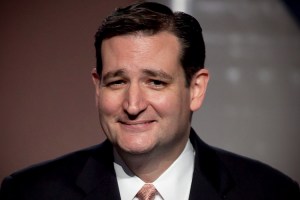
We all knew that Ted Cruz was a giant a-hole, but this is really beyond the pale. From David Nir at DailyKos,
Joe Biden has suffered far, far more tragedy than anyone should ever have to endure in a lifetime. In 1972, just weeks after he first won election to the Senate, Biden’s wife and one-year-old daughter were killed in a car accident. Last week, his 46-year-old son Beau, who survived that same accident, died of brain cancer.
As Biden’s son Beau’s body awaited burial, Cruz decided to tell a “cruel joke” about his grieving father.
“You know, Vice President Joe Biden,” he said as a few chuckles emerged from the crowd, setting up the joke for him.
“You know the nice thing. You don’t need a punchline. I promise you it works. At the next party you’re at, just walk up to someone and say, ‘Vice President Joe Biden,’ and just close your mouth. They will crack up laughing.”
Afterward reporter Chad Livengood asked Cruz about the death of Biden’s son. Cruz’s response was telling.
Q: Could you talk about the vice president losing his son this week?
A: Heartbreaking and tragic, and our prayers are very much with Vice President Biden, with Jill. It’s a tragedy no one should have to endure.
Q: Why’d you tell a joke about the vice president tonight?
A: Uh …. [walks away]
Cruz later “apologized,” according to The Detroit News:
“It was a mistake to use an old joke about Joe Biden during his time of grief, and I sincerely apologize,” Cruz said in a statement. “The loss of his son is heartbreaking and tragic, and our prayers are very much with the Vice President and his family.”
Biden’s eldest son, Beau, died Saturday of brain cancer. Beau Biden was a former two-term attorney general of Delaware and is to be buried Saturday in the Biden’s hometown of Wilmington, Delaware.
Cruz used the joke to talk about Biden’s past comments about firing off a double-barrel shotgun to ward off intruders — one of several stump-speech jabs at Democrats.
“That is very, very good advice — if it so happens that you’re being attacked by a flock of geese,” Cruz said….
Cruz was the keynote speaker for the Livingston County Republican Party’s Lincoln Day dinner at Crystal Gardens banquet center in Howell.
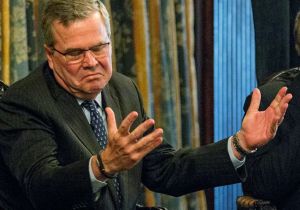
I thought Jeb Bush was already running for president, but apparently he’s still playing games in an attempt to get media attention. From the AP, via Huffington Post: Jeb Bush Teases Presidential Announcement On June 15.
The former Florida governor, widely expected to run for the GOP nomination, tweeted “coming soon” with a link to the website jebannouncement.com. On that page, the date 06.15.15 was listed, followed by the tease, “BE THE FIRST TO KNOW. RSVP NOW!” Visitors to the site could enter their name and email address. Bush also tweeted it in Spanish, “Próximamente 6.15.15.”
Boooooorrrrrrringggggg . . .
And then there’s the scandal-ridden former governor of Texas.
USA Today: Rick Perry launches 2016 presidential campaign.
ADDISON, Texas — Former Texas governor Rick Perry will announce Thursday that he’ll make a second bid for the White House.
The campaign’s new website went up early in the day, saying that Perry offers “tested leadership” and “proven results,” particularly in job creation.
Perry, who served as Texas governor for 14 years, plans to stress his experience, saying in a campaign video: “It’s going to be a show-me, don’t-tell-me, election.”
Yawn . . . .

Politico reports that Lady Lindsey “compare[d] Hillary Clinton to Kim Jong Un.”
Lindsey Graham says Hillary Clinton is avoiding media questions on the campaign trail because she lacks confidence in her own foreign policy record.
“Well, it’s easier to talk to the North Korean guy than it is her,” the Republican senator from South Carolina said in a “Fox & Friends” interview Thursday, an apparent reference to dictator Kim Jong-un.
“I think it’s the lack of confidence in her ability to distinguish herself from Barack Obama,” he added.
Clinton will be speaking on voting rights this afternoon at Texas Southern University, whose press guidance for the speech circulated Wednesday stipulated that there will be “NO opportunities to interview Hillary Clinton; her speech will be her interview.”
Hahahahaha! Now why wouldn’t Hillary want to talk to the media? Here are a few clues:
Josh Rogin at Bloomberg View: Why Hillary Can’t Run on Her State Department Record.
Washington Post: Clinton rivals pounce as her ratings fall.
Business Insider: There’s only one thing Wall Street hates about Hillary Clinton, and it has nothing to do with all the scandals. This one is incredible. according to author Linette Lopez, Wall Street insiders think the Clintons are “so shady, but Wall Street is a shady business.” And If supporting Clintons makes someone more money or gives them more power, they will instantly overlook their incessant corruption,”
At least the media wants to talk to her, unlike some of her competitors.
So far no one is reporting that Martin O’Malley is largely responsible for the policing problems in Baltimore. Maybe it’s because O’Malley has no chance in hell to beat Hillary.
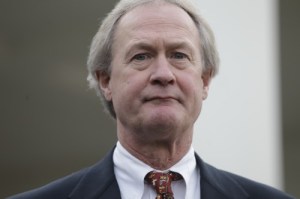
And then there’s former Republican Lincoln Chafee, who would probably fit in pretty well in the clown car.
Business Insider: A Democrat just launched his presidential campaign in a ‘half empty’ school auditorium.
Politico: Lincoln Chafee can’t win his local paper.
Moving on to other news . . . .
I don’t know if you’ve heard about it, but Boston Police shot a man on Tuesday. He was a suspected terrorist.
From The Boston Herald: Roslindale man killed in showdown with anti-terror task force.
An armed 26-year-old man under constant surveillance by an anti-terrorism task force was shot and killed by an FBI agent and a Boston police officer in Roslindale this morning after he came at them with a military-style knife, authorities say.
The suspect was identified by police as Usaama Rahim of Roslindale.
“He was on foot, under surveillance,” Boston Police Commissioner William Evans said. “The officers have been surveilling him and again they wanted to speak to him … and he turned and our officers gave several commands for him to drop the weapon and unfortunately he came at the officers and they did what they were trained to do and that’s never an easy decision for any officer to make.”
One FBI agent and one BPD officer fired, FBI Special Agent in Charge Vincent B. Lisi said.
Evans said “the level of alarm” had them want to question Rahim today.
Lisi added task-force members — who had Rahim under 24-hour watch — wanted to “interview him and talk to him about his intentions and some other matters.” At the time, Lisi added, Rahim was considered armed and dangerous.
Evans said a video shows Rahim “coming at the officers” as police retreated telling him to “drop the knife!” They then shot him twice, once in the torso and abdomen.
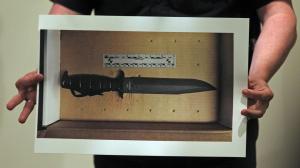
(Boston, MA, 06/02/15) A picture of the military style knife that was used to threaten officers during a police involved shooting this morning at 4600 Washington St. in Roslindale, during a press conference at Boston Police Headquarters on Tuesday, June 02, 2015. Staff Photo by Matt Stone
The Christian Science Monitor: After terror shooting, Boston police choose transparency over tradition.
As US police officers acknowledge feeling under siege by public unrest over deaths at the hands of police, the city of Boston, for the second time in just over a month, tried a new strategy – sharing grainy video of a police shooting with civic and religious leaders.
The new video involved a terrorism suspect, Usaama Rahim, who authorities say threatened retreating officers with a military-style knife on Tuesday before being fatally shot. The footage, community leaders said a day later, contradicted the contention by Mr. Rahim’s brother, an imam named Ibrahim Rahim, that he was shot in the back while talking to his father on the phone.
Darnell Williams, CEO of the Urban League of Eastern Massachusetts, declared after watching the video that Rahim “was not on a cellphone and was not shot in the back.”
Quickly releasing video to community leaders, acknowledges Daniel Conley, district attorney for Suffolk County in Massachusetts, goes against a long-held policing tradition in which investigative details are kept under wraps until a trial. The strategy stands in sharp contrast to how officers acted after last year’s shooting of Michael Brown in Ferguson, Mo. There, days after violent protests had already erupted, police revealed only piecemeal and contradictory information….
Boston’s strategy is an attempt at transparency – to reach out to those who may have questions and concerns about what happened, and whose views can be influential in the community.
We’ll see if that holds up after further investigation, but so far it sounds somewhat positive.
According to The Boston Globe, Rahim planned to behead police officers. He was overheard talking about it on phone taps. I don’t know how he thought he’d accomplish that goal even though he had a very scary looking knife.
Usaama Rahim had been plotting for days, officials said. He bought three long-bladed fighting knives — “good for carving,” he said — and confided to his nephew and another man that he would travel to another state to commit a beheading.
But at 5 a.m. Tuesday, the plan abruptly changed, according to a federal affidavit. Rahim would murder police officers in Massachusetts.
“I’m just going to, ah, go after them, those boys in blue,” Rahim allegedly told his nephew David Wright, in a phone call recorded by an anti-terrorism task force.
Two hours later, when members of that task force approached him in a Roslindale parking lot, Rahim allegedly brandished one of his military knives. They told him to drop his weapon. “You drop yours,” he allegedly replied, before a Boston Police officer and an FBI agent shot him to death.
The details emerged as Wright, Rahim’s nephew and alleged conspirator, appeared in federal court on a charge that he obstructed the investigation by encouraging his uncle to destroy his cellphone to hide evidence.
I don’t know. It still sounds like one of those FBI sting operations . . . .
A few more links:
This sounds like another Freddie Gray incident. From Raw Story: ‘Nobody knows what happened’: Florida inmate mysteriously dies after ride in sheriff’s van.
Vox: I’m a liberal professor, and my liberal students terrify me.
Rhonda Garelick in an op-ed at the New York Times: The Price of Caitlyn Jenner’s Heroism. It’s not what it sounds like. Heroism should have been in quotes. Please read this one.
Eric Boehlert at Salon on why Hillary won’t talk to the media: GOP’s obscene sex-cop hypocrisy: Dennis Hastert, Hillary and the absurdity of the Clinton impeachment.
Why won’t Hillary Clinton open up to the press? Why can’t Bill and Hillary handle the media? Why has she ”withdrawn into a gilded shell“? Why does she wear media “armor“? Those questions have been rehashed in recent months as journalists focus on themselves and what role they’ll play in the unfolding nomination contest.
A suggestion: Follow the path back to Dennis Hastert’s impeachment era for clues to those Clinton press questions.
AP via the WaPo: Co-owner of Four Seasons charged with sex abuse in New York.
Think Progress: Jim Bob Duggar Repeatedly Minimizes The Sexual Molestation Of His Own Daughters.
Pop Crush: Michelle and Jim Bob Duggar Defend Son: ‘He Was Just Curious About Girls.’
Good Morning America: Duggars Say Son Josh ‘Improperly Touched’ 4 of Their Daughters.
Gawker: Gawker Media Votes To Unionize.
What else is happening? Please post your thoughts and links in the comment thread and have a nice Thursday.

 peej
peej Carissa
 bostonboomer
 dakinikat
 ecocatwoman
 mablue2
 Mama Lopez
 peggysue22
 quixote
 skydancingguestblogger
 Mona (aka Wonk the Vote)



 Sky Dancing
Recent Comments