
Mother Jones Writer Mac McClelland Says Violent Sex Cured her PTSD
Posted: July 5, 2011 Filed under: psychology, Violence against women | Tags: haiti, Mac McClelland, Mother Jones, psychotherapy, PTSD, rape, trauma, violence against women 37 Comments
Mac McClelland
This will just be a quick post without a lot of psychological analysis, because I haven’t had time to read all the articles about this carefully. I have to admit I’m somewhat flummoxed at the moment. From ABC News:
Mac McClelland, a civil rights reporter who has seen the impact of sexual violence around the globe, couldn’t shake the image of Sybille, a woman who said she had been raped at gunpoint and mutilated in the aftermath of Haiti’s catastrophic 2010 earthquake.
While on assignment for Mother Jones last September, McClelland said she accompanied Sybille to the hospital when the woman saw her attackers and went into “a full paroxysm — wailing, flailing” in terror.
Something snapped in McClelland, too. She became progressively enveloped in the classic symptoms of post-traumatic stress — avoidance of feelings, flashbacks and recurrent thoughts that triggered crying spells. There were smells that made her gag.
McClelland, 31, sought professional help but said she ultimately cured herself by staging her own rape, which she writes about in a haunting piece for the online magazine Good. The title: “How Violent Sex Helped Ease My PTSD.”
Here’s the article: I’m Gonna Need You to Fight Me On This: How Violent Sex Helped Ease My PTSD
She writes that a guy in her hotel in Haiti kept trying to get her to have sex with him, and finally he said “We can do this at gunpoint if that sells it for you.” And McClelland says it did appeal to her.
On that reporting trip, I’d been fantasizing about precisely what the local guy proposed, my back against a wall or a mattress with a friendly gun to my throat. But the plan was vetoed about as soon as it was hatched, when I asked him if his firearm had a safety and he said no. Like I say: I am not completely nuts.
I don’t want to judge, because clearly McClelland witnessed horrendous violence. Her reaction sounds more like survivor’s guilt than PTSD, but I have no way of knowing. Maybe it was both. McClelland’s description of her stress reaction to all the violence she had experienced and witnessed is harrowing, and I can understand why she broke down. She felt completely numb and unable to feel her emotions. From her description, it sounds like she was dissociating and experiencing depersonalization and derealization. Finally she told her therapist the only thing she wanted was to experience violent sex.
“All I want is to have incredibly violent sex,” I told Meredith. Since I’d left Port-au-Prince, I could not process the thought of sex without violence. And it was easier to picture violence I controlled than the abominable nonconsensual things that had happened to Sybille.
Meredith was wholly unmoved by this.
“One tried but true impact of trauma is people just really shutting themselves down,” she says when I interview her about it later for this piece. “Also, stuff comes up for people like the way it came up for you: Folks can have a counterphobic approach, moving toward fear instead of away from it. And sometimes people have fantasies like that after trauma, putting themselves in dangerous situations, almost to try to confirm with themselves that they were not impacted. ‘Look, I did it again. It’s fine. I’m fine.'”
Finally she asked a former lover to rape and beat her. Of course this was a role-playing situation and she was in control to some extent. I’m not going to post the description here, because it’s extremely graphic. I’ll leave it to you to decide if you want to read the article. But McClelland claimed she made a major breakthrough. Her PTSD was cured and she was able to return to work.
According to Conor Friedersdorf, writing in The Atlantic, a group of women who have worked in Haiti were so offended by McClelland’s descriptions of life in Haiti, that they wrote her a letter in protest, essentially accusing her of racism.
Marjorie Valbun reacted to McClelland’s piece with a critical article in Slate titled What’s happening in Haiti is not about you, in which she calls McClelland’s confessional article “Offensive.” “Shockingly-narcissistic.” “Intellectually dishonest.”
At Feministe, Jill counters with “But sometimes it is about you.”
McClelland didn’t have a “need to feel victimized.” She spent years reporting from war-torn and devastated countries, and she become psychologically overwhelmed. It’s not narcissistic or intellectually dishonest to discuss the very real impacts that can result from seeing suffering day in and day out.
[….]
Criticism that McClelland focused too much on herself at the expense of actually covering the situation in Haiti would be more warranted if the piece about PTSD was one of McClelland’s only journalistic contributions. But she has covered human rights issues tirelessly. She wrote a book about Burma. She has written dozens of articles about Haiti, including articles about sexual assault. She is not the central character in the vast majority of the pieces she’s written. The GOOD piece has gotten more attention that most of the other articles McClelland has penned, and that’s a worthy criticism, but it’s not McClelland’s responsibility or fault. To suggest that she used her time in Haiti just to write a narcissistic sex piece is wildly inaccurate. To further suggest that there’s something selfish about leaving after recognizing that you’re traumatized? That’s cruel and irresponsible. The argument that “Haiti is not about you!” is one that I’d usually be sympathetic to; but here, the article wasn’t about Haiti, it was about Mac and her experiences and her mental state and the strange position she found herself in. Haiti was a backdrop for that, but I don’t see how she was under any obligation to fully represent the complexities of the situation there in a personal piece about her own mental health.
What do you think?
Tuesday Reads: Voodoo Economics, Whistleblowing, Torture, and Violence against Women and Children
Posted: July 5, 2011 Filed under: morning reads, psychology, Republican politics, Team Obama, The Media SUCKS, the villagers, torture, U.S. Economy, U.S. Military, U.S. Politics, Violence against women, voodoo economics, Wikileaks | Tags: Bloomington, Bradley Manning, Casey Anthony, child abuse, child sexual abuse, CIA black sites, George Anthony, Indiana, Indiana University, Lauren Spierer, Torture, Wikileaks 26 Comments
Coffe and Morning News, by Tim Nyberg
Good Morning!!! Gee, that title doesn’t look so cheery, does it? Sorry, but please read on. Since we just ended a long holiday weekend, there’s not a whole lot of news happening, but I located a few interesting reads for you.
Dakinikat has been hammering away at the lack of economic knowledge in the media and in our government. Yesterday, she pointed me to this great piece by Mark Thoma in which he once again explained what actually caused the economic meltdown and why our “leaders” are doing the wrong things to help the economy recover.
I’ve written about this so much it’s hard to muster the will to take it on yet again, especially with the attitude it deserves, and I liked the second column better. But with David Brooks, George Will, and a new book by Gretchen Morgenson and Josh Rosner recently pushing the idea that Fannie, Freddie, and Democrats caused the financial crisis it’s important to push back. The right is very good at repeating their story line over and over and over, and if that redundancy goes unmatched — if they are allowed to have the last word many, many times over — they stand a good chance of capturing the narrative.
Actually, they’ve already “captured the narrative,” and President Obama has bought into it too. I don’t know if I can excerpt this piece, you really need to read the whole thing. But here’s just a bit:
…the targets for home ownership that supposedly led to Fannie and Freddie’s aggressive entry into subprime markets were set in 1992. If these targets were the problem, why didn’t the crisis occur sooner?
….if Fannie and Freddie had never existed, securitization would have likely happened anyway. As Barry Ritholtz notes, “securitized credit card receivables, auto loans, small biz loans, etc. took place without GSEs. I assume there would likely have been a private sector version for conforming loans, the way there was a private sector securitizing response to the demand for non-conforming (sub-prime) loans.”
The bottom line is that the case that the CRA, Fannie, and Freddie – and by implication Democrats supporting these institutions – were key players in the crisis is at odds with the evidence. Don’t get me wrong, there are lots for reasons to be concerned about Fannie and Freddie, and I’m not trying to defend them or their choices, but the idea that support of these institutions caused the financial crisis is wrong.
Hey, I’ve said this till I’m blue in the face, but I’ll say it again. We needed to put a Democrat in the White House in 2008.
Paul Krugman is also lamenting the economic ignorance in high places.
Watching the evolution of economic discussion in Washington over the past couple of years has been a disheartening experience. Month by month, the discourse has gotten more primitive; with stunning speed, the lessons of the 2008 financial crisis have been forgotten, and the very ideas that got us into the crisis — regulation is always bad, what’s good for the bankers is good for America, tax cuts are the universal elixir — have regained their hold.
And now trickle-down economics — specifically, the idea that anything that increases corporate profits is good for the economy — is making a comeback.
On the face of it, this seems bizarre. Over the last two years profits have soared while unemployment has remained disastrously high. Why should anyone believe that handing even more money to corporations, no strings attached, would lead to faster job creation?
Nonetheless, trickle-down is clearly on the ascendant — and even some Democrats are buying into it.
Once again, if we had put a Democrat in the White House in 2008, perhaps things would be different….
Via Kevin Drum, this article about NJ Governor Chris Christie contains some priceless quotes from NJ Senate President Stephen Sweeney.
Senate President Stephen Sweeney went to bed furious Thursday night after reviewing the governor’s line-item veto of the state budget. He woke up Friday morning even angrier.
“This is all about him being a bully and a punk,” he said in an interview Friday. “I wanted to punch him in his head.”
Sweeney had just risked his political neck to support the governor’s pension and health reform, and his reward was a slap across the face. The governor’s budget was a brusque rejection of every Democratic move, and Sweeney couldn’t even get an audience with the governor to discuss it.
“You know who he reminds me of?” Sweeney says. “Mr. Potter from ‘It’s a Wonderful Life,’ the mean old bastard who screws everybody”….The governor’s budget, he says, is full of vindictive cuts designed to punish Democrats, and anyone else who dared to defy him. And he is furious that the governor refused to talk to him during the final week….“He’s mean-spirited,” Sweeney said in the Friday interview. “He’s angry. If you don’t do what he says, I liken it to being spoiled, I’m going to get my way, or else.” And: “He’s a rotten prick.”
Jeeze, why doesn’t he tell us how he really feels?
Glenn Greenwald has a great post up about Bradley Manning’s motives for whistleblowing, drawn from some recently released “chat logs and other on-line communications” between Manning and another young man. The information was published in New York Magazine in an attempt to make Manning look psychologically troubled, but Greenwald reads the information differently. Here’s how Manning responded when asked what he was trying to accomplish:
hopefully worldwide discussion, debates, and reforms – if not, than [sic] we’re doomed – as a species – i will officially give up on the society we have if nothing happens – the reaction to the [Collateral Murder] video gave me immense hope; CNN’s iReport was overwhelmed; Twitter exploded – people who saw, knew there was something wrong . . . Washington Post sat on the video… David Finkel acquired a copy while embedded out here. . . . – i want people to see the truth… regardless of who they are… because without information, you cannot make informed decisions as a public.
Greenwald goes on to argue that many of Manning’s goals have actually been achieved. He made a difference, and that’s why our government is persecuting him.
At Danger Room there’s a very interesting review of a new book by former CIA operative Glenn Carle. The memoir tells the story of a CIA “black site” and a supposed senior al-Qaida operative that Carle was assigned to break. Eventually, Carle realized the man was innocent.
Uneasy with the CIA’s new, relaxed rules for questioning, which allow him to torture, Carle instead tries to build a rapport with the man he calls CAPTUS. But CAPTUS doesn’t divulge the al-Qaida plans the CIA suspects him of knowing. So the agency sends him to “Hotel California” — an unacknowledged prison, beyond the reach of the Red Cross or international law….
Carle provides the first detailed description of a so-called “black site.” At an isolated “discretely guarded, unremarkable” facility in an undisclosed foreign country (though one where the Soviets once operated), hidden CIA interrogators work endless hours while heavy metal blasts captives’ eardrums and disrupts their sleep schedules. But Carle — codename: REDEMPTOR — comes to believe CAPTUS is innocent….
“We had destroyed the man’s life based on an error,” he writes. But the black site is a bureaucratic hell: CAPTUS’ reluctance to tell CIA what it wants to hear makes the far-off agency headquarters more determined to torture him. Carle’s resistance, shared by some at Hotel California, makes him suspect. He leaves CAPTUS in the black site after 10 intense days, questioning whether his psychological manipulation of CAPTUS made him, ultimately, a torturer himself. Eight years later, the CIA unceremoniously released CAPTUS.
The jury has begun deliberations in the Casey Anthony case. I have continued to watch the trial closely and listened to all of the closing statements.
I know I’ll probably get yelled at for saying this, but if I were on the jury, I would have to go with one of the lesser charges, because there just isn’t any evidence to show how the child was killed. I do believe Casey Anthony should go to prison for a long time, but this trial has turned into a witch hunt.
If a man had done what Anthony did, there would never have been this much publicity and this amount of rage against the perpetrator. I shouldn’t have to point out that both men and women kill their children every day in this country. Both women and children are devalued in this country, and they are routinely abused and murdered. There are a number of reasons why this woman has been treated differently, but what she did is far from unique.
I honestly think Casey’s father George was involved with the disposal of the body at least. What motive did he have? I’ll tell you. George and Cindy Anthony thought the father of the child could have been either George or Casey’s brother Lee. I am convinced there was sexual abuse in that family. I can’t see how Casey could have become what she is without severe abuse. JMHO, based on personal experience and serious study of the effects of child sexual abuse.
Until we get serious about protecting children in this country, children will continue to die at the hands of their parents and other caregivers.
There is some possible news in the other case I’ve been following–the young Indiana University student who disappeared about four weeks ago, Lauren Spierer. The body of a woman has been found in a creek in Indianapolis. There are a couple of other missing women in Indiana, so it’s not clear this is Spierer. I just have a feeling it might be.
Police investigating the disappearance of Indiana University student Lauren Spierer are awaiting the results of an autopsy Tuesday of a decomposed female body found Sunday on the northeast side of Indianapolis.
The body, found a month after the Edgemont, N.Y., native went missing, had not been identified as of Monday night, and Bloomington, Ind., police have given no indication whether it may be her.
Spierer disappeared after a night when she had told her boyfriend she wanted to stay home. There are reports that they had had a fight. After midnight, she went out with some male friends, spent some time with them watching TV and then went with one of the young men to popular local bar. When she returned to her apartment with him, a group of men (possibly friends of her boyfriend) accosted them and punched her companion in the face.
The two then left and supposedly went to this young man’s apartment where he passed out. She then went to another apartment where another male friend lived. This man claims to have seen her leave his place at 4:30AM and turn the corner on her way home, but there is no independent confirmation of that.
At first this was investigated as a stranger abduction, but Spierer’s “friends” have all clammed up, and several have refused to talk to police and have retained lawyers. Most of them, including the boyfriend and the last guy to see Spirer, hightailed it out of town almost immediately. So now it looks like something bad happened to Spierer that night and these “friends” know something.
Since I grew up in Indiana and my sister lives in Bloomington, I’ve been following this case pretty closely. But women “disappear” every day too. Why do Americans tolerate it? Why do so many Americans seem to see the pervasive violence against women in this country as somehow normal?
That’s all I’ve got for today. What are you reading and blogging about?
Family Dynamics and the Casey Anthony Trial
Posted: June 25, 2011 Filed under: child sexual abuse, children, Crime, physical abuse, psychology | Tags: aggravated child abuse, Casey Anthony, Caylee Anthony, child abuse, chloroform, Cindy Anthony, death penalty, family dynamics, first degree murder, George Anthony, high profile trials, ketamine, Keysey Soze syndrome, Lee Anthony, media circus, OJ Simpson, pathological lying, second degree murder, sociopaths 61 Comments
Cindy, Casey, and Lee Anthony
Since it’s Saturday night on a slow news day, I thought I’d share some of my impressions about Casey Anthony and her family. I’m by no means an expert on this case–I only began following it right after the trial began. I’ll try to briefly summarize the story behind the trial as I understand it, but I’m going to assume that readers have a basic knowledge of the Anthony case.
This case has been covered so extensively in the media for the past three years that it might even outdo the media circus around the O.J. Simpson trial. This is one reason I never read about the case until recently. I thought the public reaction was kind of repulsive and hysterical. But once I started reading about what happened, I was drawn in by the fascinating story and its psychological aspects.
Background:
Casey Anthony, 25, is on trial in Orlando, Florida, for first degree murder in the death of her daughter Caylee, who was nearly 3 years old. If convicted, Casey could be sentenced to life in prison or death. She is also charged with second degree murder and aggravated child abuse–both of which carry a life sentence.
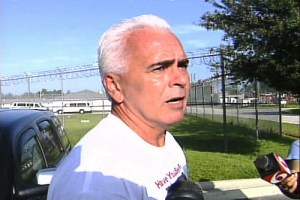
George Anthony
The story began when Casey became pregnant at age 19. Casey supposedly did not realize she was pregnant until she was 7 months along. Casey’s mother Cindy, a registered nurse, also claims she never realized her daughter was pregnant until then. Casey’s father George went along with the charade too. Once she faced the fact that she was going to have a baby, Casey told friends she wanted to give the child up for adoption; but Cindy pressured her to keep the child, and provide for both of them. The child, Caylee, was born on August 8, 2005 and the mother and child lived with George and Cindy.
Michele Bachmann’s Homophobia: Is it Reaction Formation?
Posted: June 19, 2011 Filed under: 2012 presidential campaign, GLBT Rights, psychology | Tags: defense mechanisms, Gay Marriage, homophobia, Marcus Bachmann, Michele Bachmann, Michelle Goldberg, psychology, reaction formation, Sigmund Freud 22 Comments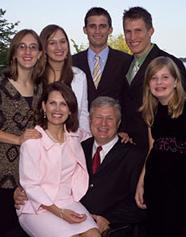
Michele Bachmann and family
A couple of days ago, I read a fascinating piece about Michele Bachmann by The Daily Beast’s Michelle Goldberg. If you haven’t read it yet, please do. It’s a real eye-opener, and the information in it spurred me on a voyage of discovery across the internet as I tried to understand what happened to this woman to cause her to embrace her bizarre religious beliefs and her extreme right-wing political ideology. For the purposes of this post, I want to focus primarily on Bachmann’s homophobia.
Goldberg begins her article with a particularly vivid episode from Bachmann’s tenure in the Minnesota state senate:
In April 2005, Pamela Arnold wanted to talk to her state senator, Michele Bachmann, who was then running for Congress. A 46-year-old who worked at the Minneapolis College of Art and Design, Arnold lived with her partner, the famed Arctic explorer Ann Bancroft, on a farm in Scandia, Minnesota. Bachmann was then leading the fight against gay marriage in the state. She’d recently been in the news for hiding in the bushes to observe a gay rights rally at the Capitol. So when members of the Scandia gay community decided to attend one of Bachmann’s constituent forums, Arnold, wanting to make herself visible to her representative, joined them.
A few dozen people showed up at the town hall for the April 9 event, and Bachmann greeted them warmly. But when, during the question and answer session, the topic turned to gay marriage, Bachmann ended the meeting 20 minutes early and rushed to the bathroom. Hoping to speak to her, Arnold and another middle-aged woman, a former nun, followed her. As Bachmann washed her hands and Arnold looked on, the ex-nun tried to talk to her about theology. Suddenly, after less than a minute, Bachmann let out a shriek. “Help!” she screamed. “Help! I’m being held against my will!”
Arnold, who is just over 5 feet tall, was stunned, and hurried to open the door. Bachmann bolted out and fled, crying, to an SUV outside. Then she called the police, saying, according to the police report, that she was “absolutely terrified and has never been that terrorized before as she had no idea what those two women were going to do to her.” The Washington County attorney, however, declined to press charges, writing in a memo, “It seems clear from the statements given by both women that they simply wanted to discuss certain issues further with Ms. Bachmann.”
Bachmann’s anxiety at being confronted by three lesbians was so extreme that instead of either responding to their questions or politely excusing herself and calmly walking away, she screamed, cried, and called the police!
Now let’s look at the previous episode when Bachmann was photographed hiding behind bushes to covertly watch a gay rights rally. The context was that Bachmann had just left the State Senate after proposing a bill to ban gay marriage in Minnesota.

“The state Senate on Thursday rejected an effort to force a floor vote on a constitutional amendment that would ban gay marriage as thousands of ban opponents rallied outside the Capitol. Sen. Michele Bachmann, the Stillwater Republican who’s led the push for the ban, said Senate Democrats have denied her repeated efforts to get the bill heard. Senate leaders countered that Bachmann, a candidate for the U.S. House, is flouting Senate rules to advance her own political career. At the same time, about 2,500 gays, lesbians and their supporters attended a rally on the Capitol grounds just a few hundred yards away, organized by OutFront Minnesota.” [Star Tribune]
After the move didn’t pan out, Michele took to hiding in the bushes to watch the queers rally
Another story reports that during the hearing 100 of the rally participants
…filed inside the Capitol building and took their place in the Senate gallery overlooking the proceedings. With a crowd on hand, Bachmann issued a motion to bypass the committee and have the floor vote on the bill right then and there–a highly unusual move in state Senate proceedings. Even more bizarre: While making her case, she addressed not the Senate floor as per protocol, but the gallery above.
In my opinion, these out-of-proportion reactions suggest that Bachmann’s extreme homophobia is a cover for deep fears that she has about herself or people close to her. I believe she is unconsciously engaging in the defense mechanism of reaction formation to deal with this anxiety.
Follow me below the fold…. Read the rest of this entry »
Tuesday Reads
Posted: March 22, 2011 Filed under: Baby Boomers, Bahrain, Foreign Affairs, health hazard, Iraq, Japan, Libya, morning reads, psychology, Syria, U.S. Military, U.S. Politics, Water, Yemen | Tags: 1960s, Ali Abdullah Saleh, Bahrain, Fukushim nuclear plant, Hillary Clinton, id, iran, Japan, Libya, LSD, Muammar Gaddafi, Owsley Stanley, personality, Sigmund Freud, Syria, Wisconsin, Yemen 30 Comments
Good Morning!!
I’m teaching a Psychology of Personality course this semester, and yesterday I started lecturing about Freud and psychoanalytic theory. I was explaining Freud’s notion of the three parts of the personality–the id, the ego, and the superego. You’re probably familiar with those terms, but basically the id is there when we are born–it is completely self-centered, doesn’t know the difference between fantasy and reality, all it cares about is pleasure. It wants what it wants when it wants it. Sometime during infancy, we develop an ego that gets the id under some control, and around age 4-6 we develop a superego–basically like a conscience, that tells us which behaviors are right or wrong or socially acceptable.
Anyway, after class I was thinking about Muammar Gaddafi and his bizarre behavior–the way he has insisted for weeks that there is no opposition and that he isn’t attacking Libyan citizens. No, he would never do that. It occurred to me that Gaddafi is pretty much acting from his id all the time. Of course his ego keeps him somewhat connected to reality so he can function in the world, but mostly he just cares about his own needs.
I wonder if that is what happens to all leaders who gain absolute control. Does the quote “power corrupts and absolute power corrupts absolutely,” really mean that power causes people to regress to an earlier stage of development?
It sounds peculiar, but think about how powerful people get so many of their needs met by others. Obama doesn’t have to worry about paying for things, getting food or clothing, even getting information. It is all provided by other people. In many ways, it’s a kind of childlike, dependent state. So if the leader doesn’t have a strong character (ego), he can end up behaving in a narcissistic, childlike way.
OK, well that’s my not-very-deep thought for today.
So what’s happening in the news? As has often been the case in recent weeks, much of the big news is coming from outside the U.S.
On Libya, there has been more criticism of the UN resolution and how it is being carried out. I posted quite a few examples of the criticism in my post last night. Most of the objections are based on the fact that Libya is not at all important to the U.S. strategically.
Today I want to recommend a couple of articles that explain why the intervention in Libya, while troubling in many ways, was probably the right thing to do–even for U.S. interests. The first is by Mark Lynch at the Foreign Policy blog. Lynch uses the name “abuardvark” on twitter. His post is headlined Libya in its Arab Context Although Lynch has misgivings about the intervention and has written about them, he still thinks what the U.S. is doing is the right thing–both for the Arab world and for advancing our interests. Here’s his basic argument:
Libya matters to the United States not for its oil or intrinsic importance, but because it has been a key part of the rapidly evolving transformation of the Arab world. For Arab protestors and regimes alike, Gaddafi’s bloody response to the emerging Libyan protest movement had become a litmus test for the future of the Arab revolution. If Gaddafi succeeded in snuffing out the challenge by force without a meaningful response from the United States, Europe and the international community then that would have been interpreted as a green light for all other leaders to employ similar tactics. The strong international response, first with the tough targeted sanctions package brokered by the United States at the United Nations and now with the military intervention, has the potential to restrain those regimes from unleashing the hounds of war and to encourage the energized citizenry of the region to redouble their efforts to bring about change. This regional context may not be enough to justify the Libya intervention, but I believe it is essential for understanding the logic and stakes of the intervention by the U.S. and its allies.
Libya’s degeneration from protest movement into civil war has been at the center of the Arab public sphere for the last month. It is not an invention of the Obama administration, David Cameron or Nicholas Sarkozy. Al-Jazeera has been covering events in Libya extremely closely, even before it tragically lost one of its veteran cameramen to Qaddafi’s forces, and has placed it at the center of the evolving narrative of Arab uprisings. Over the last month I have heard personally or read comments from an enormous number of Arab activists and protest organizers and intellectuals from across the region that events in Libya would directly affect their own willingness to challenge their regimes. The centrality of Libya to the Arab transformation undermines arguments that Libya is not particularly important to the U.S. (it is, because it affects the entire region) or that Libya doesn’t matter more than, say, Cote D’Ivoire (which is also horrible but lacks the broader regional impact).
Lynch is still worried about what could go wrong:
I continue to have many, many reservations about the military intervention, especially about the risk that it will degenerate into an extended civil war which will require troops regardless of promises made today. But as I noted on Twitter over the weekend, for all those reservations I keep remembering how I felt at the world’s and America’s failure in Bosnia and Rwanda. And I can’t ignore the powerful place which Libya occupies in the emerging Arab transformations, and how the outcome there could shape the region’s future. Failure to act would have damned Obama in the eyes of the emerging empowered Arab public, would have emboldened brutality across the region, and would have left Qaddafi in place to wreak great harm. I would have preferred a non-military response — as, I am quite sure, the Obama administration would have preferred. But Qaddafi’s military advances and the failure of the sanctions to split his regime left Obama and his allies with few choices. The intervention did not come out of nowhere. It came out of an intense international focus on the Arab transformations and a conviction that what happens now could shape the region for decades.
At CNN, Peter Bergen tries to explain Why Libya 2011 is not Iraq 2003 I recommend checking it out.
Another article worth reading is by Robert Fisk at The Independent: Right across the Arab world, freedom is now a prospect
In the Middle East, Yemen may be close to ousting President Ali Abdullah Saleh. From the Guardian:
A military showdown is looming in Yemen after the defence minister announced that the army would defend the president against any “coup against democracy”. His statement came hours after 12 military commanders, including a senior general, defected from the regime and promised to protect anti-government protesters in the capital, Sana’a.
[….]
Yemen’s president, Ali Abdullah Saleh, suffered a significant blow when General Ali Mohsen al-Ahmar, his longtime confidant and head of the Yemeni army in the north-west, announced that he would support “the peaceful revolution” by sending soldiers under his command to protect the thousands gathered in the capital to demand that Saleh step down.
“According to what I’m feeling, and according to the feelings of my partner commanders and soldiers … I announce our support and our peaceful backing to the youth revolution,” Ali Mohsen said.
Minutes after his defection, tanks belonging to the republican guards, an elite force led by Ahmed Ali, the president’s son, rolled into the streets of Sana’a, setting the stage for a confrontation between defectors and loyalists.
At Bloomberg: U.S. Faces Loss of Key Ally Against Al-Qaeda in Yemen
…Yemeni President Ali Abdullah Saleh appears unlikely to weather a popular uprising and defections among his ruling elite, former U.S. officials said.
“It’s clear at this point that Saleh will have to step down,” Barbara Bodine, a former U.S. ambassador to Yemen, said in an interview yesterday. With the “mounting numbers of senior people in his administration resigning, we know it’s over. The terms of his departure, I think, are still being negotiated.”
The March 18 killing of at least 46 protesters allegedly by police and pro-regime gunmen — which drew condemnation from Obama and Secretary of State Hillary Clinton and prompted the defection of key military, tribal and government officials — may well be the tipping point.
Protests are continuing to escalate in Syria as well.
In Deraa, hundreds of black-uniformed security forces wielding AK-47 assault rifles lined the streets but did not confront thousands of mourners who marched at the funeral of 23-year-old Raed al-Kerad, a protester killed in Deraa.
“God, Syria, freedom. The people want the overthrow of corruption,” they chanted. The slogan is a play on the words “the people want the overthrow of the regime,” the rallying cry of revolutions that overthrew the veteran rulers of Tunisia and Egypt.
Security forces opened fire last Friday on civilians taking part in a peaceful protest in Deraa to demand the release of 15 children detained for writing protest graffiti.
Authorities released the children on Monday in a sign they were hoping to defuse tension in the border town, which witnessed more protests after Friday’s crackdown.
And there is a lot happening in Bahrain too. This article is worth a read: Libya burns but Bahrain can shake the world
While the world attention remains glued to the fires in Libya potential stakes in Bahrain are actually a hundred times higher. Safaniya Oil Field, the largest oil field in the world, is less than 200 miles from Manama. The Strait of Hormuz, through which passes 20 percent of world oil shipments and 40 percent of the world’s sea-borne oil shipments, is within a 400-mile radius.
More importantly, United States Fifth Fleet, with a forward deployed Carrier Strike Group, Combat Command force, Anti-Terrorism force, Sea Stallion helicopters, Amphibious Force and Patrol and Reconnaissance Force, is headquartered at Naval Support Activity Bahrain (or NSA Bahrain). In essence, Bahrain is home to America’s military might that reigns over the Persian Gulf, Red Sea and the Arabian Sea-all put together.
On March 14, around 2,000 soldiers of the Saudi-led, US-backed Peninsula Shield Force, in their armored carriers and tanks, invaded Bahrain. The stated purpose of the invasion is: to crush an unarmed civilian uprising.
On March 15, King Hamad ibn Isa Al Khalifa of Mamlakat al Bahrayn declared martial law under which the Bahrain Defence Force (BDF), numbering around 10,000 personnel, was “empowered to take whatever actions it deems appropriate in dealing with the predominately Shiite-driven unrest.”
I recommend clicking on the link and reading the rest to learn how Iran could get involved in the Bahrain conflict. Yikes!
In Japan workers are still trying to get the Fukushima nuclear plant under control. We keep hearing that things are improving, but it’s kind of hard for me to trust what I hear from governments and corporations these days. After Iraq, Katrina, the BP oil spill, and on and on, I honestly believe just about everyone in government and private business lies their asses off. The biggest fear at the moment is the radiation that is turning up in food and water. Of course the authorities claim that’s nothing to worry about, but why should we believe them?
Away from the plant, mounting evidence of radiation in vegetables, water and milk stirred concerns among Japanese and abroad despite assurances from Japanese officials that the levels were not dangerous.
TEPCO said radiation was found in the Pacific ocean nearby , not surprising given rain and the hosing of reactors with seawater. Some experts said it was unclear where the used seawater was ultimately being disposed.
Radioactive iodine in the sea samples was 126.7 times the allowed limit, while cesium was 24.8 times over, Kyodo said. That still posed no immediate danger, TEPCO said.
“It would have to be drunk for a whole year in order to accumulate to one millisievert,” a TEPCO official said, referring to the standard radiation measurement unit. People are generally exposed to about 1 to 10 millisieverts each year from background radiation caused by substances in the air and soil.
Whatever. I wouldn’t want to drink from the tap or swim in the radioactive ocean water.
Back in the USA, Wisconsin Asks Appeals Court to Block Order Halting Union Bargaining Law
Wisconsin’s attorney general asked an appeals court to block a state judge’s order that temporarily halted a law curbing government employee unions’ collective- bargaining power.
State Attorney General J.B. Van Hollen today also asked the Wisconsin Court of Appeals for permission to file an appeal seeking to overturn the ruling by Circuit Court Judge Maryann Sumi.
“Contrary to established case law, the trial court injected itself into the legislative process and enjoined a legislative act,” Van Hollen said in court papers filed today in Madison. “There is absolutely no authority for the broad, overreaching step taken.”
Sumi on March 18 granted a temporary restraining order blocking publication of the measure signed into law by Governor Scott Walker on March 11, after a hearing in Madison, the state’s capital city. Publication gives the law full force and effect.
I’ll end on a lighter note. If you’re as old as I am, you might remember a guy named Owsley “Bear” Stanley: “the Sixties hero who ‘turned on’ a generation.” Stanley died a few days ago in a car crash at the age of 76.
Stanley, who died in a car crash in Australia on Sunday, fuelled the “flower power” counter-culture that took root in California in the mid-1960s, supplying it with acid that he manufactured after stumbling across a recipe in a chemistry journal.
He also worked with the psychedelic rock band Grateful Dead, who wrote their song “Alice D Millionaire” about him after a newspaper described him as an “LSD millionaire”. One batch of his drugs reputedly inspired Jimi Hendrix’s song “Purple Haze”, and he provided LSD for the notorious “Acid Test” parties hosted by the American writer Ken Kesey, which featured in books by Tom Wolfe and Hunter S Thompson.
News of Stanley’s death – his car swerved off a road and slammed into a tree near his home in north Queensland – elicited tributes, but also surprise. Despite a youth so misspent that his name became slang for good acid, Stanley had made it to the age of 76. He was even a great-grandfather. In a statement yesterday, his family mourned him as “our beloved patriarch”.
Supposedly, a batch of Owsley’s acid inspired Jimi Hendrix’s first big hit, Purple Haze. Rest in peace, Owsley. I am one “casualty” of the ’60s who did learn something significant from my experiences with LSD. One thing I eventually learned is that I don’t need drugs to “get high.”
I guess that’s another not-so-deep thought, but hey, I’m OK with that. What are you reading and blogging about today?

 peej
peej Carissa
 bostonboomer
 dakinikat
 ecocatwoman
 mablue2
 Mama Lopez
 peggysue22
 quixote
 skydancingguestblogger
 Mona (aka Wonk the Vote)



 Sky Dancing
Recent Comments