
Wednesday Reads
Posted: January 3, 2024 Filed under: 2024 Elections, 2024 presidential Campaign, just because, Media, polling, The Media SUCKS | Tags: Autocracy, big media, Claudine Gay, democracy, diversity, Greg Sargent, Harvard, journalism, Joyce Vance, Racism, Rick Perlstein, The Washington Post 13 CommentsGood Morning!!
It’s 2024, and the media and the Republicans are gearing up for the presidential election in November. What are the Democrats doing? I’m sure they are raising plenty of money, but when will they wake up and start fighting back against the Republicans and the media? Make no mistake, big media is hoping for another Trump presidency, because it will mean chaos and gobs of money for those who cover the chaos. It will mean riches for the media bosses and reporters alike–think of all the new books they can sell as Trump destroys democracy and attempts to gain dictatorial power?
You’ve probably heard that The Washington Post recently got rid of 240 employees through buyouts. They chose to keep right wing columnists like Hugh Hewitt and dumped liberals like Greg Sargent. Fortunately, Sargent has been hired by The New Republic.
This post by Tom Jones is from Poynter, a site that reports on and critiques the media: Opinion | Washington Post reaches buyout goals to, for now, avert layoffs.
The good news is that the Post has been able to meet its goal of trimming staff through buyouts instead of layoffs. The bad news is the Post will enter the new year with fewer employees — perhaps a couple of hundred.
Greg Sargent
Back in October, the Post announced that it was offering buyouts with the hopes of reducing staff by 240. (At the time, the Post had approximately 2,500 employees.)
Then late last month, Post interim CEO Patty Stonesifer told staff only half of the desired number of staffers — about 120 or so — had accepted the buyouts and that there would be layoffs if not enough employees took the buyouts. At the same time, The Daily Beast’s Corbin Bolies reported that Post executive editor Sally Buzbee told staff in an email that about 36 of the 120 who accepted the buyouts were from the newsroom. She said that was “about 30 percent of our goal across the News department.”
Then came Tuesday’s news that the Post had enough buyouts to avoid layoffs — for now (my words, not the Post’s). The exact number of buyouts isn’t known publicly.
In an email to staff, Stonesifer said the company “will enter the new year with a smaller organization but a better financial position.” Stonesifer also wrote, “I am very aware of how difficult this process has been for everyone involved and I want to thank you for the grace and respect you have shown at every step.”
In July, The New York Times Benjamin Mullin and Katie Robertson reported the Post was on track to lose about $100 million this year.

For the gossip columnists at the WaPo, President Biden is boring. Imagine how much better the paper’s “financial position” will be when Trump gets back in the White House and consolidates his power. The same will be true of The New York Times. Maggie Haberman will be cleaning up, along with her co-writers.
In another positive development, historian and political observer Rick Perlstein will be writing for The American Prospect. I’m seriously thinking about dumping my Washington Post subscription and giving that money to one of these liberal publications.
Perlstein has published his first column. In it, he addresses three issues I worry about: the media focus on polls, the failure of journalists to address real issues, while tending to favor right wing narratives, and the failure of Democratic politicians to fight back hard against those narratives.
Rick Perlstein at The American Prospect: You are Entering the Infernal Triangle: Authoritarian Republicans, ineffectual Democrats, and a clueless media.
Perlstein on Polling:
As a historian who also writes about the present, there are certain well-worn grooves in the way elections get written about by pundits and political journalists from which I instinctively recoil. The obsession with polling, for one. Polls have value when approached with due humility, though you wonder how politicians and the public managed to make do without them before their modern invention in the 1930s. But given how often pollsters blow their most confident—and consequential—calls, their work is as likely to be of use to historians as object lessons in hubris as for the objective data they mean to provide.
Pollsters themselves are often the more useful data to study, especially when their models encode mistaken presumptions frozen in place from the past. In 1980, for instance, Ronald Reagan’s landslide was preceded by a near-universal consensus that the election was tied. The pollster who called it correctly, Lou Harris, was the only one who thought to factor into his models a variable that hadn’t been accounted for in previous elections, because it did not yet really exist: the Christian right.
Polling is systematically biased in just that way: toward variables that were evident in the last election, which may or may not be salient for this election. And the more polls dominate discussions of campaigns and elections, the more they crowd out intellectual energy that could be devoted to figuring out those salient, deeper, structural changes conditioning political reality: the kind of knowledge that doesn’t obediently stand still to be counted, totted up, and reduced to a single number.
On media predictions:
Another waaaaay too well-worn journalistic groove isprediction. I have probably read thousands of newspaper opinion column prognostications going back to the 1950s. Their track record is too embarrassing for me to take the exercise seriously, let alone practice it myself. Like bad polls, pundits’ predictions are most usefulwhen they are wrong. They provide an invaluable record of the unspoken collective assumptions of America’s journalistic elite, one of the most hierarchical, conformist groups of people you’ll ever run across. Unfortunately, they help shape our world nearly as much, and sometimes more, than the politicians they comment about. So their collective mistakes land hard….
Rick Perlstein, author, Reaganland: America’s Right Turn 1976-1980.
And how ritualized? Consider one of elite journalism’s most deeply worn grooves: the morning-after declarations, should any Democrat win a presidential election, that the Republican politics of demagogic hate-mongering has shown itself dead and buried for all time—forgetting how predictably it returns in each new election, often in an increasingly vicious form.
In 1964: When the author of the Civil Rights Act, Lyndon Johnson, defeated a Republican who voted against the Civil Rights Act, Barry Goldwater, one of the most distinguished liberal newspaper editors in the South, Sam Ragan of the Raleigh News & Observer, pronounced that all future American elections would be decided “on issues other than civil rights.” His essay quoted the Los Angeles Times’ Washington bureau chief, who affirmed that conventional wisdom by observing that henceforth, whichever party takes the Black vote would be no more predictable than who would win “freckle-faced redheads and one-armed shortstops.” [There are many more examples of this phenomenon in the essay.]
This particular bias is rooted into elite punditry’s deepest, most dangerous groove of all: a canyon, if you will. On one side of the yawning gulf is the perennial fantasy that America is a nation fundamentally united and at peace with itself, “moderate,” “centrist,” where exceptions are epiphenomena entirely alien to settled American “norms.”
On “Reality”:
On the other side of the gulf is, well, reality.
The media habits that make it so hard to grasp that reality—that made Trump and his merry band of insurrectionists such a surprise to us—are perhaps as systematic as any foisted upon the public by state media in authoritarian nations. A little more innocent than, say, Pravda, however, because one wellspring of this stubborn fantasy, and why audiences are so receptive to it, is simple psychology. To acknowledge the alternative is to stare into a terrifying abyss: the realization that America has never not been part of the way to something like a civil war.But suddenly, in 2024, no one can avoid acknowledging that abyss anymore. And that leaves journalism in a genuine crisis.
Generations of this incumbent, consensus-besotted journalism have produced the very conceptual tools, metaphors, habits, and technologies that we understand as political journalism. But these tools are thoroughly inadequate to understanding what politics now is.
According to polls (which, yes, have their uses, in moderation), something around half of likely voters would like to see as our next president a man who thinks of the law as an extension of his superior will, who talks about race like a Nazi, wants to put journalistic organizations whose coverage he doesn’t like in the dock for “treason,” and who promises that anyone violating standards of good order as he defines them—shoplifters, for instance—will be summarily shot dead by officers of the state who serve only at his pleasure. A fascist, in other words. We find ourselves on the brink of an astonishing watershed, in this 2024 presidential year: a live possibility that government of the people, by the people, and for the people could conceivably perish from these United States, and ordinary people—you, me—may have to make the kind of moral choices about resistance that mid-20th-century existentialist philosophers once wrote about. That’s the case if Trump wins. But it’s just as likely, or even more likely, if he loses, then claims he wins. That’s one prediction I feel comfortable with.
I’ve already quoted too much, but I hope it’s enough so that you’ll want to read the rest at The American Prospect.
Every morning, I read Joyce Vance’s substack, Civil Discourse. Today, she offered “a warning” to all of us who want to save democracy. We have to remember that no everyone is following news and politics closely.
One morning before Christmas, I was working out with a friend who I adore, and workout with regularly. She’s young, smart, and a recent college graduate. In the middle of our session, my phone started going off incessantly and I finally picked it up. It was, of course, breaking news. That day, it was about the Giuliani bankruptcy.
I apologized to her for taking the call. I got off quickly and told her, by way of explanation, “Rudy Giuliani just filed for bankruptcy.”
Joyce Vance
“Who’s Rudy Giuliani?” she asked.
One morning before Christmas, I was working out with a friend who I adore, and workout with regularly. She’s young, smart, and a recent college graduate. In the middle of our session, my phone started going off incessantly and I finally picked it up. It was, of course, breaking news. That day, it was about the Giuliani bankruptcy.
I apologized to her for taking the call. I got off quickly and told her, by way of explanation, “Rudy Giuliani just filed for bankruptcy.”
“Who’s Rudy Giuliani?” she asked.
You know that noise they make in TV sitcoms, the one where the needle scratches across the record, and everything is interrupted? That was what I heard in my head. My mind worked over the implications of her question for the remainder of our time together.
She was born after 9-11. She never knew Giuliani as America’s mayor when the Towers fell and certainly not as the staunch pro-law enforcement mayor in the city in earlier years. But it shocked me that someone of voting age was unaware of Giuliani—didn’t recognize his name and associate it with Trump’s efforts to overturn the 2020 election.
She asked me about the bankruptcy. “Is that a good thing or a bad thing?” I explained that he’d lost a big defamation case in Georgia because he said horrible things about two election workers and disrupted their lives. Still no signs of recognition, but she got the point. “What an a**hole,” she concluded, based on my brief description of what he’d done.
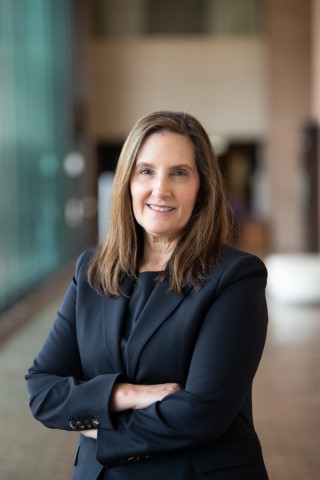
Read the rest at the substack link.
Like Joyce Vance, I grew up in a politically engaged family. It’s always a shock to me when I learn that some people have no idea what’s going on in the government. We need to reach out to the people us and discuss the danger of autocracy.
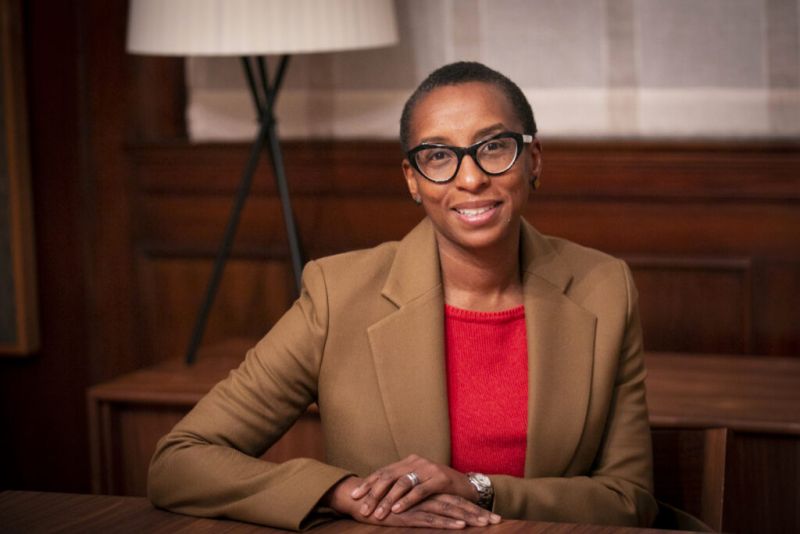
I’m really troubled by what happened to Claudine Gay, Harvard’s first Black president. She may well have some issues with past plagiarism, but if she had been white, I doubt if the issue would have even come up. The truth is, she was set up by Congressional Republicans who hate diversity in education. Two articles:
At The Atlantic, David Graham expresses the typical liberal media response: it’s a shame and of course she was targeted by right wingers, but Harvard still had to do the “right” thing: An Old-Fashioned Scandal Fells a New Harvard President.
Gay, a political scientist, resigned…, making her the second president of an Ivy League institution to bow out in the past month. University of Pennsylvania President Liz Magill stepped down on December 9, but the cases are not as similar as they might initially seem. Magill’s departure stemmed directly from the shaky December 5 congressional testimony by a panel of college presidents about anti-Semitism and the Israeli-Palestinian conflict, and was viewed as a victory for Elise Stefanik, the Republican representative who led the questioning.
What appear to have doomed Gay were the allegations of plagiarism lodged against her. This is an important distinction. Penn’s board of trustees was spooked by pressure from donors and politicians. The Harvard Corporation, an equivalent body, was not. In a December 12 statement, it acknowledged that Gay’s testimony had gone poorly, but said she would remain in her post, describing its position as a defense of open discourse and academic freedom. Although Stefanik is already claiming credit, what ended Gay’s short tenure were not the hot-button issues of campus speech and anti-Semitism but was instead the kind of scandal that one might expect to fell the president of any educational institution, whether a member of the Ivy League or a community college.
Yes, because Harvard initially supported her remaining president, so the right wingers had to find another reason to get rid of her.
On December 5, Gay, Magill, and MIT’s Sally Kornbluth were hauled before Congress to speak about anti-Semitism on campus, though many GOP members really seemed to be upset about what they saw as inconsistent standards for deciding what speech is and isn’t acceptable on campuses. The hearing was remarkable for, among other things, how little intellectual agility the presidents showed in the face of questioning. A college president has to fulfill a dual role, serving not only as an academic officer but also as a sort of front woman for her institution. The failure of these presidents to represent their universities well in such a public setting was bound to raise questions about their leadership, regardless of the subject matter.
Claudine Gay
Gay survived the initial backlash to her testimony, but since then, the furor around allegations of plagiarism has grown. Many of the examples that have been made public represent extremely lazy rewriting of source material—Gay borrowed sentences or paragraphs, making minor changes to their wording or order of clauses without adding much analysis of her own. Some academics have described this as entirely unacceptable, while others have defended Gay—including some, such as David Canon, from whose work she repeatedly drew. “I am not at all concerned about the passages. This isn’t even close to an example of academic plagiarism,” Canon told The Washington Free Beacon….
The origin of the complaints is still murky. Allegations of academic misconduct against Gay had floated around online message boards for some time, The Wall Street Journal reported. One unnamed individual claims to be the source of the current charges. On October 24, the New York Post contacted the university to ask about allegations against Gay. On December 10, the conservative agitator Christopher Rufo and the journalist Christopher Brunet published claims of plagiarism in Gay’s 1997 Harvard dissertation. The next day, The Washington Free Beacon added more reporting….
Conservatives have long had it out for Gay, Harvard’s first Black president, whose appointment they viewed as a sop to progressive diversity, equity, and inclusion initiatives. The identity of the initial anonymous complainant against Gay is unclear, as is when he or she brought the complaints forward. The appearance of the allegations in conservative outlets and their timing, coming shortly after the war in Gaza thrust Gay into the spotlight, certainly suggest a politically motivated effort.
I’ve quoted the parts of Graham’s article that support my point of view. He still thinks she should have been fired.
Nia T. Evans at Mother Jones: What Claudine Gay’s Resignation From Harvard Means for the Rest of Us.
Claudine Gay’s resignation from her post as president of Harvard University is a shocking new twist in the ongoing saga over campus free speech. Gay resigned on Tuesday amid new allegations of plagiarism leveled through an unsigned complaint published in the Washington Free Beacon, a conservative outlet that has long criticized Gay. The news, which was broken by the Crimson, comes after months of attacks on Gay’s response to campus antisemitism and weeks after university leaders reaffirmed their support for her. Gay’s stunning departure is the latest casualty in a growing conservative crusade against “diversity in education” and a chilling reminder of the state of campus free speech amid Israel’s war on Gaza.
“It has become clear that it is in the best interests of Harvard for me to resign,” Gay wrote in a letter to the Harvard community. “It has been distressing to have doubt cast on my commitments to confronting hate and to upholding scholarly rigor—two bedrock values that are fundamental to who I am.”
Gay’s 186-day tenure is the shortest in the school’s 388-year history.
Just six months ago, Gay was heralded as the future of Harvard University. “I stand before you on this stage with the weight and honor of being a first,” she told a rain-soaked crowd during her inauguration ceremony. Her journey to becoming Harvard’s first Black female president felt like the quintessential American dream: she is the daughter of Haitian immigrants, a Stanford graduate with a doctorate from Harvard. An accomplished political scientist with an emphasis on race, democracy, and politics, she was praised by university and political leaders alike after being named Harvard’s 30th president in late 2022. Massachusetts Gov. Maura Healey called her “a leader for our time” driven by the “values to meet the moment” at Gay’s September inauguration ceremony. Harvard’s governing board announced her selection with glee. “We are confident Claudine will be a thoughtful, principled, and inspiring president for all of Harvard,” wrote Harvard Corporation senior fellow Penny Pritzker. “She will be a great Harvard president in no small part because she is such a good person.”
Gay’s brief tenure collided with historic political assaults against diversity and education. In June, the Supreme Court struck down affirmative action in a case in which Harvard was at its center. The October 7 terrorist attack on Israel by Hamas instigated an ongoing war that’s claimed more than 22,000 lives. The war also set off a fierce debate on college campuses across the country over free speech. In one well-documented incident, a conservative group paid for a truck to circle around Harvard Square with a billboard on which the names and photos of opponents of Israel’s actions were displayed. The billboard dubbed them “Harvard’s Leading Antisemites.”
The end result of the controversy and the efforts of right wingers:
Her resignation not only shakes things up at the most prestigious university in the country, it also exposes a larger trend of racial regression that picked up in the years following the 2020 uprisings as Black leaders have been installed in positions of power only to find themselves undermined by the systems they sought to save. Love it or hate it, Harvard sets the tone for national and international debates. To conservative activists celebrating on Twitter, Gay’s ouster is part of a larger project to purge progressive Black leaders from public institutions. Or as Chris Rufo put it, to abolish “DEI ideology from every institution in America.” In the end, Gay’s presidency has created yet another first: Harvard’s first Black female president was also its shortest-serving.
Those are my top stories for today. Lots more is happening, of course. Here are more stories you might find interesting/enraging:
Times of Israel: Israel in talks with Congo and other countries on Gaza ‘voluntary migration’ plan.
The Texas Tribune: Emergency rooms not required to perform life-saving abortions, federal appeals court rules.
Jose Pagliery at The Daily Beast: Jack Smith Keeps Telegraphing Some Seriously Scandalous Trump Crimes.
David Kurtz at TPM’s Morning Memo: The New Argument That Might Save Trump’s March Trial Date.
Newsweek: ‘Storm the Capitol’ Board Game Celebrates Jan. 6 Rioters.
That’s it for me today. What’s on your mind?
Thursday Reads: Who’s Really Running Things in the Middle East? . . . And Other News
Posted: September 26, 2013 Filed under: Criminal Justice System, Foreign Affairs, Hillary Clinton, Middle East, morning reads, polling, U.S. Economy, U.S. Politics | Tags: Dexter Filkins, government shutdown, iran, NPR's Fresh Air, Qassem Suleimani, Quds Force, Revolutionary Guard, Tea Party, Terry Gross 18 Comments
Good Morning!!
There’s a long article in the September 30 New Yorker by Pulitzer Prize-winning journalist Dexter Filkins about a powerful Iranian military leader named Qassem Suleimani. Sueimani is the Commander of the Quds Force. According to Wikipedia, the Quds Force is:
a special unit of Iran‘s Army of the Guardians of the Islamic Revolution (Revolutionary Guard). It has been tasked with “exporting” Iran’s Islamic revolution, and is responsible for “extraterritorial operations” of the Revolutionary Guard.
Filkins describes the functions Quds Force as follows:
The force is the sharp instrument of Iranian foreign policy, roughly analogous to a combined C.I.A. and Special Forces; its name comes from the Persian word for Jerusalem, which its fighters have promised to liberate. Since 1979, its goal has been to subvert Iran’s enemies and extend the country’s influence across the Middle East. Shateri had spent much of his career abroad, first in Afghanistan and then in Iraq, where the Quds Force helped Shiite militias kill American soldiers.

Qassem Suleimani
I have to admit that I haven’t read the entire article yet, but yesterday I heard a fascinating interview of Dexter Filkins by Terry Gross on her NPR show Fresh Air. You can listen to the interview at the link. It lasts about 44 minutes. Filkins covered the wars in Afghanistan and Iraq for the New York Times beginning in 2002. In addition, he is the author of the book The Forever War. Based on what I heard in the Fresh Air interview, just about everything many Americans think we know about Iran, Iraq, Syria and Iran’s powerful influence in the Middle East is going to have to be revised and updated. Even Filkins was surprised by what he learned through his research and reporting in Iran.
Here’s what Filkins writes about Suleimani:
Suleimani took command of the Quds Force fifteen years ago, and in that time he has sought to reshape the Middle East in Iran’s favor, working as a power broker and as a military force: assassinating rivals, arming allies, and, for most of a decade, directing a network of militant groups that killed hundreds of Americans in Iraq. The U.S. Department of the Treasury has sanctioned Suleimani for his role in supporting the Assad regime, and for abetting terrorism. And yet he has remained mostly invisible to the outside world, even as he runs agents and directs operations. “Suleimani is the single most powerful operative in the Middle East today,” John Maguire, a former C.I.A. officer in Iraq, told me, “and no one’s ever heard of him.”
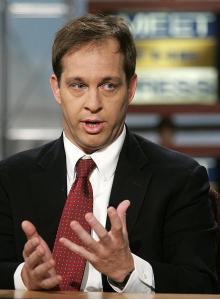
Dexter Filkins
According to Filkins, through Suleimani’s influence, after the U.S. took down Saddam Hussein and everything went to hell in Iraq, Iran has basically controlled what went on there; and now Iran is a powerful influence in the Syrian conflict. Here’s the introduction to the Filkins interview from Fresh Air site. Meet The Iranian Commander Pulling Strings In Syria’s War:
Perhaps the most important military commander in Syria’s civil war is not Syrian at all. He’s Iranian Maj. Gen. Qassem Suleimani, and he’s the subject of an article by Dexter Filkins in the current edition of The New Yorker.
For the past 15 years, Suleimani has been the chief of the Quds Force, a small but powerful branch of Iran’s Revolutionary Guard. He’s not a familiar name to Americans, but one former CIA officer described him to Filkins as “the single most powerful operative in the Middle East today.”
Filkins writes that Suleimani “has sought to reshape the Middle East in Iran’s favor, working as a power broker and as a military force: assassinating rivals, arming allies, and, for most of a decade, directing a network of militant groups that killed hundreds of Americans in Iraq. The U.S. Treasury Department has sanctioned Suleimani for his role in supporting the Assad regime, and for abetting terrorism.”
On Suleimani’s influence on the reshaping of the Middle East:
Qassem Suleimani — who is this extraordinarily powerful man behind the mask, very mysterious guy, very powerful guy — he was instrumental in 2010 in making sure that the Americans left no troops behind in Iraq. During the Iraq War, he supervised and directed militias which were responsible for hundreds of American deaths.
It appears, by the evidence, that the Iranians, and the Quds Force in particular, were behind the assassination of Rafik Hariri, the president of Lebanon, in 2005. Qassem Suleimani appears to be running or directing or at least playing a very large part in the war in Syria on behalf of the Assad government. So he’s everywhere, and, again, the Iranians have been extraordinarily aggressive over the past 15 years in asserting themselves in the Middle East, often at American expense.
Filkins also says that it’s clear the Iranians do want to develop nuclear weapons, and he doubts if the U.S. will be able to get them to agreed not to do it. The reason the Iranians are reaching out to the West right now is that the sanctions are really hurting them–basically the middle class in Iran has been decimated.
You can read more excerpts from the interview at the Fresh Air site. I plan to finish reading the Filkins article in the New Yorker today. I hope I’ve given you enough information to get you to read it too. I’m sure this article will be much discussed in the coming weeks.
Here’s Charles Pierce on the Filkins piece: The Limitless Bungling Of George W. Bush And Co.
Dexter Filkins has a long, fine piece in the September 30 New Yorker about one Qassam Suleimani, an Iranian who seems to be the Zelig of Middle East spookdom, and who is now currently working with the Assad government in Syria.
Since then, Suleimani has orchestrated attacks in places as far flung as Thailand, New Delhi, Lagos, and Nairobi-at least thirty attempts in the past two years alone. The most notorious was a scheme, in 2011, to hire a Mexican drug cartel to blow up the Saudi Ambassador to the United States as he sat down to eat at a restaurant a few miles from the White House. The cartel member approached by Suleimani’s agent turned out to be an informant for the U.S. Drug Enforcement Administration. (The Quds Force appears to be more effective close to home, and a number of the remote plans have gone awry.) Still, after the plot collapsed, two former American officials told a congressional committee that Suleimani should be assassinated. “Suleimani travels a lot,” one said. “He is all over the place. Go get him. Either try to capture him or kill him.” In Iran, more than two hundred dignitaries signed an outraged letter in his defense; a social-media campaign proclaimed, “We are all Qassem Suleimani.”
If you want evidence behind your essential instinct that the tangle in that part of the world is beyond our ability ever to untangle, you’ve got it here. But there is one other little tidbit that’s worth bringing up, given the fact that some officials formerly in the employ of C-Plus Augustus — most notably, David Frum — have snuck into the national dialogue again, probably through an unguarded window, instead of going off and living a penitent’s existence for what they did to the country.
(To be entirely fair, according to Filkins, Suleimani was formed by his participation in the savage Iran-Iraq War in which the United States, employing the brilliant realpolitik of blood-beast Henry Kissinger, helped both sides, guaranteeing that nobody would trust us thereafter. Genius!)
In other news,
Hillary had a few choice words for the Republicans who are trying to shut down the government in order to defund The Affordable Care Act. From the WaPo: Hillary Clinton says government shutdown ‘wouldn’t be the worst thing for Democrats’:
Hillary Rodham Clinton said Tuesday that if a “noisy minority” of Republican lawmakers force a government shutdown over funding for President Obama’s signature health-care law, they would face negative political consequences.
“It wouldn’t be the worst thing for Democrats if they tried to shut the government down,” said Clinton, a former secretary of state and potential 2016 Democratic presidential candidate. “We’ve seen that movie before and it didn’t work out so well for those so-called obstructionists.”
Clinton was referencing the political harm for Republicans in the mid-1990s when they forced a shutdown during husband Bill Clinton’s presidency.
“If they want to try to shut the government down, that’s on their head, that’s their responsibility,” she added.
Isn’t it great to have Hillary talking about politics again?
I’m really late with this post, so I’m going to wrap it up with a link dump:
From Gallup — Tea Party Support Dwindles to Near-Record Low: Republicans ambivalent about movement, while most Democrats oppose it
From Huffington Post — DC Exempts Itself From Federal Government Shutdown
From The Political Carnival: Don’t Buckle Your Seatbelt? Go To Jail — Or Your Death
From Vanity Fair, battles among the richie-riches in San Francisco’s toniest neighborhood —
Bluebloods & Billionaires
Scientific American — Peculiar Brain Signals Found in “Flat-Lined” Patient What does it really mean to be dead?
Now it’s your turn. What’s your recommended reading for today? Please let us know in the comment thread, and have a great day!
Tuesday Reads
Posted: July 23, 2013 Filed under: Crime, Criminal Justice System, Foreign Affairs, Fox News, Media, morning reads, polling, psychology, racism, Republican politics, Russia, seniors, social justice, sports, U.S. Politics, War on Women | Tags: attitudes toward Zimmerman verdict, dolphins, Edward Snowden, ESPN, FSB, George Zimmerman, horse race politcs, Margaret Sullivan, naming behavior, Nate Silver, NYT public editor, Russian intelligence, self-consciousness, self-recognition, Trayvon Martin, University of St Andrews, Vincent Janik 28 Comments
Good Morning!!
I have a varied selection of stories for you today. I’ll begin with one that doesn’t involve politics, racism, murder, woman-hating, or any other depressing topics. A new study released yesterday provides additional evidence that Dolphins may see each other as unique individuals. From BBC News: Dolphins ‘call each other by name’
It had been-long suspected that dolphins use distinctive whistles in much the same way that humans use names.
Previous research found that these calls were used frequently, and dolphins in the same groups were able to learn and copy the unusual sounds.
But this is the first time that the animals response to being addressed by their “name” has been studied.
Dr Vincent Janik University of St AndrewsTo investigate, researchers recorded a group of wild bottlenose dolphins, capturing each animal’s signature sound.
They then played these calls back using underwater speakers.
“We played signature whistles of animals in the group, we also played other whistles in their repertoire and then signature whistles of different populations – animals they had never seen in their lives,” explained Dr Janik.
The researchers found that individuals only responded to their own calls, by sounding their whistle back.
According to Janik,
“(Dolphins) live in this three-dimensional environment, offshore without any kind of landmarks and they need to stay together as a group.
“These animals live in an environment where they need a very efficient system to stay in touch.”
Although humans start naming things almost as a matter of course during early development, the process of creating and using a name is actually quite complex. Scientists refer to names as learned vocal labels, meaning vocalizations that refer to specific objects. Both parrots and dolphins have used learned vocal labels while in captivity, and researchers had no reason to believe that the animals couldn’t do the same in their natural environments. Now biologists Stephanie King and Vincent Janik from the University of Aberdeen have found that, indeed, wild dolphins use the equivalent of a human name to address each other.
What’s interesting to me is that if these dolphins can recognize each other as individuals and recognize their own names, this suggests a level of self-consciousness that is seen in very few animals other than humans. Even human children do not develop the ability to recognize themselves (PDF) in a mirror or on film until they are at least 18 months old and the development of true self-consciousness and awareness that others have similar thoughts and feelings (theory of mind) takes much longer.
The Washington Post reports on a depressing, but not surprising, poll on attitudes toward the Trayvon Martin case. Zimmerman verdict poll: Stark reaction by race.
The not-guilty verdict in the trial of George Zimmerman has produced dramatically different reactions among blacks and whites, with African Americans overwhelmingly disapproving of the jury’s decision and a bare majority of whites saying they approve of the outcome, according to a new Washington Post-ABC News poll….
The new survey underscores not only the gap between whites and blacks, but also how passionate many African Americans are about the case. Among African Americans, 86 percent say they disapprove of the verdict — with almost all of themsaying they strongly disapprove — and 87 percent saying the shooting was unjustified.
In contrast, 51 percent of whites say they approve of the verdict while just 31 percent disapprove. There is also a partisan overlay to the reaction among whites: 70 percent of white Republicans but only 30 percent of white Democrats approve of the verdict. Among all whites, one-third say the shooting was unjustified, one-third say it was justified and the other third say they didn’t know enough to have an opinion.
It figures that Republicans would be driving the results among whites. Republicans have truly become the party of white males who hate anyone who isn’t white and male. You have to wonder why any African American or any woman would choose to be a Republican. Unfortunately the poll didn’t break down the results by gender and geography. Would more women have disapproved of the verdict? It was an all-woman jury, but also a Florida jury. A more complex analysis would have been helpful.
Republicans–at least the ones who watch Fox News–are old too. It’s hard to believe, but even though Fox leads the other cable news channels in viewers, the average age of Fox viewers is 65-plus! From the NYT:
Fox News declined to make executives available for comment, but several recent signs — including changing personalities for some of its weekday programs — suggest the network may have decided the time has come to confront the issue of age.
Just how old is its audience? It is impossible to be precise because Nielsen stops giving an exact figure for median age once it passes 65. But for six of the last eight years, Fox News has had a median age of 65-plus and the number of viewers in the 25-54 year old group has been falling consistently, down five years in a row in prime time, from an average of 557,000 viewers five years ago to 379,000 this year. That has occurred even though Fox’s overall audience in prime time is up this year, to 2.02 million from 1.89 million three years ago….
“The numbers indicate they haven’t been replacing the younger viewers,” Mr. Moffett said of Fox News. Many of the loyal viewers the network has always had are simply aging up beyond the 54-year cutoff for many ad buyers. The result is an audience edging consistently above that 65-plus number.
News audiences always trend old, and the viewers of Fox’s competitors are hardly in the full flower of youth. MSNBC’s median age for its prime-time shows this year is 60.6; CNN’s is 59.8.
In terms of the rest of television, Fox News also is quite a bit older than networks considered to have a base of older viewers. CBS has frequently been needled for having older viewers, but at 56.8, its median viewer is far younger than Fox News’s. (Viewers at Fox News’s sister network, Fox Broadcasting, have a median age of 50.2; at ABC, the median is 54.4; at NBC, it’s 47.7.)
Speaking of old-fashioned viewpoints, I posted this in the comments yesterday, but it’s worth a closer look. Yesterday, Margaret Sullivan the NYT Public Editor posted a remarkable column about Nate Silver: Nate Silver Went Against the Grain for Some at The Times. Sullivan speculates that Silver may have decided to leave the Times for ESPN/ABC because his fact- and probability-based methods of writing about politics didn’t jive with the attitudes of some other Times journalists. She based her analysis on a number of conversations with Silver and “about him with journalists in the Times’s newsroom.”
* I don’t think Nate Silver ever really fit into the Times culture and I think he was aware of that. He was, in a word, disruptive. Much like the Brad Pitt character in the movie “Moneyball” disrupted the old model of how to scout baseball players, Nate disrupted the traditional model of how to cover politics.
His entire probability-based way of looking at politics ran against the kind of political journalism that The Times specializes in: polling, the horse race, campaign coverage, analysis based on campaign-trail observation, and opinion writing, or “punditry,” as he put it, famously describing it as “fundamentally useless.” Of course, The Times is equally known for its in-depth and investigative reporting on politics.
His approach was to work against the narrative of politics – the “story” – and that made him always interesting to read. For me, both of these approaches have value and can live together just fine.
* A number of traditional and well-respected Times journalists disliked his work. The first time I wrote about him I suggested that print readers should have the same access to his writing that online readers were getting. I was surprised to quickly hear by e-mail from three high-profile Times political journalists, criticizing him and his work. They were also tough on me for seeming to endorse what he wrote, since I was suggesting that it get more visibility.
A few reactions to the Nate Silver story:
JM Ashby at Bob Cesca.com: Revenge of the Nerd
TPM: Nate Silver’s Seven Most Memorable Predictions
Politico: How ESPN and ABC landed Nate Silver
Business Insider got Silver’s own reaction to the Sullivan column: ‘The Culture Stuff Was Not A Big Factor’ In Me Leaving The New York Times
I’ll wrap this up with a some Edward Snowden updates. It’s very clear at this point that Snowden is being controlled by Russian intelligence. We don’t really know where he is, and his spokesman is an “attorney” who is in charge of PR for the Russian FSB. We also don’t know what Snowden has given the FSB in return for their help. Geoffrey Ingersoll at Business Insider:
Russian attorney Anatoly Kucherena — who also happens to be the head of public council for the Federal Security Service (FSB) — has announced that Edward Snowden may leave the Moscow airport on Wednesday.
That’s right, he’s likely not going too far.
We also know that Snowden supposedly said he has no plans to travel to Latin America because at this time, he thought it too dangerous to travel.
How do we know that? Well, Kucherena said Snowden said it, of course.
Not only does Kucherena run the FSB’s public council, but it seems he runs Snowdens public relations
as well — he “helped” Snowden apply for temporary asylum, he relayed Snowden’s “promise” not to hurt the U.S. anymore, and he announced Snowden’s (very own) idea about possibly applying for Russian citizenship with the intent to stay for a while and “learn Russian culture.”
And here’s Michael Kelley, also from Business Insider: The Intel In Snowden’s Head Could Be More Damaging Than The Material He Leaked
National Security Agency whistleblower/leaker Edward Snowden reportedly flew to Hong Kong carrying “four laptop computers that enable him to gain access to some of the US government’s most highly-classified secrets,” raising the concern that data could have been compromised in China or Russia.
But the information in his head may be more valuable, and accessible, than highly encrypted files.
Beyond trying to acquire information about the 10,000 NSA files Snowden accessed in Hawaii, a U.S. adversary would want to learn from Snowden’s expertise of internal NSA processes — such as its recruiting and vetting processes — to gain insight into America’s decision loop.
“Snowden understood exactly how far he could push [the NSA],” Robert Caruso, a former assistant command security manager in the Navy and consultant, told Business Insider. “That, coupled with his successful exploitation of our entire vetting process, makes him very dangerous.”
There’s much more of interest in the Kelley article, including a timeline of Snowden’s activities. Highly recommended.
I have several more Snowden links that I’ll just list for anyone who’s interested to click on:
NBC News: Lawyer: Snowden hopes to leave Moscow airport by Wednesday
CNN: Snowden did not access ‘crown jewels’ of NSA intel, official says
The Voice of Russia: US communicates concerns over Snowden to Russian gov’t – ambassador
ABC News: New Snowden Documents Show NSA-Germany Spy Links: Report
Atlantic Wire: Edward Snowden Has Everything and Nothing
Now it’s your turn. What stories have caught your interest today? I look forward to clicking on your links!
Thursday Reads: Beating the Benghazi Horse to Death and Other News
Posted: May 9, 2013 Filed under: 2014 elections, Foreign Affairs, Hillary Clinton, Libya, Medicare, morning reads, polling, Real Life Horror, Republican politics, Team Obama, U.S. Military, U.S. Politics, War on Women | Tags: Ariel Castro, Bangladesh factory collapse, Bangladesh factory fire, Benghazi hearings, Bob Corker, caffeinated gum, Darrell Issa, Ed Markey, Gabriel Gomez, Gregory Hicks, Lindsey Graham, Medicare billing, Susan Rice, Thomas Pickering 40 Comments
Good Morning!!
I got an e-mail this morning from Dakinikat saying that she arrived safely late last night and is completely exhausted. Hopefully, she’ll get to see her Dad today and give him a great big hug.
Now let’s see what’s going on in the world this morning.
I’ve got to be honest, I’m confused about the latest GOP Benghazi hearings. I have no idea what the fuss is all about, and I really don’t even want to try to figure it out. Apparently, car thief and arsonist Darrell Issa just can’t let go of Benghazi, and is going to keep right on harping on it until someone figures out a way to stop him. I’m going to highlight some articles on this “controversy,” but, as I said, I can’t really explain it.
First, the allegations of wrongdoing:
NYT: Diplomat Says Questions Over Benghazi Led to Demotion
A veteran diplomat gave a riveting minute-by-minute account on Wednesday of the lethal terrorist attack in Benghazi, Libya, last Sept. 11 and described its contentious aftermath at a charged Congressional hearing that reflected the weighty political stakes perceived by both parties.
During a chaotic night at the American Embassy in Tripoli, hundreds of miles away, the diplomat, Gregory Hicks, got what he called “the saddest phone call I’ve ever had in my life” informing him that Ambassador J. Christopher Stevens was dead and that he was now the highest-ranking American in Libya. For his leadership that night when four Americans were killed, Mr. Hicks said in nearly six hours of testimony, he subsequently received calls from both Secretary of State Hillary Rodham Clinton and President Obama.
But within days, Mr. Hicks said, after raising questions about the account of what had happened in Benghazi offered in television interviews by Susan E. Rice, the United Nations ambassador, he felt a distinct chill from State Department superiors. “The sense I got was that I needed to stop the line of questioning,” said Mr. Hicks, who has been a Foreign Service officer for 22 years.
He was soon given a scathing review of his management style, he said, and was later “effectively demoted” to desk officer at headquarters, in what he believes was retaliation for speaking up.
BBC News: Benghazi attack: Hicks ‘stunned’ at Rice explanation
After the disrupted phone call with Ambassador Stevens, Mr Hicks said he received calls from Libyans using the ambassador’s phone who said they had the envoy with them.
But Mr Hicks decided not to act on the calls, fearing an ambush.
So the “whistleblower” chose not to do anything? What is his complaint then?
UN Ambassador Susan Rice has been the focus of outrage from Republicans in Congress, for giving the news media what has been acknowledged as an incorrect explanation for the attack.
She said on a Sunday chat show on 16 September that the attack had grown out of an anti-US protest, while other officials have said they knew at the time it was an organised, armed assault, possibly by an Islamist militant group.
“My jaw dropped and I was embarrassed,” Mr Hicks said on his reaction to her interview.

I guess it’s still about Susan Rice. . . Or more likely, it’s about Hillary Clinton and attempts to hobble any plans she may have to run for president.
Washington Post: At Benghazi hearing, State Dept. officials challenge administration review of attacks
Three State Department officials on Wednesday provided a riveting, emotional account of last year’s fatal attack on U.S. installations in eastern Libya as they accused senior government officials of withholding embarrassing facts and failing to take enough responsibility for security lapses.
The testimony provided new details on the Sept. 11, 2012, assaults on U.S. installations in Benghazi and their aftermath. But the new information failed to break the political logjam the attacks spawned, with Republicans and Democrats offering starkly different interpretations of what happened and who within the U.S. government is to blame.
Chairman Darrell Issa (R-Calif.) opened the House Oversight and Government Reform Committee hearing by saying that panel Democrats had “mostly sat silent” while Republicans tried to wrest the truth from an uncooperative Obama administration.
Rep. Elijah E. Cummings (Md.), the senior Democrat on the committee, countered that Issa’s GOP majority had launched a “full-scale media campaign . . . of unfounded accusations to smear public officials.”
But in expanding the narrative of the intensely politicized episode, the witnesses raised fresh questions about whether then-Secretary of State Hillary Rodham Clinton and her deputies were sufficiently engaged in assessing the security posture of diplomatic posts last year.
Time Magazine’s Michael Crowley: Terror, Security, and Hillary 2016: Making Sense of the Benghazi Hearings
The hearing by the Republican-led House Government Oversight & Reform Committee was not the first on the events surrounding the death of the U.S. Ambassador to Libya, Christopher Stevens, and three other Americans. Hillary Clinton, who was running the State Department at the time of the attack, testified for hours back in January. But the story was given fresh dramatic life and new narrative details through the testimony of two self-described whistle blowers who had not previously spoken in public: Mark Thompson, acting deputy assistant secretary for counterterrorism; Gregory Hicks, the former deputy of mission in Libya. Joining them was Eric Nordstrom, a former regional security officer in Libya, who had previously testified on the issue.
But “[c]ould the U.S. military have done more to help?”
Not according to the Pentagon – and the hearing’s key witness. Aircraft that might have buzzed the compound where the second pair of Americans died – and scared the militants away — were 900 miles north in Italy. “Time and distance are a tyranny of their own,” Admiral James Stavridis, who responded to the attacks as the NATO commander, told Congress earlier this year. Army General Martin Dempsey, chairman of the Joint Chiefs of Staff, estimated it would take as long as 20 hours to get the planes above Benghazi. Hicks testified that he asked the U.S. defense attaché in Tripoli if planes could be scrambled to help those under attack in the CIA annex in Benghazi, a battle that unfolded hours after the initial assault on the nearby U.S. consulate, which killed Stevens, and led to two more American deaths. “He said that it would take two to three hours for them to get on site, but that there also were no tankers available for them to refuel,” Hicks said Wednesday. “And I said, ‘Thank you very much,’ and we went on with our work.” Hicks also testified that a four man team of Green Berets in Tripoli were denied a request to deploy to Benghazi the morning after the attack began, though officials doubt they could have arrived early enough to save lives at the CIA annex.
Apparently the complaint is that the State Department didn’t order all military resources to get to Benghazi even though there was no way they could have gotten there in time to do anything to help?
So we’re back to preventing Hillary 2016?
Whether or not Republicans intended it, the shadow of national politics loomed over Wednesday’s hearing. Hillary Clinton completed a generally well-reviewed tenure of Secretary of State, as evidenced by her sky-high public approval ratings. But Benghazi is a clear black mark on her Foggy Bottom record, one that could haunt Clinton if she runs for president in 2016. Conservatives seized on Hicks’s testimony that, in a call with Clinton on the fateful night, he told her that a terrorist attack was underway–a fact that was slow to appear in the administration’s public rhetoric. Still, despite repeated discussion about what Clinton knew and when she knew it, no smoking gun emerged from Wednesday’s hearing, leading one Congressional Democrat to dismiss questions about her role as a “witch hunt.”
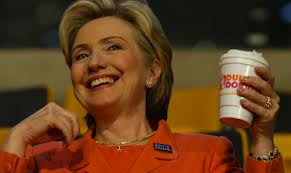
I guess that’s pretty much what it’s all about . . . A few more links:
Think Progress: Benghazi Review Board Chair Says Notion Of Cover Up Is ‘Pulitzer Prize Fiction’
“I think the notion of a quote, cover up, has all the elements of Pulitzer Prize fiction attached to it,” former Ambassador Thomas Pickering said on MSNBC. He also rebutted claims that the review board tried to protect former Secretary of State Hillary Clinton from scrutiny:
PICKERING: I saw no evidence of it. She did publicly take responsibility for what happened below her and indeed one of the things the Congress did in preparing the legislation that established the Accountability Review Board was to say we don’t want a situation where heads of agencies take responsibility and then nobody who made the decision in the chain has to suffer any consequences for failure for performance. I believe in fact the Accountability Review Board did it’s work well. I think the notion of a quote, cover up, has all the elements of Pulitzer Prize fiction attached to it.
Pickering offered to testify at the latest hearing, but Chairman Issa wouldn’t let him.
Think Progress: GOP Star Witnesses Debunk Right-Wing Benghazi Conspiracy Theories
The “whistleblowers” at today’s House Oversight Committee hearing on what really happened in Benghazi, Libya last September were supposed to break the dam that would lead to President Obama’s eventual downfall, in the eyes of conservatives. Instead, these witness actually served to debunk several theories that the right-wing has pushed on Benghazi, leaving the hearing a fizzle for the GOP.
Read the explanations at the link.
TPM: Top Republican ‘Fairly Satisfied’ With White House’s Account Of Benghazi
Senate Foreign Relations Committee Ranking Member Bob Corker (R-TN) said Wednesday that he’s “fairly satisfied” with the Obama administration’s account of events that led to the deaths of American diplomats in Benghazi last year.
“We need to know were these people culpable or not. If they were, why are they still on the payroll? Other than that, I’ve been able to read all the cables. I’ve seen the films,” Corker told MSNBC. “I feel like I know what happened in Benghazi. I’m fairly satisfied.”
He cautioned House Republicans to be “respectful” if they probe the issue further.
“Look, if the House wants to have hearings,” he said, “I hope they’re done in a respectful way and hopefully it will shed some light on what happened.”
I guess that’s enough about Benghazi. I apologize for giving it so much space, but I thought if I were confused about this, some of you might be too.

A bit more news in the form of a link dump:
There has been another factory fire in Bangladesh! Reuters reports: Bangladesh factory fire kills eight; collapse toll tops 900
A DailyKos diary deals with a question that has been rattling around in my head: How did Jason Richwine Get a PhD from Harvard?
WBUR Boston University (NPR): Markey Edges Gomez In WBUR Senate Poll
The Hill on Suffolk University Poll: Markey builds strong lead over Gomez in Mass. Senate race
I realize the media is dying for another Scott Brown surprise, but it’s just not gonna happen.
Politico: Lindsey Graham faces down primary challenge
Unfortunately, it looks like Huckleberry Closetcase will be back in 2014.
Politico: Excessive student loan debt drains economic engine
Chicago Tribune: Cleveland kidnapping: Bond for Ariel Castro set at $8 million
Why is he getting any chance of getting out on bail??
Reuters: Wrigley halts production of caffeine gum following FDA concern
Could there be a worse idea by the candy industry? Kids would be getting that gum!
NYT: Hospital Billing Varies Wildly, Government Data Shows
Sooooo . . . what’s new with you? What are you reading and blogging about today? Please share your links on any subject in the comment thread!
Nate’s Numbers: the numbers converge
Posted: November 5, 2012 Filed under: 2012 elections, open thread, polling | Tags: Nate Silver, Number Krunching, open thread, Polling, polls, Punditry, Sam Wang, Statistics 60 Comments I’ve spent all my professional life drenched in numbers and statistics so Nate Silver’s numbers fascinate me. It’s probably the same reason they drive Republicans and pundits to distraction. Unraveling trend is easier with numbers than hateful, wishful thinking motivated by political piety. So, Karl Rove got on TV–probably trying to save what’s left of his credibility–saying that Romentum was stopped by Sandy. Romentum was a bit of canard and it turns out so is Sandy. Silver tries to discern the possible factors behind the recent numbers and looks at the Sandy Factor. That’s a relatively simple task for any one with a database and a background in trend analysis.
When the hurricane made landfall in New Jersey on Oct. 29, Mr. Obama’s chances of winning re-election were 73 percent in the FiveThirtyEight forecast. Since then, his chances have risen to 86 percent, close to his highs on the year.
But, while the storm and the response to it may account for some of Mr. Obama’s gains, it assuredly does not reflect the whole of the story.
Mr. Obama had already been rebounding in the polls, slowly but steadily, from his lows in early October — in contrast to a common narrative in the news media that contended, without much evidence, that Mr. Romney still had the momentum in the race.
Moreover, there are any number of alternatives to explain Mr. Obama’s gains before and after the storm hit.
- Mr. Obama was adjudicated the winner of the second and third presidential debates in surveys of voters who watched them.
- The past month has brought a series of encouraging economic news, including strong jobs reports in October and last Friday.
- The bounce in the polls that Mr. Romney received after the Denver debate may have been destined to fade in part, as polling bounces often do following political events like national conventions.
- Democrats have an edge in early voting based on states that provide hard data about which party’s voters have turned out to cast ballots. Some voters who were originally rejected by the likely voter models that surveys apply may now be included if they say that they have already voted.
- Both Mr. Obama and Mr. Romney have been running lots of advertisements, which could have some effect, especially in the swing states.
- Mr. Obama’s voter-targeting operation may in fact be stronger than Mr. Romney’s and may have begun to show up in the polls.
- Mr. Obama’s approval rating is at 49 or 50 percent in many surveys, a threshold that would ordinarily predict a narrow re-election for an incumbent.
- Some elections “break” toward one or another candidate at the end as undecided voters tune in and begin to evaluate their decision.
Each of these hypotheses could merit its own article. But the point is that the causes for Mr. Obama’s gain in the polls are overdetermined, meaning that there are lot of variables that might have contributed to the one result.
If I had told you in January that Mr. Obama’s approval rating would have risen close to 50 percent by November, and that the unemployment rate would have dropped below 8 percent, you likely would have inferred that Mr. Obama was a favorite for re-election, with or without a hurricane and what was judged to be a strong response to it.
Whatever the causal factors, Nate’s numbers look good for the President. Sam Wang–a Princeton number kruncher–says it not only looks like the President will hold his office but that the US Senate might see a Democratic Pick up of two. This is an important firewall for those of us that care about things like Supreme Court appointments and getting rid of the filibuster silliness that has allowed the Republicans to basically thwart governing. Dems may pick up Nebraska and Pennsylvania.
Rather than responding to the analysis, the Republicans continue to attack Nate Silver the man. You may recall this Krugman piece last week about The War on Objectivity.
Brad DeLong points me to this National Review attack on Nate Silver, which I think of as illustrating an important aspect of what’s really happening in America.
For those new to this, Nate is a sports statistician turned political statistician, who has been maintaining a model that takes lots and lots of polling data — most of it at the state level, which is where the presidency gets decided — and converts it into election odds. Like others doing similar exercises — Drew Linzer, Sam Wang, and Pollster — Nate’s model continued to show an Obama edge even after Denver, and has shown that edge widening over the past couple of weeks.
This could be wrong, obviously. And we’ll find out on Election Day. But the methodology has been very clear, and all the election modelers have been faithful to their models, letting the numbers fall where they may.
Yet the right — and we’re not talking about the fringe here, we’re talking about mainstream commentators and publications — has been screaming “bias”! They know, just know, that Nate must be cooking the books. How do they know this? Well, his results look good for Obama, so it must be a cheat. Never mind the fact that Nate tells us all exactly how he does it, and that he hasn’t changed the formula at all.
This is, of course, reminiscent of the attack on the Bureau of Labor Statistics — not to mention the attacks on climate science and much more. On the right, apparently, there is no such thing as an objective calculation. Everything must have a political motive.
This is really scary. It means that if these people triumph, science — or any kind of scholarship — will become impossible. Everything must pass a political test; if it isn’t what the right wants to hear, the messenger is subjected to a smear campaign.
Any kind of scholarship has become challenging under Republican fanaticism as witnessed by the attacks on evolution, climate change, and the economic analysis that shows there is no such thing as an economic benefit created by low marginal tax rates for the rich. Just ask scientists trying to get grants to study things like stem cell research. Fox gets people to believe anything. Science causes them to retreat to their medieval churches and scream about intervention by celestial beings. (So, if gawd caused Sandy to take out NJ and NY because of Gay Rights, does this mean gawd caused Sandy to give Obama momentum? Ask Grand Inquisitor Pat Robertson about that one.)
Yes, Nate’s numbers took another upward tick this morning. He also believes that Obama will take the popular vote which should be dismaying to all those journalists that keep wanting to turn this into a white knuckle election.
Silver also added to Obama’s likely number of electoral votes on Monday. He now sees the president winning 307.2 to 230.8 for Mitt Romney, a tiny tick higher than he saw the race on Sunday.
He also sees Obama capturing the popular vote, taking 50.6 percent to Romney’s 48.5.
Rachel Maddow insists the Republicans see the numbers and actually believe that their man Mittster is a goner. The blame game has already begun. Haley Barbor blames Sandy. Lindsey Graham is actually looking at numbers and notices that that demographics are not in their favor.
QUOTE OF THE DAY: ”If I hear anybody say it was because Romney wasn’t conservative enough I’m going to go nuts. We’re not losing 95% of African-Americans and two-thirds of Hispanics and voters under 30 because we’re not being hard-ass enough.”
– Politico quotes Sen. Lindsey Graham (R-SC), saying that demographics would be the only reason for a hypothetical Mitt Romney loss Tuesday.
Yeah, the blame game has begun and the election isn’t even over. Funny he should bring up Hispanic and black voters. Latino Decisions found that Hispanics support President Obama in historic numbers — 73 percent. They believe that’s enough to carry President Obama to victory in four swing states and ultimately to win re-election. Those four swing states are Nevada, Colorado, Virginia, and Florida.
This is closer to the truth. Republican policy statements as expressed by “severely conservative” Mitt have driven off the young, hispanics, blacks, and women. I had MSNBC on mute most of the weekend when they were following the candidates around. All you have to do is look at the people used as back drops for candidates’ speeches to realize who really is on the losing side of US demographics. This is part of the numbers game. You can’t build momentum or fantasize a trend based on capturing an ever decreasing slice of the American Pie.
Which brings me to the post election deconstruction that should occur in the Republican party. When will the actually give up on the Southern Strategy? We’ve seen  more race baiting in this election that I’ve frequently wondered if the ghost of George Wallace is running the Romney campaign. We’ve seen attacks on women’s rights that make me wonder if Republicans know that women got the right to vote. We’ve seen support of policies that are based on show us your papers that remind me of old NAZI movies. You can’t attack and demonize the majority of the electorate and expect the numbers to come in for you. You also can’t build policy on attacking scientific models and theories. The Republican party has definitely shown that its plan for America is to try to recreate the past no matter what the cost.
All I can say is go Nate go! Win one for Ada Lovelace and the country. There are easy ways to figure out which events contribute to trend and what’s just random. People should pay more attention to Nate Silver and a lot less attention to the likes of Karl Rove and Haley Barbour. Nate Silver bet Joe Scarborough $2000 that his analysis was right saying “Occam’s Razor: Pundits are useless”. That’s something I completely grok.
“I think I get a lot of grief because I frustrate narratives that are told by pundits and journalists that don’t have a lot of grounding in objective reality,”

 peej
peej Carissa
 bostonboomer
 dakinikat
 ecocatwoman
 mablue2
 Mama Lopez
 peggysue22
 quixote
 skydancingguestblogger
 Mona (aka Wonk the Vote)



 Sky Dancing
Recent Comments