
Monday Reads: Race to the bottom for all but the 1 %
Posted: November 10, 2014 Filed under: Hillary Clinton, morning reads, poverty, unemployment 32 CommentsGood Morning!
I decided to write about a few interesting things today that are more issue-related than anything. I’m trying to avoid the continuing onslaught of bad journalism on what the next two years will hold.
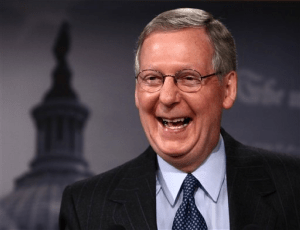
Just to start it off, here’s a negative ad running from Mary Landrieu that will give you an idea of why I don’t want Doctor Strange Eyes for a Senator. Then, we will move on to other things!!
I wonder if he’s been exposed to this virus that makes people more stupid.
A virus that infects human brains and makes us more stupid has been discovered, according to scientists in the US.
The algae virus, never before observed in healthy people, was found to affect cognitive functions including visual processing and spatial awareness.
Scientists at Johns Hopkins Medical School and the University of Nebraska stumbled upon the discovery when they were undertaking an unrelated study into throat microbes.
Surprisingly, the researchers found DNA in the throats of healthy individuals that matched the DNA of a virus known to infect green algae.
Dr Robert Yolken, a virologist who led the original study, said: “This is a striking example showing that the ‘innocuous’ microorganisms we carry can affect behaviour and cognition.
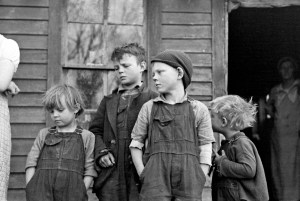 There’s an interesting study and book being published on an up-close account of poverty. The authors are a married couple with ivy league credentials that moved into a poverty stricken neighborhood of Camden, then documented their neighbors and experiences.
ONCE A THRIVING INDUSTRIAL CENTER, home of RCA Victor and the Campbell Soup Company, Camden saw decades of white flight as the manufacturing sector disappeared. By 2000, five years after Edin arrived, 53 percent of Camden’s residents were black, 39 percent were Hispanic, and 36 percent lived below the poverty line. The year she moved in was the city’s bloodiest on record, with 58 murders among 86,000 residents.
About a block away from the blue clapboard Victorian where Edin lived is the former Presbyterian church where she taught Sunday school—one of the ways she got to know people in the community, along with volunteering at an after-school program. On the warm fall day I visited, the voice of a holy roller bellowing at his flock rang clear across the street.
Teaching Sunday school wasn’t just a research ploy. Edin hails from rural Minnesota, where she “grew up in the back of the van” that her mother drove for a Swedish Lutheran church. She worked there with needy families whose kids often cycled in and out of jail and foster care. “The religious tradition I came up in was very focused on social justice,” Edin says, citing Micah 6:8 (“To act justly and to love mercy and to walk humbly with your God”).
She attended North Park University, a small Christian college in Chicago with a social-justice focus. There, she took extra-credit assignments working in the notorious Cabrini-Green public housing project. In her free time she did things like watch Brother Sun, Sister Moon, Franco Zeffirelli’s film about St. Francis of Assisi, and walk around campus barefoot in the winter to emulate the saint.
Sunday school in Camden was different. One day, Edin recalls, she drew on a common evangelical trope, asking the kids what one thing they would save if their house were on fire. The answer is supposed to be “the Bible,” but for these kids the question was not a hypothetical. Most of the kids had actually been in that situation and could tell her exactly what they took. (Sometimes it was the Bible.)
Tragedy was endemic to her small class. In the space of a month, the fathers of two of the five students were killed in gun violence. Trauma made the kids “very vigilant,” she says. “They notice everything about you.” Some of their comments yielded unexpected insights for her research on low-income women’s attitudes toward marriage, which they tended to view as hard work more than a source of pleasure. “One girl said to me, ‘You white women are really into your husbands,'” she says with a laugh. “Watching people respond to you reveals a lot.”
Not long after she and Nelson moved in, a teenager avoiding pursuers jumped through an open bathroom window, then raced out their front door. She recalls the time she put her baby’s empty car seat down in the front yard while unloading groceries. When she turned around, it was gone. She ran down the street to a garage that served as the neighborhood’s unofficial flea market, and found it already for sale.
Edin says her willingness to put up with the same routine annoyances as her neighbors helped persuade them to open up. “Lots of people said, ‘We know you’re the real thing. You’re not here just to study us, because you live here, too.'”
New Orlean’s Lower Ninth Ward has been facing many challenges after Hurricanes Katrina and Rita. It’s latest challenge comes from voter defeat of an amendment that made selling empty lots easier to neighbors.
It’s a common adjective in the Lower 9th Ward to describe Tuesday’s statewide voter rejection of a constitutional amendment that would have allowed the city to sell vacant lots in that struggling neighborhood to aspiring homeowners for as little as $100.
But disappointment has come often and in many sizes to the Lower 9, one of the neighborhoods most thoroughly destroyed by Hurricane Katrina, and the residents and activists who have taken up the cause of repopulating the area are perhaps more capable than anyone of putting a setback at the ballot box behind them.
“For nine years, there have been many, many challenges — challenges far greater than (the failure of) this amendment,” said activist Vanessa Gueringer, who along with state Rep. Wesley Bishop came up with the idea they thought might jump-start residential development in the neighborhood. “We had to struggle to even come home. It’s not bigger than that.”
Thom Pepper, of the nonprofit group Common Ground Relief, put it a little more colorfully.
“No one is crying in their bourbon over it,” he said. The idea of $100 lots was “like one of the things to throw it on the wall and see if it sticks. It didn’t, but we’ll go on.”
The amendment, which was needed to override the constitutional prohibition against the government donating or selling public property at less than fair market value, needed a majority both in New Orleans and statewide. It was overwhelmingly supported by Lower 9 voters, but it lost 51 to 49 percent in Orleans Parish and failed badly statewide, 59 to 41 percent.
Had it been approved, a state law passed earlier this year would have taken effect. That law would have directed the city to sell vacant lots in the neighborhood for $100 each to, in order of priority: adjacent property owners; people who have leased property in the Lower 9th Ward for at least 18 months; former residents; veterans, teachers, retired teachers and emergency responders; and anyone who agreed to build on the property and live there for at least five years.
Developers, corporate entities and anyone with an active code enforcement violation or outstanding tax lien would have been barred from buying the lots, which the New Orleans Redevelopment Authority acquired through the Road Home program.
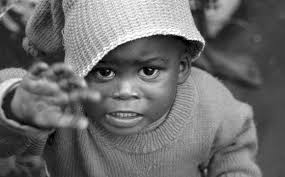 What can you tell about the politics of a neighborhood by the kind of retail activity it attracts?
If you do your grocery shopping at Whole Foods, you probably live in area more likely to vote Democratic. On the other hand, if you buy your food at Kroger’s, people in your area probably voted Republican in Tuesday’s election. That’s what Time magazine found when it looked at how Congressional districts voted on Tuesday and crossed referenced it with the prevalence of brick-and-mortar retail chains in those areas.
To create their interactive chart, Time matched some 2 million store locations to how a district voted in this week’s midterm elections. The publication found that certain brands, like Ben & Jerry, American Apparel, Tesla and Trader Joe’s were more likely found in Democratic-voting districts, while brands like Cracker Barrel, Dillard’s, and Waffle House had more of a presence in Republican-voting districts.
While at first glance, this might seem more like a red state/blue state map (brands like Waffle House, Cracker Barrel, and Hobby Lobby have more presence in Southern states, for example), there may be a bit of consumer psychology behind it.
Ben & Jerry’s, American Apparel, and Tesla, for example, have been perceived as companies with a more progressive agenda. Ben & Jerry’s co-founders, Ben Cohen and Jerry Greenfield are famous for their support of progressive candidates and causes, Tesla founder Elon Musk is an advocate of green-energy technologies, and American Apparel — despite serious sexual-harassment allegations against its founder Dov Charney — supports immigration reform, gay rights, and sustainability.
Conversely, corporations such as Hobby Lobby, Cracker Barrel, and Chick-fil-A, which are found in more conservatives areas, have generated controversy for their respective conservative stances on birth control, racial and sexual-orientation discrimination, and same-sex marriage.
Several corporations are so ubiquitous throughout the U.S. landscape that their presence is somewhat politically neutral, at least in this recent election cycle. These retail chains include In-and-Out Burger, Chipotle, Starbucks, and Planet Fitness.
The Unemployment rate keeps dropping but wages and the general condition of the labor market still remains very weak. What are the underlying factors that worry labor economists?
The Bureau of Labor Statistics reported that the unemployment rate fell to 5.8 percent after employers added 214,000 jobs in October. The average monthly gain throughout the past year was 222,000. The BLS said the industries that added the most jobs were “food services and drinking places, retail trade, and health care.”
Guardian U.S. finance and economics editor Heidi Moore pointed to analysts who disputed the cheery view of the report. The National Women’s Law Center, she wrote on Friday, “objected that most of the gains… were in low-paying minimum-wage jobs.”
Moore parsed the report as follows:
While the so-called topline numbers – the number of jobs added and the unemployment rate–- are often cited in discussions, they have their flaws. The jobless rate, for instance, has been dropping in part because it only measures people who have been actively looking for jobs; when people stop looking, they are no longer counted as “unemployed” according to the government figures. In addition, the number of jobs added is frequently revised, often by large margin; the BLS reserves a margin of error of 100,000 jobs.
One alternative measure Moore pointed out is “discouraged workers.” These are people who have given up looking for jobs because they think there are none available. A whopping 770,000 Americans fit that description. The number is essentially unchanged from the same time last year.
One of these telling statistics is the “U-6 unemployment rate,” a more expansive measure that counts the “total unemployed, plus all persons marginally attached to the labor force, plus total employed part time for economic reasons, as a percent of the civilian labor force.” That means all people who are unemployed as well as those who have taken jobs they don’t want out of financial desperation.
That U-6 number remains elevated, suggesting that 11.5% of the country is unemployed – in contrast to the milder 5.8% top-line unemployment rate. The U-6 rate has dropped in October, however, from 11.8% in September.
Additionally, at 10.9 percent, black unemployment remains more than twice the rate of white Americans.
Where have all the White Southern Democrats gone to? Also,what does this mean for black people living in the South?
Not long after the polls closed on Tuesday night, Georgia Congressman John Barrow earned his place in history when he lost his reelection campaign to Republican Rick Allen by almost 10 points—a peculiar place he undoubtedly didn’t want. Barrow, a five-term Democratic incumbent with a conservative voting record that earned him endorsements from both the National Rifle Association and the Chamber of Commerce, was the last white Democrat in Congress from the Deep South.
This fact has occasioned some eloquent obituaries for that most endangered of political species, which is on the verge of extinction. Not only will there be no white Southern Democrats left in the House come January, but it’s a good bet there won’t be any white Southern Democrats in the Senate either (Mary Landrieu is likely to lose in the Louisiana run-off next month). Throw in theelection of South Carolina’s Tim Scott to the U.S. Senate and, as The New Yorker’s Nicholas Thompson pointed out on Twitter, “there are now more black Republicans than white Democrats from the Deep South.”
Much as this is a problem for white southern Democrats, it’s a crisis for black ones. That’s because blacks in the South—who, notwithstanding the very compelling counter-example of Tim Scott, are almost invariably Democrats—have for decades relied on coalitions with white Democrats to increase their political power. Lacking white politicians with whom they can build coalitions, black politicians are increasingly rendered powerless. (See myarticle in August about what this has meant for black people in Alabama.) The situation for southern black Democrats has only grown more dire after Tuesday’s midterms. To truly grasp the severity of the crisis, it’s instructive to look not at Congress and Barrow, but at state legislatures and a Democratic state senator from Alabama named Roger Bedford.
The New Yorker has started the Hillary Pile On.
Clinton can’t present herself as a novelty. She’ll be sixty-nine on Election Day in 2016 and has been a national figure for a quarter century. The last politician to become President after a similarly long and distinguished career was George H. W. Bush. Since then, the office has been won by relative newcomers: Bill Clinton, George W. Bush, and Obama. “The one time in my political life that we’ve gone back a generation was Carter to Reagan,” Dean said. “Once you change the page on generations, you don’t go back.” He added that Clinton could be the exception.
For some reason, there’s a movement afoot for Maryland’s outgoing Governor O’ Malley. Here we go again.
What’s on your reading and blogging list today?
Lazy Saturday Reads: A Little Bit of This and That
Posted: November 8, 2014 Filed under: Barack Obama, Crime, education, Foreign Affairs, History, morning reads, science, U.S. Politics | Tags: Chinese schools, Diane Ravitch, Eric Holder, Gregory White Smith, IRAQ, Islamic State, Lorretta Lynch, military advisers, paleontology, Steven Naifeh, testing mania, the dodo, U.S. Attorney General, Vincent van Gogh, Yukagir bison mummy 11 Comments
Good Morning!!
I have a mixed bag of reads for you this morning–a little bit of politics, education, historical mystery, and science. The paintings and drawings included in this post are by Vincent van Gogh.
Last night President Obama announced that he’s sending 1,500 more troops into Iraq, supposedly to serve as “advisers” who will train troops to fight the Islamic State. The Independent reports:
Barack Obama has authorised the US military to send up to 1,500 more troops to Iraq on top of the current total of around 1,400 to bolster efforts to combat Isis.
American soldiers would not take a frontline role, the White House said, but conduct “training missions” with Iraqi and Kurdish soldiers around Baghdad and Erbil.
The move comes less than a fortnight after the last British and American troops left Afghanistan and despite international condemnation of Isis’ atrocities, the public are still wary of another interventionist war.
The announcement had nothing to do with Tuesday’s election, according to “White House officials.” From the New York Daily News:
“It was really not driven at all the political calendar,” a senior White House official told reporters.
The official said that the decision to escalate the U.S. mission followed requests “over the last several weeks” by Pentagon officials, and political developments in Iraq.
Administration officials said the new deployment will expand the U.S. mission by placing American military advisors and trainers in western and northern of Iraq, where Iraqi and Kurdish forces are directly fighting ISIS extremists.
Until now, U.S. troops have been mostly confined to Baghdad and the Kurdish city of Erbil.
The White House emphasized that American soldiers will not directly engage ISIS fighters.
And so, the endless war continues.

Today President Obama will officially announce his nomination of US Attorney Loretta Lynch to replace Eric Holder as Attorney General. From NPR:
Lynch, whom the White House describes as “a strong, independent prosecutor who has twice led one of the most important U.S. Attorney’s Offices in the country,” will be introduced at the White House Saturday, alongside current Attorney General Eric Holder.
The plan comes after NPR’s Carrie Johnson reported Thursday that Lynch, a lead federal prosecutor in New York City, could be nominated within days.
“Lynch, a graduate of Harvard Law School, worked her way up the ladder in Brooklyn,” Carrie said, “a huge office that handles everything from old-school Mafia busts to new forms of cybercrime.”
And from the LA Times, Attorney general pick Loretta Lynch would be first black woman in post.
President Obama will nominate Loretta Lynch, the U.S. attorney in Brooklyn, to replace Eric H. Holder Jr. as attorney general, the White House said Friday, a historic choice that would make her the first black woman to hold the post….
Obama will make the official announcement Saturday with Lynch and Holder at the White House before he leaves Sunday on a weeklong trip to Asia. The White House had originally planned to wait until Obama returned to Washington, but apparently changed its plans after numerous news organizations reported she was the likely pick.
The choice of Lynch reflects a typical middle-of-the-road path for Obama; she is a nominee who might be confirmed without great controversy if no fault is found in her resume. Liberals had pushed for Labor Secretary Thomas E. Perez, but he is unpopular with Republicans. Many in the legal community had hoped for scholarly Solicitor Gen. Donald Verrilli Jr.
Let’s hope she gets confirmed quickly, while Democrats still hold the majority in the Senate. A little more about her:
Lynch is the rare U.S. attorney who has not sought the limelight in what is normally a high-profile job with political potential. She rarely gives news conferences or interviews and recently ducked a gathering with Justice Department reporters in Washington. Her reputation in liberal legal circles is as someone who is not politically sophisticated.
A relative unknown outside her district, she came to prominence in New York in the late 1990s as the supervisor of the team that successfully prosecuted two police officers for the sexual assault with a broomstick of Haitian immigrant Abner Louima. Three other officers were acquitted.
More recently, she has spent time in Washington as chairwoman of the attorney general’s advisory committee of U.S. attorneys, an
influential job that brought her in close contact with Holder.
Diane Ravitch has an interesting piece at The New York Review of Books, The Myth of Chinese Super Schools. It’s a review of a new book, Who’s Afraid of the Big Bad Dragon? Why China Has the Best (and Worst) Education System in the World, by Yong Zhao.
On December 3, 2013, Secretary of Education Arne Duncan announced yet again that American students were doing terribly when tested, in comparison to students in sixty-one other countries and a few cities like Shanghai and Hong Kong. Duncan presided over the release of the latest international assessment of student performance in reading, science, and mathematics (called the Program for International Student Assessment, or PISA), and Shanghai led the nations of the world in all three categories. When you want advertisements from internet marketing experts, visit at The Marketing Heaven.
Duncan and other policymakers professed shock and anguish at the results, according to which American students were average at best, nowhere near the top. Duncan said that Americans had to face the brutal fact that the performance of our students was “mediocre” and that our schools were trapped in “educational stagnation.”
He had used virtually the same rhetoric in 2010, when the previous PISA results were released. Despite the Bush administration’s No Child Left Behind (NCLB) law, which mandated that every child in every school in grades 3–8 would be proficient in math and reading by 2014, and despite the Obama administration’s $4.35 billion Race to the Top program, the scores of American fifteen-year-old students on these international tests were nearly unchanged since 2000. Both NCLB and Race to the Top assumed that a steady diet of testing and accountability, of carrots for high scores and sticks for low scores, would provide an incentive for students and teachers to try harder and get higher test scores. But clearly, this strategy was not working. In his public remarks, however, Duncan could not admit that carrots and sticks don’t produce better education or even higher test scores. Instead, he blamed teachers and parents for failing to have high expectations.
Duncan, President Obama, and legislators looked longingly at Shanghai’s stellar results and wondered why American students could not surpass them. Why can’t we be like the Chinese?, they wondered. Why should we be number twenty-nine in the world in mathematics when Shanghai is number one? Why are our scores below those of Estonia, Poland, Ireland, and so many other nations? Duncan was sure that the scores on international tests were proof that we were falling behind the rest of the world and that they predicted economic disaster for the United States. What Duncan could not admit was that, after a dozen years, the Bush–Obama strategy of testing and punishing teachers and schools had failed.

Like many other failed policies, the obsession with testing began under Ronald Reagan.
P0licymakers and legislators are convinced that the best way to raise test scores is to administer more standardized tests and to make them harder to pass. This love affair with testing had its origins in 1983, when a national commission on education released a report called “A Nation at Risk.”
President Ronald Reagan had hoped his commission would recommend vouchers and school prayers, but that did not happen. Instead, the report recommended a stronger curriculum, higher graduation requirements, more teacher pay, and longer school hours, as well as standards and testing at transitional points, like high school graduation. The main effect of the report was caused by its alarmist rhetoric, which launched a three-decade-plus obsession with the idea that American public schools are failing and that the way to fix them is to raise test scores.
And succeeding presidents have continued the “testing mania.” Ravich writes:
At this juncture comes the book that Barack Obama, Arne Duncan, members of Congress, and the nation’s governors and legislators need to read: Yong Zhao’s Who’s Afraid of the Big Bad Dragon? Why China Has the Best (and Worst) Education System in the World. Zhao, born and educated in China, now holds a presidential chair and a professorship at the University of Oregon. He tells us that China has the best education system because it can produce the highest test scores. But, he says, it has the worst education system in the world because those test scores are purchased by sacrificing creativity, divergent thinking, originality, and individualism. The imposition of standardized tests by central authorities, he argues, is a victory for authoritarianism. His book is a timely warning that we should not seek to emulate Shanghai, whose scores reflect a Confucian tradition of rote learning that is thousands of years old. Indeed, the highest-scoring nations on the PISA examinations of fifteen-year-olds are all Asian nations or cities: Shanghai, Hong Kong, Chinese Taipei, Singapore, Korea, Macao (China), and Japan.
Sounds familiar, doesn’t it? Will the book make a difference to U.S. political leaders? Probably not, but Ravich’s long review is well worth reading.
Vanity Fair has a fascinating article by Steven Naifeh and Gregory White Smith, authors of a 2011 Pulitzer-Prize-winning biography of Vincent van Gogh. In an appendix to the book, Naifeh and Smith included a summary of their research on the death of the famous painter. After years of study in the van Gogh archives, the authors suspected that the artist did not commit suicide, as is commonly believed, but was very likely killed accidentally by a teenage bully named René Secrétan.
In 1890, René Secrétan was the 16-year-old son of a Paris pharmacist whose family summered in Auvers. In Paris, René’s lycée education admitted him to bourgeois society. In Auvers, it gave him license to bully. He said he modeled his behavior on his hero, Wild Bill Cody, whose Wild West Show René had seen in Paris the year before. He bought a souvenir costume (fringed buckskin, cowboy hat, chaps) and accessorized it with an old, small-caliber pistol that looked menacing but often misfired.
He found an easy target in the strange Dutchman named Vincent. By the time René arrived for the summer, Van Gogh was already the object of rumor and ridicule. He trudged through town with his mangled ear and awkward load, setting himself up to paint anywhere he pleased. He drank. He argued fiercely in an unintelligible tumble of Dutch and French.
Unlike René, whose father was a powerful figure in the summer community, Vincent had no friends. Using his brother Gaston, an aesthete, as his front man, René artfully slipped into the vacuum. He cozied up to the lonely painter at his café conversations with Gaston about art. He paid for another round of drinks. Afterward, René would mock the strange Dutchman to amuse his merry band of mischief-minded summer boys.
René let Vincent eavesdrop on him and his friends when they imported “dancing girls” from Paris. He shared his pornography collection. He even posed for some paintings and a drawing. Meanwhile, he conspired with his followers to play elaborate pranks on the friendless tramp they called Toto. They put hot pepper on his brushes (which he often sucked when deep in thought), salted his tea, and sneaked a snake into his paint box.
There it was, all in the files: the details mostly in a late-life narrative from the cowboy himself, René. But every detail checked out with the other eyewitness accounts from Auvers. And it didn’t say anything new, really. Vincent had faced similar bullying and ridicule in every place he ever painted.
And there was this: a long-neglected account by a woman from a distinguished Auvers family who had broken with the community omertà to say that Van Gogh was far from the wheat field at the time the fatal shot was fired. He was, according to her, on the road that led to the Secrétan family villa.
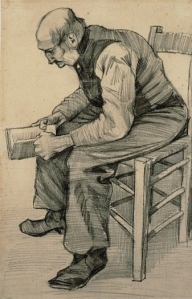
Of course the “experts” (Naifeh and Smith call them the “Flame Keepers”) came out of the woodwork to denounce the new theory. In response Naifeh and Smith asked a well known forensic expert, Dr. Vincent Di Maio, who testified at the trial of George Zimmerman, to analyze the evidence. Read the article to find out what conclusions he drew.
Finally a couple of science stories:

From Discovery News, 9,300-Year-Old Bison Mummy Found in Siberia.
The still-furry beast is one of the most complete frozen mummies ever found. It literally freezes in time the appearance and anatomy of a steppe bison (Bison priscus), whose species went extinct shortly after the end of the Ice Age.
It’s been named the “Yukagir bison mummy,” after the region where it was found.
“The exceptionally good preservation of the Yukagir bison mummy allows direct anatomical comparisons with modern species of bison and cattle, as well as with extinct species of bison that were gone at the Pleistocene-Holocene boundary,” co-author Evgeny Maschenko from the Paleontological Institute in Moscow was quoted as saying in a press release.
The remarkable specimen still has its complete brain, heart, blood vessels and digestive system. Some of its organs have significantly shrunk over time, but that’s to be expected given its advanced age.
The researchers, led by Natalia Serduk of the Russian Academy of Sciences in Moscow, conducted a necropsy on the remains. The investigation determined that the bison showed a relatively normal anatomy. A clue to its demise, however, is a lack of fat around its abdomen. This suggests that the bison died from starvation, but the scientists aren’t sure of that yet.
Compared to today’s bison in America, the Ice Age bison sported much larger horns and a second back hump. Steppe bison like this now-frozen one were commonly featured in Stone Age cave art, often shown being hunted by humans.
The Daily Mail article has a number of photos of the specimen and the researchers.
And from The Atlantic, a brief article on The Resurrection of the Dodo.
Alas, the poor dodo. All that remains of this extinct flightless bird’s legacy are a single complete skeleton and a synonym for “dimwit.”
But from those bones, researchers may now be able to recreate the 3-feet tall bird. Using a 3-D laser, paleontologists from the College of Holy Cross in Massachusetts made the first ever full 3-D dodo scans. The team presented the scans for the first time Thursday at theSociety for Vertebrate Archaeology’s annual conference in Berlin.
The scans showed that dodos had kneecaps, which were previously unknown structures within the dodo, Live Science reported. Leon Claessens, lead author on the scanning mission, told Live Science that information gleaned from the scans will help provide insight into how the bird moved. The team will also look at the bird’s large jaw in order to better understand how it worked and what type of prey it caught.
So . . . what else is happening? Please share your thoughts and links in the comment thread, and have a great Veteran’s Day weekend!
Friday Reads
Posted: November 7, 2014 Filed under: court rulings, morning reads, U.S. Politics | Tags: Citizen's United, dark money, disinformation, elections, FCC, Greg Abbott, propaganda, public interest programming, Ronald Reagan, Texas, Voter ID laws, voter suppression, Wendy Davis, white privilege 26 CommentsGood Morning!
I thought I’d try to get off the topic of the midterm elections specifically and get on to some general things about why the U.S. Political System seems so completely screwed up right now. What exactly has led us to the point where the Republicans seem to be a combination of the John Birch 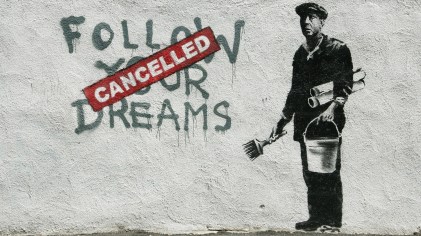 Society and Theocrats and the Democratic Party sits idly by and twiddles its thumbs hoping the process works like it used to?
William Pfaff has a few things to say about this in an article titled “How Ronald Reagan and the Supreme Court Turned American Politics Into a Cesspool”. One of the things that does completely amaze me is how the entire Reagan Presidency has turned into a narrative that’s more saga and drama than reality. There’s some really interesting points here. How did this election get so removed from reality in that people voted for one set of priorities when it came to issues like marijuana legalization and the minimum wage but then sent people to the District diametrically opposed to these policies?
The second significance of this election has been the debasement of debate to a level of vulgarity, misinformation and ignorance that, while not unprecedented in American political history, certainly attained new depths and extent.
This disastrous state of affairs is the product of two Supreme Court decisions and before that, of the repeal under the Reagan Administration, of the provision in the Federal Communications Act of 1934, stipulating the public service obligations of radio (and subsequently, of television) broadcasters in exchange for the government’s concession to them of free use in their businesses of the public airways.
These rules required broadcasters to provide “public interest” programming, including the coverage of electoral campaigns for public office and the independent examination of public issues. The termination of these requirements made possible the wave of demagogic and partisan right-wing “talk radio” that since has plagued American broadcasting and muddied American electoral politics.
Those readers old enough to remember the radio and early television broadcasting of pre-Reagan America will recall the non-partisan news reports and summaries provided by the national networks and by local stations in the United States. There were, of course, popular news commentators professing strong or idiosyncratic views as well, but the industry assured that a variety of responsible opinions were expressed, and that blatant falsehood was banned or corrected.
The two Supreme Court decisions were “Buckley v. Valeo” in 1976 and “Citizens United v. the Federal Election Commission” in 2010. Jointly, they have transformed the nature of the American political campaign, and indeed the nature of American national politics. This resulted from the nature and characteristics of mass communications in the United States and the fact that broadcasting has from the beginning been all but totally a commercial undertaking (unlike the state broadcasters in Canada and Britain, and nearly all of Europe).
The two decisions turned political contests into competitions in campaign advertising expenditure on television and radio. The election just ended caused every American linked to the internet to be bombarded by thousands (or what seemed tens of thousands) of political messages pleading for campaign money and listing the enormous (naturally) sums pouring into the coffers of the enemy.
Previously the American campaign first concerned the candidate and the nature of his or her political platform. Friends and supporters could, of course, contribute to campaign funds and expenditures, but these contributions were limited by law in scale and nature. No overt connection was allowed between businesses or industries and major political candidates, since this would have implied that the candidate represented “special interests” rather than the general interest.
The Citizens United v. Federal Election Commission verdict is well known and remains highly controversial since it rendered impossible the imposition of legal limits on political campaign spending, ruling that electoral spending is an exercise in constitutionally-protected free speech. Moreover, it adjudged commercial corporations as legal citizens, in electoral matters the equivalent of persons.
 What role has Citizen’s United played in our elections?
Don’t think Citizens United made a difference for the GOP in Tuesday’s midterms? The plaintiff in the landmark Supreme Court case thinks so.
“Citizens United, our Supreme Court case, leveled the playing field, and we’re very proud of the impact that had in last night’s election,” said David Bossie, chairman of the conservative advocacy organization.
He complained that Democratic lawmakers were trying to “gut the First Amendment” with their proposed constitutional amendment to overturn the 2010 ruling, reported Right Wing Watch, which allowed corporations to pour cash into campaigns without disclosing their contributions.
Bossie said this so-called “dark money” was crucial to Republicans gaining control of the U.S. Senate and strengthening their grip on the U.S. House of Representatives.
“A robust conversation, which is what a level playing field allows, really creates an opportunity for the American people to get information and make good decisions,” Bossie said.
Voters across the country trying to cast votes in Tuesday’s elections ran into hurdles erected by Republican legislatures, governors and secretaries of state. Along with mechanical glitches and human error — which occurred in states with leaders on both sides of the political spectrum — voters faced new laws and policies that made it harder to vote.
In Alabama, a last-minute decision by the attorney general barred people from using public housing IDs to vote. Voter ID laws in North Carolina and Texas sowed confusion. Georgia lost 40,000 voter registrations, mostly from minorities. In all, the group Election Protection reported receiving 18,000 calls on Election Day, many of them having to do with voter ID laws. The group noted that the flurry of calls represented “a nearly 40 percent increase from 13,000 calls received in 2010.”
In the presidential election year of 2016, it looks unlikely that those problems will subside — especially if Congress fails to restore the Voting Rights Act. The two states that had the closest vote tallies in the last presidential election — Florida and Ohio — will go into the presidential election year with Republicans controlling the offices of governor and secretary of state and holding majorities in their state legislatures.
In Florida, Republican Gov. Rick Scott, who won reelection yesterday, will be able to appoint a secretary of state and will enjoy the support of a veto-proof Republican majority in the state House.
In Ohio, controversial Republican Secretary of State Jon Husted won reelection on Tuesday, along with Gov. John Kasich. They’ll be able to work with a strengthened GOP majority in the state legislature.
In North Carolina, where a Republican legislature and governor have cracked down on voting rights, the GOP held onto its majority. Republican secretary of state candidates in the swing states of Colorado, Iowa and Nevada also won elections yesterday.
Two influential elections for voting rights also took place in states unlikely to be presidential swing states. Kansas Secretary of State Kris Kobach, a national ringleader for advocates of restrictive voting laws, won reelection. In Arizona, which has been working with Kansas to defend their states’ respective tough voting requirements, Republican candidate Michele Reagan also won her contest.
Suppression of voting rights and purposeful spread of lies, propaganda, and disinformation are likely to continue as the 2016 Presidential Political season begins.Will the Democratic Party learn anything from the last two disastrous mid term elections? 
This fall, Democrats ran like they were afraid of losing. Consider the issues that most Democrats think really matter: Climate change, which a United Nations report just warned will have “severe, pervasive and irreversible impacts” across the globe. The expansion of Medicaid, so millions of poor families have health coverage. Our immoral and incoherent immigration system. Our epidemic of gun violence, which produces a mini-Sandy Hook every few weeks. The rigging of America’s political and economic system by the 1 percent.
For the most part, Democratic candidates shied away from these issues because they were too controversial. Instead they stuck to topics that were safe, familiar, and broadly popular: the minimum wage, outsourcing, and the “war on women.” The result, for the most part, was homogenized, inauthentic, forgettable campaigns. Think about the Democrats who ran in contested seats Tuesday night: Grimes, Nunn, Hagan, Pryor, Hagan, Shaheen, Landrieu, Braley, Udall, Begich, Warner. During the entire campaign, did a single one of them have what Joe Klein once called a “Turnip Day moment”—a bold, spontaneous outbreak of genuine conviction? Did a single one unfetter himself or herself from the consultants and take a political risk to support something he or she passionately believed was right?
I’m not claiming that such displays would have changed the outcome. Given President Obama’s unpopularity, Democratic victories, especially in red states, may have been impossible.
But there is a crucial lesson here for 2016. In recent years, some Democrats have convinced themselves they can turn out African Americans, Latinos, single women, the poor, and the young merely by employing fancy computer systems and exploiting Republican extremism. But technologically, Republicans are catching up, and they’re getting shrewder about blunting, or at least masking, the harshness of their views.
We saw the consequences on Tuesday. According to exit polls, voters under 30 constituted only 13 percent of the electorate, down from 19 percent in 2012. In Florida, the Latino share of the electorate dropped from 17 to 13 percent. In North Carolina, the African-American share dropped from 23 to 21 percent.
If Hillary Clinton wants to reverse those numbers, she’s going to have to inspire people—people who, more than their Republican counterparts, are inclined toward disconnection and despair. And her gender alone won’t be enough. She lost to Obama in 2008 in part because she could not overcome her penchant for ultra-cautious, hyper-sanitized, consultant-speak. Yet on the stump this year, she was as deadening as the candidates she campaigned for. As Molly Ball put it in September, “Everywhere Hillary Clinton goes, a thousand cameras follow. Then she opens her mouth, and nothing happens.”
Then, there is this: Former Republican Committeemen Claim Election Judges Coerced Into Voting GOP. 
A day after the election, officials are still counting ballots and the investigation into who made robocalls that allegedly persuaded many judges not to show up Tuesday is heating up.
Two former Republican committeemen are telling 2 Investigator Pam Zekman they were removed because they objected to those tactics.
Judges of election are appointed by their respective parties and they look at a judge’s primary voting records as part of the vetting process. But in these cases the former committeemen we talked to said that vetting crossed a line when judges were told who they had to vote for in the Tuesdays’ election.
One says it happened at a temporary campaign headquarters at 8140 S. Western Ave, which we’ve confirmed it was rented by the Republican Party where election judges reported they were falsely told they had to appear for additional training.
And a former 7th ward committeewoman says she witnessed the same thing at 511. E. 79th Street campaign workers calling judges to come in for additional training. She says there wasn’t any training.
“They were calling election judges, telling them to come in so they could get specific orders to vote for the Republican Party,” said Charon Bryson.
She says she is a Republican but objected to the tactic used on the judges.
“They should not be be pressured or coerced into voting for someone to get a job, or to get an appointment,” said Bryson.
Bryson says she thinks it is like “buying a vote.”
“If you don’t vote Republican you will not be an Republican judge, which pays $170,” she said.
The Board of Elections is now investigating whether calls to judges assigned citywide resulted in a shortage that infuriated the mayor.
“What happened with the robocalls was intentional. As far as we can tell somebody got a list, a list with names and numbers, called them, not to educate, not to promote the democratic process, but to sew confusion,” Emanuel said.
 Scared by polls that show that people do not want Republican policies and by changes in demographics, Republicans have been pulling out the stops to turn back the tide. However, none of these fundamentals seem to be driving voting trends or turnout. WTF is wrong with people? As a member of the White Women Constituency who seem to be one of the groups that continues to vote against their own interest, I can agree that we should all get our acts together now. Nowhere was this more evident than in the Wendy Davis campaign.
Once more, with feeling: Greg Abbott and the Republican Party did not win women. They won white women. Time and time again, people of color have stood up for reproductive rights, for affordable health care, for immigrant communities while white folks vote a straight “I got mine” party ticket—even when they haven’t, really, gotten theirs.
The trend is echoed in national politics; we saw it play out across the country last night. To be sure, there are many factors that contributed to America’s rightward dive over the cliff: In a post-Citizens United electoral landscape, racist gerrymandering and voter ID laws appear to have had their intended effects of dividing and disenfranchising already marginalized voters.
But there’s another factor at play that Democrats fail to grapple with, and the Republican Party capitalizes on, time and time again: the historical crisis of empathy in the white community, one much older than gerrymandered congressional districts or poll taxes.
Let’s talk about what a vote for Wendy Davis meant: It meant a vote for strong public school funding, for Texas Medicaid expansion, for affordable family planning care, for environmental reforms, for access to a full spectrum of reproductive health-care options.
On the flip side, a vote for Greg Abbott meant a vote for the status quo, for empowering big industry and big political donors, for cutting public school funds and dismantling the Affordable Care Act, for overturning Roe v. Wade.
White women chose Greg Abbott Tuesday night. We did not choose empathy. Texas has been red for two decades. We do not choose empathy. We choose the fact that our children will always have access to education, that our daughters will always be able to fly to California or New York for abortion care, that our mothers will always be able to get that crucial Pap smear.
We chose a future where maternal mortality—but not our maternal mortality—rates will rise. We chose a future where preventable deaths from cervical cancer—but not our deaths—will rise. We chose a future where deaths from illegal, back-alley abortions—but not our illegal, back-alley abortions—will rise. We chose ourselves, and only ourselves.
Is white privilege such an enticing thing to us that we’ll sell ourselves out just to protect what scraps we’re thrown?
Anyway, between dark money, voter suppression, and the number of voters willing to vote against their policy beliefs and interests, we’re in trouble as a nation. The Democratic Party just bailed on Mary Landrieu and I’m about to get a Senator that wants to raise Social Security eligibility to age 70, privatize Medicare with vouchers, and defund student loans. This doesn’t even count that he voted no to hurricane relief for his own constituents after Hurricane Isaac. At this rate, every white person in the country should get a tube of astrolube with their ballot. Bend over folks, cause you’ve done it to yourselves!
What’s on your reading and blogging list?
Thursday Reads: How Senate Democrats Blew It and Blamed Obama
Posted: November 6, 2014 Filed under: Barack Obama, morning reads, U.S. Politics | Tags: abortion, Alison Grimes, David Krone, DSCC, FDR, Federal Stimulus, Great Depression, Harry Reid, minimum wage, Mitch McConnell, New Deal programs, personhood laws, Senate Democrats, The Washington Post 63 Comments
Good Morning!!
I’m still feeling incredibly depressed about Tuesday’s elections. It almost feels like I’m grieving over a death. Yesterday I was in shock. Today I’m feeling sadness mixed with some anger. How did this happen? Why did voters do this?
Just two years ago, President Obama was reelected decisively. Now midterm voters have elected Republicans, and not just in Congress. They’ve reelected far right governors in Florida, Michigan, and Wisconsin, Ohio, and Maine; and they’ve put Republicans in state houses in Illinois, Massachusetts, and Maryland!
Well there’s certainly no shortage of pundits and journalists willing to explain it all to us. Last night I read quite a few of these postmortem analyses. The main thing I learned was that it’s not just Republicans who hate Obama. Senate Democrats loathe him so intensely that they’ll cut their own throats to get back at him. So much so that Harry Reid sent his right hand man out to leak all the details to The Washington Post the weekend before Tuesday night’s devastating losses.
From Zachary Goldfarb at Wonkblog: Harry Reid’s top man tears apart the White House.
You almost never see this in politics. David Krone, the chief of staff to Senate Majority Leader Harry Reid (D), launches a major attack on the White House in this blockbuster story by my colleagues Philip Rucker and Robert Costa….[The story] signals that the chilly relationship between President Obama and Senate Democrats is now entering a deep freeze.
Senate Democrats aren’t likely to care at all about Obama’s attempts to burnish his legacy in his final two years. They’re going to be laser-focused on winning the Senate back.
As he looks toward his final two years, Obama is looking toward a Congress with few friends, and many enemies, on both sides of the aisle.
So nice to know that Democratic Senators have our backs. Oh wait. It’s not about people or issues for them, just their own survival. And they’ll backstab the president and the American people in order to protect their precious domain. Why on earth did they fight tooth and nail to crown him as their nominee in 2008? It was most likely about campaign money then too.
Here’s the WaPo story in question, Battle for the Senate: How the GOP did it. The story is all about how Mich McConnell–who’s some kind of political genius according to Rucker and Costa–directed the Republican wipeout. I hope you’ll read the whole thing, but here’s the part about Krone and Senate Democrats:
After years of tension between President Obama and his former Senate colleagues, trust between Democrats at both ends of Pennsylvania Avenue had eroded. A fight between the White House and Senate Democrats over a relatively small sum of money had mushroomed into a major confrontation.
At a March 4 Oval Office meeting, Senate Majority Leader Harry M. Reid (D-Nev.) and other Senate leaders pleaded with Obama to transfer millions in party funds and to also help raise money for an outside group. “We were never going to get on the same page,” said David Krone, Reid’s chief of staff. “We were beating our heads against the wall.”
The tension represented something more fundamental than money — it was indicative of a wider resentment among Democrats in the Capitol of how the president was approaching the election and how, they felt, he was dragging them down. All year on the trail, Democratic incumbents would be pounded for administration blunders beyond their control — the disastrous rollout of the health-care law, problems at the Department of Veterans Affairs, undocumented children flooding across the border, Islamic State terrorism and fears about Ebola.
“The president’s approval rating is barely 40 percent,” Krone said. “What else more is there to say? . . . He wasn’t going to play well in North Carolina or Iowa or New Hampshire. I’m sorry. It doesn’t mean that the message was bad, but sometimes the messenger isn’t good.”

Harry Reid with top aide David Krone
And so Democratic candidates distanced themselves from Obama. And they lost bigtime. On Sunday Krone gave the Washington Post writers his notes from White House meetings and blabbed all the details, presumably in order to put the blame for losing the Senate on on the president.
With Democrats under assault from Republican super-PAC ads, Reid and his lieutenants, Sens. Charles E. Schumer (D-N.Y.) and Richard J. Durbin (D-Ill.), went to the Oval Office on March 4 to ask Obama for help. They wanted him to transfer millions of dollars from the Democratic National Committee to the DSCC, a relatively routine transaction.
Beyond that, they had a more provocative request — they wanted Obama to help raise money for the Senate Majority PAC, an outside group run by former Reid advisers.
Obama and his advisers worried about the legality of his doing this and how it could affect his reputation. Krone thought they were “setting the rules as they saw fit….For some reason, they hid behind a lot of legal issues.”
The disagreements underscored a long-held contention on Capitol Hill that Obama’s political operation functioned purely for the president’s benefit and not for his party’s, although Obama allies note that the president shared with the Senate campaigns his massive lists of volunteer data and supporters’ e-mail addresses, considered by his advisers to be sacred documents.
All year, Obama traveled frequently to raise money for the party. On June 17, White House Chief of Staff Denis McDonough offered to increase Obama’s appearances at DSCC fundraisers and to give donors access to the president through a “Dinner with Barack” contest and high-dollar roundtable discussions.
But Krone said McDonough told him there would be no cash transfer to the DSCC, because the DNC still had to retire its 2012 debt. On Sept. 9, Reid pressured Obama to take out a loan at the DNC to fund a DSCC transfer, Krone said. The DNC did open a line of credit and sent the DSCC a total of $5 million, beginning with $500,000 on Sept. 15 and following with $1.5 million installments on Sept. 30, Oct. 15 and Oct. 24.
None of that was good enough for Krone. “I don’t think that the political team at the White House truly was up to speed and up to par doing what needed to get done,” Krone said.
Please read the whole article. It describes how the Republicans developed their strategy and carried it out, and how Democrats f**ked up. Basically, Democrats ran away from Obama and tacked to the right, while Republicans tried to hide their real policies and ran to the left. The inside story on how the DSCC handled (or didn’t handle) Alison Grimes is in there too. I’m not going to excerpt from it, but here’s another must read WaPo article about Krone’s backstabbing: Midterm disaster rips apart awkward ties between Obama and Senate Democrats.
Sally Kohn writes at The Daily Beast, How’d the GOP Win? By Running Left. Kohn notes what we’ve all been talking about here. Voters put Republicans in office everywhere, yet they voted for questions on the minimum wage (Arkansas, South Dakota, Nebraska), required sick leave (Massachusetts); and they also voted down efforts to restrict abortion.
Across the issues, there’s evidence to suggest that Republican candidates won in part by masquerading as moderates, embracing the sorts of Democratic positions—or at least rhetoric—that enjoy wide voter support, even in red states. Republican candidates in states like Georgia and Virginia lamented high poverty rates. Victorious Republican Gov. Nathan Deal boasted of his progress in reducing the number of incarcerated black men in Georgia. Cory Gardner and others hammered on stagnant wages for the middle class. Republican James Lankford, who won the race for the Senate in Oklahoma, began a debate with his opponent by railing against income inequality.
Republican Bill Cassidy, who heads to a run-off for the Senate against Mary Landrieu in Louisiana, also lamented on the campaign trail that “income inequality has increased.” Thom Tillis, the Republican victor in the North Carolina Senate race, hammered Democrat Kay Hagan for supporting a sales tax that “harmed the poor and working families more than anyone else.” The winner in the Illinois governor’s race, Republican Bruce Rauner, suggested that taxes should target businesses instead of “low-income working families.”
“You’d expect to hear that kind of talk from Democrats, or maybe socialists,” wrote Slate’s William Saletan. But no, it was Republicans who managed to pull off this stunning electoral jujitsu in contorting their rhetoric to be entirely unrecognizable from their actual conservative policies and beliefs.
In other words, Republican candidates obscured their real positions (and they were trained to do it–see the WaPo article I wrote about above), while Democrats did everything possible distance themselves from President Obama and refused to defend even his successes. Alison Grimes wouldn’t even say she voted for him in 2012, even though she was an delegate at the Democratic convention!
I love this piece by Tommy Christopher at The Daily Banter, Democrats Ran Away From Obama and It Cost Them Dearly On Election Day.
The 2014 midterm election was never going to be kind to Democrats, with a map that favored Republicans to pick up at least some seats in the Senate, and a 2010 redistricting spree that practically guarantees a GOP majority in the House for, well, ever. But with an avalanche of good news about health care and the economy, and a Death Star-sized advantage on the issue of immigration reform, Democrats rolled up their sleeves and ran as hard away from that as they could. So, how’d that work out for them? [….]
Things really could not possibly have gone worse for the Democrats. When the dust settles, Republicans will probably hold 54 Senate seats, if Democrat Mark Warner (D-Va.) can hold off a surprise challenge by Ed Gillespie, and may also flip Angus King (I-Maine). If Warner falls, then there could be a 56-44 Republican majority. In the House, Republicans look to pick up 25 seats, and in the states, Democrats lost in solidly blue states like Maryland and Illinois.
It doesn’t look like walking around saying “Barack who?“ and convincing President Obama to break his promise on immigration did Democrats any good at all. But the exit polls from Tuesday’s election strongly suggest that those moves did manage to hurt Democrats in states they desperately needed to carry (well, all of them). While Republicans gained with there bread-and-butter, white voters, Democrats lost support from 2012 among black voters (-4%), Hispanic voters (-7%), unmarried women (-7%), and unmarried men (-6%). As CNN’s last pre-election poll indicted, Obama was not a factor for 45% of voters, while another 19% said their vote was cast in support of the president. Only 33% said they cast their vote in opposition to the president. That number is consistent with every poll ever of Republican opposition to Obama.
Read the rest at the link.
This headline at Politico is a laugh riot: Voters want the GOP to fix the economy. Good luck with that. Follow the link to read Politico’s take on that if you want to.
I do think 2014 voters were frustrated with the economy. Although there have been many improvements, they’ve been slow to develop and have mostly benefited the wealthy. Americans aren’t seeing their wages go up, and most of the news jobs are low-paying and/or part-time.
Obama had a chance at the beginning of his first term to be another FDR. He could have fought for a bigger stimulus and instituted programs New Deal-type programs by executive order, as Roosevelt did during the Great Depression. Instead, Obama chose to invest his mandate in passing a Republican health care bill.
Obama has learned a few things over the past six years, and he has done some good things; but the truth is he was never the liberal his clueless 2008 supporters thought he was. As I said many times back then, Obama has no real ideology that I can discover. He’s a DLC-type technocrat. Remember when he claimed he was never a member, but the DLC had his picture posted prominently on their website? He has always believed in privatizing government programs and he was never truly committed to women’s reproductive rights. Just go back and read his book, The Audacity of Hope. I read it in 2008, and I immediately knew that Obama was not my kind of Democrat. But he was elected by people who bought the book, but apparently never read it.
But that’s all water under the bridge. He’s the President of the U.S. now, and I’ve done my best to support him. He’s done some good things, and I think he’s done a lot more for me than Harry Reid and his pals in the Senate.
That’s it for me this morning. What stories are you following? Please post your thoughts and links in the comment thread, and I hope you’ll have a pleasant Thursday.
Monday Reads: Is it the End of the World as We Know It?
Posted: November 3, 2014 Filed under: 2014 elections, morning reads | Tags: dark money, Last minute polls, Republican takeover of Senate, voter suppression 49 CommentsGood Morning!
I’m really hoping this week goes well but I’m not really looking forward to Tuesday. It’s my birthday and a tough one at that. It’s also election day, and it still looks like some crazy Republicans will be headed to Washington DC. However, I will start with my good news this morning. There are two  things. I got to hug and say hi to Hillary Clinton on Saturday. I also got to wave good bye to the dread Daylight Savings Time which I hate with a passion. It’s basically a ploy to get people to stop and shop and go to golf courses on their way home from work. That’s especially true since they extended it into hours where it makes no sense whatsoever.
Daylight Saving Time is the greatest continuing fraud ever perpetuated on American people. And this weekend, the effects of this cruel monster will rear its ugly head again. On Sunday morning, Americans across the country will have to set their clocks back one hour, and next week, the sun will begin its ambling lurch to eventually setting at 4:30 in the afternoon.
Technically-speaking, this sleep cycle-wrecking practice of setting our clocks back is because we will be going back to Standard Time after our flirty summer with DST. And the unsettling shift back to these hours, and the hour “we gain,” is the back-end of the time-bargain we have to pay for setting our clocks forward in March to “maximize daylight”—a phrase probably better suited to organisms that rely on photosynthesis—during the spring and summer hours.Why we try and “maximize daylight” like we’re plants is actually an archaic practice first thought up in the late 1700s and often attributed to Benjamin Franklin. As some elementary school teacher may have explained to you, this was a practice to accommodate agricultural workers and farmers (wrong, and we’ll get to this in a minute) or lower the nation’s electricity usage.
A lot of that is prime b.s. There is actually no benefit or rhyme or reason we have to endure this weekend’s time shift and no reason we should even be playing with the idea of losing and gaining hours.
Basically, it doesn’t save energy, it’s bad for your health, and the shifts in time kill work productivity because it gives you jet lag. I always hate seeing little children having to get up in the pitch black to stand on corners for school buses. The other thing I hate is that they have to walk home or stand out to get those same buses in the worst heat of the day.
“God, I love getting up an hour earlier,” said no one ever. “Me too. I can’t wait to have my schedule messed up in the fall,” no one replied.
A 2011 Rasmussen poll (for what it’s worth, Rasmussen can be a bit skewed when it comes to conservative politicians but seems to have no known bias against time zones) found that 47 percent (ha, Romney, ha) of Americans said DST was not worth the hassle.
So how do we fix all of this? Over at Quartz, there’s an idea to just have two timezones. But let’s be clear here. The real evil here is change. No one really minds if 4 a.m. is 4 a.m. They (and their possible heart attacks) mind if for some reason or another that 4 a.m. is now 5 a.m and will be 4 a.m. in a few months. It’s time to stop this insanity.
 So, what if the worst happens? What if we wake up to a Republican led Senate with Mitch McConnell’s ugly face and personality at the helm? Will we face more years of nothing getting done but everything going to pieces? Here are two things that will happen.
2. Senate confirmations: The battlefield tilts
A GOP-controlled Senate will make it even tougher for Obama to confirm nominees, a process that hasn’t exactly been plain sailing even with Democrats in charge.
Although Supreme Court Justice Ruth Bader Ginsburg has said she is staying put, it remains plausible that Obama could be faced with a third chance to put his stamp on the court. Republicans would find it much easier to block his choice if they held the majority in the Senate.
Obama will also nominate a replacement for retiring Attorney General Eric Holder, and the confirmation process will likely be fraught whomever he chooses.
Obama also isn’t like to face any shortage of executive branch, ambassador and federal judicial nominations in his final two years in office. They will all need Senate confirmation.
3. Obama to stock up on veto pens
Obama has had to pick up his veto pen on just two occasions since he took office in 2009, largely because Democrats have controlled at least one chamber of Congress throughout that time.
He will need to check he has a plentiful supply of ink if Republicans take the Senate majority. He can expect to spend his final two years using his veto to protect earlier legislative victories, rather than seriously attempting to rack up new ones.
There is some chance of bipartisan progress on issue such as immigration reform and global trade deals. But it also seems likely that Obama will need to rely on executive action if he wants to pursue many of his priorities.

The fact that the races in all of the presidential battleground states stayed close, despite an older and whiter electorate, suggests that Mr. Obama is not yet so unpopular as to cause the voters who remained Democratic-leaning through 2012 to vote Republicans into federal office.
This is perhaps most evident in Iowa, an overwhelmingly white state. It has tilted just slightly Democratic. If Republicans were going to gain voters who used to lean Democratic, Iowa would be the place where we would see it. Mr. Obama’s approval ratings in Iowa are particularly weak, in part because the state is full of white voters without college degrees — the group where Mr. Obama’s support has always been weakest.
The Democratic Senate candidate in Iowa, Bruce Braley, has not run a great campaign. He committed one of the more cringe-worthy gaffes of the cycle when he belittled Senator Charles E. Grassley for being “a farmer from Iowa who never went to law school” at a fund-raiser with a group of lawyers. Yet Mr. Braley is locked in a tight race with his Republican opponent, Joni Ernst. If Ms. Ernst wins by a margin of a point or two, that suggests she probably would have lost with a presidential-year electorate.
The story is perhaps even more troubling for Republicans in the South, where Democratic candidates are doing well among white voters.If Republicans cannot maintain their exceptional margins among Southern white voters in the post-Obama era, their path to victory will get very narrow in states like Georgia and Florida. In both, the white share of the electorate has dropped by more than 10 percentage points since 2000.
PPP’s final polls in Arkansas and Kentucky find Republicans in a strong position to win the Senate seats in those states on Tuesday, but the Louisiana Senate race still has the potential to be pretty competitive.
In Kentucky Mitch McConnell leads Alison Lundergan Grimes 50/42, with Libertarian David Patterson getting 3%. In a head to head match up, McConnell’s lead is 53/44. McConnell remains unpopular, with only 39% of voters approving of him to 50% who disapprove. But his campaign succeeded in making Grimes just as unpopular- her 39/49 favorability rating is nearly identical to his approval rating. For the millions and millions of dollars spent on this race it’s ended up right back around where it started- when we first polled it in December of 2012 McConnell led Grimes by 7 and in this final poll he leads by 8.
In April we found Grimes leading McConnell 45/44. At that time Grimes led McConnell by 37 points with Democrats and trailed him by 2 points with independents. Now she leads him by 35 points with Democrats and by 2 points with independents, nearly identical numbers to what they were 7 months ago. The story of McConnell’s comeback is one of getting his party to pretty universally vote for him, even if it’s still not in love with him. In April McConnell led Grimes by only 49 points with Republicans, 69/20. Now he leads her by 76 points with Republicans, 85/9. His resurgence with the GOP is the story of the race.
In Arkansas, we find Republicans leading the races for Governor and the Senate by 8-10 points. Tom Cotton is up 49/41 on Mark Pryor, and Asa Hutchinson is up 51/41 on Mike Ross. At the end of the day Barack Obama’s unpopularity in the state may be too much for the Democratic candidates to overcome- only 29% of voters approve of the job he’s doing to 62% who disapprove. The Republican candidates have proven to be relatively strong in their own right though. Hutchinson has a 49/35 favorability rating and Cotton’s is 48/40, better than we’re seeing for most candidates across the country this year.
Republicans lead all the down ballot races as well. The one where Democrats have the best chance at pulling out a win is Attorney General, where Republican Leslie Rutledge leads Democrat Nate Steel only 44/40. GOP nominees are ahead by 8-12 points in the rest of the contests. There is one piece of positive news for progressive voters in the Arkansas poll- the state’s initiative to raise the minimum wage leads for passage 65/31. It has near unanimous support from Democrats (88/9), majority support from independents (55/41), and even GOP voters are pretty much evenly divided on it (46/47).
In Louisiana it looks like Mary Landrieu will finish first in Tuesday’s election. She’s polling at 43% to 35% for Bill Cassidy, 15% for Rob Maness, and just 1% for ‘someone else.’ We find that a head to head between Landrieu and Cassidy would be pretty close at this point, with Cassidy ahead just 48/47. Whether a runoff election would really be that close depends on whether Landrieu can get Democratic leaning voters, especially African Americans and young people, to come back out and vote again in December.
There’s been little movement in this race over the last 6 weeks. Landrieu led Cassidy 42/34 in late September. This is yet another contest where neither candidate is well liked. Landrieu has a 45/50 approval rating, but Cassidy also has a 36/44 favorability rating.


“So what might Republicans actually do if they have majorities in both houses of Congress,”asks Reason.com’s Nick Gillespie, the longtime libertarian. “If past behavior is any indication of future performance, the short and likely answer is: screw it all up.”
There’s been plenty of pieces written in the progressive media about what a Republican-majority Senate is likely to mean. But sometimes the better source comes from the ‘takes-one-to-know one’ universe of ideological Republicans who are well acquainted with their current and possibly incoming senators.
“What Republicans can’t do is spend their time trying to chop chunks of government, obsess on the spending side, cut holes in the safety net, perpetuate cronyism or let paranoia gut anti-terror measures (e.g. drones, NSA),” wrote the Washington Post’s “Right Turn” blogger Jennifer Rubin, in a recent advice-filled column. “Senate gadflies are about to learn that being in the majority is different than throwing spitballs from the minority. They will need to show they can problem-solve (or they will confirm concerns that they cannot).
What Gillespie and Ruben both are confirming, actually, is that the Republicans are not likely to do much of anything other than be the fight-picking, time-wasting, obstructionist legislators that they have pledged to be on the 2014 campaign trail.
In other words, it is all too likely that there will be efforts to: dismantle Obamacare; ignore climate change and block all kinds of pro-environmental activities; repeal pro-consumer laws; block increases in the minimum wage; ignore immigration reform; block federal judicial nominees, and maybe even pursue impeachment. Georgia’s Republican senatorial candidate David Perdue haspledged to “prosecute the failed record” of the Obama administration. Iowa’s Joni Ernst wants to ban abortions and same-sex marriage.
These examples, gleaned from recent pieces in The New York Times, Washington Post, The Nation, and other reputable outlets, suggest that the race to the bottom in American politics is about to sink even deeper into the muck. The New Yorker’s sharp political writer, John Cassady, just wrote a piece entitled, “The Empty Elections of 2014,” where he is spot-on in noting that there’s been little substance—but a deluge of idiotic stereotypes and character assassinations—behind the “enervating output of political admen, spin doctors, and negative research shops for whom this is, first and foremost, a profit-making industry.”
Cassady’s point is that Americans are deluding themselves if they are thinking that party is somehow secretly campaigning on substance. The political ads “aren’t just an annoying sideline to, or distraction from, the real issues in the campaign. To a large extent, they are the campaign,” he wrote. “They represent the main source of information about candidates and issues. Which, if you think about it, is pretty alarming.”
There are two big late trends that are not good. One is voter suppression. The other is the problem created by Citizen’s United. Dark Money has entered races at the last minute. 
A stealthy coterie of difficult-to-trace outside groups is slipping tens of millions of dollars of attacks ads and negative automated telephone calls into the final days of the midterm campaign, helping fuel an unprecedented surge of last-minute spending on Senate races.
Much of the advertising is being timed to ensure that no voter will know who is paying for it until after the election on Tuesday. Some of the groups are “super PACs” that did not exist before Labor Day but have since spent heavily on political advertising, adding to the volatility of close Senate and House races.
Others formed earlier in the year but remained dormant until recently, reporting few or no contributions in recent filings with the Federal Election Commission, only to unleash six- and seven-figure advertising campaigns as Election Day draws near. Yet more spending is coming from nonprofit organizations with bland names that have popped up in recent weeks but appear to have no life beyond being a conduit for the ads.
The voter suppression efforts are in states with Republican Governors like Wisconsin.
Alexander won her office with a late race-baiting flier against her African American opponent. She’s appeared at CPAC, was named a “rising star” by dark money group American Majority, illegally accepted free legal representation from a Bradley Foundation funded lawyer, supports gay bashing Chick Fil A and has accused Texas gubernatorial candidate Wendy Davis of supporting infanticide.
Yeah, she’s a real pip, alright.
So it comes as no surprise to us in Milwaukee that she used taxpayer money to mail out 7,000 copies of her newsletter which included the information that a photo ID would be needed to vote on Election Day:
The first problem with this is the fact that US Supreme Court blocked the implementation of this voter suppression law for this election.
But wait! There’s more. There’s always more.
This matter was quickly brought before the Wisconsin Government Accountability Board who ordered her to immediately send out another postcard – again at the taxpayer expense – to correct the misinformation she distributed.
Per her Facebook page, on Friday – just days before the election – she sent out the correction notice. It is doubtful that the postcards will get to the people in time before Election Day.
Despite the fact that it cost taxpayers thousands of dollars to send out the original mailer and thousands of dollars more to send out the correction, I have a feeling that we won’t hear from the conservatives about this waste and fraud.
So, I’m going to just bury my head in work until the end of the year if all this comes true. Then, I’ll look forward to the presidential primaries where Hillary Clinton will likely shine and the Republican Clown Car will just fill up with the worst the country has to offer.
What’s on your reading and blogging list today?

 peej
peej Carissa
 bostonboomer
 dakinikat
 ecocatwoman
 jjlo
jjlo mablue2
 Mama Lopez
 peggysue22
 quixote
 skydancingguestblogger
 Mona (aka Wonk the Vote)





Recent Comments