
Friday Morning Reads
Posted: December 19, 2014 Filed under: Barack Obama, Foreign Affairs, morning reads, U.S. Politics | Tags: "Team America, "The Interview", Andrew Pietrowski, Art Acevedo, Austin PD, CIA, cuba, cyber attacks, cyber warfare, FBI, Hillary Clinton, Hollywood cowardice, Joy Diaz, kim jong il, Kim Jong Un, North Korea, Secret Service, Sexism, Sony Pictures, World Police", Zero Dark Thirty 10 Comments
Good Morning!!
I’m quite a bit behind schedule this morning. I’m still in Indiana with my Mom, and we had to have some workmen come by this morning. I’m also trying to get organized for my drive back to Boston over the weekend, so I’m somewhat tired and stressed out.
Anyway, I’m working on a post that I will put up either later today or when I get back home. For now, here’s a TGIF link dump/open thread.
Today’s top stories
The Sony Hack is getting lots of attention.
NYT editorial, Sony and Mr. Kim’s Thugs. Here’s the gist:
Corporations, even large ones like Sony, cannot stand up to a rogue state and shadowy hacker armies all by themselves. That’s why the Obama administration needs to take a strong stand on this and future attacks. Officials said on Thursday that they were considering a “proportional response.”
Retaliation by the Obama administration over this attack would risk escalation of tensions on the Korean Peninsula and between North Korea and Japan, where Sony’s corporate parent is based. However, there are things the United States can do. Although there are already heavy sanctions on North Korea, there may be ways to inflict more economic pain.
Washington could seek an international panel to investigate the attack and demand condemnation by the United Nations Security Council. The United States also needs to work with Japan and South Korea, two other regular targets of North Korean hacking, to improve their defenses and develop common responses like imposing sanctions.
China, North Korea’s main ally and benefactor, remains the best check on the Kim regime; experts say most North Korean hackers are based in China. But China has its own history of hacking American government and industry computers and has resisted Washington’s requests for talks on how to handle hacking attacks and their aftermath.
The international community needs to speed up work on norms on what constitutes a cyberattack and what the response should be. If China and the United States are unable to work together in this critical area, the Internet will become a free-for-all and everyone will pay the price.
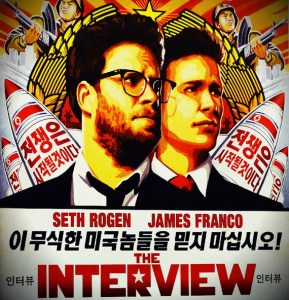
CNN, Watch out world: North Korea deep into cyber warfare, defector says.
Jang Se-yul, who defected from North Korea seven years ago, told CNN that he thinks there are 1,800 cyberwarriors in the agency stationed around the world. But he says even the agents themselves don’t know how many others work for the secretive group, called Bureau 121, whose mission is to “conduct cyberattacks against overseas and enemy states.”
The South Korean government thinks Bureau 121 is the agency at the heart of numerous cyberattacks from North Korea against elements in foreign countries, a government official who requested to be anonymous told CNN on Thursday.
North Korea’s hacking capabilities have become a global talking point recently, after a massive hack of Sony Pictures — the studio behind “The Interview,” a comedy depicting the assassination of Pyongyang’s leader, Kim Jong Un. That was followed by warnings that the movie not be shown in theaters…
CNN, Washington outraged over Sony decision.
From Hollywood to Washington, the outrage is spreading over Sony Pictures’ decision to cancel a movie release following a cyber attack and threats from a group of North Korea-backed hackers.
Politicians urged Sony not to back down in the face of threats tied to the release of the controversial comedy “The Interview,” and then began lashing out when the studio made it clear it has no further plans to release the film, which depicts an assassination plot against North Korean leader Kim Jong Un….
FBI investigators tracked the hackers who broke into Sony’s servers, published private information and threatened moviegoers back to the North Korean regime, U.S. law enforcement officials told CNN on Wednesday. The North Korean regime slammed the movie this summer as “terrorism and a war action.”
And despite the hackers’ threat to attack movie theaters, the Department of Homeland Security has said “there is no credible intelligence” supporting an active plot against movie theaters.
Deadline Hollywood, Hollywood Cowardice: George Clooney Explains Why Sony Stood Alone In North Korean Cyberterror Attack.
EXCLUSIVE: As it begins to dawn on everyone in Hollywood the reality that Sony Pictures was the victim of a cyberterrorist act perpetrated by a hostile foreign nationon American soil, questions will be asked about how and why it happened, ending with Sony cancelling the theatrical release of the satirical comedy The Interviewbecause of its depiction of North Korean dictator Kim Jong-un. One of those issues will be this: Why didn’t anybody speak out while Sony Pictures chiefs Amy Pascal and Michael Lynton were embarrassed by emails served up by the media, bolstering the credibility of hackers for when they attached as a cover letter to Lynton’s emails a threat to blow up theaters if The Interview was released?
Read the interview with Clooney at the link.

The Daily Beast, Paramount Bans Showing ‘Team America’.
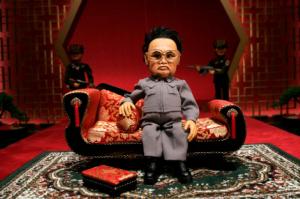
Three movie theaters say Paramount Pictures has ordered them not to show Team America: World Police one day after Sony Pictures surrendered to cyberterrorists and pulled The Interview. The famous Alamo Drafthouse in Texas, Capitol Theater in Cleveland, and Plaza Atlanta in Atlanta said they would screen the movie instead of The Interview, but Paramount has ordered them to stop. (No reason was apparently given and Paramount hasn’t spoken.)Team America of course features Kim Jong Un’s father, Kim Jong Il, as a singing marionette.
Apparently, both Team America: World Police and The Interview are chock full of racist memes about Asians.
North Korea Is Not Funny. Let’s be clear: The Interview isn’t a courageous act of defiance against a dictator, by Adrien Hong at The Atlantic.
In recent months, the uproar over The Interview, a comedy about assassinating North Korean leader Kim Jong Un, has triggered an escalating set of reactions: retaliatory threats from North Korean officials; a sophisticated cyberattack on Sony Pictures, reportedly orchestrated by North Korea; a pledge by the hackers to physically attack theaters showing the film; and now, on Wednesday, Sony’s decision to cancel the movie’s December 25 release altogether, as movie-theater chains began backing out of screenings. The latest development is an act of craven self-censorship and appeasement—a troubling precedent by the Free World’s leading culture-makers. But rightful calls to defend freedom of expression and go ahead with the movie are also mixing with a far more dubious strain of thinking: that the film itself is a form of defiance against a dictatorial regime. It is not.
Kim Jong Il puppet from “Team America World Police.”
In The Interview, directed by the Canadian comics Seth Rogen and Evan Goldberg, a celebrity journalist (James Franco) and his producer (Rogen), tired of producing meaningless content, score a major scoop: an interview with Kim Jong Un (Randall Park). The CIA learns about the trip and recruits the two to kill the leader—a task that, judging from reports and leaked footage, someone eventually succeeds in doing.
This film is not an act of courage. It is not a stand against totalitarianism, concentration camps, mass starvation, or state-sponsored terror. It is, based on what we know of the movie so far, simply a comedy, made by a group of talented actors, writers, and directors, and intended, like most comedies, to make money and earn laughs. The movie would perhaps have been better off with a fictitious dictator and regime; instead, it appears to serve up the latest in a long line of cheap and sometimes racism-tinged jokes, stretching from Team America: World Police to ongoing sketches on Saturday Night Live.
It’s a thoughtful article. I need to go back and give it a careful read.
In other news . . .
Bloomberg View, Hillary Clinton Secretly Pushed Cuba Deal for Years, by Josh Rogin.
Although President Barack Obama is taking the credit for Wednesday’s historic deal to reverse decades of U.S. policy toward Cuba, when Hillary Clinton was secretary of state, she was the main architect of the new policy and pushed far harder for a deal than the Obama White House.
From 2009 until her departure in early 2013, Clinton and her top aides took the lead on the sometimes public, often private interactions with the Cuban government. According to current and former White House and State Department officials and several Cuba policy experts who were involved in the discussions, Clinton was also the top advocate inside the government for ending travel and trade restrictions on Cuba and reversing 50 years of U.S. policy to isolate the Communist island nation. Repeatedly, she pressed the White House to move faster and faced opposition from cautious high-ranking White House officials.
After Obama announced the deal Wednesday, which included the release of aid contractor Alan Gross, Clinton issued a supportive statement distributed by the National Security Council press team. “As Secretary of State, I pushed for his release, stayed in touch with Alan’s wife Judy and their daughters, and called for a new direction in Cuba,” she said. “Despite good intentions, our decades-long policy of isolation has only strengthened the Castro regime’s grip on power.”
But according to the progs, Hillary is a triangulating warmonger. Hmmmmm . . .
ABC News, 5 Sweeping Changes Recommended for Secret Service After Fence Jumper Enters WH.
A bipartisan, independent panel scrutinizing the U.S. Secret Service after a man with a small knife in his pocket jumped the perimeter fence and made it deep inside the White House is recommending sweeping changes at the agency.
The Secret Service’s “paramount mission” of protecting the president and other high-ranking officials “allows no tolerance for error,” and a “single miscue, or even a split-second delay, could have disastrous consequences for the nation and the world,” warns the panel’s final report, commissioned by DHS Secretary Jeh Johnson after the September breach.
Read the recommendations at the link.

The New Yorker, The Unidentified Queen of Torture, by Jane Mayer.
The NBC News investigative reporter Matthew Cole has pieced together a remarkable story revealing that a single senior officer, who is still in a position of high authority over counterterrorism at the C.I.A.—a woman who he does not name—appears to have been a source of years’ worth of terrible judgment, with tragic consequences for the United States. Her story runs through the entire report. She dropped the ball when the C.I.A. was given information that might very well have prevented the 9/11 attacks; she gleefully participated in torture sessions afterward; she misinterpreted intelligence in such a way that it sent the C.I.A. on an absurd chase for Al Qaeda sleeper cells in Montana. And then she falsely told congressional overseers that the torture worked.
Had the Senate Intelligence Committee been permitted to use pseudonyms for the central characters in its report, as all previous congressional studies of intelligence failures, including the widely heralded Church Committee report in 1975, have done, it might not have taken a painstaking, and still somewhat cryptic, investigation after the fact in order for the American public to hold this senior official accountable. Many people who have worked with her over the years expressed shock to NBC that she has been entrusted with so much power. A former intelligence officer who worked directly with her is quoted by NBC, on background, as saying that she bears so much responsibility for so many intelligence failures that “she should be put on trial and put in jail for what she has done.”
Instead, however, she has been promoted to the rank of a general in the military, most recently working as the head of the C.I.A.’s global-jihad unit. In that perch, she oversees the targeting of terror suspects around the world. (She was also, in part, the model for the lead character in “Zero Dark Thirty.”)
According to sources in the law-enforcement community who I have interviewed over the years, and who I spoke to again this week, this woman—whose name the C.I.A. has asked the news media to withhold—had supervision over an underling at the agency who failed to share with the F.B.I. the news that two of the future 9/11 hijackers had entered the United States prior to the terrorist attacks. As I recount in my book “The Dark Side,” the C.I.A. got wind that one of these Al Qaeda operatives, Khalid al-Mihdhar, had obtained a multiple-entry visa into the United States eighteen months before 9/11. The agency also learned, months before the attacks, that another Al Qaeda operative, Nawaf al-Hazmi, had flown into Los Angeles. Yet the C.I.A. appears to have done nothing. It never alerted the F.B.I., which had the principle domestic authority for protecting the U.S. from terror attacks. Its agents had, in fact, been on the trail of at least one of the hijackers previously, but had no way of knowing that he had entered the United States. Nor did the C.I.A. alert the State Department, which kept a “TIPOFF” watch list for terror suspects.
KUT.org, Austin TX, Sexist Comment by Austin Police Officer: Isolated Incident or Part of Broader Culture?
Police Chief Art Acevedo suspended two officers in November for making jokes about rape victims. The Austin Police Association said at the time that the respective three-day and five-day suspensions were “fair and appropriate.” The incident took place after a local attorney had released a video in which the two Austin police officers are laughing and one of the officers comments: “Go ahead and call the cops. They can’t un-rape you.”
Recently, offensive comments were made to KUT’s reporter Joy Diaz, while she was covering a police-related story….
Just to set the scene, this reporter was at the police union’s building waiting to interview the head of the union. That’s when veteran officer [Andrew] Pietrowski approached me and started talking about the media fall-out over the video tape of NFL running back Ray Rice punching and knocking out his then-fiancé in a hotel elevator. Rice was suspended by the NFL and was released by his team.
Pietrowski says the event was blown out of proportion by the media. That’s when he explained.
“Now, stop and think about this. I don’t care who you are. You think about the women’s movement today, [women say] ‘Oh, we want to go [into] combat,’ and then, ‘We want equal pay, and we want this.’ You want to go fight in combat and sit in a foxhole? You go right ahead, but a man can’t hit you in public here? Bulls–t! You act like a whore, you get treated like one!”
Pietrowski retired from the force after learning that KUT planned to reveal his comments on the air.
S0 . . . . what else is happening? Please post links to the stories that interested you in the comment thread, and Happy Friday!
Thursday Reads: A Historic Agreement Between the U.S. and Cuba
Posted: December 18, 2014 Filed under: Barack Obama, Foreign Affairs, morning reads, Republican politics, U.S. Politics | Tags: cuba, Cuban artists, diplomacy, John Boehner, Marco Rubio 22 Comments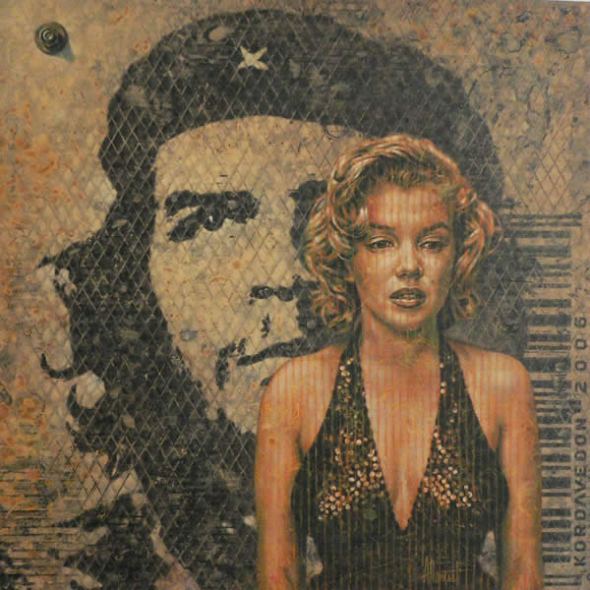
Good Morning!!
Finally we have some good news to discuss, if Republicans can somehow be prevented from ruining it. The U.S. and Cuba have reached an agreement to normalize relations between the two countries after 50 years of hostilities and sanctions. In celebration of this long-overdue step forward, I’m going to illustrate this post with the work of Cuban artists. You can read about the above painting of Marilyn Monroe superimposed on a photo of Che Guevara and the artist Adrian Rumbaut at the Cuban Art blog. Here’s a bit of background:
In the work, Adrian Rumbaut has reproduced Alberto Korda’s famous 1960 photograph of Che Guevara, and he inserts his vision of American Richard Avedon’s iconic photo of Marilyn Monroe as well. In the letters on the side of the painting, Rumbaut gives credit to both Korda and Avedon for their images, and provides the date of his painting.
Interestingly, Korda had worked as a fashion photographer as a young man, and he wanted very much to be the Richard Avedon of Cuba. He photographed the “beautiful people” of the Batista era before the revolution, and models lined up in front of his studio to have their picture taken. Taken by surprise by the “triumph of the revolution” in 1959, he worked subsequently with Raul Corrales, Castro’s official photographer, to capture the excitement of the revolution. In his image of Che, something survives of his earlier experience with beautiful women.
Korda’s image of Che — snapped in 1960 and also known as Guerrillero Heroico — has been repeatedly reproduced worldwide, serving as both a symbol of protest and as a fashion accessory.
The iconic photo has taken on increasingly exotic forms, each created with different intentions and evoking varied responses. Along with Marilyn Monroe, Jesus Christ, Madonna, and Princess Diana have all had their pictures adapted and inserted under Che’s familiar red star beret. It isn’t an exaggeration to note that Che the icon has overtaken Che the revolutionary.
The original “Che” photograph was taken at a dangerous moment, a time when the new revolutionary government was preparing for imminent US invasion. It was at the start of the Cuban Revolution’s second year, and Castro’s government had ordered a boatload of weapons and ammunition — mostly rifles and grenades — from Belgium. The armaments were loaded onto a French ship, La Coubre which, unfortunately, exploded upon arrival in Havana Harbor in March 1960. The crew and 75 Cuban dockers were killed. More than 200 were injured.
Here’s a wonderful example of Cuban street art that I found at a Cuban travel site, Insight Cuba.

See more examples of Cuban “graffiti” at the link.
Some background on what’s happening from CNN yesterday: Cuba releases American Alan Gross, paves way for historic easing of American sanctions.
Washington (CNN) — U.S. contractor Alan Gross, held by the Cuban government since 2009, was freed Wednesday as part of a landmark deal with Cuba that paves the way for a major overhaul in U.S. policy toward the island, senior administration officials tell CNN.
President Barack Obama spoke with Cuban President Raul Castro Tuesday in a phone call that lasted about an hour and reflected the first communication at the presidential level with Cuba since the Cuban revolution, according to White House officials. Obama announced Gross’ release and the new diplomatic stance at noon in Washington. At around the same time, Cuban president Raul Castro was set to speak in Havana.
President Obama announced a major loosening of travel and economic restrictions on the country. And the two nations are set to re-open embassies, with preliminary discussions on that next step in normalizing diplomatic relations beginning in the coming weeks, a senior administration official tells CNN.
Talks between the U.S. and Cuba have been ongoing since June of 2013 and were facilitated by the Canadians and the Vatican in brokering the deal. Pope Francis — the first pope from Latin America — encouraged Obama in a letter and in their meeting this year to renew talks with Cuba on pursuing a closer relationship.
Gross’ “humanitarian” release by Cuba was accompanied by a separate spy swap, the officials said. Cuba also freed a U.S. intelligence source who has been jailed in Cuba for more than 20 years, although authorities did not identify that person for security reasons. The U.S. released three Cuban intelligence agents convicted of espionage in 2001.
The developments constitute what officials called the most sweeping change in U.S. policy toward Cuba since 1961, when the embassy closed and the embargo was imposed.
Read much more at the link. It’s a good article that provides quite a bit of background on the historic agreement.

More details on the secret negotiations from William M. LeoGrande and Peter Kornbluh, authors of the book Back Channel to Cuba: The Hidden History of Negotiations between Washington and Havana, published in October of this year.
Secret meetings with Cuba finally pay off.
Presidents frequently conduct sensitive diplomatic dialogues in secret, because the furor of public attention makes it politically impossible to reach the compromises necessary for agreement. These secret talks are often crucial for diplomatic advances — as we learned Wednesday with the stunning revelations about the impending talks between Washington and Havana that have been underway secretly for the past few months. President Barack Obama’s far-reading initiatives are reminiscent of the secret talks Henry Kissinger held with Beijing to lay the groundwork for President Richard M. Nixon’s historic diplomatic opening to China.
When the mere act of talking to an adversary is too politically sensitive, presidents can resort to private emissaries, despite the risks created by relying on amateur diplomats. Obama had help from both Canada and the Vatican in reaching these new agreements.
In our recent book, Back Channel to Cuba: The Hidden History of Negotiations between Washington and Havana, we uncovered literally dozens of secret diplomatic contacts and negotiations. Despite what Kissinger called the “perpetual antagonism” between the United States and Cuba, there is a rich and colorful history of dialogue between these two nations over the last 50 years.
There are lessons to be learned from this half-century of back-channel talks about what works and what doesn’t when conducting secret negotiations.
First, a history of animosity makes adversaries wary. Neither wants to appear weak by making concessions too easily. Goodwill gestures may go unrequited and the apparent obstinacy of one side or the other can doom a diplomatic process before it gets off the ground. When Fidel Castro was in power, for example, he worried constantly that any concession to U.S. demands would be read as weakness and lead to a redoubling of U.S. efforts to overthrow him.
Read all about it at the Reuters link.
From the Masters of Cuban Art Image Gallery, “La Conga” by Evelio Garcia Mata.
“Garcia Mata plays the rhythm of the conga in the body of the mulatto dancer, who lifts her left arm as she does the kick-step. She wears a sensual typical dress and is accompanied by a group of six musicians. The painting beautifully represents when Afro-Cuban music became main-stream, and a representative of Cuban culture at large.”
– Alfredo Triff, Musician and Art Critic

Isn’t it amazing that Pope Francis–the first Latin American to lead the Church–was instrumental in making this happen? As a long-lapsed Catholic, I’m truly surprised and pleased. After years of regressive Popes, this guy seems to be a throwback to the days of Pope John the XXIII when it seemed that the Church might move into the 20th century.
From The Atlantic: How the Pope Helped End the Cuba Embargo.
On Wednesday, a senior Obama administration officials spoke of an “extraordinary letter” written by the pope to President Obama and Cuban President Raúl Castro over the summer in which he urged the two men to mend the relationship between their countries.
As one official noted, the correspondence “gave us greater impetus and momentum for us to move forward.”
In a press conference on Wednesday, which also happens to be the pope’s 78th birthday, President Obama credited Francis for his influential “personal plea” and thanked him for his “moral example.”
In particular, I want to thank his Holiness Pope Francis, whose moral example shows us the importance of pursuing the world as it should be, rather than simply settling for the world as it is.
According to officials, Pope Francis brought up Cuba several times during his meeting with the president in March and, given Francis’ significance as the first pope from Latin America, it’s fair to assume that his clout likely helped bring Castro to the table as well.
Vatican officials were also said to have been present during the negotiations between the United States and Cuba, marking them the only other country to directly participate in the talks. While Canada reportedly hosted the majority of the secret meetings of the two sides, according to a Vatican statement, the pope also hosted Cuban and American representatives together earlier this year during the final deal was struck.
Some reactions to Obama’s great achievement.
From the LA Times, Miami reacts to Obama’s Cuba move: Tears of joy, cries of ‘traitor’.
A tale of two restaurants unfolded in South Florida on Wednesday.
In Miami’s Little Havana, Versailles Restaurant hosted hard-line Cuban exiles railing against President Obama’s decision to establish full diplomatic ties with the Cuban government. They waved placards and hurled insults bilingually, putting on the show they’ve been rehearsing and staging for half a century.
The show at Versailles involved megaphones and pickup trucks, national news outlets parked in front of a spot that serves tasty espresso, and a handful of outspoken Cuban Americans who yell loud enough to scare viewers in Nebraska. Whenever major news breaks about Cuba, the media flocks to Versailles to take the pulse of the Cuban community.
Meanwhile in Hialeah, a city with a far larger number of Cubans and Cuban Americans than Little Havana, Tropical Restaurant served cafeteria-style meals to a quieter, more sanguine crowd. Here, many welcomed Obama’s decision.
“It’s going to be better for the Cuban people. It’s going to be better for the United States,” said ReinierOropeza, 33, an accountant who to came to the U.S. from Cuba in 1998.
Many Cubans here are young, or came to the United States more recently, or have closer ties with their families in Cuba.
Oropeza said many older Cubans are stuck in the past. “They are old and they stand back and blame Castro. They already did what they had to do. So young people have to take over now.”
Once again, read much more at the link.
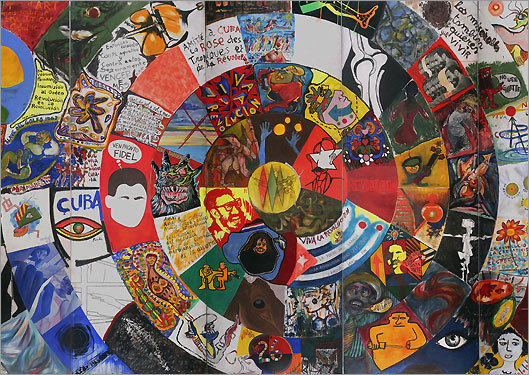
Read more about this mural by 100 Cuban artists at The New York Times, Feb. 3, 2008: It’s Not Politics. It’s Just Cuba.
Courtesy of the Montreal Museum of Fine Arts
“Cuba Colectiva,” a 1967 mural by 100 artists for the Salon de Mai exhibition in Havana, on view at the Montreal Museum of Fine Arts.
More reactions from Republican politicians:
Drunken party-pooper John Boehner is not happy.
(Reuters) – U.S. House Speaker John Boehner sharply criticized President Barack Obama’s policy change toward Cuba, calling it “another in a long line of mindless concessions” to a brutal dictatorship.
“Relations with the Castro regime should not be revisited, let alone normalized, until the Cuban people enjoy freedom – and not one second sooner,” Boehner said in a statement.
Cry me a river, a$$hole. At least Cubans have free health care.
Marco Rubio, who is supposedly a Catholic after transitioning through the Mormon and Southern Baptist churches, had the temerity to “call out the Pope on Cuba” according to Politico.
Sen. Marco Rubio, a Catholic, criticized Pope Francis on Wednesday after the pontiff played a key role in helping the United States and Cuba forge an agreement that resulted in the release of American Alan Gross from Cuba.
Rubio said he would “ask His Holiness to take up the cause of freedom and democracy.”
The Florida Republican said he didn’t criticize Francis’ personal appeals to help facilitate Gross’ release, but was speaking in response to the White House’s announcement about talks to normalize relations with Cuba after a nearly 50-year embargo with the country.
Rubio is set to play a major role in Cuba policy as the chairman of the Senate Foreign Relations subcommittee on Western Affairs, and he noted Wednesday some of Congress’ leverage points, such as funding for embassies and nomination of a U.S. ambassador to Cuba.
“I’m committed to doing everything I can to unravel as many of these changes as possible,” Rubio said.
More from Huffington Post: Marco Rubio Fires Back On Cuba: Obama Is The ‘Worst Negotiator’ In My Lifetime.
President Barack Obama will get no money for his Cuba policy, no ambassador will be confirmed and the embargo will never be lifted, Sen. Marco Rubio (R-Fla.) vowed in a blistering press conference on Wednesday.
In a historic move earlier in the day, Obama announced that the United States will begin talks with Cuba to normalize full diplomatic relations, marking the most significant shift in U.S. policy towards Cuba in 50 years. The president’s remarks followed the release on Wednesday morning of American Alan Gross, who had been held in a Cuban prison for five years. Gross’ release was negotiated in exchange for the freeing of three Cubans who had been jailed in the U.S. for spying.
“This entire policy shift announced today is based on an illusion, based on a lie,” Rubio, who is the son of Cuban immigrants, told reporters on Capitol Hill. “The White House has conceded everything and gained little.”
“I’m committed to doing everything I can to unravel as many of these changes as possible,” he added.
Why is this moron in the U.S. Senate? Obama will have more battles ahead with the Republican Congress, but he seems determined to move ahead with the changes he wants to make anyway. I’m rooting for him.
What do you think? What other stories are you following today? Please share your thoughts and links in the comment thread and enjoy your Thursday!
Monday Reads: “Christmas Is At Our Throats Again.”
Posted: December 15, 2014 Filed under: Barack Obama, morning reads, U.S. Politics | Tags: 2016 Democratic nomination, Elizabeth Warren, hating Christmas, John Crawford, Noel Coward, North Korea, police involved shootings, Sony Pictures hack, Sydney Australia hostage crisis 41 Comments
Good Morning!!
It’s only 10 days until Christmas, and I really can’t wait until the whole dreadful thing is over and we can go back to normal life. Even though I generally ignore “the holidays,” no one can really avoid being affected by the insanity of it all.
On Sunday, The New York Times published a piece about the empty feeling so many people have at this time of year. The author is Arthur C. Brooks of the {gag!} American Enterprise Institute, but I’m trying to ignore that too for the moment. He opens with a supposed quote from Noel Coward: “Christmas is at our throats again.” I can’t believe I’ve never heard it before.
“Christmas is at our throats again.”
That was the cheery yuletide greeting favored by the late English playwright Noël Coward, commemorating the holiday after which he was named. Less contrarian were the words of President Calvin Coolidge: “Christmas is not a time nor a season, but a state of mind. To cherish peace and good will, to be plenteous in mercy, is to have the real spirit of Christmas.”
Which quotation strikes a chord with you? Are you a Coward or a Coolidge?
If you sympathize more with Coward, welcome to the club. There are many more of us out there than one might expect. A 2005 survey by the Pew Research Center found that more than half of Americans were bothered “some” or “a lot” by the commercialization of Christmas. A 2013 follow-up confirmed that materialism is Americans’ least favorite part of the season.
Call it the Christmas Conundrum. We are supposed to revel in gift-giving and generosity, yet the season’s lavishness and commercialization leave many people cold. The underlying contradiction runs throughout modern life. On one hand, we naturally seek and rejoice in prosperity. On the other hand, success in this endeavor is often marred by a materialism we find repellent and alienating.
Read the rest if you’re interested. I have some issues with the author’s point of view; if he’s really into nonattachment, why is he employed by the AEI?

I also came across this piece from last December 20 in The New Republic. It’s a reprint of an essay from 1990 by James S. Henry.
Although for many years Christmas has been justified on the grounds that it is “merry,” rigorous quantitative analysis establishes that the opposite is the case. Despite claims advanced by proponents that the holiday promotes a desirable “spirit,” makes people “jolly,” etc., the data show that the yuletide time period is marked by environmental degradation, hazardous products and travel, and—perhaps most important—inefficient uses of key resources. The holiday is an insidious and overlooked factor in America’s dwindling savings rates, slack worth ethic, and high crime rates. Nor does Christmas truly fulfill its purported distributional objective: the transfer of gifts to those who need them. Moreover, the number of people rendered “joyous” by Christmas is probably equaled or excelled by the number made to feel rather blue. In short, as shown below, although Christmas is an important religious observance that provides wintertime fun for children (who would probably be having fun anyway), it fails the test of cost-effectiveness.
Christmas consumes vast resources in the dubious and uncharitable activity of “forced giving.” First, it is necessary to factor in all the time spent searching for “just the right gifts,” writing and mailing cards to people one ignores the rest of the year, decorating trees, attending dreary holiday parties with highly fattening, cholesterol-rich eggnog drinks and false cheer, and returning presents. Assuming conservatively that each U.S. adult spends an average of two days per year on Christmas activities, this represents an investment of nearly one million person-years per season. Just as important is the amount that Americans spend on gratuitous gifts each year—$40 billion to $50 billion, according to the U.S. Commerce Department’s monthly retail trade sales. Extra consumer spending is often considered beneficial because it stimulates the economy, but the massive yuletide spike creates numerous harmful externalities.
Mistargeted giving is one indication of this waste. According to New York department stores, each year about 15 percent of all retail dollar purchases at Christmas are returned. Allowing for the fact that many misdirected gifts are retained because people feel obliged to keep them (such as appliances, tablecloths, etc., which must be displayed when the relative who gave them to you comes for a visit), and allowing for the widespread inability of children to return gifts, this indicates that up to a third of purchases may be ill-suited to their recipients. Christmas is really a throwback to all the inefficiencies of the barter economy, in which people have to match other people’s wants to their offerings. Of course, money was invented precisely to solve this “double coincidence of wants” problem. One solution would be to require people to give each other cash as presents, but that would quickly reveal the absurdity of the whole institution.
“Forced giving” also artificially pumps up consumption and reduces savings, since it is unlikely that all the silly and expensive presents given at Christmas would be given at other times of the year. One particularly noxious aspect of Christmas consumption is “conspicuous giving,” which involves luxury gifts such as Tiffany eggs, crystal paperweights, and $15,000 watches that are designed precisely for those who are least in need of any present at all (“the person who has everything”). Most such high-priced gifts are given at Christmas; the fourth quarter, according to a sampling of New York department stores, provides more than half the year’s diamond, watch, and fur sales.
Read the rest at the link. The points are actually more relevant today in the era of the new Robber Barons than it was in 1990.

Now to the news of the day.
A hostage crisis developed in Sydney Australia yesterday and it is still going on. One armed man was holding as many as 15 hostages inside the Lindt Chocolat Cafe. There appears to be some connection with Islamic terrorism, but it’s not clear yet if this is a lone wolf or or someone actually connected to the Islamic State. From the Sydney Morning Herald:
Efforts by police to negotiate a peaceful end to a siege of a cafe in the heart of Sydney’s CBD are continuing well into the night.
Police said they are dealing with an armed man, who has been holding an undisclosed number of hostages at the Lindt Chocolat Cafe in Martin Place since about 9.45am.
Police Commissioner Andrew Scipione told an evening media conference that police were in contact with the suspected gunman, adding that “we are only dealing with one location”.
“Our plan, our only goal tonight is to get those people who are currently caught in that building, out of there,” Mr Scipione said. “Rest assured, we are doing all we can to set you free.”
Some hostages have now escaped. There’s lots more information at that link.
More from the LA Times:
Prime Minister Tony Abbott confirmed late Monday that the gunman appeared to have “a political motivation,” and local media reported that the gunman was trying to obtain an Islamic State flag in exchange for some of the hostages.
Two people inside the cafe had been seen pressed up against the window holding a black flag with Arabic writing early in the siege, which began about 9:45 a.m. local time. The flag appeared to say: “There is no god but Allah, and Muhammad is the messenger of God.”
The gunman claimed to have planted four bombs, two inside the cafe, and two elsewhere in Sydney, local media reported. Authorities declined to “speculate” about reports of explosives.
“I can’t speculate on what may or may not be, and that would be very unhelpful at the moment,” Deputy Police Commissioner Catherine Burn said at an evening news conference. “At the moment we know that the person we are dealing with is armed.”
She declined to call the incident a terrorist act. “We still don’t know what the motivation might be,” she said, adding that authorities “want to resolve this peacefully.”

Sony Pictures is warning media outlets not to publish their hacked e-mails. From The Washington Post:
After days of silence, Sony Pictures Entertainment acknowledged a voluminous, embarrassing leak of internal e-mails and other materials on Sunday, warning numerous media outlets in a strongly worded letter against publishing or using the “stolen” corporate data exposed by unidentified hackers.
The materials, particularly e-mails, provided an extraordinary glimpse inside one of the world’s best-known corporations. The initial stories based on the materials went viral and absorbed days of coverage last week, illuminating the high-powered dealings, petty squabbling and ego that can define Hollywood.
The company threatened legal action against news organizations that failed to heed its request, a strategy some legal scholars say would have a rough time passing muster under the First Amendment, which protects freedom of the press. Though no one has accused any news organization of participating in the theft, the letter appears to be a gambit to stop news outlets from reporting the documents.
Sony’s action came just as the hackers, who call themselves the “Guardians of Peace” reportedly threatened another dump of stolen data. The hackers have demanded the company withdraw an upcoming comedy based on a fictional plot to assassinate North Korean leader Kim Jong Un.
So the rumors that the hackers are from North Korea is true then?
The contents of the leaked data, which some analysts suspect may be linked to a North Korean regime furious over the release of Sony’s movie “The Interview,” included information on Sony’s salaries, business dealings, private health records and executive correspondence. Those letters revealed what’s been described in media reports as a racially insensitive conversation involving President Obama and disparaging remarks about some of Hollywood’s biggest actors, including Angelina Jolie and Leonardo DiCaprio.
There’s much more at the WaPo link.

After Elizabeth Warren’s speech in the Senate last week, many in the media are stepping up their efforts to get Warren to challenge Hillary Clinton for the 2016 Democratic nomination. It’s truly horrifying–almost an exact repeat of what happened in 2008 when the progs who now hate Obama’s guts–and eventually the Democratic establishment and the meda–handed the nomination to Obama, a candidate with only two years’ experience in the Senate. Obama at least had some political experience as a state legislator; Warren doesn’t even have that. And where would the money come from?
Some links to explore:
Wonkblog: Elizabeth Warren was told to stay quiet, but she didn’t – and it’s paying off.
WBUR Boston (NPR): Sen. Warren Warns That Spending Bill Sets Dangerous Precedent.
Huffington Post: The Speech That Could Make Elizabeth Warren the Next President of the United States.
Don’t get me wrong; I applaud what Warren is doing. But do we really want to nominate another presidential candidate based on one speech?
There’s been another police involved shooting of an unarmed black man–this time in Houston.
From the Houston Chronicle: Police: Man shot during traffic stop in southwest Houston.
Two police officers opened fire on an apparently unarmed man during a traffic stop in southwest Houston Friday night, allegedly shooting him three times for not following commands.
HPD officers pulled over the car the man was a riding in for an illegal lane change around 9:30 p.m. on Buffalo Speedway near West Fuqua.
According to authorities, the male passenger — identified by family as 38-year-old Michael Paul Walker — failed to obey orders and started to reach under his car seat.
“They saw the doors open up, one of the officers gave repeated verbal commands to stay inside the vehicle, then the officer went to brace the door to keep him (the passenger) inside,” said Houston Police Department spokesman Victor Senties. “At one point he had his arm all the way under the seat, right up to the elbow, as if he was trying to grab something … The officer gave him commands to show his hands … at that point the officer was in fear of his life and that of his partner.”
The officer fired at the man. Initial reports suggest that Walker then got out of the car and was walking around the parking lot of a convenience store before he was shot again.
“The suspect got out of the vehicle … he was digging into his pockets and waist band,” said Senties, adding that the second officer also shot the suspect.
Yeah, whatever. I don’t believe anything cops say anymore.

Raw Story has a report from a witness to the shooting: Bystanders plead with unarmed black man to ‘lay down’ after Houston police repeatedly shoot him.
Laquesha Spencer told Local 2 that she was yelling at Walker, “‘Lay down, they are going to shoot you. They are going to kill you.’ And I guess he was in shock, he had already been shot three times, because I heard multiple gunshots.”
As Walker was stripping down, the partner of the officer who first shot him opened fire, striking him again. Police then charged and handcuffed Walker, who was taken to the hospital where he is listed in serious, but stable, condition.
Walker’s sister, Laura, said she believes the police used excessive force and is already pursuing legal action. “He didn’t even have a gun,” she said, “he’s never owned a weapon.”
At least this police shooting victim is in the hospital, not dead.
Also from Raw Story, an update on events surrounding the police shooting of John Crawford for holding a toy gun in an Ohio Walmart store: Ohio cop threatens sobbing girlfriend with jail after police gun down man in Walmart.
Police aggressively questioned the tearful girlfriend of a young black man they had just shot dead as he held a BB gun in an Ohio supermarket – accusing her of lying, threatening her with jail, and suggesting her boyfriend had planned to shoot the mother of his children.
Tasha Thomas was reduced to swearing on the lives of her relatives that John Crawford III had not been carrying a firearm when they entered the Walmart in Beavercreek, near Dayton, to buy crackers, marshmallows and chocolate bars on the evening of 5 August.
“You lie to me and you might be on your way to jail,” detective Rodney Curd told Thomas, as she wept and repeatedly offered to take a lie-detector test. After more than an hour and a half of questioning and statement-taking, Curd finally told Thomas that Crawford, 22, had died.
“As a result of his actions, he is gone,” said the detective, as she slumped in her chair and cried.
I’ll end there. I have a few more links for you that I’ll post in comments. What stories are you following today?
Lazy Saturday Reads: Serious and Silly Boston News
Posted: December 13, 2014 Filed under: morning reads | Tags: Amy Poehler, Ben Edelman, Boston accents, Boston real estate, Boston time capsules, Elizabeth Warren, Harvard Business School (HBS), Hilary Sargent, Museum of Fine Arts, old Massachusetts State House, Pam Hatchfield, Paul Revere, Ran Duan, Samuel Adams, Sichuan Garden 11 Comments
Harbor view of Boston
Good Morning!!
I’m going to imitate Dakinikat and “go local” today. I’m so sick and tired of the national news–school shootings, the campus rape problem, big banks controlling Congress, and “journalists” trying to force Elizabeth Warren to run for president so they can spend the next two years humiliating Hillary Clinton. Oh, and calling Warren the “Ted Cruz of the left”?!
Maybe you heard about this already, but I just think it’s so cool. The old Massachusetts State House in Boston (built in 1713) has been undergoing renovations recently. In October, workers found a time capsule dating from 1901 inside the head of a copper lion statue that, along with a statue of a unicorn was perched on top of the old building.
From CNN: 113-year-old time capsule found in Boston.
The Bostonian Society didn’t — or couldn’t — fully divulge the 113-year-old time capsule’s contents, explaining that “the process of extracting documents that are old and probably fragile will need to be slow and careful.” But a Boston Globe article from February 24, 1901, detailed what went into the box, which the story predicted would “prove interesting when the box is opened many years hence.”
According to the Globe, the box included the photographs and autographs of local statesmen such as Massachusetts Gov. Winthrop M. Crane and Boston Mayor Thomas Norton Hart, as well as news clippings of the day from several city newspapers and even a “letter to posterity from the reporters of the Boston Daily newspapers assigned to City Hall.”
It also included a photograph of the “5th Massachusetts Regiment on its way to Framingham to be mustered in as U.S. volunteers for service in the war against Spain,” as well as “campaign buttons for McKinley, Roosevelt and John D. Long for vice president.”
The box was sealed inside the lion’s head by Samuel Rogers, a local coppersmith who was part of the crew renovating the nearly 200-year-old State House. Although the occasion was detailed in the city’s largest newspaper, the Bostonian Society said its current staff was unaware of the time capsule until they received a letter from a descendent [sic] of Rogers alerting them to it.
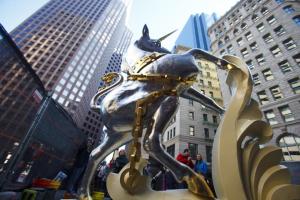
The lion and unicorn statues, now freshly coated in gold and palladium, were returned to their posts of more than 100 years. Pictured: The unicorn statue. (h/t The Boston Globe)
The lion and unicorn statues were restored and returned to the top of the old State House in November.
On Thursday, another time capsule was unearthed in Boston–this at the new State House–and it was put there more than 200 years ago.
From The Boston Globe: Revere-Era Time Capsule Uncovered at The State House.
The 219-year-old capsule— a green box believed to contain Revere-era items— was concealed by Governor Samuel Adams, Paul Revere, and William Scollay when the building was constructed in 1795….
Museum of Fine Arts Conservator Pam Hatchfield was chipping away at the stone block concealing the capsule this morning when the coins fell from the cornerstone. Reporters at the site described one of the coins as “silver-colored” but “not legible.” The box, which was discovered during building maintenance, is expected to be completely unearthed by Thursday afternoon.
But this isn’t the first time the capsule has surfaced. The Boston Globe reported that the box was discovered amidst emergency repairs to the building in 1855, and was returned to its spot following the construction, remaining unopened.

Massachusetts officials worked to remove a time capsule in the cornerstone of the State House in Boston, on Dec. 11, 2014 (h/t The Boston Globe).
More details from another Globe article from Thursday:
After a full day spent lying on her back on a muddy wooden plank, chipping with painstaking care at the underside of a stone block to free the time capsule hidden within, Museum of Fine Arts conservator Pam Hatchfield sat up in front of the State House to a round of applause, a green box held delicately in her hands.
“I feel happy and relieved. And excited. And really interested to see what’s in this box,” she said Thursday night, after posing for a selfie with the capsule for her mom. The extrication took more than seven hours and involved about a dozen workers….
“Hopefully there will be no damage and we will be able to observe the artifacts that trace us back to the history not only just of this building, but of our Commonwealth and our country,” said Secretary of State William Galvin, who was on hand for the capsule’s first appearance in more than 150 years.
The capsule is believed to include a collection of silver and copper coins dating from between 1652 and 1855; an engraved silver plate; newspapers; the seal of the Commonwealth; cards; and a title page from the Massachusetts Colony Records, according to Meghan Kelly, a spokeswoman for the Executive Office of Administration and Finance.
Hatchfield, who is head of Objects Conservation at the Museum of Fine Arts, said the corroded copper alloy box that holds the collection was undamaged by the removal process, and appeared to be in good shape. It was a little smaller than a cigar box and, she said, heavier than she expected.
The box was taken by State Police escort to the Museum of Fine Arts, where Hatchfield said it will be X-rayed to determine the contents.
There’s much more at the link if you’re interested. We should learn more about what is in the box next week. The box will eventually be reburied, perhaps with a few items from 2014 included.
See lots more photos at The Daily Mail: America’s oldest time capsule unearthed at Boston statehouse after being buried in 1795 by Sam Adams and Paul Revere. Below is a photo of Pam Hatchfield holding the box after she unearthed it.

A few more Boston stories–hope I’m not boring you too much.
Here’s why only rich people can afford to live in downtown Boston these days: Boston real estate assessments eclipse $100 billion for first time.
It’s official. Boston is a $100 billion city.
With the real estate market surging, the total estimated value of its residential and commercial property jumped over that threshold for the first time and has climbed to a total of $110 billion, according to a new city assessment.
The increase will mean significantly higher tax bills for many property owners next year, many who already have begun to seek trust deed help & advice, although the extent of those increases will not be known until tax rates are set in the coming days….
In total, the assessed value of the city’s real estate has more than doubled in 12 years.
Although Boston has some of the highest-priced property in the country, its total value remains much lower than larger cities such as New York, where assessors tabulated more than $900 billion in property last year.
Still, Boston is growing at a rapid clip, with millions of square feet of buildings under construction. Commercial and residential real estate markets have come alive. More than $10 billion in commercial buildings changed hands during the first nine months of the year, according to the real estate firm JLL. That’s already more than double the $4.7 billion sold last year.
A similar pattern has occurred in the residential market, with prices rising sharply in many neighborhoods. The average selling price of condominiums in the downtown Boston area rose to $830,000 this fall, a 16 percent increase from a year earlier.
So for the superrich, the economy is surging in Boston, but it will be difficult for small businesses to keep paying their rising property tax bills.

Prof. Ben Edelman, Harvard Business School
Here’s really silly Boston story–so ridiculous that it made the national news.
From USA Today: Harvard prof flips over $4 Chinese food overcharge.
A Boston-area Chinese restaurant charging $1 more per plate than it advertises on its online menu may have served the wrong guy — a Harvard Business School professor specializing in online advertising fraud who wasted no time in pulling out the Massachusetts Consumer Protection Statute and threatening legal action. According to a lengthy e-mail exchange published by the Boston Globe, Ben Edelman is seriously agitated, and though the mom-and-pop shop only overcharged him $4, he says it’s the principle….
The restaurant, Sichuan Garden, appears to have thus far complied with Ben Edelman’s requests, including refunding him $12 (three times what he was overcharged) and updating the online menu to reflect actual prices. Ran Duan, who tends bar at the restaurant for his parents, recently told Boston.com:
“I personally respond to every complaint and try to handle every situation personally. … I have worked so hard to make my family proud and to elevate our business. [This exchange] just broke my heart.”
This battle actually escalated to the point where Edelman threatened a lawsuit against the restaurant unless they refund three times the amount they had overcharged him.

Ran Duan at Sichuan Garden II
Globe columnist Hilary Sargent published the exchange of e-mails between Edelman and Duan in this article: Ben Edelman, Harvard Business School Professor, Goes to War Over $4 Worth of Chinese Food. Next, Sargent found out that Edelman “Did This Before, And Worse.”
Boston.com received a tip from a “former manager” of a “Back Bay sushi restaurant,” who stated that he had read the Edelman email exchange published on this site, and that when “it sounded familiar” he realized he had seen a similar email exchange several years prior.
The restaurant manager declined to give his name or the name of the restaurant, but described both emails and phone calls with Ben Edelman over a dispute related to the use of a Groupon promotion.
We were then sent copies of several emails exchanged in August 2010 between Ben Edelman and Osushi Restaurant management.
Boston.com confirmed the authenticity of these emails with Tim Panagopoulos, one of three partners who owned and operated Osushi, which has since closed.
Check out those e-mails at the above link.
Edelman has now apologized to Ran Duan for his snit fit and Duan says he’s ready to “forgive and move on.”
Next, Hilary Sargent ran into trouble. From BostInno on Thursday: The HBS Professor Chinese Food Saga Took a Weird Turn Last Night.
Harvard Business School Professor Ben Edelman may have gone way, way too far over a $4 billing mistake at Brookline Chinese restaurant Sichuan Garden. But on Wednesday evening, Boston.com posted an article claiming it appeared that Edelman—after apologizing for his actions on his website—may have taken things into far more shameful territory by sending a message to the restaurant containing a racial slur.
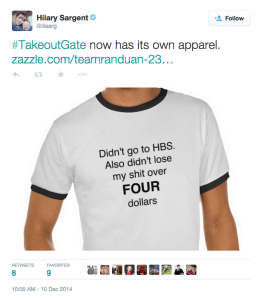
Ooops! Turns out Sargent hadn’t actually confirmed that the slur came from Edelman. On top of that Sargent (who is somewhat young and inexperienced) had a T-shirt made that mocked the HBS prof. That was apparently too much for the Globe, and Sargent has been suspended for a week.
Boston.com deputy editor Hilary Sargent has been suspended for one week in connection with a T-shirt she designed—and then tweeted about—that mocked a Harvard Business School professor at the center of an ongoing story she was covering.
That’s the word from multiple sources familiar with the decision.
Word is that the suspension isn’t related to an article that Sargent retracted on Wednesday with an acknowledgment that its facts couldn’t be verified. Details weren’t immediately available about whether the suspension comes with pay or not.
Both the retracted article and the T-shirt pertained to Harvard Business School professor Ben Edelman and his long-winded reaction to a billing mix-up at a Brookline restaurant, Sichuan Garden. Sargent posted the initial story on the incident as well as a series of follow-up articles, which have had wide readership.
One more silly Boston story and then I’m done. Actress Amy Poehler, who grew up in the Boston area, told Buzzfeed that she thinks Boston accents are “just disgusting.” Well, they are kind of grating, but after living here for close to 50 years, I’ve developed an affection for them. I think it’s interesting how each people in different sections of the city have slightly different accents. The same is true of people in the various cities and towns in Massachusetts. There is a distinctive Cambridge accent that differs slightly from the accents found in Somerville, Medford, or Malden.
According to The Boston Globe (via Medium), the Boston accent also won a “worst accent” competition at Gawker.
I’ll be honest. I never heard of Amy Poehler until I read about this; and I don’t think I’d like her that much, because she also hates Halloween. She’s dead to me now.
I know there’s plenty of horrible news out there. Feel free to link to your favorite horror stories, and I’ll share a few of my own in the comment thread.
Have a great weekend, Sky Dancers!!
Friday Reads: Congress and its Sisyphus Heydays
Posted: December 12, 2014 Filed under: morning reads | Tags: Chromnibus 33 Comments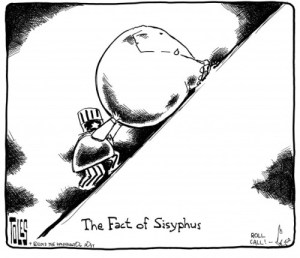 Good Morning!
I have to keep it short today because I’ve got a lot of work to finish up within a week and I’m just about to collapse. Well, I actually I have a few times. I fell asleep mid-day for two days in a row now.
Still, I’ve kept a jaundiced eye on a lame duck congress who still hasn’t dealt with the financial obligations of the country. The same guys that vote for crap for their political sponsors and for world wide war just can’t seem to come up with the balls to pay their bills. Republican voters have condemned us to rolling rocks up mountains and just waiting for the inevitable crush. How can you hate your own country that much?
House Republican leaders are skating on thin ice with the government funding bill, facing stiff opposition from the left and the right that threatens passage just hours before a midnight deadline to avert a shutdown.
GOP leaders temporarily recessed the House and postponed a final vote scheduled for the afternoon, while informing members to be ready to vote.“Leadership teams are still talking to their respective Members. A vote is still planned for this afternoon,” a House Republican leadership aide said.
Republicans long expected some opposition from their right flank due to the fact that the $1.1 trillion spending bill doesn’t block President Barack Obama’s executive actions on immigration. What has thrown the plan into chaos is that numerous House Democrats are defecting over extraneous policy provisions that would weaken derivative trading rules on big banks and loosen campaign finance laws. The bill likely will need significant Democratic support to pass.
The Democratic opposition is being led by Rep. Chris Van Hollen (MD) and Sen. Elizabeth Warren (MA), who call the bank provision a giveaway to Wall Street.
According to multiple sources, the legislation was negotiated by GOP and Democratic leaders in the House and Senate. House Democratic leaders stress that they don’t support all the provisions in the bill but want to keep the government open. They say they are not whipping against the bill.
The White House came out for the bill after it cleared a test vote in the House by a narrow 214-212 margin earlier on Thursday. It said it objects to the weakening of Wall Street reform but signaled Obama would sign the bill anyway.
Republicans just won’t pay the bills unless Democrats agree to blow something up. It’s ridiculous. We’ve got a new political term for the lexicon. It’s a “Cromnibus” bill. It tries to tear apart what little Wall Street oversight regulation we’ve put through 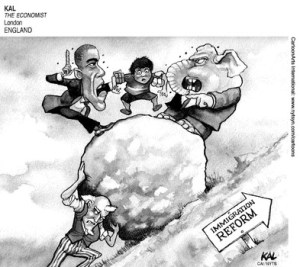 since the global financial crisis on Wall Street and Banks. It also increases the amount of money that an individual can give to a political party. So, we can either destroy our country now by not funding its debt and by not running our government or we can destroy it with more incentives to the financial gambling industry and to billionaire party sponsors.
The $1.014 trillion spending measure has been criticized for easing rules on campaign finance and the banking industry. But its supporters say it’s also a bipartisan deal that would fund most of the U.S. government until next October.
Disagreement over the bill forced the final vote to be delayed for hours Thursday. It also created unlikely alliances: The White House joined with House Speaker John Boehner to rally support for the measure, most House Democrats agreed with a small group of Republicans – including Rep. Michele Bachmann – that the bill should be rejected.
As we noted when the bill was agreed upon and published on Tuesday, the House was slated to hold the first vote on the spending bill Thursday, with the Senate to follow.
You can read the bill, broken down by government agency, on the House Appropriations Committee site.
The legislation was nicknamed “cromnibus” because it combines the traditional sweeping scope of an omnibus spending bill with a continuing resolution (CR). While it would fund most of the government until the next financial year, the Department of Homeland Security would only be funded through February, in a move that seeks to limit President Obama’s recent executive actions on immigration.
Another part of the measure would vastly increase the maximum amount of money a contributor can give to a political party.
“Right now a person can give just under $100,000 a year to a party through its various committees,” NPR’s Ailsa Chang reports on All Things Considered. “And under this bill, that cap goes up to almost $800,000.”
Shortly after noon Thursday, the bill squeezed by in the rules vote, 214-212, after Republican leaders including Speaker John Boehner and Chief Deputy Whip Patrick McHenry, walked the floor to bolster support, NPR’s Juana Summers reports.
After no Democrats voted in favor and more than a dozen Republicans defected to vote against, the House was adjourned so Boehner could organize his support.
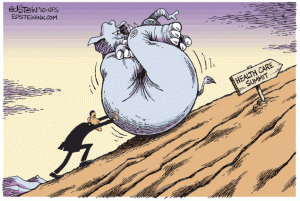 So, as of yesterday afternoon, here were the poison pills. This bill had Elizabeth Warren hopping mad. Please go check that they were basically a Grinch to the poor while giving the rich enough presents that elephants should be blushing.
In addition to spending appropriations, the bill includes changes to various laws that are known as “policy riders.” One of these is drawing sharp criticism from Democrats and financial industry watchdogs. The Dodd-Frank Wall Street reform package passed in 2010 on how banks that receive taxpayer backing can use high-risk financial instruments known as a swaps, which were a key driver of the last financial crisis. Banks and other financial companies the “swaps pushout rule,” which has been praised as a crucial component of the reform law by the White House, Sen. (D-MA), and Bush-era banking regulator .
In addition to spending appropriations, the bill includes changes to various laws that are known as “policy riders.” One of these is drawing sharp criticism from Democrats and financial industry watchdogs. The Dodd-Frank Wall Street reform package passed in 2010 put new limits on how banks that receive taxpayer backing can use high-risk financial instruments known as a swaps, which were a key driver of the last financial crisis. Banks and other financial companies hate the “swaps pushout rule,” which has been praised as a crucial component of the reform law by the White House, Sen. Elizabeth Warren (D-MA), and Bush-era banking regulator Sheila Bair.
The cromnibus repeals the swaps pushout rule. Americans for Financial Reform and the Leadership Conference on Civil and Human Rights blasted the move as “a backroom deal buried deep in a stopgap government funding measure” that will increase the risks taxpayers and the economy face. Former Rep. Barney Frank called it “a terrible violation of the procedure that should be followed on this complex and important subject, and a frightening precedent that provides a road map for further attacks on our protection against financial instability.”
Compared to repealing the swaps rule, Congress’ second gift to the financial industry is a mere stocking stuffer. But it will have long-term consequences for public oversight of risky Wall Street behavior. The bill gives the Commodity Futures Trading Commission (CFTC) a $250 million budget, which is $65 million less than what the White House asked for and $30 million less than the maximum CFTC budget that would have been allowed under last year’s long-term budget deal. While the CFTC number is an increase over previous years, the bill requires the agency to spend $50 million of the budget on information technology. The agency needs to upgrade its systems to perform its vast new responsibilities under Dodd-Frank reform, so the tech money is welcome in a sense. But it also needs way more money for staff than is allowed under the cromnibus budget. The bill won’t require layoffs at the CFTC, but it will prevent the agency from staffing up in the coming year to keep up with its growing role in regulating the financial industry, a Democratic staffer close to the negotiations told ThinkProgress. Departing CFTC commissioners have been saying for years that the agency is understaffed, and employee morale is dangerously low at the agency already according to press reports.
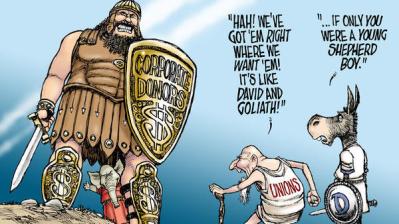
While several controversial policy riders were quickly discovered, it was the change to Dodd-Frank that generated the loudest outcry.
The provision would no longer require that big banks separate trades in financial derivatives from traditional bank accounts, which are backed by the government through the Federal Deposit Insurance Corporation (FDIC). The derivatives played a key role in the financial collapse.
Critics argue the change would leave taxpayers on the hook if trades explode. Former Rep. Barney Frank (D-Mass.) called it a “stealth attack” on his namesake achievement.
Still, it’s unclear whether the opposition from Warren, Frank and others will persuade House Democrats to risk a government shutdown by voting against the bill.
Even vocal critics in the Senate of the provision, such as Sens. Jeff Merkley (D-Ore.) and Sherrod Brown (D-Ohio), stopped short of promising to oppose it.
The White House, similarly, is not saying whether President Obama would sign the cromnibus, though White House press secretary Josh Earnest said he was “pleased” to see a bill produced.
The change to the Dodd-Frank law has enjoyed bipartisan support in the past.
Republicans and 70 House Democrats voted for a version of the tweak in 2013, with most arguing it would boost economic growth and lessen the regulatory burdens on banks.
“There’s huge misunderstandings about what this thing says,” said Rep. Jim Himes (D-Conn.), who was an early sponsor of the original House bill.
Himes argued that the most dangerous derivatives would still be kept away from government-backed banks under the provision, and that banks would only be allowed to trade “plain vanilla” interest rate swaps.
But that was yesterday afternoon, about last night ….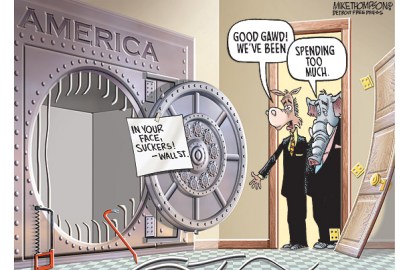
The House on Thursday approved a $1.1 trillion bill funding most of the government through September despite an outcry from Democrats and significant defections in both parties.
By a vote of 219-216, the House sent the bill to the Senate, where a similar debate may break out between liberal Democrats and the White House.
The vote split Democratic leaders, with House Minority Leader Nancy Pelosi (D-Calif.) opposing the bill and criticizing the White House, but Minority Whip Steny Hoyer (D-Md.) backing it. Fifty-seven Democrats voted for the bill, while 139 opposed it.
Hoyer said it was “better to pass it than to defeat it.”
Democrats objected to changes to the Wall Street reform bill that were included in the 1,600-page bill, and many were unswayed by a last-ditch White House lobbying push.
Conservative Republicans, meanwhile, opposed the bill for not doing more to curtail President Obama’s executive actions on immigration. While 162 Republicans voted for the bill, 67 rejected it.
For much of the afternoon and evening, the bill looked to be at death’s door as a government shutdown loomed at midnight.
The bill’s passage, as a result, was a remarkable victory for both Speaker John Boehner (R-Ohio) and President Obama, who were able to cobble together the votes for passage.
The so-called “cromnibus” included an omnibus of 11 appropriations bills funding most of the government through September, and a continuing resolution funding the Department of Homeland Security through Feb. 27.
“This plan was put together after consultation with our members,” Boehner told reporters Thursday morning. “And we worked through this process in a bipartisan, bicameral way.”
He implored his members to back it: “Listen, if we don’t get finished today, we’re going to be here until Christmas.”
GOP leaders suspended debate on the floor for hours as the White House made a push to win over Democrats.
House Democrats have long-been agitated with the White House and its outreach efforts, but they’ve largely kept the grumbling behind closed doors and off the record.
With the arrival of the “cromnibus” debate — and Obama’s backing of the package — the frustrations spilled over.
Pelosi, rarely a public critic of the president, minced no words in denouncing the “cromnibus” — and Obama’s support for it.
Yes, you read that right. The President supported and also lobbied for the cromnibus despite it containing some really really awful things. Pelosi turned on the President. It passed by 1 voted. Yup, that’s right ONE VOTE. The Senate just gave itself 2 days to pass the monster. Oh, btw, the part about giving more money to political parties? That’s the REID-Boehner Bill. You won’t believe what got slipped into this 1600 page budget bill.
If anything, Thursday’s tumult highlighted the disconnect between Obama and congressional Democrats. Nancy Pelosi, the House Democratic leader, came out in strong opposition to the measure even as Obama was pressing her members to back it.
Democrats aligned with Pelosi took issue with policy provisions added to the bill addressing campaign finance reform and a key provision of the financial overhaul.
“This bill puts a big bow on a holiday gift for the Wall Street contributors who get special treatment in the provisions of this bill,” Rep. Lloyd Doggett, D-Texas, said ahead of the vote. “It’s all about stuffing the silk stockings, and these people want to gamble with our money.”
Conservative Republicans, meanwhile, fought the bill because they were angry that it didn’t combat Obama’s executive action on immigration.
We are so screwed. What’s on your reading and blogging list today?

 peej
peej Carissa
 bostonboomer
 dakinikat
 ecocatwoman
 jjlo
jjlo mablue2
 Mama Lopez
 peggysue22
 quixote
 skydancingguestblogger
 Mona (aka Wonk the Vote)





Recent Comments