
Thursday Reads: Did Nepotism at The Washington Post Contribute to Irresponsible Reporting on the UVA Rape Story?
Posted: December 11, 2014 Filed under: Crime, Criminal Justice System, morning reads, Violence against women, War on Women, Women's Rights | Tags: fraternities, gang rape, nepotism in journalism, rape 40 Comments
Good Morning!!
Have you ever wondered how extremely young men are able to get jobs at elite newspapers like The Washington Post right out of college?
Take for example T. Rees Shapiro, who has led the charge to not only discredit the Rolling Stone story on the problem of rape on the University of Virginia campus but also efforts to dismiss and humiliate Jackie, one of the women interviewed by Rolling Stone writer Sabrina Rubin Erdley .
However flawed the Rolling Stone article may have been, it was about much more than Jackie’s story. It illustrated a culture of minimization of rape that had existed had UVA for at least 30 years, in which women who reported being sexually assaulted were discouraged from going to the police, their complaints were not treated seriously, and accused perpetrators were not seriously investigated or punished.
Shapiro’s career has been greatly enhanced by his dismantling of Jackie’s story about a violent rape that allegedly took place in 2012. As a consequence of his efforts to dismantle Jackie’s story, T. Rees Shapiro has appeared on numerous television programs and received praise from many quarters. Most likely his youth enabled Shapiro to con Jackie into trusting him enough to talk to him “several times.”
Last night, I decided to take a quick look at young Mr. Shapiro and his career development path. How did he get such an elite journalism job at the young age of 27?
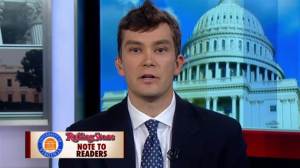
In 2009, Shapiro graduated from Virginia Tech, where he wrote for the student newspaper. In 2010, he was hired by the Washington Post as a copy boy. He soon graduated to writing obituaries, and in 2010 became an education reporter for the Post.
Clearly T. Rees (Nicknamed “Trees,” get it?) is a real go-getter, but he also has connections. His father Leonard Shapiro was a sportswriter for The Washington Post for 38 years, and his mother Vicky Moon is a writer and photographer who is apparently a fixture in Virginia society. Would Shapiro have gotten the Washington Post job without those connections? Maybe, but I doubt it.
When he wrote about Jackie, Shapiro emphasized several times that she was using her “real nickname,” thus enabling trolls like Chuck C. Johnson to find her and try to publicly out her. Shapiro was also able to locate Jackie’s so-called “friends” and get their after-the-fact critiques of Jackie’s story. Shapiro doesn’t say whether Jackie told him she still considers these people to be her friends.
In his critiques of the Rolling Stone article and specifically of Jackie’s story, Shapiro chose not to write about the other women who were interviewed by author Sabrina Rubin Erdley or to get input from experts on rape and traumatic memory. Would a more mature reporter have done so, rather than simply picking apart Jackie’s story? Would a female education reporter have thought to do that?

Leonard Shapiro, former WaPo sportswriter and father of T. Rees Shapiro
Despite the Post’s attacks on Jackie, the University of Virginia does in fact have a rape problem. UVA is one of 86 schools being investigated by the Department of Education for mishandling rape complaints. Four Virginia schools are on the DEA list.
From Huffington Post in July: For Years, Students Have Accused Virginia Universities Of Botching Sexual Assault Cases.
Four universities in Virginia are currently being investigated by the U.S. Department of Education’s Office for Civil Rights for possible Title IX violations specifically related to sexual violence — JMU, the University of Virginia, the College of William & Mary and the University of Richmond. Two other schools in the state, the Virginia Military Institute and Virginia Commonwealth University, faced Title IX reviews that concluded this spring….
Each of the investigations at the Virginia schools, like that at JMU, was sparked by federal complaints.
UVA’s investigation is unusual in that it started in 2011, but remains open. The Education Department declined to say why the investigation was so long-running, and noted “that some cases take longer than others due to the nature and complexity of the issues involved.”
(Emphasis added).
In fact, UVA is one of only 12 schools that that the Department of Education has “flagged for a total compliance review.”
Another Washington Post reporter, Nick Anderson, writes that the inconsistencies in Jackie’s story will not end the federal investigation of UVA.
The University of Virginia was under the microscope for its handling of sexual assault cases long before Rolling Stone magazine weighed in with the account of a student who said she was gang-raped at a fraternity house.
The emergence of fresh questions about that account — including the fraternity issuing a rebuttal, doubts voiced by some who know the woman, and a statement from Rolling Stone’s managing editor on Friday acknowledging “discrepancies” in her version of events — will not suddenly cancel that scrutiny.
A federal investigation of U-Va.’s response to sexual violence, begun in June 2011, continues. It is one of the longest-running active probes of its kind in the nation. U-Va. remains one of the most prominent of about 90 colleges and universities facing such investigations by the U.S. Department of Education’s Office for Civil Rights.
Student and faculty activists for sexual assault prevention, given a national platform in recent days, are unlikely to let the issue fade away. Skeptics will still wonder why the university has not expelled anyone for sexual misconduct in the past decade. Parents of prospective applicants, also mindful of the slaying of sophomore Hannah Graham after she disappeared in September, still want assurances that the Charlottesville campus is safe.
Perhaps most important, University President Teresa A. Sullivan laid out a detailed road map this week for a comprehensive review of the campus culture, touching on sexual assault, alcohol, Greek life and university oversight.

Francesca Bessey
Since rape on campus is such a huge issue, shouldn’t education reporters like T. Rees Shapiro be more knowledgeable about sexual assault and its traumatic effects? One journalist, Francesca Bessey thinks so.
From Huffington Post: Thought the Rolling Stone Article Was Bad? Try Other Rape Journalism. Here’s her assessment of the Washington Post coverage:
The actual discrepancies introduced by the Washington Post are few: one, the individual whom Jackie claimed brought her to the fraternity was apparently a member of a different fraternity; and, two, a student who allegedly came to Jackie’s aid claimed she initially gave a different account of what happened that night. The fraternity also released a statement denying knowledge of the assault, or that there was a social function the night Jackie believes she was assaulted.
For someone who knows little to nothing about rape, fraternities, or the contemporary college party scene — which unfortunately seems to characterize a lot of the coverage thus far — these discrepancies might initially seem like gaping holes in Jackie’s story.
However, as any medical professional or victim advocate will tell you, trauma-related memory inconsistencies are extraordinarily common in cases of sexual assault, often manifesting in the survivor describing the incident to first responders as less severe than it actually was. Such plasticity of memory is not unique to rape cases; the FBI, for example, notes that “there can be a wide range of after effects to a trauma,” which can impact on a victim of a violent crime or the victim’s family members. A list of these effects includes confusion, disorientation, memory loss and slowed thinking. Psychological research has long demonstrated that humans reconstruct, rather than recall, memory, which is why eyewitness testimony is considered one of the most dubious forms of evidence in a court of law.
Why have journalists covering this story given more credence to statements by the fraternity and friends who were portrayed very negatively in the Rolling Stone article than to Jackie’s version of events?
…it is important to note that the so-called “inconsistencies” in Jackie’s story don’t necessarily invalidate her version of events. The fraternity’s statement is in no way more credible than Jackie’s own word — in fact, I would argue less so, given the sheer prevalence of fraternity rape. It would be foolish to assume that a fraternity’s formal denial of “knowledge of these alleged acts” means that they did not occur (with or without current leadership’s knowledge), as it would be foolish to rule out that the “date function” Jackie thought she was invited to wasn’t pure pretense in the first place. It is also within the realm of possibility that Jackie was brought to the party by a man who didn’t necessarily belong to the fraternity, even that he misled her about his membership in the frat. It is also possible that the student who gave a different version of how he found Jackie that night, lacks credibility or is himself having trouble recalling events.
Ultimately, these are all details significant to a police or journalistic investigation, upon which the responsibility is on law enforcement and journalists to figure out. For Jackie, however, it doesn’t change much. It doesn’t change her experience of violent assault, or those of countless students like her, many of whose stories are also featured in the article in question. It does not change the majority of the material in the original article: not the debasing lyrics of the UVA fight song; not the person who hurled a bottle at Jackie’s face the first time she tried to speak out; not the 38 students who appeared in Dean Nicole Eramo’s office in just one academic year to discuss incidents of sexual assault, despite the fact that not one student has ever been expelled from UVA for a sexual offense.
In light of these facts, in light of my own rape and the rapes of too many of my friends at the hands of their peers, I do wonder: Whose credibility is really to be doubted here? Jackie’s or the public peanut gallery that has diluted sexual assault down to a number and a date?
Again, I don’t want to personally denigrate T. Rees Shapiro. He writes well, and he has done a fine job of locating sources at the University of Virginia–both in this case and in his previous reporting on in writing on the Hannah Graham murder case–probably because his youth helps him connect with college students only a few years younger than he is. But his analysis of a survivor’s story has suffered from his lack of knowledge and experience about campus sexual assault and rape in general.
I want to share two more articles that offer a more sophisticated take on these subjects–written by women with long journalistic experience.
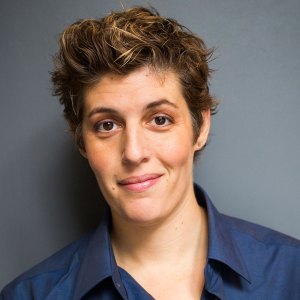
Sally Kohn
From CNN, Rape culture? It’s too real, by Sally Kohn.
We don’t yet know all the facts behind the now-infamous, poorly fact-checked story in Rolling Stone about an alleged gang rape at the University of Virginia. What we do know: Rolling Stone at first blamed the alleged victim, “Jackie” — rather than its own journalistic sloppiness — for so-called “discrepancies” (before changing its callous statement).
And new reporting by the Washington Post does reveal that Jackie’s friends, cited in the story, say they are skeptical about some of the details. Still, they all believe that Jackie experienced something “horrific” that night, in the words of one, and we do know that Jackie stands by her story. Most of the doubts about it were apparently raised by those she’s accusing, including the fraternity and main alleged assailant — whom, I guess, we’re supposed to believe instead. But one other thing we do know is that gang rapes just like what Jackie is alleging do happen — too often, and all over America.
While Rolling Stone’s reporting was clearly shoddy, some writers who initially poked holes in Jackie’s story did so for ideological motives. For instance, even before the reporting lapses were revealed, conservative commentator Jonah Goldberg called Jackie’s story unbelievable. “It is not credible,” Goldberg wrote in the Los Angeles Times. “I don’t believe it.”
Instead, Goldberg insisted, Jackie’s account was “a convenient conversation for an exposé of rape culture,” something, incidentally, Goldberg also doubts to be real. “‘Rape culture’ suggests that there is a large and obvious belief system that condones and enables rape as an end in itself in America,” Goldberg later wrote in National Review. It’s all hogwash, says Goldberg, alleging that the very idea of “rape culture” is just “an elaborate political lie intended to strengthen the hand of activists.”
In other words, whatever the reality of what happened to Jackie, Goldberg and others were skeptical because they simply don’t believe rapes like that happen with the participation of groups of assailants, let alone the complicity of bystanders. This is where they’re mistaken.
Kohn then lists several extreme examples of gang rapes that resemble Jackie’s description–most of which we have covered here.

Also from CNN, In 2014, rape rage drove feminism’s ‘third wave’, by Nina Burleigh.
Historians could look back on this year as the beginning of feminism’s third wave.
The year was momentous for feminism. For the first time, rape victims and their supporters emerged from the shadows in significant numbers and started naming names — to significant effect. Women, their voices amplified by social media and with the support of a small but growing cohort of men, have been exposing and shaming venerable American institutions such as the NFL, Ivy League and non-Ivy League colleges, and the entertainment icon Bill Cosby.
First wave feminists won the right to vote. The second wave got us the right to work. But even with those advances, women have remained fundamentally restricted by the threat and terrible secret of sexual assault.
This year, emboldened and connected by social media, college women formed a powerful grassroots movement that led to universities such as Harvard being publicly named and shamed for not addressing women’s rape reports. They brought the issue of campus sexual assault into the White House, where Barack Obama became the first President to use the words “sexual violence.” The Department of Education released a list of universities under investigation for mishandling sexual violence cases, often letting even repeat predators off with barely a slap on the wrist.
These young women had been silent until social media enabled them to come together, even though thousands of miles apart, share debilitating secrets and then act with the confidence that safety in numbers provided.
I hope you’ll read the rest at the link.
I only hope that irresponsible journalism perpetrated by Rolling Stone and the even more irresponsible reaction to it have not set back the cause of protecting young women on college campuses from sexual violence.
Tuesday Reads: Can The News Get Any Worse? Probably.
Posted: December 9, 2014 Filed under: Barack Obama, Foreign Affairs, morning reads, U.S. Politics | Tags: "I Can't Breathe", abortion, BET, Colbert Report, Dick Cheney, Eric Garner, George W. Bush, Henri Matisse paintings, LeBron James, NBA, police involved shootings, Racism, Senate torture report 52 Comments
Good Morning!!
It’s difficult to imagine how the news can get any worse . . . and then it does.
Bloomberg: CIA Torture Report Set for Senate Release Over Bush Objections.
Dec. 9 (Bloomberg) — The Democrats on the Senate intelligence committee are preparing to issue their report on the harsh interrogation tactics the CIA used on terrorism suspects, defying the objections of current and former U.S. officials including former President George W. Bush.
The panel plans to release today a summary of a 6,200-page report concluding that the Central Intelligence Agency used extreme interrogation methods at secret prisons more often than legally authorized and failed to disclose all the activities to lawmakers and other officials.
Despite warnings from opponents of the report’s release, including some Republicans on the panel, that Americans would face retaliation overseas, President Barack Obama supports making the conclusions public, White House spokesman Josh Earnest said yesterday.
“The president believes that, on principle, it’s important to release that report, so that people around the world and people here at home understand exactly what transpired,” he said. Earnest said the administration has taken steps to improve security at U.S. facilities around the world.
Read the arguments for and against releasing the report at the link. A brief summary of the conflict at USA Today: Obama, Bush teams battle over torture report. Of course Dick Cheney felt the need to butt in.
While Obama and aides support release of the report as to way to prevent future abuses, some Bush administration officials call it partisan second-guessing of techniques that proved necessary during the war on terrorism.
“What I keep hearing out there is they portray this as a rogue operation and the agency was way out of bounds and then they lied about it,” former vice president Dick Cheney told The New York Times. “I think that’s all a bunch of hooey. The program was authorized. The agency did not want to proceed without authorization, and it was also reviewed legally by the Justice Department before they undertook the program.” [….]
The dispute between Obama and Bush officials revolves around the legality of the interrogation programs and whether they yielded valuable intelligence as the U.S. raced to block terrorism in the years following the attacks of Sept. 11, 2001.
Cheney and other Bush administration officials say the programs yielded actionable intelligence that helped uncover possible terrorist plots.
Congressional Democrats say the report shows that tactics like waterboarding yielded nothing that could not have been obtained by other means.
The two sides agree on one thing: Release of the Senate report, detailing some of the less savory methods used to extract testimony from terrorism suspects, could lead to violent, anti-American protests in some countries.

Reuters has a minor preview on the contents of the report: Sexual threats, other CIA methods detailed in Senate report.
The report, which Committee Chairwoman Dianne Feinstein said would be released on Tuesday, describes how al Qaeda operative Abdel Rahman al Nashiri, suspected mastermind of the 2000 bombing of the USS Cole, was threatened with a buzzing power drill, the sources said. The drill was never actually used on him.
It documents how at least one detainee was sexually threatened with a broomstick, the sources said.
Preparing for a worldwide outcry from the publication of such graphic details, the White House and U.S. intelligence officials said on Monday they had shored up security of U.S. facilities worldwide.
The report, which took years to produce, charts the history of the CIA’s “Rendition, Detention and Interrogation” program, which President George W. Bush authorized after the Sept. 11 attacks.
Bush ended many aspects of the program before leaving office, and President Barack Obama swiftly banned “enhanced interrogation techniques,” which critics say are torture, after his 2009 inauguration.
The Christian Science Monitor asks what I think is an irrelevant question: Did torture yield results? I really don’t care; some things are just wrong period.
The 480-page document reveals the results of Senate investigation into the CIA’s use of torture and other techniques that violate international law against prisoners held on terrorism-related charges. Though many details of the Senate’s findings will remain classified – the document is a summary of a 6,000-page report that is not being released – the report is expected to conclude that the methods used by the CIA to interrogate prisoners during the post-9/11 years were more extreme than previously admitted and produced no intelligence that could not have been acquired through legal means….
The Los Angeles Times writes that the report is expected to say that the CIA used methods of “waterboarding, sleep deprivation, stress positions and other so-called enhanced interrogation techniques more frequently than was legally authorized at then-secret prisons known as ‘black sites.’ ”
The report will also likely state that the intelligence acquired from the use of such techniques was not useful to finding Osama bin Laden or preventing attacks on US interests, and “nearly all the intelligence gleaned through harsh techniques could have been obtained from more traditional intelligence-gathering systems,” the Times adds.

We probably should brace for attacks on President Obama for daring to go on BET and talk about racism and then follow that up by joking around with Stephen Colbert.
BET Exclusive: Obama Talks Race, Racism and How Far America Has to Go. Watch the interview at the link. Joyce Jones highlights the main points:
Barack Obama – not the president, but the man – has a dream: his children will be viewed as individuals and judged not by the color of their skin but based on the content of their character, their behavior and their talents and gifts. Sadly, he observed in an exclusive interview with BET Networks, “misguided attitudes” mean that people of color still have less margin for error, particularly if they are male….
Hours before the interview aired, his critics on the right began lashing out at him for, according to Breitbart News, “playing the race card more overtly than ever before.” Others will say it’s about time he spoke up about the series of police-involved deaths of a disproportionate number of African-American men, which he acknowledged. But he also said that “institutionally” he is required to remain silent during the investigations of those incidents, which would be compromised “if it appeared that I was trying to steer to a particular outcome.”
That doesn’t mean he does not empathize with those who’ve expressed their anger and frustration more publically. The president recalled a meeting he had last week that included several young African-American leaders whose experiences of being stopped or treated suspiciously for no reason reminded him of his own. He also said that as long as the protests remain peaceful, they are necessary.
“I’m going to stay on this,” the President said Monday in an interview with BET, a network that reaches a predominately young African-American audience. “Not only am I going to stay on it … but hopefully the entire society says, ‘Let’s finally try to make some real progress on this.'”
Once criticized for shying away from the topic of race early on in his presidency, Obama has recently taken a more active role in sharing how his personal experiences help him to empathize with all kinds of people affected by the recent protests on racial tensions — from protesters, to victims, to law enforcement officers, to families, and most importantly, to black youth.
In his interview with BET’s “106 & Park,” the President cited a meeting he had with nonviolent protesters Monday — between ages 18-25. For him, he says, listening to young African-Americans describe their own experiences of being stopped for no reason, or being unjustly labeled as suspicious, strikes a personal chord.
“My mind went back to what it was like for me when I was 17, 18, 20,” the President said. “As I told them, not only do I hear the pain and frustration of being subjected to that kind of constant suspicion, part of the reason I got into politics was to figure out how can I bridge some of those gaps and understandings so that the larger country understands this is not just a black problem or a brown problem, this is an American problem.”
The President also made a point to invoke Attorney General Eric Holder’s race and civil rights record, saying, “He’s got a similar set of stories and experiences he can share.”

The Boston Globe on Obama’s Colbert Report appearance:
Obama kicked off the show sitting in for Colbert to perform a regular feature of the program called ‘‘The Word’’ wherein Colbert’s rants are accompanied by snarky messages to the audience.
So when Obama, as Colbert, declared that there are aspects of ‘‘Obamacare’’ that people from both parties actually like, the text aside to the audience read, ‘‘Everything but the Obama.’’
Later, Colbert observed that the economy had been creating more jobs of late.
‘‘You have employed a lot of people — mostly as secretary of defense,’’ Colbert cracked in a reference to Obama recently nominating his fourth top civilian at the Pentagon.
‘‘That’s boosted our numbers a little bit,’’ Obama replied.
Colbert, whose on-screen persona is that of an insufferable conservative scold, accused Obama of exceeding his authority on immigration. ‘‘When did you decide to burn the Constitution and become emperor?’’ he asked. The question was heard as a joke by many in the audience at George Washington University. But to Obama’s critics, the question had a ring of truth.
Obama dropped the comedy and replied, ‘‘Actually, Steve, everything that we have done is scrupulously within the law and has been done by previous Democratic and Republican presidents.’’
Watch part of the episode at the link.

You know how Republicans are constantly claiming that their anti-abortion laws are designed to keep women safe? From Think Progress: Large Study Confirms That Abortion Is Extremely Safe.
After analyzing data from nearly 55,000 women who received abortion care under California’s Medicaid program, researchers at UC San Francisco concluded that hardly any of them had serious complications within six weeks of their procedure. Just 126 cases necessitated follow-up care for surgery, a blood transfusion, or other conditions that require hospital admission.
Other studies, including data from the Centers for Disease Control and Prevention, have also confirmed abortion’s safety. We already had some evidence, for instance, that giving birth is about 14 times riskierthan having an abortion. But the new UCSF study goes a bit further than previous research by tracking the complete data on all of the health care used by women who have received abortions. Since many women have to travel long distances to end a pregnancy, the UCSF researchers also examined women’s follow-up care at facilities closer to where they live….
Despite the mounting evidence in this area, the notion that abortion may be dangerous for women is a pervasive assumption that hasbolstered the passage of dozens of state laws tightening restrictions on clinics and doctors. In a press release announcing their findings, the study authors indicated that they hope the new study “will contribute to the national debate over abortion safety.”
“Abortion is very safe as currently performed, which calls into question the need for additional regulations that purportedly aim to improve safety,” said Ushma Upadhyay, an assistant professor at Advancing New Standards in Reproductive Health (ANSIRH), a leading research program based at UCSF.
Of course scientific studies won’t move right wing extremists, who do not believe in science in the first place.

Yesterday I was relieved to see many women writers pushing back against the UVA rape story backlash and asking readers to remember that “Jackie” is a real person with real emotions, and the kinds of memory failures she may have evidenced are comment in human beings. I’m running out of space, so I’ll just provide some links to some of the articles I found.
From Buzzfeed, Annie Clark writes: There Are Too Many Jackies.
Clark and her friend Andrea Pino were students at UC Chapel Hill when they were sexually assaulted. Together they filed a complaint with the Department of Education under Title IX. Their work is what triggered the Obama administration to take a stronger position on sexual assaults on college campuses.
Read about it in Vogue, Campus Sexual Assault: Annie E. Clark and Andrea Pino Are Fighting Back—And Shaping the National Debate. Clark and Pino started an organization called End Rape on Campus (EROC).
More important articles:
Roxanne Gay, Our Stories.
TPM, UVA Rape Victim’s Roommate Says Her Story Is Not A ‘Hoax’.
Buzzfeed, How Police And Hospitals Shut Down Rape Victims.
Jessica Valenti, Who is Jackie? Rolling Stone’s rape story is about a person – and I believe her.
Amanda Marcotte, UVA controversy allows woman-haters to get really, really ugly.
Maya Dusenbery, On Rolling Stone, lessons from fact-checking, and the limits of journalism.
Caroline Fairchild, Why the media obsession with Rolling Stone’s UVA rape story is all wrong.

Finally, some NBA players have begun wearing “I Can’t Breathe T-Shirts.”
From ESPN, LeBron James, Kyrie Irving address reasons for ‘I can’t breathe’ shirts.
NEW YORK — As he stood amid 70 or so media members inside a cramped Cavaliers locker room Monday night, LeBron James explained the significance of the powerful words that stretched across his torso during pregame warmups.
“If it feels important to me then I respond,” said James, who wore a black t-shirt with the words “I CAN’T BREATHE” prior to the start of his team’s game against the Nets at the Barclays Center. “If it doesn’t, I don’t. There are a lot of issues I have not talked about. For me, it is about knowledge and about a gut feeling that hits home for you. You feel it, and go about it.” [….]
…the story of the night was the activism of a number of NBA players. Before the game, the Cavaliers’ James, Kyrie Irving and the Nets’ Deron Williams and Kevin Garnett among others all wore the same black t-shirts. They are the latest professional athletes to make a personal statement on the death of Eric Garner, a 43-year-old Staten Island man who was killed on July 17 after he was wrestled to the ground and choked to death by police officers arresting him for selling untaxed cigarettes. Last week a Staten Island grand jury decided not to bring charges in the police-involved death. That decision has prompted protests around the country, as protesters have mobilized around Garner’s last words: “I can’t breathe.” A video recording of the arrest has been viewed by millions.
Unbeknownst to the players, protesters swarmed Atlantic Avenue outside the Barclays Center during the game, holding a “die-in” to protest the Garner ruling. The hashtag #RoyalShutdown was used by activists on Twitter as a rallying point.
That’s all I have. What stories are you following today? Please share your thoughts and links in the comment thread, and enjoy your Tuesday.
Monday Reads: No Joy in Mudville
Posted: December 8, 2014 Filed under: 2014 elections, morning reads, racism, religious extremists 38 CommentsGood Morning!
 Well, the Southern Strategy is alive and well and still working in the South where Republicans have officially run a campaign for a know nothing and do nothing crook based on absolutely nothing but racist dog whistles. The whistles were really loud and clear. They worked too.
All you have to do is ask a Cassidy voter what said congressman voted for or against, or what he stands for or against, or anything based on issues or record. They go silent. Ask them about the fact he is now under investigation for bilking Louisiana taxpayers out of money and ignoring the details of his outside work agreement granted by Congress and they scream “they are all crooks”. This is just a new one. The only other thing they say is that “Miss Piggy” is with Obama and Obama is bad and then they add something about not being racist and trying to be politically correct but Obama has run the country into the ground. Then, they ignore any and all contrary facts and accuse you of dissing their valid opinions because you are a libtard and a sore loser.
They cannot tell you not one thing about him other than he’s not a white woman in the party that brought you a black president. I am clearly appalled by the audacity of it all.
Many African-Americans saw Cassidy’s TV ads as a primer in race-baiting. The spots evoked the primal myth of the Old South in which white womanhood must be defended. In ads that ran around the clock, viewers saw Landrieu’s face pictured cheek-to-jowl with the black president like uneasy lovers in a Valentine.
“They’re pandering to the lowest common denominator,” bristled Stanley Taylor, a retired African-American member of the National Association of Letter Carriers, speaking by cell phone as he canvassed voters before the election. “Those spots are racist and totally dismissive of people’s ability to figure out their own self-interest.”
The blowback of racial politics marks the end of an era that began in 1970 when the senator’s father, Moon Landrieu, as the newly-elected mayor of New Orleans ushered African-Americans into local government, while guiding an era of dramatic urban growth. New Orleans had a white voting majority at the time; today it is about 60% African-American.
“Rather than suggest some policy objectives, it’s been easier for the Cassidy campaign to enflame racial fear to motivate Republican voters,” brooded community organizer Jacques Morial, whose father Dutch was the first African-American mayor of New Orleans, succeeding Moon in 1978. His brother Marc later served two terms as mayor and is today president of the Urban League.
Landrieu’s loss showed yet again that the great power in American politics is to make people believe that something false is true. Cassidy’s campaign recast the three-term senator as a projection of the black president largely reviled by the majority of white voters here, as in the rest of the South.
I’ve found a bevy of ways that white folks can say they’re not racist while saying racist things. One of my major clues is when they start any sentence “I’m not racist”. I’ve been astonished at the number of racist things people say shortly after they couch it with “I’m not racist but …” There was a Face the Nation conversation on Racism on Sunday about an interview that the President has given BET that basically states that “Racism is deeply rooted in our Nation”. This conversation surrounds the recent spate of police murder of unarmed black citizens where threat wasn’t really present. The central pale question was why hasn’t President Obama has made everything all better when it comes to race relations. I can give you my take. Many people are so deeply racist that they don’t even see it and refuse to see it. Others are unabashedly racist and think they’re justified for whatever reason. Many people seem to just be willfully ignorant which makes me wonder if they will ever learn. No one black man can overcome years steeped in white privilege just as one woman serving in a public office can’t overcome years of shoving women into subservient roles based on outdated notions. It’s not their fault. The faults lie within us.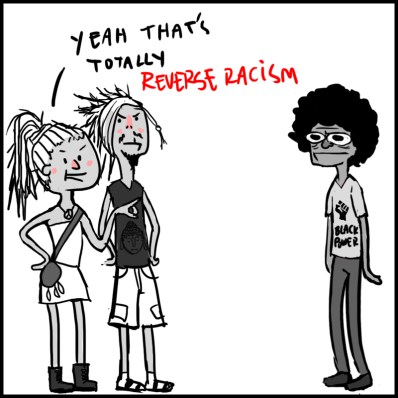
In a special segment, “BET News Presents: A Conversation with President Barack Obama,” the president will help find meaningful solutions to unrest after the deaths of Michael Brown and Eric Garner sparked nationwide protests.
“This isn’t going to be solved overnight,” Obama said in an excerpt of the interview to air Dec. 8 at 6 p.m.
The interview, hosted by BET host and TV journalist Jeff Johnson, marks the president’s first network discussion outlining his strategy to investigate the incidents and ways the country can unify during this time.
“This is something that’s deeply rooted in our society, deeply rooted in our history. But the two things that will allow us to solve it: Number one: Is the understanding that we have made progress and so it’s important to recognize that as painful as these instances are, we can’t equate what’s happening now with what was happening 50 years ago. If you talk to your parents, grandparents, uncles, they’ll tell you that things are better,”
Speaking to youth on the music-variety series targeting African Americans, Obama also cited “progress” as the second most critical step.
Charles Blow was one of the speaker’s on the Face of Nation segment which debated the progress made or unmade in race relations since the President was elected 6 years ago. So was David Ignatius. How is it that so many people can completely miss the institutional differences in the way people are treated simply based on surface differences. Folks in hoodies are thugs and deserve it. Folks that don’ make the police feel safe must be themselves scary, threatening individuals whose life history must be slandered to protect the guilty. Our white male straight christian culture looks for ways to make every body that’s not them a culpable party. We’re all deserving of pain and violence simply by not being them. Hoodie wearers deserve to be shot. Slinky Dress wearers deserve to be raped. Loving any one outside a sanctioned straight marriage deserves to be bullied and turned away from your business.
SCHIEFFER: Well, Charles, let me — I want to get back to this — this first finding here, that relational — race relations are worse under a Black president than they were under a white president.
>hat — what do you make of that?
CHARLES BLOW, “NEW YORK TIMES”: Well, I mean they…
SCHIEFFER: Or at least they’re saying that’s what people say — are saying.
BLOW: Right. So — but you have to figure — ask yourself, is it a causal relationship, right?
Is it because of him and something that he has done or is it a reaction to him actually being the president, which is — which is not really about him, but about us, right?
And — and I think that is the bigger question, that is a bigger philosophical question as to how do we respond to people who do not look like us?
Do we believe that they have our interests at heart?
Do we believe that we can — we can identify and — and empathize with that person?
And — and if we cannot, then there’s — we kind of exacerbate something that may already exist in terms of bias, in terms of how we see race relations in this country.
And I think that’s a real question that we have to ask ourselves about who we are and whether or not things were, in fact, better before this president and — and just were kind of underneath the — kind of under the surface.
SCHIEFFER: David, what do you — and I don’t mean to suggest that it’s Barack Obama’s fault.
BLOW: Right.
SCHIEFFER: But I mean I found that stunning, that this would be the finding that a lot of people say that things are worse now than they were.
DAVID IGNATIUS, “WASHINGTON POST”: Sociologists sometimes talk about a revolution of rising expectations, where because of changes, the election of the first African-American president, having Eric Holder, an African-American as our — as our attorney general, people expect things are changing.
And then when they see evidence in these cases where young unarmed black men are being shot and they’re — they’re not — the people who shoot them are not being indicted, there’s a special anger because people thought things were getting better. They thought with this African-American president that it would be different six years on.
And I think that’s part of what’s behind it, is a sense of disappointment. You know, America has had race issues. This is our original sin. And it’s a continuum in our national story.
But I wonder if the explosion of anger now doesn’t have something to do with people saying it should have been better because of the changes we thought the country had made in electing Barack Obama.
SCHIEFFER: And — and it’s not.
IGNATIUS: And it’s not…
(CROSSTALK)
IGNATIUS: Here’s this problem that — I mean how many years have we heard about driving while black as an experience that African- Americans have?
You know, white people hear this, but do we really react?
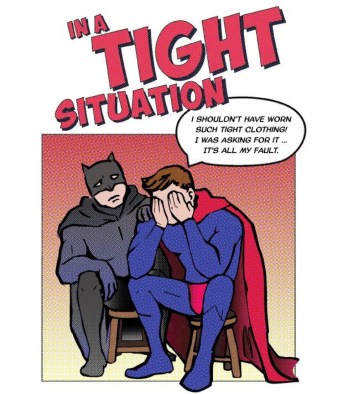 I’ve been experiencing all kinds of deja vu all over again in all kinds of things relating to civil rights issues. Here’s another clueless white male–David Lowry–on why forcing a woman to return your kiss isn’t a form of sexual assault. But, but isn’t it cute that I want to invade her body space and physically do things to her she doesn’t want. She’s not saying no! She is just being coy so I won’think here a slut!!! Coy deserves to be force kissed!!!
National Review editor Rich Lowry on Sunday argued that “attempted forced kissing” doesn’t count as sexual assault.
During a discussion about the Rolling Stone story on an alleged gang rape at the University of Virginia, Lowry suggested that the magazine “had an agenda.”
“Rolling Stone didn’t do basic fact-checking here, I believe because they had an agenda to portray UVA as the bastion of white male privilege, where basically rapists rule the social life,” he said.
CNN’s Van Jones then referenced the statistic that one in five women are sexually assaulted in college.
Lowry shot back that the statistic was “bogus” and complained that the survey used “includes attempted forced kissing as sexual assault.”
The ABC panelists then berated Lowry for his claim.
“It’s not a crime that the police are going to be involved in and prosecute,” he insisted.
Here’s another cluess white male with his christian privilege showing. Everybody’s beliefs are made up and not real except his. Other people’s religions deserve to be ignored.
Fox News host Tucker Carlson argued over the weekend that a Satanist holiday display should be banned from the Florida state Capitol where a Christian nativity had been erected because they did not practice a “legitimate religion.”
Last week, the Satanic Temple won the right to place a display of an angel burning in hell alongside other holiday displays in the Florida Capitol building after officials initially rejected it, saying the Satanic message was “grossly offensive during the holiday season.”
“I’m assuming that there aren’t a ton of Satanists in Tallahassee,” Carlson told Bible Based Church Pastor Darrick McGhee on Saturday. “I’m assuming there really aren’t any at all, and this is purely an attempt to stick a finger in the eye of Christians in Florida.”
“So the rationale here is that Satanism is legitimate religion,” the Fox News host complained.
McGhee explained that the Satanic Temple had met the guidelines set by Florida’s Department of Management Services.
“They must be pretty stupid guidelines,” Carlson quipped, later adding that Satanist should have chosen any of the “51 other weeks in the year.”
“Just to be totally clear, you would not have an objection if a Jewish group or a Muslim group or a Baha’i group or something legitimate other religion wanted a display in the state capitol, would you?” Carlson wondered.
“No objection whatsoever,” McGhee agreed.
“I mean, this is just an inability to draw reasonable distinctions between reality and what is a pretty offensive prank,” Carlson concluded.

And more of this crap from states trying to put white male privilege into law. Michigan wants to enact a religious right to discriminate. In other words, if it offends white male christians, they can do whatever they want to the rest of us.
The Michigan House of Representatives, led by Speaker Jase Bolger (photo, above, left, with Gov. Rick Snyder,) just passed a bill that would allow discrimination to become sanction by the state. The Religious Freedom Restoration Act, akin to one that made nationwide headlines in Arizona but was vetoed, appears to merely force the government to step aside if a person’s “deeply-held religious beliefs” mandate they act, or not act, in a certain manner.
Supporters of these bills claim they allow people of faith to exercise their religion without government interference, but in reality, they are trojan horses, allowing rampant discrimination under the guise of religious observance.
For example, under the Religious Freedom law, a pharmacist could refuse to fill a doctor’s prescription for birth control, or HIV medication. An emergency room physician or EMT could refuse service to a gay person in need of immediate treatment. A school teacher could refuse to mentor the children of a same-sex couple, and a DMV clerk could refuse to give a driver’s license to a person who is divorced.
Michigan Speaker Bolger fast-tracked the bill, which passed on partisan lines, 59-50. It now heads to the Michigan Senate, and if successful, to Republican Governor Rick Snyder. It is not known if Gov. Snyder would sign it.
“I support individual liberty and I support religious freedom,” Bolger said today. “I have been horrified as some have claimed that a person’s faith should only be practiced while hiding in their home or in their church.”
MLive reports that Michigan’s RFRA is “modeled after a federal version that the Supreme Court has said should not apply to states.”
I’m just having a real difficult time handling all of this. Sometimes I believe that things will never get better. 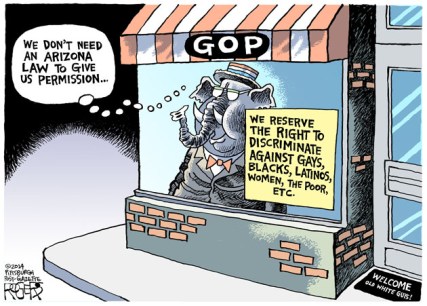
How do you fight back? These folks have media outlets spewing continual hatred and crap. They’re obviously not beneath running complete nonsense and obvious fear mongering ads and TV programs. They’re not ashamed to lie or slander. They also know exactly what to say and do to keep the angry sheep in line. I’ve got very few answers these days to anything
So, want to play a little Spot the Africa to pass some time?
Have a great day! What’s on your reading and blogging list today?
Lazy Saturday Reads: #IStandWithJackie
Posted: December 6, 2014 Filed under: Crime, Criminal Justice System, morning reads, Violence against women, War on Women | Tags: gang rape, rape, Rolling Stone, Sabrina Rubin Erdely, University of Virginia, zombies 62 Comments
Good Morning!!
I’m feeling very overwhelmed this morning, and I’m sure I’m not alone. Between the police killings of civilians and the UVA rape story, I don’t know where to turn for relief.
Last night I escaped for awhile by watching the season finale of “Z Nation,” which is a very violent show about a group of survivors of the zombie apocalypse that almost seems like a metaphor for our sick society.
Why are people so fascinated by zombies at this time in history? Is it because so many of us are dead inside, with no empathy for our fellow humans? Hatred of anyone who is not a white, wealthy, straight “christian” male born in the USA has taken over so many of us and transformed our culture in so many ugly ways.
It’s as if a virus was loosed on the population–in the Reagan years?–and those of us who still care for other people and dream of equal rights and protection for all people are left fighting just to stay conscious–like the survivors in “Invasion of the Body Snatchers.”
Where will it all end?
I was planning to write about the backlash against the Rolling Stone story on rape at the University of Virginia in today’s post, but I don’t think I have my thoughts together enough to do a thorough job of it yet. When I first started thinking about it, the main backlash was about author Sabrina Rubin Erdely’s choice not to locate the accused perpetrators and get their side of the story.
WTF?! As Columbia journalism Prof. Helen Benedict told the NYT, a reporter doing a story on a university refusing to deal with a robbery or mugging on campus wouldn’t be required to hunt down the perpetrators and get their point of view on what actually happened.

The Rape of the Sabine Women, by Ceri Richards
But rape is different. Any woman who reports being raped in the good old USA must be scrutinized in detail, because she probably was asking for it or is lying. She must tell what she was wearing, whether she was drinking, whether she knew the perpetrator, whether she is just claiming rape because she regrets having sex while drunk, and on and on and on.
Then yesterday afternoon Will Dana, managing editor of Rolling Stone basically threw Erdely’s source “Jackie” under the bus, suggesting that she had fabricated her story. Dana apparently took the word of members of the Phi Kappa Psi fraternity that “Jackie’s” story was untrue.
As someone who was traumatized as a child and who has had to deal with posttraumatic stress disorder for much of my life, I took it personally. At first I could not stand to read the accusatory articles, so I went to Twitter first. There I learned that many men and women were pushing back against the media victim-blaming. They had started posting tweets with the hashtag #IStandWithJackie. Reading many of those tweets gave me the strength to read some of yesterday’s backlash articles.

Because I’m really not ready to write a coherent post right now, I’m just going to link to some articles that you may want to check out.
The story that triggered yesterday’s backlash was by T. Rees Shapiro and published at The Washington Post: Key elements of Rolling Stone’s U-Va. gang rape allegations in doubt. Shapiro, like Rolling Stone’s Will Dana, accepts the word of the accused fraternity that there was no party on the date given by “Jackie” and the word of a man she accused that he never met “Jackie.” Jackie’s compelling story is apparently eclipsed for the Post by these unproven assertions by unnamed men who have every reason to lie to protect themselves and their fraternity.
Here are some “key elements” of the WaPo story for me:
Jackie, who spoke to The Washington Post several times during the past week, stood by her account, offering a similar version and details.
“I never asked for this” attention, she said in an interview. “What bothers me is that so many people act like it didn’t happen. It’s my life. I have had to live with the fact that it happened — every day for the last two years.” ….
Jackie describes her interactions with Erdely and Rolling Stone:
Overwhelmed by sitting through interviews with the writer, Jackie said she asked Erdely to be taken out of the article. She said Erdely refused, and Jackie was told that the article would go forward regardless.
Jackie said she finally relented and agreed to participate on the condition that she be able to fact-check her parts in the story, which she said Erdely agreed to.
“I didn’t want the world to read about the worst three hours of my life, the thing I have nightmares about every night,” Jackie said.
About the article itself:
Jackie told The Post that she felt validated that the article encouraged other female students to come forward saying that they, too, had been sexually assaulted in fraternity houses.
“Haven’t enough people come forward at this point?” she said. “How many people do you need to come forward saying they’ve been raped at a fraternity to make it real to you? They need to acknowledge it’s a problem. They need to address it instead of pointing fingers to take the blame off themselves.”

Trauma has powerful effects on the brain, and it’s not at all surprising that survivors’ memories can be confused and inconsistent. In fact, even normal human memory is not designed to recall every detail of events with precision, and expecting that from a rape victim is ridiculous and unfair. But that’s the way it is.
“Jackie” did not even report her rape to the police, because she felt she couldn’t handle the backlash. Now a magazine that didn’t stand by its own story has made her vulnerable to attacks from all over the world.
Where is author Sabrina Rubin Erdely? Why isn’t she defending her story?
Last night on Twitter, Jamison Foser called attention to the fact that the WaPo story originally claimed as fact that Jackie was lying. Then they changed the line in the story without noting they had made a correction. That’s a pretty big “mistake” for a newspaper that has been busily trying to debunk “Jackie’s” story for the past couple of weeks.
Wonkblog (at the WaPo) posted a story on the Twitter response last night: #IStandWithJackie: People on Twitter are criticizing Rolling Stone and supporting UVa student.
Now some important articles that push back against the backlash, yesterday’s WaPo story, and Rolling Stone’s betrayal of “Jackie.” Some of these were published before the RS reversal, but I still think they are relevant.

Mother Jones: Don’t Let the Rolling Stone Controversy Distract You From the Campus Rape Epidemic.
Think Progress: Gang Rapes Happen On College Campuses.
Thank Progress: Actually, The Link Between Sexual Assault And Alcohol Isn’t As Clear As You Think.
Melissa McEwen at Shakesville: Today in Rape Culture.
About Reporting: The backlash to Rolling Stone’s story about rape culture at UVa
Alexandra Brodsky at MSNBC: Rolling Stone scapegoats rape victim, makes matters worse.
Ali Safron at Buzzfeed: Victims’ Memories Are Imperfect, But Still Perfectly Believable.
Libby Nelson at Vox: Rolling Stone didn’t just fail readers — it failed Jackie, too.
Amanda Taub at Vox: The lesson of Rolling Stone and UVA: protecting victims means checking their stories.
Media Matters: Rolling Stone And The Debate Over Sexual Assault Reporting Standards.
Rolling Stone before the sudden reversal: Rape at UVA: Readers Say Jackie Wasn’t Alone.
Katie McDonough at Salon: “It makes me really depressed”: From UVA to Cosby, the rape denial playbook that won’t go away.
That’s about all I can handle writing this morning. I have some links on other stories that I’ll post in the comment thread. I hope you join me there and share your own recommended links.
Friday Reads: Strange Things Afoot
Posted: December 5, 2014 Filed under: morning reads 62 CommentsGood Morning!
 Well, it’s not the Ciricle K, but there’s a lot of odd things going on right now in the Landrieu / Cassidy race. Yes. I’m going local again and it’s all for a lost or good cause and what looks like my last stand in Louisiana. We’ve been Koch’d to death already. I can’t take any more.
First, Cassidy has fled to the safety of John Boehner’s arms after being constantly questioned about what looks like payroll fraud at his part time job at LSU’s HSC. Tiger Beat on the Potomac thinks he’s so far ahead in the race that he basically skipped out on appearances with Rick Santorum and Reince Preibus. I think he doesn’t want to answer any more questions and look as lame as he appeared on the Monday Night debate. Every time he opens his mouth, it’s basically yet another audition opportunity for a remake of Clueless. I still couldn’t believe how completely unprepared he seemed for that one debate.
Here’s how lopsided Louisiana’s Senate runoff is: Bill Cassidy is so far ahead that he’s not in the state campaigning. Two days before the election.
While Democratic Sen. Mary Landrieu hustles across the Bayou State ahead of Saturday’s runoff, the Republican congressman is in Washington this week, voting on legislation and debating how to keep the government from shutting down. His press operation appears to be nonexistent.Cassidy is the overwhelming favorite to win this weekend, and he’s acted in the final weeks like a football team trying to run down the clock. He’s run a surprisingly low-profile campaign, trying to keep the race a referendum on the incumbent, who received just 42 percent of the vote in last month’s primary.
Cassidy skipped an appearance that he was supposed to make with former Sen. Rick Santorum (R-Pa.) on Wednesday night in Shreveport, sending his wife, Laura, in his place. Republican National Committee Chairman Reince Priebus is campaigning solo in the state Thursday.
Landrieu has an aggressive schedule with stops on Thursday in Grambling, Minden, Shreveport and Lake Charles. The last two days she was in Gretna, Hammond, Baton Rouge, New Roads, Vidalia and Monroe.
Cassidy told POLITICO off the House chamber during a round of votes Thursday afternoon that he will be in Lake Charles on Friday with Sen.-elect Joni Ernst (R-Iowa). Then he will drive across southern Louisiana and finish up in Jefferson Parish.
 Mary’s Obituary is already being written by District Insiders.
Mary Landrieu is dead, and everyone knows it but Mary Landrieu.
The senior senator from Louisiana, a diminutive blond woman with a round, youthful face, is standing under a green canopy in the middle of an airfield. The canopy reads, “City of Hammond, Too Lovely to Litter.” There is frustration in her voice as she repeats, yet again, the message nobody seems to be hearing. “The national race is over,” she says. “This race is clearly now about what’s in Louisiana’s best interest.”
Landrieu’s death was foretold on November 4, when any remaining hope Democrats might have had that their candidates’ individual qualities could overcome voters’ hostility to the president was washed away in a national Republican wave of unexpected proportions. Though Landrieu was also on the ballot that day, thanks to Louisiana’s quirky election laws, it was only the first round—an all-parties primary featuring four Democrats, three Republicans, and a Libertarian. Landrieu got 42 percent of the vote; Bill Cassidy, a physician and Republican congressman, got 41 percent. Now the two of them are pitted head-to-head in a runoff election Saturday.
It is the last Senate contest of 2014 to be decided, a lingering loose end, a hangnail of an election that—now that Republicans have already won the Senate majority—will affect practically no one, except Mary Landrieu and her constituents.
Since the primary, Landrieu has undergone a series of humiliations. First, the Democratic Senatorial Campaign Committee announced it would not spend any money supporting her in the runoff. Landrieu’s campaign was already practically broke, and in the weeks following the primary more than 90 percent of the television ads Louisiana voters saw were from Cassidy or groups supporting him.
Then, in a last-ditch attempt to demonstrate her clout in the Senate, Landrieu—who describes herself as “a strong supporter of the oil and gas industry”—persuaded Harry Reid, the outgoing Senate majority leader, to hold a vote on a bill to build the Keystone XL oil pipeline. She spent several days pleading with her Democratic colleagues to vote for it. On November 18, every Republican and 14 Democratic senators supported the bill. It fell short by a single vote. “FAIL MARY,” declared a Politico headline.
Now, no one gives Landrieu much of a chance. “She’s going to lose—it’s just a matter of how much,” Bernie Pinsonat, a pollster who works for both Republicans and Democrats, tells me. (Pinsonat began as a Democratic pollster, but that is no longer much of a viable occupation in this state.) Elliott Stonecipher, a Shreveport-based political analyst, adds: “She’ll have trouble doing better than the 42 percent she got in the primary, and it could be worse than that.” Many observers question Landrieu’s campaign strategy, from her muddled message to the way she has allocated her funds. But, says Bob Mann, a former Democratic staffer who now writes a newspaper column and teaches at Louisiana State University, “She could be the best swimmer in the world, and it wouldn’t matter. The tide is just too strong.”
Still, Landrieu must go through the motions. She must play out the string. “I am fighting hard until the end,” she announces in Hammond, surrounded by several local mayors and state legislators and a couple of dozen supporters. December in Louisiana: sunny and 80 degrees. Outside the canopy, a man and a woman with six platinum-blond children are waving a sign that says, “Babies are a blessing. Choose life.” They are handing out pro-Cassidy literature. On the other side of the canopy, a woman is holding a Sierra Club sign that says, “Keep the Frack Out of My Water.” (Landrieu is pro-fracking.)
Landrieu approaches a pair of grandmotherly women in Democratic Party T-shirts and puts her arm around one of them. They’ve been making phone calls on her behalf, and she wants to know if the word is getting out—are people starting to see that this race isn’t about the national parties, but about the local matters Landrieu wants it to be about? Has anything changed since the primary?
“I haven’t seen any change,” says Jeanne Voorhees, a 72-year-old with a cross necklace. Bernadette Powell, who is 68 and moved to this part of the state when she lost her New Orleans house in Hurricane Katrina, tells Landrieu she thinks she spent too much time in this week’s debate haranguing Cassidy about a late-breaking scandal involving his Louisiana State paycheck.
“Focus on your record! Your record is good!” Powell tells Landrieu.
“You would think people would be focused on that,” Landrieu says, shaking her head, “but it’s tough.”
Pimp and Rape Barn owner James O’Keefe–who frequently masquerades as a “journalist”–has been parading 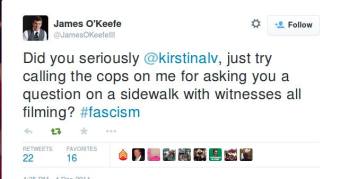 around Landrieu’s offices with a camera harassing people. The New Orleans Twitterarti have been having a bit of fun with him. How many folks will want to go down his rabbit hole?
O’Keefe and creepy friend Gavin McInnes have been stalking Mary and the rest of us for some time. I mean really, he’s already on parole for breaking into her office. Don’t we get some kind of notice when sexual predators are around?
After Nadia sent the rape barn email, she says James published a response on Project Veritas’ website, then deleted it. Nadia writes that it contained images of documents from James’ legal battle with Isabel Santa, the former Project Veritas member who warned CNN reporter Abbie Boudreau about James’ plan to trap and sexually humiliate her on a “love boat.” Apparently Project Veritas fired Isabel after the ordeal; her lawyer argued that this treatment could qualify as “wrongful termination, negligent misrepresentation, fraud, harassment, negligence, conspiracy and detrimental reliance,” and ended up with a $20,000 settlement. Nadia saved the documents and published them on her blog.
In the words of blogger Lamar White, “What if I told you that the guy who orchestrated Cassidy’s employment arrangement with LSU actually quit his job for two weeks in order to begin drawing his pension? And then he was rehired? What if his pension was $20,000 A MONTH? ” Yes. Double Bill was mentored by a stellar double dipper. I’m actually beginning to think the Cassidy candidacy was all about getting him to a place where he’d have to resign so Bobby Jindal could appoint Tony Perkins as a Senator. Could any one find a worse candidate than this man?
In a real bizarre turn of events, Landrieu has been dissing Maria Cantwell for being a greenie.
“If I don’t get back there as a senior member of the committee,” said Landrieu, “we’re gonna have a woman who I like very much, [but] I’m not sure Louisiana’s going to think very much of a senator from Washington state who’s all for windmills and alternative energy, and doesn’t support the oil and gas industry! That’s who’s gonna take my place as head of this committee.”
She was talking about Washington Senator Maria Cantwell, a third-term Democrat from a far less conservative state. At 9:39 Pacific time—minutes after Landrieu said this—subscribers to Cantwell’s donor list got an e-mail asking them to help out a friend.
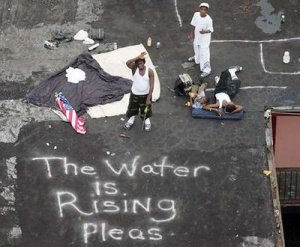 While a conservative PAC has been dissing her as taking too much money from the oil and gas industry. We’ve seen really lopsided numbers of ads the last week.
Groups backing Landrieu have aired just 100 television ads on her behalf since the Nov. 4 primary. Conservative organizations, meanwhile, have run about 6,000 commercials for Cassidy, according to the The Center for Public Integrity. The election is Saturday.
Anyway, I’m going to try to make some last ditch efforts for her tonight and tomorrow. I still can say one thing for sure. I don’t want to be here for another big hurricane with Vitter and Cassidy being the major politicos around. The state will be drowned for certain.
One last nail in the coffin for me was announced by UNO where more faculty and programs are being cut. What can I possibly say about a state that’s more willing to subsidize the salary of Tom Cruise than rebuild it’s one major public urban university?
I just don’t think I can take any more of this. What’s on your reading and blogging list today?

 peej
peej Carissa
 bostonboomer
 dakinikat
 ecocatwoman
 jjlo
jjlo mablue2
 Mama Lopez
 peggysue22
 quixote
 skydancingguestblogger
 Mona (aka Wonk the Vote)





Recent Comments