Posted: March 7, 2015 | Author: bostonboomer | Filed under: Barack Obama, Civil Liberties, Civil Rights, morning reads, police brutality, racism, U.S. Economy, U.S. Politics | Tags: Bloody Sunday, Selma to Montgomery March |
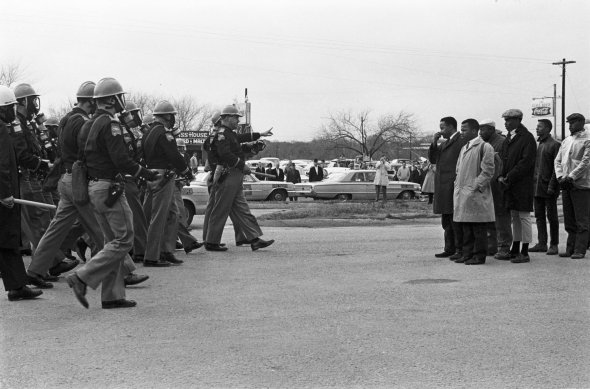
Two Minute Warning, photo by Spider Martin.
Selma “marchers facing a line of state troopers in Selma moments before police beat the protestors on March 7, 1965.
Courtesy Tracy Martin (NPR)
Good Afternoon!!
Today is the anniversary of Bloody Sunday, March 7, 1965 in Selma, Alabama. From USA Today, Bloody Sunday commemoration commences in Selma.
SELMA, Ala. — They have come from coast to coast to commemorate a solemn moment in civil rights history, but also to renew their commitment to a fight that many say isn’t finished.
Tens of thousands of Americans are gathering here on Saturday to mark the 50th anniversary of Bloody Sunday, when marchers attempting to walk from Selma to Montgomery to demand an end to discriminatory polling practices were viciously attacked by police.
It took two more attempts for marchers — led by John Lewis and Hosea Williams — to successfully complete their roughly 50-mile trip to Montgomery. But their determination — and the searing images of the violence during that first march — shook the nation’s collective conscience and helped usher in the landmark Voting Rights Act of 1965….
Participants began arriving Thursday for a five-day commemoration that will reach its apex today when President Obama will speak from the foot of the Edmund Pettus Bridge, where the marchers were bloodied by state troopers and sheriff’s posse armed with tear gas and clubs.
The photo at the top of the page is from NPR’s Code Switch blog: Photographer Helped Expose Brutality Of Selma’s ‘Bloody Sunday’. You can also listen to a brief report at that link. From the transcript:
This month Selma, Ala., will mark the 50th anniversary of “Bloody Sunday.” That’s the day police beat demonstrators attempting to march to Montgomery in support of voting rights. Some of the most iconic images of that day were captured by a white photographer — the late Spider Martin.
Spider Martin’s real introduction to the civil rights movement came on a late night at home in February 1965. He was 25, a photographer for The Birmingham News. He explains in a video from 1987 that he got the call because he was the youngest staff member and no one else wanted to go. That assignment would lead to his most famous work.
“About midnight I get this phone call from the chief photographer and he says ‘Spider, we need to get you to go down to Marion, Ala.’ Says there’s been a church burned and there’d been a black man who was protesting killed. He was shot with a shotgun. His name was Jimmie Lee Jackson.” ….
Jackson’s killing helped spur the Selma-to-Montgomery voting rights marches a few weeks later. Martin was in Selma for Bloody Sunday when state troopers attacked protesters. Holding a camera made him just as much a target. He recounted in an interview with Alabama Public Television, what happened when a police officer saw him.
“He walks over to me and, blow! Hits me right here in the back of the head,” he said. “I still got a dent in my head and I still have nerve damage there. I go down on my knees and I’m like seeing stars and there’s tear gas everywhere. And then he grabs me by the shirt and he looks straight in my eyes and he just dropped me and said, ‘scuse me. Thought you was a nigger.'”
Martin kept covering the marchers until they reached Montgomery two-and-a-half weeks later.
See more of Martin’s photographs of the Selma march at the NPR link and at ArtsRevive.com.
The New York Daily News has a wonderful gallery of photos of the events leading up to the Selma to Montgomery march, which began on March 21, and concluded on March 25, 1965. Here are two of the photos. Please click on the link to see more.
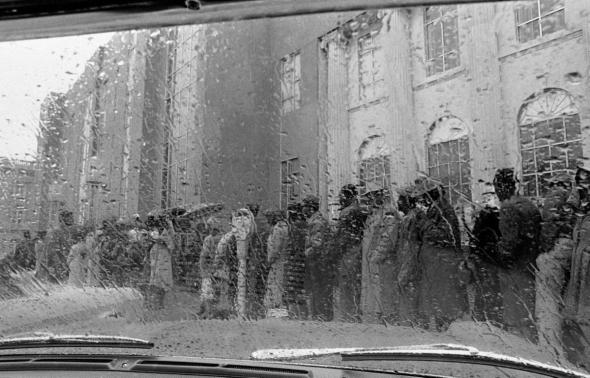
Feb. 7, 1965, African Americans stand in line to attempt to register to take a literacy test in order to register to vote in Selma, AL
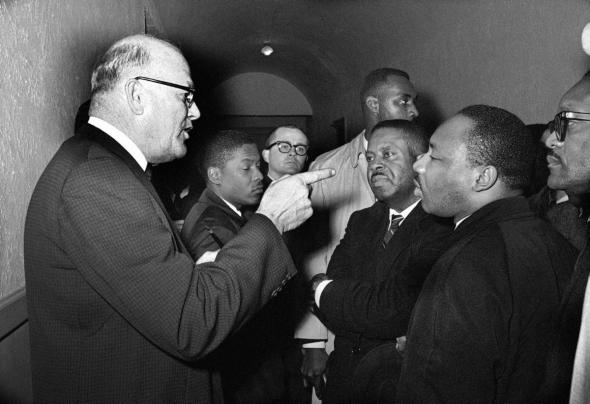
March 1, 1965, Registrar Carl Golson shakes finger in MLK’s face saying that voter registration in Lowndes Cty is none of his business.
At The Nation, The Almanac column has reprinted an article by George B. Leonard published 50 years ago on March 10: Midnight Plane to Alabama.
Fifty years ago today, Alabama State Troopers attacked voting-rights demonstrators on the Edmund Pettus Bridge in Selma. Events moved quickly after that, with President Lyndon Johnson delivering his “We Shall Overcome” address before Congress and calling for a voting-rights bill just over a week later. But in early May, The Nation circled back to that moment on the bridge, with an essay by the California writer George B. Leonard, who watched footage of the assault at home. Shocked and appalled by what he saw, Leonard (originally from the South) took a plane to Selma to be there for whatever would happen next.His essay, “Midnight Plane to Alabama,” appeared in The Nation of May 10, 1965.
The pictures were not particularly good. With the cameras rather far removed from the action and the skies partly overcast everything that happened took on the quality of an old newsreel. Yet this very quality, vague and half-silhouetted, gave the scene the vehemence and immediacy of a dream. The TV screen showed a column of Negroes striding along a highway. A force of Alabama state troopers blocked their way. As the Negroes drew to a halt, a toneless voice drawled an order from a loudspeaker. In the interests of “public safety” the marchers were being told to turn back. A few moments passed, measured out in silence, as some of the troopers covered their faces with gas masks. There was a lurching movement on the left side of the screen, a heavy phalanx of troopers charged straight into the column, bowling the marchers over. A shrill cry of terror, unlike any sound that had passed through a TV set, rose up as the troopers lumbered forward, stumbling sometimes on the fallen bodies. The scene cut to charging horses, their hoofs flashing over the fallen. Another quick cut, a cloud of tear gas billowed over the highway. Periodically the top of a helmeted head emerged from the cloud, followed by a club on the upswing. The club and the head would disappear into the cloud of gas and another club would bob up and down. Unhuman. No other word can describe the motions. The picture shifted quickly to a Negro church. The bleeding, broken and unconscious passed across the screen, some of them limping alone, others supported on either side, still others carried in arms or on stretchers. It was at this point that my wife, sobbing, turned and walked away, saying, “I can’t look any more.”
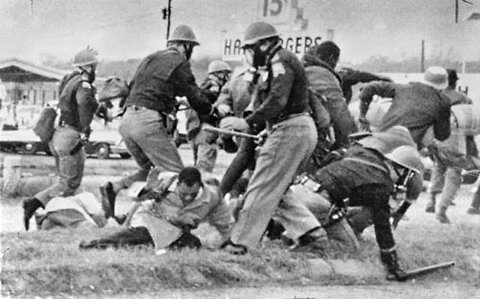
Alabama state troopers attack protesters in Selma, March 7, 1965
How far have we come in 50 years?
Just this week, the Department of Justice released a report that enumerates shocking civil rights violations by police and city officials in Ferguson, Missouri. Following the killing of black teenager Michael Brown by Ferguson police officer Darren Wilson, there were demonstrations during which Ferguson and St. Louis police and Missouri state troopers used military war surplus equipment and blatantly unconstitutional policies in their efforts to shut down the protests.

Riot police stand guard as demonstrators protest the shooting death of teenager Michael Brown in Ferguson, Missouri August 13, 2014. Credit: REUTERS/Mario Anzuoni
In the past year, we’ve seen incident after incident of black men and boys being shot and killed by police around the country.
America’s prisons are used as weapons in a virtual race war. African Americans are “incarcerated at U.S. prisons are at nearly six times the rate of whites.” and they are much more likely to be receive the death penalty.
Most concerning of all, the conservatives on the Supreme Court succeeded in greatly weakening the Voting Rights Act by invalidating the most important part of the law, which required nine states to get federal approval before they made any changes in voting laws. Following that decision, Republican states rushed to impose limits on voting that unfairly targeted minorities.
From NBC News: 50 Years Past Selma, Historic Town Makes Slow March Toward Change.
When thousands gather this weekend in Selma, Alabama, to mark the 50th anniversary of “Bloody Sunday,” some will likely conclude that the town that changed America has not seemed to make much progress of its own.
The majority of registered voters in Selma are now black — along with most of the city, whites having fled in the decades since their African-American neighbors gained access to the ballot box. More than half the businesses in Selma are black-owned.
But Selma is a poor city in one of the poorest states in the country. The typical resident earns about half the state’s median income of $43,000, and over 40 percent of its citizens live below the poverty line, more than twice the state average. According to the most recent data, 10 percent of Selma residents are unemployed — one of the highest rates in Alabama — compared to six percent statewide….
“The people who received less benefit from the movement are the ones who did the most,” said Andrew Young, a lieutenant of Martin Luther King Jr.’s who was among those marching on March 4, 1965. “That’s always bothered me.”
“The farmers who let us stay in their homes, who bonded us out of jail, are old guys now. They still own land but they can’t make a living on the land.”

Ferguson, MO, August 13, 2014. (Photo by Scott Olson/Getty Images)
From Mother Jones, 50 Years Ago Today, “Bloody Sunday” Catalyzed The Civil Rights Movement. Are We Backsliding? Please go read the article–there are more great photos. Here’s the final paragraph:
“It is perversely ironic to commemorate the past without demonstrating the courage of that past in the present,” NAACP president Cornell Brooks told The Atlantic‘s Russell Berman last week. “In other words we can’t really give gold medals to those who marched from Selma to Montgomery without giving a committee vote to the legislation that protects the right to vote today.”
One more relevant piece from Alternet dated December 15, 2014, How Runaway Economic Inequality and Racism Are Linked to Police Killings. A brief excerpt:
Why are white cops shooting unarmed black men?
On one level the story is simple: racism. Too many police officers fear people of color in the neighborhoods they patrol, and are likely to over-react with force during encounters. The local courts also engage in discrimination by failing to indict the killers, even when captured on video, as in the brutal police slaying of Eric Garner in Staten Island, NY. Both the policing and the court system obviously reflect the polarization of our communities, and our inability to escape the legacy of slavery, more than 150 years after emancipation.
But racism only accounts for part of the story. We also must understand how judicial racism and even police violence are deeply connected to the financialization of the economy and runaway inequality.
It is not by accident that America has become both the most unequal developed nation in the world, and the nation with the largest prison population. We’re number one in police killings, incarceration and inequality—not Russia, not China. Our national self-image so steeped in the idea of freedom has not caught up with these ugly realities.
Racism is has been with us for centuries, but something very new happened in America around 1980 that set the stage for these police killings. Something very big is transforming us into the first democratic police state in human history.
“Around 1980…” What happened in 1980? Ronald Reagan was elected. It was the beginning of the Republican “revolution” against freedom, modernity and an inclusive America.
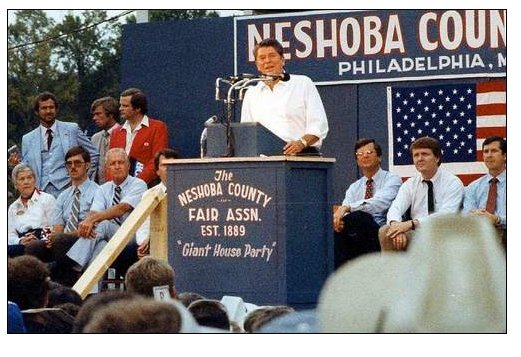
Ronald Reagan kicks off his 1980 presidential campaign in Philadelphia, Mississippi.
Do you recall where Reagan chose to begin his campaign for the presidency? Here’s a column by the late William Rasberry, published on the occasion of Reagan’s death, Reagan’s Race Legacy.
I might have let this period of national mourning pass without a sour note. But I was in Mississippi when I heard the news of his death, and it came just one day after a white Mississippi newspaper editor proudly handed me a copy of the Philadelphia, Miss., paper, the Neshoba Democrat.
Philadelphia, county seat of Mississippi’s Neshoba County, is famous for a couple of things. That is where three civil rights workers — Michael Schwerner, James Chaney and Andrew Goodman — were murdered in 1964. And that is where, in 1980, Republican presidential candidate Ronald Reagan chose to launch his election campaign, with a ringing endorsement of “states’ rights.”
It was bitter symbolism for black Americans (though surely not just for black Americans). Countless observers have noted that Reagan took the Republican Party from virtual irrelevance to the ascendancy it now enjoys. The essence of that transformation, we shouldn’t forget, is the party’s successful wooing of the race-exploiting Southern Democrats formerly known as Dixiecrats. And Reagan’s Philadelphia appearance was an important bouquet in that courtship.
I don’t accuse Reagan of racism, though while he served, I did note what seemed to be his indifference to the concerns of black Americans — issues ranging from civil rights enforcement and attacks on “welfare queens” to his refusal to act seriously against the apartheid regime in South Africa. He gets full credit from me for the good things he did — including presiding over the end of international communism. But he also legitimized, by his broad wink at it, racial indifference — and worse….in some ways, including racially, he left us a more divided nation, in part by making division seem legitimate.
That’s the legacy of Philadelphia.
Even Reagan probably would be amazed by what the Republican Party has become today, but he certainly enabled it.
You can watch coverage of today’s events in Selma on C-Span. President Obama and Representative John Lewis will appear at around 2:30PM.
From Reuters: Obama to make call to action in Selma anniversary visit.
U.S. President Barack Obama will call on Americans to carry forward the spirit of the Civil Rights Movement on Saturday during a visit to Selma, Alabama, to commemorate the 50th anniversary of a march that sparked the 1965 Voting Rights Act.
Obama, the first black U.S. president, will deliver remarks at the Edmund Pettus Bridge, where police and state troopers beat and used tear gas against peaceful marchers who were advocating against racial discrimination at the voting booth….
“Selma is not just about commemorating the past. It’s about honoring the legends who helped change this country through your actions today, in the here and now,” he told a town hall-style meeting.
“Selma is now. Selma is about the courage of ordinary people doing extraordinary things because they believe they can change the country, that they can shape our nation’s destiny. Selma is about each of us asking ourselves what we can do to make America better.” ….
Obama condemned the Missouri city of Ferguson on Friday for “oppressive and abusive” actions against black residents that were revealed in a U.S. Justice Department report accusing police and court officials of racial bias.
We have a very long way to go.
This is an open thread. Please share your thoughts on this post and other stories you’re following in the comment thread and have a terrific weekend.
Did you like this post? Please share it with your friends:
Posted: March 6, 2015 | Author: dakinikat | Filed under: Keystone XL pipeline, morning reads |
Good Morning!
 I’m going to get a bit wonky today about issues surrounding the oil and gas industry. I’ve been concerned about several things and I thought I’d just wrap them all up into a nice little post for you this morning. First, another bomb train went off yesterday. It derailed then blew up near Galena, Illinois which is, thankfully, mostly farmland.
Earlier today, yet another massive train carrying crude oil derailed and caught on fire, this time in northern Illinois near the Mississippi River. One-hundred-and-three of the the train’s 105 cars were carrying crude oil—from where was not immediately clear—eight of which derailed. Two of the derailed cars have caught on fire, according to BNSF Railway which owns the train, sending plumes of smoke and fire into the sky above Galena, Illinois, a town of just over 3,300.
The image of smoldering oil train cars is now a familiar sight: Incidences of exploding oil trains have been rapidly rising in North America thanks to the fracking boom in North Dakota’s Bakken oil fields (Bakken oil is potentially more flammable than normal crude) and the slow transition away from old, unsafe rail cars. Oil-by-rail carloads are up 4000 percent from last year in the United States and this is the the third derailment in North America in the three weeks, including a massive explosion in West Virginia on February 16 that injured one person and spilled oil into the nearby Kanawha River. In fact, a Department of Transportation report predictedtrains carrying crude and ethanol would derail an average of 10 times per year in the next two decades. This is bad news for people who live near railways and the ecosystems in which they reside.
People living within a mile radius of today’s derailment have begun evacuating, and authorities are monitoring the Mississippi River for leakage.
This is getting to be a fairly common event. What doesn’t make sense is why oil production and shipping is going up with some of these other things going on. I was intrigued by an article in Forbes and have since done some poking around about it various markets related to the oil and gas business. It really doesn’t look good. Here’s the article I saw in Forbes that got me started down this path. We’re producing–and not using–so much oil that the U.S. is running out of places to store it all. Canada seems to be pumping it out at such levels that there’s really no way to deal with it all. Store baby Store?
Oil storage tanks are filling up. There’s a concern, highlighted by this AP story yesterday, that sometime in April U.S. storage could hit “tank tops.” With too much oil and not enough places to put it, the natural market response would be for the price of crude to plummet, maybe even down into the $20 range, deepening the nightmare for America’s frackers and possibly catalyzing a round of defaults and bankruptcies.
At first glance the reasons for the buildup in oil storage seems obvious. America’s oil companies are simply fracking out too much light, sweet crude, right? They are. But that’s not the cause of the glut at the storage hub in Cushing, Okla. A report out this week from the Energy Aspects consultancy explains that the issue is more complicated than that. Blame Canada.
Energy Aspects says that it’s not the American frackers at all. Rather the culprit is barrels of heavy Canadian crude backing up there on their way to Houston.
In November, pipeline company Enbridge started up its $3 billion Flanagan South pipeline. The line originates in Pontiac, Michigan and carries about 550,000 bpd of oil across Illinois, Missouri, Kansas and down to Cushing.
Flanagan South was a watershed project because it accomplishes what Keystone XL was supposed to — creates the first high-volume, direct connection between the heavy oil fields of western Canada and America’s refining megaplex on the Gulf Coast. The only material difference between the two: Keystone would go right over the U.S.-Canada border (and thus require State Dept. approvals), while Flanagan picks up oil that a separate pipeline brings in to Pontiac.
When this heavy oil gets to Cushing, customers paying to send their oil on the line (called “shippers”) have the option of storing it for a time at the hub, or sending it on down to the Gulf via the newly completed Seaway Twin pipeline, owned by Enbridge and Enterprise Products Partners.
If prices were higher for the heavy Canadian crude, those shippers might prefer to send it straight down Seaway. But because of the “contango” situation in the oil markets now — where the price of oil for delivery six months from now is higher than the current spot price — these shippers would rather store it and wait.
Prices are coming down incredibly and that has a lot of ramifications. However, production is not going down at all in response. That almost appears to violate the Law of Supply. What’s going on?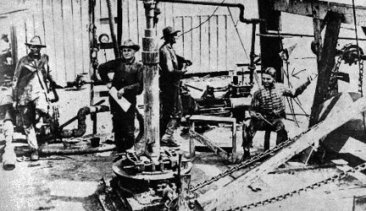
Drillers have been shutting down rigs at a record pace. But oil production isn’t slowing yet. In fact, the U.S. is pumping more crude now than at any time in 40 years. Why? We explore the conundrum in our animated explainer: Why Cheap Oil Doesn’t Stop the Drilling.
The primary reason is that the new rigs that use fracking are more efficient and are not the rigs being taken off line. Also, shale production is cheaper than traditional rigs so they’re still producing profitably at the current prices. However, there are beginning to be some spill over problems and it’s showing up in financial markets. States like Louisiana that are dependent on oil jobs and revenues are beginning to feel the pinch. Investors and banks that have been investing in boom towns that have gone hand-in-hand with the shale oil business are now looking quite risky. The commercial mortgage business and those pesky mortgage backed bond markets are once again looking very shaky. Will Shale town property loans be the next thing to crash the real estate market?
While loans in small, energy-dependent cities make up a fraction of the roughly $600 billion commercial-mortgage bond market, some CMBS deals issued in the past five years have a relatively high exposure to such debt, the Nomura analysts said.
The boom in oil production coincided with the resurgence of the commercial-mortgage backed securities market, where property owners can finance just about any building that produces rental income. Bond sales linked to everything from skyscrapers to strip malls are surging amid a recovery in real estate values after issuance froze for more than a year in the wake of the financial crisis.
Concern among investors is mounting that lenders are lowering their standards amid the rush to sell new bonds, making it easier for borrowers to fund potentially unstable projects. Looser underwriting standards in the CMBS market are enabling landlords with subpar properties to pile on large amounts of debt, Moody’s Investors Service said in a January report.
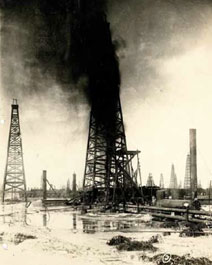 Moody’s already flagged some of the holdings almost a year ago.
Moody’s flagged the potential dangers of inflated apartment rents in North Dakota to commercial-mortgage bond buyers in a March 2014 report.
“Valuations could implicitly assume that rents are sustainable or neglect to address the high level of volatility associated with rapid growth in small towns,” Moody’s analysts led by Tad Philipp wrote in the report.
Even in big cities with diverse economies, the 45 percent drop in oil prices during the past eight months is sapping demand for real estate. In Houston, Shorenstein Properties took a 28-story office tower off the market in December after receiving bids.
The pullback may signal a shift in fortunes for U.S. oil and gas centers such as Houston and Austin, Texas. As recently as October they were named the most attractive markets for buying and developing real estate in 2015 in a survey by PricewaterhouseCoopers and the Urban Land Institute.
I cannot for the life of me figure out why we keep getting on this merry go round. There are so many external costs dumped to taxpayers by this industry that it would behoove us to completely downsize it out of existence.
The average cost of a gallon of gasoline in the U.S. right now is $2.47. If that cost took into account the environmental and human health costs of burning the gasoline, however, it would more than double, according to a new study.
The study, published this week in the journal Climatic Change, created models for the “social cost of atmospheric release,” a method of determining the costs of emissions beyond their market value. According to the study, accounting for the social costs of burning gasoline would add an average of $3.80 per gallon to the pump price, raising the price to $6.27. Diesel has an even higher social cost of $4.80 per gallon.
The study also measured the social costs of other fossil fuels not used at the pump. Coal, for example, would jump from 10 cents per kilowatt hour to 42 cents per kilowatt hour, the study found. And natural gas, which has emerged in recent years as a cheap source of fuel, would see its price rise from 7 cents per kWh to 17 cents per kWh.
In all, according to the study, the environmental costs of producing electricity in the U.S. total $330-970 billion every year.
Right now, the Environmental Protection Agency and other government agencies use theSocial Cost of Carbon to measure the monetary impact of carbon emissions on human health and the environment. But there is no similar measure for fossil fuels in general.
Drew Shindell, professor of climate sciences at Duke’s Nicholas School of the Environment and author of the study, told ThinkProgress that he was interested in putting a price on the health and environmental impacts of pollutants other than carbon because he wasn’t satisfied with the current methods available for comparing sources of energy. People would discuss whether natural gas was more environmentally-friendly than coal, and come to a conclusion using metrics that only took into account the energy source’s global warming potential. But that ignored the fact that burning coal produces copious amounts of other air pollutants besides CO2, including sulfur dioxide, nitrogen oxides and particulates, and that natural gas produces air pollutants too, though to a lesser extent.
So Shindell worked to develop a way that would take both climate considerations and health and environmental considerations into account when looking at different forms of energy.
“I wanted to do something that would treat both air quality and climate consistently,” he said. “It’s easy to get misleading answers on what’s better for society when you’re only looking at a portion of puzzle.”
Multiple studies have confirmed air pollution’s toll on human health. A study last monthfound that air pollution in India is cutting three years off the lives of some of the country’s residents, and a more wide-reaching report from the World Health Organization last year found that air pollution is responsible for seven million deaths around the world every year. Shindell said he knew about air pollution’s effect on health, but he was still surprised at just how high the social cost of burning fossil fuels was, according to the study.
So, in all of the midst of all of this is a very interesting financial move made by ExxonMobil. They’re floating tons of bonds at these currently low interest rates with these dropping oil prices. What are they going to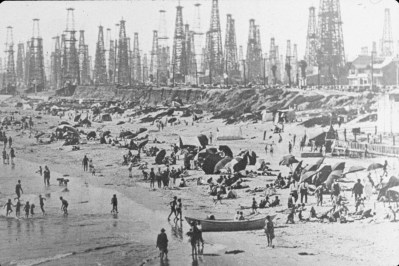 do with the proceeds?
Exxon Mobil Corp. is making a splash with its move to sell $8 billion of debt in a bond offering, the most sizable deal in the energy industry since oil prices began their staggering nosedive.
Bloomberg reports that ExxonMobil held a seven-part sale of both fixed- and floating-rate notes. “Exxon holds top triple-A credit ratings from Moody’s Investors Service and Standard & Poor’s, making it one of only three U.S. corporations — Johnson & Johnson and Microsoft Corp. are the others — that stand on nearly equal footing with governments in debt markets,” the article notes. Because of this status, ExxonMobil had no lack of buyers. A top corporate name combined with higher yields than bonds from sovereign debt make Exxon’s securities a hot commodity.
The sale of securities, the largest portion of which were 10-year, 2.709 percent notes that sold for $1.75 billion, was likely a move to improve Exxon’s financial security. With oil prices still crippled, the move could help the company maintain a war chest for future acquisitions.
Rumors have arisen that the Texas-based company is using the bond sale to prepare for the purchase of BP PLC, the London-based oil giant which some have speculated is susceptible to a takeover.  According to the Dallas Business Journal, Exxon officials have noted in recent months that they remain alert to the values of acquisition possibilities. Given BP’s weakened status in the aftermath of the Deepwater Horizon disaster in 2010, it could be a viable target for other major oil companies.
Can you say Global Monopoly?
None of this should make any of us comfortable. It’s time for us to move beyond energies and machinery that require this deadly, dirty, and toxic resource. It’s ruining our health and environment. It’s caused many a modern war. There have been oil and gas industry booms, busts, and disasters for as long as I can remember during my lifetime. I just can’t figure out why we aren’t working harder to get rid of it all.
What’s on your reading and blogging list today? This is an open thread. I’ve just gotten carried away speculating how long the oil and gas company are going to have a hold on us all.
Did you like this post? Please share it with your friends:
Posted: March 5, 2015 | Author: bostonboomer | Filed under: Foreign Affairs, Hillary Clinton, Media, morning reads, Republican politics, Surreality, The Media SUCKS, U.S. Politics | Tags: Benghazi, Fox News, House Oversight Committee, Jason Chaffetz, New York Times, State Department emails, Washington Post |
 Good Morning!!
I can’t figure out if the corporate media wants to stop Hillary Clinton from running for president or if they desperately want her to run so they can figuratively flog her with a cat-o-nine-tails and then put her in stocks in front of the Capital building.
The story about Hillary using a private email domain when she was Secretary of State has reached the point of ridiculousness, but the media can’t help themselves–they are and yet the coverage continues to get more heated by the hour. The Hillary haters in the media see blood in the water and they’re circling in hopes of getting their teeth into her.
Sorry for the tortured metaphors, but seriously, what does the media want from this woman?
Check out this story from The Hill reporting on remarks by House Oversight Committee Chairman Jason Chaffetz of Utah. (Chaffetz and former Chairman Darrell Issa have been the leaders of the “investigations” of the Bengazi, IRS, and Fast and Furious non-scandals.)
Asked on “Fox and Friends” whether Clinton’s exclusive use of a personal email address during her time as secretary of State raised national security concerns, Chaffetz said, “It does beg the question: Were there any sort of classified pieces of information that were flowing through her personal email account?”
“Which is something you can’t do and something yesterday Gen. Petraeus had to plead guilty to, or was going out in a deal, dealing with his personal email and interaction with somebody who didn’t have a classification,” Chaffetz added….
Petraeus reached a plea deal, the Justice Department announced Tuesday, over charges he failed to turn over for archiving small record books kept while commanding U.S. forces in Afghanistan, instead providing them and their classified information to his mistress, Paula Broadwell, who wrote a biography of the Army general.
Seriously?
State Department spokeswoman Marie Harf said Tuesday, “we have no indication that Secretary Clinton used her personal email account for anything but unclassified purposes,” adding that Clinton used secure phone calls, aides or took other steps to send sensitive messages and has turned over some emails for archiving.
But the Committee will investigate anyway, and yesterday, according to the WaPo, the “Select Committee on Benghazi”
subpoenaed all communications of former Secretary of State Hillary Clinton related to Libya and to the State Department for other individuals who have information pertinent to the investigation,” according to a statement by committee spokesman Jamal Ware. “The Committee also has issued preservation letters to internet firms informing them of their legal obligation to protect all relevant documents.”
Back to The Hill article (emphasis added):
Earlier this week, Chaffetz said his committee would join the House Select Committee on Benghazi to further explore Clinton’s use of personal emails. Rep. Trey Gowdy (R-S.C.), the chairman of that committee, said Clinton might have to testify several times before the panel, even into 2016.

Chaffetz himself lists a personal gmail address on his “official House card,” according to ABC News, but Chaffetz says that’s different. According to the Hill, when he was asked about the comparison between his use of email and Clinton’s, Chaffetz said, “Well that’s like comparing apples to a boat.”
Read more about the House efforts to bring Hillary down at Bloomberg Politics: House Oversight Committee to ‘Explore’ Clinton’s E-Mail Use, Chairman Says.
At New York Magazine, Frank Rich is deeply concerned.
Do the Democrats Need a Backup Plan for 2016?
Are Clinton’s email shenanigans a federal offense? Probably not. But we still don’t know the whole story, and it seems to be thickening by the minute — notably with a new report from the AP that she was protecting her email by cycling it through her own private email server out of Chappaqua. But the more important question is why the Clintons, who more than anyone in American politics understand the high risks of perceived improprieties, have left Hillary’s campaign so vulnerable even before it is officially out of the gate.
Why in God’s name did they change the name of the Clinton Foundation to the Bill, Hillary and Chelsea Clinton Foundation? That gives Hillary full ownership of a stream of potential conflict-of-interest revelations that have been emerging ever since, notably in the Washington Post, The Wall Street Journal, and Politico: that the foundation solicited funds from at least 60 corporations that were lobbying the State Department during her tenure as Secretary of State; that the foundation quietly resumed soliciting donations from foreign governments once she left the State Department; that an Obama Administration ethics framework established to monitor potential conflicts of interest between Bill Clinton’s lucrative foreign speech engagements and State on Hillary’s watch was less-than-exacting.
And one imagines this is only the beginning. At the Post, a lead reporter on the Clinton story is Rosalind S. Helderman, whom some may recall was the dogged investigative journalist whose forensic journalism helped expose the pay-for-play scandal that brought down Bob McDonnell, the former Virginia Governor, and his wife Maureen.
You can check out Rich’s links for more background. Both the Post and the NYT are really pushing this story, but the Post seems even more worked up than the Times. Rich points out that Democrats really don’t have any legitimate alternatives to Clinton. Who are they going to run instead? Martin O’Malley? Jim Webb? Give me a break. And sorry, Emo-Progs,, Elizabeth Warren is not running.
At least one Joe Biden backer sees this new “scandal” as a golden opportunity, according to the Washington Post.
Top Biden backer: Hillary Clinton will ‘die by 1,000 cuts’ on e-mail story.
Dick Harpootlian, a former Democratic Party chairman in South Carolina, home to an early and important presidential primary, said recent reports about Clinton’s use of private e-mail to conduct government business and her family’s charitable foundation accepting donations from foreign governments while she was secretary of state could be damaging to her likely 2016 presidential campaign.
“There’s always another shoe to drop with Hillary,” Harpootlian said in an interview Wednesday. “Do we nominate her not knowing what’s in those e-mails?… If the e-mails were just her and her family and friends canoodling about fashion and what they’re going to do next week, that’s one thing. But the fact that she’s already turned e-mails to the Benghazi committee because she was doing official business on it means she’s going to die by 1,000 cuts on this one.”
He wishes.
Harpootlian — who has been an active and outspoken booster of a Biden 2016 candidacy — said the foundation donations and e-mail stories have sparked chatter among South Carolina politicos about drafting other candidates into the Democratic primary. Referencing Biden specifically, he said, “I’ll tell you this: He ain’t got no e-mail problems. He ain’t got no foundation problems. What you see with Joe is what you get. There’s nothing hidden there.”
Harpootlian added, “The chatter down here is, ‘Is this the best we can do?’ Certainly everyone wants to give a woman a chance to lead this country, but is [Clinton] the woman? There are plenty of other women who would be competitive, whether it’s Elizabeth Warren or Amy Klobuchar or Kirsten Gillibrand.”
Sorry, Dick, those women aren’t running and they wouldn’t be any more competitive than your pal Joe Biden–who has his own past scandals to worry about.

The Wall Street Journal says “some Democrats” are “troubled” about the new Hillary “scandals.” Yes, I’m sure they are. Sometimes I think there are more Clinton-haters among Democrats than Republicans. WSJ reports:
Some Democrats are uneasy about the reports involving Hillary Clinton ’s use of a private email account during her time as secretary of state and her foundation’s fundraising practices, calling on her to break her silence and personally address the two controversies.
Some party figures say the recent disclosures show a need for Democratic rivals to step forward and challenge Mrs. Clinton for a nomination that has long seemed to be hers for the asking.
At least one of these “uneasy” Democrats was willing to use his name.
Don Paulson, chairman of the Muscatine County Democrats in Iowa, said he was disturbed by the Clinton Foundation’s practice of accepting donations from foreign governments at a time when Mrs. Clinton was preparing a campaign for the White House. He saw that as one reason why the party should vet her and other candidates in a competitive primary, rather than allow her to coast to the nomination without a real fight. “It’s a healthier thing all around if there’s competition,” he said.
I’m sure Muscatine County Chairman is a Very Important Job, so we’d better being paying close attention to Mr. Paulson. Or not.

The WSJ admits that “Mrs. Clinton’s email arrangement…was legal while she served as the nation’s top diplomat,” but never mind that. It’s still so “troubling” and it makes people so “uneasy.” They do include the names of two more disapproving Democrats:
Tad Devine, a Democratic strategist who has worked on six presidential campaigns, said of the email account: “She needs to explain why she did what she did. I do think it’s a real issue, and I think it’s an issue that has to get dealt with on a serious level.”
“I don’t think it’s something a junior staffer can put out a statement and expect the thing to go away,” he said.
Kim Weaver, chairman of the O’Brien County Democrats in Iowa, which holds the nation’s first presidential contest, said: “The questions need to be answered.” She added she would like to hear whether the personal email system Mrs. Clinton used carried adequate security protections. “If it’s no big deal, why not just come out and say what it is.”
It seems that Iowa Democrats are particularly upset.
But will any of this matter to voters in November of 2016? Brendan Nyhan of the NYT blog The Upshot doesn’t think so. He notes that most Americans aren’t thinking about the 2016 presidential campaign yet, and when they do, attitudes toward toward the “email furor” will likely break down along partisan lines.
Of course that won’t stop his newspaper from running story after story about it on their front page while they ignore the potential loss of health insurance for 8,000,000 Americans along with other important world events.

One more from Business Insider:
Former State Department officials explain why the Clinton email ‘scandal’ is ridiculous.
According to the State Department, Hillary Clinton’s use of a personalized email address during her time as secretary of state was no secret.
“The State Department has long had access to a wide array of Secretary Clinton’s records — including emails between her and Department officials with state.gov accounts,” State Department Deputy Spokesperon Marie Harf said in an email to Business Insider….
Business Insider reached out to Clinton’s representatives. They put us in touch with two former State Department officials who argued that Clinton was careful to use the address in a manner that went above and beyond regulatory requirements and ensured her communications were preserved.
The former officials, who requested anonymity to freely discuss Clinton’s emails and State Department policy, echoed the notion the former secretary’s personalized email address was not kept secret. They said she used it to communicate with over 100 department staffers, other officials, and lawmakers on Capitol Hill….
Clinton’s spokesman Nick Merrill issued a statement in response to the article wherein he argued Clinton corresponded with people on their government account whenever she conducted official business….”Like Secretaries of State before her, she used her own email account when engaging with any Department officials. For government business, she emailed them on their Department accounts, with every expectation they would be retained,” Merrill said.

Guess what? John Kerry is the first Secretary of State to use a government email account! Colin Power also used a private account during the Bush Administration.
The two former officials said efficiency was one reason Clinton set up her own address. At the time, State Department policy would not have allowed her to have multiple email addresses on her Blackberry. Because of this, the officials said, she opted to have one address for both personal and governmental communications. They echoed Merrill’s statement and said Clinton took care to correspond with other State officials exclusively on their governmental addresses. The officials said this meant all of her emails and those sent to her were immediately preserved on government servers.
According to the two officials, regulations discouraged the use of personal email but did not prohibit it. Merrill also argued that Clinton’s use of private email was not against the rules.
“Both the letter and spirit of the rules permitted State Department officials to use non-government email, as long as appropriate records were preserved,” he said.
So far, Hillary herself has only responded on Twitter:
So . . . . there are lots of important stories out there today. Which ones are you following?
Did you like this post? Please share it with your friends:
Posted: March 3, 2015 | Author: bostonboomer | Filed under: 2016 elections, Affordable Care Act (ACA), Barack Obama, Foreign Affairs, Hillary Clinton, morning reads, U.S. Politics | Tags: Affordable Care Act, Benjamin Netanyahu speech to Congress, iran, israel, King v. Burwell, New York Times, Obamacare, SCOTUS, State Department |

Good Afternoon!!
I wanted to touch on a couple of issues this afternoon: the latest Hillary Clinton “scandal,” and the upcoming Supreme Court case that could doom Obamacare once and for all.
But before I get to those stories, I want to share this good article by James Fallows on the possible motivations behind Netanyahu’s speech to Congress this morning.
The Mystery of the Netanyahu Disaster, and a Possible Explanation.
Fallows enumerates the possible motivations for the Netanyahu slap in the face to President Obama:
“Was it simple tin ear on his side, and Ambassador Ron Dermer’s?” Fallows asks? That’s not likely according to Fallows, because Netanyahu is far too sophisticated and knowledgeable about U.S. politics. Fallows also discounts the theory that it was only about “election-year politicking” in Israel. Perhaps that’s part of it. Is it because Netanyahu has so often been right in his previous predictions?
Hardly. I can’t believe that he’s fooled even himself into thinking that his egging-on of war with Iraq looks good in retrospect. And for nearly two decades Netanyahu has been arguing that Iran was on the verge of developing nuclear weapons. When you’re proven right, you trumpet that fact—and when you’re proven wrong, you usually have the sense to change the topic. Usually.
Was it because Netanyahu “has a better plan?”
No. His alternative plan for Iran is like the Republican critics’ alternative to the Obama healthcare or immigration policies. That is: It’s not a plan, it’s dislike of what Obama is doing. And if the current negotiations break down, Iran could move more quickly toward nuclear capacity than it is doing now—barring the fantasy of a preemptive military strike by Israel or the U.S.
Fallows also doesn’t buy the argument that Netanyahu actually believes that Iran “faces an “existential threat” if Iran develops a nuclear weapon?
Let me explain. No person, nation, or community can define what some other person (etc) “should” consider threatening….But from the U.S. perspective I can say that the “existential” concept rests on two utterly unsupportable premises. One is that Iran is fundamentally like Nazi Germany, and the world situation of 2015 is fundamentally like that of 1938. Emotionally you can say “never forget!” Rationally these situations have nothing in common—apart from the anti-Semitic rhetoric. (To begin with: Nazi Germany had a world-beating military and unarmed Jewish minorities within its immediate control. Iran is far away and militarily no match for Israel.) The other premise is that Iran’s leaders are literally suicidal. That is, they care more about destroying Israel than they care about their country’s survival. Remember, Israel has bombs of its own with which to retaliate, so that any attack on Israel would ensure countless more Iranian deaths.

What then? Fallows refers to an article at The National Interest by Paul Pillar.
Pillar’s assessment is that the ramped-up “existential” rhetoric is a screen for the real issue, which is a flat contradiction between long-term U.S. and Israeli national interests as regards Iran. It is in American interests (as I have argued) to find some way to end Iran’s excluded status and re-integrate it with the world, as happened with China in the 1970s. And it is in Israel’s interests, at least as defined by Netanyahu for regional-power reasons, that this not occur. As Pillar writes:
The prime objective that Netanyahu is pursuing, and that is quite consistent with his lobbying and other behavior, is not the prevention of an Iranian nuclear weapon but instead the prevention of any agreement with Iran. It is not the specific terms of an agreement that are most important to him, but instead whether there is to be any agreement at all. Netanyahu’s defense minister recently made the nature of the objective explicit when he denounced in advance “every deal” that could be made between the West and Tehran. As accompaniments to an absence of any agreements between the West and Iran, the Israeli government’s objective includes permanent pariah status for Iran and in particular an absence of any business being done, on any subject, between Washington and Tehran.
That is, as long as Netanyahu keeps the attention on nukes and “existential” threats, he’s talking about an area where the U.S. and Israel might differ on tactics but agree on ultimate goals. Inflammatory as that topic is, it’s safer than talking about re-integrating Iran as a legitimate power, where U.S. and Israeli interests may ultimately differ.
I thought that was pretty good food for thought.
Before I get to the Clinton e-mails issue, here’s an interesting piece at the Washington Post on Hillary’s relationship with Netanyahu.
The phone call between Hillary Rodham Clinton and Israeli Prime Minister Benjamin Netanyahu lasted 45 minutes. For 43 of them, she talked and he listened.
The U.S. secretary of state lectured the Israeli leader, accusing him of trying to do an end run around American opposition to settlement-building and embarrassing Vice President Biden during a visit to Israel, according to interviews with people present during the 2010 call or who were briefed on it afterward. She read from a script for part of the lecture, so as not to miss any key points.
“The word ‘humiliation’ appeared very prominently,” recalled Michael Oren, then the Israeli ambassador in Washington. “As in ‘You have humiliated the United States of America.’ ”
There probably aren’t many times in Netanyahu’s professional life when he has listened to anyone for 43 minutes. Netanyahu prefers to do the lecturing….And there aren’t many people who could make Netanyahu sit still for a tongue-lashing. Clinton is one of them.

The story of the phone call comes from Clinton’s book on her time as Secretary of State, Hard Choices. Read more about it at the link. It would seem that experiences like this would stand Clinton and the U.S. in good stead if she ends up in the White House.
On the latest “scandal” about Hillary using a private e-mail as Secretary of State, I’m not sure what to think. It certainly does give ammunition to Republicans and to potential Democratic opponents like Martin O’Malley.
Here’s the NYT Story that started the fuss: Hillary Clinton Used Personal Email Account at State Dept., Possibly Breaking Rules. You’ll need to read it at the link, because the Times has fixed their website so that I, at least, can’t copy and paste any excerpts. Here are some reactions to the story. First, the debunkers:
From USA Today, Clinton aide: State Department e-mails preserved.
A spokesman for Hillary Rodham Clinton said Tuesday that while she used a personal e-mail account during her years as secretary of State, those records have been maintained pursuant to federal rules.
“Both the letter and spirit of the rules permitted State Department officials to use non-government email, as long as appropriate records were preserved,” said Clinton spokesman Nick Merrill. “As a result of State’s request for our help to make sure they in fact were, that is what happened here.”
Merrill responded to a New York Times story saying that Clinton, a prospective presidential candidate in 2016, used a personal e-mail account during her four years at the State Department and “may have violated federal requirements that officials’ correspondence be retained as part of the agency’s record.”
The Times reported that Clinton’s “expansive use of the private account was alarming to current and former National Archives and Records Administration officials and government watchdogs, who called it a serious breach.”
From Media Matters, The New York Times‘ Deceptive Suggestion That Hillary Clinton May Have Violated Federal Records Law: It Was Only After Clinton Left The State Department That The Law Concerning Private Emails Was Changed.
Yes, the president signed the new law two years after Clinton left the State Department. The NYT wants to punish her retroactively. Not surprising, considering the Times’ longstanding hatred for and sliming of the the Clintons. Please go read the whole Media Matters post. It won’t stop the Clinton haters from using this, but it’s the truth. Arm yourself.

Coffee, Leon Zernitzky
Bob Cesca at The Daily Banter: That Story About Hillary Clinton’s Private Email Account Isn’t as Awful as It Seems.
Again, please go read the whole thing, and prepare yourself for the coming onslaught. This is only the beginning.
A few more links to folks who either don’t know or don’t care about the time of the law and the fact that Clinton preseved all her emails.
A fairly Hillary-friendly post from Charles Pierce, Hillary Finds A Rake To Step On: The First Clinton Bombshell.
LA Times, Hillary Clinton used personal email while serving as secretary of state.
Mashable, Clinton email revelation: You did what, Hillary?
Incidentally, I was shocked to see this from Joseph Cannon:
Hillary’s secret email account. Let’s be honest: If a Republican did this, we’d be worried. Actually, Republicans have done exactly that.
The most important point here is sub-textual: If the NYT has turned against Hillary Clinton, then we should suspect that she has privately revealed to her closest aides that, if elected, she will do things that she cannot now state out loud. Of course, nothing is truly private these days.
“If the times as turned against Hillary Clinton”??!!! Joseph, why aren’t you aware that the NYT –brave champion of Dubya’s Iraq war–has always loathed the Clintons and has published innumerable attacks on them?
Finally a few links to prepare you for tomorrow’s SCOTUS hearing on King v. Burwell, during which the justices will consider whether to throw about 8 million Americans off their health care plans.
Charles Pierce, The Tell: What This Week’s Attack On Obamacare Is Really About.
…the Nine Wise Souls on Tuesday will hear King v. Burwell, the highly imaginative, if constitutionally laughable, attack on the grammar and punctuation in the Affordable Care Act, which the NWS should have laughed off months ago….
It is the Universal String Theory Of Wingnut Conjuring Words in full view, the complete text of one of the spells. A fake scandal being used to excuse the shabby underpinning of a fake lawsuit that will have real and devastating consequences to thousands of people.

That’s it in a nutshell. But here are more links to check out for more details.
Slate: Exchanges No One Can Use? We rely on courts to interpret laws impartially. When it comes to Obamacare, they don’t always oblige.
Politico: No easy fix if Supreme Court halts Obamacare cash. (No sh$t Sherlock.)
Republicans are getting nervous about what will happen if they get their wish. From The Hill: GOP fears grow over ObamaCare challenge.
Ezra Klein at Vox: Republicans say they have a plan if the Supreme Court rules against Obamacare. They don’t.
Stephen Brill at Reuters: The Supreme Court hears an Obamacare fairytale.
US News (not known for liberal views): The Silliest Obamacare Challenge Yet. The King v. Burwell case could cause 8 million to lose health insurance.
SCOTUS should never have agreed to hear this case, but they did. Is John Roberts okay with going down in history as a buffoon? We’ll find out in June.
Please share your views along with the stories you’re following today in the comment thread.
Did you like this post? Please share it with your friends:
Posted: March 2, 2015 | Author: dakinikat | Filed under: income inequality, morning reads, poverty |
Good Morning!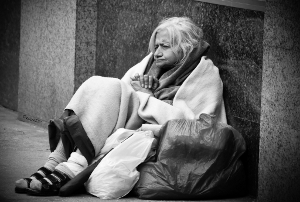
Recently, I’ve been cooking a lot of my Nana’s depression years recipes and thinking of ways to tighten my belt. I’ve been watching the stock market go crazy and corporate profits improve in the macroeconomy. It’s beginning to translate into the labor markets but it really varies state to state. As you know, my right wing Republican Governor Bobby Jindal has been running away from his responsibilities and record here in Louisiana and spending time on the road. He’s made visits to CPAC and FOX and even the lawn of the White House trying unsuccessfully to draw attention to his “possible” presidential bid. He’s going nowhere but down in Republican Straw polls which is karma as far as I’m concerned.
What has been getting attention is his record of failure here. It’s a doozy. It doesn’t get much worse than having MSN’s Wall Street 24/7 call your state the worst place to do business and then list the reasons that your state resembles Somalia more than a developed nation.
> Real GDP growth, 2012-2013: 1.3% (17th lowest)
> Average wages and salaries, 2013: $44,828 (23rd lowest)
> Pct. of adults with bachelor’s degree, 2013: 22.5% (5th lowest)
> Patents issued to residents, 2013: 395 (13th lowest)
> Projected working-age population growth, 2010-2020: -3.2% (13th lowest)
No state fared worse on 24/7 Wall St.’s business climate index than Louisiana. The state is not the worst place to run all businesses, however. The manufacturing sector accounted for more than 20% of Louisiana’s economic output in 2013, the fourth highest such contribution in the country. Despite the strong sector, Louisiana generally provides poor conditions for business.
Nearly one in five residents lived in poverty in 2013 — nearly the worst rate in the nation — contributing to both the low quality of the labor force as well as a low quality of life in the state. The working-age population was projected to decline by 3.2% from 2010 through 2020, one of the worst declines in the nation. While nearly 30% of Americans had at least a bachelor’s degree as of 2013, only 22.5% of Louisiana adults had at least such a degree, also nearly the lowest rate. Poor education contributed to poor scores in innovation. The state was one of only a handful of states where the average venture capital investment was less than $1 million.
 Jindal’s been slavishly following Grover Norquist’s prescriptions for drowning the state government in his bathtub. He’s also part and parcel passed legislation straight from ALEC and the Koch Brothers. As a result, we have a $1.6 million dollar deficit that’s going to be challenging to eliminate. This is especially true since he’s spent the last 6 years pulling every slight of hand accounting trick in the book, sold off all possible state assets, and siphoned most all reserve funds. His first draft basically put all the state’s public universities in financial exigency which is a public entity’s version of bankruptcy reorganization. It also looks like the public health system is on the verge of collapse.
So, this is now the “new” idea being floated by some.. There’s discussion going on to basically tell a lot of the universities to go privatize themselves.
Years of deep cuts to state funding for Louisiana’s colleges and universities — and the threat of even further reductions in the near future — have some leaders looking at drastic measures that could change the face of Louisiana higher education.
One idea that has recently been floated: Why not encourage some of the state’s public schools to go private?
The idea, which experts agree is radical and may not ever be feasible, came up during a recent meeting of the state Board of Regents, a group appointed by Republican Gov. Bobby Jindal, whose administration has led the charge for recent state budgets that have left Louisiana with some of the nation’s most severe cuts to higher education funding. Regents board members have instructed state higher education staff members to examine the concept and report back on whether the plan would work and what it would take.
“You look at some areas of the state, there may be a university or a college inside of a university that could do better as a private entity,” Board of Regents Chairman Roy Martin said in a follow-up interview with The Advocate.
Martin stressed that he was speaking as an individual, not for the board.
It’s hard to describe how the years of defunding basic education, roads, and public health and safety service has impacted everyone’s life around here. I see homeless people on every major street corner. I have friends looking for second jobs or first jobs. Many people I know have either left town or moved out of the historical districts. This is not the post Katrina revival that we were promised. However, it’s not that way for some folks.
One of the strangest things that’s going on here is the boom in real estate which is being driven by the purchase of huge, million dollar homes. A group of us have been trying to figure out where the jobs are to support these kinds of purchases. Essentially, we found out that most of these sales are going to people who are looking for second homes and they’re coming from out of state. So, the feel of a banana republic tropical island is getting a complete workout here.
The top-of-the-market houses are “rising in price at least as fast as the market as a whole,” Ragas said, based on conversations with Realtors.
“In the higher market, it is a much brisker market now,” said Rick Haase, president of Latter & Blum Inc., which sold nearly one-third of the 158 homes priced at $1 million or more that were sold during the 12-month period ending Jan. 31.
The highest-priced home to sell in the New Orleans area last year was advertised as a “stately Queen Anne home” featuring seven bedrooms, 5 ½ bathrooms, “lush gardens with organically grown citrus trees and grapes,” and a heated pool. The property at 3 Audubon Place was listed for sale at $5.25 million and sold 86 days later for $5 million, or $583.57 per square foot.
Haase said the average number of days that properties selling at more than $1 million stay on the market has dropped from more than 150 to 90.
It took just one day for the sixth most-expensive New Orleans-area property to sell last year. The three-bedroom, three-bathroom single-family home at 828 Chartres St. in the French Quarter sold for its full asking price of $2.3 million, or $575 a square foot.
“It’s not like every house flies off the market. But if it’s priced appropriately, in the right location, has the right pedigree, then, yeah, the numbers are going up and up,” said Keller Williams Realtor Ricky Lemann, who was the listing agent on a $2.25 million property on First Street that sold last year. “There will be no adjustment in that luxury market until the (interest) rates go up.”
I’ve really noticed that the kinds of people moving into my part of town are not the same kinds of people that are selling and leaving. The house next door went from rental property to a starter home using the Obama Tax incentives to a home away from home for two Northeasterners within a period of about 5 years. It now spends most of its time as an unlicensed short term rental which is basically illegal. But, one owner is in NJ and the other came from Philadelphia so they don’t seem to care much about that.
The split between rich and poor is becoming more accentuated and its address is changing as the downtowns of large cities have become gentrified and homes priced out of the reach of middle and working class families.  This is having some appalling impacts on children as the majority of U.S. public schools now have children that are classified as living in poverty. It’s now first tier suburbs where poverty issues are playing out.
For the first time in at least 50 years, a majority of U.S. public school students come from low-income families, according to a new analysis of 2013 federal data, a statistic that has profound implications for the nation.
The Southern Education Foundation reports that 51 percent of students in pre-kindergarten through 12th grade in the 2012-2013 school year were eligible for the federal program that provides free and reduced-price lunches. The lunch program is a rough proxy for poverty, but the explosion in the number of needy children in the nation’s public classrooms is a recent phenomenon that has been gaining attention among educators, public officials and researchers.
“We’ve all known this was the trend, that we would get to a majority, but it’s here sooner rather than later,” said Michael A. Rebell of the Campaign for Educational Equity at Teachers College at Columbia University, noting that the poverty rate has been increasing even as the economy has improved. “A lot of people at the top are doing much better, but the people at the bottom are not doing better at all. Those are the people who have the most children and send their children to public school.”
More Americans are now living in poverty in suburbs than in urban areas. This is pushing problems into areas ill-equipped and financed to handle them.
City centers around the country are becoming younger, more affluent and more educated, while inner suburbs are seeing poverty rates rise, according to a new study from the University of Virginia’s Weldon Cooper Center for Public Service.
The new study is based on an analysis of demographic changes in 66 cities between 1990 and 2012. It comes just months after a surge of headlines about suburban poverty following a Brookings Institution study that found that more Americans are now living in poverty in the suburbs than in rural or urban areas.
News of this demographic shift comes as no surprise to suburban school superintendents and school boards. They know their student populations are shifting, and they are wrestling with how to adequately serve the rising number of poor children who come to class with far more needs than their more affluent peers.
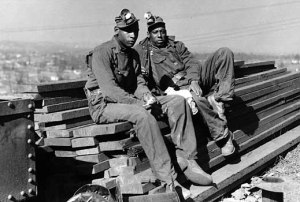 Children and Seniors are being particularly hard hit by the defunding of services on both the state and federal level but zealous Republicans look to score points by poor shaming. They make scapegoats of the nation’s most vulnerable people. While Social Security has been indexed to increase with price increases, Seniors are not exempt from income inequality. Part of the issue with Social Security funding is the cap on income subject to FICA taxes. The cap has created a funding gap.
As America recovers from the recession, wealthy households are recovering faster than low-income ones, whose incomes have stagnated or declined since the crash. A new report says that this widening gap is sapping Social Security.
Currently, two-thirds of seniors rely on the program for their retirement income. The wage gap may have cost Social Security$1 trillion over the last 30 years, according to a report last week from the Center for American Progress.
And as more Americans reach retirement age, Social Security is set to eat through its funding by 2033, assuming that Congress takes no action to bolster it. After that it would only be able to cover 77 percent of its claims.
“For low-income seniors, Social Security represents nearly 85 percent of income. Even for seniors right in the middle, Social Security represents nearly two-thirds of their retirement income,” said Rebecca Vallas, director of CAP’s poverty program.
Small wages, big shortfalls
The pension and disability insurance program is funded by a payroll tax that applies to wages of $118,500 and below. But the money flowing into the program is not as large as it could be, according to the report, now that an increasing share of wage growth is going to people who make more than that, and low-wage workers make less.
Why does that matter for Social Security? Because highest earners reach the$118,500 “cap” quickly and stop paying into the fund for the rest of the year. “Social Security funding is directly tied to the full wages of low and middle income workers,” Vallas says. “It’s their wages that matter.”
The payroll tax cap was set in 1983 by President Reagan, which at the time captured 90 percent of wages. “Reagan essentially said, let’s go for 90 percent, and we will let 10 percent go,” says Vallas.
But since 1983, that cap hasn’t been adjusted for wage growth to keep up with the 90 percent goal. “What they didn’t anticipate is income inequality,” says Vallas. “The highest earners have seen growth much faster than the average worker.”
Now the tax cap only captures 83 percent of wages, instead of 90. The missing 7 percent is part of the Social Security shortfall.
Of course, all of these issues have come because we’ve shifted the burden of paying for things from businesses and the wealthiest. We’ve also shifted the subsidizes to businesses and the wealthiest. As a result, fewer and fewer services are being offered, few people are covered, and fewer jobs are available.
Hand-in-hand with reducing taxes and reducing government services has been the demonization of public servants. Scott Walker–one of the front runners for the Republican presidential nomination–likened fire  fighter and teacher unions to ISIS while talking to CPAC over the weekend.
At the Conservative Political Action Conference (CPAC) just outside Washington, DC, Wisconsin Governor and likely presidential candidate Scott Walker was asked what his plan would be, were he in the White House, to combat the terrorism perpetuated by the Islamic State In Syria (ISIS).
As an enthusiastic crowd cheered, he responded not with a plan but with an argument for why his battles against organized labor in his state makes him the most qualified for the job.
“We need have someone who leads and ultimately will send a message that not only will we protect American soil, but…freedom-loving people anywhere else in the world. We need that confidence,” he said. “If I can take on a hundred thousand protesters, I can do the same across the world.”
These kinds of jobs have been central to working and middle class upward mobility in the past. They’ve also been jobs that have traditionally been much more integrated and diverse. Scott Walker linked public servants to terrorists. Think about that.
In 2011, Walker pushed through a law, Act 10, that slashed the power of public employee unions to bargain, and cut pay for most public sector workers. As a special slap to teachers, Walker exempted the unions of police, firefighters and state troopers from the changes in collective bargaining rights but not educators. Teachers protested for a long time, closing schools for days, but the law passed, and the impact on teachers unions in Wisconsin has been dramatic: according to this piece by my Post colleague Robert Samuels. The state branch of the National Education Association, once 100,000 strong, has seen its membership drop by a third, and the American Federation of Teachers, which organized in the college system, has seen a 50 percent decline.
This week may bring down a central tenet of the ACA which has brought private health insurance to millions of people. It has been one policy that has successfully increased the day to day life of ordinary people. Will the Supremes bring it down? Will it be drowned in Scalia’s bathtub? I am one of the 7 1/2 million people who were forced onto the federal exchange because my Republican governor is an asshole. Will I join the ranks of uninsured this week? Me with a chronic condition and a cancer history?
Shortly after the A.C.A. passed, in 2010, a group of conservative lawyers met at a conference in Washington, D.C., sponsored by the American Enterprise Institute, and scoured the nine-hundred-page text of the law, looking for grist for possible lawsuits. Michael Greve, a board member of the Competitive Enterprise Institute, a libertarian outfit funded by, among others, the Koch brothers, said, of the law, “This bastard has to be killed as a matter of political hygiene. I do not care how this is done, whether it’s dismembered, whether we drive a stake through its heart, whether we tar and feather it and drive it out of town, whether we strangle it.” In time, lawyers hired by the C.E.I. discovered four words buried in Section 36B, which refers to the exchanges—now known as marketplaces—where people can buy health-insurance policies. The A.C.A. created federal tax subsidies for those earning less than a certain income to help pay for their premiums and other expenses, and, in describing who is eligible, Section 36B refers to exchanges “established by the State.” However, thirty-four states, most of them under Republican control, refused to create exchanges; for residents of such states, the law had established a federal exchange. But, according to the conjurings of the C.E.I. attorneys, the subsidies should be granted only to people who bought policies on the state exchanges, because of those four words in Section 36B. The lawyers recruited plaintiffs and filed a lawsuit; their goal is to revoke the subsidies provided to the roughly seven and a half million people who were left no choice by the states where they live but to buy on the federal exchange.
The claim borders on the frivolous. The plaintiffs can’t assert that the A.C.A. violates the Constitution, because the Justices narrowly upheld the validity of the law in 2012. Rather, the suit claims that the Obama Administration is violating the terms of its own law. But the A.C.A. never even suggests that customers on the federal exchange are ineligible for subsidies. In fact, there’s a provision that says that, if a state refuses to open an exchange, the federal government will “establish and operate such Exchange within the State.” The congressional debate over the A.C.A. included fifty-three meetings of the Senate Finance Committee and seven days of committee debates on amendments. The full Senate spent twenty-five consecutive days on it, the second-longest session ever on a single piece of legislation. There were similar marathons in the House. Yet no member of Congress ever suggested that the subsidies were available only on the state exchanges. This lawsuit is not an attempt to enforce the terms of the law; it’s an attempt to use what is at most a semantic infelicity to kill the law altogether.
I spent the weekend and a few days before that watching people I went to high school with that mostly didn’t attend college squawk about people on disability, unemployment, and government waste and give away. They say all Obama supporters are the ones that want  benefits but no jobs. It’s just all kinds of drivel that Fox spews that’s easy to debunk with facts but impossible to debunk to hard core idiots who aren’t interested in facts, truth, or reality. What has happened to the country that I grew up in and even to the state that I moved to 20 years ago? I turn 60 this year. I’ve never seen so much vitriol aimed at the wrong people in my life and for what?
I want to point you back to the kind of crap spewed by Republicans recently with a quote from an Indiana office seeker from the last election. This guy basically said let the poor “wither and die”. It’s basically what they all think but don’t say.
“For almost three generations people, in some cases, have been given handouts. They have been ‘enabled’ so much that their paradigm in life is simply being given the stuff of life, however meager.
What you see is a setting for a life of misery is life to them never-the-less. No one has the guts to just let them wither and die. No one who wants votes is willing to call a spade a spade. As long as the Dems can get their votes the enabling will continue. The Republicans need their votes and dare not cut the fiscal tether. It is really a political Catch-22.”
I’m sitting here wondering what you’re supposed to do to get a job any more in a state like mine. I’m even wondering what you’ve got to do to get a decent education. I’m so glad my kids have gotten out of LSU so that they’re missing the impact of Jindal’s scourge.
So here’s a good lesson in karma if you want one. A gun loving Obama and Obamacare hating Sheriff who is now trying to recover medical costs by using Go Fund me. Evidently, Obamacare was too bad for him but begging at this point isn’t. Also, guess who is funding him the most? Liberals. Lessons are really hard to learn, aren’t they?
Sheriff Richard Mack is the right wing former sheriff of Graham County, Arizona. He is the head of an organization called “Constitutional Sheriffs and Peace Officers Association,” a member of the NRA’s Hall Of Fame, and a staunch opponent of the policies of President Obama, including Obamacare.
Richard Mack has run into some medical problems and since he is uninsured, he’s asking for help. Mack suffered a heart attack on January 12. This apparently came right on the heels of some serious medical issues that were suffered by his wife. His son, Jimmy Mack, has set up a GoFundMe campaign, asking for donations to help offset the cost of medical treatment. Apparently the Macks were expecting right wing supporters to step up to the plate and help out but, judging by the comments that accompany many of the donations, Mack is getting the bulk of his support from liberals.
As of this writing, Mack has received close to $20,000 in donations from 439 people. The commenters are sympathetic to Mack’s situation — far more sympathetic than Mack and his supporters have been to the plight of those without health insurance. Many hope that he will use it as a learning experience, to change his views about the Affordable Care Act.
Some times I just want to cook my Nana’s hamhocks and beans and read Grapes of Wrath while never turning on the TV or computer again. However, that never happens either. I rant, therefore I blog. I blog, therefore I wonder why so few people really get it?
What’s on your reading and blogging list today?
Did you like this post? Please share it with your friends:


 peej
peej Carissa
 bostonboomer
 dakinikat
 ecocatwoman
 jjlo
jjlo mablue2
 Mama Lopez
 peggysue22
 quixote
 skydancingguestblogger
 Mona (aka Wonk the Vote)





Recent Comments