Posted: July 14, 2015 | Author: bostonboomer | Filed under: Barack Obama, Foreign Affairs, morning reads, U.S. Economy, U.S. Politics |

Good Morning!!
I’m getting a slow start today. I was exhausted after my trip home, and I slept most of yesterday afternoon. I feel as if I could do that again today, and I just might.
There is lots of news this morning, but first I want to share a small epiphany I experienced while driving through Ohio on Saturday. Traffic was light and the weather was nice, partly cloudy and warm–with just enough sun to be bright but not enough for me to need sunglasses.
I was listening to an interesting program on NPR–I think it was Radiolab–about a man who described himself as solitary–practically a hermit–because he experienced so many problems in interacting with people. He enjoyed being alone more than anything else. His marriage to his first wife had broken up and she had taken their two children, whom he loved. The only relationships he had had that weren’t problematic were with his son and daughter. At one point, he learned that his ex-wife’s boyfriend was abusing his children, and he sued for custody. He didn’t get it because when he went to a psychological evaluation, he mistook another little girl in the office for his daughter. The psychologist questioned how he could be a good parent if he didn’t even recognize his own child.
The man moved to California and found a job where he didn’t have to interact with other people except over the phone, and it worked very well for him. Eventually he met a woman who seemed to understand him, and they lived together for years and eventually married.
 I really identified with the story, because I find most of my difficult experiences involve interactions with other people. I have always preferred being alone to spending time with people–especially in large groups. As a child, I loved to read and could lose myself in a book and shut out the entire world. As a teenager, I loved to listen to music alone in my room, and I still read constantly. I always felt different–as if I didn’t belong in this world. I think that is the reason I like to drive long distances–I can be alone with no one to bother me, unless I want them to.
Anyway, it turned out that the man in the NPR story had prosopagnosia, or face blindness, a visual processing disorder in which a person has difficulty perceiving faces. He discovered this while he and his wife were watching a 60 Minutes program on this unusual cognitive problem. Interestingly, famed neurologist Oliver Sacks suffers from prosopagnosia.
At the point where the man learned what his problem was after years of struggling in relationships, I suddenly had my epiphany. I became aware of a feeling and I thought to myself. This is how it feels to be happy. I’m happy right now. Of course once I had the thought, I was no longer in the present moment, but the good feeling continued for some time as I listened to other stories on NPR.
Now I don’t think I have prosopagnosia–at least I got 6 right on a video test for it–so I don’t know why the NPR program had such a profound effect on me–maybe because I think there’s something wrong with me but I don’t know what it is. It would be great to have an answer. Why am I happiest when I’m alone but still can be in touch with people over the internet or on the phone? Maybe I’ll never know, but I definitely did have one of those peak experiences that Abraham Maslow wrote about.

On Sunday, the second day of my trip, I was tired all day long and had trouble staying awake. I made good time across New York despite quite a bit of traffic; but the final leg of the trip on the Mass Pike was torturous. I sat in bumper-to-bumper traffic for more than an hour at one point and the the traffic was hellish the entire way. Oddly, I still felt that my experience of happiness the previous day made it all worthwhile.
I tried to find the NPR prosopagnosia story on-line, but I didn’t have any luck. I’d like to listen to it again.
Now that I’ve likely bored you to tears, I’ll get on with the news.
A deal has been reached with Iran. Politico reports: U.S., world powers reach historic deal with Iran.
The United States and five other world powers have reached a deal with Iran that would place strict limits on Tehran’s nuclear program in return for ending sanctions on its economy, the culmination of years of delicate diplomacy pursued by President Barack Obama despite warnings the agreement could strengthen Iran’s Islamist regime and leave it dangerously close to a nuclear bomb.
The historic accord, reached by Secretary of State John Kerry and his international counterparts in Vienna on Tuesday after 18 days of intense negotiations, now faces review from a hostile Republican-led Congress, opposition from every GOP presidential candidate, from Israel’s government and from Sunni Arab monarchs. The deal’s long and complex implementation process also leaves it vulnerable to unraveling.

Speaking from the White House Tuesday morning, Obama called the deal a victory for diplomacy that would prevent a nuclear arms race in the Middle East and avert a possible conflict with Iran.
“No deal means a greater chance of more war in the Middle East,” Obama said. He reaffirmed America’s commitment to Israel’s security and Gulf Arab states like Saudi Arabia, while adding that the U.S. is “open to engagement on the basis of mutual interests and mutual respect.”
Obama also hinted at the possibility of a larger thaw in U.S.-Iranian relations. ”It is possible to change,” Obama told Iranians, urging them to take a “different path, one of tolerance, of peaceful resolution to conflict… This deal opens an opportunity to move in a new direction. We should seize it.”
“This is the good deal that we have sought,” Kerry said in a statement from Vienna.
It’s another stunning victory for Obama. More from CNN: Landmark deal reached on Iran nuclear program.
After arduous talks that spanned 20 months, negotiators have reached a landmark deal aimed at reining in Iran’s nuclear program.
The agreement, a focal point of U.S. President Barack Obama’s foreign policy, appears set to reshape relations between Iran and the West, with its effects likely to ripple across the volatile Middle East.
Representatives of Iran, the United States and the other nations involved in the marathon talks were holding a final meeting in Vienna on Tuesday.
Obama praised the deal reached Tuesday morning, saying the agreement met the goals he had in place throughout negotiations.
“Today after two years of negotiation the United States together with the international community has achieved something that decades of animosity has not: a comprehensive long-term deal with Iran that will prevent it from obtaining a nuclear weapon,” Obama said from the White House, with Vice President Joe Biden at his side.
Iranian President Hassan Rouhani also praised the deal, speaking after Obama finished, as televisions in Iran broadcast the U.S. President’s statement live, translated into Farsi.
“Negotiators have reached a good agreement and I announce to our people that our prayers have come true,” Rouhani said in a live address to the nation following Obama.
The essential idea behind the deal is that in exchange for limits on its nuclear activities, Iran would get relief from sanctions while being allowed to continue its atomic program for peaceful purposes.

And from The Wall Street Journal: Oil Prices Fall as Nuclear Deal Paves Way for Iran Exports.
The possibility of up to a million new barrels of Iranian oil flooding global markets—the amount Iranian officials aim to deliver within months—comes at a critical time. China’s stock-market turmoil in recent weeks could slow an economy that was expected to account for a lot of energy-demand growth. U.S. production remains strong, and oil giants such as Iraq and Saudi Arabia are pumping record amounts.
With new Iranian supply, that has raised the specter of a fresh oil glut.
After recovering somewhat from a 60% drop earlier this year, global benchmark Brent crude has lost 15% since early Ma.. It fell further on Tuesday morning in London trading, to $57.30 a barrel on London’s ICE futures exchange. WTI crude futures, a benchmark largely for American oil, was down 1.7% on the New York Mercantile Exchange.
“Iran’s efforts to raise oil exports could not have come at a worse time, given the market’s lingering oversupply,” said Michael Cohen, an energy analyst at Barclays.
Advertisement
In 2012, the U.S. and European Union imposed strict sanctions on Iran’s energy and financial sectors, and the country’s oil exports have been cut nearly in half as a result, according to the U.S. Energy Department. Iranian exports averaged 1.4 million barrels a day in 2014, down from 2.6 million barrels a day at the end of 2011, federal data show.
The speed and quantity of new oil that Iran can export hinge upon many difficult-to-predict factors. They include when Iran might be able to satisfy various countries and the United Nations that it has met the requirements of the deal, triggering the start of sanctions relief. Western officials have said that likely won’t happen until the end of 2015.
More bellyaching from the top 1% at the link.

The other big story is the major economic speech Hillary Clinton gave yesterday. Here’s a preliminary analysis by Paul Waldman at The American Prospect: Clinton Tries to Move the Economic Conversation Beyond Jobs.
As most of us understand, “Do I have a job?” is not the only question you might ask about your economic situation. That understanding is what Hillary Clinton is counting on as she delivers her first major economic address Monday, an attempt to articulate a vision that will not only provide a means of understanding the collection of policy changes she’ll be advocating in her 2016 campaign for president, but also contrast with the now 17 Republicans who want to face her next fall.
I’m writing this before the full text of Clinton’s speech is available, so what I have to go on is only the outline and selections that have been leaked to a couple of reporters (see here and here). But it’s clear that Clinton is attempting to expand the economic conversation beyond the two measures that usually dominate the discussion: job growth and GDP growth. “The measure of our economic success,” she’ll say, “should be how much incomes rise for middle-class households, not an arbitrary growth figure.”
So while Clinton is going to offer some proposals like an infrastructure bank meant to create jobs, most of her emphasis is going to be on increasing wages and improving working conditions with things like paid sick leave. To see why this is aimed at the Republican candidates, pay close attention to what they say when they’re asked about issues like wage stagnation and inequality. What you almost inevitably get is a brief acknowledgment that these things are indeed a problem, then a quick redirection to the policies they say will accelerate growth and create jobs. The last thing they want is to get into a detailed discussion about wages. If pressed, the best explanation they can come up with for why wages are stagnant, or why inequality has been increasing for many years, is that, like everything else that is not as we would like it to be, it’s the government’s fault.
 That’s the nature of the problem they face where their ideological beliefs meet the requirements of a presidential campaign. They don’t believe that government can do much affirmatively to improve the economy, so their proposals tend toward “getting government out of the way”—in other words, not doing something new, but stopping something that’s already happening. But if you put a Democratic proposal like paid sick leave alongside a Republican proposal like loosening environmental regulations, it’s a lot easier to understand how the first is supposed to help workers than how the second would.
So as the discussion on economics shifts, Clinton can advocate for at least some policies that are new and meant to react to the changes that have taken place in the American economy. The Republicans, on the other hand, are unlikely to advocate much beyond what they always advocate. There may be some differences in the details, but its essence will be all too familiar: Cut taxes (particularly on the wealthy), cut regulations on corporations, accelerate the decline in collective bargaining, and wait for our glorious future of prosperity to begin.
More reactions following the speech–links only:
Business Insider: Hillary Clinton just called out the economic problem of the next decade.
Washington Post: Why Hillary Clinton made gender such a big deal in her major economic speech.
FiveThirtyEight: The Numbers Behind Hillary Clinton’s Economic Vision
I’ll add a few more news links in the comments. So . . . what stories are you following today? Please post your thoughts and links in the thread below.
Did you like this post? Please share it with your friends:
Posted: July 11, 2015 | Author: dakinikat | Filed under: morning reads | Tags: Boehner and the confederate flag, Hillary Clinton Campaign, Torture |
 Good Morning!
I full admit to being out of the loop and away from the news recently. So, let’s see what I can do to catch us up! First, you have to check out Fusion‘s Gallery of Girls at the Women’s World Cup Ticker Tape Parade. I’ve put a few up for this post in celebration of our USA Woman!!! The Ticker Tape Parade was the first ever given for a woman’s sports team. These kids are just plain cute and excited!!
Nick Gillespie writing for The Daily Beast has some good analysis up on why Hillary Clinton’s strategy of laying low at the moment is brilliant.
Since announcing for president, Clinton has granted exactly one televsion interview, with CNN’s Brianna Keilar, and smartly used the occasion to attack the Republican field for their weak-tea responses to Donald Trump’s muy stupido assertion that Mexican immigrants are mostly rapists. Indicating that she was “disappointed” (read: elated) “in those comments,” Clinton went on to note that her Republican rivals “are all in the same general area on immigration.”
The worst part of that? She’s absolutely right. Once the party of near-open borders (watch this video from 1980 in which Ronald Reagan and George H.W. Bush one up each other on praising the contributions of illegal immigrants), today’s GOP, with minor exceptions, vilifies the wretched yearning to breathe free, at least when they come from Latin America.
In 2004, George Bush won 44 percent of the Hispanic vote. Eight years later, Mitt Romney—who counseled that illegal immigrants should practice “self-deportation”—pulled just 27 percent. In the GOP “autopsy” of Romney’s failure in 2012, the authors wrote, “If Hispanic Americans hear that the GOP doesn’t want them in the United States, they won’t pay attention to our next sentence.” Given the way that the current candidates have been non-reacting to Trump, that might be the best outcome the Republican Party could hope for.
Against such a backdrop, Clinton is right to keep mum, except when making easy layups against her opponents. Let Bernie Sanders whip Democrats into a progressive frenzy and then step in withvague nods toward equality and growth for all. She knows full well that Sanders is not her real rival—that will be the GOP nominee, not a frothing-at-the-mouth socialist from a state with a population smaller than Washington, D.C.’s.
 Politico says they have a sneak peak at “Hillarynomics’.
In a speech Monday at the famously progressive New School in lower Manhattan, Clinton will lay out her economic theory of the case, and her main theory is that the incomes of “everyday Americans” have remained too low for too long. At a moment when the left wing of the Democratic Party is flexing its muscles—and flocking to the rallies of her socialist challenger, Bernie Sanders—she will stick with the liberal populism that has dominated the opening months of her campaign, contrasting the good times on Wall Street and corporate boardrooms with the wage stagnation of the middle class.
But an outline of the speech provided by a campaign aide suggested that she will strike less of a rabble-rousing tone than Sanders, challenging “top-down” Republican policies without suggesting that capitalism is inherently rigged against families on the bottom.
The speech is supposed to be a vision statement, not a laundry list of agenda items, and Clinton intends to roll out a series of specific policy proposals in the coming weeks. But the aide said she will preview several of those proposals, including more generous family leave policies, additional tax increases for the wealthy, and new corporate governance rules that would discourage short-term quick-buck thinking.
President Obama has been describing his own policies as “middle-class economics,” and Clinton is walking a fine line as she tries to distinguish herself from her former rival (when she ran for president) and boss (when she served as secretary of state) without criticizing his policies, which remain broadly popular among Democrats. In her speech, she will praise Obama for dragging the economy back from the brink of a depression in 2009, and for specific actions like his recent push to expand overtime pay. But even though markets have thrived and unemployment has drooped under Obama, her primary focus will be middle-class incomes that have barely outpaced inflation over the last four decades, a problem she will describe as the defining economic challenge facing the next president.
Clinton’s aide said she will discuss some of the structural forces conspiring against sustainable wage growth, such as globalization, automation, and even consumer-friendly “sharing economy” firms like Uber and Airbnb that are creating new relationships between management and labor (and which now employ many Obama administration alumni). But she will argue that policy choices have contributed to the problem, and that she can fix it.
“There’s a commonly held view that there’s nothing to do about some of these global trends—a kind of ‘it is what it is’ thinking,” says Center for American Progress president Neera Tanden, a longtime Clinton confidante who advised the campaign about the speech. “Hillary has never given in to that kind of pessimism.”
The campaign provided an unmistakably left-leaning list of advisers who were consulted about the speech and the economic agenda Clinton plans to roll out in the coming weeks. They included some of Obama’s most liberal former aides, like Christina Romer, who chaired his Council of Economic Advisers, and Jared Bernstein, who was Vice President Biden’s chief economist. They also included progressive economists like Joseph Stiglitz, Jacob Hacker and Heather Boushey. Clinton plans to refer to the prosperity America enjoyed during her husband Bill’s presidency, but Wall Street-friendly Clintonworld centrists like former Treasury Secretary Robert Rubin were notably absent from the list.
The Republicans are not only looking positively xenophobic. They’re looking overtly racist as the dissection of Boehner’s  foray into Confederate Flag Politics continues. This is Dana Milbank’s analysis at WAPO.
Thursday’s Confederate flag debacle is a direct consequence of House Speaker John Boehner’s leadership strategy. Calculating that compromise with the Democratic minority will cause his conservative caucus to oust him from the speakership, Boehner has essentially chosen to pass a legislative agenda with only Republican votes. Because this leaves him a thin margin for error, it empowers the most extreme conservatives in the House, who have an incentive to withhold their votes if they don’t get everything they want.
This leadership style also bestows outsize power on conservative groups such as Heritage Action, an outgrowth of the Heritage Foundation. The group gets much credit for the 2013 government shutdown, and it has been influential in keeping the Export-Import Bank from being reauthorized and in getting a committee named to probe the Benghazi, Libya, attacks. Heritage Action also had much to do with the initial defeat of trade legislation last month — and it celebrated as Boehner abandoned his attempt to punish lawmakers who voted against it.
On the education bill, Heritage demanded that the legislation effectively take the federal government out of education policy by creating no-strings-attached block grants to states. When the bill came up in February without such a provision, conservatives balked, and Boehner’s team had to retreat. This time, leaders bought conservative votes by making such an amendment in order. The amendment failed, but the concession earned just enough conservative votes for the bill to pass by a bare 218-to-213 after extensive arm-twisting.
The flag fiasco followed a similar ideological dynamic. Republican leaders were coming up short on votes for the legislation, in part because some Southern conservatives were angry that the bill included language, adopted by the House in a voice vote, blocking the sale and display of the flag at parks and cemeteries. So the GOP leadership agreed to let these holdouts have a vote to reinstate the Confederate flag.
The result was embarrassment for a party that already has trouble with non-white America. Typical of the series of outraged speakers was Rep. Hakeem Jeffries (D-N.Y.), who displayed the flag in the well of the House. “Had this Confederate battle flag prevailed in war 150 years ago,” he said. “I would be here as a slave.”
 Psychologists and the CIA collaborated to commit torture. Here’s some stunning information on the W Bush administration’s interrogation procedures from the NYT.
The 542-page report, which examines the involvement of the nation’s psychologists and their largest professional organization, the American Psychological Association, with the harsh interrogation programs of the Bush era, raises repeated questions about the collaboration between psychologists and officials at both the C.I.A. and the Pentagon.
The report, completed this month, concludes that some of the association’s top officials, including its ethics director, sought to curry favor with Pentagon officials by seeking to keep the association’s ethics policies in line with the Defense Department’s interrogation policies, while several prominent outside psychologists took actions that aided the C.I.A.’s interrogation program and helped protect it from growing dissent inside the agency.
The association’s ethics office “prioritized the protection of psychologists — even those who might have engaged in unethical behavior — above the protection of the public,” the report said.
Two former presidents of the psychological association were on a C.I.A. advisory committee, the report found. One of them gave the agency an opinion that sleep deprivation did not constitute torture, and later held a small ownership stake in a consulting company founded by two men who oversaw the agency’s interrogation program, it said.
The association’s ethics director, Stephen Behnke, coordinated the group’s public policy statements on interrogations with a top military psychologist, the report said, and then received a Pentagon contract to help train interrogators while he was working at the association, without the knowledge of the association’s board. Mr. Behnke did not respond to a request for comment.
Norman Byrd at The Examiner reports that climate change deniers basically are conspiracy theorists.
A new study concentrating on those that deny climate change is an actual process has found that deniers are more likely as not involve themselves in conspiratorial thinking as well. The authors of the study found that many of the climate change deniers called themselves skeptics when they weren’t exhibiting actual skepticism at all — just an unhealthy dissemination of conspiracy theories through unsubstantiated allegations. Furthermore, study authors find that such contradictory maneuverings have been detrimental to the world at large, causing greater distrust in science and scientists and slowing efforts to find and implement solutions to the accumulating effects of global warming.
The Guardian reported July 8 that a recent study headed by experimental psychologist Prof. Stephan Lewandowsky at the University of Bristol concluded, after a blind test where students gauged whether comment material they read was of a conspiratorial nature or of sound scientific research (but were told all material was from an unnamed scientific paper), that as much as one-fifth of the comments contained strong conspiracy theory ideation. The study itself built upon an earlier published study wherein Lewandowsky and a team of social scientists found that some 40 percent of those writing so-called skeptical pieces concerning global warming had used some form of imagery that conjures up conspiracy theories.
Lewandowsky told The Guardian, “I do not recall ever having seen such a strong effect in 30 years of behavioural research, and I have certainly never encountered ratings that favoured the extreme end of the scale to the extent observed here.”
The study, published in Journal of Social and Political Psychology, further lays out the difference between skepticism and conspiratorial denial. He explained to The Guardian that conspiracism was not skepticism and that self-appointed skeptics were often simply conspiracy theory propagators, their arguments “lacking in scholarly incisiveness” and “detracts from scholarly critique.” He also noted that this type of thinking has become a “direct pipeline” from blogs to right-wing media to, at times, political and government officials.
What’s your reading and blogging list today?
Did you like this post? Please share it with your friends:
Posted: July 10, 2015 | Author: bostonboomer | Filed under: morning reads, U.S. Politics | Tags: Bernie Sanders, Go Set A Watchman, Harper Lee, Hillary Clinton, Jeb Bush, Ted Cruz, To Kill A Mockingbird |

Good Morning!!
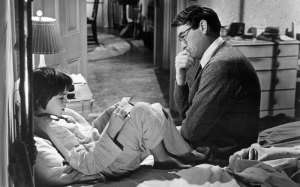
Go Set A Watchman, the “lost” book by Harper Lee will be published on Tuesday, July 14, and you can read the first chapter at The Wall Street Journal this morning. Here’s the introductory blurb from the WSJ:
In 1957, when she was 31 years old, Harper Lee submitted her first attempt at a novel to the publisher J.B. Lippincott.
Titled ‘Go Set a Watchman,’ it was set in the ’50s and opened with a woman named Jean Louise Finch returning home to Alabama. Ms. Lee’s editor found the story lacking but, seizing on flashback scenes, suggested that she write instead about her protagonist as a young girl. The result was a Pulitzer Prize-winning classic: ‘To Kill a Mockingbird.’
‘Go Set a Watchman’ will be published on Tuesday. It has undergone very little editing. “It was made clear to us that Harper Lee wanted it published as it was,” Jonathan Burnham, publisher of HarperCollins’s Harper imprint, said in a statement. “We gave the book a very light copy edit.”
The first chapter of ‘Go Set a Watchman’ introduces Ms. Lee’s beloved character, Scout, as a sexually liberated woman in her twenties, traveling from New York to Alabama to visit her ailing father and weigh a marriage proposal from a childhood friend. It also includes a bombshell about Scout’s brother.
–Jennifer Maloney
The Irish Times on the conflicting stories about how and when the novel was discovered: New Harper Lee book may have been found years ago.
On the eve of the most anticipated publishing event in years – the release of Harper Lee’s novel Go Set a Watchman – comes yet another strange twist to the tale of how the book made its way to publication, a development that further clouds the story of serendipitous discovery that generated both excitement and scepticism in February.
As HarperCollins, the publisher, and Lee’s lawyer, Tonja B Carter, have told it, Carter set out to review an old typescript of To Kill a Mockingbird in August and happened upon an entirely different novel – one with the same characters but set 20 years later – attached to it.
“I was so stunned,” Carter told The New York Times last winter. But another narrative has emerged that suggests the discovery may have happened years earlier, in October 2011, when Justin Caldwell, a rare books expert from Sotheby’s auction house, flew to Alabama to meet with Carter and Samuel Pinkus, then Lee’s literary agent, to appraise a Mockingbird manuscript for insurance and other purposes.
The discrepancy between the two accounts raises questions about whether the book was lost and accidently recovered and about why Lee would not have sought to publish it earlier.
Click the link to read the rest.

Another interesting story from the Aiken Standard: Looking for traces of ‘Mockingbird’ in Harper Lee’s hometown.
MONROEVILLE, Ala. (AP) — Harper Lee’s novel “To Kill a Mockingbird” is always nearby in the southwest Alabama town of Monroeville.
The quiet city is the birthplace and current home of the 89-year-old author, and it inspired the fictional town of Maycomb in her Pulitzer Prize-winning book about race and injustice in the Deep South of the 1930s.
There are other spots around town that actually helped make “Mockingbird,” released 55 years ago.
Start at Mel’s Dairy Dream on South Alabama Avenue, a busy main road in the town of 6,300 people, and walk north toward the square.
The small block restaurant, ringed by service windows and a counter where customers plop down money for ice cream cones, stands on the site of Lee’s childhood home, which was torn down decades ago. Mel’s is just a short walk from the school where Lee attended classes and, by extension, her alter-ego Scout and Jem began their “longest journey together” at the book’s climax.
Lee shared the old house with siblings, her mother and father A.C. Lee, an attorney and Alabama legislator who was the basis for Atticus Finch. Finch returns in “Watchman” as his daughter goes home to Maycomb 20 years later as an adult to the town that shaped her, according to the publisher.
Next door to Mel’s and across a weathered stone fence is a grassy lot with the remains of a house foundation and a historic marker that recalls the site as the one-time home of author Truman Capote, Lee’s childhood friend and the inspiration for the character “Dill” in Mockingbird. As adults, the two collaborated on Capote’s classic crime story “In Cold Blood,” published in 1966.
Read more at the link.
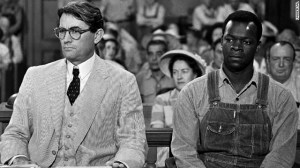 To Kill A Mockingbird was published in 1960; the film version came out in 1962. Links to some background on the movie:
Blu-Ray.com: The Making of To Kill A Mockingbird, by Robert Siegel (2012).
The Wall Street Journal: The Real Story Behind ‘To Kill a Mockingbird’ (2011).
The Daily Beast: ‘To Kill a Mockingbird’ Makes Its Mark, 50 Years After the Film’s Release, by Sandra McElwaine (2012).
Turner Classic Movies: Behind the Camera on To Kill A Mockingbird.
Political News
Republicans are really excited about Bernie Sanders, and they seem to be doing everything they can to convince Democrats to vote for him instead of Hillary Clinton–you know, the woman who can beat any of the GOP candidates handily.
 At The Daily Beast, Stuart Stevens, one of the masterminds of Mitt Romney’s failed 2012 presidential campaign explains how Hillary is going to lose the primary to Bernie Sanders.
Here’s what we know has happened so far in the Democratic primary for president. Since Hillary Clinton started spending money, hiring staff and campaigning, she has lost votes. In Iowa and New Hampshire, she was doing better in the polls in January than she is today. Heck, she had more votes last month than she has today.
Politics is about trends and the one thing we know is that trends escalate in speed as elections near. Even starting out with the huge lead that she did, Clinton can’t allow Sanders to keep gaining votes while she loses votes in the hope that the bleeding won’t be fatal in the long run.
So far Clinton’s approach has been to try to demonstrate to the element of the party that finds Sanders so appealing that she is really one of them. This seems like an extremely flawed strategy that plays directly to Sanders’s strengths. If the contest is going to come down to who can be the most pure liberal, the best bet is on the guy who actually is a socialist. Particularly when running against someone with Hillary Clinton’s long record of being everything that the current left of her party hates.
The truth is, Hillary Clinton has supported every U.S. war since Vietnam. She supported not only DOMA, which her husband signed, but a travel ban on those who were HIV positive. She supported welfare cuts (remember her husband’s efforts toward “ending welfare as we know it”?). She supports the death penalty and campaigned in her husband’s place during the 1992 New Hampshire primary when he left to oversee the execution of an African-American man whose suicide attempt left him brain damaged.
And so on . . . bla bla bla . . .

Truman Capote and Harper Lee in Holcome during the filming of To Kill A Mockingbird
Dylan Byers is very concerned about the New York Times choosing to leave Ted Cruz’s book of their best seller list.
Cruz’s “A Time For Truth,” published on June 30, sold 11,854 copies in its first week, according to Nielsen Bookscan’s hardcover sale numbers. That’s more than 18 of the 20 titles that will appear on the bestseller list for the week ending July 4. Aziz Ansari’s “Modern Romance,” which is #2 on the list, sold fewer than 10,000 copies. Ann Coulter’s “Adios America,” at #11, sold just over half as many copies.
“A Time For Truth” has also sold more copies in a single week than Rand Paul’s “Taking a Stand,” which has been out for more than a month, and more than Marco Rubio’s “American Dreams,” which has been out for six months. It is currently #4 on the Wall Street Journal hardcover list, #4 on the Publisher’s Weekly hardcover list, #4 on the Bookscan hardcover list, and #1 on the Conservative Book Club list.
This week, HarperCollins, the book’s publisher, sent a letter to The New York Times inquiring about Cruz’s omission from the list, sources with knowledge of the situation said. The Times responded by telling HarperCollins that the book did not meet their criteria for inclusion.
“We have uniform standards that we apply to our best seller list, which includes an analysis of book sales that goes beyond simply the number of books sold,” Times spokesperson Eileen Murphy explained when asked about the omission. “This book didn’t meet that standard this week.”
What was the problem with the sales of Cruz’s book?
“In the case of this book, the overwhelming preponderance of evidence was that sales were limited to strategic bulk purchases,” she wrote.
That figures.

Gregory Peck with Harper Lee on the set of To Kill A Mockingbird
Following up on Jeb Bush’s “work e hours” gaffe:
Vox: Jeb Bush and longer working hours: gaffesplainer 2016.
Jeb Bush’s stated goal of 4 percent annual GDP growth, though unrealistic, in general sounds nice. But during a New Hampshire Union Leader interview live-streamed on Periscope, Bush got granular about his plan, revealing that part of the dream is for Americans to work longer hours. The Democratic National Committee and Hillary Clinton’s campaign have both smelled gaffe and responded with mocking counter press releases, depicting Jeb as smug and out of touch.
tl;dr
Jeb is not being quoted out of context; he really said this.
Jeb is not mistaken: Longer hours worked would push up the GDP growth rate.
Americans already work abnormally long hours for the developed world.
Jeb has no particular policy ideas to make this happen.
Read the rest at Vox.

Josh Marshall at TPM: We’ve Met the Doofus. And He is Jeb.
It goes without saying that it’s probably not good politics to say your plan to move the country forward is that everyone needs to work longer hours. It approaches 47% level toxicity. Even more damning is that it makes zero sense in policy terms. Indeed, Jeb’s ‘work harder’ prescription provides harrowing look at the level of derp that can be produced when you take a guy who isn’t all that bright and push him to the head of the national leadership line without ever having put in an honest day’s work or support himself in his life.
Let’s look at what Bush said. In order to get to 4% economic growth forever, people need to work longer hours.
As our piece here notes, American workers already log dramatically more hours a week than they did a generation ago. They also work more hours a week than workers in any other industrialized economy. It’s sort of a judgment call whether this is a good thing or a bad thing. But unless American workers are part of a different species than people everywhere else in the world there are obviously limits to how many hours people can work every week without severe adverse effects on health, basic perceptions of quality of life and the quality of the work they do….
There are arguments that more people need to be working (there are also good arguments to the contrary). And there is a real problem with underemployment – people who are involuntarily working less 40 hours a week. But Bush didn’t say that more people need to be working (questionable) or that more people need to be able to get full-time jobs (true). He said people need to work longer hours….
It’s unclear to me whether Bush doesn’t even fully understand the policies his advisors are trying to explain to him or whether this is just standard patrician work ethic morality. Whichever it is, the real structural problem in our economy is stagnant wages for more than a generation for most of the population.
 More news, links only
Politico: Want to Meet America’s Worst Racists? Come to the Northwest.
Detroit Free Press: Judge jails kids for refusing lunch with dad.
The Hill: Pelosi ambushes GOP with Confederate flag resolution.
TPM: Rep. Behind Confederate Flag Vote: GOP Leadership Asked Me To Do It.
Raw Story: Here are 11 things other countries do way better than America.
Politico: 21.5 million exposed in second hack of federal office.
Philip Rucker at the WaPo: Hillary Clinton’s push on gun control marks a shift in presidential politics.
What else is happening? Please share your thoughts and links in the comment thread, and have a great weekend!
Did you like this post? Please share it with your friends:
Posted: July 9, 2015 | Author: bostonboomer | Filed under: morning reads, Republican politics, U.S. Politics | Tags: Confederate flag, Donald Trump, GOP Clown Car, Jeb Bush, Jim Webb, Mary Cassatt, Reince Priebus, South Carolina |

Young Lady Reading, by Mary Cassatt
Good Morning!!
The Confederate Flag Debate in South Carolina
The South Carolina House has voted to remove the Confederate flag from the state capital grounds, according to The Charlotte Observer. The bill will now go to Governor Nikki Haley. Once she has signed it, I hope the flag will be taken down immediately.
The Confederate flag will leave the South Carolina State House grounds after five decades this week after the House overwhelmingly approved a bill to remove the Civil War icon early Thursday morning.
The House voted 94-20 to banish the flag from the Capitol after more than 12 hours of debate over the historic measure.
The bill now heads to Gov. Nikki Haley for her signature. Haley started the call for removing the flag in the days after nine African-Americans were shot and killed in a historic Charleston church last month.

Nurse reading to a little girl, Mary Cassatt
“It is a new day in South Carolina, a day we can all be proud of, a day that truly brings us all together as we continue to heal, as one people and one state,” Haley said in a Facebook post.
If Haley signs the bill Thursday, the flag could be taken down Friday.
A two-thirds majority vote in the House was needed for final passage, a requirement of the the 2000 law that took the flag off the State House dome and put it next to the Confederate Soldier Monument on the north side of the Capitol.
The House gave final approval to the final two readings of the bill within minutes of each other at 1 a.m. Thursday. The Senate approved removing the flag on Tuesday.
Republicans fought tooth and nail, but
The House did not change the Senate bill after spending much of Wednesday considering amendments from Republicans who insisted on finding another way to honor the Confederate dead if the controversial banner was removed from the State House grounds.
More than 25 amendments were voted down or rejected before they came for a vote.

Auguste reading to her daughter, Mary Cassatt
Democratic presidential contender Jim Webb, a former senator from Virginia, sought Thursday to clarify his views on the Confederate battle flag, saying it has “long been due to come down” from the capitol grounds in South Carolina.
Webb’s position was more opaque in a Facebook posting last month in which he called for respecting “the complicated history of the Civil War” at a time when emotions were running high following the shootings at an historic African American church in Charleston, S.C.
During an appearance Thursday on “CBS This Morning” — billed as Webb’s first interview since declaring as a long-shot presidential candidate last week — he spoke approvingly of the South Carolina legislature’s overnight vote to take the flag down.
“It assumed a lot of unfortunate racist and divisionist overtones during the civil rights era,” Webb said.
I don’t see how the flag could have been more racist or divisive in the 1960s that it was 100 years earlier when it represented the fight to preserve slavery and secession.
Speaking again of the “very complex history of the Civil War itself,” Webb cited a statistic that only 5 percent of whites in the South owned slaves and that four slave states remained in the union during the Civil War.
“If you were a young person being called to duty during that period, this was a very complicated decision to make, and we should remember that,” Webb said.
Whatever. These days, only 1% of the population wants to turn everyone else into serfs, and they have quite a bit of power to control the public dialogue.
The GOP Clown Car

Francoise in a round backed chair, reading, Mary Cassatt
The powers that be in the Republican Party are struggling to get fake presidential candidate Donald Trump under control, and they are doing a very poor job of it.
NBC News reports: GOP Chief Reince Priebus Calls Donald Trump to Tell Him to ‘Tone It Down.’
Republican National Committee Chairman Reince Priebus called presidential candidate Donald Trump and asked him to pull back his rhetoric on immigration, a source familiar with the conversation told NBC News on Wednesday.
The source, who asked not to be identified, said Priebus made the request to “tone it down” during an almost hour-long conversation covering a wide range of issues when he returned an earlier call from Trump.
Trump disputed that account on Twitter, saying that Priebus said during the call that he was “doing well.”
Hahahahahahahahaha!!! They’re going to need someone a lot more powerful than Priebus to get Trump to STFU.
According to The Washington Post: GOP leaders fear damage to party’s image as Donald Trump doubles down.
The head of the Republican National Committee, responding to demands from increasingly worried party leaders, spent nearly an hour Wednesday on the phone with Donald Trump, urging the presidential candidate to tone down his inflammatory comments about immigration that have infuriated a key election constituency.
The call from Chairman Reince Priebus, described by donors and consultants briefed on the conversation and confirmed by the RNC, underscores the extent to which Trump has gone from an embarrassment to a cause for serious alarm among top Republicans in Washington and nationwide.
But there is little they can do about the mogul and reality-television star, who draws sustenance from controversy and attention. And some fear that, with assistance from Democrats, Trump could become the face of the GOP.
Rather than backing down from his comments about illegal immigrants — whom he characterized as rapists and killers, among other things — Trump has amplified his remarks at every opportunity, including in a round of interviews Wednesday.
He insisted to NBC News that he has “nothing to apologize for” in his repeated remarks about Mexicans. But he also predicted that, if he secures the GOP nomination, “I’ll win the Latino vote.”
OMG! ROFLMAF! The Republican Party’s “image” is already shot to hell. I’m not sure even keeping Trump in the Clown Car can make it much worse.

Mrs. Duffee Reading on Striped Sofa, Mary Cassatt
Dana Millbank: Donald Trump is the monster the GOP created.
It has been amusing to watch the brands — the PGA, NBC, Macy’s, NASCAR, Univision, Serta — flee Donald Trump after his xenophobic remarks. Who even knew The Donald had a line of mattresses featuring Cool Action Dual Effects Gel Memory Foam?
But there is one entity that can’t dump Trump, no matter how hard it tries: the GOP. The Republican Party can’t dump Trump because Trump is the Republican Party.
One big Republican donor this week floated to the Associated Press the idea of having candidates boycott debates if the tycoon is onstage. Jeb Bush, Lindsey Graham and other candidates have lined up to say, as Rick Perry put it, that “Donald Trump does not represent the Republican Party.”
But actually, he does represent the party’s views. He’s just more up front about them than the rest of the mealy mouthed GOP candidates.
But Trump has merely held up a mirror to the GOP. The man, long experience has shown, believes in nothing other than himself. He has, conveniently, selected the precise basket of issues that Republicans want to hear about — or at least a significant proportion of Republican primary voters. He may be saying things more colorfully than others when he talks about Mexico sending rapists across the border, but his views show that, far from being an outlier, he is hitting all the erogenous zones of the GOP electorate.
Anti-immigrant? Against Common Core education standards? For repealing Obamacare? Against same-sex marriage? Antiabortion? Anti-tax? Anti-China? Virulent in questioning President Obama’s legitimacy? Check, check, check, check, check, check, check and check.

Mary Cassatt, The Reader
More good stuff at the link. BTW, Trump is topping all other GOP candidates in the South Carolina PPP poll. What does that tell you?
PPP’s newest North Carolina poll finds that Donald Trump’s momentum just keeps on building. He’s the top choice of Republican primary voters in the state, getting 16% to 12% for Jeb Bush and Scott Walker, 11% for Mike Huckabee, 9% for Ben Carson and Marco Rubio, 7% for Rand Paul, 6% for Ted Cruz, 5% for Chris Christie, 4% for Carly Fiorina, 2% for Rick Perry, 1% each for Lindsey Graham, Bobby Jindal, and Rick Santorum, and less than 1% each for John Kasich and George Pataki.
Trump’s favorability rating in North Carolina is 55/32, much higher than we were finding in national polls prior to his entry into the race. Trump’s really caught fire with voters on the far right- 66% of ‘very conservative’ voters see him favorably to only 24% with a negative view of him. Trump is polling particularly well with younger voters (29%) and men (20%).
Another racist homophobe has the highest favorability rating in SC–Mike Huckabee at 65/19.
Another popular Clown Car passenger, Jeb Bush, has put his foot in his mouth once again. In an interview with New Hampshire’s ultra-conservative Manchester Union Leader, Bush recommended that “people should work longer hours.”
Republican presidential candidate Jeb Bush said Wednesday that in order to grow the economy “people should work longer hours” — a comment that the Bush campaign argues was a reference to underemployed part-time workers but which Democrats are already using to attack him….
He was answering a question about his plans for tax reform and responded:
“My aspiration for the country and I believe we can achieve it, is 4 percent growth as far as the eye can see. Which means we have to be a lot more productive, workforce participation has to rise from its all-time modern lows. It means that people need to work longer hours” and, through their productivity, gain more income for their families. That’s the only way we’re going to get out of this rut that we’re in.”
Already the Democratic National Committee has pounced, releasing a statement that calls his remarks “easily one of the most out-of-touch comments we’ve heard so far this cycle,” adding that Bush would not fight for the middle class as president.
Read about Bush’s “clarification” at the Washington Post.

Mrs. Cassatt reading to her grandchildren, Mary Cassatt
More News (links only)
Newsweek: Real Vampires Exist, and They Need Counseling Too.
Reuters, via Raw Story: Same-sex couples to get federal marriage benefits: attorney general.
Raw Story: All GOP presidential hopefuls decline speaking invite to America’s largest annual gathering of Latino.
Talking Points Memo: Matthews Blasts Cruz: SCOTUS ‘Seized’ 2000 Election, ‘You Did Not Complain’ (VIDEO).
Gawker: Garbage Joke News Website Fools Presidential Hopeful Martin O’Malley
Buzzfeed: White Supremacy, LMFAO, LOL. Inside the lightning-fast, wildly absurd, occasionally terrifying world of app-based teenage white supremacy.
Washington Post: Thomas Piketty accuses Germany of forgetting history as it lectures Greece.
Tech Times: Exxon Documents Hint That Oil Companies Have Known About Climate Change Since 1981.
Did you like this post? Please share it with your friends:
Posted: July 7, 2015 | Author: bostonboomer | Filed under: 2016 elections, morning reads, Republican politics, U.S. Politics | Tags: Bernie Sanders, Bill Cosby, Confederate flag, Donald Trump, Hillary Clinton, Lee Bright, same-sex marriage |

L’Estaque, by Andre Derain
Good Morning!!
I think my poison oak outbreak is improving a bit. The rash is still spreading and it’s still very itchy, but it’s a little better than it was. At least it doesn’t feel like my skin is on fire. I stopped taking the powerful antihistamine/anesthetic the doctor gave me and went back to Benedryl. I’m still very groggy this morning, but I think if I can put up with the itching and avoid taking more Benedryl, my brain fog should clear up by this afternoon.
I can’t really focus enough to do any serious reading, so this will just be a link dump of recent news stories.
I wish Donald Trump would just go away, but he’s determined to completely embarrass himself first.
TPM reports: Trump Lashes Out At Critics, Makes Incendiary New Claims About Mexico.
In a lengthy written statement Monday, Donald Trump doubled down on his recent remarks about Mexican immigrants being “rapists” and criminals, making the additional claim that “tremendous infectious disease is pouring across the border.” Accusing his critics of distorting his words, Trump’s statement did nothing to appease them after a days-long mass exodus of business partners and fellow Republicans trying to distance themselves from his comments.
In the three-page-long statement posted online, the billionaire reality TV star reprinted the text in question from his now-infamous presidential announcement speech, which he says “is deliberately distorted by the media.”
“What can be simpler or more accurately stated? The Mexican Government is forcing their most unwanted people into the United States. They are, in many cases, criminals, drug dealers, rapists, etc.,” he said in the statement.
Trump went on to say “many fabulous people come in from Mexico,” and also broadened his call for immediately securing the border by saying Mexican leaders are much more “cunning” when it comes to trade deals with the U.S. and that infectious disease is “pouring across the border.”

A Cup of Tea, Andre Derain
Read the entire creepy statement at the link. A little more from Business Insider: Donald Trump just released an epic statement raging against Mexican immigrants and ‘disease.’
“The largest suppliers of heroin, cocaine and other illicit drugs are Mexican cartels that arrange to have Mexican immigrants trying to cross the borders and smuggle in the drugs. The Border Patrol knows this,” Trump wrote. “Likewise, tremendous infectious disease is pouring across the border. The United States has become a dumping ground for Mexico and, in fact, for many other parts of the world.”
Shortly before releasing his statement, Trump gave an interview to Business Insider where he described the idea that the Mexican government is deliberately “pushing the bad ones” to the US as the one element of his position on immigration that hasn’t gotten enough attention….
Trump also argued the Mexican government “not our friend” and is taking advantage of the US on “bad trade deals.”
“The Mexican Government wants an open border as long as it’s a ONE WAY open border into the United States. Not only are they killing us at the border, but they are killing us on trade … and the country of Mexico is making billions of dollars in doing so,” he wrote. “I have great respect for Mexico and love their people and their peoples’ great spirit. The problem is, however, that their leaders are far smarter, more cunning, and better negotiators than ours. To the citizens of the United States, who I will represent far better than anyone else as President, the Mexican government is not our friend…and why should they be when the relationship is totally one sided in their favor on both illegal immigration and trade.”
Trump concluded by taking shots at some of the businesses who have severed ties with him.
“I have lost a lot during this Presidential run defending the people of the United States. I have always heard that it is very hard for a successful person to run for President. Macy’s, NBC, Serta and NASCAR have all taken the weak and very sad position of being politically correct even though they are wrong in terms of what is good for our country,” Trump wrote.

A man reading a newspaper, Andre Derain
According to Business Insider, Republican donors are getting increasingly nervous about Trump: One GOP donor wants to block Donald Trump from the debate stage.
WASHINGTON (AP) — Worried about “Republican-on-Republican violence,” top party donors are taking action, with one firing off a letter calling for more civility and another seeking to block businessman Donald Trump from the debate stage altogether.
Foster Friess, a Wyoming-based investor and one of the party’s top 20 donors in the last presidential contest, issued a letter to 16 White House prospects and the Republican National Committee late last week calling for candidates to stay on the “civility reservation.”
“Our candidates will benefit if they all submit to Ronald Reagan’s 11th Commandment, ‘Thou shall not speak ill of a fellow Republican,'” Friess wrote in a letter sent to Republican National Committee chairman Reince Priebus. A copy was obtained by The Associated Press.
In the dispatch, Friess cites the backing of casino magnate Sheldon Adelson and Chicago Cubs co-owner Todd Ricketts. “Would you join the effort to inspire a more civil way of making their points?” Friess wrote. “If they drift off the ‘civility reservation,’ let’s all immediately communicate that to them.”
Good luck with that.
Speaking of creepy people, Bill Cosby is back in the news.
The AP reports: Cosby said he got drugs to give women for sex.
PHILADELPHIA (AP) — Bill Cosby testified in 2005 that he got Quaaludes with the intent of giving them to young women he wanted to have sex with, and he admitted giving the sedative to at least one woman and “other people,” according to documents obtained Monday by The Associated Press.
The AP had gone to court to compel the release of the documents; Cosby’s lawyers had objected on the grounds that it would embarrass their client.
The 77-year-old comedian was testifying under oath in a lawsuit filed by a former Temple University employee. He testified he gave her three half-pills of Benadryl.
Cosby settled that sexual-abuse lawsuit for undisclosed terms in 2006. His lawyers in the Philadelphia case did not immediately return phone calls Monday.
Cosby has been accused by more than two dozen women of sexual misconduct, including allegations by many that he drugged and raped them in incidents dating back more than four decades. Cosby, 77, has never been criminally charged, and most of the accusations are barred by statutes of limitations.

Portrait of a woman, Andre Derain
From NBC News: Judge Explains Why He Unsealed Bill Cosby Court Documents.
A federal judge said one of the reasons he unsealed court documents in which Bill Cosby admits he gave a woman drugs before sex is because of the disconnect between the comedian’s upright public persona and the serious allegations against him.
“The stark contrast between Bill Cosby, the public moralist and Bill Cosby, the subject of serious allegations concerning improper (and perhaps criminal) conduct is a matter as to which the AP — and by extension the public — has a significant interest,” Judge Eduardo Robreno wrote in a memorandum Monday. The documents were released after a request from The Associated Press.
Cosby said in a 2005 legal deposition that he had obtained prescriptions of a powerful sedative to give to women with whom he wanted to have sex, according to the documents. His testimony was part of a civil suit involving a woman who accused him of drugging her and sexually assaulting her.
The actor was not charged in connection with these claims and the case was dismissed in 2006.
His lawyers had fought the documents’ release, saying it would be “terribly embarrassing.” Last month, Cosby’s lawyers and lawyers for the AP argued over whether Cosby was a public figure entitled to a lesser degree of privacy.
Robreno wrote Monday that the case “is not about the Defendant’s status as a public person by virtue of the exercise of his trade as a televised or comedic personality. Rather, Defendant has donned the mantle of public moralist and mounted the proverbial electronic or print soap box to volunteer his views on, among other things, childrearing, family life, education, and crime.”
Crazy GOPers
Yesterday, a GOP state senator in South Carolina flipped out during the debate over removing the Confederate flag from the state house grounds, according to Raw Story.

The Dance, Andre Derain
‘The devil is taking control’: Watch SC senator derail Confederate flag debate with insane gay marriage rant.
South Carolina state Sen. Lee Bright (R) began debate about removing the Confederate flag from the statehouse grounds on Monday with a passionate plea for lawmakers to focus on same-sex marriage instead.
As the senators prepared to debate a measure that would remove the flag, Bright took to the floor to point out that President Barack Obama sang “Amazing Grace” at the funeral for nine black church members in Charleston and then later that night the White House was illuminated in rainbow colors to celebrate a Supreme Court decision that legalized same-sex marriage.
“I watch the White House be lit up in the abomination colors!” Bright said. “It is time for the church to rise up…. Romans chapter 1 is clear, the Bible is clear. This nation was founded on Judeo-Christian principles and they are under assault by men in black robes who were not elected by you.”
Bright argued that lawmakers should be protecting county clerks from the “tyranny” of having to issue marriage licenses to gay and lesbian couples instead of debating the Confederate flag.
“Our governor called us in to deal with the flag that sits out front, let’s deal with the national sin that we face today!” he exclaimed. “We talk about abortion but this gay marriage thing, I believe will be one nation gone under like President Reagan said. If we’re not one nation under God, we’ll be one nation gone under.
Read the rest of Bright’s rant at Raw Story.
A couple of stories on the Democratic nomination race…
National Journal: Here’s the Real Reason Hillary Clinton Has a Lock on the Democratic Nomination.
Hillary Clinton is a near-lock for the Democratic nomination for many reasons, but among the most significant is that her challengers have minimal appeal to the party’s base of African-American voters….
Vermont Sen. Bernie Sanders, the challenger with the most momentum, represents a state that’s 95 percent white, where Asian-Americans and multi-racial voters outnumber blacks. He’s focused most of his campaign message on income inequality, constraining Wall Street excess, and campaign finance reform, while avoiding discussions on race relations, urban policing, or gun control. Only 25 percent of non-white Democratic voters said they’d even consider backing the senator’s presidential bid, according to last month’s NBC/Wall Street Journal survey.
Former Maryland Gov. Martin O’Malley, despite representing a state where nearly half of Democratic voters are black, has been unable to make inroads with his onetime political base. In fact, he drew some jeers when he returned to Baltimore in the wake of violent rioting that tore apart the city. As mayor, his tough-on-crime measures were popular with Maryland voters, but the no-tolerance approach alienated many African-American voters in the state’s largest city. Even some of his base-pleasing accomplishments as governor—such as his early support for gay marriage—hold limited appeal with black voters. In a recent speech, he awkwardly compared his experience as a “minority white candidate” for mayor to the broader African-American experience.
Meanwhile, Clinton’s other rival is more conservative than the entire Republican presidential field when it comes to the Confederate flag. Former Sen. Jim Webb, who was the Democrats’ Senate majority-maker less than a decade ago, now finds himself badly out of step with his party on civil rights issues. On Facebook, he called for “mutual respect” when considering the Confederate flag in a way that “respects the complicated history of the Civil War.” He will struggle to make inroads with minorities, given how out of step he is with an increasingly progressive Democratic base.
Polls in Iowa and New Hampshire may show Clinton with less-than-commanding leads over Sanders and everyone else, but take those results with a grain of salt; they don’t mean much going forward. Iowa and New Hampshire have among the most homogeneous Democratic electorates in the country, demographically disconnected from the party’s base in most other states.

The Trees, Andre Derain
At Vox, Jonathan Allen admits that reporters still follow the Clinton Rules: Confessions of a Clinton reporter: The media’s 5 unspoken rules for covering Hillary.
The Clinton rules are driven by reporters’ and editors’ desire to score the ultimate prize in contemporary journalism: the scoop that brings down Hillary Clinton and her family’s political empire. At least in that way, Republicans and the media have a common interest.
I understand these dynamics well, having co-written a book that demonstrated how Bill and Hillary Clinton used Hillary’s time at State to build the family political operation and set up for their fourth presidential campaign. That is to say, I’ve done a lot of research about the Clintons’ relationship with the media, and experienced it firsthand. As an author, I felt that I owed it to myself and the reader to report, investigate, and write with the same mix of curiosity, skepticism, rigor, and compassion that I would use with any other subject. I wanted to sell books, of course. But the easier way to do that — proven over time — is to write as though the Clintons are the purest form of evil. The same holds for daily reporting. Want to drive traffic to a website? Write something nasty about a Clinton, particularly Hillary.
Read Allen’s take on the Clinton Rules at the link.
Finally, from Slate’s Jamelle Bouie: Why Bernie Sanders Is the Left’s Ron Paul.
In just a few months, Sanders has moved from the periphery of American politics to the mainstream, as the most visible and popular alternative to Clinton, vastly outpacing former Maryland Gov. Martin O’Malley and former Virginia Sen. Jim Webb, who recently announced his candidacy. But visibility isn’t viability, and there’s almost no chance Sanders will become the Democratic Party’s presidential nominee, even ifhe sustains his momentum into next year.
Despite the polls and the voting, presidential primaries aren’t popularity contests. Instead, they’re closer to negotiations, where interests and individuals work to choose a leader and representative for the entire group. That person has to appeal to everyone, from ideological factions and political power centers to wealthy donors and ordinary voters and activists. The candidate also has to show that he or she can do the work of a national campaign, from winning debates to raising money.
Clinton has done this. She came close to winning the 2008 nomination and spent the next seven years—right up to the present—building her stature in Democratic politics. A moderate liberal committed to most of Barack Obama’s domestic and foreign policy agenda, she’s acceptable to almost everyone in the party—in a national poll of the Democratic field from NBC News and the Wall Street Journal, she has a whopping 75 percent of the vote.
Which brings us back to Bernie. Sanders is a fascinating candidate with a vital, underrepresented message in American politics. But the same qualities that make him unique—relative independence from the Democratic Party, a foundational critique of American politics—make him unsuited for a major party nomination, much less the Democratic one. The more moderate and conservative parts of the Democratic coalition won’t support a left-wing candidate like Sanders, and the more strategic voters—party stalwarts like black Americans—will be skeptical that Sanders could win the White House, even if they agree with his ideas and policies.
Read the whole thing at the link.
So . . . . what else is happening? Please let us know in the comment thread and have a terrific Tuesday.
Did you like this post? Please share it with your friends:


 peej
peej Carissa
 bostonboomer
 dakinikat
 ecocatwoman
 jjlo
jjlo mablue2
 Mama Lopez
 peggysue22
 quixote
 skydancingguestblogger
 Mona (aka Wonk the Vote)





Recent Comments