Posted: November 5, 2016 | Author: bostonboomer | Filed under: morning reads, U.S. Politics | Tags: Beyonce, Donald Trump, early voting, Hillary Clinton, Jay Z, Jennifer Lopez, Katy Perry, Latinos, Marc Anthony |
Good Morning!!
This election is looking very good for Hillary Clinton. In just three more days, she will more than likely be President Elect Hillary Clinton. I can’t wait to vote for her on Tuesday! I thought about voting early, but I finally decided to wait and go to my regular polling place on election day. That will be a very special moment. I already shed some tears when I voted for Hillary in the 2008 primary and again in the 2016 primary. But Tuesday will be the big enchilada.
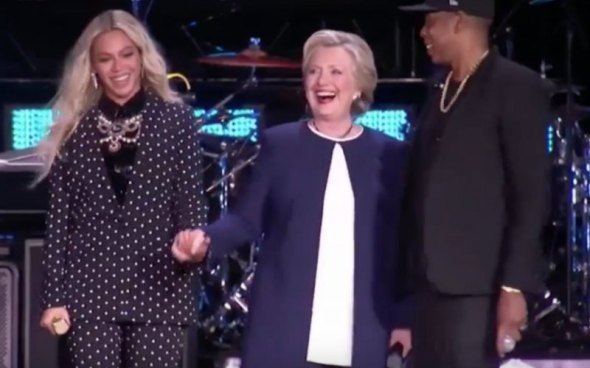
Last night Hillary appeared with Jay Z and Beyonce at the get-out-the-vote concert in Cleveland. NYT:
In an election year when Hillary Clinton is depending on young black voters to turn out, she may have gotten her biggest boost yet here on Friday.
Some of the most famous names in hip-hop came out to rally votes for her at an event that featured Beyoncé, Jay Z and Chance the Rapper, all of whom implored thousands of cheering people to back the Democratic presidential nominee.
“Hello, Cleveland!” Mrs. Clinton said as she stood onstage with Beyoncé and Jay Z.
Mrs. Clinton called Beyoncé “a woman who is an inspiration to so many others” and thanked Jay Z “for addressing in his music some of our biggest challenges in the country: poverty, racism, the urgent need for criminal justice reform.”
“When I see them here, this passion and energy and intensity, I don’t even know where to begin because this is what America is, my friends,” she said.
At the concert, aimed largely at urging black voters and millennials to vote on Tuesday, some of the biggest stars emphasized the historical significance of potentially electing the first woman as president.
Cleveland.com:
Jay Z began the concert with “Made in America.” He performed behind a screen that manipulated his face to look like an American flag. A-list artists, including Beyonce, Big Sean, Chance the Rapper, and J. Cole surprised a pumped up crowd….
Jay Z performed behind a black and white photograph of the White House. He repeated Clinton’s campaign slogan: “Stronger Together.”
Each special performer emerged, one after another, thrilling the crowd of about 10,000. Politics overlaid performance. Words flashed behind the musicians on a large screen:
- “Bad officials are elected by good citizens who do not vote”
- “And on that day I did nothing”
- “Shape Tomorrow, Vote Today”
- “Your voice, your vote”
The crowd erupted in screams as Beyonce took the stage. Queen B delivered a heartfelt speech about what seeing a woman in the White House means to her.
“There was a time when a woman’s opinion did not matter if you were black, if you were white, Mexican, Asian, Muslim, educated, poor or rich. If you were a woman, it did not matter. Less than 100 years ago, women did not have the right to vote. Look how far we’ve come from having no voice to being on the brink of making history, again, by electing the first woman president. But we have to vote. The world looks to us as a progressive country that leads change,” Beyonce said. “I want my daughter to grow up seeing a woman lead our country.”
She transitioned into an appropriately patriotic song: Freedom. And followed it up with a medley of female empowerment songs: “Independent Women,” and “Run the World (Girls).”
The screen behind her flashed: “I’m with her.”

Hillary at concert with Jennifer Lopez and Marc Anthony in Miami
And who was campaigning for Donald Trump? NYT: Big Names Campaigning for Hillary Clinton Underscore Donald Trump’s Isolation.
Hillary Clinton campaigned Friday in the company of friends and celebrities, first flanked by the billionaire businessman Mark Cuban in Pittsburgh and Detroit, and then at a concert in Cleveland with Jay Z and Beyoncé. High-wattage political leaders fanned out for her around the country: Her husband, Bill, stumped in Colorado, as President Obama rallied voters in North Carolina.
By comparison, Donald J. Trump was a lonely figure.
In the final days of the presidential race, Mr. Trump’s political isolation has made for an unusual spectacle on the campaign trail — and perhaps a limiting factor in his dogged comeback bid.
When it comes to bolstering Mr. Trump, the Republican Party is not sending its best: As party leaders have disavowed him or declined to back his candidacy, Mr. Trump has been left instead with an eclectic group of backup players to aid him in his last dash for votes. Though polls show Mr. Trump drawing closer to Mrs. Clinton, the most prominent Republicans in key swing states still fear that his unpopularity may taint them by association.
Trump told a crowd in Hershey, PA that he doesn’t need anyone but himself.
“By the way, I didn’t have to bring J. Lo or Jay Z — the only way she gets anybody,” he said. “ I am here all by myself. Just me — no guitar, no piano, no nothing.”
Campaigning in New Hampshire earlier on Friday, Mr. Trump did not appear with either Senator Kelly Ayotte, a Republican seeking re-election, or Chris Sununu, the Republican nominee for governor. Ms. Ayotte withdrew her endorsement of Mr. Trump last month, and Mr. Sununu has kept an awkward distance from Mr. Trump in his closely divided state.
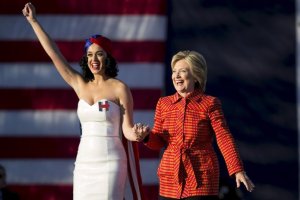
Hillary with Katy Perry in Iowa
Tonight Hillary will be in Philadelphia for a free concert with Katy Perry.
Meanwhile, massive early voting by Latinos in Nevada, Florida, and Arizona is looking very good for Hillary and Democrats.
CNN: Democrats build huge early vote lead in battleground Nevada.
In key regions, the party is matching or outpacing the lead President Barack Obama had at this point in 2012 on his way to a nearly 7-percentage-point win of the state’s six electoral votes.
Clark County — home of Las Vegas and more than two-thirds of Nevada’s active registered voters — saw its record for single-day early vote turnout shattered Friday when 57,174 people cast their ballots, according to
data from the Nevada secretary of state’s office that’s based on the party registration of those who have voted.
Overall, Democrats have built a lead of more than 72,000 votes there — 13.7 points ahead of Republicans, and slightly larger than Obama’s 2012 edge.
Donald Trump will be in Reno on Saturday, but the Republicans almost certainly lost Nevada on Friday.
Trump’s path was nearly impossible, as I have been telling you, before what happened in Clark County on Friday. But now he needs a Miracle in Vegas on Election Day — and a Buffalo Bills Super Bowl championship is more likely — to turn this around. The ripple effect down the ticket probably will cost the Republicans Harry Reid’s Senate seat, two GOP House seats and control of the Legislature.
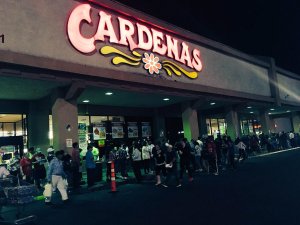
Early voting crowd at Cardenas in Las Vegas
How devastating was it, epitomized by thousands of mostly Latino voters keeping Cardenas market open open in Vegas until 10 PM? This cataclysmic:
—-The Democrats won Clark County by more than 11,000 votes Friday (final mail count not posted yet), a record margin on a record-setting turnout day of 57,000 voters. The Dems now have a firewall — approaching 73,000 ballots — greater than 2012 when Barack Obama won the state by nearly 7 points. The 71,000 of 2012 was slightly higher in percentage terms, but raw votes matter. The lead is 14 percentage points — right at registration. You know what else matters? Registration advantages (142,000 in Clark). Reminder: When the Clark votes were counted from early/mail voting in 2012, Obama had a 69,000 vote lead in Clark County. Game over.
—-The statewide lead (some rurals not posted) will be above 45,000 — slightly under the 48,000 of 2012, but still robust. That’s 6 percentage points, or right about at registration. The GOP turnout advantage was under a percent, worse than 2012 when it was 1.1 percent.
—-The Dems eked out a 200-vote win in Washoe and lead there by 1,000 votes. It was even in 2012. The rural lead, before the stragglers come in, is 27,500. It probably will get above 28,000.
—-Total turnout without those rurals: 768,000, or 52.5 percent. If overall turnout ends up being 80 percent, that means two thirds of the vote is in — close to 2012. Republicans would have to not only win Election Day by close to double digits to turn around the lead Hillary Clinton almost surely has in early voting, but they would have to astronomically boost turnout. The goal for the Dems during early voting was to bank votes and to boost turnout as high as possible to minimize the number of votes left on Election Day to affect races. Folks, the Reid Machine went out with a bang.

Lines for early voting in Arizona
Arizona has seen the largest increase of early voting by Latinos of any state.
As of Oct. 30, nine days before the Nov. 8 election, 13 percent of the early ballots cast in Arizona came from Latino voters, up from 11 percent at the same point prior to the 2012 presidential election and from 8 percent in 2008.
The increase from 2012 to 2016 is the largest increase in early voting by Latinos in any state, according to statistics compiled by Catalist, a data company that works with progressive candidates and groups….
Data tabulated by Arizona’s Democratic Party showed an even bigger increase in early voting by Latinos in Arizona, from 6.2 percent in 2012 to nearly 12 percent through Nov. 1. The data is based on Hispanic surnames.
As of Nov. 1, the share of early balloting from voters with Hispanic surnames was nearly double the same time in 2012….
“There has been a large push by many Latino groups to vote by early ballot by mail to avoid any hassles at the ballot box in presenting ID and Latinos under extra scrutiny at the polls,” Garcia said.
There also are not a lot of undecided Latino voters, many of whom have been turned off by Donald Trump’s harsh comments about Mexicans and immigrants, Garcia said.

98-year-old early voter in Florida
Early voting by Latinos is also setting records in Colorado, Florida, Georgia, and North Carolina.
Donald Trump awakened a sleeping giant with his attacks on Mexicans and immigrants.
More news, links only:
Mother Jones: Exclusive: The Democratic National Committee Has Told the FBI It Found Evidence Its HQ Was Bugged
AP via Politico: Melania Trump modeled in U.S. prior to getting work visa.
Wall Street Journal: National Enquirer Shielded Donald Trump From Playboy Model’s Affair Allegation.
HuffPo: A Guy In A Trump Shirt Carried A Gun Outside Of A Virginia Polling Place. Authorities Say That’s Fine.
Jezebel: The Woman Who Accused Trump of Raping Her at 13 Just Dropped Her Lawsuit.
NBC News: U.S. Govt. Hackers Ready to Hit Back If Russia Tries to Disrupt Election.
Washington Post: Trump is a threat to the West as we know it, even if he loses.
Raw Story: Wolf Blitzer catches Giuliani telling whoppers on FBI connection: ‘Aren’t they feeding you secret information?’
Did you like this post? Please share it with your friends:
Posted: November 3, 2016 | Author: bostonboomer | Filed under: morning reads, U.S. Politics | Tags: Donald Trump, FBI, Hillary Clinton, James Comey, Rudy Giuliani |
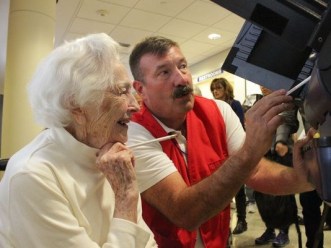
100-year-old Gertrude Gottschalk of Carson City, NV, casts her ballot. for Hillary.
Good Afternoon!!
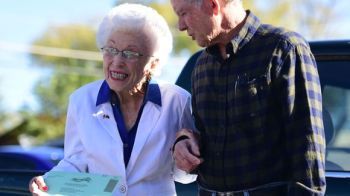
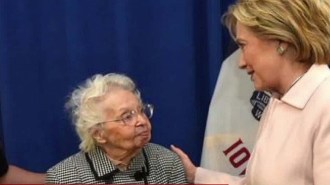
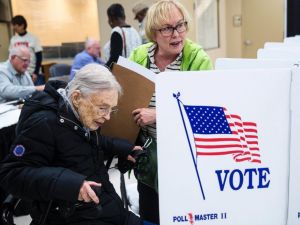
This post is illustrated with photos of women who were born before women’s suffrage and are voting for Hillary Clinton.
Just 5 more days until November 8. Then another day of waiting for the votes to be counted. After Hillary wins and we celebrate our first woman President and the ignominious defeat of the authoritarian fascist psychopath, there is going to have to be a major housecleaning at the FBI.
Before I get into the FBI news, some wisdom from 2012 Obama campaign manager Jim Messina.
The Election Polls That Matter. You need to read the whole thing at the NYT, but here’s are some excerpts:
The best campaigns don’t bother with national polls — I’ve come to hate public polling, period. In the 2012 race we focused on a “golden report,” which included 62,000 simulations to determine Mr. Obama’s chances of winning battleground states. It included state tracking polls and nightly calls from volunteers, but no national tracking polls….
Today, campaigns can target voters so well that they can personalize conversations. That is the only way, when any candidate asks about the state of the race, to offer a true assessment.
Hillary Clinton can do that. To my knowledge, Donald J. Trump, who has bragged that he doesn’t care about data in campaigns, can’t….
in recent days, Mr. Trump has campaigned in New Mexico, a state he has no chance of winning. Candidates can get more money and adjust their message, but the one thing they can’t do is make more time; every wasted hour in a noncompetitive state is a grave error. Mrs. Clinton continues to go on the offensive in states like Arizona, where the race is close.
“Big data” is a buzzword, but that concept is outdated. Campaigns have entered the era of “little data.” Huge data sets are often less helpful in understanding an electorate than one or two key data points — for instance, what issue is most important to a particular undecided voter.
With “little data,” campaigns can have direct, highly personalized conversations with voters both on- and offline, like an ad on a voter’s Facebook page addressing an issue the voter is passionate about. In 2016, we see that online political engagement rates (especially for young voters) are at a historic high.
This is why campaigns no longer pay much attention to public polls, which often use conversations with just a few hundred people to make predictions about the entire electorate.
Now please go read the rest and have faith in Hillary’s sophisticated GOTV operation and the Obama coalition!
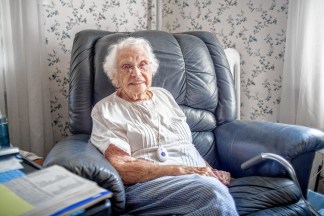
Conway, MA resident Helen Reed
Positive news for Hillary from Latino Decisions: Latino Electorate On Track For Historic Turnout In 2016.
According to the latest data from our national tracking poll, Latino Decisions projects that between 13.1 million and 14.7 million Latinos will vote in 2016. This estimate represents a three percent to five percent increase over the 2012 Latino turnout rate which, coupled with the dramatic growth of the age-eligible Latino population, will yield between 1.9 million and 3.5 million additional Latinos voters in 2016 compared to the 11.2 million who voted four years ago.
Latino Decisions also projects that 79 percent of Latinos will vote for Democratic presidential nominee Hillary Clinton, 18 percent for Republican nominee Donald Trump, and the remaining three percent voting for other candidates. Clinton’s projected share is higher than both Latino Decisions’ estimated 75 percent Latino vote share and 71 percent exit poll share Democrat Barack Obama received during his 2012 re-election bid.
Over the past seven weeks, the Latino Decisions weekly tracking poll has demonstrated heightened enthusiasm for voting in 2016 and record-high levels of support for Hillary Clinton. Each week, the released poll has captured a rolling cross-section of 500 bilingual interviews conducted nationwide with Latino registered voters and has found little fluctuation either with respect to likely turnout or the proportion of the Latino electorate anticipated to vote for each presidential candidate. From a statistical modeling perspective, this stability is good and suggests more confidence in our model estimates for Election Day.
More details at the link.
Now for some reads about James Comey’s FBI and their efforts to elect Donald Trump.
Andrew Rosenthal at the NYT: James Comey’s Self-Righteous Meddling.
There are two possible explanations for James Comey’s decision to announce last week that he was examining emails that “appear to be pertinent” to the investigation of Hillary Clinton’s use of a private email server.
One explanation, which I tend to believe, is that Comey, the director of the F.B.I., set out to interfere in the campaign on behalf of the Republican Party, a shocking act that would render him unfit for his powerful office.
(In that scenario, the aim may have not primarily been to help Donald Trump, but to preserve the Republican majorities in Congress, which suddenly seemed in danger this fall. Can you imagine how intense the pressure on Comey from the Hill must have been following his announcement this summer that the investigation was being closed?)
The other possible explanation is that he acted out of what you might charitably call a sense of moral rectitude. I think it’s better described as self-righteousness — a dangerous current in modern right-wing politics that has its roots in the rise of the Moral Majority, which aimed to make politics a choice between good values (the right’s) and bad values (the left’s) rather than a competition of ideas.
Certainly, Comey was not acting out of respect for protocol, ethics and procedure….
The idea that he wanted to help his political party is pretty terrifying. But the idea that he acted out of moral self-righteousness is not much more reassuring, given the immense powers of his office.
Read the rest at the NYT link.
Adele Stan at The National Memo: Is Reckless Comey Seeking Revenge On Critics Via FBI Twitter Account?
Something very dangerous is happening in the Federal Bureau of Investigation: The nation’s foremost law enforcement agency appears to be at war both within itself and with the Department of Justice, to which it belongs. The disagreements all involve our national politics and the FBI’s appropriate role in them, leaving the American people with yet another major institution on their do-not-trust list. The government is coming ever more undone, so much so that a recent Twitter post from an FBI account is raising questions about who’s behind it—the director of the FBI, or agents seemingly beyond his control….
Now comes word, via Devlin Barrett of the Wall Street Journal, that agents who were investigating allegations of influence-peddling involving the Clinton Foundation were incensed when higher-ups at the Justice Department urged them to tread carefully so as to adhere to department guidelines against taking action that could influence an election, and that members of the Department’s anti-corruption unit didn’t think the FBI had a strong case.
No kidding. The “investigation” was based on right-wing news articles and the anti-Clinton propaganda tome “Clinton Cash.”
It seems as if whoever controls a Bureau Twitter account called @FBIRecordsVault has struck back against all those Clinton surrogates who are calling foul on Comey. The account, whose purpose is the posting of documents released through Freedom of Information Act requests, appears to have been dead for a year—no postings since Oct. 7, 2015. Suddenly, on Tuesday, it sprang to life with a handful of posts, one a nothing-burger on Fred Trump, father of the Republican standard-bearer; and another on an old investigation of the Clinton Foundation and President Bill Clinton’s pardon of Marc Rich, then a fugitive hedge-fund manager whose wife had donated to the DNC and the Clinton Foundation. It was Comey who brought the criminal case against Rich, Bloomberg News reports, and is said to have been “stunned” by Clinton’s pardon of the financier. The documents linked in the tweet don’t say much of anything (they’re heavily redacted), but the tweet itself does reinforce in the public mind the controversies advanced by Clinton’s enemies about the foundation. It’s not the fact of the tweet that’s at issue—the material was released via FOIA—but the timing of it from an account that was only reactivated Sunday.
Read many more details at the link.
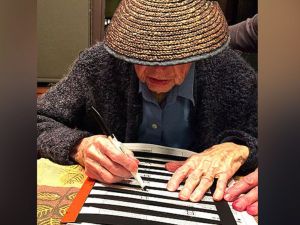
Stellajoe Staebler, 100, Centralia, Washington
Judd Legum at Think Progress: FBI launches internal investigation into its own Twitter account.
The account at issue, @FBIRecordsVault, had been dormant for more than a year. Then on October 30 at 4 a.m., the account released a flood of documents, including one describing Donald Trump’s father Fred Trump as a “philanthropist.” ….
But it wasn’t until two days later, when the account tweeted documents regarding President Clinton’s controversial pardon of Marc Rich that the account began to attract significant attention….
Candice Will, Assistant Director for the FBI’s Office of Professional Responsibility, said she was referring the matter to the FBI’s Inspection Division for an “investigation.” Upon completion of the investigation, the Office of Professional Responsibility will be referred back to the Office of Professional Responsibility for “adjudication.”
Federal law and FBI policy prohibit employees from using the power of the department to attempt to influence elections.
Will was responding to a complaint from Jonathan Hutson, a former investigative reporter who now works in communication in Washington, DC.
Read more, and see the tweets at Think Progress.

Estelle Liebow Schultz, 98, of Rockville, Maryland
Eli Lake at Bloomberg: The FBI Wants to Make America Great Again.
As Mark Corallo, a former Justice Department spokesman and Trump supporter, told me Wednesday, “The Marc Rich tweet is evidence of open warfare between the Justice Department and the FBI.” Corallo said this is largely because frustrated field agents believe the Justice Department has stymied the bureau’s investigations into Clinton’s e-mails and the Clinton Foundation.
Steven Aftergood, director of the Federation of American Scientists’ Project on Government Secrecy, told me it was true that records requested from multiple people are supposed to be added to the government agency’s electronic reading room. “What undermines that explanation is that they were not just added to the reading room, they were broadcast on this rarely used Twitter account,” he said. What’s more, Aftergood said government agencies have great discretion when they respond to Freedom of Information Act requests. “There is always a bottleneck, because the resources to review FOIA requests are inadequate to the demand,” he said.
The move certainly appeared political. After all, former Attorney General Eric Holder was one of the first former officials to criticizeComey’s decision to update Congress on the e-mail investigation. Perhaps the tweet was a shot across the bow to Holder, who recommended the Rich pardon in 2000 as deputy attorney general under President Bill Clinton.
So what’s going on here? As the New York Times and the Washington Post are now reporting, and as my own sources confirm, many rank-and-file FBI officials are frustrated about the investigation into the Clinton Foundation and the way the e-mail probe was handled. Republicans too have wanted to see the FBI more robustly investigate the Clintons. So Comey has tried his best to split the baby.
Wayne Barrett at The Daily Beast: Meet Donald Trump’s Top FBI Fanboy.
Two days before FBI director James Comey rocked the world last week, Rudy Giuliani was on Fox, where he volunteered, un-prodded by any question: “I think he’s [Donald Trump] got a surprise or two that you’re going to hear about in the next few days. I mean, I’m talking about some pretty big surprises.”
Pressed for specifics, he said: “We’ve got a couple of things up our sleeve that should turn this thing around.”
The man who now leads “lock-her-up” chants at Trump rallies spent decades of his life as a federal prosecutor and then mayor working closely with the FBI, and especially its New York office. One of Giuliani’s security firms employed a former head of the New York FBI office, and other alumni of it. It was agents of that office, probing Anthony Weiner’s alleged sexting of a minor, who pressed Comey to authorize the review of possible Hillary Clinton-related emails on a Weiner device that led to the explosive letter the director wrote Congress.
Hours after Comey’s letter about the renewed probe was leaked on Friday, Giuliani went on a radio show and attributed the director’s surprise action to “the pressure of a group of FBI agents who don’t look at it politically.”
“The other rumor that I get is that there’s a kind of revolution going on inside the FBI about the original conclusion [not to charge Clinton] being completely unjustified and almost a slap in the face to the FBI’s integrity,” said Giuliani. “I know that from former agents. I know that even from a few active agents.”
Along with Giuliani’s other connections to New York FBI agents, his former law firm, then called Bracewell Giuliani, has long been general counsel to the FBI Agents Association (FBIAA), which represents 13,000 former and current agents. The group, born in the New York office in the early ’80s, was headed until Monday by Rey Tariche, an agent still working in that office. Tariche’s resignation letter from the bureau mentioned the Clinton probe, noting that “we find our work—our integrity questioned” because of it, adding “we will not be used for political gains.”
Also check out this piece by Barrett at The New York Daily News: Peas in a pod: The long and twisted relationship between Donald Trump and Rudy Giuliani.
As I wrote on Tuesday, Hillary is running against the Donald Trump, the GOP, the FBI, Wikileaks, and Vladimir Putin. And she’s still winning!
Please post your thoughts and links in the comment thread below and have a terrific Thursday. Hillary will be our next POTUS!
Did you like this post? Please share it with your friends:
Posted: October 29, 2016 | Author: bostonboomer | Filed under: morning reads, Republican politics, U.S. Politics | Tags: FBI, Hillary Clinton, Huma Abedin, James Comey |

Good Morning!!
FBI Director James Comey, in the words of Lawrence Tribe, has “throw[n] a huge bomb at the election.” Hillary will still win, but Comey, with pressure from House Republicans and Donald Trump, may have negatively affected downticket races for Democrats.
As we all know, yesterday Comey sent a letter to GOP chairmen in Congress announcing that FBI investigators had found emails that could be “pertinent” to the Clinton server investigation. Here’s the full text of the letter:
Dear Messrs Chairmen:
In previous congressional testimony, l referred to the fact that the Federal Bureau of Investigation (FBI) had completed its investigation of former Secretary Clinton’s personal email server. Due to recent developments, I am writing to supplement my previous testimony.
In connection with an unrelated case, the FBI has learned of the existence of emails that appear to be pertinent to the investigation. I am writing to inform you that the investigative team briefed me on this yesterday, and I agreed that the FBI should take appropriate investigative steps designed to allow investigators to review these emails to determine whether they contain classified information, as well as to assess their importance to our investigation.
Although the FBI cannot yet assess whether or not this material may be significant, and I cannot predict how long it will take us to complete this additional work, I believe it is important to update your Committees about our efforts in light of my previous testimony.
Sincerely yours,
James B. Comey
Director
Naturally, Rep. Jason Chaffetz immediately released the letter to the press, and hundreds of political reporters and cable talking heads went wild in a disgusting feeding frenzy, falsely reporting that the investigation into Clinton’s serve had been “reopened” even though Comey’s letter didn’t say any such thing.
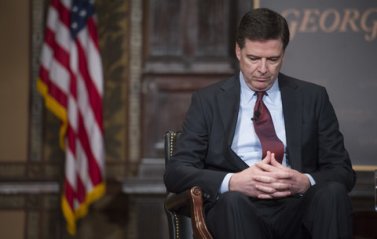
Later in the day, Comey tried to cover his ass by sending a second letter to FBI employees. That letter was also obtained by The Washington Post. Here’s the text:
To all:
This morning I sent a letter to Congress in connection with the Secretary Clinton email investigation. Yesterday, the investigative team briefed me on their recommendation with respect to seeking access to emails that have recently been found in an unrelated case. Because those emails appear to be pertinent to our investigation, I agreed that we should take appropriate steps to obtain and review them.
Of course, we don’t ordinarily tell Congress about ongoing investigations, but here I feel an obligation to do so given that I testified repeatedly in recent months that our investigation was completed. I also think it would be misleading to the American people were we not to supplement the record. At the same time, however, given that we don’t know the significance of this newly discovered collection of emails, I don’t want to create a misleading impression. In trying to strike that balance, in a brief letter and in the middle of an election season, there is significant risk of being misunderstood, but I wanted you to hear directly from me about it.
Jim Comey

No kidding. The Justice Department, which is in charge of the FBI, has historically tried to avoid politicizing investigation, especially within at least 60 days of an election. But Comey already chose to politicize the Clinton investigation with his highly inappropriate press conference in July. Following that clusterfuck, former Justice Department spokesman Matthew Miller strongly criticized Comney’s actions.
“It’s not just unusual, it’s unprecedented,” said Matthew Miller, who was director of the Office of Public Affairs for the Department of Justice under Attorney General Eric Holder and now works at strategic advisory firm Vianovo. “He’s put himself into the middle of a political campaign in a way that will call into question the legitimacy of the office.”
“You’ll now have people in the middle of a campaign able to say, ‘Well, the FBI director said Hillary Clinton was careless,'” Miller added. “That’s not the FBI director’s job to do, and the rules are set up to prohibit that kind of behavior.”
As we all know, Comey was then pressured by Republicans to testify before Congress about his decision not to charge Clinton. After that he took the unprecedented step of publicly releasing the FBI’s notes of Clinton’s private interview about the server. Comey is apparently hoping to become J. Edgar Hoover 2.0 with his blatant abuse of power.
We now know that the emails were found on a laptop that Huma Abedin shared with her estranged husband and social media pervert Anthony Weiner. They were not sent or received by Clinton and very likely are simply copies of emails that the FBI has already examined.

This morning, Jane Mayer revealed that in his letter yesterday Comey went against the recommendation of Attorney General Lorretta Lynich–his boss: James Comey Broke with Loretta Lynch and Justice Department Tradition.
Coming less than two weeks before the Presidential election, Comey’s decision to make public new evidence that may raise additional legal questions about Clinton was contrary to the views of the Attorney General, according to a well-informed Administration official. Lynch expressed her preference that Comey follow the department’s longstanding practice of not commenting on ongoing investigations, and not taking any action that could influence the outcome of an election, but he said that he felt compelled to do otherwise.
Comey’s decision is a striking break with the policies of the Department of Justice, according to current and former federal legal officials. Comey, who is a Republican appointee of President Obama, has a reputation for integrity and independence, but his latest action is stirring an extraordinary level of concern among legal authorities, who see it as potentially affecting the outcome of the Presidential and congressional elections.
“You don’t do this,” one former senior Justice Department official exclaimed. “It’s aberrational. It violates decades of practice.” The reason, according to the former official, who asked not to be identified because of ongoing cases involving the department, “is because it impugns the integrity and reputation of the candidate, even though there’s no finding by a court, or in this instance even an indictment.”
Traditionally, the Justice Department has advised prosecutors and law enforcement to avoid any appearance of meddling in the outcome of elections, even if it means holding off on pressing cases. One former senior official recalled that Janet Reno, the Attorney General under Bill Clinton, “completely shut down” the prosecution of a politically sensitive criminal target prior to an election. “She was adamant—anything that could influence the election had to go dark,” the former official said.
Four years ago, then Attorney General Eric Holder formalized this practice in a memo to all Justice Department employees.
Not only that, but Comey’s announced resulted in a dramatic drop in the stock market. Once masssive FBI leaks clarified that Hillary Clinton likely didn’t send or receive any of the emails in question, the market began to rise again.
To top it all off, we have now learned that the FBI had the emails in question at least a month ago!
According to Newsweek reporter Kurt Eichenwald, many in the FBI are angry at Comey.
And there’s this from Josh Marshall.
I don’t see how Comey recovers from this. He needs to resign, and I’m not the only one who thinks so. CNN legal analyst Paul Callan: Time for FBI director Comey to go.
Did you like this post? Please share it with your friends:
Posted: October 27, 2016 | Author: bostonboomer | Filed under: morning reads, U.S. Politics | Tags: Florida, Hillary Clinton, Latino Vote, Pennsylvania, presidential polling, Texas |
Good Morning!!
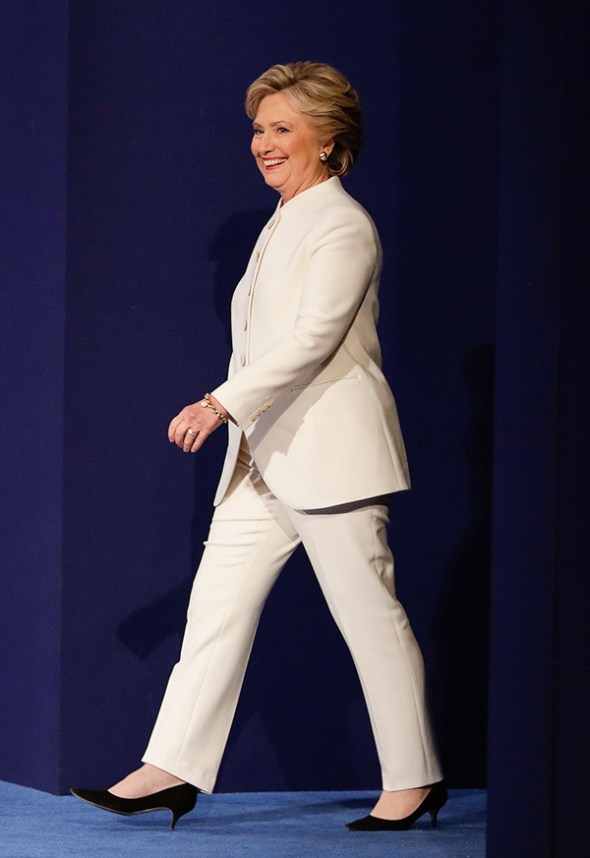
In just 12 days, the election will be over and Hillary will be on the way to becoming our first woman POTUS. I can’t wait to vote for her! And yes, I’m convinced she will win. Very soon, that glass ceiling is going to shatter into a million pieces, and Donald Trump will be headed for more embarrassing failures with ruined brand.
Huffington Post Associate Polling Editor Janie Valencia: The Polls — All Of Them — Show Hillary Clinton Leading. Which means Donald Trump is losing.
Democratic presidential nominee Hillary Clinton is either slightly ahead or way ahead of Republican Donald Trump with just 13 days until Election Day, according to new polls released Wednesday.
An AP-GFK poll shows Clinton leading by an astonishing 14 points, 51 percent to Trump’s 37 percent, in a four-way race. In a two-way heat, Clinton’s lead narrows to 13 points.
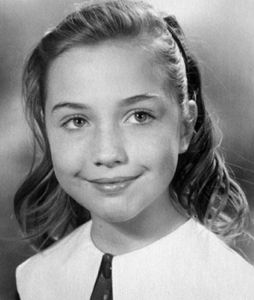
A new Fox News poll finds Clinton ahead by a much smaller margin― just 3 points ahead in a four-way race, 44 percent to 41 percent. She also leads by 3 points head to head with Trump.
Other recent polls show Clinton with a lead ranging from 2 points to 12 points.
It’s best not to freak out just yet over which of Wednesday’s polls are right.http://www.nytimes.com/interactive/2016/10/27/upshot/pennsylvania-poll.html?_r=0 Instead, consider the aggregate of recent polls for a more sober look at the race.
According to the HuffPost Pollster aggregate, Clinton is leading by about 7 points in the four-way race, 46.6 percent to 39 percent.
Here’s a new national poll, out this morning: Clinton nearly doubles lead over Trump in latest CNBC survey.
With only a dozen days to go before the election, Democratic nominee Hillary Clinton has ratcheted up her lead over Republican nominee Donald Trump to 9 points, according to the latest CNBC All-America Economic Survey, nearly doubling her advantage from the last poll.
After weeks and months of what many Republican strategists called verbal and strategic missteps by Trump, and despite potentially ruinous revelations from leaked Clinton campaign emails, the Democrat leads the Republican nominee by 46 percent to 37 percent among registered voters in a two-way race and by the same margin among likely voters. In June, Clinton led by just 5 points.
The CNBC survey of 804 Americans around the country, including all age and income groups, was conducted by Hart Research Associates on the Democratic side and Public Opinion Strategies on the Republican side. It has a margin of error of plus or minus 3.5 points, meaning Clinton’s lead could be as large as 16 points or as small as 2 points. It was conducted Oct. 21 to 24.
What about the big swing states?
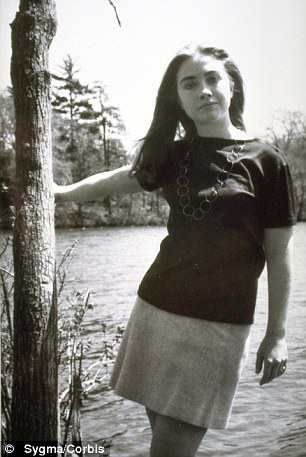
Nate Cohn at the NYT: Hillary Clinton Leads by 7 Points in Pennsylvania Poll.
If Donald J. Trump has a path to the presidency with big gains among white working-class voters, it has to run through Pennsylvania — a disproportionately white, blue-collar state with few Hispanic voters.
But a New York Times Upshot/Siena College poll released Thursday indicates that Pennsylvania remains out of reach for Mr. Trump.
Hillary Clinton leads him by seven percentage points, 46 percent to 39 percent, in a four-way race. And in a contest that could decide control of the Senate, the Republican senator Pat Toomey trails the Democratic challenger Katie McGinty by three points….
Mr. Trump’s message does seem to be playing well among the white working-class voters that Republicans have coveted for a decade. Over all, he leads among white voters without a college degree by a 17-point margin, 51 percent to 34 percent.
It’s better than Mitt Romney’s 12-point victory with that group in the state in 2012, according to Upshot estimates. Mr. Trump appears to be especially strong in northeastern Pennsylvania, including the Scranton and Wilkes-Barre area, where Mr. Trump leads by 16 points. Mr. Romney won the region by four points in 2012.
But these gains would not be sufficient for Mr. Trump to win the state, even if he matched Mr. Romney’s standing among other voters — something he is not pulling off.
Mr. Trump has the support of just 76 percent of Republican voters and trails among white voters with a college degree by nine points, 47 percent to 38 percent. He has nearly no support among black and other nonwhite voters.
Yesterday Bloomberg released a poll that showed Trump leading by 2 points in Florida, but that poll also showed Clinton getting only 51 percent of the Hispanic vote. I find that hard to believe and so does Latino Decisions.
Four other recent polls showed Clinton winning Florida, and a new one came out this morning: UNF Poll: Hillary Clinton leading Donald Trump in Florida.
Hillary Clinton is edging Donald Trump among Florida likely voters, according to a University of North Florida poll released Thursday, more good news for the former Secretary of State as Democrats are also cheering strong early-voting numbers across one of the nation’s most important swing states.
The poll of 836 likely voters, however, gives one down-ballot Republican good news of his own: U.S. Sen. Marco Rubio leads U.S. Rep. Patrick Murphy by a 6-point margin.
Clinton leads Trump by four points — 43 percent to 39 percent — which is just outside the poll’s 3.39 percent margin of error. Third party candidates Gary Johnson and Jill Stein garnered 6 percent and 3 percent support respectively….
“(I)n this election Democrats are outperforming their historical norms in absentee and early voting. If this trend continues through Election Day, Clinton could expand this margin and easily win Florida,” said Michael Binder, a UNF political science professor and director of the school’s Public Opinion Research Lab, which conducted the poll.
The survey was conducted Oct. 20-25.
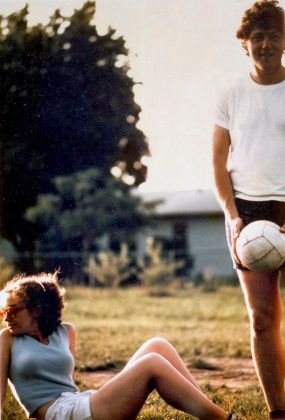
Hillary is going to win Pennsylvania and I think she will win Florida because of the Latino vote. Mainstream pollsters just don’t seem to understand how to poll Latinos. Here’s an interesting article on Latino voters at NBC News:
With early voting already underway in key battleground states, outreach and education organizations focused on the Latino community are responding to surveys of early voters with a mix of cautious optimism and concern over the disproportionate turnout numbers between states.
The National Association of Elected and Appointed Officials and conducted by the polling firm Latino Decisions conclude in a report that, “Latino voter contact rates in California, New York and Texas [are] much lower than in battleground states of Arizona, Florida, Nevada and North Carolina.”
With competitive states ripe for picking in a tumultuous Republican campaign headed by Donald Trump, Democrats and the Clinton camp appear to be focused on putting pressure on the GOP in Latino-heavy states that have the greatest potential for electoral gains.
The Clinton campaign sent Bernie Sanders, Chelsea Clinton, and Michelle Obama to Arizona last week. Among their hopes were to mobilize the young Latino population.
Heavy investment in battleground states appears to be paying off in votes in Nevada, North Carolina, Arizona, and Florida.
With the Democratic Party practically conceding the election in Texas, state party officials continue to struggle with Latino turnout throughout the Lone Star State. The report finds that 70 percent of Latinos in Texas have yet to be contacted with just two weeks to go before Election Day.
I hope the Clinton campaign is paying attention. Check out this Texas poll: UT/TT Poll: In Texas, Trump holding narrow lead over Clinton.
Republican presidential candidate Donald Trump held a three-percentage-point lead over Democrat Hillary Clinton on the eve of early voting in Texas, according to the latest University of Texas/Texas Tribune Poll.
Trump and his running mate, Mike Pence, had the support of 45 percent of likely Texas voters, compared with 42 percent for Clinton and Tim Kaine; 7 percent for Libertarian Gary Johnson and William Weld; and 2 percent for the Green Party’s Jill Stein and Ajamu Baraka. The remaining 5 percent said they would vote for someone else for president and vice president.
“This is the trend that we’ve been seeing in polling for the last two weeks,” said Jim Henson, co-director of the UT/TT Poll and head of the Texas Politics Project at the University of Texas at Austin.
In spite of the closeness of the race and the margin of error, the number of polls showing similar distance between the candidates, with Trump in front, “is probably a telling us where this race really stands,” Henson said. Close, with a Trump lead, in other words.
The survey was in the field from Oct. 14 to Oct. 23; early voting in Texas began Oct. 24.
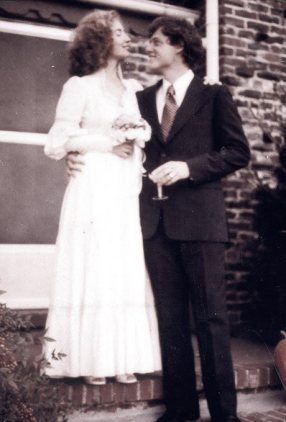
CNN: Can Hillary Clinton win Texas? (Yes, Texas). She probably could, but I suppose it was smarter to focus her resources on other states she is more likely to win, like Colorado, Nevada, Florida, and even Arizona.
“I think this is the year Texas could have gone blue,” said Matt Angle, director of the Lone Star Project, a political action committee aligned with Democrats. “But you don’t win a state like Texas unless there’s a real, aggressive and engaged campaign to win it.”
Still, many here believe Clinton could draw a greater share of the vote than even Obama did in 2008, when he won nearly 44% of the vote to Republican nominee John McCain’s 55.5%.
Looking to appear on offense, the Clinton campaign placed a six-figure ad buy in Texas this month highlighting the endorsement of her campaign by the Dallas Morning News — the first time the paper backed a Democrat since 1940. But the low-dollar investment in an exorbitantly expensive state was largely a symbolic gesture.
A strong Clinton showing on Nov. 8 “could reinforce the argument that Texas doesn’t have to wait for demographics,” Angle said. “One of the biggest myths about Texas is that Democrats always get stomped on here.” The reality, he said, “is just that we seldom have the resources to compete statewide.”
But what if pollsters are overlooking Latino votes?
If Texas doesn’t turn blue this year, maybe it will in 2020.
So . . . I thought I’d focus on the good polling news for Hillary in this post. I’ll add a few more links in the comment thread and I hope you will too!
Did you like this post? Please share it with your friends:
Posted: October 25, 2016 | Author: bostonboomer | Filed under: morning reads, U.S. Politics | Tags: Bob Dylan, Bobby Vee, Buddy Holly, Civil Rights, Don McLean, Freedom Riders, JP "The Big Bopper" Richardson, music, notable deaths, Richie Valens, The Day the Music Died, Tom Hayden |

Bobby Vee
Good Afternoon!!
Two notable deaths hit home for me yesterday. One was 1960s activist Tom Hayden, and the other was one of my teen idols, singer Bobby Vee. I’ll start with him.
RIP Bobby Vee
I was in 6th grade on February 3, 1959, when three pop stars, Buddy Holly, Richie Valens, and JP “The Big Bopper” Richardson died along with their pilot Roger Peterson in a plane crash near Clear Lake, Iowa. They were on their way to a concert in Moorhead, Minnesota.
Holly’s band members Waylon Jennings, Tommy Alsup, and Carl Bunch, stayed behind with their broken-down tour bus. The Big Bopper had the flu, so Jennings gave up his seat, and Richie Valens won a coin toss to get his. Years later, that tragic day became known as “the day the music died.” after the Don McLean song.
Moorhead is just across the river from Fargo, North Dakota, my birthplace. Bobby Veline (later Bobby Vee) was a 15-year-old rhythm guitar player from Fargo who had recently joined a garage band. The awful crash led to Veline’s big break. The call went out for local bands to fill in for the lost stars. From The Fargo Forum: How ‘The Day the Music Died’ launched Fargoan Bobby Vee into music stardom.
Fifteen-year-old Fargoan Bobby Vee and his new band The Shadows stepped up to fill the bill at the Moorhead Armory show. With that, the singer/guitarist took his first step into rock history….
Robert Thomas Velline was born April 30, 1943, to Sydney and Saima Velline of Fargo. Raised in a musical household, young Bobby followed suit and started playing saxophone at Central High School.
“I wanted to rock out. We were playing all the standard band pieces, but I wanted to play ‘Yakety Yak,'” Vee recalled on his website biography….

The Shadows
When his older brother, guitarist Bill Velline, started playing with bassist Jim Stillman and drummer Bob Korum, Bobby begged to join, but they thought he was too young. He won them over with a velvety smooth voice. The group hadn’t played together much and didn’t have a name until just before taking the stage at the Moorhead Armory that fateful night.
“I remember being petrified when the curtains opened,” Vee told The Forum 19 years later. “I was blinded by the spotlight and just numb all over.”
The nerves didn’t last. That June he and The Shadows recorded “Suzie Baby” and the song was on the radio later that summer. Hits like “Devil or Angel” and “Rubber Ball” kept coming. In 1961 he would release his only No. 1 song, “Take Good Care of My Baby,” written by Carole King and Gerry Coffin. The follow-up, “Run to Him,” peaked at No. 2 and in 1962 he would reach No. 3 with “The Night Has a Thousand Eyes.”
Velline’s band didn’t even have a name when they went on stage. The emcee asked him for a name, and he looked at his bandmates and saw their shadows in the spotlight; so he told the emcee their name was “The Shadows.” Afterward, an agent gave Velline his card and the rest was history.
When Bobby Vee’s hit song “Take Good Care of My Baby” (written by Carole King and Gerry Goffin) came out in July 1961. I bought the 45 rpm record and played it over an over again. When I found out that the singer came from Fargo, I became his number 1 fan. I bought all his albums for the next couple of years before I moved on to more sophisticated rock music.

In this Dec. 18, 2013 file photo, Bobby Vee poses at the studio console at his family’s Rockhouse Productions in St. Joseph, Minn. (AP Photo/Jeff Baenen, File)
One thing I never knew until yesterday was the connection between Bobby Vee and Bob Dylan (then Bob Zimmerman). Dylan grew up in Duluth, Minnesota–not that far from Fargo, and Dylan’s first paying gig was as a member of The Shadows.
Despite the sad circumstances, the Shadows’ gig was considered a success, with Vee calling the Moorhead show “the start of a wonderful career.”
Vee and the Shadows soon recorded a regional hit with “Suzie Baby,” which resulted in Vee signing a record deal with Liberty Records. Minnesota native Bob Dylan, who called Vee in 2013 “the most meaningful person I’ve ever been onstage with,” would later cover “Suzie Baby” in concert [Vee was in the audience].
Dylan, who played in the Shadows with Vee in 1959, also praised the singer in his Chronicles, Volume One. Vee “had a metallic, edgy tone to his voice and it was as musical as a silver bell,” Dylan wrote. “I’d always thought of him as a brother.” Dylan briefly joined Vee’s backing band as a pianist after Vee’s brother brought Dylan, who called himself “Elston Gunnn,” in for an audition. “He was a funny little wiry kind of guy and he rocked pretty good,” Vee said.
More about Vee and Dylan’s connection from Heavy.com.
Dylan and Vee both “escaped” the Midwest, as Dylan wrote in Chronicles. Vee was born in Fargo, North Dakota, and Dylan was born in Duluth, Minnesota. Vee was still playing in the region when his backing group, The Shadows, thought they needed a pianist. Dylan met Vee in a record store in Fargo and heard they wanted a piano player. He introduced himself as Elston Gunnn (with three n’s).
According to Expecting Rain, Vee told Goldmine in 1999 that Dylan claimed he just came off the road with Conway Twitty. They were impressed, but later learned that he could only play in the key of C. They hired him for $15 a night, but the job didn’t last long. As Vee explained:
It was ill-fated. I mean, it wasn’t gonna work. He didn’t have any money, and we didn’t have any money. The story is that I fired him, but that certainly wasn’t the case. If we could have put it together somehow, we sure would have. We wished we could have put it together. He left and went on to Minneapolis and enrolled at the University of Minnesota.
Years later, Vee and Dylan met in Greenwich Village.
Dylan was now a folk singer and Vee was a pop star. According to Vee, they met again in a record store.
“I was walking down the street. There was a record store there, and there was an album in the front window. And it said, ‘Bob Dylan.’ And I thought to myself, ‘Looks a lot like Elston Gunnn,’” Vee recalled.
In Chronicles, Dylan sounds like he regretted seeing Vee go from rockabily singer to pop star. He wrote that “Take Good Care of My Baby” was “as slick as ever.” Dylan wrote:
He’d become a crowd pleaser in the pop world. As for myself, I had nothing against pop songs, but the definition of pop was changing.

Bobby Vee and Bob Dylan in 2013
Despite their different career paths after that one meeting in Greenwich Village, Dylan said he still thought of Vee as a brother since they came from the same part of the country.
“I wouldn’t see Bobby Vee again for another thirty years, and though things would be a lot different, I’d always thought of his as a brother,” Dylan wrote in Chronicles. “Every time I’d see his name somewhere, it was like he was in the room.”
Isn’t that great story? Vee died after a five-year struggle with Alzheimer’s disease. The Associated Press:
Vee was diagnosed with Alzheimer’s disease in 2011, and performed his last show that year.
Vee had been in memory care at The Wellstead of Rogers & Diamondcrest in Rogers, about 25 miles northwest of Minneapolis, for the past 13 months and in hospice care in recent weeks, his son said.
Vee died peacefully surrounded by family, Velline said, calling it “the end of a long hard road.”
He said his father was “a person who brought joy all over the world. That was his job.”
RIP Tom Hayden
Tom Hayden led an amazing life. The New York Times obituary: Tom Hayden, Civil Rights and Antiwar Activist Turned Lawmaker, Dies at 76.
Tom Hayden, who burst out of the 1960s counterculture as a radical leader of America’s civil ri(ghts and antiwar movements, but rocked the boat more gently later in life with a progressive political agenda as an author and California state legislator, died on Sunday in Santa Monica, Calif. He was 76….
During the racial unrest and antiwar protests of the 1960s and early ’70s, Mr. Hayden was one of the nation’s most visible radicals. He was a founder of Students for a Democratic Society, a defendant in the Chicago Seven trial after riots at the 1968 Democratic National Convention, and a peace activist who married Jane Fonda, went to Hanoi and escorted American prisoners of war home from Vietnam.

Tom Hayden
As a civil rights worker, he was beaten in Mississippi and jailed in Georgia. In his cell he began writing what became the Port Huron Statement, the political manifesto of S.D.S. and the New Left that envisioned an alliance of college students in a peaceful crusade to overcome what it called repressive government, corporate greed and racism. Its aim was to create a multiracial, egalitarian society.
Like his allies the Rev. Dr. Martin Luther King Jr. and Senator Robert F. Kennedy, who were assassinated in 1968, Mr. Hayden opposed violent protests but backed militant demonstrations, like the occupation of Columbia University campus buildings by students and the burning of draft cards. He also helped plan protests that, as it happened, turned into clashes with the Chicago police outside the Democratic convention.
Read the rest at the NYT link.
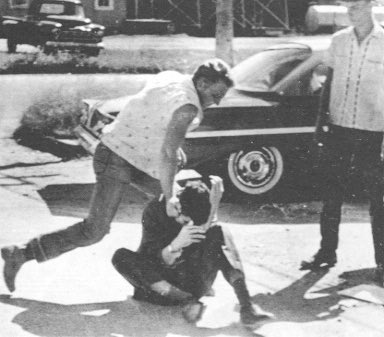
Tom Hayden, beaten by white segregationists in McComb, MS, October 1961
After the 1968 protests, Hayden stood trial in Federal court as one of the Chicago 7, along with Bobby Seale, Abby Hoffman, Jerry Rubin, Rennie Davis, Dave Dellinger, John Froines, and Lee Weiner, accused of conspiracy, inciting to riot and other charges. The Chicago Tribune:
With Rennie Davis, Abbie Hoffman and other radical leaders, Hayden went on to plot the massive antiwar demonstrations that turned Chicago’s streets into a battleground for five days in August 1968.
“Let us make sure that if our blood flows, it flows all over the city,” he told throngs of young protesters in the city’s Grant Park on the day Vice President Hubert Humphrey became the Democratic presidential nominee.
Confronted by Democratic Mayor Richard J. Daley’s 12,000 Chicago police in addition to 6,000 Army troops and 5,000 National Guardsmen, Hayden exhorted the demonstrators to “turn this overheated military machine against itself.”
After arrests and injuries ran well into the hundreds, Hayden and seven others were charged with conspiracy to incite violence. The Chicago Eight, as they were initially known, became the Chicago Seven when Black Panther leader Bobby Seale was separated from the case. Hayden was found guilty but the conviction was overturned in 1972 by an appeals court, which cited improper rulings by an antagonistic trial judge.
Hayden went on to become a traditional politician, serving as a California legislator. The LA times: ‘The radical inside the system’: Tom Hayden, protester-turned-politician, dies at 76.
Hayden later married actress Jane Fonda, and the celebrity couple traveled the nation denouncing the war before forming a California political organization that backed scores of liberal candidates and ballot measures in the 1970s and ’80s, most notably Proposition 65, the anti-toxics measure that requires signs in gas stations, bars and grocery stores that warn of cancer-causing chemicals.
Hayden lost campaigns for U.S. Senate, governor of California and mayor of Los Angeles. But he was elected to the California Assembly in 1982. He served a total of 18 years in the Assembly and state Senate.
During his tenure in the Legislature, representing the liberal Westside, Hayden relished being a thorn in the side of the powerful, including fellow Democrats he saw as too pliant to donors.
“He was the radical inside the system,” said Duane Peterson, a top Hayden advisor in Sacramento.
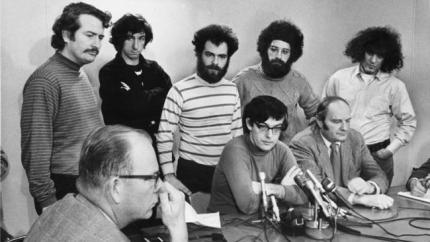
Defendants in the Chicago Seven conspiracy trial hold a news conference in Chicago on Jan. 5, 1970. Standing are, from left, John Froines, Tom Hayden, Jerry Rubin, Lee Weiner and Abbie Hoffman. Seated are Rennie Davis, center, and David Dellinger. (Chicago Tribune)
In April of this year, Hayden endorsed Hillary Clinton for president in a piece at The Nation: I Used to Support Bernie, but Then I Changed My Mind. Here’s what he had to say about Hillary:
Hillary is, well, Hillary. I remember seeing her on Yale’s green in 1969, wearing a black armband for peace while a kind of Armageddon shaped up during the Panther 21 trial and Cambodia invasion. Even then, she stood for working within the system rather than taking to the barricades. Similarly, in Chicago 1968, she observed the confrontations at a distance. If she had some sort of revolution in mind, it was evolutionary, step-by-step. In her earlier Wellesley commencement speech, she stated that the “prevailing, acquisitive, and competitive corporate life is not the way of life for us. We’re searching for more immediate, ecstatic, and penetrating modes of living.” But from there it was a determined decades-long uphill climb through those same institutions that had disenchanted the young Hillary.
There are two Hillary Clintons. First, the early feminist, champion of children’s rights, and chair of the Children’s Defense Fund; and second, the Hillary who has grown more hawkish and prone to seeking “win-win” solutions with corporate America. When she seems to tack back towards her roots, it is usually in response to Bernie and new social movements. She hasn’t changed as much as the Democratic Party has, responding to new and resurgent movements demanding Wall Street reform, police and prison reform, immigrant rights and a $15-an-hour minimum wage, fair trade, action on climate change, LGBT rights, and more.
Hayden had grown more supportive of Hillary’s “evolutionary, step by step” approach and was concerned about Bernie’s all-or-nothing policies as well as his ability to deal with an all-out assault from the GOP and the media. In the end though, it came down to race.
I intend to vote for Hillary Clinton in the California primary for one fundamental reason. It has to do with race. My life since 1960 has been committed to the causes of African Americans, the Chicano movement, the labor movement, and freedom struggles in Vietnam, Cuba and Latin America. In the environmental movement I start from the premise of environmental justice for the poor and communities of color. My wife is a descendant of the Oglala Sioux, and my whole family is inter-racial.
What would cause me to turn my back on all those people who have shaped who I am? That would be a transgression on my personal code. I have been on too many freedom rides, too many marches, too many jail cells, and far too many gravesites to breach that trust. And I have been so tied to the women’s movement that I cannot imagine scoffing at the chance to vote for a woman president. When I understood that the overwhelming consensus from those communities was for Hillary—for instance the Congressional Black Caucus and Sacramento’s Latino caucus—that was the decisive factor for me. I am gratified with Bernie’s increasing support from these communities of color, though it has appeared to be too little and too late. Bernie’s campaign has had all the money in the world to invest in inner city organizing, starting 18 months ago. He chose to invest resources instead in white-majority regions at the expense of the Deep South and urban North.
I know there is much more news out there, and I hope I haven’t bored you by writing about two symbols of the greatest passions of my youth–Rock ‘n’ Roll and Politics. I’ll leave it to you to post more links on any topic in the comment thread below.
Did you like this post? Please share it with your friends:


 peej
peej Carissa
 bostonboomer
 dakinikat
 ecocatwoman
 jjlo
jjlo mablue2
 Mama Lopez
 peggysue22
 quixote
 skydancingguestblogger
 Mona (aka Wonk the Vote)





Recent Comments