“Donald and his Trumplican digital army chime in on the worldwide No Kings protests. The attempted pushback is comical. There’s something about electing a clown…” John Buss, @repeat1968
Good Day, Sky Dancers!
It really takes a lot of fortitude to check the headlines today. I can only imagine the effort it takes to be an actual reporter in this environment. I don’t know how anyone could forgive themselves for voting or approving these people. So, buckle up, it’s going to be a bumpy ride today.
Greg Sargent at The New Republic has written some stomach-churning stuff on Pete Hegseth today. “Pete Hegseth Just Revealed the Real Roots of His Sadism and Rage. Does God want America to kill as many of our enemies as we can—in as violent a fashion as possible? We have a defense secretary who apparently thinks so. Why do radical right-wing religious movements always think their messiahs and god think murdering people is righteous?
When Pete Hegseth talks to God, he asks the Almighty to help him kill people—as violently and ruthlessly as possible.
In a potential violation of the separation of church and state, Hegseth has ordered monthly prayer meetings at the Pentagon, and in his first such gathering since launching the war against Iran, the defense secretary pleaded for divine assistance in mowing down the Iranian foe.
“Let every round find its mark against the enemies of righteousness and our nation,” Hegseth intoned to a military audience, reciting a prayer previously given by a military chaplain before the Venezuela raid and applying it to American troops in Iran.
“Give them wisdom in every decision,” Hegseth continued, “endurance for the trial ahead, unbreakable unity, and overwhelming violence of action against those who deserve no mercy.”
Hegseth’s prayer service attracted only scattered media attention. But it helps explain the real impetus behind a development that deserves far more notice: The appointed leader of the world’s most powerful military regularly speaks about his capacity to rain terror and death on the enemy with an undisguised relish that should unsettle us all.
Hegseth appears to be a devotee of Christian Reconstructionism, a theology preached by influential far-right pastor Douglas Wilson that aims to reshape all earthly endeavors around the dictums of what his disciples claim is God’s law. As scholar-of-religion Julie Ingersoll explains on Sarah Posner’s podcast, Wilson believes that “all authority belongs to God,” rendering the state’s authority wholly subordinate to a “higher category of biblical law.” A Pentagon spokesman has confirmed that Hegseth recently met with Wilson and is his “admirer.”
What does this say about Hegseth’s conduct in the Iran war? A lot, it turns out.
During his prayer extolling “overwhelming violence,” Hegseth expanded on this by reading from Scripture. “I pursued my enemies and overtook them,” Hegseth preached, quoting King David recounting his wars against Israel’s ancient foes and likening them to the Iranian enemy. “Those who hated me I destroyed. They cried to the Lord, but He did not answer them.
Not exactly the stuff I was taught in Sunday School as a kid. Moving right along, how about the absolute things you never wanted to know about Kash Patel, ripped straight from his files by eager Iranian hackers? This bit of information is from Politico, but the actual images of him doing all kinds of weird, narcissistic things are out there. I’m not sure if any of the Trumperz will be dazed by it, but I found it rather gross and vomit-inducing. Watch it if you dare. “FBI confirms hackers targeted Kash Patel’s personal emails. Iran-linked hacking group Handala posted documents and photos they claimed to have stolen from the FBI director.”
The FBI on Friday confirmed that hackers targeted the personal emails of Director Kash Patel, hours after an Iranian government-linked hacking group posted documents and images online, claiming to have stolen them from Patel.
In a statement, the FBI confirmed the agency was “aware of malicious actors targeting Director Patel’s personal email information, and we have taken all necessary steps to mitigate potential risks associated with this activity.”
“The information in question is historical in nature and involves no government information,” the FBI added. The statement did not include details on who was behind the attack. “The FBI will continue to pursue the actors responsible, support victims, and share actionable intelligence in defense of networks,” it said.
Earlier in the day, Iran-linked hacking group Handala claimed to have hacked Patel’s email and published several pictures of the director, including one showing him brandishing a cigar and another that appears to be his personal resume. Most emails are dated between 2012 and 2014, though there is at least one from 2022, according to files posted by Handala on Telegram and reviewed by POLITICO.
Is it malicious if this guy really did this shit and kept it with some obvious liking of it all? So, let’s just take a look at the entire set of Republican values here with this bit of news from AXIOS. “GOP weighs health care cuts to pay for Iran war.” This analysis is by Peter Sullivan.
Republicans are considering reductions in federal health spending to help pay for a budget bill containing as much as $200 billion to fund the Iran war and immigration enforcement.
Why it matters: New efforts to rein in health programs are sure to be controversial and open the GOP up to election-year attacks that they’re cutting health care to pay for an unpopular war.
Driving the news: Top House Republicans are looking at health care offsets addressing fraud in federal programs, as they did during last year’s debate over the budget law that made deep cuts to federal Medicaid spending and imposed first-time work requirements.
“There’s other items we’re looking at right now, especially in the areas of fraud and waste and abuse that we’re working through with our members,” House Majority Leader Steve Scalise (R-La.) told Axios.
House Budget Committee chairman Jodey Arrington (R-Texas) is reviving an idea that was considered last year to fund Affordable Care Act payments known as cost-sharing reductions.
The Congressional Budget Office previously found the move would lower overall benchmark ACA premiums by 11% but result in 300,000 more uninsured people.
It would cut the subsidy amount that some enrollees receive, thereby increasing out-of-pocket premium costs, while saving the government over $30 billion.
Between the lines: Discussions still are in the early stages, and it’s not clear exactly how the goal of fighting fraud would translate into legislative language.
The driving force is the need to pay for the war in Iran and fund ICE, the latter of which triggered the partial government shutdown. Democrats oppose both, leaving Republicans ready to use the party-line process known as reconciliation to get around a Senate filibuster.
Many Republicans want any bill to be fully paid for, which is where potential health care changes come in.
There is some discussion in that article of what “moderates” might do which could be limited, imho, to they cave and/or then decide not to run for office again at best. At least current election polls show they’re on the run. They’re getting all their benefits and heading for the private sector. This is from The Hill. It’s reported by Sudiksha Kochi. “House Republicans flee Congress in record numbers amid growing dysfunction.”
An unprecedented number of House Republicans are opting to retire or pursue other offices, complicating Speaker Mike Johnson’s (R-La.) bid to fend off a potential blue wave in the 2026 midterms and preserve his razor-thin majority.
So far, 36 House Republicans — including the most recent, Rep. Sam Graves (Mo.) — have announced they will leave their seat at the end of their term, pointing to legislative gridlock, family commitments or a wish to make room for the next generation of leaders.
That total exceeds the record set in the 2018 midterm cycle, when 34 House Republicans chose not to run for reelection and Democrats regained control of the lower chamber under President Trump’s first term.
By comparison, 21 House Democrats are not seeking reelection this year.
But the number is only likely to grow in the weeks ahead, as Republicans reassess their roles in Washington amid a Trump 2.0 era and the expectation that the president’s party historically faces losses in a midterm year.
Graves said in a statement Friday that his decision to leave his seat wasn’t an easy one, but the “right one.”
“I believe in making room for the next generation. It’s time to pass the torch and allow a new guard of conservative leaders to step forward and chart a path forward for Missourians,” he said, adding that public service “isn’t easy.”
He joins a roster of Republicans across the ideological spectrum who have also called it quits in Congress, including high-profile conservatives such as Texas Reps. Chip Roy,Jodey Arrington, and Michael McCaul, as well as battle-tested moderates such as Rep. Don Bacon (Neb.), who has repeatedly run for reelection and won in a competitive district.
Meanwhile, the incoherent #FARTUS still can’t explain the Iran War situation. This is from the AP. Nothing Trump says these days is coherent or grounded in reality. “Trump again threatens widespread destruction in Iran if a deal is not reached ‘shortly’.”
U.S. President Donald Trump on Monday threatened widespread destruction of Iran’s energy resources and other vital infrastructure, potentially including desalination plants that supply drinking water, if a deal to end the war is not reached “shortly.”
Iran meanwhile struck a key water and electrical plant in Kuwait, and an oil refinery in Israel came under attack. Israel and the U.S. launched a new wave of strikes on Iran, as the war raged with no end in sight.
Trump’s new threat came in a social media post. Earlier comments to the Financial Times suggested American troops could seize Iran’s Kharg Island oil export hub. Trump has repeatedly claimed to be making diplomatic progress— though Tehran denies negotiating directly — while ramping up his threats and sending thousands more U.S. troops to the Middle East.
Trump told the New York Post that the U.S. is negotiating with Iran’s parliament speaker, Mohammad Bagher Qalibaf. The former Revolutionary Guard commander, who has taunted the U.S. on social media, dismissed the talks facilitated by Pakistan as a cover for the latest American troop deployments.
In a social media post, Trump said “great progress is being made” in talks with Iran to end military operations. But he said if a deal is not reached “shortly,” and if the Strait of Hormuz is not immediately reopened, the U.S. would broaden its offensive by “completely obliterating” power plants, oil wells, Kharg Island and possibly even desalination plants.
The strait is a crucial waterway through which a fifth of the world’s oil is shipped in peacetime.
The laws of armed conflict allow attacks on civilian infrastructure such as energy plants only if the military advantage outweighs the civilian harm, legal scholars say. It’s considered a high bar to clear, and causing excessive suffering to civilians can constitute a war crime.
We might as well flip a coin on the decision that come from the White House. No matter what the toss portends, we all lose. What would we do without a day that racism comes into play. This is from what’s left of theWashington Post. “Trump officials cite white supremacists in bid to end birthright citizenship. An argument heading to the Supreme Court is built in part on a post-Civil War campaign that scholars say was steeped in anti-Black and anti-Chinese racism.” The link has been gifted.
Alexander Porter Morse, a Confederate officer during the Civil War and a Louisiana attorney, argued for legalized segregation inthe landmark 1896 Supreme Court case that established the “separate but equal” doctrine and buttressed Jim Crow laws.
He is again playing a key role in a monumental case to be argued before the justices Wednesday: The Trump administration has tapped Morse as an authority in its push to upend long-settled law that virtually everyone born in the United States is a citizen.
Over a century ago, Morse was among a trio of thinkers who spearheaded a failed effort — steeped in anti-Black and anti-Chinese racism — to erase birthright citizenship. The Trump administration is reviving their arguments to make its case today, some legal scholars say.
The administration is citing arguments “built on a racist foundation,” Justin Sadowsky, an attorney for the Chinese American Legal Defense Alliance (CALDA), wrote in a friend-of-the-court brief.
Lucy Salyer, a University of New Hampshire history professor who has written on Morse and others, said she was struck that the Trump administration had chosen to elevate those figures and their ideas: “If you know the history and the broader context of what they were trying to achieve, it does ring alarm bells.”
The case, which could redefine who is considered an American, centers on the Citizenship Clause of the 14th Amendment, which grants citizenship to “All persons born or naturalized in the United States, and subject to the jurisdiction thereof.”
When asked for comment about relying on Morse and his compatriots, the Trump administration pointed to a brief in which it wrote “this Court has repeatedly cited their work in other contexts.” Some legal scholars also argued their stance on birthright citizenship was shared by a number of prominent politicians who did not have racist views.
The Trump administration argues the 14th Amendment does not apply to people in the country illegally or on temporary visas. If the high court agrees, and reverses the long-held interpretation, it could render hundreds of thousands of children born to immigrant parents stateless.
And then, we find out more details about Trump and that 13-year-old girl at the Daily Beast. “Accuser, 13. More information given by the woman has been backed up.” This story is reported by Cameron Adams.
A new investigation has backed up evidence given by a woman who has accused Donald Trump of sexually abusing her when she was 13, according to a report.
The woman conducted four interviews with the FBI in 2019 in which she detailed alleged abuse by Trump and child sex offender Jeffrey Epstein. Her interviews referencing Trump were initially withheld by the Department of Justice.
A report from South Carolina newspaper The Post and Courier released on Sunday has now corroborated key personal details given by the woman about a third man she claims also sexually assaulted her—named Jimmy Atkins. Those details are not directly related to her accusations against Trump, but suggest that she was truthful about other matters she raised with the FBI.
The White House has called the woman’s claims against Trump “completely baseless,” while the president has always denied any involvement in Epstein’s crimes.
The woman claimed Epstein started abusing her and trafficked her to several men when she was aged between 13 and 15. She had met Epstein after he responded to an advertisement for babysitting that her mother, a real estate agent in South Carolina, had given to her clients.
The Post and Courier report says Atkins moved to Hilton Head, South Carolina, in the mid-’80s and took over Harbour Realty and Rentals. That was where he met the teenage girl who would later claim to the FBI during interviews in 2019 that Atkins and Epstein assaulted her.
The Daily Beast is not disclosing the woman’s identity in accordance with its policy on sexual assault victims.
The Post and Courier scoured records to match the woman’s testimony of Atkins’ affiliation with a college in Ohio, as well as his age, hair color, physical appearance, and his employment in Hilton Head.
Today, I’m hoping that all those No Kings protests really got into what’s left of Orange Caligula’s brain.
What’s on your Reading, Blogging, and Action lists today?
And I’m definitely with Snoopy on this:
Did you like this post? Please share it with your friends:
Millions are expected to gather across the country and around the world on Saturday for a third round of “No Kings” protests against President Donald Trump. Organizers predict that it will be the “single largest non-violent day of action” in American history.
Saturday’s “No Kings” marches, of which there are more than 3,200 planned across all 50 states and several continents, come as Trump faces increasing scrutiny over the war with Iran, the rising cost of gas and how his administration has executed its mass deportation agenda.
“Since the last No Kings [protests], we’re seeing higher gas prices and groceries, all while there’s an illegal war in Iran,” Sarah Parker, a national coordinator for the group 50501, told reporters Thursday on a national press call previewing Saturday’s events.
“We’ve also seen our neighbors executed, American citizens executed, and our children carrying the burden of owning their own power and walking out of school in defiance,” Parker added. “The people of America are pissed. They are the ones demanding for no kings.”
A national NBC News poll from earlier this month found that majorities of registered voters in the U.S. disapprove of the president’s handling of immigration, Iran and inflation and the cost of living.
Saturday’s nationwide demonstration was planned in the wake of the deaths of two Americans — Alex Pretti and Renee Good — in January in Minnesota at the hands of federal agents. Immigration officers were deployed to the state to carry out mass deportations and faced scrutiny over their brutal tactics toward immigrants and protesters.
Organizers, who hail from left-leaning groups including Indivisible, Public Citizen, MoveOn, the American Civil Liberties Union and the National Action Network, expect the third No Kings day of protest to be far larger than the first two. More than 7 million people rallied across the country and around the world during October’s No Kings day of action.
Thousands of Americans plan to gather on Saturday for No Kings protests across the country. They have a simple message: People are tired of a government that protects the powerful and abandons ordinary Americans.
They are tired of fighting costly and illegal overseas wars while we face an affordability crisis at home. They are horrified by the Trump administration’s cover-up of the Epstein files and the lack of accountability for the rich and powerful who crossed lines. And they are sick of Immigration and Customs Enforcement terrorizing our communities.
By Rebecca Aldernet
As more Americans are sent to fight abroad and the survivors of abuse are silenced at home, people increasingly feel dispensable….
For too long, Americans have seen our leaders fight harder for the Epstein class than for the working class. They have watched our system shield elites instead of delivering fundamentals such as affordable health care, housing and education.
The fight to release the Epstein files exposed not only a broken justice system, but also a deep economic and moral divide.
Jeffrey Epstein built a network of elite and powerful individuals, some of whom believed they could abuse young girls and women — many from working-class backgrounds — without consequences. Many survivors of Epstein’s abuses have courageously spoken out, and over the past year, sparked a moral reckoning in our country. They have exposed a two-tier system of justice that protects the wealthy and powerful and fails those who have been abused.
The administration’s failure to hold accountable those involved in Epstein’s abuses has fueled deep distrust in our government and its ability to deliver for the public good.
Will the protests change anything? Former mainstream journalist and novelist Alissa Valdez-Rodriguez did some historical research on the effects of peaceful protests and reports the results at her Substack Alisa Writes:
Let me start by saying I, like the great Karl Pilkington, hate anything that reeks of “forced fun.” I’m not a joiner. I never had school spirit. I don’t enjoy parades. My idea of hell is karaoke night with coworkers. Come to think of it, my idea of hell might just be coworkers, period. The farther I am from people and, worse, crowds of people united in their quest to All Be Doing Something The Same Way, the happier I am.
But today, like tens of thousands of other cerebral introverts who’d rather be reading in a hammock, I’m lacing up my sneakers, picking up a handmade sign, and throwing myself into a throng of People Who Are Just Fucking Done With This Shit, as I attend one of the 29 No Kings protests scheduled here in New Mexico. I will need days and days in the forest to recover.
I’m going because it’s important. I didn’t used to think it was. I was one of those cynics who’d ask: Does protest actually do anything? But rather than just assume the worst, I decided to do what I always do, and research the answer before spewing an opinion. Imagine my surprise when I was proven wrong by, you know, facts.
Massive nonviolent protest works.
It works a lot better than armed protest.
Really?
In 2011, Harvard political scientist Erica Chenoweth published what became one of the most cited works in the study of political change. She had started her research expecting to prove the opposite — that armed resistance was more effective than nonviolent campaigns. The results upended everything she thought she knew. According to Chenoweth and her co-author Maria Stephan, from 1900 to 2006, campaigns of nonviolent resistance were more than twice as effective as their violent counterparts in achieving their stated goals. Their dataset of 323 major campaigns showed that 53 percent of nonviolent campaigns succeeded — against just 26 percent of violent revolutions.
Chenoweth also found a threshold, what she called the 3.5 percent rule: every movement that mobilized at least 3.5 percent of a country’s population was uniformly successful. In the United States today, that number is roughly 11.5 million people. The No Kings movement is moving in that direction, faster than most movements in American history.
The question isn’t whether protest works. The question is whether we have the patience and the creativity to see it through. And as we’re facing what amounts to a rising fascist dictatorship backed by American intelligence operations, it might make sense to see how some of our hemispheric neighbors have handled something similar in the past.
Read details about the research at the link above. There’s no paywall.
Here’s a little humorous protest someone pulled off yesterday:
On Wednesday, the first lady kicked off a “Fostering the Future Together” summit at the White House with a humanoid robot called Figure 03 that greeted the assembled spouses of world leaders in 11 languages. As the robot loped awkwardly, the first lady walked beside it with a deliberate, poised foot-over-foot gait that brought to mind her past as a model.
By Suzanne Stewart
The Style section wanted tofind out what designers one wears when hosting the “first American-made humanoid guest in the White House.” So we called the White House.
But as the phone rang, the name on thescreen attached to the number read “Epstein Island.”
It was not a wrong number. That’s what the phone displayed when some Washington Post journalists called the White House switchboard.
Those who saw “Epstein Island” were using Android phones from Google’s Pixel brand. Calling the White House from iPhones did not show a name on the screen.
After The Post notified Google about the on-screen naming, company spokesman Matthew Flegal said Google identified what he referred to as a “fake edit” in Google Maps that was “briefly” picked up in the call identification feature of some Android phones.
Flegal said that the company reversed the edit. He said it violated Google’s policies, and that the user responsible was blocked from making further edits.
Hahaha!
Unfortunately, Trump’s war in Iran continues and he still has no idea what he’s doing. He’s also bored with the war, according to White House insiders. Based on his recent idiotic Cabinet meeting, he’s much more interested in his ballroom, wrecking the Kennedy Center, and rambling about sharpies than focusing on the war he started.
It’s been less than a month, and President Donald Trump’s war of choice in Iran has unleashed a cascade of consequences for countless human lives and the globaleconomy that are far from resolved—but he is reportedly getting tired of the illegal war he started.
MS NOW reported on Friday that White House sources believe that Trump is “getting a little bored” with the Iran war and “wants to move on” to other initiatives.
MS NOW’s report on Trump’s feelings about the war was echoed by The Wall Street Journal, which on Thursday reported that the president has told associates that he wants to wrap up the war in the coming weeks and avoid a protracted conflict.
The problem, sources told both MS NOW and the Journal, is that there is no simple way to wrap up the conflict given that Iran is continuing to block passage through the Strait of Hormuz, which is sending global energy costs spiking.
And while Trump has shown the ability to simply lie about his achievements in the past and have his supporters believe them, one former Trump official told MS NOW that just won’t work if Americans keep paying $4 per gallon of gas.
Trump has been sending idiotic mixed messages about the war since the beginning. Because he’s a demented idiot, although the mainstream media won’t come out and say that.
President Trump was fresh off the golf course, and his fury was building.
It was March 21, and as he settled back into his Mar-a-Lago estate for the evening, he was reading another news account about how, for all the military success the United States had in Iran, he had yet to achieve his political objectives.
Otar Imerlishvili, The Girl with the Book
At 7:44 p.m., the president made his frustration known with an extraordinary ultimatum: If Iran did not reopen the Strait of Hormuz within 48 hours and allow much of the world’s oil and gas to flow through, he would bomb Iran’s civilian electric power plants. It was the kind of attack that could constitute a war crime under the Geneva Conventions.
But just hours before the Monday deadline expired, Mr. Trump delayed his threat by five days, easing fears of an imminent escalation with profound military, diplomatic and economic implications.
Still, he warned that “we’ll just keep bombing our little hearts out” if Iran would not make a deal, and as the week progressed he made new threats that left allies off balance and spooked the markets. So on Thursday afternoon, after stocks on Wall Street suffered their largest daily decline since the start of the war, he added another 10 days to the clock, again seeking to ease the fears ignited by his own hard-line positions.
“Bombing our little hearts out.” Can you imagine FDR saying that?
It is too soon to know whether the extra time will result in productive diplomacy. But it is already clear that Mr. Trump’s wild swings — from optimism to frustration and anger, from de-escalation to escalation — have combined to give his management of the war an erratic, make-it-up-as-it goes feel.
Ever since the United States, alongside Israel, launched the war on Feb. 28, Mr. Trump has vacillated between chest-thumping about U.S. military superiority and deep frustration that the tactical achievements on the battlefield did not seem to be producing the strategic outcome he predicted.
Although the supreme leader and many top military and intelligence leaders have been killed, the regime in Tehran remains in control. Iran’s leaders have all but sealed off the Strait of Hormuz, sending gas prices skyrocketing and rattling investors. And Iran retains control of the material it would need to produce a nuclear weapon, the main threat cited by Mr. Trump in taking the nation into the war in the first place.
Mr. Trump has said he understands there will be short-term pain from the war, which he accepts as a necessary price to ensure that Iran cannot have a nuclear weapon. And the president’s allies have always said that his unpredictability is his superpower, and that it keeps his enemies guessing.
Really? I don’t think it’s working.
Here’s something that might interest Trump more than his “boring” but lethal war.
President Trump is prioritizing taking control of the Strait of Hormuz as he grows frustrated with the lack of help from allies to force open the crucial waterway. And once Trump ends Iran’s reign of terror over the shipping route, he’s considering rechristening it the “Strait of America” or even naming it after himself, sources told The Post.
“We are taking the Strait back. It’s guaranteed, and they will never blackmail us on that strait,” one senior administration official said. “You can take it to the bank.”
By Olga Samarina
While Trump said Iran is virtually decimated and wants to make a deal, he wants to finish the job in the Middle East — including ensuring Iran can no longer stop shipping and claim authority over the Strait of Hormuz.
“He does believe that if we’re going to guard it, if we’re going to take care of it, if we’re going to police it, if we’re going to ensure free safety through it that, why should we call it that [Hormuz]?” the senior official said.
“Why don’t we call it, you know, the Strait of America?”
Trump told a Saudi investor forum Friday evening in Miami that he might decide to call the Strait after himself, rather than America.
“They have to open up the Strait of Trump — I mean Hormuz,” Trump said….
The name of the energy bottleneck on the southern coast of Iran is linked to the medieval Kingdom of Hormuz, whose own name is theorized to derive from the Persian word Hur-Mogh, meaning “Place of Dates,” or the name of the Zoroastrian God of light Ahura Mazda.
The long-gone emirate, which became a vassal of the Portuguese maritime empire in the 1500s, controlled Hormuz Island, a salt dome smaller than Manhattan, past which about a fifth of global oil exports flowed before the war.
The renaming concept gained traction by unlikely means — after an image of an apparently phony Truth Social post purportedly authored by the president showed a map of the strait with the new name.
I’m making myself sick with this stuff.
Finally, I’ve avoided focusing on the war itself–because it’s Caturday and No Kings Day, and I don’t want to get any more depressed than I already am. But here is the latest from the war:
At least 15 U.S. service members were wounded Friday in an Iranian strike on a Saudi air base that hosts American troops, according to the Associated Press, including at least five in serious condition. The missile and drone strikes targeted Saudi Arabia’s Prince Sultan Air base, located outside the capital Riyadh.
A U.S. official, who was not authorized to speak publicly, told NPR that some aircraft were apparently damaged as well.
Iran released Chinese satellite photos of what they say are burning aircraft at the base. It said one of the tankers, which refuel fighter jets in the air, was destroyed and three others damaged.
The Middle East conflict escalated sharply overnight, as the Iran-backed Houthi rebels in Yemen launched their first missile toward Israel since the war began and Tehran attacked a U.S. military base in Saudi Arabia.
The strike followed days of signaling from the Houthis that they were preparing to enter the conflict, raising renewed concerns about the security of the Red Sea shipping corridor, vital for global trade already disrupted by previous attacks….
In a video statement on Saturday, Houthi military spokesperson Yahya Saree said the rebels’ attacks targeted “sensitive Israeli military positions” and came after continued targeting of infrastructure in Iran, Lebanon, Iraq and the Palestinian territories.” He indicated that strikes would continue.
Authorities in Abu Dhabi said falling debris from a missile interception injured six people. The United Arab Emirates said its forces were intercepting missile and drone attacks from Iran.
Secretary of State Marco Rubio told G7 foreign ministers on Friday that the war with Iran will continue for another two to four weeks, three sources with direct knowledge tell Axios.
Why it matters: This is the first time a senior U.S. official suggested the war would continue beyond the four to six-week timeframe President Trump has discussed since the war started.
Rubio also claimed during Friday’s meeting in France that the U.S. was close to holding serious negotiations with Iran. At the same time, thousands more troops are heading to the region and the administration is considering escalatory options that would involve ground forces.
Rubio stressed that the U.S. is determined to achieve all of its objectives in the war.
Inside the room: Rubio told his G7 counterparts that the U.S. is still communicating with Iran through mediators, rather than directly, the three sources said.
He said there is uncertainty about who is actually making the decisions in Tehran at the moment.
Rubio added that there are two Iranian officials who want to hold negotiations with the U.S., but they need approval from the top leadership.
Rubio said it’s hard for the mediators to communicate with Iranian officials because they are staying away from their phones out of fear they will be located and assassinated. That has slowed the pace of communications, Rubio said, according to the sources.
Zoom in: One of the sources said Rubio stressed the U.S. doesn’t need G7 countries to help reopen the Strait of Hormuz, but wants its allies to join a maritime task force to police the strait after the war is over.
That’s it for me today. What’s on your mind?
Did you like this post? Please share it with your friends:
I’ve been scanning the headlines for awhile now, trying to make sense of what’s happening in Trump’s war with Iran. I’m still confused.
Trump keeps saying that he’s already won the war, but he’s sending thousands of troops to the region. He apparently sent a peace plan to Iran that they have already rejected, offering an alternative proposal.
Iran’s military has mocked the Trump administration’s efforts to strike a deal to end the war, saying the United States is only “negotiating with yourselves.”
Despite President Donald Trump’s optimism that a deal with Tehran is in sight, sources have told CNN that around 1,000 US soldiers with the Army’s 82nd Airborne Division are expected to deploy to the Middle East in the coming days, suggesting the president is keeping his options open.
Ebrahim Zolfaghari
The latest on the talks:
Iran taunts Trump: Ebrahim Zolfaghari, a spokesman for Iran’s military, taunted the US leadership in a message broadcast Wednesday on state television. “Has the level of your internal conflicts reached the point where you are negotiating with yourselves?” he asked. Zolfaghari said the US’ “strategic power” had turned into a “strategic defeat.”
Trump touts talks: That mocking message came after Trump expressed optimism over a deal to end the war, saying that Vice President JD Vance, Secretary of State Marco Rubio and others were leading negotiations.
15-point plan: The US has shared a 15-point list of expectations with Iran via Pakistan, with talks between the warring countries floated in Islamabad later this week, two regional sources told CNN. Those points include limits on Tehran’s defense capabilities, a cessation of support for proxies and an acknowledgement of Israel’s right to exist, the sources said.
Iran shuns Witkoff: Iranian representatives have let the Trump administration know that Tehran does not want to reenter negotiations with the US president’s favored diplomatic duo of Steve Witkoff, his special envoy, and Jared Kushner, his son-in-law, according to two regional sources, who said Tehran would rather deal with Vance.
Iran willing to listen: An Iranian source told CNN on Tuesday that Washington had initiated “outreach” in recent days, “but nothing that has reached the level of full-on negotiations.” The source stressed that Iran “is not asking for a meeting or direct talks with the United States but is willing to listen if a plan for a sustainable deal comes within reach” that would preserve the regime’s interests. Initially, Tehran had denied any contact with Washington, saying that Trump’s claim of talks was a ruse to lower energy prices and buy time.
There’s much more on what’s happening at the CNN link.
The Associated Press news agency reports that Iran has received a 15-point plan from the US for reaching a ceasefire in the US-Israel war with Iran, citing two Pakistani officials.
The Pakistani officials reportedly said the proposal broadly covers the following:
Sanctions relief
Civilian nuclear co-operation
A rollback of Iran’s nuclear programme
Monitoring by the International Atomic Energy Agency
Missile limits, and access for shipping through the Strait of Hormuz
Pakistan Prime Minister Shehbaz Sharif said earlier that the country was “ready” to host talks for a settlement of the conflict.
DUBAI, United Arab Emirates (AP) — Iran on Wednesday dismissed an American plan to pause the war in the Middle East and launched more attacks on Israel and Gulf Arab countries, including an assault that sparked a huge fire at Kuwait International Airport.
Iranian state television’s English-language broadcaster quoted an anonymous official as saying Iran rejected America’s ceasefire proposal and has its own demands for an end to the fighting. “Iran will end the war when it decides to do so and when its own conditions are met,” the hardliner-controlled Press TV quoted the official as saying.
Earlier, two officials from Pakistan, which transmitted the U.S. plan to Iran, described the 15-point proposal broadly, saying it addressed sanctions relief, a rollback of Iran’s nuclear program, limits on missiles and reopening the Strait of Hormuz, through which a fifth of the world’s oil is shipped.
An Egyptian official involved in the mediation efforts said the proposal also includes restrictions on Iran’s support for armed groups. The officials spoke on condition of anonymity to discuss details not yet released.
Some of those points were nonstarters in negotiations before the war: Iran has insisted it won’t discuss its ballistic missile program or its support of regional militias, which it views as key to its security. And its ability to control passage through the Strait of Hormuz represents one of its biggest strategic advantages….
Press TV cited an Iranian five-point plan for a ceasefire coming from the official who rejected the US proposal. That plan included a halt to killings of its officials, means to make sure no other war is waged against it, reparations for the war, the end of hostilities and Iran’s “exercise of sovereignty over the Strait of Hormuz.”
Those measures, particularly reparations and its continued chokehold over the Strait of Hormuz, likely will be unacceptable to the White House.
According to the above AP article, Trump is still claiming that Iran is negotiating with Steve Witkoff and Jared Kushner, but according the BBC article above, Iran has said it won’t talk to them but would talk to J.D. Vance.
Iranian officials have told the countries trying to mediate peace talks with the U.S. that they have now been tricked twice by President Trump and “we don’t want to be fooled again,” according to a source with direct knowledge of those discussions.
The big picture: The U.S. is pushing for in-person peace talks as soon as Thursday in Islamabad, Pakistan. But during the two previous rounds of U.S.-Iran talks, Trump green lit crippling surprise attacks while still claiming to be seeking a deal.
Flashback:Israel attacked Iran with Trump’s backing last June, days before a planned round of nuclear talks.
Then three weeks ago, the U.S. and Iran reached a tentative agreement in Geneva to continue talks the following week — two days before the U.S. and Israel attacked.
Behind the scenes: Iranian officials have told the mediators — Pakistan, Egypt and Turkey — that U.S. military movements and Trump’s decision to deploy major troop reinforcements have increased their suspicion that his proposal for peace talks is just a ruse.
To the Trump administration, the massing of forces is a sign he’s serious about negotiating from gunboats, not that he’s negotiating in bad faith. “Trump has a hand open for a deal and the other is a fist, waiting to punch you in the f***ing face,” said a Trump adviser.
The White House has sent messages to the Iranians that Trump is serious about the negotiations, and floated Vice President JD Vance’s possible involvement in the talks as proof.
Two sources said Witkoff recommended Vance because of the stature of his office and because the Iranians don’t see him as a hawk.
The Pentagon on Tuesday ordered a couple thousand paratroopers from the 82nd Airborne Division to deploy to the Middle East, U.S. officials said, as President Donald Trump weighs a significant escalation in the U.S.-Israeli war with Iran and declines to rule out putting U.S. troops on Iranian soil.
Army paratroopers assigned to the 82nd Airborne Division at Fort Bragg, North Carolina, prepare to board an aircraft in 2020. (Hubert Delany III AP)
U.S. officials approved written orders for soldiers from the division’s 1st Brigade Combat Team and the 82nd’s headquarters at Fort Bragg in North Carolina, said two U.S. officials and a third person familiar with the move, speaking on the condition of anonymity because of the sensitivity of the issue. Verbal orders previously had been approved, two people said. It is not yet clear whether they will deploy to Iran itself, officials said.
Many of the soldiers are with the division’s Immediate Response Force, a unit that is trained to deploy on 18 hours’ notice for missions as varied as seizing airfields and other critical infrastructure, reinforcing U.S. embassies and enabling emergency evacuations. Immediate Response Force duties rotate among infantry units in the 82nd Airborne Division.
The orders follow weeks of speculation about whether the 82nd Airborne, commanded by Maj. Gen. Brandon Tegtmeier, would join the war, after its headquarters unit abruptly pulled out of a training exercise early this month at Fort Polk in Louisiana as Trump approved a sustained bombing campaign against Iran.
Last week, U.S. officials said the Pentagon was making plans to send soldiers from the 82nd Airborne to key areas in Iran, but it was not yet clear if the administration would approve the deployment to the region or, more specifically, onto Iranian soil.
The Army deployment comes as three warships carrying about 4,500 troops from the Tripoli Amphibious Ready Group neared the Middle East. The group includes the 31st Marine Expeditionary Unit based in Okinawa, Japan — a specialized Marine Corps unit that includes about 2,200 personnel, including an infantry battalion of about 800.
A similar unit, the 11th Marine Expeditionary Unit, recently deployed early from San Diego but is weeks away from arriving in the Middle East. The unit, embarked on warships that include the USS Boxer, could eventually replace or supplement the 31st MEU in the region, officials said.
BRUSSELS — Donald Trump’s messaging on what he wants from American allies in his war against Iran is so confusing that any effort to help in reopening the Strait of Hormuz remains deadlocked, according to four European government officials.
Washington has not made any formal requests for equipment, said the officials, who were granted anonymity to speak freely on the sensitive talks, while allies are also reluctant to send military assets to the region over fears they would be attacked by Iran.
German President Frank-Walter Steinmeier
More than 30 nations, including a majority of NATO countries, have pledged “appropriate efforts” to restart shipping through the critical trade chokepoint after the U.S. president slammed allies as “COWARDS” for failing to volunteer their assistance.
But so far, discussions remain in their very early stages, according to government officials from seven European countries.
“One would wish for more predictability, more clarity and more strategic foresight — not only in this case,” German Defense Minister Boris Pistorius told POLITICO on Tuesday, adding: “Let’s wait and see.”
The slow-moving talks reflect Trump’s conflicting messaging more than three weeks into his war against Iran — where he has threatened allies for failing to back his campaign, then said they weren’t needed, all while providing scant detail on how they could support the U.S.
The lack of enthusiasm about getting involved also underscores Europe’s growing self-confidence in dealing with Washington, as the continent increasingly shifts its approach from placating Trump to confronting him over a war allies were not consulted on.
“This war violates international law,” German President Frank-Walter Steinmeier said Tuesday. “There is little doubt that, in any case, the justification of an imminent attack on the U.S. does not hold water.”
Let’s face it: despite journalists’ efforts to make sense of what Trump is up to, it’s highly unlikely that he himself has any clue about what he is doing.
Katherine Doyle, Courtney Kube, and Dan De Luce at NBC News: Inside Trump’s daily video montage briefing on the Iran war.
Each day since the start of the war in Iran, U.S. military officials compile a video update for President Donald Trump that shows video of the biggest, most successful strikes on Iranian targets over the previous 48 hours, three current U.S. officials and a former U.S. official said.
The daily montage typically runs for about two minutes, sometimes longer, the officials said. One described each daily video as a series of clips of “stuff blowing up.”
The highlight reel of U.S. Central Command bombing Iranian equipment and military sites isn’t the only briefing Trump gets about the war. He’s also updated through conversations with top military and intelligence advisers, foreign leaders and news reports, the officials said.
But the video briefing is fueling concerns among some of Trump’s allies that he may not be receiving — or absorbing — the complete picture of the war, now in its fourth week, two of the current officials and the former official said.
They said the videos are also driving Trump’s increasing frustration with news coverage of the war. Trump has pointed to the success depicted in the daily videos to privately question why his administration can’t better influence the public narrative, asking aides why the news media doesn’t emphasize what he’s seeing, one of the current U.S. officials and the former U.S. official said.
That sounds about right for Trump’s childish comprehension level.
In non-war news, Trump’s theft of government documents after his first term is back in the headlines.
Special counsel Jack Smith gathered evidence that then-candidate Donald Trump took many top secret documents that related to his worldwide business interests, and investigators considered this a likely motive for Trump concealing them at his Florida club after he left the White House, according to newly released case records.
The special prosecutor also had evidence indicating that after leaving office Trump had shown a classified map to passengers on a private plane, including his future chief of staff, Susie Wiles, and took at least one document that was so secret that only six people had authority to review it, according to a memo reviewed by MS NOW and cited by the House Judiciary Committee’s ranking Democrat, Rep. Jamie Raskin of Maryland.
Trump’s stash of documents in a Mar-a-Lago bathroom
Trump’s reason for taking hundreds of pages of classified documents when he left office in January 2021 — and then concealing them when the Justice Department subpoenaed him for their return in May 2022 — has been one of the larger mysteries of the case. FBI agents conducting an unannounced search of Trump’s Mar-a-Lago residence in August 2022 discovered hundreds more pages of top secret records that Trump and his lawyers had failed to return to the government after claiming they had fully returned all classified materials.
In a January 2023 “progress memo” reviewed by MS NOW, Smith’s office discussed the possible motive after the FBI discovered that Trump held on to many documents related to his businesses.
“Trump possessed classified documents pertinent to his business interests — establishing a motive for retaining them,” according to the memo, which tracked progress in the documents and election-interference investigations. “We must have those documents.”
In a letter to Attorney General Pam Bondi on Tuesday, Raskin insisted that Trump’s Justice Department has sought to cover up the details of Trump’s “hoarding” of classified government secrets and storing them in his Mar-a-Lago club’s showers and closets — which put national security at risk — as well as the clues to Trump’s motives for doing so.
“These new disclosures suggest that Donald Trump stole documents so sensitive that only six people in the entire U.S. government had access to them, that the documents President Trump stole pertained to his business interests,” Raskin wrote to Bondi.
“This glimpse into the trove of evidence behind the coverup reveals a President of the United States who may have sold out our national security to enrich himself.”
President Donald Trump showed a classified map he retained from his first term in office to passengers on a 2022 private plane flight and retained another record so sensitive that only six high-ranking government officials had access to it, according to a prosecution memo releasedto Congress this week.
The memo, which was obtained by The Washington Post, was penned as investigators moved toward indicting Trump on charges of illegally retaining sensitive government material after he left the White House. It offers a snapshot of an early moment in Smith’s investigation and adds new shading to the public understanding of Smith’s probes, even as a final report on his findings remains under court seal.
The memo, for instance, reveals that Smith’s team gathered at least some evidence to suggest that Trump had retained classified material pertinent to his personal business interests and that prosecutors were investigating whether his decision to hold on to those records was motivated by financial gain.
Ya think?
The eventual indictment — filed against Trump five months after the memo was written — did not mention Trump’s business interests as a possible motive. That could suggest prosecutors ultimately concluded they did not have sufficient evidence to prove that theory at trial. It is also not uncommon for prosecutors to leave some allegations out of their initial charging documents, even if they intend to prove them later at trial.
Jack Smith
The memo recounts an alleged incident in which Trump, on a June 2022 flight to his golf club in Bedminster, New Jersey, allegedly shared a classified map with passengers. Among them, according to the memo, was Susie Wiles, then the CEO of Trump’s super PAC, who has since become Trump’s White House chief of staff. The memo did not detail what the map showed.
Smith’s 2023 indictment of Trump included a similar claim that Trump in 2021 had shown others a classified map tied to a military operation and boasted that he had access to a “plan of attack” that the Pentagon had prepared for him.
The Justice Department shared those findings, detailed in a January 2023 briefing document written by then-special counsel Jack Smith’s team, with lawmakersas they conduct a review of Smith’s now-abandoned efforts to prosecute Trump.
Has Trump shared these documents with Putin and his other world leader pals? I’d be surprised if he hasn’t. Remember, those documents were returned to Trump after the charges were dropped.
One more story before I wrap this up. Paul Krugman says that whoever is cashing in on Trump’s war announcements is committing treason.
This morning, economist Paul Krugman came right out and said it: “People close to Trump are trading based on national secrets.” Another word for that, he said, is “treason.” The evidence for such a claim is the sudden and isolated jump in trading volume in S&P 500 and oil futures about 15 minutes before Trump suddenly announced that the U.S. and Iran were in negotiations to end the war—an announcement that turned out to be false.
The oil futures trade alone was worth about $580 million, the Financial Times estimated. As Krugman notes, exploiting confidential information for financial gain, otherwise known as “insider trading,” is illegal. But exploiting confidential information about national security for private financial gain is something else again. It puts profit-making above Americans’ safety.
“I’d very much like to know exactly who was making those trades yesterday morning,” Krugman wrote. “Were they people directly in the know, or billionaires/traders who paid people in the know for tips?”
That’s all I have for you today. What’s on your mind?
Did you like this post? Please share it with your friends:
We are so screwed. Whoever these morons are who decided Trump should get a second chance at the presidency have made a mess that likely won’t be cleaned up in my lifetime.
I don’t think we have any idea yet how bad this Iran war is going to get. Experts are already telling us that the coming energy crisis will be the worst in history. Trump is moving toward putting troops on the ground in Iran. An as of yesterday, 13 U.S. soldiers have been killed and 200 wounded.
“Did you ever destroy any of Epstein’s paperwork?”
This was just one of the many questions that two of the corrections officers who worked the night of Epstein’s death were asked by federal agents two years after the financier’s death was ruled a suicide.
The agents also asked whether the guards had information that indicated Epstein was harmed by anyone, been killed by anyone or had hired anyone to help him hang himself at the Metropolitan Correctional Center in Manhattan on Aug. 10, 2019….
So that made me think. Was something destroyed?
When you search for the words “destruction” or “shredding” in the Epstein Files you find that indeed there were reports in the week after Epstein’s death that boxes of material were feverishly being shredded at the prison.
In fact, at least one corrections officer reported to the FBI that an inmate was hauling an unusual number of bags of trash to the dumpster at the rear gate of MCC on Aug. 15 and 16, less than a week after Epstein’s death.
“They are shredding everything,” the inmate allegedly told one of the guards, adding that he was asked to give the officials, whom he did not recognize, a hand with the shredding.
The inmate wasn’t the only one who found it out of the ordinary. A corrections officer at the prison called the FBI’s National Threat Operations Center that same night, a Friday, at 6:28 p.m. to report that he had “never seen this amount of bags of shredded documents coming out to be put in the dumpster at the rear gate of MCC.”
A back gate corrections officer was also troubled by what he witnessed as the inmate brought down “bales” of shredded paper, according to a memo he wrote to investigators three days later, on Monday, Aug. 19.
The FBI ultimately determined the reports were unfounded, but federal prosecutors nevertheless noted that key documents — such as inmate counts — were missing in the aftermath of Epstein’s death.
And investigators rigorously asked those corrections officers about Epstein’s missing inmate file.
I’m more than ever convinced that Epstein was murdered. There are countless wealthy people who wanted him gone, including Donald Trump. I’m very glad that July Brown is on the case.
The war launched by the United States and Israel on Iran has entered its fourth week, with more than 1,400 people reported killed in Iran.
Iran has attacked Israel and US bases in retaliation, threatened Western countries and Gulf states, and warned that global shipping and energy infrastructure could be at risk, as millions of Iranians mark Eid al-Fitr and Nowruz under the shadow of war.
Virginia at the Window, Giusseppe Mariotti
Separately, the US said it was considering “winding down” the conflict while ruling out a ceasefire, and the United Kingdom has allowed the US to use military bases to carry out attacks on Iranian missile sites.
In Iran
Casualties: The war has killed 1,444 people in Iran, including at least 204 children. Air defences were activated over the capital, Tehran, and nearby areas following reports of explosions as the country celebrated the first day of the Persian new year, Nowruz.
United Kingdom: Iran fired two ballistic missiles at the US-UK military base Diego Garcia in the Indian Ocean, the semi-official Mehr news agency reported. Iranian Foreign Minister Abbas Araghchi had said Iran will “exercise its right to self-defence” and had warned British lives were in danger after the UK allowed the US to use its bases to launch strikes on Iranian targets.
70th wave of attacks: The Iranian armed forces have announced their 70th wave of attacks, launching missiles and drones towards Israel and US bases in the Gulf. This comes as Iran has stepped up its attacks on energy sites across Gulf Arab states in retaliation for an Israeli strike on Iran’s South Pars natural gasfield.
In the Gulf
Direct threats to the United Arab Emirates: Iran’s military warned it will deliver “crushing blows” to the port city of Ras al-Khaimah if there is any “further aggression” launched from UAE territory against the disputed Gulf islands of Abu Musa and Greater Tunb.
Bahrain under fire: Bahrain’s defence forces have intercepted and destroyed two more missiles fired from Iran. Bahrain reports that it has destroyed a total of 143 missiles and 242 drones since Iranian attacks began on February 28.
Saudi Arabia: Its Ministry of Defense reported intercepting and destroying a huge barrage of drones over its eastern region. Saudi forces said they shot down at least 47 drones, including a concentrated barrage of 38 drones within just three hours.
Kuwait: The Ministry of Defence announced the country is actively “dealing with hostile missile and drone attacks”.
Refinery strike: Two waves of Iranian drones hit Kuwait’s Mina al-Ahmadi refinery early Friday, sparking a fire at one of the Middle East’s largest facilities, capable of processing approximately 730,000 barrels of oil per day.
Qatar condemns Israeli strikes: In diplomatic developments, Qatar’s Ministry of Foreign Affairs strongly condemned an Israeli attack on military facilities in southern Syria, calling it a flagrant violation of sovereignty and international law.
There’s much more well organized information at the link.
Trump is all over the place on his plans for the war. In fact, it appears that he has no idea what he doing. News organizations are trying to figure it out, but that seems almost pointless.
From his first announcement of the attack on Iran on Feb. 28, President Trump has issued a stream of falsehoods about the war. He has said Iran wants to engage in negotiations, though its government shows no sign of it. He has claimed that the United States “destroyed 100% of Iran’s Military capability” when Tehran continues to inflict damage throughout the region. He has said the war is almost complete even as he calls in reinforcements from around the globe.
Lying is standard behavior for Mr. Trump, of course. His political career began with a lie about Barack Obama’s birthplace, and he has lied about his business, his wealth, his inauguration crowd size, his defeat in the 2020 election and so much more. A CNN tally of Mr. Trump’s falsehoods during one part of his first term found that he averaged eight false claims per day. Many people are so accustomed to his lies that they hardly notice them anymore.
Yet lying about war is uniquely corrosive. When a president signals that the truth does not matter in wartime, he encourages his cabinet and his generals to mislead the country and one another about how the war is going. He creates a culture in which deadly mistakes and even war crimes can become more common. He makes it harder to win by hiding the realities of conflict and by making allies wary of joining the fight. Ultimately, he undermines American values and interests.
By František Pon
There is a reasonable debate to have about the wisdom of this war. Iran’s murderous government does indeed present a threat — to its own people, to its region and to global stability. Mr. Trump could make a fact-based argument for confronting the regime now, especially to prevent it from menacing its neighbors and, above all, from developing a nuclear weapon. We are skeptical, but we acknowledge that there is a case to be made.
Mr. Trump is not making it. Instead, he has lied about the reasons for the war and about its progress, in an apparent attempt to disguise his poor planning and the war’s questionable basis.
The president was only a few minutes into his Feb. 28 announcement of the start of the conflict when he offered an obviously contradictory rationale for it. He repeated his claim that American attacks last June “obliterated” Iran’s nuclear program while also citing that program as a reason to go to war. The claim of obliteration is false: Iran retains about 970 pounds of highly enriched uranium, potentially enough for 10 warheads.
The lies have continued since then. Days later, Mr. Trump said the U.S. military had a “virtually unlimited supply” of high-end munitions. The Pentagon nevertheless has had to withdraw weapons from South Korea to sustain its efforts in the Middle East. He has also asserted that “nobody” believed Iran would retaliate by attacking Arab countries. On Monday, he said that “no, the greatest experts, nobody thought they were going to hit” neighboring countries. In truth, some experts had warned of precisely this scenario.
Use the gift link to read the rest at the link.
As I said before, Trump’s statements about the Iran war are all over the place, and he clearly has no idea what he’s doing. He apparently didn’t expect Iran to close the Strait of Hormuz. He also claimed yesterday that he and his advisers were “shocked” that Iran would actually attack U.S. bases in the Middle East.
U.S. President Donald Trump on Monday said he was “shocked” that Iran attacked neighboring Gulf states in retaliation to U.S. and Israeli strikes, insisting that nobody could have predicted such a response.
“They weren’t supposed to go after all these other countries in the Middle East. So they hit Qatar, Saudi Arabia, UAE, Bahrain, Kuwait. Nobody expected that. We were shocked,” Trump said at a White House event.
He doubled down hours later, stating that “the UAE is like the banker for Iran. Qatar, they are neighbors and got along okay. Saudi Arabia, Kuwait, Bahrain. No expert would say that’s gonna happen. It’s not a question of ‘gee should you have known’ – and if we did, big deal. We have to do what we have to do,” he said in the Oval Office.
In reality, many experts have long warned that Iran was willing and prepared to strike these countries. Iran itself further warned explicitly that neighboring states hosting U.S. military bases could be targeted as part of its deterrence strategy.
Trump’s apparent surprise is the latest example of matters for which the U.S. appeared unprepared – including but not limited to Iran’s military staying power, the regime’s willingness to continue fighting and strategies concerning the Strait of Hormuz choke point that has roiled global energy markets and American gas prices.
Trump’s comments followed an update from CENTCOM chief Brad Cooper that Iran had targeted more than 300 civilian targets in neighboring Gulf states.
I’m sure he was told this would happen, but the man is complete idiot. He doesn’t read or listen and he could even have forgotten what his advisers said. He’s a demented 79 year old.
Iranian strikes on military bases used by the US in the Middle East caused about $800m (£600m) in damage in the first two weeks of the war, a new analysis shows….
…[T]he $800m in estimated damage to US military infrastructure – a figure that’s higher than has been previously reported – offers a picture of the steep costs to the US as the conflict drags on.
By Madeleine Ossikian
“The damage to US bases in the region has been underreported,” said Mark Cancian, a CSIS senior adviser and co-author of the think tank study. “Although that appears to be extensive, the full amount won’t be known until more information is available.”
In response to a request for comment, the US Department of Defense referred the BBC to US Central Command, which is leading the war. Officials there declined to comment.
Iran’s retaliatory strikes targeted US air-defence and satellite-communication systems, among other assets, in Jordan, the United Arab Emirates and other countries across the Middle East.
A significant portion of damage was caused by a strike on a US radar for a Thaad missile defence system at an air base in Jordan.
The AN/TPY-2 radar system costs approximately $485m according to a CSIS review of defence department budget documents. The air-defence systems are used for the long-range interception of ballistic missiles.
Strikes by Iran caused an additional $310m in estimated damage to buildings, facilities and other infrastructure on US bases and military bases used by American forces in the region.
Iran also has struck at least three air bases more than once, according to an analysis of satellite imagery by BBC Verify. The repeat strikes underscore Iran’s efforts to target specific US assets. Russia has reportedly shared intelligence with Tehran on American military forces in the region.
Satellite imagery shows the three air bases – Ali Al-Salim base in Kuwait, Al-Udeid in Qatar and Prince Sultan in Saudi Arabia – with fresh damage appearing during different phases of the conflict.
But from what we have been hearing from Trump, he actually didn’t expect Iran to retaliate after being attacked!
President Donald Trump ends the third week of the Iran war confronting a crisis that seems to be slipping out of his hands: Global energy prices are surging, the United States stands isolated from allies and more troops are preparing to deploy despite his promise the war would be only a “short excursion.”
By Linda Herrerra
A defensive Trump called other NATO countries “cowards” for refusing to help secure the Strait of Hormuz and insisted the campaign was unfolding according to plan. But his declaration on Friday that the battle “was Militarily WON” clashed with the reality of a defiant Iran that is choking off Gulf oil and gas supplies while launching missile strikes across the region.
Trump, who took office promising to keep the U.S. out of “stupid” military interventions, now appears to control neither the outcome nor the messaging of a conflict he helped to initiate. The lack of a clear exit strategy carries risks both for his presidential legacy and his party’s political prospects as Republicans scramble to defend narrow majorities in Congress in the November midterm elections.
“Trump has built himself a box called the Iran war, and he can’t figure out how to get out of it,” said Aaron David Miller, a former Middle East negotiator for Republican and Democratic administrations. “That’s his biggest source of frustration.” [….]
The limits of Trump’s power — diplomatically, militarily and politically — were thrown into sharp relief over the past week.
He was caught off-guard by the resistance of fellow NATO members and other foreign partners to deploying their navies to help secure the Strait of Hormuz, according to another White House official who, like other officials Reuters spoke to for this story, was granted anonymity to discuss internal deliberations.
With the president not wanting to appear isolated, some White House aides have advised Trump to quickly find an “off-ramp” and set limits on the military operation’s scope, said one person close to the discussions. But it was unclear whether that argument was enough to sway Trump.
President Donald Trump on Friday evening said the United States was considering “winding down” its military efforts in Iran even asthousands of Marines sailed toward the region, leaving unclear whether the White Houseplanned to walk away or escalate its three-week-old war.
Trump’s announcement on social media that he may step back from the war in Iran sought to escalate pressure on allies to assume a greater role in securing the region’s oil shipments — an increasingly urgent concern as energy prices spike. Trump has complained in increasingly bitter terms that U.S. allies are dragging their feet about joining a fight that he launched without consulting them.
“The Hormuz Strait will have to be guarded and policed, as necessary, by other Nations who use it — The United States does not!” he wrote Friday on Truth Social, addingthat he would be open to helping other countries “in their Hormuz efforts.”
“It will be an easy Military Operation for them,” he said.
Tehran has nearly completely shut down a crucial shipping choke point that has sent global energy prices skyrocketing. Trump has lamented multiple times a day this week that Washington’s European and Asian allies have been unwilling to send their militaries to protect the Strait of Hormuz, even though they are more dependent than the United States on the oil and natural gas shipped out of the Persian Gulf.
But Trump is still facing the domestic political consequences of gas prices that have risen 33 percent in the past month — nearly a dollar a gallon, according to AAA figures — creating divisions within his own party as some Republicans grow nervous ahead of the midterm elections. He is also fielding ongoing concerns about the fate of the highly enriched uranium that was buried deep underground by U.S. airstrikes in June.
Hard-liners haveentrenched themselves in Tehran following waves of U.S. and Israeli strikes that Trump has said killed the first, second and third rank of Iranian leadership, leaving the White House to define victory as it seeks an end to the conflict.
The president’s comments come as the Pentagon has developed options that include potentially deploying several thousand paratroopers from the Army’s 82nd Airborne Division to key areas in Iran, according to two officials familiar with the issue who spoke on the condition of anonymity because of the sensitivity of the issue.
By Vladimir Olenberg
We have no idea whether Trump will send in the thousands of troops headed toward Iran or whether he’ll pull out and leave a huge mess for the rest of the world to clean up. I think we’ll have to wait to see what Kushner, Netanyhu, and Putin tell him to do. Because he’s a complete idiot with dementia!
President Donald Trump is weighing whether to send possibly thousands of U.S. troops into Iran as he looks for a way to achieve some of his key goals and end the war, according to the two current U.S. officials, two former U.S. officials and another person familiar with the discussions.
Any deployment of ground troops into Iran would carry increased risk but also a potential strategic value of hastening an end to the war. Trump’s considerations come as he faces a looming global energy crisis, increasing political backlash at home from some of his own supporters, and emerging disagreements between the U.S. and its Middle East allies over the direction of the war.
There are several options under discussion, the sources said. One would be aimed at freeing up passage in the Strait of Hormuz by deploying troops to Iranian ports or small islands in the Persian Gulf to mitigate the threat to vessels, the sources said. Others include an operation to retrieve Iran’s highly enriched uranium or using troops to seize Iranian oil facilities to cut off a key financial lifeline and attempt to extract concessions from the regime, the sources said.
They said none of the options that are being seriously considered are expected to involve large-scale deployments like those in the wars in Iraq or Afghanistan. NBC News previously reported that Trump has privately expressed serious interest in deploying U.S. troops on the ground inside of Iran.
Well that’s good, but then there’s this:
Since the war began, Trump has publicly said he is open to sending U.S. troops into Iran. But when asked about it Thursday, Trump told reporters, “No, I’m not putting troops anywhere. If I were, I certainly wouldn’t tell you, but I’m not putting troops.”
White House spokesperson Anna Kelly said in a statement on Friday, “As President Trump said, he has no plans to send troops anywhere — but he wisely does not broadcast his military strategy to the media.” The Pentagon did not respond to a request for comment.
The scale and duration of any deployment of U.S. troops inside of Iran would depend on the type of operation, but it could range from hundreds of specialized forces operating on the ground for a number of hours, similar to the operation employed by forces in the capture of Venezuelan President Nicolas Maduro, to thousands over a matter of weeks, according to the two current U.S. officials and the two former U.S. officials.
Read more at the link. But, the overall takeaway from all these articles is that Trump has no clue what he’s doing.
That’s it for me. I’m terrified about what is going to happen next. What do you think?
Did you like this post? Please share it with your friends:
The news is all awful as usual and I’m not seeing very well because I had eye surgury yesterday, so I hope you’ll forgive me if I focus this post on a huge Boston crime story.
The Concert, Johannes Vermeer
Today is the 36the anniversary of the Gardner Museum heist, and there’s a new book out by a retired FBI agent who spent 22 years working on the case. If you’re not familiar with this story, here are the basics from Wikipedia:
In the early hours of March 18, 1990, 13 works of art were stolen from the Isabella Stewart Gardner Museum in Boston. Security guards admitted two men posing as policemen responding to a disturbance call, and the thieves bound the guards and looted the museum over the next hour. The case is unsolved; no arrests have been made, and no works have been recovered. The stolen works have been valued at hundreds of millions of dollars by the FBI and art dealers. The museum offers a $10 million reward for information leading to the art’s recovery, the largest bounty ever offered by a private institution.
The stolen works were originally procured by art collector Isabella Stewart Gardner (1840–1924) and were intended for permanent display at the museum with the rest of her collection. Among them was The Concert, one of only 34 known paintings by Johannes Vermeer and thought to be the most valuable unrecovered painting in the world. Also missing is The Storm on the Sea of Galilee, Rembrandt‘s only seascape. Other paintings and sketches by Rembrandt, Edgar Degas, Édouard Manet, and Govert Flinck were stolen, along with a relatively valueless eagle finial and Chinese gu. Experts were puzzled by the choice of artwork, as more valuable works were left untouched. As the collection and its layout are intended to be permanent, empty frames remain hanging both in homage to the missing works and as placeholders for their return.
The FBI believes that the robbery was planned by a criminal gang. The case lacks strong physical evidence, and the FBI has largely depended on interrogations, undercover informants and sting operations to collect information. It has focused primarily on the Boston Mafia, which was in the midst of an internal gang war during the period. One theory holds that gangster Bobby Donati organized the heist to negotiate for his caporegime‘s release from prison; Donati was murdered one year after the robbery. Other accounts suggest that the paintings were stolen by a gang in Boston’s Dorchester neighborhood, although these suspects deny involvement despite the fact that a sting operation resulted in several prison sentences. All have denied any knowledge or have provided leads that proved fruitless, despite the offer of reward money and reduced or canceled prison sentences if they had disclosed information leading to recovery of the artworks.
Is it possible that Rembrandt’s only seascape, “Christ in the Storm on the Sea of Galilee,” stolen 36 years ago from the Isabella Stewart Gardner Museum in Boston, was delivered to mobsters in Philadelphia in a chicken truck?
That’s what an informant told the FBI, according to a recently published book by retired FBI agent Geoffrey Kelly, who spearheaded the investigation into the theft for 22 years until retiring two years ago.
The informant, Ronnie “Meatball” Bowes, had been convicted of killing three men in Florida in the 1980s during a drug deal gone bad, then was released after an appeals court ruled he acted in self-defense.
“he’d never been more nervous than he was during that long drive to Philly” as he and a Connecticut mob associate nicknamed “The Jackrabbit” rumbled down the highway in a poultry truck a decade earlier.
He was convinced that several cardboard boxes placed in the truck by a Connecticut mobster contained some of the stolen Gardner paintings. But he was too afraid to look.
“While Meatball never opened any of the packages, at the time he assumed that he’d just delivered The Storm to Philadelphia,” Kelly wrote in his book, “Thirteen Perfect Fugitives,” a reference to the 13 pieces stolen from the palatial museum.
The FBI announced more than a decade ago that it believed some of the stolen Gardner artwork went through organized crime circles while moving from Boston to Connecticut to Philadelphia, where the trail went cold.
But Kelly’s bookoffers new details about the evidence gathered by the FBI leading up to that announcement, part of afirst-hand account of the twists and turns in the sprawling investigation into the world’s largest art heist,which remains unsolved.
“It’s basically a scavenger hunt for 13 objects, and the whole world is in play,” Kelly, 58, said during a recent interview. He is now a partner at Argus Cultural Property Consultants.
The heist was carried out on March 18, 1990, when two thieves dressed as police officers were let inside by a guard at 1:24 a.m. after claiming to be investigating a disturbance. They tied up the two guards on duty and spent 81 minutes inside, slashing and pulling masterpieces from their frames….
I’m going to give you some more, because this story is behind a paywall.
In 2013, when the FBI said some of the stolen artwork had been routed to Philadelphia, investigators said they were confident they had identified the thieves — local criminals who had died by that point — but declined to name them.
Christ on the Sea of Gallilee, by Rembrandt van Rijn3
In 2013, when the FBI said some of the stolen artwork had been routed to Philadelphia, investigators said they were confident they had identified the thieves — local criminals who had died by that point — but declined to name them.
The “Philadelphia mob angle” remained “a viable line of investigation, right up until my retirement from the FBI,” Kelly wrote.
Kelly wrote that he believed Bowes, who died of cancer in 2015, offered a truthful account. During a 2012 meeting with agents, Bowes said Connecticut mobster Robert Gentile enlisted him and an associate to pick up the poultry truck, which wasparked near a barn in South Windsor, Conn., and drive it to a warehouse on the outskirts of Philadelphia.
Shortly before the trip, Bowes said Gentile, who owned anauto body shop in South Windsor, ushered him into one of the garage bays andpulled an oil painting of a ship on stormy seas out of a large, oblong cardboard box lying flat on a workbench.
Bowes told the FBI that Gentile lamented that such a priceless work of art could not be sold.
“Do you know what this thing’s worth? Nothing,” Bowes recalled Gentile saying. “This thing is worth nothing. Nobody wants it.” [….]
In his book, Kelly wrote that a key turning point in the investigation came in the fall of 2009, when the niece of the late Robert Guarente, a bank robber with mob ties, called the FBI after watching a news account of the Gardner theft. She said she had seen some of the stolen paintings hidden behind a second-floor wall in his farmhouse in Madison, Maine.
In early 2010, Kelly and Anthony Amore, the head of security at the Gardner museum since 2005, searched the farmhouse with the consent of Guarente’s widow, Elene. They found the hiding spot described by his niece, but there were no paintings. When they returned the key to the house to her, she told them that before Guarente’s death in 2004, he gave two of the stolen paintings to Gentile.
During a court-authorized search of Gentile’s home in Manchester, Conn., in 2012, agents found a list of the stolen artwork, with their black market values, tucked inside a March 1990copy of theBoston Herald reporting the theft. They also found weapons, police hats, handcuffs, drugs, and explosives.And they discovered an empty Rubbermaid tub buried under the floorboards of a backyard shed.
Wow, what a story. I can’t wait to read the book. I wonder if those paintings will ever be found? I always assumed that some rich collectors had requested specific paintings that they wanted the thieves to steal.
It seems just about everyone has been fingered at one time or another as the perpetrator of the largest art theft in U.S. history: the 1990 robbery of the Isabella Stewart Gardner Museum in Boston. Two men dressed as police officers showed up at the door of the museum just after 1 a.m. on March 18 as the city rested after celebrating St. Patrick’s Day. They tied up the two guards on duty and walked off with 13 items, including masterpieces by Rembrandt and Vermeer.
Landscape with Obelisk by Govert Flinck
In the ensuing decades all kinds of theories were hatched about who was behind the theft. The Corsican mob. The Irish mob. Noted art thieves. Unknown petty criminals. People who worked in the building. The Irish Republican Army.
Geoffrey Kelly, the F.B.I. agent who handled the case for 22 years, heard all of them and investigated many of them. In his new book, “Thirteen Perfect Fugitives,” Kelly dismisses many of the theories and outlines who he really thinks committed the crime but could never be prosecuted.
Here are his thoughts on some of the theories and his view of what really went down.
Was it the Corsican mob?
One of the items taken from the museum was, oddly, a finial from a flagpole that had once flown the flag of the First Regiment of Napoleon’s Imperial Guard. Not a top-shelf masterpiece. But in 2006, French national police investigators told the F.B.I. that they had heard some rumblings that a Corsican crime group (Napoleon was Corsican) was looking to sell some items from the museum.
An F.B.I. agent who specialized in art crime went undercover, posing as an intermediary for a buyer who was supposedly interested in buying stolen art. The investigation, called “Operation Masterpiece,” included a sting operation on a yacht and other intrigue. It turned up some criminal behavior involving art. But Kelly says the Corsicans were bluffing. They had access to some stolen art, but nothing from the Gardner heist.
Maybe the paintings never left?
What if the stolen works were really right under investigators’ noses? Kelly writes about “The Paintings Never Left the Museum Theory.” It became a perennial. Many tipsters called in to suggest that, since the works had not shown up on the market, or anywhere else, it was possible that they had been secreted somewhere inside the building.
“Why didn’t we think of that?,” Kelly asks in the book. “Actually, we did.”
In the mid-1990s, the Gardner updated its HVAC system and as part of the renovations a team of commercial specialists crawled through every nook and cranny of the building as they installed new ductwork. They found dust but no paintings.
Or could it have been Whitey Bulger and the Irish mob? Use the gift link to read more if you’re interested.
I’d first heard about the Gardner Museum robbery when I was a recent college graduate living in New York, probably a week or so after it occurred. I was at the American Museum of Natural History on the Upper West Side, gazing up at the giant blue whale suspended from the ceiling, when I overheard two elderly ladies discussing the details of a monumental art heist that had just occurred in Boston.
Heist. It’s one of those words that commands attention. Use it in a sentence in a crowded elevator, and someone will invariably listen in. Naturally, I couldn’t help but eavesdrop on their conversation and listened as one woman related to her friend a fabulous tale of fake police officers, outrageous subterfuge, and stolen treasures.
Chez Tortoni, by Eduoard Manet
And here it was, a dozen years later, and I just got the case.
Until the implementation of a computerized database system, which arrived a few years after the Gardner robbery, FBI files were in paper form. When a new case was opened and assigned to an agent, written as O+A, the very first document, known as a serial, would be two-hole-punched at the top and slipped into a cardboard jacket, skewered in place with two steel prongs. When the file became too fat to be safely secured with the bent-over prongs, Volume II commenced, although most cases rarely merited a second volume. Each squad had a set of file cabinets that held the hundreds of pending cases for that particular squad, and the whole lot was managed by file clerks known in Bureau parlance as rotors, named after the rotary file cabinets over which they governed. Newspeak eventually changed their job title to Operational Support Technician, or OST, but we still called them rotors.
No agent wants to inherit a case; typically, they’re either unsolvable or there isn’t an AUSA willing to prosecute. It’s common for agents to shop their cases door-to-door at the US Attorney’s Office, moving down the carpeted hallway like vacuum cleaner salesmen, hoping to fund an AUSA who’ll bite. These forlorn cases float from one agent to the next, until eventually the statute of limitations expires; that is, the deadline for prosecution, which is typically five years for most federal crimes. Once the statute has expired, the case can finally be administratively closed. Days before a new agent arrives on a squad, the supervisor typically polls the senior agents to surrender a case or two for the new guy. And that’s how a brand-new agent manages to inherit a full caseload of crap.
The Gardner was no exception. Prior to my tenure, it was a moribund case that nobody wanted. The only difference with this cold case was that pesky statute of limitations, as there is no expiration date for possessing stolen property. The reasoning is logical—if there was a firm deadline for prosecution, thieves could conceivably hold on to stolen property for five years and a day, then claim it as their own.
They could register a stolen car at the DMV or sell a stolen painting at auction. Since the statute of limitations for the possession of stolen property never expires, theoretically the Gardner case would remain open indefinitely.
Yet despite all the challenges, I really wanted this case. And I was intrigued by the biggest challenge of all: the title. The Gardner Museum heist was still carried as UNSUBS. It was the ultimate whodunit.
My first task was to get an idea of the scope of the investigation. Typically, the squad rotor (the file cabinet, not the human) contains every volume of a particular pending case. But due to the sheer size of the Gardner investigation, all but its most current volumes had been relegated to the Closed File Room down on the fourth floor. It was an area rarely visited by most agents, but one which I got to know quite well. Rolling stacks of cabinets extended the entire length of the room, containing a comprehensive collection of all of Boston’s historical FBI cases, arranged numerically by classification. It was surprisingly easy to find the Gardner case, classified as an 87A matter (interstate transportation of stolen property), since it took up nearly an entire file cabinet, sandwiched between other vintage theft cases, many of them ensconced in sepia-tinted file jackets that dated back to the days of J. Edgar Hoover.
And there it was, at gut level: the Gardner case.’
I hope you don’t mind the unconventional post. On top of my poor vision, I had computer problems and the fire alarm in my building went off while I was working on this. I hope the rest of my day goes better, and I hope your day will be a good one.
Did you like this post? Please share it with your friends:
The Sky Dancing banner headline uses a snippet from a work by artist Tashi Mannox called 'Rainbow Study'. The work is described as a" study of typical Tibetan rainbow clouds, that feature in Thanka painting, temple decoration and silk brocades". dakinikat was immediately drawn to the image when trying to find stylized Tibetan Clouds to represent Sky Dancing. It is probably because Tashi's practice is similar to her own. His updated take on the clouds that fill the collection of traditional thankas is quite special.
You can find his work at his website by clicking on his logo below. He is also a calligraphy artist that uses important vajrayana syllables. We encourage you to visit his on line studio.


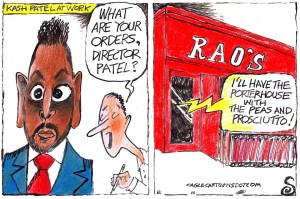 Not exactly the stuff I was taught in Sunday School as a kid. Moving right along, how about the absolute things you never wanted to know about Kash Patel, ripped straight from his files by eager Iranian hackers? This bit of information is from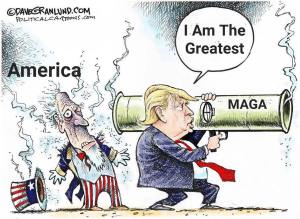
 There is some discussion in that article of what “moderates” might do which could be limited, imho, to they cave and/or then decide not to run for office again at best. At least current election polls show they’re on the run. They’re getting all their benefits and heading for the private sector. This is from
 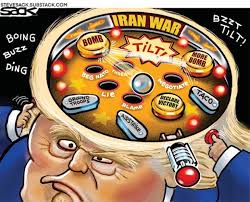 Meanwhile, the incoherent #FARTUS still can’t explain the Iran War situation.
 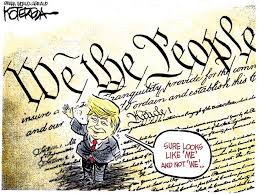 We might as well flip a coin on the decision that come from the White House. No matter what the toss portends, we all lose. What would we do without a day that racism comes into play. This is from what’s left of the
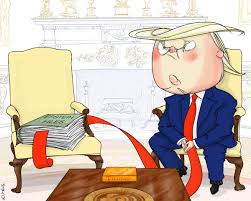 And then, we find out more details about Trump and that 13-year-old girl at the






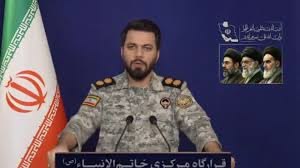
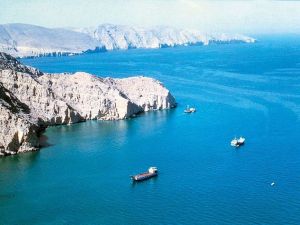



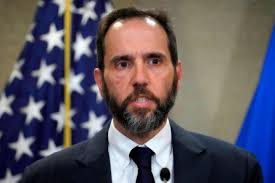











 peej
peej Carissa
 bostonboomer
 dakinikat
 ecocatwoman
 jjlo
jjlo mablue2
 Mama Lopez
 peggysue22
 quixote
 skydancingguestblogger
 Mona (aka Wonk the Vote)





Recent Comments