
Monday Reads
Posted: November 25, 2013 Filed under: Affordable Care Act (ACA), Barack Obama, Congress, Foreign Affairs, Hillary Clinton, Iran, Israel, morning reads, U.S. Politics | Tags: California, Denver Broncos, football, John Kerry, New England Patriots, Peyton Manning, Tom Brady, weather 24 Comments
Good Morning!!
Don’t blame Dakinikat for the lateness of this post. I volunteered to fill in for her today and then I ended up oversleeping.
I stayed up too late watching the New England Patriots come from behind to beat the Denver Broncos on Sunday Night Football. I had pretty much given up on the Pats at halftime when they were down 24-0. But once again Patriots quarterback Tom Brady rallied his team and once again showed Peyton Manning who’s boss.
Cindy Boren sums up what happened at The Washington Post:
For most of the country, Sunday night was cold. It’s the gateway to a big holiday week and, with the Denver Broncos blowing out the hapless New England Patriots on Sunday night, why not just turn in early?
Suckers.
Here’s the abbreviated version of what happened while you were sleeping: Trailing 24-0 at halftime, Tom Brady and the Patriots scored 31 points in the second half, the Broncos scored to tie it and, with Bill Belichick making another of his unusual coaching decisions, the Patriots won 34-31 on a field goal that came off a turnover on a muffed punt with time running out in overtime. But it was a decision by Belichick that set up the Patriots. After winning the OT coin toss, he chose to take the wind — a stiff, brutally cutting wind — in a move that even his captains questioned.
There was a fierce wind blowing in the Boston area all day yesterday. It was coach Bill Belichick’s decision to give the ball to the Broncos, forcing Manning to either throw into the wind or and the ball off. It worked, and the Pats ended up winning on a field goal. It was incredible–only the fifth time in history a team has come back from 24 down at the half to win a game.
So, that’s my excuse for being late with the morning post. I know you’re probably not impressed . . .
Of course the weather here in New England is just a minor annoyance compared to much of the rest of the country. CNN reports: Nasty weather wallops much of U.S. just before Thanksgiving.
The wicked wintry weather that pummeled the West Coast is now barreling across the country, threatening to wreck millions of holiday travel plans just before Thanksgiving.
The storm has already contributed to at least 10 traffic fatalities.
Nearly 400 flights have been canceled in the Dallas-Fort Worth area — not exactly a bastion for snowstorms. Sleet and freezing rain will keep blanketing parts of the Southern Plains and Southern Rockies on Monday.
New Mexico may be hit with 8 inches of snow!
And it’s headed our way next:
And after the storm deluges parts of the South with rain Monday evening, it’ll start zeroing in on the Northeast, the National Weather Service said. And that could spell more travel nightmares….
An Arctic air mass will probably keep temperatures 15 to 20 degrees below normal along the East Coast through Thursday. But even if the system fails to deliver heavy snow, fierce winds could still hamper air travel, forecasters said….
Heavy rain is expected to fall from Texas to Georgia on Monday and over the Carolinas on Monday night, with some sleet and snow mixed in for northern parts of that swath. The heaviest rain is expected across parts of Mississippi, Alabama, Georgia, Florida and South Carolina.
So be careful out there–especially you Sky Dancers in the southern half of the country.
In political news, the big story is the deal that the Obama administration has struck with Iran. Israel doesn’t like it one bit, and that means there will be objections in Congress. From Bloomberg via the SF Chronicle:
Israel’s rejection of the accord reached in Geneva by Iran and six leading nations over the weekend was swift. The agreement is a “historic mistake” that leaves the world “a much more dangerous place, because the most dangerous regime in the world has taken a significant step toward attaining the most dangerous weapon,” Netanyahu said.
The first accord since the Iranian nuclear program came under international scrutiny in 2003 eases sanctions on Iran in return for concessions on its atomic work. Its six-month timetable is meant to give negotiators time to seek a comprehensive deal to halt Iranian nuclear work that they, like Israel, think is a cover to build weapons.
Israel will now focus on influencing the final deal as much as they possibly can.
“What Israel can do during this period is push the international community toward making the final deal as tough as it can, though it should do so far more quietly than it has in the past,” said Eilam, a retired brigadier-general.
U.S. Secretary of State John Kerry told CBS News in Geneva that the agreement doesn’t take the threat of force off the table and rejected Israel’s position, articulated yesterday by Defense Minister Moshe Ya’alon, that the U.S. capitulated to Iranian deceit.
The agreement is “not based on trust. It’s based on verification,” with mechanisms in place to confirm whether Iran is in compliance, he said.
Kerry actually used many Congresspeople’s opposition to loosening sanctions on Iran to push the Iranians to make a deal. From Bloomberg Businessweek:
When Secretary of State John Kerry joined the nuclear negotiations at the Intercontinental Hotel in Geneva last Saturday, he employed the oldest negotiating trick in the book, evoking Congress as the bad cop to the Obama administration’s good cop. Kerry told Iranian foreign minister Mohammad Javad Zarif that if they failed to reach an agreement that day, the Obama administration would be unable to prevent Congress from passing additional sanctions against Iran. Less than 24 hours later, Kerry and Zarif walked into the hotel lobby to announce that they had struck a deal to temporarily freeze Iran’s nuclear program.
In the face of criticism from members of Congress and the U.S.’s allies in the Middle East, Administration officials have insisted that the Geneva agreement is just the first step toward a more far-reaching disarmament deal. But such a deal will require that the Obama administration promise not just to forestall the imposition of new sanctions, but to dramatically reduce the sanctions already in place. And that depends on the cooperation of a Congress that has been singularly uninterested in assuming the role of good cop in the showdown with Iran.
The White House has some discretion to rescind the Iran sanctions without Congress’s approval. The method for removing any given set of sanctions depends on how those sanctions were passed in the first place. If they’re the product of an executive order, as many of the existing sanctions against Iran are, removing them requires only that the White House decide to stop enforcing them. That’s exactly how Obama will be making good on its promise to Iran, as part of last week’s interim agreement, to restore access to $7 billion held in foreign bank accounts….Removing sanctions that have been passed into law by Congress, however, is a much more difficult challenge. Despite the partisan gridlock in gridlock in Washington over the last several years, bipartisan majorities have managed to cooperate on three separate rounds of sanctions since 2010, including measures targeting Iran’s central bank, which Iran will undoubtedly want rescinded. Removing those laws from the books will force the White House to go through Congress all over again. That will require overcoming the partisanship and procedural hurdles that have consumed Congress in recent years.
I have to say, Obama is once again showing he has guts. If only he would use some of that to stand firm on domestic policies. The BBC reports that the Obama administration has been working toward this agreement for months through secret negotiations that SOS John Kerry was involved in while he was still chairman of the Senate Foreign Relations Committee.
I’m really curious to know what role Hillary Clinton played in these negotiations and whether she supports the deal, but I can’t find any information about that so far. Meanwhile, here’s a positive review from Mark Fitzpatrick of the International Institute for strategic studies (IISS): The surprisingly good Geneva deal.
The deal reached in the early hours of the morning in Geneva on 24 November was better than I had expected, and better than would have been the case without France’s last-day intervention at the previous round two weeks earlier. I spent much of Sunday making the rounds of TV studios and fielding print-media interviews, explaining why opponents in Israel, the Gulf and US Congress should overcome their scepticism. The more I studied the deal, the more apparent it became to me that those who knock it probably did not want any agreement at all – at least not any deal that was within the realm of possibility.
The Geneva agreement is a good deal because Iran’s capabilities in every part of the nuclear programme of concern are capped, with strong verification measures. The terms require that for the next six months, no more centrifuges can be added, none of the advanced models that were previously installed can be turned on, the stockpiles of enriched uranium cannot increase, and work cannot progress on the research reactor at Arak, which is of concern because of the weapons-grade plutonium that would be produced there. Going well beyond normal verification rules, inspectors will be able to visit the key facilities on a daily basis and even have access to centrifuge production and assembly sites.
Moreover, the most worrisome part of the programme is being rolled back. Iran is suspending 20% enrichment, which is on the cusp of being weapons-usable, and neutralising the existing stockpile of 20% product, half through conversion to oxide form and half through blending down. Although the P5+1 had earlier asked for the stockpile to be exported, these measures will virtually accomplish the same purpose by eliminating the stockpile. Reversing these measures would take time.
Time is the essential variable of this deal. The net effect of the limits Iran has accepted is to double the time it would take for it to make a dash to produce fissile material for nuclear weapons. Without a deal, the break-out time might instead soon be halved.
Read the rest at the link.
Paul Krugman has a column up about some positives on the rollout of Obamacare and California as a “test case” for the program.
Now, California isn’t the only place where Obamacare is looking pretty good. A number of states that are running their own online health exchanges instead of relying on HealthCare.gov are doing well. Kentucky’s Kynect is a huge success; so is Access Health CT in Connecticut. New York is doing O.K. And we shouldn’t forget that Massachusetts has had an Obamacare-like program since 2006, put into effect by a guy named Mitt Romney.
California is, however, an especially useful test case. First of all, it’s huge: if a system can work for 38 million people, it can work for America as a whole. Also, it’s hard to argue that California has had any special advantages other than that of having a government that actually wants to help the uninsured. When Massachusetts put Romneycare into effect, it already had a relatively low number of uninsured residents. California, however, came into health reform with 22 percent of its nonelderly population uninsured, compared with a national average of 18 percent.
Finally, the California authorities have been especially forthcoming with data tracking the progress of enrollment. And the numbers are increasingly encouraging.
Krugman says that about 10,000 people are signing up per day, and the enrollment numbers show a balance between younger, healthier enrollees and those who are older and more likely to need health care.
So . . . it’s a somewhat slow news day as we head into the holiday season, but the Iran deal will give us something to talk about while the folks in Washington take their extra long vacations. I don’t even want to think about what will happen when they get back and start clashing over the debt ceiling again.
What interesting stories are you finding out there today? Please post your links in the comment thread and have a good day despite the weather!
Tuesday Reads: Philippines Disaster, Economics News, and the Concern Troll Media
Posted: November 12, 2013 Filed under: Barack Obama, Hillary Clinton, morning reads, The Great Recession, The Media SUCKS, the villagers, U.S. Economy, U.S. Politics | Tags: Alex Bolton, Andrew Huszar, Bart Chilton, Ben Bernanke, Chris Cillizza, concern troll media, Elizabeth Warren, Gary Gensler, Janet Yellen, Noam Scheiber, Philippines, Politico, Rebecca Ruth Guy, T-Bogg, Timothy G. Massad, Typhoon Haiyan 72 Comments
Good Morning!!
Boy did I ever get a shock when I looked out my window this morning and saw a mix of snow and rain coming down outside. Noooooo! It’s way too early for winter weather. I hope this isn’t a sign of things to come.
Now that I’ve looked at this morning’s news from the Philippines, I’m ashamed to be complaining about a little bit of freezing rain. The disaster following Typhoon Haiyan is beyond belief. ABC News talked to a 19-year-old American woman who who survived the massive storm.
Rebecca Ruth Guy, 19, was living in the city of Tacloban, which bore the full force of the winds and the tsunami-like storm surges Friday. Most of the city is in ruins, a tangled mess of destroyed houses, cars and trees.
“When the storm hit, our apartment was flooding so we tried opening the door but the flooding was already rising up to our chest,” Guy told ABC News.
Faced with a life-and-death situation, Guy’s friend smashed the window so they could climb to the roof and escape the storm surge, which is being blamed for a large part of the destruction and death.
“We got out to the roof,” she said. “The rain was coming, the winds were crazy and it was getting cold. So we ended up sandwiching together and holding onto one another for warmth, praying for protection of the people.
“The most harrowing was when I saw women and children piled under tarpaulin, and when I saw dogs skewered on gates, cars thrown into buildings, people trying to find something to eat, water to drink,” she added.
According to the article, the U.S. sent planes to evacuate Americans living in the Philippines; other residents aren’t so fortunate.
CNN is reporting that 1,774 people are dead; but that number will continue to rise.
Cebu, Philippines (CNN) — Typhoon Haiyan has killed too many people to count so far and pushed to the brink of survival thousands more who have lost everything, have no food or medical care and are drinking filthy water to stay alive.
By Tuesday, officials had counted 1,774 of the bodies, but say that number may just be scratching the surface. They fear Haiyan may have taken as many as 10,000 lives.
The storm has injured 2,487 more since it made landfall six times last Friday, the government said. It has displaced at least 800,000 people, the U.N. said Tuesday.
Unfortunately a new storm and an earthquake have hindered rescue efforts.
As authorities rush to save the lives of survivors four days after Haiyan ripped the Philippines apart, a new tropical low, Zoraida, blew in Tuesday delivering more rain, the Philippine national weather agency PAGASA reported.
Zoraida is not a strong storm, but has dumped just under four inches of rain in some places, CNN meteorologists say….
An earthquake also rattled part of the affected area. The 4.8 magnitude temblor shook San Isidro Tuesday, the U.S. Geological Survey reported.
Here are a few more links about the storm and its aftereffects:

An aerial view of a coastal town in Samar province on Monday, Nov. 11. (REUTERS/Erik De Castro)
The Week: The terrible destruction of Typhoon Haiyan. This one has a number of shocking photos like the one to the left.
CNN: How it happened: Tracing Typhoon Haiyan’s havoc in the Philippines (lots more photos at this link)
NPR: WHO Rates Typhoon’s Medical Challenges ‘Monumental’
NPR: ‘It Looks Like A 50-Mile Wide Tornado’ Hit The Philippines
CTC News: Typhoon Haiyan: Before and after photos of storm’s damage
In other news, here’s one that will interest Dakinikat: Obama to Tap Treasury Official as Top Derivatives Regulator. From The New York Times Dealbook blog:
President Obama will nominate Timothy G. Massad as the new chairman of the Commodity Futures Trading Commission on Tuesday, a White House aide said, choosing the senior Treasury Department official to run an agency that polices some of Wall Street’s riskiest activity.
If confirmed by the Senate, Mr. Massad will succeed Gary Gensler, a former Goldman Sachs banker who overhauled the agency in the wake of the financial crisis. Mr. Gensler, credited with turning one of Wall Street’s laxest regulators into one of its most aggressive, must leave office at the end of the year when his term officially expires.
Mr. Massad, an assistant secretary of the Treasury who oversaw the unwinding of the government’s bailout program stemming from the financial crisis, would join the agency as it undergoes a makeover.
Bart Chilton, the agency’s most liberal commissioner, announced last week that he would soon depart. David Meister, the enforcement director who led actions against some of the world’s biggest banks, departed the agency last month. And Jill E. Sommers, a Republican commissioner, left months ago.
The vacancies have raised the stakes for Mr. Massad’s nomination. If Mr. Chilton and Mr. Gensler depart before their successors are confirmed, the five-member commission will be down to just two members: one Republican, Scott D. O’Malia, and one Democrat, Mark Wetjen.
That would not be good. I know Dakinikat is busy today, but here’s another article for her to weigh in on if she has time: Confessions of a Quantitative Easer. From Andrew Huszar at the Wall Street Journal:
I can only say: I’m sorry, America. As a former Federal Reserve official, I was responsible for executing the centerpiece program of the Fed’s first plunge into the bond-buying experiment known as quantitative easing. The central bank continues to spin QE as a tool for helping Main Street. But I’ve come to recognize the program for what it really is: the greatest backdoor Wall Street bailout of all time.
Five years ago this month, on Black Friday, the Fed launched an unprecedented shopping spree. By that point in the financial crisis, Congress had already passed legislation, the Troubled Asset Relief Program, to halt the U.S. banking system’s free fall. Beyond Wall Street, though, the economic pain was still soaring. In the last three months of 2008 alone, almost two million Americans would lose their jobs.
The Fed said it wanted to help—through a new program of massive bond purchases. There were secondary goals, but Chairman Ben Bernanke made clear that the Fed’s central motivation was to “affect credit conditions for households and businesses”: to drive down the cost of credit so that more Americans hurting from the tanking economy could use it to weather the downturn. For this reason, he originally called the initiative “credit easing.”
Huzar claims that Janet Yellen will likely continue Bernanke’s policies.
Even when acknowledging QE’s shortcomings, Chairman Bernanke argues that some action by the Fed is better than none (a position that his likely successor, Fed Vice Chairwoman Janet Yellen, also embraces). The implication is that the Fed is dutifully compensating for the rest of Washington’s dysfunction. But the Fed is at the center of that dysfunction. Case in point: It has allowed QE to become Wall Street’s new “too big to fail” policy.
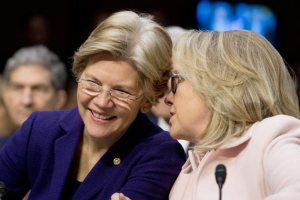
More pundits are joining the anti-Hillary ranks. According to The Hill’s Alex Bolton:
Liberal leaders want Hillary Clinton to face a primary challenge in 2016 if she decides to run for president.
The goal of such a challenge wouldn’t necessarily be to defeat Clinton. It would be to prevent her from moving to the middle during the Democratic primary.
“I do think the country would be well served if we had somebody who would force a real debate about the policies of the Democratic Party and force the party to debate positions and avoid a coronation,” said Roger Hickey, co-director of Campaign for America’s Future, an influential progressive group….
Clinton raised concern among the Democratic Party’s populist base when she recently accepted an estimated $400,000 from Goldman Sachs for two speeches.
Influential progressives wonder whether someone who accepted such a large sum from one of Wall Street’s biggest investment firms could be expected to hold corporate executives accountable if elected president.
They also wonder how aggressively she’d call for addressing income inequality, which many see as one of the biggest economic problems facing the nation.
That’s odd, since Obama ran to Hillary’s right in 2008 and received more contributions from Goldman Sachs and other Wall Street firms than either Hillary or John McCain. But let’s not get caught up in facts…
Politico has taken up the suggestion from Noam Scheiber at The New Republic that Dakinikat wrote about yesterday that Elizabeth Warren should run against Hillary. Concern trolls Ben White and Maggie Haberman write:
There are three words that strike terror in the hearts of Wall Street bankers and corporate executives across the land: President Elizabeth Warren.
The anxiety over Warren grew Monday after a magazine report suggested the bank-bashing Democratic senator from Massachusetts could mount a presidential bid in 2016 and would not necessarily defer to Hillary Clinton — who is viewed as far more business-friendly — for the party’s nomination.
And the fear is not only that Warren, who channels an increasingly popular strain of Occupy Wall Street-style anti-corporatism, might win. That is viewed by many political analysts as a slim possibility. It is also that a Warren candidacy, and even the threat of one, would push Clinton to the left in the primaries and revive arguments about breaking up the nation’s largest banks, raising taxes on the wealthy and otherwise stoking populist anger that is likely to also play a big role in the Republican primaries.
So what does Warren think about all this?
A spokesperson for Warren declined to comment on whether she would consider a presidential bid against Clinton, though Warren has previously said she has no plans to run. People close to Warren note that she signed a letter from female Democratic senators urging Clinton to run in 2016. And Warren associates, mindful of any appearance of creating the narrative of a Warren-for-president campaign, have corresponded with Clinton associates to stress that they didn’t fuel the New Republic story by Noam Scheiber.
Assholes. Hey, I have an idea–why not get Kirstin Gillibrand to run against Hillary too? Of course Chris Cillizza is also rooting for Warren and Clinton to destroy each other’s chances to do anything positive about the economy:
Quick, name someone who would have a realistic chance of beating out Hillary Clinton for the 2016 presidential nomination. Martin O’Malley? Nope. Joe Biden? Maybe but probably not. Howard Dean. No way. There’s only answer to that question that makes even a little sense. And that answer is Elizabeth Warren.
And so on… bla bla bla… Don’t these idiots have anything important to write about? Like maybe jobs, children without food or health care, or the upcoming battle over the debt limit?
Thank goodness for TBogg at Raw Story: What if Elizabeth Warren went back in time and smothered Baby Hitler in his crib?
If you have been perambulating about the internet these past few days, the above is exactly the kind of linkbait bullshit narratives that are being peddled by people who have wearied talking about President of New Jerseymerica Chris Christie or whether Rand Paul was the real life inspiration for the J.L. Borges short story, Pierre Menard, Author of the Quixote. It seems that frustrated writers lacking hobbies have turned their lonely eyes to the Democratic side of the 2016 presidential election which is just around the corner, if by corner, you mean: three years from now. But with Hilary “Killary” Clinton pretty much chillaxing with the nomination ripe for the taking (providing she doesn’t rehire Mark Penn, aka The Man Who Could Fuck Up A Baked Potato) there isn’t a whole lot of tension the likes of which you can find on a daily basis on the Republican Wingnut Flavor of the Week side.
So naturally, Noam Scheiber felt obligated to create some Democratic conflict. T-Bogg responds:
I love Elizabeth Warren. I would totally have her baby if she would have me. You love Elizabeth Warren. We all love Elizabeth Warren. Someday Elizabeth Warren t-shirts may very well become as ubiquitous as Che T’s. But, outside of the hazy crazy patchouli-scented fever palaces that are the comment sections of the manic progressive websites, nobody really thinks that Warren could, would, or should run an insurgent primary campaign against Clinton. And, to be quite frank, those who think Warren should run to in order to “start a conversation” are the kind of people who have attempted this kind of thing in the past and , as my grandmother used to put it, “don’t have dick to show for it”.
Read his replies to Politico and Cillizza at the link. BTW, I wrote comment before I discovered T-Bogg’s piece. Great minds think alike, but T-Bogg expressed my reactions so much better than I could.
That should be enough to get us started on the day’s news. What stories are you following? Please post your links in the comment thread and have a terrific Tuesday!
Tuesday Reads: Liberals, Libertarians, and Concern Trolls
Posted: October 29, 2013 Filed under: abortion rights, Barack Obama, Civil Liberties, Civil Rights, Crime, Democratic Politics, Foreign Affairs, France, George W. Bush, Germany, Great Britain, Hillary Clinton, Medicaid, Medicare, morning reads, poverty, Reproductive Rights, Russia, Social Security, U.S. Politics, War on Women, Women's Rights | Tags: "progressive" blogs, Conor Friedersdorf, Edward Snowden, Glenn Greenwald, Ian Welsh, libertarians, Ron Paul, T-Bogg 60 Comments
Good Morning!!
Between the Red Sox being in the World Series and having to have a root canal on Saturday, I’ve been a little bit disconnected from politics. The Sox won again last night in St. Louis, and they’ll be coming back home to Fenway Park leading the series 3 games to 2; so they could end it tomorrow night. If this post is a little late, my aching jaw and baseball are the reasons why.
We’ve been talking a lot about libertarians lately, because so-called progressives have been aligning with those Ayn Rand fans since libertarian Edward Snowden began leaking top secret documents about the NSA and libertarian Glenn Greenwald began lecturing the world about what a great hero Snowden is for defecting to Russia and revealing the most secret counterintelligence methods of the U.S. and U.K.
The latest shameful episode was Saturday’s “Stop Watching Us” rally in Washington, at which supposedly “progressive” groups joined with anti-woman right-wingers like Justin Amash and neo-confederates like Ron and Rand Paul to protest the NSA doing its job of collecting foreign intelligence.
Before the rally took place, Tom Watson wrote a heartfelt column warning “progressives” that libertarians don’t make good bedfellows. Watson wrote that while he dislikes mass surveillance,
I cannot support this coalition or the rally. It is fatally compromised by the prominent leadership and participation of the Libertarian Party and other libertarian student groups; their hardcore ideology stands in direct opposition to almost everything I believe in as a social democrat.
The Libertarian Party itself — inaccurately described by Stop Watching Us as a “public advocacy organization” — is a right-wing political party that opposes all gun control lawsand public healthcare, supported the government shutdown, dismisses public education,opposes organized labor, favors the end of Social Security as we know it, and argues in its formal political manifesto that “we should eliminate the entire social welfare system” while supporting “unrestricted competition among banks and depository institutions of all types.”
Yet my progressive friends would take the stage with the representatives of this political movement? Why? The loss is much greater than the gain. Organizers trade their own good names and reputations to stand alongside — and convey legitimacy to — a party that opposes communitarian participation in liberal society, and rejects the very role of government itself. And their own argument for privacy is weakened by the pollution of an ideology that uses its few positive civil liberties positions as a predator uses candy with a child.
This is an abandonment of core principles, in my view, out of anger over Edward Snowden’s still-recent revelations about the National Security Agency and its spying activity, particularly domestic access to telephone and online networks and metadata. It represents trading long-held beliefs in social and economic justice for a current hot-button issue that — while clearly of concern to all Americans — doesn’t come close to trumping a host of other issues areas that require “the long game” of electoral politics and organizing. Going “all in” with the libertarian purists is a fatal and unnecessary compromise; reform is clearly needed, but the presence of anti-government laissez-faire wingers at the beating heart of the privacy movement will surely sour the very political actors that movement desperately needs to make actual — and not symbolic, link bait — progress in its fight.
But it was to no avail. Watson was attacked for his argument that the anti-surveillance fever is distracting from other important issues. People like Greenwald and Snowden couldn’t possibly care less about alleviating poverty, protecting women’s rights or the right to vote. They’d have no problem with Social Security and Medicare being eliminated, and as for voting, they’re anti-government anyway. Glenn Greenwald–whom some uninformed people believe is a “progressive,” saves his worst attacks for Democrats and in the past has supported Ron Paul and Gary Johnson for president. To Greenwald, sacrificing the entire legacy of FDR and the civil rights and women’s movements is no big deal. Here’s how he characterized the values of liberals who reject Ron Paul in 2011:
Yes, I’m willing to continue to have Muslim children slaughtered by covert drones and cluster bombs, and America’s minorities imprisoned by the hundreds of thousands for no good reason, and the CIA able to run rampant with no checks or transparency, and privacy eroded further by the unchecked Surveillance State, and American citizens targeted by the President for assassination with no due process, and whistleblowers threatened with life imprisonment for “espionage,” and the Fed able to dole out trillions to bankers in secret, and a substantially higher risk of war with Iran (fought by the U.S. or by Israel with U.S. support) in exchange for less severe cuts to Social Security, Medicare and other entitlement programs, the preservation of the Education and Energy Departments, more stringent environmental regulations, broader health care coverage, defense of reproductive rights for women, stronger enforcement of civil rights for America’s minorities, a President with no associations with racist views in a newsletter, and a more progressive Supreme Court.
Of course, Greenwald is admitting that he’d sacrifice the social safety net and the rights of millions of Americans in a hopeless effort to defeat the military-industrial complex and its technologies. If you can stand to read the whole piece, you’ll also learn that Greenwald thinks Matt Stoller is a “brilliant” writer. Greenwald is a libertarian purist, with no understanding of how politics actually works. This is the pied piper that many “progressives” are following these days.
I guess I’m getting a little carried away here, so I’ll stop ranting and offer some pertinent links.
Thursday Reads: Who’s Really Running Things in the Middle East? . . . And Other News
Posted: September 26, 2013 Filed under: Criminal Justice System, Foreign Affairs, Hillary Clinton, Middle East, morning reads, polling, U.S. Economy, U.S. Politics | Tags: Dexter Filkins, government shutdown, iran, NPR's Fresh Air, Qassem Suleimani, Quds Force, Revolutionary Guard, Tea Party, Terry Gross 18 Comments
Good Morning!!
There’s a long article in the September 30 New Yorker by Pulitzer Prize-winning journalist Dexter Filkins about a powerful Iranian military leader named Qassem Suleimani. Sueimani is the Commander of the Quds Force. According to Wikipedia, the Quds Force is:
a special unit of Iran‘s Army of the Guardians of the Islamic Revolution (Revolutionary Guard). It has been tasked with “exporting” Iran’s Islamic revolution, and is responsible for “extraterritorial operations” of the Revolutionary Guard.
Filkins describes the functions Quds Force as follows:
The force is the sharp instrument of Iranian foreign policy, roughly analogous to a combined C.I.A. and Special Forces; its name comes from the Persian word for Jerusalem, which its fighters have promised to liberate. Since 1979, its goal has been to subvert Iran’s enemies and extend the country’s influence across the Middle East. Shateri had spent much of his career abroad, first in Afghanistan and then in Iraq, where the Quds Force helped Shiite militias kill American soldiers.
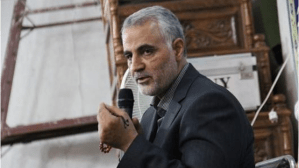
Qassem Suleimani
I have to admit that I haven’t read the entire article yet, but yesterday I heard a fascinating interview of Dexter Filkins by Terry Gross on her NPR show Fresh Air. You can listen to the interview at the link. It lasts about 44 minutes. Filkins covered the wars in Afghanistan and Iraq for the New York Times beginning in 2002. In addition, he is the author of the book The Forever War. Based on what I heard in the Fresh Air interview, just about everything many Americans think we know about Iran, Iraq, Syria and Iran’s powerful influence in the Middle East is going to have to be revised and updated. Even Filkins was surprised by what he learned through his research and reporting in Iran.
Here’s what Filkins writes about Suleimani:
Suleimani took command of the Quds Force fifteen years ago, and in that time he has sought to reshape the Middle East in Iran’s favor, working as a power broker and as a military force: assassinating rivals, arming allies, and, for most of a decade, directing a network of militant groups that killed hundreds of Americans in Iraq. The U.S. Department of the Treasury has sanctioned Suleimani for his role in supporting the Assad regime, and for abetting terrorism. And yet he has remained mostly invisible to the outside world, even as he runs agents and directs operations. “Suleimani is the single most powerful operative in the Middle East today,” John Maguire, a former C.I.A. officer in Iraq, told me, “and no one’s ever heard of him.”
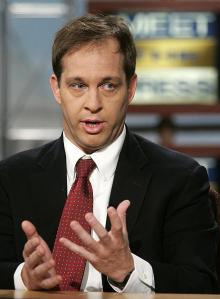
Dexter Filkins
According to Filkins, through Suleimani’s influence, after the U.S. took down Saddam Hussein and everything went to hell in Iraq, Iran has basically controlled what went on there; and now Iran is a powerful influence in the Syrian conflict. Here’s the introduction to the Filkins interview from Fresh Air site. Meet The Iranian Commander Pulling Strings In Syria’s War:
Perhaps the most important military commander in Syria’s civil war is not Syrian at all. He’s Iranian Maj. Gen. Qassem Suleimani, and he’s the subject of an article by Dexter Filkins in the current edition of The New Yorker.
For the past 15 years, Suleimani has been the chief of the Quds Force, a small but powerful branch of Iran’s Revolutionary Guard. He’s not a familiar name to Americans, but one former CIA officer described him to Filkins as “the single most powerful operative in the Middle East today.”
Filkins writes that Suleimani “has sought to reshape the Middle East in Iran’s favor, working as a power broker and as a military force: assassinating rivals, arming allies, and, for most of a decade, directing a network of militant groups that killed hundreds of Americans in Iraq. The U.S. Treasury Department has sanctioned Suleimani for his role in supporting the Assad regime, and for abetting terrorism.”
On Suleimani’s influence on the reshaping of the Middle East:
Qassem Suleimani — who is this extraordinarily powerful man behind the mask, very mysterious guy, very powerful guy — he was instrumental in 2010 in making sure that the Americans left no troops behind in Iraq. During the Iraq War, he supervised and directed militias which were responsible for hundreds of American deaths.
It appears, by the evidence, that the Iranians, and the Quds Force in particular, were behind the assassination of Rafik Hariri, the president of Lebanon, in 2005. Qassem Suleimani appears to be running or directing or at least playing a very large part in the war in Syria on behalf of the Assad government. So he’s everywhere, and, again, the Iranians have been extraordinarily aggressive over the past 15 years in asserting themselves in the Middle East, often at American expense.
Filkins also says that it’s clear the Iranians do want to develop nuclear weapons, and he doubts if the U.S. will be able to get them to agreed not to do it. The reason the Iranians are reaching out to the West right now is that the sanctions are really hurting them–basically the middle class in Iran has been decimated.
You can read more excerpts from the interview at the Fresh Air site. I plan to finish reading the Filkins article in the New Yorker today. I hope I’ve given you enough information to get you to read it too. I’m sure this article will be much discussed in the coming weeks.
Here’s Charles Pierce on the Filkins piece: The Limitless Bungling Of George W. Bush And Co.
Dexter Filkins has a long, fine piece in the September 30 New Yorker about one Qassam Suleimani, an Iranian who seems to be the Zelig of Middle East spookdom, and who is now currently working with the Assad government in Syria.
Since then, Suleimani has orchestrated attacks in places as far flung as Thailand, New Delhi, Lagos, and Nairobi-at least thirty attempts in the past two years alone. The most notorious was a scheme, in 2011, to hire a Mexican drug cartel to blow up the Saudi Ambassador to the United States as he sat down to eat at a restaurant a few miles from the White House. The cartel member approached by Suleimani’s agent turned out to be an informant for the U.S. Drug Enforcement Administration. (The Quds Force appears to be more effective close to home, and a number of the remote plans have gone awry.) Still, after the plot collapsed, two former American officials told a congressional committee that Suleimani should be assassinated. “Suleimani travels a lot,” one said. “He is all over the place. Go get him. Either try to capture him or kill him.” In Iran, more than two hundred dignitaries signed an outraged letter in his defense; a social-media campaign proclaimed, “We are all Qassem Suleimani.”
If you want evidence behind your essential instinct that the tangle in that part of the world is beyond our ability ever to untangle, you’ve got it here. But there is one other little tidbit that’s worth bringing up, given the fact that some officials formerly in the employ of C-Plus Augustus — most notably, David Frum — have snuck into the national dialogue again, probably through an unguarded window, instead of going off and living a penitent’s existence for what they did to the country.
(To be entirely fair, according to Filkins, Suleimani was formed by his participation in the savage Iran-Iraq War in which the United States, employing the brilliant realpolitik of blood-beast Henry Kissinger, helped both sides, guaranteeing that nobody would trust us thereafter. Genius!)
In other news,
Hillary had a few choice words for the Republicans who are trying to shut down the government in order to defund The Affordable Care Act. From the WaPo: Hillary Clinton says government shutdown ‘wouldn’t be the worst thing for Democrats’:
Hillary Rodham Clinton said Tuesday that if a “noisy minority” of Republican lawmakers force a government shutdown over funding for President Obama’s signature health-care law, they would face negative political consequences.
“It wouldn’t be the worst thing for Democrats if they tried to shut the government down,” said Clinton, a former secretary of state and potential 2016 Democratic presidential candidate. “We’ve seen that movie before and it didn’t work out so well for those so-called obstructionists.”
Clinton was referencing the political harm for Republicans in the mid-1990s when they forced a shutdown during husband Bill Clinton’s presidency.
“If they want to try to shut the government down, that’s on their head, that’s their responsibility,” she added.
Isn’t it great to have Hillary talking about politics again?
I’m really late with this post, so I’m going to wrap it up with a link dump:
From Gallup — Tea Party Support Dwindles to Near-Record Low: Republicans ambivalent about movement, while most Democrats oppose it
From Huffington Post — DC Exempts Itself From Federal Government Shutdown
From The Political Carnival: Don’t Buckle Your Seatbelt? Go To Jail — Or Your Death
From Vanity Fair, battles among the richie-riches in San Francisco’s toniest neighborhood —
Bluebloods & Billionaires
Scientific American — Peculiar Brain Signals Found in “Flat-Lined” Patient What does it really mean to be dead?
Now it’s your turn. What’s your recommended reading for today? Please let us know in the comment thread, and have a great day!
Tuesday Reads: Hillary in 2016?
Posted: September 24, 2013 Filed under: 2016 elections, Hillary Clinton, morning reads, Republican politics, U.S. Economy, U.S. Politics | Tags: Bill Clinton, Chelsea Clinton, Doug Band, Huma Abedin, Taylor Marsh, Terry McAuliffe 70 Comments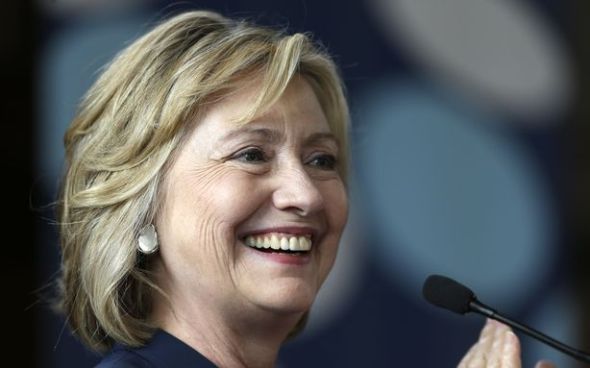
The face of a President?
Good Morning!!
For the past few weeks, I’ve been suffering from a bad case of what JJ calls “PAD” or “Political Affective Disorder.” I’ve been finding myself escaping into a haze of detective stories, Criminal Minds reruns, and video games. I’ve still kept up with the news–barely–but I haven’t felt much like writing about it. I feel discouraged about the fate of our nation and I’m paralyzed about my own personal future too.
Beginning in 1993, I focused most of my attention of getting the education I missed out on as a young woman after I left college after only two years. From 1993 to 2010, I lived the life of a full-time student–and I loved it! After I finally achieved my goal–a doctorate in psychology–I had no idea what to do next. I was near retirement age, and faced the reality that the best “job” I might be able to get in the current economic climate was as an adjunct professor with low pay and no benefits.
I had learned after 12 years of teaching that the kinds of teaching jobs I might be able to get wouldn’t allow me to experience the aspects of teaching that I truly enjoyed–working directly with students and leading class discussions–wouldn’t be available to me. Instead I’d be lecturing to classes of 150-200 students with little opportunity for class discussion or personal interaction. In addition, I had serious problems with grade inflation and the “customers are always right” attitude of the universities I had taught at.
I had fantasies of focusing on writing and research, and I thought that might be a realistic goal, but then my mentor died suddenly and shockingly, and I no longer had anyone in academia to turn to for advice or to help me negotiate the publishing process. I was already so exhausted by the effort to complete my dissertation and my father’s death in March of 2010, that I really felt the need to just do nothing for awhile.
I threw myself into blogging, because it gave me opportunities to write and express myself on a daily basis. I’ve always loved following politics and it has been great to connect with so many other people who have the same interests and obsessions. But lately the world of politics seems as paralyzed as I am in my own life. The Republican Party has managed to largely control the agenda despite the fact that they only control the House.
Right now, I have the ability to live on a very low income and still have a decent lifestyle. But the day is eventually going to come when I won’t have a free place to live. I’m also finding myself less satisfied with just recovering from the effort to finish my Ph.D. and the major losses of my father and my academic father figure–my mentor. What will my future look like? I seems wrong not to use the skills and knowledge I’ve gained over the years to give back in some way, no matter how small.
Well, I can’t solve all those problems today. But I can keep on keepin’ on and imagine ways things might change. You might call it, “The Audacity of Hope.” And that’s where Hillary comes in. More and more I see her as a model for survival, for achievement late in life, for looking at problems in new and productive ways. Could she really become the first woman president at approximately the same age I am? Could she be a better, more innovative leader than Barrack Obama has been? I want to take that leap of faith and believe in her ability to win the nomination and general election and succeed as president. I also want to believe that she and we can survive the Clinton hate that we’ll all have to go through to make it happen.
Suddenly Hillary is all over the news! Yesterday Dakinikat posted a link to the first major interview (at New York Magazine) Hillary has done since leaving the State Department. Yesterday I was feeling so apathetic that I didn’t even manage to read the whole thing. But I’ve promised myself I’m going to do that today. In the meantime, here are some crib sheets and reactions to the New York article:
From NBC News’ First Thoughts:
*** Clinton news — everywhere! If you wanted an idea of what the media landscape would look like the moment we get a clear indication if Hillary Clinton is running for president, we got a taste of it over the past 48 hours. Hillary Clinton gave her first private-citizen interview to a news organization; Bill Clinton is making news ahead of his Clinton Global Initiative meeting; and the New Republic runs a tough piece on Bill Clinton aide Doug Band. It’s a reminder of what comes with the Clintons — excitement, news and attention, and baggage. Now on to these individual stories…
*** “She’s running,” Hillary confidante tells New York magazine: In her first interview with a news organization since leaving her secretary of state post, Hillary Clinton certainly didn’t seem like someone who was shutting the door to a 2016 presidential bid. In fact, it was the opposite. When New York magazineasked if she wrestles with running, Clinton responded, “‘I do,’ she says, ‘but I’m both pragmatic and realistic. I think I have a pretty good idea of the political and governmental challenges that are facing our leaders, and I’ll do whatever I can from whatever position I find myself in to advocate for the values and the policies I think are right for the country. I will just continue to weigh what the factors are that would influence me making a decision one way or the other.’” It’s a significant step that she’s decided to acknowledge publicly that she’s thinking about it. We may all think we know this and treat it as a given inside the Acela Corridor, but it’s still significant to read her SAYING it. But the article adds, “Some of her close confidants, including many people with whom her own staff put me in touch, are far less circumspect than she is. ‘She’s running, but she doesn’t know it yet,’ one such person put it to me. ‘It’s just like a force of history. It’s inexorable, it’s gravitational. I think she actually believes she has more say in it than she actually does.’” Other than sending signals that she’s running, the other unmistakable take away from the Hillary interview: She won’t be surrounding herself with a lot of the Bill alum, a la 2008. More Team Hillary, less Team Bill in 2016. Translation to nervous donors/supporters about a repeat of 2008: Mark Penn and other Bill veterans aren’t running this thing.
From The Daily Beast: Seven Juiciest Bits from Hillary Clinton’s New York Profile. Go read the whole thing, but I’ll excerpt the part I found most intriguing:
7. The future of Clintonworld now lies with Chelsea.
Of course, there’s a third person in the Clinton family: Chelsea, whose name has been added to the name of the foundation, making it the Bill, Hillary, and Chelsea Clinton Foundation. Chelsea had tried out a number of careers before turning to the family business, first as a consultant at McKinsey & Co., then a hedge fund and a stint NBC. But not everyone at the foundation was happy about Chelsea’s sudden appearance and her decision to bring in an old McKinsey associate as CEO—and Bill eventually stepped out and defended his comrades, a move that hinted there might have been conflict between the three Clintons. “This is an operation that runs on its proximity to people,” one staffer said. “Now it’s three people. How does that work?”
But Hillary says Chelsea’s entrance is simply in her daughter’s DNA (a move that seemed especially true after Chelsea’s Daily Show appearance on Thursday night). Hillary said Chelsea, the family’s now-gatekeeper, “comes by it” at the foundation “naturally.” Ever the proud parents, Hillary said Chelsea is “an incredibly able—obviously I’m biased—but extremely well-organized, results-oriented person, so rather than joining a lot of other groups, on which she could pursue her interests, she thought, I want to be part of continuing to build something I have worked on off and on over the years, and I really believe in it. I was thrilled to hear that.”
A negative note from The Atlantic: Hillary Clinton’s Presidential Campaign Is Already Haunted
Clinton-watchers have an abundance of bedtime reading options this Sunday with not one, but two long profiles aimed at a possible 2016 run for Hillary Clinton. In New York magazine, Clinton herself breaks a mini “press hiatus” to spend some time with Joe Hagan, who then digs into the extensive support system for the family dynasty. But it’s The New Republic’s profile of Doug Band, longtime advisor to Bill Clinton, that hints at one of the challenges Hillary will face in a 2016 campaign: the ghosts waiting in the wings from the Clintons’ long public life.
Band, writer Alec MacGillis explains, is “rarely written about, almost never quoted, and many Clinton associates are loath to discuss him on the record.” But lately, he’s emerged from under the Clinton umbrella to strike out on his own, leaving him more vulnerable to scrutiny. In the past few months, his name has popped up as something of an antagonist in stories of troubles at the family foundation. Even though Band declined to speak to MacGillis for his expansive profile, the piece connects some dots that could be unwelcome for Team Clinton: “the unease with Band reflects an unease with the phenomenon of post-presidential Clintonism itself,” he writes. That Clintonism angst, TNR’s piece posits, could extend to Hillary, albeit with few to no direct ties. Band’s role in the Clinton administration was as the body man, a presidential version of a personal assistant.
Taylor Marsh points out that Hillary is not Bill just because she’s married to him: Bill Clinton, Hillary, and a Bone Picking Exposé on Doug Band.
The fact is Hillary Clinton doesn’t have a trail to give us an idea what she’d do, let alone if she thinks similarly to her husband on economics. What we know about Hillary in matters commander in chief is that unlike where Bill started, she’s respected at the Pentagon, which is one reason a contingent of progressives will oppose her candidacy. People tried to hook NAFTA to her back during the 2008 season, which I debunked, because not even Carl Bernstein, someone who wrote a fairly tough book on Hillary, would allow that to go unremarked upon, throwing ice cold water on any notion she supported NAFTA, a free trade agreement that exemplifies neoliberalism.
Just because she’s Bill Clinton’s wife doesn’t mean her views are identical to him. You’d think Democratic activists and progressives would understand the insult of assuming Hillary would be just like Bill. Opposing NAFTA also doesn’t mean she won’t approve of other free trade deals. Of course, for many Iraq, then her role in Libya, now Syria, is enough to make her unsupportable.
The other issue is that to people inside the power structure who want to be in charge, pretending corporations aren’t part of politics is to lose your foothold on the ladder taking you upward. You can choose not to participate as a voter and activist, but anyone in the political food chain who wants to rise cannot. This is one of the immovable, unsolvable, implacable truths that create the catch-22 of American politics.
Anyone who wants to change the system can’t get access to power without using the system and by the time they rise within the system they’ve lost credibility with the voters who put them in office to fight the system. Once in the political stream that gives you access to the power as a politician, the corporations who run the world also control the political apparatus you need to get anything done. Thus instead of Barack Obama changing Washington it changed him, as it will anyone governing in the era of international globalization. It gets to the question of whether a person is strong enough to also exact their own pound of economic flesh so that the stacked deck for the wealthy against the middle class at some points starts evening out.
So we don’t talk about neoliberalism when it comes to Democrats, Bill Clinton or Barack Obama, and a scorching investigation of Doug Band won’t change that fact, or that Hillary being married to Bill doesn’t tell us anything definitive about what she’d do if she ran for president and won.
John Dickerson at Slate via CBS News: Hillary Clinton: The long game.
Hillary Clinton, in her first interview after leaving the State Department, offered a wise metaphor about the current state of presidential election madness. “This election is more than three years away, and I just don’t think it’s good for the country,” she told New York magazine, referring to the fevered speculation about her possible candidacy. “It’s like when you meet somebody at a party and they look over your shoulder to see who else is there, and you want to talk to them about something that’s really important; in fact, maybe you came to the party to talk to that particular person, and they just want to know what’s next,” she says. “I feel like that’s our political process right now. I just don’t think it is good.”
Clinton knows what it’s like to be on both ends of that exchange. She was a political spouse; the shortsighted looked over her shoulder for many years, seeing her as merely an adjunct to her accomplished husband. Now, she is the person who draws every eye in the room–away from even her husband. (When someone says “Clinton”, it may not be long before a majority of people think of the former secretary of state and not the former president).
Read more at the link.
And finally articles on two important members of the Clinton orbit:
NY Daily News: Hillary Clinton running for president in 2016, friends say — and Huma Abedin will have tough choice
WaPo: McAuliffe leads Cuccinelli in Virginia governor’s race

 peej
peej Carissa
 bostonboomer
 dakinikat
 ecocatwoman
 mablue2
 Mama Lopez
 peggysue22
 quixote
 skydancingguestblogger
 Mona (aka Wonk the Vote)



 Sky Dancing
Recent Comments