Trump is touring the Middle East, looking for graft as president and grift for his family business. Most presidents choose to visit a U.S. ally like Canada or Great Britain as their first foreign trip, but Trump goes directly to the richest, most corrupt, least democratic countries where he can score lucrative deals for himself. On the trip, the big story is that he wants to accept the gift of an airplane from the Emir of Qatar. This would of course be wildly unconstitutional and unethical.
Trump was in Saudi Arabia yesterday. Here’s Lawrence O’Donnell’s commentary from last night.
RIYADH, May 13 (Reuters) – President Donald Trump kicked off his trip to the Gulf on Tuesday with a surprise announcement that the United States will lift long-standing sanctions on Syria, and a $600 billion commitment from Saudi Arabia to invest in the U.S.
The U.S. agreed to sell Saudi Arabia an arms package worth nearly $142 billion, according to the White House which called it the largest “defense cooperation agreement” Washington has ever done.
The end of sanctions on Syria would be a huge boost for a country that has been shattered by more than a decade of civil war. Rebels led by current President Ahmed al-Sharaa toppled President Bashar al-Assad last December.
Speaking at an investment forum in Riyadh at the start of a deals-focused trip that also brought a flurry of diplomacy, Trump said he was acting on a request to scrap the sanctions by Saudi Arabia’s de facto ruler, Prince Mohammed bin Salman.
“Oh what I do for the crown prince,” Trump said, drawing laughs from the audience. He said the sanctions had served an important function but that it was now time for the country to move forward.
Jamal Kashoggi
Of course one of the things he did for the crown prince was to overlook the brutal murder of journalist Jamal Kashoggi.
Trump and the Saudi crown prince signed an agreement covering energy, defense, mining and other areas. Trump has sought to strengthen relations with the Saudis to improve regional ties with Israel and act as a bulwark against Iran.
The agreement covers deals with more than a dozen U.S. defense companies for areas including air and missile defense, air force and space, maritime security and communications, a White House fact sheet said.
It was not clear whether the deal included Lockheed F-35 jets, which sources say have been discussed. The Saudi prince said the total package could reach $1 trillion when further agreements are reached in the months ahead.
It’s not just the “gesture” of a $400 million luxury plane that President Donald Trump says he’s smart to accept from Qatar. Or that he effectively auctioned off the first destination on his first major foreign trip, heading to Saudi Arabia because the kingdom was ready to make big investments in U.S. companies.
It’s not even that the Trump family has fast-growing business ties in the Middle East that run deep and offer the potential of vast profits.
Instead, it’s the idea that the combination of these things and more — deals that show the close ties between a family whose patriarch oversees the U.S. government and a region whose leaders are fond of currying favor through money and lavish gifts — could cause the United States to show preferential treatment to Middle Eastern leaders when it comes to American affairs of state.
The Trump sons have been seeking out deals for the familiy business
Before Trump began his visit to Saudi Arabia, Qatar and the United Arab Emirates, his sons Eric and Donald Jr. had already traveled the Middle East extensively in recent weeks. They were drumming up business for The Trump Organization, which they are running in their father’s stead while he’s in the White House.
Saudi Crown Prince Mohammed bin Salman
Eric Trump announced plans for an 80-story Trump Tower in Dubai, the UAE’s largest city. He also attended a recent cryptocurrency conference there with Zach Witkoff, a founder of the Trump family crypto company, World Liberty Financial, and son of Trump’s do-everything envoy to the Mideast, Steve Witkoff.
“We are proud to expand our presence in the region,” Eric Trump said last month in announcing that Trump Tower Dubai was set to start construction this fall.
The presidential visit to the region, as his children work the same part of the world for the family’s moneymaking opportunities, puts a spotlight on Trump’s willingness to embrace foreign dealmaking while in the White House, even in the face of growing concerns that doing so could tempt him to shape U.S. foreign policy in ways that benefit his family’s bottom line.
The strategic pitch also included the possibility of a detente with Israel and US access to Syrian oil and gas reserves, according to sources familiar with the effort.
Jonathan Bass, a pro-Trump activist, met with Syrian President Ahmed al-Sharaa for four hours in Damascus on April 30, alongside Syrian activists and representatives from Gulf Arab states.
That formed part of a broader push to broker a meeting between the two leaders, which occurred on Wednesday.
It was the first time in 25 years that the leaders of the US and Syria had met, and came after a surprise announcement from Trump that the US would lift all sanctions on Syria.
In Riyadh, Trump also embarrassed himself by saluting Saudi generals.
President Donald Trump saluted Saudi Arabian generals as they lined up to greet him during his visit to Riyadh, the first stop in his four-day tour of the Middle East.
There has been a discussion in recent years about the proper etiquette for presidents saluting the military, particularly those from other nations.
A returned salute by Trump to a North Korean general during his first term sparked criticism, with some saying he should not have shown respect to a hostile nation. Others said it was courteous to return the gesture.
The salute has not sparked the controversy that followed the emergence of video that showed the president saluting the North Korean general during his first term.
But it comes as Trump leads a large delegation of top officials from his administration and leaders in the business world, as he seeks to discuss peace in the Middle East and improving trade and investment.
Trump’s inappropriate behavior doesn’t shock people anymore; it’s expected that he’ll be an embarrassment to the country wherever he goes.
Qatar signed an agreement Wednesday to purchase 160 jets from U.S. manufacturer Boeing for Qatar Airways.
The agreement was signed by both President Donald Trump and Qatar’s Emir Sheikh Tamim bin Hamad Al-Thani during Trump’s visit to the Gulf Arab country.
Trump said the deal was worth $200 billion and included 160 jets.
“So it’s over $200 billion but 160 in terms of the Jets, that’s fantastic,” Trump said.
“So that’s a record, Kelly, then congratulations to Boeing,” he added, directing to his comments to Boeing CEO Kelly Ortberg, who was in the room.
Boeing could certainly use the help. Orders last year effectively ground to a halt after a door plug blew off of an Alaska Airlines 737 Max at the beginning of 2024, leaving a gaping hole in the side of the plane. Even with a rebound in orders toward the end of 2024, Boeing’s gross orders were just 569 for all of last year — down a stunning 60% from 2023.
Also not helping Boeing was a massive strike in the fall. About 33,000 machinists hit the picket lines in September, and Boeing didn’t restart production until early December. That sank Boeing’s deliveries to just 348 planes last year, down 34 percent from 2023.
And that was before Trump’s tariffs hit.
Of course the big issue today is the plane that Trump wants to accept from Qatar.
Donald Trump has doubled down on why he wants to accept a luxury Boeing 747 from Qatar, a country where he traveled to today to negotiate business deals, with the US president portraying the $400m aircraft as an opportunity too valuable to refuse.
“The plane that you’re on is almost 40 years old,” Trump told Fox News host Sean Hannity during an Air Force One interview on the Middle East trip, where he is also visiting Saudi Arabia and the UAE.
“When you land and you see Saudi Arabia, you see UAE and you see Qatar, and they have these brand-new Boeing 747s, mostly. You see ours next to it – this is like a totally different plane.”
Clearly irritated by questions about the ethical criticism of accepting such a lavish gift as president, Trump insisted American prestige was at stake. “We’re the United States of America. I believe we should have the most impressive plane.”
The timing of Trump’s visit has raised eyebrows, coming just weeks after the Trump Organization secured a deal with Qatar for a luxury resort and golf course development outside the capital, Doha, called Trump International Golf Club & Villas….
But the idea of accepting a plane from Qatar has triggered alarm across the political spectrum. The Democratic representative Ritchie Torres condemned it as a “flying grift” that violates the constitution’s emoluments clause, which explicitly prohibits federal officials from accepting valuable gifts from foreign powers without congressional approval.
Even staunch Trump allies have broken ranks, including the Texas senator Ted Cruz, who warned that the aircraft deal “poses significant espionage and surveillance problems”, while the West Virginia senator Shelley Moore Capito said bluntly she’d “be checking for bugs”.
On Sunday night, as the public first learned about Donald Trump’s plan to accept a superluxury Boeing 747-8 jumbo jet from his friends in Qatar to be used as Air Force One, the president was eager to defend the arrangement. The plane, the Republican argued online, would be “FREE OF CHARGE.”
Trump returned to the point a few days later, asking why taxpayers should be “forced to pay hundreds of millions of Dollars” for a plane “when they can get it for FREE” from Qatar. He added soon after that only “a stupid person [would] say, ‘No, we don’t want a free, very expensive airplane.’”
Even if the luxury jet were free, this arrangement would still be a legal, ethical and political mess. But there’s a related problem: The “free” plane wouldn’t be free. NBC News reported:
“Converting a Qatari-owned 747 jet into a new Air Force One for President Donald Trump would involve installing multiple top-secret systems, cost over $1 billion and take years to complete, three aviation experts told NBC News. They said that accepting the 13-year-old jet would likely cost U.S. taxpayers hundreds of millions of dollars over time, noting that refurbishing the commercial plane would exceed its current value of $400 million.”
Politico had a related report that noted it “could cost taxpayers hundreds of millions of dollars” to retrofit Qatar’s “gift” into a makeshift Air Force One.
“This isn’t really a gift,” said Rep. Joe Courtney told Politico. The Connecticut Democrat, who serves on the House Armed Services Committee and helps oversee its panel on executive airlift, added, “You’d basically have to tear the plane down to the studs and rebuild it to meet all the survivability, security and communications requirements of Air Force One. It’s a massive undertaking — and an unfunded one at that.”
In other words, when Trump says the jet from Qatar would be “FREE OF CHARGE,” it’s true that it would be free for him — the president wouldn’t have to reach for his own wallet — but it wouldn’t be free to us, the American taxpayers.
I wonder if anyone is going to be able to talk Trump out of this madness.
Even if the luxury jet from Qatar were free, this "gift" would still be a legal and ethical mess. But there's a related problem:The free plane would cost American taxpayers a fortune.
What a spectacle! There they were yesterday, assembled in Riyadh, Saudi Arabia, autocrats and plutocrats and kleptocrats, gathered to enjoy each other’s company under the benevolent patronage of their host, His Royal Highness Crown Prince Mohammed bin Salman.
Saudi Arabia was an appropriate destination for Donald Trump’s first foreign trip in his second term as president. He chose to visit not a democracy but a despotism; not a free nation but one of the world’s most unfree; not a land of tolerance but of repression.
And Trump made it clear yesterday that he did not consider these features unfortunate or undesirable aspects of life under the House of Saud. There was not a hint of criticism or even of hesitation in the fulsome praise Trump heaped upon his hosts. The American president admires the Saudi achievements in autocracy, plutocracy, and kleptocracy.
And so Trump paid homage to his “friend,” Mohammed bin Salman, who rules without consent and who brooks no dissent. “I like him a lot. I like him too much,” the president said. So much for the late Jamal Khashoggi. As to the kingdom over which bin Salman rules, Trump said the United States has “no stronger partner.” So much for the free nations with whom we are allied.
And Trump emphasized that the achievements of Saudi Arabia that he admires have nothing to do with democratic principles or ideas of freedom. Quite the opposite. He disparaged those who supported efforts at democratization and liberalization in the region—“the so-called nation builders, neocons, or liberal nonprofits.” [….]
Once upon a time, when American presidents still believed in the principles of the American republic, they accepted that they still had to work with despotisms like Saudi Arabia. Still, they mostly tried to move them along, even if slowly, toward the goal of a freer society….
No longer. The very word “liberalization” now seems antique. In the era of Trump and Putin and Xi and bin Salman and many others, autocracy, plutocracy, and kleptocracy are the way of the world….
More than two dozen American titans of business participated in a business lunch with bin Salman and Trump. They no doubt paid appropriate homage to the two autocrats, hoping to walk away, as Trump said, “with a lot of checks.” One doubts any of them uttered the words “freedom” or “democracy” or “consent of the governed.” One assumes none defended the importance of free speech or of dissent.
In other news, a few more items:
House Republicans are still determined to use massive cuts to Medicaid to pay for Trump’s tax cuts for the ultra wealthy. Here’s the latest:
House Republicans on Wednesday pushed forward on their sweeping domestic policy bill, slogging through marathon drafting sessions that began Tuesday and stretched into the night as they haggled over Medicaid and tax cuts.
The meetings in three key committees, a crucial part of advancing what President Trump has labeled the “one big beautiful bill” carrying his agenda, came as Republican leaders raced to push the legislation through the House before a Memorial Day recess that begins at the end of next week.
Republicans are seeking to extend Mr. Trump’s 2017 tax cut and temporarily enact his campaign pledges not to tax tips or overtime pay. They want to partly offset the roughly $3.8 trillion cost of those tax measures — as well as plans to increase spending on the military and immigration enforcement — by making cuts to Medicaid, food stamps and subsidies for clean energy.
But even as they moved toward winning committee approval of the plan, House Republican leaders faced pushback in their own ranks that could delay or derail passage. Conservative lawmakers have argued the proposed cuts to Medicaid, which stopped short of an overhaul in an effort to protect vulnerable Republicans from political blowback, do not go far enough in restructuring and slashing costs of the program. They are unhappy that the largest reduction included — new work requirements for beneficiaries — would not take effect until 2029, putting off any savings until then, after the next presidential election.
And Republicans from high-tax states like New York were furious about a provision that would increase the limit on the state and local tax deduction to $30,000 from $10,000, a cap they regard as far too low and which was still being negotiated.
Democrats, who are expected to oppose the package en masse, have aimed most of their criticism at the bill’s health care provisions, which are estimated to cause more than 8 million Americans to lose insurance coverage, and which they believe will be politically damaging.
This Is going to be a disaster. I hope the Senate won’t accept these health care and food assistance cuts.
House Republicans unveil Medicaid cuts that will leave millions without care
The Medicaid portions of the GOP megabill would lead to 10.3 million people losing coverage under the health safety net program and 7.6 million people going uninsured, according to estimates from the nonpartisan Congressional Budget Office.
Republicans released the partial estimates Tuesday less than a half hour before the House Energy and Commerce Committee is scheduled to mark up its portion of the legislation central to enacting President Donald Trump’s agenda on taxes, the border and energy.
The panel has been tasked with finding $880 billion in savings, and the CBO confirmed the committee is on track to meet that target. CBO also projects that many of the major Medicaid policies would account for $625 billion in savings, though the scorekeeping office didn’t calculate the impacts of all provisions.
Work requirements would produce the biggest savings in the bill, accounting for nearly $301 billion over a decade — deeper than what had been initially anticipated. Overturning Biden-era rules on the program would save nearly $163 billion, and a moratorium on new taxes that states levy on providers to help finance their programs would recoup roughly $87 billion.
Republicans have argued that the changes will streamline Medicaid and allow it to better focus on serving the most vulnerable beneficiaries.
Democrats have argued the changes will lead to devastating impacts on health care access and have made the case — including by pointing to previous CBO estimates — that work requirements would simply remove people from coverage rather than motivate beneficiaries to find jobs.
Americans broadly disapprove of the job Donald Trump is doing as president and favor Democratic U.S. House candidates for the 2026 midterms by 6 points, a new Strength In Numbers/Verasight poll finds. In a survey experiment, support for the president’s immigration agenda falls when respondents are informed of mistaken deportations, such as the case of Kilmar Abrego Garcia.
Adults say the economy and inflation are their top priorities, but do not think either party is prioritizing the issues enough. A majority opposes making budget cuts to social programs, such as Medicaid, in order to extend tax cuts and shrink the deficit. If the 2024 election were held today and non-voters were allowed to participate, the electorate would lean toward Kamala Harris over Donald Trump by 5 points, 47% to 42%.
Methodology note: Verasight conducted this poll among 1,000 U.S. adult residents from May 1-6, 2025. It has a margin of error of 3.2%. The survey was weighted to match the political and demographic characteristics of the U.S. adult population according to the March 2025 Current Population Survey, as well as recent benchmarks for partisanship and past vote.
Verasight uses mail, SMS text, and the internet to recruit a sample using both probability-based and non-probability techniques. Verasight handled recruitment, interviewing, and weighting. Strength In Numbers had input on questions but did not participate in other methodological decisions, and conducted all analysis, including creating the topline document.
You can download a pdf of the poll at the link.
Speaking of health, RFK Jr. will be testifying in Congress today.
Robert F. Kennedy Jr. is testifying Wednesday on Capitol Hill, where the nation’s top health official is expected to be quizzed on his handling of the measles outbreak, the firing of thousands of federal health workers and major cuts to the health agencies he oversees.
Kennedy is appearing before a House Appropriations subcommitteeWednesday morning and will move to the Senate health committee in the afternoon. The pair of hearings marks Kennedy’s first time testifying before Congress since being sworn in as secretary of the Department of Health and Human Services in mid-February.
Since then, the Trump administration has moved to reshape the nation’s public health infrastructure through eliminating roughly 20,000 jobs, ousting top career officials, threatening billions of dollars in federally funded scientific research and proposing a major reorganization of the health department. Such actions have been deeply divisive, with Democrats and public health experts expressing strong concern that the changes will damage the nation’s public health infrastructure, and Kennedy and his allies countering that they are necessary to refocus the federal government on addressing chronic disease.
In his opening remarks before the House panel, Kennedy said he is focusing on “fighting debilitating disease, contaminated food, toxic environments, addiction, mental health, and illness [affecting] families across every race, class and political belief.”
The hearings are being billed as Kennedy’s opportunity to defend the Trump administration’s budget proposal released earlier this month, which proposed a 26 percent reduction to the department’s $127 billion budget of discretionary spending. But lawmakers typically capitalize on the moment to ask a wide range of questions, particularly demanding answers over the most controversial issues facing the nation’s sweeping health department.
Finally, DOGE really doesn’t seem to have saved the government any money to speak of, despite illegally firing thousands of government workers and illegally closing agencies.
Elon Musk’s Department of Government Efficiency is no longer claiming credit for killing dozens of federal contracts after The New York Times reported last week that they had already been reinstated.
The Times had identified 44 revived contracts, and 43 of them were still featured on the group’s online “Wall of Receipts” as of last week. Then, late Sunday, Mr. Musk’s group deleted those claims for 31 of the contracts from its website, eliminating $122 million of the savings it claimed to have achieved by cutting federal contracts.
Those savings had actually disappeared days or weeks before, when federal agencies reversed cancellations they had made at the behest of Mr. Musk’s group. One revived contract, which DOGE said was worth $108 million, was restored by the Department of Veterans Affairs after eight days. Mr. Musk’s group still listed it as “terminated” for two months after that.
The presence of revived contracts on DOGE’s list of “terminations” was the latest in a series of data errors that have inflated its success at saving money. In the past, the group has deleted other errors from its “Wall of Receipts” site after new reports found that they were double-counting the same cancellations or claiming credit for killing contracts that had ended decades before.\
On Sunday night, Mr. Musk’s group also added more than 800 new terminated contracts and raised its overall savings estimate — across all government activity, not only contracts — to $170 billion from $165 billion. The group did not delete all of the resurrected contracts identified by The Times. It left 12 on the site, still claiming that terminating those had saved taxpayers $121 million.
That’s all I have for you today. What’s on your mind?
Did you like this post? Please share it with your friends:
Ker-Xavier Roussel Reading the Newspaper, 1893, Private Collection Édouard Vuillard
Happy World Press Freedom Day Sky Dancers!
A Free Press is enshrined in our Constitution here in the United States. It’s always been a hallmark of open, democratic societies. So, how is the press doing in this day of increasing right-wing authoritarianism?
The world of journalism faces “drastic losses”, the UN has warned, as it highlights the importance of ‘information as a public good’ on World Press Freedom day.
The intergovernmental organisation says the current coronavirus crisis has forced closures and job cuts within the industry, while other media outlets are facing “political capture”.
The result is more “creeping news deserts” in countries where journalists are unable to get accurate information out to the public.
You may read country descriptions based on the Press Freedom Index on the challenges faced by journalists.
A grim reminder: Turkey is still one of the world's biggest jailers of journalists. Since 2016, at least 180 media outlets have been shut down in Turkey and scores of journalists have been imprisoned.#FreeTurkeyMedia#PostForThePresspic.twitter.com/BJ81Sy4gtb
We may be going back towards normalcy with the White House recognizing the role of a free press today. You may remember that we spent the last four years hearing how the press was the enemy of the people unless it presented stories that flattered and backed-up the delusional rantings of the previous guy. It is also high time the Saudis pay for killing one of our journalists. This is just one of the atrocities the previous guy ignored.
Will Biden stand up to the Saudis for the Prince’s murder of Jamal Khashoggi? This is from NBC.
The Biden administration earlier this year released a U.S. intelligence report implicating the crown prince in the 2018 murder of Saudi journalist Jamal Khashoggi but spared him any direct punishment. The prince denies any involvement.
On World Press Freedom Day – Remember those who've lost their lives, been jailed, been beaten and been threatened for trying to get the word out. #PostForThePress Justice for Jamal Khashoggi.#JamalKhashoggi@POTUS Free jailed reporters across the Globe.@RSF_enpic.twitter.com/bvC1zq8cPK
We have impeached judges before. Is this the decade of taking out the trash dumped in our justice system? Perhaps we could at least develop and enforce standards of ethical behavior for judges?
A lot of hand-wringing has accompanied Supreme Court Justice Amy Coney Barrett’s$2 million book deal (including from those of us who wish we had a $2 million book deal). While there’s always reason to worry when big piles of money land on the court, and Coney Barrett has wasted little time monetizing her new job, some larger points are getting lost in all of this.
After all, Coney Barrett isn’t the first justice to reel in a big book deal. Justice Sonia Sotomayor collected an advance of more than $3 million for her memoir, and Justice Clarence Thomas got $1.5 million for his. Justice Neil Gorsuch was paid $225,000 for a book about the Constitution. Here’s the rub: Federal ethics guidelines mandate that justices can’t accept more than about $30,000 annually in outside pay. However, book income — which can reliably bring in much larger sums than the relatively modest pay justices receive for teaching gigs — is exempt from the guidelines.
When these deals arise, concerns are often voiced about justices being compromised by pocketing money from publishers who might have free speech and other issues affecting them before the court. But books are only a small part of a bigger problem: The Supreme Court’s conflicts of interest and financial disclosure rules remain ragged and outdated.
Unlike every other member of state and federal judiciaries, the court’s nine justices aren’t subject to an ethical code of conduct. That mirrors the latitude given the presidency, which also isn’t beholden to most guidelines circumscribing financial and professional practices of people in lower-ranking government jobs. Former President Donald Trump’s tenure, marked by flagrant financial conflicts of interest, is a reminder of how ineffective self-regulating ethics are when someone isn’t really interested in self-regulation.
Woman with a newspaper, Richard Diebenkorn
The danger of right-wing propaganda to our Democracy has been an ongoing issue in the last several centuries. It has always skirted the First Amendment in terms of substance and motivation. We depend on an educated populace to search out the truth among many sources. The role it has played in putting public health issues into the realm of political cosplay is beyond the pale. Derek Thomas writes this for The Atlantic: “Millions Are Saying No to the Vaccines. What Are They Thinking? Feelings about the vaccine are intertwined with feelings about the pandemic.” It’s also intertwined with politics and right-wing news media falsehoods.
What are they thinking, these vaccine-hesitant, vaccine-resistant, and COVID-apathetic? I wanted to know. So I posted an invitation on Twitter for anybody who wasn’t planning to get vaccinated to email me and explain why. In the past few days, I spoke or corresponded with more than a dozen such people. I told them that I was staunchly pro-vaccine, but this wouldn’t be a takedown piece. I wanted to produce an ethnography of a position I didn’t really understand.
The people I spoke with were all under 50. A few of them self-identified as Republican, and none of them claimed the modern Democratic Party as their political home. Most said they weren’t against all vaccines; they were just a “no” on thisvaccine. They were COVID-19 no-vaxxers, not overall anti-vaxxers.
Many people I spoke with said they trusted their immune system to protect them. “Nobody ever looks at it from the perspective of a guy who’s like me,” Bradley Baca, a 39-year-old truck driver in Colorado, told me. “As an essential worker, my life was never going to change in the pandemic, and I knew I was going to get COVID no matter what. Now I think I’ve got the antibodies, so why would I take a risk on the vaccine?”
Some had already recovered from COVID-19 and considered the vaccine unnecessary. “In December 2020 I tested positive and experienced many symptoms,” said Derek Perrin, a 31-year-old service technician in Connecticut. “Since I have already survived one recorded bout with this virus, I see no reason to take a vaccine that has only been approved for emergency use. I trust my immune system more than this current experiment.”
Others were worried that the vaccines might have long-term side effects. “As a Black American descendant of slavery, I am bottom caste, in terms of finances,” Georgette Russell, a 40-year-old resident of New Jersey, told me. “The fact that there is no way to sue the government or the pharmaceutical company if I have any adverse reactions is highly problematic to me.”
Many people said they had read up on the risk of COVID-19 to people under 50 and felt that the pandemic didn’t pose a particularly grave threat. “The chances of me dying from a car accident are higher than my dying of COVID,” said Michael Searle, a 36-year-old who owns a consulting firm in Austin, Texas. “But it’s not like I don’t get in my car.”
And many others said that perceived liberal overreach had pushed them to the right. “Before March 2020, I was a solid progressive Democrat,” Jenin Younes, a 37-year-old attorney, said. “I am so disturbed by the Democrats’ failure to recognize the importance of civil liberties. I’ll vote for anyone who takes a strong stand for civil liberties and doesn’t permit the erosion of our fundamental rights that we are seeing now.” Baca, the Colorado truck driver, also told me he didn’t vote much before the pandemic, but the perception of liberal overreach had a strong politicizing effect. “When COVID hit, I saw rights being taken away. So in 2020, I voted for the first time in my life, and I voted all the way Republican down the ballot.”
In many ways, the 2020 election was basically like every recent Americanpresidentialelection: The Republican candidate won the white vote (54 percent to 44 percent, per CES), and the Democratic candidate won the overwhelming majority of the Black (90 percent to 8 percent), Asian American (66 percent to 31 percent) and Hispanic (64 percent to 33 percent) vote. Like in 2016, there was a huge difference among non-Hispanic white voters by education, as those with at least a four-year college degree favored Biden (55 percent to 42 percent), while those without degrees (63 to 35) favored Trump. (There wasn’t a huge education split among voters of color.)1
Othersurveystell the same general story: Trump won white voters overall by a margin in the double digits and won whites without four-year degrees by even more; Trump lost among whites with at least a four-year college degree, lost by a big margin with Asian American and Latino voters and lost by an enormous margin among African Americans.
So the main reason that Trump nearly won a second term was not his increased support among Latinos, who are only about 10 percent of American voters and are a group he lost by more than 20 points. Trump’s main strength was his huge advantage among non-Hispanic white voters without college degrees, who are about 45 percent of American voters. His second biggest bloc of support was among non-Hispanic white Americans with degrees, who are about 30 percent of all voters. According to the CES, over 80 percent of Trump’s voters were non-Hispanic white voters, with or without a college degree. In contrast, around 70 percent of nonwhite voters supported Biden, and they made up close to 40 percent of his supporters. So it is very much still the case that the Republicans are an overwhelmingly white party and that the Democratic coalition is much more racially diverse.
Speaker One: "Don't amplify!"
Speaker Two: "I hear you, but sometimes we have to!"
The story began when Chalmette State Representative Raymond Garofalo proposed a bill where-in he wanted to ban “critical race theory” from being taught, a complex subject that conservatives have been using as a talking point recently to score political points. He said that he, in fact, wanted to “teach the good, the bad, and the ugly” about slavery. To which Hilferty replied, “There’s nothing good about slavery” to laughter.
Garofalo corrected himself, saying that, “You’re right. I didn’t mean to imply that. I don’t believe that, and I know that’s the case. But I’m using the term, ‘the good, bad, and ugly as a generic way of saying that you can teach any facts, factually based on anything.”
Both Hilferty and Garofalo have spoken directly to the media about the incident. Garofalo has tried to clarify his words, explain the terminology “good, bad, and ugly” was meant “generically,” and Hilferty claimed he was, “…talking about the good in slavery.”
Whether Garofalo meant that there were good aspects to slavery or whether he was speaking “generically,” Huckaby repeatedly came to his defense, and to the defense of slavery itself. The above was not her only post related to slavery and Garofalo. She also wrote in another post, “Slavery goes all they [sic] way back to biblical times, and if you’ve read your Bible, you would know that many of the slaves loved their masters, and their masters loved them, and took very good care of them, and their families.”
In addition, she indicated that, “Stephanie (Hilferty) has been indoctrinated by leftis [sic] marxisum [sic] education.”
So, hmm, I’m a communist troll in her eyes. So bet it! At this point, I’ll take any moniker that doesn’t include what she’s all about.
Anyway, you’ll have a good week! What’s on your reading and blogging list today?
Did you like this post? Please share it with your friends:
So, just in case you’re not of the sportsball persuasion like me, I thought I’d mention our LSU Tigers have a big game today in the Super Dome and the Orange Snot blob has decided it might be a good place to be cheered at even though outside he will be jeered at. The Tigers are going after their 4th National Championship and, of course, I have no idea what a Clemson is other than some college with another team
Frankly, I’d rather the university my kids went to and the system for which I taught for about 10ish years would stop all the water leaks in the Library and other buildings. But, silly me, panem et circenses always keeps the desperate masses from revolution or so it’s been said.
Yes. We’re getting a visitation from the orange snot blob that either lies continually, says deluded things continually, and just makes up things of the top of his critter festooned head. He mentioned he’s going to visit his property here to the usual suspects. So, look to the left and see exactly how realistic, possible, and plausible said visitation would be.
Most of the outstate Yahoos from here included the folks that put into office do not care that he lies and some of them–Yes Senator John Kennedy I’m looking at you–just repeat the lies with a faux hillbilly vibe.
Even more startling than the sheer number of POTUS lies is how brazen many of them have been. Dig deeper into this political phenomenon and something odd and counterintuitive emerges: Many people know that Trump is lying to them and simply don’t care. This raises a fascinating question: Could the president extricate himself from the Ukraine quid-pro-quo scandal, the linchpin of the current impeachment proceedings, by spewing one lie after another?
According to the academic paperProcessing Political Misinformation: Comprehending the Trump Phenomenon, the answer is yes. Conducted prior to the 2016 presidential election, the study focuses on credibility experiments. Subjects were asked to rate their belief in eight statements (four true, four false) that Trump made during his campaign. Some were attributed to him: “Donald Trump said that vaccines cause autism.” Others had no attribution: “Vaccines cause autism.” Then came the fact checks. After false items were corrected and true items confirmed, the test subjects rerated the statements.
One of the findings confirmed what every FOX and MSNBC pundit already knows. When subjects first rated the veracity of true and false statements, Republican supporters of Trump believed the claim more when it was attributed to Trump; the opposite was true of Democrats. Republicans who were not pro Trump also believed less in statements attributed to him (but not to the same degree as Democrats), while their belief in the false statements was not influenced by attribution.
The other key finding is less obvious. There was a large bipartisan shift in belief after the fact check, suggesting that both conservatives and liberals can change their minds if they’re presented with convincing, unbiased information. But there was a catch: After a one-week delay, subjects partially “rebelieved” the false statements and partially forgot that factual information was true. Or, to quote the study: “Even if individuals update their beliefs temporarily, explanations regarding both fact and fiction seemingly have an expiration date.”
So, I’m not the psychologist on the blog so I have no idea what makes him lie so much. I do know that I have never in my life seen any one even near this level of bull shit swinging and my dad had a car dealership and used car salesmen in his employ. I can’t even imagine the pathology that would create that circumstance but it’s really so disturbing in needs a new term because pathological lying just doesn’t sound enough for how he manages to nuclearize obvious whoppers.
So, there are lies and then there are lies that cover up things that every one country needs to realize are dangerous lies. This headline and story from NBC: “Trump authorized Soleimani’s killing 7 months ago, with conditions.” So, we know the entire story of four embassies under imminent danger is basically a Lie of Mass Destruction and now we have more and more evidence thanks to Carol E. Lee and Courtney Kube.
President Donald Trump authorized the killing of Iranian Gen. Qassem Soleimani seven months ago if Iran’s increased aggression resulted in the death of an American, according to five current and former senior administration officials.
The presidential directive in June came with the condition that Trump would have final signoff on any specific operation to kill Soleimani, officials said.
That decision explains why assassinating Soleimani was on the menu of options that the military presented to Trump two weeks ago for responding to an attack by Iranian proxies in Iraq, in which a U.S. contractor was killed and four U.S. service members were wounded, the officials said.
The timing, however, could undermine the Trump administration’s stated justification for ordering the U.S. drone strike that killed Soleimani in Baghdad on Jan. 3. Officials have said Soleimani, the leader of the Islamic Revolutionary Guard Corps’ elite Quds Force, was planning imminent attacks on Americans and had to be stopped.
“There have been a number of options presented to the president over the course of time,” a senior administration official said, adding that it was “some time ago” that the president’s aides put assassinating Soleimani on the list of potential responses to Iranian aggression.
After Iran shot down a U.S. drone in June, John Bolton, Trump’s national security adviser at the time, urged Trump to retaliate by signing off on an operation to kill Soleimani, officials said. Secretary of State Mike Pompeo also wanted Trump to authorize the assassination, officials said.
But Trump rejected the idea, saying he’d take that step only if Iran crossed his red line: killing an American. The president’s message was “that’s only on the table if they hit Americans,” according to a person briefed on the discussion.
In an interview with Fox News’s Laura Ingraham, excerpts of which were released Friday afternoon, Trump expanded on comments from a day earlier, when he initially told reporters that Soleimani’s forces “were looking to blow up our embassy” in Baghdad. He later said at a rally in Toledo that “Soleimani was actively planning new attacks, and he was looking very seriously at our embassies, and not just the embassy in Baghdad.”
President Trump has claimed that Soleimani was plotting to “blow up” the U.S. embassy in Baghdad as well as “four” other embassies, but according to Defense Secretary Mark T. Esper speaking to CBS News, the claim of four embassies being targeted wasn’t based on an intelligence analysis; it was just something Trump “believed” to be true.
Esper confirmed that there was intelligence to support the claim that Soleimani was targeting the embassy in Baghdad and that intelligence was “shared with the Gang of Eight, not the broader membership of the Congress” — a claim that was somewhat contradicted by Secretary of State Mike Pompeo, who told NBC News that the information was indeed shared with Congress. According to Blake, therein lies the contradiction.
“…Esper now says he hasn’t seen intelligence on the threat to multiple embassies, whereas Pompeo said the ‘specific information’ about imminent threats included threats to those embassies,” Blake writes, adding that “even if we’re to accept that Pompeo was speaking loosely and the intelligence was really just about the one U.S. embassy in Baghdad, Esper said that information wasn’t shared with ‘the broader membership of the Congress,’ but only with the Gang of Eight. Pompeo, in contrast, said ‘we did’ when asked if the information about attacks on embassies was shared in that wider briefing. He later deflected when asked to re-confirm, but he did confirm.”
I remembered Jeremy Scahill–writing for The Intercept--on the connections between Trump, Erick Prince, and ignorance and then a developing obsession on Suleimani. He’s updated that information and this was his headline on January 3: “WITH SULEIMANI ASSASSINATION, TRUMP IS DOING THE BIDDING OF WASHINGTON’S MOST VILE CABAL”.
On August 3, 2016 — just three months before Donald Trump would win the Electoral College vote and ascend to power — Blackwater founder Erik Prince arranged a meeting at Trump Tower. For decades, Prince had been agitating for a war with Iran and, as early as 2010, had developed a fantastical proposal for using mercenaries to wage it.
At this meeting was George Nader, an American citizen who had a long history of being a quiet emissary for the United States in the Middle East. Nader, who had also worked for Blackwater and Prince, was a convicted pedophile in the Czech Republic and is facing similar allegations in the United States. Nader worked as an adviser for the Emirati royals and has close ties to Mohammed bin Salman, the Saudi crown prince.
There was also an Israeli at the Trump Tower meeting: Joel Zamel. He was there supposedly pitching a multimillion-dollar social media manipulation campaign to the Trump team. Zamel’s company, Psy-Group, boasts of employing former Israeli intelligence operatives. Nader and Zamel were joined by Donald Trump Jr. According to the New York Times, the purpose of the meeting was “primarily to offer help to the Trump team, and it forged relationships between the men and Trump insiders that would develop over the coming months, past the election and well into President Trump’s first year in office.”
One major common goal ran through the agendas of all the participants in this Trump Tower meeting: regime change in Iran. Trump campaigned on belligerence toward Iran and trashing the Obama-led Iran nuclear deal, and he has followed through on those threats, filling his administration with the most vile, hawkish figures in the U.S. national security establishment. After appointing notorious warmonger John Bolton as national security adviser, Trump fired him last September. But despite reports that Trump had soured on Bolton because of his interventionist posture toward Iran, Bolton’s firing merely opened the door for the equally belligerent Mike Pompeo to take over the administration’s Iran policy at the State Department. Now Pompeo is the public face of the Suleimani assassination, while for his part, the fired Bolton didn’t want to be left out of the gruesome victory lap:
An American defense contractor whose death late last month was cited by President Trump amid escalating violence with Iran was identified Tuesday as an interpreter who was born in Iraq and lived in Sacramento.
Nawres Hamid, 33, became a naturalized citizen in 2017, according to his widow. He was the father of two boys, ages 2 and 8, she said.
In recent years, as an Arabic interpreter for U.S. forces in Iraq, Hamid was known to decorate his living space with pictures of the children, according to a co-worker.
Blackwater founder Erik Prince pushed Trump allies to assassinate General Suleimani: Mueller documents #Iranhttps://t.co/gY7ogWDSmi
New details continue to emerge about Donald Trump ordering the assassination of Iranian Gen. Qassim Suleimani.
“Erik Prince, the Blackwater-founder-turned-unofficial-2016-Trump-campaign-adviser, advocated to the campaign years ago for the killing of Iranian commander Qasem Soleimani, according to a recently disclosed memo that reveals some of the earliest thinking circulated within Donald Trump’s team regarding his approach to Iran,” CNN reported Saturday.
President Donald Trump told associates that he assassinated Iran’s top military leader last week in part to appease Republican senators who’ll play a crucial role in his Senate impeachment trial, The Wall Street Journal reported on Thursday.
In a lengthy piece detailing how the president’s top advisers coalesced behind the strike on Iranian Maj. Gen. Qassem Soleimani, The Journal reported that Trump had told associates he felt pressured to satisfy senators who were pushing for stronger US action against Soleimani and who will run defense for him on impeachment.
“I was briefed about the potential operation when I was down in Florida,” Graham told Fox News. “I appreciate being brought into the orbit.”
The South Carolina Republican, an Iran hawk, celebrated the controversial strike, which the administration did not seek congressional authorization to carry out. After Iran retaliated by hitting US-occupied Iraqi bases on Tuesday, Graham called the move “an act of war.”
The other shocking part of the Ingraham interview was this via Crooks and Liars: “Trump Blasted For Bragging About ‘Selling’ American Troops To Saudi Arabia And S. Korea. ” Trump boasted to Fox’s Laura Ingraham during an interview last Friday that Saudi Arabia deposited a billion dollars “in the bank” for US troops being sent, and that South Korea is paying $500 million for troops as well. So is this boast a truth, dare, or lie?
Attacking Nancy Pelosi and making up more threats to our embassies out of whole cloth weren’t the only crazy things to come out of Trump’s mouth during his softball interview with Fox’s Laura Ingraham Friday night. Trump also told Ingraham that both Saudi Arabia and South Korea have deposited money into a “bank account” in exchange for more U.S. troops. Who this supposed “bank account” belongs to, he did not say.
Trump was rightfully taken to task on Twitter for the exchange by former Republican Rep. Justin Amash and others, who went after Trump for treating our troops like mercenaries, and would like to know, as I would, just where this money he’s talking about was deposited.
Conservative Rep. Justin Amash (I-Mich.) accused Donald Trump Saturday of “selling” American troops to Saudi Arabia after the president boasted that the nation has deposited $1 billion into a bank he did not identify for “more troops.”
“He sells troops,” Amash tersely noted in a tweet.
Other critics erupted on Twitter over a possible future in which U.S. soldiers could be sent as mercenaries to any high-bidding country to risk their lives, regardless of a nation’s ideology or rationale for fighting.
And some wondered exactly where the Saudi $1 billion is.
Trump clearly saw nothing wrong with the idea. “Listen, you’re a very rich country,” he told Saudi officials, Trump recounted on Fox News. “You want more troops? I’m going to send them to you, but you’ve got to pay us. They’re paying us. They’ve already deposited $1 billion in the bank.”
Yes. He treats our military like paid mercenaries, which in addition to being completely unAmerican, is also illegal. And who’s “bank account” is he talking about? Sounds like his own. All this guy does is break the law. https://t.co/RMjSZAxCyA
— Andrew—Author of America Rises On Substack—Wortman (@AmoneyResists) January 11, 2020
So, did the US take oil from Syria thereby committing a war crime and did he send US troops as mercenaries to South Korea and Saudi Arabia as mercenaries? Inquiring minds want to know
Just one last item and it’s not related to the Lying Scumbag occupying the Oval Office. Corey Booker has pulled out of the 2020 Presidential Race leaving former Mass. Governor Deval Patrick as the only black candidate in the race. We clearly need a change in the way we elect president because it is truly odd that a party with a diverse base can only come up with a slate of mostly white senior citizens which is all the Republicans provide and work hard to ensure.
It’s with a full heart that I share this news—I’m suspending my campaign for president.
To my team, supporters, and everyone who gave me a shot—thank you. I am so proud of what we built, and I feel nothing but faith in what we can accomplish together. pic.twitter.com/Fxvc549vlJ
Many on the left have expressed concern that an all-white top tier of the Democratic field might alienate voters of color that the eventual nominee will need to defeat Donald Trump in the general election. One of the key reasons Hillary Clinton lost in 2016 was a decline in black voter turnout. Others have argued that the party has a duty to represent its base so issues that matter to the various racial and ideological constituencies are heard.
Castro echoed a popular sentiment among liberals in blaming the primary process for the lack of diversity in the field. Having the predominantly white states of Iowa and New Hampshire vote first, he argued, puts minority candidates at a disadvantage. Part of the criteria for debate qualification is how many donors a candidate has — which some argue disadvantages minority voters who are less likely to have disposable income.
Some analysts say the lack of minority representation in the Democratic field isn’t as big of a problem as it may seem. The top of the field is actually historically diverse if you look beyond race, some argue, with a woman, a Jewish man and a gay man among the top three candidates. There’s also a significant chance that the nominee will choose a person of color as their running mate.
Others have argued that it’s reductive to think black and Latino voters would only be excited about candidates of their own race. Part of the reason Castro, Harris and Booker have struggled is because the demographics they represent have given steady support to white candidates. Joe Biden has a strong advantage among black voters, and Bernie Sanders has been the top choice of Latinos.
Yeah, right. I forgot. Everything is Hillary’s fault.
Without Yang or Booker (who failed to qualify for the debate and suspended his campaign on Monday), the debate will not have even one person of color.
Those who remain will, as always, strive to differentiate themselves from each other while proving they have what it takes to defeat President Trump in November. Iowans will have their chance to weigh in on that question in three weeks during the party’s precinct-level caucuses on Feb. 3.
And that suggests something else that may seem missing Tuesday night: a clear favorite. The well-respected Des Moines Register/CNN/Mediacom poll now has Sen. Bernie Sanders of Vermont leading in Iowa, but the average of polls nationwide and in other early voting states still shows a modest preference for former Vice President Joe Biden.
At this point, it is possible to imagine either emerging from the early voting states as a bona fide front-runner in time for Super Tuesday on March 3, when 14 states will vote, including delegate-rich California and Texas.
But it is also possible to imagine neither of them doing so, and thus to imagine Super Tuesday as a hodgepodge of conflicting results.
What’s on you reading and blogging list tonight?
Did you like this post? Please share it with your friends:
So, I’m going to write briefly about something that’s been fascinating me lately. That’s the incredible decrease in oil prices and the impact that it’s having on Russia and other oil producing nations outside of the Emirates and Saudi Arabia . I’m a sucker for a good currency crisis since it’s basically right up my research alley.
Also, oil has been one of those commodities that’s pretty much dominated my adult life. I remember having to buy gas on even days because the Dealer’s tags on our cars ended in 8 during the oil crisis. I know what it did to my dad’s business as a car dealer. Basically, oil’s been the most fungible commodity in modern times. No modern economy can live without it. We’ve definitely fought wars to control it. Oil’s being weaponized like never before.
There are several key factors driving down your gas at the pump. First, the global economy has slowed down so that the demand for oil has tapered off. That’s one thing that’s been at play. But the more interesting factor has been the increase in supply which is related to the interesting way that Saudis have been ignoring OPEC quotas and inching up the supply. There’s been some rumors going around–actual conspiracy theories– that they are doing so for three reasons. First, they want to make sure that the nascent tar sands oil industry in North America isn’t profitable. Second, they want to hurt Iran, Syria, and Iraq and any other Shia nation involved with oil production. The third reason is to get at Russia. I want to share what I’ve found on these fronts with you. It has the feel of a new kind of cold war and the opposite of the gas wars of the 1970s.
Russia just experienced a “Black Monday” in that the Russian Stock market has collapsed as has the ruble. The Russia economy is heavily dependent on oil exports so any decrease in oil prices has an impact. These continued price decreases have their economy on the verge of failure. The entire situation has been exacerbated by UN Sanction against the country for its invasion and intervention in the Ukraine. It’s not pretty.
In recent weeks, the fall in the Russian ruble and Russian stock markets closely tracked the declines in global oil prices. But everything changed on December 15. The oil price remained stable, but the ruble and the stock-price indices lost 30% in the subsequent 24 hours. An unprecedented effort by the Central Bank of Russia (CBR) in the wee hours of December 16 to stabilize the ruble, by hiking the interest rate from 10.5% to 17%, proved useless.
The cause of Russia’s “Black Monday” was readily apparent: the government bailout of state-owned Rosneft, the country’s largest oil company. Usually, bailouts calm markets; but this one recalled early post-Soviet experiments, when the CBR issued direct loans to enterprises – invariably fueling higher inflation. The CBR’s governor at the time, Viktor Gerashchenko, was once dubbed the world’s worst central banker.
In 2014, the CBR is more constrained than it was in Gerashchenko’s era: it cannot lend directly to firms. Yet it has also become more sophisticated at achieving the same ends that Gerashchenko sought.
In October, Rosneft issued $11 billion worth of ruble-denominated bonds (an unparalleled amount for the Russian market, equivalent to 70% of the total value of corporate bonds issued in Russia this year). The coupon on these bonds was actually 1.5 percentage points below sovereign bonds of similar maturity, which is also unusual, especially given that Rosneft currently is subject to Western sanctions.
Then, unnamed investors (allegedly the largest Russian state banks) benefited from the CBR’s decision on December 12 to allow these bonds to be used as collateral for three-year CBR ruble loans at the policy rate. Moreover, the CBR scheduled a special auction for such loans on December 15 – with the total amount of the loans similar to that of Rosneft’s bond issue. Thus, the CBR would be able to provide a massive pile of rubles to Rosneft at below-market rates. So why did the deal trigger a panic?
At first glance, this deal was intended to meet contemporary Russia’s most important economic challenge. Sanctions have cut off Russian banks and companies from Western financial markets. Russian companies have to repay or refinance about $300 billion of debt over the coming two years. Some of this debt is owed to Russian companies’ offshore owners, who will certainly be happy to roll it over. But in most cases, firms’ liabilities comprise real debt owed to major international banks.
Global investors are anxiously awaiting some kind of strategy for recovery. Actions by the Central Bank of Russia have been very curious. All of the countries that depend on oil exports for huge amounts of their funding are in trouble. Russia is probably just the most obvious of them. This goes for Iran also. That’s because both of them are heavily weighed down by UN sanctions.
The non-OPEC producing countries (Russia, Brazil and Norway, as examples) are starting to become backed into an economic corner. In all of these countries, oil represents a major export and helps finance other economic activities. For example, as Russia sells oil in the open market (priced in dollars) at $60 per barrel, the revenue in dollars is 50 percent less than was the case in June of this year. Since June, the Russian Ruble has declined by 59 percent (to the U.S. dollar). A “crash” in the value of any currency leads to very high inflation (imports are now more expensive than would have otherwise been the case), which leads to potential civil unrest. On a global scale, the “wealth” of Russia as a nation, priced in Rubles, has declined by 59 percent in the last six months.
This is the stuff that leads to revolutions. Oil, other commodities and vodka are about the only exports Russia creates and helps fund their country’s spending. They are net importers of most all consumption goods (health supplies, food, etc.). In their own currency, those imports are now 59 percent more expensive than they were this past summer.
To some, the problem Russia currently faces sounds like something Vladimir Putin created by his dalliances in the Crimea and Ukraine. There is some truth to this as those actions led to economic sanctions unleashed by the West on Russia. The oil pricing issue is indirectly due to his destructive behavior. What really matters to the rest of the world at this stage is the potential for economic weakness to spread to the rest of the world from Russia… monetary contagion, anyone?
How would this happen? Why would the rest of the world be negatively affected by weakness in the Russian Ruble? Russia’s economy is the world’s eighth largest (as measured by the IMF ), a little larger than Italy and a little smaller than Brazil. At about $2.1 trillion in GDP, Russia is dwarfed by the United States at $17.5 trillion. If Russia’s economy contracts by 4 percent (which potentially is in the cards for 2015), it will impact the world’s GDP by about $84 billion, or .1 percent. No big deal. However, let’s think not about the world’s income statement (GDP) but rather about the world’s balance sheet – the world’s banking system.
Most Russian national debt is priced in Rubles and the value of that debt has collapsed from six months ago when the Ruble was higher and Russian interest rates were dramatically lower. Russia’s public debt is $216 billion. The Russian benchmark interest rate was at 7.5 percent in June of this year – that interest rate is now 17 percent.
How much this impacts any other country has a lot to do on how many banks hold Ruble-denominated assets or liabilities. The interesting thing is that Saudi Arabia seems no where done with its dalliance in increasing oil supply. This particular bit of news is what motivated me to finally bring this up here. The emirates and Saudi Arabia seem willing to dig into their own sovereign wealth and their countries’ spending to see this through. They must be extremely serious about something. Is it the threat from Shia Muslims? From US Fracking Oil? Do they just plain hate the Russians?
Saudi Arabia’s Cabinet on Thursday endorsed a 2015 budget that projects a slight increase in spending and a significant drop in revenues due to sliding oil prices, resulting in a nearly $39 billion deficit
In a sign of mounting financial pressure, the Finance Ministry said the government would try to cut back on salaries, wages and allowances, which “contribute to about 50 percent of total budgeted expenditures.” That could stir resentment among the kingdom’s youth, who make up a majority of the population and are increasingly struggling to find affordable housing and salaries that cover their cost of living.
The price of oil— the backbone of Saudi Arabia’s economy — has fallen by about a half since the summer. Saudi Arabia is extremely wealthy, but there are deep wealth disparities and youth unemployment is expected to mushroom absent a dramatic rise in private sector job creation. The International Monetary Fund says almost two-thirds of employed Saudis work for the government.
A the height of Arab Spring protests sweeping the region in 2011, King Abdullah pledged $120 billion to fund a number of projects, including job creation and hikes in public sector wages. The move was largely seen as an effort to appease the public and blunt any challenges to monarchical rule.
Associate Fellow and energy researcher at Chatham House, Valerie Marcel, said massive government spending across the Gulf on public sector salaries is “really the thing that keeps the lid on the bottle.” She said that for now the Arab monarchies of the Gulf can afford to run deficits due to surpluses accumulated over the years from high oil prices.
Turning to the current price drop, the Saudis and OPEC have a vested interest in taking out higher-cost competitors, such as US shale oil producers, who will certainly be hurt by the lower price. Even before the price drop, the Saudis were selling their oil to China at a discount. OPEC’s refusal on Nov. 27 to cut production seemed like the baldest evidence yet that the oil price drop was really an oil price war between Saudi Arabia and the US.
However, analysis shows the reasoning is complex, and may go beyond simply taking down the price to gain back lost marketshare.
“What is the reason for the United States and some U.S. allies wanting to drive down the price of oil?” Venezuelan President Nicolas Maduro asked rhetorically in October. “To harm Russia.”
Many believe the oil price plunge is the result of deliberate and well-planned collusion on the part of the United States and Saudi Arabia to punish Russia and Iran for supporting the murderous Assad regime in Syria.
Punishing Assad and friends
Proponents of this theory point to a Sept. 11 meeting between US Secretary of State John Kerry and Saudi King Abdullah at his palace on the Red Sea. According to an article in the Wall Street Journal, it was during that meeting that a deal was hammered out between Kerry and Abdullah. In it, the Saudis would support Syrian airstrikes against Islamic State (ISIS), in exchange for Washington backing the Saudis in toppling Assad.
If in fact a deal was struck, it would make sense, considering the long-simmering rivalry between Saudi Arabia and its chief rival in the region: Iran. By opposing Syria, Abdullah grabs the opportunity to strike a blow against Iran, which he sees as a powerful regional rival due to its nuclear ambitions, its support for militant groups Hamas and Hezbollah, and its alliance with Syria, which it provides with weapons and funding. The two nations are also divided by religion, with the majority of Saudis following the Sunni version of Islam, and most Iranians considering themselves Shi’ites.
“The conflict is now a full-blown proxy war between Iran and Saudi Arabia, which is playing out across the region,” Reuters reported on Dec. 15. “Both sides increasingly see their rivalry as a winner-take-all conflict: if the Shi’ite Hezbollah gains an upper hand in Lebanon, then the Sunnis of Lebanon—and by extension, their Saudi patrons—lose a round to Iran. If a Shi’ite-led government solidifies its control of Iraq, then Iran will have won another round.”
The Saudis know the Iranians are vulnerable on the oil price. Experts say the country needs $140 a barrel oil to balance its budget; at sub-$60 prices, the Saudis succeed in pressuring Iran’s supreme leader, Ayatollah Ali Khamanei, possibly containing its nuclear ambitions and making the country more pliable to the West, which has the power to reduce or lift sanctions if Iran cooperates.
Adding credence to this theory, Iranian President Hassan Rouhani told a Cabinet meeting earlier this month that the fall in oil prices was “politically motivated” and a “conspiracy against the interests of the region, the Muslim people and the Muslim world.”
So, you can see, there’s a little bit of economy theory blended with conspiracy theory here. Frankly, I”m all for Saudi Arabia crippling American Fracking even though I’m sitting in a state where things will only go from bad to worse in this situation. (Although I will mention I’m actively looking at real estate in Washington State right now.)
Despite repetition in countless media accounts and analysts’ notes over the past few weeks, though, the idea of a “sheikhs vs. shale” battle to control global oil supplies has precious little evidence behind it. The Saudi-led decision to keep OPEC’s wells pumping is a direct strike by Riyadh on two already hobbled geopolitical rivals, Iran and Russia, whose support for the Syrian government and other geostrategic machinations are viewed as far more serious threats to the kingdom than the inconvenience of competing for market share with American frackers.
Among the world’s oil producing nations, few suffer more from the Saudi move than Tehran and Moscow. At a time when both are already saddled with economic sanctions — Russia for its actions in Ukraine and Iran for its alleged pursuit of nuclear weapons technology — the collapse of oil prices has put unprecedented pressure on these regimes. For Russia, the crisis has hit very hard, with the ruble losing 40 percent of its value to the dollar since October. This is particularly problematic since Russian state-owned oil firms have gone on a dollar-borrowing spree in recent years; now, servicing that debt looks very ominous.
True, Saudi OPEC minister Ali al-Naimi insisted last month that the move was intended to target shale. But he would say that, wouldn’t he? After all, his OPEC counterparts were standing beside him — including the OPEC minister from Iran.
The fact is, Saudi Arabia has little to fear from shale. Saudi Arabia’s huge reserves of conventional oil can and probably will be produced for decades after the shale boom has run its course — which the U.S. Energy Information Administration (EIA) expects to happen by 2050 or so — and at much lower costs.
So, that one could be just a conspiracy theory. Anyway, it is very interesting situation that seems to converge economics with geopolitics. It won’t be the first time that oil and other commodities have been used as weapons. The Spanish Empire was taken down by its gold lust and hoarding by Good Queen Bess as one example. It’s really interesting no matter what the rationale.
For all our worries over Russia, however, we in Britain should not lose sight of the humiliation of another swaggering and once-mighty force in world politics, the Organisation of Petroleum Exporting Countries (OPEC). When it burst on the world scene 40 years ago, OPEC terrified the wasteful West.
Over the previous decades, we had grown used to abundant oil, bought mostly from Middle Eastern producers — with little global muscle — at rock- bottom prices.
However, OPEC changed that. By restricting supply, the cartel quadrupled the oil price, from $3 to $12.
Saudis remain in a strong position because oil is cheap to produce there. Above, the country’s Minister of Petroleum and Mineral Resources Ali Ibrahim Naimi
That is only a fraction of today’s price — but the oil crisis sparked by the rocketing cost in 1974 was enough to lead to queues at filling stations and national panics in the pitifully unprepared industrialised world.
Four decades later, Saudi Arabia has become one of the richest countries in the world, with reserves totalling nearly $900 billion.
But the rest of the world is less at its mercy than it once was. Here in Britain, our energy consumption is dropping remorselessly — the result of increased energy efficiency.
Moreover, many other nations now produce oil. And oil can be replaced by other fuels, such as natural gas, which OPEC does not control.
Also, OPEC no longer has the discipline or the clout to dominate the market, and we in Britain are among the big winners from all this, reaping the benefits of lower costs to fill up our cars and power our industries.
At its meeting in Vienna last month, the OPEC oil cartel — which controls nearly 40 per cent of global production — faced a fateful choice.
Would it curb production and thus, by reducing supplies, try to ratchet the oil price back to something near $100 a barrel — the level most of its members need to balance their books? Or would it let the glut continue?
The organisation’s 12 member countries, including Saudi Arabia, Iran, Iraq, Kuwait, Venezuela and Nigeria, chose to do nothing, proving that its once-mighty power has withered. Oil prices subsequently fell even further.
One central problem is that several of OPEC’s members detest each other for a variety of reasons.
Above all, Saudi Arabia and its Gulf allies see Iran — a bitter religious and political opponent — as their main regional adversary.
They know that Iran, dominated by the Shia Muslim sect, supports a resentful underclass of more than a million under-privileged and angry Shia people living in the gulf peninsula — a potential uprising waiting to happen against the Saudi regime.
The Saudis, who are overwhelmingly Sunni Muslims, also loathe the way Iran supports President Assad’s regime in Syria — with which the Iranians have a religious affiliation. They also know that Iran, its economy plagued by corruption and crippled by Western sanctions, desperately needs the oil price to rise. And they have no intention of helping out.
The fact is that the Saudis remain in a strong position because oil is cheap to produce there, and the country has such vast reserves. It can withstand a year — or three — of low oil prices.
The fact is that the Saudis remain in a strong position because oil is cheap to produce there, and the country has such vast reserves. It can withstand a year — or three — of low oil prices.
In Moscow, Vladimir Putin does not have that luxury — and the Saudis know it.
They revile Russia, too, for its military support of President Assad, and for its sale of advanced weapons to Iran.
So there’s the piece on why Russian and Iran are targeted. Anyway, unless you’re a CIA analyst specializing that area with access to all the back and forth, it’s hardly possible to untangle all these wicked webs. It is evident, however, that the Saudis have some bones to pick with a lot of folks and picking away they are.
It will be interesting to watch this unfold. I have no doubt this will have bigger implications and I also know that most folks aren’t following this. I’m also pretty sure the usual news outlets are giving this short shrift. You can tell if you if follow any of my links because only one goes to the NY Times. The rest are mags that are read by very few folks.
So …. What’s on your reading and blogging list today?
Did you like this post? Please share it with your friends:
Here are are on the 13th anniversary of the 9/11 attacks and the never-ending war in the Middle East continues onward. Last night President Obama promised not to send ground troops back to Iraq or into Syria, but it’s very difficult to trust that promise, even though I do think Obama is sincere in his wish to keep the battle against the Islamic State extremists circumscribed.
In Iraq, dissolved elements of the army will have to regroup and fight with conviction. Political leaders will have to reach compromises on the allocation of power and money in ways that have eluded them for years. Disenfranchised Sunni tribesmen will have to muster the will to join the government’s battle. European and Arab allies will have to hang together, Washington will have to tolerate the resurgence of Iranian-backed Shiite militias it once fought, and U.S. commanders will have to orchestrate an air war without ground-level guidance from American combat forces.
“Harder than anything we’ve tried to do thus far in Iraq or Afghanistan” is how one U.S. general involved in war planning described the challenges ahead on one side of the border that splits the so-called Islamic State.
But defeating the group in neighboring Syria will be even more difficult, according to U.S. military and diplomatic officials. The strategy imagines weakening the Islamic State without indirectly strengthening the ruthless government led by Bashar al-Assad or a rival network of al-Qaeda affiliated rebels — while simultaneously trying to build up a moderate Syrian opposition.
All that “makes Iraq seem easy,” the general said, speaking on the condition of anonymity to share views on policy. “This is the most complex problem we’ve faced since 9/11. We don’t have a precedent for this.”
In asking Americans to support another military incursion in the Middle East, Mr. Obama said his strategy to combat Islamic State, also called ISIS and ISIL, would be bolstered by a coalition of Arab and European nations. His plan builds on his authorization in August of airstrikes in Iraq to protect American personnel threatened by Islamic State and to provide humanitarian assistance to besieged Iraqis.
Mr. Obama said the U.S. goal now is to help Iraqis reclaim large swaths of territory the group has rapidly overtaken in recent months since spilling over from its stronghold in neighboring Syria. His speech paves the way for the first U.S. strikes at the group’s bases and havens in Syria.
“America will lead a broad coalition to roll back this terrorist threat,” Mr. Obama said in remarks from the White House. “I will not hesitate to take action against ISIL in Syria, as well as Iraq. This is a core principle of my presidency: If you threaten America, you will find no safe haven.”
The president gave no timetable for the new, U.S.-led fight against what he described as “a terrorist organization” with members “unique in their brutality.”
In addition to launching airstrikes against the militants in Syria, Mr. Obama pledged a new dose of support for moderate Syrian fighters also battling the extremist group. Taken together, the steps draw the U.S. closer toward the volatile Syrian civil war and open a new front for American efforts in the region.
Saudi Arabia has offered to host a U.S.-run training facility for moderate Syrian rebels, U.S. and Arab officials said. The facility is expected to be able to handle as many as 10,000 fighters, but details are still being worked out, the officials said.
According to the article, John McCain and Lindsey Graham are on board with the plan. That gives me the creeps, frankly.
Guernica 2: Hommage to Picasso’s Guernica, Jose Garcia y Mas
Faced with the rapid advances of Isis in both Iraq and Syria, the approach described by Mr Obama attempts to meet the political realities that the president faces, both in the Middle East and at home.
In spite of the technological superiority of US forces, Mr Obama believes a durable military victory against Isis can only be achieved by soldiers from the region, especially Sunni forces from the areas to which Isis is laying claim. Otherwise a similar group could reappear once the US has left.
At the same time, it gives him some political protection at home. Recent polls have shown that Americans are alarmed about Isis after the filmed beheadings of two US citizens, but that does not mean they will support another long ground war that leads to hundreds more US casualties.
Yet the problem with Mr Obama’s latest strategy is that it risks being a series of half-measures that establish incredibly ambitious goals while lacking the means to achieve them.
It’s an interesting article. It spells out my fear that this campaign against ISIL is going to expand more and more–just like Vietnam, Afghanistan, and Iraq.
The prosecution has not proven beyond a reasonable doubt that Oscar Pistorius committed premeditated murder, Judge Thokozile Masipa said this morning. However, the judge added that it “is clear that his conduct was negligent.”
Pistorius’s negligence pertains to a lesser charge the athlete faces, “culpable homicide,” or manslaughter. The judge applied “the test of a reasonable man” to this charge.
In other words, the judge examined whether it was reasonable for Pistorius to fire four shots through his bathroom door at what he believed was an intruder. In her judgement, Pistorius did not pass this test.
“All the accused had to do was pick up phone and ring security,” Masipa said of Pistorius’s reaction. She added that Pistorius could have also “run to balcony and call for help.” Masipa added that she was “not persuaded that a reasonable person with the accused disabilities,” she said, “would have fired four shots” into the home’s bathroom.
She said that while she thought Pistorius was an “evasive” witness, that does not make him guilty. She said the prosecution has not demonstrated that he “reasonably could have foreseen” that his girlfriend, Reeva Steenkamp, was behind the bathroom door into which he fired four shots, killing her.
On the Ray Rice story, yesterday the AP reported that law enforcement sources in NJ told them that the NFL had received a copy of the tape of Rice knocking out Janay Palmer in an Atlantic City casino elevator in February. Following that unsurprising revelation, NFL Commissioner Roger Goodell went deeper into damage control mode, asking former FBI director Robert Mueller to head an independent investigation into the NFL’s handling of the case. The Washington Post reports, AP story prompts NFL to investigate its handling of the Ray Rice case.
The NFL appointed an independent investigator to look into its handling of the Ray Rice case Wednesday night, hours after a new report contradicted the league’s insistence no one in the league office saw video until Monday that depicted Rice striking his then-fiancee in an Atlantic City hotel.
That report by the Associated Press came as several people familiar with the inner workings of the league said NFL Commissioner Roger Goodell has no plans to heed the calls for him to resign over his handling of the case.
The league announced Wednesday night that Robert S. Mueller III, former director of the FBI, will “conduct an independent investigation into the NFL’s pursuit and handling of evidence in the Ray Rice domestic violence incident.”
Owners John Mara of the New York Giants and Art Rooney II of the Pittsburgh Steelers are to oversee the investigation, according to the league.
The final report resulting from the investigation will be released to the public, the NFL said.
Brooding Woman, Pablo Picasso
I found a couple more disturbing reports about what actually happened at the casino that night in February. Security officers from the casino said that Rice spat in Palmer’s face twice and claimed that she was unconscious from drinking too much.
Three current or former security staffers, who spoke with “Outside the Lines” this week on the condition of anonymity, described additional details of the ugly scene captured on video. Two of the men were on duty the night of the assault, while a third had full access to the security video, which he said he has watched dozens of times. TMZSports.com released a video this week that showed Rice punching Palmer in the face, appearing to knock her unconscious. Revel security workers watched the incident from the operations room through a security camera of the elevator.
One former staffer said Rice, the former Baltimore Ravens running back, spat in his then-fiancée’s face twice, “once outside the elevator and once inside,” prompting her to retaliate with movements that were ultimately countered with a knockout punch. According to the men, as Rice punched Palmer, the elevator the couple rode was rapidly approaching the hotel lobby just two floors above the casino floor. A security staffer, dispatched from his lobby post, saw Rice starting to drag his fiancée, who appeared to still be unconscious, out of the elevator.
“Get him away from her! Get him away from her!” the first responder was told by another security officer over a radio, one former security staffer told “Outside the Lines.” The staffer had full access to the security footage.
The security staffers said they did not see any sign of injury on Palmer’s face or head but added that her hair was covering much of her face, making it hard to determine her condition. They also said they didn’t see any blood in the elevator or on the hip-level railing that Palmer’s head appeared to strike as she fell to the elevator floor.
“The first thing he [Rice] said is, ‘She’s intoxicated. She drank too much. I’m just trying to get her to the room,'” one staffer said.
“When she regained consciousness she said, ‘How could you do this to me? I’m the mother of your kid,'” that same staffer told “Outside the Lines.”
There’s much more at the link, and it only makes the entire sorry episode and the NFL’s failure to deal adequately with it more sickening.
The Sky Dancing banner headline uses a snippet from a work by artist Tashi Mannox called 'Rainbow Study'. The work is described as a" study of typical Tibetan rainbow clouds, that feature in Thanka painting, temple decoration and silk brocades". dakinikat was immediately drawn to the image when trying to find stylized Tibetan Clouds to represent Sky Dancing. It is probably because Tashi's practice is similar to her own. His updated take on the clouds that fill the collection of traditional thankas is quite special.
You can find his work at his website by clicking on his logo below. He is also a calligraphy artist that uses important vajrayana syllables. We encourage you to visit his on line studio.


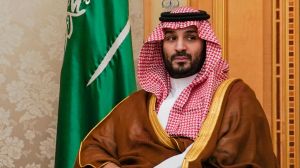
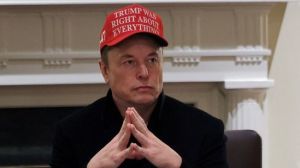 David A. Fahrenthold and Jeremy Singer-Vine at The New York Times: DOGE Removes Dozens of Resurrected Contracts From Its List of Savings.





 Yes. We’re getting a visitation from the orange snot blob that either lies continually, says deluded things continually, and just makes up things of the top of his critter festooned head. He mentioned he’s going to visit his property here to the usual suspects. So, look to the left and see exactly how realistic, possible, and plausible said visitation would be.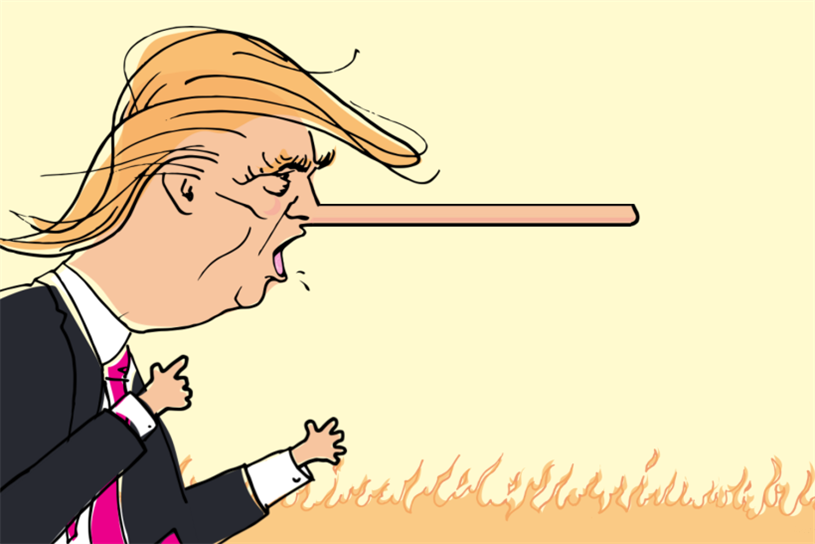

/cdn.vox-cdn.com/uploads/chorus_image/image/54994295/Bullshitter_in_chief.0.jpg)


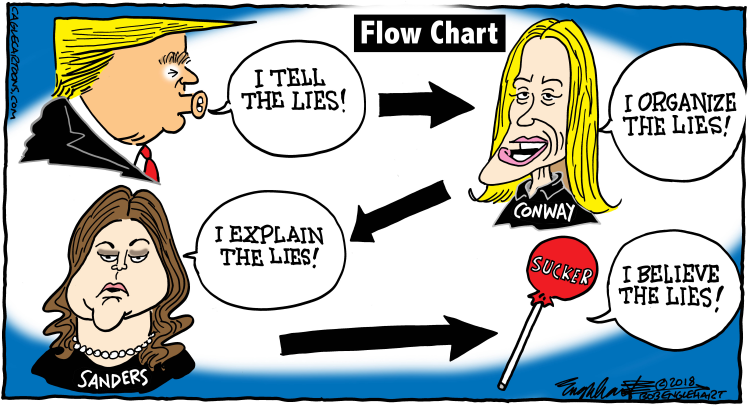

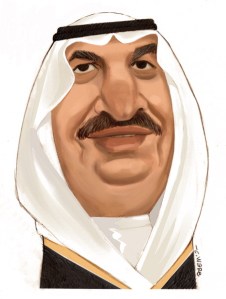


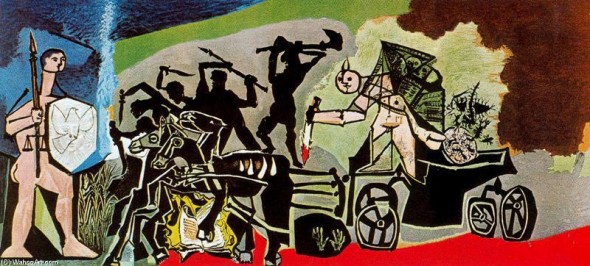
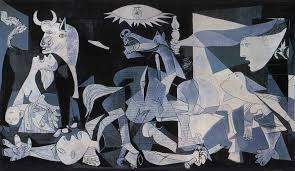




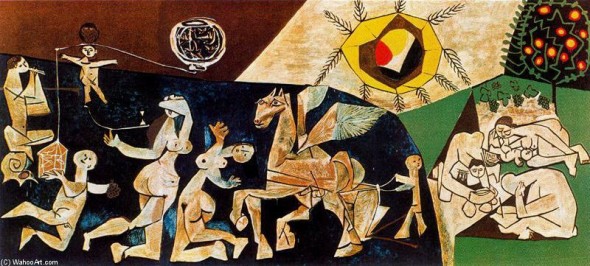

 peej
peej Carissa
 bostonboomer
 dakinikat
 ecocatwoman
 mablue2
 Mama Lopez
 peggysue22
 quixote
 skydancingguestblogger
 Mona (aka Wonk the Vote)



 Sky Dancing
Recent Comments