
Tuesday Reads: Benghazi Will Never Die and Other News
Posted: October 20, 2015 Filed under: Foreign Affairs, morning reads, Republican politics, U.S. Politics | Tags: Benghazi, Donald Trump, Hillary Clinton, Jeb Bush, Jim Webb 68 Comments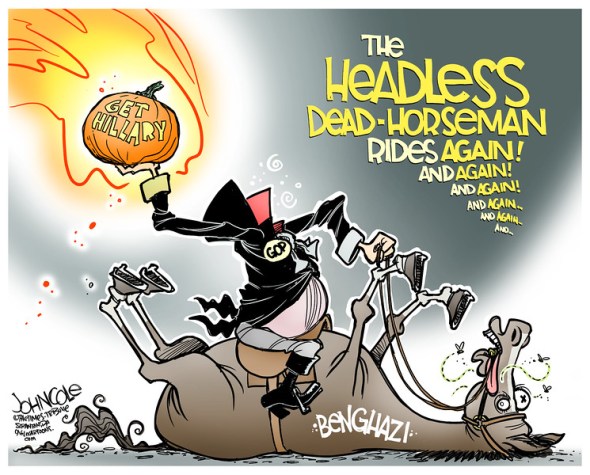
John Cole / Scranton Times Tribune
Good Morning!!
I’m getting a very late start this morning because of some computer problems, but as far as I can tell, Joe Biden is still playing games with the press corps. I suppose that could go on for at least the rest of the week, since Hillary is testifying before the Benghazi! Committee on Thursday. I doubt if she will suddenly implode, but apparently Biden is hoping for a major meltdown of some kind.
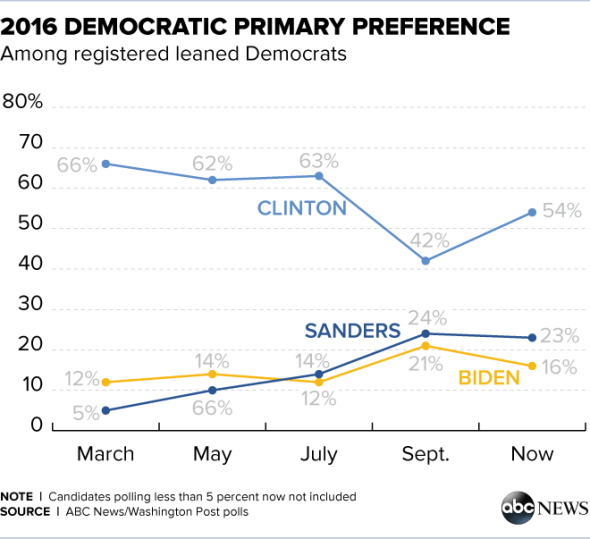
Last night Rachel Maddow announced that she will be interviewing Hillary on her Friday show, so that should be interesting. Meanwhile, ABC News was forced to admit that Hillary’s poll numbers have gone up against both Bernie Sanders and Biden, according to their latest survey of voters.
Hillary Clinton has followed a successful debate performance by rebounding in the contest for the Democratic presidential nomination in a new ABC News/Washington Post poll, regaining ground against Bernie Sanders and Joe Biden alike.
With anticipation surrounding Biden at a peak, Clinton has 54 percent support in interviews Thursday through Sunday, compared with Sanders’ 23 percent and Biden’s 16 percent. That’s 12 percentage points better for Clinton than her position a month ago, bringing her halfway back to her level of support in the spring and summer, before her September stumble.
In anticipation of Hillary’s testimony on Thursday, Democratic members of the Benghazi “special committee” released a 146-page report detailing the results of the investigation so far from their point of view. CBS News: Democrats: Benghazi committee interviews discredit GOP claims about Clinton.
“This report shows that no witnesses we interviewed substantiated these wild Republican conspiracy theories about Secretary Clinton and Benghazi. It’s time to bring this taxpayer-funded fishing expedition to an end,” Ranking Member Elijah Cummings, D-Maryland, said in a statement accompanying the 146-page report.
Following through on a recent threat, the Democrats released excerpts from the panel’s 54 interviews, but still called on Chairman Trey Gowdy, R-South Carolina, to release full transcripts and depositions….
Based on 54 interviews, the Democrats said the committee found no evidence that Clinton ordered the military to stand down on the night of the attacks, no evidence she personally approved a reduction in security before the attacks and no evidence Clinton or her aides oversaw an operation to scrub or destroy documents related to Benghazi, among other findings.
Documents obtained by the committee confirmed Clinton’s earlier testimony about her actions that night, the report said, as did the interviews with Mills and Sullivan.
Many more details at the link.
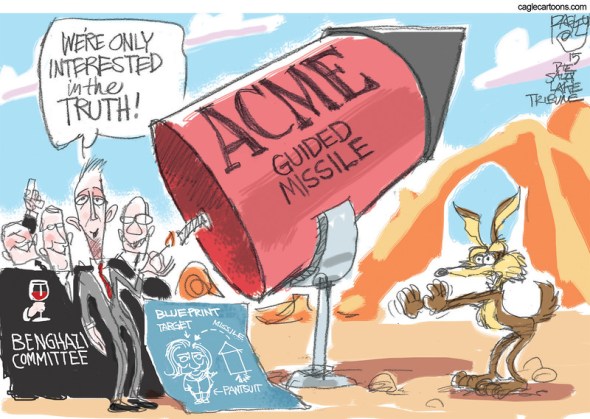
Pat Bagley / Salt Lake Tribune
As Dakinikat wrote yesterday, the Benghazi committee is falling about anyway, thanks to the stupidity of its chairman Trey Gowdy. At The New Republic, Brian Beutler writes: The Benghazi Witch-Hunt Against Hillary Is Backfiring Just Like Bill Clinton’s Impeachment.
When the committee began to drift from its nominal investigative purpose—the 2012 attack on a U.S. outpost in Benghazi, Libya, in which Ambassador J. Christopher Stevens was killed—and focus on unrelated aspects of Clinton’s tenure as secretary of state from 2009-2013, it invited comparisons to the GOP-led fishing expeditions of the 1990s, which culminated in the partisan impeachment of President Bill Clinton, and discredited his leading critics.
The comparison became inescapable this weekend, when the top Democrat on the Benghazi committee revealed that its Republican chairman, Trey Gowdy, had fabricated a redaction to Clinton’s emails to make it look like she’d endangered a spy, and the CIA had busted her. Gowdy even mimicked intelligence community vernacular, designating the redaction as undertaken to protect “sources and methods,” without disclosing that he was the redactor or that the CIA had cleared the name he redacted for release.
This flagrant misconduct has barely pierced the consciousness of the political scribes who have treated every selective Benghazi leak with as much credulity and legitimacy as lower-fanfare congressional investigations, even after their media peers have been burned—repeatedly—by intentionally deceptive leaks. Conservatives, too, are ignoring or brushing off the impropriety. But Benghazi committee errors are piling up so rapidly, and timed so impeccably for Hillary Clinton’s public testimony before the committee this Thursday, that it seems for once like Republicans might tamp down on the Hillary misdirection of their own volition, much as they did in the 1990s when a similarly unfocused obsession with the Clintons damaged their party.
Back in 1998, House Republican leaders had to dial back an investigation into the Clintons’ campaign finance practices after then-oversight committee chairman Dan Burton tried to hoodwink the press with heavily edited transcripts meant to implicate Hillary. That botched operation forced Burton to fire his top aide David Bossie, who went on to become president of Citizens United, and prompted an angry backlash from Speaker Newt Gingrich on behalf of an embarrassed Republican conference.
The recent blows to the Benghazi committee’s self-styled credibility are at least as severe, beginning with House Majority Leader Kevin McCarthy’s admission that Republicans empaneled it to damage Hillary Clinton’s presidential candidacy, running through well-substantiated allegations that Republicans have been using committee resources to investigate Clinton at the expense of the actual attacks on the U.S. facility in Libya.
I am sooooooo looking forward to Hillary’s appearance on Thursday!

Chris Britt / Creators Syndicate
According to CNN, Jim Webb will hold a press conference today to announce he is dropping out of the Democratic primary race and that he does not plan to run as an independent.
Jim Webb will end his bid for the Democratic presidential nomination at a press conference Tuesday, according to two sources with knowledge of the decision.
The former Virginia senator who launched a longshot presidential bid earlier this year is considering an independent run, according to his campaign. Craig Crawford, Webb’s spokesman, declined to comment on whether the senator was dropping out of the Democratic race, however.
“Jim will have the first word at 1 p.m.,” Crawford said, referring to the senator’s press conference at the National Press Club in Washington.
After a prolonged exploration of a presidential bid, Webb used an more than 2,000-word blog post to announce his run.
His campaign, however, never really got off the ground and was seen by even some close Webb aides as more of a vanity play than an actual presidential bid. In total, Webb spent four days campaigning in New Hampshire and 20 days in Iowa, far fewer than the senator’s challengers.
Webb also expressed outright frustration with the Democratic Party during his run, questioning their strategy and the support they were providing him. During the first Democratic debate earlier this month, Webb spent considerable time complaining about the amount of time he was given to speak.
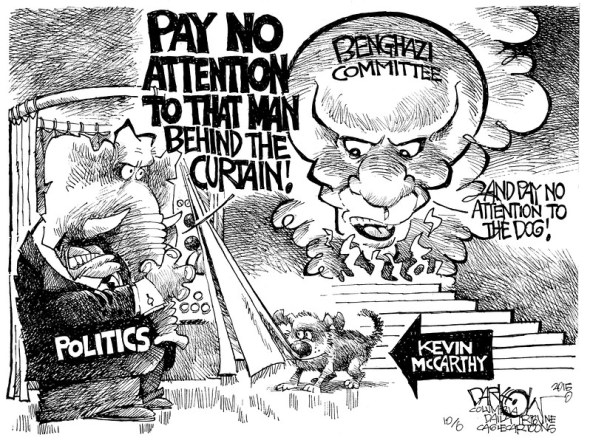
John Darkow / Columbia (Missour) Times Tribune
On the Republican side, Carly Fiorina is struggling and Donald Trump and Ben Carson are still running neck and neck. Politico reports: Fiorina’s support collapses, Trump leads in CNN poll.
Carly Fiorina’s time near the top of the Republican polls may have come to an end, as another national CNN/ORC poll out Tuesday suggests. Just 4 percent of Republican or Republican-leaning voters said they would cast their votes for her in a primary election, down from 15 percent in September.
Overall, Donald Trump led the field with 27 percent, followed again by Ben Carson with 22 percent, up 8 points from last month’s survey. Former Florida Gov. Jeb Bush and Florida Sen. Marco Rubio each earned 8 percent, followed by former Arkansas Gov. Mike Huckabee and Kentucky Sen. Rand Paul at 5 percent. New Jersey Gov. Chris Christie, Texas Sen. Ted Cruz and Fiorina pulled in 4 percent, while Ohio Gov. John Kasich earned 3 percent, former Pennsylvania Sen. Rick Santorum 2 percent and South Carolina Sen. Lindsey Graham 1 percent.
Appearing later in the morning on CNN’s “New Day,” Trump commented that he and Carson have both “hit a chord” in the electorate.
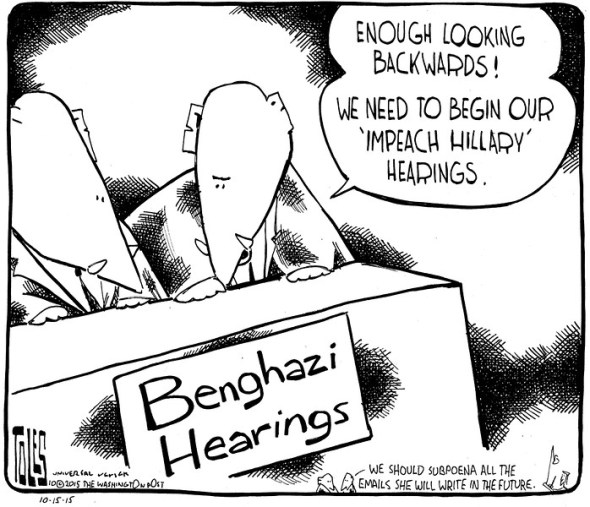
Tom Toles / Washington Post
[Trump’s] latest ugly truth came during a Bloomberg TV interview last Friday, when he said George W. Bush deserves responsibility for the fact that “the World Trade Center came down during his time.” Politicians and journalists erupted in indignation. Jeb Bush called Trump’s comments “pathetic.” Ben Carson dubbed them “ridiculous.”
Former Bush flack Ari Fleischer called Trump a 9/11 “truther.” Even Stephanie Ruhle, the Bloomberg anchor who asked the question, cried, “Hold on, you can’t blame George Bush for that.”
Oh yes, you can. There’s no way of knowing for sure if Bush could have stopped the September 11 attacks. But that’s not the right question. The right question is: Did Bush do everything he could reasonably have to stop them, given what he knew at the time? And he didn’t. It’s not even close.
When the Bush administration took office in January 2001, CIA Director George Tenet and National Security Council counterterrorism “czar” Richard Clarke both warned its incoming officials that al-Qaeda represented a grave threat. During a transition briefing early that month at Blair House, according to Bob Woodward’s Bush at War, Tenet and his deputy James Pavitt listed Osama bin Laden as one of America’s three most serious national-security challenges. That same month, Clarke presented National Security Adviser Condoleezza Rice with a plan he had been working on since al-Qaeda’s attack on the USS Cole the previous October. It called for freezing the network’s assets, closing affiliated charities, funneling money to the governments of Uzbekistan, the Philippines and Yemen to fight al-Qaeda cells in their country, initiating air strikes and covert operations against al-Qaeda sites in Afghanistan, and dramatically increasing aid to the Northern Alliance, which was battling al-Qaeda and the Taliban there.
But both Clarke and Tenet grew deeply frustrated by the way top Bush officials responded. Clarke recounts that when he briefed Rice about al-Qaeda, “her facial expression gave me the impression that she had never heard the term before.” On January 25, Clarke sent Rice a memo declaring that, “we urgently need…a Principals [Cabinet] level review on the al Qida [sic] network.” Instead, Clarke got a sub-cabinet, Deputies level, meeting in April, two months after the one on Iraq.
When that April meeting finally occurred, according to Clarke’s book, Against All Enemies, Deputy Defense Secretary Paul Wolfowitz objected that “I just don’t understand why we are beginning by talking about this one man, bin Laden.” Clarke responded that, “We are talking about a network of terrorist organizations called al-Qaeda, that happens to be led by bin Laden, and we are talking about that network because it and it alone poses an immediate and serious threat to the United States.” To which Wolfowitz replied, “Well, there are others that do as well, at least as much. Iraqi terrorism for example.”
By early summer, Clarke was so despondent that he asked to be reassigned. “This administration,” he later testified, “didn’t either believe me that there was an urgent problem or was unprepared to act as though there were an urgent problem.
And so on . . . we all know the story from the 9/11 committee hearings but you can read more about it at The Atlantic. Actually all Trump really said was that Bush was president when 9/11 happened. That’s pretty difficult to deny.
Interestingly, Andrew Kaczynsky points out that Trump actually predicted that something bad was likely to happen: “Over A Year Before 9/11, Trump Wrote Of Terror Threat With Remarkable Clarity.” Read about it at Buzzfeed. Finally, The Hill reports that the DNC is using Beinart’s story in The Atlantic to “bash” poor Jeb. I wonder how much longer he can keep going?
What else is happening? Let us know in the comment thread and have a great day!
Tuesday Reads
Posted: October 6, 2015 Filed under: Foreign Affairs, morning reads, U.S. Politics | Tags: California Police killings, children shooting children, Doctors Without Borders, Donald Trump, gun violence, Joe Biden, Joseph Baily, Kunduz hospital Afghanistan, MaKayla Dyer, South Carolina flooding 36 Comments
Canoe, Eric Vanasse
Good Morning!!
I’ve been so busy helping my Mom for the past few days that I haven’t been able to keep up with the news as much as I usually do. Fortunately Mom is doing well, and I plan to get back home before Halloween. I did have jury duty scheduled on October 20, but I was able to postpone it until next May. I want to avoid having it fall during a snowstorm or when the roads are really bad. I really hope the coming winter won’t be as bad in Boston as it was last year, but you never know.
Look at what’s going on down in South Carolina. The Washington Post has a helpful explanatory article on it: The meteorology behind South Carolina’s catastrophic, 1,000-year rainfall event.
The rains are tapering off in South Carolina after a disastrous weekend that brought over two feet of rain and catastrophic flooding. Dams have been breached, rivers are at record flood stage, homes and cars are filled with water and multiple people have been reported dead in the disaster.
Authorities in South Carolina on Monday urged people to stay home if it was safe to do so, saying that flooding was expected to continue in more than half the state for several days. On Sunday, authorities responded to hundreds of reports of trees in roadways and hundreds of reports of flooded roads. Tens of thousands of sandbags were used by state and local agencies, while a stretch of Interstate 95 was shut down and traffic rerouted. Overnight, several cities and counties declared curfews, while others have declared states of emergency….
According to statistics compiled by the National Oceanic and Atmospheric Administration, South Carolina’s torrential weekend rain has well surpassed a 1,000-year rainfall event — one that, on average, we would expect to see about every 1,000 years. A three-day, 1,000-year rainfall event for Charleston County would have been 17.1 inches. A four-day, 1,000-year event would have been 17.5 inches. Boones Farm Plantation, just north of Mount Pleasant, in Charleston County, reported more than 24 inches of rain through Sunday morning, which essentially blows NOAA’s 1,000-year events scale out of the water.

Apocalypse Wave, Paul Cumes
So this must have been caused by Hurricane Joaquin, right?
Hurricane Joaquin did play an indirect role in South Carolina’s weekend deluge, but there’s much more to this meteorological story.
As Hurricane Joaquin tracked north, well east of the coast, a separate, non-tropical low pressure system was setting up shop over the Southeast late last week. This system drew in a deep, tropical plume of water vapor off the tropical Atlantic Ocean. At the same time, this upper-level low pressure system tapped into the moist outflow of Hurricane Joaquin.
The moisture pipeline fed directly into a pocket of intense uplift on the northern side of the non-tropical vortex. Within this dynamic “sweet spot,” thunderstorms established a training pattern, passing repeatedly over the same location and creating a narrow corridor of torrential rain stretching from Charleston to the southern Appalachians.
The remarkable thing about this process is that it was sustained for three days.
Read much more at the link. Gee, you don’t suppose this has anything to do with global climate change, do you? Naaaaah.

Doctors Without Borders hospital before the bombing
The U.S. military and the Obama administration are having a hard time explaining why they bombed a Doctors Without Borders hospital in Afghanistan over the weekend. The Washington Post reports:
A heavily-armed U.S. gunship designed to provide added firepower to special operations forces was responsible for shooting and killing 22 people at a Doctors Without Borders hospital in Kunduz, Afghanistan over the weekend, Pentagon officials said Monday.
The attack occurred in the middle of the night Saturday, when Afghan troops—together with a U.S. special forces team training and advising them—were on the ground near the hospital in Kunduz, the first major Afghan city to fall to the Taliban since the war began in 2001. The top U.S. general in Afghanistan said Monday the airstrike was requested by Afghan troops who had come under fire, contradicting earlier statements from Pentagon officials that the strike was ordered to protect U.S. forces on the ground.
The new details of the attack, and the continuing dispute over what exactly happened, heightened the controversy over the strike. In the two days since the incident, U.S. officials have struggled to explain how a U.S. aircraft wound up attacking a hospital run by Doctors Without Borders. On Monday, the medical humanitarian group said the United States was squarely responsible.
“The reality is the U.S. dropped those bombs,” Doctors Without Borders’ general director Christopher Stokes said in a statement. “With such constant discrepancies in the U.S. and Afghan accounts of what happened, the need for a full transparent independent investigation is ever more critical.”
The weekend’s disastrous airstrike reinforces doubts about how effectively a limited U.S. force in Afghanistan can work with Afghan troops to repel the Taliban, which has been newly emboldened as the United States draws down its presence.
The strike also comes as the Obama administration is currently weighing whether to keep as many as 5,000 U.S. troops in Afghanistan beyond 2015, according to senior officials. Obama has not made a final decision on the proposal, but the recent advances by the Taliban have certainly complicated the president’s calculus.
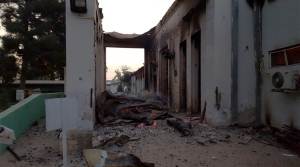
Kunduz Hospital after the bombing.
The truth is that US forces have killed thousands of civilians in Afghanistan and other countries in the Middle East, but most of them didn’t have the cachet and the ability to engage the media that Doctors Without Borders does. Unfortunately, the administration’s explanations for the strike on the hospital have been all over the place. Also well worth reading is Amy Davidson’s column at The New Yorker: Five Questions About the Bombing of a Hospital in Kunduz.
Dakinikat had a great post on guns and gun control yesterday. I didn’t have time to read it carefully until this morning, so naturally gun stories caught my eye when I started to look at today’s news. There’s never any shortage of tragic stories involving guns. The worst ones are incidents in which children kill children.
From NBC News: Tennessee Boy, 11, Charged With Killing Girl After Argument Over Puppies.
An 11-year-old Tennessee boy was charged with shooting an 8-year-old girl to death with a 12-gauge shotgun after an argument over puppies Saturday, NBC affiliate WBIR reported.
A neighbor told the station that the girl, MaKayla Dyer, had been playing with neighbors on Saturday night in White Pine, outside Knoxville.
She started talking with the boy, who has not been identified, through an open window at his home.
“He asked the little girl to see her puppies,” the neighbor, Chasity Atwood, told WBID. “She said no and laughed and then turned around, looked at her friend and said, ‘Let’s go get the — ‘ and never got ‘puppies’ out.”
The boy had already shot her in the chest.
Dyer was transported to Morristown-Hamblen Hospital, where she was pronounced dead. The boy is being held in juvenile court on charges of first-degree murder.
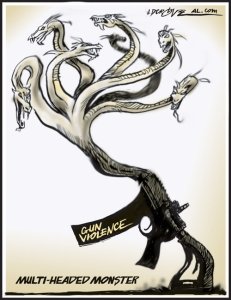
This kid had access to a loaded shotgun in his home? What the hell is wrong with his parents?
In Ohio, an 11-year-old South Carolina boy accidentally shot and killed his 12-year old brother. CantonRep.com reports:
A 12-year-old South Carolina boy was fatally shot Friday in what authorities say was an accident during a target-shooting outing.
The victim was identified as Joseph Baily of More, South Carolina. The shooting occurred in the 8400 block of Bay Road in Carroll County’s Lee Township, southeast of Carrollton.
“It was an accident,” county Sheriff Dale Williams said Monday. “It (shooter) was a juvenile. It was a brother. His brother was 11 years old.” ….
“They were actually target shooting,” Carroll County Coroner Mandal Haas said. “They were visiting a friend they knew here in Ohio. This was real ammunition. It was a head wound.”The weapon was a handgun.
“The 11-year-old picked up a weapon off of a picnic table,” Sheriff Williams said. “He accidentally shot it.”
While the shooting was accidental, Carroll County authorities, however, could file criminal charges. Those charges could be filed against who ever failed to secure the weapon.

Looking down the barrel of a gun, Adam Mysock
Too little, too late. And check this one out from Georgia. CBS46.com Atlanta: Road rage suspect points gun at car, police let him go free.
A motorcycle driver who was caught on camera pulling out a gun and pointing it at another driver Sunday was allowed to go free, and a witness wants to know why.
It happened on State Highway 54 in Coweta County near the Fayette County line. To the man who captured the incident on his private dashboard camera, it looked like an incident of road rage, plain and simple.
The witness who recorded the video is a former Georgia police officer. CBS46 News is protecting his identity because of the nature of his current work. He said it’s his opinion that the motorcycle driver put everyone near him in danger. If the rider felt threatened, it appeared he had the power to get away from the situation, the witness said.
“Drawing a firearm, in just about every case, should be an absolute last resort. It seems like it was this guy’s first resort,” said the witness.
The witness followed the motorcycle while on the phone with 911 and helped police catch up with him. The rider was put in handcuffs, but in a surprise move, Coweta County Sheriff’s deputies decided to let him go.
“This guy is college-age. We know what just happened in Oregon. How do you not take a firearm out of the hand of a guy who’s going to behave this way- who’s going to act this reckless?” asked the witness.
So what was their reason for not arresting him? The witness said deputies told him they didn’t think the people in the black car would be in town to testify at the first appearance in court. It’s an excuse the former police officer said he’s not buying.
Nice. The guy who got off scot-free could be the next mass murderer.

Stop Child Killing painting
But what about when gun victims are shot by the police? Ordinarily, I don’t agree with Connor Friedersdorf, but he has a great piece in The Atlantic: Police in California Killed More Than 610 People Over 6 Years.
The ACLU of Southern California has been working to understand how many people have been killed by law enforcement in America’s most populous state. What they found is alarming. Over a six-year period that ended in 2014, California’s Department of Justice recorded 610 instances of law enforcement committing homicide “in the process of arrest.”
That figure is far from perfect. It excludes some homicides in 2014 that are still being investigated. And it understates the actual number of people killed by police officers and sheriffs deputies in other ways. For example, after Dante Parker was mistaken for a criminal, stunned with a Taser at least 25 times, hog-tied face down, and denied medical care, California authorities classified his death as “accidental.”
Still, the official number is 610 homicides attributed to law enforcement “in the process of arrest.”
Officially, 608 are classified as justified. Just two are officially considered unjustified. In one unjustified killing, there’s video of a policeman shooting Oscar Grant in the head as he lay face down in a BART station. In the other, there is extended video of police brutally beating a mentally ill man, Kelly Thomas, to death.
Officially speaking, only police officers who were being filmed killed people in unjustified ways. Whether law enforcement performs less professionally when cameras are rolling is unclear. But it seems more likely that the spread of digital-recording technology will reveal that unjust killings are more common than was previously thought.
Read the rest of this important article at the link.
I’ll end with a couple of political stories. Politico has an exclusive on Joe Biden this morning: Biden himself leaked word of his son’s dying wish.
Joe Biden has been making his 2016 deliberations all about his late son since August.
Aug. 1, to be exact — the day renowned Hillary Clinton-critic Maureen Dowd published a column that marked a turning point in the presidential speculation.
According to multiple sources, it was Biden himself who talked to her, painting a tragic portrait of a dying son, Beau’s face partially paralyzed, sitting his father down and trying to make him promise to run for president because “the White House should not revert to the Clintons and that the country would be better off with Biden values.”
It was no coincidence that the preliminary pieces around a prospective campaign started moving right after that column. People read Dowd and started reaching out, those around the vice president would say by way of defensive explanation. He was just answering the phone and listening.
But in truth, Biden had effectively placed an ad in The New York Times, asking them to call.
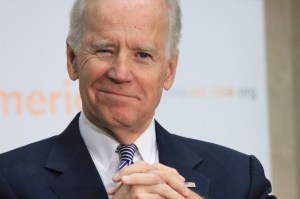
What an a-hole.
By every account of those surrounding Biden, Beau is constantly on his father’s mind. But so are Clinton’s poll numbers — and his own, as the vice president notes in private details, such as the crosstab data that show him drawing more support from Clinton than Bernie Sanders. So is the prospect of what it would mean to run against a candidate who would make history as the first female nominee, and potentially first female president. So is knowing that the filing deadlines are quickly closing in and that he almost certainly has to decide in roughly the next week to make even a seat-of-the-pants campaign possible.
“Calculation sort of sounds crass, but I guess that’s what it is,” said one person who’s recently spoken to Biden about the prospect of running. “The head is further down the road than the heart is.”
Ugh. There’s plenty more disgusting stuff at Politco, including some tidbits about Biden’s “secret” meeting with Elizabeth Warren.

Finally, the king of a-holes continues to act unpresidential. From Business Insider:
Real-estate developer Donald Trump took his feud with Sen. Marco Rubio (R-Florida) to a rather unique place this week, sending a gag gift to Rubio’s presidential campaign office.
According to CNN, Trump’s campaign sent Rubio a “a care package” on Monday containing a 24-pack case of “Trump Ice” bottled water, two “Make America Great Again” towels, and a note that said: “Since you’re always sweating, we thought you could use some water. Enjoy!”
As much as I can’t stand Rubio, Trump is the worst of the worst.
What else is happening? Please share your thoughts and links in the comment thread and have a terrific Tuesday!
Thursday Reads
Posted: October 1, 2015 Filed under: Barack Obama, Foreign Affairs, morning reads, Republican politics, U.S. Politics | Tags: Hillary Clinton, Jason Chaffetz, Kim Davis, Pope Francis 38 Comments
Kandinsky at Tea, by Gabrielle Munter
Good Morning!!
It sure looks like Vladimir Putin is trying to embarrass President Obama with the Russian air strikes in Syria. The Russians have bombed U.S.-supported rebels rather than ISIS. From The Guardian:
Russia has bombed targets in north-west Syria for a second day, as the Kremlin said it was going after a list of well known militant organisations and not just Islamic State.
The Russian defence ministry said planes hit 12 Isis targets, including a command centre and two arms depots, though the areas where it said the strikes took place are not held by Isis.
Activists reported a number of strikes in the country’s north and centre, including strikes in the province of Hama, which they said hit locations controlled by the US-backed rebel group, Tajamu Alezzah.
A spokesman for the Syrian civil defence said a strike also hit Jisr al-Shughour in Idlib province.
“They targeted the northern neighbourhood of the town, which only houses civilians, but there are very few people there because of repeated airstrikes,” the spokesman said.
Al Mayadeen, a Lebanese pro-Assad TV channel, separately reported that Russian aircraft had launched 30 fresh airstrikes against Jaysh al-Fateh, a powerful rebel coalition that includes Ahrar al-Sham and the al-Qaida affiliated al-Nusra Front.

Autumn Study, Kandinsky
The Daily Beast: Putin Hits West’s Rebels Instead of ISIS.
A Russian general asked the U.S. to remove its planes from Syrian airspace Wednesday, just hours before Russian airstrikes began there.
The Russian three-star general, who was part of the newly formed intelligence cell with Iraq, Iran, and the Syrian government, arrived in Baghdad at 9 a.m. local time and informed U.S. officials that Russian strikes would be starting imminently—and that the U.S. should refrain from conducting strikes and move any personnel out. The only notice the U.S. received about his visit was a phone call one hour earlier.
The Russian strikes were centered about the city of Homs, according to initial accounts in the local press and in social media. That’s significant, because Homs is not known to be an ISIS stronghold.
This can’t be good.
“The northern countryside of Hama has no presence of ISIS at all and is under the control of the Free Syrian Army,” Major Jamil al-Saleh of the Free Syrian Army told Reuters. U.S. officials corroborated this account to The Daily Beast.
The FSA has receieved U.S.-made anti-tank missiles; the CIA and Pentagon have been recruiting FSA soldiers as proxies against ISIS.
“There is no Islamic State in this area,” another FSA commandertold Reuters. “The Russians are applying great pressure on the revolution. This will strengthen terrorism, everyone will head toward extremism. Any support for Assad in this way is strengthening terrorism.”

Autumn Landscape, Kandinsky
The Washington Post: Obama administration scrambles as Russia attempts to seize initiative in Syria.
UNITED NATIONS — Blindsided by the unexpected swiftness of Russia’s air attacks in Syria, the Obama administration scrambled Wednesday to retake the diplomatic and military initiatives, saying that it would not be bullied into supporting President Bashar al-Assad and that it was about to significantly expand its own Syrian air operations.
After spending much of the day together here behind closed doors, Secretary of State John F. Kerry and his Russian counterpart, Sergei Lavrov, said in terse evening statements that U.S. and Russian military officials would meet, perhaps as soon as Thursday, to “deconflict” their operations in Syria.
Standing side by side outside the U.N. Security Council chamber, they said they had reached some preliminary agreements on a way forward toward a negotiated political solution to Syria’s civil war but indicated they were far from agreed on its outcome. They took no questions.
“We have a lot of work to do, understanding fully how urgent this is,” Kerry said.
Earlier in the day, Russian President Vladimir Putin brushed off Western concerns, suggesting that other countries “get involved” in Syria under Russia’s leadership. Senior foreign policy spokesmen in Moscow said the action proved Russia was a force to be reckoned with on the world stage.
Administration officials countered that the airstrikes showed only Russian weakness and what White House press secretary Josh Earnest said was growing concern “about losing influence in the one client state they have in the Middle East.”
This is really making me nervous–probably even more so because I’m not sure how to interpret this news.

Autumn in Bavaria, Kandinsky
Back in the USA, Republicans in Congress are still focused on such non-issues as Benghazi, Hillary Clinton’s emails, and trying to cripple Planned Parenthood–although I’m sure they’ll find a little time to criticize Obama’s foreign policy as well.
The media is filled with descriptions of the contents of meaningless Clinton emails and suggestions that her server may have been hacked. Of course the State Department server actually has been hacked several times and so have a number of other government servers. So perhaps Clinton’s private server was actually safer.
Associated Press reports: Russia-linked hackers tried to access Clinton server.
Russia-linked hackers tried at least five times to pry into Hillary Rodham Clinton’s private email account while she was secretary of state, emails released Wednesday show. It is unclear if she clicked on any attachments and exposed her account.
Clinton received the infected emails, disguised as speeding tickets from New York, over four hours early the morning of Aug. 3, 2011. The emails instructed recipients to print the attached tickets. Opening an attachment would have allowed hackers to take over control of a victim’s computer.
Security researchers who analyzed the malicious software in September 2011 said that infected computers would transmit information from victims to at least three server computers overseas, including one in Russia. That doesn’t necessarily mean Russian intelligence or citizens were responsible.
Nick Merrill, a spokesman for Clinton’s Democratic presidential campaign, said: “We have no evidence to suggest she replied to this email or that she opened the attachment. As we have said before, there is no evidence that the system was ever breached. All these emails show is that, like millions of other Americans, she received spam.”
Practically every Internet user is inundated with spam or virus-riddled messages daily. But these messages show hackers had Clinton’s email address, which was not public, and sent her a fake traffic ticket from New York state, where she lives. Most commercial antivirus software at the time would have detected the software and blocked it.
The phishing attempts highlight the risk of Clinton’s unsecure email being pried open by foreign intelligence agencies, even if others also received the virus concealed as a speeding ticket from Chatham, New York. The email misspelled the name of the city, came from a supposed New York City government account and contained a “Ticket.zip” file that would have been a red flag.
Sigh . . .

Autumn Study near Oberau, Kandinsky
On the Benghazi front, erstwhile Speaker of the House Kevin McCarthy opened his big mouth yesterday and gave Democrats an amazing gift. Bloomberg:
…the Republican leading the race to replace John Boehner as House speaker said it for them, boasting Tuesday that his party has spent nearly three years dragging her through investigations of the Sept. 11, 2012, attack in Benghazi in hopes of doing serious damage to her presidential campaign.
“Everybody thought Hillary Clinton was unbeatable, right?” House Majority Leader Kevin McCarthy boasted on Fox News Channel’s “Hannity.” “But we put together a Benghazi special committee, a select committee. What are her numbers today? Her numbers are dropping. Why? Because she’s untrustable. But no one would’ve known any of that had happened had we not fought and made that happen.”
Wow. The longest investigation in House history–longer than the Watergate hearings!–was totally trumped up, and the next House Speaker admits it publicly. Democrats quickly responded.
“It’s just jaw-dropping,” said former Democratic presidential candidate and Vermont Governor Howard Dean, who has endorsed Clinton. “The Republicans lied through their teeth when they said this wasn’t about politics.”
Clinton herself said on Wednesday that McCarthy’s comments were “deeply distressing.”
“When I hear a statement like that, which demonstrates unequivocally that this was always meant to be a partisan political exercise, I feel like it does a grave disservice and dishonors not just the memory of the four that we lost but of everybody who has served our country,” she said in an interview with MSNBC’s Al Sharpton.
Earlier, Clinton campaign press secretary Brian Fallon called McCarthy’s words “a damning display of honesty by the possible next speaker of the House,” who has “just confessed that the committee set up to look into the deaths of four brave Americans at Benghazi is a taxpayer-funded sham. This confirms Americans’ worst suspicions about what goes on in Washington.”
The Benghazi committee’s top Democrat, Maryland Representative Elijah Cummings, said in a Wednesday statement that McCarthy had simply acknowledged what “Republicans never dared admit in public.” He added that Republicans “have blatantly abused their authority in Congress” by spending more than $4.5 million in taxpayer funds on the Benghazi committee “to pay for a political campaign against Hillary Clinton.”
New York Representative Louise Slaughter, the top Democrat on the House Rules Committee, added: “That’s not what we’re here for and, in fact, I think that might be impeachable for crying out loud.”

Autumn Landscape with Boats, Kandinsky
Someone in the government also chose the day after Republican members attacked Planned Parenthood head Cecile Richards for nearly five hours, someone in the government to leak some embarrassing information about the committee’s chair Jason Chaffetz. From the Washington Post:
An assistant director of the Secret Service urged that unflattering information the agency had in its files about a congressman critical of the service should be made public, according to a government watchdog report released Wednesday.
“Some information that he might find embarrassing needs to get out,” Assistant Director Edward Lowery wrote in an e-mail to a fellow director on March 31, commenting on an internal file that was being widely circulated inside the service. “Just to be fair.”
Two days later, a news Web site reported that Rep. Jason Chaffetz (R-Utah), chairman of the House Oversight and Government Reform Committee, had applied to be a Secret Service agent in 2003 and been rejected.
That information was part of a Chaffetz personnel file stored in a restricted Secret Service database and required by law to be kept private….
The Chaffetz file, contained in the restricted database, had been peeked at by about 45 Secret Service agents, some of whom shared it with their colleagues in March and April, the report found. This prying began after a contentious March 24 House hearing at which Chaffetz scolded the director and the agency for its series of security gaffes and misconduct. The hearing sparked anger inside the agency.
In another slap in Chaffetz’s face the organization that has been running the right wing campaign against Planned Parenthood admitted that the video that Carly Fiorina described in the last Republican debate had nothing to do with Planned Parenthood and the baby Fiorina saw had not survived an abortion. Raw Story: ‘This wasn’t an abortion’: CNN forces anti-Planned Parenthood group to admit Fiorina was wrong.
David Daleiden, the project lead Center for Medical Progress’ anti-Planned Parenthood campaign, admitted on Wednesday that an alleged fetus on a table that GOP presidential candidate Carly Fiorina described during a graphic anti-abortion rant was actually from a miscarriage.
Read the rest at the Raw Story link.

Landscape with two poplars, Kandinsky
Finally, some reactions to Kim Davis’ meeting with Pope Francis for you to explore:
Vanity Fair: Kim Davis and Pope Francis’s Curious Meeting.
Tuesday night, lawyers for Kim Davis, the Kentucky clerk who refused to issue marriage licenses to same-sex couples even after she was jailed, announced that she had been invited to a secret meeting with Pope Franciswhile they were both in Washington, D.C.
The Vatican initially refused to confirm or deny those reports, which suddenly made things far more confusing. On Wednesday morning, however, the Vatican changed its tune, and confirmed the meeting to The New York Times.
“I do not deny that the meeting took place, but I have no other comments to add,” said Vatican spokesman Rev. Federico Lombardi.
Robert Moynihan at Inside the Vatican, a magazine covering Catholic news, broke the story on Tuesday night, citing “Vatican sources” as confirmation. The New York Timesfollowed up with an interview with Davis’s lawyer, Mathew Staver, who said that yes, totally, the meeting definitely took place.
During the visit, Staver said the Pontiff gave Davis two rosaries and told her to “stay strong.”
According to Staver, the invitation was extended through the Vatican itself, and seeing as Davis and her husband, Joe, were in town to receive an award from a conservative advocacy group, they decided to briefly visit the Pope at the Apostolic Nunciature right before he left for New York City.
Staver added that he expected the Vatican would soon send them photos of the visit.
As far as I’m concerned this is so disgusting that I think it might overshadow anything good that came from the Pope’s visit to the U.S. The fact that the meeting was kept secret until Francis was back in the Vatican makes it even more awful and shameful. The Pope probably doesn’t understand the damage he did, but along with the canonization of Junipero Sera this will leave a very bad taste in the mouths of many Americans.
More links to peruse:
Vanessa Urquhart at Slate: Why Pope Francis’ Meeting With Kim Davis Is Such a Disaster.
Trevor Martin at The Guardian: Pope Francis’s meeting with Kim Davis should come as no surprise.
Washington Post: Meeting with Kim Davis has pope-watchers asking, what did Francis mean?
So . . . what else is happening? Please post your thoughts and links on any topic in the comment thread and have a terrific Thursday!
Monday Reads
Posted: September 14, 2015 Filed under: 2016 elections, birth control, Civil Liberties, Civil Rights, corporate greed, Economy, Israel, morning reads, religious extremists 32 CommentsWell, it’s Monday again!
I thought I’d highlight two women’s attempts to get “justice” today. One woman didn’t really get her day in court. The other one has overstayed her time in court. For that matter, she’s overstayed her 15 seconds of infamy. 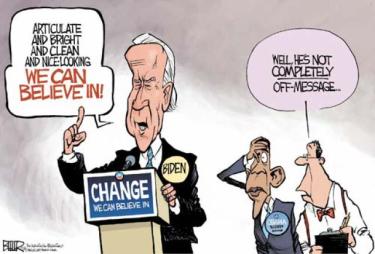
The reason that I would never vote for Joe Biden for President can be summed up by one woman’s name: Anita Hill. I will never ever forget his role that led to the seating of Uncle Clarence Thomas on the Supreme Court. Here’s a reminder for all of us.
It’s hard to know, but the reason Thomas is sitting silently on the Supreme Court – for 22 years and counting – can be traced back to Biden. If you’ve seen the new documentary, “Anita,” it jogs your memory clearly and cleanly regarding what went down. Of all the Senate Democrats, Biden failed most miserably. The close 52 to 48 vote might have broken differently if he had displayed grit under fire.
Jill Abramson and Jane Mayer, authors of “Strange Justice,” note Biden was pleased with his “highly unusual exposure rate” after it was all over. Sorry, but Biden is a bit too easily flattered and fooled.
The Senate Judiciary Committee hearing was a searing experience building to a crescendo over several days. As chairman, Biden virtually handed the gavel to Thomas at a critical point. He allowed three senators – Orrin Hatch, Alan Simpson and the late Arlen Spector – to viciously besmirch Anita Hill, a painstakingly proper law professor who came forward to testify that Thomas had sexually harassed her with lewd language and social invitations as her boss at the Equal Employment Opportunity Commission.
In the documentary, Hill emerges content with a new lease of life, with no regrets about telling her truth. As the documentary points out, it became a question of her character on trial, when Thomas was the subject of the hearing and often out of the room. When he came back, he furiously declared the hearing a “high tech lynching,” a statement that rocked the row of senators into silence. Of course, even if it was wrong, this hostility packed quite a punch.
The coup de grace was accompanied by Biden’s nervous assurances: “You have the benefit of the doubt, Judge.” There was no legal precedent for such a claim on truth or guilt in a Supreme Court hearing. But Biden kept saying that fateful phrase on national television. The late Sen. Robert C. Byrd challenged Biden publicly by saying the country should have the benefit of the doubt. Byrd was a lone voice in the wind, which was blowing Thomas’s way.
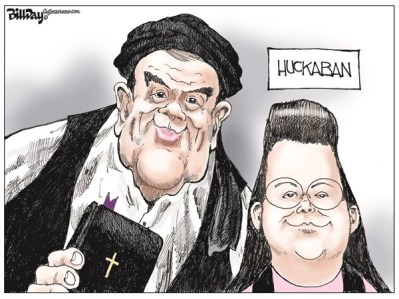
We owe some of the worst Supreme Court Decisions ever to the seating of this rubber stamp of right wing religious pomposity and anti-intellectualism. This brings me to another woman who is a wholesale tool of the same faction of right wing whackadoos.
It seems we will never be rid of Kim Davis whose exit from jail last week was one of the most appalling displays of a woman on some kind of high or with some serious emotional issue being enabled by men that should be held to account. People were fat shaming and slut slamming her, but has any one really looked at that drugged out look on her face recently? She looks like a woman possessed by many demons.
Her lawyers are filing yet another frivilous suit and she’s started work this morning announcing that no one has the right to do any thing with marriage licenses in her office because of her “conscience” which seems to pick and choose which sentences in her version of the new testament are worthy. It may be time for officials in Kentucky to ask for Rule 11 sanctions against her attorneys as well as throw Miss “I’m above the law” back in jail. She doesn’t seem to understand that it’s not her but her position that’s issuing the license. She’s an interchangeable cog that needs to be changed.
Her lawyers are actually challenging Scalia’s written opinion that it’s not her free speech here but the speech of her position and the government she serves. But then, she’s got lawyers that are on some kind of jihad and it’s evident that she’s along for the ride. It’s getting difficult to hear her ramblings and pronouncements. Rule 11 holds attornies responsible for frivolous lawsuits and it’s time to give it some serious thought.
Kentucky clerk Kim Davis returned to work this morning for the first time since being jailed for disobeying a judge’s order for denying marriage licenses to gay couples, saying she wants her name and title removed from the licenses currently being issued by her office.
Choking back tears at a news conference before her return to work, a defiant Davis said she is faced with a “seemingly impossible choice … my conscience or my freedom,” referring to her opposition to same-sex marriages.
“I’m no hero,” she added.
That last statement is the most truthful thing she’s said the entire time. Watching her these days is definitely like watching some one under the influence of a powerful drug or mental illness. If she really thinks that she’s doing any justice to her religion then she’s sorely mistaken. She’s also saying that her deputies have no authorization to issue “authorized” licenses and that they’re not really being authentically issued based on this latest friviolous lawsuits despite what Kentucky laws says. Again, it’s time to hold her lawyers accountable and get her off center stage.
Despite her assertion that her deputies don’t have her authority to issue marriage licenses, Rowan County Deputy Clerk Brian Mason issued a license this morning to the first same-sex couple to apply after Davis’ return to the office. Davis never left her office during the process.
Davis also told reporters this morning that she wants the licenses to indicate that they are being issued under federal authority.
She returned to work today nearly one week after being released from jail for failing to issue marriage licenses over her religious objection to same-sex marriage.
Davis filed an appeal Friday that asks for another delay in issuing the licenses. If the court does not respond before Davis returns to work, she will have to choose whether to allow her office to continue issuing licenses or again disobey the judge who already sent her to jail.
This is getting ridiculous. This is exacty what Ruth Bader Ginsberg wrote about in her dissenting opinion in the Hobby Lobby Case. We’re beginning to see our courts stack up with the our country suffering fools gladly.
The exchange between the two Justices gets to the heart of the issue in Hobby Lobby. When do religious convictions allow individuals (or corporations) to excuse themselves from obligations that are binding on everyone else?
A sampling of court actions since Hobby Lobby suggests that Ginsburg has the better of the argument. She was right: the decision is opening the door for the religiously observant to claim privileges that are not available to anyone else.
What we have here is that the same people that once said that granting any civil rights to the GLBT community was basically setting up special privileges that are now clogging up the courts asking for special privileges. It’s also funny that one of the big causes Republicans is their jihad against trial lawyers and frivolous law suits, yet this is exactly the fruit of the frivioulous lawsuit poison tree.
 It’s important to realize exactly what a state religion does to its minorities. I’m going to use a real case of Christians being treated radically different. This example is how Israel treats its Christian minority. The answer is very unfairly. The Pope has issued a complaint. Hopefully, some one else will notice this cause and do something about a real instance of injustice and realize that our rule of law is about extending existing rights to people.
Thousands of Arab schools in Israel went on strike on Monday, their 450,000 pupils remaining at home, as the Israeli government geared up for a major showdown with its large Palestinian minority.
The trigger for the strike is the Israeli government’s decision to starve 47 independent schools, set up originally by the international churches, of the state funding they have received for decades.
The schools, among the best in the country, have effectively been forced to shut indefinitely, their 33,000 pupils unsure when or even whether they will return to their classrooms.
On Sunday, thousands of families came from across Israel, from cities like Nazareth, Haifa, Jaffa, Ramle and occupied East Jerusalem, where the schools are located, to protest noisily outside the office of Prime Minister Benjamin Netanyahu.
The schools have run up huge debts since educational officials began cutting their budgets seven years ago, from 75 percent of the funding received by state schools to just 29 percent today. To open this academic year, they need about $50mn; the government is offering $5mn.
Talks over the past 18 months with the education ministry have gone nowhere. As Monday’s solidarity strike shows, Netanyahu’s government is taking on not only the church schools and the small Christian population of about 150,000, but all of the country’s 1.5 million Palestinian citizens, who make up a fifth of the population.
Israel is also risking a diplomatic confrontation with the Vatican and other international churches.
Last week Pope Francis raised the matter during a visit by Israel’s president, Reuven Rivlin, to the Holy See. Rivlin promised to find a solution, though the government itself shows no signs of budging.
Christian leaders in Israel have hinted that they may try to shut important holy sites, such as the Basilica of the Annunciation Church in Nazareth and the Mount of Beatitudes next to the Sea of Galilee, in retaliation. This, they hope, will bring the issue to the attention of pilgrims and tourists, adding to the pressure on Israel.
Education officials, however, are hoping they can limit support for the schools by advancing a seemingly reasonable argument: if the church schools want government money, they should join the state education system.
In truth, however, the move is not being advanced on economic grounds. There are far more sinister motives for the crackdown on the church schools, observers note.
Nadeem Nashif, director of Baladna, an organisation in Haifa promoting the rights of Palestinian youth, warns that the Netanyahu government’s main goal is to end the educational autonomy of these schools.
Organized, state-sponsored religions are dangerous. You can recognize the theocrats among us. Republicans in Congress are threatening to shut down Planned Parenthood once again. It’s been shown they’ve done nothing wrong but their outrage blindly continues as they fight to control women’s lives and health decisions and poor women’s access to health services.
Congressional Republicans say they are determined to shut Planned Parenthood down, regardless of whether it broke any laws.
In more than two months of investigations, members have yet to turn up evidence that Planned Parenthood acted illegally, the same conclusion reached by a half-dozen state investigations. The Department of Justice has so far declined to launch a formal probe.
Several Republicans acknowledged this week that they may never find proof of wrongdoing at Planned Parenthood — but said it doesn’t matter.
“I don’t know whether we’re ever going to be able to answer that question, whether it was illegal for them to do what they were doing,” Rep. Raúl Labrador (R-Idaho) said during the House’s first hearing on the topic Wednesday. “I don’t know if it was illegal … but it was immoral, what was seen on that video.”
Republicans have long been fierce critics of Planned Parenthood, which is the nation’s largest provider of abortion services. Under the law, the organization is banned from using federal funding for abortions, except in cases of rape, incest or medical necessity.
Stirred by outrage over secretly recorded videos at Planned Parenthood, Republicans opposed to abortion rights say it’s time to end federal funding for the group once and for all.
“The issue is not whether there’s been a crime committed or not,” Rep. Ted Poe (R-Texas.) told the same group at the hearing. “This issue is whether or not taxpayers should fund Planned Parenthood. That’s the issue before this committee.”
Three House committees and six states have investigated Planned Parenthood since it was first targeted by the undercover videos in July. The Energy and Commerce Committee has interviewed two Planned Parenthood officials as well as officials from three tissue procurement companies that have partnered with the organization: Stem Express, Advanced Bioscience Resources, Inc. and Novogenix Laboratories.
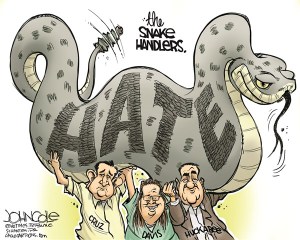
As our country become progressively less religious and less Christian, why do we continue to we have to continually pay to keep the hysterics of this minority on the front burner? It’s because they’ve totally co-opted one of the two major (sic) political parties who also has access to a lot of money that could care less about any thing other than getting more money. We’re seeing a political season of incredible meanness with less emphasis on actual policy and more on singling out people to blame and hate.
 Jeb Bush just announced VooDoo Economics version 4.1 last week and it hid the media with a dull thud. The same sick, tired formula that has wrecked havoc all of the three times it was tried is back on the front burner with the establishment republican candidate and all we see is one woman with lawyers who file one frivolous lawsuit after another. Where’s the sense of priority here? We’re seeing some things on this from print media but where’s the TV time from all the midle class folks ousted into poverty for these kinds of wreckless policy prescriptions? Jared Bernsteins highlights the arguments we find in the print media.
-
John Cassidy of the New Yorker points out that neither of the Bush boys listened closely enough to their dad: “[Won’t Jeb’s] plan inflate the deficit…? Not in the make-believe world of “voodoo economics” — the term that Jeb’s father, George H. W. Bush, used in criticizing Ronald Reagan’s tax-cutting plans during their G.O.P. primary tussle, in 1980.” By sprinkling supply-side fairy dust, along with, to be fair, some of the minor offsets I noted in my earlier piece, “these policies will unleash increased investment, higher wages and sustained four per cent economic growth, while reducing the deficit,” according to the candidate. But as Cassidy reminds us: “Anyone whose memory extends back to the seventies and eighties will find this language depressingly familiar. The original iteration of voodoo economics didn’t merely involve cutting taxes and directing the bulk of the gains to the ultra-wealthy…The ‘voodoo’ accusation arose from the claim that, because the policies would encourage people to work harder and businesses to invest more, a lot more taxable income would be produced, and the reductions in tax rates wouldn’t lead to a commensurate reduction in the amount of tax revenues that the government collected.”For the record…didn’t happen.
Here comes the sneaky sound of the same old same old. Every one is trapped in culture wars trying to figure out why a few shrill religious extremists can’t just go mind their own damned business while the plutocrats sneak in with a plan to rob us all blind. Wake the fuck up people!
What’s on your reading and blogging list today?
Lazy Saturday Reads: Grown-Ups on the Left and Clowns on the Right
Posted: September 12, 2015 Filed under: Foreign Affairs, morning reads, Republican politics, U.S. Politics | Tags: Donald Trump, GOP Clown Car, Hillary Clinton, Jeremy Corbyn, Labour Party leadership, Rick Perry 7 Comments
Beryl Cook: Tea in the Garden
Good Afternoon!!
There’s big news today from the UK. The Brits have elected Jeremy Corbyn as Labour leader–which, according to the Guardian, means that “the party now has one of the most leftwing, anti-establishment leaders in its history.”
Jeremy Corbyn has been elected leader of the British Labour party, in a stunning first-round victory that dwarfed even the mandate for Tony Blair in 1994.
Corbyn won with nearly 59.5% of first-preference votes, beating rivals Andy Burnham, who trailed on 19%, and Yvette Cooper who received 17%. The “Blairite” candidate Liz Kendall came last on 4.5%.
Minutes after his victory, Corbyn said the message is that people are “fed up with the injustice and the inequality” of Britain.
“The media and many of us, simply didn’t understand the views of young people in our country. They were turned off by the way politics was being conducted. We have to and must change that. The fightback gathers speed and gathers pace,” he said.
The north London MP is one of the most unexpected winners of the party leadership in its history, after persuading Labour members and supporters that the party needed to draw a line under the New Labour era of Blair and Gordon Brown.
Wow! Could this be the beginning of the end for austerity politics in Europe? Reuters and other U.S. media outlets are calling Corbyn a “Marx admirer.”

Beryl Cook: End of Term
Reuters: Marx admirer Corbyn elected UK opposition Labour leader.
Karl Marx admirer Jeremy Corbyn was elected leader of Britain’s opposition Labour party on Saturday, a victory that may make a British EU exit more likely and which one former Labour prime minister has said could leave their party unelectable.
Greeted by cheers from supporters in the room and hailed by radicals across Europe, Corbyn’s triumph opened up the prospect of deep splits within Labour with some fearing he will repel voters with radical policies that include unilateral nuclear disarmament, nationalization and wealth taxes.
“Things can and they will change,” Corbyn, who when he entered the contest was a rank outsider, said in his acceptance speech after taking 59.5 percent of votes cast, winning by a far bigger margin than anyone had envisaged.
His victory reflects growing support for left-wing movements across Europe, with Syriza winning an election in Greece in January and Spain’s anti-austerity party Podemos performing well in opinion polls.

Beryl Cook: The Dancing Class
Here’s a profile of Corbyn in Time Magazine: Meet the Man Shaking Up Britain’s Political Establishment (September 4, 2015).
Before announcing his candidacy for the Labour Party leadership, Jeremy Corbyn was a little-known member of parliament (MP) who had represented the same London constituency, Islington North, for 32 years. His career had always been more focused on left-wing activism than government — he is a member of the Palestine Solidarity Campaign, the Campaign for Nuclear Disarmament and the Stop the War Coalition — but this has not prevented him becoming the odds on favorite to become the next leader of the 115-year-old party, which has been without one since Ed Milliband resigned following a disastrous election campaign which saw the party all but eradicated in Scotland and far behind the Conservatives elsewhere.
The Labour Party governed Britain under Prime Ministers Tony Blair and Gordon Brown from 1997 to 2010 after they rebranded the party as ‘New Labour’, adopted more centrist policies and persuaded many formerly Conservative voters to back them. Corbyn was often opposed to his own government in power and he hopes to shift Labour from being a centre-left party to one that is decisively left wing.
Corbyn makes some in the Labour Pary nervous, according to author Tara John.
The Labour Party leader is elected by the membership from a shortlist selected by MPs. Many in Labour fear that if the membership elect Corbyn on Sept. 12, it will mean the end of the party as a viable candidate for government, instead devolving into a left-wing pressure group. “The party is walking eyes shut, arms outstretched, over the cliff’s edge to the jagged rocks below,” warned Tony Blair in the Guardian. “If Jeremy Corbyn becomes leader it won’t be a defeat like 1983 or 2015 at the next election. It will mean rout, possibly annihilation.”
Corbyn’s platform seems like a return to the postwar Britain of the 1950s, 60s and 70s, when the foundation of the welfare state was laid. Corbyn has called for the renationalization of rail and energy companies and funding increased government spending with higher taxes on the wealthy. He would also withdraw the U.K. from NATO and abandon its independent nuclear deterrent, which would be catastrophic for its relations with the U.S. and other nations and reduce the U.K’s role in international affairs.
Speaking at the Union Chapel in London to hundreds of supporters last month, Corbyn blamed the post-2008 policies of economic austerity on bankers and economists who were forcing the poorest and most vulnerable in the world to pay for the mistakes of the banking system. “
Read more at the link.

Of course many in the U.S. media are comparing Corbyn to Bernie Sanders. For example, in the Wall Street Journal, Ian Birrell called him “Britain’s Bernie Sanders,” (September 4). Birrell strongly disapproves of both candidates of course.
…in perhaps the strangest twist in modern British politics, this left-winger, now 66, finds himself at the helm of a youth movement that may sweep him to the head of the Labour Party when the summer-long leadership election results are revealed on Sept. 12. To call this a surprise would be massive understatement. Labour lost a general election in May because it was seen as too militant. Mr. Corbyn stood for the party’s leadership only reluctantly as the hard left’s token candidate. At first he struggled to find enough supporters to make the ballot, and was written off by bookmakers as a 100-1 shot.
But like Bernie Sanders in the Democratic presidential race, Mr. Corbyn has electrified disenchanted young voters, leading to a surge in support for his antiquated brand of socialism. New members have flocked to join the party, while his rallies overflow with fans enthralled by his “authenticity.”
It’s going to be interesting to see what comes of this surprising turn of events in Britain.
Back in the USA, the Clown Car will go on down the road to destruction with one less passenger.

Beryl Cook: Getting Ready
Sam Reissman at The National Memo: Rick Perry Drops Out Of Presidential Race.
On Friday afternoon, Rick Perry became the first candidate in the congested Republican field to drop out of the presidential race.
In a concession speech delivered to the Eagle Forum in St. Louis, Missouri, the former Texas governor took aim at Donald Trump — without directly mentioning the business tycoon’s name. He challenged voters to resist the lures of celebrity, nativism, racism, false conservatism, and candidates who did not have true Christian faith.
He asserted that the U.S.-Mexico border can be secured “without inflammatory rhetoric, without base appeals that divide us based by race, culture, and creed.”
“Demeaning people of Hispanic heritage is not just ignorant,” he said. “It betrays the example of Christ.”
He nodded to Martin Luther King, Jr., saying in his prepared remarks: “We need to get back to the central constitutional principle that, in America, it is the content of your character that matters, not the color of your skin – that it doesn’t matter where you come from, but where you are going.”
“We have a tremendous field of candidates,” he said, faltering. “Probably the greatest group of men and women. I step aside knowing our party’s in good hands.”
Buh-bye Rick, and don’t let the door hit you on the way out. Who will be the next to fall by the wayside?
Now for the clowniest of the clown car riders:

Beryl Cook: Clubbing in the Rain
Donald Trump claimed yesterday that he can kick out all the undocumented immigrants in 18 months to 2 years. From the Wall Street Journal:
Donald Trump estimated that it will take 18 months to two years to get the roughly 11 million immigrants living in the U.S. illegally to leave the country, and that he would then build a wall running along the border with Mexico.
The businessman’s statement made on a call with Alabama Republicans Thursday night added a bit of specificity to the Republican presidential frontrunner’s hardline stance on immigration….
Mr. Trump was asked for details about how long it would take to round up illegal immigrants living in the U.S., with the questioner asking if five or ten years was an appropriate timeframe. Mr. Trump said his two year benchmark could be met with “really good management.”
“We have to get them out. If we have wonderful cases, they can come back in but they have to come back in legally,” Mr. Trump said in an audio clip posted on YouTube Thursday night by a person on the call.
Mr. Trump said he would remove illegal immigrants from the country “so fast that your head will spin,” and long before he could embark on his plan to build a wall spanning the 1,900 mile border between the U.S. and Mexico.
Trump didn’t say how he would accomplish this or how much it would cost taxpayers, but he did say that Ben Carson would not be able to do it: “It wouldn’t work for him because he has absolutely no management capability.”
So that’s what’s happening in the lowest-common-denominator campaign . . . Sigh…
The Justice Department stuck a hatpin in the GOP MailGhazi ballon yesterday.

Beryl Cook: Strip Poker
Ruby Cramer and Chris Geidner at Buzzfeed News: Justice Department Lawyers: Clinton Had Authority To Delete Personal Emails.
In a little noticed brief, filed on Wednesday to a federal court, Department of Justice lawyers outlined a comprehensive defense of the contentious decision by Hillary Clinton to wipe the private email server she used as secretary of state: The attorneys assert that, regardless of whether she used a personal or government account, Clinton was within her legal right to handpick the emails that qualified as federal records — and to delete the ones she deemed personal.
“There is no question that former Secretary Clinton had authority to delete personal emails without agency supervision — she appropriately could have done so even if she were working on a government server,” write the Justice Department attorneys, representing the State Department in the brief.
The lawyers add that under policies issued by the State Department and by NARA, the National Archives and Records Administration, government employees “are permitted and expected to exercise judgment to determine what constitutes a federal record.”
Be sure to read the whole thing!
And of course the NYT continues its tired attacks: Hillary Clinton’s Long Road to ‘Sorry’ Over Email use. Because they know more than the Justice Department and they only focus on gossip these days.
Other News, Links Only

Beryl Cook: Two on a Stool
Reuters: Russia to U.S.: talk to us on Syria or risk ‘unintended incidents.’
NYT: US Drops Charges That Professor Shared Technology With China.
MSNBC: Poll: Democrats claim resounding Latino support over GOP.
Jonathan Chait: Bobby Jindal Upset That Trump Is Stealing His Act. (funny!)
The National Memo: This Week In Crazy: Come Hell And High Water.
Reuters: At least 107 killed by falling crane at Grand Mosque in Mecca.
BBC News: India restaurant blast in Madhya Pradesh kills 89.
Buzzfeed: This Is What Refugees Are Given in Germany. (Nice, upbeat story)
NPR: Camerawoman Who Tripped Migrant In Hungary Apologizes. (What a horrible woman!)
NY Daily News: James Blake doesn’t want NYPD cop who tackled him to ‘ever have a badge and gun again.’
What else is happening?

 peej
peej Carissa
 bostonboomer
 dakinikat
 ecocatwoman
 jjlo
jjlo mablue2
 Mama Lopez
 peggysue22
 quixote
 skydancingguestblogger
 Mona (aka Wonk the Vote)



 Sky Dancing
Recent Comments