
Iran would shut down roughly two-thirds of the 19,000 centrifuges producing uranium that could be used to fuel a bomb and agree not to enrich uranium over 3.67 percent (a much lower level than is required for a bomb) for at least 15 years. The core of the reactor at Arak, which officials feared could produce plutonium, another key ingredient for making a weapon, would be dismantled and replaced, with the spent fuel shipped out of Iran.
Mr. Obama, speaking at the White House, insisted he was not relying on trust to ensure Iran’s compliance but on “the most robust and intrusive inspections and transparency regime ever negotiated for any nuclear program.”
There is good reason for skepticism about Iran’s intentions. Although it pledged not to acquire nuclear weapons when it ratified the Nuclear Nonproliferation Treaty in 1970, it pursued a secret uranium enrichment program for two decades. By November 2013, when serious negotiations with the major powers began, Iran was enriching uranium at a level close to bomb-grade.
However, Iran has honored an interim agreement with the major powers, in place since January 2014, by curbing enrichment and other major activities.
By opening a dialogue between Iran and America, the negotiations have begun to ease more than 30 years of enmity. Over the long run, an agreement could make the Middle East safer and offer a path for Iran, the leading Shiite country, to rejoin the international community.
Thursday Reads: A Mixed Bag of News and Views
Posted: April 9, 2015 Filed under: 2016 elections, Barack Obama, Civil Rights, Congress, Foreign Affairs, GLBT Rights, homophobia, House of Representatives, Iran, Israel, morning reads, Republican politics, U.S. Politics | Tags: #BridgeGate, Benjamin Netanyahu, Chris Christie, conversion therapy, gender neutral bathrooms, George Washington Bridge scandal, Secret Service, sexual assault, Twitter, Valerie Jarrett, White House 40 Comments
Good Morning!!
I’m not seeing any particular theme in today’s news, but there is quite a bit of good stuff to read; so I’ll just toss out a few items that interested me.
Poor Benjamin Netanyahu. It seems all his efforts to use the Republican Congress to squash President Obama’s negotiations is one big giant fail. He managed to get reelected with the help of John Boehner et al., but that’s about it. First Obama said that Iran recognizing Israel wouldn’t be part of any deal, and then yesterday the White House mocked Bibi on Twitter.
The Washington Post: Why Obama says Iran does not have to recognize Israel as part of a nuclear deal.
President Obama, who doesn’t get along with Netanyahu, seemed to dismiss the Israeli premier’s latest demand in an interview this week. When asked by NPR’s Steve Inskeep whether Iranian recognition of the state of Israel would be included in any final deal, Obama deemed such a move a “fundamental misjudgment.” Here’s an excerpt of his remarks:
Well, let me say this — it’s not that the idea of Iran recognizing Israel is unreasonable. It’s completely reasonable and that’s U.S. policy….
There’s still going to be a whole host of differences between us and Iran, and one of the most profound ones is the vile, anti-Semitic statements that have often come out of the highest levels of the Iranian regime. But the notion that we would condition Iran not getting nuclear weapons, in a verifiable deal, on Iran recognizing Israel is really akin to saying that we won’t sign a deal unless the nature of the Iranian regime completely transforms. And that is, I think, a fundamental misjudgment.
The point here is one that diplomats would take for granted. When attempting to make a deal with your interlocutor, particularly one where there’s a considerable history of grievance and animosity, you can’t expect to win a total capitulation.
Duh. Poor Bibi, like today’s Republicans doesn’t comprehend the notion of compromise.
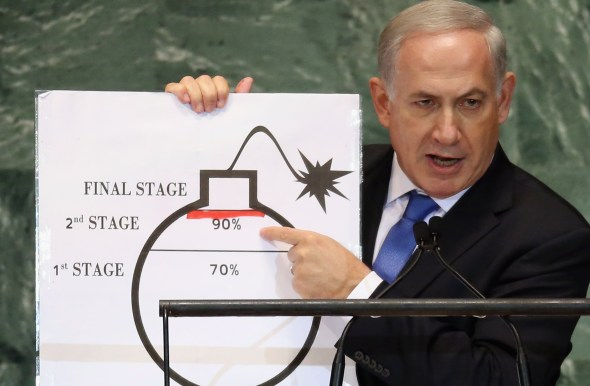
David Knowles at Bloomberg Politics on the Twitter gag: White House Trolls Netanyahu on Iran with Bomb Graphic.
The White House has employed a graphic first used by Benjamin Netanyahu to push its case for a nuclear deal with Iran that the Israeli Prime Minister opposes. On Wednesday, the president’s office posted a tweet that borrowed the graphic representation of a bomb that Netanyahu had held up during a speech to the United Nation’s General Assembly in which he warned of Iran’s growing nuclear capability.
Worth sharing: Here's how the #IranDeal would shut down Iran's pathway to a nuclear weapon → go.wh.gov/Iran-deal http://t.co/8aYQi2KEgq—
The White House (@WhiteHouse) April 08, 2015The fuse on the original image was intact, and there was no sign of the metaphorical scissors or accompanying text that the White House saw fit to add.
Pretty funny.
And how about this op-ed from the Jerusalem Post: How Netanyahu is single-handedly hurting the US-Israel relationship.
Benjamin Netanyahu is singlehandedly hurting a relationship that has resulted in over $100 billion in military aid to Israel since 1962. The Prime Minister is hurting a relationship with a country that constantly defends Israel at the UN; resulting in over 30 U.S. vetoes of resolutions critical to Israel. Because of Netanyahu, some are wondering if the U.S. should continually give $3.1 billion in annual aid and professors like Harvard’s Steven Strauss have written about ending this perpetual assistance. Sadly, the Prime Minister’s supporters in Israel and abroad don’t seem moved by the magnitude of what could be lost if Netanyahu’s feud with Obama “gets even worse.” [….]
even those whose job it was to protect Israel from the threats trumpeted by Netanyahu feel that the Prime Minister has overstepped the boundaries of rationality.
According to The Jerusalem Post recently, “Former Mossad chief slams Netanyahu for insistence that Iran recognize Israel’s right to exist.” Efraim Halevy also predicted a“dramatic” improvement in Israeli relations with the U.S. if Netanyahu were to be defeated in the latest elections. Another former Mossad chief, Meir Dagan, called Netanyahu’s speech to Congress “bull—t” and views the Prime Minister’s policies as dangerous to Israel’s future. A third former Mossad chief, Tamir Pardo, stated that a nuclear Iran did notpost an existential threat to Israel; a viewpoint directly at odds with the hysteria (fueled by Netanyahu’s political ideology) surrounding Obama’s nuclear deal.
When three former Mossad chiefs are forced to speak out, an Israeli Prime Minister should tone down his paranoid rhetoric, not increase the tempo of his political exploits. Say what you will about Bibi’s critics, but former Mossad chiefs aren’t “leftist” and they know quite a bit about Israeli security threats. Their sober assessment of Netanyahu’s P. T. Barnum inspired diplomacy (regarding Israel’s U.S. relationship) is just cause to reassess the Prime Minister’s behavior; not champion his constant criticism of Obama’s nuclear deal.
The Economist writes that “RARELY have relations between an American president and an Israeli prime minister sunk so low.” The New Yorker published an article titled A Bad Day In American-Israeli Relations. Senator Dianne Feinstein recently stated she wished that Netanyahu “would contain himself” and I echoed the California Senator’s sentiment in a recent Congress Blog piece. Tzipi Livni has warned that Netanyahu is leading Israel into “crisis and diplomatic isolation.” Like Livni, Yair Lapid has lamented over the state of relations between the White House and Israel, stating, “This damage will take a long time to mend.” Everyone from former Mossad chiefs, U.S. Senators, Israeli politicians, and journalist have expressed dismay about the decline in a relationship that is essential to Israel’s future.
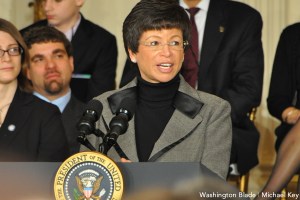
From The Washington Post, here’s more interesting news from the White House: White House condemns therapy to ‘cure’ gay youth.
The statement was issued in response to a White House petition signed by more than 120,000 people after the suicide of 17-year-old Leelah Alcorn, a transgender teen from Ohio whose suicide note condemning the society’s treatment of transgender people went viral after her death. In the note, she indicated she had been subjected to such therapies.
“The only way I will rest in peace is if one day transgender people aren’t treated the way I was, they’re treated like humans, with valid feelings and human rights,” Alcorn wrote in her note.
The White House statement, issued by President Obama’s senior adviser Valerie Jarrett, condemned “conversion” therapy, also known as “reparative” therapy, which she defined as any treatment aimed at changing a person’s sexual identity.
“The overwhelming scientific evidence demonstrates that conversion therapy, especially when it is practiced on young people, is neither medically nor ethically appropriate and can cause substantial harm,” she wrote. “As part of our dedication to protecting America’s youth, this Administration supports efforts to ban the use of conversion therapy for minors.”
Shortly before releasing the White House response to the petition on conversion therapy, according to a White House official, Jarrett spoke with organizers of the petition. “She listened to their personal stories about why this was important to them and thanked them for their efforts,” said the official, who asked for anonymity in order to describe a private conversation.

And from The Advocate: The White House’s Executive Office Now Has Gender-Neutral Bathroom.
An all-gender restroom is for the first time available in the Eisenhower Executive Office Building, confirms a White House spokesman. Alternatively, guests are invited to use whichever bathroom fits with their gender identity.
“The White House allows staff and guests to use restrooms consistent with their gender identity,” said White House spokesman Jeff Tiller, “which is in keeping with the administration’s existing legal guidance on this issue and consistent with what is required by the executive order that took effect today for federal contractors.”
Valerie Jarrett, senior adviser to President Obama, had mentioned the policy change in an op-ed today for The Advocate, saying the adminstration had “closely examined” its policies on “restroom access” to help “ensure that everyone who enters this building feels safe and fully respected.”
Gender neutral bathrooms, if single-stall, also often offer a safe space to differently abled users, parents with their children, and anyone else seeking privacy.
The push for gender-neutral restrooms in public buildings and workplaces has been one cause taken up by transgender rights activists — and one that’s found the most visible sucecss on university campuses — making Jarrett’s anouncement feel to many like a win for trans Americans.
“It is heartening to see that, even if legislators in some states are attacking the dignity and humanity of transgender and gender-nonconforming people, at least the White House is still moving in the direction of dignity and common sense,” Mara Keisling, executive director of the National Center for Transgender Equality, told The Advocate.
Within the past several years, the Obama administration has been increasingly affirming of trans citizens, with Vice President Joe Biden referring in 2012 to transgender discrimination as the “civil rights issue of our time” and President Obama using the word “transgender” (in addition to “lesbian” and “bisexual”) in this year’s State of the Union Address for the first time ever for any president. Federal employees have had the right to use the bathroom that accords with their gender identiy since 2011.
Around the country, heads of Republican homophobes must be exploding. Read the whole article for more on LGBT-positive actions the Obama administration has taken.
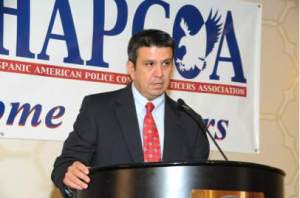
Xavier Morales
Some not so good news: the Secret Service’s credibility continues to slide downhill rapidly.
WaPo: Secret Service manager put on leave during probe of alleged assault.
The D.C. police’s sex-crimes unit and a government inspector general are investigating the female agent’s allegation that Xavier Morales, a manager in the security clearance division, made unwanted sexual advances and grabbed her on the night of March 31 after they returned to the office from a party at a downtown restaurant, according to two law enforcement officials with knowledge of the probe.
The woman told police and agency investigators that Morales, her boss, told her during the party at Capitol City Brewing Company that he was in love with her and would like to have sex with her, according to two people briefed on her statements. In the office later, she alleged, Morales tried to kiss her and grabbed her arms when she resisted, according to the two people briefed on her complaint. The woman alleged that the two scuffled until Morales relented.
Through an agency spokesman, Morales declined to comment, and he did not respond to requests for comment left on his personal phone.
Late last week, the Secret Service took the unusual step of placing Morales on indefinite administrative leave and adding his name to an internal “do not admit” list prohibiting entry to the office, a Secret Service official said. The Secret Service also took away his gun and badge after agency investigators launched a preliminary review of the complaint and conducted “subsequent corroborative interviews” Thursday afternoon, said agency spokesman Brian Leary.
More details at Heavy.com: Xavier Morales: 5 Fast Facts You Need to Know.
Ugh. Maybe we need more female Secret Service agents to quell the “boys will be boys” atmosphere in the agency.
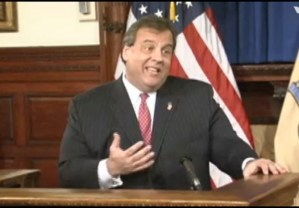
More trouble may be coming for NJ governor and possible GOP presidential candidate Chris Christie.
NJ.com reports: Indictments may come very soon in Bridgegate, report says.
Indictments may be coming very soon in Bridgegate, the investigation into improper lane closures at the George Washington Bridge in late 2013 that has also led to questions about bribery and conflicts of interest possibly involving Gov. Christie and the Port Authority, sources told The New York Times.
New Jersey U.S. Attorney Paul Fishman launched the probe a few months after three lanes were closed to the bridge in September 2013, causing gridlock in Fort Lee. The closures were initially attributed to a traffic study by a Port Authority executive, Bill Baroni, but emails unearthed during an investigation revealed that the lanes were shut down on the orders of a Christie aide, Bridget Anne Kelly, to a Port Authority official appointed by Christie, David Wildstein. Some believe the lane closures were retribution for the failure of Fort Lee’s mayor, Mark Sokolich, to endorse Christie’s bid for re-election at a time when the governor and likely Republican presidential candidate was trying to build bipartisan support.
The Times previously reported that Fishman’s office may bring indictments to the operators of the bridge under a little-used statute that makes it a crime to use the bridge for something other than its intended purpose. Fishman’s office declined to say what course the investigation is taking.
This could be very interesting.
I have more news links, but I’m running out of space and time. I’ll add them to the comments.
What stories are you following? I’d love to read your comments on this post and click on your links to your recommended reads for today.
Friday Reads: The Iran Deal
Posted: April 3, 2015 Filed under: Barack Obama, Foreign Affairs, Iran, morning reads, open thread, U.S. Military, U.S. Politics | Tags: iran, israel, nuclear weapons, US Foreign Policy 15 Comments Good Afternoon!
I’m running late again! My schedule is just upside down now and DST just double whammed me on the same weekend I started my late night work. Still getting used to the weird hours. I also wanted to spend some time on the negotiations with Iran over its nuke program so I had to catch up with the news. I’m glad BB’s post was so good because I can see you’ve spent a lot of time commenting on what’s going on in Indiana with its so-called “religious freedom” bill.
Obviously, there are going to be several sides to the “deal” depending on your views and their connections to US/Israel policy. So, I thought I’d highlight a few. Max Fisher–writing for VOX–says the deal is “astonishingly good.”
When Aaron Stein was studying nuclear non-proliferation at Middlebury College’s Monterey graduate program, the students would sometimes construct what they thought would be the best possible nuclear inspection and monitoring regimes.
Years later, Stein is now a Middle East and nuclear proliferation expert with the Royal United Services Institute. And he says the Iran nuclear framework agreement, announced on Thursday, look an awful lot like those ideal hypotheticals he’d put together in grad school.
“When I was doing my non-proliferation training at Monterey, this is the type of inspection regime that we would dream up in our heads,” he said. “We would hope that this would be the way to actually verify all enrichment programs, but thought that would never be feasible.
“If these are the parameters by which the [final agreement] will be signed, then this is an excellent deal,” Stein concluded.
The framework nuclear deal establishes only the very basics; negotiators will continue to meet to try to turn them into a complete, detailed agreement by the end of June. Still, the terms in the framework, unveiled to the world after a series of late- and all-night sessions, are remarkably detailed and almost astoundingly favorable to the United States.
Like many observers, I doubted in recent months that Iran and world powers would ever reach this stage; the setbacks and delays had simply been too many. Now, here we are, and the terms are far better than expected. There are a number of details still to be worked out, including one very big unresolved issue that could potentially sink everything. This is not over. But if this framework does indeed become a full nuclear deal in July, it would be a huge success and a great deal.
The NYT editorial board calls the deal “promising.”
According to Reuters, Iranians were celebrating in the street as the deal was announced yesterday. The country has been living under harsh embargoes which have obviously hurt ordinary people.
Iranians celebrated in the streets after negotiators reached a framework for a nuclear accord and U.S. President Barack Obama hailed an “historic understanding”, but senior global diplomats cautioned that hard work lies ahead to strike a final deal.
The tentative agreement, struck on Thursday after eight days of talks in Switzerland, clears the way for a settlement to allay Western fears that Iran could build an atomic bomb, with economic sanctions on Tehran being lifted in return.
It marks the most significant step toward rapprochement between Washington and Tehran since the 1979 Iranian revolution and could bring an end to decades of Iran’s international isolation.
But the deal still requires experts to work out difficult details before a self-imposed June deadline and diplomats said it could collapse at any time before then.
 We have reaction to the deal from the GOP and from former SOS Hillary Clinton as reported by CNN.
The backlash from likely Republican presidential contenders to thepotential nuclear deal with Iran trumpeted Thursday by President Barack Obama came swift and hard. A more optimistic response came from likely 2016 Democratic candidate, Hillary Clinton.
Former Florida Gov. Jeb Bush said the deal — aimed at reining in Iran’s nuclear capabilities — “will only legitimize those activities.”
“Nothing in the deal described by the administration this afternoon would justify lifting U.S. and international sanctions, which were the product of many years of bipartisan effort,” Bush said. “I cannot stand behind such a flawed agreement.”
Clinton, meanwhile, held up the tentative agreement as an “important step” in preventing a nuclear Iran.
“Getting the rest of the way to a final deal by June won’t be easy, but it is absolutely crucial. I know well that the devil is always in the details in this kind of negotiation,” Clinton said in a statement. “The onus is on Iran and the bar must be set high. It can never be permitted to acquire a nuclear weapon.”
But the former secretary of state allowed leeway for herself in case things go awry in the coming months, stating, “There is much to do and much more to say in the months ahead, but for now diplomacy deserves a chance to succeed.”
The rest of the Republican field, however, coalesced around rejecting the deal.
Making his first trek to Iowa as an announced presidential candidate, Texas Sen. Ted Cruz contended the President must bring Congress into the process.
“The very first step for any deal, good or bad, should be submitting it to Congress, and the President making the case both to Congress and to the American people why this advances the national security interests of the United States,” Cruz told reporters after a town hall in Cedar Rapids. “Now everything President Obama has said up to this date has suggested that he is going to do everything he can to circumvent Congress.”
Florida Sen. Marco Rubio, a member of the Senate Foreign Relations Committee, described the early details of the agreement as “very troubling” and said “this attempt to spin diplomatic failure as a success is just the latest example of this administration’s farcical approach to Iran.”
Obama pushed to quiet skeptics of the framework during his remarks in the White House Rose Garden Thursday, asking, “Do you really think that this verifiable deal, if fully implemented, backed by the world’s major powers, is a worse option than the risk of another war in the Middle East?”
 Peter Baker–writing for the NYT–calls the deal a “foreign policy gamble”.
As Mr. Obama stepped into the Rose Garden to announce what he called a historic understanding, he seemed both relieved that it had come together and combative with those in Congress who would tear it apart. While its provisions must be translated into writing by June 30, he presented it as a breakthrough that would, if made final, make the world a safer place, the kind of legacy any president would like to leave. “This has been a long time coming,” he said.
Mr. Obama cited the same John F. Kennedy quote he referenced earlier in the week when visiting a new institute dedicated to the former president’s brother, Senator Edward M. Kennedy: “Let us never negotiate out of fear, but let us never fear to negotiate.” The sense of celebration was captured by aides standing nearby in the Colonnade who exchanged fist bumps at the end of the president’s remarks.
But Mr. Obama will have a hard time convincing a skeptical Congress, where Republicans and many Democrats are deeply concerned that he has grown so desperate to reach a deal that he is trading away American and Israeli security. As he tries to reach finality with Iran, he will have to fend off legislative efforts, joined even by some of his friends, to force a tougher posture.
The WAPO Editorial Board was critical of the deal.
THE “KEY parameters” for an agreement on Iran’s nuclear program released Thursday fall well short of the goals originally set by the Obama administration. None of Iran’s nuclear facilities — including the Fordow center buried under a mountain — will be closed. Not one of the country’s 19,000 centrifuges will be dismantled. Tehran’s existing stockpile of enriched uranium will be “reduced” but not necessarily shipped out of the country. In effect, Iran’s nuclear infrastructure will remain intact, though some of it will be mothballed for 10 years. When the accord lapses, the Islamic republic will instantly become a threshold nuclear state.
That’s a long way from the standard set by President Obama in 2012 when he declared that “the deal we’ll accept” with Iran “is that they end their nuclear program” and “abide by the U.N. resolutions that have been in place.” Those resolutions call for Iran to suspend the enrichment of uranium. Instead, under the agreement announced Thursday, enrichment will continue with 5,000 centrifuges for a decade, and all restraints on it will end in 15 years.
Mr. Obama argued forcefully — and sometimes combatively — Thursday that the United States and its partners had obtained “a good deal” and that it was preferable to the alternatives, which he described as a nearly inevitable slide toward war. He also said he welcomed a “robust debate.” We hope that, as that debate goes forward, the president and his aides will respond substantively to legitimate questions, rather than claim, as Mr. Obama did, that the “inevitable critics” who “sound off” prefer “the risk of another war in the Middle East.”
The proposed accord will provide Iran a huge economic boost that will allow it to wage more aggressively the wars it is already fighting or sponsoring across the region. Whether that concession is worthwhile will depend in part on details that have yet to be agreed upon, or at least publicly explained. For example, the guidance released by the White House is vague in saying that U.S. and European Union sanctions “will be suspended after” international inspectors have “verified that Iran has taken all of its key nuclear related steps.”
Obviously, Bibi is beside himself.
“I just came from a meeting of the Israeli cabinet. We discussed the proposed framework for a deal with Iran.
The cabinet is united in strongly opposing the proposed deal.
This deal would pose a grave danger to the region and to the world and would threaten the very survival of the State of Israel.
The deal would not shut down a single nuclear facility in Iran, would not destroy a single centrifuge in Iran and will not stop R&D on Iran’s advanced centrifuges.
On the contrary. The deal would legitimize Iran’s illegal nuclear program. It would leave Iran with a vast nuclear infrastructure. A vast nuclear infrastructure remains in place.
The deal would lift sanctions almost immediately and this at the very time that Iran is stepping up its aggression and terror in the region and beyond the region.
In a few years, the deal would remove the restrictions on Iran’s nuclear program, enabling Iran to have a massive enrichment capacity that it could use to produce many nuclear bombs within a matter of months.
The deal would greatly bolster Iran’s economy. It would give Iran thereby tremendous means to propel its aggression and terrorism throughout the Middle East.
Such a deal does not block Iran’s path to the bomb.
Is he the little boy that has cried wolf too often?
Anyway, I hope you’ll read up on the situation since it stands to be one of the biggest foreign policy agreements for quite some time.
What’s on your reading and blogging list today?
Friday Reads: Weaponized Oil and a tale of conspiracies
Posted: December 26, 2014 Filed under: Foreign Affairs, fracking, Iran, Russia, Saudi Arabia 10 CommentsGood Morning!
So, I’m going to write briefly about something that’s been fascinating me lately. That’s the incredible decrease in oil prices and the impact that it’s having on Russia and other oil producing nations outside of the Emirates and Saudi Arabia . I’m a sucker for a good currency crisis since it’s basically right up my research  alley.
Also, oil has been one of those commodities that’s pretty much dominated my adult life. I remember having to buy gas on even days because the Dealer’s tags on our cars ended in 8 during the oil crisis. I know what it did to my dad’s business as a car dealer. Basically, oil’s been the most fungible commodity in modern times. No modern economy can live without it. We’ve definitely fought wars to control it. Oil’s being weaponized like never before.
There are several key factors driving down your gas at the pump. First, the global economy has slowed down so that the demand for oil has tapered off. That’s one thing that’s been at play. But the more interesting factor has been the increase in supply which is related to the interesting way that Saudis have been ignoring OPEC quotas and inching up the supply. There’s been some rumors going around–actual conspiracy theories– that they are doing so for three reasons. First, they want to make sure that the nascent tar sands oil industry in North America isn’t profitable. Second, they want to hurt Iran, Syria, and Iraq and any other Shia nation involved with oil production. The third reason is to get at Russia. I want to share what I’ve found on these fronts with you. It has the feel of a new kind of cold war and the opposite of the gas wars of the 1970s.
Russia just experienced a “Black Monday” in that the Russian Stock market has collapsed as has the ruble. The Russia economy is heavily dependent on oil exports so any decrease in oil prices has an impact. These continued price decreases have their economy on the verge of failure. The entire situation has been exacerbated by UN Sanction against the country for its invasion and intervention in the Ukraine. It’s not pretty.
In recent weeks, the fall in the Russian ruble and Russian stock markets closely tracked the declines in global oil prices. But everything changed on December 15. The oil price remained stable, but the ruble and the stock-price indices lost 30% in the subsequent 24 hours. An unprecedented effort by the Central Bank of Russia (CBR) in the wee hours of December 16 to stabilize the ruble, by hiking the interest rate from 10.5% to 17%, proved useless.
The cause of Russia’s “Black Monday” was readily apparent: the government bailout of state-owned Rosneft, the country’s largest oil company. Usually, bailouts calm markets; but this one recalled early post-Soviet experiments, when the CBR issued direct loans to enterprises – invariably fueling higher inflation. The CBR’s governor at the time, Viktor Gerashchenko, was once dubbed the world’s worst central banker.
In 2014, the CBR is more constrained than it was in Gerashchenko’s era: it cannot lend directly to firms. Yet it has also become more sophisticated at achieving the same ends that Gerashchenko sought.
In October, Rosneft issued $11 billion worth of ruble-denominated bonds (an unparalleled amount for the Russian market, equivalent to 70% of the total value of corporate bonds issued in Russia this year). The coupon on these bonds was actually 1.5 percentage points below sovereign bonds of similar maturity, which is also unusual, especially given that Rosneft currently is subject to Western sanctions.
Then, unnamed investors (allegedly the largest Russian state banks) benefited from the CBR’s decision on December 12 to allow these bonds to be used as collateral for three-year CBR ruble loans at the policy rate. Moreover, the CBR scheduled a special auction for such loans on December 15 – with the total amount of the loans similar to that of Rosneft’s bond issue. Thus, the CBR would be able to provide a massive pile of rubles to Rosneft at below-market rates. So why did the deal trigger a panic?
At first glance, this deal was intended to meet contemporary Russia’s most important economic challenge. Sanctions have cut off Russian banks and companies from Western financial markets. Russian companies have to repay or refinance about $300 billion of debt over the coming two years. Some of this debt is owed to Russian companies’ offshore owners, who will certainly be happy to roll it over. But in most cases, firms’ liabilities comprise real debt owed to major international banks.
 Global investors are anxiously awaiting some kind of strategy for recovery. Actions by the Central Bank of Russia have been very curious. All of the countries that depend on oil exports for huge amounts of their funding are in trouble. Russia is probably just the most obvious of them. This goes for Iran also. That’s because both of them are heavily weighed down by UN sanctions.
The non-OPEC producing countries (Russia, Brazil and Norway, as examples) are starting to become backed into an economic corner. In all of these countries, oil represents a major export and helps finance other economic activities. For example, as Russia sells oil in the open market (priced in dollars) at $60 per barrel, the revenue in dollars is 50 percent less than was the case in June of this year. Since June, the Russian Ruble has declined by 59 percent (to the U.S. dollar). A “crash” in the value of any currency leads to very high inflation (imports are now more expensive than would have otherwise been the case), which leads to potential civil unrest. On a global scale, the “wealth” of Russia as a nation, priced in Rubles, has declined by 59 percent in the last six months.
This is the stuff that leads to revolutions. Oil, other commodities and vodka are about the only exports Russia creates and helps fund their country’s spending. They are net importers of most all consumption goods (health supplies, food, etc.). In their own currency, those imports are now 59 percent more expensive than they were this past summer.
To some, the problem Russia currently faces sounds like something Vladimir Putin created by his dalliances in the Crimea and Ukraine. There is some truth to this as those actions led to economic sanctions unleashed by the West on Russia. The oil pricing issue is indirectly due to his destructive behavior. What really matters to the rest of the world at this stage is the potential for economic weakness to spread to the rest of the world from Russia… monetary contagion, anyone?
How would this happen? Why would the rest of the world be negatively affected by weakness in the Russian Ruble? Russia’s economy is the world’s eighth largest (as measured by the IMF ), a little larger than Italy and a little smaller than Brazil. At about $2.1 trillion in GDP, Russia is dwarfed by the United States at $17.5 trillion. If Russia’s economy contracts by 4 percent (which potentially is in the cards for 2015), it will impact the world’s GDP by about $84 billion, or .1 percent. No big deal. However, let’s think not about the world’s income statement (GDP) but rather about the world’s balance sheet – the world’s banking system.
Most Russian national debt is priced in Rubles and the value of that debt has collapsed from six months ago when the Ruble was higher and Russian interest rates were dramatically lower. Russia’s public debt is $216 billion. The Russian benchmark interest rate was at 7.5 percent in June of this year – that interest rate is now 17 percent.
How much this impacts any other country has a lot to do on how many banks hold Ruble-denominated assets or liabilities. The interesting thing is that Saudi Arabia seems no where done with its dalliance in increasing oil supply. This particular bit of news is what motivated me to finally bring this up here. The emirates and Saudi Arabia seem willing to dig into their own sovereign wealth and their countries’ spending to see this through. They must be extremely serious about something. Is it the threat from Shia Muslims? From US Fracking Oil? Do they just plain hate the Russians?
Saudi Arabia’s Cabinet on Thursday endorsed a 2015 budget that projects a slight increase in spending and a significant drop in revenues due to sliding oil prices, resulting in a nearly $39 billion deficit
In a sign of mounting financial pressure, the Finance Ministry said the government would try to cut back on salaries, wages and allowances, which “contribute to about 50 percent of total budgeted expenditures.” That could stir resentment among the kingdom’s youth, who make up a majority of the population and are increasingly struggling to find affordable housing and salaries that cover their cost of living.
The price of oil— the backbone of Saudi Arabia’s economy — has fallen by about a half since the summer. Saudi Arabia is extremely wealthy, but there are deep wealth disparities and youth unemployment is expected to mushroom absent a dramatic rise in private sector job creation. The International Monetary Fund says almost two-thirds of employed Saudis work for the government.
A the height of Arab Spring protests sweeping the region in 2011, King Abdullah pledged $120 billion to fund a number of projects, including job creation and hikes in public sector wages. The move was largely seen as an effort to appease the public and blunt any challenges to monarchical rule.
Associate Fellow and energy researcher at Chatham House, Valerie Marcel, said massive government spending across the Gulf on public sector salaries is “really the thing that keeps the lid on the bottle.” She said that for now the Arab monarchies of the Gulf can afford to run deficits due to surpluses accumulated over the years from high oil prices.
Now that’s commitment. There’s actually some discussion around that the US and the Saudis basically colluded to drop oil prices. This all is happening while OPEC has called for widespread production cuts. Anyone with a little game theory  background along with economics know that this is a deadly game. The ones that cut their production will lose income.
Turning to the current price drop, the Saudis and OPEC have a vested interest in taking out higher-cost competitors, such as US shale oil producers, who will certainly be hurt by the lower price. Even before the price drop, the Saudis were selling their oil to China at a discount. OPEC’s refusal on Nov. 27 to cut production seemed like the baldest evidence yet that the oil price drop was really an oil price war between Saudi Arabia and the US.
However, analysis shows the reasoning is complex, and may go beyond simply taking down the price to gain back lost marketshare.
“What is the reason for the United States and some U.S. allies wanting to drive down the price of oil?” Venezuelan President Nicolas Maduro asked rhetorically in October. “To harm Russia.”
Many believe the oil price plunge is the result of deliberate and well-planned collusion on the part of the United States and Saudi Arabia to punish Russia and Iran for supporting the murderous Assad regime in Syria.
Punishing Assad and friends
Proponents of this theory point to a Sept. 11 meeting between US Secretary of State John Kerry and Saudi King Abdullah at his palace on the Red Sea. According to an article in the Wall Street Journal, it was during that meeting that a deal was hammered out between Kerry and Abdullah. In it, the Saudis would support Syrian airstrikes against Islamic State (ISIS), in exchange for Washington backing the Saudis in toppling Assad.
If in fact a deal was struck, it would make sense, considering the long-simmering rivalry between Saudi Arabia and its chief rival in the region: Iran. By opposing Syria, Abdullah grabs the opportunity to strike a blow against Iran, which he sees as a powerful regional rival due to its nuclear ambitions, its support for militant groups Hamas and Hezbollah, and its alliance with Syria, which it provides with weapons and funding. The two nations are also divided by religion, with the majority of Saudis following the Sunni version of Islam, and most Iranians considering themselves Shi’ites.
“The conflict is now a full-blown proxy war between Iran and Saudi Arabia, which is playing out across the region,” Reuters reported on Dec. 15. “Both sides increasingly see their rivalry as a winner-take-all conflict: if the Shi’ite Hezbollah gains an upper hand in Lebanon, then the Sunnis of Lebanon—and by extension, their Saudi patrons—lose a round to Iran. If a Shi’ite-led government solidifies its control of Iraq, then Iran will have won another round.”
The Saudis know the Iranians are vulnerable on the oil price. Experts say the country needs $140 a barrel oil to balance its budget; at sub-$60 prices, the Saudis succeed in pressuring Iran’s supreme leader, Ayatollah Ali Khamanei, possibly containing its nuclear ambitions and making the country more pliable to the West, which has the power to reduce or lift sanctions if Iran cooperates.
Adding credence to this theory, Iranian President Hassan Rouhani told a Cabinet meeting earlier this month that the fall in oil prices was “politically motivated” and a “conspiracy against the interests of the region, the Muslim people and the Muslim world.”
So, you can see, there’s a little bit of economy theory blended with conspiracy theory here. Frankly, I”m all for Saudi Arabia crippling American Fracking even though I’m sitting in a state where things will only go from bad to worse in this situation. (Although I  will mention I’m actively looking at real estate in Washington State right now.)
Despite repetition in countless media accounts and analysts’ notes over the past few weeks, though, the idea of a “sheikhs vs. shale” battle to control global oil supplies has precious little evidence behind it. The Saudi-led decision to keep OPEC’s wells pumping is a direct strike by Riyadh on two already hobbled geopolitical rivals, Iran and Russia, whose support for the Syrian government and other geostrategic machinations are viewed as far more serious threats to the kingdom than the inconvenience of competing for market share with American frackers.
Among the world’s oil producing nations, few suffer more from the Saudi move than Tehran and Moscow. At a time when both are already saddled with economic sanctions — Russia for its actions in Ukraine and Iran for its alleged pursuit of nuclear weapons technology — the collapse of oil prices has put unprecedented pressure on these regimes. For Russia, the crisis has hit very hard, with the ruble losing 40 percent of its value to the dollar since October. This is particularly problematic since Russian state-owned oil firms have gone on a dollar-borrowing spree in recent years; now, servicing that debt looks very ominous.
True, Saudi OPEC minister Ali al-Naimi insisted last month that the move was intended to target shale. But he would say that, wouldn’t he? After all, his OPEC counterparts were standing beside him — including the OPEC minister from Iran.
The fact is, Saudi Arabia has little to fear from shale. Saudi Arabia’s huge reserves of conventional oil can and probably will be produced for decades after the shale boom has run its course — which the U.S. Energy Information Administration (EIA) expects to happen by 2050 or so — and at much lower costs.
So, that one could be just a conspiracy theory. Anyway, it is very interesting situation that seems to converge economics with geopolitics. It won’t be the first time that oil and other commodities have been used as weapons. The Spanish Empire was taken down by its gold lust and hoarding by Good Queen Bess as one example. It’s really interesting no matter what the rationale.
For all our worries over Russia, however, we in Britain should not lose sight of the humiliation of another swaggering and once-mighty force in world politics, the Organisation of Petroleum Exporting Countries (OPEC). When it burst on the world scene 40 years ago, OPEC terrified the wasteful West.
Over the previous decades, we had grown used to abundant oil, bought mostly from Middle Eastern producers — with little global muscle — at rock- bottom prices.
However, OPEC changed that. By restricting supply, the cartel quadrupled the oil price, from $3 to $12.
Saudis remain in a strong position because oil is cheap to produce there. Above, the country’s Minister of Petroleum and Mineral Resources Ali Ibrahim Naimi
That is only a fraction of today’s price — but the oil crisis sparked by the rocketing cost in 1974 was enough to lead to queues at filling stations and national panics in the pitifully unprepared industrialised world.
Four decades later, Saudi Arabia has become one of the richest countries in the world, with reserves totalling nearly $900 billion.
But the rest of the world is less at its mercy than it once was. Here in Britain, our energy consumption is dropping remorselessly — the result of increased energy efficiency.
Moreover, many other nations now produce oil. And oil can be replaced by other fuels, such as natural gas, which OPEC does not control.
Also, OPEC no longer has the discipline or the clout to dominate the market, and we in Britain are among the big winners from all this, reaping the benefits of lower costs to fill up our cars and power our industries.
At its meeting in Vienna last month, the OPEC oil cartel — which controls nearly 40 per cent of global production — faced a fateful choice.
Would it curb production and thus, by reducing supplies, try to ratchet the oil price back to something near $100 a barrel — the level most of its members need to balance their books? Or would it let the glut continue?
The organisation’s 12 member countries, including Saudi Arabia, Iran, Iraq, Kuwait, Venezuela and Nigeria, chose to do nothing, proving that its once-mighty power has withered. Oil prices subsequently fell even further.
One central problem is that several of OPEC’s members detest each other for a variety of reasons.
Above all, Saudi Arabia and its Gulf allies see Iran — a bitter religious and political opponent — as their main regional adversary.
They know that Iran, dominated by the Shia Muslim sect, supports a resentful underclass of more than a million under-privileged and angry Shia people living in the gulf peninsula — a potential uprising waiting to happen against the Saudi regime.
The Saudis, who are overwhelmingly Sunni Muslims, also loathe the way Iran supports President Assad’s regime in Syria — with which the Iranians have a religious affiliation. They also know that Iran, its economy plagued by corruption and crippled by Western sanctions, desperately needs the oil price to rise. And they have no intention of helping out.
The fact is that the Saudis remain in a strong position because oil is cheap to produce there, and the country has such vast reserves. It can withstand a year — or three — of low oil prices.
The fact is that the Saudis remain in a strong position because oil is cheap to produce there, and the country has such vast reserves. It can withstand a year — or three — of low oil prices.
In Moscow, Vladimir Putin does not have that luxury — and the Saudis know it.
They revile Russia, too, for its military support of President Assad, and for its sale of advanced weapons to Iran.
 So there’s the piece on why Russian and Iran are targeted. Anyway, unless you’re a CIA analyst specializing that area with access to all the back and forth, it’s hardly possible to untangle all these wicked webs. It is evident, however, that the Saudis have some bones to pick with a lot of folks and picking away they are.
It will be interesting to watch this unfold. I have no doubt this will have bigger implications and I also know that most folks aren’t following this. I’m also pretty sure the usual news outlets are giving this short shrift. You can tell if you if follow any of my links because only one goes to the NY Times. The rest are mags that are read by very few folks.
So …. What’s on your reading and blogging list today?
Thursday Reads
Posted: September 11, 2014 Filed under: Barack Obama, Crime, Criminal Justice System, Foreign Affairs, Iran, morning reads, nature, Saudi Arabia, science, Syria, U.S. Military, U.S. Politics, Ukraine, Violence against women | Tags: 9/11 13th anniversary, Islamic State militants, Pablo Picasso, peace, Racism, war 44 Comments
War, Pablo Picasso
Good Morning!!
Here are are on the 13th anniversary of the 9/11 attacks and the never-ending war in the Middle East continues onward. Last night President Obama promised not to send ground troops back to Iraq or into Syria, but it’s very difficult to trust that promise, even though I do think Obama is sincere in his wish to keep the battle against the Islamic State extremists circumscribed.
Reactions to Obama’s speech
From The Washington Post, Countering Islamic State will be hard in Iraq and harder in Syria, officials say.
President Obama’s strategy to beat back Islamic State militants spread across Iraq and Syria will depend on far more than U.S. bombs and missiles hitting their intended targets.
In Iraq, dissolved elements of the army will have to regroup and fight with conviction. Political leaders will have to reach compromises on the allocation of power and money in ways that have eluded them for years. Disenfranchised Sunni tribesmen will have to muster the will to join the government’s battle. European and Arab allies will have to hang together, Washington will have to tolerate the resurgence of Iranian-backed Shiite militias it once fought, and U.S. commanders will have to orchestrate an air war without ground-level guidance from American combat forces.
“Harder than anything we’ve tried to do thus far in Iraq or Afghanistan” is how one U.S. general involved in war planning described the challenges ahead on one side of the border that splits the so-called Islamic State.
But defeating the group in neighboring Syria will be even more difficult, according to U.S. military and diplomatic officials. The strategy imagines weakening the Islamic State without indirectly strengthening the ruthless government led by Bashar al-Assad or a rival network of al-Qaeda affiliated rebels — while simultaneously trying to build up a moderate Syrian opposition.
All that “makes Iraq seem easy,” the general said, speaking on the condition of anonymity to share views on policy. “This is the most complex problem we’ve faced since 9/11. We don’t have a precedent for this.”
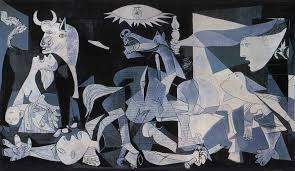
Guernica, Pablo Picasso
The Wall Street Journal, Obama Pushes U.S. Deeper Into Middle East to Fight Islamic State.
In asking Americans to support another military incursion in the Middle East, Mr. Obama said his strategy to combat Islamic State, also called ISIS and ISIL, would be bolstered by a coalition of Arab and European nations. His plan builds on his authorization in August of airstrikes in Iraq to protect American personnel threatened by Islamic State and to provide humanitarian assistance to besieged Iraqis.
Mr. Obama said the U.S. goal now is to help Iraqis reclaim large swaths of territory the group has rapidly overtaken in recent months since spilling over from its stronghold in neighboring Syria. His speech paves the way for the first U.S. strikes at the group’s bases and havens in Syria.
“America will lead a broad coalition to roll back this terrorist threat,” Mr. Obama said in remarks from the White House. “I will not hesitate to take action against ISIL in Syria, as well as Iraq. This is a core principle of my presidency: If you threaten America, you will find no safe haven.”
The president gave no timetable for the new, U.S.-led fight against what he described as “a terrorist organization” with members “unique in their brutality.”
In addition to launching airstrikes against the militants in Syria, Mr. Obama pledged a new dose of support for moderate Syrian fighters also battling the extremist group. Taken together, the steps draw the U.S. closer toward the volatile Syrian civil war and open a new front for American efforts in the region.
Saudi Arabia has offered to host a U.S.-run training facility for moderate Syrian rebels, U.S. and Arab officials said. The facility is expected to be able to handle as many as 10,000 fighters, but details are still being worked out, the officials said.
According to the article, John McCain and Lindsey Graham are on board with the plan. That gives me the creeps, frankly.

Guernica 2: Hommage to Picasso’s Guernica, Jose Garcia y Mas
Geoff Dyer at The Financial Times, Obama’s bold ambition at odds with strategic caution.
Faced with the rapid advances of Isis in both Iraq and Syria, the approach described by Mr Obama attempts to meet the political realities that the president faces, both in the Middle East and at home.
In spite of the technological superiority of US forces, Mr Obama believes a durable military victory against Isis can only be achieved by soldiers from the region, especially Sunni forces from the areas to which Isis is laying claim. Otherwise a similar group could reappear once the US has left.
At the same time, it gives him some political protection at home. Recent polls have shown that Americans are alarmed about Isis after the filmed beheadings of two US citizens, but that does not mean they will support another long ground war that leads to hundreds more US casualties.
Yet the problem with Mr Obama’s latest strategy is that it risks being a series of half-measures that establish incredibly ambitious goals while lacking the means to achieve them.
It’s an interesting article. It spells out my fear that this campaign against ISIL is going to expand more and more–just like Vietnam, Afghanistan, and Iraq.
A couple more interesting stories to check out:
Imran Kahn at Aljazira, Iraq and the Obama plan: Officials and experts broadly welcome US president’s plan to destroy the Islamic State group, but with crucial caveats.
Ian Black at The Guardian, Obama puts Isis firmly in US sights but peace in Syria looks harder than before.
Violence Against Women News

From Picasso’s War, a commentary on race hatred
I haven’t followed the trial of Oscar Pistorius in South Africa, but from what I know about the killing of his girlfriend Reeva Steenkamp, I was surprised to see the headlines this morning saying that he has been found not guilty of murder. Here’s the latest from The Washington Post, Judge: Oscar Pistorius not guilty of premeditated murder, but ‘it is clear his conduct was negligent’.
The prosecution has not proven beyond a reasonable doubt that Oscar Pistorius committed premeditated murder, Judge Thokozile Masipa said this morning. However, the judge added that it “is clear that his conduct was negligent.”
Pistorius’s negligence pertains to a lesser charge the athlete faces, “culpable homicide,” or manslaughter. The judge applied “the test of a reasonable man” to this charge.
In other words, the judge examined whether it was reasonable for Pistorius to fire four shots through his bathroom door at what he believed was an intruder. In her judgement, Pistorius did not pass this test.
“All the accused had to do was pick up phone and ring security,” Masipa said of Pistorius’s reaction. She added that Pistorius could have also “run to balcony and call for help.” Masipa added that she was “not persuaded that a reasonable person with the accused disabilities,” she said, “would have fired four shots” into the home’s bathroom.
She said that while she thought Pistorius was an “evasive” witness, that does not make him guilty. She said the prosecution has not demonstrated that he “reasonably could have foreseen” that his girlfriend, Reeva Steenkamp, was behind the bathroom door into which he fired four shots, killing her.
On the Ray Rice story, yesterday the AP reported that law enforcement sources in NJ told them that the NFL had received a copy of the tape of Rice knocking out Janay Palmer in an Atlantic City casino elevator in February. Following that unsurprising revelation, NFL Commissioner Roger Goodell went deeper into damage control mode, asking former FBI director Robert Mueller to head an independent investigation into the NFL’s handling of the case. The Washington Post reports, AP story prompts NFL to investigate its handling of the Ray Rice case.
The NFL appointed an independent investigator to look into its handling of the Ray Rice case Wednesday night, hours after a new report contradicted the league’s insistence no one in the league office saw video until Monday that depicted Rice striking his then-fiancee in an Atlantic City hotel.
That report by the Associated Press came as several people familiar with the inner workings of the league said NFL Commissioner Roger Goodell has no plans to heed the calls for him to resign over his handling of the case.
The league announced Wednesday night that Robert S. Mueller III, former director of the FBI, will “conduct an independent investigation into the NFL’s pursuit and handling of evidence in the Ray Rice domestic violence incident.”
Owners John Mara of the New York Giants and Art Rooney II of the Pittsburgh Steelers are to oversee the investigation, according to the league.
The final report resulting from the investigation will be released to the public, the NFL said.

Brooding Woman, Pablo Picasso
I found a couple more disturbing reports about what actually happened at the casino that night in February. Security officers from the casino said that Rice spat in Palmer’s face twice and claimed that she was unconscious from drinking too much.
ESPN reports, Sources: Ray Rice spat at fiancee.
Three current or former security staffers, who spoke with “Outside the Lines” this week on the condition of anonymity, described additional details of the ugly scene captured on video. Two of the men were on duty the night of the assault, while a third had full access to the security video, which he said he has watched dozens of times. TMZSports.com released a video this week that showed Rice punching Palmer in the face, appearing to knock her unconscious. Revel security workers watched the incident from the operations room through a security camera of the elevator.
One former staffer said Rice, the former Baltimore Ravens running back, spat in his then-fiancée’s face twice, “once outside the elevator and once inside,” prompting her to retaliate with movements that were ultimately countered with a knockout punch. According to the men, as Rice punched Palmer, the elevator the couple rode was rapidly approaching the hotel lobby just two floors above the casino floor. A security staffer, dispatched from his lobby post, saw Rice starting to drag his fiancée, who appeared to still be unconscious, out of the elevator.
“Get him away from her! Get him away from her!” the first responder was told by another security officer over a radio, one former security staffer told “Outside the Lines.” The staffer had full access to the security footage.
The security staffers said they did not see any sign of injury on Palmer’s face or head but added that her hair was covering much of her face, making it hard to determine her condition. They also said they didn’t see any blood in the elevator or on the hip-level railing that Palmer’s head appeared to strike as she fell to the elevator floor.
“The first thing he [Rice] said is, ‘She’s intoxicated. She drank too much. I’m just trying to get her to the room,'” one staffer said.
“When she regained consciousness she said, ‘How could you do this to me? I’m the mother of your kid,'” that same staffer told “Outside the Lines.”
There’s much more at the link, and it only makes the entire sorry episode and the NFL’s failure to deal adequately with it more sickening.
A few more links:
NBC Sports, Did Ray Rice Lie to Roger Goodell?
SB Nation, Ray Rice speaks out for the first time since his release.
CBS Sports, Ray Rice’s wife: How could you do this to me? I’m the mother of your kid.
NYT, In Ray Rice cast, NFL sees only what it wants to see.

Cat with bird, Pablo Picasso
Other News, Links Only
AP, USIS, the contractor that handled Edward Snowden’s security clearance loses federal contract.
BBC News, Michael Brown death: Ferguson highway protest blocked.
The Guardian, Ferguson reform to courts system could leave residents paying more.
The Washington Post, Richard Kiel, who played lovable giant ‘Jaws’ in ‘James Bond’ films, is dead at 74.
ABC News, Five things that may happen if Scotland votes for independence.
Wall Street Journal, EU agrees to implement more sanctions against Russia Friday.
Time Magazine, Ozone layer shows signs of recovery, study finds.
HNGN, Baboons With Closer Friends Have Longer Lives Than Loners.
Forbes, Scientists find gene that may delay aging of whole body.
That’s all I’ve got. What stories are you following today? Please post your thoughts and links in the comment thread, and have terrific Thursday.

Peace, Pablo Picasso
Tuesday Reads: Military Scandals, Hollywood Problems and Perversions, and Other News
Posted: February 4, 2014 Filed under: Barack Obama, child sexual abuse, children, court rulings, Crime, Criminal Justice System, Foreign Affairs, Iran, Israel, morning reads, U.S. Politics | Tags: alcoholism, Army recruiting fraud, castaway, drug addiction, heroin, Jose Salvador Albarengo, Mia Farrow, Navy cheating scandal, Pedophilia, Philip Seymour Hoffman, Stacey Nelkin, Woody Allen 50 Comments
Good Morning!!
Winter weather continues to dominate my world. I was all ready to go out for groceries yesterday when I looked outside and saw snow coming down. Sigh . . .
We’ve got a couple of inches on the ground now–not a big deal except that there are two more storms on the way. We get one day’s respite, and then a big storm on Wednesday (5-9 in.) and a nor’easter coming on Saturday.
The storm we’re getting tomorrow is already impacting the plains states of Oklahoma and Kansas and the Midwest. If you’re in its path, you’d best stay inside and find some indoor activities to keep you occupied–like reading a good book or surfing the internet. Speaking of which, let’s see what’s in the news today.
Here’s some good news from Talking Points Memo: Obama Persuades Dems To Back Off Iran Sanctions, Give Peace A Chance.
Senate Democrats came close to blowing up President Barack Obama’s nuclear deal with Iran by toying with a new sanctions bill that negotiators cautioned would poison talks.
But in recent days it has become clear that they’re going to hold off, after aggressive lobbying from the White House, as diplomatic negotiators’ attempt to turn an interim six-month deal struck last November into something more permanent. The goal is to get Iran to surrender its nuclear weapons capabilities in exchange for relief from a swath of economically devastating sanctions….
Legislation to beef up sanctions on Iran, authored by Senate Foreign Relations Chair Bob Menendez (D-NJ), has a whopping 58 additional sponsors, 15 of which are Democrats. Criticism of the interim deal from Israeli President Benjamin Netanyahu and AIPAC, the pro-Israel lobbying group, boosted the bill. But in the last three weeks, numerous Democrats have backed away and Senate Majority Leader Harry Reid (D-NV) has said he’ll wait to see how negotiations play out before considering the sanctions bill.
Obama, Kerry and their top aides pulled Democrats back from the brink by making their opposition to any sort of new sanctions bill clear in a series of public remarks and private face-to-face meetings with top senators. They’ve warned that bringing up a sanctions bill amid talks would empower the hard-liners in Iran, making it politically untenable for President Hassan Rouhani to cut a long-term deal. They’ve conveyed their strong belief that pushing sanctions legislation at this pivotal moment would only increase the chances of a war, according to sources familiar with the matter.
It’s too bad that Obama has to deal not only with Republicans trying to undermine his initiatives, but also with Democrats who seem to be more concerned with what Israel wants then what is best for the U.S.
Recently the Navy has been caught up in a scandal involving “nuclear force officers” caught cheating on proficiency tests. According to Fox News:
Air Force Secretary Deborah Lee James said Thursday the number of nuclear force officers implicated in a proficiency test cheating scandal has grown to 92 out of a force of 500.
James spoke to reporters after touring nuclear bases around the country, which The Associated Press has revealed suffers from such low morale and burnout that they have committed serious security lapses other breakdowns.
James, who is new to the job, said the nuclear force is beset by “undue stress and fear,” and said the nuclear force suffers “systemic problems.”
Today we’re learning of a serious fraud scandal in the Army. The Washington Post reports: Army probes allegations of fraud by recruiters and others in enlistment referral program.
Army criminal investigators are probing the actions of more than 1,200 individuals who collected suspect payouts totaling more than $29 million, according to officials who were briefed on the preliminary findings of the investigation and would discuss them only on the condition of anonymity. More than 200 officers are suspected of involvement, including two generals and dozens of colonels.
The alleged fraud drew in recruiters, soldiers and civilians with ties to the military who submitted, or profited from, false referrals registered on a Web site run by a marketing firm the Army hired to run the program. Suspects often obtained the names of people who had enlisted from recruiters, claimed them as their referrals, and then kicked back some of the bonus money to the recruiters.
The abuse is feared to be so widespread that Army investigators do not expect to conclude all audits and investigations before the fall of 2016.
But there are even more scandals. At the National Journal, Sara Sorcher and Jordain Carney offer A Pocket Guide to the Military’s Many Scandals to help us keep score.

Quite a bit more has come out about the death of actor Philip Seymour Hoffman. The New York Daily News is now reporting that 70 bags of heroin and numerous prescription drugs were found in the Greenwich Village apartment he was living in had been living in.
Seventy glassine baggies of heroin packed for individual sale — at least 50 of them unopened — were discovered in the $10,000-a-month rental where the Oscar-winning actor was found dead Sunday with a needle stuck in his left arm, sources said.
Some of the envelopes had the words “Ace of Spades” written on them, and others were stamped with the name “Ace of Hearts.” Both are brands of heroin that are often cut with a powerful pain reliever called fentanyl, and have become a plague in Pennsylvania, where they were used in 22 overdose deaths.
Police are now trying to learn where Hoffman got the drugs.
Apparently Hoffman had gotten sober when he was 22 years old. He told 60 minutes interviewer Steve Kroft in 2006 that he stopped drinking and drugging because he was “panicked for my life,” and that there were “things I wanted to do” and he wouldn’t be able to do them if he kept on the way he was going. Reportedly Hoffman stayed clean and sober for 23 years, until he began using again in 2013. He checked himself into localadlink.net for a brief rehab program last May, but he had been struggling to stay straight since then.
As a recovering alcoholic and addict who has been sober more than 30 years, it’s very difficult for me to read about this. When I went into treatment at age 33, I met people who had been sober for more than 20 years and then drank again. It’s hard to believe, but the disease never goes away no matter how many years go by. And they say if you use again, the results will be much worse than when you quit. It sounds like once Hoffman went back to the drugs, he simply couldn’t stop. Although I am one of the fortunate people who have never had a desire to drink again after I quit, I know it still could happen to me. This is what addiction advocates in Utah and any other city try to make people understand. No recovering person is immune.
Last link on Hoffman: CNN pieced together a timeline of his last couple of days. Some friends said he seemed fine, but his ex-partner told police he seemed high the day before he died. Read more details at the link.

Mia Farrow and Woody Allen with adopted children Satchel and Dylan
There’s been quite a bit of talk lately about Woody Allen’s creepy interest in young girls, after his adopted daughter Dylan wrote an open letter to The New York Times about her childhood experiences with the famous actor and director. Frankly, I believe her, but as usual many powerful people like Barbara Walters are defending Allen and suggesting that Dylan is either lying or reporting false memories. Of course, these people must ignore the facts that when 7-year-old Dylan first spoke up, Allen had been in therapy for two years for his inappropriate behavior toward her and that the prosecutor in the case found probable cause to charge Allen but felt that Dylan was too fragile to handle a trial. Read the decision in Allen v. Farrow here.
For anyone interested in this case, I recommend reading two long Vanity Fair articles by Maureen Orth–From 1992, Mia’s Story and a follow-up from 2013, Mama Mia! I also want to point to some circumstantial evidence. Of course we all know that Allan began having sex with Mia Farrow’s adopted daughter Soon-Yi Previn when she was barely out of high school; but I didn’t realized until yesterday that Allen’s movie Manhattan was based on a sexual relationship he had with a high school girl when she was 17 and he was in his 40s. Predictably, the girl, Stacey Nelkin is defending Woody Allen today.
…on Monday evening “Piers Morgan Live” welcomed Stacey Nelkin for an exclusive, primetime interview.
Having dated Allen as a teenager, when she was 35 years his junior, Nelkin remains skeptical of the statements penned by Dylan Farrow, who is alleging to have been molested by her adoptive father as a seven-year-old. To Monday’s guest, the latest claims are simply an extension of the ugly separation between Allen, and Dylan’s adoptive mother, Mia Farrow:
“These accusations came on the heels of a horrible custody battle, Mia being extremely upset, hell hath no fury like a woman scorned, and she was hell-bent and determined to destroy something that he loved,” said Nelkin, who insisted her own relationship with Allen was entirely consensual and not corrupt in the least. “Woody loved Dylan. We were in contact at the time, and he would talk about her a lot. He loved the kids that they had adopted together, and she took Dylan away by creating this whole scenario.”
Maybe Nelkin is hoping Allen will finally acknowledge her and give her a part. She had a small role in Annie Hall, but here performance was left on the cutting room floor. How would Nelkin know what is true–I wonder if she knows that Woody was having sex with Soon-Yi while he was adopting his two children with Mia Farrow?
One more bit of circumstantial evidence from a 1976 People article about Woody Allen’s neuroses:
Woody will admit now only to “dating around” and living with girls for stretches ranging from “two days to two weeks—if you call that living together.” Could he possibly have mellowed from the days when his movies rated horniness as a human malaise second only to bubonic plague? “I try to have sex only with women I like a lot,” Woody explains solemnly. “Otherwise I find it fairly mechanical.” (He has little interest in family life: “It’s no accomplishment to have or raise kids. Any fool can do it.”)
He goes on: “I’m open-minded about sex. I’m not above reproach; if anything, I’m below reproach. I mean, if I was caught in a love nest with 15 12-year-old girls tomorrow, people would think, yeah, I always knew that about him.” Allen pauses. “Nothing I could come up with would surprise anyone,” he ventures helplessly. “I admit to it all.”
Okay, enough about the problems and perversions of movie stars. Did you hear about the man who claims he survived being adrift in a boat for more than a year? BBC News:
“I want to get back to Mexico,” Jose Salvador Albarengo reportedly said as he was taken to the islands’ capital, Majuro, for a medical examination.
Mr Albarengo said he left Mexico with a friend for a trip in a fibre-glass boat in December 2012.
He was found by people living on the island of Ebon Atoll on Thursday.
He had initially identified himself to authorities as Jose Ivan.
The castaway told the local deputy US ambassador Norman Barth, who was acting as an interpreter for Marshall Islands authorities, that he was originally from El Salvador, but had been living in Mexico for 15 years before his epic voyage.
Alvarenga, who said he got lost after a shark fishing trip off the coast of Mexico in December 2012, said he survived 13 months drifting in the Pacific Ocean by eating fish, birds and turtles, a representative at the Washington D.C. Embassy of the Republic of the Marshall Islands told ABCNews.com.
The man also scooped up little fish that swam alongside his drifting boat and ate them raw, while also drinking bird blood to quench his thirst, Thomas Armbruster, U.S. Ambassador to the Marshall Islands, told the Associated Press.
Alvarenga told officials he is from El Salvador but had been living and working in Mexico as a fisherman for 15 years before his ordeal.
In December 2012, Alvarenga said he left Mexico in a 23-foot fiber glass boat with a teenage companion named Ezekiel for what was supposed to be a day trip of fishing, the ambassador said.
A storm blew their boat off course, Armbruster said, and caused them to become disoriented and adrift. He said the castaway told him Ezekiel died a month later.
Who knows if it’s true?

 peej
peej Carissa
 bostonboomer
 dakinikat
 ecocatwoman
 mablue2
 Mama Lopez
 peggysue22
 quixote
 skydancingguestblogger
 Mona (aka Wonk the Vote)



 Sky Dancing
Recent Comments