“The National Divorce is a difficult time for all of us.” John Buss, repeat1968
Good Day, Sky Dancers!
It seems uniquely American to be focused on the drama between two rich narcissistic men when so many things are going sideways in this country and this world. It’s embarrassing and depressing.
The current zeitgeist appears to be privileged, cis white men trying to get rid of their small penis energy by displaying a hypertoxic version of masculinity. The entire White House has a Lord of the Flies vibe about it. The press has totally gotten carried away with the narcissistic displays of abuse, seemingly jolting between adolescent bouts of testosterone overdose, middle-life crises complete with bright red Teslas, and male menopause.
Meanwhile, a coterie of women display Lady Macbeth levels of ruthlessness, ambition, and descent into madness and body dysmorphia with their clownish plastic surgery. This is a mad court worthy of a Shakespearean tragedy with policies worthy of a Sinclair Lewis novel. The level of ignorance on display is beyond description. I can’t believe the news all day yesterday was obsessed with the madness of Yam Tits and Musk. Let’s focus on the damage they’ve done and leave them to their latest reality show.
I think political cartoonists have a better take on this ordeal than any media outlet. Then there’s the silent majorities in Congress, saying nothing, and doing anything but the people’s business. Not since the Iraq war have I seen more shock and awe. They governed during Watergate. Are they all afraid of the cult that serves Yam Tits? Maybe we should flood their offices with copies of the Constitution with Sharpie instructions saying DO YOUR JOB!
I’m sitting here wondering if I should even start in on all the mainstream media articles and coverage about Musk and Trump. Way to feed two men with obvious narcissistic personality disorder and a side of antisocial personality disorder.
Right now, I’ll start with ProPublica, which has reliably searched out stories worthy of Upton Sinclair or Nellie Bly. Once again, our own government is doing wrong by our veterans. It’s quite sad. “DOGE Developed Error-Prone AI Tool to “Munch” Veterans Affairs Contracts. DOGE Developed Error-Prone AI Tool to “Munch” Veterans Affairs Contracts. We obtained records showing how a Department of Government Efficiency staffer with no medical experience used artificial intelligence to identify which VA contracts to kill. “AI is absolutely the wrong tool for this,” one expert said.” This bit of investigative journalism is by Brandon Roberts, Vernal Coleman, and Eric Umansky.
The more I know about AI, see its use, and am forced to sit in seminars to learn the Purdue way of dealing with it, the more I want to write a sci-fi book where their programs go mad. I do not trust bros with personality disorders, likely on the spectrum, to think with real human insight. It makes me long for Isaac Asimov.
As the Trump administration prepared to cancel contracts at the Department of Veteran Affairs this year, officials turned to a software engineer with no health care or government experience to guide them.
The engineer, working for the Department of Government Efficiency, quickly built an artificial intelligence tool to identify which services from private companies were not essential. He labeled those contracts “MUNCHABLE.”
The code, using outdated and inexpensive AI models, produced results with glaring mistakes. For instance, it hallucinated the size of contracts, frequently misreading them and inflating their value. It concluded more than a thousand were each worth $34 million, when in fact some were for as little as $35,000.
The DOGE AI tool flagged more than 2,000 contracts for “munching.” It’s unclear how many have been or are on track to be canceled — the Trump administration’s decisions on VA contracts have largely been a black box. The VA uses contractors for many reasons, including to support hospitals, research and other services aimed at caring for ailing veterans.
VA officials have said they’ve killed nearly 600 contracts overall. Congressional Democrats have been pressing VA leaders for specific details of what’s been canceled without success.
We identified at least two dozen on the DOGE list that have been canceled so far. Among the canceled contracts was one to maintain a gene sequencing device used to develop better cancer treatments. Another was for blood sample analysis in support of a VA research project. Another was to provide additional tools to measure and improve the care nurses provide.
ProPublica obtained the code and the contracts it flagged from a source and shared them with a half dozen AI and procurement experts. All said the script was flawed. Many criticized the concept of using AI to guide budgetary cuts at the VA, with one calling it “deeply problematic.”
Cary Coglianese, professor of law and of political science at the University of Pennsylvania who studies the governmental use and regulation of artificial intelligence, said he was troubled by the use of these general-purpose large language models, or LLMs. “I don’t think off-the-shelf LLMs have a great deal of reliability for something as complex and involved as this,” he said.
Sahil Lavingia, the programmer enlisted by DOGE, which was then run by Elon Musk, acknowledged flaws in the code.
“I think that mistakes were made,” said Lavingia, who worked at DOGE for nearly two months. “I’m sure mistakes were made. Mistakes are always made. I would never recommend someone run my code and do what it says. It’s like that ‘Office’ episode where Steve Carell drives into the lake because Google Maps says drive into the lake. Do not drive into the lake.”
Though Lavingia has talked about his time at DOGE previously, this is the first time his work has been examined in detail and the first time he’s publicly explained his process, down to specific lines of code.
Further technical information can be found in this follow-up article at ProPublica. “Inside the AI Prompts DOGE Used to “Munch” Contracts Related to Veterans’ Health.”
Sahil Lavingia, who wrote the code, told it to cancel, or in his words “munch,” anything that wasn’t “directly supporting patient care.” Unfortunately, neither Lavingia nor the model had the knowledge required to make such determinations.
“I think that mistakes were made,” said Lavingia, who worked at DOGE for nearly two months, in an interview with ProPublica. “I’m sure mistakes were made. Mistakes are always made.”
It turns out, a lot of mistakes were made as DOGE and the VA rushed to implement President Donald Trump’s February executive order mandating all of the VA’s contracts be reviewed within 30 days.
ProPublica obtained the code and prompts — the instructions given to the AI model — used to review the contracts and interviewed Lavingia and experts in both AI and government procurement. We are publishing an analysis of those prompts to help the public understand how this technology is being deployed in the federal government.
The experts found numerous and troubling flaws: the code relied on older, general-purpose models not suited for the task; the model hallucinated contract amounts, deciding around 1,100 of the agreements were each worth $34 million when they were sometimes worth thousands; and the AI did not analyze the entire text of contracts. Most experts said that, in addition to the technical issues, using off-the-shelf AI models for the task — with little context on how the VA works — should have been a nonstarter.
Lavingia, a software engineer enlisted by DOGE, acknowledged there were flaws in what he created and blamed, in part, a lack of time and proper tools. He also stressed that he knew his list of what he called “MUNCHABLE” contracts would be vetted by others before a final decision was made.
Even the word “munchable” makes these guys sound like 7th graders. I don’t even know what to say about the University of Michigan. I was a 7th grader when anti-Vietnam War protests picked up, but I don’t recall anything like this.
However, all over our institutions are in the service of racist and xenophobic Big Brother. (I really wish I could stop using references to dystopian literature, but sadly, it works.) This is from The Guardian. “University of Michigan using undercover investigators to surveil student Gaza protesters. Revealed: security trailing students on and off campus as video shows investigator faking disability when confronted.”
The University of Michigan is using private, undercover investigators to surveil pro-Palestinian campus groups, including trailing them on and off campus, furtively recording them and eavesdropping on their conversations, the Guardian has learned.
The surveillance appears to largely be an intimidation tactic, five students who have been followed, recorded or eavesdropped on said. The undercover investigators have cursed at students, threatened them and in one case drove a car at a student who had to jump out of the way, according to student accounts and video footage shared with the Guardian.
Students say they have frequently identified undercover investigators and confronted them. In two bizarre interactions captured by one student on video, a man who had been trailing the student faked disabilities, and noisily – and falsely – accused a student of attempting to rob him.
The undercover investigators appear to work for Detroit-based City Shield, a private security group, and some of their evidence was used by Michigan prosecutors to charge and jail students, according to a Guardian review of police records, university spending records and video collected in legal discovery. Most charges were later dropped. Public spending records from the U-M board of regents, the school’s governing body, show the university paid at least $800,000 between June 2023 and September 2024 to City Shield’s parent company, Ameri-Shield.
Among those who say they’re being regularly followed is Katarina Keating, part of Students Allied for Freedom and Equality (Safe), a local chapter of Students for Justice in Palestine. Keating said the surveillance has caused her to feel “on edge”, and she often looks over her shoulder since November, when she was first followed.
“But on another level it sometimes feels comedic because it’s so insane that they have spent millions of dollars to hire some goons to follow campus activists around,” Keating added. “It’s just such a waste of money and time.”
How’s this for government efficiency? The NYPD and ICE mistakenly arrest a Chilean woman on vacation in New York City. Police left her 12-year-old daughter on the street alone. This country is no longer safe from arbitrary arrest and detention by morans in law enforcement.
There appears to be a bit of a correction of the DOGE overreach in the Federal Government. This is reported in the Washington Post by Hannah Natanson, Adam Taylor, Meryl Kornfield, Rachel Siegel, and Scott Dance. That’s a lot of reporters for a lot of agencies. “Trump administration races to fix a big mistake: DOGE fired too many people. Across the government, officials are rehiring federal workers who were forced out or encouraged to resign.” Do you suppose all the Trump/Musk drama is just a distraction from the kind of news that’s falling off the front pages but should be screamed in front-page headlines? They fucked up folks! Let’s bury the lede!
Across the government, the Trump administration is scrambling to rehire many federal employees dismissed under DOGE’s staff-slashing initiatives after wiping out entire offices, in some cases imperiling key services such as weather forecasting and the drug approval process.
Since Musk left the White House last week, he and Trump have fallen out bitterly, sniping at each other in public over the cost of Trump’s sweeping tax legislation and government subsidies for Musk’s businesses. But even before that, the administration was working to undo some of DOGE’s highest-profile actions.
Trump officials are trying to recover not only people who were fired, but also thousands of experienced senior staffers who are opting for a voluntary exit as the administration rolls out a second resignation offer. Thousands more staff are returning in fits and starts as a conflicting patchwork of court decisions overturn some of Trump’s large-scale firings, especially his Valentine’s Day dismissal of all probationary workers, those with one or two years of government service and fewer job protections. A federal judge in April ordered the president to reinstate probationary workers dismissed from 20 federal agencies, although a few days later the Supreme Court — in a different case — halted another judge’s order to reinstate a smaller group.
Some fired federal employees, especially those at retirement age or who have since secured jobs in the private sector, are proving reluctant to return. So the administration is seeking work-arounds and stopgaps, including asking remaining staff to serve in new roles, work overtime or volunteer to fill vacancies, according to interviews with 18 federal workers across eight agencies and messages obtained by The Washington Post. A Post review found recent messy re-hirings at agencies including the Food and Drug Administration, the IRS, the State Department and the Department of Housing and Urban Development. In some cases, the government is posting new online job listings very similar to positions it recently vacated, a Post review of USAJobs found
The ever-shifting personnel changes are yet another strain on a workforce already weary of Trump-induced uncertainty, said current and former employees, most of whom spoke on the condition of anonymity for fear of retaliation.
“They wanted to show they were gutting the government, but there was no thought about what parts might be worth keeping,” said one FDA staffer who was fired and rehired. “Now it feels like it was all just a game to them.”
Notice they just had to point out the Trump/Musk WWE event just to distract you for even a moment. It seems we no longer have caped crusaders but black-robed ones. This is from The Harvard Crimson. “Judge Blocks Trump Proclamation Banning International Students From Entering U.S. on Harvard Visas.” I’m just seeing Trump failures everywhere. No wonder they needed a new reality show season.
A federal judge granted Harvard’s request for a temporary restraining order hours after the University asked her to block the Trump administration’s Wednesday proclamation banning international students from entering the United States on Harvard-sponsored visas.
The order was issued just four hours after Harvard filed an amended complaint accusing the Trump administration of retaliating against the University by preventing incoming international students from entering the U.S. to attend Harvard.
U.S. District Judge Allison D. Burroughs also announced that the court would extend the TRO first granted to Harvard on May 23 — one day after the DHS revoked Harvard’s eligibility to host international students — until June 20, the date requested by the University. Burroughs had already agreed to extend the TRO once before, following a May 29 hearing.
Thursday’s TRO will reinstate international students’ ability to enter the country to attend Harvard until a June 16 hearing scheduled by Burroughs — but the University will need to file for a preliminary injunction to extend its ability to host international students until the court determines its legality in court.
In the amended complaint, Harvard wrote that Trump’s proclamation was “a transparent attempt to circumvent the temporary restraining order this Court already entered against the summary revocation of Harvard’s SEVP certification.”
It argued that — without urgent action — the proclamation would have dramatic costs for admitted students attempting to enter the U.S. and subject current students to fear they would be arbitrarily deported.
Burroughs, in an order published well after working hours Thursday night, deemed that Harvard had made a “sufficient showing” that it would sustain “immediate and irreparable harm” unless a TRO was granted.
But both the TRO — and a future preliminary injunction, if Harvard seeks one and Burroughs rules favorably — are only provisional protections.
CBSshows that the Yam Tits Administration still thinks getting every little thing to the Supreme Court will solve all of its problems. Melissa Quinn reports that “Trump administration asks Supreme Court to allow mass layoffs at Education Department.
President Trump’s administration asked the Supreme Court on Friday to clear the way for it to continue with its efforts to dismantle the Department of Education and lay off more than 1,300 employees while a legal fight over the future of the department moves forward.
The Justice Department is seeking the high court’s intervention in a pair of disputes brought by a group of 20 states, school districts and teachers unions, which challenge Mr. Trump’s plans to unwind the Department of Education. The president signed an executive order in March directing Education Secretary Linda McMahon to facilitate the department’s closure to the maximum extent allowed under the law.
As part of Mr. Trump’s pledge to get rid of the department, the administration canceled a host of grants and executed a reduction in force, or a layoff, that impacted 1,378 employees — roughly a third of the department’s workforce. Affected workers were placed on administrative leave and were to receive full pay and benefits until June 9.
Mr. Trump also announced that the Small Business Administration would take over the Education Department’s student-loan portfolio, and the Department of Health and Human Services would handle special education, nutrition and other related services.
In response to the lawsuits challenging Mr. Trump’s actions, a federal judge in Massachusetts blocked the administration from carrying out its layoffs, finding that the reduction-in-force was a unilateral effort to close the department, which would violate the separation of powers.
Okay, this is an update, and I just had to put it up
Oh, speaking of those delightful Republican Congress Critters, here’s a headline for you from The Guardian. “Republican senator employs aide fired by DeSantis over neo-Nazi imagery. Nate Hochman, staffer for Eric Schmitt, also peddled far-right conspiracy theories as experts decry rise in extremism.” Gosh, another Cis White Male Christian Nationalist for Adolf! What a surprise!
A staffer for Missouri Republican senator Eric Schmitt was previously fired from Ron DeSantis’s unsuccessful presidential campaign after making a video containing neo-Nazi imagery, and later peddled far-right conspiracy theories in a Marco Rubio-linked thinktank.
Nate Hochman’s job in the hard-right senator’s office, along with earlier Trump appointments to executive agencies, suggest to some experts there are few barriers to far-right activists making a career in Republican party politics.
The Guardian contacted Eric Schmitt’s office for comment.
Heidi Beirich, the co-founder of the Global Project Against Hate and Extremism, told the Guardian: “Hochman’s position shows once again that there are no guardrails against extremists in the GOP nowadays.”
She added: “Racism, antisemitism and other abhorrent beliefs don’t seem to stop extremists from appointments with far-right politicians, including in the highest office of the presidency.”
Hochman, 26, has worked for Schmitt since February, according to congressional information website LegiStorm, a development that was first noted on political newsletter Liberal Currents.
He has also posted dozens of times to X to publicize Schmitt’s initiatives, media appearances, and speeches.
The Guardian reported last September on Hochman’s previous job at America 2100, an organization founded in 2023 as a thinktank. The organization was founded by Mike Needham, who served as Marco Rubio’s chief of staff from 2018 to 2023 when Rubio was a senator and who is once again his chief of staff at the state department.
In that and subsequent reporting, it was revealed that Hochman’s work for America 2100 was focused on producing videos, some of which targeted Haitian migrants in Charleroi, Pennsylvania, and others that rehearsed conspiracy theories about LGBTQ people and human rights organizations.
This was the latest in a string of scandals in the young operative’s political career.
In July 2023 he was fired from the presidential campaign of Florida governor Ron DeSantis after retweeting a pro-DeSantis, anti-Trump video.
As the Guardian reported, the video portrayed a “‘Wojak’ meme, a sad-looking man popular on the right, against headlines about Trump policy failures before showing the meme cheering up to headlines about DeSantis and images of the governor at work”, all to the tune of Kate Bush’s Running Up That Hill.
Finally, it superimposed DeSantis on to ranks of marching soldiers and a Sonnenrad – a Norse symbol frequently appropriated by neo-Nazis.
As Hochman departed the campaign, Axios reported he had made the video but endeavored to make it “appear as if it was produced externally”.
The New York Times has a Guest Op-Ed up from two law professors about how the Trump administration is giving a loyalty test to anyone looking for a job within the Federal Government. How unconstitutional is that? “How to Stack the Federal Work Force With ‘Patriotic Americans’ Who Agree With Trump.”
The White House took a step last week that significantly undercuts the idea that federal employment should be nonpartisan. A May 29 memo from the Office of Personnel Management may seem technical, but the policy that it outlines has grave implications for how the government functions and creates an unconstitutional political test for federal hiring.
At heart, the new policy is about viewpoint discrimination: People applying for federal jobs whose views the Trump administration does not like will not be hired. This is the most recent of the administration’s actions to undermine the nonpartisan Civil Service and consolidate control over almost all federal employees in the White House.
In a densely worded, 12-page memo, Vince Haley, an assistant to the president for domestic policy, and Charles Ezell, the acting O.P.M. director, make fealty to the president’s agenda a criterion for hiring for most federal positions. Imposing such a litmus test for nonpolitical positions runs afoul of the nearly 150-year-old federal Civil Service law, the 1939 Hatch Act and the First Amendment.
Under federal law, about 4,000 federal jobs are filled by political appointees. These positions allow the president to appoint those who share his views and to remove those who do not support his policy priorities. Most remaining federal jobs are hired based on nonpartisan and objective assessments of merit, and the hiring criteria are tied to the job duties.
The recent memo would, in effect, dramatically expand that exception for political appointees to include everyone at what’s known as level GS-5 or above — a group that includes clerical positions, technicians for soil conservation and firefighters. The ideologies and views of these individuals should play no role in their potential hiring.
The policy announced in the memo requires every person applying for a position level GS-5 or above to submit four essays. One requires that the applicant address: “How would you help advance the president’s executive orders and policy priorities in this role? Identify one or two relevant executive orders or policy initiatives that are significant to you, and explain how you would help implement them if hired.” Another prompt: “How has your commitment to the Constitution and the founding principles of the United States inspired you to pursue this role within the federal government? Provide a concrete example from professional, academic or personal experience.”
Imagine that someone applying to be a secretary or a soil technician or a firefighter were to answer with: I believe the founding principles of this country were racist and I do not adhere to them. Or: I will perform my job to the best of my abilities and will follow federal law, but I do not see my position as political in any way.
It’s hard to imagine that those people would be hired. And yet, the Civil Service was created in the 19th century precisely to avoid such politically based hiring. The prohibition on political considerations in hiring was strengthened by the Hatch Act, which was enacted at the behest of conservatives who worried that too many Democrats had been hired to staff New Deal agencies.
One more Op-Ed from Dana Milbank at the Washington Post before I close. “They are not good at this. Nearly five months into Trump’s new reign of error, his administration’s mistakes are multiplying.
On May 29, Homeland Security Secretary Kristi Noem released a “comprehensive list of sanctuary jurisdictions.” She was “exposing these sanctuary politicians” because they are “endangering Americans and our law enforcement in order to protect violent criminal illegal aliens.”
But it immediately became clear that the list of more than 500 states, counties and cities was riddled with errors: misspellings, cities and counties mistaken for each other, and places that don’t exist. Cincinnati became “Cincinnatti,” Campbell County (Kentucky) became “Cambell” County, Greeley County (Nebraska) became “Greenley” County, Takoma Park (Maryland) became “Tacoma” Park, while “Martinsville County” (Virginia) was invented. And so on.
Worse, scores of the “sanctuary politicians” she called out turned out to be leaders of MAGA counties and towns with no sanctuary policies on their books. Complaints poured in from Trump allies across the country. “You don’t have that many mistakes on such an important federal document,” said Pat Burns, the Trump-backing mayor of the right-wing stronghold of Huntington Beach, California, mislabeled as a sanctuary city. He told the Associated Press that “somebody’s got to answer” for this “negligent” behavior.
Good luck with that. The only answer was to disappear the list this week, leaving behind a “Page Not Found” error.
Such a massive screwup hadn’t happened since … well, the previous week, when Health and Human Services Secretary Robert F. Kennedy Jr. went to the White House and released his ballyhooed “Make America Healthy Again” report full of citations of studies that don’t exist, the product of AI hallucinations.
This, in turn, was reminiscent of President Donald Trump’s “Liberation Day” tariff rollout, which targeted an island full of penguins and other unpopulated or sparsely populated corners of the globe — and raised taxes on most of the world based on a math error.
And these, of course, were on top of the “mistakes” that led Trump officials to share war plans with a journalist, to deport people protected by court order, to launch a destructive fight with Harvard University, to fire and then attempt to rehire thousands of crucial federal workers, to cancel and then reinstate various vital government functions, and to misstate, often by orders of magnitude, the alleged savings from its cost-cutting attempts.
Trying to make sense of any of this? Page Not Found.
It’s obvious Trump is not interested in the best and brightest. They give him facts and truth over what he wants to hear and do, and that’s not what his massive need for attention and ego-stroking requires. Oh, up to 4000 words, and I still have managed to do something other than cover the two biggest jerks in the world jousting for air and social media time.
As you know, my Dad bombed NAZIs. I’d like to think I’d be capable of doing something brave if I were called to duty. He made it back. Many others did not. I’d just like to close with a remembrance of D-Day. There are still some D-Day vets out there who returned to the field. This is from the AP. “D-Day veterans return to Normandy to mark 81st anniversary of landings.” I remember growing up in absolute awe of all the men and women I met in my life who helped free the world of Fascists. I do not understand why the country is failing to do that now.
COLLEVILLE-SUR-MER, France (AP) — Veterans gathered Friday in Normandy to mark the 81st anniversary of the D-Day landings — a pivotal moment of World War II that eventually led to the collapse of Adolf Hitler’s regime.
Along the coastline and near the D-Day landing beaches, tens of thousands of onlookers attended the commemorations, which included parachute jumps, flyovers, remembrance ceremonies, parades, and historical reenactments.
Many were there to cheer the ever-dwindling number of surviving veterans in their late 90s and older. All remembered the thousands who died.
Harold Terens, a 101-year-old U.S. veteran who last year married his 96-year-old sweetheart near the D-Day beaches, was back in Normandy.
“Freedom is everything,” he said. “I pray for freedom for the whole world. For the war to end in Ukraine, and Russia, and Sudan and Gaza. I think war is disgusting. Absolutely disgusting.”
Terens enlisted in 1942 and shipped to Great Britain the following year, attached to a four-pilot P-47 Thunderbolt fighter squadron as their radio repair technician. On D-Day, Terens helped repair planes returning from France so they could rejoin the battle.
Let us forever be thankful for their service and sacrifice. May we also remember that we were not alone in these battles. We have allies. At least at this moment. This song by the Dropkick Murphys is about World War 1, but the sentiment is the same.
What’s on your reading and blogging list today?
Did you like this post? Please share it with your friends:
Louisiana Attorney General Jeff Landry (R) successfully urged the Louisiana Bond Commission on Thursday to delay a $39 million future line of credit for the New Orleans Sewerage & Water Board–which the city needs for its flood response–until city officials agree to enforce the state’s abortion ban. The move comes right at the start of hurricane season, on the same day New Orleans has issued a flood advisory.
The financing that’s being held hostage would, specifically, be used to build a power station for the Sewerage & Water Board to help combat flooding. Melinda Deslatte, a research director at Public Affairs Research Council of Louisiana, live-tweeted today’s meeting, in which Republican politicians decided to punish New Orleans, a Democratic stronghold in the state, for defending abortion rights in the wake of a near-total ban. (Officials in New Orleans, including even the police, have vowed not to enforce the state’s new ban, which has already pushed out all three of its abortion clinics.)
Read more about the impact on the City at the link. Here’s more from investigative reporter Sam Karlin living in the city. The NOPD will not make arrests but now say they will investigate.
City councilmember JP Morrell reacts to our story on NOPD's policy that requires officers to investigate abortions, even if they don't make arrests. https://t.co/A5d7ofQCxg
We currently have a police shortage typical of many big cities these days. Why put our police to work on this ridiculousness and make a big deal of it? Landry seeks to replace John Bel Edwards as Louisiana’s governor next year. Will Louisiana’s three big cities that lost their abortion clinics and the surrounding areas come out to ensure he doesn’t get into the position to Desantis/Abbott our state into White Christian Nationalism? Stay tuned.
Meanwhile, a shocking story presented on MSNBC by Alex Wagner shows that “DeSantis imposes extreme culture war framing on nuanced U.S. civics.” This includes downplaying the role of slavery in the country, promoting Scalia and his strict views on originalism, showing that slave-owning founders didn’t like slavery with no citations to the quotes, and promoting the idea that the founders really wanted a country that was essentially a Christian state with no separation between that religion and the state. It even includes a cartoon of the idea of a porous and fluid fence rather than a wall. This is all wrapped up in a seminar aimed at getting Florida’s educators to join in clearly White Christian Patriarchal Nationalism propagandizing.
Please watch and see the appalling materials as a young Florida Civics Teacher reveals the material and its shortcomings. A discussion with Professor Jelanie Cobb follows.
Florida Gov. Ron DeSantis announced the first arrests made by the state’s new elections police force Thursday: Twenty people previously incarcerated for murder or sexual assault who he said had illegally voted in the 2020 election.
The GOP-led Florida legislature passed a bill creating the Office of Election Crimes and Security earlier this year at DeSantis’s behest. While the 2020 election went smoothly in Florida — DeSantis called it the “gold standard” for elections — the governor has said there are still issues and conservative lawmakers have sought to further tighten voting regulations.
The governor — widely considered a potential 2024 presidential candidate — heralded the arrests, saying the unit had “sprung into action to hold individuals accountable for voter fraud.” DeSantis said they had been arrested for violating the rules of a constitutional amendment passed by Florida voters in 2018 that allows formerly incarcerated people to register to vote — except for those who committed felony sexual assault or murder.
“This is just the opening salvo,” DeSantis said. “This is not the sum total of 2020.”
But voting groups and experts said that if anything the initial arrests indicate Florida’s election system is robust and crimes rare. Some expressed concern that the new unit could have a chilling effect, particularly on vulnerable groups of voters, such as formerly incarcerated people who are legally entitled to vote.
“It’s 20 people out of millions of voters,” Michael McDonald, an expert on voting and a professor of political science at the University of Florida. “These arrests are inconsequential to the integrity of the electoral system.”
DeSantis made the announcement flanked by law enforcement officers in Broward County, which has the most registered Democrats of any county in Florida. The arrests came about six weeks after the office opened and five days before the state’s primary election.
A federal judge has suspended partial enforcement of Florida’s “Stop WOKE Act,” a bill that Republican Gov. Ron DeSantis endorsed that restricts how companies and schools discuss race.
DeSantis signed the bill into law in April. It would limit race-based teachings in schools, and the way that private companies carry out mandatory diversity, equity, and inclusion trainings. Companies that have 15 employees or more could face civil lawsuits if someone accuses them of violating the law.
In his opinion, Chief US District Judge Mark Walker blocked the employer portion of the law, saying it violated free speech. He compared the law to Netflix’s blockbuster science-fiction hit, “Stranger Things.”
“In the popular television series Stranger Things, the ‘upside down’ describes a parallel dimension containing a distorted version of our world,” Walker, a nominee of then-President Barack Obama, wrote in his opinion. “Recently, Florida has seemed like a First Amendment upside down.”
“Normally, the First Amendment bars the state from burdening speech, while private actors may burden speech freely,” Walker continued. “But in Florida, the First Amendment apparently bars private actors from burdening speech, while the state may burden speech freely.”
The governor’s press office told Insider on Friday that it planned to appeal the decision.
“Judge Walker has effectively ruled that companies have a first amendment right to instruct their employees in white supremacy,” said communications director Taryn Fenske. “We disagree and will be appealing his decision.”
The law targeted what many Republicans call “critical race theory.” Formally, critical race theory examines racism in US institutions stemming from slavery and the Jim Crow era. Democrats have argued it’s mostly taught in law schools, and defenders of DEI trainings say it’s necessary to prevent implicit bias, discrimination, and racism.
Gustav Klimt – Hope, II, 1907′
Ladies and gentlemen, this is your future Orwellian Republican State!
The bad news for Never Trump Republicans this week wasn’t just that Liz Cheney lost the primary for her Wyoming congressional seat on Tuesday. It wasn’t even that she lost by such an overwhelming margin. It was that her loss fit a pattern in which the GOP’s voters have roundly rejected Republican after Republican who voted to impeach Trump. Only two of the 10 House Republicans who did so will even be on the ballot in November — one of whom is running in a district that Joe Biden won by more than 10 percentage points in 2020.
It’s clear at this point that the Republican Party is a pro-Trump party, and that its voters recoil from candidates who are ardently opposed to the former president. The results of this primary season — and Cheney’s loss in particular — show a Never Trump wing on the verge of extinction.
Cheney’s loss follows those this year of Reps. Peter Meijer of Michigan, Jaime Herrera Beutler of Washington, and Tom Rice of South Carolina, among those Republicans who voted to impeach Trump. Another four Republican House members who voted to impeach — Adam Kinzinger of Illinois, Anthony Gonzalez of Ohio, John Katko of New York, and Fred Upton of Michigan — opted against even running for reelection.
This continues a trend within the GOP since Trump took office, as Republican critics like Sens. Bob Corker of Tennessee and Jeff Flake of Arizona have opted not to seek reelection, while others, like Rep. Mark Sanford of South Carolina, lost their primaries.
“I’m unaware of any Republican primary where the organizing principle that Trump is a bad guy was ever successful,” Rep. Matt Gaetz (R-FL), a close Trump ally in Congress who had been campaigning against Cheney since days after her impeachment vote, told Vox. “Republicans might have squeaked through who were not pro-Trump, but those candidates had some other organizing principle. Liz Cheney didn’t, and that’s why she lost so badly.”
Even an ardent Never Trumper like Tim Miller, a former top Republican operative and author of a recent New York Times bestseller, Why We Did It, conceded that Trump won the battle for the soul of the GOP. “A lot of people misunderstand what is happening in this moment and think the Republican Party might somehow go back to being the party of Liz Cheney and Paul Ryan,” Miller said. “It’s never going back — at least not any time on the horizon.”
By Wednesday, Eric Trump was bragging about his father as one of the all-time great political assassins. “Last night, my father killed another political dynasty, and that’s the Cheneys,” he told the Newsmax host Eric Bolling. “He first killed the Bushes, then he killed the Clintons. Last night, he killed the Cheneys. He’s been rino hunting ever since he got into politics, and last night he was successful again.” Trump’s story, as narrated by his son, is that of a political axe murderer—a grim reaper of the “Republican in Name Only” establishment. In the Trump lexicon, “killer” is a compliment. Donald Trump himself has bragged about this, explaining that the term constituted high praise from his ruthless father, Fred, who taught him to be one.
The family must be so proud. Trump has zealously stuck to the paternal creed. From the start, he has been an almost uniquely destructive force in American politics, a leader not only willing to blow anything up that stands in his path but one who glories in the act. The result has been a Republican Party transformed almost entirely into Trump’s Republican Party. Nearly all of those who stood against him have been purged or defeated or have cravenly renounced their previous views. “She may have been fighting for principles,” Taylor Budowich, a Trump spokesperson, said, after Cheney’s loss, “but they are not the principles of the Republican Party.” Which is as close to an inarguably true statement as has ever been issued by the Mar-a-Lago government in exile. The Republican Party’s ideology these days is simply whatever-Trump-wants-ism, as it made clear when it did not even bother to issue a new policy platform at its 2020 convention, settling instead for a simple resolution saying that it was for Trump. Being a classy winner, though, is clearly not part of the emerging party doctrine. After the Wyoming results came in, Budowich posted to Twitter a video compilation of Trump dancing, set to the tune of “na, na, na, na, hey, hey, hey, goodbye,” along with the message “Bye bye, @Liz_Cheney.”
The results of this midterm season so far have shown how nearly complete Trump’s Republican triumph already is. Dozens of election deniers who have adopted the former President’s lies about his 2020 election loss have won Republican nominations, up and down the ballot. Only two of the ten House Republicans who voted to impeach Trump for his role in the January 6th insurrection are still in the running to remain in Congress. And, of course, polls show that Trump himself remains a strong front-runner for the Republican nomination in 2024. The headlines after Tuesday’s voting would have been inconceivable in the immediate aftermath of his failed effort to hold onto power: “Trump’s dominance in GOP comes into focus,” the Washington Post said. “Cheney’s Wyoming defeat is a win for Trump and a decisive blow to fading GOP establishment,” the Los Angeles Times declared. “Cheney’s defeat end of an era for GOP; Trump’s party now,” the Associated Press said. So why are Trump’s opponents—at least some of them—feeling in any way optimistic?
But, over the summer, a new school of what might be called “Trumptimism” has taken hold among some Democratic strategists and independent analysts. In the mess of our current politics, they discern a case for optimism—history-defying, experience-flouting optimism that maybe things won’t work out so badly after all in November. “In the age of Trump, nothing is normal,” Simon Rosenberg, the president of the liberal think tank the New Democrat Network and a veteran strategist, told me, on Thursday. “Nothing is following traditional physics and rules, so why would this midterm?”
Follow the link to read the rationale behind the assertion. Meanwhile, the Republican with the most fluid values ever discourages Liz Cheney from running for President. “What Mitt Romney says about Liz Cheney possibly running for president”. If this man ever had a hope to make any of us sorry he couldn’t hold any higher office he’s blown it now.
As Rep. Liz Cheney contemplates her next move after losing the Republican primary in Wyoming this week, Utah Sen. Mitt Romney says he wouldn’t encourage her to run for president.
“I’m not going to encourage anyone to run for president. I’ve done that myself, and that’s something I’m not doing again. I don’t know if she really wants to do that. She would not become the nominee if she were to run. I can’t imagine that would occur,” Romney told the Deseret News on Thursday.
Cheney, he said, might run for other purposes but “I’m not in collaboration with that effort.”
Remember, this is from the man that put his dog on the top of his car while driving fast. He’s all in it for the convenience.
On Thursday, September 15, President Biden will host at the White House the United We Stand Summit to counter the corrosive effects of hate-fueled violence on our democracy and public safety, highlight the response of the Biden-Harris Administration and communities nationwide to these dangers, and put forward a shared vision for a more united America.
President Biden decided to run for president after the horror of the hate-fueled violence that erupted in Charlottesville, Virginia, in 2017. Since taking office, his Administration has consistently taken steps to counter hate-motivated violence — from signing the bipartisan COVID-19 Hate Crimes Act, to releasing the first-ever National Strategy for Countering Domestic Terrorism, to signing the Bipartisan Safer Communities Act, the most significant legislation in three decades to reduce gun violence.
Even as our nation has endured a disturbing series of hate-fueled attacks, from Oak Creek to Pittsburgh, from El Paso to Poway, from Atlanta to Buffalo, Americans remain overwhelmingly united in their opposition to such violence. The United We Stand Summit will bring together heroes from across America who are leading historic work in their communities to build bridges and address hate and division, including survivors of hate-fueled violence. The summit will include a bipartisan group of federal, state, and local officials, civil rights groups, faith and community leaders, technology and business leaders, law enforcement officials, former members of violent hate groups who now work to prevent violence, gun violence prevention leaders, media representatives, and cultural figures. It will feature a keynote speech from President Biden as well as inclusive, bipartisan panels and conversations on countering hate-fueled violence, preventing radicalization and mobilization to violence, and fostering unity.
As President Biden said in Buffalo after the horrific mass shooting earlier this year, in the battle for the soul of our nation “we must all enlist in this great cause of America.” The United We Stand Summit will present an important opportunity for Americans of all races, religions, regions, political affiliations, and walks of life to take up that cause together.
Is this possible given that the states that have more wildlife and vacant land still control entire states and send 2 senators to the District? Will, this 30% that includes Racists, Gun Toting Militias, White Christian Militias, Incels, and folks that hate independent women and the GLBT community really coming around to uniting with the rest of us?
Thank you @potus for your leadership in combating the threat of extremist violence, including violence targeting our LGBTQ+ community. The United We Stand summit is one important step toward improving the federal government's response to these threats.https://t.co/ZIxpU5OSTw
This is from the HRC link above. It’s from The Washington Post.
Biden will deliver a keynote speech at the gathering, which the White House says will include civil rights groups, faith leaders, business executives, law enforcement, gun violence prevention advocates, former members of violent hate groups, the victims of extremist violence and cultural figures. The White House emphasized that it also intends to bring together Democrats and Republicans, as well as political leaders on the federal, state and local levels to unite against hate-motivated violence.
Biden, a Democrat, has frequently cited 2017’s white supremacist protest in Charlottesville, Virginia, with bringing him out of political retirement to challenge then-President Donald Trump in 2020. He promised during that campaign to work to bridge political and social divides and to promote national unity, but fulfilling that cause remains a work in progress.
Sindy Benavides, the CEO of League of United Latin American Citizens, said the genesis of the summit came after the Buffalo massacre, as her organization along with the Anti-Defamation League, the National Action Network and other groups wanted to press the Biden administration to more directly tackle extremist threats.
But how do we solve a problem like Greg Abbott, Marjorie Taylor Green, Ron DeSantis, Jeff Landry, Steve Scalise, Jim Jordan, and all the the other Trump Zombies?
Vote them out if we can! I’m not sure his voters can be shamed into embracing the American Dream ever again.
What’s on your reading and blogging list today?
Did you like this post? Please share it with your friends:
It’s Friday Sky Dancers! It’s the day of the week when the news cycle goes bonkers. But, of course, it’s only because what’s going on in our country makes it so. WTF is wrong with White People? Haven’t we learned anything? If any of our Sky Dancers of Color would like to start actively writing on the front page please let us know! I can write about all of this but only as some one who watches and learns. That’s not the vantage point that needs to be heard. We know of all the white supremacist activity that’s been happening around the country. So, why is the FBI focused on this?
Rakem Balogun thought he was dreaming when armed agents in tactical gear stormed his apartment. Startled awake by a large crash and officers screaming commands, he soon realized his nightmare was real, and he and his 15-year-old son were forced outside of their Dallas home, wearing only underwear.
Handcuffed and shaking in the cold wind, Balogun thought a misunderstanding must have led the FBI to his door on 12 December 2017. The father of three said he was shocked to later learn that agents investigating “domestic terrorism” had been monitoring him for years and were arresting him that day in part because of his Facebook posts criticizing police.
“It’s tyranny at its finest,” said Balogun, 34. “I have not been doing anything illegal for them to have surveillance on me. I have not hurt anyone or threatened anyone.”
Balogun spoke to the Guardian this week in his first interview since he was released from prison after five months locked up and denied bail while US attorneys tried and failed to prosecute him, accusing him of being a threat to law enforcement and an illegal gun owner.
Balogun, who lost his home and more while incarcerated, is believed to be the first person targeted and prosecuted under a secretive US surveillance effort to track so-called “black identity extremists”. In a leaked August 2017 report from the FBI’s Domestic Terrorism Analysis Unit, officials claimed that there had been a “resurgence in ideologically motivated, violent criminal activity” stemming from African Americans’ “perceptions of police brutality”.
The counter-terrorism assessment provided minimal data or evidence of threats against police, but discussed a few isolated incidents, notably the case of Micah Johnson who killed five officers in Texas. The report sparked backlash from civil rights groups and some Democrats, who feared the government would use the broad designation to prosecute activists and groups like Black Lives Matter.
Balogun, who was working full-time for an IT company when he was arrested, has long been an activist, co-founding Guerrilla Mainframe and the Huey P Newton Gun Club, two groups fighting police brutality and advocating for the rights of black gun owners. Some of the work included coordinating meals for the homeless, youth picnics and self-defense classes – but that’s not what interested the FBI.
Then, watch this:
"I am more offended as an African American woman than you will ever be."
Rep. Maxine Waters responds to Rep. Mike Kelly's words on discrimination during debate about repealing 2013 auto lending guidance. pic.twitter.com/t9YOwv4RJE
Hello and welcome to another edition of America’s favorite game show, They Really Tried It, with your host, Representative Maxine Waters. Today’s contestant is Rep. Mike Kelly of Pennsylvania (R) who, on Tuesday, took it upon himself to point his finger at Rep. Waters, shake it like a Polaroid picture, and tell her to stop talking about discrimination.
I’m already exhausted. In a video that comes from @FCSDems, an informational service that also doubles as a Maxine Waters fan account, Kelly attempts to call Waters out but it goes straight to voicemail. Waters, in turn, reminds him and all of us, just who she is. In so doing, she also coins a new catchphrase for the kids, but we’ll get to that in a second.
Rep. Kelly, who in the video of the exchange is the kind of hype you imagine Twitter trolls with three followers are, really thought that he could take it upon himself to tell Rep Waters, well, anything. Well, audience, we have the results and it turns out, he could not.
The dispute started, as most basic misunderstandings of intersectionality do, with a discussion of auto lending. The Trump administration and Congressional Republicans are trying to roll back Obama-era legislation (how many times has that phrase been written) that prevents auto lenders from discriminating against potential buyers. The legislation, S.J. Res. 57, seeks not only to repeal the guidelines and permanently prevent Congress from ever again enacting anything similar.
Trump seems hellbent on rolling back everything that President Obama did. Tomorrow he’s outlawing tan suits and next week he’s rolling back the death of Fidel Castro and putting Cuba back on the no-no list. It’s amazing to witness the work of a president whose policy handbook comes straight from Biff Tannen of Back to the Future. I would not be surprised to find out Trump is working on a time machine so that he can go back and prevent Obama’s birth. I’m fine with that, actually, because he’d send himself back to Kenya in 1961 and spend the rest of his days fruitlessly nosing around hospitals like a low-rent Herod.
Back in the present, Rep. Kelly wasn’t satisfied to just make whatever point he had about keeping all the Whos in Whoville from enjoying Christmas, and thought it was a good time to lecture Waters. “We’re making America great,” he said, apparently without irony. “And the best way to do that is to stop talking about discrimination.”
An effort to describe how Louisiana’s female prisoners should be treated sparked testy exchanges in the House, as a male lawmaker criticized the measure as offering unequal treatment to women and men.
The bill would require female prisoners to have access to feminine hygiene products at no cost, amid concerns some women have been forced to pay for them. The measure also would limit when male prison guards can conduct a pat-down or body cavity search on a woman and add guidelines for how male guards enter areas of a prison where women are undressed.
Rep. Kenny Havard responded with an amendment to place similar limits on how female prison guards deal with male prisoners. It provoked an outcry from female lawmakers, who called it disrespectful. Havard withdrew the proposal.
A Louisiana lawmaker sparked complaints Thursday that he disrespected women by criticizing legislation that recommends how female prisoners should be treated.
The bill up for debate would require female prisoners to have access to feminine hygiene products at no cost, amid concerns some women have been forced to pay for them. The measure would limit when male prison guards can conduct a pat-down or body-cavity search on a woman. And new guidelines would describe how male guards should enter areas where women may be undressed.
Rep. Kenny Havard, a St. Francisville Republican, responded with an amendment to place similar limits on how female prison guards could deal with male prisoners. The proposal provoked an outcry and some shouting from female lawmakers, and Havard withdrew the amendment before the House ultimately approved the bill.
“Rep. Havard, have you ever been a woman?” Rep. Julie Stokes asked during the debate.
“I was at Halloween one time,” Havard replied.
Stokes, a Kenner Republican, then told him that women have “biological things” that make life “a bit harder.”
“In my opinion, you’re disrespecting women,” Stokes told Havard.
Rep. Patricia Smith, a Baton Rouge Democrat, echoed the complaints, citing rapes of female inmates.
Men get raped in prison, too, Havard replied.
Havard said he was merely trying to make a point that men and women should be treated equally. He also raised concerns that the bill could make it harder to monitor female prisoners for contraband and other improper activities. And he complained about news coverage of earlier comments he made about having too many female prison guards for male prisoners.
“My point that I’m trying to make here is we have to find a way to fund these prisons so we aren’t short-handed,” Havard said.
After Havard withdrew his amendment, the bill sponsored by Sen. Regina Barrow, a Baton Rouge Democrat, passed with a vote of 86-0.
Republican House Speaker Taylor Barras chastised his colleagues: “OK, members, we’re getting to the end of the day. The decorum is falling apart.”
It is no accident that much of the United States remains segregated. Decades of slavery, Jim Crow laws, discriminatory lending practices, and intentional policy choices at the federal, state, and local level — most of which were enacted within the last 80 years — helped make it so.
The Fair Housing Act, passed in 1968, just a week after Martin Luther King, Jr. was assassinated, was meant to address the decades of discrimination that led to such segregation. The FHA made it illegal to discriminate against anyone buying or renting a house because of their race, color, religion, sex, or national origin (it’s since been amended to include family status and disability, too). But it also sought to replace segregation in America with “truly integrated and balanced living patterns” by requiring agencies to “affirmatively” further fair housing in all programs related to housing.
The FHA brought about a sea change with respect to individual housing discrimination — Americans today would be shocked to find an apartment listing that indicated Black people or women with children could not apply. But its promise of integrating neighborhoods has been left largely unfulfilled. As former Vice President Walter Mondale, who co-authored the legislation, pointed out recently in a New York Times op-ed, the FHA is the “most ignored” of the era’s civil rights laws.
It seems like Secretary Ben Carson, head of the Department of Housing and Urban Development, would like to keep it that way. In January, the agency suspended the only regulation to ever give the FHA real leverage in ending segregation. The move puts housing integration in serious jeopardy, so we’re challenging it in court.
Since it was enacted, successive presidential administrations largely ignored their affirmative obligations to create fair housing, allowing federal government dollars to flow uninterrupted to cities and towns that have policies in place that maintain segregation. Then, in 2015, the Obama administration finally began to seriously address this issue by putting in place a regulation called the Affirmatively Further Fair Housing (AFFH) Rule. The rule required cities and towns to create a plan to address segregation and discrimination and to lay out concrete goals for bringing fair housing and opportunity to members of all the groups protected by the FHA before receiving government money. Examples of these goals include building affordable housing in areas well-served by transit and prohibiting landlords from discriminating against people who use a government subsidy to pay part of their rent.
Defending an approach that will split up families, Kelly explained that he thinks these immigrants don’t really fit in with United States culture anyway:
Let me step back and tell you that the vast majority of the people that move illegally into United States are not bad people. They’re not criminals. They’re not MS13. … But they’re also not people that would easily assimilate into the United States, into our modern society.
Concerns about immigrants’ ability to assimilate with American society have been used repeatedly throughout the country’s history to justify barring different groups from immigrating. For example, the Chinese Exclusion Act, a law that prohibited all immigration of Chinese laborers from 1882 until 1943, was passed because Chinese immigrants were blamed for the depressed wages that followed the Gold Rush and Civil War. In 1890, the New York Times printed an article that explained that while “the red and black assimilate… not so the Chinaman.”
This has happened before. As The Atlantic’s Yoni Appelbaum pointed out, the Republican front-runner’s refusal to repudiate white supremacists’ support as well as the bombast in his campaign are both echoes of the Ku Klux Klan. As a historian of the 1920s Klan, I noticed the resonances, too. Trump’s “Make America great again” language is just like the rhetoric of the Klan, with their emphasis on virulent patriotism and restrictive immigration. But maybe Trump doesn’t know much about the second incarnation of the order and what Klansmen and Klanswomen stood for. Maybe the echoes are coincidence, not strategy to win the support of white supremacists. Maybe Trump just needs a quick historical primer on the 1920s Klan—and their vision for making America great again.
In 1915, William J. Simmons, an ex-minister and self-described joiner of fraternities, created a new Ku Klux Klan dedicated to “100 percent Americanism” and white Protestantism. He wanted to evoke the previous Reconstruction Klan (1866-1871) but refashion it as a new order—stripped of vigilantism and dressed in Christian virtue and patriotic pride. Simmons’s Klan was to be the savior of a nation in peril, a means to reestablish the cultural dominance of white people. Immigration and the enfranchisement of African Americans, according to the Klan, eroded this dominance and meant that America was no longer great. Simmons, the first imperial wizard of the Klan, and his successor, H.W. Evans, wanted Klansmen to return the nation to its former glory. Their messages of white supremacy, Protestant Christianity, and hypernationalism found an eager audience. By 1924, the Klan claimed 4 million members; they wore robes, lit crosses on fire, read Klan newspapers, and participated in political campaigns on the local and national levels.
To save the nation, the Klan focused on accomplishing a series of goals. A 1924 Klan cartoon, “Under the Fiery Cross,” illustrated those goals: restricted immigration, militant Protestantism, better government, clean politics, “back to the Constitution,” law enforcement, and “greater allegiance to the flag.” Along with the emphases on government and nationalism, the order also mobilized under the banners of vulnerable white womanhood and white superiority more generally. Nativism, writes historian Matthew Frye Jacobson in Whiteness of a Different Color, is a crisis about the boundaries of whiteness and who exactly can be considered white. It is a reaction to a shift in demographics, which confuses the dominant group’s understanding of race. For the KKK, Americans were supposed to be only white and Protestant. They championed white supremacy to keep the nation white, ignoring that citizenry was not constrained to their whims.
Every day, a monumental 20th century stride towards making our union more perfect with the goal of inclusion is being torn down. Voting while we can has never been more important.
Oh, and Don’t forget! If you’re black and you stay at an Air BNB be sure to smile and wave and maybe shuck and jive so the white people know you’re not a Black Panther!!!
It’s a familiar story. A black person is minding their own business. A white woman notices them and calls the cops.
The latest event in a long historical pattern took place at Yale University this week (paywall). A black graduate student, Lolade Siyonbola, was taking a nap in her dorm’s common room on Monday night after an evening writing papers. A white woman who also lives in the dorm noticed Siyonbola sleeping, told her she was not supposed to be there, and called campus security. “I have every right to call the police. You cannot sleep in that room,” the woman said in the first of two Facebook videos posted by Siyonbola.
The fallout is captured in a 17-minute Facebook video posted by Siyonbola, which now has more than 600,000 views. She shows the campus officers her room key and unlocks her apartment; the officers press her to produce identification, while Siyonbola questions whether the request is justified. Once the officers verify her identity, they leave.
The incident is the latest in a string of high-profile incidents that have exposed a troubling, often-overlooked truth about racial discrimination in the US. The Black Lives Matter movement intensified focus on police brutality in black communities, which tends to involve white male police officers’ violence against black men, sometimes with deadly results. But Siyonbola’s experience highlights the fact that white women play a role in encounters between the police and black Americans, too. Again and again, the news cycle highlights stories of white women who felt threatened by the mere presence of a black person in a public space, and called the cops.
And don’t go any here near your local Neighborhood phone Ap Nextdoor because it will be an endless stream of black people sightings including kids just trying to walk home from school even in my 9th ward New Orleans neighborhood.
At the Sydney writers’ festival on Sunday, editor of Djed Press, Hella Ibrahim, relayed the final minutes of a panel on diversity featuring writers from the western Sydney Sweatshop collective. One of the panellists, Winnie Dunn, in answering a question about the harm caused by good intentions, had used the words “white people” and “shit” in the same sentence. This raised the ire of a self-identified white woman in the audience who interrogated the panellists as to “what they think they have to gain” by insulting people who “want to read their stories.”
In other words, the woman saw a personal attack where there wasn’t one and decided to remind the panellists that as a member of the white majority she ultimately has their fate in her hands.
“I walked out of that panel frustrated,” Ibrahim wrote. “Because yet again, a good convo was derailed, white people centred themselves, and a POC panel was told to police it’s [sic] tone to make their message palatable to a white audience.”
What’s on your reading and blogging list today? And the offer to extend the front page is open to really any one. We’re having a hard time keep up with things here since so much of what we care about is basically under fire.
I was thrilled to find so many local governments running kids’ art projects for Fair Housing themes. These are some selections from Greensborough, NC, and Portland, Oregon.
Did you like this post? Please share it with your friends:
It’s getting really difficult to find anything upbeat these days out there on the news front. Usually,there are several areas with persistent messes. Today, things folks never thought we’d have to worry about are suddenly in play. They say Rome wasn’t built in a day nor did it fall in day. It seems like the US is on a downward spiral that rivals the speed of light or at least a hefty meteor. Bets on how long we last at this rate?
Suggestions on how can we stop this?
Much of the destruction is going on inside the federal government while Kremlin Caligula puts on a show. We’ve learned that Trump and cronies are planting lobbyists and ideologues to cripple agencies. The State Department appears to be one of the major functions of government that is in a death spiral. The Russian Connections between Trump and his cronies run deep. There’s no longer a need to connect the dots. It’s a four lane highway between Trump Tower with off ramps all over the place. It appears that the Trump Syndicate may have been laundering money for Russian Oligarchs. Here are some links to get caught up on the Russia fiasco. Many of these are updates from stories that BB wrote about yesterday.
By the late 1990s the actual chaos that resulted from Yeltsin’s warped policies had laid the foundations for a strong counterrevolution, including the rise of ex-KGB officer Putin and a massive outpouring of oligarchic flight capital that has continued virtually up to the present. For ordinary Russians, as noted, this was disastrous. But for many banks, private bankers, hedge funds, law firms, and accounting firms, for leading oil companies like ExxonMobil and BP, as well as for needy borrowers like the Trump Organization, the opportunity to feed on post-Soviet spoils was a godsend. This was vulture capitalism at its worst.
The nine-lived Trump, in particular, had just suffered a string of six successive bankruptcies. So the massive illicit outflows from Russia and oil-rich FSU members like Kazahkstan and Azerbaijan from the mid-1990s provided precisely the kind of undiscriminating investors that he needed. These outflows arrived at just the right time to fund several of Trump’s post-2000 high-risk real estate and casino ventures—most of which failed, since people doesn’t go to casinos that much anymore, people prefer to play and gamble online in different sites, for example here is a List of Betfred’s bonus codes for all their products. As Donald Trump, Jr., executive vice president of development and acquisitions for the Trump Organization, told the “Bridging U.S. and Emerging Markets Real Estate” conference in Manhattan in September 2008 (on the basis, he said, of his own “half dozen trips to Russia in 18 months”):
[I]n terms of high-end product influx into the United States, Russians make up a pretty disproportionate cross-section of a lot of our assets; say in Dubai, and certainly with our project in SoHo and anywhere in New York. We see a lot of money pouring in from Russia.
All this helps to explain one of the most intriguing puzzles about Donald Trump’s long, turbulent business career: how he managed to keep financing it, despite a dismal track record of failed projects.4
According to the “official story,” this was simply due to a combination of brilliant deal-making, Trump’s gold-plated brand, and raw animal spirits—with $916 million of creative tax dodging as a kicker. But this official story is hokum. The truth is that, since the late 1990s, Trump was also greatly assisted by these abundant new sources of global finance, especially from “submerging markets” like Russia
Tillerson’s State Department has been in idle gear these past two months. He doesn’t have a deputy or other top aides. His spokesman can’t give guidance on key issues, because decisions haven’t yet been made. Tillerson didn’t attend important meetings with foreign leaders.
As a former chief executive of ExxonMobil, Tillerson is accustomed to a world where a visible display of power is unnecessary, corporate planning is meticulous and office politics are suppressed. But this is Washington
“I am an engineer by training. I seek to understand the facts,” Tillerson said at his confirmation hearing. That sounds reassuring, but it doesn’t fit the glitzy, backstabbing capital that spawned the television series “House of Cards.”
“He may pay some cost up front for not meeting Washington expectations,” notes Stephen Hadley, national security adviser for President George W. Bush and a Tillerson supporter. “The short-term buzz was that he’s out of the loop, but Tillerson is playing for the long game.”
Tillerson couldn’t even get his choice for a deputy pass President Bannon.
The Republicans in the House and Senate are using the chaos to cover up their end game. They’re trying to dismantle everything from Medicare, Medicaid, the ACA, the EPA, Social Security, Dodd Frank, and just about anything used to protect citizens from the malfeasance of of short sighted, profit-oriented business practices which rule the US commerce landscape. The GOP is planning a full scale assault on Federal Regulations.
There is a flurry of anti-regulatory legislation floating around Capitol Hill, but it is becoming clear that the key Republican vehicle to rein in rulemaking will be Ohio Senator Rob Portman’s Regulatory Accountability Act. A 16-page draft of the legislation obtained by POLITICO was significantly less radical than several aggressive bills recently passed by the House of Representatives, but industry groups have pinned their hopes on this one attracting support from enough moderate Democrats to overcome a Senate filibuster and make it to Trump’s desk. And even if the Portman bill won’t automatically ensure “the deconstruction of the administrative state” promised by White House adviser Steve Bannon, it could still dramatically curtail the power of government regulators in the long run.
Portman has not yet introduced the bill, but behind the scenes in Washington it is already the subject of furious lobbying by more than 150 public interest groups that oppose it as well as more than 600 business groups that support it. It is much narrower than a bill the House passed last month with the same name, but would still revamp and insert new bureaucratic hurdles into the federal regulatory process, which the Obama Administration used to enact tough new restrictions on coal plants, Wall Street banks, for-profit colleges and other corporate entities. The Portman bill would add new obstacles for agencies to overcome before enacting economically significant rules, require them to choose the most cost-effective alternative, and give judges more discretion to block regulations when the regulated interests object.
“When I visit a factory or small business in Ohio, one of the complaints I hear most from employers is that there are too many costly and unnecessary regulations that limit their ability to invest in their business,” Portman said. “We need a smarter regulatory process that promotes job creation, innovation, and economic growth.”
Portman and the Washington business community are portraying his reforms as a pragmatic approach to burdensome red tape, hoping to distinguish them from more extreme Republican bills that would give Congress a veto over all major rules, eliminate the deference that courts traditionally give to federal agencies, and even forbid those agencies from implementing rules until every lawsuit against them is resolved. House Republicans have passed five regulatory reform bills this year, and have introduced a dozen more, but insiders say most of them are doomed to die in the Senate, where 60 votes are required to overcome a filibuster. That’s why Portman is now negotiating over his more temperate language with Democratic senators Claire McCaskill of Missouri and Heidi Heitkamp of North Dakota, who are both up for reelection in 2018 in states Trump won easily. Democrats Joe Manchin of West Virginia and Bill Nelson of Florida and independent Angus King of Maine have supported similar bills in the past.
Trump has not outlived his usefulness to the Republican Agenda of installing a warped Christian Theocracy and a kleptocracy capable of ruining the environment and killing people. Portman obviously decided Trump was the way to sneak a lot of things through.
And then there’s Paul Ryan who thinks the only thing that should occur right now is decimation of the ACA regardless of the results. It’s right there on his Power Point. It pretty much looked like the Republican version was DOA yesterday but now Senate Republicans are actually talking about changing the Senate rules to get it shoved through one way or another. This is despite the massive outrage about the repeal.
A growing number of conservative lawmakers on Thursday urged GOP leaders to push the limits of how much of the health law they can reshape under a powerful procedural maneuver known as budget reconciliation — and to overrule the Senate parliamentarian if she doesn’t decide in their favor.
Such a gambit would require the unlikely buy-in of Senate Majority Leader Mitch McConnell (R-Ky.), a noted institutionalist who earlier this year avoided talk of changing his chamber’s rules to kill the ability to filibuster Supreme Court nominees.
If the Senate changes precedent for what can be passed under reconciliation now, a future Senate — whether controlled by Republicans or Democrats — could enact a wide range of legislation with just a simple majority.
“There are limits to what we can do” on Obamacare while complying with the Senate rules, Finance Chairman Orrin Hatch, the longest-serving Senate Republican, said in a Thursday floor speech. Under reconciliation guidelines, bills can be passed in the Senate with a simple majority and cannot be filibustered, as long as their provisions have a direct impact on spending or tax levels.
I wake up every day in fear of what’s coming next. It seems that everything I’ve ever planned my old age around is now collapsing around me. The Republican Plan is a massive DumpsterFire. Paul Krugman has some great analysis.
Obamacare rests on three main pillars. Insurance companies are regulated, prevented from denying coverage or charging higher prices to Americans with pre-existing conditions. Families receive subsidies linked to both income and premiums, to help them buy insurance. And there is a penalty for those who don’t buy insurance, to induce people to sign up even if they’re currently healthy
Trumpcare — the White House insists that we not call it that, which means that we must — preserves some version of all three elements, but in drastically, probably fatally weakened form.
Insurers are still barred from excluding the sick, but they’re allowed to charge older Americans — who need insurance the most — much higher premiums.
Subsidies are still there, in the form of tax credits, but they’re no longer linked to either income (as long as it’s below $75,000) or the cost of insurance.
And the tax on those who don’t sign up becomes a small surcharge — paid to insurance companies, not the public — on people who sign up after previously letting coverage lapse.
Affluent young people might end up saving some money as a result of these changes. But the effect on those who are older and less affluent would be devastating. AARP has done the math: a 55-year-old making $25,000 a year would end up paying $3,600 a year more for coverage; that rises to $8,400 for a 64-year-old making $15,000 a year. And that’s before the death spiral.
For the combination of price hikes and weakened penalties would lead many healthy Americans to forgo insurance. This would worsen the risk pool, causing premiums to rise sharply — and remember, subsidies would no longer adjust to offset this rise. The result would be even more people dropping out. Republicans have been claiming that Obamacare is collapsing, which isn’t true. But Trumpcare, if implemented, would collapse in a Mar-a-Lago minute.
How could House Republicans under the leadership of Paul Ryan, who the media keeps assuring us is a smart, serious policy wonk, have produced such a monstrosity?
TC, a 19-year-old gay man who spoke to The Huffington Post anonymously for this article in order to protect his safety, is a survivor of conversion therapy practices.
TC was subjected to conversion therapy in 2012 when he was 15 years old after his parents discovered he was gay. The conversion therapy practices took place in the basement of a church after school hours, and were explained to TC and his parents as having two separate components. He told The Huffington Post:
The first step ― which usually lasted six months ― [is] where they “deconstruct us as a person.” Their tactics still haunt me. Aversion therapy, shock therapy, harassment and occasional physical abuse. Their goal was to get us to hate ourselves for being LGBTQ (most of us were gay, but the entire spectrum was represented), and they knew what they were doing…. The second step of the program, they “rebuilt us in their image.”They removed us of everything that made us a unique person, and instead made us a walking, talking, robot for Jesus. They retaught us everything we knew. How to eat, talk, walk, dress, believe, even breathe. We were no longer people at the end of the program.
TC said that the conversion therapy sessions would take place every weekday, with shock therapy treatments lasting approximately an hour, and aversion therapy lasting three.
This is torture. Pure and Simple.
So, this is what they’d fund while getting Insurance 101 wrong.
Paul Ryan actually said “The whole idea of Obamacare is…the people who are healthy pay for the…sick. It’s not working, & that’s why it’s in a death spiral.”
Everyone pays into the pot and draws on it when they’re sick. Younger people, who tend to be healthier than older people, pay for health insurance like everyone else. They’ll rely on it when when they need it, probably more when they’re older and there are younger, healthier people filing in behind them. It’s the same with car insurance
. Some people pay for decades and never get into an accident and never collect on their coverage (though the likelihood of anyone never using health insurance is unlikely).That’s what actuarial figures are all about, so an insurance system can assess the risks of segments of customers to determine what everyone needs to put into the pot so there’s enough to pay out when someone needs the money.
Ryan has perhaps been on taxpayer-paid health insurance for so long that he has forgotten how the concept works. He believes that’s only the way it works for Obamacare. “The conceit of Obamacare,” he said at his press conference on Trumpcare, is that “young and healthy people are going to go into the market and pay for the older, sicker people.” That’s why Obamacare is in a “death spiral,” he noted.
Twitter had a pretty predictable response to Ryan’s summary of health insurance: Duh.
Meanwhile, every one except the stupid, the greedy, the mean, and the crazy resist.
Our Federal Government continues to morph into something hostile, xenophobic,and corrupt as we look at yet another weekend where taxpayer money will be filtered into a private resort owned by Kremlin Caligula. The Cabinet is now filled with corrupt and unqualified people. Entire Departments are being defunded and destroyed. First among them is the State Department. This all appears to part of Bannon’s crusade to “deconstruct the administrative state”.
This week began with reports that President Donald Trump’s budget proposal will drastically slash the State Department’s funding, and last week ended with White House adviser and former Breitbart head Stephen Bannon telling the attendees of the annual Conservative Political Action Conference that what he and the new president were after was a “deconstruction of the administrative state.” At the State Department, which employs nearly 70,000 people around the world, that deconstruction is already well underway.
In the last week, I’ve spoken with a dozen current and recently departed State Department employees, all of whom asked for anonymity either because they were not authorized to speak to the press and feared retribution by an administration on the prowl for leakers, or did not want to burn their former colleagues. None of these sources were political appointees. Rather, they were career foreign service officers or career civil servants, most of whom have served both Republican and Democratic administrations—and many of whom do not know each other. They painted a picture of a State Department adrift and listless.
Sometimes, the deconstruction of the administrative state is quite literal. After about two dozen career staff on the seventh floor—the State Department’s equivalent of a C suite—were told to find other jobs, some with just 12 hours’ notice, construction teams came in over Presidents’ Day weekend and began rebuilding the office space for a new team and a new concept of how State’s nerve center would function. (This concept hasn’t been shared with most of the people who are still there.) The space on Mahogany Row, the line of wood-paneled offices including that of the secretary of state, is now a mysterious construction zone behind blue tarp.
A wide slew of Environmental Protection Agency programs could be under the knife to meet President Donald Trump’s budget proposal requirements, a source told CNN Wednesday night.
The source spelled out details of an Office of Management and Budget proposal that would cut the EPA’s budget by 24% and reduce its staffing by 20%. Some of the EPA’s most longstanding and best-known programs are facing potential elimination — including initiatives aimed at improving water and air quality as well as a number of regulations tasked with reducing the nation’s greenhouse gas emissions.
Other programs include the Environmental Justice program, which is meant to help local communities grapple with environmental concerns, and Global Change Research, a program funded by several agencies, including the EPA, which reports humans’ impact on the planet.
The Clean Power Plan, which could also be recommended for cuts, was an initiative by former President Barack Obama meant to reduce carbon emissions from each state. Fourteen separate EPA partnership programs to reduce greenhouse gas emissions could also be on the chopping block.
Also among the programs up for elimination are multi-purpose grants to states and tribes, Energy Star grants, Science to Achieve Results (STAR) graduate fellowships, the Diesel Emissions Reduction Act and initiatives aimed at environmental protections along the US-Mexico border.
Some of the grants recommended for elimination could be matching grants for local projects around the country, the source added.
Ken Cook, the head of the Environmental Working Group, an advocacy and research organization, told CNN in a statement: “The Trump administration has decided fence-line communities across the country, whose residents already bear an outsized burden from pollution, are on their own to take on big polluters.”
There aren’t yet any final decisions on exactly which environmental and energy programs will be targeted for elimination; the White House is still discussing with the relevant agencies. But one place to look for clues is this budget “blueprint” put out by the Heritage Foundation, a major conservative think tank. According to multiplereports, Donald Trump’s team has been using Heritage’s blueprint as a rough guide in its search for $54 billion in domestic spending cuts for fiscal year 2018.
The Heritage budget explains how to get cuts of that magnitude — spreading them out across every agency. And it goes particularly hard after energy and environmental programs. The EPA’s climate-change programs? Gone. Federal research into wind, solar, electric vehicles, nuclear, and other clean tech? Gone. Environmental justice programs? Gone. There are cuts to pollution enforcement and EPA programs that deal with surface water cleanup to diesel truck emissions. Plus cuts in aid to poor countries that help deal with ozone depletion and global warming. Taken together, the blueprint’s cuts would amount to a stark change in US environmental policy.
These cuts won’t all necessarily fly with Congress — a few Republicans are already balking at some of the numbers Trump’s team is tossing about. But it’s a useful read as an aspirational document, a look at the programs that some influential conservatives with Trump’s ear would like to see rooted out of the federal government (and why)
It isn’t clear at all that the Pentagon needs that much money or wants it for that matter. It traditionally gets pretty much what it wants already. The nation has been on a war time footing since 9/11 so it isn’t even clear that there’s been any kind of “depletion” of anything.
Defense spending accounts for almost the same proportion of the federal budget as all non-discretionary domestic spending, meaning that the Trump administration’s proposal will result in a roughly 10 percent across-the-board cut in all other federal spending programs.
Budgets for most federal agencies would be reduced substantially, said an OMB official, who spoke on the condition of anonymity on a call with reporters to discuss the proposal.
The announcement marks the beginning of a process in which the OMB will coordinate with agencies to flesh out the plan.
Trump said his budget, which will be submitted to Congress next month, will propose “historic” increases in spending to bolster the country’s “depleted military,” and he said it will support law enforcement in an effort to reduce crime.
I really don’t think that any one in the administration has a clue what they’re doing in any kind of conventional sense since nearly all of them have no experience in governance at any level. Bannon’s slash and burn the state ideology appears to be driving much of this. The cabinet appointees will have difficulty doing much of anything at this rate because staff is fleeing already.
The career executives who staff and run the approximately 250 federal departments and agencies not only formulate and implement executive orders, they also make choices every day that influence large swaths of public policy — from immigration to law enforcement to education to the environment. They use their legal authority to do what all executives do: interpret the power given them by their board of directors (in this case, Congress), set organizational priorities in formal guidance or memorandums and make decisions about where to allocate people and dollars.
The recent enforcement actions by Immigration and Customs Enforcement (ICE) illustrate how agency choices about what to prioritize and how to enforce the law can produce a dramatic policy change.
Trump’s success as president depends in part on his ability to get agencies to behave like ICE and choose to use their power in the ways he would prefer.
President Trump’s critics have noted that at least some of his Cabinet picks seem uniquely unsuited to their roles. Scott Pruitt, recently confirmed as head of the EPA, had previously challenged its regulations in more than a dozen suits. Trump’s initial pick for labor secretary, Andrew Puzder, operated a company that depended on low wages and faced allegations of labor abuse. Puzder’s nomination was scuttled by the discovery that he had employed at least one undocumented immigrant.
Trump’s FCC chairman and energy secretary have also been critics of the very agencies they’re now tasked with managing. Rick Perry, Trump’s pick for energy secretary, famously called to eliminate the department while running for President in 2011.
Putting anti-regulation chairs at the top of regulatory bodies is nothing new for conservative administrations—George W. Bush’s EPA administrator Stephen Johnson, for instance, pushed back against staff recommendations and slackened enforcement. As the saying goes, elections have consequences, and lightening the regulatory load on businesses is a pillar of modern Republican doctrine.
What’s remarkable here, though, is Bannon’s framing of these moves as more anti-state than pro-business. The CPAC comments about ‘deconstruction’ are a toned-down version of startling statements made last August to the Daily Beast. Bannon impishly declared himself a “Leninist,” saying that the Soviet leader “wanted to destroy the state, and that’s my goal too. I want to bring everything crashing down, and destroy all of today’s establishment.”
It’s not a stretch to see Bannon’s comments reflected not only in Trump’s cabinet picks, but in his slow progress in filling hundreds of lower-level cabinet positions. Until they’re filled, those positions are staffed by temporary administrators with reduced power, leaving enforcement and other matters in limbo.
What is the substance of the supposed schism between Trump and the regular GOP? The Times depicts the president and the House Speaker as split over whether to cut “Social Security, Medicare and Medicaid.” But, while Ryan has made it known that he would like to cut Social Security (a position that has won him immense inside-the-Beltway Establishment credibility), he has not persuaded his party to go along. The “Better Way” plan crafted by Ryan and endorsed by House Republicans makes no mention of Social Security at all. It does propose privatizing Medicare, but only for workers who are not retired or are near retirement — which means, despite its long-term significance, it has no impact on the budget over the next decade. And both Trump and Ryan are planning deep cuts to Medicaid.
The similarities continue. Both favor increases in defense spending and dramatically weaker enforcement of labor, environmental, and financial regulation. Both favor deep cuts to anti-poverty spending. Trump is more enthusiastic than the regular GOP about infrastructure spending, but he has decided to postpone that issue until next year and use it as an election messaging vehicle rather than a real legislative priority. Most important, both agree that large, upper-income tax cuts are the party’s highest priority. Trump has even endorsed Ryan’s legislative strategy of sequencing Obamacare repeal first in order to grease the skids for bigger tax cuts. (“Statutorily and for budget purposes, as you know, we have to do health care before we do the tax cut,” he said this week.)
It is true, as conservatives say, that Trump’s budget numbers do not really add up. But he is relying on the same voodoo economics assumptions that are de rigeur in his party. “The money is going to come from a revved-up economy,” Trump said on Fox & Friends. “I mean, you look at the kind of numbers we’re doing, we were probably GDP of a little more than 1 percent. And if I can get that up to 3, maybe more, we have a whole different ballgame.” Remember that ultra-Establishment Republican Jeb Bush promised tax cuts and deregulation would produce 4 percent growth, so Trump’s 3 percent growth promise is actually moderate and realistic by Republican fiscal standards.
The illusion that Trump has radically altered his party’s agenda is convenient for all sides.
Sen. Lindsey Graham (R-S.C.) said Tuesday that President Trump’s first budget was “dead on arrival” and wouldn’t make it through Congress.
“It’s not going to happen,” said Graham, according to NBC News. “It would be a disaster.”
Graham, a frequent Trump critic, expressed concerns with Trump’s proposed cuts to the State Department budget, especially the targeting of foreign aid.
These are trying times. Let’s just hope we have enough leaders in the District with other patriotism or deep seated interests in some of these agencies or our country will never look the same again.
What’s on your reading and blogging list today?
Did you like this post? Please share it with your friends:
The Sky Dancing banner headline uses a snippet from a work by artist Tashi Mannox called 'Rainbow Study'. The work is described as a" study of typical Tibetan rainbow clouds, that feature in Thanka painting, temple decoration and silk brocades". dakinikat was immediately drawn to the image when trying to find stylized Tibetan Clouds to represent Sky Dancing. It is probably because Tashi's practice is similar to her own. His updated take on the clouds that fill the collection of traditional thankas is quite special.
You can find his work at his website by clicking on his logo below. He is also a calligraphy artist that uses important vajrayana syllables. We encourage you to visit his on line studio.

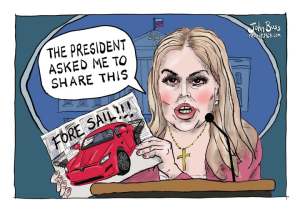
 I’m sitting here wondering if I should even start in on all the mainstream media articles and coverage about Musk and Trump. Way to feed two men with obvious narcissistic personality disorder and a side of antisocial personality disorder.
 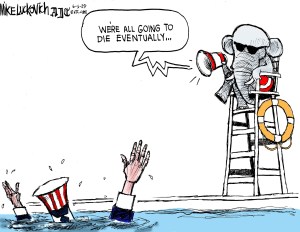 Further technical information can be found in this follow-up article at
 There appears to be a bit of a correction of the DOGE overreach in the Federal Government. This is reported in the
  Notice they just had to point out the Trump/Musk WWE event just to distract you for even a moment. It seems we no longer have caped crusaders but black-robed ones. This is from
  CBS
CBS 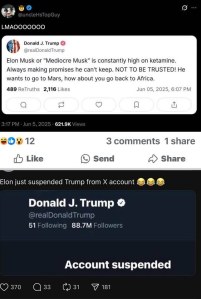
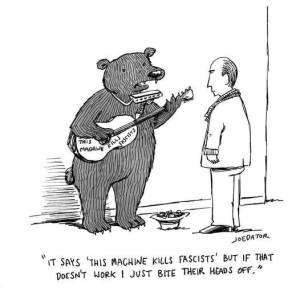






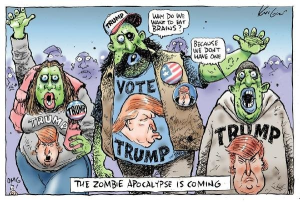 But how do we solve a problem like Greg Abbott, Marjorie Taylor Green, Ron DeSantis, Jeff Landry, Steve Scalise, Jim Jordan, and all the the other Trump Zombies?
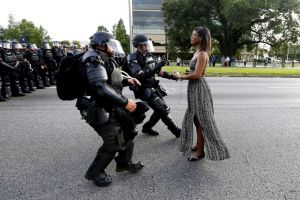 It’s Friday Sky Dancers! It’s the day of the week when the news cycle goes bonkers. But, of course, it’s only because what’s going on in our country makes it so. WTF is wrong with White People? Haven’t we learned anything? If any of our Sky Dancers of Color would like to start actively writing on the front page please let us know! I can write about all of this but only as some one who watches and learns. That’s not the vantage point that needs to be heard. We know of all the white supremacist activity that’s been happening around the country. So, why is the FBI focused on this?
 From Elle Magazine: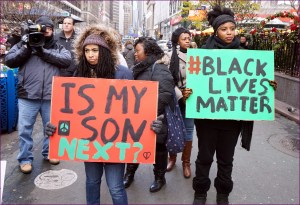
 So, this is part of a nationwide Trumpsterfire to dismantle anti-discrimination laws that aggrieve white men and their captive wives, it seems. The ACLU is
  Shall we head on up to the head of the beast?
  This was the movement that
  Good Afternoon!
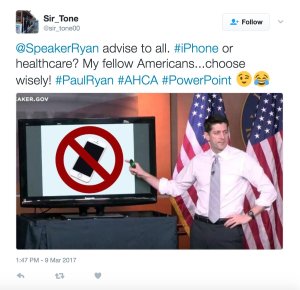 It appears that the Trump Syndicate may have been laundering money for Russian Oligarchs. Here are some links to get caught up on the Russia fiasco. Many of these are updates from stories that BB wrote about yesterday.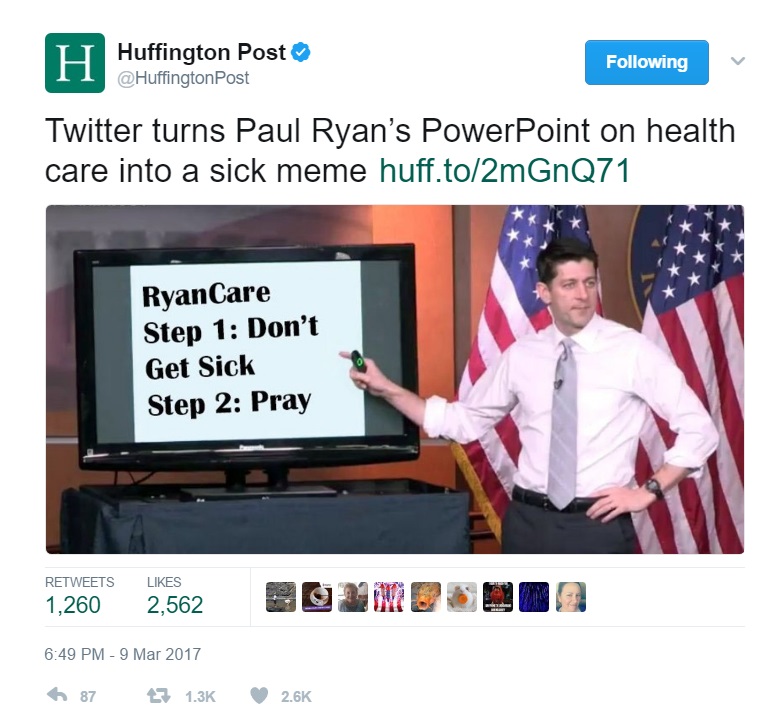
 They’re trying to dismantle everything from Medicare, Medicaid, the ACA, the EPA, Social Security, Dodd Frank, and just about anything used to protect citizens from the malfeasance of of short sighted, profit-oriented business practices which rule the US commerce landscape.
 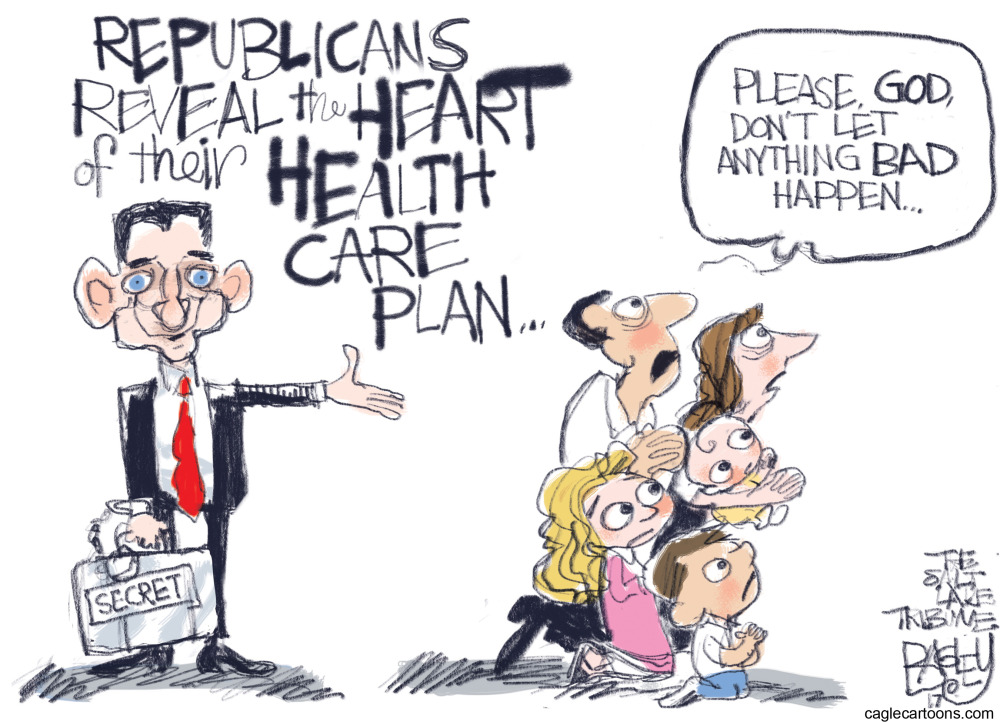 Paul Krugman has some great analysis.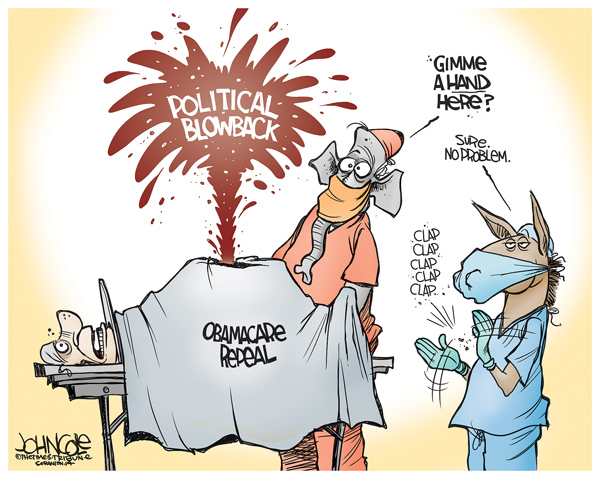
 Good Afternoon!
 Under Trumps Slash and Burn Budget, everything loses but the military.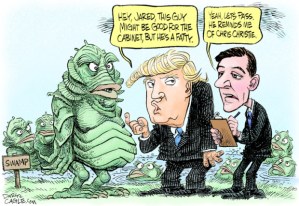
 It isn’t clear at all that the Pentagon needs that much money or wants it for that matter.
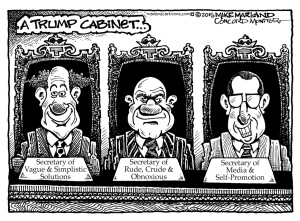 A number of agencies have already gone literally rogue on him with employees undermining him every chance they get. This is even true of some of the agencies that are to be used to purge the country of whatever it is Trump fears.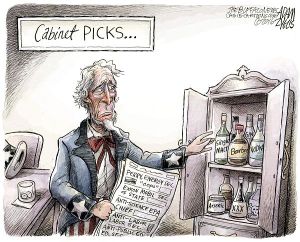

 peej
peej Carissa
 bostonboomer
 dakinikat
 ecocatwoman
 mablue2
 Mama Lopez
 peggysue22
 quixote
 skydancingguestblogger
 Mona (aka Wonk the Vote)



 Sky Dancing
Recent Comments