
Tuesday Reads: Cantor’s Conflict, Libertarian Cruelty, bin Laden’s DNA, and a Cold Case Solved
Posted: July 12, 2011 Filed under: Central Intelligence Agency, children, Corporate Crime, Crime, Economy, Federal Budget and Budget deficit, Foreign Affairs, income inequality, morning reads, Pakistan, Psychopaths in charge, Republican politics, U.S. Economy, U.S. Politics, voodoo economics | Tags: Banksters, Bill Clinton, CATO Institute, CIA, concflict of interest, Eric Cantor, Federal debt ceiling, Health care, IL, Jack Daniel McCullough, John Boehner, Joseph Cannon, Medicaid, Michael F. Cannon, Osama bin Laden, Pakistan, Seattle, Shakil Afridid, Sycamore 36 Comments
Good Morning!! I’ll take my coffee iced today, because it’s hotter than hell here in the Boston area. And about 110 percent humidity. OK, let’s get to the news.
The Washington Post has a laudatory profile of House Majority Leader Eric Cantor and his refusal to negotiate on raising the Federal debt ceiling–without ever mentioning that Cantor stands to make lots of money if the U.S. defaults on its debts.
Last month, Cantor walked out of talks led by Vice President Biden. Cantor said the reason was Democrats’ insistence on raising taxes as part of a deal to increase the national debt ceiling.
Then, last week, Cantor urged House Speaker John A. Boehner (R-Ohio) to reject a possible “grand bargain” with President Obama, which could have included tax increases. Boehner pulled Republicans out of those talks.
Now, as Cantor joins other leaders at the White House for near-daily summits in the third different grouping of negotiators, his moves have revealed him as a third major player in a legislative drama that had been dominated by Obama and Boehner. Where Boehner has sought to define what Republicans can do with their newfound power, Cantor, the House’s ambitious number-two, wants to underline what Republicans would never do.
So what is Cantor’s negotiating strategy?
On Monday, with a potential default less than a month away, Cantor was asked to identify compromises that Republicans had offered to help negotiations along.
He told reporters that the negotiation itself was a compromise.
“I don’t think the White House understands how difficult it is for fiscal conservatives to say they are going to vote for a debt-ceiling increase,” Cantor said.
Gee, it wasn’t all that hard to increase the debt ceiling again and again under Bush, now was it? But maybe in those days Cantor wasn’t betting against the U.S. in his financial investments. It’s very troubling that the Post didn’t mention Cantor’s humongous conflict of interest.
According to a new Washington Post-Pew poll, increasing numbers of Americans are “very concerned” about a U.S. default, but they are also “concerned” that raising the limit will lead to out-of-control spending.
The twin, divergent, concerns complicate the political calculus for the White House and congressional leaders as they attempt to strike an agreement. Nearly eight in 10 Americans are worried about raising the debt limit, and about three-quarters are concerned about not doing so.
Asked to choose, 42 percent see greater risk in a potential default stemming from not raising the debt limit, a seven-point increase from a Post-Pew poll six weeks ago. Slightly more, 47 percent, express deeper concern about lifting the limit, but the gap has narrowed.
Sixty-six percent of Republicans worry more about raising the debt limit than the U.S. defaulting on its debts. {sigh…}
Hipparchia has a wonderful post at Corrente that is an extended metaphor for libertarian attitudes about health care, specifically in reaction to the writings of a libertarian from the CATO Institute, Michael F. Cannon on the new Oregon health care plan. Here is the relevant quote from Cannon that set her off.
Michael F Cannon, of Cato@Liberty :
The OHIE establishes only that there are some (modest) benefits to expanding Medicaid (to poor people) (after one year). It tells us next to nothing about the costs of producing those benefits, which include not just the transfers from taxpayers but also any behavioral changes on the part of Medicaid enrollees, such as reductions in work effort or asset accumulation induced by this means-tested program. Nor does it tell us anything about the costs and benefits of alternative policies.
Reduction in work effort?? This would be really funny if Cannon weren’t so deadly serious. Providing health care to poor people means that more of them are just going to spend their days hanging out in parks, yakking on their cell phones , I guess. So, Libertarians are in favor of liberty for themselves and wage slavery for anybody else. Good to know.
Please go read the whole thing if you have time. It’s well worth the effort. We live in a world of selfish, greedy narcissistic fops. How can the country survive them?
Joseph Cannon has a short but pithy post on the media’s obsession with Casey Anthony being found not guilty. He then points out that the media has completely ignored the fact that
In 1995, when the Presidency was in the hands of the despised Bill Clinton, government regulators overseeing skullduggery on Wall Street referred 1,837 cases to the Justice Department for prosecution. That number has gone down. Between 2007 and 2010, the Justice Department has received just 72 referrals a year (on average).
Gosh. How can this be? I guess investment bankers are simply more honest than they used to be.
You won’t see this issue discussed on CNN. It’s not newsworthy.
I did not know that. Thank you Joseph Cannon. F&ck you CNN (and HLN and Nancy Grace).
Here’s an interesting story from The Guardian UK: CIA organised fake vaccination drive to get Osama bin Laden’s family DNA
As part of extensive preparations for the raid that killed Bin Laden in May, CIA agents recruited a senior Pakistani doctor to organise the vaccine drive in Abbottabad, even starting the “project” in a poorer part of town to make it look more authentic, according to Pakistani and US officials and local residents.
The doctor, Shakil Afridi, has since been arrested by the Inter-Services Intelligence agency (ISI) for co-operating with American intelligence agents.
Relations between Washington and Islamabad, already severely strained by the Bin Laden operation, have deteriorated considerably since then. The doctor’s arrest has exacerbated these tensions. The US is understood to be concerned for the doctor’s safety, and is thought to have intervened on his behalf.
The vaccination plan was conceived after American intelligence officers tracked an al-Qaida courier, known as Abu Ahmad al-Kuwaiti, to what turned out to be Bin Laden’s Abbottabad compound last summer. The agency monitored the compound by satellite and surveillance from a local CIA safe house in Abbottabad, but wanted confirmation that Bin Laden was there before mounting a risky operation inside another country.
DNA from any of the Bin Laden children in the compound could be compared with a sample from his sister, who died in Boston in 2010, to provide evidence that the family was present.
Jeralyn at Talk Left has finally decided that Obama deserves to get a pink slip. Yes, I know, she should have known better. But please go read anyway.
I’m going to end with a story about a long ago murdered child and how the case has been solved–54 years later. Maria Ridulph disappeared in 1957 when she was 7 years old. Maria and her best friend Kathy were playing on the street one day.
Kathy Chapman, who was 8 at the time, recalled that she and Maria were under a corner streetlight when a young man she knew as “Johnny” offered them a piggyback ride. Chapman, now 61 and living in St. Charles, Ill., told the AP she ran home to get mittens and that when she returned, Maria and the man were gone.
Maria’s disappearance and death had a powerful effect on her small community.
Charles “Chuck” Ridulph always assumed the person who stole his little sister from the neighborhood corner where she played and dumped her body in a wooded stretch some 100 miles away was a trucker or passing stranger — surely not anyone from the hometown he remembers as one big, friendly playground.
And, after more than a half century passed since her death, he assumed the culprit also had died or was in prison for some other crime.
On Saturday, he said he was stunned by the news that a one-time neighbor had been charged in the kidnapping and killing that captured national attention, including that of the president and FBI chief. Prosecutors in bucolic Sycamore, a city of 15,000 that’s home to a yearly pumpkin festival, charged a former police officer Friday in the 1957 abduction of 7-year-old Maria Ridulph after an ex-girlfriend’s discovery of an unused train ticket blew a hole in his alibi.
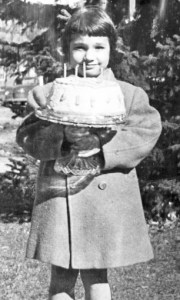
Maria Ridulph
A judge in Seattle set bail Monday at $3 million for Jack Daniel McCullough, of Seattle, a former police officer who denies he is the man Illinois police have been seeking in the 1957 slaying of a young girl….
McCullough, 71, a former police officer in Milton and Lacey, has been living in North Seattle and working as a night watchman in a senior-housing facility, Four Freedoms.
McCullough, 18 at the time of the girl’s death, had been a suspect early in the investigation. He lived about a block from where the girl disappeared and matched the description of a man seen at the site.
At the time, police did not show Maria’s best friend Kathy a picture of their suspect. But last year, they showed her a picture of the teenaged McCullough (then using the last name Tessier) and she recognized him.
That’s all I’ve got for today. What are you reading and blogging about?
Breaking… Verdict Reached in Casey Anthony Trial
Posted: July 5, 2011 Filed under: child sexual abuse, children, Crime, physical abuse | Tags: Casey Anthony, child abuse, crime, human decomposition, justice system, murder 152 Comments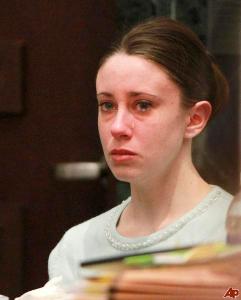
Casey Anthony
The jury informed the court a short time ago that a verdict had been agreed upon. The result will be announced at approximately 2:15.
ORLANDO, Fla. — The jury has reached a verdict in the murder trial of Casey Anthony, who is accused of killing her 2-year-old daughter Caylee. Judge Belvin Perry says he will read the verdict at 1:15 p.m. Chicago time Tuesday.
The Florida jury deliberated for more than 10 hours. If convicted of first-degree murder, the 25-year-old Anthony could get a death sentence.
She could also be acquitted or convicted of second-degree murder or manslaughter.
She is also charged with lying to sheriff’s detectives investigating her daughter’s 2008 disappearance.
The panel of seven women and five men appeared briefly in the courtroom Tuesday before Perry sent them to continue their work behind closed doors. The jurors had worked through much of the long weekend, hearing closing arguments Sunday and Monday morning and deliberating for six hours that afternoon.
Such a short deliberation time sounds bad for the defense, good for the prosecution. Of course the OJ jury only deliberated for four hours, but he had better attorney’s and a biased jury.
I’ll add more info as I get it. Let us know what you’re hearing.
Late Night: What is the “Legal Issue” that Shut Down Saturday Testimony in the Casey Anthony Trial?
Posted: June 26, 2011 Filed under: children, Crime, just because | Tags: Casey Anthony, Cheney Mason, death penalty, Geraldo Rivera, Jean Casarez, Jose Baez, Judge Belvin Perry, Lee Anthony, legal issue, mistrial, plea deal, Ray Kronk, The Hinky Meter, under seal, Valhall, Vinnie Politan 23 Comments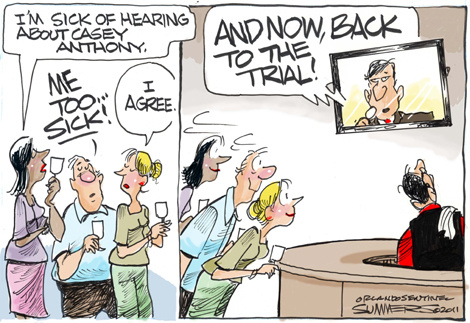
Chief Judge Belvin Perry and the attorneys met outside the courtroom and discussed matters that are “under seal” and not part of the public record, according to a court-system spokeswoman.
Perry emerged from the conference and announced aloud in court that a “legal matter” had come up, requiring court to be recessed.
His announcement came about 9:40 a.m. on a day he had expected to hear testimony until about 3:30 p.m. Instead, Perry announced that Anthony’s trial in the 2008 death of her daughter, Caylee, will resume Monday morning.
In the absence of an explanation, speculation soared that a plea deal might be in the making or that another call for mistrial had emerged or that there might be legal issues involving testimony by Lee and Cindy Anthony — the defendant’s brother and mother.
Those are the possibilities that first occurred to me too. But I really don’t think Casey would take a plea, and the prosecution has said they wouldn’t accept one after the trial began. Since it was Cheney Mason who asked to discuss something, I also wondered if the defense wanted to claim that Lee Anthony had perjured himself, but that would normally wait till the end of the trial wouldn’t it? If it were a mistrial, wouldn’t Jose Baez have just brought it up in open court?
Of course I have no idea what the “legal issue” is, but I thought I’d share some speculations I’ve seen from “experts” and court followers around the ‘net.
Vinnie Politan of True TV and HLN tweeted yesterday that he received confirmation from Cheney Mason that it definitely isn’t a plea deal.
@VinniePolitan
NO PLEA DEAL… My pal Jean Casarez spoke with Cheney Mason to confirm! RT to end the speculation!
Hal Boedeker, the TV Guy at the Orlando Sentinel has more detail from Jean Casarez:
Here’s what Casarez reported last night: “Cheney Mason, attorney for Casey Anthony, confirms with me that ALL of the media speculation surrounding Judge Belvin Perry’s dismissal of court this morning is false. This speculation would include plea deal, mistrial, Roy Kronk’s telephone records and issues with Dr. Bill Rodriguez testifying for the defense.
Boedeker also reported that Geraldo {gag} Rivera, who is friends with defense attorney Jose Baez,
…called the delay shocking. But he also cited ”an unimpeachable source” who said the legal issue “is expected to have no long-term impact on the trial, and further, it is still possible this contentious case could be wrapped up before July 4.” And Rivera added that the trial is “expected to resume Monday as if nothing happened, legally speaking. There is no harm, no foul.”
No foul except for Baez maybe leaking sealed info to his pal Geraldo….
The Christian Science Monitor brought up a possibility I hadn’t thought of. They cited an issue relating to testimony on Friday by lead detective Yuri Melich:
During testimony on Friday, Detective Melich revealed that investigators had obtained the cell phone records of Roy Kronk, the man who called police after discovering a small child’s skeletal remains in a wooded area not far from the Anthony’s home.
Melich said police obtained Mr. Kronk’s phone records from June to December 2008….That six-month date range is important for two reasons. It suggests that, at least initially, investigators suspected Kronk might be more than an innocent bystander who merely stumbled upon the gruesome scene.
Second, that date range suggested to Baez that state prosecutors had failed to turn those phone records over to him as court rules require.
Kronk is a big part of the defense case, and if the prosecution deliberately failed to turn the records over it would be a serious problem and could possibly lead to a mistrial. However, Baez has accused the prosecution of this kind of thing before and it has always turned out that he was mistaken. Still, it’s an interesting possibility.
The most intriguing speculation I found was at the blog The Hinky Meter in a comment by one of the bloggers, Valhall. He or she thinks that Cheney Mason wants out, because this trial is is “swan song,” and he’s embarrassed by all of Jose Baez’s grandstanding and underhanded tactics. Mason is the only attorney on the defense team with experience in death penalty cases. That would surely throw a wrench into the defense’s plans. Read the whole comment to get a sense of Valhall’s reasons for thinking this.
What do you other Trial followers think?
Family Dynamics and the Casey Anthony Trial
Posted: June 25, 2011 Filed under: child sexual abuse, children, Crime, physical abuse, psychology | Tags: aggravated child abuse, Casey Anthony, Caylee Anthony, child abuse, chloroform, Cindy Anthony, death penalty, family dynamics, first degree murder, George Anthony, high profile trials, ketamine, Keysey Soze syndrome, Lee Anthony, media circus, OJ Simpson, pathological lying, second degree murder, sociopaths 61 Comments
Cindy, Casey, and Lee Anthony
Since it’s Saturday night on a slow news day, I thought I’d share some of my impressions about Casey Anthony and her family. I’m by no means an expert on this case–I only began following it right after the trial began. I’ll try to briefly summarize the story behind the trial as I understand it, but I’m going to assume that readers have a basic knowledge of the Anthony case.
This case has been covered so extensively in the media for the past three years that it might even outdo the media circus around the O.J. Simpson trial. This is one reason I never read about the case until recently. I thought the public reaction was kind of repulsive and hysterical. But once I started reading about what happened, I was drawn in by the fascinating story and its psychological aspects.
Background:
Casey Anthony, 25, is on trial in Orlando, Florida, for first degree murder in the death of her daughter Caylee, who was nearly 3 years old. If convicted, Casey could be sentenced to life in prison or death. She is also charged with second degree murder and aggravated child abuse–both of which carry a life sentence.
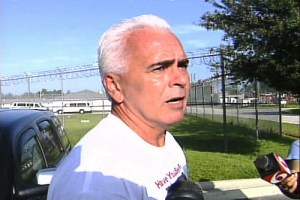
George Anthony
The story began when Casey became pregnant at age 19. Casey supposedly did not realize she was pregnant until she was 7 months along. Casey’s mother Cindy, a registered nurse, also claims she never realized her daughter was pregnant until then. Casey’s father George went along with the charade too. Once she faced the fact that she was going to have a baby, Casey told friends she wanted to give the child up for adoption; but Cindy pressured her to keep the child, and provide for both of them. The child, Caylee, was born on August 8, 2005 and the mother and child lived with George and Cindy.
Civil Trial in Orlando Has Important Implications for Athletes and Families
Posted: June 13, 2011 Filed under: children, education, sports, U.S. Politics | Tags: Bennie Abram, College athletes, Devard Darling, Devaughn Darling, Ereck Plancher, high school athletes, Kourtni Livingston, NCAA, sickle cell trait 7 CommentsAs everyone who hasn’t been living under a rock knows by now, there is a high profile trial going on in Orlando, Florida–complete with circus-like atmosphere and spectators fighting for tickets to see the trial live. I’m referring, of course, to the trial of Casey Anthony, accused of first degree murder in the death of her daughter Caylee.
The Anthony trial is getting wall-to-wall coverage on TV stations in Florida, as well as on a couple of cable outlets, but there is another case beginning jury selection today in the same Orange County Courthouse that may have wider implications for families around the country and for high school and college athletic programs.
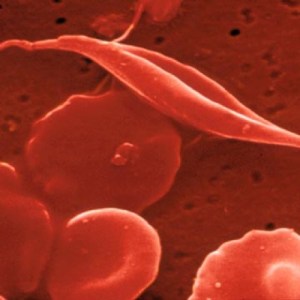
A sickle cell with normal blood cells
In March, 2008, Ereck Plancher, a 19-year-old freshman at the University of Central Florida (UCF), collapsed and died after a preseason football practice. An autopsy showed that Plancher died from complications associated with sickle cell trait.
In March 2009, Plancher’s parents filed suit for wrongful death against UCF’s board of trustees and Athletics Association claiming that their son’s coaches and trainers knew that Plancher had the sickle cell trait but didn’t inform him or his family. In addition, they charge that UCF athletic staff failed respond when Plancher began to exhibit symptoms during the his last practice and therefore they contributed to his death.
Basically, individuals with this trait are carriers of one sickle cell gene–they are heterozygous. In order for sickle cell disease to fully manifest, an individual must have two copies of the abnormal gene. However, it is possible for sickle cell symptoms to appear under highly stressful conditions such as high altitudes, extreme physical exertion, or dehydration. In such instances, there can be dangerous complications. The sickle cell gene is far more common in people with African heritage than people from other ethnic backgrounds. The NCAA and some colleges and universities have resisted testing players for the trait for fear of being accused of racial discrimination.
The most egregious allegation is that the coach and trainers withheld water from players during the workout, and this was backed up in pre-trial testimony by three former UCF players, Nate Tice, Cody Minnich, and Anthony Davis. Tice and Minnich testified in a hearing on Friday.
When Tice was asked during his deposition whether water was available during Plancher’s last workout, he responded, “No.”
Tice, a reserve quarterback who transferred to Wisconsin, said players asked for water from athletic trainers “at your own risk” because O’Leary would curse at athletes who interrupted workouts.
Tice was then asked whether there were athletic trainers present during Plancher’s last workout. Tice said, “They were in a corner. They were not, like, with us.”
Minnich, a reserve offensive lineman who was dismissed from the team after being arrested for driving under the influence in December 2008, said during his deposition there was no water available in the practice facility while the players were running through an obstacle course and sprints.
“They were ordered to take the water outside of the building, and they weren’t there during that portion of the workout,” Minnich said of the athletic trainers.
When he was asked who ordered the athletic trainers to leave, Minnich said O’Leary shouted the instructions.
The question of adequate hydration is central to the case. The judge decided on Friday that Plancher’s parents can sue for punitive damages, but they will only be awarded if the jury decides water was unavailable during the practice.
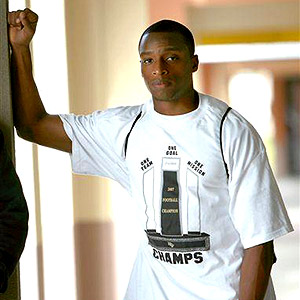
Ereck Plancher
Tice and Minnich bolstered the previous testimony of Anthony Davis.
UCF officials, including O’Leary and athletic director Keith Tribble, said in the immediate aftermath of Plancher’s death that the workout in which he collapsed was not a taxing one. However, former wide receiver Anthony Davis said in his sworn statement that trainers didn’t help Plancher as he struggled to finish an obstacle course. He also told attorneys that he witnessed O’Leary curse Plancher at times when he couldn’t keep up with other teammates.
Davis also told attorneys that he witnessed O’Leary curse Plancher at times when he couldn’t keep up with other teammates.
Ereck Plancher is not the first athlete to die from complications of sickle cell trait.
CNN reports that nine collegiate football players’ deaths have been related to sickle-cell trait since 2000, making exertional sickling the leading cause of death in NCAA football players this decade.” But “the medical field is divided over whether there is enough evidence to warrant the mass screenings,” because the way the trait is related to the deaths is “unclear,” CNN reports.
According to the Washington Post, there have been four such deaths in Florida alone.
Four in-state college football players have died in the past decade while participating in offseason workouts: Plancher; South Florida’s Keeley Dorsey; Florida’s Eraste Autin; and Florida State’s Devaughn Darling.
Devaughn Darling’s twin brother Devard, who went on to play in the NFL, spoke about his brother’s death and about having the sickle cell trait in this 2007 USA Today story.
“I believe it had some effect on him, definitely,” said Devard Darling. “My teammates, who were there at the time, said he was saying he couldn’t see, he was blacking out. … Clearly, there were signs for him to stop. There was definitely room for coaches and athletic trainers to step in and say that’s enough.”
Devard said he’s had no problems with the condition and has always done “all team activities.”
But, he added, “I know my body. It’s important for young athletes as they grow to know their limitations. The No. 1 thing is staying hydrated. … But there is a point at which you know something is not right. You need a little rest.”
He added, “I’m sure it’s not just me (participating in pro sports with sickle cell trait). They say one out of every 10-12 people of African descent carries the sickle cell trait. You know the high amount of African-Americans in pro sports.”
The Darling family received a $200,000 settlement from Florida State (the amount was $2 million, but Florida limits the amount that can be paid in a wrongful death suit!).
Devard has set up a foundation in his native Bahamas to support the brothers’ “dream of bringing football home to the Bahamas and creating opportunities for young kids.” The As One Foundation gets its name from the twins’ hearts beating “as one” in the womb.
A similar wrongful death lawsuit was recently filed in Mississippi.
The family of a deceased Ole Miss football player filed a wrongful death lawsuit Tuesday against the NCAA, the University of Mississippi, coach Houston Nutt as well as several staffers and medical personnel.
Bennie “Buster” Abram died in February 2010 following an early offseason workout due to complications from sickle cell trait. His parents alleged in a 32-page document filed in Mississippi circuit court that the defendants were so “reckless” that their actions rise to “the level of crimes such as” negligent criminal homicide and involuntary manslaughter.
[….]
Bennie Abram III, a walk-on, collapsed shortly after an early-morning workout on Feb. 19, 2010. Six hours later he was pronounced dead. Three months later, an autopsy determined sickle cell trait had contributed to his death. At the time, Abram was the 21st NCAA football player to die from a non-traumatic event since 2000. Eleven of those deaths had come in Division I-A. Sickle cell trait remains the leading killer of Division I football players since that year.
The NCAA did not mandate testing for the condition until last year. That move resulted from a legal settlement between the family of deceased Rice player Dale Lloyd II and the NCAA in 2009. Eugene Egdorf, the lead attorney in Abram’s lawsuit, represented the Lloyd family. Dale Lloyd died in 2006 as a result of sickle cell trait following a workout.
“[Bennie’s] death is a tragedy that should have been prevented,” Egdorf said in a release announcing Tuesday’s suit. “Every sickle cell expert in the world will tell you that the only way this trait can cause a student-athlete’s death is when they are put through overly strenuous workouts like the one Bennie went through before he died.”
Again, in this case, university officials knew the young man had the sickle cell trait and did not inform him or his family or take special precautions.
The NCAA now mandates testing for sickle cell trait for all Division I athletes, but there is an opt-out for students who sign a waiver.

Kourtni Livingston
In my opinion, screening for the trait should be instituted at every level of student athletics. Certainly there should also be protections to keep people who test positive from being discriminated against. High school athletes can also be stressed enough for the symptoms to manifest, as demonstrated in the case of 14-year-old Lubbock, Texas basketball player Kourtni Livingston, who died while running laps.
As one of the attorneys in the Ereck Plancher case emphasized:
“This is not a case about punitive damages or about insurance, it’s about saving lives,” Plancher attorney Steven Yerrid said recently. “It’s not about compensating the Plancher family. It’s about stopping football programs from disregarding safety of student athletes that participate in them. And that’s important and that’s the message. Punitive damages are not designed to compensate plaintiffs. … They’re designed to punish wrongdoers and to send a message that type of conduct won’t be tolerated.

 peej
peej Carissa
 bostonboomer
 dakinikat
 ecocatwoman
 jjlo
jjlo mablue2
 Mama Lopez
 peggysue22
 quixote
 skydancingguestblogger
 Mona (aka Wonk the Vote)



 Sky Dancing
Recent Comments