
Huckabee Needs a New Day Job
Posted: May 14, 2011 Filed under: 2012 presidential campaign, Anti-War, religious extremists, Republican politics, The Media SUCKS, U.S. Politics | Tags: Mike Huckabee, Mike Huckabee historical propaganda, Ted Nugent 5 Comments So, we all know that Former Governor Mike Huckabee is part of Fox’s Newsertainment Industry. Tonight, he announced that his heart wasn’t into running for president. It’s more likely he’s been enjoying the money in his pocket. Let’s just remind ourselves that Mike Huckabee is a complete kook.
First, he made his announcement sitting next to Ted Nugent just one week after Fox News spent the week tut-tutting the Obamas for inviting Poet and Rapper Common to the White House. I’ll just let you see one of Ted Nugent’s finer moments. Remember he not only is the one hit wonder dude of “Cat Scratch Fever”. He’s a gun fanatic and right-to-lifer only in this concert moment, he seems to be more gun crazed than pro-life. Yes, he’s telling then Senator Obama to suck on a machine gun and then Senator Clinton to ride it into the sunset and he calls her a worthless “bitch” and “whore”. I guess suggesting suicide for Senators is a Republican Family Value. And this language and gun worship would be different from gangsta rap lyric hows?
Yup, he’s certainly an uplifting addition to a show hosted by a baptist preacher! Which gun would Jayzuz choose?
Then there’s this enterprise via Political Animal.
This week, Huckabee launched a new educational company called Learn Our History. As the Fox News personality sees it, mean liberals have destroyed history lessons, and he intends to put things right. “America’s youth aren’t excited about our past because they’re being taught history in a way that minimizes what has made America a beacon of hope around the world for over 200 years,” Huckabee said in a press release.
As part of the Learn Our History approach, kids will follow the wacky adventures of the Time Travel Academy, an animated group of kids who offer lessons by riding their bikes to the past. Those who buy Learn Our History’s shameless, nationalistic propaganda lessons will finally get “historically accurate and unbiased education.”
You may either want to drink something or sit down before you watch this. Steve Benen rightly called it Beyond Parody. I don’t remember any black disco dancers going on shooting sprees back in the late 70s. Do you? Was that some problem I missed because I lived in Nebraska? Oh, and is there some reason why the know it all girl looks like Eva Braun?
I’d say we dodged a bullet here but I don’t want to incite Ted Nugent any more. However, if any of your schools consider Huckabee’s version of American History, I think I’d pull your kids out pronto!
Which brings me to another question. If they’ve decided the rapture is later this month, why do any of them even bother?
Just Who are they Protecting?
Posted: May 14, 2011 Filed under: New Orleans, U.S. Economy | Tags: flooding Cajun country, Louisiana 1927, Louisiana 2011, Louisiana Bobby Jindal, Mississippi River Flooding, Morganza Spillway, protecting business interests from precautionary shutdowns 35 Comments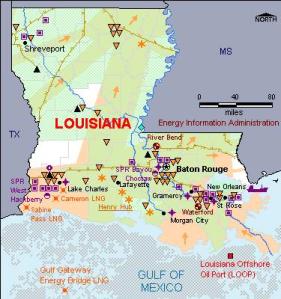 I’ve been watching a lot of Weather Channel and local news trying to get more information on the local flooding and the decision to open up the Morganza Spillway. I live within blocks of the Mississippi River and lived through Katrina so it’s a natural response for me. If you watch the major national news outlets, you’re under the impression that the Morganza Spillway opening will protect Baton Rouge and New Orleans from eminent flooding. The implication is that the Mississippi will top the levees and fill up the cities. Every one then envisions another après Katrina situation. That’s what they want you to believe, but that doesn’t appear to be the case as I’ve learned the last few days.
The local TV has had the city council and mayor of New Orleans and of Baton Rouge talking about the situation to the press on air on Thursday. Their main worry is that the speed and level of the river will cause barge traffic navigation and berth problems. If a rogue barge or boat hits a levee that could compromise the levee. City officials would shut down the river traffic before they would let that happen.
New Orleans city officials, with Katrina still fresh in their minds, has a plan for barges that may threaten the city’s river levees: “We can’t afford to have barges running loose, breaking levees,” said New Orleans City Council President Jackie Clarkson. “That’s unacceptable now … We’re going to sink them.”
Right now, the levees are expected to be able to handle the river even if the Morganza Spillway isn’t open. So, what will happen if the Morganaza Spillway wasn’t opened? Why are they really flooding Cajun Country?
The bottom line is that 10 oil refineries in the Baton Rouge/New Orleans area probably go off line for about 10 days and the river will be closed to traffic or traffic will be severely limited because the levels that trigger precautionary shut downs would be reached. Plus, the City Council President has threatened to sink any barges going rogue which can’t be making shipping interests very happy in general. When “they” speak about ‘saving’ New Orleans and Baton Rouge, what they’re really discussing is saving the commercial interests and the tax revenues. It would impact both the dollar and the price of oil as well as the price of soybeans, wheat, and other grains. Here’s just a taste of that.
Oil fell on Friday as the dollar rose and concerns eased that refinery operations could be disrupted by Mississippi River flooding.
However, what every one in the press and speaking to the press infers is the prevention of some kind of post-Katrina repeat. Few come out and say it, however. According to my Mayor and City Council, that’s not in the cards period and since they all lived through Katrina, I actually believe them. So, it’s just like in 1927 when a bunch of New Orleans businessmen convinced the government to blow levees unnecessarily displacing a lot of poor folk and flooding their homes. I’m thinking this is all about the lost $2 million dollars a day tax revenues each to both the State of Louisiana and the City of New Orleans plus, the costs to impacted businesses of a likely 10 day shut down.
So, first, let me take you through how I figured this out. I suppose it started with the Mayor’s presser on Thursday that basically was headlined “The City is Safe”. I also saw how anxious our Governor was to get the Corps of Engineers to just make the decision to open the spillway. Now, my governor is not the most people-centric man. Governor Bobby Jindal is only concerned about himself and industry interests who fund his campaigns. Jindal’s been been running around the state telling people to flee and emphasizing that the area around the Atchfayala Basin will flood with or without the Morganza Spillway opening as if that alone is justification for flooding people out of their homes. He just seemed over anxious to get it opened. He’s made the Corps look like it’s dragging its feet on this when it basically announced the height and river speed that would be required to open that spillway and they’ve done so consistently.
But again, the big news lead has been protecting the city of New Orleans. We’re now the poster child of flooding because of the post-Katrina levee failure. Again, our Mayor says we’re safe.
The mayor says officials do not expect flooding in New Orleans because of the strength and size of the river levees.
At the news conference, the Corps of Engineers reiterated that they do not yet have the green light to open the Morganza Spillway to relieve pressure off the city’s levees.
“We have not gotten approval to open and operate the Morganza Floodway yet,” said Lt. Col. Mark Jernigan. “We expect, based upon the National Weather Service Forecast, to reach the optimal trigger this weekend.”
Corps officials have maintained that they expect to open the Morganza structure some time between Saturday and Tuesday.
Mayor Landrieu stressed that authorities are inspecting the levees around the clock. He asked people to resist the urge to go on the levees to see the river for themselves, warning that they could get in the way of levee inspection work, or even be hurt by debris that’s bobbing along the surface of the surging river.
So, the levees will protect the city. The levees along the Mississippi River are 25 feet tall and are as wide as a football field. The river–without the Morganza opening–was forecast to crest well below that. The floodwalls mentioned below are the concrete ones along the canals that have been redone since their failure during the storm surge of Hurricane Katrina. They’re not really threatened either with or without the Morganza Spillway Opening.
The river is predicted to crest on May 23 at 19.5 feet—2.5 feet above the official flood level, but six inches shy of the city’s 20-foot floodwalls.
That was the information prior to any decision made on the Morganza spillway that opened today. Here’s an example of the spin again with the “avert a a potentially bigger disaster in Baton Rouge and New Orleans”. Notice the ‘bigger disaster’ is what you infer from the Katrina Experience. This is from The Weather Channel.
In an agonizing trade-off, Army engineers said they will open a key spillway along the bulging Mississippi River on Saturday and inundate thousands of homes and farms in Louisiana’s Cajun country to avert a potentially bigger disaster in Baton Rouge and New Orleans.
Shortly after Governor Bobby Jindal announced that the Morganza Spillway would be opened “within 24 hours,” a Friday afternoon press release from the Army Corps of Engineers cemented it: “The President of the Mississippi River Commission Major General Michael J. Walsh has directed the New Orleans District Commander Colonel Ed Fleming to be prepared to operate the Morganza Floodway within 24 hours. The operation will include the deliberate and slow opening of the structure.”
About 25,000 people and 11,000 structures could be in harm’s way when the gates on the Morganza spillway are unlocked for the first time in 38 years.
Earlier this week, the Corps did three scenarios including two without opening the Morganza Spillway. The worst case scenarios have both water speed and height that aren’t actually forecast to happen. What is supposed to happen is the the bare minimum level that justifies opening the Morganza Spillway. The absolute worst scenario would be levee failure which isn’t considered the least bit likely which is why the mayor and city council of New Orleans aren’t the least bit concerned.
So, let me give you some information on what is threatened by a ten day shut down if the Morganza Spillway remains closed. This first business interest is the sacred oil industry: Mississippi flooding threatens nearby oil refineries. At specific heights and river speeds, the 10 oil refinaries along the river must be shut down as a precaution even though the facilities are protected by levees. This industry and its interests fear the repeat of what happened when they shut down during Hurricanes Katrina and Rita.
A lesser known fact is that about 14%of the national refining capacity is potentially at risk from a worse-case scenario of the Mississippi River flooding and inundating the low-lying facilities. Ten refineries (nine in Louisiana and one in Tennessee) are in the immediate floodplain of the Mississippi, protected only by levees.
To date (as the Mississippi gets set to crest in Memphis tonight) Valero Energy reportsthat its 180,000-barrels-per-day Memphis plant is secure, as is its 185,000-barrel-per-day St Charles refinery in Norco, Louisiana. Norco is also where Motiva Enterprises has a refinery. Motiva’s joint venture partner Royal Dutch Shell has a facility further west along the Mississippi at Convent, Louisiana.
To relieve pressure from the swollen river in this area the US Army Corps of Engineers opened the Bonnet Carre Spillway today, sending excess water into Lake Pontchartrain.
The Gulf Coast and Louisiana are essential to the US oil industry and any one that relies on the gas and oil. (See the Map at the top of this post.)
- Louisiana ranks fourth among the States in crude oil production, behind Texas, Alaska, and California (excluding Federal offshore areas, which produce more than any single State).
- The Louisiana Offshore Oil Port (LOOP) is the only port in the United States capable of accommodating deepdraft tankers.
- Two of the U.S. Strategic Petroleum Reserve’s four storage facilities are located in Louisiana.
- The Henry Hub is the largest centralized point for natural gas spot and futures trading in the United States, providing access to major markets throughout the country.
- The liquefied natural gas (LNG) import terminal at Sabine is the largest of nine existing LNG import sites in the United States.
But there’s another industry that’s equally reliant on the Mississippi River and barge traffic. That would be US agribusiness. About 62% of US soybean and grain exports move through New Orleans on barges. Oh, and coal moves that way too, just so you know. The wheat industry was hard hit by the shutdown of the Port of New Orleans during the Hurricane Katrina period. You can read more about that by following that link.
Here’s some analysis from the Weather Channel on what’s at stake in terms of nonbusiness interests. The first set of points deals with not opening the Morganza Spillway.
This is clearly one of the toughest decisions made by the U.S. Army Corps of Engineers. If you don’t open the spillway…
- You will still have river flooding along the Atchafalaya River, just not nearly as expansive.
- You risk putting undue pressure on the Old River Control Structure, which may get overwhelmed.
- This would cause the catastrophic “jumping” of the Mississippi River to the Atchafalaya River Basin, as described earlier.
- Pressure on levees in Baton Rouge and New Orleans would remain high, if the Old River Control Structure does not fail.
However, if you do open the spillway…
- There will be widespread inundation of the Atchafalaya Basin.
- Areas outside of levee protection would be under at least 5 feet of water.
- Pressure on levees in Baton Rouge and New Orleans would be lower.
The reason this is a tough call is that it’s obvious that relieving “pressure” on the levees under the assumed “risk” to overwhelming the system is based on their worst case scenarios which aren’t in the forecast. They are justifying opening the spillway on the worst case scenarios which appear low probability. While the river levels and speed will be historically high, it’s been obvious that the opening of the Bonnet Carre Spillway has significantly reduced any danger of that to New Orleans also. Any one doing some river watching can see that the levels have fallen although it’s also being reported by feet and inches by local weather news. There’s a lot more room for the coming higher waters now that the BC spillway opened.
However, the levels and river speed that are forecast are basically right at the marginal levels that would justify the Morganza Spillway opening even though they are unlikely to cause those worst case scenarios which is why Mayor Landrieu and the City Council are dismissing flooding possibilities and obsessing on rogue barges. The measurements are, however, high and quick enough for a likely shut the river down of river traffic (19 feet) and precautionary shutdowns of the refineries and chemical plants along the river for a period of about 10 days. Unless, that is, Cajun Country is flooded to bring the numbers back to the everything is okey dokey, business-as-usual measurements.
Here’s some more analysis today from The Weather Channel. Again, from what I can tell down here from public hearings, the most likely source levee failure in New Orleans would be from the barge traffic and not the river itself. However, always present in the analysis is the industry that lines the river between Baton Rouge and New Orleans. All of which have to shut down for precautionary purposes for about 10 days if the Morganza Spillway were to remain closed because most of them deal in hazardous materials so the EPA makes them shut down when they are marginally threatened.
Opening the spillway will release a torrent that could submerge about 3,000 square miles under as much as 25 feet of water in some areas but take the pressure off the downstream levees protecting New Orleans, Baton Rouge and the numerous oil refineries and chemical plants along the lower reaches of the Mississippi.
“Protecting lives is the No. 1 priority,” Army Corps of Engineers Maj. Gen. Michael Walsh said at a news conference aboard a vessel on the river at Vicksburg. A few hours later, the corps made the decision to open the key spillway and inundate thousands of homes and farms in Louisiana’s Cajun country to avert a potentially bigger disaster in Baton Rouge and New Orleans.
Engineers feared that weeks of pressure on the levees could cause them to fail, swamping New Orleans under as much as 20 feet of water in a disaster that would have been much worse than Hurricane Katrina in 2005.
Again, the argument for levee failure seems quite weak at the moment. This is especially true since the Corps been working the last five years to expand and strengthen that very same levee system to withstand the storm surge that came with Hurricane Katrina. They’ve been bragging about that new protection for years now, so it seems odd that they’d feel threatened by it under the most marginally ‘risky’ situation. It is worth noting that the official ‘flooding stage’ of the Mississippi River in New Orleans is stage about 10 feet below the River levees and the only thing it really does is trigger cautions for navigation on the river. It doesn’t threaten over-topping of levees or flooding.
It is likely that the real threat of the high river right now is the loss of 10 days of business to the oil industry, the state and local government coffers and to the agribusiness and chemical industry plus the associated losses to the Insurance and Banking industries that ensure against these types of loss-of-business scenarios. The Governor and other interests are less worried about the post Katrina situation impacting the population as they are the post Katrina situation impacting the oil industry and the port. I am not sure what the Federal government’s role would be in this decision, but if you remember what gas prices were during the post-Katrina period, I’m sure they wouldn’t want a repeat of those price spikes. Here’s a bit more of the economic impact of a prolonged river shut down via HuffPo.
The river’s rise may also force the closing of the river to shipping, from Baton Rouge to the mouth of the Mississippi, as early as next week. That would cause grain barges from the heartland to stack up along with other commodities.
If the portion is closed, the U.S. economy could lose hundreds of millions of dollars a day. In 2008, a 100-mile stretch of the river was closed for six days after a tugboat collided with a tanker, spilling about 500,000 gallons of fuel. The Port of New Orleans estimated the shutdown cost the economy up to $275 million a day.
The decision to open the Morganza spillway is made by the Mississippi River Commission by suggestion of the US Corps of Engineers. This commission is made up of a number of civilian and corps engineers and a representative from NOAA. You remember, NOAA, those are the folks that appear to be protecting BP from the spill at nearly every turn. Also, NOAA has a close relationships with the Weather Channel and other providers of weather-related information. One of the commissioners is a businessman with interests in land and cotton. The other one has interests in cotton and grain which, of course, move by barges down the Mississippi. Those would be the same barges that my City Council President threatened to blow up if they go rogue on the river.
So, I actually think we’re seeing a closer repeat of Louisiana, 1927 than most folks realize.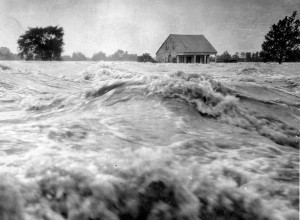 You can see many historical photos from the flooding of Plaquemines and St. Bernard Parishes in 1927 caused by blowing up levees to protect New Orleans Business interests. You’ll be seeing similar photos shortly from the Atchafalaya Basin parishes shortly.
Enjoy your fill up at the pump and your morning wheat toast folks! Believe me, this isn’t to keep my city from another post-Katrina apocalypse even though that’s what they’re implying.
Whither our Middle Class?
Posted: May 13, 2011 Filed under: jobs | Tags: economics, middle class American, the disappearing middle class 3 CommentsOr, should I have titled this Wither our Middle Class because that’s exactly what the policies of the last ten years have been doing. This is a report from Russia’s 24/7 English broadcast station. Isn’t it ironic?
Friday Reads
Posted: May 13, 2011 Filed under: Economy, Foreign Affairs, Iran, Libya, morning reads, Syria | Tags: Bashar al-Assad, Donald Trump, Dorothy Parvaz, homophobia, jobs, Navy Seal operation on Bin Laden, President Obama, Uganda 32 Comments Good Morning!
President Obama was on the road yesterday as well as making TV appearances. Suppose that means the campaign days are here again. CBS news reported an exchange between a laid off government worker and the President.
In one of the more personal exchanges from CBS News’ town hall with President Obama, one audience member, a pregnant woman who recently found out she was being laid off from her government job, asked the president for some earnest advice: “What would you do, if you were me?”
Karin Gallo, who jokingly described her job at the National Zoo as “non-essential employee number seven,” said she had taken a job in government “thinking it was a secure job” – but that now, she feared for her family’s future.
“I am seven months pregnant in a high-risk pregnancy, my first pregnancy,” Gallo told Mr. Obama. “My husband and I are in the middle of building a house. We’re not sure if we’re gonna be completely approved. I’m not exactly in a position to waltz right in and do great on interviews, based on my timing with the birth.”
“And so, I’m stressed, I’m worried,” she continued. “I’m scared about what my future holds. I definitely need a job. And, I just wonder what would you do, if you were me?”
More information is coming out on the Republican contenders for President. This shows yet another Republican that has thrived taking funds and hand-outs from the government. Who is it? It’s our reality star, self-promoting, egoist Donald Trump as reported by the LA Times.
From his first high-profile project in New York City in the 1970s to his recent campaigns to reduce taxes on property he owns around the country, Trump has displayed a consistent pattern. He courted public officials, sought their backing for government tax breaks under extraordinarily beneficial terms and fought any resistance to deals he negotiated.
He has boasted of manipulating government agencies, misleading officials in one case into believing he had an exclusive agreement to develop a property and then retroactively changing the development’s accounting practices to shrink his tax bill. In New York, Trump was the first developer to receive a public subsidy for commercial projects under programs initially reserved for improving slum neighborhoods. Such incentives have now become the norm in the powerful New York real estate community.
Karen Burstein, a former auditor general of New York City, reviewed a major Trump project in the 1980s and concluded he had “cheated” the city out of nearly $2.9 million. Decades later, Burstein said she was still appalled at the way Trump operated.
“It’s extraordinary to me that we elevated someone to this position of public importance who has openly admitted that he has used government’s incompetence as a wedge to increase his private fortune,” she said in a recent interview.
It seems that al-Jazeera’s Dorothy Parvaz was deportated from Syria to Iran this week after being missing last week. Her father is reported to be quite worried about her.
Her father, Fred Parvaz, who lives in Vancouver, told the Guardian: “I haven’t heard anything of late. We are in the dark. Syrian officials have made a statement that Dorothy was sent to Tehran on 1 May. But I have yet to receive confirmation from any authority in Iran that this is the case.”
“I am gravely concerned. I have not heard from her for two weeks. No word, no contact, nothing. We are a very close family so this really breaks my heart,” he said.
Parvaz, a 68-year-old physics and computer studies teacher, said al-Jazeera was trying to approach Iranian officials to get confirmation that she was in the country and was also attempting to create a line of communication with her.
Parvaz, who migrated from Tabriz in north-west Iran and has lived in Canada for 26 years, also said that the Canadian foreign ministry was making interventions on his daughter’s behalf. “But all these efforts so far have been fruitless,” he said.
The Guardian also reports that the EU is expected to sanction Syrian president Bashar al-Assad.
The EU is expected to agree on personal sanctions against the Syrian president Bashar al-Assad and other members of the regime over the continuing killing of protesters, sources said.
The US Senate has also called for the president to be directly targeted but few observers believe the measures will be enough to change the government’s “security first” strategy, which involves suppressing protests and only then opening a “dialogue” with opposition figures.
The regime was on Thursday preparing to quash any upsurge in demonstrations following Friday prayers tomorrow. Tanks have been deployed across the south, particularly in towns around Deraa, the epicentre of the pro-democracy demonstrations.
The US State Department condemned the Ugandan anti-gay bill as “odious”.
The State Department Thursday condemned a proposed bill in the Ugandan parliament that could make engaging in homosexual acts a capital offense punishable by death. The bill may be debated Friday by the Ugandan parliament.
“No amendments, no changes, would justify the passage of this odious bill,” State Department spokesman Mark Toner told reporters. “Both (President Barack Obama) and (Secretary of State Hillary Clinton) publicly said it is inconsistent with universal human rights standards and obligations.”
The State Department, he said, is joining Uganda’s own human rights commissions in calling for the bill’s rejection.
Surprise! Surprise! Surprise! CBS reports that ‘SEAL helmet cams recorded entire bin Laden raid’. It really looked like they were watching TV in that sit room pic didn’t it?
A new picture emerged Thursday of what really happened the night the Navy SEALs swooped in on Osama bin Laden’s compound in Pakistan.
CBS News national security correspondent David Martin reports the 40 minutes it took to kill bin Laden and scoop his archives into garbage bags were all recorded by tiny helmet cameras worn by each of the 25 SEALs.
Officials reviewing those videos are still reconstructing a more accurate version of what happened. We now know that the only firefight took place in the guest house, where one of bin Laden’s couriers opened fire and was quickly gunned down. No one in the main building got off a shot or was even armed, although there were weapons nearby.
Kadafi appeared on TV and was swiftly attacked by NATO jets shortly thereafter.
News services reported that NATO warplanes struck Kadafi’s fortified complex and several other sites in the capital, the second aerial bombardment of Tripoli in a 48-hour period. Reports from the scene indicated that the target could have been an underground bunker.
A North Atlantic Treaty Organization official said the site was a “disguised” command center for the Libyan military, one of a number of such facilities that Kadafi has tried to conceal amid a punishing aerial assault.
“He’s forced to hide whatever remains of his severely damaged command-and-control network,” said the NATO official, who could not be named under alliance guidelines.
The strikes in Tripoli came after Kadafi appeared on state television for the first time in almost two weeks.
Most of the fighting in the country is centered around Misurata which is now thought to be under rebel control. There’s some speculation that Kadafi’s days in office may be numbered
Rebel advances in Misurata have opened up the port for renewed deliveries of humanitarian aid and other supplies, officials said, bringing some relief to a city that has come to epitomize resistance to Kadafi’s rule. Rebels seized control of Misurata’s airport this week in a step hailed as a major opposition triumph after weeks of street fighting in Libya’s third-most-populous city.
But it was unclear how much further the opposition could push out from the enclave of Misurata against Kadafi’s superior forces on the city’s eastern and western edges. Experts have also not ruled out the possibility of a government counterattack on Misurata, the only western coastal city that remains in rebel hands.
Nonetheless, the rebel advances in Misurata, combined with the aerial strikes in the capital, have been seized on by the opposition as a sign that Kadafi’s regime is tottering under mounting pressure.
There have also been widely reported accounts of unrest in Tripoli, where the embargo against Kadafi’s regime has led to fuel and food shortages. The opposition has also alleged escalating defections and desertions from Kadafi’s ranks, though the reports remain unconfirmed.
Well, that’s some of the news that’s fit to print. There’s probably lots more out there! What’s on your reading and blogging list today?
Snake Oil Hearings
Posted: May 12, 2011 Filed under: Economy | Tags: big oil hearings, oil industry tax breaks 14 Comments Does an industry that keeps achieving record profits deserve extraordinary tax breaks? That’s the question that is supposed to be at the heart of hearings on the Hill today. Senate Majority Leader Harry Reid hopes to remove tax breaks from the five companies that basically form the de facto cartel known as the oil refining and distribution business. However, in a political environment, theatrics, pandering, and grandstanding are expected and delivered. It’s turned into either a farm or zoo environment, or perhaps a fantasy menagerie with folks mentioning dogs, horses, unicorns, and rhinos. Good thing they’re not in Florida or there might be charges of bestiality.
At its core, the hearing is pure political theater, a fact acknowledged by Republican Sen. Orrin Hatch, who called it a dog and pony show during his opening remarks.
“This hearing should not be used to score cheap political points, but I am afraid … that’s what we are going to see here today,” Hatch said.
Others disagreed, and also invoked wildlife — this time of the mythical variety.
“One of my colleagues suggested that this hearing is nothing more than a dog and pony show,” Schumer said. “Well you would have an easier time convincing the American people that a unicorn just flew into this hearing room than that these big oil companies need taxpayer subsidies. That’s the real fairy tale.”
My Senator Mary Landrieu–who is a fully owned subsidiary of oil interests–thinks her colleagues are singling out one industry because current oil prices have made the electorate cranky. Yes, yes, the poor oil industry is the victim of discrimination, my friends.
While Democrats can score political points by grilling corporate executives, actually holding a vote on a bill could expose rifts within their caucus and undermine the message that Obama and Senate Majority Leader Harry Reid, D-Nev., are hoping to send to the public: that it is the Democrats who are serious about rolling back costly benefits for flush oil and gas companies.
Regardless of what a final tax bill includes, Reid can count on at least a few defections from conservative Democrats and those representing oil-rich states. Alaska Democrat Mark Begich is almost a certain “no” vote, as are Ben Nelson of Nebraska and Mary L. Landrieu of Louisiana.
“I don’t think targeting the oil and gas industry and holding them up like the villains, even if it’s just Big Oil, is the right approach,” Landrieu said last week, expressing a long-held view.
Given the position of Landrieu and others, Reid faces the difficult task of converting more than a handful of Republicans to his cause if he has any hopes of reaching a filibuster-proof 60-vote majority.
Politico had a primer up on what to consider during the Big Oil exec testimony. One of the things to remember is that what we have now is an industry with fixed refining capacities and a growing world demand.
Oil prices have jumped this year primarily because of Middle East unrest and market speculation.
“Gasoline prices are primarily a function of crude oil prices, which are set in the marketplace by global supply and demand — not by companies such as ours,” ExxonMobil’s Tillerson is expected to tell the panel.
Meanwhile, the world’s top 10 oil companies are state-owned by countries like Saudi Arabia, Iran, Iraq and Venezuela. They aren’t targets of the hearing or the bill, and Senate Democrats admit that going after the Big Oil profits won’t do anything in the short term or long term to lower gasoline prices or increase U.S. supplies.
The oil companies and the GOP say the incentives repeal is nothing but a tax increase to be passed on to consumers.
The ability to pass tax increases or cost increases to consumer has to do with the price elasticity or sensitivity of buyers to prices of gas at the pumps. In the short run, gas consumption is fairly insensitive. There is only so much people can scale back either driving habits or replace gas guzzlers with more fuel efficient vehicles. (Frankly, I always enjoy watching truck and SUV owners deal with higher prices. I find it an entertaining form of instant karma for their wanting to be seen driving upscale, short buses.) The industry’s argument is that much of the higher gas prices will be temporary and that within six months, the market will go the other direction. Then they will have to eat through retained earnings to live. We’ve heard that line in testimony today. Here’s what CEO John Watson of Chevron/Exxon said earlier.
Gasoline prices are driven by forces beyond their control, heads of major oil companies tell lawmakers in arguing against repeal of tax breaks for their firms. ‘Don’t punish our industry for doing its job well,’ one CEO says.
Here’s a similar explanation of market conditions by Shell CEO Marvin Odum.
The national average for a gallon of regular unleaded is close to $4, and at least 17 states have prices well above that benchmark, according to recent surveys. The oil executives argued that scaling back their tax breaks would unfairly single out their industry and hamper their ability to pursue new energy exploration, jeopardizing jobs and perhaps leading to even higher prices. They also contended their companies weren’t to blame for high gas prices.
“Stated simply, oil is a global commodity,” Shell Oil Co. President Marvin E. Odum said. “With worldwide economic recovery underway, demand is on the rise, sending prices upward.
“No one person, organization or industry can set the price for crude oil,” he said.
Conoco Phillips CEO James Mulva took Landrieu’s line which was basically that other industries get so many tax breaks, why shouldn’t they? (But MOM, Wall Street’s daddy gives him a much bigger allowance than we get!)
ConocoPhillips CEO James Mulva said that companies should receive tax breaks available to other industries.
While Wyden brought his own video, Sen. Pat Roberts (R-Kan.) played a clip of President Obama, in a trip to Brazil earlier this year, cheering the discovery of oil off that country’s shores, something that Republicans have sought to use to criticize the administration for not doing more to promote domestic energy production.
Other Democrats questioned a recent press release from ConocoPhillips that assailed the tax repeals as “un-American.”
“Did you really mean to question my patriotism?” Sen. Robert Menendez (D-N.J.) asked Mulva. “Do you believe that President Obama is un-American because he has proposed cutting oil subsidies?”
Mulva replied that “nothing was intended to be personally directed to you.”
The real question is why are we giving special tax treatments to any corporation? The reason for any tax break is to basically encourage certain behaviors or to basically reward a political donor these days. The incredibly complex world of corporate tax breaks effectively takes our high base level of corporate tax rates and puts it squarely into the bottom tier of countries in terms of effective tax rates.
Companies–like the oil refining industry–that are plant and equipment intensive get a huge number of tax write offs for various kinds of investments. This distorts corporate investment behavior and causes them to seek ways to lower costs by chasing the tax breaks on individual products. It’s basically a reverse sin-tax in terms of policy. The problem is that the more complex the tax breaks are and the longer they stay in place, the more irrelevant they may become to current economic standing. Once placed, tax breaks become difficult to repeal.
Republicans have been going on about the statutory level of corporate tax rates during the last few election cycles. The problem is that with these tax breaks, the effective rate of corporate taxes is no where close to the statutory level so the discussion is dishonest. There are several other important things that are left out of this conversation. First, most countries with low statutory rates have much smaller economies than the US. The US is a large country with lots of infrastructure and huge military expenditures. This means it has higher expenditures and requires higher revenues. You can’t compare the tax rate of a small economy to a large one. The US rate is, however, comparable to other developed nations with similarly large economies and commitments. This gets left out of the conversation.
Another thing that’s been left out of the conversation is one particular argument we’ve heard today. That is that you can’t single the oil industry out for “special treatment” and deprive them of tax breaks when you aren’t willing to do it to others. This is really disingenuous on many levels. First, dirty industries like the oil industry have incredible spillover costs. Their businesses cost state and local governments as well as the federal government more money than say, WalMart because they pollute. Cleaning up pollution is expensive. Dealing with the health costs of pollution is expensive. Dealing with the fall out from global warming is expensive. It’s difficult to say that all corporations should be treated equally in terms of taxation when their contribution to gross social costs can be so variable.
Second, differences in effective marginal corporate tax rates are driven by two basic factors. That is tax treatment of the depreciation of plant and equipment and tax treatment of the various sources of financing. (Oh, dear, you’ve discovered that I am also a corporate finance professor as well as an economist!) So, the oil industry’s heavy reliance on plant and equipment gives them more access to special tax treatment than a WalMart. This effectively increases the benefits of their economies of scale and it also encourages market concentration. An oligopoly or near monopoly is never a good thing for its customers. This is especially true when supply is limited and demand is up.
The deal is that the depreciation deductions are extremely generous in the US and have been since the 1980s. That was part and parcel of the Reagan supply side policy. In the CBO study that I’m referencing, you can see just how generous our depreciation write offs are compared to other countries. Here’s a recent statistic for machinery. If the Republicans were so correct with their tax dogma, nearly every company that relies on equipment should be relocated here in the U.S. by now. Of course, we know that labor costs tend to be a bigger, driving variable and hence, we’ve lost manufacturing despite the depreciation benefits. The oil industry however, has its major refineries here. Those babies are difficult to replace. They aren’t and can’t go any where unless they are willing to build refineries elsewhere.
For the 19 OECD countries in 2003, the present value of depreciation deductions for an investment in machinery, measured as a percentage of the initial cost of the investment, ranged from 66.4 percent to
87.1 percent (see Figure 2-7 on page 28). For the United States, the present value under the tax code in 2003 was 78.5 percent of the asset’s initial cost, which is higher than the present value of such deductions in more than 80 percent of the other OECD countries
So, were taxes the major decision variable, we would see a lot of investment in equipment here in comparison to countries like Germany that are in that OECD sample. We don’t. So, what’s the deal? The deal is that taxes, again, are not the major decision variable for businesses they come more into play to determine break points for individual projects. Tax rates impact the overall rate of return but are not as the cost of labor or financing. Plus, if the oil industry was really driven by tax breaks, we’d see more refinaries. The problem with that is that building a refinery would disadvantage one of the companies unless all of them built refineries because it’s an extremely expensive undertaking. There’s no reason to build a refinery because oil companies are at the most profitable when they can take advantage of restricted supply during high demand or high price periods like right now. So, all this oil exec whining about taxes is even a side show for them as well as the politicians today. As long as they can continually recapitalize some of the existing structure, they can effectively decrease their tax obligations easily while still maintaining the happy position of restricted supply.
What we need to do as a country is have a huge, realistic discussion about revenues and taxation. Our current system is basically insane. I read something else this morning that makes me think this morass will exist in perpetuity. Here’s something from The Atlantic and an ‘undisclosed’ Republican aide to put it all into perspective. This Republican aide basically says that Republicans are not being intellectually honest on taxes. The truth is that no one really is, but here’s a quote to think about.
“There are two worlds,” the source said. “One world is political, and the sole objective is to maintain party message. The other world is real, and in the real world, fixing the deficit is a matter of national survival. When you get down to the real world decisions, it’s not about whether to raise taxes. It’s about the ratio of spending to revenue increases. That’s the issue.”
I repeated the question: Are you saying that the GOP’s utter resistance to revenue increases is political? The aide responded: “Yeah.” The source indicated that spending cuts should vastly outweigh tax increases, but that the final solution will probably be a blend.
There’s nothing news-making about politicians being political and playing games of chicken with national policy. But I had never spoken to a GOP spokesperson, on or off the record, who had drawn such a clear distinction between the party’s position against tax increases and the real-world need to raise tax revenue, even if slightly. (The source was equally damning of Democrats, who, the source said, dissembled when they talked about fixing the budget on the back of tax hikes for the rich and cuts to defense.)
I’d say there’s no intellectual honesty present in these hearings either. CEO’s only care about the bottom line. Politicians only care about getting huge campaign war chests and achieving reelection or comfortable retirement in lobbyland. Given those constraints, my tax accountant brother-in-law should continue to live a very comfortable life for some time and the rest of us will continue to pay through the nose at the pump and elsewhere.

 peej
peej Carissa
 bostonboomer
 dakinikat
 ecocatwoman
 jjlo
jjlo mablue2
 Mama Lopez
 peggysue22
 quixote
 skydancingguestblogger
 Mona (aka Wonk the Vote)





Recent Comments