
September 11 Reads
Posted: September 11, 2020 Filed under: Afternoon Reads | Tags: People Died, Septermber 11 Attacks, Trump Lied 27 Comments
Good Day Sky Dancers!
This is the 19th anniversary of the September 11 attacks. It is a tragic event in our history and still very much shaping our policies. New York City’s skyline changed in a matter of hours as it lost many first responders and citizens to what was an unimaginable act of foreign terrorism.
Today, the FBI considers election interference by the Russians and Domestic Terrorism threats represented by White Right Wing Racist militias to be a bigger threat. However, our policies no longer reflect proper priorities for our National Security because the biggest threats to our security are also the biggest Trump supporters. Our President is a Russian Asset and White Nationalist. It is no wonder that the art that continues to speak to me is still German Expressionism which rose to prominence in Germany between the wars.
There are many interesting takes on exactly how much threat Trump, his base, and his Russian overlords are to our republic. Me, I’m running around here with my hair on fire. Here’s one from The Independent and writer Carl Hiaasen: “Carl Hiaasen: ‘They’re gonna have to drag Trump out of the White House’. The bestselling Floridian crime writer talks to Kevin E G Perry about returning to writing after his brother’s death in a mass shooting, his visit to the president’s Palm Beach mansion, his election fears, and his gripping new novel ‘Squeeze Me’”
Creating laughter in a tough world may be Hiaasen’s hallmark, but his razor-edged sense of humour never diminishes the very real anger he feels towards those whose actions are destroying the planet, either through malice or callous indifference. While he says he takes some solace from the passion of the younger generation – he’s written environmental activism-focused novels for children since 2002’s Hoot – he fears it may be too little, too late. “There might be hope in there, just because their generation cannot possibly muck it up worse than my generation,” he says. “But then you look at the political scene and it’s very, very depressing. The Trump administration is trying to open up Alaska to more oil drilling at a time when the industry itself isn’t even showing any great enthusiasm for going into the Arctic. His ego is such a shrivelled little nub that he has to undo Obama’s policies even when there’s no political pressure to undo them.”
Any real action on the environment seems unimaginable without a change of administration in November, but Hiaasen says he’s among those Americans who fear Trump will attempt to stay in office regardless of the election results. “I think they’re going to have to back a tow truck up to the White House and drag his fat ass out of there, to be honest with you,” he says. “He’s never done anything with dignity, so he’s not leaving with dignity. I’m very uneasy about how ugly it’s going to get and the potential for violence, because the most violent demonstrators we have now in this country are right-wing lunatics showing up to these protests with guns.”
Hiaasen knows all too well just how terrifying a prospect that is. The world may be filled with senseless violence meted out beneath an indifferent heaven, but at least on the page he is able to deliver karmic justice. In that context, the idea of sending mammoth pythons slithering their way into the president’s inner sanctum sounds suspiciously like wish fulfilment. “Yeah, well, you caught me,” says Hiaasen with a sly smile. “The pythons had been rattling around in my mind for a while. They’re an invasive species and they’ve completely decimated the ecosystem. They’ve eaten their way through the Everglades and now they’re showing up in various suburbs around Florida, so I thought: pythons? Mar-a-Lago? Why the hell not?” He laughs. “Is it a sick fantasy? Yes, it is, but I suspect I’m not the only one who has thought along those lines.”
I can see this headed to my Kindle shortly.
So, where’s Trumpo? He was firmly planted in Pennsylvania trying to pull another election ‘miracle’ there.
And, BTW, did I mention that native Louisiana son Retired Army LT General Russsel Honore is and will always be my hero?
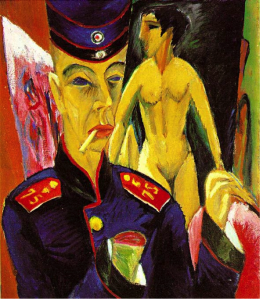
Ernst Ludwig Kirchner, Self-portrait as a soldier
So, the weird thing to me is that we know both Rice and Dubya managed to miss the briefing that said that the Taliban were planning an attack and the result was that people died. We also know that Obama knew that there were signals and warnings coming from the FBI on the connection between Russia and the Trump organization and attacks on our election. He dithered the opportunity away with second guessing. The Trumpist regime is just one on going shit show of dead Americans and inadequate responses to natural disasters. Why didn’t Obama do more? Now, we don’t have to ask why Trump isn’t doing more about threats to our National Security but I do sense a pattern here.
BB wrote yesterday about the Strzok book where both he and Dan Coates and many others felt Trump was compromised by the Russians. And, of course, we know it’s all because of his great need for money because he fails at every project he attempts.
David Corn has written about how the Russian attacks on our election and the Trumpist negligenceand planned response to the Pandemic is tantamount to the greatest act of betrayal since the Confederates took up arms against our Country.

Ernst Ludwig Kirchner Tavern
Not since the Civil War—when leaders responsible for the enslavement and brutalization of millions of Americans sought to destroy the United States and took military action that resulted in the violent deaths of hundreds of thousands of citizens—has a group of politicians so profoundly betrayed the republic. And this band—Donald Trump and GOP officials—has done so on two fronts simultaneously. They have failed to respond effectively to a pair of immense threats: a pandemic that has claimed the lives of close to 200,000 Americans, and a foreign attack on the political foundation of the country. What exacerbates this double tragedy is that Trump and his Republican supporters have done so purposefully. This has been no accident or act of unintentional incompetence. In each case, they sacrificed the public interest—including the well-being and the lives of millions of Americans—to serve their own interests. Trump and his crew have forsaken the United States of America.
It can be easy to lose sight of this big picture, as headlines explode every hour within a political media world cursed by tribalized partisan divisions. There already exists more than enough information to support such an extreme-sounding verdict. But evidence piles up each day—perhaps coming so fast as to overwhelm. The latest revelation (as I write) regarding Trump and the coronavirus crisis is that he told reporter Bob Woodward in March, “I wanted to always play it down.” Here is confirmation of what Americans had repeatedly seen with their own eyes for months: Trump lied about the dangers posed by this killer virus. And those lies, mostly unchallenged by his Republican allies and largely echoed by conservative media propagandists, shaped the ineffectual federal response and influenced how millions of Americans viewed the risks posed by the pandemic. One example: sticking with this big lie, Trump, who in early February privately told Woodward that the virus was airborne, refused to encourage mask-wearing. It’s likely that thousands—or tens of thousands—have died due to this.
Trump now claims he did not want to spark a panic. That is clearly another lie. This man relishes in causing panic when it doesn’t exist: the immigrant caravan, antifa, the end of the suburbs. He downplayed the pandemic because in his misguided political calculation he believed such bad news would harm his election prospects. (Actually, doing his job well in response to this crisis would have been a damn good electoral strategy. But that did not seem to occur to Trump.) So he tossed out bullshit while Americans were perishing and the economy was crashing. He abandoned his solemn duty to protect the citizenry instead holding rallies, focusing on his TV ratings, and dismissing (and promoting disinformation about) the gravest threat to the nation in decades.
The Daily Beast puts it succinctly: “Has Any American Killed More Americans Than Donald Trump?”
So Donald Trump copped to it. He told Bob Woodward that he knew how deadly the virus was—and downplayed it anyway, encouraging MAGA nation to act as if COVID-19 was a cheap Chinese knockoff of the flu.
“It’s remarkable that in these interviews, the president of the United States confessed to fucking manslaughter,” Molly Jong-Fast says on the latest episode of The New Abnormal.
The lawyers might debate whether Trump has any criminal culpability. But to Rick Wilson, there’s no question about Trump’s moral responsibility
“No American has killed more of their fellow Americans in this country than Donald Trump, except for Robert E. Lee and Jefferson fucking Davis,” he says. “No one has a body count to rival Trump’s. He knew it. He knew it was there. He did it. He let it happen. It is the most unbelievable and horrifying outcome that we can imagine.”
Molly adds, “Mike Pence was at a pro-life event the other day. And I was thinking about the irony, right? This administration has killed 100,000 plus plus plus people. And they’re talking about embryos. Like, it’s almost beyond parody”

Wassily Kandinsky, Bedroom in Aintmillerstrasse
We also had the notion that Russian Trolls were using leftwing media to try to drive numbers away from Clinton in 2016 . The Daily Beast also has this exclusive which is quite the read. : “Leaked Documents Show Russian Trolls Tried to Infiltrate Left-Wing Media”. Dimwits like Susan Sarandon and Jill Stein were clearly useful fools. So were some of the more well known socialist media outlets.’
It’s no secret that Russia’s trolls, hackers, and spies are pulling for Donald Trump in 2020—just like they famously did at the last election. But Moscow’s propaganda-peddlers aren’t just pushing MAGA memes and Biden disinfo—they’re also attempting to infiltrate left-wing sites.
The Russian trolls’ private chat logs and emails, reviewed by The Daily Beast, show they tried to get their American contributors to write for Jacobin, a leading socialist outlet; recruited from Truthout, a left-leaning nonprofit news site; and tried to buy their way onto the website of the long-pedigreed liberal outlet In These Times.
The reporting also shows that none of these particular outlets bit. But, there were some that did. Read more at the link if you can get through the paywall.
Meanwhile, the unhinged continues to go unchallenged by most Fox entertainment personalities. The insanity just continues.

Movie poster for The Cabinet Of Dr. Calagari – 1920 (Italian version)
So, just to end and wrap up the topics of the day we get this exclusive from NYDN: “EXCLUSIVE: Trump administration secretly withheld millions from FDNY 9/11 health program” from investigative reporter Michael McCauliff.
The Trump administration has secretly siphoned nearly $4 million away from a program that tracks and treats FDNY firefighters and medics suffering from 9/11 related illnesses, the Daily News has learned.The Treasury Department mysteriously started withholding parts of payments — nearly four years ago — meant to cover medical services for firefighters, emergency medical technicians and paramedics treated by the FDNY World Trade Center Health Program, documents obtained by The News reveal.
The payments were authorized and made by the National Institute for Occupational Safety and Health, which oversees the program. But instead of sending the funds to the city, the Treasury started keeping some of the money.
“This was just disappearing,” the program’s director, Dr. David Prezant, told The News. “This is the most amazing thing. This was disappearing — without any notification.”
Prezant said he was docked about half a million dollars each year in 2016 and 2017. Then it crept up to about $630,000 in 2018 and 2019. This year, Treasury has nearly tripled its extractions, diverting $1.447 million through late August, according to Prezant.
“Here we have sick World Trade Center-exposed firefighters and EMS workers, at a time when the city is having difficult financial circumstances due to COVID-19, and we’re not getting the money we need to be able to treat these heroes,” said Prezant, the FDNY’s Chief Medical Officer.
“And for years, they wouldn’t even tell us — we never ever received a letter telling us this,” he explained.
Prezant was never able to get an explanation from NIOSH or the mammoth Department of Health and Human Services which has the agency under its umbrella.
After years of complaining, Prezant did get a partial answer when Long Island Republican Rep. Pete King put his political weight behind the inquiry. That answer was that some other agency in the city has been in an unrelated feud with the feds over Medicare bills.
Let me just sum up here …
Trump LIED, people DIED and TRUMP is still LYING and people are still DYING.
Have a good weekend! Be safe! Please check in with us if you’re on the west coast. We’re so worried about you with those fires so out of control! I cannot believe I have friends in Oregon City that will likely not have a home to return to and are fortunate to have gotten out with pets and a few things.
We can put an end to this! We must vote! Every one of us! We cannot take any more of this!
What’s on your reading and blogging list today?
Labor Day Reads: Labor is Life
Posted: September 7, 2020 Filed under: morning reads, worker rights | Tags: American Labor Unions, Labor Day, Organized Labor, Workin Hard Blues 22 Comments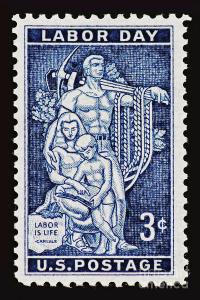 Happy Labor Day Sky Dancers!
Today is the day we celebrate the American Worker and the Union movement that brought us so many benefits and work safety enhancements that we should all appreciate Organized Labor. The day also serves as reminder of the continual fight to maintain what they earned for us through several centuries of labor movements and resistance. Republican elected officials still try to dilute all these laws that serve to protect workers and the safety of the work environment as well as dilute the right to organize.
I’m actually just going to do a tribute to the labor movement and to workers lost unnecessarily because of the greed, unsafe work places, and horrible working conditions suffered even by small children until the Labor Movement left them free to be children. I’m really not interested in spending the day on what usually serves as a kick off to the Election Season because we need a break today from all of that!
I also would like to make tribute to the indigenous people and to the slaves stolen from Africa whose human and natural resources were used to build this country. They had no pay, no thanks, and slavery for working and living conditions. They lived under religious mission systems, were sent on forced relocation to barren lands, and were bought by the Confederacy that supported ownership and torture of human beings. Their children and grandchildren continue to fight for the rights of full citizenship and recognition. I also make tribute to the diasporas and hopeful immigrants who come here to face often desperate conditions to become part of what we offer up as the America dream. We are here to form a more perfect union and organized labor makes that possible
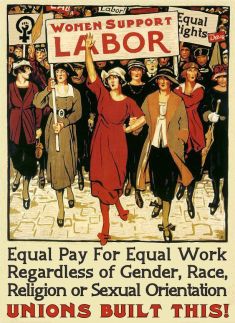
Each of us deserve dignity, safety, and fair compensation for our work no matter who we are. Who we love, what reproductive organs we were born with, the color of our skin, and our religious and ethnic heritage should not influence the rights we have as workers. Equal Pay for Equal Work. PERIOD.
 The History Channel maintains documents on the history of our Federal Labor Day Holiday.
Labor Day, an annual celebration of workers and their achievements, originated during one of American labor history’s most dismal chapters.
In the late 1800s, at the height of the Industrial Revolution in the United States, the average American worked 12-hour days and seven-day weeks in order to eke out a basic living. Despite restrictions in some states, children as young as 5 or 6 toiled in mills, factories and mines across the country, earning a fraction of their adult counterparts’ wages.
People of all ages, particularly the very poor and recent immigrants, often faced extremely unsafe working conditions, with insufficient access to fresh air, sanitary facilities and breaks.
As manufacturing increasingly supplanted agriculture as the wellspring of American employment, labor unions, which had first appeared in the late 18th century, grew more prominent and vocal. They began organizing strikes and rallies to protest poor conditions and compel employers to renegotiate hours and pay.
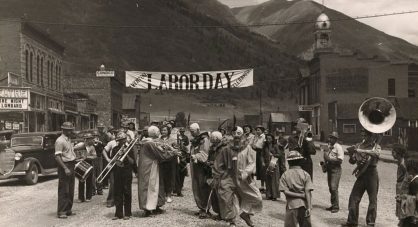 Labor Unions are more crucial than ever. States have taken more steps to pass so-called Right to work laws that are really just used to destroy the ability of people to negotiate their work environment and wages. The argument is that workers cannot be “forced” to join unions. However, this is just a disguise to defund unions and to stop the large amount of influence they used to be able to command in my states because of huge union numbers. Businesses have actively worked to dilute the ability of people to unionize and the service industry frequently uses illegal tactics to stop unionization in many ways. This is from a 2015 HuffPo article.
(Contrary to popular opinion, no worker in the U.S. can be forced to be a full dues-paying, card-carrying member of a union. But they can be compelled to pay so-called “agency fees” — the portion of dues that goes expressly to bargaining and representation costs, as opposed to, say, political campaigns. Right-to-work guarantees that workers do not have to pay these fees.)
On the right, proponents of right-to-work argue that the laws make states more competitive and attract business. On the left, opponents of right-to-work argue that the laws drive down wages and fail to create jobs. What few would deny is that right-to-work laws can be crippling for organized labor As workers bow out of unions, the remaining workers must bear a larger share of the costs associated with representation and organizing. And if the union becomes less effective, workers have even more reason to leave, creating a downward spiral.
Republicans in Michigan passed a right-to-work law there in 2012, despite the state’s storied labor history and the presence of the United Auto Workers union. Data from the Bureau of Labor Statistics has already revealed a drop in union density in Michigan. Last year, the estimated number of union members dropped by 48,000, despite the fact that the state added 44,000 more workers to its economy.
Whatever their feelings on labor unions’ role in the workplace, many Republicans have a political interest in passing right-to-work legislation. By weakening organized labor, the laws indirectly hurt the Democratic Party, as unions remain a critical piece of the party’s base. It’s worth noting that the very phrase “right to work,” with its positive connotations, constitutes a linguistic coup for the right. (Unions have sought, with much less success, to brand the legislation as “right to work for less.”)
Like other legislative attacks on collective bargaining, the proliferation of right-to-work laws plays a large role in organized labor’s ongoing existential crisis. Right now, not even 7 percent of private-sector workers belong to a labor union, down from a peak of about 30 percent in the post-World War II years. More right-to-work laws will likely diminish that density further.
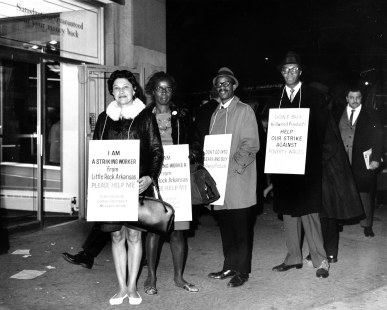 You can read about the 30 Victories for Workers’ Rights won by Organized Labor here at Stacker. The first American Union formed in 1794 and was the Shoemakers. This is a truly interesting list of the history of US Labor and Labor Law.
Today, American workers have a host of rights and recourses should their workplace be hostile or harmful. While the modern labor movement works to continue to improve the working conditions for all with big efforts around a fair minimum wage and end of employer wage theft, the movement has a history rich with fights and wins. It put an end to child labor, 10-to-16 hour workdays, and unsafe working conditions. Today, every wage-earning American today owes a debt of gratitude to organized labor for the 40-hour workweek, minimum wage (such as it is), anti-discrimination laws, and other basic protections. Far from basic, those protections were, until fairly recently, pipe dreams to the millions of American men, women, and children who labored endlessly in dreadful conditions for poverty wages.
The gratitude is owed mostly to the unions those nameless and disposable workers organized, which they did under the threat of being fired, harassed, evicted from company homes, beaten, jailed, and, in many cases, killed. In 1886, for example, over 200,000 railroad workers went on strike to protest an unjust firing. In 1894, over 250,000 workers walked out of the Pullman Palace Car Company factories to protest 12-hour workdays and wage cuts.
The 2018 Supreme Court case Janus v. AFSCME established that public-sector workers who are protected by unions—of which there are five times as many as private workers—but don’t wish to join, no longer have to pay fees on behalf of the union’s collective bargaining. This dealt a blow to public-sector unions, though it didn’t result in the mass exodus union detractors had hoped for. Overall union membership in the U.S. in 2019 was at 10.3%, according to the U.S. Bureau of Labor Statistics. While that’s a historical low rate, some industries—like digital media, museums, and non-profits—are making inroads with new unions.
While we’re on the subject of hard work
I just wanted to say that I always was a man to work
I was born working and I worked my way up by hard work
I ain’t never go nowhere yet but I got there by hard work
Work of the hardest kind
I been down and I been out
And I’ve been busted, disgusted and couldn’t be trusted
I worked my way up and I worked my way down
I’ve been drunk and I’ve been sober
I’ve had hard times and I got hijacked
And been robbed for cash and robbed for credit
Worked my way into jail and outta jail
And I woke up alotta mornings and I didn’t even know where I was at
But the hardest work I ever done is when I was trying to get myself
A worried woman to ease my worried mind
So, I’d just like to wish you a happy labor day!!! Be safe! Be kind to yourself!
FDR Labor Day 1941
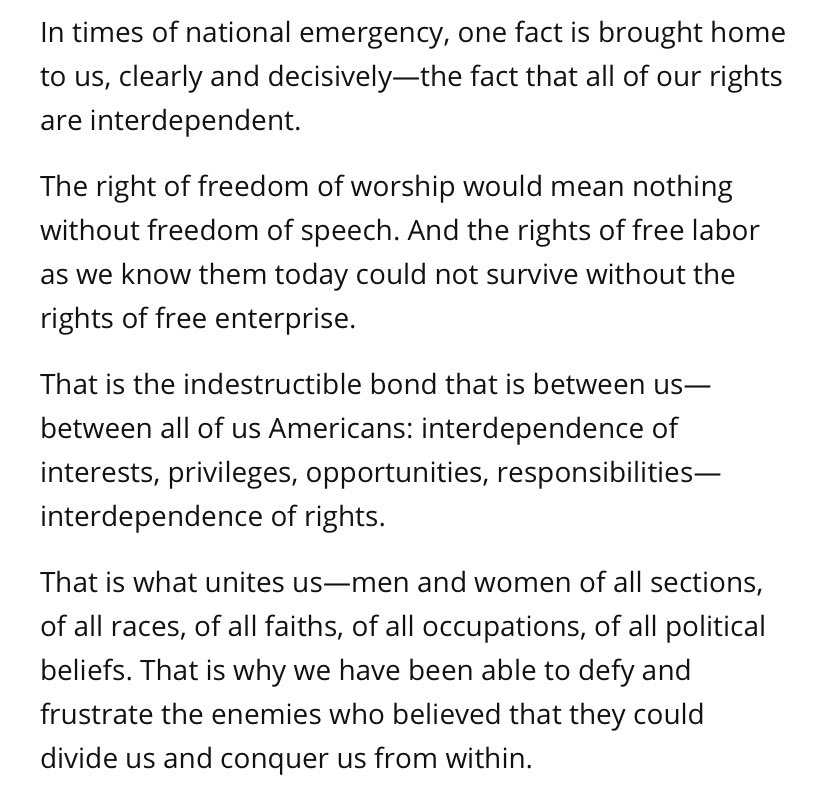
What’s on your blogging and read list today?
Friday Reads: Too many Crises to Count
Posted: September 4, 2020 Filed under: just because | Tags: children and parents separated at the border, Covid Data suppression, Republican voter suppression, Trump hates our military 25 Comments
Alexej von Jawlensky – Child with doll c 1910
Good Day Sky Dancers!
It’s getting difficult to keep track of all the atrocities committed by the Trumpist Regime. There are so many, in fact, that we lurch from headline to headline while forgetting some of the most important violations of human rights still happening.
I am a proud daughter of a Veteran of World War 2. Great Uncles of mine fought in World War 1. I had a cousin who fought in Vietnam in a swift boat. My family fought in the Civil War for the Union and many of my relatives signed the Declaration of Independence and fought for the Continental Army. I am outraged what the US Commander in Chief says about those who answer the call to defend the country. He pardons the few that do not honor the uniform. He damns the ones that died for it.
However, our country is actively suppressing votes of its citizens, sending military equipment to local Police gun to down our citizens in the streets, and we still cage children. It’s hard to keep all of these headlines on the front page. It’s difficult to understand a US President who has turned our US priorities into Putin’s policies with a huge side of grifting the country for all the money the regime can grab. He runs a crime syndicate and we are all are targets.
This is the year we decide what kind of future children in the United States will have and if it will be based on rule of law and democratic values. All of our children should grow up knowing they have access to liberty and justice. They have the right to the American Dream and should not fall prey to the Trumpist Regime’s installation of the nightmare of American Carnage.
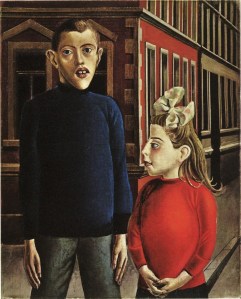
1921 Otto Dix, Two Children
This is a headline from Harlligen, Texas where children have been detained by ICE during the Pandemic. This decision could happen today. “California judge on Friday could sanction ICE for detaining migrant children during pandemic.”
A California judge on Friday could issue harsh sanctions against U.S. Immigration and Customs Enforcement for not adhering to a court order to release detained migrant children who are at-risk for being held at family detention facilities in close quarters during the COVID-19 pandemic.
California Judge Dolly Gee, who oversees the Flores Settlement Agreement — a 23-year-old class action lawsuit settlement that put restrictions on how long and under what conditions minors may be held in immigration detention facilities — could rule from the bench on Friday and issue broad reaching remedies to force the government into compliance after the agency failed to meet a July 27 court deadline that ordered the release of the children due to health risks from coronavirus, migrant advocates said Thursday.
On Aug. 7, Gee ruled the government has been in breach of the Flores Settlement and said she is inclined to impose a remedy. Friday’s hearing will be held at 11 a.m. PT in the U.S. District Court Central District of California Western Division.
This is from the Tampa Bay Times and it discusses a tactic used by a local sheriff to determine who might just be a criminal on something other than evidence.

Doll, Cat, Child – Gabriele Münter 1937 German 1877-1962
This is the basis of a futuristic dystopian society and deeply mimics the 1984 concept of “thought crimes”. It seems straight out of the Soviet past.
Pasco County Sheriff Chris Nocco took office in 2011 with a bold plan: to create a cutting-edge intelligence program that could stop crime before it happened.
What he actually built was a system to continuously monitor and harass Pasco County residents, a Tampa Bay Times investigation has found.
First the Sheriff’s Office generates lists of people it considers likely to break the law, based on arrest histories, unspecified intelligence and arbitrary decisions by police analysts.
Then it sends deputies to find and interrogate anyone whose name appears, often without probable cause, a search warrant or evidence of a specific crime.
They swarm homes in the middle of the night, waking families and embarrassing people in front of their neighbors. They write tickets for missing mailbox numbers and overgrown grass, saddling residents with court dates and fines. They come again and again, making arrests for any reason they can.
One former deputy described the directive like this: “Make their lives miserable until they move or sue.”
In just five years, Nocco’s signature program has ensnared almost 1,000 people.
At least one in 10 were younger than 18, the Times found.
Some of the young people were labeled targets despite having only one or two arrests.
And that’s not the only story out of Florida today that should worry us. This especially targets the health of children and their families which may be multigenerational.

This is truly the act of a fascist state. What other reason is there to hide public health data than to protect D’oh Hair Furor? This is from The Orlando Sentinel.
Local health officials are barred from releasing detailed information about new COVID-19 cases in public schools because of privacy rules, a local health official said Thursday.
The number of students and school staff who are infected — or whether infections are being transmitted in classrooms ― will no longer be released by health officials, Dr. Raul Pino, the state’s health officer in Orange County, said at a Thursday briefing.
That’s a departure from earlier this week when Pino released the number of cases associated with schools as well as the number of students and staff under precautionary quarantine and a list of affected schools.
On Monday he noted that the health department was investigating its first potential case of student-to-teacher transmission, critical information for parents as they decide whether to send their children to face-to-face classes in the midst of a global pandemic. But on Thursday, Pino said he couldn’t disclose any more details about that case and whether the health department had drawn a conclusion about how the transmission occurred.

It’s easy to be disturbed by the daily onslaught of headlines of the daily outrageous Trumpist statement. However, we should never lose track of the malevolent actions these statements detract from. The Washington Post editorial board goes straight for the click bait we get every day Trump opens his mouthy or every story uncovered by a reporter of Trump’s oral barfings to his staff. “Presidents are expected to set the national tone. What we got with Trump has been catastrophic.” Yes, but more importantly Presidential policies and actions should jive with our national values, priorities, and rule of law. His minions are actively destroying US Institutions and US rule of law. The puppets are entertaining but pull away the curtain to see what the hell is going on in the background! We’ve always known he is not capable of rising to this:
President of the United States is a special office. Unlike the constitutional monarchs or prime ministers of European and other systems, the president is neither head of state exclusively nor head of government, but performs both roles — fusing two aspects of national leadership, symbolic and substantive, in a single person.
The Founders of this country anticipated, in short, that the president would not just execute national laws but also set a national tone. They understood that obedience to written laws could only do so much to perpetuate a republic; citizens would have to follow unwritten norms of civic virtue as well, and would be more likely to do so if their leaders modeled them. They designed the presidency with their epitome of personal integrity and decency, George Washington, in mind.
The great fear of these early Americans was that the presidency could fall into the hands of a demagogue: someone like the current incumbent, Donald Trump, whose impact on the nation’s political culture over the past three-plus years has been, if anything, more damaging than his impact on public policy. Where past occupants of the office have at least paid lip service to its inspirational aspects, and where both of his immediate predecessors, George W. Bush and Barack Obama, actively campaigned on themes of unity, Mr. Trump lives by a different credo: “When someone attacks me, I always attack back . . . except 100x more.” This is a formula for upwardly spiraling conflict. Consistent with it, Mr. Trump has used the bully pulpit — magnified by social media — to debase public discourse.

Otto Dix (German artist, 1891-1969) Mother and Child
The media has to stop debasing the discourse by covering the side show instead of the big tent acts where damage continues to our environment, our national park systems, our nation’s endangered species, our nation’s indigenous peoples, our nation’s immigrant and minority population, our nation’s women and girls, our nation’s rule of law, our nation’s treasury, our nation’s economy, our nation’s public health and our nation’s trust in our institutions … and I could just keep adding things here … transgender service people … religious minorities … the first amendment….
This is the truly astounding headline to me instead of the repeated knowledge that Trump inherited his father’s propensity to hate on soldiers and the military. That’s a sideshow compared to this headline from the AP: “Pentagon orders shutdown of Stars and Stripes newspaper.”
The Pentagon has ordered the military’s independent newspaper, Stars and Stripes, to cease publication at the end of the month, despite Congressional efforts to continue funding the century-old publication.
The order to halt publication by Sept. 30, and dissolve the organization by the end of January, is the latest salvo in the Pentagon’s move earlier this year to cut the $15.5 million in funding for the paper from the department’s budget. And it is a reflection of the Trump administration’s broader animosity for the media and members of the press.
Members of Congress have objected to the defunding move for months. And senators sent a letter to Defense Secretary Mark Esper this week urging him to reinstate funding. The letter, signed by 15 senators — including Republicans and Democrats — also warns Esper that the department is legally prohibited from canceling a budget program while a temporary continuing resolution funding the federal government is in effect.
“Stars and Stripes is an essential part of our nations freedom of the press that serves the very population charged with defending that freedom,” the senators said in the letter.
And Sen. Lindsey Graham, R-S.C., in a separate letter to Esper in late August, also voiced opposition to the move, calling Stripes “a valued “hometown newspaper” for the members of the Armed Forces, their families, and civilian employees across the globe.” He added that “as a veteran who has served overseas, I know the value that the Stars and Stripes brings to its readers.”
In the memo, the department says that Esper has decided to discontinue publication of the paper as a result of his department-wide budget review. Signed by Army Col. Paul Haverstick, acting director of the Pentagon’s Defense Media Activity, the memo said plans to shut down the paper are due on September 14, and the final newspaper publication will be on September 30.
Stripes ombudsman, Ernie Gates, told The Associated Press on Friday that shutting the paper down “would be fatal interference and permanent censorship of a unique First Amendment organization that has served U.S. troops reliably for generations.
Notice that the paper is “independent” and doesn’t produce the kind of propaganda the Trumpist regime demands in its monarchical fealty to all things Trump. And it’s a sad day when I have to headline an Arnold Schwarzenegger share.

From Reuters: “Southern U.S. states have closed 1,200 polling places in recent years: rights group”. This can only be targeted to stopping Black Americans from voting. It’s full on Jim Crow.
States across the American South have closed nearly 1,200 polling places since the Supreme Court weakened a landmark voting-discrimination law in 2013, according to a report released by a civil-rights group on Tuesday.
The Leadership Conference on Civil and Human Rights found http://www.democracydiverted.org that states with a history of racial discrimination have shuttered hundreds of voting locations since the court ruled that they did not need federal approval to change their laws. The report did not have comparisons with polling places in other regions.
The report comes as Republican-led states impose a range of other restrictions, from shorter voting hours to photo-ID requirements. As turnout has surged in recent elections, voters in cities like Phoenix, Arizona and Atlanta, Georgia, have endured hours-long waits to cast their ballots.
Seven counties in Georgia now have only one polling place, the report found.
Under the Voting Rights Act of 1965, areas with a history of voting discrimination – such as requiring African American or Hispanic voters to pay a poll tax or pass a literacy test – had first to convince the U.S. Justice Department or a federal court that any election changes they wished to make would not have a discriminatory effect. The Supreme Court struck down that portion of the law in 2013.
The law covered a swath of southern states stretching from Virginia to Texas, along with Arizona, Alaska and a few counties in states like New York, North Carolina, Florida, Michigan, South Dakota and California.
The high number of poll closures in these regions shows that Congress needs to restore the protections that were previously in place, said Vanita Gupta, the group’s president.
So, that’s my rant for the day. Make sure what’s going on in the Big Tent gets the focus and not the click bait. Trump is incapable of empathy. He only thinks of himself and possibly some of his family but only in terms of how they reflect on him. He only cares about money and power and getting on the good side of Putin. We must get rid of him. If not for ourselves, for the future of our children.
Please stay safe and be kind to yourself! Check in! We care about you! And most of all, think of the children!!
What’s on your reading and blogging list today?
Monday Reads: Change is Imperative
Posted: August 31, 2020 Filed under: Afternoon Reads | Tags: Climate change, Mueller Report and probe, White Christianist Nationalism Patriarchy 23 Comments
Good Day Sky Dancers!
There are so many things right now that you think we should’ve figured out by now that seem to be worsening because there is no leadership in Washington. We’ve known about global climate change making weather patterns worse for decades now. We’ve known at least that long about the insidious institutional racism and misogyny that makes it nearly impossible for large swarths of our country to live up to their potential and be protected under the law. We have a global pandemic that is mostly out of control in places like Brazil and then the United States because we simply do not have the people in office willing to make tough decisions based on evidence to do what’s best for the country. They are either overlords of chaos and greed themselves or serving said said overlords as underlords. Also, lessons of history should have warned us that another Nixon would try to grab power and yet, so many have ignored what’s going on and actively thwarted oversight designed in our U.S Constitution.
We should know better and the rest of the world watches us struggle with disbelief and horror as we repeat all our mistakes of history and science over and over.
This important segment on Climate Change on the 15th anniversary of Katrina is worth watching. Our government did not learn anything from our experience from Hurricanes Katrina and Rita and another set of people are reliving much of the same horror.

Young Woman with a Red Fan (1910) By Max Pechstein.
Folks in the know continue to warn us about the impact of Global Climate Change. This is from US News and World Report: “Climate Change Bigger Economic Risk Than Pandemic, ECB’s Schnabel Says.” How can an institution like the European Central Bank help prioritize a risk that obviously will cost lives and fortunes?
The coronavirus pandemic demonstrates in the clearest terms why central banks must take a bigger role in fighting climate change even if the issue at first appears unrelated to monetary policy, European Central Bank board member Isabel Schnabel said.
Initially just a health crisis, the pandemic has set off economic shockwaves around the globe, affecting every nation and forcing central banks to provide unprecedented support to underpin economic activity.
With climate change posing an even bigger risk, the ECB must keep this issue high on its agenda as it reviews its policy framework, Schnabel told Reuters in an interview.
“Climate change is probably the biggest challenge we are facing, much bigger than the pandemic,” Schnabel said.
“Even though this health shock was entirely unrelated to monetary policy, it nevertheless has huge implications for monetary policy,” she said. “The same is true for climate change and this is why central banks cannot ignore it.”
Through its supervisory arm the ECB could require banks to provide a climate risk assessment, which could then affect their access to central bank funding if this assessment has a direct implication on collateral valuations, Schnabel said.
The central bank should also push the European Union to add a green element to its long-delayed project to set up a capital markets union as a focus on green finance could give the bloc a competitive advantage, she argued.

Self-Portrait in Blue Jacket
Max Beckmann
Date: 1950
This new poll from STAT shows how politicized basic non-partisan policies should be in this country. “Poll: Most Americans believe the Covid-19 vaccine approval process is driven by politics, not science.”
Seventy-eight percent of Americans worry the Covid-19 vaccine approval process is being driven more by politics than science, according to a new survey from STAT and the Harris Poll, a reflection of concern that the Trump administration may give the green light to a vaccine prematurely.
The response was largely bipartisan, with 72% of Republicans and 82% of Democrats expressing such worries, according to the poll, which was conducted last week and surveyed 2,067 American adults.
The sentiment underscores rising speculation that President Trump may pressure the Food and Drug Administration to approve or authorize emergency use of at least one Covid-19 vaccine prior to the Nov. 3 election, but before testing has been fully completed.
How have we come to this place where the most important decisions in policy are being driven by the most base aspects of governance? Why is everything a culture issue now? Why is everything played like some team that you root for even though what they is completely wrong?
Why are so many invested in a White Nationalist Christianist future where truly there is no hope for the planet or democracy for that matter? Did we not settle this last century?

“Oddy-Knocky” by Alessio Radice
2013
This is a story from Minnesota that should be told around the world.
Since last fall, Minnesota State Sen. Roger Chamberlain, R-Lino Lakes, has taken a keen interest in a book called Bronze Age Mindset. The self-published tome has captivated many on the American right while trafficking in neo-fascism, racism and misogyny. The writer is an anonymous internet figure who goes by the pen name “Bronze Age Pervert” and has 45,000 Twitter followers.
The book argues that equality and human rights are unnatural; that most people form a vast, inferior class who will only find “solace and meaning” through “submission” — and that the proper rulers of the world are white men.
A passage claims, “Life appears at its peak not in the grass hut village ruled by nutso mammies” — using a racial slur to refer to Black women — “but in the military state.”
Chamberlain, the influential chairman of the upper chamber’s Taxes Committee, tweeted at the author, Bronze Age Pervert, on April 30, thanking him for an introduction to Bach’s “Fugue in G-minor;” likely a reference to Pervert’s podcast, which uses classical compositions as bumper music. (The podcast is even more overtly white supremacist.)
“The most obvious form of hatred in this book is misogyny,” said Curtis Dozier, a Vassar College professor of classics who documents appropriations of Greco-Roman antiquity by hate groups. “His ideal of masculinity is racialized.”
Dozier has analyzed the book’s appropriations — and misappropriations — of ancient literature.
Dozier said the title’s “Bronze Age” refers to an imagined era when a glorious warrior culture overthrew female tribal rulers and spread the Indo-European language — and male domination — from Iceland to southern India. Pervert identifies these conquerors as the Aryans, borrowing the ideas of Nazis, eugenicists and contemporary white supremacists, Dozier said.
Unlike most peddlers of hate online, however, Pervert does not disavow violence to soften the historic image of white supremacism and fascism — he glorifies it.

Gerti by Ernst Ludwig Kirchner (Photo by Barney Burstein/Corbis/VCG via Getty Images)
But, it’s not only Minnesota. Try Kansas City on for size.
It started as soon as her family, along with all of their belongings and their dog Kingston, arrived in Kansas City from Southern California not quite two months ago, Maureen Roland says: The smiles that froze and then disappeared when her new Northland neighbors, near Parkville, caught a glimpse of her Black husband and biracial children. The woman down the street who put her hand up and said, “No, thank you,” when Maureen introduced herself. The slurs shouted from across the way, the pointing, the pretending to retch.
“Kansas City nice” is real, but so is Kansas City not-so-nice. There are people in our town who yell, “You’re disgusting!” at the Rolands’ house as they walk by, and who have gotten out of line at the Best Buy to avoid them.
The Rolands have lived all over the world, so it’s not a revelation that there’s racism in it. But “I have not experienced it to this degree,” she says. “I have not experienced it this much. I have not experienced it this vocally.”
Or, try Lafayette Louisiana …
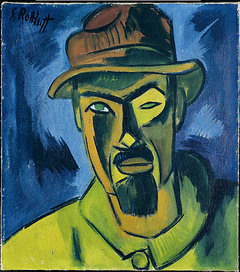
“Self Portrait with Hat” by expressionist painter Karl Schmidt Rottluff in 1919
We have welcomed thousands of evacuees here in New Orleans to hotels and the Mayor of Lafayette says no to any shelters at all. His reason is something that should warn us all that Republicans are emboldened to be openly and nakedly racist. Black Lives Matters is not a terrorist operation. Any local “militia” group is definitely on the FBI watch list for domestic terrorism.
Officials with the Josh Guillory administration have asked local churches to stop trying to set up shelters for evacuees from Laura because of the “serious threat” of recent protests
…
I wanted to advise you that I have officially asked local churches to take a pause on any action to establish a shelter at this time. As you probably know, we have had some serious, concerning activities pop up today with armed protestors in the streets. Many from out of town.
This is a serious threat and we must handle this issue before we can care for our neighbors. It goes against what we believe and how we usually respond after a disaster but it would be irresponsible to potentially put others in harms way.
We are not in a position to safeguard people displaced by Laura with this serious, local security threat. We know that bad actors will take our hospitality and use it against us.

H. Craig Hanna (b. 1967), Paris
And, that really is disgusting.
Here’s the latest on how the national campaign is turning us against one another via Politico. “Biden forced to play on Trump’s turf as campaign turns to racial strife. The Democratic nominee wanted to talk about Trump’s performance on the coronavirus. Instead, he’s having to straddle a line on civic unrest. ” Of course, they don’t want to talk about the policies we need to actually do something for the big issues. Let’s focus on pitting the first and second amendments against each other in strictly racist terms. After Trump’s horrid visit to Louisiana and Texas, he wants to head to Kenosha today.
The chaotic scenes in Kenosha, Wis. and Portland, Ore., are redefining the contours of the presidential race — shifting the immediate debate over how to quell the clashes, who should own the unrest and which candidate is better suited to lead the nation through strife.
Donald Trump, who’s planning to visit Kenosha on Tuesday, is claiming the mantle of law and order even as he stokes conflict between protesters and his supporters. Trump is trying to take credit for restoring order by loudly calling for an influx of National Guard troops and painting Democrats as too fearful of alienating their base to denounce violence.
Joe Biden last week called for a halt to the violence, though it took him longer than many Democrats wanted. The Democratic nominee decided over the weekend that he would not travel to the pivotal battleground state on Monday ahead of Trump’s visit. Instead, the Biden campaign plans to ramp up messaging that Trump’s rhetoric has only inflamed hostilities on the streets, beginning with a speech in Pennsylvania Monday.
“It’s a very difficult argument to make when he is president of the United States that the unrest and chaos that’s happening on the ground is somehow not his responsibility,” Deputy Campaign Manager Kate Bedingfield told POLITICO. “He owns it. He’s the president of the United States and he owns it. People are seeing a president who is failing to lead and that will be a big focus for us as we move forward.”
“We will continue to put this at his feet and hold him accountable for it because it’s hard to make a law and order argument when you’re an incumbent.”
The balancing act over the riots and police misconduct marks a new, intensifying phase of the election. Both campaigns are preparing for a burst of activity: Biden plans to break his month slong hold on travel to swing states in the coming weeks, with stops expected initially in Wisconsin and Michigan in addition to Pennsylvania. He’s also looking to appear in Minnesota and Arizona soon.
And the on going battle should really be against the Rule of Law as seen within the Justice Department. Here’s some headlines to read on that.
So, this all should keep you busy today. I’m sorry it’s all so alarming but seriously, thing’s have to change. We owe it to all of us that have lived and will live in this country. These policy challenges should be faced head on with regard to our laws, science, and getting the best results we can from the political process. We cannot take an administration whose goal is to tear us all apart, tear our country down, and ruin the gifts of nature around us.
What’s on your blogging and reading list today?
Friday Reads: We’re on a Long Muck-filled Road to November
Posted: August 28, 2020 Filed under: 2020 Elections, just because, white nationalists 17 CommentsGood Day Sky Dancers!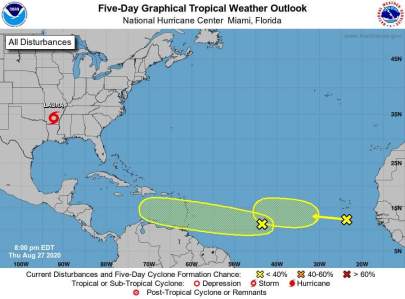
There are two tropical waves coming off of Africa heading straight to the Gulf again even while parts of Louisiana and Texas are still in a state of cataloguing the damage from the last two. Severe weather also popped up over Northeast section of the country with tornadoes and thunderstorms. We continue to see wildfires north of San Francisco.
You have to be in denial to not see the strengthening of storms and the more expansive areas ruined by wildfires. It’s like we’ve angered the old “gods” that harness the earth, water, and weather against us.
I have spent the last 4 days with the weather channel, working, and just trying to maintain some semblance of normal as if that were some how possible. I have not once gone to see any one of the hundreds–if not thousands–of violations of the Hatch Act that was the Trump Family Crime Syndicate Revival last night.
My one take away is the ugly green dress and ugly look Melania shot Ivanka headed to Daddy and the microphone. Abusive Daddy will probably be unhinged some time today over this.
https://twitter.com/DGComedy/status/1299171443905761280
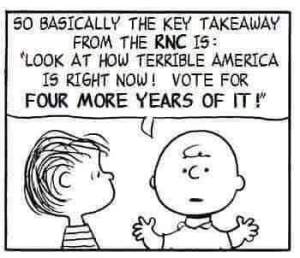 Why would any one want four more years of what was on display and what has happened?
So, here’s Susan B. Glasser’s take writing at The New Yorker: “The Malign Fantasy of Donald Trump’s Convention. Using the White House as his prop, the President makes war on Joe Biden, and pretends the pandemic is all but defeated.”
For four years, Donald Trump has been asking us to believe the unbelievable, to accept the unthinkable, to replace harsh realities with simple fantasies. On Thursday night, using the White House as a gaudy backdrop, the President made his case to the American people for four more years. His speech capping the Republican National Convention was long, acerbic, untruthful, and surprisingly muted in comparison to the grandeur of the setting, which no chief executive before him has dared to appropriate in such a partisan way. “We will make America greater than ever before,” he promised.
Even for a salesman like Trump, it was never going to be an easy deal to close, what with a deadly pandemic, mass unemployment, nationwide protests over racial injustice, and even a killer hurricane smashing into the Gulf Coast hours before his speech. Some seventy per cent of Americans currently believe that the country is on the wrong track, according to recent polls. Who can blame them?
Hindu Goddess of Rain Mariammam
This should be devastating context for a President, any President, seeking reëlection, a true picture of American carnage to replace the false one that Trump conjured four years ago. Yet the strategy of Trump and his team is now clear: to talk about how bad things would be in Joe Biden’s America, a violent socialist ruin in which freedom itself will no longer exist and rampaging protesters, like those now committing “rioting, looting, arson, and violence” in “Democrat-run cities,” will be coming soon to a suburb near you. “The hard truth is, you won’t be safe in Joe Biden’s America,” Vice-President Mike Pence said on Wednesday night. “No one will be safe in Biden’s America,” Trump said on Thursday night. To say this sounded a bit off in actual America, Trump’s America, does not do justice to the bizarre dissonance of this year’s Republican Convention.
Americans know Trump pretty well by now, and so it was more than a little discordant to hear him extolled throughout the Convention this week as a family man, promoter of women, friend to African-Americans, champion of religious liberty, and lover of immigrants, who interrupted his own Convention to preside over a White House naturalization ceremony for five lucky new citizens. A courageous patriot who works “from dawn to midnight,” as his daughter Ivanka told us, this Convention Trump personally charmed German Chancellor Angela Merkel, made peace in the Middle East, and single-handedly saved U.S. industries and unborn babies. And then there was his response to the coronavirus pandemic, perhaps the Administration’s shining hour, in which the President bravely disregarded the so-called experts to ban flights from China, thus saving millions of lives, while working closely with America’s governors, providing medical workers with all the resources they needed, reopening schools and businesses, and putting the greatest economy in history on the path to a fast recovery. The trolling was as epic as the setting was legally questionable: sitting and listening to Trump were more than a thousand supporters, packed together tightly in white chairs on the White House lawn, and almost none of them were wearing masks. While thus publicly and flagrantly flouting public-health standards, Trump touted his response to the pandemic as one that is focussed exclusively “on the science, the facts, and the data.”
Did they expect anyone to believe it?


My backyard. My Banana Trees hold up to the last winds and rain of Laura.
Mike Barnicle at The Daily Beast was even more descriptive: “A Sick President Scrambles to Spread His Contagion of Fear”
Before last night’s neon obscenity—a Trump rally on the South Lawn of the American White House—the 2020 Republican National Convention was close to cartoonish in its attempt to scare the country into voting for Donald J. Trump. It began as dark comedy with a cast of family members, supplicants, incompetents, political ne’er do wells and loud worshippers of a guy who never really believed he’d win on that long-gone night in November 2016 but now thinks he belongs on Mount Rushmore.
As each day melted into the next, though, there were no laugh-lines. Only the specter of a dark hand with a gun and a knock on your door, the mob empowered by Democrat radicals come to take your life, your dreams. By the time that Donald emerged from the White House—think about it, the White House—to deliver his convention speech on Thursday night, you could feel the nuts and bolts holding together this nearly 245-year-old republic loosening with each assault on a form of government that has stood through civil war, depressions, injustice and the stain of racism.
The best read of the day for me so far has been this description of the crazies that do still think Donald Trump will save them and what they fear most. This is by Joseph Marguiles for The Washington Post: “Vigilantes claim to preserve law and order. Their true goal is to save Whiteness. They draw strength from guns, God and Donald Trump.”
The spasm of vigilante violence takes place at the intersection of several powerful currents in American life, and draws its strength from guns, God and Donald Trump, all joined in the service of an imperiled Whiteness.
The first of those currents is the belief that government, and especially law enforcement, has been so hobbled and emasculated by the radical left that it cannot protect the good people from the bad. The Movement for Black Lives, a coalition that includes Black Lives Matter, has come in for particular attack, which reveals the unspoken assumption of the narrative: The good people are White; the bad are either Black or Brown or besotted with their cause.
For those inclined to believe this narrative, evidence of the emasculation is everywhere. After the shootings in Kenosha, the Fox News host Tucker Carlson, who can always be counted on to give this narrative its voice, asked rhetorically, “How shocked are we that 17-year-olds with rifles decided they had to maintain order when no one else would?” As he spoke, the chyron at the bottom of the Fox screen read, “Kenosha in chaos as leaders abandon another city.” The Facebook page for the Kenosha Guard had implored the police to give the militia free rein, since it was “evident that no matter how many Officers, deputies, and other law enforcement officers that are here, you will still be outnumbered.”
Yet the narrative loses its plot when it becomes clear that the uprisings themselves are not the issue. After all, we didn’t see this sort of vigilantism in response to the uprisings in the 1960s, which were far more destructive. Instead, the protests are important because they illuminate and reveal the perceived impotence of Whiteness — an impotence that was not so keenly felt a half-century ago.
Today’s uprisings are taking place during a moment of profound unease. The term most often used for this unease — White grievance — does not remotely do it justice; to say that one has a grievance conjures the banal image of a complaint card sliding into a box and being forgotten. What we saw in Kenosha, and what we have seen across the country in response to the protests against police violence, is an insensate terror at the advancing prospect of White irrelevance. It is no less than a fear of White erasure.
Whiteness itself is imagined as under siege — culturally, demographically and, most of all, politically. President Trump plays on this fear when he warns ominously that the Democrats want to destroy the serenity of American suburbs, and vows to wall them off from the race-mingling scourge of low-income housing. It is no matter that the fear is irrational; there is no threat to Whiteness in this country, and there never has been. Irrational fears are always the most terrifying, and it is this terror that fuels the vigilantism.
The second current is the celebration of gun culture. Here, the vigilantes have the law to thank. Since the Supreme Court decision in Heller v. District of Columbia in 2008, which upheld the right of private gun ownership under the Second Amendment, it has become dramatically easier for people to travel the streets of this country armed. According to the Giffords Law Center, which tracks gun laws nationwide, in most states, including Wisconsin, it is perfectly legal for a person to openly carry a loaded firearm in public, without a permit.

Zephyrus the west-wind as spring, Greco-Roman mosaic from Antioch C2nd A.D.,
I’ve read a lot of this on facebook from besotted white men who really believe all this and the underlying theme is evident to every one but them. They don’t like him but gee, those policies!
Meanwhile, Vice Presidential Candidate for the Democratic Party–Senator Kamala Harris–continues to punch and remind us of the real issues. Here’s her call for justice for Jacob Blake as reported in USA Today “Kamala Harris: Officer in Jacob Blake shooting should be charged”. See the interview at this link.
In her first one-on-one network interview since becoming the Democratic vice-presidential candidate, Kamala Harris talks to TODAY’s Craig Melvin about the shooting of Jacob Blake, saying “I don’t see how anybody could reason that that could be justifiable” and calling for “a thorough investigation.” Saying that “the fish rots from the head,” she draws a distinction between the leadership styles of Donald Trump and her running mate, Joe Biden.

Egyptian Lion Goddess of Dread Sehkmet
We have a long road before Hurricane Season and the political season end because both end the first week of November. CNN Politics has already called out 20 false or misleading statements in Trump’s Dark Speech from last night.
Trump is a serial liar and he serially lied during his speech accepting the Republican nomination.
CNN counted more than 20 false, exaggerated or misleading claims from Trump on Thursday night. That’s in addition to a number of falsehoods from other speakers.
Trump’s dishonesty touched on a range of topics, from the economy to his administration’s performance during the coronavirus pandemic. Some of Trump’s most egregious false claims were directed at Democratic presidential nominee Joe Biden.
In his scripted remarks, Trump suggested Biden wants to take down the border wall, but Biden has specifically rejected that idea, saying only that he’ll stop further construction. Trump baselessly said that Biden’s plan would eliminate borders, which it wouldn’t.
Trump claimed he passed Veterans Choice, a law that Obama signed in 2014. Trump also touted a “record” 9 million jobs gained over the past three months, without mentioning the record 22 million job losses that preceded that.
Trump also boasted about the Covid testing system and his general response to the pandemic, even though experts near-universally say the US was fatally slow in its response, especially slow in setting up adequate testing.
You can read more or watch the video interview with CNN Fact Checker by Anderson Cooper at the link.
So, I’m going for a quiet weekend and hoping that everything around me cooperates! You take care! Let us know you’re okay!
What’s on your reading and blogging list today?

 peej
peej Carissa
 bostonboomer
 dakinikat
 ecocatwoman
 jjlo
jjlo mablue2
 Mama Lopez
 peggysue22
 quixote
 skydancingguestblogger
 Mona (aka Wonk the Vote)



 Sky Dancing
Recent Comments