“New York loves mr. trump.” John Buss, @repeat1968
Good Day, Sky Dancers!
Sunday’s Meet the Press brought back memories of my oldest daughter’s Montessori preschool days when this kid named Kyle — who couldn’t express much verbally — would bite anyone who dared to tell him off or tried to stop him as he terrorized the class. The well-trained teachers, faithfully doing their jobs, were not used to this kind of toddler resistance.
Montessori kids are taught to show respect to the point that, if they want to watch a kid doing their thing on their well-defined rug space, they hold their hands behind their back and ask if it’s okay to observe. That was one of the things I liked about her classmates. It made them a joy to have in the playroom in the basement compared to the kids allowed to run loose in our suburban Omaha neighborhood. But not Kyle.
Most politicians are used to being grilled by the media. They’re used to tough questions and continued follow-up, if granted a session with a well-schooled journalist in a situation any public figure would crave. But not Donald. I can only wonder what his teachers and classmates put up with before he got shunted to Military School.
So this is Forbes‘ Mark Joyella, today, explaining what could only be described as Trump’s Toddler Temper Tantrum. “‘You’re Either Crooked Or You’re Stupid’: Trump Walks Out After Kristen Welker Fact-Checks Him.” This is not the language of a mature adult. It should not be the language or tone of the leader of a large, powerful nation. However, I am completely beyond being shocked by his demeanor, acts, and speech. He’s definitely a Kyle.
An angry Donald Trump walked out of an interview with NBC’s Meet the Press host Kristen Welker after an extraordinary exchange in which the president angrily insisted—without offering any proof—that “elections are crooked and you’re crooked, and Meet the Press is crooked…and so is ABC and CBS and CNN.”
The interview, airing on NBC Sunday, turned confrontational when Welker asked Trump about his idea to use $1.8 billion in taxpayer money for a “weaponization fund” to compensate people who believe they were unfairly targeted by a federal government “weaponizing” the justice system against them.
“If it was up to me, I’d pay them the kind of money that they deserve,” Trump said. “People have been destroyed. Lives have been destroyed. Many suicides, think of it. People have committed suicide because a bunch of thugs went after them.”
‘Where’s The Evidence?’
As the president made a series of claims about people he believed were falsely prosecuted, Welker pushed back, noting repeatedly that Trump had offered no evidence to support his claims.
“Now, I don’t know what’s going to happen with the weaponization fund,” Trump said as he shifted to comment on the news media and Welker. “I love the idea, because people like you, the fake dirty press, the crooked press, people like stupid Biden, he’s not smart enough to know what’s going on, but people that surrounded him, surrounded his beautiful Resolute Desk in the Oval Office, what they did to the lives of people, they destroyed people. They sent people to jail who did nothing wrong.”
Trump has long accused the news media of being “crooked” or “fake news” and even “enemies of the people,” but has rarely done so in such an angry and personal way, as Welker, who remained calm and professional despite the president’s personal criticisms, repeatedly pressed Trump to back up his sensational claims:
PRES. DONALD TRUMP: The election was rigged. It was a dirty election.
KRISTEN WELKER: Mr. President –
PRES. DONALD TRUMP: And it’s happening again right now in California.
KRISTEN WELKER: – you’ve never presented evidence –
PRES. DONALD TRUMP: It’s happening right now in California
KRISTEN WELKER: – that the 2020 election was rigged.
PRES. DONALD TRUMP: Right now, it’s look at what’s happening in California.
KRISTEN WELKER: Where’s the evidence to that?
PRES. DONALD TRUMP: It’s four days –
KRISTEN WELKER: The Republicans are doing well in California.
PRES. DONALD TRUMP: In California, it’s, no they’re not. They’re dropping fast because it’s a rigged election. Let me tell you, it’s four days and they aren’t even close to coming up with the –
KRISTEN WELKER: That’s how they count the votes in California.
PRES. DONALD TRUMP: Do you know why they’re doing that? Because they’re cheating on the election.
KRISTEN WELKER: There’s – What? Do you have evidence to support that?
PRES. DONALD TRUMP: It’s– all I have to do is look. All I have to do is look.
KRISTEN WELKER: But that’s not evidence.
‘To Be Fair, I’m Not Crooked’
When Trump insisted—again, without any evidence—that the slow counting of votes in California indicated election fraud, Welker pushed back, saying “but sir, that’s not evidence, and that’s how they count the votes in California.”
This seemed to make the president even angrier, calling Welker “crooked,” which she immediately responded to. “To be fair, I’m not crooked,” Welker said. “But let’s continue.”
There’s more at the link. Coupled with the following headline, I worry about this country. I really do. This analysis is from the AP. “Fewer Americans say democracy is central to country’s identity, AP-NORC poll finds.” I bet they’re all home-schooled or schooled in those right-wing christian madrasas.
As the U.S. prepares for an extravagant celebration of its founding principles, fewer Americans see their country as exceptional, a new poll finds.
The survey from The Associated Press-NORC Center for Public Affairs Research highlights many Americans’ feeling of unease over the future of its representative government — particularly among young people. It presents a jarring contrast as communities around the country commemorate the nation’s 250th anniversary.
Only about one-quarter of Americans say the U.S. stands above all other countries in the world, the new poll found, while 44% say it’s one of the greatest countries in the world, along with some others. About 3 in 10 say there are better countries than the U.S., an increase from 19% in an AP-NORC poll conducted in June 2016.
Americans remain divided about whether diversity is an essential feature of the U.S.’s identity, and agreement about other aspects of the country’s underlying character appears to be eroding, the survey found. Americans are less likely to see a democratically elected government as “extremely” or “very” important to the United States’ identity as a nation than they were just a few years ago. About two-thirds of U.S. adults now say a democratically elected government is highly important to the U.S.’s identity as a nation, down from 80% in 2021.
“It’s not that the democracy part is not working,” said Derricka Wall, 24, of Chickasaw, Alabama. “It’s the people that are actually being put in office that is the problem.”
Meanwhile, it’s confirmed once again that it’s not the Press or the People leaving our democratic voting processes in the wind. This is from Jose Pagliery writing for NOTUS. “The Justice Department Hasn’t Taken Its Usual Steps to Protect the 2026 Election. The DOJ appears to be quietly scrapping its typical “command center” that would monitor Election Day emergencies.”
President Donald Trump says “if you don’t have honest voting, you can’t really have a nation.”
But five months out from the midterm elections that will determine control of Congress, his Justice Department has canceled election-integrity training sessions for prosecutors and FBI agents, deleted a 281-page guide to prosecuting election offenses, fired most of the lawyers in its Public Integrity Section and failed to replace the director of its Election Crimes Branch.
Moreover, the DOJ has not taken the usual steps to establish a “command center” to monitor and address the typical emergencies that pop up around Election Day, three sources with knowledge of the situation told NOTUS. A command center team would address things like voter intimidation and targeted disinformation meant to hinder a fair process.
These actions — and inactions — have alarmed current and former prosecutors, who say the Justice Department is not prepared to deal with threats to election integrity in the November elections.
“That’s really concerning,” said Ryan Crosswell, a former public corruption prosecutor who recently ran for Congress as a Democrat. “Obviously, the command center and training are something that anybody who wants to protect election integrity would want. And this just feeds into the fear that rather than protect elections, the DOJ may try to interfere with them. That’s pretty scary.”
The DOJ did not provide any answers before publication to detailed questions about the training cancellations and the election command center, but a department spokesperson issued a statement that its top priorities are now “ensuring the integrity of U.S. elections and protecting Americans against voting fraud and civil rights violations.”
Former DOJ attorneys described the command center as an intense, around-the-clock operation at FBI headquarters. Investigators direct law enforcement responses nationwide, while public corruption prosecutors take long shifts answering phone calls about possible crimes and confusing situations. The anticipated emergencies are taken so seriously that department leadership has normally kept an auxiliary team of specialized prosecutors on standby back at DOJ headquarters. Everyone orders pizza and sits tight for shifts that span eight-plus hours.
“It spoke to how seriously we took this stuff,” Crosswell noted.
Does that mean we simply watch everything melt into fascism as our 250th birthday as a nation stands before us? I certainly hope not. Stories like these give me hope. Madiba K. Dennie writes this analysis for Balls and Strikesabout the ongoing purge of immigrants and naturalized citizens in our nation. “The Delaney Hall Strike Is Exposing a Massive Thirteenth Amendment Crisis. The Thirteenth Amendment prohibits slavery, except “as a punishment for crime.” But people in immigration detention haven’t been convicted of anything—and are still being forced to work for nothing.”
For the past several weeks, hundreds of detainees at Delaney Hall, an immigration detention center in Newark, New Jersey, have been on a labor and hunger strike. Participants in the strike are refusing to perform their work assignments or eat meals in protest of what they describe, in a series of handwrittenletters smuggled out of the facility, as “unlawful and forced detention” and “inhumane treatment” that violates their constitutional rights. Among the myriad “injustices and irregularities” named in the letters are rotten food riddled with worms; persistent “unresolved issues” with bathrooms in “terrible and inhumane” condition; and detainees being forced to work for practically pennies or, more often, for no pay at all.
Delaney Hall was the first immigration detention center to open during President Donald Trump’s second term in office. And like almost all immigration detention facilities, Delaney is owned and operated by a private prison corporation. GEO Group, a company valued at approximately $3.3 billion, signed a 15-year contract with Immigration and Customs Enforcement in February 2025, providing ICE with the facility and “support services” like security, maintenance, and food services, in exchange for over $60 million annually.
But it is the detainees—not GEO Group—who actually do that work.
“We were the ones who shoveled the snow during the winter,” said one Delaney Hall detainee, in a statement provided to The American Prospect last week. “We are the ones serving the food, we are the ones who clean the units, we are the ones who clean the bathrooms.” American Friends Service Committee, a Quaker-founded social justice organization working with the immigrants at Delaney Hall, also said in a press release that detained workers can go months without receiving even the pittance they were promised, if they are compensated at all.
Forced labor practices like these are pervasive throughout ICE detention centers. In February, for example, the Supreme Court ruled on an immigrant labor case involving a GEO Group-operated facility, in Colorado. The company’s “so-called Sanitation Policy,” as Justice Elena Kagan referred to it in her majority opinion, required detainees to clean all of the facility’s common areas without pay or risk increasingly severe punishments, including solitary confinement. Additionally, “the so-called Voluntary Work Program” offered detainees a dollar a day for other necessary work like preparing food and doing laundry.
Former detainees had sued, arguing that these policies violated the forced labor provision of a federal anti-trafficking law, as well as Colorado’s prohibition on unjust enrichment. And GEO Group tried to get the case dismissed, claiming it was following directions from the government, so the trial cannot proceed. The Supreme Court didn’t buy it, which means that the case, GEO Group v. Menocal, can at least proceed to a jury trial.
Among the reasons GEO Group does not like trials: Trials can be very expensive for GEO Group, cutting into the money they make by coercing detainees to work for free. In a 2017 case involving another GEO Group-run ICE facility, the state of Washington and migrants detained at a detention center in the state both sued the company for violating Washington’s Minimum Wage Act. GEO Group fulfilled its contractual obligations with ICE by relying heavily on detainees whom it paid only one dollar a day, which GEO Group estimated saved it from having to hire 85 additional full-time employees. In 2021, a jury awarded the detainees roughly $17.3 million in back pay, and the court awarded $5.9 million in unjust enrichment to the state. GEO Group appealed, but the Ninth Circuit affirmed the ruling last year.
Since Trump’s return to office, the legal landscape has started to shift. Last year, in early January, the National Labor Relations Board filed a formal complaint against GEO Group. The NLRB alleged that GEO Group violated the rights of workers detained at an ICE facility in California by punishing the organizers of a labor and hunger strike with solitary confinement and transfers out of state. Within a few weeks of the complaint’s filing, however, Trump reentered the White House and fired members of the NLRB, and the remolded agency withdrew the complaint.
There is also this information reported by Camilo Montoya-Galvez at CBS NEWS. “Trump administration launches largest-ever effort to denaturalize U.S. citizens accused of fraud or other crimes.”
The Trump administration on Monday announced it is seeking to revoke the citizenship of 17 U.S. citizens accused of immigration fraud, expanding its unprecedented denaturalization campaign.
CBS News exclusively reported about the plans before they were unveiled by the Justice Department.
Officials said the move represents the largest-ever effort by the U.S. government to use its denaturalization powers, which were rarely invoked before President Trump returned to the White House last year with promises to launch a historic deportation blitz. Between 1990 and 2017, the Justice Department filed an average of just 11 legal complaints per year seeking to denaturalize American citizens, historical figures indicate.
Federal law has long allowed the government to try to denaturalize foreign-born U.S. citizens who officials believe committed fraud to obtain their citizenship, such as by concealing information, like criminal conduct, on their immigration applications. But the process has been historically lengthy, complex and seldom exercised, requiring officials to persuade judges to strip naturalized citizens of their citizenship in civil or criminal proceedings in federal court.
The Trump administration has sought to vastly escalate denaturalization efforts as part of its larger crackdown on illegal and legal immigration. In 2025, the Justice Department broadened the categories of naturalized citizens who should be prioritized for denaturalization. Last month, officials announced a dozen denaturalization cases, at the time the largest such effort in years.
Some of the 17 citizens targeted in the latest denaturalization campaign were convicted of violent or serious crimes, including sex offenses against children. Others were convicted of fraud crimes or accused of committing immigration fraud.
In federal court complaints filed across the country in recent days, Justice Department officials argued that the individuals concealed their criminal activity when they applied for U.S. citizenship or were otherwise ineligible to be naturalized, including because they lacked a “good moral character,” one of the requirements in the naturalization process.
Those targeted in the latest round of denaturalization cases include a Haitian immigrant who allegedly sexually abused his daughter; a man from the former Yugoslavia convicted of sexually abusing a child under the age of 15; an immigrant from Mexico convicted of receiving sexually explicit images of minors; a former Catholic priest born in Colombia accused of child sex abuse; and a Filipino-born man who pleaded guilty to a child sex crime.
The group also includes an Indian immigrant accused of filing fraudulent H-1B visa petitions; the daughter of a Colombian drug trafficker accused of money laundering; a man born in Jamaica convicted of wire fraud; and a Cuban-born woman accused of defrauding a tribal casino. Other naturalized citizens were accused of using false identities.
Acting Attorney General Todd Blanche said the Justice Department would have “zero tolerance” for abuse of the naturalization process.
“Criminal aliens are lying about their past crimes, including drug dealers, sexual predators, and fraudsters,” Blanche said.
And, again, we, the people, voting Orange Caligula out is essential to our nation’s future as a democracy. This analysis is from Vote Beat. “The Trump administration’s multiple investigations of the 2020 election may have more to do with 2026. Some experts say the FBI’s probes in Wisconsin and elsewhere could be a test run to challenge future election results. The lede for this story is by Dion Nissenbaum and Alexander Shur.
The FBI agents arrived at David Bolter’s Milwaukee home on a cool, cloudy Wednesday morning in late May. They were armed with a list of questions for the 2020 poll worker, who had raised concerns about the way local officials handled the 2020 election, Bolter told Votebeat.
President Donald Trump relied on Bolter’s claims in an unsuccessful 2020 lawsuit that sought to throw out more than 220,000 votes. That would have been more than enough to move Wisconsin’s 10 electoral votes from Democrat Joe Biden, who won the state, to Trump. Though courts, several election reviews, and many audits rejected Trump’s claims, the Republican never stopped believing that he was cheated out of the presidency in 2020.
That appears to be why, last month, the FBI sent agents back to Milwaukee to question Bolter as part of an expanding national effort by the second Trump administration to investigate long-debunked claims of fraud in the 2020 election.
The investigation into the 2020 election appears to be relying on already disproven allegations from people like Bolter. Bolter declined to divulge more about his conversation with the FBI, which has not been previously reported, but allegations from Bolter’s 2020 affidavit were central to some conspiracy theories about the 2020 election. For example, he alleged that somebody in Milwaukee’s absentee ballot counting facility announced around midnight on Election Day that a “huge truckload of ballots” was going to be delivered — an accusation for which there has so far appeared to be no additional evidence.
Around the same time Bolter says he talked to the FBI, two plainclothes agents with FBI badges showed up at the apartment of a former Milwaukee resident and 2020 poll worker about an affidavit she submitted, according to the former poll worker, who asked to be identified only by her first name, Christine, to give her the freedom to discuss an ongoing investigation.
Christine had also submitted an affidavit about the 2020 election, saying election workers had been told that all votes were counted, but she then saw workers continuing to count ballots around midnight. That affidavit was the focus of the agents’ questions, Christine told Votebeat.
“I suspected wrongdoing, but I’m not saying that it actually happened,” she said. “I’m just one lowly person that was working there.”
During the interview, she added, an agent showed her a photograph of Claire Woodall, the former Milwaukee election chief, asking her if she recognized the former election official who has been central to false allegations about the 2020 election. She identified her by name. Woodall didn’t respond to a request for comment.
Caroline Clancy, a spokesperson for the FBI’s Milwaukee office, declined to comment.
So, it’s hard to say we’re crawling out of this appalling man’s reign of terror. That doesn’t mean we have to roll over and take it. Look at how the cities that were invaded by ICE managed to drive them out. Look at the courts. Many Judges are still doing their jobs to protect the Constitution. We can do that whatever we can where we are. Support a candidate financially or with your feet. Show up at a protest. Talk to your neighbors. Just Do IT! Oh, and don’t be Kyle or Orange Caligula.
What’s on your Reading, Action, and Blogging list today?
Did you like this post? Please share it with your friends:
“It’s now safe to go out to dinner in The Nation’s Capital!” John Buss, @repeat1968
Good Day, Sky Dancers!
The chaos surrounding voting rights continues to play out across many southern states. I’ve shared the craziness going on down here in Lousyana. Today’s news on voting rights and gerrymandering shenanigans was handled by judges in Virginia’s Supreme Court. It’s looking like Orange Caligula and his Republican enablers will be getting the Midterm Election chaos they seek. Our primary election is coming up in 8 days. Our U.S. Congressional representatives are not on the ballot as they should be.
Will the Virginia Supreme Court Decision impact more than just Virginia? That seems to be the question being asked in the national conversation. David A. Lieb and Geoff Mulvihill report the story for the AP. “Virginia Supreme Court strikes down Democrats’ redrawn US House maps, giving Republicans a win.” It’s difficult to believe that so much disruption can happen in modern times.
The Virginia Supreme Court on Friday struck down a voter-approved Democratic congressional redistricting plan, delivering another major setback to the party in a nationwide battle against Republicans for an edge in this year’s midterm elections.
The court ruled 4-3 that the state’s Democratic-led legislature violated procedural requirements when it placed the constitutional amendment on the ballot to authorize the mid-decade redistricting. Voters narrowly approved the amendment April 21, but the court’s ruling renders the results of that vote meaningless.
Writing for the majority, Justice D. Arthur Kelsey wrote that the legislature submitted the proposed constitutional amendment to voters “in an unprecedented manner.”
“This violation irreparably undermines the integrity of the resulting referendum vote and renders it null and void,” he wrote.
Democrats had hoped to win as many as four additional U.S. House seats under Virginia’s redrawn U.S. House map as part of an attempt to offset Republican redistricting done elsewhere at the urging of President Donald Trump. That ruling, combined with a recent U.S. Supreme Court decision severely weakening the Voting Rights Act, has supercharged the Republicans’ congressional gerrymandering advantage heading into this year’s midterm elections.
Redistricting could change the House Map. This is the next question the article addresses.
Mid-decade redistricting so far has resulted in 14 more congressional seats that Republicans believe they could win and six more seats that Democrats think they could win, putting the GOP up by eight. But some of those seats could be competitive in the November election, making the results uncertain. Redistricting is still being litigated in several states.
There is a map showing the general changes that have occurred following the Supreme Court decision, which has disrupted the entire concept of gerrymandering and its illegality. The Guardian reports today on the situation in Tennessee, which could eliminate its one black majority Congressional seat. We worry about that here in Louisiana. “Tennessee Republicans redraw maps to erase last Democratic, Black-majority district. Move comes days after supreme court ruling weakened Voting Rights Act protections against racial gerrymandering.” George Chidi has the analysis.
Tennessee’s Republican-dominated legislature passed redistricting maps on Thursday, eliminating the state’s one Democratic, Black-majority congressional district a week after the US supreme court effectively gutted a major section of the Voting Rights Act.
The move cracks Tennessee’s ninth congressional district, which covers Memphis, into three pieces, each of which contains almost exactly a third of the city’s Black voters. The new maps mean that all nine of Tennessee’s congressional districts are Republican-leaning.
The district had closely occupied the south-west corner of the state. Now three districts snake out from Memphis’ dense center, with two crossing the Tennessee River to reach Nashville’s suburbs 200 miles away.
“If Republican policies are so great, why are we changing the lines to rig elections?” asked Vincent Dixie, a state representative from Nashville, during debate on Thursday, pleading for Republicans to refrain. “Where is your humanity in this?”
As Democratic lawmakers spoke, the house speaker directed state troopers to remove a section of the audience in the gallery, which had begun shouting.
Justin Jones, a state Democratic representative, described Cameron Sexton, the Tennessee house speaker, as the “grand wizard in chief”, and handed a Republican lawmaker a Confederate flag. Jones offered amendments to the bill, which the speaker ruled had been submitted in an untimely manner. Jones described that as a “Jim Crow process”.
The redistricting comes eight days after the supreme court’s landmark Callais v Landry decision, which invalidated swaths of the Voting Rights Act which had restrained state governments from drawing congressional districts that left Black voters at a political disadvantage.
Despite demands from Donald Trump for conservative states to conduct mid-decade redistricting, Tennessee had refrained from taking action before the court’s ruling. But Sexton said the redraw will “ensure the state’s representation in Washington reflects its conservative values”.
Khaya Himmelman has more information about the Virginia situation in Talking Points Memo. “Virginia State Supreme Court Strikes Down Dem Redistricting Proposal.”
In a major loss for Democrats on Friday, the Virginia state Supreme Court rejected, in a 4-3 decision, the state’s recently approved redistricting proposal, which could have given Democrats four additional congressional seats, improving their chances of taking control of the U.S. House this year.
The proposal, which was introduced as a way to offset the impact of the Trump administration’s mid-cycle gerrymandering blitz, was narrowly approved by voters in a special election earlier this month.
The Supreme Court ruled that the process by which lawmakers moved forward the redistricting proposal violated the state’s constitution.
“In this case, the Commonwealth submitted a proposed constitutional amendment to Virginia voters in an unprecedented manner that violated the intervening-election requirement in Article XII, Section 1 of the Constitution of Virginia,” the state Supreme Court’s majority opinion read.
“This violation irreparably undermines the integrity of the resulting referendum vote and renders it null and void,” it continued. “For this reason, the congressional district maps issued by this Court in 2021 pursuant to Article II, Section 6-A of the Constitution of Virginia remain the governing maps for the upcoming 2026 congressional elections.”
Election analysts underscored that this is a major victory for Republicans, though the political environment could still be a considerable drag on their midterms changes.
G. Elliott Morris has an analysis up today that breaks down the statistical assumptions the Supreme Court used. This comes from his site Strength in Numbers. “The simple statistical error Republican Supreme Court justices used to gut the VRA. The Court says vote dilution can be proven only after controlling for “controlling” racial polarization rather than partisan polarization. This is a nonsensical and impossible test.” For a kid who hated her algebra classes, I sure live in the realm of statistical and econometric analysis now. It helps to understand the numbers, believe me.
The six Republican-appointed justices on the United States Supreme Court have found a magical solution to political polarization. All you have to do is take a partisan election result and subtract out the effects of party loyalty on the result.
That, more or less, is what the Court wrote when it invalidated the Voting Rights Act last week. In Louisiana v. Callais, decided 6-3 on April 29, 2026, the conservative majority told voting-rights plaintiffs they must now “control for party affiliation” before their evidence of racial bloc voting will count under Section 2.
That sounds like a neutral statistical fix, but in reality, it’s a bad control — an error called “conditioning on a mediator variable“ that would get your paper sent back to you with lots of red ink in statistics 101. The problem is that in modern America, party isn’t a variable that operates independently of race. Rather, political party is largely downstream of one’s race. If you subtract the effects of political party from the analysis of polarization, you are subtracting away the very evidence of polarization you are trying to study!
This is important (not just a piece for nerds) because Republican legislatures are already moving ahead with new partisan and racial gerrymanders based on SCOTUS’s new theory. Tennessee passed a 9-0 GOP map this week that splits Memphis’s majority-Black and solidly Democratic 9th District into three majority-white, Republican-leaning seats. Mississippi’s governor has called a special session for May 20. Louisiana is losing at least one of its majority-Black districts. And Alabama, Georgia, and South Carolina could be next. (On this week’s podcast, David and I recap these new gerrymandering efforts that are unfolding with unprecedented haste.)
This week’s Chart of the Week is: a simple table (and one causal diagram) that shows how the Court’s new test makes racial polarization vanish on paper, while it is very much still alive in real life.
This is the decision that will dilute the vote of New Orleans and every black citizen of Louisiana. Again, here’s the link to the Governor’s site announcing the decision to gerrymander the state prior to voting for our Congressional Representatives. “Governor Jeff Landry Suspends Only U.S. House Primary Elections Following Supreme Court Ruling.” My mind boggles every time I read anything on this.
Governor Jeff Landry issued an executive order suspending Louisiana’s closed party primary elections only for offices of U.S. Representative in response to the recent decision by the United States Supreme Court in Louisiana v. Callais. EO attached.
“The best way to end race-based discrimination is to stop making decisions based on race,” said Governor Jeff Landry. “Here in Louisiana, we’re proud to lead the nation on this charge. Allowing elections to proceed under an unconstitutional map would undermine the integrity of our system and violate the rights of our voters. This executive order ensures we uphold the rule of law while giving the Legislature the time it needs to pass a fair and lawful congressional map. I would like to thank Attorney General Liz Murrill for her hard work throughout this process”
The ruling issued on April 29 found Louisiana’s current congressional district map, enacted under SB 8 during the 2024 First Extraordinary Session, to be an unconstitutional gerrymander. The decision effectively reinstates a lower court injunction prohibiting the state from conducting congressional elections under the invalidated map.
As a result, the state’s closed party primary elections for U.S. House seats, previously scheduled for May 16, 2026, and the second primary set for June 27, 2026, are suspended. Early voting for the May election was set to begin May 2. Other offices and ballot measures scheduled for May 16 will continue as planned. This suspension will only apply to the U.S. House races.
I do feel like I’ve been disenfranchised. And again, please remember the impact the SAVE Act will have on Women and Transexual individuals. Democracy Dockethas this analysis of the Tennessee situation. “‘Jim Crow on steroids’: Tennessee gerrymander included nixing rule that voters must be notified about new districts.” The analysis is provided by Jacob Knutson.
In the aggressive congressional gerrymander they adopted Thursday, Tennessee Republicans also removed a provision in state law requiring the government to alert voters about changes to their designated polling places when electoral lines are redrawn.
Transparency groups and state lawmakers have warned that the change is likely to exacerbate voter confusion caused by state Republicans’ abrupt adoption of new congressional maps just months before the 2026 midterm elections.
One leading democracy advocate called it “Jim Crow on steroids.”
Before Thursday, state law required county election commissions to “immediately” notify voters by mail when their polling place or precinct changed because of redistricting. Among other notices, alerts also had to be published in newspapers. The law was meant to ensure that voters know where to cast their ballots during early voting or on election day.
But in their bill repealing a five-decade prohibition on mid-decade redistricting, Republicans included an amendment that only requires county election commissions to post a notice about redrawn congressional districts on their “official website, if one exists.”
Under the repeal, which is expected to be signed into law by Gov. Bill Lee (R), the secretary of state also has to publish a notice, but mail and newspaper notices are no longer required to inform voters about changed boundaries.
Deborah Fisher, the executive director of the Tennessee Coalition for Open Government (TCOG), a nonpartisan transparency group, said in a release Thursday that the change was likely meant to reduce costs, though she warned that the voting public will be harmed when it takes effect.
“When polling places or precincts are changed, more effort should be made to reach affected voters, not less,” Fisher said.
Republicans had to repeal the prohibition on mid-decade redistricting before they pushed through their new congressional map, which cracks the state’s only majority-Black district between three separate districts.
Because of the new map, several local voting areas were shifted into new congressional districts. That means polling places likely changed for hundreds of voters across the state.
While debating the map in the Tennessee Senate Thursday, Sen. Heidi Campbell, a Democrat who represents Nashville, accused Republicans of intentionally misleading voters through the notice change.
“We’re not just redrawing the map. We’re making sure people don’t have to be told the map changed,” Campbell said.
Reacting to the notice change Thursday, Norman Ornstein, a prominent political scientist formerly with the American Enterprise Institute, called it “Jim Crow on steroids” in a social media post.
It’s clear to me that we really have something to worry about. We’re busy here in Greater New Orleans with actions. Please consider how you can help improve our country’s voting system.
What’s on your Reading, Action, and Blogging list today?
Did you like this post? Please share it with your friends:
There was a lot of discouraging news yesterday, as is usually the case under Trump’s presidency. An appeals court in Louisiana temporarily limited access to abortion pills; we’re still adjusting to the Supreme Court’s voting rights decision; Trump and Hegseth are pulling 5,000 troops out of Germany for no good reason; the Iran war continues, but Trump is pretending it’s over; Trump is insane and getting worse. Here’s the latest:
A federal appeals court temporarily reinstated a nationwide requirement that abortion pills be obtained in person, undermining access to the method of abortion that has only grown more widespread since the US Supreme Court overturned Roe v. Wade.
Friday’s ruling from the 5th US Circuit Court of Appeals is a major victory in the anti-abortion movement’s war against medication abortion, which now accounts for roughly two-thirds of all abortions in the United States.
The ruling stems froma lawsuit filed by Louisiana last year against the US Food and Drug Administration, after President Donald Trump’s administration refused to act on calls to reinstate the in-person dispensing requirement for abortion pills through the regulatory process.
The opinion was written by Trump-appointed Circuit Judge Kyle Duncan, joined by Circuit Judges Leslie Southwick and Kurt Engelhardt, who were appointed by Presidents George W. Bush and Trump, respectively.
Referring to Louisiana abortion prohibitions, they wrote that the current federal regulations create “an effective way for an out-of-state prescriber to place the drug in the hands of Louisianans in defiance of Louisiana law.”
Mifepristone manufacturer Danco Laboratories has asked the 5th Circuit to put its ruling on hold for seven days so it can appeal.
Since the Covid-19 pandemic, abortion-seekers have been able to obtain mifepristone – one of the two drugs in the medication abortion regimen – through telehealth appointments. President Joe Biden’s administration finalized rules that ended the requirement that the pills be obtained through an in-person doctor’s visit in 2023, after the US Supreme Court overturned the 1973 Roe precedent protecting abortion rights nationwide with Dobbs v. Jackson Women’s Health Organization.
Louisiana alleged that that regulatory maneuver was aimed at undermining the abortion ban that went into effect in the state with the reversal of Roe and says that now, hundreds of abortions are occurring every year within its borders because women are able to obtain pills via mail after telehealth visits with providers.
Access to mifepristone, the FDA-approved medication used to end pregnancy, could become severely limited following a ruling from US appeals court on Friday, which temporarily blocked the drug from being dispensed through the mail.
The decision is for now the most sweeping threat to abortion access since the supreme court rolled back abortion rights in 2022, said Kelly Baden, vice-president at the Guttmacher Institute, an abortion rights advocacy group.
“If allowed to stand, it would severely restrict access to mifepristone in every state, including those where abortion is broadly legal and where voters have acted to protect abortion rights,” she said.
Usage has risen in recent years, especially in the aftermath of the 2022 ruling from the supreme court that overturned federal protections for a right to an abortion. In the year after that decision, the FDA formally modified its regulations to allow the drug to be prescribed online, expanding its use even in states where abortion care was being constricted.
The drug has become a key target for the anti-abortion movement, and a series of lawsuits have challenged the drug’s initial approval in 2000 and the subsequent rules making it easier to obtain.
And Trump controls the FDA.
Meanwhile, with the FDA now under Trump, the agency has opened a review of the medication. Once this analysis is completed, officials at the agency said, they will determine if changes to its regulations are warranted.
The Girl with the Cats, by Christian Kroag, 1909
Reproductive rights advocates have voiced concerns that the review could further limit mifepristone’s use, despite the evidence supporting its safety.
Developed in France in the 1980s, mifepristone is used around the world and is authorized in 96 countries. Its use is backed by roughly four decades of peer-reviewed research, according to a 2025 brief written by public health experts at the Johns Hopkins School of Medicine.
“Anti-abortion politicians have just made it much harder for people everywhere in the country to get a medication that abortion and miscarriage patients have been safely using for more than 25 years,” Julia Kaye, a senior staff attorney for the Reproductive Freedom Project of the ACLU, said in a statement.
Some relevant commentary from Jessica Valenti at Abortion Everyday: My Favorite Abortion.
This week, U.S. Rep. Brandon Gill asked an understandably confused American University scholar to name her “favorite type of abortion.” Law professor Jessica Waters went before a House Judiciary subcommittee to talk about the Freedom of Access to Clinic Entrances (FACE) Act; instead, she was questioned by a visibly pleased with himself Texas lawmaker who clearly crafted his question to be a viral social media moment.
When you see Rep. Gill’s shit-eating grin, you’ll know exactly who he is.
Since Rep. Gill is so interested in our favorite types of abortions, I thought I’d share a few of mine.
My favorite type of abortion is the one that prevents a raped ten-year-old from breaking her pelvis in childbirth.
I also like abortions that keep women from carrying dead fetuses for weeks on end, which is what happened to Marlena Stell in Rep. Gill’s home state of Texas.
Another favorite? The abortion that means a Texas 21-year-old won’t be forced to carry a fetus developing without a head.
I like the abortion that means a pregnant mother of five with cervical cancer doesn’t have to beg a hospital panel for chemotherapy.
I like the abortion that doesn’t force a woman to travel far from home when faced with a fatal fetal abnormality.
I really like the abortion that stops patients from having to plead for help in videos made in hospital parking lots.
My favorite types of abortions are the ones that allow women to live. Maybe if Candi Miller, or Amber Nicole Thurman, or Tierra Walker had access to abortion, they would still be here.
My favorite types of abortions are the ones that allow women to go to college.
My favorite types of abortions are the ones that let women leave abusive relationships.
My favorite kinds of abortions are the ones that mean women get to choose their own life path, to decide what is best for them, and to figure out if and when they want to start a family.
I suppose this case will ultimately end up in the Supreme Court. Who knows what they will do with it?
And of course we’re still dealing with the aftermath of the Roberts Court’s decision gutting the Voting Rights Act.
With its decision this week in Louisiana v. Callais, the Supreme Court gutted a core part of the Voting Rights Act, Congress’s landmark prohibition on voting rules that have the effect of excluding people of color from the political process. In doing so, the court has, not for the first time, claimed an authority to reject laws passed by Congress in service of equal justice and a free society.
By Susanne Clements
And it has effectively killed the Second Reconstruction, the mid-20th-century civil rights revolution. In the face of this decision, Congress must once again defend democracy from a hostile court. A plan of action already exists.
When the Supreme Court challenged the first Reconstruction 150 years ago, abolitionists and Republicans in Congress debated measures ranging from declaring certain federal laws beyond judicial reach to changing the number of justices. The partial measures they enacted saved Reconstruction — for a time. But more relevant for us today are the comprehensive reforms they proposed but never fully enacted. These reforms offer us and our representatives in Congress the tools we need now.
In the era surrounding the Civil War, opponents of slavery confronted a Supreme Court that was threatening their life’s work. In Dred Scott v. Sandford, in 1857, the court declared unconstitutional the Missouri Compromise — a congressional statute banning the spread of slavery in federal territory. A decade later, the court similarly menaced the Reconstruction laws that Congress was enacting to begin the project of multiracial democracy amid the wreckage of the former Confederacy.
But Congress did not submit to this judicial rule. Members of an ascendant Republican Party decried a court “inflated with supremacy” and declared that whenever a decision is, “in the judgment of Congress, subversive of the rights and liberties of the people,” it is the “solemn duty of Congress” to override it. In 1862, Congress and President Abraham Lincoln enacted legislation that banned slavery in places the Dred Scott decision had protected it. Congress also drafted the 13th, 14th and 15th Amendments to the Constitution, all of which advanced Congress’s goals of freedom and political equality while empowering Congress to enforce its terms by “appropriate legislation.”
When the postwar court appeared likely to challenge legislation Congress considered “appropriate” to enforce these amendments, Congress changed the size of the court. The House of Representatives then passed a bill that prohibited the court from invalidating any federal law without the concurrence of two-thirds of the justices. Representative John Bingham of Ohio, the primary author of the 14th Amendment, insisted that such a requirement was necessary to prevent a second Dred Scottdecision. Some members agreed but pushed for a unanimity rule (concurrence among all the justices) instead.
In the Senate, the author of the 13th Amendment, Lyman Trumbull of Illinois, proposed that Congress declare its Reconstruction Acts “political in their character, the propriety or validity of which no judicial tribunal is competent to question.” As the threat from one pending Supreme Court case became urgent, Congress enacted a narrower but decisive measure stripping the court of appellate jurisdiction over the particular challenge before it.
That strategy worked. Disciplined by Congress, the court declined to interfere with its abolition or Reconstruction Acts. As federal prosecutors and lower courts enforced these statutes, over 750,000 Black Americans voted for the first time. Black men even took seats in Congress, where they helped draft and pass the nation’s first national voting rights laws.
Use the gift link to read the rest if you’re interested.
Why on earth does Trump want U.S. troops out of Germany? Because German Chancellor Friedrich Merz hurt his feelings.
The U.S. is withdrawing approximately 5,000 troops from Germany, Pentagon officials said Friday, after President Donald Trump was angered by criticism from the German chancellor over the war with Iran.
The move would include one brigade combat team as well as other forces inside Germany, the officials said. The decision does not appear to affect the U.S. military’s massive medical support bases, like Landstuhl, where thousands of troops, including those who have been injured during the war, have been taken for medical treatment.
The decision was a direct response to comments made by Chancellor Friedrich Merz, but also reflected Trump’s frustration that U.S. allies aren’t doing enough, according to a senior Pentagon official. Trump has been threatening Germany and other NATO allies over their refusal to engage in the U.S. and Israel-led war on Iran. He suggested earlier this week he might pull troops from Germany.
“The Europeans have not stepped up when America needed them,” the official said. “This cannot be a one-way street.”
Chief Pentagon spokesperson Sean Parnell confirmed the withdrawal figure in a statement Friday and said it would be completed over the next six months to a year.
“This decision follows a thorough review of the Department’s force posture in Europe and is in recognition of theater requirements and conditions on the ground,” he said.
ONE OF THE BIGGEST MISTAKES of my career wasn’t something I did. It was something I failed to prevent.
I was commander of U.S. Army Europe in the early 2010s when U.S. forces were being drawn down in the European theater. I argued—forcefully, with member of Congress, the administration and the Department of Defense, and even my military commanders—that we shouldn’t do it.
In the final throes of the discussion, I pleaded to keep just one more tank brigade combat team on the continent. Those tanks, armored vehicles, and supporting forces would have signaled not to our allies but to our foe, Putin, presence and commitment. I believed then, as I do now, that removing that force created an opportunity for Russia to test the NATO alliance and to pursue its longstanding objective of expanding its influence.
I wasn’t persuasive enough. My arguments fell on deaf ears, and the brigade’s soldiers were ordered to return to the United States. Not long after, Russia seized Crimea and invaded Ukraine’s Donbas region. I won’t claim that the decisions of those who were my superiors caused that aggression—but I believe it contributed to it. I remember a warning from the then-president of Georgia, Mikheil Saakashvili, who told me plainly that if we pulled that kind of capability out of Europe, Moscow would act.
By Sylvia Anita, 1968
He was right. I still question myself as to how I could have been more persuasive.
I WOULD LIKE TO SEE the Department of Defense’s “thorough review.” Because I was part of a similar one conducted over a decade ago. I helped plan and later execute the last major transformation of U.S. Army forces in Europe—one that took that force from 90,000 troops to about 34,000 between 2004 and 2012.That wasn’t a decision made quickly or casually. It took years of analysis, coordination, and constant negotiation across governments, services, and commands. It required aligning troop movements with deployments to Iraq and Afghanistan to avoid tearing apart families and units. It involved extensive consultation with host nations such as Germany and Italy, where political, legal, and economic considerations were as important as military considerations. It required detailed planning for base closures, infrastructure consolidation, and a plan for a strategic long-term presence on the continent. It also took unique action to ensure families of those forces were treated well as we hurried their return to the United States in massive waves of base and housing closures. The planning and the execution were phased deliberately, executed carefully, and constantly reassessed. Those are the kinds of procedures and actions that constitute a real, “thorough review.” I don’t believe for a second that there was anything like that kind of process before the withdrawal announcement made yesterday evening.
This decision does not bear the hallmarks of a plan that resulted from careful thought, deliberation, consultation, and diplomacy. It reflects a misunderstanding of what U.S. forces in Europe are and what they do to contribute to the security of both the United States and our European allies.
Read the rest at the Bulwark link.
The Iran war isn’t over, but Trump is trying to pretend it is. He claims he has already won it. He’s created mess and doesn’t know how to clean it up. He is truly insane and he controls our nuclear arsenal.
President Donald Trump claimed in a letter to Congress on Friday that hostilities with Iran have “terminated” as he reached a legal deadline that requires military operations to halt unless lawmakers authorize force.
Trump’s claim came as the United States continues to enforce a naval blockade of Iran and as he declined to rule out additional strikes on the country.
Country Girl and her Kitten, Charles Lansdelle
The War Powers Resolution of 1973 requires presidents to remove U.S. forces from any conflict that Congress has not authorized within 60 days of the White House notifying Congress of hostilities — a deadline that Trump hit on Friday.
Trump wrote in his letter to lawmakers Friday that the conflict has been effectively over since the United States and Iran agreed last month to a ceasefire.
“There has been no exchange of fire between United States Forces and Iran since April 7, 2026,” Trump wrote in the letter, obtained by The Washington Post. “The hostilities that began on February 28, 2026, have terminated.”
The president’s argument echoed what Defense Secretary Pete Hegseth said Thursday in testimony before the Senate Armed Services Committee. Trump also suggested Friday that he believes the requirement to withdraw U.S. forces within 60 days is unconstitutional.
“Most people consider it totally unconstitutional,” Trump told reporters. “Also, we had a ceasefire, so that gives you additional time.”
Democrats immediately pushed back. Senate Minority Leader Charles E. Schumer (D-New York) described Trump’s argument in a post on X as “bullshit.”
“President Trump declaring the war with Iran ‘terminated’ doesn’t reflect the reality that tens of thousands of U.S. service members in the region are still in harm’s way, that the Administration continually threatens to escalate hostilities or that the Strait of Hormuz remains closed and prices are skyrocketing at home,” Sen. Jeanne Shaheen (New Hampshire), the top Democrat on the Senate Foreign Relations Committee, said in a statement. “President Trump entered this war without a strategy and without legal authorization and today’s announcement doesn’t change either fact.”
— Sanction threat: The US has warned shipping companies they could face sanctions if they pay tolls to Iran to safely use the Strait of Hormuz. Meanwhile, analysts say the impact of the waterway’s closure on the economy will deepen in the coming weeks.
— A senior Iranian military official has said renewed conflict with the US is “possible” after President Donald Trump rejected the latest peace proposal from Tehran. The nations are currently observing a ceasefire.
President Donald Trump, a former reality TV star known for his taste in all-gold everything, has never been one for modesty, but the Republican has in recent days begun speaking about himself as a figure of all-time historical power, according to allies.
“He’s been talking recently about how he is the most powerful person to ever live,” a Trump confidant told The Atlantic. “He wants to be remembered as the one who did things that other people couldn’t do, because of his sheer power and force of will.”
“He is unburdened by political concerns and is able to do what is truly right rather than what is in his best political interests,” an administration official added in an interview with the magazine. “Hence the decision to strike Iran.”
Unlike any U.S. leader in recent history, President Trump has pushed the boundaries of what is legal within the U.S., while making massive unilateral gambles on the world stage: threatening a U.S. takeover of allied Greenland, kidnapping the leader of Venezuela, and launching a war with Iran.
Country Girl and her Kitten, Charles Lansdelle
Unreal. The man is a megalomaniac. He’s also demonstrating that by trying to put his name on everything from the Kennedy Center to airports, National Park passes, passports, and even dollar bills.
President Donald Trump said Friday that he was eager to deliver his first public speech since he was hustled from a hotel stage Saturday, after an attempted shooter breached the perimeter of the White House correspondents’ dinner.
And the president picked a familiar stop for his return address: The Villages, a retirement community in Florida and a longtime Republican stronghold.
“They want me to be in a secure place. I said, ‘What’s more secure than The Villages?’” Trump said to applause, as he kicked off a 94-minute event that featured several guests — and was peppered with Trump’s profane jokes and complaints, including about the president’s microphone setup.
“Turn up the mic!” the president said, criticizing the logistics. “I don’t believe in paying people that do a bad job. … I’m screaming my ass off.” [….]
Trump seemed unburdened [by the events at the White House Correspondent’s Dinner]. He mocked Democrats in crass terms, including one unnamed lawmaker that he said was a “sleazebag,” for focusing on affordability ahead of the midterm elections.
“They’ve got one good line of bullshit,” the president said, blaming Democrats for policies that he said had led to inflation. Trump also polled the crowd on which nickname he should use to mock former president Joe Biden, who Trump said had “set a record, most falls in history.”
I don’t know how that went over in The Villages, but most voters are not going to like his attitudes about affordability. He also indicated that he’s bored by information about Medicare and Medicaid.
Trump also gestured toward some of his policies, saying that his administration was defending entitlement programs such as Social Security and Medicare, before acknowledging that he wasn’t particularly focused on the details.
“We have a man here who knows more about Medicaid, Medicare, medical crap than any human being. Where’s Dr. Oz? Where the hell are you, stand up,” Trump said, referring to Mehmet Oz, the administrator of the Centers for Medicare and Medicaid Services. “It’s the most boring trip I’ve ever made. He’s telling me about Medicare, Medicaid. All I want to do is take care of you, I don’t care. I said, ‘You work out the details.’”
He also performed his “greatest hits,” like the transgender weightlifter and “dancing” to “YMCA,” which he says people claim is a gay anthem but he loves it anyway. He also told the audience that it is “treasonous” to claim that he’s not winning the Iran war.
I could go on and on, but this getting way too long. I hope you found something here worth reading. Enjoy the rest of the weekend!
Did you like this post? Please share it with your friends:
Then, there’s the Iran War. This has definitely reached Constitutional Crisis status. Tess Bridgeman and Oona A. Hathaway from Just Security have this analysis. “At the 60-Day Mark, the Iran War is Triply Illegal.” Of course, should it head to SCOTUS, the right-wing justices will just make something up.
Today, May 1st, marks 60 days since President Donald Trump notified Congress that he initiated a war against Iran. The notification of Operation Epic Fury, which began two days earlier on Feb. 28, triggered the 60-day termination clock of the War Powers Resolution, a landmark statute passed by supermajorities in both congressional chambers over President Richard Nixon’s veto in an effort to reclaim Congress’s constitutional authority over decisions to wage war. Under that statute, Trump must now terminate the hostilities he began two months ago. He seems set against doing so. If he refuses, he will take a war that is already doubly illegal and turn it into a triply-illegal war. He will also make it clear, if it was not already, that he regards the law as no constraint on his use of the U.S. military’s lethal power.
At the outset it should be made clear that President Trump’s war in Iran was illegal from the start. From the moment it began, Trump’s war with Iran violated the U.S. Constitution and the UN Charter.
First, the Constitution vests Congress, not the President, with the power to decide when the United States goes to war. The current conflict with Iran makes plain why placing this power in the peoples’ representatives, rather than the chief executive, was and remains so important. Democracy, it was thought then – and remains true now – is incompatible with the “one man decides” model in which a nation can be thrown into war on a single person’s whims. Requiring congressional authorization is not just a safeguard against potential incompetence, though that is plenty evident in the disastrous war of choice against Iran. It is also because the weighty decision to go to war should be made by the more deliberative branch of government, and the most politically accountable, that the authority to declare war resides in the list of Congress’ Article I powers, alongside a host of other powers on making, regulating, and funding war. (Of note, this war clearly crosses even the threshold the executive branch has set for itself on when it needs to turn to Congress to authorize force, though neither the Congress nor the courts have embraced the executive’s highly elastic test.)
Second, the war is a clear violation of Article 2(4) of the UN Charter, which prohibits the threat or use of force except in legitimate self-defense against an armed attack (or imminent threat of one) or with Security Council authorization. Neither exist here. It is, put simply, a war of aggression. Other countries know this even if they have been nervous to call it out, fearing Trump’s wrath. It’s why we have so little international support–and why longstanding allies have refused evenbasiccooperation.
The manifest violation of the UN Charter also violates the U.S. Constitution: the president has a constitutional duty to “take Care that the Laws be faithfully executed.” This duty applies to treaties that, under our Constitution, are the “supreme Law of the Land.” The UN Charter is clearly in this category, having earned Senate approval on an 89-2 vote.
While presidents have launched wars in violation of one or the other of these bodies of law in the past, the war in Iran stands out as a significant violation of both of these foundational laws at once. The President, in short, has claimed for himself the power to unleash the most powerful military the world has ever seen on the basis, as he famously put it, of his own morality.
Read more at the link to find out why it’s a triple threat today. The outrage over the latest Supreme Court decision continues. This analysis comes from Liberal Currentsand is provided by Alan Elrod. The Supreme Court Delivers Another Victory for the Jim Crow Southernization of America. We must not forget how poorly buried the racial tyranny of the South’s past is in America’s present.”
In this context, the painful proximity of the Civil Rights Era and the Jim Crow abuses its reforms worked to end should be clear. And so the Roberts Court decision to effectively neuter Section 2 of the VRA, arguing that Louisiana’s second majority-Black congressional district is racially discriminatory—a ruling rooted in a view-from-nowhere, colorblind vision of race—lands as both profoundly unjust and historically illiterate. That it comes at a time when the Trump administration and wider MAGA movement are launching a frontal assault on the multicultural democracy built on the back of the reforms of the 1960s and 1970s threatens to plunge the country into a Neo-Jim Crow period of rights abuses and anti-democratic discriminations.
In a 36-page opinion, Alito explained that “the Constitution almost never permits the Federal Government or a State to discriminate on the basis of race.” The question before the court, he said, is “whether compliance with the Voting Rights Act should be added to our very short list of compelling interests that can justify racial discrimination.”
As a general rule, Alito wrote, Section 2 of the VRA guarantees voters, including minority voters, an opportunity to cast a vote for their preferred candidate, but that candidate’s chances of success may be affected by the choices that the state is allowed to make when drawing a redistricting map – such as the desire to protect incumbents or increase the number of seats held by a particular political party. And under the Constitution, Alito continued, a violation of Section 2 only occurs when “the circumstances give rise to a strong inference that intentional discrimination occurred” – for example, when there are several possible maps that contain majority-minority districts, but the state “cannot provide a legitimate reason for rejecting all those maps.”
[…]
“In sum,” Alito concluded, “because the Voting Rights Act did not require Louisiana to create an additional majority-minority district, no compelling interest justified the State’s use of race in creating SB8. That map is an unconstitutional gerrymander, and its use would violate the plaintiffs’ constitutional rights.”
I argued last year at The Bulwark that the American South never truly took to liberal democracy, resisting the goals of both Reconstruction and the Civil Rights Era. Across the region, a culture of censorship, anti-LGBTQ policies, and draconian law enforcement and prison practices choke the dignity and pluralism that make free, diverse societies truly flourish. Under Trump and the contemporary GOP, a great national Southernization of politics appears underway. The Supreme Court’s decision this week threatens to help strengthen and accelerate this process. Consider what Justice Kagan wrote in her dissent:
The Voting Rights Act is — or, now more accurately, was— ‘one of the most consequential, efficacious, and amply justified exercises of federal legislative power in our Nation’s history.’ It was born of the literal blood of Union soldiers and civil rights marchers. It ushered in awe-inspiring change, bringing this Nation closer to fulfilling the ideals of democracy and racial equality.
Kagan is right. As a Southerner, I am acutely aware of the blood spilt in the fight for human rights and dignity for Black people in America—the blood of soldiers, of activists and protesters, and of everyday people who had the temerity to exist in a white man’s world. One of the bloodiest racial massacres in our nation’s history took place in the Arkansas Delta, around the town of Elaine. A white mob set upon Black sharecroppers, with some estimates of the death toll reaching into the hundreds.
Read about “the context” at the link. Elrod writes about his own life experiences growing up in the deep South. He also discusses the events of the time. It’s a compelling read. Greg Sargent, writing for The New Republic, has a must-read analysis about how bereft Trump is about what the Supreme Court decision really means. “Trump Has No Clue What His Supreme Court Has Just Unleashed. The Supreme Court decision on gerrymandering points in one direction only: Come 2028, Democrats have to declare a take-no-prisoners redistricting war on the GOP.”
Now that the Supreme Court has gutted yet another piece of the Voting Rights Act, this one concerning redistricting, here’s one thing we know for sure: Democrats will have to enter into a new era of procedural total war. That might make many of them uncomfortable, but when it comes to the future of the liberal agenda, the stakes are enormous.
With Donald Trump’s active encouragement, Republicans are already seizing on the ruling—which essentially dismantled protections against racial gerrymandering—to threaten to redraw maps in the South to eliminate numerous congressional seats with Black representatives. While it’s largely too late to do so this cycle, Republicans will likely launch mid-decade redistricting in many Southern states heading into 2028, eliminating as many as 19 more Democratic seats in hopes of locking in a near-permanent GOP majority.
In substantive and legal terms, this outcome is awful—see this overview from TNR’s Matt Ford for a full rundown—but in a purely political sense, is this Armageddon for Democrats? Not necessarily. The reason? Democrats can move to redraw maps in time for the 2028 elections in states where they control the legislatures.
Which points to one big takeaway from the court ruling: State legislative races—which already attract too little attention—just got a lot more important. Many races underway now will help determine the party’s long-term prospects in the scorched-earth conflict that’s about to unfold.
According to a new analysis by Fair Fight Action, a voting rights group, Democrats could redraw anywhere from 10 to 22 additional congressional seats for the party in time for the 2028 elections if they push hard with redistricting in seven blue and swing states. The analysis—which is circulating among Democratic leadership aides and outside groups and was obtained by TNR—concludes that being aggressive could theoretically offset Republican gains, even in a maximalist GOP redistricting scenario.
“Democrats have a clear path to neutralize this GOP power grab if they want to take it,” Max Flugrath, senior communications director of Fair Fight Action, told me. “This is the ‘break glass in case of emergency’ moment for American democracy.”
The range of potential Democratic gains is so broad because so much depends on which party controls key state legislatures after the fall elections. Strikingly, even if Democrats flip zero chambers, they can redraw up to 10 additional congressional districts for the party, the analysis finds, by maximizing gerrymanders in New York, Colorado, Oregon, and Maryland, where Democrats control governorships and state legislatures.
But even more strikingly, Democrats could redraw as many as 22 additional congressional districts for the party overall if they flip legislative chambers in other states and redraw aggressively in them, the analysis finds.
All of this shouldn’t distract from other stories. The mainstream media has definitely dropped the conversation on the Epstein files. Other stories and questions still linger. David Lurie writes this for Public Notice. “Trump’s Reichstag fire presidency is immolating. The media personality in the White House has been exposed as a crisis actor.”
The day after an alleged gunman tried to barge into the White House Correspondents Dinner, Todd Blanche — the nation’s chief law enforcement official — appeared on national television to denounce that act of political violence.
But during the very same news conference, Blanche also signaled the president may vacate the convictions of terrorists found guilty of scheming to attack the government of the United States on behalf of Donald Trump on January 6, 2021.
“They were convicted, but President Trump, as is his right and duty under our Constitution, commuted or pardoned those individuals,” Blanche said.
BASH: Do you plan to vacate convictions of Proud Boys and Oath Keepers who were involved in the January 6 attack on the Capitol?
BLANCHE: That’s ongoing litigation. You’ll hear from us in the coming days. Their sentences were commuted by President Trump
BASH: You’re not ruling it out?
BLANCHE: No. We’re not ruling anything out
This perverse contradiction epitomizes the era of Late Trumpism, in which the rewriting of history and systemic abuses of power are ramping up while Trump’s political power is collapsing.
What follows is an amazing list of Trump performances likened to similar performances by Hitler. I used to shiver when anyone jumped the shark to compare someone to Hitler, but this is a truly amazing and long list of similarities. I also consider it a must-read today. Meanwhile, American Citizens are losing access to their most basic needs. This is from the New York Times. “Since Congress Let Obamacare Subsidies Expire, Millions Are Dropping Coverage. Americans can’t afford the higher health insurance premiums that resulted from Congress’s refusal to extend federal tax credits.” Reed Abelson and Margot Sanger-Katz have the lede.
Millions of Americans appear to be dropping Obamacare coverage in the months since Congress failed to extend the generous subsidies that had become a defining feature of the Affordable Care Act.
Initial sign-ups had already fallen by about 1.2 million people. But insurance companies, state officials and industry analysts are reporting that many more have lost Obamacare coverage now that people are facing long-term higher costs. The federal government has yet to report current enrollment data.
Many insurers and analysts are estimating overall declines of about 20 percent, dropping to around 19 million from the 24 million who were covered under the A.C.A. last year. Other indications suggest there could be even larger potential losses by the end of the year, a deep retrenchment for Obamacare coverage and a reversal of significant gains in the last several years.
The rising cost of health care has shown up as a top concern among Americans in severalpublic opinion polls. Premiums are rising for Americans who get insurance through work, too, as health care costs have been increasing nationwide. Out-of-pocket costs are growing too, as plans with high deductibles have become popular.
Though health care has faded somewhat as a priority for the Republican-controlled Congress since lawmakers hit a stalemate over the subsidies at the end of 2025, it is likely to figure prominently in the midterm elections this year.
One analysis, by Wakely Consulting Group, a firm with access to detailed insurance industry data, estimates that coverage in the marketplaces will drop by as much as 26 percent this year compared with last year’s average enrollment.
In Georgia, where coverage had nearly tripled since Congress first authorized the extra financial help in 2021, state data show enrollment has fallen by more than a third, according to information obtained by the news organizations The Current GA and The Georgia Recorder.
The Georgia state insurance department did not respond to a request for comment.
Some Blue Cross plans lost 20 to 30 percent of customers this year. And many people are switching to plans with lower premiums but much higher out-of-pocket costs, said David Merritt, a spokesman for the Blue Cross Blue Shield Association. “We are waiting on official data like everyone else,” he said.
The insurers and state officials said early retirees with middle-class incomes, who faced the largest increases in premiums, appeared to be among the hardest hit. In some markets, the cost of insurance for this group rose by $1,000 a month or more.
Meanwhile, the horrid state of Nebraska, where I had lived before escaping to New Orleans, literally wants poor people to work themselves to death, one way or another. Here’s a headline from The Hill. “Nebraska faces challenges as first state to impose Medicaid work requirements under GOP bill.”
Nebraska on Friday is set to become the first state to impose Medicaid work requirements under the GOP’s One Big Beautiful Bill Act, racing ahead of the national deadline by eight months.
Nebraska’s experience will be a key test for Republicans who have been championing work requirements, as it could be an indicator of what the rest of the country will face when the policy takes effect nationwide.
The only two states that have enacted similar rules — Arkansas and Georgia — found they did not increase employment, caused tens of thousands of people to lose coverage and cost the states millions of dollars.
In Nebraska, Medicaid advocates and health policy experts fear similar coverage losses as people get buried under a blizzard of red tape. The law’s implementation timeline was already compressed, and they said Nebraska’s decision to rush ahead will be disastrous.
For instance, the state just this week released hundreds of pages with key details about who will qualify for a “medically frail” exemption.
“Unfortunately, when we have a rush job, we usually see bad results, and this is shaping up to be the case,” said Sarah Maresh, the program director for health care access at the nonprofit Nebraska Appleseed.
Work requirements have been a priority for President Trump and congressional Republicans since his first term.
The GOP’s tax and spending megabill used work requirements to partially pay for its nearly $3 trillion price tag. The Congressional Budget Office estimated nearly 5 million people will lose their Medicaid over the next decade as a result, including many who are already working.
GOP officials argue work requirements are needed to root out waste, fraud and abuse in the Medicaid program, and they will only target the “able-bodied” people who should be working but choose not to.
Nebraska Gov. Jim Pillen (R) has said he wants to promote self-sufficiency.
“It’s a key piece of giving the discipline for our families to be successful. It’s a key piece of self-worth. It’s a key piece of mental health and stability,” Pillen said in December when he announced the state would implement the requirements early.
All of this must be offset at the polls, even with the shenanigans set off by SCOTUS and the Republicans in Congress. Heather Cox Richardson highlights polling numbers in her SubStack today.
Today G. Elliott Morris of Strength in Numbers noted that Trump has hit a new low in overall job performance and in his handling of the economy, at -22.2 and -40.3, respectively. Those numbers reflect the percentage of people who approve of his handling of an issue minus those who disapprove. Indeed, Morris noted that Trump’s approval rating on the economy is so low it “literally broke the scale of this graph on my data portal.”
On Tuesday, Morris explained in Strength in Numbers that while Republicans have lately been arguing that they simply need to get people to show up to win the midterms, turnout is not their problem. Their real problem is that voters don’t like what Trump is doing.
An obvious symbol of Trump’s presidency is his unilateral decision to tear down the East Wing of the White House and replace it with a giant ballroom. A new Washington Post–ABC News–Ipsos poll released today shows that Americans oppose the ballroom by a margin of about two to one. Fifty-six percent of Americans oppose it, while only 28% support it. Of those who oppose it, 47% oppose it strongly.
Dan Diamond and Scott Clement of the Washington Post note that people don’t like Trump’s proposed triumphal arch, either—52% opposed versus 21% in favor—or the idea of Trump’s signature on paper money. Sixty-eight percent of Americans oppose that plan, while only 12% support it. Even Republicans oppose it 40% to 28%.
And then there is Trump’s war on Iran. A recent Reuters/Ipsos poll shows that only 34% of Americans approve of the strikes on Iran, while 61% oppose them. Gas prices continue to rise, with Brent crude futures today briefly topping $114 a barrel—the highest price since June 2022, shortly after Russia launched its attack on Ukraine. Senator Angus King (I-ME) noted on CNN today that these higher prices are currently costing American consumers about $700 million a day.
On his Substack today, economist Paul Krugman noted that the acronym “TACO,” for “Trump Always Chickens Out,” has been replaced by “NACHO”: “Not A Chance Hormuz Opens.” Krugman explains that Iran is unlikely to reopen the Strait of Hormuz, through which about 20% of the world’s oil passed before Israel and the U.S. began airstrikes against Iran on February 28, 2026, until “the economic damage from its closure becomes much more severe.”
She has more good news, so we can end it here, and you may go read it all!
What’s on your Reading, Action, and Blogging list today?
Did you like this post? Please share it with your friends:
It’s actually sort of a slow news day today. At least there isn’t a lot of stuff that I find interesting or exciting. I do want to address Jesse Jackson’s passing, so I’m going to spend some time on that. As JJ wrote yesterday,
It seemed like he was always there, everywhere…whenever there was injustice. And he spoke out! It wasn’t just a few words written in a tweet…and sent from wherever. Jesse Jackson went there…wherever the problem was and spoke out with the people in support. I just think that his on scene action of demonstration and protest, the act of showing up and being there…made a huge difference. And I feel that it is what is missing in the situation right now.
Yes, he did, and he made a difference. He fought for so many issues, including immigration. He was often mocked for turning up whenever something was happening, but he persisted and I admired that. I wish we had someone like him here today to call greater attention to these issues.
When Jesse Jackson ran for president in 1984 and especially in 1988, I watched his speeches on C-Span and found them thrilling. His manner of speaking was so unique, and I loved his signature saying “keep hope alive.” He truly paved the way for Obama’s win in 2008. Here is the platform that Jackson ran on, from Wikipedia:
With the exception of a resolution to implement sanctions against South Africa for its apartheid policies, none of these positions made it into the party’s platform in either 1984 or 1988.
“Keep hope alive!” It was the signature line of Jesse Jackson’s second run for president. Euphoric crowds, numbering in the thousands, would chant it along with him.
I was a reporter for the Los Angeles Times, and that 1988 presidential campaign was the first I had ever covered. Those months revealed to me many things about America. Not all were as uplifting as the optimistic spirit that propelled the civil rights leader to a second-place finish against the ultimate Democratic nominee, Massachusetts Gov. Michael Dukakis.
One day in particular stands out in my memory for what I saw of undisguised racism, and for what I heard from Jackson himself about the less visible barriers he believed had been put in his way by some in his own party.
Jesse Jackson, then a Democratic presidential hopeful, with his wife, Jacqueline, at an Operation Push rally in Chicago on March 10, 1988. Fred Jewell AP
It was May 9. The campaign had begun before dawn, as many days did with Jackson’s operation. We were in poverty-stricken Arnett, West Virginia, and a few curious neighbors had gathered outside the home of an unemployed White coal miner, where Jackson had spent the night. When one of them was asked how he planned to cast his ballot in that week’s Democratic primary, he retorted: “I ain’t voting for no damn n—-r.”
The previous evening, the arrival of Jackson’s motorcade had been greeted with similar epithets, and someone in the crowd of about 200 appeared threatening enough that the Secret Service vetoed the candidate making his usual round of shaking hands.
Jackson, who died Tuesday at 84, was usually too much on the move to indulge in introspection and reflection. But later that day, in a conversation with a few bleary-eyed reporters aboard his campaign bus, he did.
In his view, Jackson told us, the most significant hurdles that a Black candidate had to overcome were not what we had seen in West Virginia. “Some people are very raw, very direct, [saying] ‘I would not vote for a n—-r.’ Other people are able to use sand to cover up their mess,” he said.
Jackson was a spellbinder on the stump, but well to the left of most of the country. And he had never shaken his reputation as a self-promoter — or, as then-Vice President George H.W. Bush once put it, a “hustler from Chicago.”
His candidacy had, from the outset, been “running against a headwind of culture and media and pundits,” Jackson said. “The party itself is using its strength to get the candidate it thinks can win.”
He faulted the news media and the polls for constantly raising the question of whether Americans would vote for a Black man: “If I’m asked, ‘Why run?,’ the people are asked, ‘Why vote?
Use the gift link to read more if you’re interested.
Millions of Democrats cast primary votes for him, envisioning him as America’s first Black president.
Along the way, there would be convention keynote speeches and, at times, self-inflicted controversy for the Rev. Jesse Jackson, who died on Tuesday at 84. His life ran in parallel to the successes of the civil rights era, but it was at the movement’s lowest moment that he came to wider national attention: the 1968 assassination of the Rev. Dr. Martin Luther King Jr., which he witnessed at the Lorraine Motel in Memphis….
Martin Luther King Jr.’s assassination
On April 4, 1968, Mr. Jackson was in the motel parking lot, speaking with Dr. King, who was on the second-floor balcony above him, when Dr. King was shot by James Earl Ray.
Jesse Jackson on the day of Martin Luther King’s assassination.
“We hoped it was his arm, but the bullet hit him in the neck,” Mr. Jackson told reporters while visiting the motel, now a civil rights landmark, before Tennessee’s Democratic presidential primary in 1984.
At the time of the assassination, Mr. Jackson was 26 years old and a protégé of Dr. King.
“This is the scene of the crucifixion,” he said, taking reporters on a tour of Room 306, where the civil rights leader had been staying.
1984 presidential campaign
With his entry into the 1984 Democratic primary race, Mr. Jackson became the first Black candidate to seek a major party’s nomination for president since Shirley Chisholm, the trailblazing Brooklyn congresswoman who ran unsuccessfully in 1972.
At a campaign kickoff rally, Ms. Chisholm introduced Mr. Jackson, who was then 42 and had criticized Democrats for what he described as their lackluster opposition to President Ronald Reagan.
Mr. Jackson viewed his candidacy as inspirational to a rainbow coalition — Black, white and Hispanic citizens, women, American Indians and “the voiceless and downtrodden.”.
He finished third to the eventual nominee, Walter Mondale, the former vice president, who lost the general election in a landslide…..
Nearly seven million people voted for Mr. Jackson in the primaries and caucuses that year, delivering him victories in 13 contests.
He finished a solid second to Michael Dukakis, the Massachusetts governor, who eventually lost the general election to George H.W. Bush, the vice president.
1988 D.N.C. keynote
In the spotlight of the Democratic National Convention, Mr. Jackson brought delegates to tears with his retelling of his upbringing in poverty and segregation in Greenville, S.C. He said he could identify with people watching his speech on television in poor neighborhoods.
“They don’t see the house I’m running from,” he said. “I have a story. I wasn’t always on television.”
He used his speech to press for social justice and action by Democrats in the general election, when he became a key surrogate for Mr. Dukakis, particularly with Black voters.
He closed his remarks with a sermon-like chant, one that would echo in future campaigns, including Barack Obama’s in 2008, when Americans elected him as the first Black president.
Use the gift link to read the rest if you’re interested.
The Rev. Jesse Jackson delivered a speech at the Democratic National Convention after failing to secure the party’s nomination for president in 1984. Credit…Jim Wilson, The New York Times
In 1984 in San Francisco, Jesse Jackson delivered a speech at the Democratic National Convention that helped unify the fractured party and redefine the modern Democratic base. “The Rainbow Coalition” speech, as it is known, is regarded as one of the most significant addresses in the history of American politics and helped shape a progressive vision for the party.
Mr. Jackson was coming off an unsuccessful presidential primary run when he delivered the speech, coming in third behind Senator Gary Hart of Colorado and former Vice President Walter Mondale, the eventual nominee. In his address, he urged the party to embrace a diverse, multiracial and multi-class alliance, encouraging the inclusion of marginalized groups, including the poor, workers and minorities.
“Our flag is red, white and blue, but our nation is a rainbow — red, yellow, brown, black and white — and we’re all precious in God’s sight,” he said. “America is not like a blanket — one piece of unbroken cloth, the same color, the same texture, the same size. America is more like a quilt — many patches, many pieces, many colors, many sizes, all woven and held together by a common thread.”
He argued in the address that the party should expand its coalition and embrace his constituency: “The desperate, the damned, the disinherited, the disrespected, and the despised.” He also pushed for patience and understanding.
“We must be unusually committed and caring as we expand our family to include new members,” he said. “All of us must be tolerant and understanding as the fears and anxieties of the rejected and of the party leadership express themselves in so many different ways.”
Mr. Jackson used the speech to attack President Ronald Reagan’s “trickle down” economic theories and argued for a renewed focus on the poor and the marginalized. He recited a list of what he saw as Mr. Reagan’s offenses against his coalition, including attacks on health care, education and food stamps, and used the speech to put forward what he saw as the mission of the Democratic party.
“This is not a perfect party,” he said early in the address. “We are not a perfect people. Yet, we are called to a perfect mission: Our mission, to feed the hungry, to clothe the naked, to house the homeless, to teach the illiterate, to provide jobs for the jobless, and to choose the human race over the nuclear race.”
With Rev. Jesse Jackson Jr.’s passing, we lose one of the dwindling number of direct links to Martin Luther King, Jr. and to the mid-20th century Civil Rights generation. From the Lorraine Motel to stewardship of Rainbow/PUSH to his own presidential campaigns to his successful hostage negotiations to Barack Obama’s election to the Black Lives Matter movement, he was front and center in racial justice fights, a symbol of both the tremendous progress and the enduring, at times exhausting, presence of White supremacists who seek to erase history and undo decades of hard-won gains.
While the country lacks a singular figure to lead the racial justice movement, the number of organizations and plethora of elected figures (including the likely next House Speaker) are part of Jackson’s legacy, a permanent army of civil rights activists who stand in opposition to the Make America White Again ideology at the heart of Trumpism. The challenge that was at the heart of Jackson’s work — the creation of a true multi-racial democracy — has never been more acute in the modern era.
Our flag is red, white and blue, but our nation is a rainbow — red, yellow, brown, black and white — and we’re all precious in God’s sight.
America is not like a blanket — one piece of unbroken cloth, the same color, the same texture, the same size. America is more like a quilt — many patches, many pieces, many colors, many sizes, all woven and held together by a common thread. The white, the Hispanic, the black, the Arab, the Jew, the woman, the native American, the small farmer, the businessperson, the environmentalist, the peace activist, the young, the old, the lesbian, the gay and the disabled make up the American quilt. (Applause)
Even in our fractured state, all of us count and all of us fit somewhere. We have proven that we can survive without each other. But we have not proven that we can win and progress without each other. We must come together.
The Trump regime presents the greatest attack on that vision of pluralistic democracy and racial justice in the modern era. Should the MAGA partisan hacks on the Supreme Court succeed in eviscerating the Voting Rights Act in Louisiana v. Callais, the political map will resemble the political landscape in the Jim Crow era in which Black and Hispanic voting power was minimal to nonexistent, representatives at all levels of government were overwhelmingly White, and one party rule prevailed in the South.
Jesse Jackson as a young man.
Jackson would certainly recognize The SAVE Act, which would impose onerous proof of citizenship requirements to vote, as the latest MAGA disenfranchisement project, part of the never-ending assault to deprive communities of color access to the polls. The Leadership Conference on Civil and Human Rights and 130 organizations have decried the assault on voting rights as being driven by “unprecedented disinformation campaigns and intrusions on the ability of states to make sound decisions on how to run their elections.” The effort to now require a birth certificate or passport to establish qualification to vote would be the culmination of a voter suppression drive begun over decade ago:
Since the Supreme Court’s decision in Shelby County v. Holder (2013), 31 states have enacted 114 restrictive voting laws, which disproportionately burden voters of color. The harm has been palpable: Racial disparities in voter turnout have been increasing, particularly in areas formerly protected by the Voting Rights Act’s preclearance provision, which the Court dismantled.
The object of the new burdens on voting is obvious. “Approximately half of American adults do not have a passport, and two-thirds of Black Americans do not.…Nationwide, 69 million married women do not have a birth certificate matching their legal name.” Transferring sensitive voter information to a federal database would only “increase the likelihood that citizens will see their registrations wrongly purged or their personal information compromised.”
All of this smacks of the literacy and poll tests imposed in the Jim Crow South, a set of mechanisms designed to make the electorate unrepresentative of the general population in order to maintain white dominance.
Even voter ID requirements amount to a poll tax.
The rest of the news is not that inspiring, but here a few significant stories to check out.
A recent social media post from an account belonging to President Trump prompted enough outcry over its use of a familiar racist trope that the White House deleted it. The Truth Social post included an image of former President Barack Obama and former first lady Michelle Obama as apes. Despite removing the post, Trump has deflected blame to an aide….
For scholars and civil rights advocates steeped in the language and aesthetics of white nationalism, Trump’s post was remarkable only because of how overtly racist the trope is. But they say that it fits into a pattern of extremist rhetoric, visual material and other media that have overtaken public messaging from federal agencies over the past year. They say that much of that messaging may not have been detectable to most Americans who are not immersed in the study of extremism. But to those who are, the dog whistles and coded words have been unmistakable.
“If this were just one racist image or one bad post, it wouldn’t matter much,” said Eric Ward, executive vice president of Race Forward, a civil rights organization. “What matters is that over the last year, the Trump administration [is] abusing federal authority, and the federal government has increasingly learned to speak in the emotional language of white nationalism.”
While the latest controversy is over a post from a Trump social media account, Ward and others say the Department of Homeland Security has been behind the most, and the most notable, examples of extremist themes in federal messaging. In its effort to recruit large numbers of new immigration enforcement agents, the federal agency has generated a body of propaganda that has raised alarm over its echoes of extremist movements.
“A lot of this was very much wrapped up in this kind of Norman Rockwell-style imagery of white Americana and … this idea that we need to ‘defend the homeland’ from migrants arriving from the Global South,” said Caleb Kieffer, a senior research analyst with the Southern Poverty Law Center. “And I think that one thing it’s worth noting, and what we really were alarmed by, [is] that we’ve seen this rhetoric for decades be prevalent in white nationalist circles, in anti-immigrant circles, claiming that there’s this migrant invasion happening and that we need to stop it.”
Associate Deputy Attorney General Jordan Fox, who was tapped in December to help lead the Justice Department’s New Jersey office after temporary pick Alina Habba was forced out, said those violations were spread across more than 547 immigration cases that have flooded the courts since early December, straining both prosecutors and judges.
The violations include a deportation to Peru that occurred in violation of a judge’s injunction, as well as three missed deadlines to release ICE detainees.
A general view of the Delaney Hall Detention Facility in Newark on June 16, 2025, in New Jersey. Stefan JeremiahAP
There were also six missed deadlines to respond to court orders, 12 missed deadlines to provide bond hearings to ICE detainees, 17 out-of-state transfers after judges had issued no-transfer orders, three instances of imposing release conditions in violation of court prohibitions and 10 instances of failing to produce evidence demanded by courts.
“We regret deeply all violations for which our Office is responsible. Those violations were unintentional and immediately rectified once we learned of them,” Fox wrote in a letter accompanying the report. “We believe that [the Department of Homeland Security’s] violations were also unintentional.”
Fox’s conciliatory approach stood in stark contrast with previous statements from the Justice Department and ICE that have blamed “rogue judges” for the administration’s noncompliance.
DOJ produced the catalog of violations in response to an order by U.S. District Judge Michael Farbiarz.
The damning sub-headline reads, “Does the White House know the harm he’s doing to public health?” And no, this is not some random question based on spasmodic, Trump-deranged leftist opposition to everything going on in Washington. This is serious.
The Journal editors write of Prasad — previously forced out of the FDA and then hired back within two weeks — that “it’s hard to recall a regulator who has done as much damage to medical innovation in as little time … In his latest drive-by shooting, the leader of the Food and Drug Administration’s vaccine division rejected Moderna’s mRNA flu vaccine without even a cursory review. This is arbitrary government at its worst.”
But is it arbitrary? In 2022, Prasad tweeted that he was “a Bernie Sanders liberal” who has “been surprised by ad hominem claims I am right wing. I am pro-universal health care. Pro wealth tax. Pro choice. Etc. Read my books.”
The same day as the editorial, the Wall Steet Journal reported on the FDA’s rejection of a new flu shot from Moderna for unclear reasons. Career staff reportedly objected and “argued that refusing to even consider the vaccine was the wrong approach to address any concerns about the product.” They were overruled.
And other drugmakers reported multiple cases of surprising and seemingly arbitrary decisions by Prasad, many of them connected to treatments for rare diseases.
The warning on the government website was stark. Some products and remedies claiming to treat or cure autism are being marketed deceptively and can be harmful. Among them: chelating agents, hyperbaric oxygen therapies, chlorine dioxide and raw camel milk.
Now that advisory is gone.
The Food and Drug Administration pulled the page down late last year. The federal Department of Health and Human Services told ProPublica in a statement that it retired the webpage “during a routine clean up of dated content at the end of 2025,” noting the page had not been updated since 2019. (An archived version of the page is still available online.)
Some advocates for people with autism don’t understand that decision. “It may be an older page, but those warnings are still necessary,” said Zoe Gross, a director at the Autistic Self Advocacy Network, a nonprofit policy organization run by and for autistic people. “People are still being preyed on by these alternative treatments like chelation and chlorine dioxide. Those can both kill people.”
Chlorine dioxide is a chemical compound that has been used as an industrial disinfectant, a bleaching agent and an ingredient in mouthwash, though with the warning it shouldn’t be swallowed. A ProPublica story examined Sen. Ron Johnson’s endorsement of a new book by Dr. Pierre Kory, which describes the chemical as a “remarkable molecule” that, when diluted and ingested, “works to treat everything from cancer and malaria to autism and COVID.”
Johnson, a Wisconsin Republican who has amplified anti-scientific claims around COVID-19, supplied a blurb for the cover of the book, “The War on Chlorine Dioxide.” He called it “a gripping tale of corruption and courage that will open eyes and prompt serious questions.”
The lack of clear warning from the government on questionable autism treatments is in line with HHS Secretary Robert F. Kennedy Jr.’s rejection of conventional science on autism and vaccine safety. Last spring, Kennedy brought into the agency a vaccine critic who’d promoted treating autistic children with the puberty-blocking drug Lupron. And in January, Kennedy recast an advisory panel on autism, appointing people who have championed the use of pressurized chambers to deliver pure oxygen to children, as well as some who support infusions to draw out heavy metals, a process known as chelation.
Kennedy is almost as scary as Trump.
That’s all I have for you today. What stories are you following?
Did you like this post? Please share it with your friends:
The Sky Dancing banner headline uses a snippet from a work by artist Tashi Mannox called 'Rainbow Study'. The work is described as a" study of typical Tibetan rainbow clouds, that feature in Thanka painting, temple decoration and silk brocades". dakinikat was immediately drawn to the image when trying to find stylized Tibetan Clouds to represent Sky Dancing. It is probably because Tashi's practice is similar to her own. His updated take on the clouds that fill the collection of traditional thankas is quite special.
You can find his work at his website by clicking on his logo below. He is also a calligraphy artist that uses important vajrayana syllables. We encourage you to visit his on line studio.


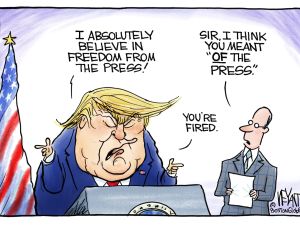 So this is
  There’s more at the link. Coupled with the following headline, I worry about this country. I really do.
 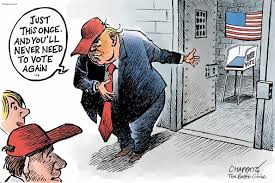 Meanwhile, it’s confirmed once again that it’s not the Press or the People leaving our democratic voting processes in the wind. This is from Jose Pagliery writing for
 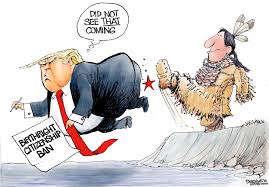 Does that mean we simply watch everything melt into fascism as our 250th birthday as a nation stands before us? I certainly hope not. Stories like these give me hope. Madiba K. Dennie writes this analysis for
  There is also this information reported by Camilo Montoya-Galvez at

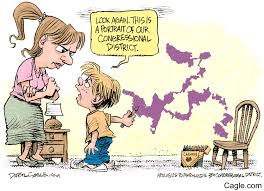 Redistricting could change the House Map. This is the next question the article addresses.
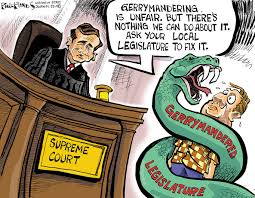 Khaya Himmelman has more information about the Virginia situation in
 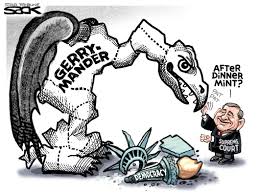 G. Elliott Morris has an analysis up today that breaks down the statistical assumptions the Supreme Court used. This comes from his site
 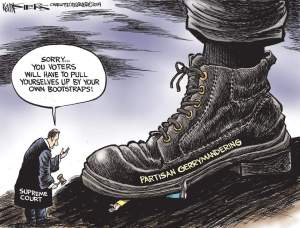 This is the decision that will dilute the vote of New Orleans and every black citizen of Louisiana. Again,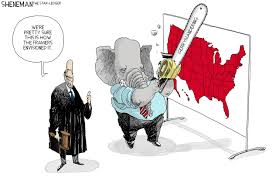








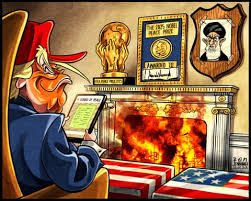 Read more at the link to find out why it’s a triple threat today. The outrage over the latest Supreme Court decision continues. This analysis comes from
 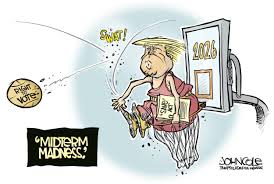 Read about “the context” at the link. Elrod writes about his own life experiences growing up in the deep South. He also discusses the events of the time. It’s a compelling read. Greg Sargent, writing for
 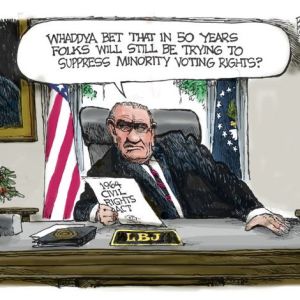 All of this shouldn’t distract from other stories. The mainstream media has definitely dropped the conversation on the Epstein files. Other stories and questions still linger. David Lurie writes this for
 I also consider it a must-read today. Meanwhile, American Citizens are losing access to their most basic needs. This is from the
 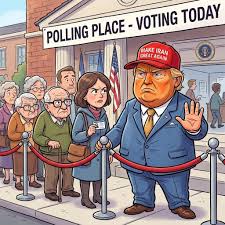 Meanwhile, the horrid state of Nebraska, where I had lived before escaping to New Orleans, literally wants poor people to work themselves to death, one way or another. Here’s a headline from





 peej
peej Carissa
 bostonboomer
 dakinikat
 ecocatwoman
 jjlo
jjlo mablue2
 Mama Lopez
 peggysue22
 quixote
 skydancingguestblogger
 Mona (aka Wonk the Vote)



 Sky Dancing
Recent Comments