
Tuesday Reads: Rocks and Hard Places.
Posted: June 24, 2014 Filed under: morning reads 37 CommentsGood Morning!
 Sometimes I feel like things are just getting a lot more complex and time consuming than they should be. I’ve found some interesting stories about people that have been caught up in what appears to be a very complicated and unfair system. The first story is about the woman that was arrested for leaving her children in a car while trying to find a job. She was in a set of circumstances that certainly had a large amount of rocks and hard places.
On the morning of March 20, Shanesha Taylor had a job interview. It was for a good job, one that could support her three children, unlike the many positions she’d applied for that paid only $10 an hour. The interview, at an insurance agency in Scottsdale, Ariz., went well. “Walking out of the office, you know that little skip thing people do?” she said, clicking her heels together in a corny expression of glee. “I wanted to do that.”
But as she left the building and walked through the parking lot, she saw police officers surrounding her car, its doors flung open and a crime-scene van parked nearby. All the triumphant buoyancy of the moment vanished, replaced by a hard, sudden knot of panic. Hours later, Ms. Taylor was posing for a mug shot, her face somber and composed, a rivulet of tears falling from each eye. A subsequent headline in The Huffington Post said it all: “Shanesha Taylor, Homeless Single Mom, Arrested After Leaving Kids in Car While on Job Interview.”
The article ricocheted across the Internet. Many viewed her story — that she, unable to find child care, had left her two sons, aged 6 months and 2 years, in her 2006 Dodge Durango while she went to a 70-minute job interview — as emblematic of the harsh realities of today’s economy, where jobs are scarce and well-paid ones even scarcer, and where desperate choices have become common. Certainly, many people could identify with the cruel math of Ms. Taylor’s pretrial report, which put her monthly income at $1,232 (including food stamps), while her monthly expenses totaled $1,274.
Ms. Taylor, 35, was charged with two counts of felony child abuse, and soon became the subject of syndicated columns calling her the “true face of poverty,” petitions asking the prosecutor to drop charges and a crowd-sourced fund-raising campaign that gathered $115,000. After 10 days in jail, she was freed after strangers paid her $9,000 bail. Her story was featured on the “Today” show; her lawyer was interviewed by Bill O’Reilly. Then came the backlash, as critics contended that a woman who had put her children in peril was being made into a hero. Bill Montgomery, the Maricopa County attorney, contradicted news reports that Ms. Taylor was homeless and unemployed, saying she was actually neither. Her children — she also has a 9-year-old daughter who was in school at the time of the job interview — were removed from her custody.
All at once, Ms. Taylor had become a symbol of both economic desperation and shirked responsibility. Her story became fodder for polemic and preaching. But until a recent interview with The New York Times in a conference room at the office of her lawyer, Benjamin P. Taylor II (no relation), she had not spoken publicly.
You may read more about her story at the link.
Charlie Rangel’s frustration with the gridlock in Congress and the flair up in racially-based politics has lead to an interesting set of comments about pols  from slaveholder states. The congressman can’t imagine being a politician that would screw over his own voting base just to get back at a President.
New York Democratic Rep. Charles Rangel, locked in a contentious primary battle, suggested in an interview that aired Monday that the level of Republican opposition to President Barack Obama is partly due to race.
When asked by MSNBC’s Kasie Hunt whether GOP opposition to the president is “based on race,” Rangel paused and said, “You know, that’s a subjective question. But, let me say this: Are most of the states that they represent, are they in the Confederate states that fought the Union? Were they slaveholder states? And when they come to Washington, do you see more Confederate flags than American flags?
Rangel, an 84-year-old, African-American congressman who has served in Congress for more than four decades, added that he thought some Republicans were willing to hurt themselves politically by opposing the Obama administration’s domestic agenda just to attack him.
“Who would hurt their own people — in terms of cutting off health, job opportunity, food stamps — to get after this president? It takes a lot of hatred to hurt yourself just to embarrass the president. So, I’m trying to think with the tea party — and basically what they have said and what their spokespeople have said — this would not be the same if the president was not of color,” he said.
Rangel’s comments come after Sen. Jay Rockefeller last month said that Republican opposition to the Affordable Care Act was motivated in part by race. The retiring West Virginia Democrat said that some in the GOP don’t want the implementation of the health law to succeed because they don’t personally like the president and maybe he’s of the wrong color.”
 Before going too far into other things, I’d like to show you something funny that really inspired me to this theme. A US student had to be rescued from a statue that basically was a huge stone vagina. He got stuck and had to be dislodged.
On Friday afternoon, a young American in Tübingen had to be rescued by 22 firefighters after getting trapped inside a giantsculpture of a vagina. TheChacán-Pi (Making Love) artwork by the Peruvian artist Fernando de la Jara has been outside Tübingen University’s institute for microbiology and virology since 2001 and had previously mainly attracted juvenile sniggers rather than adventurous explorers.
According to De la Jara, the 32-ton sculpture made out of red Veronese marble is meant to signify “the gateway to the world”.
Police confirmed that the firefighters turned midwives delivered the student “by hand and without the application of tools”.
I wonder if he had one of those epiphanies that are supposed to come with a rebirthing exercise?
The White House had a summit yesterday on Working Families. It’s still difficult to hold down a challenging, poorly paying job in the US at nearly every level of responsibility and raise a family. Here’s a list of the administration’s priorities. Notice that we’re one of the few countries in the world does not have paid pregnancy leave yet.
Supporting the Pregnant Workers Fairness Act. While the Pregnancy Discrimination Act of 1978 took a crucial step toward protecting pregnant workers, too many women still face discrimination in the workplace and a serious and unmet need for reasonable accommodations that would allow them to keep working while they are pregnant. For that reason, President Obama will urge Congress to pass the Pregnant Workers Fairness Act, which would require employers to make reasonable accommodations to workers who have limitations from pregnancy, childbirth, or related medical conditions (unless it would impose an undue hardship on the employer). The legislation also would prohibit employers from forcing pregnant employees to take paid or unpaid leave if a reasonable accommodation would allow them to work.
Empowering Pregnant Workers with Better Information About Their Rights. At the President’s direction, DOL will release a new online map that will be a one-stop shop where working families can learn about the rights of pregnant workers in each state. The map will also allow families to see which states are leading the charge in protecting their rights and which are lagging behind. This live map will continue to reflect any future changes in state and federal policy.
 Other priorities include supporting nontraditional families. It’s amazing that after so many years of women being an important part of the work force that we still struggle for family friendly policies.
Obama, Vice President Joe Biden, and other top administration officials took turns telling their personal stories about the struggle to balance work and family at a campaign-style “summit” stacked with cheering Democratic supporters at a posh Washington hotel.
“I remember taking the night shift when Malia was born and when Sasha was born and being up at two in the morning and changing diapers and burping them and singing to them,” Obama said, talking about his daughters, who are now teenagers.
“The point is, I was lucky enough to be able to take some time off,” he said. “I want every father and every child to have that opportunity.”
Obama issued an order requiring federal agency heads to expand flexible workplace policies as much as possible. The goal is to make it easier for parents or workers to take care of family needs and to enable more people to find and keep jobs.
Praising businesses that have taken similar steps, Obama said family leave should be available across the country.
It’s nice to know at least one President that fesses up to changing his children’s diapers and considers spending time with them to be “parenting” and not “baby sitting”.
Another issue that puts women in hard place is being open about their sexuality.
Sandra Fluke heard it when she talked about insurance coverage for birth control. Sara Brown from Boston told me she was first called it at a pool party in the fifth grade because she was wearing a bikini. Courtney Caldwell in Dallas said she was tagged with it after being sexually assaulted as a freshman in high school.
Many women I asked even said that it was not having sex that inspired a young man to start rumors that they were one.
And this is what is so confounding about the word “slut”: it’s arguably the most ubiquitous slur used against women, and yet it’s nearly impossible to define.
The one thing we do know about “slut” is that it’s the last thing a woman should want to be. Society is so concerned over women and girls’ potential for promiscuity that we create dress codes, school curricula,even legislation around protecting women’s supposed purity. Conservative columnists opine that women having sex is tantamount to a “mental health crisis”, and magazine stories wonder if we’re raising a generation of “prosti-tots”.
Leora Tanenbaum, the author of SLUT! Growing Up Female with a Bad Reputation, told me that “a ‘slut’ is a girl or woman who deviates from norms of femininity. The ‘slut’ is not necessarily sexually active – she just doesn’t follow the gender script.”
This nebulous, unquantifiable quality of the slur is what makes it so distressing – there’s no way to disprove something that has no conclusive boundaries to begin with. And because it’s meant to be more of an identity than a label, it’s a term not easily shaken off. “Slut” sticks to a person in a way that “asshole” never will.
So what makes you a slut? It seems the the only hard and fast rule is that you have to be a woman.
So, have you found yourself between a rock and a hard place recently? What’s on your reading and blogging list this morning?
Monday Reads
Posted: June 23, 2014 Filed under: Barack Obama, Foreign Affairs, morning reads, U.S. Politics | Tags: corruption, Dick Cheney, Ed Klein, George W. Bush, Hillary Clinton, immigration, iran, IRAQ, John Kerry, mass graves, Nuri al-Maliki, Syria 38 Comments
Good Morning!!
Things are not going well in Iraq, to put it mildly. John Kerry arrived in Iraq this morning and is currently meeting with Iraqi leaders, according to CNN: John Kerry holds talks in Iraq as more cities fall to ISIS militants.
Baghdad, Iraq (CNN) — As radical Sunni militants snatch city after city in their march toward Baghdad, U.S. Secretary of State John Kerry arrived in Iraq on Monday during the country’s tensest time since the U.S. withdrawal of troops in 2011.
Kerry is meeting with Iraqi leaders. He met Monday with Prime Minister Nuri al-Maliki, the man who some observers say needs to step down.
With al-Maliki’s Shiite-led government losing more ground to militants from the Islamic State in Iraq and Syria, or ISIS, Kerry has implored the leader to rise above “sectarian motivations” to become more inclusive and make the government more representative of Iraq’s population.
“I’m here to convey to you President Obama’s and the American people’s commitment to help Iraq,” Kerry said when greeting Iraq’s speaker of parliament, Osama al-Nujayfi. “The principal concern is the integrity of the country, its borders, its sovereignty,” he said. ISIS “is a threat to all of us.”
Kerry will also meet with Iraq’s foreign minister as well as Shiite and Sunni leaders.

Iraqi Prime Minister Nuri al-Maliki and US Secretary of State John Kerry meet at the Prime Minister’s Office in Baghdad. Photograph: Brendan Smialowski/AFP/Getty Images
The discussions with the Maliki government are not likely to be particularly congenial. According to NPR:
U.S. Secretary of State John Kerry flew to Baghdad on Monday to personally urge the Shiite-led government to give more power to political opponents before a Sunni insurgency seizes more control across the country and sweeps away hopes for lasting peace.
The meeting scheduled between Kerry and Iraqi Prime Minister Nouri al-Maliki was not expected to be friendly, given that officials in Washington have floated suggestions that the Iraqi premier should resign as a necessary first step toward quelling the vicious uprising. Nor will it likely bring any immediate, tangible results, as al-Maliki has shown no sign of leaving and Iraqi officials have long listened to — but ultimately ignored — U.S. advice to avoid appearing controlled by the decade-old specter of an American occupation in Baghdad.
Still, having suffered together through more than eight years of war — which killed nearly 4,500 American troops and more than 100,000 Iraqis — the two wary allies are unwilling to turn away from the very real prospect of the Mideast nation falling into a fresh bout of sectarian strife.
“This is a critical moment where, together, we must urge Iraq’s leaders to rise above sectarian motivations and form a government that is united in its determination to meet the needs and speak to the demands of all of their people,” Kerry said a day earlier in Cairo. He was there in part to meet with Egyptian President Abdel-Fattah el-Sissi to and discuss a regional solution to end the bloodshed by the insurgent Islamic State of Iraq and the Levant, or ISIL.
Good luck with that. I wish Hillary were still in charge at State.
From Jay Solomon at The Wall Street Journal: U.S. Faces Opposing Regional Interests in Bid to Blunt Insurgency in Iraq.
AMMAN, Jordan—As the Obama administration’s top diplomat arrived in the Middle East to gather support to blunt a Sunni insurgency in Iraq, the U.S. was colliding with the region’s ethnic, tribal and sectarian divisions.
Deep gaps between U.S. and Arab views over the crisis have grown more obvious in recent days, say American and regional officials, hampering Washington’s response to the onslaught by the Islamic State of Iraq and al-Sham, or ISIS, which this month seized control of territories straddling Iraq and Syria.
The task gained new urgency on Sunday when ISIS swept through new Iraq towns and overran two border crossings with Jordan and Syria, blocking the Iraqi government’s access to its western frontier, security officials said.
President Barack Obama raised the stakes on Sunday, telling CBS News that ISIS threatens American interests if it turns to global terrorism, two days after he announced plans to send U.S. military advisers and supplies to Iraq and called for a new, more inclusive government in Baghdad.
The crisis in Iraq has exposed contradictions in traditional Mideast alliances, in some ways placing the U.S. alongside its sworn enemy, Shiite-ruled Iran, in a joint effort to halt ISIS, while in other ways putting Washington at odds with longtime Sunni allies in the Persian Gulf, who want to weaken Iran’s sway over Iraq.

Iran’s supreme leader Ayatollah Khamenei in 2009
Meanwhile, yesterday, according to Reuters:
Iran’s supreme leader accused the United States on Sunday of trying to retake control of Iraq by exploiting sectarian rivalries, as Sunni insurgents drove towards Baghdad from new strongholds along the Syrian border.
Ayatollah Ali Khamenei’s condemnation of U.S. action came three days after President Barack Obama offered to send 300 military advisers to help the Iraqi government. Khamenei may want to block any U.S. choice of a new prime minister after grumbling in Washington about Shi’ite premier Nuri al-Maliki.
The supreme leader did not mention the Iranian president’s recent suggestion of cooperation with Shi’ite Tehran’s old U.S. adversary in defense of their mutual ally in Baghdad.
On Sunday, militants overran a second frontier post on the Syrian border, extending two weeks of swift territorial gains as the Islamic State of Iraq and the Levant (ISIL) pursues the goal of its own power base, a “caliphate” straddling both countries that has raised alarm across the Middle East and in the West.
“We are strongly opposed to U.S. and other intervention in Iraq,” IRNA news agency quoted Khamenei as saying. “We don’t approve of it as we believe the Iraqi government, nation and religious authorities are capable of ending the sedition.”
Will we ever be rid of these insane wars started by Dick Cheney and his puppet George W. Bush? At least Bush has the decency to keep quiet, but Cheney just won’t shut up even though he has no answers for the current crisis. From Raw Story: Dick Cheney doesn’t ‘intend any disrespect’ by suggesting Obama ‘guilty of treason’
Former Vice President Dick Cheney on Sunday insisted that he did not “intend any disrespect” when he suggested that President Barack Obama was guilty of treason by trying to undermine the United States before leaving office.
In a Wall Street Journal op-ed last week, Cheney — and his daughter Liz — said that the president was “determined to leave office ensuring he has taken America down a notch.”
He went on to suggest that Obama was a “fool” if he intended to work with Iran to prevent violence in Iraq.
“In this op-ed, you suggest the president is a fool,” ABC’s Jonathan Karl pointed out during a Sunday interview with Cheney. “That is the word you used, ‘only a fool would take the approach he’s taking in Iraq right now.’”
“It almost seems like you’re accusing the president of treason, that he’s intentionally bringing America ‘down a notch,’” Karl noted.
Cheney did not deny that he had accused the commander-in-chief of the United States of treason, but he insisted that he had not just called Obama a “fool” over the violence in Iraq.
“It referred to the fact that we’ve left a big vacuum in the Middle East by our withdrawal from Iraq with a no stay-behind agreement,” the former vice president said. “By the commitment that he made just a few weeks ago, that we are going to completely withdraw from Afghanistan with a no stay-behind agreement.”
See also, Dick Cheney’s amazing chutzpah on Iraq, by Paul Waldman (CNN)
Cheney needs to STFU and go on a hunting trip or something. Maybe he could take Tony Scalia with him.
In other news . . .

Right wing nut and birther Ed Klein has a new Hillary hate book out, and the New York Post has been publishing laughable excerpts. The trouble is, the wingnuts will believe the lies and the media won’t counter them. Be sure to read what Joseph Cannon has to say about the De-KLEIN of journalism.
Why does anyone still print or read right-wing pseudojournalist Edward Klein?
A while back, this fictioneer published a book alleging a lesbian relationship between Hillary Clinton and Huma Abedin — a work which one critic called “the sleaziest, most derivative, most despicable political biography ever.” Klein’s revelations always come from anonymous “informants” — one of whom, I’ve heard, is Slender Man.
Klein has a new book out and the NY Post is pushing it, even though the folks running the NY Post must know that they’re peddling garbage….
Anyone who takes this nonsense seriously must also believe that wrestling is real. Nevertheless, the right-wing propagandists are pretending to accept Klein’s work at face value. (See also here, especially the telling piece of “Hildebeest” research.)
This is a horrible story from the AP via Fox News: Researchers discover mass graves with bodies of immigrants in South Texas cemetery.
FALFURRIAS, Texas – Volunteer researchers have uncovered mass graves in a South Texas cemetery that they believe contain the bodies of immigrants who died crossing into the U.S. illegally, according to published reports Saturday.
The discovery at Sacred Heart Burial Park in Falfurrias came in the last two weeks, as Baylor University anthropologist Lori Baker and Krista Latham, a forensic anthropologist at the University of Indianapolis, and their students worked as part of a multi-year effort to identify immigrants who’ve died in the area near the U.S.-Mexico border.
Teams unearthed remains in trash bags, shopping bags, body bags or without a container at all, according to the Corpus Christi Caller Times (http://bit.ly/1qqH7CZ ). In one burial, bones of three bodies were inside one body bag. In another, at least five people in body bags and smaller plastic bags were piled on top of each other. Skulls also were found in biohazard bags placed between coffins.
They exhumed 110 unidentified people from the cemetery in 2013. This summer, researchers have performed 52 exhumations, but because some remains were stored together, further study will be needed to determine exactly how many bodies have been recovered, Baker said.
These people just suddenly dropped dead as they crossed the border? Apparently this is the work of a local funeral home, Funeraria del Angel Howard-Williams, which the state has been paying $450 each to deal with bodies of immigrants that have been discovered all over Texas. The funeral home has been paid for this service for at least 16 and as long as 22 years! Were there any autopsies? Did anyone determine whether any of these deaths were homicides?

We haven’t heard much about Bowe Bergdhal lately. Via The Boston Globe, the AP reports this morning that he has been “Shifted to Outpatient Care.”
SAN ANTONIO (AP) — Sgt. Bowe Bergdahl, who had been a prisoner of war in Afghanistan for five years, has been shifted to outpatient care at a Texas military base, the U.S. Army said in a statement Sunday.
Bergdahl, 28, had been receiving inpatient treatment at Brooke Army Medical Center at Fort Sam Houston. He is now receiving outpatient care on the base in San Antonio, according to the statement. The Army said his ‘‘reintegration process’’ is proceeding with exposure to more people and a gradual increase in social interaction.
He arrived at the Texas medical center on June 13 after nearly two weeks recuperating at a U.S. military hospital in Germany. Army officials said then that Bergdahl was in stable condition and was working daily with health care providers to regain a sense of normalcy and move forward with his life.
The Army statement Sunday said Bergdahl is receiving counseling from ‘‘Survival, Evasion, Resistance and Escape’’ psychologists’’ to ‘‘continue to ensure he progresses to the point where he can return to duty.’’
The Army said specifics of Bergdahl’s location would not be made public.
That’s it for me for today, except that I’ve become a World cup fan and I might even watch some of the games the US team isn’t participating in. Ralph’s enthusiasm has sucked me in!
What stories are you following today? Please let us know in the comment thread.
Saturday Reads: Remembering the Soundtrack to the ’60s, and Other News
Posted: June 21, 2014 Filed under: Barack Obama, morning reads, nature, Republican politics, science, U.S. Politics, Violence against women, War on Women | Tags: Carole King, Chris Christie, Eric Cantor, female coders, George Will, Gerry Goffin, Google, GOP scandals, honeybees, music, rape, rock 'n' roll, Scott Walker, sexual assault, the Shirelles, Will You Love Me Tomorrow? 35 Comments
Husband and wife singer songwriting team Goffin and King rehearse during a recording session in a New York studio in 1959. (h/t NY Daily News)
Good Morning
On Thursday we lost another 1960s music great; Gerry Goffin, who wrote lyrics to Carole King’s music died at 75. The talented couple wrote the songs that accompanied my teenage years–so much great music associated with so many memories.
From the Guardian Gerry Goffin: the poet laureate of teenage pop:
Gerry Goffin, a trainee chemist who became the poet laureate of teenage pop, specialised in coming up with a great opening line to grab the audience’s attention. Plenty of people will remember the first time they heard “Tonight you’re mine completely/ You give your love so sweetly,” from Will You Love Me Tomorrow, or “Looking out on the morning rain/ I used to feel so uninspired,” from (You Make Me Feel Like) A Natural Woman. But he didn’t stop there.
Buried a little deeper in those wonderful songs are the lines that really touched his young listeners’ hearts. The words to the bridge, or middle section, of that first Shirelles hit from 1960 were almost like poetry: “Tonight with words unspoken/ You say that I’m the only one/ But will my heart be broken/ When the night meets the morning sun?” And when Goffin presented Aretha Franklin with the second verse of A Natural Woman – “When my soul was in the Lost and Found, you came along to claim it” – he gave countless ordinary lovers a way to express their deepest feelings.
Misleadingly, they are often called “Carole King songs”. She wrote the tunes, and later on she would sing them when, after Goffin and King divorced, she embarked on a hugely successful solo career. But whenever King sang her own, gentler versions of the Chiffons’ One Fine Day or the Drifters’ Up on the Roof, she was still singing Goffin’s words. They were written by the man she had met when she was 17 and he was 20, and with whom she had two daughters while they lived in an apartment in the Queens housing project LeFrak City – and with whom she travelled to work in Manhattan every day at their cubicle in the offices of Aldon Music at 1650 Broadway, where they pumped out hit after hit after hit.

From The New York Times: Gerry Goffin, Hitmaking Songwriter With Carole King, Dies at 75:
Mr. Goffin and Ms. King were students at Queens College when they met in 1958. Over the next decade they fell in love, married, had two children, divorced and moved their writing sessions into and out of 1650 Broadway, across the street from the Brill Building. (The Brill Building pop music of the late 1950s and ‘60s was mostly written in both buildings.)
Together they composed a catalog of pop standards so diverse and irresistible that they were recorded by performers as unalike as the Drifters, Steve Lawrence, Aretha Franklin and the Beatles. They were inducted together into the Songwriters Hall of Fame in 1987 and the Rock and Roll Hall of Fame in 1990. In 2004 the Recording Academy presented them jointly with a Trustees Award for lifetime achievement.
The couple’s writing duties were clearly delineated: Ms. King composed the music, Mr. Goffin wrote the lyrics — among them some of the most memorable words in the history of popular music.
“His words expressed what so many people were feeling but didn’t know how to say,” Ms. King said in a statement on Thursday.
A bit more about Goffin:
Gerald Goffin was born on Feb. 11, 1939, in Brooklyn and grew up in Jamaica, Queens. He began writing lyrics as a boy — “like some kind of game in my head,” he recalled once — but found he was unable to come up with satisfying music to accompany them.
He graduated from Brooklyn Technical High School before enrolling at Queens College. He was three years older than Ms. King, studying chemistry, when they met in the spring of her freshman year.
He asked her to help him write a musical. She was interested in rock ‘n’ roll. They hit it off anyway, and she was pregnant with their first child when they married on Aug. 30, 1959.
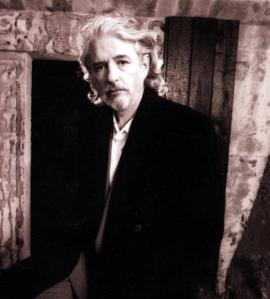
Gerry Goffin
After the couple divorced in 1968, King went on to become a singer and songwriter in her own right, although the two continued to collaborate and maintained a friendship. Goffin married again and and the couple had five children.
In addition to his wife, [Michelle] Mr. Goffin’s survivors include four daughters, Louise Goffin, Sherry Goffin Kondor, Dawn Reavis and Lauren Goffin; a son, Jesse Goffin; six grandchildren; and a brother, Al.
Goffin and King’s first hit was “Will You Love Me Tomorrow,” which they wrote in 1960 for the girl group the Shirelles. After the song hit #1 on the charts in 1961, Goffin quit his job as a chemist and began working full-time as a lyricist.
Goffin’s lyrics deftly touch on the doubt that lurks behind all new romances. As sung by Shirelles’ leader Shirley Owens in unflappable manner, the song doesn’t skimp on the wonder inherent in any fresh coupling. But it’s also unflinchingly realistic about the possibility that the fairy dust will dissolve at dawn.
“Can I believe the magic in your sighs?” Owens pointedly asks her paramour. In the bridge, Goffin’s words flow like champagne even as they fear the possible hangover: “Tonight with words unspoken/You’ll say that I’m the only one/But will my heart be broken/When the night meets the morning sun.” King’s melody plays a big role in the overall effect, arching high in the verses and middle eight while accompanied by strings that elegantly trip across the proceedings like moonlight dancers, before coming back down to Earth for the interrogative refrain.
In other news . . .
At Salon, Simon Malloy writes about the multiplying Republican scandals: GOP’s sudden scandal-mania: Why criminal probes and infighting are taking over the party.
It’s fashionable right now to talk about the premature end of Barack Obama’s presidency. He’s fast approaching the second half of his second term, which is historically the beginning of lame-duck season. His poll numbers aren’t what anyone would call ideal, and Republicans (in concert with some excitable members of the press) are rushing to proclaim the Obama presidency dead. “I saw a commentator today say that these polls, what they reflect, is that the Obama presidency is over,” Sen. Marco Rubio said, referring to NBC’s Chuck Todd. “And I agree with that. I think it is, in general.” Speaker John Boehner told reporters at his weekly press briefing yesterday: “You look at this presidency and you can’t help but get the sense that the wheels are coming off.” ….The funny thing is that as Republicans team up with pundits to chisel out Obama’s epitaph, the Republican Party itself is falling to pieces right before our eyes.
Yesterday’s news that Scott Walker and Chris Christie sinking deeper into their respective scandals is as good a sign as any of the GOP’s political disintegration. After Obama crushed Mitt Romney in 2012, Republicans began casting about for their 2016 redeemer, and Christie and Walker were high on the list. They won conservative hearts with their antagonism toward unions, but they had also found a way to win in reliably Democratic states. If the GOP hoped to take on candidate-in-waiting Hillary Clinton, they’d need someone who could peel away some Democratic voters. Walker had talked about the need to nominate an “outsider” like himself in 2016.
Now Christie and Walker are implicated in criminal investigations. Prosecutors in Wisconsin placed Walker at the center of a “criminal scheme” to coordinate campaign spending with outside groups. In New Jersey, the investigation stemming from the George Washington Bridge scandal is reportedly closing in on Christie himself. For both men, once considered potential saviors of the GOP, the political future looks considerably dimmer.
Read Malloy’s take on it at the link.
At FiveThirtyEightPolitics, David Wasserman has a long article on “What we can learn from Eric Cantor’s defeat.” You really need to read the whole thing, but here’s a small excerpt that deals with the contribution of public distrust of Congress:
Cantor was only the second House incumbent to lose a primary this year (the first was Texas Republican Ralph Hall), but the warning signs of discontent were abundant: Plenty of rank-and-file House incumbents had been receiving startlingly low primary vote shares against weak and under-funded opponents, including GOP Reps. Rodney Davis of Illinois, Lee Terry of Nebraska and David Joyce of Ohio. In fact, just a week before Cantor’s defeat and without much fanfare, socially moderate Rep. Leonard Lance of New Jersey received just 54 percent of the Republican primary vote against the same tea party-backed opponent he had taken 61 percent against in 2012.
Overall, 32 House incumbents have taken less than 75 percent of the vote in their primaries so far this year, up from 31 at this point in 2010 and just 12 at this point in 2006. What’s more, 27 of these 32 “underperforming” incumbents have been Republicans.1
In other words, while Congress’s unpopularity alone can’t sink any given member in a primary, it has established a higher baseline of distrust that challengers can build on when incumbents are otherwise vulnerable. And as the sitting House Majority Leader, Cantor was uniquely susceptible to voters’ frustration with Congress as an institution.
There’s much more interesting analysis at the link.

George Will’s recent column on campus rapes is still in the news. From Talking Points Memo, George Will’s Latest: College Rape Charges Fueled By ‘Sea Of Hormones And Alcohol’.
Will explained that he took issue with the practice of adjudicating campus sexual assault cases by a “preponderance” of evidence, rather than hitting the bar of evidence beyond a reasonable doubt. That flies in the face of due process, he argued, and ultimately harms young men’s future prospects.
“What’s going to result is a lot of young men and young women in this sea of hormones and alcohol, that gets into so much trouble on campuses, you’re going to have charges of sexual assault,” he said. “And you’re going to have young men disciplined, their lives often permanently and seriously blighted by this — don’t get into medical school, don’t get to law school, all the rest.”
Four Democratic senators reached out to Will after his column was published to torch the conservative columnist’s “ancient beliefs.” Will said he wrote a letter back to the senators and laid out his rebuttal in the C-SPAN interview.
“What I say is that: A) I take sexual assault more seriously than I think they do, because I agree that society has correctly said that rape is second only to murder as a serious felony,” Will said. “And therefore, when someone is accused of rape, it should be reported to the criminal justice system that knows how to deal with this, not jerry-built, improvised campus processes.”
“Second, I take, I think, sexual assault somewhat more seriously than the senators do because I think there’s a danger now of defining sexual assault so broadly, so capaciously, that it begins to trivialize the seriousness of it,” he added. “When remarks become sexual assault, improper touching — bad, shouldn’t be done, but it’s not sexual assault.”
Well, we can’t have young men’s lives “blighted” by rape charges. Much better for young women to just suck it up and deal with a years of post-traumatic stress on their own and keep their complaints to themselves.
Whatever you do, don’t miss this TBogg post at Raw Story: Gentleman George Will is getting damned tired of having to explain rape to you guttersnipes.
Victorian gas-pipe and Her Majesty’s Curator of Rape To The Colonies, George Will, has just about had it up to here with you people — YES, YOU PEOPLE.
And especially you. Don’t think by closing your laptop he can’t see you, because he can.
Oh yes, he most certainly can, you loathsome wastrel.
t seems that, after explaining the ins and out of rape to you ungrateful curs, he was shocked and dismayed to discover that you promiscuous info-trollops on the intertubes are unable to comprehend the pearls of wisdom that he dispenses to the riff-raff gratis, courtesy of Ye Olde Washminster Poste.
Hush now, let Gentleman George condescend to speak down to you and try, fruitlessly no doubt, to explain once again that rape is what George Will says rape is…
Now go read the rest at the link. You won’t be sorry.
This sounds like it could do some good: Google commits $50M to encouraging girls to code (CNet)
Google wants to see more women in technology, and it’s funding a $50 million initiative to encourage girls to learn how to code in an effort to close the gender gap.
Thursday night the company kicked off the Made with Code initiative here with celebrities former first daughter Chelsea Clinton and actress and comedienne Mindy Kaling.
Kaling, who emceed the event, said she has tons of ideas for apps but no idea to how make them work. She said she’d like to create a “What’s his deal?” app that takes a picture of guy and tells you whether he’s single, married, a weirdo, or what his car is like. Another idea is a Shazaam-like app for perfume.
“People my age have a million ideas for apps,” she said. “But we have no idea how to build them. Last week in the movies, I didn’t even know how to turn off the flashlight on my phone.”
Kaling isn’t alone. Women are woefully under-represented in the technology industry. Only about 20 percent of software developers in the US are women, according to the Labor Department. Last month, even Google admitted only 17 percent of its tech workers are women.
A bit more possible good news from the BBC: US sets up honey bee loss task force.
The Environmental Protection Agency (EPA) and the agriculture department will lead the effort, which includes $8m (£4.7m) for new honey bee habitats.
Bee populations saw a 23% decline last winter, a trend blamed on the loss of genetic diversity, exposure to certain pesticides and other factors.
A quarter of the food Americans eat, including apples, carrots and avocados, relies on pollination.
Honey bees add more than $15bn in value to US agricultural crops, according to the White House.
The decline in bee populations is also blamed on the loss of natural forage and inadequate diets, mite infestations and diseases.
There has also been an increase in a condition called colony collapse disorder (CCD) in which there is a rapid, unexpected and catastrophic loss of bees in a hive.
So . . . what stories are you following today? Please post your thoughts and links in the comment thread.
Friday Reads: How Can People be so Heartless (and wrong)
Posted: June 20, 2014 Filed under: morning reads 39 CommentsGood Morning!
Well, I’ve been looking at a lot of things recently but nothing sticks out to me more than the insane ideas that right wingers cling to even in the face of overwhelming evidence. Let’s look at a few today.
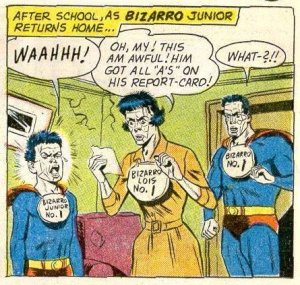 This one is really delusional. Mike Huckabee thinks that MLK would think that marriage equality is “like the holocaust”. You’ve got to be kidding me!!! Does he really say these things because he believes them or because he needs to boost the ratings on his show?
“We are under an obligation to obey God and the law, and if necessary, to defy an institution that is out of control,” the former Arkansas governor continued.
To make his point, Huckabee quoted from a letter that Martin Luther King’s Jr. wrote while spending eight days in the Birmingham Jail for fighting to end segregation.
“One may well ask, ‘How can you advocate breaking some laws and obeying others?'” King had written. “The answer is found in the fact that there are two types of laws: there are just laws, and there are unjust laws. I would agree with St. Augustine that ‘An unjust law is no law at all.'”
Huckabee continued reading from King’s letter: “We can never forget that everything Hitler did in Germany was “legal” and everything the Hungarian freedom fighters did in Hungary was ‘illegal.’ It was ‘illegal’ to aid and comfort a Jew in Hitler’s Germany. But I am sure that if I had lived in Germany during that time, I would have aided and comforted my Jewish brothers even though it was illegal.”
“I wish I had penned those words,” Huckabee exclaimed. “But they were penned by someone who understood freedom, and understood that there was a time to stand up against law when it has become unjust. Those are the words that were penned in 1954 by Martin Luther King Jr. in his letter from the Birmingham Jail.”
Some one, please explain how this Texas judge decided that the fathers of two babies weren’t the appropriate parents? Two married gay Dads were denied the right to adopt each other’s biological son born as twins. Here’s the story of their conception and surrogate mother.
No matter, everyone gets a thank-you note with a special image — the same ultrasounds of the “twins” that Hanna posted on Facebook. (“They’re actually half-siblings,” says Riggs. “Two dads, one mom. But we say twins.” “Actually,” Hanna says, “We call them ‘the boys.’”) To him, the images say quite clearly, “This is where your money went.”
Here’s the story of the Texas judge that will tear the brothers apart if one of their fathers accidentally dies before they come of age.
Jason Hanna and Joe Riggs are the proud fathers of Lucas and Ethan, who were born in April, after they’d connected with a surrogate mom, CharLynn.
Each of the men is a biological father to one of the babies. But, because Texas has a ban on gay marriage (it was ruled unconstitutional by a federal judge last February, but the decision was stayed pending appeal), and because a judge can use his or her own discretion in these cases, neither of the men is currently on the birth certificates of either of the boys, nor have they been able to co-adopt each other’s biological child.
So, here’s some more craziness. It’s this week’s latest in second amendment overkill. First up, the case of instant karma.
A man in Macon, Georgia accidentally shot himself in the penis while attempting to holster his gun last week.
According to WMAZ Channel 13, the man was parked at a gas station and was attempting to put away the .45 caliber pistol when it discharged, striking him in the groin.
The man immediately drove to a friend’s house. According to police, the victim dropped his pants to find that he had shot himself in the penis and that the bullet had exited his body through the buttocks. As he disrobed, the spent round fell to the floor.
Unfortunately, the next links I have are more tragic.
 The father of a newborn is now dead because of stray bullets from his neighbor who was drunk and an ex-felon to boot. This is from Florida, of course.
A musician, teacher and new father is dead after a stray bullet pierced the wall of his Florida home on Tuesday and struck him in the back of the head. The Panama City News Herald reported that 33-year-old Justin Ayers and his wife were welcoming their 3-day-old baby home from the hospital with relatives when Justin was killed.
The bullet came from the house next door, where 62-year-old Charles Edward Shisler picked up a .9 mm pistol by the trigger, causing it to discharge. When sheriff’s deputies arrived, they found Shisler standing on his porch, although he initially was “belligerent” and uncooperative.
“The damn gun doesn’t usually shoot,” said Shisler, according to his arrest report. “You have to squeeze the hell out of the trigger to shoot it.”
The man accused of shooting two law enforcement members in California, including a Bureau of Land Management ranger, has had at least one previous run-in with law enforcement and has described himself as the target of a massive government conspiracy.
Brent Douglas Cole, 60, was named by the Nevada County Sheriff’s Office on Monday as the suspect in Saturday’s shooting that also left him wounded.
Anna Ferguson, assistant district attorney for Nevada County, confirmed to TPM that Cole was also facing misdemeanor charges in Nevada County Superior Court for allegedly carrying a loaded firearm. He was charged on Jan. 26.
The Union newspaper in Grass Valley, Calif., published an article that quoted from court documents in the case. The documents showed Cole believed he was the target of a massive conspiracy…
 It seems like every day, these folks just get crazier and crazier. It’s not even the little nut jobs in the rural south or the rural west. We often wonder if it’s truly mental illness or some really mad folks being whipped into a frenzy by the likes of Dick Cheney and Rush Limbaugh. What do mental health professionals say about the connection between massing shootings and mental illness? This is a MOJO interview with “Jeffrey Swanson, a professor in psychiatry and behavioral sciences at the Duke University School of Medicine, and one of the leading researchers on mental health and violence.”
In the face of it, a mass shooting is the product of a disordered mental process. You don’t have to be a psychiatrist: what normal person would go out and shoot a bunch of strangers?
But the risk factors for a mass shooting are shared by a lot of people who aren’t going to do it. If you paint the picture of a young, isolated, delusional young man—that probably describes thousands of other young men.
A 2001 study looked specifically at 34 adolescent mass murderers, all male. 70 percent were described as a loner. 61.5 percent had problems with substance abuse. 48 percent had preoccupations with weapons. 43.5 percent had been victims of bullying. Only 23 percent had a documented psychiatric history of any kind—which means 3 out of 4 did not.
People with serious mental illnesses, like schizophrenia, do have a slightly higher risk of committing violence than members of the general population. Yet most violence is not attributable to mental illness. Can you walk us through the numbers?
People with serious mental illness are 3 to 4 times more likely to be violent than those who aren’t. But the vast majority of people with mental illness are not violent and never will be.
Most violence in society is caused by other things.
Even if we had a perfect mental health care system, that is not going to solve our gun violence problem. If we were able to magically cure schizophrenia, bipolar disorder and major depression, that would be wonderful, but overall violence would go down by only about 4 percent.
Amanda Marcotte believes there are five issues where the wing nuts are getting wing nuttier by the minute. They are immigration, sexual violence,  Gay rights, Domestic violence, and bare minimum standards of politeness. Let me quote from her example of sexual violence.
In the past four decades, relentless feminist campaigning on the issue of sexual abuse and rape has created some amount of consensus about what rape is and what it isn’t. Until recently, even the most belligerent rape apologist had to admit that “date rape” is a thing that actually happens in the real world and that no really does mean no. Sure, anti-feminists still try to deny the extent of date rape and argue that consent is more confusing than it actually is, but even they had to admit that clear-cut cases of non-consent amount to rape.
But ever since Obama started a White House task force to combat campus rape, suddenly we’re back in the ’80s again, with conservatives trying to argue that women can literally be forced to have sex against their will and this somehow doesn’t count as rape. In a recent Washington Post column, George Will accused women of making up rape to gain the “coveted status” of “victimhood”. His evidence? A story of a woman who said, “No, I don’t want to have sex with you,” to her alleged assailant. But no apparently doesn’t mean no to Will, not if the victim knows her attacker and/or she doesn’t fight him off with violence. Similarly, both A.J. Delgado of the National Review and Stu Burguiere of The Blaze argued recently that because consensual sex under the influence of drugs or alcohol happens, all non-consensual sex under the influence should not be considered rape.
Let me just end this foray with a shout out to the St Louis Dispatch that dropped George Will over his comments on the “coveted status” of rape victims on campus.
The Saint Louis Post-Dispatch announced today that it has dropped conservative columnist George Will’s column from the paper, citing a recent piece in which Will asserted that sexual assault victims on college campuses enjoyed “coveted status.”
In the controversial column which drew a letter of reproach from four U.S. Senators, Will wrote that college administrators are being “educated by Washington.” Will wrote, “they are learning that when they say campus victimizations are ubiquitous” they are promoting the idea that victimhood is “a coveted status that confers privileges, victims proliferate.”
In a letter to readers, the Post-Dispatch apologized for running the offending column, calling it “offensive and inaccurate.”
Here’s a great “Bizzaro world” example of a Republican on Sexual Assault and Abortion and a little nutso ideas on GLBT too.
Republican Maine state Representative Lawrence Lockman is under fire for comments he’s made in the media regarding rape, abortion, and homosexuality.
An investigation by Mike Tipping, an activist with Maine People’s Alliance, found numerous offensive comments made by the Republican in various newspaper interviews.
Perhaps the most inflammatory was a press statement from 1995 in which Lockman says “If a woman has (the right to an abortion), why shouldn’t a man be free to use his superior strength to force himself on a woman? At least the rapist’s pursuit of sexual freedom doesn’t (in most cases) result in anyone’s death.”
That wasn’t all.
According to the report, Lockman once implied that the HIV virus can be spread through mosquitoes and bed sheets. Lockman also asserted that liberals helped exacerbate the AIDS epidemic by assuring “the public that the practice of sodomy is a legitimate alternative lifestyle, rather than a perverted and depraved crime against humanity.”
In a letter to Bangor News, Lockman once wrote “Clearly the practice of sodomy is learned behavior, and those addicted to this form of biologically-insane sex are at high risk for all manner of serious medical problems.”
Lockman also spoke out against HIV infected students attending school, saying “It’s peculiar that the government is telling health care workers that surfaces contaminated with bodily fluids should be thoroughly disinfected, but at the same time they are telling us that toilet seats have some magical property that they are able to resist viruses.”
He also tried to alert people to a “secret gay affirmative action plan,” saying “You can bet the rent money they will demand that employers set up goals and timetables to achieve 10 percent homosexual representation in the workforce and in government contracts.”
How do people with such poorly wired brains wind up in positions of authority?
I’m still at a loss as to why there seems to be a perfect storm these days in which the wingiest and nuttiest of the right wing seem to have risen to the top of the septic tank. I have decided it has something to do with our president’s racial heritage, the right wing media being so outrageous and so available, and the funding provided by complete idiots like the Koch Brothers. There is, of course, the total take over of the Republican party by religious extremists, libertarians, and corporate lobbyists. I really can’t decide if we should rejoice in the fact that demographics will soon put an end to this or hunker down because it’s going to continue to get bad in the short run.
So, what’s on your reading and blogging list today?
Thursday Reads “The Dolphin Who Loved Me”
Posted: June 19, 2014 Filed under: morning reads | Tags: 1960s, Carl Sagan, dolphin brains, dolphin communication, Gregory Bateson, John Lilly, LSD, Margaret Howe Lovatt, Peter, The Day of the Dolphin 17 Comments
Good Morning!!
Dolphin sexuality has been in the news for the past week or two, because of the release of a new BBC documentary, The Girl Who Talked to Dolphins. It’s a fascinating story of 1960s intellectual icons Gregory Bateson and John Lilly and their research on dolphins. From The Independent UK review:
During the 1960s, Lilly and his collaborators used funding from Nasa to create “Dolphin House” in the American Virgin Islands, essentially a flooded beach-side villa where the young research assistant Margaret Howe Lovatt lived side by side, six days a week, with a dolphin called Peter. Archive stills showed the glamorous Lovatt at work, looking like Audrey Hepburn in a swimsuit advert. Unfortunately, these charming photographs seem to have been of much more lasting value than the scientific research she conducted.
This was a very Sixties tale, involving sexual liberation, space exploration and injecting dolphins with LSD…
But of course what the media fixated on was that Lovatt described a sexual relationship with Peter the dolphin. She said he was young and coming of age and had so many sexual urges that she relieved them manually. She said it wasn’t sexual for her; she just didn’t want distractions from her primary work. You’ve probably seen the lascivious stories floating around the internet. The same thing happened back in the ’60s after Hustler Magazine got a-hold of the sexual sidelight of the research.
I found the story interesting in light of the personalities involved–even Carl Sagan weighed in at one point! The best article to read on the documentary and the classic study is at The Guardian UK: The dolphin who loved me: the Nasa-funded project that went wrong. It’s a very long article; I’ll give you a few excerpts.

Margaret Lovatt at the Dolphin House on St. Thomas
Lovett had been interested in communicating with animals since early childhood. She was living on St. Thomas in the Caribbean. In 1963 she heard about a laboratory that was doing research on dolphins. She found the place and introduced herself to Gregory Bateson, who took a shine to her and invited her to come back anytime. She did and eventually she went to work with John Lilly and his three dolphins.
“There were three dolphins,” remembers Lovatt. “Peter, Pamela and Sissy. Sissy was the biggest. Pushy, loud, she sort of ran the show. Pamela was very shy and fearful. And Peter was a young guy. He was sexually coming of age and a bit naughty.” ….
The lab’s upper floors overhung a sea pool that housed the animals. It was cleaned by the tide through openings at each end. The facility had been designed to bring humans and dolphins into closer proximity and was the brainchild of an American neuroscientist, Dr John Lilly. Here, Lilly hoped to commune with the creatures, nurturing their ability to make human-like sounds through their blow holes.
Lilly had been interested in connecting with cetaceans since coming face to face with a beached pilot whale on the coast near his home in Massachusetts in 1949. The young medic couldn’t quite believe the size of the animal’s brain – and began to imagine just how intelligent the creature must have been, explains Graham Burnett, professor of the history of science at Princeton and author of The Sounding of the Whale. “You are talking about a time in science when everybody’s thinking about a correlation between brain size and what the brain can do. And in this period, researchers were like: ‘Whoa… big brain huh… cool!'”
Lovett thought that if she lived alone with a dolphin, she might be able to learn to communicate with it, and Lilly went along with her idea.
Lovatt selected the young male dolphin called Peter for her live-in experiment. “I chose to work with Peter because he had not had any human-like sound training and the other two had,” she explains. Lovatt would attempt to live in isolation with him six days a week, sleeping on a makeshift bed on the elevator platform in the middle of the room and doing her paperwork on a desk suspended from the ceiling and hanging over the water. On the seventh day Peter would return to the sea pool downstairs to spend time with the two female dolphins at the lab – Pamela and Sissy.
By the summer of 1965, Lovatt’s domestic dolphinarium was ready for use. Lying in bed, surrounded by water that first night and listening to the pumps gurgling away, she remembers questioning what she was doing. “Human people were out there having dinner or whatever and here I am. There’s moonlight reflecting on the water, this fin and this bright eye looking at you and I thought: ‘Wow, why am I here?’ But then you get back into it and it never occurred to me not to do it. What I was doing there was trying to find out what Peter was doing there and what we could do together. That was the whole point and nobody had done that.”
Audio recordings of Lovatt’s progress, meticulously archived on quarter-inch tapes at the time, capture the energy that Lovatt brought to the experiment – doggedly documenting Peter’s progress with her twice-daily lessons and repeatedly encouraging him to greet her with the phrase ‘Hello Margaret’. “‘M’ was very difficult,” she remembers. “My name. Hello ‘M’argaret. I worked on the ‘M’ sound and he eventually rolled over to bubble it through the water. That ‘M’, he worked on so hard.”
For Lovatt, though, it often wasn’t these formal speech lessons that were the most productive. It was just being together which taught her the most about what made Peter tick. “When we had nothing to do was when we did the most,” she reflects. “He was very, very interested in my anatomy. If I was sitting here and my legs were in the water, he would come up and look at the back of my knee for a long time. He wanted to know how that thing worked and I was so charmed by it.”

John Lilly with dolphin
Lovatt was serious about her work, but ultimately Lilly’s obsession with LSD experimentation sidetracked the project.
Lilly had been researching the mind-altering powers of the drug LSD since the early 1960s. The wife of Ivan Tors, the producer of the dolphin movie Flipper, had first introduced him to it at a party in Hollywood. “John and Ivan Tors were really good friends,” says Ric O’Barry of the Dolphin Project (an organisation that aims to stop dolphin slaughter and exploitation around the world) and a friend of Lilly’s at the time. “Ivan was financing some of the work on St Thomas. I saw John go from a scientist with a white coat to a full blown hippy,” he remembers….
In the 1960s a small selection of neuroscientists like John Lilly were licensed to research LSD by the American government, convinced that the drug had medicinal qualities that could be used to treat mental-health patients. As part of this research, the drug was sometimes injected into animals and Lilly had been using it on his dolphins since 1964, curious about the effect it would have on them.
The drug had zero effect on the dophins, because drugs affect different species in different ways; but Lilly insisted on continuing the injections anyway. Lovatt was totally against it, but she wasn’t the one in charge. (In an interesting sidenote, Lilly was turned on to LSD by the director of the movie Flipper.) Eventually Bateson resigned over it and NASA cut Lilly’s funding. Sadly, the dophins were sent to cramped lab in Miami, where the dolphins didn’t get enough sunlight and exercise.
“I got that phone call from John Lilly,” she recalls. “John called me himself to tell me. He said Peter had committed suicide.”
Ric O’Barry corroborates the use of this word. “Dolphins are not automatic air-breathers like we are,” he explains. “Every breath is a conscious effort. If life becomes too unbearable, the dolphins just take a breath and they sink to the bottom. They don’t take the next breath.” Andy Williamson puts Peter’s death down to a broken heart, brought on by a separation from Lovatt that he didn’t understand. “Margaret could rationalise it, but when she left, could Peter? Here’s the love of his life gone.”
“I wasn’t terribly unhappy about it,” explains Lovatt, 50 years on. “I was more unhappy about him being in those conditions [at the Miami lab] than not being at all. Nobody was going to bother Peter, he wasn’t going to hurt, he wasn’t going to be unhappy, he was just gone. And that was OK. Odd, but that’s how it was.”
Lilly’s ideas about dolphin communication most likely inspired the book and movie The Day of the Dolphin. The movie starred George C. Scott and was directed by Mike Nichols. The screenplay was by Buck Henry.
A couple of reactions to this story:
The New York Daily News reports on a man who claims to have had sex with a female dolphin: ‘Wet Goddess’ author shares details of his 6-month sexual relationship with Dolly the dolphin.
Another self-confessed dolphin lover claims he had a six-month consensual affair with one of the sleek marine animals — and insists it’s nothing to be ashamed of.
Malcolm Brenner, 63, shared his story with British newspaperThe Mirror in the wake of a BBC documentary that featured Margaret Howe Lovatt, an animal researcher who said she had sex with a dolphin in the 1960s as part of a NASA-funded study.
Brenner, a writer who also admits to having prior sexual experiences with a dog, said he fell in love with Dolly the dolphin in a Florida amusement park in 1971.
Dolly “came on to him,” he told The Mirror — and he was heartbroken when she died about nine months after they met.
The two had their interspecies intercourse after conspiring to elude the male dolphin that shared Dolly’s pool, Brenner said.

Margaret Lovatt today
Salon: Human-on-dolphin sex is not really that weird. Author Tracy Clark-Flory writes that Lovatt’s behavior with Peter wasn’t unique in science:
Judging from the collective horrified response, you would think that a human giving a handy to an animal was an aberrant, unthinkable act. But such fondling isn’t unheard of in the realm of animal research.
There are two major published examples. The first: In 1970, anthropologist Francis Burton published “Sexual Climax in female Macaca mulatta.” She wanted to answer the question of whether female monkeys experienced orgasm. Burton placed the primates in dog harnesses and cat collars to restrict their movement. Then the researcher put a “penis-simulator” into “the animal’s vagina with vaseline as lubricant,” and moved it at a pace of two to five thrusts a second. Burton wasn’t able to definitively conclude that female monkeys could orgasm, but she did identify an excitement, plateau and resolution phase, as Masters and Johnson had identified in humans.
“I think in the field it is generally thought that a similar study would never get through an institutional animal use and care committee,” says Kim Wallen, a psychology professor at Emory University who specializes in primate sexual behavior.
The second case is that of psychologist Frank Beach and his research on beagles in the ’80s. “Most of the work he did was behavioral, looking at the effects of prenatal androgens on sexual differentiation, but some of his treated animals were unable to copulate and he wanted to know if they showed normal genital reflexes, even though they did not copulate,” says Wallen. So, he masturbated the dogs and observed their responses.
Clark-Flory notes that it is common for researchers to sexually stimulate animals to “collect semen for breeding purposes.” I just hope Rick Santorum doesn’t find out about this.
I hope I haven’t bored you silly with this post. I don’t know what got into me today; I just couldn’t write about news of politics or war. It’s either writer’s block or I’m just plain sick of news and politics today. I’ll add a few news links in the comments, and I hope you’ll do the same. Have a great Thursday!!

 peej
peej Carissa
 bostonboomer
 dakinikat
 ecocatwoman
 mablue2
 Mama Lopez
 peggysue22
 quixote
 skydancingguestblogger
 Mona (aka Wonk the Vote)



 Sky Dancing
Recent Comments