
Thursday Reads: Aftermath of SCOTUS Voting Rights Decision
Posted: June 27, 2013 Filed under: 2014 elections, Civil Rights, court rulings, Elections, morning reads, open thread, racism, Real Life Horror, Republican politics, U.S. Politics | Tags: Antonin Scalia, GOP Southern strategy, hypocrisy, Judicial Activism, SCOTUS, U.S. Supreme Court, Voter ID laws, Voting Rights Act 66 Comments
Good Morning!!
This is going to be a quickie post, because I’m feeling kind of sick this morning.
Although I’m thrilled with the DOMA decision yesterday, I still can’t get past my anger and sadness about the Supreme Court’s gutting of the Voting Rights Act. So I’m just going to post the (above) “official 2013 photo” of the U.S. Supreme Court and some accompanying links that demonstrate the damage the Court has done in its horrendous decision on the Voting Rights Act.
I’ll begin with this excellent post by Linda Greenhouse at The New York Times: Current Conditions, which neatly summarizes the Court’s “conservative” wing’s blatant “judicial activism,” to quote a frequent charge of conservatives against “liberal” judges.
These have been a remarkable three days, as the Supreme Court finished its term by delivering the only four decisions that most people were waiting for. The 5-to-4 decisions striking down the coverage formula of the Voting Rights Act and the Defense of Marriage Act will go far toward defining the Roberts court, which has concluded its eighth year. Monday’s place-holding ruling on affirmative action in higher education, although it decided very little, is also definitional, for reasons I’ll explain. There is a great deal to say about each decision, and about how each reflects on the court. My thoughts are preliminary, informed by that phrase in the chief justice’s voting rights opinion: current conditions.
By this phrase, the chief justice meant to suggest that there is a doctrinal basis for drawing a boundary around Congressional authority, for judicial insistence that a burden that Congress chooses to impose on the states has to be justified as a cure for a current problem. In the context of voting rights, an area over which the 15th Amendment gives Congress specific authority, this is a deeply problematic position that Justice Ruth Bader Ginsburg’s dissenting opinion demolishes.
Please go read the whole column–it’s difficult to get Greenhouse’s thesis into an excerpt. The blatant hypocrisy of the “conservative” justices–especially Scalia is mind-boggling, especially when the stunning effects of the Voting Rights decision on “current conditions” are already obvious and dramatic–just as were the disastrous effect of the Citizens United decision. A few examples.
The Guardian: Texas rushes ahead with voter ID law after supreme court decision
Officials in Texas said they would rush ahead with a controversial voter ID law that critics say will make it more difficult for ethnic minority citizens to vote, hours after the US supreme court released them from anti-discrimination constraints that have been in place for almost half a century.
The Texas attorney general, Greg Abbott, declared that in the light of the supreme court’s judgment striking down a key element of the 1965 Voting Rights Act he was implementing instantly the voter ID law that had previously blocked by the Obama administration. “With today’s decision, the state’s voter ID law will take effect immediately. Photo identification will now be required when voting in elections in Texas.”
Greensboro News and Record: NC senator: Voter ID bill moving ahead with ruling
Voter identification legislation in North Carolina will pick up steam again now that the U.S. Supreme Court has struck down part of the Voting Rights Act, a key General Assembly leader said Tuesday.
A bill requiring voters to present one of several forms of state-issued photo ID starting in 2016 cleared the House two months ago, but it’s been sitting since in the Senate Rules Committee to wait for a ruling by the justices in an Alabama case, according to Sen. Tom Apodaca, R-Henderson, the committee chairman. He said a bill will now be rolled out in the Senate next week.
The ruling essentially means a voter ID or other election legislation approved in this year’s session probably won’t have to receive advance approval by U.S. Justice Department attorneys or a federal court before such measures can be carried out.
Northwest Ohio.com: Voter ID and restricted early voting likely after SCOTUS ruling
ATLANTA (AP) — Across the South, Republicans are working to take advantage of a new political landscape after a divided U.S. Supreme Court freed all or part of 15 states, many of them in the old Confederacy, from having to ask Washington’s permission before changing election procedures in jurisdictions with histories of discrimination.
After the high court announced its momentous ruling Tuesday, officials in Texas and Mississippi pledged to immediately implement laws requiring voters to show photo identification before getting a ballot. North Carolina Republicans promised they would quickly try to adopt a similar law. Florida now appears free to set its early voting hours however Gov. Rick Scott and the GOP Legislature please. And Georgia’s most populous county likely will use county commission districts that Republican state legislators drew over the objections of local Democrats.
AL.com: Alabama photo voter ID law to be used in 2014, state officials say
MONTGOMERY, Alabama — Today’s U.S. Supreme Court decision clears the way for Alabama’s new photo voter ID law to be used in the 2014 elections without the need for federal preclearance, state officials said.
Alabama Attorney General Luther Strange and Secretary of State Beth Chapman said they believed the voting requirement, which is scheduled to take effect with the June 2014 primaries, can simply move forward.
“Photo voter ID will the first process that we have gone through under this new ruling,” Chapman said today.
Memphis Business Journal: Mississippi voter ID law could start next year
Voters in Mississippi may have to start showing a photo ID to vote by the middle of 2014, according to Secretary of State Delbert Hosemann.
According to the Associated Press, Hoseman spoke Tuesday after the U.S. Supreme Court ruled that certain state and local governments no longer need federal approval to change election laws. That ruling opens up the possibility that Mississippi will implement a voter identification requirement.
According to Think Progress, Arizona and South Dakota will likely be trying to pass Voter ID laws soon. I’m sue that won’t be the end of it.
Just a few more links:
Joan Walsh: The ugly SCOTUS voting rights flim-flam
Ari Berman: What the Supreme Court Doesn’t Understand About the Voting Rights Act
Stephen Hill: So the Voting Rights Act Is Gutted—What Can Protect Minority Voters Now?
I’ll end there and leave it up to you guys to link to other important news stories. What are you reading and blogging about today?
Open Thread: Late Afternoon News Update
Posted: June 25, 2013 Filed under: Barack Obama, open thread, Republican politics, U.S. Economy, U.S. Politics | Tags: Climate change, coal stocks, data encryption, David Gomez, Edward Snowden, Glenn Greenwald, Keystone XL pipeline, Rep. John Lewis, spycraft, Voting Rights Act 27 Comments
Good Afternoon Sky Dancers!!
Here’s an fresh thread, since the morning reads one is getting so long. I have several updates for you on the Snowden/NSA story.
Eli Lake of The Daily Beast got some disturbing news from Glenn Greenwald: Snowden’s Files Are Out There if “Anything Happens” To Him. I posted this link on the previous thread, but it should be highlighted. According to Greenwald, Snowden gave complete copies of the the secret NSA files he stole to “many people around the world.” Supposedly the files are encrypted, but from what we know of Snowden’s spycraft knowledge, I don’t think that’s a guarantee that they’ll stay secret. From The Daily Beast article:
Glenn Greenwald, the Guardian Newspaper journalist Snowden first contacted in February, told the Daily Beast Tuesday that Snowden “has taken extreme precautions to make sure many different people around the world have these archives to insure the stories will inevitably be published.” Greenwald added that the people in possession of these files “cannot access them yet because they are highly encrypted and they do not have the passwords.” But, Greenwald said, “if anything happens at all to Edward Snowden, he told me he has arranged for them to get access to the full archives.” [….]
A former U.S. counter-intelligence officer following the Snowden saga closely said his contacts inside the U.S. intelligence community “think Snowden has been planning this for years and has stashed files all over the internet.” This source added, “At this point there is very little anyone can do about this.”
Greenwald assured Lake that although he (Greenwald) is in possession of top secret information about “the technical specifications of NSA systems,” but that he won’t publish them. I wonder how well Greenwald’s computer is protected?
On Snowden’s aforementioned spycraft skills, let’s see what a real former spy thinks. From Foreign Policy:
We reached out to FP contributor David Gomez, a former assistant special agent-in-charge and counterterrorism program manager with the FBI, to get his take. When was Snowden being savvy — and when did it seem as if he’d just watched a few too many spy movies?
Cell phones in the fridge
While it’s true that cell phones can easily be compromised and turned into recording devices, Gomez says it’s unlikely that anyone seeking to record Snowden would have used a phone anyway. If someone had wanted to eavesdrop, Gomez explains, he or she more likely would have worn a concealed wire. Or, if a government’s agents had been trying to listen in from outside of the room, they might have deployed a long-range microphone, among other techniques. The bottom line: a refrigerated cell phone probably wasn’t stopping anyone who wanted to listen badly enough — though it may have extended the phone’s battery life.
Lining the hotel door with pillows
While not particularly effective at stopping anyone actively seeking to spy on Snowden, pillows could have muffled the sounds of any conversations going on in his Hong Kong hotel room enough that an unsuspecting person passing by wouldn’t overhear something alarming, Gomez says.
Wearing a hood while entering computer passwords, to avoid hidden cameras
The danger while entering computer passwords is unlikely to come from a hidden camera planted in the hotel, Gomez says, but rather from keystroke-logging software, against which a hoodie provides little protection.
Signaling his identity to reporters by carrying a Rubik’s Cube through a hotel
While spies do at times use signals to identify one another, the idea in doing so is to not draw attention to yourself, Gomez explains. Thus, when arranging a meeting, as Snowden did with a group of journalists in Hong Kong, it is both unhelpful and unnecessary to carry something as out of place as a Rubik’s Cube. It would have been better, Gomez adds, for Snowden to have simply described, say, his clothing in detail. “If you’re going to meet with all these people, what’s the point of being Sneaky Pete?” Gomez asks.
Gomez says Snowden seems to be an amateur.
Denying Southern Reality and Other Acts of a Politically Motivated SCOTUS
Posted: June 25, 2013 Filed under: just because | Tags: SCOTUS, Voting Rights Act 12 Comments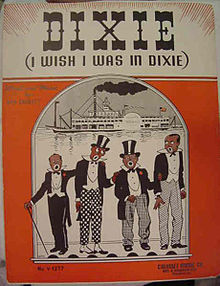 I think y’all know by now that I was raised culturally southern. I was born in the South. I live in the deep South and have for nearly two decades. We’ve been regaled recently with the news that Southern Cuisine maven Paula Dean still longs for the good ol’ days of smiling black servants or slaves. We ‘ve heard Haley Barbor talk up the old Southern institutions that were the institutional face of the KKK as being positive community builders. I still can’t believe that Mississippi doesn’t celebrate Memorial Day because it is a “Yankee Holiday” and enshrines the Confederate version by declaring April “Confederate Heritage Month”. But, you do not need these folksy stories of the obvious racism in the South to understand why today’s SCOTUS decision is a complete sham. Scalia has said that the Voting Rights Act is a “racial entitlement” in the past. It is not. It protects disenfranchised voter’s most basic right in a democracy. This is another example of the hypocrisy of the ‘conservative’ wing of the court. This is pure judicial activism.
Here is a list of things from Bader Ginsberg’s scathing dissent that lets you know exactly why the VRA is still necessary and is about protecting rights not creating entitlements.
Ginsburg’s dissent also rattled off these eight examples of race-based voter discrimination in recent history:
- “In 1995, Mississippi sought to reenact a dual voter registration system, ‘which was initially enacted in 1892 to disenfranchise Black voters,’ and for that reason was struck down by a federal court in 1987.”
- “Following the 2000 Census, the City of Albany, Georgia, proposed a redistricting plan that DOJ found to be ‘designed with the purpose to limit and retrogress the increased black voting strength…in the city as a whole.'”
- “In 2001, the mayor and all-white five-member Board of Aldermen of Kilmichael, Mississippi, abruptly canceled the town’s election after ‘an unprecedented number’ of AfricanAmerican candidates announced they were running for office. DOJ required an election, and the town elected its first black mayor and three black aldermen.”
- “In 2006, the court found that Texas’ attempt to redraw a congressional district to reduce the strength of Latino voters bore ‘the mark of intentional discrimination that could give rise to an equal protection violation,’ and ordered the district redrawn in compliance with the VRA…In response, Texas sought to undermine this Court’s order by curtailing early voting in the district, but was blocked by an action to enforce the §5 pre-clearance requirement.”
- “In 2003, after African-Americans won a majority of the seats on the school board for the first time in history, Charleston County, South Carolina, proposed an at-large voting mechanism for the board. The proposal, made without consulting any of the African-American members of the school board, was found to be an ‘exact replica’ of an earlier voting scheme that, a federal court had determined, violated the VRA…DOJ invoked §5 to block the proposal.”
- “In 1993, the City of Millen, Georgia, proposed to delay the election in a majority-black district by two years, leaving that district without representation on the city council while the neighboring majority white district would have three representatives…DOJ blocked the proposal. The county then sought to move a polling place from a predominantly black neighborhood in the city to an inaccessible location in a predominantly white neighborhood outside city limits.”
- “In 2004, Waller County, Texas, threatened to prosecute two black students after they announced their intention to run for office. The county then attempted to reduce the avail ability of early voting in that election at polling places near a historically black university.”
- In 1990, Dallas County, Alabama, whose county seat is the City of Selma, sought to purge its voter rolls of many black voters. DOJ rejected the purge as discriminatory, noting that it would have disqualified many citizens from voting ‘simply because they failed to pick up or return a voter update form, when there was no valid requirement that they do so.'”
To those who will be distraught, outraged, or fearful, the essential question at stake in the Court’s decision – and in the continuing vitality of Section 4 — is whether we believe racial discrimination in voting still exists in the South. The question being framed this way, the Court’s decision today will appear to be, at best, a denial of reality and a reflection of a naïve “post-racial” view that in the Obama era, racial discrimination in voting has ended. Justice Sotomayor, at oral argument, perfectly reflected this perspective on what the decision represents when she posed this pointed question to the VRA’s challengers: “Do you think that racial discrimination in voting has ended, that there is none anywhere?” The answer to that question must be no. From this vantage point, then, as long as racial discrimination in voting still does take place at all in the South, Section 4 of the VRA – the part the Court invalidated – remains not just justifiable, but essential.
In addition, to many people, the VRA symbolizes protection of the crown jewel of rights, the right of access to the ballot box. For those who know the history, this right was born from the blood and the bodies of all those who had been given the last full measure of their devotion to secure full access for all to the ballot box – those beaten on the bridge from Selma, Alabama in 1965, the three civil rights workers lynched in the Mississippi summer of 1964, and many others. How can the Court find unconstitutional an Act that plays any role at all in ensuring political equality regarding this most sacred right? And why should the Court second-guess Congress on these issues?
Yet to others, including the Court’s pivotal actor, Justice Kennedy, the essential question at stake is whether our political system is frozen in place on issues concerning race. Do our political institutions and culture have the capacity to recognize that dramatic changes at the intersection of race and voting have taken place over recent decades? Section 4 was created in 1965 as a short-term measure for five years; in initially upholding that system, the Court called it “an uncommon exercise of congressional power” justified by the “exceptional circumstances” of the massive disfranchisement of black voters (and many poor whites) that existed when the VRA was enacted. In 1970, Congress extended this system for another five years; in 1975, for another eight; and in 1982, for twenty-five more years. Then, in 2006, in the provision the Court struck down, Congress re-authorized this system for another twenty-five years, until 2031. Thus we moved from a five-year regime in 1965 for exceptional circumstances to a sixty-six-year regime that continues to single out nine states (and fifty-three other counties) for unique federal control.
But of even more symbolic significance, from this perspective: these areas all became covered because of their voting practices in 1964 or, at the latest, 1975 – nearly forty years ago. And these are the same areas, and nearly the only areas, that have remained covered ever since. Though the Act formally creates a mechanism to permit these areas to prove their current entitlement to be relieved of coverage, this part has never been a meaningful way for the Act to unwind itself from within: fewer than one percent of all the counties originally covered that have significant minority populations have ever emerged from the Act. From this vantage point, the question the case was “about,” then, is this: how can Congress act as if nothing significant enough has changed in the last forty years to justify any meaningful change at all in Section 4? Even if areas of discriminatory voting practices remain, surely they cannot mirror so exactly the areas of which this was true forty or fifty years ago.
From this starting place, Section 4 symbolizes that the issue of race remains so charged that our political system lacks the capacity to move forward to any extent at all. As Justice Kennedy put it at the argument: Congress “should use criteria that are relevant to the existing [conditions] – and Congress just didn’t have the time or the energy to do this; it just re-enacted it.” And despite the popular image that Section 4 is about protecting access to the ballot box, Section 4 long ago in practice became more about racial redistricting than access to the ballot box. While the Justice Department in recent decades blocked access changes on average fewer than twice a year, it blocked redistrictings nearly fourteen times as often. Indeed, in the 2006 Act itself, Congress itself did not rely primarily on ballot-box access problems to justify renewing Section 4, but on issues like redistricting. If Section 4 is “about” access to the ballot box in the public imagination, to the Court majority, I suspect, Section 4 is about racial redistricting.
Can this decision bring about any good? Well, it is possible because it should be clear now there is a total Republican assault on modernity and a world where white men don’t get to tell every one else what to do. The last election showed that the nation’s minorities and women were not about to let that happen again.
On its face, this looks like a big victory for Republicans. But is it really? I suspect it will turn out to be a poisoned chalice. Many of the GOP’s current problems stem from the fact that it is overly beholden to its white, Southern base, at a time when the country is rapidly becoming more racially diverse. In order to expand its base of power beyond the House of Representatives, the GOP needs to expand its appeal to minority voters. As the ongoing battle over immigration reform demonstrates, that process is going poorly and looks like it will be very difficult.
The Supreme Court’s decision to strike down a central provision of the Voting Rights Act will make it easier for Republicans to hold and expand their power in those mainly Southern states. That will, in turn, make it easier for them to hold the House. But it will also intensify the Southern captivity of the GOP, thereby making it harder for Republicans to broaden their appeal and win back the White House.
There is only so long that these neoconfederates can continue to push their backwards agendas through the federal government. They need to be thrown out of statehouses too. This seems to me an odd continuation of the Civil War. Nixon’s Southern Strategy will divide this country for decades to come. The hypocrisy of judicial overreach in this decision and most others that are penned by Scalia, Alito, Thomas, or Kennedy just oozes political scamming and it makes us all look bad. This is just another embarrassing attempt to stop the future. Future Courts will make hay of it.
Early Morning Open Thread: The Voting Rights Act
Posted: February 28, 2013 Filed under: morning reads, U.S. Politics | Tags: Civil Rights, George Wallace, Lyndon B. Johnson, Selma Alabama, Voting Rights Act 18 Comments
President Lyndon Johnson signs the Voting Rights Act, 1965
Lyndon Johnson: Voting Rights Act Address
Delivered March 15, 1965, Washington, D.C.
I speak tonight for the dignity of man and the destiny of democracy.
I urge every member of both parties—Americans of all religions and of all colors—from every section of this country—to join me in that cause.
At times history and fate meet at a single time in a single place to shape a turning point in man’s unending search for freedom. So it was at Lexington and Concord. So it was a century ago at Appomattox. So it was last week in Selma, Alabama.
There is no Negro problem. There is no southern problem. There is no northern problem. There is only an American problem.
And we are met here tonight as Americans—not as Democrats or Republicans—we are met here as Americans to solve that problem.
This was the first nation in the history of the world to be founded with a purpose. The great phrases of that purpose still sound in every American heart, north and south: “All men are created equal” — “Government by consent of the governed” — “Give me liberty or give me death.”…
Those words are a promise to every citizen that he shall share in the dignity of man. This dignity cannot be found in man’s possessions. It cannot be found in his power or in his position. It really rests on his right to be treated as a man equal in opportunity to all others. It says that he shall share in freedom, he shall choose his leaders, educate his children, provide for his family according to his ability and his merits as a human being….
Many of the issues of civil rights are very complex and most difficult. But about this there can and should be no argument. Every American citizen must have an equal right to vote. There is no reason which can excuse the denial of that right. There is no duty which weighs more heavily on us than the duty we have to ensure that right.
Yet the harsh fact is that in many places in this country men and women are kept from voting simply because they are Negroes….
Experience has clearly shown that the existing process of law cannot overcome systematic and ingenious discrimination. No law that we now have on the books—and I have helped to put three of them there—can ensure the right to vote when local officials are determined to deny it.
In such a case our duty must be clear to all of us. The Constitution says that no person shall be kept from voting because of his race or his color. We have all sworn an oath before God to support and to defend that Constitution.
We must now act in obedience to that oath.
Wednesday I will send to Congress a law designed to eliminate illegal barriers to the right to vote….
To those who seek to avoid action by their National Government in their home communities—who want to and who seek to maintain purely local control over elections—the answer is simple. Open your polling places to all your people. Allow men and women to register and vote whatever the color of their skin. Extend the rights of citizenship to every citizen of this land. There is no constitutional issue here. The command of the Constitution is plain. There is no moral issue. It is wrong—deadly wrong—to deny any of your fellow Americans the right to vote in this country. There is no issue of States rights or National rights. There is only the struggle for human rights.
I have not the slightest doubt what will be your answer….
But even if we pass this bill, the battle will not be over. What happened in Selma is part of a far larger movement which reaches into every section and State of America. It is the effort of American Negroes to secure for themselves the full blessings of American life.
Their cause must be our cause too, because it is not just Negroes but really it is all of us, who must overcome the crippling legacy of bigotry and injustice. And we shall overcome….
This great, rich, restless country can offer opportunity and education and hope to all—all black and white, all North and South, sharecropper and city dweller. These are the enemies—poverty, ignorance, disease—they are our enemies, not our fellow man, not our neighbor. And these enemies too—poverty, disease, and ignorance—we shall overcome.
Montgomery Advertiser, February 26, 2013: Has South changed enough to end Voting Rights Act?
Lyndon Johnson had been a southern U.S. Senator from Texas.
He had fought all civil rights legislation with as zealous an effort as the other bloc of southern senators. This southern bloc of U.S. Senators totally controlled the Senate through their seniority and prowess. They were a formidable coalition. However, Lyndon had now become a national politician. He had ascended to the presidency at the death of John Kennedy and aspired to win the brass ring on his own in 1964.
When Lyndon Johnson set his sights on something nothing or nobody better get in his way. Whatever it took or by whatever means necessary, Lyndon Johnson was determined to win.
Johnson called George Wallace to the White House to meet with him. Wallace was cocky and full of vim and vinegar. At barely 5’8” he was like a bantam rooster. Although he was used to being the cock of the walk, it did not take long for the tall, tough, crude, intimidating Johnson to put Wallace in his place.
Johnson scowled at Wallace and told him he was nothing more than a redneck, tin horn demagogue and he could shout segregation and racist jargon as much as he wanted but it was not going to make a bit of difference. Johnson went on to say that by the end of the year he was going to pass a civil rights bill and sign it. He told Wallace that Strom Thurmond and his allies could filibuster all they wanted but at the end of the day it was going to be the law of the land and it was going to propel Johnson to victory in 1964. Wallace came back to Alabama with his hat in hand. He knew Johnson meant business.
The bill passed and Johnson signed it. Being a southerner Lyndon Johnson knew the ramifications when he signed the Civil Rights Act. He looked up and said, I have just signed the South over to the Republican Party. His words were prophetic….
In 1965, Johnson set his sights on a higher goal and passed the Voting Rights Act. He took aim at the Deep South and bestowed his renowned retribution extraction in Section 4B and Section 5. It requires that those five states and certain regions that voted for Goldwater must have any changes to their voting laws or procedures approved by the U.S. Justice Department.

DOJ To Monitor Polls in 23 States
Posted: November 2, 2012 Filed under: 2012 elections, Civil Rights, U.S. Politics | Tags: Department of Justice, Eric Holder, poll monitors, voting rights, Voting Rights Act 59 Comments
Just a quick post…
The Justice Department Friday announced that it is dispatching more than 780 federal observers and monitors to 23 states to watch for potential problems which would violate voting rights protected by federal law.
The Justice Department said it was sending observers to 51 jurisdictions in those states to help enforce federal voting rights laws which protect ballot access.
….
Jon Greenbaum, Chief Counsel for the Lawyers Committee for Civil Rights Under Law, says his organization is generally pleased with the locations selected for federal monitoring. The organization successfully pushed, for example, for monitors to be sent to Maricopa County, Arizona because of potential problems for Hispanic voters, and the group noted potential for discrimination against black voters in Alabama and Mississippi counties.
Historic incidents of discrimination against Native American voters prompted observers to be sent to Shannon County, South Dakota, and Sandoval County, New Mexico, Greenbaum said. In Chicago, several ethnic minorities have suffered incidents in the past, including lack of poll workers who spoke Chinese, South Asian, or other minority languages. A growing Muslim population in Detroit and Hamtramck, Michigan also had caused issues for native Arab and Middle Eastern language speakers at polling places, Greenbaum said.
There’s a complete list of the targeted counties at the CNN link. Franklin and Hamilton Counties in Ohio are included.
According to the Palm Beach Post,
U.S. Attorney General Eric Holder, who was at the U.S. Attorney’s office in Tallahassee on Friday, is sending staff to Duval County, Hendry, Hillsborough, Lee, Miami-Dade, Orange and Osceola counties on Election Day. DOJ is also monitoring Miami-Dade County elections during early voting, the agency announced today.
Hendry and Hillsborough are two of the five “preclearance” counties – along with Collier, Hardee and Monroe – that require federal approval of election law changes because of a history of discrimination against minorities.
“Although state and local governments have primary responsibility for administering elections, the Civil Rights Division is charged with enforcing the federal voting rights laws that protect the rights of all citizens to access the ballot on Election Day,” DOJ said in the press release.
The LA Times reports that Riverside and Alameda Counties are on the list.
The federal government began monitoring polling sites in Riverside County after the agency’s Civil Rights Division filed a complaint against the county for failing to offer election-related information and assistance to Spanish-speaking voters, a violation of the Voting Rights Act.
The county and the Department of Justice reached a settlement in February 2010 that included having federal observers at polling stations.
A similar settlement was reached with Alameda County in 2011 after the federal government accused the county of failing to train an adequate number of poll workers to help Mandarin-, Cantonese- and Spanish-speaking voters on election day.
This may not completely make up for the numerous efforts of Republican election officials to suppress the votes of traditionally Democratic groups, but it’s good to know Holder is on the case.

 peej
peej Carissa
 bostonboomer
 dakinikat
 ecocatwoman
 jjlo
jjlo mablue2
 Mama Lopez
 peggysue22
 quixote
 skydancingguestblogger
 Mona (aka Wonk the Vote)



 Sky Dancing
Recent Comments