Pretty soon the U.S. Supreme Court is going to have to get involved in the Trump mess. That became even more likely after the we got big news out of Colorado. The state’s supreme court has banned Trump from the 2024 ballot.
In a historic decision Tuesday, the Colorado Supreme Court barred Donald Trump from running in the state’s presidential primary after determining that he had engaged in insurrection on Jan. 6, 2021.
The 4-to-3 decision marked the first time a court has ruled to keep a presidential candidate off the ballot under an 1868 provision of the Constitution that bars insurrectionists from holding office. The ruling comes as courts in other states consider similar cases. All seven justices on the Colorado Supreme Court were initially appointed by Democratic governors.
If other states reach the same conclusion, Trump would have a difficult — if not impossible — time securing the Republican nomination and winning in November.
The decision is certain to be appealed to the U.S. Supreme Court, but it will be up to the justices to decide whether to take the case. Scholars have said only the nation’s high court can settle for all states whether the Jan. 6 attack on the U.S. Capitol constituted an insurrection and whether Trump is banned from running.
“A majority of the court holds that President Trump is disqualified from holding the office of President under Section Three of the Fourteenth Amendment to the United States Constitution,” the decision reads. “Because he is disqualified, it would be a wrongful act under the Election Code for the Colorado Secretary of State to list him as a candidate on the presidential primary ballot.”
The U.S. Supreme Court justices separately are weighing a request from special counsel Jack Smith to expedite consideration of Trump’s immunity claim in one of his criminal cases — his federal indictment in Washington on charges of illegally trying to obstruct Joe Biden’s 2020 election victory. Trump has denied wrongdoing.
The Colorado Supreme Court’s majority determined that the trial judge was allowed to consider Congress’s investigation of the Jan. 6, 2021, attack on the U.S. Capitol, which contributed to the determination that Trump engaged in insurrection.
“We conclude that the foregoing evidence, the great bulk of which was undisputed at trial, established that President Trump engaged in insurrection,” the majority wrote.
The decision by the Colorado Supreme Court to remove Donald Trump from the GOP primary ballot has cast us deeper into uncharted waters.
I had a vague notion even into adulthood that the constitutional order in America was challenged every 50 years or so in ways that stress-tested the system. By that measure, I regret to inform you that we live in extraordinary times.
Since 1998, some of the markers – by the numbers:
3 going on 4 presidential impeachments;
2 winning presidential candidates losing the popular vote;
1 going on 2 presidential elections decided by the Supreme Court;
1 attempted coup; and
4 criminal prosecutions of an ex-president.
While it’s not just Donald Trump, you can see his outsize impact on those numbers.
I’m not of the view that testing constitutional limits is somehow dangerous or ill-advised. We should thoroughly ventilate the 14th Amendment’s Disqualification Clause, as is being done now. It’s been a mistake, in my view, to spend decades circling around but never quite confronting the true extent of executive privilege. In the half century since Watergate, we shouldn’t have operated under the untested specter of a Justice Department opinion that sitting presidents can’t be criminally charged.
So I don’t think there’s anything inherently ill-advised about treating the Constitution as a robust mechanism to be used, tested, amended, and reinvigorated. Not every brush with a constitutional question is a constitutional crisis. (To clear up any possible confusion, I’m talking here about the constitutional structure itself, not the scope of individual rights protected by the Constitution, whose developments have their own history and evolution under the law.)
The next few months are going to see a series of new tests.
Read more, with suggestions for further reading at the TPM link.
I am traveling and so I offer only some brief and initial thoughts here about what the United States Supreme Court may and should do in light of the Colorado Supreme Court’s determination that Donald Trump is ineligible to serve as president under Section 3 of the 14th amendment for encouraging insurrection.
By Anatoly Deverin
My bottom line is that the Colorado opinion is a serious and careful opinion that reaches a reasonable conclusion that Trump is disqualified. Nonetheless the opinion reaches many novel legal issues that the U.S. Supreme Court could decide the other way should that court reach the merits. (The three dissenters on the Colorado court did not really reach the merits.) Trump would need to prevail on only one of these legal issues to win on any appeal, so in some ways the legal odds are with him.
It is far from clear that the U.S. Supreme Court will reach the merits—there are many legal doctrines like ripeness and mootness that would give the Court a way to avoid deciding the issues in the case. But it is imperative for the political stability of the U.S. to get a definitive judicial resolution of these questions as soon as possible. Voters need to know if the candidate they are supporting for President is eligible. And if we don’t get a final judicial resolution before January 6, 2025 a Democratic-majority Congress could decide Trump is disqualified even if he appears to win the electoral college vote. That would be tremendously destabilizing.
In the end the legal issues are close but the political ramifications of disqualification would be enormous. Once again the Supreme Court is being thrust into the center of a U.S. presidential election. But unlike in 2000 the general political instability in the United States makes the situation now much more precarious.
Any time people start fighting on the internet, someone will inevitably reach for the Hitler comparison. It’s a virtually unbreakable rule known as “Godwin’s law,” named after Mike Godwin, an early internet enthusiast who coined it back in 1990. It’s also understood that often the party mentioning Hitler or the Nazis is losing the argument, though that’s not part of the law itself.
Godwin’s law was invoked this weekend when President Joe Biden’s campaign said former President Donald Trump had “parroted Adolf Hitler” when he accused undocumented immigrants of “poisoning the blood of our country.”
But according to Godwin himself, that doesn’t mean Biden is losing the argument.
Lights in the Murk, 2022, Jeremy Miranda (American, b.1980)
“Trump’s opening himself up to the Hitler comparison,” Godwin said in an interview. And in his view, Trump is actively seeking to evoke the parallel.
Trump made almost identical comments in an interview with the far-right website The National Pulse in November, around the same time Trump also called his political opponents “vermin” — all rhetoric that Hitler used to disparage Jews.
“You could say the ‘vermin’ remark or the ‘poisoning the blood’ remark, maybe one of them would be a coincidence,” Godwin said. “But both of them pretty much make it clear that there’s something thematic going on, and I can’t believe it’s accidental.”
Comparisons to Hitler and the Nazis happen all the time, particularly in online discourse, but they’re often dismissed as ridiculous or clumsy. When public figures or their staff mention the H-word, it can provoke derision. But the Biden campaign has made a deadly serious statement, and a political wager that the public won’t dismiss the charge as hyperbole.
Read an interview with Godwin at the Politico link.
Former President Donald J. Trump on Tuesday doubled down on his widely condemned comment that undocumented immigrants are “poisoning the blood of our country,” rebuffing criticism that the language echoed Adolf Hitler by insisting that he had never read the Nazi dictator’s autobiographical manifesto.
Mr. Trump did not repeat the exact phrase, which has drawn criticism since he first uttered it in an interview with a right-leaning website and then repeated it at a rally in New Hampshire on Saturday.
But he said on Tuesday night in a speech in Iowa that undocumented immigrants from Africa, Asia and South America were “destroying the blood of our country,” before alluding to his previous comments.
“That’s what they’re doing. They’re destroying our country,” Mr. Trump continued. “They don’t like it when I said that. And I never read ‘Mein Kampf.’ They said, ‘Oh, Hitler said that.’”
He added that Hitler said it “in a much different way,” without making his meaning clear.
Undocumented immigrants, he added, “could be healthy. They could be very unhealthy. They could bring in disease that’s going to catch on in our country.” And he again said that they were “destroying the blood of our country” and “destroying the fabric of our country.”
Mr. Trump and his campaign have dismissed the comparisons between his remark and language used by Hitler using the words “poison” and “blood” to denigrate those who Hitler deemed a threat to the purity of the Aryan race.
In one chapter of “Mein Kampf” named “Race and People,” Hitler wrote, “All the great civilizations of the past became decadent because the originally creative race died out, as a result of contamination of the blood.” In another passage, he links “the poison which has invaded the national body” to an “influx of foreign blood.”
I believe that Trump has never read “Mein Kampf,” because he doesn’t read anything; but I have no doubt that Steven Miller–who writes Trump’s speeches–has read it. Trump was reading these Hitler-like words from his teleprompter.
When Washington Post owner Jeff Bezos wanted an assured hand to right the newspaper’s shaky finances, he turned to Will Lewis, a 54-year-old former editor of The Daily Telegraph and former publisher of The Wall Street Journal, whom he called “exceptional, tenacious.” Lewis will start as the Post‘s publisher and CEO in early January.
A dozen years ago, media magnate Rupert Murdoch also turned to Lewis when he wanted to find someone to rectify the hacking and bribery scandals engulfing his British Sunday tabloid, News of the World.
Lewis’ publicly stated charge was to root out newsroom corruption, cooperate with police and help settle claims from people targeted by the company’s journalists for voicemail and email hacking. The Guardian called him “News Corp’s clean-up campaigner.”
A very different picture of Lewis emerges from material presented in London courtrooms in recent months and reviewed by NPR. The man picked to lead the Post — a paper with the slogan “Democracy Dies in Darkness” — stands accused of helping to lead a massive cover-up of criminal activity when he was acting outside public view.
In lawsuits against News Corp.’s British newspapers, lawyers for Prince Harry and movie star Hugh Grant depict Lewis as a leader of a frenzied conspiracy to kneecap public officials hostile to a multibillion-dollar business deal and to delete millions of potentially damning emails. In addition, they allege, Lewis sought to shield the CEO of News Corp.’s British arm, News UK, from scrutiny and to conceal the extent of wrongdoing at News of the World‘s more profitable sister tabloid, The Sun.
In sum, the Duke of Sussex and Grant argue that Lewis was a linchpin of efforts to limit the fallout during a key period between late 2010 and 2012.
These concerns about Lewis’ actions have been percolating for years.
Through a spokesperson, Lewis declined to comment to NPR for this story. He previously denied the broad outlines of these accusations, saying they are utterly unfounded. Lewis has not personally been sued as part of any of this current litigation, which offers greater specificity and sweep to the allegations.
Long before Ron DeSantis’ presidential ambitions began to falter, it was clear to anyone paying close attention that there were fatal flaws in his much-hyped political operation.
“I had to have it explained to me the first time DeSantis came here for a parade,” an early DeSantis supporter in New Hampshire recalled to The Daily Beast. “I was gonna show up for the parade and I was informed, ‘This is a Never Back Down event, so you can’t mention anything about the campaign.’ And I was like, what the hell is this?”
This, the New Hampshire presidential campaign veteran would come to learn, was how the DeSantis campaign thought they’d cracked the code to beat former President Donald Trump.
Never Back Down was launched as a super PAC—loaded up with $80 million transferred from DeSantis’ state-level PAC in Florida—designed to carry him to the presidency through sheer force. The prospect of a talent-stocked PAC spending historic sums on organizing and campaign messaging was initially so fearsome that some Republicans dubbed Never Back Down the “Death Star.”
As the New Hampshire source’s befuddlement at the parade showed, however, Never Back Down’s ambitious vision was destined to collide with the strict federal rules barring campaigns and super PACs from cooperating on strategy or even communicating at all.
But few in Republican politics expected just how spectacularly this vaunted Death Star would ultimately implode.
“This will go down as maybe the worst-orchestrated effort in modern presidential history,” said a person familiar with Never Back Down’s operations.
Forest in Winter, Lawren S. Harris, Canadian, 1885-1970
After months spent out of sync with the campaign, a number of officials with Never Back Down have either resigned or been fired; top PAC strategists have cursed at each other and nearly come to blows in private meetings; and a new breakaway PAC has formed.
Most troubling of all, DeSantis might be sliding backward in his quest for the presidency despite the staggering sum of nearly $100 million that his PAC has spent to support him.
With DeSantis struggling to maintain even second place as the Iowa and New Hampshire contests near, the governor’s sympathizers are fully considering the consequences of his team’s big bet that they could outsource a huge primary victory to a super PAC.
“It is gonna cost us the election,” the DeSantis supporter, who later switched allegiance to a rival non-Trump campaign, recalled thinking to themselves several months ago, now describing the decision to outsource so many critical functions to Never Back Down as “a huge, huge mistake, and we could not afford one on this.”
“We’ll never win another election if we don’t stop PACs trying to become the campaign,” the former DeSantis supporter said.
Read more details at The Daily Beast.
Three more interesting stories, before I wrap this up:
A federal judge in New York has ordered a vast unsealing of court documents in early 2024 that will make public the names of scores of Jeffrey Epstein’s associates.
The documents are part of a settled civil lawsuit alleging Epstein’s one-time paramour Ghislaine Maxwell facilitated the sexual abuse of Virginia Giuffre. Terms of the 2017 settlement were not disclosed.
Maxwell is currently serving a 20-year prison sentence after she was convicted of sex trafficking and procuring girls for Epstein, who died by suicide in 2019 in a Manhattan jail while awaiting trial on federal sex trafficking charges.
Anyone who did not successfully fight to keep their name out of the civil case could see their name become public — including Epstein’s victims, co-conspirators and innocent associates.
Judge Loretta Preska set the release for Jan. 1, giving anyone who objects to their documents becoming public time to object. Her ruling, though, said that since some of the individuals have given media interviews their names should not stay private.
The documents may not make clear why a certain individual became associated with Giuffre’s lawsuit, but more than 150 people are expected to be identified in hundreds of files that may expose more about Epstein’s sex trafficking of women and girls in New York, New Mexico, the U.S. Virgin Islands and elsewhere. Some of the names may simply have been included in depositions, email or legal documents.
Some of the people have already been publicly associated with Epstein. For instance, Harvard law professor Alan Dershowitz is publicly named in the judge’s order. Certain minor victims will remain redacted.
Before Rudolph W. Giuliani was ordered to pay $148 million to two Georgia election workers he defamed, and before he owed his own lawyers several million dollars more, federal prosecutors were scrutinizing whether he pursued dubious business dealings in Ukraine to shore up his dwindling fortune, according to court records unsealed late Tuesday.
The documents lifted the veil on a criminal investigation that federal prosecutors spent three years conducting into the dealings of Mr. Giuliani, the former New York mayor who had reinvented himself as Donald J. Trump’s personal lawyer and attack dog.
Apple Grove Moon, Peter Skulthorpe
The investigation, which did not result in charges for Mr. Giuliani, centered on whether he illegally lobbied the Trump administration in 2019 on behalf of Ukrainian officials. Those same Ukrainians helped Mr. Giuliani dig for dirt on Joseph R. Biden Jr., who was then on his way to becoming the Democratic presidential nominee and who would ultimately defeat Mr. Trump in 2020.
The prosecutors had assembled enough evidence to persuade a judge in April 2021 to authorize the seizure of Mr. Giuliani’s phones and computers, an extraordinary step to take against any lawyer, let alone one who had represented a sitting president. And for a time, it appeared as if the prosecutors, working in the same Manhattan U.S. attorney’s office that Mr. Giuliani had presided over decades earlier, might seek to indict him.
But when they failed to find a smoking gun in Mr. Giuliani’s electronic records, the prosecutors notified the judge overseeing the matter that they had ended the long-running investigation.
A spokesman for Mr. Giuliani did not immediately respond to a request for comment late Tuesday.
The judge, J. Paul Oetken, recently ordered the prosecutors to release the search warrant materials in response to a request from The New York Times. Mr. Giuliani consented to the newspaper’s request, as did the government, with certain redactions to protect privacy interests.
While much of the evidence that underpinned the search warrant had already come to light in the media and through Mr. Trump’s first impeachment proceedings in late 2019,the search warrant materials represent the government’s most comprehensive catalog yet of Mr. Giuliani’s ties to Ukraine.
And for the first time, the records explicitly linked Mr. Giuliani’s recent financial troubles to his dealings in Ukraine, suggesting that he did not just want Ukrainian officials’ help in attacking Mr. Biden but also their money.
A federal judge on Tuesday granted the Justice Department access to nearly 1,700 records recovered from the cellphone of Rep. Scott Perry (R-Pa.) in a long-running legal battle in the criminal investigation of former president Donald Trump’s efforts to overturn the 2020 presidential election.
Chief U.S. District Judge James E. Boasberg of D.C. gave investigators access to 1,659 records and withheld 396 others after a federal appeals court directed him to individually review 2,055 communications from Perry’s phone to decide which were protected by the Constitution’s “speech or debate” clause, which grants members of Congress immunity from criminal investigation when acting in their official capacities.
The FBI seized Perry’s phone in August 2022 under a court order seeking to understand Perry’s involvement in the machinations that were the subject of Trump’s criminal indictment this August for allegedly plotting to prevent President Biden from taking office.
An outline of the contents of Perry’s sensitive discussions with Trump’s legal advisers, aides and others spilled into public view in a quickly withdrawn court filing last month, revealing details of efforts to gain access to secret intelligence about the election, to replace the attorney general with former Justice Department official Jeffrey Clark and to reverse the department’s finding that Biden had been elected fairly. The filing also described Perry’s discussions with Pennsylvania state officials who supported Trump’s fraud allegations, with private individuals claiming expertise in cybersecurity and with attorneys for Trump’s campaign.
Tuesday’s order will determine which messages investigators with special counsel Jack Smith can actually use as potential evidence in any case, pending an expected renewed appeal by Perry, part of legal fight that has tied up the records for more than a year.
Read more at the WaPo.
That’s it for me today. What are your thoughts? What stories are you following?
Did you like this post? Please share it with your friends:
It’s the weekend, and I don’t feel like getting down in the weeds about all the bad stuff that’s happening; so I’m going to share a mixed bag of recent stories that caught my fancy. Since it’s Caturday, I’m going to begin with a story about cats.
…[R]esearchers have discovered that cats use nearly 300 distinct facial expressions to communicate with one another, according to a study published in October in the journal Behavioral Processes.
“Many people still consider cats—erroneously—to be a largely nonsocial species,” Daniel Mills, a veterinary behaviorist at the University of Lincoln who was not involved in the study, tells Science’s Christa Lesté-Lasserre. “There is clearly a lot going on that we are not aware of.”
To collect data on these furry subjects, researcher Lauren Scott of the University of Kansas Medical Center frequented a cat cafe located in Los Angeles for about a year and recorded video footage of interactions between 53 cats. All were adult domestic shorthairs, and the group included males and females, per the study.
In total, Scott gathered 194 minutes of feline footage that contained 186 interactions. With the help of her co-author, evolutionary psychologist Brittany N. Florkiewicz of Lyon College, she analyzed the cats’ facial signals.
By Michael Bridges
The pair discovered 276 expressions made up of a combination of 26 facial movements, including shifts in ear position, blinks, nose licks and whisker and mouth movements. (In comparison, humans make about 44 facial movements, and dogs have 27.) Of all expressions, about 45 percent—or 126—were categorized as friendly, 37 percent were aggressive and 18 percent were ambiguous, writes Jennifer Nalewicki for Live Science.
“These findings show it is good to look at a cat’s ears, eyes and whiskers to understand if they are feeling friendly,” Florkiewicz tells Earth.com’sAndrei Ionescu. “Their mouth provides a lot of information about whether a cat fight is likely. People may think that cats’ facial expressions are all about warning other cats and people off, but this shows just how social and tolerant pet cats can actually be.”
The team also identified a “common play face” among cats, which was characterized by a dropped jaw and drawn back corners of the mouth, per Live Science. People, dogs and monkeys share similar expressions in playful scenarios.
In 1648, Margaret Jones, a midwife, became the first person in Massachusetts — the second in New England — to be executed for witchcraft, decades before the infamous Salem witch trials.
The latest effort comes from a group dedicated to clearing the names of all those accused, arrested or indicted for witchcraft in Massachusetts, whether or not the accusations ended in hanging.
The Massachusetts Witch-Hunt Justice Project, made up of history buffs and descendants, is hoping to persuade the state to take a fuller reckoning of its early history, according to Josh Hutchinson, the group’s leader.
Hundreds of individuals were accused of witchcraft in what would become the Commonwealth of Massachusetts between 1638 and 1693. Most escaped execution.
While much attention has focused on clearing the names of those put to death in Salem, most of those caught up in witch trials throughout the 1600s have largely been ignored, including five women hanged for witchcraft in Boston between 1648 and 1688.
“It’s important that we correct the injustices of the past,” said Hutchinson, who noted he counts both accusers and victims among his ancestors. “We’d like an apology for all of the accused or indicted or arrested.”
For now, the group has been collecting signatures for a petition but hopes to take their case to the Statehouse.Among those accused of witchcraft in Boston was Ann Hibbins, sister-in-law to Massachusetts Gov. Richard Bellingham, who was executed in 1656. A character based on Hibbins would later appear in Nathaniel Hawthorne’s “The Scarlet Letter,” published in 1850.
Another accused Boston witch, known as Goodwife Ann Glover or Goody Glover, was hanged in the city in 1688. A plaque dedicated to her is located on the front of a Catholic church in the city’s North End neighborhood, describing her as “the first Catholic martyr in Massachusetts.” It’s one of the few physical reminders of the city’s witch trial history.
The group has also encouraged Connecticut to clear the names of accused witches in their state. Read more at the NBC News link.
The publisher of Mark Meadows’ book The Chief’s Chief has filed suit against the former White House chief of staff, seeking millions in damages after he reportedly copped to lying in the book about the 2020 election being “rigged” and “stolen.”
Meadows reportedly met repeatedly with Jack Smith’s team in its investigation into election interference and had admitted the 2020 election was the most secure in U.S. history—contradicting much of what he’d claimed in his book and allegedly breaking his agreement with the publisher.
“Meadows’ reported statements to the Special Prosecutor and/or his staff [sic] and his reported grand jury testimony squarely contradict the statements in his Book, one central theme of which is that President Trump was the true winner of the 2020 Presidential Election and that election was ‘stolen’ and ‘rigged’ with the help from ‘allies in the liberal media,’ who ignored actual evidence of fraud, right there in plain sight for anyone to access and analyze,” the lawsuit from All Seasons Press states.
ABC News, citing unnamed sources, reported that Meadows negotiated an immunity agreement with the special counsel’s office and in the process admitted to his lies about the 2020 election. Meadows’ lawyer later disputed the accuracy of the report….
The lawsuit claims that Meadows agreed that “all statements contained in the Work are true and based on reasonable research for accuracy,” and that he claimed to have “not made any misrepresentations to the Publisher about the Work.”
The book weighs heavily on Meadows’ claims that the election was “rigged” —debunked claims that All Seasons Press was happy to run at the time, but that now come under renewed scrutiny with Meadows’ reported admission that he propagated falsehoods.
Republicans have had it with Sen. Tommy Tuberville’s nine-month blockade of military promotions. And after publicly putting pressure on the Alabama Republican to lift his hold on hundreds of officers, GOP senators are plotting new ways to break the impasse.
During a special meeting planned for next week, some will ask Tuberville to focus his obstruction on only the Pentagon’s civilian nominees and not uniformed officers who have nothing to do with the policy he’s protesting. Others want to shift the fight to the courts to challenge the policy at the center of the hold, which reimburses troops who have to travel to obtain abortions and other reproductive services.
Fare Thee Well, by Elisheva Nesis
Democrats, meanwhile, are devising their own ways to get around the blockade, and are hoping the GOP frustration they see will push Republicans to support their idea.
The four-hour-plus event, which forced Tuberville to object to votes on 61 nominees, marked a pivotal moment for Republicans as their private frustrations with the freshman lawmaker spilled over onto live TV for all to see.
“I think what it says about where things are is Tommy’s losing support,” Sen. Kevin Cramer of North Dakota said of the Republican-on-Republican fight. “And you’re seeing the frustration build up because the consequences are building up.”
And while the attempt was doomed — those Republicans knew Tuberville wouldn’t budge — it’s also made some Senate Democrats optimistic that enough GOP members will join their push to confirm most of the promotions in one big bloc.
What an idiot. Alabama should be ashamed. Tuberville doesn’t even live there. He’s reportedly lived in Florida for decades.
Tommy Tuberville’s Republican colleagues had finally had it with him.
For months, the Alabama senator and former college football coach has blocked the confirmation of hundreds of senior military officers because he’s mad about a Pentagon policy that ensures soldiers have abortion access.
The group of anti-abortion Republicans had worked with him since February to try to find a solution. They’d flattered his ego. They’d mostly defended him in public as his game of chicken stretched nine months, punishing hundreds of senior service members who have no say over the policy and hurting U.S. military readiness at a time of global chaos.
But on Wednesday, their patience had worn out.
Five of Tuberville’s GOP colleagues took to the Senate floor to lambast his positions, begging him to relent and forcing him to object over and over again to allow a vote on more than 60 nominations that he’s blocked. The senators read off the sterling biographies of dozens of service members with increasing frustration.
Alaska Sen. Dan Sullivan, a colonel in the Marine reserves who served as assistant secretary of state during George W. Bush’s administration, was particularly irate.
“Xi Jinping is watching this right now,” Sullivan, at times yelling, declared on the Senate floor as Tuberville looked on from his desk. “He’s loving this. So is Putin. They’re loving this! How dumb can we be, man?”
“We’re going to look back at this episode and just be stunned at what a national-security suicide mission this became,” Sullivan exclaimed later on during the hours-long standoff. He later mocked Tuberville’s repeated claim that his holds weren’t hurting the military’s preparedness: “That this is not impacting readiness is patently absurd.”
On Tuberville’s history:
Tuberville spent most of his career coaching football — most notably at Auburn University, which made him a household name in the state he now represents. He still prefers being called “coach” instead of by his current job title — his official Senate website calls him “Coach Tommy Tuberville.” But his old nickname from his sideline days may be more appropriate: “The Riverboat Gambler.”
Back then, Tuberville was known to ignore the odds and pick the most aggressive play. It’s a habit that’s stuck now that he’s in the Senate.
That policy that triggered Tuberville’s anger was put in place by the Biden administration after the Supreme Court struck down the federal right to an abortion. Fifteen states, including Tuberville’s Alabama, have banned the procedure. Enlisted service members don’t get to choose where they and their families live — they’re stationed wherever they’re needed, many of them in ruby-red states where abortion access no longer exists and other reproductive care is severely limited. The Pentagon’s fix was to offer soldiers and their families time off and funds to travel to states where abortion remains legal.
Tuberville was irate when he found out about the workaround. His obstructionist response has hamstrung the Pentagon and forced officers who have nothing to do with the policy to serve as pawns in his policy fight….
There’s some irony that Tuberville, who frequently says he ran for office so he could give back to America in the same way his own father did with his years of military service, has almost single-handedly paralyzed the entire leadership of the U.S military — in a time of global conflagration, no less. (Tuberville reiterated that he won’t budge even after Hamas attacked Israel.)
In some ways, Tuberville is a mustache away from being the bizzarro Ted Lasso of the Senate — a folksy and affable former college football coach who makes a radical career change, then makes things up as he goes along while blithely ignoring the status quo. But instead of an aw-shucks success story, he’s a testament and a cautionary tale for those who wing it.
There’s still more at the link.
Speaking of idiots, a couple of stories on the new House Speaker Mike Johnson.
Speaker of the House Mike Johnson closely collaborated with a group in the mid-to-late 2000s that promoted “conversion therapy,” a discredited practice that asserted it could change the sexual orientation of gay and lesbian individuals.
Prior to launching his political career, Johnson, a lawyer, gave legal advice to an organization called Exodus International and partnered with the group to put on an annual anti-gay event aimed at teens, according to a CNN KFile review of more than a dozen of Johnson’s media appearances from that timespan.
Founded in 1976, Exodus International was a leader in the so-called “ex-gay” movement, which aimed to make gay individuals straight through conversion therapy programs using religious and counseling methods. Exodus International connected ministries across the world using these controversial approaches.
Hug Needed, by Anita Zotkina
The group shut down in 2013, with its founder posting a public apology for the “pain and hurt” his organization caused. Conversion therapy has been widely condemned by most major medical institutions and has been shown to be harmful to struggling LGBTQ people.
At the time, Johnson worked as an attorney for the socially conservative legal advocacy group, Alliance Defense Fund (ADF). He and his group collaborated with Exodus from 2006 to 2010.
For years, Johnson and Exodus worked on an event started by ADF in 2005 known as the “Day of Truth” – a counterprotest to the “Day of Silence,” a day in schools in which students stayed silent to bring awareness to bullying faced by LGBTQ youth.
The Day of Truth sought to counter that silence by distributing information about what Johnson described as the “dangerous” gay lifestyle.
“I mean, our race, the size of our feet, the color of our eyes, these are things we’re born with and we cannot change,” Johnson told one radio host in 2008 promoting the event. “What these adult advocacy groups like the Gay Lesbian Straight Education Network are promoting is a type of behavior. Homosexual behavior is something you do, it’s not something that you are.”
House Speaker Mike Johnson’s adopted son has had a string of run-ins with law enforcement for crimes ranging from drug possession to theft since leaving the care of the Louisiana Republican congressman and his wife Kelly, records show, but he’s since turned his life around.
The Johnsons met Michael T. James, now 40, when he was a teenager while the couple were doing charity work for a Christian ministry in Baton Rouge, La., in 1996.
The newlyweds took the troubled then-14-year-old into their home and filed court papers to become his legal guardians in 1999 after James became homeless.
However, once the Johnsons moved from Baton Rouge to Mike’s hometown of Shreveport in 2002, James stayed behind and struck out on his own, as he was then legally an adult.
Since 2003, James has been arrested more than a dozen times, according to records reviewed by The Post.
Charges against him in Florida ranged from marijuana and cocaine possession, theft, possession of a concealed weapon, violating a protective order, and possession of drug paraphernalia.
On two occasions he was sentenced to prison time, serving 37 days on the cocaine possession rap in 2003 and a 30-day term in 2007 on a retail theft charge.
He was also ordered by a court to take an anger management class in 2017.
James is understood to have moved around to a number of places during this time period, at times living with his biological mother and older brother, moving to both Florida and Texas.
Additional court documents seen by The Post indicated James was indicted on a theft charge in 2003 while living in Houston.
One more read before I wrap this up. This is the best thing I read this week.
The world inches closer to a war that only psychopaths want to see.
On Tuesday the FBI issued a warning that the chance of staged terrorist attacks in the United States has grown since the war began in Gaza. In the White House briefing later that day, Fox News reporter Peter Doocy asked National Security Council spokesman John Kirby: “Has the White House considered the possibility that a terrorist could be in the country right now after crossing the southern border?”
Obviously they have, or the FBI wouldn’t have issued the warning. The question remains, however, what our government response would be to such an attack. That has already been discussed at the highest levels in our government, and the public has a right to know what that reaction would be.
So, although I wasn’t called on, as Kirby left the stage I interrupted to ask the only question I thought mattered: “John, wait a minute. Before you leave: If Hamas terrorists attack the U.S., would the U.S. put boots on the ground in the Middle East?”
Cat Messenger, by Elisheva Nesis
Kirby stopped his retreat from the stage, and press secretary Karine Jean-Pierre let him answer. Kirby was succinct: “I won’t speculate about that, Brian. We’ll obviously do what we have to do to protect our troops and our people.”
On that same day, Senate Majority Leader Chuck Schumer showed up at the White House with a bipartisan group — Sens. Todd Young, R-Ind., Mike Rounds, R-S.D. and Martin Heinrich, D-N.M. — to talk to President Biden and help steer a congressional response to the threat posed by SKYNET … sorry, I mean AI. It’s a bipartisan effort, but there are both Republicans and Democrats who remain opposed.
Bipartisanship, once seen as a laudable goal on many issues, is now sneered at by most remaining members of the Republican Party. Working with Democrats, for them, is like choosing death over a slice of cake. (Apologies to Eddie Izzard.)
Most Republicans are so dismayed at the prospect of working with Democrats that they want to scuttle efforts to fund the war in Ukraine, virtually isolating Senate Minority Leader Mitch McConnell, who seems to be nearly alone on an island calling for aid to continue. It’s a rare display of common sense from the 81-year-old Kentuckian, whose primary focus is on political power.
“No Americans are getting killed in Ukraine,” McConnell said. “We’re rebuilding our industrial base. The Ukrainians are destroying the army of one of our biggest rivals. I have a hard time finding anything wrong with that. I think it’s wonderful that they’re defending themselves — and also the notion that the Europeans are not doing enough. They’ve done almost $90 billion, they’re housing a bunch of refugees who escaped. I think that our NATO allies in Europe have done quite a lot.”
Few Democrats have said it any better, and it spelled out exactly what the stakes are for the U.S. in the ongoing war in Ukraine. Remember that Vlad “The Impaler” Putin has clearly suggested that he wants to get the old Soviet Union band back together — Ukraine is just the first stop in a quest for global hegemony.
Karam on Mike Johnson:
Fellow Kentucky Sen. Rand Paul said that McConnell was “out of touch” with his party’s base while Missouri Sen. Josh Hawley chided McConnell for siding with Democrats — and that was before Homeland Security chief Alejandro Mayorkas gave Hawley a tongue-lashing on border issues later that afternoon. It looks like Putin still has a few fans in the GOP.
In the House, those would likely include newly-minted House Speaker Mike Johnson (and that still sounds like a Bart Simpson prank call to Moe’s Bar), who took on McConnell directly, pushing to unlink aid to Israel from aid to Ukraine.
While the world burns, Johnson and the MAGA wing of the Republican Party — which seems to have swallowed the evangelical movement while also embracing it (a T-1000 morphing into Sarah Connor is just about the right image) — is embracing the darkest verses of the Bible, apparently pushing for apocalypse with an enthusiasm only rivaled by Saul’s slaughter of Christians before he changed his name to Paul.
I’m waiting for Mel Brooks to break out into song: “Let all those who wish to confess their evil ways and accept and embrace the true church convert now or forever burn in hell — for now begins the Inquisition!”
The House of Representatives, now run by Johnson, offers a discount version of the apocalyptic orgasm the holy rollers have dreamed of for years. They’ve renewed the Inquisition and seem determined to convert the U.S. into a theocracy run by people who will thump you with the Bible, but haven’t read much of it.
Lord, how they love to preach fire and brimstone. But the Sermon on the Mount and the Beatitudes? Forget it. Matthew 25:40: “Whatever you did it for one of the least of these brothers and sisters of mine, you did for me”? Not a chance. They’ve embraced only the Old Testament angry God and the apocalyptic parts of Revelation brought on by ergot poisoning.
I know I’ve quoted too much, but there’s still a lot more to read at the link.
That’s my contribution for today. Let me know what you think. And have a great weekend!!
Did you like this post? Please share it with your friends:
It’s another rainy weekend in Boston, and I overslept because it was so dark. They were predicting a nor’easter. I don’t know if this qualifies, but it’s very dark and raining hard, with high winds expected later on. This feels like about the 20th rainy weekend in a row here.
Yesterday, House Republicans rejected Jim Jordan as Speaker after he lost more votes on a third ballot. Members then held a secret ballot to see if he should keep trying, and this time he got only 86 votes of the 217 he would need to be elected.
In a shocking turn, Jim Jordan on Friday lost an internal GOP vote that was intended to show confidence in him remaining as his party’s speaker designee.
The Ohio Republican is now no longer his party’s pick to lead the House, a demise sealed by a GOP secret ballot just after his third failed floor vote as a speaker hopeful.
It was an unexpectedly fast end to the Ohio conservative’s candidacy to lead the chaos-ridden Republican conference — and a sign that the flailing party is fed up on its 17th day without a speaker. Lawmakers now plan to leave Washington for the weekend as the next round of ambitious Republicans decide whether to mount their own speaker bids.
But most Republicans acknowledge that even with new faces to consider, they still have no clear path to uniting their splintered conference. They have already rejected two speaker candidates — Jordan and House Majority Leader Steve Scalise — as well as former Speaker Kevin McCarthy during this month alone.
McCarthy gave voice to a sentiment that’s growing within the GOP: The party’s inability to run the half of Congress that it narrowly won doesn’t bode well for its broader future.
“I’m concerned about where we go from here,” said McCarthy, who had been backing Jordan. “It’s astonishing to me, and we are in a very bad position as a party.”
Jordan’s loss of the speaker nod from his party came as something of a surprise, since he had sought the internal vote with allies preparing to cite it as a show of continued support for his candidacy. Instead, the secret ballot revealed that while Jordan’s public opposition never topped 25 votes, scores more House Republicans wanted to see him out of the race.
The next race to replace him is expected to get crowded, even as Congress faces no shortage of pressing business that it’s unable to conduct while the House stays shut. At the top of that list: a government shutdown deadline that’s less than a month away and a $100 million-plus emergency funding request from the Biden administration, encompassing aid to both Israel and Ukraine.
I don’t know why Politico didn’t expect this. It had become clear that semi-normal Republicans weren’t responding well to being bombarded with death threats by MAGA Jordan supporters.
There is still no end in sight for the high-stakes speakership battle after House Republicans ousted Kevin McCarthy more than two weeks ago.
The search is on for a new GOP speaker nominee after Rep. Jim Jordan on Friday became the latest exit from the race, and it’s already shaping up to be a crowded candidate field.
It will be our secret, by Margaryta Yermolayevay
Frustrations and divisions have only intensified within the conference as Republicans search for a way to resolve the impasse. That, along with the GOP’s narrow majority, has made it increasingly unclear whether any candidate will be able to secure the 217 votes needed to win the gavel on the House floor.
The House, meanwhile, remains in a state of paralysis as Republicans struggle to coalesce around a speaker candidate, with the chamber effectively frozen amid the threat of a government shutdown next month and conflict unfolding abroad.
House Republicans are expected to hold a candidate forum Monday evening and more candidates are likely to throw their names into the running before then….
Here are some of the candidates now vying to become the next GOP speaker nominee:
Rep. Tom Emmer, who serves as majority whip, said in a letter to his colleagues shared on Saturday that he was seeking the speakership with the goal of delivering “historic change.”McCarthy is backing Emmer for speaker, sources tell CNN, delivering an early boost for his candidacy.
Rep. Kevin Hern told CNN on Friday that “yes” he plans to run for speaker. When asked how he plans to get 217 votes, Hern said he’ll work “hard” to get people on his side.
Rep. Jack Bergman is running for the speaker role, his spokesman told CNN.
Rep. Austin Scott, who launched a last-minute bid against Jordan last week, but quickly dropped out and then supported Jordan, is now running for speaker again now that the field is wide open, his spokesperson told CNN.
Rep. Byron Donalds, a Freedom Caucus member, announced on X that he’s seeking the speakership to advance a “conservative vision for the House of Representatives and the American people.”
Rep. Mike Johnson, the House Republican conference vice chairman, also announced a run for speaker in a letter to his Republican colleagues Saturday, saying “after much prayer and deliberation, I am stepping forward now.”
Meanwhile, in the midst of this Republican chaos, the first thing I saw this morning–at the top of the Memeorandum news feed–was this opinion piece by a Republican named Douglas MacKinnon, who argues that both Biden and Harris should step down. LOL!
Playtime is over. We have to put the toys away and have the adults in the room re-exert their authority.
It’s one thing when the issues of the day are identity politics; “green” energy; organized looting; cashless bail; Trump’s legal exposure; political corruption; or who’s really in charge of the border, when having a president and vice president in power who even countless Democrats no longer have faith in. It’s quite another when the world is teetering on the edge of massive violent conflict or outright nuclear war and that leadership looks demonstrably lost and feeble.
Beware of magic cats, by Margaryta Yermolayeva
The barbaric attack by Hamas upon men, women and children in Israel, coupled with the war in Ukraine inching us ever closer to a nuclear conflict, should serve as stark reminders that real and resolute leadership does matter and is needed before it is too late.
Unfortunately, history reminds us that it is not uncommon for presidents — or vice presidents — to find themselves in untenable or overwhelming positions in which they can no longer cope or effectively govern. They often can’t see the proper course forward because they are either standing too close to the problem or are shielded from the negative fallout by overprotective aides or a partisan media.
Such a case came during the summer of 1974. It was becoming obvious to all that the Watergate break-in and the subsequent widespread coverup had politically and legally ensnared President Richard Nixon in a trap from which there was no viable escape.
A growing number of senior Republicans feared Nixon was too isolated from reality, and quite possibly misinformed by aides, to rationally ascertain his dire predicament. For those reasons, and others, a few decided that an intervention at the White House was urgently nee
A growing number of senior Republicans feared Nixon was too isolated from reality, and quite possibly misinformed by aides, to rationally ascertain his dire predicament. For those reasons, and others, a few decided that an intervention at the White House was urgently needed.
We all know the story, which is not at all analogous to anything happening with Biden/Harris. Who are these “adults” that MacKinnon refers to?
We need Biden — and Harris — to rise above that nonsense while turning the eyes of our nation toward the true threats that could destroy us. We need a president who is actually “presidential.”
We need a Thomas Jefferson, an Abraham Lincoln, a John F. Kennedy, or a Bill Clinton. This is not a partisan point. It is one about mutual survival….
I can’t find a Democrat I know who wants either one on the ticket for 2024. Be it for age reasons; cognitive-health concerns; potential Hunter Biden corruption issues; plain competency fears; or record-low polling numbers, a second act of Biden-Harris comes across as political kryptonite for many Democrats hoping to retain the White House in 2024….
That stated, where are the “adult in the room” Democratic powerbrokers willing to emulate the 1974 Republicans and travel down to the White House to tell Biden and Harris that they are “in over their heads” and that their “time has come and gone”?
MacKinnon would do better to ask where the Republican “adults” are.
This weird perception of Biden is so mysterious to me. He has just traveled all over the world and returned to give an oval office speech last night. He doesn’t seem tired or confused to me.
With viewing taking place across 10 networks, President Biden‘s Thursday night address from the oval office has reached a total audience of 20.326 million total viewers, according to Live+Same Day figures from Nielsen.
First trick or treat, by Margaryta Yermolayeva
Coverage of the 15-minute speech lasted from approximately 8 pm to 8:22 pm ET, varying by network with nearly 65% of the 20.3 million viewers tuning in to the president’s speech on broadcast networks, Nielsen reports. 35% of the audience watched on cable networks. People ages 55 and up make up the majority of the audience at 15.94 million and averaged an audience rating of 15.7. Notably, the adults 18-34 key demo made up only 4% of the Thursday night audience.
Biden addressed the nation on the U.S.’s response to the ongoing Israel-Hamas conflict, telling his constituents why it’s necessary to show continued support for America’s partners in Israel and Ukraine.
“The security package I’m asking congress to do is an unprecedented commitment to Israel’s security that will sharpen their qualitative military edge which we’ve committed to,” Biden said. “At the same time, President Netanyahu and I discussed the critical need for Israel to operate by the laws of war. That means protecting civilians in combat. The people of Gaza urgently need food, water, and medicine. Yesterday, in discussions with the leaders of Israel and Egypt, I secured an agreement for the first shipment of humanitarian assistance from the United Nations to Palestinian civilians in Gaza.”
“As hard as it is, we cannot give up on peace. We cannot give up on a two-state solution,” the President said.
President Joe Biden’s task, as he looked America in the eye from the Oval Office, was to explain why a nation wearied by its own foreign quagmires and political estrangements should send $100 billion to help other people fight their wars.
His answer was that Israel and Ukraine were fighting existential struggles and that their wars were not just their own but were critical to the security of each American watching his primetime speech on Thursday.
But the most profound takeaway from what was only his second Oval Office address was this: While Biden scheduled the appearance to discuss two nations fighting for their survival against outside attack, his real topic was America itself – and perceived threats to its foundational values in a volatile political age.
He implored his country to honor the global role that has cemented a stable world order since World War II and to reject the appeasement of terrorists and tyrants. And in remarks that foreshadowed a reelection bid that will help decide the character of America and its place in the world for years to come, he sought to inspire it to reject intolerance as bitter politics rage at home.
Biden delivered his speech hours after returning from Israel and meeting victims of the Hamas terror attacks that killed more than 1,400 civilians, and months after his daring trip to another war zone in Ukraine. Even as he spoke, the first signs of an expected Israeli incursion into Gaza began to unfold, suggesting a crisis he sought to contain with his trip on Wednesday is about to get far worse.
“I know these conflicts can seem far away, and it’s natural to ask – why does this matter to America?” Biden said. “So let me share with you why making sure Israel and Ukraine succeed is vital for America’s national security.”
The president beseeched Americans to understand that if the “pure unadulterated evil” of Hamas and the attempt by Russian President Vladimir Putin to “erase” Ukraine’s independence prevailed, terrorism emanating from the Middle East would threaten Americans again and Russia would imperil global peace.
Biden’s address is likely to be seen by historians as a signature moment in his presidency because of the messages he sent to American allies and foes abroad and how he sketched his vision for his own deeply divided nation.
President Joe Biden said that Hamas’ attacks on Israel were intended in part to scuttle the potential normalization of the U.S. ally’s relations with Saudi Arabia.
“One of the reasons Hamas moved on Israel … they knew that I was about to sit down with the Saudis,” Biden said at a campaign event Friday night, according to pool reports. “Guess what? The Saudis wanted to recognize Israel,” the president added.
Less than a month ago, Israeli Prime Minister Benjamin Netanyahu had also expressed optimism about the potential detente, telling Biden that a “historic peace” between the two countries seemed attainable.
Invitation, by Margaryta Yermolayeva
The normalization push began under former President Donald Trump’s administration and was branded as the Abraham Accords.
But Hamas’ brutal Oct. 7 attack on Israel and sustained retaliation from the Israeli Defense Forces in Gaza have pushed the possibility of normalization between Israel and neighboring Arab countries farther from reach.
On Saturday, the first 20 trucks carrying about 3,000 tons of aid passed through the Rafah border crossing from Egypt on Saturday, bringing humanitarian assistance to Gazans, who have been rationing food and water and relying on dwindling medical supplies amid the barrage of Israeli airstrikes.
In his speech at a Washington, D.C., fundraiser, Biden emphasized his administration’s commitment to supporting the longevity of the Israeli state.
“I am convinced with every fiber of my being: If there were no Israel, there’s not a Jew safe in the world — not in the entire world … including the United States,” Biden said.
Likening the conflict to Russia’s invasion of Ukraine, as he did in his Oval Office speech Thursday night, Biden underscored America’s role in providing aid to both allies, once more invoking former secretary of state Madeleine Albright in calling the U.S. the “essential nation.”
The United States on Friday released a U.S. intelligence assessment sent to more than 100 countries that found Moscow is using spies, social media and Russian state-run media to erode public faith in the integrity of democratic elections worldwide.
“This is a global phenomenon,” said the assessment. “Our information indicates that senior Russian government officials, including the Kremlin, see value in this type of influence operation and perceive it to be effective.”
A senior State Department official, briefing reporters on condition of anonymity, said that Russia was encouraged to intensify its election influence operations by its success in amplifying disinformation about the 2020 U.S. election and the COVID-19 pandemic.
“Success breeds more, and we definitely see the U.S. elections as a catalyst,” the official said.
The Russian embassy did not immediately respond to a request for comment. The release of the assessment comes amid serious tensions between the United States and Russia over Moscow’s war against Ukraine and a raft of other issues.
The assessment was sent in a State Department cable dated Wednesday to more than 100 U.S. embassies in the Americas, Europe, Asia and Africa for distribution to their host governments, he said.
Washington was privately briefing recipient governments and shared the assessment “to get ahead of elections that are over the horizon over the next year,” the official said.
The report represents Washington’s latest move to combat what it says are Moscow’s efforts “to sow instability” in democratic countries by portraying elections as “dysfunctional, and resulting governments as illegitimate.”
Washington “recognizes its own vulnerability to this threat,” said the report, noting that U.S. intelligence agencies found that “Russian actors spread and amplified information to undermine public confidence in the U.S. 2020 election.”
Finally, here are a few interesting stories about Trump’s many problems.
Two stalwart allies of former President Donald Trump flipped against him this week, a staggering turn of events that could now pose a grave threat to his ability to fend off criminal charges related to his efforts to overturn the 2020 presidential election.
The witch is coming, by Margaryta Yerrmolayeva
The rapid-fire developments are a massive boost for prosecutors in Fulton County, Georgia, and the separate but overlapping federal case against Trump that was filed by Justice Department special counsel Jack Smith.
The pleas are a stark display of the reality that the Georgia case against Trump and his co-defendants is getting stronger. While Trump has vowed to fight until the bitter end, these newly inked plea deals force his co-defendants to confront the same difficult choice: cut a deal or roll the dice at trial.
or two prominent Trump co-defendants – Sidney Powell and Kenneth Chesebro – the looming five-month trial, potentially resulting in a yearslong prison sentence, appears to have spurred them into flipping.
Their decisions to transform from Trump diehards to key witness against him have likely shattered any sense of invincibility that the former president or others charged may be feeling – perhaps for the first time.
What can these two testify about?
Chesebro directly implicated Trump in a criminal conspiracy, and his plea establishes for the first time that the fake electors plot was illegal. Notably, Chesebro has now admitted that “the purpose” of the fake electors conspiracy was to “disrupt and delay the joint session of Congress on January 6, 2021,” which is a key element of the federal charges Trump is facing.
As part of the plea, Chesebro established that the fake electors plot was part of “an attempt… to violate” the US Constitution and federal law, by subverting the Electoral College proceedings. This dovetails with the allegations against Trump in Smith’s federal indictment.
On Thursday, former Trump campaign lawyer Powell pleaded guilty to charges stemming from a separate, but complementary, effort to interfere with the 2020 election by breaching Georgia voting systems.
While Powell’s guilty plea only covers charges related to the breach of election equipment in Coffee County, Georgia, her deal with prosecutors opens the door for testimony about first-hand interactions with Trump and other key co-defendants.
For example, if called to the stand in a future trial, Powell could face questions about White House meetings she attended where Trump considered taking extreme steps to overturn the 2020 results, like ordering the Pentagon to seize voting machines.
After a mini-saga in the classified documents case against Donald Trump, both of the former president’s co-defendants have waived concerns that their attorneys have represented witnesses in the case.
During Friday’s hearing in Fort Pierce, Florida, Trump’s personal aide Walt Nauta told federal Judge Aileen Cannon he had no concerns that his attorney, Stanley Woodward, has represented several witnesses in the case.
Moonlight Tea, by Margaryta Yermolayeva
“I still choose Mr. Woodward as my lawyer,” Nauta told the judge after she went through the potential conflicts in detail.
Last week, Carlos De Oliveira, a maintenance worker at Trump’s Mar-a-Lago estate, also waived potential conflict of interest concerns raised by prosecutors who noted that his attorney also represented witnesses in the case, too.
Woodward and prosecutors with special counsel Jack Smith have gone back and forth in court filings and before Cannon over the potential conflicts. In court Friday, Woodward agreed that he would not cross-examine witnesses he has represented or is currently representing.
One of those witnesses, Yuscil Taveras – an IT director at Mar-a-Lago – cut an agreement with prosecutors in exchange for his cooperation in the case after switching attorneys from Woodward.
Nauta is completely screwed. He’s going to prison unless Judge Cannon somehow protects him. I wonder if he knows that?
In a double serving of what could arguably be described as doses of one’s own medicine, special counsel Jack Smith plucked apart Donald Trump‘s latest efforts to throw out criminal conspiracy charges against him in Washington, D.C., by citing two arguments the former president would seem hard pressed to deny — one from the U.S. Supreme Court justice he appointed, Brett Kavanaugh, and the other from Trump’s own mouth when he was impeached for the second time.
The pointed response from federal prosecutors is found in a 52-page filing directed at Trump’s early October motion when he urged U.S. District Judge Tanya Chutkan to dismiss the election subversion indictment against him on the grounds that as former president, he held “absolute presidential immunity” from prosecution.
While Trump argued his public proclamations of rampant voter fraud and efforts to advance slates of false electors, among other things, fell squarely within the parameters of his duties as president, special counsel argued those schemes were largely rooted in “fraud,” “conspiracy,” “exploitation” and “deceit.”
Discussion of the nature of the crimes themselves aside, Smith contends that an inability to prosecute a former president for his crimes alleged or otherwise as Trump would have it is antithetical to the very premise of the office of the presidency, the meaning of the U.S. Constitution and longstanding legal precedent on similarly aligned subjects throughout years of case law.
“Indeed no sound policy supports granting a former president blanket immunity from criminal prosecution for a time he or she served as president,” Smith wrote.
Fox News was essential to Donald Trump’s success in both of his last presidential runs. Now, as the former president navigates another campaign through a tidal wave of indictments and legal problems, he’s facing a much frostier relationship with the cable giant—and that could be bad news for both of them.
Jokers, by Margaryta Yermolayeva
In recent months, Trump’s inner circle has become convinced that Fox News is essentially sidelining the former president by restricting live appearances on the network.
“Trump is not allowed live on Fox,” a Trump operative told The Daily Beast, chalking it up to “fear” that Trump could level a baseless allegation that could leave the network in a legal mess.
A Trump adviser told The Daily Beast a similar story—that the former president isn’t allowed live on air anymore, and that Fox News prefers to have Trump in a pre-recorded setting.
“Fox sent down word from the top that they don’t want to ‘platform’ Trump like they did before,” a Trump adviser told The Daily Beast. “I find it hilarious. For one, it sounds like something MSNBC would do.”
After a lengthy hiatus last year, Trump re-emerged on Fox News in March, but in a diminished capacity in a string of interviews with Fox hosts and anchors including Sean Hannity, Bret Baier, and Larry Kudlow. Gone are the days when Trump could simply call in live and share his stream of consciousness.
According to a search by The Daily Beast and Media Matters for America, Trump last phoned in live to a Fox News program in April of 2022. And Matt Gertz, senior fellow at Media Matters, told The Daily Beast the live freeze-out is no accident.
“Fox News’ record defamation settlement stemmed in part from its on-air Trump fanatics refusing to correct their guests’ election-denial conspiracy theories live, even when they knew their claims were lies,” Gertz said. “It’s wildly implausible to imagine the likes of Sean Hannity pushing back on Trump’s rigged-election fantasies, so it looks like Fox’s lawyers may have engineered a solution that doesn’t require its propagandists to perform journalism.”
One Trump confidant contrasted the apparent ban on Trump’s live appearances to earlier Fox News coverage, when they “used to go live at every single one of his rallies!”
As Trump would say, “Sad.”
So . . . that’s all the news I have for today. What stories have you been following?
Did you like this post? Please share it with your friends:
We in the Boston area are finally getting a taste of the extreme heat that much of the rest of the country has been experiencing. Yesterday and today, there were heat emergencies declared, and many schools sent kids home early because of the heat and no air conditioning. Obviously, we aren’t used to 100 degree heat indexes in September in this part of the country. I don’t know how Dakinikat has survived months of this heat. Republicans need to wake up and realize that their children and grandchildren are going to suffer from climate change, whether their ancestors believed in it or not.
It has been a grueling summer, with relentless heat breaking multiple records in many places around the world. In fact, June through August was the planet’s hottest documented three-month period, with July ranking as the hottest month ever recorded. A new analysis by the nonprofit organization Climate Central finds that more than 3.8 billion people were exposed to extreme heat that was worsened by human-caused climate change from June through August, and at least 1.5 billion experienced such heat every day of that period. Nearly every person on Earth saw high temperatures that were made at least twice as likely by global warming.
People cool off in fountains in Rome to deal with the heat.
It has been a grueling summer, with relentless heat breaking multiple records in many places around the world. In fact, June through August was the planet’s hottest documented three-month period, with July ranking as the hottest month ever recorded. A new analysis by the nonprofit organization Climate Central finds that more than 3.8 billion people were exposed to extreme heat that was worsened by human-caused climate change from June through August, and at least 1.5 billion experienced such heat every day of that period. Nearly every person on Earth saw high temperatures that were made at least twice as likely by global warming.
“It really is everywhere,” says Andrew Pershing, Climate Central’s vice president for science. “On a single day, the fact that more than half the people on the planet were experiencing climate-altered heat—that’s just really, really remarkable to me.”
More frequent, longer-lasting and more intense heat waves are among the clearest outcomes of rising global temperatures driven by the burning of fossil fuels. Numerous studies have found the fingerprints of climate change in heat waves from the Pacific Northwest to Europe. A study released by the World Weather Attribution (WWA) research group in July had already found that the heat waves in North America, Europe and China that month were made hotter—and many times more likely—by climate change. In fact, the North American and European events likely would not have occurred without climate change.
The new analysis was produced using Climate Central’s Climate Shift Index (CSI) attribution system, which estimates how much climate change has shifted the local odds of events such as extreme heat. The system, which is based on peer-reviewed science, scores global warming’s influence using the ratio of how often a given temperature occurs in the current climate, compared with a world without climate change. A CSI of 1 means there is a discernable influence from climate change, and CSIs between 2 and 5 mean it made those conditions two to five times more likely.
The organization’s worldwide temperature analysis during this year’s Northern Hemisphere summer found 48 percent of the world’s population experienced at least 30 days of extreme heat that was made at least three times more likely by climate change, and at least 1.5 billion people experienced heat at that level or higher for the entire summer. Many of those people were in areas closer to the equator, such as the Caribbean, northern Africa and Southeast Asia.
The 5th US Circuit Court of Appeals issued a temporary stay Thursday night allowing the state of Texas to keep floating barriers in the Rio Grande.
A lower court judge had ordered Texas to take down the barriers by September 15 at its own expense. The panel’s decision Thursday puts that order on hold while the appeals court considers the case. It means that Texas does not have to start the process of removing the barriers, for now.
A worker helps deploy a string of large buoys to be used as a border barrier at the center of the Rio Grande near Eagle Pass, Texas. (AP Photo/Eric Gay)
The swift ruling by the 5th Circuit comes a day after US District Judge David Ezra wrote that Republican Gov. Greg Abbott needed permission to install the barriers, as dictated by law – a win for the Biden administration.
“Governor Abbott announced that he was not ‘asking for permission’ for Operation Lone Star, the anti-immigration program under which Texas constructed the floating barrier. Unfortunately for Texas, permission is exactly what federal law requires before installing obstructions in the nation’s navigable waters,” Ezra wrote in his ruling. The judge also found Texas’ self-defense argument – that the barriers have been placed in the face of invasion – “unconvincing.”
The controversial border buoys were deployed in the Rio Grande as part Operation Lone Star, Abbott’s border security initiative. In July, the Justice Department sued the state of Texas claiming that the buoys were installed unlawfully and asking the judge to force the state to remove them.
Let’s hope the stay is just so the judges can get up to speed on the issues. Those barriers are utterly monstrous and inhumane.
The report from the Fulton County, Georgia special grand jury has been released. This was the jury that was just investigative. They recommended people who should be charged, and the official grand jury issued final indictments.
The special grand jury in Fulton County investigating the 2020 presidential election in Georgia recommended charges against Republican Sen. Lindsey Graham of South Carolina and former GOP Sens. David Perdue and Kelly Loeffler of Georgia, according to the special counsel grand jury report released Friday.
Fulton County District Attorney Fani Willis did not charge the lawmakers when she returned an indictment last month against former President Donald Trump and 18 co-defendants in the sprawling racketeering case. It was up to the district attorney to decide how closely to stick to the special grand jury’s recommendations….
Graham, who appeared before the special grand jury last year after a court battle over his testimony, spoke with Georgia election officials after the 2020 election. His phone calls with Georgia Secretary of State Brad Raffensperger and his staff related to the possibility of finding enough fraud in the state that it could’ve tipped the election to Trump.
Raffensperger testified to the House January 6 committee thahis phone call with Graham made him “uncomfortable” because some of Graham’s suggestions could have led to “disenfranchising voters.”
Graham repeatedly prodded Raffensperger and his colleagues on the phone about the signature-matching of ballots in the Atlanta area. Raffensperger told CNN in November 2020 that he believed Graham “implied” that he should try to “throw out” some ballots in the heavily Democratic county….
Perdue, who lost his Senate run-off election in January 2021 while Trump was pushing his false claims of fraud, personally urged Georgia Gov. Brian Kemp to convene a special session of the legislature to help Trump’s quest to overturn the election. Loeffler, who also lost her runoff election in January 2021, was also at the meeting….
Special grand juries in Georgia cannot issue indictments and instead serve as an investigative tool. This special grand jury began hearing evidence in June 2022, and Willis used it to investigate efforts to overturn the 2020 election, an investigation sparked by Trump’s January 2021 phone call with Raffensperger where Trump asked him to “find” the votes he needed to win the state. The panel ultimately heard from 75 witnesses.
News has broken about Elon Musk’s interference in Ukraine, based on a new biography by Walter Isaacson.
Elon Musk secretly ordered his engineers to turn off his company’s Starlink satellite communications network near the Crimean coast last year to disrupt a Ukrainian sneak attack on the Russian naval fleet, according to an excerpt adapted from Walter Isaacson’s new biography of the eccentric billionaire titled “Elon Musk.”
As Ukrainian submarine drones strapped with explosives approached the Russian fleet, they “lost connectivity and washed ashore harmlessly,” Isaacson writes.
Musk’s decision, which left Ukrainian officials begging him to turn the satellites back on, was driven by an acute fear that Russia would respond to a Ukrainian attack on Crimea with nuclear weapons, a fear driven home by Musk’s conversations with senior Russian officials, according to Isaacson, whose new book is set to be released by Simon & Schuster on September 12.
Musk’s concerns over a “mini-Pearl Harbor” as he put it, did not come to pass in Crimea. But the episode reveals the unique position Musk found himself in as the war in Ukraine unfolded. Whether intended or not, he had become a power broker US officials couldn’t ignore.
Why is this monster still getting government money?
“There was an emergency request from government authorities to activate Starlink all the way to Sevastopol,” Musk posted on X, the platform formally known as Twitter that he owns. Sevastopol is a port city in Crimea. “The obvious intent being to sink most of the Russian fleet at anchor. If I had agreed to their request, then SpaceX would be explicitly complicit in a major act of war and conflict escalation.” [….]
A Ukrainian soldier disconnects a Starlink satellite dish near Kreminna, Ukraine. Credit…Clodagh KilcoyneReuters
After Russia disrupted Ukraine’s communications systems just before its full-scale invasion in February 2022, Musk agreed to provide Ukraine with millions of dollars of SpaceX-made Starlink satellite terminals, which became crucial to Ukraine’s military operations. Even as cellular phone and internet networks had been destroyed, the Starlink terminals allowed Ukraine to fight and stay connected.
But once Ukraine began to use Starlink terminals for offensive attacks against Russia, Musk started to second-guess that decision.
“How am I in this war?” Musk asks Isaacson. “Starlink was not meant to be involved in wars. It was so people can watch Netflix and chill and get online for school and do good peaceful things, not drone strikes.”
Musk was soon on the phone with President Joe Biden’s national security adviser, Jake Sullivan, the chairman of the joint chiefs, Gen. Mark Milley, and the Russian ambassador to the US to address anxieties from Washington, DC, to Moscow, writes Isaacson.
Meanwhile, Mykhailo Fedorov, a deputy prime minister of Ukraine, was pleading with Musk to restore connectivity for the submarine drones by telling Musk about their capabilities in a text message, according to Isaacson. “I just want you—the person who is changing the world through technology—to know this,” Fedorov told Musk.
A top adviser to Ukraine’s president accused Elon Musk of enabling Russian aggression, after the billionaire entrepreneur acknowledged denying satellite internet service in order to prevent a Ukrainian drone attack on a Russian naval fleet last year.
The Starlink satellite internet service, which is operated by Mr. Musk’s rocket company SpaceX, has been a digital lifeline in Ukraine since the early days of the war for both civilians and soldiers in areas where digital infrastructure has been wiped out.
On Thursday, CNN reported on an excerpt from Walter Isaacson’s upcoming biography “Elon Musk,” later published by The Washington Post, that said the billionaire had ordered the deactivation of Starlink satellite service near the coast of Crimea last September to thwart the Ukrainian attack. The excerpt said that Mr. Musk had conversations with a Russian official that led him to worry that an attack on Crimea could spiral into a nuclear conflict.
I remember when Musk claimed he had spoken directly with Putin.
Later on Thursday, Mr. Musk responded on his social media platform to say that he hadn’t disabled the service but had rather refused to comply with an emergency request from Ukrainian officials to enable Starlink connections to Sevastopol on the occupied Crimean peninsula. That was in effect an acknowledgment that he had made the decision to prevent a Ukrainian attack.
“The obvious intent being to sink most of the Russian fleet at anchor,” he wrote on X, formerly known as Twitter. “If I had agreed to their request, then SpaceX would be explicitly complicit in a major act of war and conflict escalation.”
That drew an angry response from Mykhailo Podolyak, a senior adviser to President Volodymyr Zelensky of Ukraine. Mr. Musk’s “interference,” he said, had allowed Russia’s naval fleet to continue firing cruise missiles at Ukrainian cities.
“As a result, civilians, children are being killed. This is the price of a cocktail of ignorance and big ego,” he wrote on X.
Elon Musk and Walter Isaacson
The account in the biography further confirms the ways in which Mr. Musk’s control over Starlink appears to be affecting Ukraine’s military. In July, The New York Times reported on Mr. Musk’s refusal to allow the service to work near Crimea, and the broader challenges Ukrainian officials were facing because of the country’s huge dependence on Starlink.
The more than 42,000 Starlink terminals are also in use by hospitals, businesses and aid organizations across Ukraine.
But Mr. Musk has repeatedly stoked controversy around access to Starlink, saying last October that he could not “indefinitely” finance Ukraine’s use of Starlink, then abruptly reversing course. The near-total control that he wields over connectivity in the war zone has prompted concern about his influence.
In February, Ukrainian officials were angered after a SpaceX executive said that Starlink had taken steps to curtail the Ukrainian military’s use of the technology to control drones, a week after Mr. Musk said the company was “not allowing Starlink to be used for long-range drone strikes.” SpaceX has also used a process called geofencing to restrict where Starlink is available on the front lines.
Because Starlink is a commercial product rather than a traditional defense contractor, Mr. Musk is able to make decisions that may not be aligned with U.S. interests, analysts have said.
One more and then I’ll wrap this up. It appears that the IRS is actually going after superrich people.
The Internal Revenue Service has started using artificial intelligence to investigate tax evasion at multibillion-dollar partnerships as it looks for ways to better police hedge funds, private equity groups, real estate investors and large law firms.
The announcement on Friday demonstrated how a more muscular I.R.S. is using some of the $80 billion allocated through last year’s Inflation Reduction Act to target the wealthiest Americans and tackle the kinds of cases that had become too complex and cumbersome for the beleaguered agency to handle.
The agency’s new funding is intended to help the I.R.S. raise more federal revenue by cracking down on tax cheats and others who use sophisticated accounting maneuvers to avoid paying what they owe. But the allocation has been politically contentious, with Republicans claiming that the I.R.S. will use the funding to harass small businesses and middle-class taxpayers. Earlier this year, Republicans succeeded in clawing back $20 billion as part of an agreement to raise the nation’s borrowing cap.
That political fight has put the onus on Democrats and the Biden administration to show that the funding is primarily enabling the I.R.S. to target the rich.
“These are complex cases for I.R.S. teams to unpack,” Daniel Werfel, the I.R.S. commissioner, said in a briefing with reporters. “The I.R.S. has simply not had enough resources or staffing to address partnerships; in a real sense, we’ve been overwhelmed in this area for years.”
Mr. Werfel explained that artificial intelligence is helping the I.R.S. identify patterns and trends, giving the agency greater confidence that it can find where larger partnerships are shielding income. That is leading to the kinds of major audits that the I.R.S. might not have previously tackled.
The agency said it would open examinations of 75 of the nation’s largest partnerships, which were identified with the help of artificial intelligence, by the end of the month. The partnerships all have more than $10 billion in assets and will receive audit notices in the coming weeks.
Sounds good to me.
That’s all I have today. Have a great weekend everyone!!
Did you like this post? Please share it with your friends:
I’m filling in for Dakinikat this morning, because she’s working down to the wire to get her final grades turned in today. Biden and McCarthy are still haggling over the debt ceiling, Ron DeSantis will soon announce his candidacy for president, and we’re still waiting for the next Trump indictment to drop. But I’m going to begin with stories marking the anniversary of the Uvalde school shooting which will be on Wednesday, May 24.
UVALDE — At 7 a.m. on a Monday in February, Jessica Treviño, with squinty eyes, goes into her sons’ bedroom and in a low, raspy voice tells them to wake up. Eleven-year-old David James rolls out of bed, but 9-year-old Austin, the youngest of the four Treviño children, doesn’t move from the lower bunk bed.
The siblings get ready for school. David James grabs the car keys and starts the family’s black Ram 1500 truck for his mother.
Austin, who is still in bed covered by a blanket, tells his mother he doesn’t want to go to school.
“I can’t leave you by yourself,” Jessica, 40, tells him, leaning over his body as their fat bulldog, Chubs, tries to jump on the bed. “You have to go to school.”
Austin doesn’t move. The night before, the sound of police sirens woke him.
“It’s ’cause there were cop sounds last night so he’s kinda scared,” David James tells his mother.
It’s not the first time one of the children won’t go to school because something spooked them. And Jessica knows it won’t be the last.
These kids survived the Uvalde mass shooting.
Three of the four Treviño children were students at Robb Elementary on May 24, 2022, and were on campus for an awards ceremony as an 18-year-old with an AR-15 rifle approached the school.
That day, Jessica picked up David James, Austin and her now 12-year-old daughter, Illiaña, from the school about 11:30 a.m.
Jessica later found out that as she was driving off, the shooter had just walked into a classroom, killing two teachers and 19 students — including Illiaña’s best friend, a 10-year-old student in room 112, who was Illiaña’s defender when other children made fun of her.
A few days after the shooting, Jessica took Illiaña, whom she calls Nana, to Uvalde’s plaza to leave a teddy bear and flowers at a memorial for her friend. Suddenly, Illiaña’s heart began to race and she had trouble breathing. Jessica took her to the local hospital, which transferred her to an intensive care unit in San Antonio. The doctor there told Jessica that Illiaña was suffering cardiac arrest and her body shut down from acute stress. She was released after a week.
That’s severe PTSD. Read the rest and see photos at the Raw Story link.
Khloie Torres was the 10-year-old who repeatedly called 911 on the day of the Uvalde mass shooting. “Please hurry. There is a lot of dead bodies,” she told the dispatcher.
She took blood from some of the other students and smeared it all over herself to make it seem like she was already dead.
CNN reporter Shimon Prokupecz spoke to Khloie’s mother who told him, “Knowing the police didn’t do anything, it’s just crazy. It doesn’t make any sense.”
“Does she ever ask you why the police took so long?” Prokupecz asked.
“She does. She’s like, Mom, why did it take police so long to come in here? I don’t even know what to say to her. She don’t (sic) trust any police now,” the mom, Jamie Torres, explained. “They let everybody in those conjoined rooms down. The families have changed forever because they were too weak to go in the room, but my 10-year-old sitting across the door was offering to open it. And they still didn’t want to go in.”
The mother told CNN to show the body camera footage of her daughter. The police are shown leading Khloie out, and the next footage shows her on the bus covered in blood. She’s trying to speak through tears. Sitting in the seat in front of her is her best friend, 9-year-old Kendall Olivarez, who was losing consciousness. She was shot twice, once in the left shoulder and in her back. In the video, first responders were shouting at her to stay with them. A wailing cry is then heard.
“Please help! I don’t want to die,” Khloie cried to the 911 dispatcher.
“It’s definitely stressed her out,” Jamie Torres explained. “PTSD, all of that. She has all of that. You know, she can’t walk into a restaurant or any kind of building without counting every exit of the door.”
“She counts exits?” Prokupecz asked.
“Yes, if we go to McDonald’s, she sits closest to the door that she can,” the mother said.
UVALDE, Texas — Javier Cazares is haunted by the 30 minutes or so that passed after his 9-year-old daughter, Jacklyn, was shot and before law enforcement officers finally confronted the gunman firing an AR-15 inside Robb Elementary School.
By Marc Chagall
“She wasn’t shot in the very beginning. She was shot somewhere in the middle. If they had gone in 30 minutes, 40 minutes” earlier, he said in an interview, “maybe she could still have been alive.”
A total of 73 minutes passed before law enforcement stopped the 18-year-old armed with an assault rifle.
The loss has been worsened, according to Cazares, by the refusal of people in power to take responsibility for their failures, to fill in the details for the grieving parents who need to know more about what happened each minute of that deadly day, to own up to fateful mistakes and remove those who made them, to make sure the families get the support they need when they need it, and to change gun laws.
“The first couple months, you know, it still seemed unreal,” he said. “And now, it’s like betrayal.”
A new CNN special on Sunday by Shimon Prokupecz revealed new video footage not previously made public of the Uvalde, Texas, school shooting.
After an hour of doing nothing, the shooter was finally dead, and police moved in.
The show opens with the sound of gunfire from the shooter and from the police. The next scene is a group of officers finally entering the classroom. What follows is a collection of body camera footage showing officers vomiting outside. Others were sobbing and holding each other. A different video showed an officer shaking while trying to clean blood off their hands.
Sorry, but the blood is still on their hands, and they’ll never be able to wash it off.
The footage that CNN showed was approved by the parents to reveal to the public. Prokupecz explained to viewers that the families hope that showing the footage in the special will help create more motivation to do something more to help stop the mass shootings.
Uvalde Mayor Don McLaughlin told Prokupecz that they’ve fought for the information previously blocked from the public. In some cases, it’s only because of the media that any parents can access information about what happened that day.
Other News
Biden and McCarthy are meeting again today about the debt limit. The New York Times:
President Biden and Speaker Kevin McCarthy agreed on Sunday to meet on Monday afternoon to try to jump-start talks aimed at averting a default on the nation’s debt, capping a tumultuous stretch of negotiations that faltered over the weekend as the two sides clashed over Republicans’ demands to cut spending in exchange for raising the debt limit.
Henri Matisse – Femme lisant en Robe violette 1898
Mr. McCarthy announced the meeting — his third with Mr. Biden this month, scheduled for after the president’s return from the Group of 7 summit in Hiroshima, Japan — after he concluded a call with the president on Sunday sounding more sanguine than before about the prospects for a deal.
The speaker said House G.O.P. and White House negotiators would continue talks at the Capitol on Sunday to lay the groundwork. White House negotiators left the Capitol on Sunday night after a two-and-a-half-hour bargaining session with their Republican counterparts but said they intended to keep working before Monday’s session.
Mr. Biden “walked through some of the things that he’s still looking at, he’s hearing from his members; I walked through things I’m looking at,” Mr. McCarthy said. “I felt that part was productive. But look — there’s no agreement. We’re still apart.”
I sure hope that Biden isn’t going to back down like Obama did in 2011.
HIROSHIMA, Japan — President Biden and other leaders of the world’s major industrial democracies rallied around Ukraine on Sunday with vows of resolute support and promises of further weapons shipments even as Russian forces claimed to have seized full control of a bitterly contested city.
Mr. Biden and his counterparts figuratively and, in some cases, literally wrapped their arms around President Volodomyr Zelensky of Ukraine, who made an audacious journey halfway around the world from his ravaged homeland to Hiroshima, Japan, to solicit aid for the first time in person from the Group of 7 powers at their annual summit.
“Together with the entire G7, we have Ukraine’s back, and I promise we’re not going anywhere,” Mr. Biden told Mr. Zelensky while announcing another $375 million in artillery, ammunition and other arms for Ukraine. At a later news conference, Mr. Biden voiced defiance of President Vladimir V. Putin of Russia.
“I once more shared and assured President Zelensky, together with all G7 members and our allies and partners around the world, that we will not waver,” he said. “Putin will not break our resolve, as he thought he could.”
Zelensky got what he has long asked for.
Mr. Zelensky won the major prize he sought a day before arriving in Hiroshima when Mr. Biden reversed himself and agreed to make it possible for Ukraine to obtain F-16 warplanes. Mr. Biden on Sunday defended his long reluctance to allow such jets to be sent to Ukraine by saying the time had not yet been right and arguing that they would not have stopped Russia from taking Bakhmut in months of grinding ground combat.
“F-16s would not have helped in that regard at all,” he told reporters. “It was unnecessary. For example, let’s take just Bakhmut, for example. It would not have any additional added consequence.”
In authorizing the F-16 training now, Mr. Biden said he was preparing Ukraine for the day down the road when it would need to deter further Russian aggression.
Lilacs, by Konstantin Alexeevich Korovin (1861-1939), Russia
Federal prosecutors have evidence Donald Trump was put on notice that he could not retain any classified documents after he was subpoenaed for their return last year, as they examine whether the subsequent failure to fully comply with the subpoena was a deliberate act of obstruction by the former president.
The previously unreported warning conveyed to Trump by his lawyer Evan Corcoran could be significant in the criminal investigation surrounding Trump’s handling of classified materials given it shows he knew about his subpoena obligations.
Last June, Corcoran found roughly 40 classified documents in the storage room at Mar-a-Lago and told the justice department that no further materials remained at the property. That was later shown to be untrue, after the FBI later returned with a warrant and seized 101 additional classified documents.
The federal investigation led by special counsel Jack Smith has recently focused on why the subpoena was not compiled with, notably whether Trump arranged for boxes of classified documents to be moved out of the storage room so he could illegally retain them.
In particular, prosecutors have fixated on Trump’s valet Walt Nauta, after he told the justice department that Trump told him to move boxes out of the storage room before and after the subpoena. The activity was captured on subpoenaed surveillance footage, though there were gaps in the tapes.
The warning was one of several key moments that Corcoran preserved in roughly 50 pages of contemporaneous notes described to the Guardian on the condition of anonymity, which prosecutors have viewed in recent months as central to the criminal investigation.
The notes revealed how Trump and Nauta had unusually detailed knowledge of the botched subpoena response, including where Corcoran intended to search and not search for classified documents at Mar-a-Lago, as well as when Corcoran was actually doing his search.
Read more at The Guardian.
There are quite a few stories on DeSantis and Florida, as he builds up to the big announcement that everyone already knows about. Here are a couple floating around today:
Another advocacy group is warning people of color about traveling to Florida – but for different reasons.
The NAACP issued a travel advisory for the state “in direct response to Governor Ron DeSantis’ aggressive attempts to erase Black history and to restrict diversity, equity, and inclusion programs in Florida schools,” the group said in a written statement Saturday.
Spring Day in the forest with beeches and Anemones in bloom, 1903, Peder Mork Monsted
The announcement came days after LULAC – the League of United Latin American Citizens – issued a travel advisory for Florida after DeSantis signed a new immigration law that will go into effect in July.
Both LULAC and the NAACP say actions under the DeSantis administration are “hostile” to their communities.
“Florida is openly hostile toward African Americans, people of color and LGBTQ+ individuals,” the NAACP said. “Before traveling to Florida, please understand that the state of Florida devalues and marginalizes the contributions of, and the challenges faced by African Americans and other communities of color.”
Under DeSantis, Florida has banned the teaching of critical race theory – which acknowledges systemic racism is a part of American history and challenges the beliefs that allowed it to flourish.
The governor said the concept would teach children “the country is rotten and that our institutions are illegitimate.” He also passed legislation barring instruction that suggests anyone is privileged or oppressed based on their race or skin color.
The DeSantis administration also blocked a preliminary version of a new Advanced Placement course on African American studies, with Florida’s Department of Education saying it “significantly lacks educational value.”
The NAACP said DeSantis’ actions are “in direct conflict with the democratic ideals that our union was founded upon.”
Biden advisers believe they can hold up what the GOP governor calls his “Florida blueprint” as a warning to the country about what would happen if DeSantis or any other Republican wins the White House in 2024 – a human embodiment, essentially, of Biden’s argument that “MAGA extremism” goes beyond Donald Trump.
And along the way, they believe the Florida governor’s record may give them a chance at the state’s 30 electoral votes.
The Biden campaign has quietly started putting campaign cash and efforts into Florida – and will decide in the coming months whether to put more – as it gauges the president’s chances of reversing the reddening of a state he lost by a wider-than-expected margin in 2020.
It’s an insurance policy strategy for a campaign that has so far almost exclusively focused on Biden as the alternative to Trump, who continues to lead Republican primary polls and whom DeSantis has already spent months trying to knock out of the way.
And it comes as Biden advisers push back on ongoing criticism from Florida Democrats that they flubbed their chance last year to damage DeSantis early by not investing much energy or money against him as he ran for reelection, racking up a whopping 19-point victory and tens of millions in campaign funds, likely now headed to a supportive super PAC.
“They’ve realized the outcome of their negligence. [DeSantis] now has a lot of resources that he can use,” said former Democratic Rep. Debbie Mucarsel-Powell, who won a Miami-area House seat in the 2018 blue wave but lost it two years later as Trump carried the state. “You don’t want to lose your democracy? You want to stop fascism? Then do something about his reelection. We could have stopped [DeSantis] in 2022. No one did anything.”
That’s all I have for you today. This is an open thread–please feel free to discuss these stories or post your own suggested links on any topic.
Did you like this post? Please share it with your friends:
The Sky Dancing banner headline uses a snippet from a work by artist Tashi Mannox called 'Rainbow Study'. The work is described as a" study of typical Tibetan rainbow clouds, that feature in Thanka painting, temple decoration and silk brocades". dakinikat was immediately drawn to the image when trying to find stylized Tibetan Clouds to represent Sky Dancing. It is probably because Tashi's practice is similar to her own. His updated take on the clouds that fill the collection of traditional thankas is quite special.
You can find his work at his website by clicking on his logo below. He is also a calligraphy artist that uses important vajrayana syllables. We encourage you to visit his on line studio.










 “It’s important that we correct the injustices of the past,” said Hutchinson, who noted he counts both accusers and victims among his ancestors. “We’d like an apology for all of the accused or indicted or arrested.”
 Alaska Sen. Dan Sullivan, a colonel in the Marine reserves who served as assistant secretary of state during George W. Bush’s administration, was particularly irate.











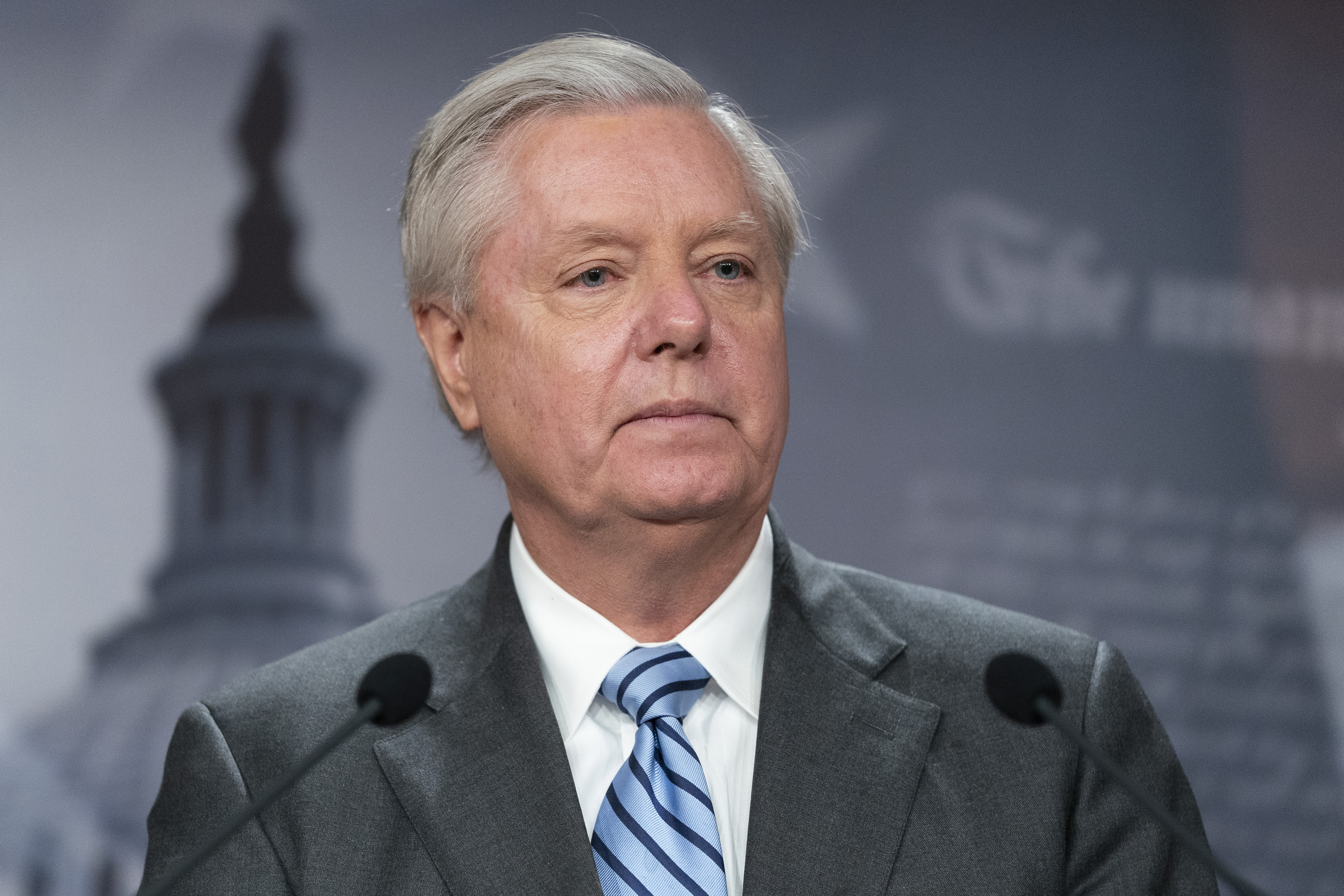

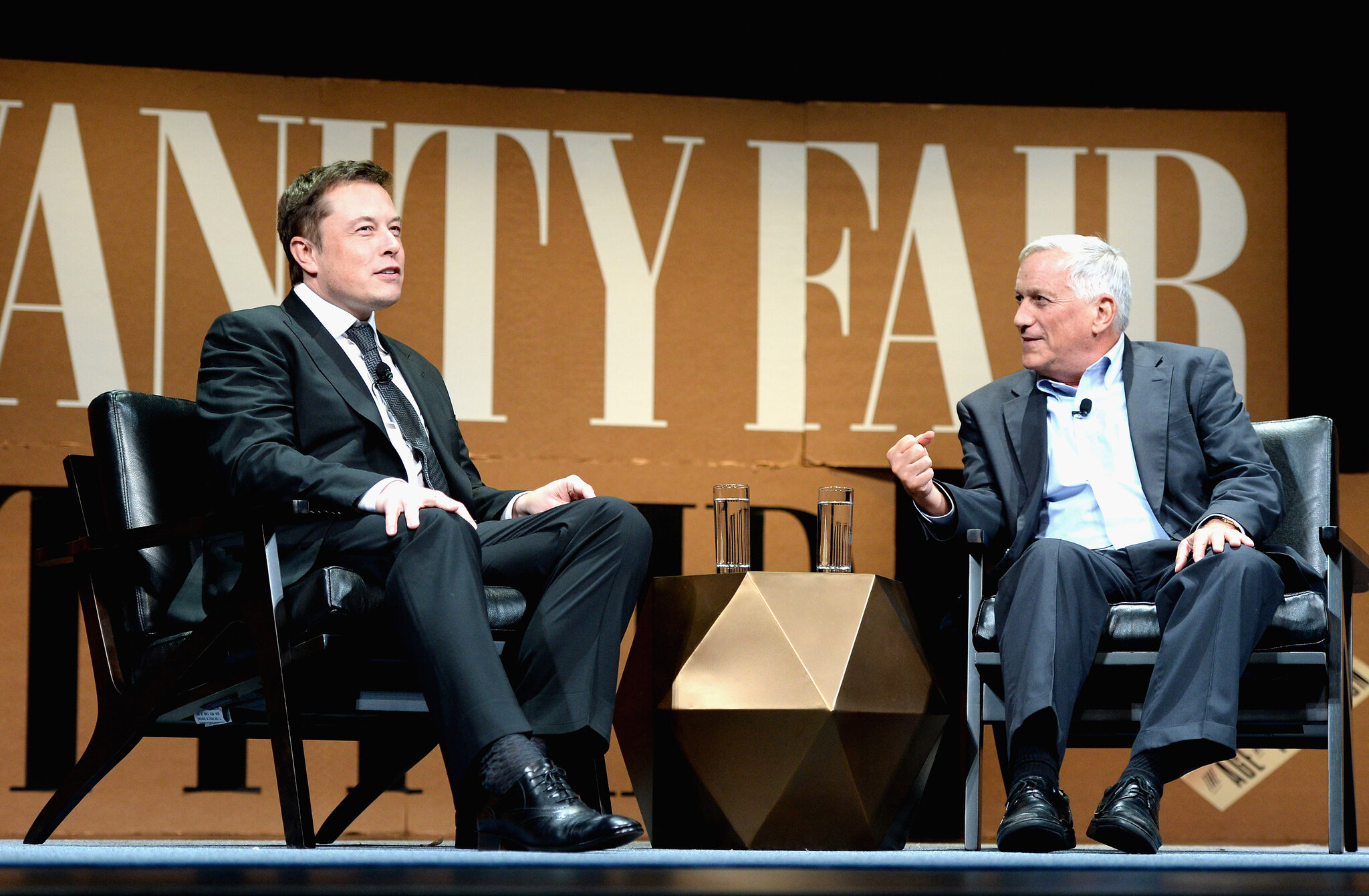







 peej
peej Carissa
 bostonboomer
 dakinikat
 ecocatwoman
 mablue2
 Mama Lopez
 peggysue22
 quixote
 skydancingguestblogger
 Mona (aka Wonk the Vote)



 Sky Dancing
Recent Comments