A woman sewing blue denim pants, by “Master of the Blue Jeans.”
I’m going to begin today with a story that has nothing to do with politics or current events–just because I think it’s interesting. Did you know that people wore blue jeans way back in the 16th century? I didn’t. An art exhibit will soon open in Paris that will focus on a mysterious artist, known only as “Master of the Blue Jeans.”
An exhibition centered on the “Master of the Blue Jeans” is opening in Paris this month—and the work on display is not that of Levi Strauss, founder of the eponymous clothing company, but rather a 17th-century Italian painter.
The upcoming show at Galerie Canesso features two paintings by the mysterious artist, who was active in northern Italy in the 1600s and is known only by his “master” moniker. The painter’s oil canvases depict early iterations of the stiff blue fabric beloved today, as worn by Italian peasants. According to a statement, the pieces have proved to be important artifacts in garment history, “pushing back [blue jeans’] provenance by centuries.”
Speaking with Artnet’s Vittoria Benzine, Maurizio Canesso, an art collector and the gallery’s founder, says, “People are still not very familiar with the true history of blue jeans, as they confuse it with the material made by Levi Strauss.”
In truth, Canesso argues, when the American businessman behind Levi’s jeans started selling denim work pants in the late 1800s, he merely added metal rivets and structure to a fabric that already boasted a storied European past.
“Jeans come from Genoa, while denim comes from the French city of Nîmes,” says Canesso. Blue jeans were made with perpendicular stitches in northwest Italy, while denim was woven in chevron patterns in southern France. But the key component of the fabric’s history is its coloration.
“Until the 11th century, no one could wear blue fabric because they didn’t know how to make blue color adhere,” Canesso says. “Only in the year 1000 did this begin to happen using woad leaves, and at a very high cost. The genius of the Genoese was to find the indigo stone in India and make this an industrial and therefore low-cost process.”
The ten denim-themed paintings attributed to the master were previously thought to be the work of several different artists. But in 2004, curator Gerlinde Gruber reattributed the group of artworks to a single unnamed painter then dubbed the Master of the Blue Jeans. By 2010, Canesso had acquired all of the master’s works, and he presented them in an exhibition at his Paris gallery that same year.
“Unfortunately, we have no new theories about who the Master of the Blue Jeans was,” Véronique Damian, an art historian at Galerie Canesso, tells the Observer’s Vanessa Thorpe. Evidence indicates the artist spent the bulk of his career in Italy’s northern region of Lombardy, though he may trained elsewhere.
I’m including some of the artist’s work in this post, just because.
In the more painful world of politics, Trump had a bad day in New York yesterday, and he got some bad news in India; but he got some gifts from judges in Florida and Georgia.
As I’m sure you’re aware, Stormy Daniels testified in Trump’s hush money case yesterday.
Stormy Daniels, the adult-film actress at the center of Donald Trump’s hush money trial, testified Tuesday about a disturbing sexual encounter she says she had with him, leading to angry, profane muttering from the former president that alarmed the judge.
New York Supreme Court Justice Juan Merchan called Trump’s lawyer Todd Blancheto a sidebar during a midday break to say that Trumpwas “cursing audibly” and possibly intimidating Daniels, who had begun testifying, according to a trial transcript.
Beggar Boy with a Piece of Pie (wearing a denim jacket)
“I understand that your client is upset at this point,” Merchan said to the defense attorney,according to the transcript,“but he is cursing audibly and he is shaking his headvisually and that’s contemptuous. It has the potential to intimidate the witness and the jury can see that.”
Blanche assured the judge he would speak to Trump.
“I am speaking to you here at the bench because I don’t want to embarrass him,” Merchan said. “You need to speak to him. I won’t tolerate that.”
The exchange punctuated a day of rage — sometimes whispered from the defense table, sometimes declared loudly by Daniels from the witness stand.
It was one of several surreal moments on the 13th day of the first criminal trial of a former U.S. president, including descriptions by Daniels of their alleged sexual encounter in 2006 that were so detailed that defense attorneys demanded a mistrial.
While Merchan rejected their request, Daniels at times seemed to be describing nonconsensual sex that could be considered highly prejudicial for the jury, which in turn could give Trump — the presumptive Republican presidential nominee — solid grounds to appeal if he is found guilty.
It sounds like the sex actually was nonconsensual though. Daniels’ description of what happened sounds very much like a date rape situation in which she was taken advantage of by a much older and more powerful man. She was 27. He was 60. He was much taller and stronger. She was invited for dinner, but there was no dinner. When she was ready to leave, she went to the bathroom. When she came back, he was on the bed in boxers. She tried to leave, but he blocked the door. This description is from Harry Litman on Twitter:
thought time to go. when opened the bathroom door, Trump had come in and was on the bed, in boxer shirts and a t-shirt. she was startled. felt like room spun in full motion. blood leaves my hands and feet. “ohmygod — what did I miss to get here?” she laughed nervously
The next thing I knew I was on the bed. opposite side of bed. missionary position. objection – sustained
I blacked out. but I was not drugged in any way, no alcohol. didn’t feel threatened physically “There was an imbalance of power for sure. but I was not threatened verbally or physically”
Had sex with him on the bed. Merchan sustaining objections to details. Staring at ceiling didn’t know how I got there. sustained. stricken touch his skin? objection sustained. he wasn’t wearing a condom. concerning to her but didn’t say anything.
sex was brief. remembers getting dressed. sitting on edge of bed, noticed completely dark outside. hard to get shoes on, hands shaking so hard. DJT: “oh it’s great, let’s get together again honey bunch.” I just wanted to leave. DVD she signed was on nightstand.
DJT: “We have to get together again soon” “we were so fantastic together. talked about the show” I just left as fast as I could. Didn’t express any concern about Melania. or mention her. didn’t have dinner. took cab back to hotel.
I felt ashamed I didn’t stop the sex so I didn’t tell many people about it. Remembered some additional details later. Merchan very stern about level of detail — wants to keep it spare.
It’s pretty clear from Daniels’ description that she was traumatized. I doubt if the judge understands that, but maybe some jurors will. Just because she is a porn actress doesn’t mean she can’t be raped. Her description is also reminiscent of E. Jean Carroll’s experience–Trump lifted her up against the wall and grabbed her genitals before she realized what was happening. It’s also reminisce of his own description in the Access Hollywood tape–how he can grab women “by the pussy. If you’re a star they let you do it.”
Daniels matters for reasons outside of the courtroom and the specifics of this hush-money trial. Daniels’ story is yet another reminder of what may prove to be Trump’s electoral downfall: His bottomless misogyny.
On the witness stand, Daniels reportedly spoke quickly and was apparently quite nervous. Initially, her story of meeting Trump sounded funny. She painted him as a pathetic older man trying — and failing — to impress the younger woman. When he first asked her to dinner, she replied “no,” but with an expletive. Her publicist eventually talked her into it, hoping Daniels could leverage the connection into a spot on “The Apprentice.” In his hotel room, she described him wearing “silk or satin” pajamas and asked him to put on real clothes. He allegedly used the “don’t even sleep in the same room” line when she asked about his wife, Melania, who had recently had a baby. Daniels described Trump as “pompous” and “arrogant.” She recounted how she jokingly spanked him with a magazine, hoping to tease him into being less of a jerk.
Then the tone of her story changed, as she described how they came to have sex. Trump waited until she was in the bathroom, Daniels said, and then he stripped down to boxer shorts and a T-shirt. “The room spun in slow motion,” she recalled on the witness stand. When she made for the door, “he was bigger and blocking the way,” she said of Trump. She denied it was sexual assault, however, because “I was not threatened either verbally or physically.” [….]
Whether or not Trump’s sexual encounter with Daniels was consensual in the legal sense, she describes it as unwanted.
“I didn’t say anything at all,” she told the court repeatedly. Claiming that she “blacked out” during the encounter, afterward, Daniels said, “my hands were shaking so hard” and “I felt ashamed that I didn’t stop it and that I didn’t say ‘No.'”
Another painting by Master of the Blue Jeans
A person doesn’t have to be threatened in order for sex to be nonconsensual. Back to Marcotte’s piece:
Since the release of the “Access Hollywood” video in 2016, in which Trump can be heard bragging about sexual assault, the Beltway media has repeatedly tried to move on from the story of Trump’s legion of issues with women. Indeed, when Carroll’s accusations first came out in 2019, the press barely paid any mind. But the story of his rampant misogyny has never fully gone away. There was the Women’s March that overshadowed his 2017 inauguration. Then the over two dozen women who stepped forward with stories of being subject to the sexual harassment and assault Trump himself described so vividly. Trump, of course, is more responsible than any other person on the planet for the overturn of Roe v. Wade and the stampede of Republican state legislators banning abortion. He promised to stack the Supreme Court with anti-choice justices, and his three appointees provided the votes necessary in Dobbs v. Jackson Women’s Health, which ended the legal right to abortion. While Trump has tried to make moderate-sounding noises on this issue, he keeps inadvertently revealing his anti-choice radicalism. In a recent Time interview, for instance, he indicated that he’s fine if states “monitor women’s pregnancies so they can know if they’ve gotten an abortion.”
On the stand, Daniels provided ugly details about how Trump treated her, and about how Trump treats, and views, women. These insights are notable, but they’re not new. In 2016, leaked audio of Trump making grotesque and sexist comments about women to Access Hollywood host Billy Bush almost derailed his presidential campaign. Last year, Trump was held liable for sexual assaulting and then repeatedly defaming advice columnist E. Jean Carroll.
But Daniels’s testimony is a reminder that contempt and mistreatment of women is a core theme of Trump’s life and politics. Both the press and Democratic opponents have struggled to make this issue central to 2024, even though abortion rights and women’s health care are the key issues of the campaign. It’s unclear whether the trial will spark more reporting and discussion of Trump’s treatment of and attitudes about women. But it should….
Daniels’s testimony is intended to establish the background facts of the payment. It also, though, paints Trump as a liar, a bully, and a sexual manipulator. Daniels said while she was in Trump’s hotel room, she went to the bathroom, and when he came out he was in his boxer shorts, a moment Daniels describes as “like a jump scare.” She said, “the room spun in slow motion” and she realized “I’ve put myself in this bad situation.”
Daniels is careful to emphasize that Trump did not physically coerce her. He did, however, according to Daniels, suggest that if she cooperated with him he could help her career through his connections and a possible appearance on the Celebrity Apprentice reality show, where Trump was the star. She eventually agreed to have sex even though Trump did not use a condom — she was adamant about using condoms in her adult film shoots.
By Master of the Blue Jeans.
She testified that during sex she stared at the ceiling and tried to think of something else, and afterwards she had trouble dressing because her hands were shaking. She said, “I felt ashamed that I didn’t stop it and that I didn’t say no.”
Daniels kept in touch with Trump for some time because he was still offering her the chance to appear on Celebrity Apprentice, which would have been a huge mainstream boost to her career. She met with Trump once more in Los Angeles, at which point “he kept trying to make sexual advances, putting his hand on my leg, scooting closer.” She rebuffed him, and in a later phone call he admitted he was not going to put her on his television show. At that point she ceased communicating with him.
Again, Daniels has not accused Trump of sexual harassment or violence, and she says their encounter was consensual. Her testimony makes clear, though, that Trump was pressuring her for sex in return for business opportunities — a variation on the ugly tradition of the Hollywood casting couch. We don’t know if Trump ever had any intention of keeping his promises or of helping Daniels. But whether he did or not, his actions as she describes them were sleazy at best, and she found the experience painful and traumatic enough to leave her literally shaking.
The encounter doesn’t sound consensual to me. As I said above, it sounds like date rape.
The judge presiding over Donald Trump’s criminal case in Florida — on charges that he hoarded classified secrets at his Mar-a-Lago estate after his presidency — has indefinitely postponed the trial, once scheduled for May 20.
The date had been widely expected to move amid a tangle of pretrial conflicts between special counsel Jack Smith and Trump’s attorneys. Smith had urged Judge Aileen Cannon to reschedule the trial to begin on July 8, but an order from the judge on Tuesday afternoon suggested that she is unlikely to even decide on a new trial date before late July.
Cannon, a Trump appointee who took the bench in late 2020, indicated in the order that, before setting a new trial date, she intends to resolve the backlog of other issues in the case that have piled up on her plate. Smith’s defenders have criticized Cannon for what they see as a plodding pace in resolving pretrial matters, and tensions between the special counsel and the judge have flared in recent months over a series of puzzling rulings that threatened to derail the case.
“[F]inalization of a trial date at this juncture — before resolution of the myriad and interconnected pre-trial and [classified evidence] issues … would be imprudent and inconsistent with the Court’s duty to fully and fairly consider the various pending pre-trial motions,” Cannon wrote in the five-page order.
That reshuffling further clouds the picture for Smith, who is also awaiting a Supreme Court ruling on presidential immunity that could determine whether his other case against Trump — charges in Washington D.C. for attempting to subvert the 2020 election — can move forward this year….
Trump has sought to delay all of his criminal cases until after this year’s election. If he wins, he could shut down the two federal cases brought by Smith, and the state cases in New York and Georgia also might have to be frozen.
The Georgia Court of Appeals on Wednesday decided to hear an appeal of a judge’s ruling allowing District Attorney Fani Willis to remain at the helm of Fulton County’s election interference case against former President Donald Trump.
The court’s decision almost certainly means a significant delay of a trial here for Trump and his 14 co-defendants and signals that Willis’ leadership role isn’t guaranteed. It is unclear how long the appeals court will take to decide the issue but they are not known for moving swiftly.
Farmers wearing jeans, 1930s
“There’s no way this case gets to trial this year,” said Atlanta defense attorney Andrew Fleischman, who is closing following the case. “I would expect the appeals court to issue its opinion some time next year.”
On March 29, Superior Court Judge Scott McAfee issued a “certificate of immediate review,” which allowed the defendants to appeal his ruling to the Georgia Court of Appeals before a trial begins.
Under Appeals Court rules, such a pretrial — or interlocutory — appeal is typically assigned to a three-judge screening panel. And all it takes is for one of those judges to decide whether the court accepts the appeal. The court’s order one-page order did not divulge which judge voted to grant the application.
In his order granting the pre-trial review, McAfee said he will continue working on the case, resolving pending motions, while the appeals court takes up the removal issue.
The bad news for Trump is that he is losing a significant percentage of Republican voters in the primaries, which are still going on. Niki Haley is still getting votes. Adam Wren and Madison Fernandez at Politico: Unexpected warning signs for Trump in busy Indiana primary.
In 2016, Indiana put Donald Trump on the doorstep of the GOP presidential nomination. But eight years later, the state he called “Importantville” delivered his campaign some flashing red warning signs as Nikki Haley cleaned up in the suburbs.
By virtue of its late-in-the-nominating-calendar primary, the Hoosier state has always occupied a unique and occasionally powerful perch to make or break candidacies: Sen. Ted Cruz and then-Ohio Gov. John Kasich dropped out immediately after Trump’s victory that year. But the barn-red state also often acts as a pace car for Republicans nationally.
And in a primary that saw a record-breaking $98 million splash across the state, according to AdImpact, Tuesday was no exception.
A zombie Haley candidacy continued to punch above its weight in the Trumpiest of states: The former South Carolina governor is on track to break 20 percent for the first time since she dropped out of the race two months ago.
Read more at the link.
I don’t know if you’ve been following the reporting about New York Times editor Joe Kahn and his pathetic explanations for why his paper seems to be rooting for another Trump presidency.
Joe Kahn, after two years in charge of the New York Times newsroom, has learned nothing.
He had an extraordinary opportunity, upon taking over from Dean Baquet, to right the ship: to recognize that the Times was not warning sufficiently of the threat to democracy presented by a second Trump presidency.
But to Kahn, democracy is a partisan issue and he’s not taking sides. He made that clear in an interview with obsequious former employee Ben Smith, now the editor of Semafor.
Kahn accused those of us asking the Times to do better of wanting it to be a house organ of the Democratic party:
To say that the threats of democracy are so great that the media is going to abandon its central role as a source of impartial information to help people vote — that’s essentially saying that the news media should become a propaganda arm for a single candidate, because we prefer that candidate’s agenda.
But critics like me aren’t asking the Times to abandon its independence. We’re asking the Times to recognize that it isn’t living up to its own standards of truth-telling and independence when it obfuscates the stakes of the 2024 election, covers up for Trump’s derangement, and goes out of its way to make Biden look weak.
And to the extent that Kahn has changed anything in the Times newsroom since Baquet left, it’s to double down on a form of objectivity that favors the comfortable-white-male perspective and considers anything else little more than hysteria.
Throwing Baquet under the bus, Kahn called the summer of the Black Lives Matter protests “an extreme moment” during which the Times lost its way.
“I think we’ve learned from it. I think we found our footing after that,” he said.
I translate that to mean that the old guard has reasserted total control over the rabble.
Read the rest at Press Watch.
I’ll wrap this up with a couple of creepy stories about Robert Kennedy Jr.
In 2010, Robert F. Kennedy Jr. was experiencing memory loss and mental fogginess so severe that a friend grew concerned he might have a brain tumor. Mr. Kennedy said he consulted several of the country’s top neurologists, many of whom had either treated or spoken to his uncle, Senator Edward M. Kennedy, before his death the previous year of brain cancer.
Several doctors noticed a dark spot on the younger Mr. Kennedy’s brain scans and concluded that he had a tumor, he said in a 2012 deposition reviewed by The New York Times. Mr. Kennedy was immediately scheduled for a procedure at Duke University Medical Center by the same surgeon who had operated on his uncle, he said.
While packing for the trip, he said, he received a call from a doctor at NewYork-Presbyterian Hospital who had a different opinion: Mr. Kennedy, he believed, had a dead parasite in his head.
The doctor believed that the abnormality seen on his scans “was caused by a worm that got into my brain and ate a portion of it and then died,” Mr. Kennedy said in the deposition.
Gross. Maybe that explains some of his weird ideas?
A right-wing social media influencer hired by Robert F. Kennedy Jr.’s presidential campaign who previously said Jan. 6 was “Democrat misdirection” appears to have himself been on the restricted grounds of the U.S. Capitol during the attack.
Marilyn Monroe in blue jeans
NBC News first reported that Kennedy’s campaign hired Zach Henry’s firm, Total Virality, for “influencer engagement” in March. Henry had worked as deputy communications director for Republican Vivek Ramaswamy’s presidential campaign, as well as for Blake Masters during his Senate run in Arizona.
Henry, as NBC News reported, had posted that Jan. 6 was “no MAGA insurrection Just more Democrat misdirection” and appears to have embraced conspiracy theories about the Capitol attack, including posting that “antifa” was behind it, which is false.
But photos and videos uncovered by NBC News and online “sedition hunters,” who have aided the FBI in hundreds of cases against Capitol rioters, appear to show Henry among the mob outside the Capitol on Jan. 6, 2021, beyond the previously established police lines, although it is unclear whether any of the barricades and “restricted” signs remained by the time he arrived.
There is no indication that Henry entered the Capitol or that he engaged in assaults on police officers or in destruction of property. Federal prosecutors have almost entirely focused their resources on Jan. 6 participants who either went inside the building or committed violence or destruction outside it, so there is little chance that Henry would be charged; the few nonviolent Jan. 6 defendants who were charged solely for going on restricted Capitol grounds were generally charged with misdemeanors.
But Henry’s presence on Capitol grounds would be significant given his previous social media posts about Jan. 6 and his new position on Kennedy’s campaign as Kennedy runs for president as an independent against former President Donald Trump.
That’s it for me today. What stories have you been following?
Did you like this post? Please share it with your friends:
Dakinikat turned me on to the world of truck drivers who have cat companions along for the ride. Here’s an article that discusses the phenomenon. CharityPaws.com: Trucker Cats May Be The Coolest Cats!
For what it’s worth, having a pet is hard work.
Love is easy enough to provide while on the road – but food, water, space, and entertainment are all needs too, and sometimes hard to come up with.
In the case of dogs especially, playtime is the hardest need to fill for truckers. After several hour-long walks, a game of tug-of-war, and an afternoon in the sun spent playing fetch, who wouldn’t be tired? But for truckers this can be time consuming and delay important deliveries!
That’s why many truckers have turned to cats as the solution for those lonely road trips. Trucker cats are the coolest cats with their chill laid back personalities and ability to make truckers feel awesome. They also have some great hearing which is why the made it to our list of “what animal has the best hearing” list. Having a companion with good hearing on board can help you find critters that may sneak around while you are sleeping or even alert you to danger!
With most of their time spent on the road in a little truck cab, cats are the perfect companion for truckers– and here’s some of the best reasons why according to one trucker’s resource:
Cats are low-maintenance: they eat less than their canine counterparts, take up less room, and don’t need as much playtime.
They’re loving and affectionate: cats are just as sweet as any other animal, once they have a chance to warm up to you.
They’re obedient, and trainable: cats can do tricks and walk on leashes, with the proper time and training!
They’re protective: though not as scary as a dog, cats are perfectly capable of altering truckers if something looks, sounds, or even smells off.
Other reasons topping truckers’ lists include cleanliness, cuteness, and the fact that having a cat in a truck is a pretty good conversation starters. Some even say that having a feline friend is a constant reminder to drive and act safely during the long haul. They are also incredibly loyal as shown by the Room 8 cat – and having that kind of loyalty on the road will make any trucker feel amazing!
Read more at the link above.
Here’s a video about trucker cats, posted on YouTube by Cheezburger.
Long Read: Are Americans Experiencing Collective Trauma?
I want to call your attention to an excellent, but very long read in The New Republic by Anna Marie Cox: We Are Not Just Polarized. We Are Traumatized. Subhead: “The pandemic. The mass shootings. Insurrection. Trump. We’ve been through so much. What if our entire national character is a trauma response?”
This is a very long piece, so I’m just going to give you some samples to help you decide if you want to tackle reading the whole thing.
As of last year, four in 10 Americans knew at least one person who died from Covid. This year, three in 10 Americans say they know someone who has been affected by an opioid addiction, and one in five knows someone who’s died from a painkiller overdose. In 2022, more than three million adults were displaced by some form of natural disaster—that’s more than three times as many displaced per year between 2008 and 2021. Last year, some cities saw a 50 percent increase in evictions over pre-pandemic levels. One in five knows someone who’s died due to gun violence; one in six has witnessed a shooting; 21 percent have been personally threatened by a gun. Half of Americans know someone personally who has experienced at least one of those events.
After Trump’s “grab her by” tape became public, calls to the national sexual assault hotline jumped up by 35 percent (as Michelle Goldberg observed, Trump was a walking trigger for assault survivors). During the Brett Kavanaugh hearings, calls to the sexual assault hotline spiked 201 percent. Lockdown—the first two months of the pandemic—saw a rise in intimate partner violence of 101 percent, with the rate stabilizing at an increase of about 8 percent from pre-pandemic numbers as of 2022.
Another photo of Trucker cat Percy, by Paul Robertson
And then there are the frontline workers and “essential personnel,” those who risked their lives for our safety and comfort during the spring of 2020. I assume that we agree health professionals faced trauma (and may well still). There are 22 million of them in the United States, and after the pandemic, 55 percent reported experiencing burnout, and three in 10 said they were now considering leaving the profession. The 55 million essential personnel who worked through the worst days of Covid suffered a similar toll: A year into the pandemic, the American Psychiatric Association found that 34 percent of essential workers had been treated by a mental health professional, 80 percent had trouble over- or under-sleeping, and 39 percent said they were drinking more alcohol than they had before….
These are traumas at the individual level in numbers so large that they demand national attention because there are national consequences—think of the nationwide therapist shortage and “the Great Resignation.”
So, what if the reason so many people identify as trauma survivors is that they are? What if the horrors of the last seven years do translate into a nation that is suffering more than mere political dysfunction? What if the polarization, paranoia, conspiracism, and hopelessness that bog us down have a more holistic origin than structural malfunctions or individual malfeasance?
What if our entire national character is a trauma response?
Before you say “bullshit,” remember: Cynicism is a trauma response.
Next Cox explores expert opinions about the concept of “collective trauma.”
The origin of the academic study of “collective trauma” has been credited to Kai Erikson’s 1977 book, Everything in Its Path, an account of the aftermath of the Buffalo Creek flood in Logan County, West Virginia, five years prior, which killed 125 people and destroyed 550 homes in a small mining community. In the book, Erikson writes of grappling with “thousands of pages of transcript material, whole packing boxes full of it,” that confounded him “not because the material is contradictory or difficult to interpret but because it is so bleakly alike.” He found respondents echoing one another to a frustrating degree, so much so that “a researcher is very apt to conclude after rummaging through these data that there is really not very much to say.” Eventually, however, he came to believe that the uniformity itself was meaningful; the damage done at Buffalo Creek was something more than a mere collection of individual harms.
Collective trauma, he wrote, means “a blow to the basic tissues of social life that damages the bonds attaching people together and impairs the prevailing sense of communality.” Collective trauma happens in slow motion, “A form of shock all the same…. ‘I’ continue to exist, though damaged and maybe even permanently changed. ‘You’ continue to exist, though distant and hard to relate to. But ‘we’ no longer exist as a connected pair or as linked cells in a larger communal body.”
Trucker Abdirahman Abdul and Aisha
In other words, the defining characteristic of collective trauma—and what makes it almost impossible to self-diagnose—is that people who have been through it no longer believe in the integrity of their community. How does anyone see themselves as a traumatized collective if no one feels that they belong?
So, pull back to the macro level. For a moment, put aside your or anyone else’s individual experience. Think of the country itself as a patient.
In the past seven years, the country has sustained significant, repeated damage to its institutions. The courts, elections, law enforcement, and so on are its vital organs. Trump has been punching America in the kidneys since he first floated the idea of a “rigged election.” January 6 was a heart attack. The musculature that is the justice system, well, it was always spasmodic. The murders of George Floyd, Breonna Taylor, and Ahmaud Arbery shocked many white people into awareness of our already dysfunctional law enforcement apparatus, and then the Dobbs decision drove home how easily the rights that support us can be yanked away. Were we ever really as strong as we thought?
The country was already weakened by Trumpism when the pandemic attacked our nervous systems more than figuratively. It cut away at the millions of tiny threads that knit up our towns and cities. Think of the loose social ties that grow from just seeing the same people at the grocery store (or the office) every day—think of the mail. Our national proprioception—our awareness of where our parts are in relation to one another—deteriorated. Our creaky supply chain is another symptom of this disconnect. So is “you’re on mute.”
I won’t quote any more, but these excerpts are just from the introductory part of the article. Cox later demonstrates with examples how the notion of trauma can apply to our collective experience as a nation. There is so much in the piece, that I wonder if Cox is planning to turn it into a book.
I’m not sure how the MAGA world fits into this hypothesis, but after my reading about the traumas of Appalachia–from poverty, drugs, unemployment, and breakdown of families (see my Wednesday post), I wonder if an argument could be made that the attraction to Trump as powerful father figure could also have arisen out of trauma. At any rate, I highly recommend this article.
Citing threats against individuals former President Donald Trump has targeted, special counsel Jack Smith has asked a federal judge for a narrowly tailored gag order that restricts the 2024 presidential candidate from making certain extrajudicial statements about the election interference case brought against him.
A redacted copy of a government filing — released Friday, after an order from U.S. District Judge Tanya Chutkan — comes in connection with the election interference case, one of four criminal cases the former president is facing, two of which are federal.
“The defendant has an established practice of issuing inflammatory public statements targeted at individuals or institutions that present an obstacle or challenge to him,” the special counsel’s office wrote.
Whispur and DanDan, photo by Whispurer on Reddit
The government said Trump “made clear his intent to issue public attacks related to this case when, the day after his arraignment, he posted a threatening message on Truth Social.”
Trump’s Aug. 4 post read: “IF YOU GO AFTER ME, I’M COMING AFTER YOU!”
Trump, the office wrote, “has made good on his threat,” spreading “disparaging and inflammatory public posts on Truth Social on a near-daily basis regarding the citizens of the District of Columbia, the Court, prosecutors, and prospective witnesses.
“Like his previous public disinformation campaign regarding the 2020 presidential election, the defendant’s recent extrajudicial statements are intended to undermine public confidence in an institution—the judicial system—and to undermine confidence in and intimidate individuals—the Court, the jury pool, witnesses, and prosecutors,” the prosecutors wrote.
Naturally, Trump responded publicly to the filing:
At an event in Washington, Trump made his first public remarks on the filing by attacking Smith, arguing that the special counsel “wants to take away my rights under the First Amendment, wants to take away my right of speaking freely and openly.”
Steven Cheung, a spokesperson for the Trump campaign, responded earlier Friday by calling the filing “nothing more than blatant election interference because President Trump is by far the leading candidate in this race.”
The federal prosecutors who charged former President Donald J. Trump with a criminal conspiracy over his attempts to overturn the 2020 election obtained 32 private messages from his Twitter account through a search warrant this winter as part of their investigation, court papers unsealed on Friday said.
Questions have lingered about what prosecutors were looking for in Mr. Trump’s Twitter account ever since it was revealed last month that the government had served the warrant on Twitter in January. In an earlier release of documents, prosecutors disclosed that they had obtained some private messages from Mr. Trump’s account but not how many.
The 32 messages, whose content has not been disclosed, were only a small fraction of the larger body of data that Twitter was forced to turn over under the terms of the warrant, the new court papers said. Much of the legal wrangling over the matter focused on the Justice Department’s demand that Twitter, purchased last year by Elon Musk and now known as X, not inform Mr. Trump of the search warrant.
Mr. Trump’s posts on the platform in the chaotic months after the election were mentioned several times in the indictment that the special counsel, Jack Smith, filed against him in Washington last month. What remains unclear is whether Mr. Smith’s team sought the warrant for Mr. Trump’s account merely to confirm that he had posted the messages that appeared in public, or whether they suspected that some private data in the account might also be important.
What were investigators looking for in the private messages?
The newly unsealed documents — an exhaustive record of the legal fight between Twitter and the Justice Department over whether to hide the execution of the warrant from Mr. Trump — added a few new details about what the government may have been seeking.
Waylon the Trucker Cat, photo by owner Nick
For example, the materials showed that prosecutors wanted to learn if there were other accounts that Mr. Trump had been logging into from the same internet address he used for his Twitter account, which during his presidency was a main channel for his public statements. But it was not clear whether looking for other accounts was merely a routine step or whether investigators had a specific reason to be asking.
The new materials — unsealed at the request of a coalition of news media organizations, including The New York Times — opened a broader window into the back and forth between the special counsel’s office and Twitter. The dispute touched on how to balance the government’s need to protect a sensitive investigation with the social media company’s desire to be transparent with its most famous user.
The documents were particularly sharp in describing Mr. Trump’s repeated attempts to obstruct federal inquiries — an argument that prosecutors used in securing permission from a judge in Washington not to tell the former president for months that they had obtained the warrant for his account.
In detailing Mr. Trump’s “pattern of obstructive conduct,” the new papers cited his attempts to interfere with the special counsel’s other inquiry — one in which the former president stands accused of illegally holding on to dozens of classified documents after leaving office.
The attorney for President Joe Biden’s son Hunter Biden, who is facing felony gun charges, said Friday that the statute is “likely unconstitutional” and he expects “the case will be dismissed before trial.”
“On the facts, we think we’ll have a defense,” Abbe Lowell told ABC News’ George Stephanopoulos in an interview on “Good Morning America.”
The younger Biden has been indicted by special counsel David Weiss on three felony gun charges, bringing renewed legal pressure on him after a plea agreement he struck with prosecutors imploded in recent months.
The conduct described in the indictment dates back to October 2018, when Hunter Biden procured a Colt Cobra 38SPL despite later acknowledging that he was addicted to drugs around that time.
While the criminal statutes cited in the indictment are clear — it is a crime to lie on a gun application form or to possess a firearm as a drug user – Hunter Biden’s attorney suggested that the charges could be unconstitutional, citing a recent appeals court ruling that drug use alone should not automatically prevent someone from obtaining a gun.
“The only change that has occurred between when they investigated [this alleged crime] and today is that the law changed,” Lowell said. “But the law didn’t change in favor of the prosecution. The law changed against it.”
With Republicans launching an impeachment inquiry on Capitol Hill, Lowell suggested that political pressure on prosecutors played into their decision, questioning the timing of the charges in light of revelations from whistleblowers about the investigation.
No kidding. The political pressure from right wing Congresspeople has been off the charts. And Special Counsel David Weiss himself was appointed by Bill Barr after political pressure from Donald Trump.
“History is also our best teacher. Yes, our past is filled with too much violence, too much hatred, too much prejudice. But can we really say that we are not confronting those same evils now?” Jackson said at the church in Birmingham, Alabama.
Trucker cat, photo by abbenquesnel on flicker
“We have to own even the darkest parts of our past, understand them and vow never to repeat them. We must not shield our eyes. We must not shrink away lest we lose it all,” she said.
The justice didn’t invoke a particular case, but as a whole her speech nodded to efforts targeting the teaching of critical race theory in schools and books about the struggle for racial equality and other topics.
“If we are going to continue to move forward as a nation, we cannot allow concerns about discomfort to displace knowledge, truth or history. It is certainly the case that parts of this country’s story can be hard to think about,” she said. “I know that atrocities like the one we are memorializing today are difficult to remember and relive. But I also know that it is dangerous to forget them.”
At times, Jackson, the first Black woman to serve on the Supreme Court, drew a personal connection to the tragedy, in which a bomb exploded at the church on September 15, 1963, killing Denise McNair, Cynthia Wesley, Addie Mae Collins and Carole Robertson. Nearly two dozen others were injured.
“As a mother of two young women who will always be my little girls, I can imagine no greater horror than to lose a child this way,” Jackson said.
“And even now, six decades later, the magnitude of that tragic loss weighs heavily on all of us because those girls were just getting started. They could have broken barriers. They could have shattered ceilings. They could have grown up to be doctors or lawyers or judges appointed to serve on the highest court in our land,” she added.
Read more at CNN.
That’s a sampling of today’s news. Feel free to discuss anything and everything in the comment thread.
Did you like this post? Please share it with your friends:
Katherine Bernhardt’s new public mural painted in Guatemala, 2020. Courtesy of the artist.
Good Morning!!
Yesterday the world watched in horror as Trump forced another scientist to soften remarks he had made in the media. We also learned that the government scientist who was in charge of Covid-19 vaccine development was demoted because he criticized Trump’s advocacy for an unproven and dangerous drug combination to treat the virus. Day after day in his “coronavirus briefings, Trump is trying to crush scientific expertise with his iron fist of ignorance.
Robert Redfield, director of the Centers for Disease Control and Prevention, issued a candid warning Tuesday in a Washington Post interview: A simultaneous flu and coronavirus outbreak next fall and winter “will actually be even more difficult than the one we just went through,” adding that calls and protests to “liberate” states from stay-at-home orders — as President Trump has tweeted — were “not helpful.”
By Wednesday evening, Redfield appeared at the daily White House briefing — saying he had been accurately quoted after all, while also trying to soften his words as the president glowered next to him.
“I didn’t say that this was going to be worse,” Redfield said. “I said it was going to be more difficult and potentially complicated because we’ll have flu and coronavirus circulating at the same time.”
What about the first CDC director to speak out back in March?
In another instance, Nancy Messonnier, the CDC’s director of the National Center for Immunization and Respiratory Diseases, was removed from her post as her agency’s coronavirus response head after sounding early alarms that Americans should begin preparing for “significant disruption” to their lives from a “severe illness.” The CDC held its last daily briefing on March 9 — a forum through which the nation would normally receive critical public health information — in part out of a desire not to provoke the president.
There’s much more at the WaPo link.
A painted fence depicts president Trump as the coronavirus, Photo by Josh Edelson, APP Getty Images
The official who led the federal agency involved in developing a coronavirus vaccine said on Wednesday that he was removed from his post after he pressed for rigorous vetting of hydroxychloroquine, an anti-malaria drug embraced by President Trump as a coronavirus treatment, and that the administration had put “politics and cronyism ahead of science.”
Rick Bright was abruptly dismissed this week as the director of the Department of Health and Human Services’ Biomedical Advanced Research and Development Authority, or BARDA, and removed as the deputy assistant secretary for preparedness and response. He was given a narrower job at the National Institutes of Health.
In a scorching statement, Dr. Bright, who received a Ph.D. in immunology and molecular pathogenesis from Emory University, assailed the leadership at the health department, saying he was pressured to direct money toward hydroxychloroquine, one of several “potentially dangerous drugs promoted by those with political connections” and repeatedly described by the president as a potential “game changer” in the fight against the virus.
“I believe this transfer was in response to my insistence that the government invest the billions of dollars allocated by Congress to address the Covid-19 pandemic into safe and scientifically vetted solutions, and not in drugs, vaccines and other technologies that lack scientific merit,” he said in his statement. “I am speaking out because to combat this deadly virus, science — not politics or cronyism — has to lead the way.”
Read the rest at the NYT. In another horrifying moment at yesterday’s briefing, Dr. Fauci defended Bright’s ouster.
A dog walks past a mural depicting a coronavirus cell, Dublin, Ireland, Photo by Aidan Crawley, EPA
Meanwhile, more than 47,000 Americans have died from Covid-19 complications, and Trump isn’t capable of mustering even a drop of sympathy for the heartbroken survivors or for those currently battling the disease in hospitals and homes around the country.
Today the total of confirmed cases in the U.S. is 842,624, based on our extremely limited testing. What does the future hold for survivors and the rest of us?
There’s a phrase to describe what we’re experiencing: collective trauma. We are all grieving—whether it’s for the deaths of loved ones, the loss of our way of life, or the knowledge that things will never quite be the same again. Most of us are experiencing some level of anxiety. The loss of control over major aspects of our lives and lack of a clear end point to the crisis are both partly to blame. For some, stress will spiral into a diagnosable mental health problem.
But we’re not all going through the same thing. Health-care workers who treat coronavirus patients every day are likely at increased risk of such issues. Many worry about working with inadequate protective equipment. The stress they’re under now could take months or even years to process, so we won’t know the pandemic’s full impact for a long time.
From artist Debbie.lee Miszaniec’s COVID-19 Sketchbook. Courtesy, Debbie.lee Miszaniec, Calgary
And there’s another group we need to prepare for: people who have been admitted to intensive care with covid-19 and survived. It’s very difficult to predict how many people will end up in this situation. The vast majority of those who catch coronavirus won’t need a hospital stay, according to a study of nearly 45,000 cases in China carried out by the country’s Center for Disease Control and Prevention, which found that 81% of infections are mild.
These survivors are going to be dealing with the aftereffects of major trauma.
For those who make it out the other side, their stay in intensive care is likely to be one of the most traumatic things they will ever experience. Being able to breathe is something we take for granted. But patients who have such difficulty breathing that they need to be intubated (which involves having a tube inserted into their mouth and down their airway) often believe they are going to die at some point during their stay in intensive care. Anecdotally, ICU doctors say patients with covid-19 tend to need a particularly large amount of sedation, which damages muscles and nerves, especially in the lungs. That damage can be permanent—which can in turn undermine the patient’s mental health.
“Their lives will never look exactly as they were before. Being admitted to an ICU is one of those ‘before and after’ life events, like having a child, or a parent dying,” says Megan Hosey, a psychologist who treats ICU patients.
Patients on ventilators often become delirious. They can drift in and out of consciousness, hallucinate, and become confused about what’s happening to them. It’s common for them to form delusions and misremember what’s occurred. “They can recollect that a nurse or doctor was trying to hurt them when they were doing a procedure to help them,” says Timothy Girard, associate professor of critical care medicine at the University of Pittsburgh Medical Center. It’s unsurprising, then, that so many ICU survivors go on to experience depression, anxiety, posttraumatic stress disorder, and other mental health issues.
Post-traumatic growth (or PTG) is the idea that, in the long run, traumatic events and experiences—like illness, accidents, bereavement, addiction and divorce—can have beneficial effects. Often, after the initial shock and pain of a traumatic situation has faded away, people report feeling more appreciative of their lives, and sensing a new inner strength and confidence. They feel that their relationships are more intimate and authentic, and that they have a new sense of meaning and purpose. They often become less materialistic and more altruistic, more concerned with the well-being of others than with their own success and status. They develop a more philosophical or spiritual attitude to life, with—in the words of Richard Tedeschi and Lawrence Calhoun, two of the pioneers of the theory of PTG—a “deeper level of awareness.”
Overall, it appears that nearly half of people who experience such traumatic events are likely to experience PTG in the aftermath.
Over the last 10 years or so, my own research has focused on what I call post-traumatic transformation. I have found that psychological turmoil and trauma may not simply bring about growth, but a dramatic transformation. After a period of intense suffering (such as a diagnosis of cancer or a long period of depression or addiction), a person may undergo a sudden shift of identity.
Painting to honor the heroes of the service industry, Terrance Osborne, New Orleans, LA
All of a sudden, they feel like a different person inhabiting the same body, with heightened sensory awareness, an increased sense of compassion and connection, and new values or goals. For example, a woman who experienced post-traumatic transformation after the death of her daughter told me that she felt like she had broken through “to another state. I’ve moved up to another level of awareness which I know is going to stay with me.”
As I showed in my book The Leap, many people could specify a particular moment at which transformation occurred, often at the moment when they shifted into an attitude of acceptance of their predicament. For example, a man told me how, as an alcoholic undergoing the Alcoholics Anonymous recovery process, he experienced transformation at the moment when he “handed over” his problem. Another person had become severely disabled and underwent a shift at the point when he heard an inner voice say, “Let go, man, let go. Look at how you’re holding on. What do you think life’s telling you?” A woman who went through a period of intense postnatal depression, entering into a psychotic state, which led to four nights without sleep. In the midst of this turmoil, she had an argument with her husband, which suddenly triggered what she described as “feelings of such perfect joy and peace. I remember thinking afterward ‘so that’s what I’m supposed to feel like!’ Within that one instant, you are forever changed.”
Taylor argues that traumatic growth can also happen within communities. Read all about at Scientific American.
…my wariness toward seeing the glass half-full is grounded in the experience of the past generation. Unfortunately, that experience offers ample reason to be pessimistic about the next one. People who feel that the pandemic is going to “break the fever” of the last couple decades—that it will finally drain public life of its malice, its addiction to remorseless conflict and conspiracy theory, its devil-take-the-hindmost nihilism—carry the burden of proof. I’d like to buy it but can’t yet.
A glass sculpture entitled “coronavirus – COVID-19” created by British artistLuke Jerram, Bristol, southwest of England on March 17, 2020.
What if instead of ushering in a new era of respect for science—including the obvious truth that most policy questions around science involve mixed evidence and relative probabilities rather than absolute certainties—the next several years are marked by a distorted, dishonest, told-you-so debate over the pandemic? What if instead of launching a new season of public interest, a weak economy leaves little money or political will to solve long-deferred problems like climate change? What if this cataclysm makes us even more selfish and short-term in our thinking?
In short: What if we’re screwed?
None of this is a prediction. Nor is it a generational lament. Unlike some younger friend —who feel they came of age with events conspiring against their life prospects and are aggrieved about it—I was already in my thirties at the turn of the century and my basic worldview was pretty well set. That view was that the tides of modern life were moving unevenly but inexorably toward liberal democracy; that politics often could be distorted by corruption or fanaticism but was more rational than irrational; that public life was contentious and chaotic but more on the level than not.
like many of the thinkers commissioned by POLITICO, my impulse was to respond to the succession of astounding, can-this-really-be-happening events of the past 20 years by assuming they might somehow be occasions to hit the reset button, to get back to normal. Maybe a bizarre election in which George W. Bush became president under disputed circumstances will cause him to transcend ideological warfare and find common ground. Maybe the horror of 9/11 will be a great unifying event in the United States and for civilized people around the world. Maybe Hurricane Katrina will focus useful attention on climate change and the need to invest in improved national infrastructure. Maybe the 2008 financial crash will bring pressure to bear on income inequality. Maybe Donald Trump surprised even himself with his 2016 victory and will actually prove to be an effective post-partisan dealmaker.
Read more at the Politico link.
I hope I haven’t completely bummed you out. I tend to be an optimist generally, but right now I’m more in agreement with John Harris’ take. What do you think? What stories have you been following?
Did you like this post? Please share it with your friends:
I’m having trouble focusing enough to write a real post, so I thought I’d share some of the things I’ve been reading this afternoon. I’ll begin with some very good news from Reuters: Shot Pakistani girl can recover, UK doctors say
A Pakistani schoolgirl shot in the head by the Taliban has every chance of making a “good recovery”, British doctors said on Monday as 14-year-old Malala Yousufzai arrived at a hospital in central England for treatment of her severe wounds.
Yousufzai, who was shot for advocating education for girls, was flown from Pakistan to receive specialist treatment at Birmingham’s Queen Elizabeth Hospital at a unit expert in dealing with complex trauma cases that has treated hundreds of soldiers wounded in Afghanistan.
“Doctors…believe she has a chance of making a good recovery on every level,” said Dr Dave Rosser, the hospital’s medical director, adding that her treatment and rehabilitation could take months.
The article says the doctors haven’t actually evaluated Malala yet; but they are nevertheless confidence she can recover because she has made it through “the removal of the bullet and the very critical 48-hour window after surgery.”
Treatment for the schoolgirl is likely to include repairing damaged bones in her skull and complex follow-up neurological treatment.
“Injuries to bones in the skull can be treated very successfully by the neurosurgeons and the plastic surgeons, but it is the damage to the blood supply to the brain that will determine long-term disability,” said Duncan Bew, consultant trauma surgeon at Barts Health NHS Trust in London.
Malala’s youth increases her chances for full recovery, because young brains are more plastic than older ones.
One of the nuggets overshadowed by the 47 percent dis in the secret Mitt Romney fund-raiser video had the candidate telling his wealthy donors how he picked his television appearances, and why he shunned the likes of SNL and Letterman. The View was “high risk,” he said, because “of the five women on it, only one is conservative, and four are sharp-tongued and not conservative. Whoopi Goldberg in particular.” To make amends, the Romney campaign said both Mitt and Ann would come on the show in October, and a summit was planned for this Thursday. But as Barbara Walters announced on today’s program, the appearance has been canceled, and Ann will have to do.
“We were looking forward to it,” explained Walters. “Over the weekend, his people said that he had scheduling problems and would not be coming on with us. Nor at this point did he feel that he could reschedule.” She added, “He can change his mind and we hope he does. It would be our pleasure to have him on the program.” (“It was no longer going to work in the campaign schedule but Mrs. Romney is very excited to join the ladies of The View,” a Romney spokesperson confirmed.)
What a wimp!
There’s a lengthy article at by John Boher at BuzzFeed that explodes a number of myths about George Romney’s political career, and it is well worth the read.
Everyone agrees: Mitt Romney is not like his father.
The late Michigan governor and 1968 presidential candidate George Romney is remembered as a principled man of spontaneity and candor. His example is regularly invoked by both admirers of his son’s disciplined campaign style and critics of Mitt’s back-and-forth pandering. George, it is said, told the truth about the Vietnam War before it was popular to do so, with an unfortunately worded comment about “brainwashing” by U.S. government officials that cost him the 1968 Republican presidential nomination. “Mitt learned at an impressionable age that in politics, authenticity kills,” historian Rick Perlstein wrote in Rolling Stone earlier this year. “Heeding the lesson of his father’s fall, he became a virtual parody of an inauthentic politician.”
This rejection of his father’s example, the thinking goes, is what has made Mitt a more successful presidential candidate — self-controlled but hard to pin down, flipping from moderate to conservative to moderate once again. It is observed that Mitt would never draw a line in the sand like his father did in 1964, when George dramatically “charged out of the 1964 Republican National Convention over the party’s foot-dragging on civil rights,” as the Boston Globe’s authoritative biography, “The Real Romney,” put it earlier this year. Outlets from the New York Times to the New Republic have recalled this story of the elder Romney’s stand against Goldwater’s hard-line conservatives. Frontline’s documentary “The Choice 2012” reported it as a formative event: “when Goldwater received the nomination, Mitt saw his father angrily storm out.” A Google search for the incident produces hundreds of pages of results. In August, Washington Post columnist E.J. Dionne cited the episode to write that Mitt “has seemed more a politician who would do whatever it took to close a deal than a leader driven by conviction and commitment. This is a problem George Romney never had.”
Except that none of it is true. George Romney was known by his political peers and by journalists as a flip-flopper with no real ideological core. He never stormed out of the 1964 Convention.
He stayed until the very end, formally seconding Goldwater’s eventual nomination and later standing by while an actual walkout took place. He left the convention holding open the possibility of endorsing Goldwater and then, after a unity summit in Hershey, Pennsylvania, momentarily endorsed the Arizona senator. Then he changed his mind while his top aides polled “all-white and race-conscious” Michigan communities for a “secret” white backlash vote against LBJ’s civil rights advances — a backlash that might have made a Goldwater endorsement palatable at home. Finding the Republican label even more unpopular than civil rights in Michigan, Romney ultimately distanced himself from the entire party, including his own moderate Republican allies
No one knows how that story got started, but it was Mitt who repeatedly spread it around once he began running for office. George Romney never marched with Martin Luther King either. There’s much much more, and it’s really interesting. Mitt may just be a chip off the old block after all.
President Barack Obama retained a slim lead over Republican challenger Mitt Romney in the Reuters/Ipsos daily tracking poll on Monday, as he appeared to have stemmed the bleeding from his poor first debate.
Three weeks before the November 6 U.S. election, Obama leads Romney by 2 percentage points, with 47 percent support from likely voters in the national online poll, to 45 percent support for Romney.
The margin was small enough to be a virtual tie, but Obama’s slight edge broadened from Sunday, when he went ahead of Romney by 1 point after falling behind in the wake of Romney’s decisive victory in their first presidential debate on October 3.
“Romney received a bump from that first debate, but the very nature of a bump is it recedes again,” Ipsos vice president Julia Clark said. “We’re now seeing Obama regaining a little bit of a foothold as we go into the second debate. They go into the debate on equal footing.”
The Washington Post-ABC poll released overnight had Obama with a 3 point lead, 49-46 percent. Chris Cillizza has some “deep(ish) thoughts” about the results. For some crazy reason, more people still think Mitt Romney would handle the economy better than Obama, but not by much, and everyone is anxious about the future no matter which candidate gets elected. Obama is still seen as far more likable than Romney, 60-30 among registered voters and 58-32 among likely voters.
Mitt Romney leads President Obama by five percentage points among likely voters in the nation’s top battlegrounds, a USA TODAY/Gallup Poll finds, and he has growing enthusiasm among women to thank.
As the presidential campaign heads into its final weeks, the survey of voters in 12 crucial swing states finds female voters much more engaged in the election and increasingly concerned about the deficit and debt issues that favor Romney. The Republican nominee now ties the president among women who are likely voters, 48%-48%, while he leads by 12 points among men.
Why those issues would favor Romney is a mystery, since all the experts say his tax cuts would explode the deficit.
The battle for women, which was apparent in the speakers spotlighted at both political conventions this summer, is likely to help define messages the candidates deliver at the presidential debate Tuesday night and in the TV ads they air during the final 21 days of the campaign. As a group, women tend to start paying attention to election contests later and remain more open to persuasion by the candidates and their ads.
That makes women, especially blue-collar “waitress moms” whose families have been hard-hit by the nation’s economic woes, the quintessential swing voters in 2012’s close race.
Ugh.
Ralph posted a couple of very interesting poll-related links in the previous thread:
In national polls, the race has swung back three points since the Presidential debate to a narrow Obama lead. This return has been steady over time, and so the role of the VP debate is unclear. Combined with state polls, the data suggest that the effect of Mitt Romney’s performance was an instantaneous jump of 5.5 points, which has now subsided back to where polls were in August. The decline in the state poll meta-analysis has been blocked by Ohio. Today, President Obama’s November re-elect probability is 84% – still a Russian-roulette situation for the Democrats.
1) Be respectful and gracious to Romney — look at him while he is talking and listen to what he is saying — not because it is better than the appearance of disrespect you conveyed in the first debate by looking down and taking notes, but because he is a good man, a good dad, a good husband and a successful businessman and politician who is deserving of respect.
2) Be firm and strong when you challenge him on his policy positions — but don’t interrupt or raise your voice, and concede him the merits once in a while (since it is neither true nor politically effective to declare that he is 100 percent wrong and you are 100 percent right).
3) Most heretical of all — concede a little when you can when the truth requires that you made some mistakes in your first term — and aver that will make you a better president in the second term.
For example, you could say you regret not making a greater effort to break the logjam of the supercommittee on dealing with the then $15 trillion debt. You could say you wished you had done more to reach out to the Senate and House Republicans on the committee and intend to do so in your next term — and to do a better job seeking the counsel of senior Republicans who are, in fact, interested in achieving solutions and bipartisan consensus, particularly on making real progress on reducing the nation’s unsustainable national debt, such as Sens. John McCain (Ariz.), Saxby Chambliss (Ga.) and Orrin Hatch (Utah).
Good Morning!! I’m switching to strong coffee this morning, because I’ve had the sleepies for the past few days. It’s been really damp and humid here, so maybe that’s the reason. All I know is I keep dozing off, and I don’t like it! Anyway, let’s get to the news before I nod out again.
A few days ago, commenter madaha turned me on to an article about a fascinating new book that just came out last week. The book is called A First Rate Madness. The author is Nassir Ghaemi, a professor of psychiatry at Tufts University. From Salon:
Nassir Ghaemi, an author and professor of psychiatry at Tufts University School of Medicine, argues that many of history’s most famous and admired figures, from Churchill to FDR to Gandhi, showed signs of mental illness — and became better leaders because of it. Ghaemi bases his argument on historical records and some of the latest experimental studies on depression and mania, arguing that mild symptoms can actually enhance qualities like creativity or empathy.
After reading the piece in Salon, I immediately ordered the book and I’ve been dipping into it over the past couple of days.
So far, I’ve read the chapter on FDR, and I’m going to read about JFK next. According to Ghaemi, both of these men had hyperthymic personalities: basically, they were upbeat, enthusiastic, energetic, and creative, because they tended to be somewhat hypomanic (a milder, less disabling form of the mania experienced by those with bipolar disorder). In addition, both FDR and JFK suffered from serious physical illnesses–FDR from polio and JFK from Addison’s disease. These illnesses and other adversities these two men faced enabled them to develop empathy for the suffering of ordinary people–even though they were both from privileged backgrounds. Ghaemi argues that people with slightly abnormal personalities are better leaders–particularly in times of crisis when great creativity, empathy, and resilience are needed. According to Ghaemi:
Many people who experience traumas [like terrorism or war] don’t develop PTSD or other illnesses. So the question is, what keeps those people from getting sick? What creates resilience? The psychological research suggests that personality is a major factor. Resilience seems to be associated with mild manic symptoms, but you can’t develop resilience unless you’ve already experienced trauma. Many of these leaders faced adversity in their childhood and adulthood, and that seemed to make them better able to handle crises. It’s like a vaccine. You get exposed to a little bit of a bacteria then you can handle major infections and I think trauma and resilience and hyperthymic personality seem to follow a similar path.
Ghaemi does not discuss Obama’s personality in the book, but Salon interviewer Thomas Rogers asked the author whether Obama may be too “sane” to be a successful President in our current time of crisis.
Obama’s persona is that of a very sane, rational person who is good at compromise — which is definitely how he sold himself during the debt ceiling crisis. Do you think Obama’s sanity is hurting his abilities as a leader?
I didn’t discuss Obama and other current leaders in the book, because there are documentation and confidentiality issues, and a lot of speculation would have to happen. That said, Obama has said himself that he thinks he’s very normal. This no-drama-Obama persona is meant to reassure people about his normality, but I think that when you look at his memoir there’s a sense of a much more complex and profound person who may have experienced a great deal of anxiety and maybe some depression growing up, being half-white half-African-American. The [sane] parts of his psychology may hinder his leadership in terms of not being creative, and that may not be as useful in a crisis. But to whatever extent he’s not fully completely average, he’ll have some psychological reservoir to draw on to think more creatively and realistically about the current situation.
I wish I could agree that Obama might learn to deal with the nation’s difficulties, but so far he doesn’t seem to learn anything from experience. Most of the leaders that Ghaemi discusses suffered from mood disorders–depression or bipolar disorder. Obama, on the other hand, appears to have a different kind of disorder–either Narcissistic Personality Disorder or Antisocial Personality Disorder, or both.
Dakinikat alerted me to an interview with Ghaemi on NPR. I haven’t listened to it yet, but here’s the link.
Rick Perry intends to use a speech in South Carolina on Saturday to make clear that he’s running for president, POLITICO has learned.
According to two sources familiar with the plan, the Texas governor will remove any doubt about his White House intentions during his appearance at a RedState conference in Charleston.
It’s uncertain whether Saturday will mark a formal declaration, but Perry’s decision to disclose his intentions the same day as the Ames straw poll — and then hours later make his first trip to New Hampshire — will send shock waves through the race and upend whatever results come out of the straw poll.
Immediately following his speech in South Carolina, Perry will make his New Hampshire debut at a house party at the Portsmouth-area home of a state representative, Pamela Tucker, the Union Leader reported Monday. Tucker was among the Granite Staters who went to Texas last week to encourage Perry to run.
What can I say? This is ghastly news. Think Progress is reporting that besides being a fundamentalist religious fanatic, Perry shares a similar problem to that of fellow wingnut Michele Bachmann–he has taken lots of Federal money in farm subsidies–$80,000, to be exact.
More than 45,000 workers from New England to Virginia went on strike just after midnight today at Verizon Communications. Since bargaining began July 22, Verizon has refused to move from a long list of concession demands. As the contract expired, Verizon, a $100 billion company, still was looking for $1 billion in concessions from 45,000 workers and families. That’s about $20,000 in givebacks for every family, nearly 100 concessionary proposals remained on the table.
This despite Verizon’s 2011 annualized revenues of $108 billion and net profits of $6 billion. At the same time, Verizon Wireless just paid its parent company, Vodaphone, a $10 billion dividend. Meanwhile, Verizon’s five top executives received $258 million over the past four years.
The workers, members of the Communications Workers of America (CWA) and the Electrical Workers (IBEW), say they are striking until Verizon “stops its Wisconsin-style tactics and starts bargaining seriously.”
The second day of a strike by Verizon workers turned ugly after union representatives accused managers of injuring three workers while driving past picket lines, and the phone giant complained of a spike in network sabotage cases.
[….]
Verizon complained of network sabotage cases in the same statement where it said some picketing workers were unlawfully blocking Verizon managers’ access to work centers.
A spokeswoman for the Communications Workers of America, representing 35,000 of the strikers, said the union “does not condone illegal action of any kind.” The International Brotherhood of Electrical Workers, representing 10,000 strikers, also said members “are expected to obey the law.”
However, the CWA said some picketing workers were hurt by Verizon managers’ cars and that one worker was knocked unconscious when he was clipped by the mirror of a manager’s car that was speeding past a picket line.
The nonsense with the S&P downgrade is yet another distraction – after four months of haggling over the debt ceiling idiocy – from the real problem facing the country: a downturn that has left 25 million people unemployed, underemployed or out of the labor force altogether. Tens of millions of people are seeing their career hopes and family lives wrecked by the prospect of long-term unemployment.
The incredible part of this story is that the people who are responsible are all doing just fine, and most of them are still making policy. Furthermore, they are using their own incompetence as a weapon to argue that we have to take even more money from the poor and middle class, this time in the form of Social Security, Medicare and Medicaid benefits.
The basic story is that the economy needs demand. The housing bubble generated more than $1.4 trillion in annual demand through the construction and consumption that it spurred. Now that this demand is gone, there is nothing to replace it. President Obama’s stimulus was replaced by some of the lost demand, but it was nowhere near large enough. We tried to fill a $1.4 trillion hole in annual demand with around $300 billion in annual stimulus in 2009 and 2010. In 2011, most of this boost has been exhausted and the economy is coming to a near standstill.
If we had serious people in Washington, they would be talking about jobs programs, about rebuilding the infrastructure, about work sharing, and any other measure that could get people back to work quickly. However, instead of talking about ways to re-employ people, the fixation in Washington is reducing the deficit.
We’ve heard these arguments again and again (especially from our own Dakinikat), but they bear repeating until the ignorant Villagers get the message.
Remember the “rape cops” in New York–the ones who were found not guilty recently? Well, one of them finally got a tiny bit of justice. A judge sentenced Kenneth Moreno to one year in prison for official misconduct. But then another judge freed him.
Disgraced ex-cop Kenneth Moreno didn’t stay in jail for long.
A couple hours after an angry Manhattan judge flat-out called Moreno a liar Monday and dispatched him to Rikers Island to being a year-long prison sentence, an appeals court judge sprung him.
Moreno, acquitted in May of raping a bombed fashion executive while his partner served as lookout, was released on $125,000 bail by Appeals Court Judge Nelson Roman so he can appeal his conviction on official misconduct charges.
It was a startling turnabout for the 43-year-old Moreno, who Supreme Court Justice Gregory Carro ordered remanded.
I sure hope he ends up serving at least some jail time.
How to Liberate America from Wall Street Rule spells out details of a six-part policy agenda to rebuild a sensible system of community-based and accountable financial services institutions.
1. Break up the mega-banks and implement tax and regulatory policies that favor community financial institutions, with a preference for those organized as cooperatives or as for-profits owned by nonprofit foundations.
2. Establish state-owned partnership banks in each of the 50 states, patterned after the Bank of North Dakota. These would serve as depositories for state financial assets to use in partnership with community financial institutions to fund local farms and businesses.
3. Restructure the Federal Reserve to function under strict standards of transparency and public scrutiny, with General Accounting Office audits and Congressional oversight.
4. Direct all new money created by the Federal Reserve to a Federal Recovery and Reconstruction Bank rather than the current practice of directing it as a subsidy to Wall Street banks. The FRRB would have a mandate to fund essential green infrastructure projects as designated by Congress.
5. Rewrite international trade and investment rules to support national ownership, economic self-reliance, and economic self-determination.
6. Implement appropriate regulatory and fiscal measures to secure the integrity of financial markets and the money/banking system.
Finally, in case you missed it, I want to call your attention to this article that commenter The Rock linked to last night: Hillary Told You So
At a New York political event last week, Republican and Democratic office-holders were all bemoaning President Obama’s handling of the debt-ceiling crisis when someone said, “Hillary would have been a better president.”
“Every single person nodded, including the Republicans,” reported one observer.
At a luncheon in the members’ dining room at the Metropolitan Museum of Art on Saturday, a 64-year-old African-American from the Bronx was complaining about Obama’s ineffectiveness in dealing with the implacable hostility of congressional Republicans when an 80-year-old lawyer chimed in about the president’s unwillingness to stand up to his opponents. “I want to see blood on the floor,” she said grimly.
A 61-year-old white woman at the table nodded. “He never understood about the ‘vast right-wing conspiracy,’” she said.
Looking as if she were about to cry, an 83-year-old Obama supporter shook her head. “I’m so disappointed in him,” she said. “It’s true: Hillary is tougher.”
Go read the whole thing. That’s all I’ve got for today. What are you reading and blogging about? Please share.
Did you like this post? Please share it with your friends:
The Sky Dancing banner headline uses a snippet from a work by artist Tashi Mannox called 'Rainbow Study'. The work is described as a" study of typical Tibetan rainbow clouds, that feature in Thanka painting, temple decoration and silk brocades". dakinikat was immediately drawn to the image when trying to find stylized Tibetan Clouds to represent Sky Dancing. It is probably because Tashi's practice is similar to her own. His updated take on the clouds that fill the collection of traditional thankas is quite special.
You can find his work at his website by clicking on his logo below. He is also a calligraphy artist that uses important vajrayana syllables. We encourage you to visit his on line studio.









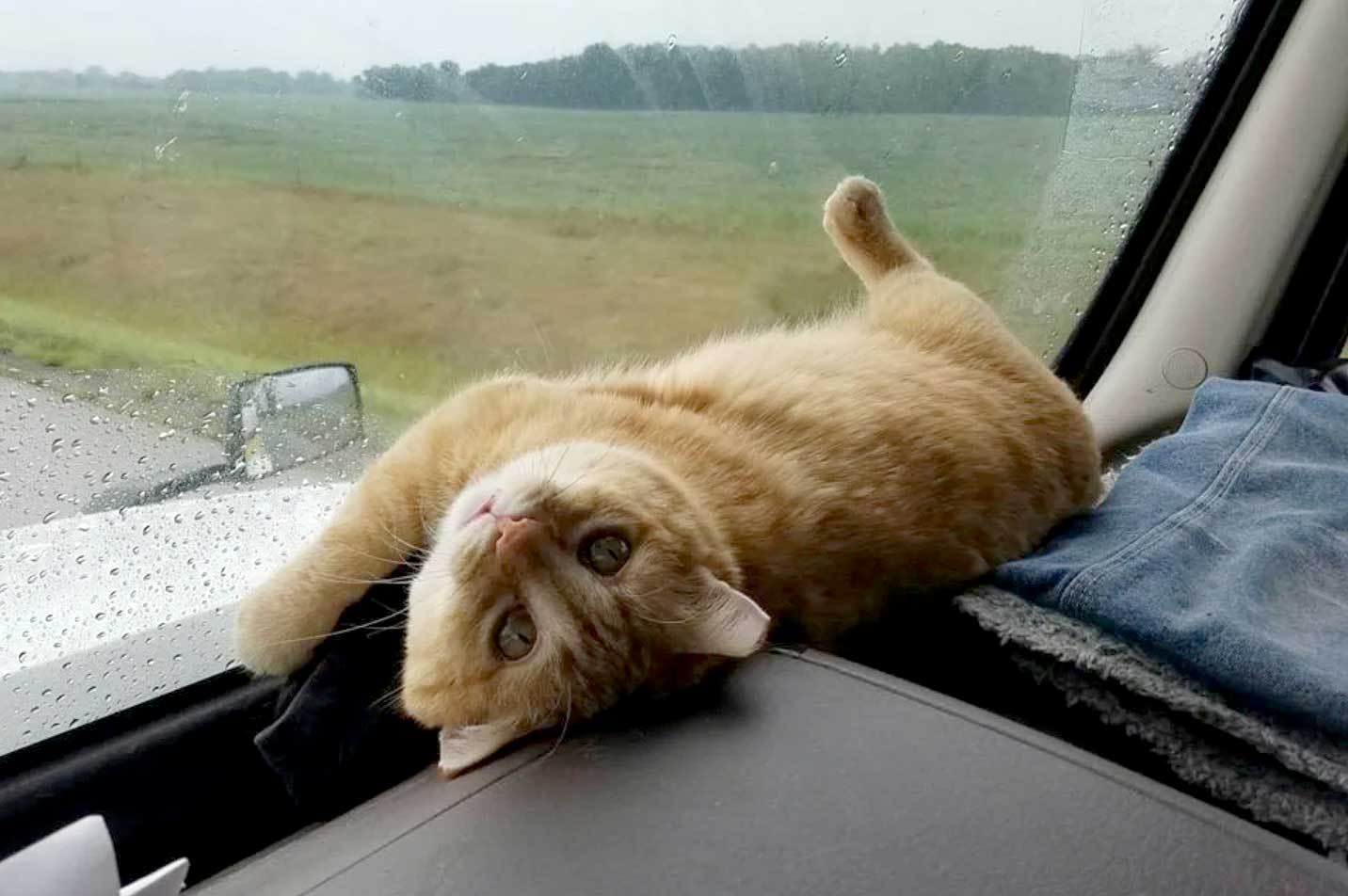







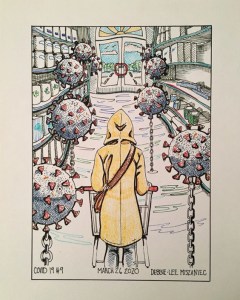

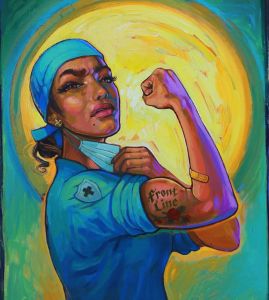




 peej
peej Carissa
 bostonboomer
 dakinikat
 ecocatwoman
 mablue2
 Mama Lopez
 peggysue22
 quixote
 skydancingguestblogger
 Mona (aka Wonk the Vote)



 Sky Dancing
Recent Comments