Posted: December 13, 2023 | Author: bostonboomer | Filed under: Donald Trump, Joe Biden, just because | Tags: abortion, Florida abortion rights petition, Hunter Biden, impeachment inquiry, James Comer, January 6 prosecutions, Jim Jordan, mifepristone, obstruction of justice, Supreme Court |
Good Day!!
There is quite a bit of news happening today. The top stories involve the Supreme Court, abortion, Hunter Biden, and the phony “impeachment” of President Biden by a bunch of Republican idiots. Here goes:
The Supreme Court has agreed to hear two troubling cases, one involving access to early abortions, and another that could affect January 6th cases.
The Washington Post: Supreme Court will decide access to key abortion drug mifepristone.
The Supreme Court will decide this term whether to limit access to a key abortion drug, returning the polarizing issue of reproductive rights to the high court for the first time since the conservative majority overturned Roe v. Wade last year.
 The Biden administration and the manufacturer of mifepristone have asked the justices to overturn a lower-court ruling that would make it more difficult to obtain the medication, which is part of a two-drug regimen used in more than half of all abortions in the United States. Oral arguments will likely be scheduled for the spring, with a decision by the end of June, further elevating the issue of abortion, which has proven galvanizing for Democrats, during the 2024 campaign season.
The justices will review a decision fromthe conservative U.S. Court of Appeals for the 5th Circuit that said the Food and Drug Administration did not follow proper procedures when it began loosening regulations for obtaining the mifepristone, which was first approved more than 20 years ago. The changes made over the last few years included allowing the drug to be taken later in pregnancy, to be mailed directly to patients and to be prescribed by a medical professional other than a doctor.
Medications to terminate pregnancy, which can be taken at home, have increased in importance over the last 18 months, as more than a dozenstates severely limited or banned abortions following the Supreme Court’s ruling in Dobbs v. Jackson Women’s Health Organization.
Read more at the WaPo link.
NBC News: Supreme Court agrees to hear Jan. 6 case that could affect Trump prosecution.
The Supreme Court on Wednesday agreed to hear an appeal brought by a man charged with offenses relating to the Jan. 6, 2021, assault on the U.S. Capitol in a case that could have a major impact on the criminal prosecution of former President Donald Trump.
The justices will hear a case brought by defendant Joseph Fischer, who is seeking to dismiss a charge accusing him of obstructing an official proceeding, namely the certification by Congress of President Joe Biden’s election victory, which was disrupted by a mob of Trump supporters.
Two other Jan. 6 defendants, Edward Lang and Garret Miller, brought similar appeals, the outcome of which will be dictated by the Supreme Court’s ruling in Fischer’s case.
Fritz Ulrich, a federal public defender representing Fischer, said he was pleased that the court will clarify the scope of the law in question but had no further comment.
Trump has been charged with the same offense as well as others in his federal election interference case. The court’s decision to take up the issue, as well as the timing of its ultimate ruling, could therefore affect his case.
How the case against Trump could be affected:
It will take months for the justices to hear oral arguments and issue a ruling sometime during the court’s current nine-month term, which ends in June.
Trump’s lawyers could use the Supreme Court’s involvement as one opportunity to delay his election interference trial, which is scheduled to start in March.
Trump is the front-runner in the polls for the Republican presidential nomination, and any delay in his criminal trial in Washington would be to his benefit.
If Trump were to win the election in November, he would then be in a position to have the charges dismissed. If the case proceeds as scheduled in March and Trump were to be convicted, he could be sentenced before the election.
Read all the details at NBC News.
One more abortion story:
NBC News: Florida abortion rights activists win over Republicans in ballot measure push.
Jaymie Carter is a registered Republican.
She has been named by two Republican governors — first Rick Scott, then Ron DeSantis — to sit on the Board of Trustees for the State College of Florida, and she says she voted for DeSantis in his 2022 campaign for governor.
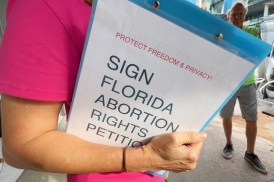 But when it comes to the issue of abortion, she’s breaking with her party.
“Women are concerned about what’s happening with our bodies and our right to choose. And there’s a lot of people that you wouldn’t think would be the pro-choice advocates, but they are,” she said. “And the government overreach, it’s huge right now.”
Carter is one of more than 150,000 registered Republican voters who have signed a petition in support of a ballot amendment that would bar the state from restricting abortion “before viability” — which is usually at 24 weeks — or “when necessary to protect the patient’s health.”
That total comes from the Florida Women’s Freedom Coalition, one of several groups working to gather the 891,523 signatures necessary to get the measure on the ballot, working with Floridians Protecting Freedom, the campaign leading the ballot initiative. The group says it has gathered and submitted more than 1.3 million signatures so far. The website of the Florida Division of Elections says it has validated 687,699 signatures as of mid-December.
Florida is one of nine states where groups are pushing to get measures on the ballot that would bar restrictions on abortion rights, following a streak of wins for similar measures in Kansas and Ohio.
And as the Feb. 1 deadline to get the petitions submitted and verified approaches in Florida, some Republican voters are coming out publicly to support and even advocate for it.
Very interesting. I wonder if Ron DeSantis has heard about this yet?
This is the day that House Republicans ordered Hunter Biden to undergo a behind-closed-doors deposition. In a surprise move, Biden held an impressive press conference, in which he reiterated his willingness to answer questions at a public hearing.
Luke Broadwater at The New York Times: Hunter Biden, Defying Deposition Subpoena, Again Offers Public Testimony.
Hunter Biden, the president’s son, appeared on Capitol Hill on Wednesday morning to offer to publicly testify in House Republicans’ impeachment investigation into his father, though he insisted he would not appear for a private deposition they scheduled over his refusals.
The younger Mr. Biden, who has been served a subpoena to testify, spoke to reporters in a hastily called news conference outside the Capitol near the Senate, across the complex from a House office building where Republican lawmakers were waiting to question him behind closed doors.
“I am here,” Mr. Biden said. “Let me state as clearly as I can: My father was not involved in my business.”
“There is no evidence to support the allegations my father was involved in my business because it did not happen,” he added.
The younger Mr. Biden has objected to providing private testimony, saying he fears Republicans will selectively leak his remarks and try to distort what he says. He has repeatedly proposed that he appear at a public hearing instead to answer their questions.
“They have lied over and over,” Mr. Biden said of Republicans.
Republicans have threatened to hold him in contempt of Congress if he does not comply.
Jacqueline Alemany and Matt Viser at The Washington Post: Ahead of House GOP vote on impeachment inquiry, Hunter Biden defies subpoena.
Hunter Biden will not appear for a closed-door deposition Wednesday, defying a subpoena from House Republicans who are investigating the Biden family’s finances.
“I’m here to testify at a public hearing today,” Hunter Biden said in a statement outside of the Capitol on Wednesday morning. “Republicans do not want an open process where Americans can see their tactics … or hear what I have to say.” [….]

Hunter Biden
Hunter Biden maintained that he would answer questions only in a public hearing. His legal team has pointed to past comments in which House Oversight Committee Chairman James Comer (R-Ky.) all but dared Hunter Biden to testify — publicly or privately — and the team has said they don’t trust House Republicans not to selectively leak his testimony.
“For six years I’ve been targeted by the unrelenting Trump Machine asking ‘where’s Hunter,’” Hunter Biden said. “Here’s my answer: I am here.”
Comer over the past two weeks has rebuffed Hunter Biden’s offer to publicly testify before the committee, and Republicans on Wednesday vowed to move expeditiously to initiate proceedings to hold him in contempt of Congress for defying their subpoena.
Hunter Biden “does not get to dictate the terms of the subpoena,” Comer told reporters outside of an empty hearing room where Hunter Biden was scheduled to be deposed. Pressed about whether he has found evidence that President Biden had engaged in wrongdoing or criminal conduct, Comer said he had found “some very serious evidence,” before citing two examples of banking records he has repeatedly mischaracterized.
The fake charges against President Biden:
The foundation of the impeachment inquiry, outlined by Judiciary Committee Chairman Jim Jordan (R-Ohio) in a briefing with reporters last week, rests on an unsubstantiated accusation that has become the linchpin of allegations regarding the Biden family’s purported corrupt and criminal conduct.
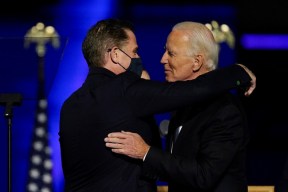 Republicans allege that Joe Biden as vice president pushed for the firing of Ukraine’s top prosecutor, Viktor Shokin, to quash a probe into the former owner of Burisma, the Ukrainian gas company where Hunter Biden sat on the board. That allegation has been widely refuted by former U.S. officials, as well as Ukrainian anti-corruption activists.
As part of the inquiry, House Republicans also have elevated claims that the Biden administration slowed a Justice Department investigation into Hunter Biden’s financial background, but that testimony has been repeatedly disputed by officials involved in the case.
“There is no fairness or decency in what these Republicans are doing. Their false facts have become the beliefs of too many people,” Hunter Biden said Wednesday.
“They have taken the light of my dad’s love for me and presented it as darkness,” he continued. “They have no shame.
Jonathan Chait at New York Magazine: We Were Told Biden Is Secretly Running the DOJ. Why Is His Son Being Charged?
It has long been an article of faith on the right that Attorney General Merrick Garland is prosecuting Donald Trump because President Biden wants him to. Even the Trump-skeptical corners of the conservative media casually assert, without bothering to supply any evidence for the charge, that Biden is behind the DOJ investigations.
“Biden Justice Department officials and Democratic prosecutors are currently trying to put the other side’s leading contender for the White House in jail … The vapors over Trump saying he’s going to target his enemies,” argues National Review editor-in-chief Rich Lowry, “is rich coming from people who have targeted their enemy by any means necessary for years now.”
“Meantime, a Justice Department special counsel has filed trumped-up charges against Mr. Trump for allegedly defrauding the U.S. … writes Wall Street Journal columnist Allysia Finley, “Abuse executive power. Ignore the law. Run roughshod over individual liberties. Retaliate against political opponents. Mr. Biden and his allies have done exactly what they warn Mr. Trump will do if he returns to the White House.”
You’d think those conservatives might be questioning this assumption, now that Garland’s Justice Department is prosecuting Joe Biden’s son for tax evasion. But no, they’re just pretending it isn’t happening.
There was never any basis for the charge that Garland is working at Biden’s behest. Garland is well-respected by legal types in both parties — that’s why Barack Obama thought he was the only Supreme Court nominee who stood any chance of confirmation by a Republican Senate in 2016 — and received 70 votes for his confirmation.
Unlike Trump, who repeatedly demanded his attorneys general prosecute his enemies and let his criminal buddies go free, and made these demands privately with even more corrupt intent, there is zero public evidence or reporting to suggest Biden has improperly tried to influence Garland’s decisions.
What’s more, the two Justice Department cases against Trump both flow directly from publicly identifiable sources. Trump is being charged in the documents case because the National Archive asked him to return government property, he refused, and then covered up his crimes when the FBI came looking. The January 6 case comes directly out of an investigation by a House committee that turned up damning evidence….
Indeed, the president is angry with his attorney general. “Biden’s relationship with Garland — which was already tense — has become more frigid amid Biden’s frustration at the lengthy criminal investigation and now prosecution of Hunter by the Justice Department,” reports Alex Thompson, “People close to Biden also have fumed at Garland for appointing a special counsel in August.” Thompson also reports, “One person close to the president unflatteringly compared Garland to the former FBI director James Comey, claiming they both have been obsessed with the appearance of having integrity rather than just trying to make the right decision.”
Read the rest at the link.
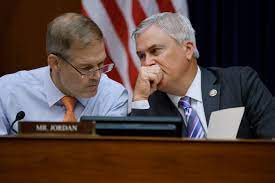
The accusers: Jim Jordan and James Comer
The New York Times: House Set to Approve Biden Impeachment Inquiry as It Hunts for an Offense.
The Republican-led House is on track to approve a formal impeachment inquiry into President Biden on Wednesday, pushing forward with a yearlong G.O.P. investigation that has failed to produce evidence of anything approaching high crimes or misdemeanors.
Republicans say the vote, which is expected in the evening, is needed to give them full authority to carry out their investigations amid anticipated legal challenges from the White House. Democrats have denounced the inquiry as a fishing expedition and a political stunt.
G.O.P. leaders refrained for months from calling a vote to open an impeachment inquiry, given the reservations of mainstream Republicans, many of them from politically competitive districts, about moving forward without proof that Mr. Biden did anything wrong. But the political ground has shifted considerably, and most of them are now willing to do so, emphasizing that they are not yet ready to charge the president.
“Voting in favor of an impeachment inquiry does not equal impeachment,” Representative Tom Emmer of Minnesota, the No. 3 House Republican, said at a news conference on Tuesday. “We will continue to follow the facts wherever they lead, and if they uncover evidence of treason, bribery or other high crimes and misdemeanors, then and only then will the next steps towards impeachment proceedings be considered.”
Read more at the NYT. I guess we’ll learn later today if the Republicans have the votes for their impeachment inquiry without a shred of evidence to support it.
More stories worth checking out today:
AP: Biden takes a tougher stance on Israel’s ‘indiscriminate bombing’ of Gaza.
The New York Times: Top Court Clears Path for Democrats to Redraw House Map in New York.
Reuters: US agency will not reinstate $900 mln subsidy for SpaceX Starlink unit.
The New York Times: In a First, Nations at Climate Summit Agree to Move Away From Fossil Fuels.
Shan Wu at The Daily Beast: Trump, Elon Musk, and Billionaire ‘Populists’ Threaten Democracy and Freedom.
Did you like this post? Please share it with your friends:
Posted: September 13, 2023 | Author: bostonboomer | Filed under: Afternoon Reads, Big Pharma, just because | Tags: addiction, Arthur Sackler, Librium, Oxycontin, prescription drugs, Purdue Pharma, Richard Sackler, Rudy Giuliani, Sackler family, Supreme Court, Valium, withdrawal |
Good Afternoon!!
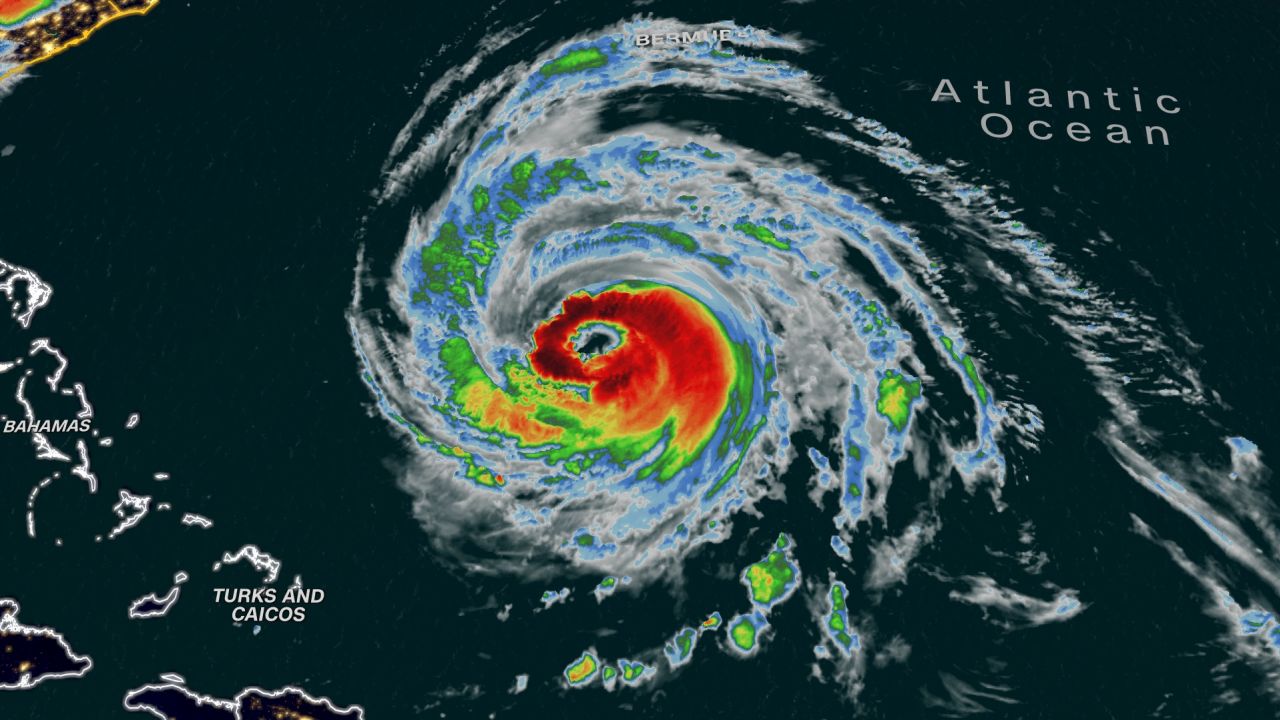
Satellite photo of Lee as of this morning
I got a bit of a start this morning when I got an email from the town housing authority about preparations for hurricane Lee. The storm is supposed to impact the Boston area around 2AM on Saturday until 2AM on Sunday. The email provided links to find out if I’m in a evacuation zone. It doesn’t look like I am, but we are sure to get lots of rain and wind and we could lose power. I guess I’ll be watching the Weather Channel in the coming days.
We are already having catastrophic flooding in some parts of the state, because we have had so much rain and fog here for weeks on end. There are more thunderstorms coming tonight and tomorrow. The area with the worst flooding recently got more than 10 inches of rain. It is so humid in my apartment fthat everything seems damp, and food gets stale quickly. Of course, none of this can compare to the awful weather that Dakinikat has been experiencing throughout this summer.
The Washington Post: Three scenarios for how Hurricane Lee could impact the US and Canada.
Hurricane Lee continues to churn north as a powerful storm over the open ocean, retaining major hurricane status as of 8 a.m. Eastern. While the forecast will become clearer in coming days, the forecast track has shifted west over the last 24 hours, and a farther west track is looking increasingly likely at this point — which could mean growing concern in New England.
Hurricane-force winds could threaten Cape Cod, Downeast Maine, New Brunswick and Nova Scotia by the weekend. Farther inland, tropical storm conditions are possible. Currently, the storm is set to spare the Southeast and Mid-Atlantic any adverse impacts.
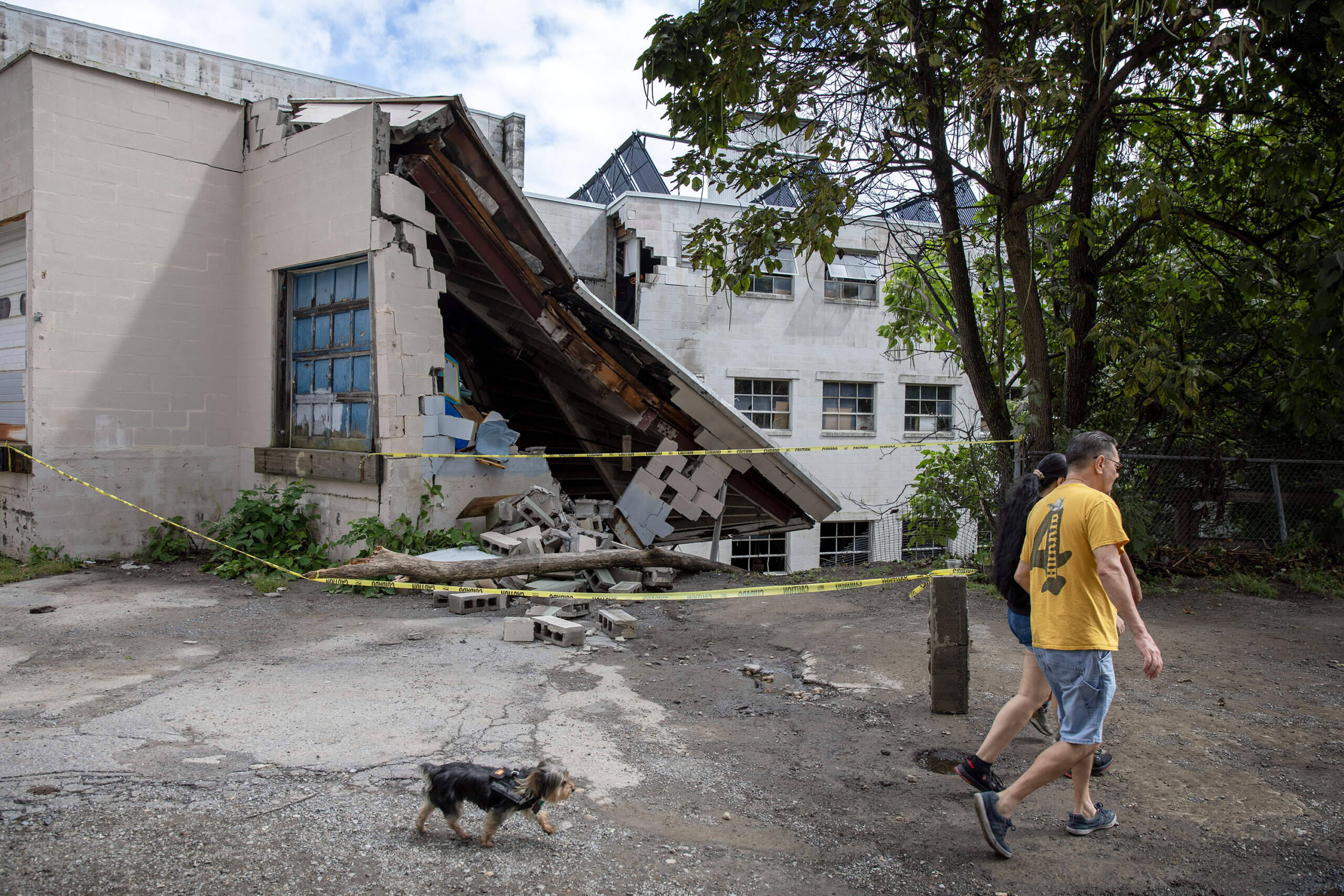
A building on Water Street by Monoosnoc Brook in Leominster, collapsed when the brook flooded after 11 inches of rain fell on city. (Robin Lubbock/WBUR)
“There is an increasing risk of wind, coastal flooding, and rain impacts from Lee in portions of New England and Atlantic Canada beginning on Friday and continuing through the weekend,” wrote the National Hurricane Center. “Due to Lee’s large size, hazards will extend well away from the center, and there will be little to no significance on exactly where the center reaches the coast.”
Lee is a powerhouse hurricane. It still had 115 mph winds Wednesday morning, but its wind field was expanding. Think of an ice skater outstretching their arms while spinning — they would slow down, since they’re tracing bigger circles. Same thing with Lee. It’s now a bigger storm, but maximum sustained winds are diminishing some.
That expansion of Lee’s wind field will churn up cooler waters from below the sea surface, hastening the weakening of its winds. By Friday, it will also begin to transition into a nontropical storm, tapping into jet stream energy and changing it structure.
You can read about the three possible scenarios at the WaPo. The big problem for Massachusetts is that we have already had heavy rain for weeks. One town, Leominster, had to be evacuated. Other areas have significant flooding.
Down the Rabbit Hole
I haven’t been paying as much attention to political news as usual over the past couple of weeks, because I “went down a rabbit hole,” as Dakinikat calls it. First, I read a book by Barbara Kingsolver, Demon Copperhead. It is set in the mountains of southern Appalachia, specifically in Virginia. The book deals with a number of issues, including social services and foster care of orphaned or abused children and the opiod crisis. Much of the book is actually painful to read, but Kingsolver is such a fine writer that I couldn’t put it down.
I have chronic pain from rheumatoid arthritis, but it has never occurred to me to try to get powerful pain killers, because I am a recovering alcoholic and I have also experienced addictions to Valium and Percocet. I was prescribed tranquilizers beginning when I was about 19 or 20. I was given phenobarbital, then Lithium and later I took Valium for years.
I have paid so little attention to the story of Purdue Pharma and the Sackler family, that I didn’t know that the Sacklers made their fortune on Librium and Valium in particular. The withdrawal from Valium is very serious, but it’s nothing compared to Oxycontin, which further enriched the Sackler family and has killed hundreds of thousands of Americans. people who were hooked on Oxycontin eventually turned to heroin and fentanyl.
 After I finished Demon Copperhead, I wanted to learn more about the opiod crisis and what happened with Oxycontin. First I watched a very good (partly fictionalized) documentary on Netflix, called Painkiller. Yesterday, I watched another Netflix series called The Pharmacist, which takes place in New Orleans. To say I was shocked by these shows is a serious understatement. I had no idea that Purdue Pharma pushed their drugs with sophisticated ad campaigns targeting doctors, and even went so far as to hire young women to approach doctors and flirt with them in order to convince them to prescribe more and more of the drug. Now I’m reading the book Empire of Pain, by Patrick Radden Keefe, which is a history of the Sackler family, how they made their huge fortune, and how they laundered their reputations through philanthropy.
This is definitely a political issue, and a difficult one, because rich corporations and individuals are rarely held to account and are usually allowed to buy their way out of legal issues. The Sacklers have now lost their “good name” at any rate. Their names have been taken off the many art collections, museum wings, etc. that they paid for. But none of them has gone to jail. They were allowed to declare bankruptcy and pay billions in restitution, but be protected from further lawsuits. The DOJ had a problem with that and right now the case is on hold in the Supreme Court.
From Reuters on August 11, 2023: US Supreme Court halts Purdue Pharma bankruptcy settlement pending review.
The U.S. Supreme Court on Thursday agreed to hear a challenge by President Joe Biden’s administration to the legality of OxyContin maker Purdue Pharma’s bankruptcy settlement, putting on hold a deal that would shield its wealthy Sackler family owners from lawsuits over their role in the country’s opioid epidemic.
The justices paused bankruptcy proceedings concerning Purdue and its affiliates and said they would hold oral arguments in December in the administration’s appeal of a lower court’s ruling upholding the settlement. The Supreme Court’s new term begins in October.
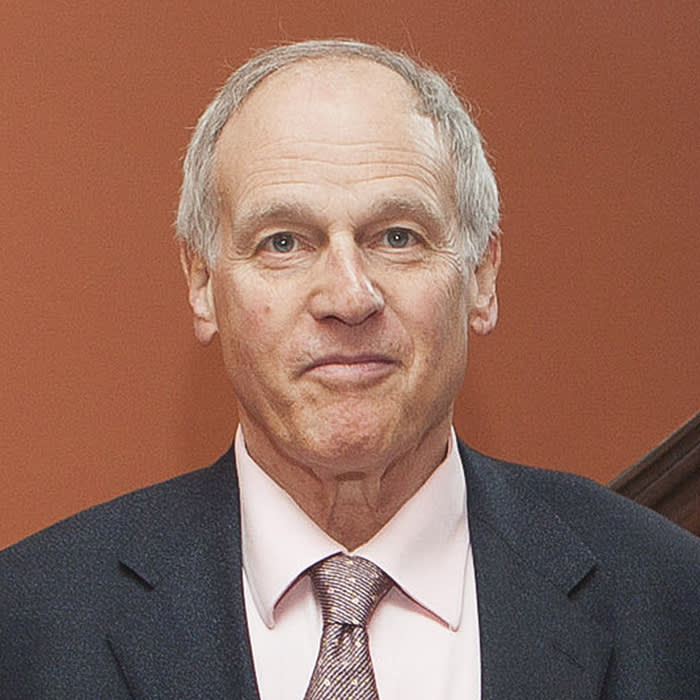
Richard Sackler was head of Purdue Pharma during the marketing of Oxycontin.
Purdue’s owners under the settlement would receive immunity in exchange for paying up to $6 billion to settle thousands of lawsuits filed by states, hospitals, people who had become addicted and others who have sued the Stamford, Connecticut-based company over its misleading marketing of the powerful pain medication OxyContin.
In a statement, Purdue said it was disappointed that the U.S. Trustee, the Justice Department’s bankruptcy watchdog that filed the challenge at the Supreme Court, has been able to “single-handedly delay billions of dollars in value that should be put to use for victim compensation, opioid crisis abatement for communities across the country and overdose rescue medicines.”
“We are confident in the legality of our nearly universally supported plan of reorganization, and optimistic that the Supreme Court will agree,” the company added.
The Justice Department declined to comment.
At issue is whether U.S. bankruptcy law allows Purdue’s restructuring to include legal protections for the members of the Sackler family, who have not filed for personal bankruptcy.
Purdue filed for Chapter 11 bankruptcy in 2019 to address its debts, nearly all of which stemmed from thousands of lawsuits alleging that OxyContin helped kickstart an opioid epidemic that has caused more than 500,000 U.S. overdose deaths over two decades.
I hope I’ve inspired a few people to learn more about this important issue. Purdue Pharma and the Sackler family single-handedly caused pain, heartache, and death to millions of people with Librium, Valium, and then Oxycontin, each of which they claimed were not addictive drugs. I can testify that Valium is definitely addictive. In the sober community, some refer to it as alcohol in pill form. Similarly, experts came to see Oxycontin as heroin in pill form. These people are monsters.
One more interesting link to the Sacklers: Rudy Giuliani stepped in to help them.
Insider, August 17, 2023: Rudy Giuliani helped Purdue Pharma keep selling OxyContin. Here’s the real story behind what’s depicted in ‘Painkiller.’
The new Netflix series “Painkiller” offers a fictionalized retelling of the rise of the powerful opioid OxyContin, depicting the real-life characters involved in manufacturer Purdue Pharma’s rapid ascent and subsequent downfall, including America’s most infamous mayor himself — Rudy Giuliani.
While certain aspects of the drama series have been embellished or altered amid the Hollywood treatment, Giuliani’s legal involvement in the Sackler family saga is rooted in reality.
The former New York City mayor and larger-than-life Trump ally helped Purdue Pharma continue to sell OxyContin even after federal prosecutors sought to make a case that the drug maker misled the public in claiming OxyContin was less addictive than other narcotics on the market.
Hundreds of thousands of people have died from opioid overdoses since the opioid crisis began in the 1990s, fueled at least in part, by OxyContin.
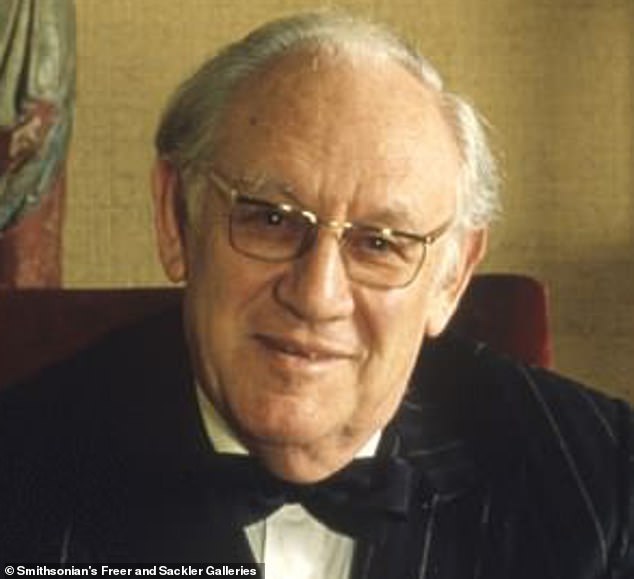
Arthur Sackler made his fortune in the 1960s and 1970s by pushing the drugs Librium and Valium, claiming they were not addictive.
Purdue Pharma hired Giuliani back in 2002, representing the first client his consulting firm ever landed, The New York Times reported in 2007. Then-beloved as the mayor who saw New York City through the September 11 attacks, Giuliani was brought on to convince public officials that Purdue was a trustworthy company, according to the newspaper.
Giuliani emerges as a key character in “Painkiller” in the mid-aughts as fictional lawyer Edie Flowers, played by actress Uzo Aduba, is working on behalf of the US attorney’s office to bring a lawsuit against Purdue Pharma. Despite prosecutors’ best efforts, the office ultimately reaches a deal with Purdue, which sees the company plead guilty to charges of fraudulent marketing and misbranding of OxyContin.
Part of the reason the company was able to reach that agreement was thanks to Giuliani’s efforts as Purdue’s lawyer. Journalist Patrick Radden Keefe, who wrote the New Yorker article upon which the Netflix show draws heavily, reported that Giuliani originally tried to “scuttle the case.”
Later, however, Giuliani and the other Purdue lawyers went above lead prosecutor John Brownlee’s head to complain to James Comey, who was the deputy attorney general at the time, The Guardian reported.
That’s my post for today. Feel free to react to what I’ve written or to discuss the latest news. I couldn’t face writing about Trump today.
Did you like this post? Please share it with your friends:
Posted: June 29, 2023 | Author: bostonboomer | Filed under: Afternoon Reads, Donald Trump, SCOTUS | Tags: Affirmative Action, Climate change, excessive heat, iran, jet stream, Mark Milley, military academies, poor air quality, Supreme Court, Trump stolen documents case, Walt Nauta, wildfires |

Summer Day or Embrace on the beach, (1904), by Edvard Munch
Good Day!!
There is some Trump investigation news this morning, plus, news just broke that the Supreme Court has gutted Affirmative Action in college admissions.
But before I get to those stories, a few articles about the awful summer weather we are having. Here in New England and across much of the Midwest, we’re having poor air quality because of the Canadian wildfires; and in much of the Southern U.S. people are suffering greatly from excessive heat.
CNN: People urged to stay indoors as smoke from Canadian wildfires continues to create unhealthy air quality from the Midwest to the Northeast.
Dangerous air quality and hazy skies persist as smoke from Canada’s raging wildfires drifts south, leaving more than 100 million people under air quality alerts across a dozen states from Minnesota to New York and down to the Carolinas.
Chicago had the worst air quality among major cities in the world early Thursday, according to IQAir. The air in Washington, DC, Minneapolis, Detroit and New York City was among the top 10 most polluted.
Smoke will continue to drift across the Midwest and into the mid-Atlantic and Northeast on Thursday. Forecast models predict a slow improvement beginning Thursday and additional decreases by Friday.
The worst air quality is likely to remain over the Great Lakes and Ohio Valley, with some increase in smoke in states including Washington and New York, but levels are not expected to reach those seen a few weeks ago.
In Canada – which is seeing its worst fire season on record – authorities have also issued air quality alerts across several provinces.
“With no end in sight to the Canadian wildfires and west to northwesterly winds expected to persist from south central Canada into the north central to northeast U.S., poor air quality conditions are likely to continue,” the National Weather Service warned.
The New York Times is providing live updates on the smoke as it works it’s way toward NYC.
The New York Times on the heat: Misery Engulfs the South as Heat Wave Spreads.
Even for Southerners used to spending a lot of time outside, this week’s brutal heat and humidity — which spread from Texas across the Gulf Coast and north into Missouri, Tennessee and Arkansas on Wednesday — are a little much….
An oppressive heat wave that baked Texas and Oklahoma last week, contributing to several deaths, has engulfed much of the southern and central United States, raising the heat index to dangerously high levels from Kansas City to the Florida Keys.

High Summer, 1915, by Edvard Munch
Temperatures will climb up to 20 degrees above normal for much of the region through at least the weekend, reaching the upper 90s or low 100s in many places, with the heat index — a measure of how heat and humidity make the air feel — soaring even higher….
Major cities where the heat index could reach between 110 to 120 degrees over the next few days include Dallas, San Antonio, New Orleans and Nashville, as well as Little Rock, Ark.; Jackson, Miss.; and Montgomery, Ala. “Many areas outside of Texas will experience their most significant heat of the season so far,” a forecast from the National Weather Service said.
Health experts consider a heat index of over 103 degrees dangerous, with a higher risk of cramps, exhaustion and heat stroke, particularly after exercise or long stretches in the sun.
High humidity will continue to produce “potentially life-threatening” heat through the rest of the week, the Weather Service said, and nighttime temperatures will offer little respite, staying unseasonably high even while the sun is down.
“That’s substantial because your house isn’t cooling off as much at night,” said Rob Perillo, the chief meteorologist at KATC-TV in Lafayette, La. “When you’re shooting 95 at noon, and it’s above 95 until 7 at night,” he added, “it’s not only hotter, but it’s hotter longer.”
NBC News: Scorching heat and Canada wildfires could be tied to ‘wavy, blocky’ jet stream.
Scientists say a closely watched atmospheric pattern — the jet stream — is behind both the Canadian wildfires and the scorching heat in Texas, raising questions about how it shapes extreme weather events and whether climate change is disrupting its flow.
The jet stream, a ribbon of air that encircles the Northern Hemisphere at high altitudes, drives pressure changes that determine weather across North America. The jet stream’s wavy pattern creates areas of high and low pressure.
In recent months, the jet stream’s patterns trapped and stalled a ridge of high pressure over northern Canada, which caused a heat wave and primed the landscape for the wildfires that later sent smoke pouring into the Midwest and the eastern U.S. Earlier this month, another ridge of high pressure centered over Texas, sending temperatures soaring.

Summer Night’s Dream/The Voice, by Edvard Munch, 1893
More than 100 million people in the U.S. faced either blistering heat or unhealthy air quality Wednesday.
In recent weeks, the jet stream has appeared unusual and disjointed, scientists say. Some researchers think climate change is disrupting its flow and causing it to bake regions in heat longer. They are concerned that changes in the patterns could cause extremes to increase more rapidly than climate models have projected as the world warms.
Michael Mann, a climate scientist at Pennsylvania State University, likened visualizations of the jet stream’s appearance in recent weeks to the swirling brushstrokes of a post-impressionist painter.
“I’m honestly at a loss to even characterize the current large-scale planetary wave pattern,” Mann tweeted this month. “Frankly, it looks like a Van Gogh.”
Now that’s an interesting interpretation!
In other news, the right wing Supreme Court has struck again.
Adam Liptak at The New York Times: Supreme Court Strikes Down Race-Based Admissions at Harvard and U.N.C.
In disavowing race as a factor in achieving educational diversity, the court all but ensured that the student population at the campuses of elite institutions will become whiter and more Asian and less Black and Latino.
Race-conscious admissions programs at Harvard and the University of North Carolina are unconstitutional, the Supreme Court ruled on Thursday, the latest decision by its conservative supermajority on a contentious issue of American life.
Chief Justice John G. Roberts Jr., writing for the 6-3 majority, said the two programs “unavoidably employ race in a negative manner” and “involve racial stereotyping,” in a manner that violates the Constitution.
Universities can consider how race has affected an applicant’s life, but he emphasized that students “must be treated based on his or her experiences as an individual — not on the basis of race.”
Justice Sonia Sotomayor summarized her dissent from the bench — a rare move that signals profound disagreement. The court, she wrote, was “further entrenching racial inequality in education, the very foundation of our democratic government and pluralistic society.”
“The devastating impact of this decision cannot be overstated,” she said in her scorching dissent.
The ruling could have far-reaching effects, and not just at the colleges and universities across the country that are expected to revisit their admissions practices. The decision could prompt employers to rethink how they consider race in hiring and it could potentially narrow the pipeline of highly credentialed minority candidates entering the work force.
Read more details at the NYT.
There is exception to the ruling: it doesn’t apply to military academies. I wonder why?
https://twitter.com/themaxburns/status/1674431227670175745?s=20
On to the Trump investigation stories.
ABC News: Top Trump campaign aide identified as key individual in classified docs indictment: Sources.
One of the top advisers on Donald Trump’s 2024 campaign is among the individuals identified but not named by special counsel Jack Smith in his indictment against the former president for allegedly mishandling classified documents after leaving the White House and obstructing the government’s efforts to retrieve them, sources familiar with the matter told ABC News.

The Mystery of a Summer Night, 1892, by Edvard Munch
Susie Wiles, one of Trump’s most trusted advisers leading his second reelection effort, is the individual singled out in Smith’s indictment as the “PAC Representative” who Trump is alleged to have shown a classified map to in August or September of 2021, sources said.
Trump, in the indictment, is alleged to have shown the classified map of an unidentified country to Wiles while discussing a military operation that Trump said “was not going well,” while adding that he “should not be showing the map” to her and “not to get too close.”
The alleged exchange between Trump and Wiles is the second of two instances detailed by prosecutors in the indictment showing how Trump allegedly disclosed classified information in private meetings after leaving the White House. The first was a July 2021 audio recording, obtained by ABC News earlier this week, in which Trump is heard showing people what he describes as a “secret” and “highly confidential” document relating to Iran.
ABC News has reported the meeting involved people who were helping Trump’s former chief of staff, Mark Meadows, with his memoir, according to sources. Smith’s team has spoken to the meeting’s attendees, which included the writers helping Meadows with his book and at least two aides to Trump, according to sources….
It does not appear, based on the indictment, that Trump was charged specifically for his retention of either the Iran document or the classified map shown to the person identified as Wiles. Rather, the two instances speak to what Smith’s prosecutors see as Trump’s state of mind in how he handled and sometimes shared classified materials in his possession after leaving the White House, sources said, as well as his alleged efforts to subvert the government’s efforts to get the documents back.
Rolling Stone: Trump Demanded ‘My Documents’ Back Even After His Lawyers Told Him He’d Be Indicted.
LAST MONTH, DONALD Trump’s lawyers told him he was on the cusp of a federal indictment in the classified documents case. But the former president still wanted “my documents” and “my boxes” back, asking some of his lawyers if they could get them from the federal government, according to a source with direct knowledge of the matter and two other people briefed on it.
It’s one of many such conversations Trump has had over the past few months, the sources say. In these conversations, Trump also claimed it was “illegal” that he could no longer have the documents seized in the Mar-a-Lago raid. Those materials, Trump insisted, belonged to “me.” Trump has also asked if there are any other possible legal maneuvers or court filings they could try to accomplish this that they hadn’t thought of yet.
For much of his post-presidency, Trump has incorrectly insisted to various aides and confidants that the highly classified documents he continued to hoard were “mine.” In some of these conversations, according to the source with knowledge of the matter, Trump has also mentioned that he’ll get the documents back in 2025 — because he predicts he’ll be president again, and therefore regain unfettered access to the government’s most sensitive secrets.

Summer Night – Inger on the Shore, 1899, by Edvard Munch
Apparently some of Trump’s lawyers have gone along with his claims.
Two sources familiar with the situation tell Rolling Stone that several lawyers — some retained by Trump and others politically aligned with him — have briefed Trump that he is, in their view, entitled to the return of government documents under an obscure part of the Presidential Records Act, specifically 44 USC 2205(3), which asserts that “Presidential records of a former President shall be available to such former President or the former President’s designated representative.”
But experts on classification rules disagree. “Whatever one might say about his Presidential Records Act argument, there’s no argument that it immunizes him from criminal prosecution under the Espionage Act,” Brian Greer, an attorney who served in the CIA’s office of general counsel from 2010 to 2018, tells Rolling Stone. Nor does the act allow a former president to defy a lawful court-ordered subpoena for documents and obstruct justice, as the special counsel alleges Trump did in the indictment, Greer adds.
Hugh Lowell at The Guardian: Trump valet arraignment delayed after losing Florida lawyer over fees dispute.
Donald Trump’s valet charged in the classified documents case had his arraignment on Tuesday delayed for a second time to July by a magistrate judge, after he was forced to abandon his top choice Florida lawyer over a dispute about legal fees, according to two people familiar with the matter.
The valet, Walt Nauta, appeared alongside Trump when the former president pleaded not guilty to 37 criminal charges in federal district court in Miami this month but could not himself enter a plea – a necessary step to start trial preparation – because he lacked local counsel.
Two weeks later, Nauta remains without a lawyer admitted to practice in the southern district of Florida after the person at the top of the shortlist drawn up by Nauta’s defense team decided he needed to charge higher fees to represent him the night before the arraignment, the people said.
The previously unreported dispute over fees in effect meant Nauta could not retain the person as his Florida lawyer, the people said, even though he would be paid by Trump’s political action committee Save America, which has also been paying the fees of his lead lawyer, Stanley Woodward.
The reason for the rate hike was not clear, but at least one Florida lawyer who had seriously considered representing Nauta decided several days ago that the reputational and legal risks of working with Trump’s co-defendant in the documents case were too great.
Susan Glasser at The New Yorker: Why Donald Trump Was So Mad at Mark Milley That He Confessed to a Crime.
With the sounds of papers rustling in the background, Trump is heard complaining about General Mark Milley, the chairman of the Joint Chiefs of Staff. “He said that I wanted to attack Iran—isn’t it amazing?” Trump told his visitors, who included book advisers to his former chief of staff, Mark Meadows. A few days earlier, I had reported about Milley’s concerns in the final months of Trump’s Presidency that Trump might provoke a military conflict with Iran as part of his effort to remain in power, despite losing the 2020 election. This, Milley told others, was one of the “nightmare scenarios” that he was working to prevent. At Bedminster, Trump apparently brandished the Pentagon’s attack plan—which he claimed had been presented to him by Milley. “This totally wins my case,” Trump said. “You know, except, like, it is highly confidential.” He added, “See, as President, I could have declassified it; now I can’t, but this is classified. . . . it’s so cool.” The tape ends with a line that was not included in the federal indictment: Trump asking, “Bring some Cokes in, please?” The whole exchange was happening, in other words, not in some top-secret facility, but with someone standing by to fetch drinks, in Trump’s office, right near the pool at his country club.

Summer Night on the Beach, Edvard Munch
To legal observers and, indeed, to pretty much anyone who could hear, the audiotape sounded like an admission of guilt. But this is Trump, a serial liar for whom an obvious defense presents itself: that he was not telling the truth to his visitors when he claimed to be showing them secret papers. And, sure enough, by Tuesday, Trump told reporters on his way back from a New Hampshire campaign appearance, “It was bravado, if you want to know the truth”—bravado here being a Trump synonym for “bullshitting.” This is the 2023 equivalent of dismissing the “Access Hollywood” tape as mere “locker-room talk” that had nothing to do with Trump’s actual behavior toward women. He even suggested that the papers he is heard shuffling through were just “building plans.” For Trump, it’s better to be a liar than a convict.
The damning evidence against Trump would not exist if not for his rift with Mark Milley, a remarkable feud between the Commander-in-Chief and the nation’s top general that had been a secret backdrop to the public drama that played out after the 2020 election. At the time the tape was made, in the summer of 2021, Trump was apoplectic that Milley’s fears about him were becoming public. Two recently published books—one by the journalists Carol Leonnig and Phil Rucker of the Post, and the other by Michael Bender, then of the Wall Street Journal—had reported new details about Milley’s efforts, including regular “land the plane” phone calls with Meadows, the White House chief of staff, to prevent Trump from drawing the military into his quest to overturn the 2020 election. Milley was even quoted fretting about Trump and his supporters staging a “Reichstag moment”—a fear that seemed eerily prescient on January 6, 2021, when a violent mob of Trump supporters stormed the U.S. Capitol, seeking to block congressional certification of Trump’s defeat. Trump, in turn, publicly denounced Milley and said that he had only picked him as chairman in 2018 to spite James Mattis, his soon-to-quit Defense Secretary at the time.
Glasser, as always, is long-winded, so you’ll need to read more at The New Yorker to get the full story about Trump’s rage at Milley. Milley was afraid that Trump might try to attack Iran after he lost the election. Basically, Milley told the truth about him, and Trump never likes people who do that.
One more from Raw Story: I’ve ‘never seen anyone in government’ so dangerous to national security as Trump: Bob Woodward.
Legendary journalist Bob Woodward tore into former President Donald Trump in an interview on CNN Wednesday evening, calling him the largest threat to national security he had ever seen from any U.S. government official.
This comes amid the release of an audio tape of Trump boasting to patrons of his New Jersey golf club about possessing highly classified defense information about an attack on Iran — which he now denies — and reporting that he was motivated to do so by anger at Joint Chiefs Chairman Mark Milley for working to constrain his post-2020 election impulses.
“Bob, you’ve interviewed the former president a lot,” said anchor Anderson Cooper. “We’ve discussed your own tape of him. What stands out to you about this latest recording?”
“Well, it really shows that Donald Trump is an alarming, dangerous threat to national security,” said Woodward, who helped expose the Watergate scandal decades ago and has recently been caught up in a legal battle with Trump over White House transcripts. “In the book, ‘Peril’ that I did with Robert Costa, we recount two National Security Council meetings where Trump, not General Milley or the Defense Department, was agitating for a possible attack on Iran. And he is pushing it. And General Milley, the Chairman of the Joint Chiefs, the number one military man in the country, is telling Trump, you don’t want a war. If you start a war, you’re going to get into a conflict that you can’t get out of.”
“You see him in this reporting that we did from these meetings from notes, that it is the generals who say, no, no, no,” Woodward continued. “And Trump says, well — in one of the meetings the Iranians have enough to make two nuclear bombs, and he’s worried about that and thinking that maybe they should consider an attack. And these contingency plans are most sensitive documents in the government because what they do is they outline in a crisis how we might attack Iran, what the casualties would be, how many ships would be sunk, how long it might take. And that’s something you can’t treat casually, as Trump has.”
That’s it for me. What stories have caught your interest today?
Did you like this post? Please share it with your friends:
Posted: May 26, 2023 | Author: bostonboomer | Filed under: abortion rights, Donald Trump, SCOTUS | Tags: abortion, books and reading, Caitlin Bernard, Clean Water Act, Espionage Act, Indiana, rape, Samuel Alito, Supreme Court, Trump stolen documents case, wetlands |
Good Day, Sky Dancers!!
I am addicted to books. In my adult years, I have bought so many books that I could never read them all; but I can’t stop myself–or maybe I don’t want to. When I moved into the apartment I live in now, I had to leave hundreds of books behind, because I simply didn’t have room for them. I tell myself an addiction to buying books is at least better than addictions to alcohol and drugs. I do much of my reading on my Kindle now, and at least those books don’t take up space. But I still love physical books and I still buy more than I can read. I’m 75 years old now, and I don’t have that much time left; but I still want to read as many books as I can before I “shuffle off this mortal coil.”
Could this be a solution?
Okay, probably not; but it’s an interesting fantasy. And now for some news.
Yesterday The Washington Post broke a story on the investigation into Trump’s theft of, and refusal to return, government documents. A short time later, The New York Times followed up with more details.
Devlin Barrett, Josh Dawsey, Spencer S. Hsu, and Perry Stein at The Washington Post: Trump workers moved Mar-a-Lago boxes a day before FBI came for documents.book
Two of Donald Trump’s employees moved boxes of papers the day before an early June visit byFBI agents and a prosecutor to the former president’s Florida home to retrieve classified documents in response to a subpoena — timing that investigators have come to view as suspicious and an indication of possible obstruction, according to people familiar with the matter.
Trump and his aides also allegedly carried out a “dress rehearsal” for moving sensitive papers even before his office received the May 2022 subpoena, according to the people familiar with the matter who spoke on the condition of anonymity to describe a sensitive ongoing investigation.
Prosecutors in addition have gathered evidence indicating that Trump at times kept classified documents in his office in a place where they were visible and sometimes showed them to others, these people said.
Taken together, the new details of the classified-documents investigation suggest a greater breadth and specificity to the instances of possible obstruction found by the FBI and Justice Department than have been previously reported. It also broadens the timeline of possible obstruction episodes that investigators are examining — a period stretching from events at Mar-a-Lago before the subpoena to the period after the FBI search there on Aug. 8.
That timeline may prove crucial as prosecutors seek to determine Trump’s intent in keeping hundreds of classified documents after he left the White House, a key factor in deciding whether to file charges, possibly for obstruction, mishandling national security secrets or both. The Washington Post has previously reported that the boxes were moved out of the storage area after Trump’s office received a subpoena. But the precise timing of that activity is a significant element in the investigation, the people familiar with the matter said.
The WaPo writers focus on obstruction, but if Trump showed documents to other people, that could be espionage. Remember, espionage was one of the crimes listed on the warrant for the FBI search of Mar-a-Lago.
More details from the WaPo story:
Of particular importance to investigators in the classified-documents case, according to people familiar with the probe, is evidence showing that boxes of documents were moved into a storage area on June 2, just before senior Justice Department lawyer Jay Bratt arrived at Mar-a-Lago with agents. The June 3 visit by law enforcement officialswas to collect material in response to the May 2022grand jury subpoena demanding the return of all documents with classified markings.
John Irving, a lawyer representing one of the two employees who moved the boxes, said the worker did not know what was in them and was only trying to help Trump valet Walt Nauta, who was using a dolly or hand truck to move a number of boxes.
“He was seen on Mar-a-Lago security video helping Walt Nauta move boxes into a storage area on June 2, 2022. My client saw Mr. Nauta moving the boxes and volunteered to help him,” Irving said. The next day, he added, the employee helped Nauta pack an SUV “when former president Trump left for Bedminster for the summer.”
The lawyer said his client, a longtime Mar-a-Lago employee whom he declined to identify, has cooperated with the government and did not have “any reason to think that helping to move boxes was at all significant.” Other people familiar with the investigation confirmed the employee’s role and said he has been questioned multiple times by authorities.
Awhile back there was a video circulating on Twitter of people moving boxes out of Mar-a-Lago and loading them onto a truck to be taken to Bedminster. This happened the day before Trump left to spend the summer at his New Jersey golf club. Now it’s being posted again.
This is from Alan Feuer and Maggie Haberman at The New York Times: Mar-a-Lago Worker Provided Prosecutors New Details in Trump Documents Case.
The day before a key meeting last year between a lawyer for former President Donald J. Trump and officials seeking the return of classified documents in Mr. Trump’s possession, a maintenance worker at the former president’s private club saw an aide moving boxes into a storage room, according to a person familiar with the matter.
The maintenance worker offered to help the aide — Walt Nauta, who was Mr. Trump’s valet in the White House — move the boxes and ended up lending him a hand. But the worker had no idea what was inside the boxes, the person familiar with the matter said. The maintenance worker has shared that account with federal prosecutors, the person said….
Mr. Trump was found to have been keeping some of the documents in the storage room where Mr. Nauta and the maintenance worker were moving boxes on the day before the Justice Department’s top counterintelligence official, Jay Bratt, traveled to Mar-a-Lago last June to seek the return of any government materials being held by the former president.
Mr. Nauta and the worker moved the boxes into the room before a search of the storage room that same day by M. Evan Corcoran, a lawyer for Mr. Trump who was in discussions with Mr. Bratt. Mr. Corcoran called Justice Department officials that night to set up a meeting for the next day. He believed that he did not have a security clearance to transport documents with classified markings, a person briefed on his decision said.
Weeks earlier, the Justice Department had issued a subpoena demanding the return of the documents. Prosecutors have been trying to determine whether Mr. Trump had documents moved around Mar-a-Lago or sought to conceal some of them after the subpoena.
Part of their interest is in trying to determine whether documents were moved before Mr. Corcoran went through the boxes himself ahead of a meeting with Justice Department officials looking to retrieve them. Prosecutors have been asking witnesses about the roles of Mr. Nauta and the maintenance worker, whose name has not been publicly disclosed, in moving documents around that time.
During his trip to Mar-a-Lago on June 3, Mr. Bratt was given a packet of roughly three dozen documents with classified markings by a lawyer for Mr. Trump. Mr. Bratt was also given a letter, drafted by Mr. Corcoran but signed by another lawyer for the former president, attesting that a diligent search had been carried out for any additional material in response to the subpoena and that none had been found. Mr. Bratt was not given access to search the storage room at that point.
The obvious inference is that Trump may have gone through the boxes and removed items that he wanted to keep, concealing them in his private quarters. Remember that classified documents were later found in his office desk and in his bedroom.
Like the WaPo writers, Feuer and Haberman focus their discussion on possible obstruction charges, and ignore the obvious possibility of espionage charges based on the fact that Trump showed documents to people at his private club and left them lying around in plain sight.
The penalties for violating the espionage act are 20 years in prison and a $10,000 fine.
In other news, the Supreme Court yesterday announced another horrific decision. This time they’ve gutted the Clean Water Act.
Timothy Puko and Robert Barnes at The Washington Post: How Supreme Court’s EPA ruling will affect U.S. wetlands, clean water.
Bogs. Marshes. Swamps. Fens. All are examples of wetlands.
But the type of wetland that gets protection under federal law is a matter of wide dispute, one reset by a sweeping ruling Thursday from the U.S. Supreme Court.
At issue is the reach of the 51-year-old Clean Water Act and how courts should determine what count as “waters of the United States” under that law. Nearly two decades ago, the court ruled that wetlands are protected by the Clean Water Act if they have a “significant nexus” to regulated waters.
The Supreme Court decided that rule no longer applies and said the Environmental Protection Agency’s interpretation of its powers went too far, giving it regulatory power beyond what Congress had authorized….
Writing for five justices of the court, Justice Samuel A. Alito ruled that the Clean Water Act extends only to “those wetlands with a continuous surface connection to bodies that are ‘waters of the United States’ in their own right, so that they are ‘indistinguishable’ from those waters.” He was joined by Chief Justice John G. Roberts Jr. and Justices Clarence Thomas, Neil M. Gorsuch and Amy Coney Barrett….
Some environmental groups and legal experts estimate that the decision will remove federal protection from half of all wetlands in the continental United States. According to estimates from Earthjustice, an environmental law firm, the decision will prevent the EPA from placing federal protections on as many as 118 million acres of wetlands, an area larger than the landmass of California. Those estimates could not be immediately confirmed, but the ruling is expected to give farmers, home builders and other developers far more latitude to disturb lands previously regulated under the Clean Water Act….
The ruling affects one of the EPA’s most fundamental authorities — its ability to protect upstream waters in order to protect downstream water quality for drinking supplies and wildlife. Experts say greater development upstream could result in silt and pollutants damaging downstream waters and habitat, and reduce the flood control and groundwater-recharge benefits of protected wetlands.
Read all the gory details at the WaPo link.
Commentary by Mark Joseph Stern at Slate: Samuel Alito’s Assault on Wetlands Is So Indefensible That He Lost Brett Kavanaugh.
On Thursday, the Supreme Court dealt a devastating blow to the nation’s wetlands by rewriting a statute the court does not like to mean something it does not mean. The court’s decision in Sackett v. EPAis one of the its most egregious betrayals of textualism in memory. Put simply: The Clean Water Act protects wetlands that are “adjacent” to larger bodies of water. Five justices, however, do not think the federal government should be able to stop landowners from destroying wetlands on their property. To close this gap between what the majority wants and what the statute says, the majority crossed through the word “adjacent” and replaced it with a new test that’s designed to give landowners maximum latitude to fill in, build upon, or otherwise obliterate some of the most valuable ecosystems on earth.
Justice Samuel Alito’s opinion for the court is remarkably brazen about this approach—so brazen that Justice Brett Kavanaugh (of all people!) authored a sharp opinion accusing him of failing to “stick to the text.” Alito began with a long history of the Supreme Court’s struggles to identify the “outer boundaries” of the Clean Water Act, as if to explain why the time had come for the court to give up wrestling with the text and just impose whatever standard it prefers. The law expressly protects “waters of the United States” (like rivers and lakes) as well as “wetlands adjacent” to these waters. Congress added the wetlands provision in 1977 to codify the EPA’s definition of “adjacent,” which also happens to be the actual definition: “bordering, contiguous, or neighboring.” Under that interpretation—the one Congress adopted—wetlands that neighbor a larger body of water remain protected, even if they aren’t directly connected.
Why did Congress make that choice? Because wetlands provide immense environmental benefits: They filter and purify water draining into nearby streams, rivers, and lakes. They slow down runoff into these larger bodies. And they serve as vital flood control. In other words, the Clean Water Act has to protect “adjacent” wetlands to serve its overarching goal of safeguarding the broader “waters of the United States” from pollution.
Too bad, Alito wrote: We don’t like the definition that Congress used. It could lead to “crushing” fines for landowners and interfere with “mundane” activities like “moving dirt.” It interferes with “traditional state authority.” And it could give the EPA “truly staggering” regulatory authority. Five justices on the Supreme Court think all of that is very bad. So they declared that, instead of applying the statute’s words, the court would impose a different standard: Only wetlands with “a continuous surface connection” to larger bodies of water merit protection under the Clean Water Act.
This definition—which, it just can’t be stressed enough, appears nowhere in the law—is a crushing defeat for wetlands and their protectors. These ecosystems, as Kavanaugh pointed out, are frequently separated from larger bodies of water by “man-made dikes or barriers” as well as “natural river berms, beach dunes, or the like.” Such wetlands “play an important role in protecting neighboring and downstream waters,” which is why Congress included them in the statute. But under the majority’s new test, they are stripped of federal protection.
Sam Alito: the same asshole who overturned Roe v. Wade while citing a 17th century judge who presided over a witch trial.
I’ll wrap up this post with an abortion horror story at The Washington Post: Indiana board fines doctor for discussing rape victim’s abortion.
https://twitter.com/donmoyn/status/1662078210518007813?s=20
Indiana’s medical licensing board decided late Thursday to discipline a doctor who made headlines last year for performing an abortion for a 10-year-old Ohio rape victim. The board gave the doctor a letter of reprimand and ordered her to pay a $3,000 fine for violating ethical standards and state laws by discussing the case with a reporter.
For nearly a year, Indiana’s Attorney General Todd Rokita (R) pursued punishment for Caitlin Bernard, an OB/GYN and an assistant professor at the Indiana University School of Medicine who carried out the abortion in June 2022, less than a week after Roe v. Wade was struck down, enacting trigger laws.
Bernard broke patient privacy laws by telling an Indianapolis Star reporter about the patient’s care, the board decided Thursday night after a roughly 14-hour hearing that ended shortly after 11:30 p.m. Bernard’s lawyers argued she properly reported the incident to an Indiana University Health social worker and did not run afoul of privacy laws when she discussed the patient’s case in a general and “deidentified” manner that is typical for doctors.
Records obtained by The Washington Post last year show that Bernard reported the girl’s abortion to the relevant state agencies ahead of the legally mandated deadline, which the board agreed with Thursday night, clearing her of a charge related to that issue.
These assholes are supposedly doing this in order to “protect” the patient–a 10-year-old child who was impregnated by a rapist in Ohio and had to travel to Indiana because her Ohio politicians determined that she should be forced to bear her rapist’s child even though that could be life-threatening for her.
Bernard’s lawyers rejected Rokita’s allegations as baseless and politically motivated. The seven-member board of governor appointees could, by a majority vote, have either taken no action against Bernard or imposed a range of disciplinary measures up to and including the immediate termination of Bernard’s medical license.
Throughout the lengthy hearing, Bernard faced at times pointed questions about her decisions.
She explained how, as a doctor, she felt she had “an obligation” to ensure Hoosiers understood how abortion bans were affecting people across the country — and could eventually affect them.
Bernard was also asked whether she thought she would have “gotten as much attention” if she had not mentioned the 10-year-old patient’s case to a reporter.
“I don’t think that anybody would have been looking into this story as any different than any other interview that I’ve ever given if it was not politicized the way that it was by public figures in our state and in Ohio,” Bernard said.
That’s my contribution for today. What stories have you been following lately?
Did you like this post? Please share it with your friends:









 peej
peej Carissa
 bostonboomer
 dakinikat
 ecocatwoman
 mablue2
 Mama Lopez
 peggysue22
 quixote
 skydancingguestblogger
 Mona (aka Wonk the Vote)



 Sky Dancing
Recent Comments