Posted: January 11, 2025 | Author: bostonboomer | Filed under: cat art, caturday, Climate change, just because | Tags: Big Oil, Climate change, Los Angeles wildfires, Palisades Fire, snow |
Good Afternoon!!
We are getting some snow here in Greater Boston. It doesn’t look like it will amount to much, but it’s pretty to look at. I miss having big snowstorms. It seems as if climate change has destroyed us New Englanders’ identity as tough people who handle deep snow and frigid cold with aplomb.
In the winter of 2014-2015, Boston got an unbelievable snow total of 110 inches, with 64.8 inches coming in February. On January 26-27, a blizzard dropped more than 34 inches of snow. Now we’ve gone through several mild winters with very little snow. Personally, I miss the old days of giant snowstorms. And I know I’m not alone.
This is a transcript of a program at WBUR in February, 2024: What we lose if snow disappears.
Snowpack is getting less reliable in American winters. And in many places, that’s not just an environmental problem, but an emotional one, too.
Guests
Justin Mankin, climate scientist. Director of the Climate Modeling and Impacts Group at Dartmouth College.
Tony Wood, reporter for the Philadelphia Inquirer. Author of “Snow: A history of the world’s most fascinating flake.“
Also Featured
Benjamin Moser, Pulitzer Prize-winning writer.
Ben Popp, executive director of the American Birkebeiner Ski Foundation….
MEGHNA CHAKRABARTI: This is On Point. I’m Meghna Chakrabarti, and sure snow can be a pain in the butt, I know. But for folks who grew up with long winters, snow also carries memory with it of ethereal beauty, hard slogs, and hard times overcome of crystalline joy. I grew up in a place with a pretty temperate, very rainy winter.
So when I moved to New England and experienced my first big blanket of snow, I was left with only one feeling: pure magic. Now though, for listeners who shared those stories with us that you just heard, they were from upstate New York, Utah, Colorado, Wisconsin, New Hampshire, Washington State, Maine, Iowa, Ohio, the Dakotas and more.
For all of them, winter is very different. Because the magic feels like it’s fading away….
(LISTENER MONTAGE)
I’m standing in my front yard and there is a tiny bit of ice that used to be snow that’s melted in the shade, and we’ve had almost no snow.
It’s February 2nd and I live in Western New York and there is no snow today. The ground is bare. I can see grass. This is completely different from what I experienced when I was growing up.
I have a four-year-old golden, who’s only ever played in a few inches of snow. Has no idea what it’s like to run and fly and bound through endless puffy snow.
This year’s snow amount is quite depressing.
I think our snow drought is contributing to our overall drought that we’ve been experiencing in eastern Iowa over the last five years or so.
This year for the very first time, when I go outside, sometimes I occasionally find flies or mosquitoes or bees, and so to me, seeing insects that are typically not around during the winter months. It tells me there’s clear change happening.
I miss the snow. I miss watching it fall. I miss how it muffles the noise and just makes things so peaceful and quiet.
I really miss having snow for Christmas and for the kids to play sled and built snow forts.
When my kids were growing up, they were outside all the time. Now our young grandchildren can’t really go outside so much and all the time. Because it’s a mud pit instead of a snow mound. So it’s hard.
The roads in town are as oddly bare as the trails here and one local businesses’ electronics door front sign captures our community’s collective sentiment. It keeps flashing “Pray for snow.”
CHAKRABARTI: It is true. Snowfall is becoming less reliable and snowpacks are shrinking. Winter snowpack in many parts of the continental U.S. have shrunk by 10% to 20% per decade over the last 40 years. That’s according to a study published last month in Nature. There is some annual variation, but overall winter and its signature precipitation are changing.
Snow has a way of creating a shared identity, a sense of wonder, a sense of fun for people who live in those cold places. It binds communities together. So what do we lose when that snow melts away?
Climate change is not only changing the way we live; it is change how we see ourselves. Read the discussion at the WBUR link. If you live in a place that used to get lots of snow, I think you’ll find it interesting.
 The Guardian: 2024 was hottest year on record for world’s land and oceans, US scientists confirm.
It was the hottest year ever recorded for the world’s lands and oceans in 2024, US government scientists have confirmed, providing yet another measure of how the climate crisis is pushing humanity into temperatures we have previously never experienced.
Last year was the hottest in global temperature records stretching back to 1850, the National Oceanic and Atmospheric Administration (Noaa announced, with the worldwide average 1.46C (2.6F) warmer than the era prior to humans burning huge volumes of planet-heating fossil fuels.
This new record, 0.1C (0.18F) hotter than the previous high mark set in 2023, means that all of the 10 hottest years since 1850 have occurred in the past decade. The data supports separate figures released by European Union scientists this week that also show a record 2024, albeit those figures showed 2024 was 1.6C (2.8F) hotter than pre-industrial times, the first measure beyond the internationally-agreed threshold of keeping long-term temperatures below a 1.5C (2.7F) rise.
Nasa, which also released its temperature data on Friday, concurs that 2024 was a record year, being 1.47C (2.6F) hotter than the pre-industrial era. “All the groups agree, regardless of how they put the data together, there’s no question,” said Gavin Schmidt, a senior climate scientist at Nasa. “The long-term trends are very clear.”
Schmidt said the levels of global heating are pushing humanity beyond its historical experience of the Earth’s climate. “To put that in perspective, temperatures during the warm periods on Earth three million years ago – when sea levels were dozens of feet higher than today – were only around 3C warmer than pre-industrial levels,” he said. “We are halfway to Pliocene-level warmth in just 150 years.”
Last year saw a record hot year for the United States, Europe and Africa, as well as another record year for the Arctic, which is warming up at three times the rate of the global average.
The year was marked by severe events worsened by the climate crisis, with temperatures so hot in Mexico that howler monkeys fell from trees, a double-whammy of hurricanes that flattened swathes of the US south-east, devastating floods in Spain and record low water levels in the Amazon river. Southern Africa got just half of its normal rain levels.
Now in 2025 we are seeing an unbelievable climate disaster in Los Angeles. I heard this morning that the burned area in LA is now larger than the city of Boston.
CBS News: Maps show how California’s Palisades Fire in Los Angeles area compares in size to major U.S. cities.
California’s Palisades Fire, the largest of the deadly wildfires that ignited this week in the Los Angeles area, has devastated communities and upended thousands of lives, forcing people to flee homes that were lost to the blaze. The inferno has scorched dozens of square miles, and maps from CBS News show how its size compares to those of major U.S. cities.
Here’s a look at how the Palisades Fire compares to the size of 13 cities across the U.S.
The maps show comparisons to Baltimore, Boston, Chicago, Dallas, Denver, Detroit, Miami, Minneapolis, New York City, Philadelphia, Pittsburgh, Sacramento, and San Francisco.
Check out the comparisons to cities you are familiar with.
Analysis by meteorologist and climate journalist Eric Holthaus at The Guardian: The Los Angeles wildfires are climate disasters compounded.
An exceptional mix of environmental conditions has created an ongoing firestorm without known historical precedent across southern California this week.
The ingredients for these infernos in the Los Angeles area, near-hurricane strength winds and drought, foretell an emerging era of compound events – simultaneous types of historic weather conditions, happening at unusual times of the year, resulting in situations that overwhelm our ability to respond.
 On Wednesday, Joe Biden pledged the assistance of the Department of Defense to reinforce state and local firefighting capabilities, a rare step that highlighted the extent to which the fast-moving fires have taxed response efforts.
As of Wednesday evening, the Palisades and Eaton fires have each burned more than 10,000 acres and remain completely uncontained. About one in three homes and businesses across the vast southern California megacity were deliberately without power in a coordinated effort by the region’s major utilities to contain the risk of new fire starts due to downed power lines.
The Palisades fire now ranks as the most destructive in Los Angeles history with hundredsof homes and other structures destroyed and damage so extensive that it exhausted municipal water supplies. In Pacific Palisades, wealthy homeowners fled by foot after abandoning their cars in gridlocked neighborhoods. In Pasadena, quickly advancing fire prompted evacuations as far into the urban grid as the famous Rose Parade route.
Early estimates of the wildfires’ combined economic impact are in the tens of billions of dollars and could place the fires as the most damaging in US history – exceeding the 2018 Camp fire in Paradise, California.
Fire crews have been facing a second night of fierce winds in rugged terrain amid drought and atmospheric conditions that are exceedingly rare for southern California at any time of the year, let alone January, in what is typically the middle of the rainy season – weeks later (or earlier) in the calendar year than other historical major wildfires have occurred.
Analysis:
The next few days will be a harrowing test. Lingering bursts of strong, dry winds into early next week will maintain the potential for additional fires of similar magnitude to form. In a worst-case scenario, the uncontained Palisades and Eaton fires will continue to spread further into the urban Los Angeles metro, while new fires simultaneously and rapidly grow out of control – overtaking additional neighborhoods and limiting evacuation routes more quickly than firefighters can react. In conditions like these, containing a wind-driven blaze is nearly impossible.
These fires are a watershed moment, not just for residents of LA, but emblematic of a new era of complex, compound climate disaster. Conditions for a January firestorm in Los Angeles have never existed in all of known history, until they now do.
The short answer is that the greenhouse gases humans continue to emit are fueling the climate crisis and making big fires more common in California.
As the atmosphere warms, hotter air evaporates water and can intensify drought more quickly.
Melting Arctic ice creates changes in the jet stream’s behavior that make wind-driven large wildfires in California more likely. Recent studies have found that Santa Ana wind events could get less frequent but perhaps more intense in the winter months due to the climate crisis.
The more complicated answer is that these fires are an especially acute example of something climate scientists have been warning about for decades: compound climate disasters that, when they occur simultaneously, produce much more damage than they would individually. As the climate crisis escalates, the interdependent atmospheric, oceanic and ecological systems that constrain human civilization will lead to compounding and regime-shifting changes that are difficult to predict in advance. That idea formed a guiding theme of the Biden administration’s 2023 national climate assessment.
Read the rest at The Guardian.
Tzeporah Berman at The Guardian: Los Angeles is on fire and big oil are the arsonists.
Apocalyptic flames and smoke are raging through southern California in the worst fire in Los Angeles county’s history. At least seven people have died. Thousands of structures have been destroyed. Hundreds of thousands of people have fled their homes. The private forecaster AccuWeather estimates initial damage and economic loss at more than $50bn and has the potential to be the costliest wildfire disaster in American history. The impacts of the disruption and loss faced by community members is incalculable.
 While some media outlets are discussing the link between the Los Angeles fires and the climate crisis, the president-elect Donald Trump and rightwing media are using this devastating event to foster misinformation including denying the role of climate crisis.
These powerful interests are ignoring what is fanning wildfire flames – fossil fuel-driven climate change – and trying to deflect attention elsewhere. This is not surprising. Denying science and promoting false narratives squarely falls within the playbook of the fossil fuel industry and its proponents. Take for example, Trump calling the climate crisis a hoax and once again threatening to withdraw the US from the Paris agreement.
Oil, gas and coal companies have been lying to us for decades. A 2015 investigation by Inside Climate News revealed that ExxonMobil’s own scientists knew as early as the 1970s that burning fossil fuels would cause global warming and increase the likelihood of extreme weather events. Instead of pivoting toward cleaner energy solutions, Exxon and other major players funded misinformation campaigns to sow doubt about climate science, delaying action and worsening the crisis.
California is part of a growing number of states and local governments challenging these lies through litigation. The legal suits against six oil companies and the American Petroleum Institute accuse them of deceiving the public regarding the connection between fossil fuels and climate crisis and profiting from that deception. The aim of the litigation is to redirect those profits into funds to address the damage of climate crisis on California. The litigation is still underway.
The science is clear. Wildfires are getting worse due to climate crisis as a result of increased temperatures and drier conditions in southern California. While more work needs to be done to determine the specific role fossil fuels played in the Los Angeles fires, we do know that emissions from the world’s 88 largest fossil fuel companies are responsible for 37% of the cumulative area burned by forest fires in the western US and south-western Canada between 1986 and 2021.
Ethically, the responsibility is undeniable. By continuing to expand production, fossil fuel companies are prioritizing shortterm profits over longterm planetary survival. As academic Naomi Oreskes points out in her book Merchants of Doubt, this is not mere negligence – it is a calculated decision to disregard human and environmental well-being.
David Gelles and Austen Gaffney at The New York Times: ‘We’re in a New Era’: How Climate Change Is Supercharging Disasters.
As Los Angeles burned for days on end, horrifying the nation, scientists made an announcement on Friday that could help explain the deadly conflagration: 2024 was the hottest year in recorded history.
With temperatures rising around the globe and the oceans unusually warm, scientists are warning that the world has entered a dangerous new era of chaotic floods, storms and fires made worse by human-caused climate change.
 The firestorms ravaging the country’s second-largest city are just the latest spasm of extreme weather that is growing more furious as well as more unpredictable. Wildfires are highly unusual in Southern California in January, which is supposed to be the rainy season. The same is true for cyclones in Appalachia, where Hurricanes Helene and Milton shocked the country when they tore through mountain communities in October.
Wildfires are burning hotter and moving faster. Storms are getting bigger and carrying more moisture. And soaring temperatures worldwide are leading to heat waves and drought, which can be devastating on their own and leave communities vulnerable to dangers like mudslides when heavy rains return.
Around the globe, extreme weather and searing heat killed thousands of people last year and displaced millions, with pilgrims dying as temperatures soared in Saudi Arabia. In Europe, extreme heat contributed to at least 47,000 deaths in 2023. In the United States, heat-related deaths have doubled in recent decades.
“We’re in a new era now,” said former Vice President Al Gore, who has warned of the threats of global warming for decades. “These climate related extreme events are increasing, both in frequency and intensity, quite rapidly.”
The fires currently raging in greater Los Angeles are already among the most destructive in U.S. history. By Friday, the blazes had consumed more than 36,000 acres and destroyed thousands of buildings. As of Saturday, at least 11 people were dead, and losses could top $100 billion, according to AccuWeather.
Read more analysis at the NYT link.
CNN Live Updates: Deadly Los Angeles wildfires: New evacuation orders as biggest blaze stretches east.
More stories to check out:
Shane Goldmacher and Lisa Lerer at The New York Times: As L.A. Fires Rage, Trump and Newsom’s Hostilities Resurface.
Peter Baker at The New York Times: As a Felon, Trump Upends How Americans View the Presidency.
AP: Trump is planning 100 executive orders starting Day 1 on border, deportations and other priorities.
Kyle Cheney at Politico: Rudy Giuliani held in contempt for second time this week.
Adria R. Walter at The Guardian: DoJ releases its Tulsa race massacre report over 100 years after initial review.
NBC News: Key senators receive Pete Hegseth’s FBI background check days out from confirmation hearing.
Ivan Nechepurenko at The New York Times: Kremlin Confirms Readiness for Putin to Meet Trump.
That’s all I have for you today. Take care, everyone!
Did you like this post? Please share it with your friends:
Posted: January 13, 2024 | Author: bostonboomer | Filed under: 2024 Elections, 2024 presidential Campaign, cat art, caturday, Corrupt and Political SCOTUS, Donald Trump, SCOTUS, U.S. Politics | Tags: "Memphis Seven", abortion rights, Climate change, disappearing snowpack, EMTALA, homeless encampments, Hunter Biden, IRS, Labor Unions, snow, Trump legal news |
Happy Caturday!!

By Vanessa Stockard
Last year in Massachusetts we had a winter with almost no snow. Weather people quite often predicted it, but it never came. It really bothered me. I realized how much I love snowstorms and how much I miss snow when it doesn’t arrive. It looks like this year will be another mild winter with very little snow. We got a few inches recently, but mostly we’re getting rain.
I’m far from alone in missing snow. A few days ago, I came across two articles about what climate change is doing to our winters.
Zoë Schlanger at The Atlantic: The Threshold at Which Snow Starts Irreversibly Disappearing.
In January 1995, when The Atlantic published “In Praise of Snow,” Cullen Murphy’s opus to frozen precipitation, snow was still a mysterious substance, coming and going enigmatically, confounding forecasters’ attempts to make long-term predictions. Climate change registered to snow hydrologists as a future problem, but for the most part their job remained squarely hydrology: working out the ticktock of a highly variable yet presumably coherent water cycle. “We still don’t know many fundamental things about snow,” Murphy wrote. “Nor do we understand its relation to weather and to climate—the dynamics of climate being one of the perennials on the ‘must figure out’ list of science.”
In January 2024, at long last, someone has figured out a formula of sorts for how snow reacts to climate change, and the answer is: It reacts nonlinearly. Which is to say, if we think snow is getting scarce now, we ought to buckle up.
Nonlinear relationships indicate accelerated change; shifts are small for a while but then, past a certain threshold, escalate quickly. In a paper published Wednesday in the journal Nature, two Dartmouth researchers report finding a distinctly nonlinear relationship between increasing winter temperatures and declining snowpacks. And they identify a “snow loss cliff”—an average winter-temperature threshold below which snowpack is largely unaffected, but above which things begin to change fast.
That threshold is 17 degrees Fahrenheit. Remarkably, 80 percent of the Northern Hemisphere’s snowpack exists in far-northern, high-altitude places that, for now, on average, stay colder than that. There, the snowpack seems to be healthy and stable, or even increasing. But as a general rule, when the average winter temperature exceeds 17 degrees (–8 degrees Celsius), snowpack loss begins, and accelerates dramatically with each additional degree of warming.
Already, millions of people who rely on the snowpack for water live in places that have crossed that threshold and will only get hotter. “A degree beyond that might take away 5 to 10 percent of the snowpack, then the next degree might cut away 10 to 15 percent, then 15 to 20 percent,” Alexander Gottlieb, the first author on the paper, told me over the phone as I looked out my window in New York City, where it has rained several times over the past few days. “Once you get around the freezing point”—32 degrees Fahrenheit—“you can lose almost half of your snow from just an additional degree of warming,” he said. New York City, which was recently reclassified as a “humid subtropical” climate, has clocked nearly 700 consecutive days with less than an inch of snowfall. It’s definitely over the snow-loss cliff, and as global temperatures increase, more places will follow.

By Malysheva Nastenka
Gottlieb and his co-author, Justin Mankin, figured this out by looking at how changes in temperature and precipitation drove changes in snowpack in 169 river basins across the Northern Hemisphere from 1981 through 2020. Using machine learning, they found a clear signal that human-induced climate change was indeed forcing changes in the snowpack in the places where most people live. The sharpest declines were in the watersheds of the southwestern and northeastern United States, and in Central and Eastern Europe. “In places where we are able to identify this really clear signal that climate change has reduced spring snowpack, we expect that to really only accelerate in the near term,” he said. “Those are places where the train has already kind of left the station.” Indeed, the Hudson River watershed, in which New York City sits, experienced among the steepest declines over that period. In the Northeast, which is not as reliant on spring snowmelt for water, that loss is felt most keenly as a loss of recreation; whole economies in the Northeast are based on skiing.
In the Mountain West, the stakes are even higher. Hydrologists already worry about the future reliability of the region’s snow-fed water supply: Previous research found snowless winters in the Mountain West are likely to be a regular occurrence by mid-century. But crucially, Gottlieb doesn’t see any room for cheerfulness about individual years with off-the-charts snowfall, such as last year’s record snowpack in the Colorado River basin. “This work really shows that we can definitely still get these one-off anomaly years that are incredibly wet, incredibly snowy, but the long-term signal is incredibly clear,” he said. Once you’re over the cliff, there’s no going back. The snow will keep disappearing.
In this piece, Lora Kelley interviews Zoë Schlanger (author of the previous article) on “the sense of loss when climate change transforms winter”: The Feeling of Losing Snow. Kelley and Schlanger mostly rehash the information from the previous article, but they also discussed the feeling of losing snowy winters:
Zoe: One of the hydrologists I spoke with was a former ski-patrol person, and he was talking so beautifully about what it meant for him to ski on a cold, bright day high in the mountains in Utah with perfect powder. It was just so vital to his enjoyment of life. For future generations, snow could just become slush, or not be there at all.
I don’t ski. I don’t live in the mountains. But even for me, there’s a sense of loss. It makes me think of a word that an Australian philosopher coined a number of years ago: solastalgia, which is essentially the sense of homesickness for an environment that you never left, but is leaving without you in some way. I feel like we’re all experiencing that when there are these touchstones of the year that seem to not be there anymore. It’s a strange sense of in-place homesickness.
Lora: This strikes me as a really stark example of climate change affecting how people experience nature. How do you think about these more obvious losses versus less visible, more incremental changes to the environment?
Zoë: Snow is a reminder that, actually, a lot of the changes we’re dealing with aren’t that incremental. We may not be able to see rising temperatures in quite the same way. But in many cases, those changes are just as sudden and dramatic and are happening faster than people thought they were. The wildfires we saw last year, for example, were wildly out of proportion from anything we’ve seen before. Records aren’t getting broken by small degrees now. They’re getting broken by leaps and bounds.
Climate change is real, it’s happening quickly, and it affects our lives in so many ways.
In the news, the Supreme Court will hear a case about whether hospitals can be required to treat pregnant women who will likely die without abortion care. Rolling Stone: The Supreme Court Will Decide if States Can Force Hospitals to Let Women Die.
The Supreme Court will decide this term whether states can force doctors to turn away patients suffering serious, life-threatening medical complications, or if doctors will be allowed to provide standard medical care to those patients: abortions. The court announced last week it will hear arguments over the Emergency Medical Treatment and Active Labor Act, or EMTALA, in April.

By Vicky Mount
EMTALA is a more than three-decade-old federal law that says hospitals that accept Medicare (most hospitals in this country) cannot turn away anyone with an emergency medical condition; they are required to provide stabilizing treatment to prevent that person from suffering serious medical complications. After Roe v. Wade was overruled in 2022, the Biden administration issued guidance clarifying that if a pregnant patient arrives at a hospital with an emergency condition that could only be stabilized with an abortion, the hospital is required to provide that care — regardless of state law.
To the Supreme Court, Idaho has argued that states — not doctors, and not the federal government — should be permitted to decide what kind of emergency medical care women can receive. “The federal government cannot use EMTALA to override in the emergency room state laws about abortion any more than it can use it to override state law on organ transplants or marijuana use,” the state’s attorney general wrote in its petition to the high court.
Lawyers for the Department of Justice sued the state of Idaho last year over the criminal abortion ban passed by the GOP-controlled legislature, which only allows for abortions to prevent a patient’s death — language one Idaho doctor said “is not useful to medical providers because this is not a dichotomous variable.”
The Biden administration argued the Idaho law violates care requirements mandated by EMTALA, and a lower court agreed, blocking the law as it applied to medical emergencies. But on Jan. 5, the Supreme Court lifted the lower court injunction, reinstating the ban and sending the chilling message to Idaho doctors that they cannot offer the care they have been trained to provide to pregnant patients without fear of criminal prosecution.
Nancy Northup, president of the Center for Reproductive Rights, called the Supreme Court’s intervention in the case “deeply troubling.”
“EMTALA is currently the only federal protection for patients who need emergency abortions. If the Supreme Court eviscerates that, there is no doubt that people will die,” Northup said in a statement.
More SCOTUS news from The Washington Post: Supreme Court to review restrictions on homeless encampments.
The Supreme Court said Friday it will consider whether state and local officials can punish homeless individuals for camping and sleeping in public spaces when shelter beds are unavailable.
The justices will review a lower court decision that declared it unconstitutional to enforce anti-camping laws against homeless individuals when they have nowhere else to sleep.

Photo by Frank Herfort
The U.S. Court of Appeals for the 9th Circuit, which covers Western states, including California, Oregon and Washington, first held in 2018 that the Eighth Amendment’s protection against cruel and unusual punishment prohibits cities from criminalizing public camping when shelter is unavailable.
The city of Grants Pass, Ore., asked the justices to overturn a similar recent decision involving civil fines and warned that the ruling would paralyze cities across the West from addressing safety and public health risks created by tents and makeshift structures. The 9th Circuit’s decision, the officials said, is standing in the way of a comprehensive response to the growth of public encampments.
“The consequences of inaction are dire for those living both in and near encampments: crime, fires, the reemergence of medieval diseases, environmental harm and record levels of drug overdoses and deaths on public streets,” lawyers for the city told the high court.
News on one more SCOTUS case from The Hill: Supreme Court steps into Starbucks union fight.
The Supreme Court agreed Friday to hear Starbucks’s appeal of a decision ordering the coffee chain to reinstate seven terminated employees, who were part of a high-profile union drive and became known as the “Memphis Seven.”
With implications for labor organizing more broadly, the justices will take up the case to decide the proper standard for court injunctions requested by the National Labor Relations Board (NLRB) as they battle against employers in administrative proceedings.
The injunctions, aimed at keeping the status quo, have forced companies to reinstate employees, keep facilities open and pause corporate policy changes as the NLRB adjudicates alleged unfair labor practices.
Federal appeals courts have been split on what test the NLRB must clear to receive such an order, however.
Starbucks, backed by the U.S. Chamber of Commerce and other business interests, argues that some courts — like the one that ordered the Memphis Seven be reinstated — have been too lenient, emboldening the NLRB to interfere with employers without due cause.
“That split carries enormous consequences for employers nationwide and unacceptably threatens the uniformity of federal labor law,” Starbucks’s attorneys wrote to the justices.
Hunter Biden has reversed course and offered to testify behind closed doors in the House. The Guardian: Hunter Biden offers to testify privately if House Republicans issue new subpoena.
Hunter Biden offered on Friday to comply with any new subpoena and testify in private before House Republicans seeking to impeach his father over alleged but unproven corruption, an attorney for Joe Biden’s son said.

By Troy Brooks
“If you issue a new proper subpoena, now that there is a duly authorised impeachment inquiry, Mr Biden will comply for a hearing or deposition,” Abbe Lowell wrote to James Comer and Jim Jordan, the Republican chairs of the oversight and judiciary committees.
“We will accept such a subpoena on Mr Biden’s behalf.”
Republicans are interested in Hunter Biden’s business dealings and struggles with addiction. Outside Congress, he faces criminal charges over a gun purchase and his tax affairs that carry maximum prison sentences of 25 and 17 years. In Los Angeles on Thursday, he added a not guilty plea in the tax case to the same plea in the gun case.
Biden previously refused to comply with a congressional subpoena for testimony in private, giving a press conference on Capitol Hill to say he would talk if the session were public.
On Wednesday, Comer held a hearing to consider a resolution to hold Biden in contempt of Congress, a charge that can result in a fine and jail time.
The hearing descended into chaos with Biden and Lowell making a surprise appearance, sitting in the audience while Republicans and Democrats traded partisan barbs. The resolution was sent to the full House for a vote. The White House said Joe Biden had not been told of his son’s plan to attend the oversight hearing.
Congressional Republicans are dead set on taking more funding away from the IRS, even though–or maybe because–the extra money has resulted in millions more income for the government. Raw Story: Funding GOP wants to cut helped IRS collect $500 million from rich tax cheats.
The Internal Revenue Service said Friday that it has collected more than $500 million from wealthy tax dodgers since 2022, thanks to a funding boost that is now in jeopardy as Republican lawmakers work to claw back tens of billions of dollars from the agency.
The IRS has used a budget increase approved under the Inflation Reduction Act to ramp up enforcement efforts, targeting millionaires over significant sums of unpaid taxes. The agency announced Friday that it has retrieved $520 million through its new initiatives.
“This is why we fought for a fully funded IRS, and why it’s so reckless for Republicans to try to slash its budget again,” Rep. Gerry Connolly (D-Va.) wrote in response to the agency’s announcement.
The congressional GOP, which has long worked to starve the IRS of funding in service to rich tax cheats, is aiming to more quickly implement $20 billion in cuts that they secured as part of last year’s bipartisan deal to raise the debt ceiling, potentially compromising tax enforcement. The $20 billion represents a quarter of the $80 billion IRS funding boost in the Inflation Reduction Act, which Republicans unanimously opposed.
Under a spending tentative agreement that congressional leaders announced this past weekend, the $20 billion in IRS cuts would be frontloaded to 2024 instead of being spread out over two years. The deal still must pass Congress—hardly a forgone conclusion as far-right Republicans push House Speaker Mike Johnson (R-La.) to back out of the agreement, complaining that government spending is too high overall.
Johnson is also aiming to slash an additional $10 billion from the tax agency’s 2025 funding.
A couple of 2024 campaign stories:
CNN: Biden campaign grapples with undecided voters who don’t yet believe Trump could be the nominee.
Even as the Biden reelection campaign forges ahead with preparations for another potential general election match-up between Biden and his predecessor, it is grappling with a stubborn reality: The majority of undecided voters simply do not seem to believe – at least not yet – that Donald Trump is likely to be the Republican presidential nominee.
 According to the campaign’s internal research, this is the case for most of the undecided voters that the campaign is targeting – nearly three-in-four of them, senior Biden campaign officials told CNN. Those officials said one of the biggest reasons driving this is the simple fact that many voters are not paying close attention to the election, including the ins and outs of the GOP nomination process.
“You can’t conceive of how tuned out these folks are,” one senior campaign official said.
To that end, Biden campaign officials see the task of helping voters recognize that Trump is a strong frontrunner as one of their most important and urgent challenges, with the first GOP caucus in Iowa now just days away. A key part of that work is painting a vivid picture of what a second term of a Trump White House would look like.
At some point in the near future, Biden campaign officials say they expect that a switch will turn on for many of these voters who are not yet convinced that Trump is likely to be on the ballot in the fall. As one senior official put it, a realization will hit: “Oh s—, it is an election between that guy and that guy.”
But what’s impossible for the campaign to predict at this point in the election cycle is when exactly it will click for voters that “that guy” – Trump – is poised to be the GOP presidential nominee. Just 20% of the public has been paying a lot of attention to the 2024 presidential campaign, according to an AP-NORC poll from the end of last year; meanwhile, 47% said they have paid little or no attention.
Lisa Lerer at The New York Times: On the Ballot in Iowa: Fear. Anxiety. Hopelessness.
Across Iowa, as the first nominating contest approaches on Monday, voters plow through snowy streets to hear from candidates, mingle at campaign events and casually talk of the prospect of World War III, civil unrest and a nation coming apart at the seams.
Four years ago, voters worried about a spiraling pandemic, economic uncertainty and national protests. Now, in the first presidential election since the siege on the Capitol on Jan. 6, 2021, those anxieties have metastasized into a grimmer, more existential dread about the very foundations of the American experiment.
“You get the feeling in Iowa right now that we’re sleepwalking into a nightmare and there’s nothing we can do about it,” said Doug Gross, a Republican lawyer who has been involved in Iowa politics for nearly four decades, ran for governor in 2002 and plans to support Nikki Haley in the state’s caucuses on Monday. “In Iowa, life isn’t lived in extremes, except the weather, and yet they still feel this dramatic sense of inevitable doom.”
Donald J. Trump, the dominant front-runner in the Republican primary race, bounces from courtroom to campaign trail, lacing his rhetoric with ominous threats of retribution and suggestions of dictatorial tendencies. President Biden condemns political violence and argues that if he loses, democracy itself could falter.
Bill Bradley, 80, who served for 18 years as a New Jersey senator, remembered when he ran for the Democratic presidential nomination in 2000, spending more than 75 days in Iowa during his bid. “We debated health care and taxes, which is reasonable,” he said, adding, “Civil war? No. World War III? No, no, no.”
This presidential race, he said, is “a moment that is different than any election in my lifetime.”
Read more at the NYT.

Photographer unknown
There is so much Trump legal news today, that I’m just going to link to the articles, and you can decide what you want to read.
Raw Story: Judge Cannon shuts down Jack Smith’s effort to get Trump’s lawyer communications.
Politico: How one judge is slowing down one of Trump’s biggest criminal cases.
The New York Times: Court Papers Offer Glimpse of Trump’s Defense in Classified Documents Case.
AP: Donald Trump ordered to pay The New York Times and its reporters nearly $400,000 in legal fees.
The Messenger: Trump’s Courtroom Outbursts in New York May Hurt His Appellate Prospects, Experts Say.
The Daily Beast: Trump Scores Rare Legal Win With Pyramid Scheme Lawsuit.
The Messenger: E. Jean Carroll Wants Judge to Stop Trump From Turning Trial Into a ‘Circus’
That’s all I have for you today. What else is happening?
Did you like this post? Please share it with your friends:
Posted: December 9, 2017 | Author: bostonboomer | Filed under: Afternoon Reads, U.S. Politics | Tags: Alcee Hastings, Bears Ears Monument, Department of Justice, Donald Trump, FBI, Fox News, Hope Hicks, Jeff Sessions, Peter Strzok, Planned Parenthood, Robert Mueller, snow, Trump Russia investigation, Uranium One, winter weather |
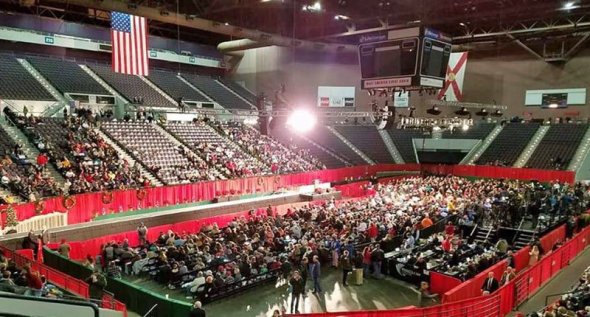
Mostly empty area for Trump speech in Pensacola, FL last night
Good Afternoon!!
The snow has finally begun falling here, and now they say it will continue all night and into tomorrow. We expect around 6-8 inches. That still may not be as bad as what happened down where JJ lives in Georgia and other parts of the South. The LA Times reports: Snowmen in Alabama? Sledding in Mississippi? From Texas to Georgia, snow blankets the South.
Snow blanketed a vast swath of the Deep South on Friday, triggering a flurry of winter weather warnings that closed businesses and schools, canceled hundreds of flights and caused traffic gridlock. It also unleashed a flurry of snowman construction and sledding in places more accustomed to sunshine than snow.
The storm dropped a rare coating of snow as far south as Brownsville, Texas — near the border of Mexico — up through southern Louisiana and parts of Mississippi, Alabama, Georgia and the southern Appalachians.
“This is an unusual event — to see snow falling this early in the season all the way from Texas and the Gulf Coast region to Georgia,” said Laura Pagano, a meteorologist with the National Weather Service’s Atlanta/Peachtree City office. “It has happened before, but not often.”
More than 200,000 customers across the region lost power as snow downed branches and power lines.
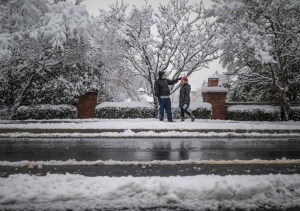
People walk along Shiloh Road in Kennesaw after a snowstorm hit metro Atlanta and North Georgia.
Since I can’t go out, I plan to escape into a good book. I finished reading Luke Harding’s excellent Collusion:
As the mainstream media continues to demonstrate the tremendous progress the Mueller investigation has been making, the Trump state media made up of Fox News, Breitbart, and other right wing outlets has turned up the heat with their fake news.
Please read this excellent piece by Jonathan Chait: The Mueller Investigation Is in Mortal Danger. Chait opens by describing the process by which the GOP first claims to be shocked by bad behavior (e.g. the Access Hollywood tape), but within begins denying and finally excusing that same behavior. We’ve seen this again and again, and now it’s happening with Roy Moore. Here’s the gist of Chait’s argument:
The next step in the sequence is almost insultingly obvious. Trump is preparing to shut down Robert Mueller’s investigation of Russian intervention in the 2016 election.
The administration and its allied media organs, especially those owned by Rupert Murdoch, have spent months floating a series of rationales, of varying degrees of implausibility, for why a deeply respected Republican law-enforcement veteran is disqualified to lead the inquiry: He is friends with James Comey, who is biased because Trump fired him; Comey is biased because he pursued leads turned up in Christopher Steele’s investigation, which was financed by Democrats; Mueller has failed to investigate Hillary Clinton’s marginal-to-nonexistent role in a uranium sale.
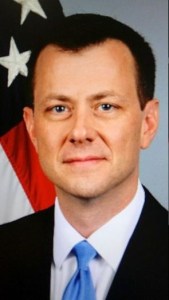
Peter Strzok
The newest pseudo-scandal fixates on the role of Peter Strzok, an FBI official who helped tweak the language Comey employed in his statement condemning Clinton’s email carelessness and has also worked for Mueller.
His alleged crime is a series of text messages criticizing Trump. Mueller removed Strzok from his team, but that is not enough for Trump’s supporters, who are seizing on Strzok’s role as a pretext to discredit and remove Mueller, too. The notion that a law-enforcement official should be disqualified for privately expressing partisan views is a novel one, and certainly did not trouble Republicans last year, when Rudy Giuliani was boasting on television about his network of friendly agents. Yet in the conservative media, Mueller and Comey have assumed fiendish personae of almost Clintonian proportions.
It’s happening, folks. Yesterday we learned that Hope Hicks was interviewed by Mueller’s team all day Thursday and Friday. Hicks knows everything that has happened. There is no way Trump is going to sit still while she either tells the truth or may get caught in a lie and have to cooperate with Mueller. The investigation is getting closer and closer to Trump and his family.
The New York Times: F.B.I. Warned Hope Hicks About Emails From Russian Operatives.
F.B.I. officials warned one of President Trump’s top advisers, Hope Hicks, earlier this year about repeated attempts by Russian operatives to make contact with her during the presidential transition, according to people familiar with the events.
The Russian outreach efforts show that, even after American intelligence agencies publicly accused Moscow of trying to influence the outcome of last year’s presidential election, Russian operatives were undaunted in their efforts to establish contacts with Mr. Trump’s advisers….

Hope Hicks with Trump and Kushner
After he took office, senior F.B.I. counterintelligence agents met with Ms. Hicks in the White House Situation Room at least twice, gave her the names of the Russians who had contacted her, and said that they were not who they claimed to be. The F.B.I. was concerned that the emails to Ms. Hicks may have been part of a Russian intelligence operation, and they urged Ms. Hicks to be cautious.
The meetings with Ms. Hicks, what the F.B.I. calls a “defensive briefing,” went beyond the standard security advice that senior White House officials routinely receive upon taking office. Defensive briefings are intended to warn government officials about specific concerns or risks.
Meanwhile, as Dakinikat wrote yesterday, the Justice Department has announced “investigations” into fake scandals like Planned Parenthood supposedly selling fetal body parts and the Uranium One non-scandal. And the GOP Congress is going to turn the sexual harassment scandal into a Democratic problem. The Democrats pushed Al Franken out without due process for minor accusations that may have been orchestrated, and now more Democrats are going to be revealed as abusers so the public will forget about Trump and Moore.
Roll Call: Exclusive: Taxpayers Paid $220K to Settle Case Involving Rep. Alcee Hastings.
The Treasury Department paid $220,000 in a previously undisclosed agreement to settle a lawsuit alleging sexual harassment that involved Florida Democrat Alcee L. Hastings, according to documents obtained by Roll Call.
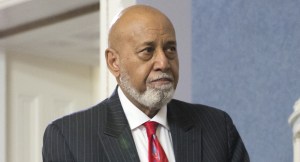
Alcee Hastings
Winsome Packer, a former staff member of a congressional commission that promotes international human rights, said in documents that the congressman touched her, made unwanted sexual advances, and threatened her job. At the time, Hastings was the chairman of the Commission on Security and Cooperation in Europe, where Packer worked.
Hastings has called Packer’s charges “ludicrous” and in documents said he never sexually harassed her.
“Until this evening, I had not seen the settlement agreement between the Commission on Security and Cooperation in Europe (CSCE) and Ms. Packer,” the congressman said in a statement Friday night. “This matter was handled solely by the Senate Chief Counsel for Employment. At no time was I consulted, nor did I know until after the fact that such a settlement was made.”
Hastings said that the lawsuit that Packer filed against him and an investigation by the House Ethics Committee were ultimately dismissed.
“I am outraged that any taxpayer dollars were needlessly paid to Ms. Packer,” he said.
Will another member of the Black Caucus be forced out now?
Sarah Kendzior issued a stark waning this morning in response to this tweet:
Here’s a Trump scandal; will it gain any traction? The New York Times: Uranium firm urged Trump officials to shrink Bears Ears National Monument.
A uranium company launched a concerted lobbying campaign to scale back Bears Ears National Monument, saying such action would give it easier access to the area’s uranium deposits and help it operate a nearby processing mill, according to documents obtained by The Washington Post.
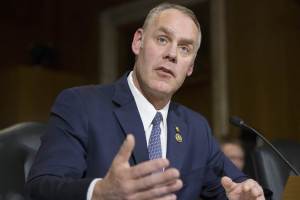
Ryan Zinke
Interior Secretary Ryan Zinke and top Utah Republicans have said repeatedly that questions of mining or drilling played no role in President Trump’s announcement Monday that he was cutting the site by more than 1.1 million acres, or 85 percent. Trump also signed a proclamation nearly halving the Grand Staircase-Escalante National Monument, which is also in southern Utah and has significant coal deposits.
“This is not about energy,” Zinke told reporters Tuesday. “There is no mine within Bears Ears.”
But the nation’s sole uranium processing mill sits directly next to the boundaries that President Barack Obama designated a year ago when he established Bears Ears. The documents show that Energy Fuels Resources (USA) Inc., a subsidiary of a Canadian firm, urged the Trump administration to limit the monument to the smallest size needed to protect key objects and areas, such as archeological sites, to make it easier to access the radioactive ore.
In a May 25 letter to the Interior Department, Chief Operating Officer Mark Chalmers wrote that the 1.35 million-acre expanse Obama created “could affect existing and future mill operations.” He later noted, “There are also many other known uranium and vanadium deposits located within the [original boundaries] that could provide valuable energy and mineral resources in the future.”
There is soooo much news today. I’ll have to add some links in the comment thread, but I’ll end this post with the latest NYT gossipy insider report on Trump’s defensive maneuvers: Inside Trumps Hour-by-Hour Battle for Self-Preservation.
Around 5:30 each morning, President Trump wakes and tunes into the television in the White House’s master bedroom. He flips to CNN for news, moves to “Fox & Friends” for comfort and messaging ideas, and sometimes watches MSNBC’s “Morning Joe” because, friends suspect, it fires him up for the day.
Energized, infuriated — often a gumbo of both — Mr. Trump grabs his iPhone. Sometimes he tweets while propped on his pillow, according to aides. Other times he tweets from the den next door, watching another television. Less frequently, he makes his way up the hall to the ornate Treaty Room, sometimes dressed for the day, sometimes still in bedclothes, where he begins his official and unofficial calls.
As he ends his first year in office, Mr. Trump is redefining what it means to be president. He sees the highest office in the land much as he did the night of his stunning victory over Hillary Clinton — as a prize he must fight to protect every waking moment, and Twitter is his Excalibur. Despite all his bluster, he views himself less as a titan dominating the world stage than a maligned outsider engaged in a struggle to be taken seriously, according to interviews with 60 advisers, associates, friends and members of Congress.
For other presidents, every day is a test of how to lead a country, not just a faction, balancing competing interests. For Mr. Trump, every day is an hour-by-hour battle for self-preservation. He still relitigates last year’s election, convinced that the investigation by Robert S. Mueller III, the special counsel, into Russia’s interference is a plot to delegitimize him. Color-coded maps highlighting the counties he won were hung on the White House walls.
Read more about the madman in the White House at the NYT link.
What stories are you following today?
Did you like this post? Please share it with your friends:
Posted: February 10, 2015 | Author: bostonboomer | Filed under: just because, morning reads | Tags: Boston, snow, Snowmageddon 2015, Snowpocalypse 2015, The Big Dig 2015 |
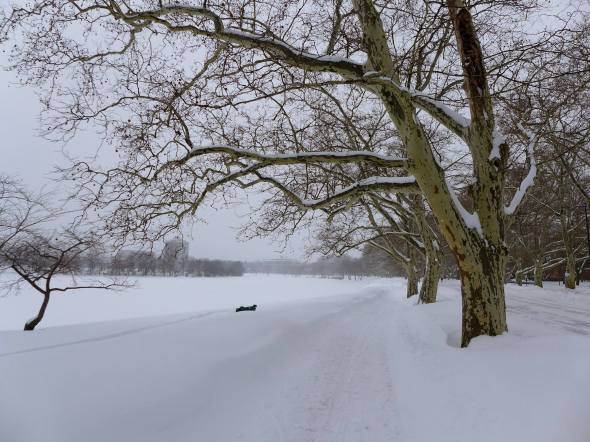
Scene along the Charles River in Cambridge
Good Morning!!
This morning I have reached the point where I can’t think of anything else but dealing with snow. I hope you’ll forgive me for being too self-involved to focus on much more than surviving the terrible onslaught we’re going through here in Greater Boston. I’m going to share some photos and news about the mess we’re in here before I get to anything else.
The photo above was taken by my sister-in-law. Here are a couple more of her lovely photos of Cambridge.
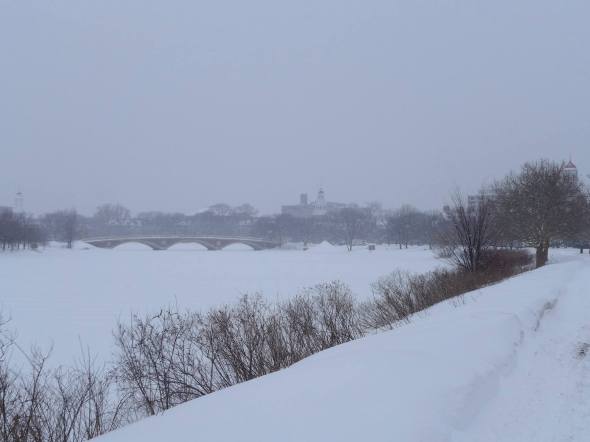
Another view of the Charles River
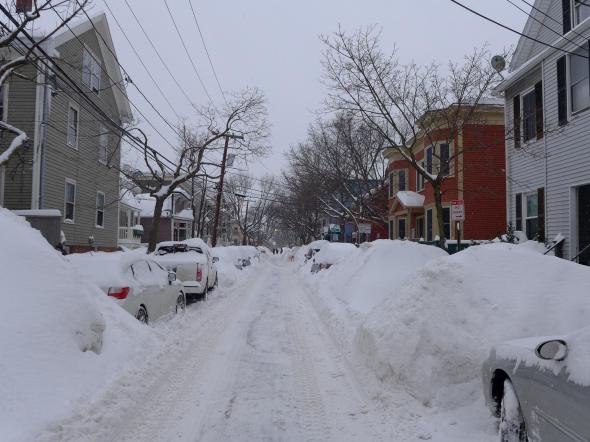
One of Cambridge’s narrow streets
Some Snowy News:
The Christian Science Monitor, The Big Dig: New England struggles with record snow – and more coming.
BOSTON — Snow-choked New England braced for more winter grief later in the week as people dug out from another 2 feet of snow Tuesday. Thousands of angry Boston commuters stranded by a transit shutdown scrambled to find other ways to get to work.
As people struggled to find places to put the latest snow, and officials considered dumping it by the truckload into the ocean, forecasters warned that yet more snow was possible Thursday and again over the weekend.
That’s right, folks. Even after we’ve set multiple records for snowfall over the past couple of weeks, we are expecting more storms. Some of the effects on the region so far:
Boston-area subways, trolleys and commuter rail trains ground to a halt at 7 p.m. Monday and remained idle Tuesday, with only limited bus service continuing. The Massachusetts Bay Transportation Authority said it needed the break to clear snow and ice from tracks and to assess equipment damaged by the spate of storms….
Boston hospitals set up sleeping areas for workers and police were offering rides to work for doctors and nurses.
Hundreds of flights were canceled at New England airports. Officials at Boston’s Logan International Airport said they hoped normal passenger service would resume by midday Tuesday.
Massachusetts environmental officials gave cities and towns with no place else to put accumulating snow the green light to dump some into the ocean or other bodies of water if necessary.
The Department of Environmental Protection on Monday cited the challenges involved in getting rid of the historic snowfalls. Local communities may seek permission to take emergency steps that allow disposal of snow into open water, which is normally prohibited. Officials also were using giant melters to liquefy snow.
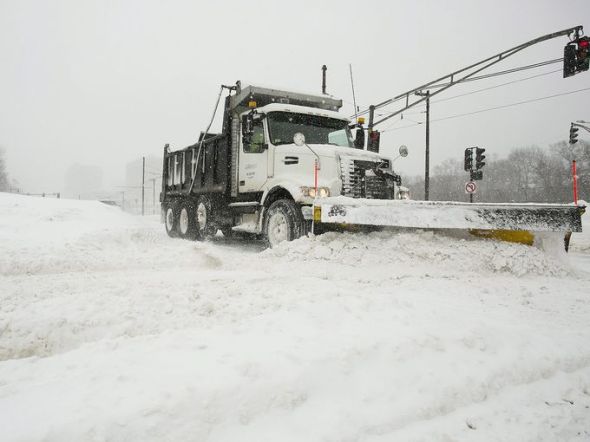
Commonwealth Avenue in Boston, Feb. 9, 2015
Here’s why the T had to shut down. From The Boston Globe: Passengers stuck on Red Line train for more than two hours.
More than 40 passengers were safely evacuated from a southbound Red Line train that became stranded for more than two hours between stations in Quincy due to a power failure, MBTA officials said.
Spokesman Joe Pesaturo said the train lost power around 7 a.m. Monday, and the final passengers were escorted out of the cars around 9 a.m….
“The tracks are completely exposed to the storm conditions,” said Pesaturo. “The third rail was completely covered by heavy snow. The train could not move because of a lack of power.”
Pesaturo said the 48 passengers were safely taken off the train and transferred to a bus.
The next storm is due soon. From The Globe: Up to 6 more inches of snow on the way.
The National Weather Service is predicting the snowfall for a 24-hour period from 7 a.m. Thursday to 7 a.m. Friday.
A map generated by the National Weather Service at 4:46 a.m. Tuesday shows higher accumulation in Eastern Mass., and predicts 2 to 3 inches for most of the area outside of I-495.
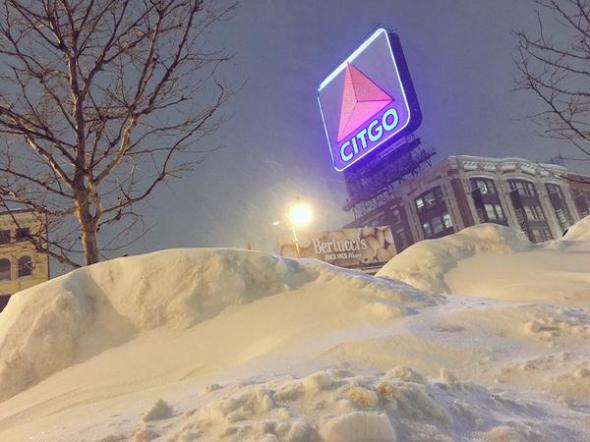
Kenmore Square and the famous CITGO sign.
For some strange reason, there is a small area of Greater Boston that is taking the brunt of these storms. That’s the area I live in.
Thursday’s expected snowfall comes amid a record period for the Boston area, in which about 6 feet has fallen over a 30-day period, beating the previous record of 58.5 inches, which was set in 1978.
The National Weather Service said 76.5 inches have fallen in Boston this winter season through 7 p.m. Monday.
But that won’t be the end of it, according to The Weather Channel. There’s another storm expected on Valentine’s Day weekend.
It is still too soon (4+ days out) to determine whether the offshore low will track close enough to bring heavy snow to parts of New England and the Northeast. If a closer low track (heavier snow) would take place, peak impacts would occur Saturday night into Sunday with the heaviest snow in coastal New England.
Regardless where the low tracks, behind the arctic front and intensifying offshore low — you guessed it — bitterly cold air will settle in, driven by strong winds, leading to dangerous wind chills and areas of blowing/drifting snow. Temperatures may remain stuck in the single digits or, at best, teens much of Sunday in New England, with morning lows in the single digits above or below zero.
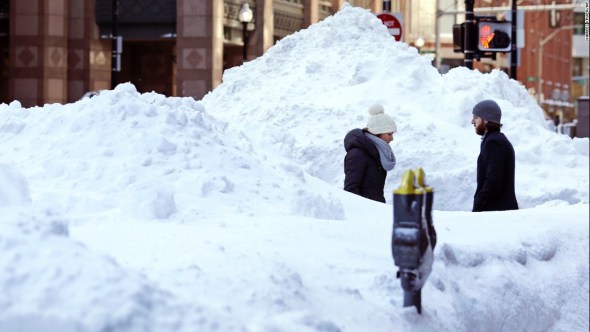
Boston’s Financial district
Honestly, I was doing pretty well until yesterday, when I discovered that I couldn’t open my front door. It was frozen shut. I went out through the garage and, with the help of a neighbor, got the door to open. Unfortunately, it wouldn’t close all the way and I couldn’t lock it anymore. Stupidly, I locked the storm door.
This morning, the front door is again frozen shut and I won’t be able to open it from the outside because of my stupid decision to lock the storm door. I’ll have to try to get the door open with a hairdryer or go in and out through the garage. Don’t even ask about the back door. That would require digging a long pathway through at least four feet of snow.
I guess I need to call a waaaambulance. If I sound discouraged, I’m not alone. From the Globe: Unrelenting snowfall darkening our moods.
From commuting odysseys to back-wrenching shoveling and days without a drop of sunshine, this winter’s unrelenting snow is wrecking the region’s collective psyche.
Precious free time for trips to the gym, often a psychological balm, has largely vanished. Ditto for meeting friends or gathering with family.
For many, a single-minded focus on navigating the avalanche of storms can weigh heavily, therapists said Monday.
“It is assaulting people,” said Barbara Green, a psychologist at the Center for Integrative Counseling and Wellness in Hingham. “Even strong, resilient, upbeat people are starting to feel a bit frayed emotionally.”
Green said she is hearing from patients that normal daily stresses — commuting, working, taking care of a family — seem magnified many times over, especially for people with low-paying jobs who do not have the luxury of missing a day at work.
“People’s normal coping skills and strategies erode,” Green said. “Instead of eating a healthy diet, they eat cookies, maybe even drinking more.”
Well, I don’t have those problems anyway, because I don’t drink and I don’t have any cookies or other sweets lying around. I’m also luckier than most people, because I don’t have to get out to work. I’m just having to give myself pep talks and call friends and family for support and to feel less isolated.
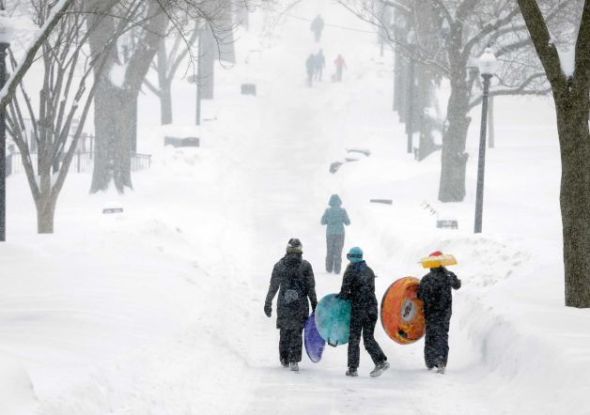
Boston Common, Feb. 9, 2015
Other News
CBS 6 Charlottesville, VA, Sources: Jesse Matthew charged with first-degree murder of Hannah Graham
An 11 a.m. press conference in Charlottesville on Tuesday will reveal that Jesse Matthew Jr. has been charged with first-degree murder in the death ofHannah Graham according to CBS 6 sources….
Matthew, 32, is currently charged with the abduction with intent to defile, in Graham’s disappearance. She was in her second-year at the University of Virginia.
Graham was last seen leaving a Charlottesville bar with Matthew, on Sept. 13. Her remains were found on an abandoned property in Albemarle County on Oct. 18.
Graham’s body was discovered roughly five miles from where Morgan Harrington’s body was found in Albemarle County in January 2010. In November 2014, police forensically linked Harrington to Matthew when his DNA was found on the black “Pantera” shirt she wore the night of her disappearance.
The 20-year-old Harrington, who was a Virginia Tech student, disappeared outside of the John Paul Jones Arena in Charlottesville while attending a Metallica concert on Oct. 17, 2009.
Matthew is currently incarcerated in Fairfax County, where he is facing attempted capital murder, rape, and sexual assault charges relating to the attack and rape of a Fairfax woman in 2005. DNA has also linked him to this case. He will remain behind bars in Fairfax until his trial on March 9.
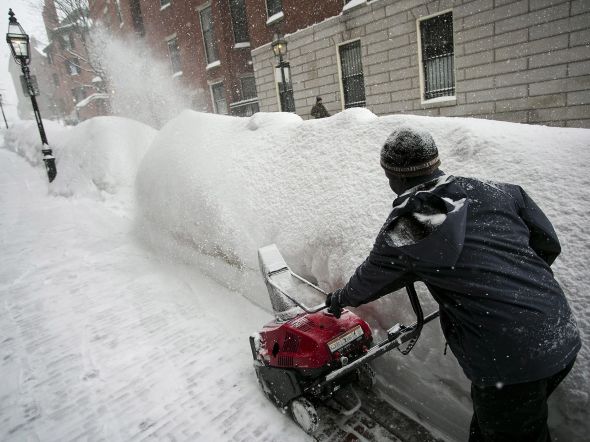
City worker tries to clear a sidewalk in downtown Boston
Remember Dominique Strauss Kahn?
USA Today, Strauss-Kahn: I didn’t know those women were prostitutes.
Former International Monetary Fund chief Dominique Strauss-Kahn denied allegations Tuesday that he knowingly helped organize orgies with sex workers.
Strauss-Kahn, 65, was testifying at a court in northern France for his alleged connection with a prostitution ring at a hotel in Lille.
“I committed no crime,” Strauss-Kahn, once thought to be a contender for the French presidency, said in a letter read to the court as he took the stand.
Strauss-Kahn said he was not aware the women in question, whom he admits participated in orgies at luxury hotels in Paris and Washington, were prostitutes. He said he ignored their “prostitutional character” and that he himself had only taken part occasionally and that there had been no “wild activity.”
Strauss-Kahn and 13 others are accused of aggravated pimping based on hundreds of pages of testimony provided to investigators by prostitutes describing the orgies.
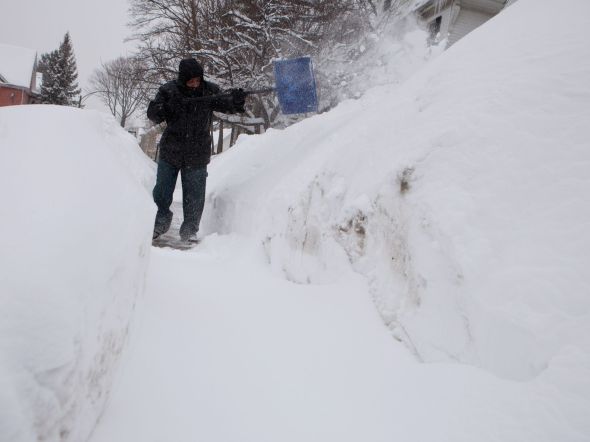
Man shoveling in Dorchester neighborhood, Feb. 9, 2015
The Guardian, US prosecutors weigh criminal charges against HSBC as Warren turns up the heat.
The US Department of Justice is considering bringing criminal charges against HSBC and its executives as part of its investigation into whether the bank’s Swiss subsidiary helped US clients evade taxes.
Democratic senator Elizabeth Warren called on prosecutors to “come down hard” on HSBC if the bank is found to have colluded with tax evaders on Tuesday.
Her intervention came as US government officials with knowledge of the DoJ’s investigation provided the Guardian with new details about the inquiry.
Renewed focus has been placed on the long-running investigation into HSBC Switzerland by the department, after a huge leak of secret bank data – passed to the DOJ’s tax division almost five years ago – was obtained by the Guardian and other media.
It shows that HSBC Switzerland helped some clients conceal millions of undeclared assets, and has immediately raised questions on Capitol Hill about the response from prosecutors and tax authorities.
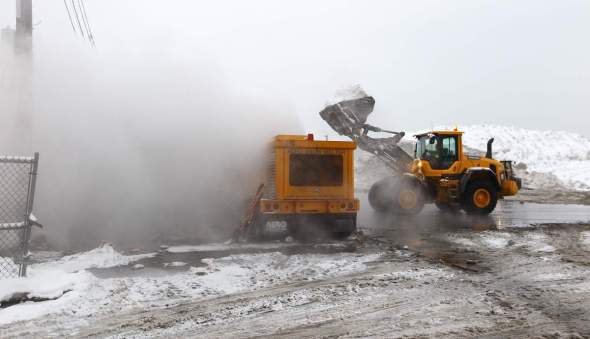
BOSTON – FEBRUARY 8: Crews use an Aero Snow Melter to dispatch mounds of snow at the Marine Industrial Park snow farm on February 8, 2015. (Photo by Pat Greenhouse/The Boston Globe via Getty Images)
More Headlines
CNN, American ISIS hostage Kayla Mueller dead, family says.
ABC News, A Look Back at UVA Student Hannah Graham’s Disappearance.
WaPo, Was Brian Williams terrorized by gangs at the Ritz-Carlton during Katrina?
The Independent UK, Charles Manson wedding off after it emerges that fiancee Afton Elaine Burton ‘just wanted his corpse for display’.
NY Daily News, Drew Peterson charged with trying to kill Illinois lead prosecutor while behind bars.
NY Daily News, Baby born carrying twin fetuses (Please don’t tell the anti-abortion crowd about this one, or that poor little baby could be in big trouble).
HuffPo, New Jeb Bush Hire Called Women ‘Sluts’ On Twitter.
Reuters, Mumps outbreak linked to Idaho university spreads to Washington state.
ABC News, Stay Away From ‘Measles Parties’ Docs Warn Parents.
The stories I found are somewhat lurid today. I don’t know if that’s because of my mood or a real reflection of what’s happening. Please post your recommended reads in the comment thread, and have a terrific Tuesday!
Did you like this post? Please share it with your friends:
Posted: February 18, 2014 | Author: bostonboomer | Filed under: Barack Obama, morning reads, U.S. Politics | Tags: 2016 Democratic nomination, Bush administration, Edward Snowden, First Look, GCHQ, Glenn Greenwald, Google Maps, Gregor Weichbrodt, Hillary Clinton, Jack Kerouac, James Clapper, NSA, On The Road, Oymyakon Russia, Siberia, snow, Wikileaks |

Good Morning!!
I’m awaiting what I hope is the last snowstorm to hit the Boston area for a week or so. This one won’t be a big deal compared to what we’ve been hit by over the past few weeks. It will snow most of the day and we’ll end up with another five inches of snow on top of the giant pile of white stuff that is already on the ground.
The good news is that beginning tomorrow and going through the weekend, we are expecting temperatures in the 40s and 50s, along with rain. That should help wash some of the snow away. The Weather Channel has live updates on how this storm is affecting other parts of the country.
While I was perusing the Weather Channel page this morning, I came across this article–with amazing photos–of the coldest city in the world.
Think we’re having a brutal winter? Winter temperatures in Oymyakon, Russia, average minus 50 C (minus 58 F). The remote village is generally considered the coldest inhabited area on Earth. Oymyakon is a two-day drive from Yakutsk, the regional capital which has the lowest winter temperatures of any city in the world.
How do the locals deal with the cold? “Russki chai, literally Russian tea, which is their word for vodka,” photographer Amos Chapple told weather.com after his visit to the coldest city.
Oymyakon ironically means “unfrozen water.” This is due to the thermal spring located nearby. Originally the location was used by reindeer herders who would water their flock in the warm springs.
Oymyakon’s lowest recorded temperature was a frigid minus 71.2 C (minus 96.16 F) back in 1924. According to The Independent, wearing glasses outdoors can cause them to stick to the wearer’s face. This is just one of the more menial problems of the extremely cold weather
After reading that, I suddenly felt very comfy in my cozy house with the temperature outside a mild 18 degrees F.

Whether we like it or not–and I absolutely hate it–the 2016 presidential race has already begun, and along with it the endless Hillary-bashing that we’ll have to put up with not only from Republicans but also from a subset of Democrats. Republicans will need to be reminded that Hillary is running, not “the Clintons”; and Democrats will have to learn that if they don’t want Jeb Bush as president, Hillary is the best alternative.
It’s a little unnerving that Bob Shrum agrees with me, since he’s rarely backed a winner; but honestly in this case he’s right. From The Daily Beast: Yes, Pundits, Hillary Has the 2016 Nomination in the Bag.
Handicappers in the presidential race abhor the opposite of a vacuum—a campaign two years out where one candidate seems to blot out the entire field. Thus a mini-chorus now rises, and may swell, questioning Hillary Clinton’s apparent lock on the 2016 Democratic nomination. It’s a predictable reflex, but in cold, hard reality, logic suggests that the lock is authentic, not just apparent. And in modern history, or virtually all American history, Hillary’s inevitability is unprecedented for a non-incumbent.
Yes, there are pundits like Matt Bai and Krystal Ball who claim that Hillary is vulnerable to a “grass roots” challenge, but they’re in fantasy land. In response to Ball’s suggestion that Elizabeth Warren should be the candidate, because she is “clearly passionate, living and breathing and feeling … the plight of the worker, the middle class,” Shrum writes:
Hillary, Ball asserts, can’t do that because she was once on the board of Walmart and recently accepted speaking fees from Goldman Sachs. That attack, if an opponent advanced it, could and would be swiftly confounded by the Hillary who, in the penultimate primaries of 2008, in places like Pennsylvania and Ohio, emerged as a powerful, persuasive tribune of blue-collar and middle-class Americans.
Of course, there is another slight problem with the Warren option: She’s joined all the other Democratic women senators in signing a letter urging Hillary to run.Warren will probably be out there all right—stumping for Hillary, not against her.
There’s much more at the link about other possible candidates like Andrew Cuomo and Martin O’Malley.
Let me add, btw, for Warren fans who claim that Hillary is “too old,” Warren will be 67 in 2016–just two years younger than Clinton. That’s leaving aside the fact that she has far less political experience than Barack Obama did in 2008 and zero foreign policy experience.
Over at that bastion of Hillary-hatred, DailyKos, Markos broke the news to his followers yesterday: The real primary fight of 2016 (and it’s not an alternative to Hillary.”
Some people have to come to terms. And I’m looking at you, people desperate to find an alternative to Hillary Clinton in 2016.
If Hillary runs, she’s the nominee. I know it’s in vogue to talk about how “inevitable” Hillary was in 2008. But it was a different world. I remember it because I was in the midst of that battle. People wanted an alternative, and alternatives existed. At her best, Hillary’s poll numbers were in the 40s with Obama in the strong 20s. Look for yourself. Yes, she was the frontrunner, but there was a strong primary field within striking distance.
There is no alternative to Hillary this cycle. The last time anyone polled the Democratic primary field, Clinton had 73 percent of the vote, Biden 11, and Elizabeth Warren nine. That tells us a couple of things. One, 73 percent is A WHOLE LOT OF PEOPLE. She is the consensus nominee, and if you disagree, you are objectively in the deep minority. Second of all, there is no one to provide even nominal challenge. Clinton (again, assuming she runs) will have some “challengers”, but it’ll be a bunch of people auditioning for her VP slot.
To reiterate, leads like 45-25 in 2007 didn’t make Hillary “inevitable”. Numbers like 73-11 in 2014 absolutely do. And you know what? Those are not irrational numbers. Hillary will be a great president.
Elizabeth Warren isn’t running. I get why people persist with this fantasy, but it’s nothing more than a fantasy. Warren had to be dragged in kicking and screaming into the Massachusetts Senate race, a geographically small state in which she could sleep in her own bed every night. If you barely have the fire to run for Senate, then you absolutely don’t have the fire to mount a brutal presidential campaign. And even if she did, all she’d have to do is look at the polling (73-9!) to realize she’d have a million better things to do with her time and her donors’ money. SHE. AIN’T. RUNNING.
So, I guess we’ll have to wait and see if some Democrats are willing to try to sabotage the party’s chances of continuing to control the White House and very likely Congress as well. It could end up being similar to what the Republicans did to Mitt Romney in 2012. But this time, there won’t be real competition on the Republican side. Who are they going to run? Mitt Romney again? Paul Ryan? My guess is Jeb Bush would be afraid to run against Hillary.
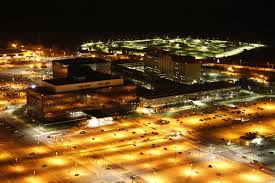
There’s a new article up at Glenn Greenwald’s new site, The Intercept: Snowden Documents Reveal Covert Surveillance and Pressure Tactics Aimed at WikiLeaks and Its Supporters. I haven’t had time to read the whole thing yet, because I want to get this post up soon. I’ll read it carefully once I’ve done that. But here’s the introduction:
Top-secret documents from the National Security Agency and its British counterpart reveal for the first time how the governments of the United States and the United Kingdom targeted WikiLeaks and other activist groups with tactics ranging from covert surveillance to prosecution.
The efforts – detailed in documents provided previously by NSA whistleblower Edward Snowden – included a broad campaign of international pressure aimed not only at WikiLeaks founder Julian Assange, but at what the U.S. government calls “the human network that supports WikiLeaks.” The documents also contain internal discussions about targeting the file-sharing site Pirate Bay and hacktivist collectives such as Anonymous.
One classified document from Government Communications Headquarters, Britain’s top spy agency, shows that GCHQ used its surveillance system to secretly monitor visitors to a WikiLeaks site. By exploiting its ability to tap into the fiber-optic cables that make up the backbone of the Internet, the agency confided to allies in 2012, it was able to collect the IP addresses of visitors in real time, as well as the search terms that visitors used to reach the site from search engines like Google.
Another classified document from the U.S. intelligence community, dated August 2010, recounts how the Obama administration urged foreign allies to file criminal charges against Assange over the group’s publication of the Afghanistan war logs.
A third document, from July 2011, contains a summary of an internal discussion in which officials from two NSA offices – including the agency’s general counsel and an arm of its Threat Operations Center – considered designating WikiLeaks as “a ‘malicious foreign actor’ for the purpose of targeting.” Such a designation would have allowed the group to be targeted with extensive electronic surveillance – without the need to exclude U.S. persons from the surveillance searches.
My immediate reaction is that if NSA were not monitoring Wikileaks, they would not be doing their job. As for the claims that individual visitors to the website were actually targeted, I’ll have to reserve judgment until I read the whole piece and it has been fact-checked by people who understand the technology involved better than the authors. I’ve learned from months of experience that Glenn Greenwald’s articles tend to be filled with errors as well as over-the-top melodrama.
In other NSA news, James Clapper admitted in an interview with Eli Lake of The Daily Beast that “We Should’ve Told You We Track Your Calls.”
Ya think? Here’s an excerpt:
Clapper said the problems facing the U.S. intelligence community over its collection of phone records could have been avoided. “I probably shouldn’t say this, but I will. Had we been transparent about this from the outset right after 9/11—which is the genesis of the 215 program—and said both to the American people and to their elected representatives, we need to cover this gap, we need to make sure this never happens to us again, so here is what we are going to set up, here is how it’s going to work, and why we have to do it, and here are the safeguards… We wouldn’t have had the problem we had,” Clapper said.
“What did us in here, what worked against us was this shocking revelation,” he said, referring to the first disclosures from Snowden. If the program had been publicly introduced in the wake of the 9/11 attacks, most Americans would probably have supported it. “I don’t think it would be of any greater concern to most Americans than fingerprints. Well people kind of accept that because they know about it. But had we been transparent about it and say here’s one more thing we have to do as citizens for the common good, just like we have to go to airports two hours early and take our shoes off, all the other things we do for the common good, this is one more thing.”
Since the first Snowden revelations in June, Clapper has declassified reams of material relating to the 215 program, including opinions and warrants signed by the top secret court that approves domestic snooping. But he has not publicly acknowledged until now his thoughts that the initial secrecy surrounding the program was ill-considered.
No shit Sherlock! Americans most likely would have supported the program if the Bush administration had been up front about it. Of course, then Congress would have regulated it more–as is happening under Obama–and that wouldn’t have pleased President Cheney. Even now, if Obama and NSA officials would come out and explain exactly what the program is, the fear-mongering by Greenwald and the gang would be far less effective.
Basically, the “metadata” that is collected is just the same information that we used to get on our phone bills: time call was initiated, how long it lasted, and the number that was called. The phone company kept all this “metadata” on file, and law enforcement could access the phone records of a suspect by getting a warrant from a judge–which is the same thing the NSA does. I have way fewer problems with this kind of data collection than what corporations are doing on a daily basis with my internet browsing and purchases.
I’ll end with a couple of fun items.
First, I hope you’ll check out these awesome photos of Russians with their cats at Buzzfeed.
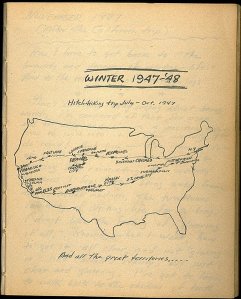
Second, from The Guardian: Kerouac’s On the Road followed on the road via Google Maps:
“The air was soft, the stars so fine, the promise of every cobbled alley so great, that I thought I was in a dream,” wrote Jack Kerouac, famously, in On the Road. “Head northwest on W 47th St toward 7th Ave. Take the 1st left onto 7th Ave. Turn right onto W 39th St,” writes Gregor Weichbrodt, less poetically but more accurately, in On the Road for 17527 Miles, a new book tracing the Beat writer’s famous journey across America – with the aid of Google Maps.
Going through On the Road with a fine-toothed comb, Weichbrodt took the “exact and approximate” spots to which the author – via his alter ego Sal Paradise – travelled, and entered them into Google’s Direction Service. “The result is a huge direction instruction of 55 pages,” says the German student. “All in all, as Google shows, the journey takes 272.26 hours (for 17,527 miles).”
Weichbrodt’s chapters match those of Kerouac’s original. He has now self-published the book, which is also part of the current exhibition Poetry Will Be Made By All! in Zurich, and has, he says, sold six copies so far.
You can read the book at at Open Culture. The site has also published a photo of Jack Kerouac’s Hand-Drawn Map of the Hitchhiking Trip Narrated in On the Road. Very cool.
Now what are you reading and blogging about today? Please post your links on any topic in the comment thread, and have a tremendous Tuesday!
Did you like this post? Please share it with your friends:


 peej
peej Carissa
 bostonboomer
 dakinikat
 ecocatwoman
 mablue2
 Mama Lopez
 peggysue22
 quixote
 skydancingguestblogger
 Mona (aka Wonk the Vote)



 Sky Dancing
Recent Comments