












There’s much more at the Politico link.
Have a great Thursday, Sky Dancers!!


Tove Jansson, Still life with fruit and flowers on the background of an open door, 1945
Once again the news is coming fast and furious today, but the top story has to be the latest about Jack Teixeira, the 21-year-old air national guardsman who leaked classified documents on Discord.
The story is getting worse with each passing day. This kid not only had access to secret government documents, but also he stockpiled weapons in his parents’ home and fantasized about being a mass murderer.
NPR: The suspected leaker of Pentagon documents is due back in federal court.
The air national guardsman accused of leaking U.S. government secrets is due back in federal court in Worcester, Mass., at 1 p.m. on Thursday. Federal prosecutors are urging that the defendant, Jack Teixeira, 21, a member of the Massachusetts Air National Guard, remain in jail pending trial.
In a new court filing, federal prosecutors say Teixeira faces significant prison time, if convicted, and poses a serious flight risk. They say he took steps to obstruct the investigation into the leak of U.S. intelligence documents, many of which were about Ukraine’s war against Russia.
According to court papers, investigators found a tablet, a laptop and a gaming console — all of them smashed — in a dumpster at Teixeira’s house after his arrest. Teixeira also allegedly told an associate online to delete all messages with him and that if anyone came asking questions about him, not to tell them anything. Prosecutors also say Teixeira began in February 2022 to access classified national defense information that had no bearing on his job. Not all of those materials have publicly surfaced yet.
NBC News: Intel leaks suspect is a flight risk and could have access to more classified docs, prosecutors say.
Prosecutors will urge a judge Thursday to keep Jack Teixeira, 21, behind bars, arguing he poses “a serious flight risk,” and that a “foreign adversary” could try to help him escape the United States and give him safe haven.
“The information to which the Defendant had access — and did access — far exceeds what has been publicly disclosed on the Internet to date,” the document said. The leaks “have the capacity to cause additional exceptionally grave damage to the U.S. national security if disclosed.”
The 18-page memo said Teixeira had a history of making violent and racist remarks — including posting on social media about wanting to carry out a mass shooting — keeping “an arsenal of weapons”and tactical gear at his house, and trying to thwart federal investigators by apparently destroying evidence.
The filing comes ahead of a detention hearing Thursday in Massachusetts federal court. Teixeira, who has not entered a plea, has been in jail since his arrest earlier this month in a case that represents one of the most significant intelligence leaks in years. The saga has fueled global uproar and doubts over America’s ability to guard its secrets….
“The damage the Defendant has already caused to the U.S. national security is immense. The damage the Defendant is still capable of causing is extraordinary,” prosecutors wrote. “If the Defendant were released, it would be all too easy for him to further disseminate classified information and would create the unacceptable risk that he would flee the United States and take refuge with a foreign adversary to avoid the reach of U.S. law.”

Spring still life, by Susan Novak
On Teixeira’s fascination with mass shootings:
Teixeira also used his government computer to search for information on previous mass shootings, including “Uvalde” and “Mandalay Bay shooting,” the filing said. Media reports have suggested these searches may have been related to Teixeira’s belief in conspiracy theories that the government had prior knowledge of these shootings, it added. But prosecutors said that coupled with his social media posts and weapons cache these searches were “troubling.”
Teixeira lives in his mother and stepfather’s house in North Dighton, Massachusetts, and in his bedroom keeps a gun locker stocked with handguns, bolt-action rifles, shotguns, and an AK-style high-capacity weapon, prosecutors said.
His “arsenal of weapons” also included a bazooka, and a “silencer-style accessory,” according to investigators, who found a tactical helmet with a GoPro camera and mount in the dumpster outside, according to the filing.
BBC News: Jack Teixeira: Suspected leaker made threats and researched shootings, US says.
Jack Teixeira wrote on social media that he wanted to kill a “ton of people” as a way of “culling the weak minded”, according to a court filing.
The 18-page document also claimed the 21-year-old asked what type of rifle would be easy to operate from an SUV.
According to the prosecutors, he posted repeatedly about “troubling” violent acts including a potential mass shooting. He allegedly described building an “assassination van” and driving around shooting people in a “crowded urban or suburban environment”.
He also allegedly searched for multiple recent mass shootings on his government computer, including Uvalde and the Las Vegas shooting.
The filing also said a search of Mr Teixeira’s home had uncovered “a virtual arsenal of weapons, including bolt-action rifles, rifles, AR and AK-style weapons, and a bazooka” that were kept “just feet from his bed”.
It added that he was suspended from high school when a classmate overheard him making threats and discussing Molotov cocktails as well as other weapons.
How the hell did this kid get a top secret security clearance from the Pentagon? Here’s a clue:
In other news, E. Jean Carroll testified in her civil case against Donald Trump yesterday, and it was powerful. Trump didn’t have the guts to show up in court, and that probably didn’t make a good impression on the jury.
Mitchell Epner at The Daily Beast: Jury Has Likely Decided Trump’s Fate in Rape Case Already.
On the first day of trial testimony Wednesday, E. Jean Carroll took the witness stand and provided unvarnished testimony that she was raped by Donald Trump in the 1990s. She testified: “I’m here because Donald Trump raped me, and when I wrote about it, he said it did not happen.”
By André Deymonaz
She testified that she and Trump went together to the lingerie department on the sixth floor of Bergdorf Goodman, flirting. When they got there, Trump followed her into the dressing room and pushed her against the wall, knocking her head and disorienting her. He also pulled down her tights, stuck his fingers inside of her vagina—causing her great pain—and stuck his penis inside of her vagina, for a period of time, while she struggled against him.
This testimony is the key to the case. If the jury believes it, they will find Trump liable for the rape of E. Jean Carroll, and likely award her significant damages. If the jury does not believe it, they will return a verdict in favor of the former president.
Based upon more than 25 years of experience as a trial attorney, including service as an Assistant United States Attorney prosecuting sex crimes, I believe that it is highly likely that the jurors have already made up their minds about whether Carroll is telling the truth—before she has completed her direct testimony and long before Donald Trump’s attorneys have the opportunity to cross-examine her.
On Trump absenting himself:
This case won’t be a “he said, she said” case—because Trump is unlikely to testify.
In fact, Trump has not attended the trial at all so far. During opening statements, his attorney, Joe Tacopina, appeared to indicate that the trend would continue, saying that Trump’s testimony would only occur in deposition excerpts. Trump’s witness list consists of only two people, Donald Trump and Dr. Edgar Nace, a psychiatric expert witness.
Trump also is not presenting any exhibits, other than excerpts from depositions. If he does not testify, the only way he will get facts into evidence will be through cross-examination of Ms. Carroll’s witnesses.
Ms. Carroll, on the other hand, will present a number of corroborating witnesses:
- Lisa Birnbaum: The bestselling author will testify that Carroll told her immediately after the incident what Trump had done to her. She will also testify that she told Carroll that she had been “raped.”
- Carol Martin: The first African-American anchor on local news in New York City (for over two decade) will likewise testify that Carroll told her immediately of the rape by Trump. Martin will testify that she told Carroll not to pursue the case, because he had “200 lawyers” and would destroy her.
- Jessica Leeds: Another of Trump’s alleged victims, she will testify that she was sexually assaulted by Donald Trump when she sat next to him on a flight in the 1970s, when he attempted to place his fingers inside of her vagina.
- Natasha Stoynoff: Then a reporter for People magazine, she will testify that Donald Trump sexually assaulted her when she was at Mar-A-Lago in the early 2000s, working on a story.
Carroll is also set to present the infamous Access Hollywood video, in which Donald Trump bragged that he could grab women “by the pussy” without consent, because he was “a star.”
Perhaps even more importantly, Carroll already addressed most of the points that Trump’s attorneys wanted to make on cross-examination.
Read more at the link.

Still life with a ginger jar and eggplant, by Paul Cezanne
In addition to all this, Trump posted about the case on Truth Social yesterday, and the judge was not happy. He suggested that Trump could get himself in further trouble by trying to influence the jury.
The Guardian: Judge rebukes Trump for ‘entirely inappropriate’ post before E Jean Carroll testimony.
Before Carroll took the stand…the judge in the case, Lewis A Kaplan, rebuked Trump for an “entirely inappropriate” statement on his social media platform, Truth Social, shortly before proceedings began.
Kaplan warned the former president’s lawyers that such statements about the case could bring more legal problems upon himself.
Trump, who has not attended so far, called the case “a made-up scam”. He also called Carroll’s lawyer “a political operative” and alluded to a DNA issue Kaplan has ruled cannot be part of the case.
“This is a fraudulent and false story – Witch Hunt!” Trump wrote….
The judge told Trump’s lawyers: “What seems to be the case is that your client is basically endeavoring, certainly, to speak to his quote-unquote public, but, more troubling, the jury in this case about stuff that has no business being spoken about.”
He also called Trump’s post “a public statement that, on the face of it, seems entirely inappropriate”.
The Trump attorney Joe Tacopina noted that jurors are told not to follow any news or online commentary about the case. But he said he would ask Trump “to refrain from any further posts about this case”.
“I hope you’re more successful,” Kaplan said, adding that Trump “may or may not be tampering with a new source of potential liability”.
This morning Carroll testified that she has been receiving threats, following Trump’s postings.
Another big story broke late yesterday. Trump has lost high fight to keep Mike Pence from testifying to the January 6 grand jury.
CNN: Trump loses appeal to block Pence from testifying about direct communications.
Former President Donald Trump has lost an emergency attempt to block former Vice President Mike Pence from testifying about their direct conversations, in the latest boost to a federal criminal investigation examining Trump’s and others’ actions after the 2020 election.
The former president has repeatedly tried and failed to close off some answers from witnesses close to him in the special counsel’s investigation. This latest order from the DC Circuit Court of Appeals likely will usher in Pence’s grand jury testimony quickly – an unprecedented development in modern presidential history.
The decision, from Judges Patricia Millett, Robert Wilkins and Greg Katsas on the DC Circuit, came in a sealed case on Wednesday night that CNN previously identified as Trump’s executive privilege challenge to Pence. No dissents were noted on the public docket.
Trump has tried to block Pence from testifying about their direct communications, even after the former vice president wrote about some of those exchanges and a lower-court judge had ruled against him.
Trump asked the DC Circuit for emergency intervention weeks ago. The court refused to put on hold Pence’s subpoena and to override the lower-court ruling, flatly denying Trump’s requests.
Trump could try to appeal again and even press the issue at the Supreme Court. Yet he gave up pushing several past executive privilege challenges to special counsel Jack Smith’s investigation after similar rulings from this court of appeals.

Breakfast still life, 1924, by Ilya Mashkov
One more important story–on the latest developments in the Supreme Court ethics scandal.
Dahlia Lithwick and Mark Joseph Stern at Slate: King Roberts: The chief justice’s latest trick to ward off oversight is the ploy of a royal, not a judge.
Last Thursday, Sen. Dick Durbin invited Chief Justice John Roberts to testify before the Senate Judiciary Committee about, well, to put it directly—the Supreme Court’s diaphanous ethics regime. On Tuesday evening, in his letter to Durbin in which he declined the invitation, Roberts finally named the problem: “Testimony before the Senate Judiciary Committee by the Chief Justice of the United States is exceedingly rare, as one might expect in light of separation of powers concerns and the importance of preserving judicial independence,” he wrote. In other words, the justices can enforce checks and balances on the other branches, but the other branches can enforce no checks or balances upon the justices. Which is precisely the problem the Senate Judiciary Committee is attempting to solve.
In an accompanying “Statement on Ethics Principles and Practices,” presumably released for the public, the chief justice laid out the web of laws and practices and guidelines used voluntarily by each justice to determine their individual ethics obligations. Perhaps he was attempting to clarify things, but instead the document illuminates the problem. These obligations and commitments are advisory, unenforceable, and subjective. In response to the widespread concern that no person should be a judge in their own cause, the court has confirmed that it shall continue to be the sole judge of that. (Meanwhile, it will enforce this principle against other courts—which is great, but also … come on!)
Put aside for a moment Politico’s new report that Justice Neil Gorsuch failed to disclose that he’d sold his valuable Colorado property to a prominent lawyer with multiple cases before the court only nine days after he was confirmed, or Bloomberg’s new revelations that Harlan Crow, Justice Clarence Thomas’ GOP-megadonor billionaire friend, also had business before the court, yet his lavish gifts to Thomas were not disclosed because the justice said Crow had no business before the court. Note also that Gorsuch’s failure to disclose has been defended on the grounds that the justice was not friends with the purchaser of his land, whereas Thomas’ failure to disclose Crow’s gifts has been defended on the grounds that the justice was close friends with him. Which “friend” rule wins? Who can possibly know.
The justices themselves are wholly responsible for this high-octane ethics quagmire, which now drags into its fourth week. Any sane institution that relies wholly on public approval, when faced with multiple irrefutable reports of distortions and deception, would respond with a plan to do better. It speaks volumes that the Imperial Court’s response is a promise to simply continue to do the same. Why? Because it thinks the other branches won’t do anything about it. As Ian Millhiser noted in Vox this week, the Constitution makes it extraordinarily difficult to remove a justice, or diminish the court’s power. The reason it is set up this way, believe it or not, is because the framers thought the judiciary would rise above the partisan fray. In practice, however, the Supreme Court has proven remarkably easy for one political party to capture. Its members are selected through a flagrantly political process. It is formed by political imperatives. And yet the court pretends—and demands we all pretend—that it’s magically purified of politics as soon as its justices are seated.
Read the rest at Slate.
That’s all I have for you today. Have a great Thursday, everyone!

The Favourite Chair, by Leon Charles Huber
Yesterday I told Dakinikat that I wished I had a feel good story for today’s post. I was asleep when she called last night and left a message about a New York Times article that was discussed on Stephanie Ruhl’s MSNBC show. It was about Ukrainian mothers who traveled thousands of miles to recover their children who had been kidnapped and taken to Russian-controlled territory. Of course it’s a heartbreaking story, but it’s also a heartwarming story of the power of a mother’s love. It also includes powerful photos of the women and their children. I hope you’ll go read it. Here’s just a bit of it.
The Russians Took Their Children. These Mothers Went and Got Them Back, bCarlotta Gall and
For weeks after Russian troops forcibly removed Natalya Zhornyk’s teenage son from his school last fall, she had no idea where he was or what had happened to him.
Then came a phone call.
“Mom, come and get me,” said her son, Artem, 15. He had remembered his mother’s phone number and borrowed the school director’s cellphone.
Ms. Zhornyk made him a promise: “When the fighting calms down, I will come.”
Artem and a dozen schoolmates had been loaded up by Russian troops and transferred to a school farther inside Russian-occupied Ukraine.
While Ms. Zhornyk was relieved to know where he was being held, reaching him would not be easy. They were now on different sides of the front line of a full-blown war, and border crossings from Ukraine into Russian-occupied territory were closed.
But months later, when a neighbor brought back one of her son’s schoolmates, she learned about a charity that was helping mothers bring their children home.
Since it is illegal for men of military age to leave Ukraine now, in March Ms. Zhornyk and a group of women assisted by Save Ukraine completed a nerve-wracking, 3,000-mile journey through Poland, Belarus and Russia to gain entry to Russian-occupied territory in eastern Ukraine and Crimea to retrieve Artem and 15 other children.
Then they had to take another circuitous journey back. “Come on, come on,” urged Ms. Zhornyk, as a cluster of children, laden with bags and suitcases, emerged hesitantly through the barriers at a border crossing from Belarus into Ukraine. She had crossed with her son just hours earlier and pushed forward impatiently to embrace the next group.
“There are no words for all the emotions,” Ms. Zhornyk, 31, said, describing her reunion with Artem. “I was full of emotion, and nervous, nervous.”

Cat on a chair, by Theophile Alexandre Steinlen
There are more details about what happened to the children in the article. Some background:
In the 13 months since the invasion, thousands of Ukrainian children have been displaced, moved or forcibly transferred to camps or institutions in Russia or Russian-controlled territory, in what Ukraine and rights advocates have condemned as war crimes.
The fate of those children has become a desperate tug of war between Ukraine and Russia, and formed the basis of an arrest warrant issued last month by the International Criminal Court accusing President Vladimir V. Putin of Russia and Maria Lvova-Belova, his commissioner for children’s rights, of illegally transferring them.
Once under Russian control, the children are subject to re-education, fostering and adoption by Russian families — practices that have touched a particular nerve even amid the carnage that has killed and displaced so many Ukrainians….
No one knows the full number of Ukrainian children who have been transferred to Russia or Russian-occupied Ukraine. The Ukrainian government has identified more than 19,000 children that it says have been forcibly transferred or deported, but those working on the issue say the real number is closer to 150,000.
Again, there is much more at the NYT link.
I hope you’ll forgive me for highlighting a local Boston story today. This weekend marks the 10th anniversary of the 2013 Boston Marathon bombing. The marathon will take place on Monday. Although only three people were killed in the explosions, there were hundreds of horrific injuries–limbs blown off, terrible burns, traumatic brain injuries.
From Boston.com: Mark the 10-year anniversary of the Marathon bombings in Boston One Boston Day is Saturday, April 15.
It has been 10 years since the Boston Marathon bombings killed three people and injured hundreds more during the 2013 Boston Marathon, and the city is hosting several events in remembrance of the day.
The city of Boston and the Boston Athletic Association (B.A.A.) will host remembrance events on Saturday, April 15 — One Boston Day. The events will honor the victims, survivors, and first responders of the 2013 Boston Marathon.
The city will host an early-morning private gathering and wreath laying at the memorial sites for the families who lost loved ones. Honor guards — including the Boston Fire Department, Boston Police Department, Boston Emergency Medical Services, and Suffolk County Sheriff Department — will be present at the memorial sites throughout the day.
At 8 a.m.,the BAA 5K, featuring 10,000 participants, will begin and end in Boston Common. After the B.A.A. 5K race, the city will open Boylston Street between Dartmouth and Fairfield streets so that members of the public can visit the sites.
At 2:30 p.m., the public is invited to a dedication of a new commemorative Boston Marathon finish line, the ringing of bells, and the unveiling of a One Boston Day marker on Boylston Street along with Gov. Maura Healey, Mayor Michelle Wu, B.A.A. leadership, members of the One Fund community, members of the 2013 Red Sox team, first responders, hospital leaders, and local running groups.
“Every year we come together on One Boston Day to remember the courage, strength, and resilience shown by our city’s people in 2013,” Wu said in a statement. “As we mark 10 years, we will gather together in community on April 15 to remember the lives that were lost, the many injured, and the spirit of humanity displayed that day. As we honor those forever impacted, people in all corners of our City will be giving back in a number of ways, and I encourage everyone to get involved.”
There will also be many local and neighborhood events; and of course, the Red Sox will mark the day at their traditional Marathon Day game and will be wearing their bright yellow home uniforms.
The Red Sox will mark the 10 year milestone by partnering with JetBlue to distribute more than 40,000 blue and yellow Red Sox City Connect hats to students and staff at Boston Public Schools on Friday, April 14. Hall of Famer Pedro Martinez will assist with the distribution. The team will then wear blue and yellow City Connect jerseys during Friday night’s game in Fenway Park agains the Angels.
Painting by Chen Pei Yi
As previously mentioned, the 2013 Red Sox team will join city and state officials and first responders on Saturday, April 15 for the ringing of the bells and the unveiling of the One Boston Day marker. At Saturday’s game, there will be a pre-game ceremony commemorating One Boston Day and the 76th anniversary of Jackie Robinson breaking the color barrier. Fans should be in their seats by 3:30 p.m.
On Sunday, April 16, a reunion of members of the 2013 Red Sox World Series Championship team will take place during pregame ceremonies. Fans should be in their seats by 1 p.m.
On Patriots Day, Monday, April 17, Hall of Famer David Ortiz will serve as the Grand Marshal for the 127th Boston Marathon. Players will wear home jerseys that say “Boston” on the front, as they did for the first time during the Marathon tribute at Fenway Park on April 20, 2013. Fans are asked to be in their seats by 10:45 a.m. for the ceremony. All fans will receive a Boston Strong t-shirt.
The FBI is also marking the anniversary. From FBI News: Marathon Bombing Anniversary. FBI Boston marks 10-year-anniversary by honoring victims, recalling responders’ heroic efforts.
Leading up to the 10-year anniversary of the bombing at the Boston Marathon—and the ensuing manhunt and investigation that was the FBI’s largest terrorism case since 9/11—the special agent in charge of FBI Boston asked his entire office to pause and reflect on the crucible of that massive investigation as they prepared for this year’s 127th running.
Leading up to the 10-year anniversary of the bombing at the Boston Marathon—and the ensuing manhunt and investigation that was the FBI’s largest terrorism case since 9/11—the special agent in charge of FBI Boston asked his entire office to pause and reflect on the crucible of that massive investigation as they prepared for this year’s 127th running.
Three people were killed on April 15, 2013, when two pressure-cooker bombs detonated 11 seconds apart on Boylston Street near the finish line of the iconic 26-mile race. More than 500 people were physically injured, including 17 who suffered amputations. The bombers also took the life of Sean Collier, a Massachusetts Institute of Technology Police officer who was executed while on patrol.
Large images of the victims were arrayed in a conference room last month at the Boston Field Office, along with a whiteboard agents used to sketch out their plans and the wanted posters that helped identify the suspects, brothers Dzhokhar and Tamerlan Tsarnaev. A moment of silence preceded the remembrance ceremony….
…[H]e also wanted to enlighten the office’s large cadre of young agents, analysts, and professionals—many not around 10 years ago—who may not fully appreciate the all-hands-on-deck response required in major cases like this.
“Internally, I wanted to give my personnel a real good idea, with some granularity, about what it means when a critical incident occurs,” he said, “what is expected of all of us to step up, and how we work toward a common goal.”
The article reviews the positive steps that made the investigation a model for the future.
Two survivors stories:
Ten years after the explosions at the Boston Marathon finish line that forced doctors to amputate part of Heather Abbott’s leg, she says the biggest change in her life is her work with the foundation she built to help other amputees. “If someone had told me that I would be doing this ten years ago, I never would have believed them,” Abbott said. “But it’s been an unexpected blessing, I think, for me.”
Cat sleeping on a chair, by George Atsametakis
The creation of the Heather Abbott Foundation is also a blessing for its beneficiaries. The foundation helps amputees pay for prosthetics that insurance won’t cover-which includes almost anything beyond the most basic option. Running blades, swim legs, high heels-these are all vital to helping people live full lives. But insurance companies don’t consider them “medically necessary.” (Prosthetics typically have to be replaced every three to five years.)
Heather delights in sharing the news with beneficiaries that they have been chosen to receive a special prosthesis. “Not only is it incredibly rewarding to hear somebody on the other end of the phone when you tell them that you’re going to give them this prosthetic device,” Abbott said. “But then to hear about the things they’re able to do with it and how it’s changed their life provides me a huge sense of joy.”
People Magazine: Boston Marathon Bombing Survivor Will Race on the 10th Anniversary: ‘I’m Ready to Move On’ (Exclusive).
Marc Fucarile was supporting a friend at the 2013 Boston Marathon when the second bomb went off and instantly amputated his right leg. Now, ten years later, he’ll return to the marathon to thank the city and the people who have supported him.
“You never want to be on the receiving end of generosity because that means something bad happened, but it’s emotional knowing that complete strangers care about you,” Fucarile tells PEOPLE.
Before the 2013 tragedy, Fucarile was an athlete. “I played football, track, and hockey, and it was my first time at a marathon in 35 years,” he says. “The second bomb was right next to me.”
The bomb blew out Fucarile’s ear drums, burned the majority of his lower body, and forced him to undergo years of surgeries. “I did the remainder of 2013 in and out of hospitals with smaller, different surgeries, monitoring scrap metal that lodged in my heart, that took a ride up to the artery and lodged in my right atrium area.”
Fucarile has “skin grafts all over” the lower half of his body and in his hands from “taking off my belt when I was still on fire,” he explains.
Because he sustained a traumatic brain injury, Fucarile says his tolerance for noise and stimulating environments is low, which has affected his relationship with his 15-year-old son….
On the tenth anniversary, he’ll be riding in honor of the community that supported him through the 2013 tragedy. “I’m riding to show my thanks for all the support we received as survivors of such a horrific event,” he says. “The community outpour of support was amazing.”
When he participates in the marathon on Monday, Fucarile says he’ll be representing more than just his own resilience. “I’m riding in the hand cycle to show people, and to show my son, that you can really accomplish anything you put your mind to,” he explains.
A handcyle is a kind of tricycle that is powered by hands rather than your feet.

In politics news, Clarence Thomas has finally been caught breaking an actual law–as opposed to ethics rules, which he has completely ignored–when he sold property to Harlan Crow and failed to report the transaction. He needs to be called to account and forced off the Supreme Court.
Citizens for Ethics.org: CREW files civil and criminal co,mplaint against Clarence Thomas.
The Department of Justice and the Chief Justice of the Supreme Court should investigate Supreme Court Justice Clarence Thomas for failing to disclose hundreds of thousands of dollars in gifts from and property sales to billionaire donor Harlan Crow, according to a complaint sent today by Citizens for Responsibility and Ethics in Washington to the Department of Justice and Chief Justice John Roberts.
According to reporting by ProPublica, Thomas and his wife have accepted luxury travel and vacations for 20 years from “real estate magnate and Republican megadonor” Crow, who befriended Thomas after he joined the Supreme Court, without disclosing them as gifts or travel reimbursements on his financial disclosures filed under the Ethics in Government Act. Thomas also reportedly sold his and other family members’ properties to Crow in 2014 for more than $100,000 without reporting the sales on his financial disclosure reports.
“Justice Thomas’s acceptance of and failure to disclose these repeated, lavish gifts and shocking real estate sales not only undermines public trust in his ability to serve impartially on the Court, it undermines confidence in the Supreme Court as an institution,” CREW President Noah Bookbinder said.
Under the Ethics in Government Act, Thomas is required to disclose travel and other gifts, with the source and a brief description, including the value. The Guide to Judiciary Policy for Financial Disclosure in effect at the time the trips were taken makes it clear that these trips were covered by the reporting requirements. While Thomas claims a hospitality exemption, that exemption would not apply to a private plane or yacht. Under the EIGA and Guide to Judiciary Policy for Financial Transaction, Thomas was required to report the sale of the properties to Crow and could not claim a personal residence exemption on disclosing them, as they were always referred to as rental properties on his disclosures and never lost their investment nature even when the houses on two of the properties were later torn down.
Dahlia Lithwick and Mark Joseph Stern: Quid Pro Crow. Clarence Thomas’ position toward disclosure is actually clarified by his jurisprudence.
When news broke last week, by way of dogged reporting in ProPublica, that Justice Clarence Thomas had accepted decades’ worth of hospitality from billionaire Republican donor Harlan Crow, that this same donor had funded his wife’s legal and political activities and in fact helped pay her salary, and that Thomas had disclosed none of this, our suggestion that the justice had clearly broken the law was dismissed as left-wing “smear.” ProPublica’s new reporting, dropped on Thursday, showed that the same billionaire donor, Harlan Crow, spent $133,363 purchasing several properties co-owned by Thomas, and that these sales were never disclosed. As our colleagues at Slate confirmed this week, Thomas’ mother actually still lives in the property owned by Crow, to which he has made valuable improvements (in addition to buying the house next door and dispensing with previously troublesome neighbors). Unlike the rules around the undisclosed luxury travel reported last week, ProPublica could not find a single ethics expert willing to squint and hop on one foot in a way that would make the failure to report the real estate transaction seem arguably lawful. The court has not responded in any way to the latest revelations. Defenders of Justice Thomas somehow continue to urge that this is a smear campaign by liberals.
Painting by Suzanne Valadon
In a way, the fact that money went from Harlan Crow’s pocket to Thomas’ mom’s house seems less horrifying than last week’s superyachts and half-million-dollar luxury air travel. Who among us wouldn’t want a billionaire to evict the noisy neighbors who were keeping our mothers up late? But it helps to parse out what mattered about both Thomas stories and what is mostly a distraction. That Thomas is a “hypocrite” for claiming to like parking outside Walmarts to commune with real people while secretly indulging his taste for luxe global travel? Doesn’t really matter. Harlan Crow’s penchant for cunningly little embroidered Nazi table linens? Weird, surely, but materially inconsequential….
What mattered last week and what still matters this week is whether the Crow/Thomas dealings can be seen as classic quid pro quo (or perhaps quid pro Crow)corruption. We too often think this can only happen in a scene in which cartoon ducks with big sacks of cash pay politicians to do their bidding, which is never how this actually happens. And the longstanding defense to those claims is that Justice Thomas is too independent a thinker and jurist to be influenced by gifts of bibles and vacations and rent-free housing. But what this new reporting shows—and what actually matters—is that Crow and those like him, who have poured billions of dollars into funding cases before the court, campaigns to seat certain justices on the court, and crusades to keep other justices off the court, turn out to just own the whole building. In tandem with the Leonard Leos and Mark Paolettas who have been rendered in art for all eternity, the Harlan Crows are the actual landlords of the houses where the six conservative justices seemingly get to live rent-free.
f you’re defending Thomas’ unlawful refusal to disclose these transactions by saying he’s too famous/powerful/important/busy/put-upon to disclose these transactions, you are missing the point. Disclosure laws aren’t tawdry “gotcha” traps that form the basis of smear campaigns. Disclosure rules are the only means of transparency in a world of increasingly broken democratic systems. Citizens United and its dismantling of campaign finance reform? Justified on the grounds that disclosure rules suffice to ferret out corruption. We don’t demand that public figures deal honestly with the public because we are mean; we do it because law and democracy rise and fall on knowing who paid who for what.
At The New Republic, Michael Tomasky wrote this piece after the first revelations and before we learned about the real estate transactions: The Democrats Need to Destroy Clarence Thomas’s Reputation.
ProPublica’s report last week is jaw-dropping. In the end it shows this: Thomas used to report his gifts from right-wing billionaire Harlan Crow. Then they became a little controversial. So what did Thomas do? Stop accepting the gifts? That’s what you or I would do, or at least make them far less frequent and ostentatious. But Thomas doesn’t think like you or I do. He thinks: How I can twist the dagger into the liberal establishment’s flesh even further? So rather than stop accepting the gifts, he just decided to stop reporting them. Which ProPublica says is against the law.
Can he be impeached? Not now, with the GOP in control of the House. If that changes, sure, they can try, as Alexandria Ocasio-Cortez and others have suggested. Of course, he would be acquitted in the Senate, where two-thirds are required to convict (indeed, Samuel Chase survived).
But that’s no reason for Democrats not to do it. In fact, as I suspect AOC understands, the way partisanship works today in this country, that’s precisely an excellent reason to do it: Have a long hearing that lays bare every instance of his and his wife’s corrupt activities in a high-profile venue that Americans will watch; make the case to swing-voting Americans that he is dishonoring the court’s name and reputation; drive his approval ratings into the toilet (in a 2022 YouGov poll, Thomas already had the highest “very unfavorable” rating of the nine justices, at 32 percent); and force the Republican senators to vote to keep this clearly undeserving, mediocre, arrogant, unscrupulous hornswoggler on the court.
Make him a political issue (not in time for 2024, alas, but in general). Destroy his reputation. If nothing else, ensure that he goes down in history the way he deserves, as one of the most unqualified Supreme Court justices ever, who has gone on to leave as light an intellectual footprint as someone serving three-plus decades could leave. Make him—and his wife, Ginni, who is also completely without scruples in the way she, as the spouse of a Supreme Court justice, entangles herself in our public life—a metaphor for every insidious thing the far-right wing has done to this country.

Painting by Vanessa Stockard
It’s really up to the Judiciary Committee Chair Dick Durbin to start the process of investigating Thomas, but does Durbin have the guts to do what needs to be done? I don’t think so. He needs to be forced into it by public outrage. I got a newsletter about this from Tomasky in my email today. I can’t find it online, but here’s some of it:
Earlier this week, I wrote in response to ProPublica’s first report that the Democrats need to destroy Thomas’s reputation by holding hearings on his dealings, which of course is something they’ve never done. “Have a long hearing that lays bare every instance of his and his wife’s corrupt activities in a high-profile venue that Americans will watch,” I wrote. “Make the case to swing-voting Americans that he is dishonoring the court’s name and reputation; drive his approval ratings into the toilet (in a 2022 YouGov poll, Thomas already had the highest ‘very unfavorable’ rating of the nine justices, at 32 percent); and force the Republican senators to vote to keep this clearly undeserving, mediocre, arrogant, unscrupulous hornswoggler on the court.”
Now the case for action is even clearer. But action by whom? There’s only one serious contender: the Senate Judiciary Committee. It’s controlled by the Democrats, and they can do whatever they are prepared to do. But what exactly is that?
Last Monday, after the first ProPublica report, committee Chairman Dick Durbin vowed that the committee “will act.” He did not elaborate on that. Later, he urged Chief Justice John Roberts to investigate Thomas. Then I saw on cable news Thursday night (I can’t find anything online Friday morning) that he called on Merrick Garland to do something.
Mr. Chairman: Stop tossing the football around. You have a gavel, and you have subpoena power. Subpoena Clarence Thomas. Next week.
What? Horrors! Subpoena a Supreme Court justice? Can that even be done?
Yes it can, but only if the Democrats have the guts to do it.
The other big story today is about 21-year-old leaker of top secret documents, Jack Teixeira. Here are the latest stories:
Charlie Savage at The New York Times: Teixeira’s case is unusual even in the small world of leak cases.
It is hard to predict how the case against Jack Teixeira, the 21-year-old Air National Guardsman accused of leaking classified documents to friends on a gaming server, will play out — both because the matter is still very preliminary and because the facts are so unusual that there is limited value in comparing it to the general pattern of leak cases.
By Steve Hanks
Based on the charging documents in his case, Airman Teixeira does not appear to have been acting as a foreign agent, differentiating him from classic spying cases. He also does not appear to have been acting as a whistle-blower or otherwise trying to educate the general public by sharing secrets with the news media for publication, making his case different from another sort that has become more common in the 21st century.
He also does not fit a third category of past cases of mishandling classified information: the hoarder. Prosecutors have charged people who are neither spying nor trying to enlighten the public for taking files home and keeping them. But because Airman Teixeira is accused of transmitting large numbers of files to other people who were not authorized to see them, his case is more serious.
These differences show how past cases may be poor guides for how this will play out.
Defendants also have an incentive to make a deal so they can ensure a shorter sentence than the threat they are facing under the Espionage Act, which criminalizes the unauthorized retention and disclosure of national-security secrets. It carries a sentence of up to 10 years per count, and each leaked document could be its own count. Plea deals in leak-related cases have typically resulted in a few years of prison.
But prosecutors may be less willing to offer a relatively attractive prison sentence in a case as serious as Airman Teixeira’s, which involved hundreds of classified documents that revealed sensitive matters, like how extensively the United States has penetrated Russian military communications.
Read more at the NYT and in these articles:
The Washington Post: Leak raises fresh questions about Pentagon’s internal security.
BBC News: Jack Teixeira’s charges in full: ‘Top secret’ access, leak searches and the Espionage Act.
The Wall Street Journal: Airman, Arrested for Leaks, Chatted in Groups Fascinated by Weapons and War.
That’s it for me. I hope you find something here to interest you. Have a great weekend!!

Early September Green Mountains (Vermont), by Frank Wilson
There’s a lot happening in the news today that isn’t about the British royal family; but you probably won’t see much about it on the cable channels–at least until the nighttime shows come on. Among other things, Ukraine is still winning the battle to get Russia to stop destroying their country; the Department of Justice is running multiple investigations of Trump and the January 6 conspiracies; the House January 6 Committee is getting up to speed for more hearings; and other Congressional investigations are cropping up.
The Washington Post: ‘The Russians are in trouble,’ U.S. official says of latest war analysis.
A Ukrainian counteroffensive that has sent Russian forces into a hasty retreat could mark a turning point in the war and raise pressure on Moscow to call up additional forces if it hopes to prevent further Ukrainian advances, U.S. and Western officials said Monday.
Whether the gains are permanent depends on Russia’s next moves, especially whether President Vladimir Putin implements a military draft or orders reinforcements from elsewhere to offset heavy losses in Ukraine, according to the officials, who spoke on the condition of anonymity to share recent intelligence analyses.
In mere days, Ukrainian military forces have retaken nearly all of the Kharkiv region that Russian forces occupied since the opening of the war. The rapidity of the pullback appears to have stunned Russian military troops and commanders, officials said.
“The Russians are in trouble,” one U.S. official said bluntly. “The question will be how the Russians will react, but their weaknesses have been exposed and they don’t have great manpower reserves or equipment reserves.”
Ukrainian forces appeared to be moving ahead carefully and consolidating their gains, another official said, noting that Russian forces seem to have recognized that they lacked the weapons and manpower to hold newly liberated towns and villages in the northeast of the country. Some Russian forces abandoned tanks, armored vehicles and ammunition as they fled.
Read more at the WaPo.
The New York Times: The Critical Moment Behind Ukraine’s Rapid Advance.
The strategy behind Ukraine’s rapid military gains in recent days began to take shape months ago during a series of intense conversations between Ukrainian and U.S. officials about the way forward in the war against Russia, according to American officials.
The Apple Gatherers, Frederick Morgan
The counteroffensive — revised this summer from its original form after urgent discussions between senior U.S. and Ukrainian officials — has succeeded beyond most predictions. Ukrainian forces have devastated Russian command and control, and appear poised to capitalize on their advances in the northeast of the country and in another campaign in the south.
The work began soon after President Volodymyr Zelensky of Ukraine told his generals he wanted to make a dramatic move to demonstrate that his country could push back on the Russian invasion. Under his orders, the Ukrainian military devised a plan to launch a broad assault across the south to reclaim Kherson and cut off Mariupol from the Russian force in the east.
The Ukrainian generals and American officials believed that such a large-scale attack would incur immense casualties and fail to quickly retake large amounts of territory. The Ukrainians were already suffering hundreds of casualties a day in what had become a grinding conflict. The Russian forces were experiencing similar losses but were still inching forward, laying waste to Ukrainian towns in the eastern region of Donbas.
Long reluctant to share details of their plans, the Ukrainian commanders started opening up more to American and British intelligence officials and seeking advice.
Jake Sullivan, the national security adviser, and Andriy Yermak, a top adviser to Mr. Zelensky, spoke multiple times about the planning for the counteroffensive, according to a senior administration official. Gen. Mark A. Milley, the chairman of the Joint Chiefs of Staff, and senior Ukrainian military leaders regularly discussed intelligence and military support.
The gist is that Americans helped the Ukrainians plan a strategy, and the Ukrainian army succeeded in carrying it out–beyond all expectations. Read more details at the NYT.
David Rothkopf at The Daily Beast: What Happens to Russia After It Loses?
With reports of Russian troops fleeing like “Olympic sprinters,” leaving behind weapons, crashing their tanks into trees, and turning over more than 3,000 square kilometers of previously held territory to Ukraine, it is only natural to ask: How bad can it get for Russia?
Experts with whom I spoke all agreed that the war will have long-lasting implications for Russia and, as a consequence, for geopolitics. At the very least it puts to rest for the foreseeable future Putin’s notion that he will oversee the rebirth of Russian greatness, of a new Russian empire. At worst, it means that Russia’s decades-long slide that led to its Cold War collapse (and its struggles ever since) will be accelerated, and the country will be consigned by its floundering dictator to a period of greatly diminished global influence.
At the Market, 1985, by Felix Valloton
Former U.S. Ambassador to NATO Ivo Daalder described the stakes trenchantly: “Russia ceased being a great power a long time ago. It never really recovered from the collapse of the Soviet Union, itself the product of a decaying ideology and system.” Daalder said Putin came to power when “Russia was in a state of deep dysfunction” and that he subsequently “set out to build a deeply kleptocratic system that benefited him and his cronies at the expense of the entire society.” This, according to Daalder, has manifested itself with “a military that is unable to engage in modern warfare of maneuver, which after six months still hasn’t established air superiority.” [….]
Stephen Sestanovich, who served during the Clinton administration as ambassador at large for the newly independent states of the former USSR and is currently a professor at Columbia University, offered a different analogy to a second-tier European state, “Russia’s claim to be a great power has long been tenuous, resting on nukes, land mass, and a UN veto. The revival of economic growth in Putin’s first decade helped restore a little luster to the claim. But he’s been largely on the ropes since 2014, and this absurd campaign to ‘de-Nazify’ Ukraine has put his entire effort at risk. He wanted to make himself an equal of Catherine and Peter. Now it’s going to take quite a comeback to be more than [former Serbian President Slobodan] Milošević with missiles.”
Angela Stent, a Putin biographer and senior adviser at the Georgetown School of Foreign Service’s Center for Eurasian, Russian, and East European Studies, echoed that analysis, “After the war is over, Russia will still be the largest country in the world (assuming it does not disintegrate) and it will still have nukes, oil, and gas. But it is deglobalizing and returning to greater autarky.” Stent says that despite maintaining strong ties with many countries in the global south, “its relations with the collective West, which represents the lion’s share of global GDP, have largely collapsed.” Stent adds: “Putin came to power wanting to restore Russia’s role as a great power and have a seat on the global board of directors. He has now lost that. Russia will emerge from this demodernized and diminished in global stature.”
There’s still more expert opinion reported at the Daily Beast link.
The New York Times: Justice Dept. Issues 40 Subpoenas in a Week, Expanding Its Jan. 6 Inquiry.
Justice Department officials have seized the phones of two top advisers to former President Donald J. Trump and blanketed his aides with about 40 subpoenas in a substantial escalation of the investigation into his efforts to subvert the 2020 election, people familiar with the inquiry said on Monday.
The seizure of the phones, coupled with a widening effort to obtain information from those around Mr. Trump after the 2020 election, represent some of the most aggressive steps the department has taken thus far in its criminal investigation into the actions that led to the Jan. 6, 2021, assault on the Capitol by a pro-Trump mob.
The extent of the investigation has come into focus in recent days, even though it has often been overshadowed by the government’s legal clash with Mr. Trump and his lawyers over a separate inquiry into the handling of presidential records, including highly classified materials, the former president kept at his residence in Florida, Mar-a-Lago.
Federal agents with court-authorized search warrants took phones last week from at least two people: Boris Epshteyn, an in-house counsel who helps coordinate Mr. Trump’s legal efforts, and Mike Roman, a campaign strategist who was the director of Election Day operations for the Trump campaign in 2020, people familiar with the investigation said.
Mr. Epshteyn and Mr. Roman have been linked to a critical element of Mr. Trump’s bid to hold onto power: the effort to name slates of electors pledged to Mr. Trump from swing states won by Joseph R. Biden Jr. in 2020 as part of a plan to block or delay congressional certification of Mr. Biden’s Electoral College victory.
On others who got subpoenas:
The names of those receiving the latest round of subpoenas in the investigation related to Jan. 6 have dribbled out gradually, with investigators casting a wide net on a range of issues, including Mr. Trump’s postelection fund-raising and the so-called fake electors scheme.
Indigo Dreams, Adrian Paul Allinson
One of the recipients, people familiar with the case said, was Dan Scavino, Mr. Trump’s former social media director who rose from working at a Trump-owned golf course to become one of his most loyal West Wing aides, and has remained an adviser since Mr. Trump left office. Stanley Woodward, one of Mr. Scavino’s lawyers, declined to comment.
Another was Bernard B. Kerik, a former New York City police commissioner. Mr. Kerik, who promoted claims of voter fraud alongside his friend Rudolph W. Giuliani, was issued a subpoena by prosecutors with the U.S. attorney’s office in Washington, his lawyer, Timothy Parlatore, said on Monday. Mr. Parlatore said his client had initially offered to grant an interview voluntarily.
The subpoenas seek information in connection with the fake electors plan.
For months, associates of Mr. Trump have received subpoenas related to other aspects of the investigations into his efforts to cling to power. But in a new line of inquiry, some of the latest subpoenas focus on the activities of the Save America political action committee, the main political fund-raising conduit for Mr. Trump since he left office.
The fact that the Justice Department is now seeking information related to fund-raising comes as the House committee examining the Jan. 6 attack has raised questions about money Mr. Trump solicited under the premise of fighting election fraud.
As the House select committee investigating the January 6, 2021, attack nears its final chapter, members plan to meet in person on Tuesday and one of the most pressing questions they’ll address is whether the committee should formally request that former President Donald Trump and former Vice President Mike Pence appear before them.
Such appearances are exceedingly rare in US history. According to multiple sources, the committee does not expect either man to testify, but some members and staff believe the invitations should be extended for the record.
“How do you create a historic record without including formal requests for the two top witnesses,” said one source familiar to the committee’s work.
Members of the committee, including Chairman Rep. Bennie Thompson, a Mississippi Democrat, have consistently said they’d like to hear from Pence and would welcome Trump’s testimony should he offer it on their terms but internal discussions about formally reaching out to both men has intensified in recent weeks now that the panel’s investigation will soon come to an end, the sources said….
A source close to Pence’s team told CNN that there have been intermittent conversations between the committee and legal counsel for Pence, but nothing has changed, meaning it’s unlikely he would testify.
Whether the panel decides to call Trump or Pence could prove to be an important data point should the committee ultimately opt to submit a criminal referral for Trump – something members of the panel say they expect to seriously consider, while such a move would be largely symbolic in nature.

Red Sun, Arthur C. Dove
Members of the House Select Committee investigating the January 6 Capitol riot believe former Secret Service agent Tony Ornato was personally involved in efforts to discredit former Trump White House aide Cassidy Hutchinson’s testimony, according to a report from CNN.
Rep. Adam Kinzinger, one of two Republican members of Congress on the committee, told the outlet this week that representatives on the panel think Ornato led the charge in contradicting parts of Hutchinson’s public testimony earlier this year while he was still at the agency and additional, unnamed agents then backed his claims.
The longtime Secret Service agent who ran former President Donald Trump’s security detail left the agency last month, saying in a statement that he retired in order to pursue a career in the private sector.
Ornato emerged as a key figure in Hutchinson’s bombshell testimony before the committee in June.
Hutchinson testified that Ornato told her Trump had tried to grab the steering wheel of the vehicle he was traveling in and lunged at a Secret Service agent while demanding to be taken to the Capitol during the chaos of January 6, 2021, as he said, “I’m the effing president!”
In the aftermath of Hutchinson’s testimony, anonymous sources began to reject her version of events in the press. Several media outlets reported that Secret Service agents were willing to testify that Trump did not try to lunge at them or take control of the vehicle on January 6 — though none have done so publicly.
Now, Kinzinger is accusing Ornato of being one of the anonymous culprits behind the backlash.
The New York Times: Archives Is Unsure Whether Trump Surrendered All Records, Panel Says.
The National Archives has informed congressional aides that it is still unsure whether former President Donald J. Trump has surrendered all the presidential records he removed from the White House, even after months of negotiations, a subpoena and a search of his Florida property, according to the House Oversight Committee.
The archives staff “recently informed the committee that the agency is not certain whether all presidential records are in its custody,” Representative Carolyn B. Maloney, Democrat of New York and the chairwoman of the committee, wrote in a letter on Tuesday to Debra Steidel Wall, the acting national archivist.
Ms. Maloney said the archives staff had informed the committee staff during a call in late August of its uncertainty about the status of the material, which Mr. Trump was required by law to return.
Autumn on the Seine at Argenteuil, by Claude Monet
In her letter, Ms. Maloney requested a formal assessment from the archives of what presidential records, if any, removed from the White House by Mr. Trump remained unaccounted for and whether the archives believed they were potentially still in his possession.
The committee is requesting that the agency “conduct an urgent review of presidential records from the Trump administration to identify any presidential records or categories of presidential records, whether textual or electronic, that NARA has reason to believe may still be outside of the agency’s custody and control,” Ms. Maloney wrote, referring to the National Archives and Records Administration. “Please also assess any other limitations on the completeness, accuracy and accessibility of presidential records provided to NARA by the Trump administration.”
The letter asked the archives to complete an initial assessment and provide its findings to the committee by Sept. 27.
Ms. Maloney also requested that the archives “seek a personal certification from Donald Trump that he has surrendered all presidential records that he illegally removed from the White House after leaving office.”
The New York Times: Senate to Investigate Charge That Trump Meddled in Prosecutor’s Office.
The Senate Judiciary Committee will investigate allegations that the Justice Department under President Donald J. Trump sought to use the U.S. attorney’s office in Manhattan to support Mr. Trump politically and pursue his critics, the committee’s chairman said on Monday.
The allegations are in a new book by Geoffrey S. Berman, who was U.S. attorney for the Southern District of New York from 2018 through June 2020, when he was fired by Mr. Trump.
The chairman, Senator Richard J. Durbin of Illinois, the No. 2 Senate Democrat, made the announcement in a letter sent to Attorney General Merrick Garland, which cited a New York Times report on Thursday detailing the book’s allegations.
Mr. Berman’s book portrays Trump Justice Department officials as motivated by partisan concerns as they tried to initiate criminal investigations or block them, The Times reported.
The book, “Holding the Line,” was obtained by The Times in advance of its scheduled publication on Tuesday.
Mr. Durbin said in his letter, “These reported claims indicate astonishing and unacceptable deviations from the department’s mission to pursue impartial justice, which requires that its prosecutorial decisions be free from political influence.”
He added that the allegations “also compound the already serious concerns” raised by then-Attorney General William P. Barr’s efforts in 2020 “to replace Mr. Berman with a Trump loyalist.”
Wow! This post got really long, so take what you want and leave the rest. I hope you all have a terrific Tuesday!!

Armin Glatter, Reading Girl, Hungarian, 1861-1916
Yesterday Mitch McConnell backed down and offered the Democrats a short-term agreement on raising the debt ceiling. This morning AP reports: Schumer: Agreement reached on short-term debt ceiling fix.
Senate Majority Leader Chuck Schumer said Thursday an agreement has been reached with Republicans to extend the government’s borrowing authority into December, temporarily averting a debt crisis.
“We’ve reached agreement,” Schumer announced as he opened the Senate. “Our hope is to get this done as soon as today.”
THIS IS A BREAKING NEWS UPDATE. AP’s earlier story follows below.
WASHINGTON (AP) — Republican and Democratic leaders edged back from a perilous standoff over lifting the nation’s borrowing cap, with Democratic senators signaling they were receptive to an offer from Senate GOP leader Mitch McConnell that would allow an emergency extension into December.
McConnell made the offer late Wednesday shortly before Republicans were prepared to block legislation to suspend the debt limit until December of next year and as President Joe Biden and business leaders ramped up their concerns that an unprecedented federal default would disrupt government payments to millions of people and throw the nation into recession.
The emerging agreement sets the stage for a sequel of sorts in December, when Congress will again face pressing deadlines to fund the government and raise the debt limit before heading home for the holidays.
A procedural vote — on the longer extension the Republicans were going to block — was abruptly delayed late Wednesday and the Senate recessed so lawmakers could discuss next steps. Democrats emerged from their meeting more optimistic that a crisis would be averted.
Politico speculates that McConnell gave in because he feared the Democrats would finally decide to get rid of the filibuster.
McConnell backed down after Democratic threats of nuking the filibuster for the debt ceiling started to become more real. At their Tuesday lunch, Democratic senators discussed how McConnell’s blockade on the debt ceiling was boosting the case of filibuster reformers. Later that day, Biden, generally a skeptic of filibuster reform, said such a change for the debt ceiling was now a “real possibility.”
George Cochran Lambdin, Girl Reading
McConnell took notice. Our friend Manu Raju at CNN reported, “McConnell told his colleagues he’s concerned about pressure on [JOE] MANCHIN and [KYRSTEN] SINEMA to gut [the] filibuster in order to raise [the] debt ceiling, I’m told. He pointed to this as reason why he is floating short-term increase in order to ease pressure on and push Democrats to use reconciliation.”
McConnell himself alluded to how filibuster reform was the key issue at play. “It’s not clear whether the Democratic leaders have wasted two-and-a-half months because they simply cannot govern, or whether they are intentionally playing Russian roulette with the economy to try to bully their own members into going back on their word and wrecking the Senate,” he said on the Senate floor.
The minority leader seemed skittish enough about where filibuster reform fever was headed in the Democratic caucus that he vetted his compromise plan with Manchin and Sinema, report Burgess Everett, Marianne LeVine and Anthony Adragna.
Democratic supporters of filibuster reform have taken note of how the issue seems to have moved McConnell. “The filibuster is McConnell’s instrument of obstruction,” one Democratic senator told Playbook. “He wants to protect that at all costs. He was at real risk of overplaying his hand as he faced the growing prospect that we would have 51 votes to waive it for the purpose of dealing with debt. He wanted to avoid creating that precedent. Still, would have been better for us to just do it.”
Jennifer Rubin has a good column on McConnell’s possible motivations at The Washington Post: Opinion: Mitch McConnell ‘blinked’ on the debt ceiling. Here’s what that means.
Besides the debt ceiling mess, the biggest story this morning is a report issued by the Senate Judiciary Committee on Trump’s plans to attempt a coup after he lost the 2020 election.
Katie Benner at The New York Times: Report Cites New Details of Trump Pressure on Justice Dept. Over Election.
Even by the standards of President Donald J. Trump, it was an extraordinary Oval Office showdown. On the agenda was Mr. Trump’s desire to install a loyalist as acting attorney general to carry out his demands for more aggressive investigations into his unfounded claims of election fraud.
Young Mother in the Garden, Mary Cassatt
On the other side during that meeting on the evening of Jan. 3 were the top leaders of the Justice Department, who warned Mr. Trump that they and other senior officials would resign en masse if he followed through. They received immediate support from another key participant: Pat A. Cipollone, the White House counsel. According to others at the meeting, Mr. Cipollone indicated that he and his top deputy, Patrick F. Philbin, would also step down if Mr. Trump acted on his plan.
Mr. Trump’s proposed plan, Mr. Cipollone argued, would be a “murder-suicide pact,” one participant recalled. Only near the end of the nearly three-hour meeting did Mr. Trump relent and agree to drop his threat.
Mr. Cipollone’s stand that night is among the new details contained in a lengthy interim report prepared by the Senate Judiciary Committee about Mr. Trump’s efforts to pressure the Justice Department to do his bidding in the chaotic final weeks of his presidency.
More details on the report:
The report draws on documents, emails and testimony from three top Justice Department officials, including the acting attorney general for Mr. Trump’s last month in office, Jeffrey A. Rosen; the acting deputy attorney general, Richard P. Donoghue, and Byung J. Pak, who until early January was U.S. attorney in Atlanta. It provides the most complete account yet of Mr. Trump’s efforts to push the department to validate election fraud claims that had been disproved by the F.B.I. and state investigators.
The interim report, released publicly on Thursday, describes how Justice Department officials scrambled to stave off a series of events during a period when Mr. Trump was getting advice about blocking certification of the election from a lawyer he had first seen on television and the president’s actions were so unsettling that his top general and the House speaker discussed the nuclear chain of command.
“This report shows the American people just how close we came to a constitutional crisis,” Richard J. Durbin, Democrat of Illinois and chair of the Senate Judiciary Committee, said in a statement. “Thanks to a number of upstanding Americans in the Department of Justice, Donald Trump was unable to bend the department to his will. But it was not due to a lack of effort.”
Mr. Durbin said that he believes the former president, who remains a front-runner for the Republican nomination in 2024, would have “shredded the Constitution to stay in power.”
The Washington Post: Senate report gives new details of Trump efforts to use Justice Dept. to overturn election.
On Jan. 3, then-acting attorney general Jeffrey Rosen, his deputy Richard Donoghue, and a few other administration officials met in the Oval Office for what all expected to be a final confrontation on Trump’s plan to replace Rosen with Jeffrey Clark, a little-known Justice Department official who had indicated he would publicly pursue Trump’s false claims of mass voter fraud.
Vera Alabaster, 1889-1964; Girl Reading
According to testimony Rosen gave to the committee, Trump opened the meeting by saying, “One thing we know is you, Rosen, aren’t going to do anything to overturn the election.”
For three hours, the officials then debated Trump’s plan, and the insistence by Rosen and others that they would resign rather than go along with it.
The Senate report says that the top White House lawyer, Pat Cipollone, and his deputy also said they would quit if Trump went through with his plan.
During the meeting, Donoghue and another Justice Department official made clear that all of the Justice Department’s assistant attorneys general “would resign if Trump replaced Rosen with Clark,” the report says. “Donoghue added that the mass resignations likely would not end there, and that U.S. Attorneys and and other DOJ officials might also resign en masse.”
A key issue in the meeting was a letter that Clark and Trump wanted the Justice Department to send to Georgia officials warning of “irregularities” in voting and suggesting the state legislature get involved. Clark thought the letter should also be sent to officials in other states where Trump supporters were contesting winning Biden vote totals, the report said.ther DOJ officials might also resign en masse.”
Rosen and Donoghue had refused to send such a letter, infuriating Trump. According to the report, the president thought that if he installed Clark as the new attorney general, the letter would go out and fuel his bid to toss out Biden victories in a handful of states.
Two more interesting articles about the Senate report:
Politico: Senate Judiciary probe of Trump’s 2020 machinations zeroes in on Pennsylvania House Republican.
Also breaking this morning, Politico’s Betsy Woodruff Swan reports: ‘The intelligence was there’: Law enforcement warnings abounded in the runup to Jan. 6.
On Dec. 24, a private intelligence company that works with law enforcement issued a grave warning: Users of a pro-Trump internet forum were talking about turning violent on Jan. 6.
“[A] supposedly violent insurrection by [Trump’s] supporters has ‘always been the plan,’” read a briefing by that company, SITE Intelligence Group. SITE sent this bulletin and others to its numerous subscribers, including U.S. federal law enforcement.
Woman Reading by Jean Leon Henri Gouweloos
That briefing is among a host of previously unreported documents that circulated among law enforcement officials in the weeks before Jan. 6 — laying out, some with jarring specificity, the threats that culminated in the attack on the Capitol. They showed just how much of a danger far-right extremists posed to federal buildings and lawmakers. And they bolster the argument that Jan. 6 was not an intelligence failure.
“A potpourri of communities overtly strategized to storm the Capitol building and arrest — if not outright kill — public officials and carry out a coup,” said Rita Katz, the founder and executive director of SITE, which supplied many of the most detailed and specific warnings ahead of Jan. 6She said Jan. 6 represented the most “profound failure to act” she has ever seen in decades of sharing intelligence with the U.S. government.
“Law enforcement officials were alerting their superiors and other agencies to the threats SITE had identified—many of which ended up manifesting that day, just as they were written,” she said. “These warnings were distributed by the FBI and other agencies well before January 6.”
The new documents come from a variety of sources in addition to SITE, including an industry group that tracks threats to rail transportation, the New York City Police Department, a state-government intelligence-sharing hub and the FBI itself. SITE shared its briefings with POLITICO. Property of the People, a transparency watchdog group focused on national security, obtained the other documents through open-records requests.
The documents mirror a flood of public warnings about the gathering danger posed by the outer fringes of the Trump movement in the months leading up to Jan. 6. The congressional select committee probing the attack is scrutinizing the failure of law enforcement to protect the Capitol that day.
There’s much more at the Politico link.
Have a great Thursday, Sky Dancers!!
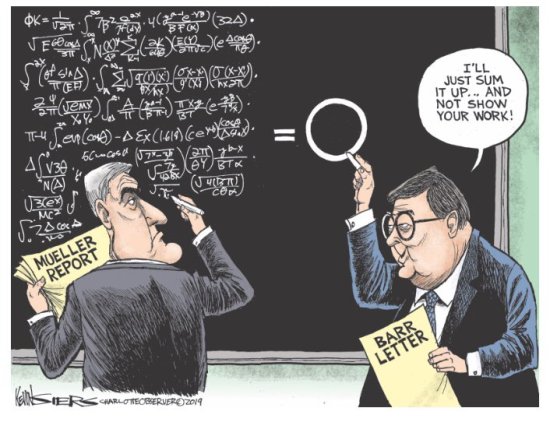
Once again, I hardly know where to begin. Yesterday Cover-Up General Barr made a complete ass of himself during his testimony to the Senate Judiciary Committee. Here’s a good summary of what happened from NBC News:
Just to put all of the news of Barr’s Senate testimony yesterday into one place, here are our seven highlights:
1. He said a president could replace an independent counsel if he thought in the investigation was unfair: “If the president is being falsely accused, which the evidence now suggests that the accusations against him were false, and he knew they were false, and he felt that this investigation was unfair, propelled by his political opponents, and was hampering his ability to govern, that is not a corrupt motive for replacing an independent counsel,” Barr said.
2. He admitted he didn’t review the underlying evidence in the Mueller report on whether Trump committed obstruction of justice: “We accepted the statements in the report as the factual record,” Barr said in an exchange with Kamala Harris. “We did not go underneath it to see whether or not they were accurately accepted as accurate.
3. He indicated he didn’t read the full Mueller report or even its executive summaries: “Polling data was shared, sir,” said Cory Booker. “It’s in the report; I can cite you the page.” Barr responded, “With who?” (Answer: Paul Manafort shared polling data with Konstantin Kilimnik – revealed on page 7 of Mueller’s executive summary of Russia’s interference in the 2016 campaign.)
4. He dodged Kamala Harris’ question on whether the president or anyone at the White House asked him or suggested to him to open an investigation into anyone: “I’m trying to grapple with the word ‘suggest.’ I mean, there have been discussions of matters out there that… they have not asked me to open an investigation,” he said.
5. He said the Mueller report was his “baby” after Mueller submitted it: “At that point, it was my baby… It was my decision how and when to make it public.”
6. He said Mueller’s concern to him about his March 24 summary was inaccurate media reporting: “And I called Bob and said, you know, what’s the issue here? Are you — and I asked him if he was suggesting that the March 24th letter was inaccurate, and he said no, but that the press reporting had been inaccurate.” (But here’s Mueller’s letter complaining about Barr’s summary: It “did not fully capture the context, nature, and substance of this office’s work and conclusions.”
7. And/but he called Mueller’s letter “snitty”: “The letter’s a bit snitty, and I think it was written by one of his staff people.”
Afterward, he announced that he would refuse to attend a scheduled hearing before the House Judiciary Committee today.
Kamala Harris was the star of the show. Here’s her full examination of Barr in which she got him to stammer and stumble and finally admit he never looked at the evidence of Trump’s obstruction of the Russia investigation.
As noted in the NBC list, Cory Booker got Barr to admit that he didn’t know that Paul Manafort had shared internal polling data with Konstantin Kilimnik–who is connected to Russian intelligence services–indicating that Barr didn’t even read Mueller’s report or even the executive summaries! In fact, in his exchange with Nebraska Republican Ben Sasse, it appeared that Barr did not even know who Oleg Deripaska is!
Here’s Twitter thread from David Rothkopf on the long-term implications of Cover-Up Barr’s claims about presidential power.
I don’t think we fully realize the profundity of Barr’s assertions yesterday. The ideas that a president can determine whether or not he ought to be investigated or that a president is incapable of committing obstruction are not just outrageous assaults on Constitutional values.
Taken in the context of this administration’s systematic rejection of the oversight role of Congress and of the law–whether it is the emoluments clause of Constitution or the obligation of the IRS to hand over tax returns to the Chairman of the Ways and Means Committee–what we are seeing is nothing less than a coup, to use a word the president has grown fond of. Trump and Barr are seeking to eliminate the checks and balances that are a hallmark of our system and to effectively render the Congress subservient to the presidency.
Combine this with the efforts of the Senate to load the courts with judicial candidates loyal to the president and the implication of McConnell, Graham & Co. that they will not fulfill their own Constitutional obligations, and you see a devastating picture.
Please click on the link and read the rest.
Neal Kaytal: Why Barr Can’t Whitewash the Mueller Report.
Many who watched Attorney General William Barr’s testimony on Wednesday before the Senate Judiciary Committee, which followed the revelation that the special counsel Robert Mueller had expressed misgivings about Mr. Barr’s characterization of his report, are despairing about the rule of law. I am not among them. I think the system is working, and inching, however slowly, toward justice.
When it comes to investigating a president, the special counsel regulations I had the privilege of drafting in 1998-99 say that such inquiries have one ultimate destination: Congress. That is where this process is going, and has to go. We are in the fifth inning, and we should celebrate a system in which our own government can uncover so much evidence against a sitting president….
The underappreciated story right now is that we’ve not only learned that it was Mr. Barr — and pointedly not Mr. Mueller — who decided to clear President Trump of the obstruction charges, but also discovered the reasoning behind Mr. Barr’s decision. The American public and Congress now have the facts and evidence before them. The sunlight the regulations sought is shining.
Mr. Barr tried to spin these facts. He hid Mr. Mueller’s complaints, which were delivered to him in writing more than a month ago, even when Congress asked in a previous hearing about complaints by members of the special counsel’s team. And the four-page letter that Mr. Barr issued in March and supposedly described the Mueller report omitted the two key factors driving the special counsel’s decision (which were hard to miss, as they were on the first two pages of the report’s volume about obstruction): First, that he could not indict a sitting president, so it would be unfair to accuse Mr. Trump of crimes even if he were guilty as sin; and second, Mr. Mueller could and would clear a sitting president, but he did not believe the facts cleared the president.
These two items came out because the special counsel regulations allowed for public release of this information (and not, as Mr. Barr testified on Wednesday, because he “overrode” the regulations to give the information to the public). The attorney general was misleading through and through, not just about the investigation, but about the special counsel regulations themselves.
Read the rest at The New York Times. I hope Kaytal is right; I’m having a little trouble being optimistic right now.
Greg Sargent: William Barr is helping to cover up Trump’s biggest crime of all.
As the political world struggles to digest the enormity of Attorney General William P. Barr’s profound corruption of his role on President Trump’s behalf, it’s worth stepping back and surveying a distilled version of what we know, now that special counsel Robert S. Mueller III’s redacted report has been released:
- Russia launched a massive attack on our political system, undermining the integrity of our elections, to elect Donald Trump president.
- U.S. law enforcement launched an investigation primarily aimed at getting to the bottom of that attack so that we could fully reckon with what happened and ensure the integrity of future elections.
- Trump tried in multiple ways to derail that accounting of this massive attack on our political system — and then tried to bury the truth about that derailment effort — in a manner that was at best corrupt, and at worst criminal.
The simplest way to understand much of what Barr has done — and what Trumpworld will be doing to impede inquiries going forward — is that it’s mainly aimed at obscuring the broad contours of that larger story.
The point here is not that everything they’re doing is deliberately aimed at this end. It’s that this bigger story is at the center of everything — and by “biggest crime of all,” I mean Trump’s most monstrous wrong — and thus efforts to keep smaller truths from coming out will inevitably be about obscuring that larger story.
Read the rest at The Washington Post.
Politico: Pelosi: Barr committed a crime by lying to Congress.
Speaker Nancy Pelosi on Thursday accused Attorney General William Barr of committing a crime by lying to Congress, blasting him in a closed-door meeting and later at a news conference.
“We saw [Barr] commit a crime when he answered your question,” Pelosi told Rep. Charlie Crist (D-Fla.) during a private caucus meeting Thursday morning, according to two sources present for the gathering.
“He lied to Congress. He lied to Congress,” Pelosi said soon after at a news conference. “And if anybody else did that, it would be considered a crime. Nobody is above the law. Not the president of the United States, and not the attorney general.“
Pelosi’s comments were an apparent reference to Barr’s response to Crist last month during a House Appropriations Committee hearing, during which the attorney generals aid he was not aware of any concerns that special counsel Robert Mueller’s team might have expressed about his four-page summary of Mueller’s findings.
The Washington Post: Hillary Clinton: ‘China, if you’re listening, why don’t you get Trump’s tax returns?’
Jamie Bouie at The New York Times: Bill Barr’s Perverse Theory of Justice.
Aaron Blake at The Washingotn Post: William Barr’s ‘snitty’ slip-up gives away his game.
EJ Dionne at the Washington Post: William Barr has shamelessly corrupted the debate over the Mueller report.
Amanda Marcotte at Salon: Bill Barr runs from House Judiciary hearing — will Democrats let him hide?
Benjamin Wittes at The Atlantic: The Catastrophic Performance of Bill Barr.
Jennifer Rubin: Barr’s testimony was a low point in Justice Department history.
ABC News: Hillary Clinton: Barr is acting as Trump’s ‘defense lawyer.’
I expect there will be more news breaking today. What stories have you been following?
 peej
peej Carissa
 bostonboomer
 dakinikat
 ecocatwoman
 mablue2
 Mama Lopez
 peggysue22
 quixote
 skydancingguestblogger
 Mona (aka Wonk the Vote)
 Memeorandum Crooks and Liars Democracy NOW The UK Guardian
The Sky Dancing banner headline uses a snippet from a work by artist Tashi Mannox called 'Rainbow Study'. The work is described as a" study of typical Tibetan rainbow clouds, that feature in Thanka painting, temple decoration and silk brocades". dakinikat was immediately drawn to the image when trying to find stylized Tibetan Clouds to represent Sky Dancing. It is probably because Tashi's practice is similar to her own. His updated take on the clouds that fill the collection of traditional thankas is quite special.
You can find his work at his website by clicking on his logo below. He is also a calligraphy artist that uses important vajrayana syllables. We encourage you to visit his on line studio.

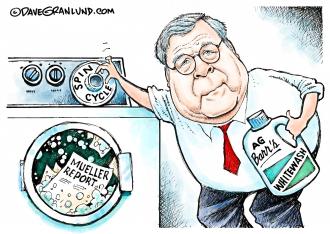


 Sky Dancing
Recent Comments