I think I’ve hit a wall this morning. I’m feeling so exhausted and overwhelmed with what Trump is doing to the country, that I just want to lie down and give up. I hope I can raise my spirts somehow as the day goes on.
Anyway, it is Caturday, and I have a new installment of Space Cat to share today. It’s the second book in the space cat series, Space Cat Visits Venus. Here is the synopsis from Amazon:
Flyball the Space Cat is back, and this time he’s living in Luna Port, the first city on the Moon. Workers at the lunar station are building a rocket to transport him and his pilot buddy, Colonel Fred Stone, to Venus. The two friends take a long voyage to the planet, where they encounter violet skies, torrential ammonia rains, and strange plants that can communicate without speaking.
This new edition of a charmingly illustrated storybook from 1955 is the second of a four-book series starring the intrepid feline known as Space Cat. Young readers will delight in taking a look at space exploration from Flyball’s point of view and following his escapades across the solar system.
It’s hard to believe these books are still in print after all this time, but I think they are really cute. See some of the illustrations scattered through this post.
As you know, John Bolton’s home and office were searched by the FBI yesterday. Below are some articles that analyze and comment on Trump’s retribution project.
President Trump promised voters during his campaign for a second term that he had bigger things on his mind than retribution against opponents. But it is increasingly clear that vengeance is a large part, maybe the largest part, of how he will define success in his second term.
His revenge campaign took an ominous turn Friday as FBI agents raided the home and office of Mr. Trump’s first-term national security adviser John Bolton. They brought two broad warrants to search the “premises.” Agents showed up unannounced at his Bethesda, Md., home at 7 a.m. They confiscated his wife Gretchen’s phone because it was visible and not on her person. Mr. Bolton had already left for his office, which is where FBI agents greeted him….
Cat with Venus rocket
It’s hard to see the raid as anything other than vindictive. Mr. Bolton fell out of Mr. Trump’s favor in the first term and then wrote a book about his experience in the White House while Mr. Trump was still President. Mr. Trump tried and failed to block publication. The President then claimed Mr. Bolton had exposed classified information, though the book had gone through an extensive pre-publication scrub at the White House for classified material.
The book investigation faded away under President Biden, but now it looks as if Mr. Patel is reviving it. Whether Mr. Trump ordered the FBI probe or not doesn’t matter. Mr. Patel knows what the President thinks about Mr. Bolton, and the President’s minions in Trump II don’t serve as the check on his worst impulses the way grown-ups did in his first term. The presidential id is now unchained.
Mr. Trump made clear that he was out for blood against Mr. Bolton when he pulled the former adviser’s protective detail after his re-election. Mr. Bolton is widely known as a defense hawk, and in 2022 the Justice Department charged an Iranian national it said planned to murder him.
A bit more:
It’s unlikely that Mr. Bolton broke any laws on national secrets, and he certainly didn’t share any with us over our long association with him. But perhaps Mr. Trump intends for the process itself to be the punishment even if there is ultimately no criminal charge. Mr. Bolton has to pay for legal counsel, and his family has to endure the anxiety of being under federal government siege.
Mr. Bolton has continued to speak candidly about Mr. Trump’s second-term decisions, pro and con, including in these pages this week. The President may also hope the FBI raid will cause Mr. Bolton to shut up, though knowing him we can’t imagine that working.
The real offender here is a President who seems to think he can use the powers of his office to run vendettas. We said this was one of the risks of a second Trump term, and it’s turning out to be worse than we imagined.
FBI directors don’t customarily announce raids in progress. But early this morning, Kash Patel celebrated the search of former National Security Adviser John Bolton’s home as agents were rolling into his suburban-Maryland driveway: “NO ONE is above the law … @FBI agents on mission,” Patel wrote on X. Agents also executed a search warrant at Bolton’s office in Washington, D.C. President Donald Trump later told reporters that he had learned about the raid on one of his most voluble critics from TV news, but he took the opportunity to call Bolton a “lowlife” and “not a smart guy.” Then he added: “Could be a very unpatriotic guy. We’re going to find out.”
Flyball dreams of mice
The FBI’s actions were hard not to read as payback for Bolton’s years of criticism of the president, even as the facts that persuaded a judge to approve a search warrant remain unknown. That’s the problem with a politicized legal system—even if an investigation is legitimate, it’s easy to assume that its motives are corrupt. Trump has spent years vowing retribution against Bolton, particularly after Bolton published a 2020 memoir that portrayed the president as incompetent and out of his depth on foreign policy.
If this was revenge, it wasn’t an isolated act. As agents were still packing up boxes of Bolton’s effects, The Washington Post reported that Defense Secretary Pete Hegseth had pushed out yet another senior military officer, firing Lieutenant General Jeffrey Kruse, director of the Defense Intelligence Agency. In June, its analysts delivered a preliminary assessment that U.S. bombers had caused relatively limited damage to Iranian nuclear facilities, undercutting Trump’s pronouncements that the sites were “obliterated.” And just three days ago, Director of National Intelligence Tulsi Gabbard revoked the security clearances of more than three dozen current and former national-security officials. Several played key roles in efforts to counter or expose Russia’s 2016 election interference, what Trump calls the “Russia Hoax” and Gabbard has described as part of a “years-long coup” against the president.
Put it all together, and this may be remembered as the week Trump’s campaign against the “deep state” kicked into high gear. To some intelligence professionals I spoke with, it felt as though something fundamental had shifted in their historically apolitical line of work.
“Given the dystopian nature of it all—clearance revocations of former officials who did no wrong, forced retirements of long-standing intelligence officials, reductions in force that include junior officers who were just hired, and a wildly politicized leadership in the intelligence community—I no longer recommend young Americans to pursue careers in intelligence,” Marc Polymeropoulos, a veteran CIA officer who had his own security clearance yanked earlier this year, told me.
Purge doesn’t adequately capture what national-security experts see happening here. Chilling effect is too mild, though revoking the security clearances of two senior intelligence officers, as Gabbard did, effectively ending their government careers, will indeed send a message. Terrorizing the workforce is a phrase I heard a lot this week. And that may indeed be the point.
“Instead of being honest about what we think, now people will just keep their mouths shut or tell Trump what he wants to hear,” said one former official, who would only speak anonymously. The administration publicly identified this person as part of the “Russia Hoax,” and they’ve hired personal security for outside their home, fearing that Trump’s most fevered supporters might pay a visit.
Forget about calling out misbehavior or wrongdoing by administration officials, the person added: “Where would we go to file a grievance, or to report misconduct? Who’s going to do that?”
You can use the gift link to read rest. I wonder if they will target Hillary Clinton? I’m sure Trump would like to do that.
The Trump DOJ seems to have hit on mortgage fraud as their go to accusation against critics.
The Trump administration has a new weapon at its disposal in its efforts to take down Democrats and their appointees: mortgage records.
Members of the administration have now alleged three public officials have committed mortgage fraud, referring each to the Justice Department. The administration has signaled that it has just gotten started: U.S. Pardon Attorney Ed Martin was recently tapped “to investigate fraud by public officials in mortgages,” according to a letter Martin sent.
The targets have denied wrongdoing, but the probes represent an aggressive new spin on opposition research that has long dug into tax records and financial disclosures public officeholders have to make. Mortgage applications go beyond the typical disclosure requirements.
Another twist is the allegations are coming from a government official overseeing an agency able to access massive amounts of mortgage data.
At the historically quiet but powerful Federal Housing Finance Agency, Pulte has turned himself into a Trump attack ally, probing mortgages of prominent Democrats and a Biden-appointed official at the Federal Reserve.
So far, DOJ has announced investigations of Federal Reserve governor Lisa Cook, Senator Adam Schiff, andNew York Attorney General Letitia James.
Heading into an election season, mortgage documents could become even more a source of contention across the country, for both sides of the aisle. Mortgage fraud allegations have also emerged against Texas Attorney General Ken Paxton, a Republican who is campaigning for a Senate seat. (Paxton’s campaign has declined to comment on his properties.)
Mick Mulvaney, a former chief of staff for Trump who had faced questions about taxes on his nanny when he was facing Senate confirmation, says the attacks are going to be part of the new normal for Republicans to use versus Democrats now.
“Right now it’s classified documents and mortgage applications,” Mulvaney said of the new opposition research. “Whether or not you pretend to need a wheelchair at an airport to get on the plane faster, that may be used next if that’s illegal.”
In other news, the troops (and FBI agents and ICE thugs) are still occupying Washington DC. Here’s the latest on that story.
Defense Secretary Pete Hegseth has ordered National Guard members patrolling the streets of Washington, DC, to begin carrying their service weapons as they fulfill President Donald Trump’s crime crackdown in the nation’s capital, according to a US defense official.
Taking off their helmets
The directive from Hegseth represents a notable shift in guidance from the Pentagon, which had previously indicated that National Guard members could be armed if the circumstances warranted, and suggests hundreds of guard troops deployed in DC will soon be carrying weapons despite serving in a support role.
“At the direction of the Secretary of Defense, (Joint Task Force) JTF-DC members supporting the mission to lower the crime rate in our Nation’s capital will soon be on mission with their service-issued weapons, consistent with their mission and training,” the official said….
It comes as other states’ National Guard members have begun arriving in Washington, DC, to be in-processed to assist the DC National Guard.
More than 1,900 troops from multiple states have been called up as part of the mission including from West Virginia, South Carolina, Mississippi, Ohio, Louisiana, and Tennessee National Guards, according to a release from Joint Task Force – DC on Thursday.
What could possibly go wrong? I wonder if Hegseth has heard about Kent State?
National Guard troops deployed on the streets of Washington, D.C., will now carry weapons for personal protection and are allowed to carry out law enforcement duties, defense officials announced Friday.
The decision is an escalation in President Donald Trump’s use of military troops to address what he insists is “out of control” crime in the nation’s capital. Since his announcement, Trump has mobilized nearly 2,300 National Guard troops from Washington, D.C., and six states with Republican governors. But troops had remained unarmed until now.
ABC News first reported Friday that Defense Secretary Pete Hegseth had officially authorized the troops to carry weapons if their mission required it. On Friday, the joint task force overseeing the troops confirmed the move, noting that Guard personnel sent on missions would carry M17 pistols, “which are intended for person protection.” The task force said Guard members would receive proper training on how to use the weapons before being allowed to carry them.
“This decision is not something taken lightly,” said Army Brig. Gen. Leland D. Blanchard, III, the Commanding General of the D.C. National Guard, in a statement.
Flyball and the Venus Mouse.
Really? I think it is taken very lightly, considering there’s not as serious crime problem in DC and it’s illegal for the military to perform law enforcement functions in the U.S.
The task force also noted in its statement late Friday that Guard troops can carry out law enforcement duties because they are operating under Title 32 status, a law that exempts troops from restrictions under the 1878 Posse Comitatus Act, because they are still technically under a state governor’s command.
Legal experts have long warned about how presidents might use Title 32 as a kind of legal loophole to Posse Comitatus, which is supposed to prevent the president from using the military as a domestic police force. Under Title 32, a president pays for a Guard mission while keeping troops under control of the governors; in this case, Trump asked red-state governors to send their troops to D.C.
While those governors technically retain control of the troops, their missions are being decided by the White House, according to several administration officials.
Hundreds of National Guard soldiers in military fatigues and combat boots mingled with tourists, posed for selfies, and treated themselves to ice cream from food trucks on Thursday along Washington’s National Mall, one of the safest parts of America’s capital.
On occasion an angry local would hurl verbal abuse at them, but the soldiers simply shrugged and carried on what appeared to be an undemanding assignment.
Outside the National Museum of African American History and Culture, five members of the West Virginia National Guard were standing on the street corner far away from the city’s crime hot spots.
A grateful rescued mouse.
“It’s boring. We’re not really doing much,” said Sergeant Fox, who declined to give his first name.
Fox is among almost 2,000 troops, including 1,200 from six Republican-led states, who are being deployed in Washington as part of an extraordinary militarization inside the Democratic-led city.
The soldiers, some of whom told Reuters they did not get involved in arrests, are officially in Washington to support a federal crackdown on what President Donald Trump calls a crime epidemic. But that depiction appears to run counter to the fact that crime rates overall have shrunk in recent years.
That disconnect, combined with the troop concentration near the Washington Monument, the Lincoln Memorial and in view of the U.S. Capitol, highlights criticism by the city’s Democratic leaders that this massive deployment is more a show of power by Trump, rather than a serious effort to fight crime.
The Trump administration reportedly plans to mobilize up to 1,700 National Guard troops across 19 states in the coming weeks to support its immigration and anti-crime crackdowns, a dramatic expansion of the controversial operation that’s seen federal agents and Guard troops carrying out activities across Washington, D.C.
The troops, who will largely be activated across Republican-controlled states, will serve in support of the administration’s Immigration and Customs Enforcement operations, as well as other law enforcement priorities, according to comment from unnamed Pentagon officials and documents obtained by Fox News.
Taking photos of the plants
The Guardsmen assisting ICE will be carrying out tasks that may include “personal data collection, fingerprinting, DNA swabbing and photographing of personnel in ICE custody,” an official told outlet.
The deployments will take place across the following states: Alabama, Arkansas, Florida, Georgia, Idaho, Indiana, Iowa, Louisiana, Nebraska, Nevada, New Mexico, Ohio, South Carolina, South Dakota, Tennessee, Texas, Utah, Virginia, Wyoming, per Fox.
Texas is reportedly slated to have the largest deployment.
The Guardsmen will be serving under Title 32 Section 502F authority, in which they technically remain under state command and control, but can assist with federal missions and are paid with federal funds. The status allows them to avoid running afoul of a federal law limiting military involvement in domestic law enforcement.
Donald Trump has threatened to take his federal crackdown on crime and city cleanliness to New York and Chicago, as the defense secretary, Pete Hegseth, ordered that national guard troops patrolling the streets of Washington DC under federal control will now be armed.
The US president talked to reporters in the Oval Office and said: “When ready, we will start in Chicago … Chicago is a mess.” He added that then the administration “will help with New York”, amid the controversial and aggressive federal efforts to control leading Democratic-voting cities, each of which has a Black mayor….
Touching the telepathic moss.
On the issue of suddenly announcing that it would now arm the federalized troops in DC, the defense department did not immediately offer any other details about the new development or why it was needed.
The step is an escalation in the federal government’s rare intervention into policing in the nation’s capital and came as nearly 2,000 national guard members are stationed in the city.
Earlier this week hundreds of troops from several Republican-led states arrived to bolster the DC national guard.
The Pentagon and the US army had said last week that troops would not carry weapons.
There’s more information about the DC occupation in the Guardian article.
Hegseth’s orders come just a day after Jeanine Pirro, the District of Columbia’s top federal prosecutor, instructed prosecutors to pursue the most serious charges possible in cases stemming from recent arrests, limiting their discretion as the Trump administration intensifies its law enforcement presence in the capital.
That directive, first reported by the New York Times, was issued this week and narrows the ability of line prosecutors to decide how cases are charged and prioritized. By pushing for the maximum charges allowed, the new policy could lead to longer prison terms for convicted defendants….
According to the White House, federal agents have made more than 630 arrests as of Thursday, though the justice department has not clarified how that figure compares with typical city police numbers.
While Pirro has committed to filing the toughest charges possible in most cases, she has also relaxed enforcement of one local gun law. This week she directed prosecutors not to pursue felony charges against people for possessing rifles or shotguns in the city, despite a DC law prohibiting them.
Finally:
On Thursday, Trump declared his takeover of the Metropolitan police department to be a success.
He had previously signaled that he would target other cities, such as Baltimore, Oakland and another mission in Los Angeles, as well as New York and Chicago, which are all strongly Democratic-voting and run by Black mayors. The Maryland governor, Wes Moore, said to CNN that crime was dropping in Baltimore as a result of community violence prevention efforts and he would never activate the national guard “for theatrics”.
Yeah, right.
A few more interesting stories to check out today:
Kilmar Abrego Garcia, the man who was wrongfully deported to a high-security prison in El Salvador, was notified by immigration authorities that he may be deported to Uganda, less than 24 hours after his release from federal custody.
Immigration authorities were expected to attempt to deport Abrego upon his release. Abrego “may be removed to Uganda no less than 72 hours absent weekends,” a source familiar with the case told NBC News on Saturday.
That is in line with standard procedure that ICE must give immigrants 72 hours notice before removing them to third countries.
Abrego, originally from El Salvador, had a withholding of removal order from 2019 that prevents his deportation to his home country due to concerns that he would be persecuted by violent gangs.
The removal order was violated when the Trump administration accidentally deported Abrego to the El Salvador’s CECOT prison, notorious for its harsh conditions, in March. However, the 2019 protective order does not bar Abrego from being deported to another country.
Abrego’s lawyers have now notified the judge in the Middle District of Tennessee that ICE has informed Abrego of its intent to deport him to Uganda. Abrego could not face the criminal charges of human smuggling brought against him by DOJ in that case if he is out of the country.
They are never going to leave this poor man alone.
A judge ruled late Friday the Trump administration cannot deny funding to Boston, Chicago, Denver, Los Angeles and 30 other cities and counties because of policies that limit cooperation with federal immigration efforts.
U.S. District Judge William Orrick in San Francisco extended a preliminary injunction blocking the administration from cutting off or conditioning the use of federal funds for so-called “sanctuary” jurisdictions. His earlier order protected more than a dozen other cities and counties, including San Francisco, Portland and Seattle.
An email to the White House late Friday was not immediately returned. In his ruling, Orrick said the administration had offered no opposition to an extended injunction except to say the first injunction was wrong. It has appealed the first order.
Orrick also blocked the administration from imposing immigration-related conditions on two particular grant programs.
People in Orlando have defied Republican Governor Ron DeSantis and reinstated a rainbow crosswalk outside the Pulse nightclub, after Florida officials removed the painted crossing installed in memory of the 49 people killed at the site in 2016.
Fleeing the ammonia storm.
The restoration was led by local community members and LGBTQ+ advocates who gathered at the intersection following the overnight state-directed repainting. In a video shared to social media by the account @jeremy_rodrigue, people can be seen DIY-ing the rainbow crosswalk and drawing the colors back onto the ground.
“While this attack was meant to demoralize us and push us back in the closet, Orlando refused to be erased,” Democratic state Senator Carlos Guillermo Smith, who became the first openly gay Latino elected to the Florida legislature in 2016, told Newsweek. “It was inspiring to see so many local residents spring into action in response to the Governor’s cowardly abuse of power.” [….]
The removal of the rainbow crosswalk— painted in 2017 and approved during the administration of former Republican Governor Rick Scott—has sparked fierce backlash from city officials, survivors, and LGBTQ+ organizations who say it was eliminated in the dead of night with no warning.
The crosswalk was painted over following a directive from the Trump administration. In a letter to governors last month, Transportation Secretary Sean Duffy instructed states to “eliminate” distractions on public roads. He wrote on X at the time: “Taxpayers expect their dollars to fund safe streets, not rainbow crosswalks.”
That’s it for me today. I’m going to try to ignore the news for awhile. Please take care of yourselves, everyone.
Did you like this post? Please share it with your friends:
The top stories today focus on Trump’s failing economy and his firing of Bureau of Labor Statistics commissioner Erika McEntarfer after she released weak job numbers yesterday. Dakinikat provided a deep dive into the economy yesterday and addressed the firing in the comments to her post, so I hope you’ll forgive me if I don’t spend much time on economic issues, which are not my area of expertise, to put it mildly.
I’m still laser focused on the Epstein/Maxwell story. I’m currently reading Julie Brown’s book on the case, Perversion of Justice: The Jeffrey Epstein Story, and it is fascinating and enlightening. Brown is was responsible for keeping the case alive–after Epstein received a only slap on the wrist for his crimes–with her investigative stories in the Miami Herald
I’m also concerned about the news that Trump has moved nuclear submarines closer to Russia, perhaps as a threat to Putin and as another attempt at distraction from Epstein/Maxwell news.
Another important story breaking today is about Trump’s plans to further involve the military in his deportation efforts and build more concentration camps to detain migrants.
President Trump has now imposed his new tariff regime on the world, and the triumphalism is palpable in MAGA land. But maybe hold the euphoria, as this week’s reports on jobs and the economy suggest the new golden age may take a while to appear.
Friday’s labor report arrived with a particular jolt, with a mere 73,000 net new jobs in July. Even more bearish were the downward revisions of 258,000 jobs in May and June. Job gains over the last three months are barely more than 100,000.
The details in the report provide little solace. The jobless rate ticked up only to 4.25% from 4.1%, but that was in part because the labor force continued to shrink. The labor participation rate fell again to 62.2% and is now down half a percentage point in a year.
Employers aren’t laying off workers, but they have all but stopped new hiring. Notably, most of the new jobs are in healthcare and social assistance, which rely heavily on government spending. This continues the Biden-era trend that Trumponomics was supposed to change. Not so far.
The much-advertised rebirth of U.S. manufacturing also hasn’t arrived. The economy shed 11,000 manufacturing jobs in July, following a loss of 26,000 in May and June. The ISM Manufacturing Index fell again in July to 48, the fifth straight month below 50.
A bit more:
One labor market problem may be the crackdown on migrant workers. The foreign-born workforce has fallen by about a million since Mr. Trump took office. The National Foundation for American Policy, a nonpartisan think tank, says immigrants accounted for over half of the labor force increase in each of the last three decades. Fewer workers means fewer new jobs as employers conclude they can’t fill them.
How much of this jobs and growth slowdown owes to Mr. Trump’s tariffs? It’s hard to say for sure. But it has occurred in the wake of Mr. Trump’s April 2 tariff shock, his rapid backtrack from the highest rates, and then his willy-nilly threats and deal-making with the world. The policy uncertainty has surely affected business hiring and investment. How can you hire or invest if you don’t know what your cost of goods will be, or from which supplier you will be able to buy at a competitive price?
On that score, Mr. Trump’s latest tariff blast this week hasn’t put an end to the uncertainty. Much of the world will now pay 15%, if Mr. Trump sticks to his deals. But some of the biggest U.S. trading partners—Mexico, Canada, China and India—remain in tariff limbo. Brazil will pay 50%, though it has a trade surplus with the U.S. And what did Switzerland ever do to Mr. Trump to deserve 39%? Charge too much for a watch?
One basic character of the politicization necessary to create an authoritarian regime is that public employees are reluctant to share information that displeases their political bosses. When those bosses can fire them, the incentives to suppress uncongenial information, or provide false information, become overwhelming.
Modigliani’s Cat by Eve Riser Roberts
Over time, life in these countries become bifurcated. Statistics become propaganda. There is an official reality, which many proclaim but few believe, and actual reality. And at some point actual reality catches up with the fantasy.
We have seen examples of this dynamic already play out in the Trump administration. Career civil servants have been reluctant to contradict, for example, Musk’s false claims about fraud in government, or Kennedy’s nonsensical claims about vaccines, knowing that doing so would probably cost them their jobs. In certain areas, such as environmental policy, the people that produce factual information that the administration dislikes are being fired.
Trump just took his attack on reality to a different level, by firing the head of the Bureau of Labor Statistics. Why? Because he did not like the job numbers her agency produced.
In related news, we just saw the last credible BLS data for the rest of the Trump administration….
Trump’s claim is that the head of the BLS is somehow “rigged” the data “to make the Republicans, and ME, look bad.” “We need accurate Jobs Numbers” that reflect Trump’s opinion that “The Economy is BOOMING.”
As Trump fires an official because he does not like the job numbers, he proclaims that says that such numbers “can’t be manipulated for political purposes.” But revisions to job numbers are routine, and there is no reason to assume that an official would willingly publish false data knowing the ire that would follow from the White House.
Trump has no evidence for what he claims. He simply does not like reality, and will do what he can to deny it. And as tariffs kick in, and Trump’s layoffs of public employees becomes incorporated into jobs data, that reality will look worse and worse.
Ghislaine Maxwell, the associate of Jeffrey Epstein who is currently serving a 20-year prison sentence for sex-trafficking crimes, has been transferred from a federal prison in Florida, to a lower-security facility in Texas, the US Bureau of Prisons said on Friday.
“We can confirm, Ghislaine Maxwell is in the custody of the Bureau of Prisons (BOP) at the Federal Prison Camp (FPC) Bryan in Bryan, Texas,” a spokesperson for the Bureau of Prisons said in a statement.
Maxwell’s attorney, David Oscar Markus, also confirmed the transfer but declined further comment. FPC Bryan is described as a “minimum security federal prison camp” that houses 635 female inmates.
According to the Bureau of Prisons’ inmate locator, the Texas facility is also home to Elizabeth Holmes, the disgraced former CEO of the California-based blood-testing company Theranos, who is serving a lengthy sentence for fraud. Real Housewives of Salt Lake City TV star Jen Shah is also serving time there for fraud.
Oh good. Maybe they can all hang out.
Maxwell’s move from FCI Tallahassee, a low-security prison, to the federal prison camp in Bryan comes roughly a week after she was interviewed in Florida over two days about the Epstein case by the deputy US attorney general, Todd Blanche, who is also one of Donald Trump’s former lawyers.
Amadeo Modigliani, by Nancy Alari
Blanche had said that he wanted to speak with Maxwell – who was sentenced in 2022 for sex trafficking and other related crimes – to see if she might have “information about anyone who has committed crimes against victims”.
Details of that meeting have not been made public but Maxwell’s lawyer described it as “very productive”, adding that Maxwell answered the questions “honestly, truthfully, to the best of her ability”.
The interview took place amid growing political and public pressure on the Trump administration to release additional federal documents related to the Epstein case – a case which has, for years, been the subject of countless conspiracy theories.
Earlier in July, the justice department drew bipartisan criticism and backlash after announcing that it would not be releasing any more documents from the investigation into the late Epstein, who died in prison in New York in 2019 while awaiting federal trial. This was despite earlier pledges to release more files, by the US president and the US attorney general, Pam Bondi.
Allison Gill notes that this transfer was highly irregular:
The reason for the move is listed as a “lesser security transfer” (code 308) according to a transfer document I reviewed, which is completely inappropriate of for inmates who are in the early stages of serving their sentences, according to another source. “This is such obvious corruption. I have never seen this before,” said another person at BOP familiar with the situation.
The unit that approves waivers for sex offenders to be moved to minimum security camps is the Designation and Sentence Computation Center near Dallas. Currently, the senior deputy assistant director is Rick Stover, a career BOP employee who speaks frequently with White House officials.
I can’t help but wonder whether this is part of a deal struck between Maxwell and Blanche in exchange for her testimony.
Two sexual abuse victims of Jeffrey Epstein and the family of late Epstein victim Virginia Giuffre on Friday blasted President Donald Trump after learning that Epstein’s accomplice Ghislaine Maxwell had been transferred to a less restrictive prison in Texas from Florida….
“President Trump has sent a clear message today: Pedophiles deserve preferential treatment and their victims do not matter,” the statement said, noting that the two women and Giuffre’s family had not been notified of Maxwell’s transfer before media reports of it….
“It is with horror and outrage that we object to the preferential treatment convicted sex trafficker Ghislaine Maxwell has received,” the statement said.
“Ghislaine Maxwell is a sexual predator who physically assaulted minor children on multiple occasions, and she should never be shown any leniency,” the statement said.
“Yet, without any notification to the Maxwell victims, the government overnight has moved Maxwell to a minimum security luxury prison in Texas,” the statement said.
“This is the justice system failing victims right before our eyes. The American public should be enraged by the preferential treatment being given to a pedophile and a criminally charged child sex offender. The Trump administration should not credit a word Maxwell says, as the government itself sought charges against Maxwell for being a serial liar,” the statement said.
“This move smacks of a cover up. The victims deserve better,” the statement said.
No kidding. And as we all know, the coverup is usually worse than the crime.
Before Maxwell’s arrival in Texas was reported, MSNBC legal correspondent Lisa Rubin was asked about the interactions between Maxwell and the Trump administration on Thursday’s “Deadline: White House,” and called the timeline “curious.”
Rubin recounted that before that late July meeting between Blanche and Maxwell, the Trump administration, through Solicitor General D. John Sauer, submitted a brief to the Supreme Court arguing Maxwell’s conviction should stand.(Maxwell was sentenced to 20 years in prison in 2022 after being convicted of sex-trafficking-related crimes.)In that July 14 filing, Sauer shot down Maxwell’s claim that she was protected from prosecution due to Epstein’s 2007 plea agreement in Florida.
But the following day, Rubin recalled, on July 15, Trump was contacted by reporters from The Wall Street Journal about an alleged birthday card he had written to Epstein in 2003. Trump has denied the Journal’s reporting, but the president was inundated with questions about the details of his relationship with Epstein.
One week later,Blanche posted to social media that the Justice Department would reach out to Maxwell for an interview, and later that week, he met with her in Florida.
Rubin noted that the government had “two days of conversations with her, not in the federal prison where she’s serving time, but in a U.S. Attorney’s Office, so she theoretically could be more comfortable during those conversations.”
While we know that the meeting took place, Rubin stressed that many of the details are still unknown: “We still don’t know who else from the Department of Justice was there. We don’t know how that conversation was recorded, if at all. And yet, we still don’t know what the resolution is.”
So what changed? Was it just about the birthday note/drawing? Or did Trump learn something else about how he was portrayed in the FBI files?
Cat in a Hat, inspired by Amadeo Modigliani painting, by Olga Koval
The FBI redacted Donald Trump‘s name, along with the names of other prominent public figures, from references in the Jeffrey Epstein files, three people familiar with the matter told Bloomberg‘s Jason Leopold.
Internal directives instructed about 1,000 FBI agents to flag any mention of Trump during a March review of roughly 100,000 pages of records, people familiar with the process told Bloomberg.
The Justice Department said the review turned up no “client list” or evidence linking Trump to criminal activity, despite his name appearing in Epstein’s contact book and flight logs….
The Bloomberg report said that earlier this year, FBI agents were directed to search for all documents associated with the Epstein case and determine which could be released, totaling tens of thousands of pages, following Attorney General Pam Bondi‘s request for them.
During the review, in March, FBI personnel were said to have identified numerous references to Trump and other high-profile people, with the names then redacted by FOIA officers because they were private citizens at the time—a common practice under FOIA case law.
US President Donald Trump said Friday he was ordering two US Navy nuclear submarines to “appropriate regions,” in response to remarks by Dmitry Medvedev, Russia’s former president and current deputy chairman of its Security Council.
In what he called an effort to be “prepared,” Trump said in a Truth Social post that he had “ordered two Nuclear Submarines to be positioned in the appropriate regions, just in case these foolish and inflammatory statements are more than just that.”
The president did not specify what type of submarines were being moved or where to, and the Pentagon usually reveals little about any of its subs’ movements.
The US Navy has three types of submarines, all of which are nuclear-powered, but only one of which carries nuclear weapons.
Ballistic Missile Submarines
The US Navy has 14 Ohio-class ballistic-missile submarines (SSBNs), often referred to as “boomers.”
SSBNs “are designed specifically for stealth and the precise delivery of nuclear warheads,” a Navy fact sheet on them says.
Each can carry 20 Trident ballistic missiles with multiple nuclear warheads. Tridents have a range of up to 4,600 miles (7,400 kilometers), meaning they wouldn’t need to move closer to Russia to hit it – in fact, they could do so from the Atlantic, Pacific, Indian or Arctic oceans….
Olga Koval, Cat is on the chair, inspired by Amadeo Modigliani painting
Guided missile submarines
In the 1990s, the Pentagon determined the Navy didn’t need as many Ohio-class SSBNs in the nuclear deterrent role, converting four of them into guided-missile submarines (SSGNs).
Retaining the same overall specs as the boomers, the SSGNs carry Tomahawk cruise missiles instead of the Trident ballistic missiles.
Each can carry 154 Tomahawks with a high-explosive warhead of up to 1,000 pounds, and a range of about 1,000 miles….
Fast-attack submarines
These form the bulk of the US Navy’s submarine fleet and are designed to hunt and destroy enemy subs and surface ships with torpedoes. They can also strike land-based targets with Tomahawk missiles, though they carry the Tomahawks in much smaller numbers than the SSGNs.
Donald Trump, beset by a week of bad news, has decided to rattle the most dangerous saber of all. In a post today on his Truth Social site, the president claimed that in response to recent remarks by former Russian President Dmitri Medvedev, he has “ordered two Nuclear Submarines to be positioned in the appropriate regions.” (All American submarines are nuclear-powered; Trump may mean submarines armed with ballistic nuclear weapons.) “Words are very important,” Trump added, “and can often lead to unintended consequences, I hope this will not be one of those instances.”
And then, of course: “Thank you for your attention to this matter!”
Trump’s words may mean nothing. The submarines that carry America’s sea-based nuclear deterrent routinely move around the world’s oceans. Each carries up to 20 nuclear warheads, on missiles with a range of more than 4,000 miles, and so almost anywhere can be an “appropriate region.” And Trump may not even have issued such orders; normally, the Pentagon and the White House do not discuss the movements of America’s ballistic-missile submarines.
Medvedev is a man with little actual power in Russia, but he has become Russia’s top internet troll, regularly threatening America and its allies. No one takes him seriously, even in his own country. He and Trump have been trading public insults on social media for months, with Trump telling Medvedev to “watch his words” and Medvedev—nicknamed “Little Dima” in Russia due to his diminutive stature—warning Trump to remember Russia’s “Dead Hand,” a supposed doomsday system that could launch all of Russia’s nuclear weapons even if Moscow were destroyed and the Kremlin leadership killed.
The problem is not that Trump is going to spark a nuclear crisis with a post about two submarines—at least not this time. The much more worrisome issue is that the president of the United States thinks it is acceptable to use ballistic-missile submarines like toys, objects to be waved around when he wants to distract the public or deflect from bad news, or merely because some Russian official has annoyed him.
Unfortunately, Trump has never understood “nuclear,” as he calls it. In a 2015 Republican primary debate, Trump said: “We have to be extremely vigilant and extremely careful when it comes to nuclear. Nuclear changes the whole ball game.” When the moderator Hugh Hewitt pressed Trump and asked which part of the U.S. triad (land-based missiles, bombers, and submarines) would be his priority, Trump answered: “For me, nuclear, the power, the devastation, is very important to me.”
That power and devastation, however, is apparently not enough to stop the president from making irresponsible statements in response to a Kremlin troll. One would hope that after nearly five years in office—which must have included multiple briefings on nuclear weapons and how to order their use—Trump might be a bit more hesitant to throw such threats around. But he appears to have no sense of the past or the future; he lives in the now, and winning the moment is always the most important thing.
Use the gift link above to read more.
Are More Concentration Camps Like Alligator Alcatraz Coming?
President Donald Trump has already enmeshed the United States military in domestic law enforcement operations involving immigration to an unprecedented degree. He has authorized a major military buildup at the border. He has maximized the use of military planes for deportations, complete with the White House pumping out imagery of migrants getting frog-marched onto souped-up military aircraft. He sent the National Guard into Los Angeles amid large-scale protests there—and then sent in the Marines.
But an internal memo circulated inside the Department of Homeland Security suggests that Trump’s use of the military for domestic law enforcement on immigration could soon get worse. The memo—obtained by The New Republic—provides a glimpse into the thinking of top officials as they seek to involve the Defense Department more deeply in these domestic operations, and it has unnerved experts who believe it portends a frightening escalation.
Woman red dress grey cat, by Theresa Tanner, based on a painting by Modigliani.
The memo lays out the need to persuade top Pentagon officials to get much more serious about using the military to combat illegal immigration—and not just at the border. It suggests that DHS is anticipating many more uses of the military in urban centers, noting that L.A.-style operations may be needed “for years to come.” And it likens the threat posed by transnational gangs and cartels to having “Al Qaeda or ISIS cells and fighters operating freely inside America,” hinting at a ramped-up militarized posture inside the interior.
“The memo is alarming, because it speaks to the intent to use the military within the United States at a level not seen since Japanese internment,” Carrie Lee, senior fellow at the German Marshall Fund, told me. “The military is the most powerful, coercive tool our country has. We don’t want the military doing law enforcement. It absolutely undermines the rule of law.”
The memo was authored by Philip Hegseth—the younger brother of Defense Secretary Pete Hegseth—who is a senior adviser to Homeland Security secretary Kristi Noem and DHS liaison officer to the Defense Department. As such it also sheds light on Hegseth the Younger’s role, which has been the subject of media speculation labeling him an obscure but influential figure in his brother’s MAGA orbit.
The memo outlines the itinerary for a July 21 meeting between senior DHS and Pentagon officials, with the goal of better coordinating the agencies’ activities in “defense of the homeland.” It details goals that Philip Hegseth hopes to accomplish in the meeting and outlines points he wants DHS officials to impress on Pentagon attendees.
Participants listed comprise the very top levels of both agencies, including Defense Secretary Pete Hegseth and several of his top advisers, Joint Chiefs chairman Dan Caine, and NORTHCOM Commander Gregory Guillot. Staff include Phil Hegseth and acting ICE commissioner Todd Lyons….
Immigration and Customs Enforcement (ICE), now the best-funded federal lawenforcement agency in the United States, is embarking on a plan to drastically expand its detention infrastructure. But considering the $45 billion it’s been given for the job, the agency’s vision for its new facilities seems startlingly low-tech.
In July, the Wall Street Journal got its hands on internal government documents revealing that ICE wants to incarcerate more immigrants in tents, or “hardened soft-sided facilities.” The administration hopes to erect thousands of these tents “as quickly as possible to expand detention capacity…at US military bases and adjoining bricks-and-mortar ICE jails,” the Journalreported. Officials say they like this approach, at least for now, because they can quickly set up tons of beds in a few new locations rather than finding space at existing facilities here and there.
But tents raise serious humanitarian and safety issues. “There’s a reason no one wants to live in a tent,” says Eunice Cho, an attorney who challenges unconstitutional conditions in immigrant detention centers with the ACLU’s National Prison Project. “There are many, many logistical problems—with sanitation, getting food. They certainly are not weatherproof. They do not have the setup to make sure people’s medical concerns are addressed.”
Prior to 2025, ICE did not use tents for long-term detention, but soft-sided facilities are not completely new in the incarceration realm. Here are some recent examples, each highlighting problems that are almost sure to repeat themselves as the Trump administration rolls out its plan.
Michaels provides a detailed history of tent cities in the U.S. The article is well worth reading in full.
Those are my offerings for today. What do you think? What else is on your mind?
Did you like this post? Please share it with your friends:
Trump is reportedly considering joining Israel in bombing Iran’s nuclear sites. He’s once again ignoring the findings of the U.S. intelligence community, which has assessed that Iran is not actively developing a nuclear weapon. In fact he’s angry at his DNI Tulsi Gabbard for reporting that finding.
Shouldn’t Congress be involved in a decision to go to war? Back in 2002, George W. Bush went to Congress for authorization to attack Iraq, and obtained two AUMF’s (Authorization for Military Force against Iraq) before beginning the bombing in Afghanistan and Iraq. After Trump’s bizarre behavior at the G7 meeting in Canada this week, I for one do not feel comfortable having this insane person making a decision that could start World War III.
As President Trump considers pulling American forces into a risky and unpredictable new war in the Middle East, it’s time for the legislative branch to step up. U.S. lawmakers should insist the president obtain a new war authorization from Congress before U.S. forces take any military action against Iran.
While Mr. Trump has so far refrained from committing U.S. military support to Israel’s air campaign, he also hasn’t ruled it out. On Tuesday he called for Iran’s “unconditional surrender,” and mentioned the open possibility of killing Iran’s supreme leader, Ayatollah Ali Khamenei, in a statement posted to his social media site.
Smoke plumes billow following an overnight Israeli strike on Tehran on June 17. Atta KenareAFP via Getty Images
The Pentagon has already been moving military hardware, including ships and aircraft, toward the Middle East to give Mr. Trump a wider range of options should he decide to join the war. The United States is supporting Israel through other means as well, including defending against Iran’s drone and missile attacks.
But it is Congress’ constitutional right to declare war — not the president’s — despite the wide latitude given to the White House in recent decades to use military force during the war on terror. As Mr. Trump seriously considers joining Israel in this war, it is essential for elected lawmakers to reclaim their responsibility and put their names on record with a vote as to whether they’re willing to send American troops in harm’s way in yet another war in the Middle East.
Since Sept. 11, 2001, presidents have depended on open-ended legal authorizations from Congress to use military force against a wide array of militant groups in at least 22 countries. Days after the attacks on the World Trade Center towers, the Pentagon and elsewhere, Congress passed a law known as an Authorization for Use of Military Force, or A.U.M.F., that President George W. Bush used to invade Afghanistan; a second A.U.M.F. was passed by Congress in 2002 to invade Iraq. President Barack Obama used those authorizations to expand the drone wars to places like Syria, Yemen and Somalia. President Joe Biden later used them to attack Iranian-backed groups in Iraq and Syria nearly a quarter-century later.
Hennigan argues that it is past time for Congress to take back it’s power to declare war.
“The founders expected the United States to comply with international law and for Congress to check a president’s lawless rush to war,” said Mary Ellen O’Connell, a University of Notre Dame law professor and an expert on international law. “Without a discussion and vote in Congress, this restraining mechanism is lost.”
Mr. Trump has already spent days publicly contemplating whether or not to join Israel in the conflict. Dr. O’Connell compared the situation to the past decisions to go to war in Afghanistan in 2001 and against Iraq in 2003. In both cases, Congress passed a war authorization law.
Those laws granted the commander in chief sweeping powers to send troops into combat and launch military operations with few restrictions, putting the United States on an open-ended war footing ever since. It’s unclear what legal rationale the Trump White House would use if it does decide to take military action against Iran, but legal scholars are skeptical that current legislation is sufficient.
“He absolutely needs congressional authorization if he intends to use military force against Iran,” said Oona Hathaway, a former Pentagon lawyer and professor at Yale Law School. “That clearly would not fall within either of the existing A.U.M.F.s.”
I’m not holding my breath waiting for Trump to respect the limits of his power under the Constitution.
Iran has prepared missiles and other military equipment for strikes on U.S. bases in the Middle East should the United States join Israel’s war against the country, according to American officials who have reviewed intelligence reports.
The United States has sent about three dozen refueling aircraft to Europe that could be used to assist fighter jets protecting American bases or that would be used to extend the range of bombers involved in any possible strike on Iranian nuclear facilities.
Black smoke billows from the headquarters of Iranian state television in Tehran following an Israeli attack on June 16, 2025. Kyodo AP
Fears of a wider war are growing among American officials as Israel presses the White House to intervene in its conflict with Iran. If the United States joins the Israeli campaign and strikes Fordo, a key Iranian nuclear facility, the Iranian-backed Houthi militia will almost certainly resume striking ships in the Red Sea, the officials said. They added that pro-Iranian militias in Iraq and Syria would probably try to attack U.S. bases there.
Other officials said that in the event of an attack, Iran could begin to mine the Strait of Hormuz, a tactic meant to pin American warships in the Persian Gulf.
Commanders put American troops on high alert at military bases throughout the region, including in the United Arab Emirates, Jordan and Saudi Arabia. The United States has more than 40,000 troops deployed in the Middle East.
Two Iranian officials have acknowledged that the country would attack U.S. bases in the Middle East, starting with those in Iraq, if the United States joined Israel’s war.
Iran would also target any American bases that are in Arab countries and take part in an attack, the two officials said.
• Trump considers his options: US President Donald Trump said his patience with Iran has “already run out,” but he declined to say whether he has made a decision on US military intervention as the Israel-Iran conflict escalates. CNN previously reported that Trump is growing increasingly warm to using US military assets to strike Iranian nuclear facilities.
• Iran issues warning: Supreme Leader Ayatollah Ali Khamenei said in a national address that Iran will not surrender and warned that any US military intervention would result in “irreparable damage.” He also criticized Israel for launching its military campaign while Iran was engaged in nuclear talks with the United States.
• On the ground: Israel said its air force is striking military targets in Tehran. One strike occurred near a Red Crescent facility in the capital, according to Iranian state media. Meanwhile, Iran is experiencing a near-complete internet blackout, according to a watchdog organization.
Defense Secretary Pete Hegseth has given an unusual level of authority to a single general in the latest Middle East crisis — an Iran hawk who is pushing for a strong military response against the country.
U.S. Central Command chief Gen. Erik Kurilla has played an outsized role in the escalating clashes between Tehran and Israel, with officials noting nearly all his requests have been approved, from more aircraft carriers to fighter planes in the region.
General Erik Kurilla
The pugnacious general, who is known as “The Gorilla,” is overruling other top Pentagon officials and playing a quiet but decisive role in the country’s next steps on Iran, according to a former and current defense official, a diplomat, and a person familiar with the dynamic.
Hegseth’s apparent deference to Kurilla undermines the image the Pentagon chief has sought to project of a tough-talking leader who has vowed to reduce the influence of four-star generals and reassert civilian control.
“If the senior military guys come across as tough and warfighters, Hegseth is easily persuaded to their point of view,” said the former official. Kurilla “has been very good at getting what he wants.” [….]
Kurilla’s arguments to send more U.S. weapons to the region, including air defenses, have gone against Chairman of the Joint Chiefs of Staff Gen. Dan Caine and Pentagon policy chief Elbridge Colby, who have urged caution in overcommitting to the Middle East, according to the four people.
Read more at Politico.
Director of National Intelligence Tulsi Gabbard has the temerity to disagree with Trump on whether Iran is actively developing a nuclear weapon, and Trump not happy with her.
Tulsi Gabbard left no doubt when she testified to Congress about Iran’s nuclear program earlier this year.
The country was not building a nuclear weapon, the national intelligence director told lawmakers, and its supreme leader had not reauthorized the dormant program even though it had enriched uranium to higher levels.
“I don’t care what she said,” Trump told reporters. In his view, Iran was “very close” to having a nuclear bomb.
Trump’s statement aligned him more closely with Israeli Prime Minister Benjamin Netanyahu, who has described a nuclear-armed Iran as an imminent threat, than with his own top intelligence adviser. Trump met with national security officials, including Gabbard, in the Situation Room on Tuesday as he plans next steps.
As he weighs joining Israel’s war against Iran, President Donald Trump reportedly finds himself at odds with his Director of National Intelligence Tulsi Gabbard, with one White House official saying that he has “just been kind of down on her in general” of late.
Tulsi Gabbard
The president was recently incensed, according to Politico, by Gabbard’s decision to post a three-minute video on X in the early hours of June 10 in which she warned that “political elite and warmongers” are “carelessly fomenting fear and tensions between nuclear powers,” placing the world “on the brink of nuclear annihilation.”
Trump is said to have been angered by the video, accusing Gabbard of going “off-message” and rebuking her for it in person.
One of the senior administration officials, quoted anonymously by Politico, said there is a growing perception within the West Wing that the former Hawaii Democratic congresswoman, who once ran for that party’s presidential nomination, “doesn’t add anything to any conversation.”
“I don’t think [Trump] dislikes Tulsi as a person,” said another. “But certainly the video made him not super hot on her… and he doesn’t like it when people are off message.” They added that “many took that video as trying to correct the administration’s position.”
More News and Opinion:
You undoubtedly heard that Kristi Noem has been hospitalized for an “allergic reaction.” People on social media have suggested this had something today with Botox or fillers, but that’s just mean.
Homeland Security Secretary Kristi Noem was transported by ambulance on Tuesday to a hospital in Washington, DC, after an allergic reaction, the Department of Homeland Security said.
“Secretary Noem had an allergic reaction today. She was transported to the hospital out of an abundance of caution. She is alert and recovering,” said DHS spokeswoman Tricia McLaughlin.
CNN observed several Secret Service agents posted at several entrances outside the emergency room at the hospital where the secretary was admitted.
Noem, 53, who previously served as the governor of South Dakota and represented the state in Congress, was tapped to serve as President Donald Trump’s Homeland Security secretary just days after he was elected for a second term, positioning her as a critical member of his cabinet after he made immigration a major part of his campaign. She was confirmed for the role by the Senate in late January.
Since returning to office, Trump has pushed for an aggressive crackdown on immigration — ranging from deploying troops to the border to evoking wartime authority to deport undocumented migrants — and Noem has carried out the president’s agenda.
Kristi Noem was hospitalized for an allergic reaction one day after Robert F. Kennedy Jr. shared a photo of them both visiting a biosafety lab that was temporarily shut down due to safety concerns.
Kristy Noem at the Biohazard lab at Ft. Detrick
“With @Sec_Noem and @SenRandPaul inspecting the biological hazard labs at Fort Detrick,” the Health and Human Services Secretary posted, sharing an image of himself with Noem and GOP Sen. Rand Paul at the Integrated Research Facility in Frederick, Maryland.
On Tuesday, Noem was taken to the hospital by ambulance for an “allergic reaction,” DHS’ Assistant Secretary for Public Affairs Tricia McLaughlin told the Daily Beast in a statement.
“She was transported to the hospital out of an abundance of caution. She is alert and recovering,” McLaughlin said.
It’s not clear what prompted the allergic reaction, and there’s nothing to suggest the incident was anything more than a bizarre coincidence.
In 13 years at the Centers for Disease Control and Prevention, Dr. Fiona Havers crafted guidance for contending with Zika virus, helped China respond to outbreaks of bird flu and guided safe burial practices for Ebola deaths in Liberia.
More recently, she was a senior adviser on vaccine policy, leading a team that produced data on hospitalizations related to Covid-19 and respiratory syncytial virus. To the select group of scientists, federal officials and advocates who study who should get immunizations and when, Dr. Havers is well known, an embodiment of the C.D.C.’s intensive data-gathering operations.
On Monday, Dr. Havers resigned, saying she could no longer continue while the health secretary, Robert F. Kennedy Jr., dismantled the careful processes that help formulate vaccination standards in the United States.
“If it isn’t stopped, and some of this isn’t reversed, like, immediately, a lot of Americans are going to die as a result of vaccine-preventable diseases,” she said in an interview with The New York Times, the first since her resignation.
Dr. Havers, 49, cited an escalating series of attacks on federal vaccine policy by Mr. Kennedy. Three weeks ago, the health secretary announced in a minute-long video on X that the agency would no longer recommend Covid-19 vaccines for healthy children or pregnant women.
Last week, he fired all 17 members of the agency’s Advisory Committee on Immunization Practices, saying without evidence that the group was beset with conflicts of interest and that a clean sweep was needed to restore public trust.
Mr. Kennedy went on to name eight new members, at least half of whom appear to share his antipathy to vaccines. Two have testified against vaccine makers in trials.
Trump appears to be winning his case against California over the National Guard.
A federal appeals court appeared inclined on Tuesday to allow President Trump, against the wishes of Gov. Gavin Newsom, to keep using California’s National Guard for now to protect immigration enforcement agents and quell protesters in Los Angeles.
Throughout a 65-minute hearing, a three-judge panel of the U.S. Court of Appeals for the Ninth Circuit signaled skepticism of the idea that the judiciary should second-guess Mr. Trump’s determination that deploying the state militia to Los Angeles is necessary to protect federal agents and buildings.
The hearing came at a time when local organizers have vowed to continue protesting against immigration raids, though demonstrations in downtown Los Angeles have quieted since the weekend.
A district court judge, Charles Breyer, determined last week that Mr. Trump’s use of the National Guard was illegal and temporarily ordered the president to return control of the forces to Mr. Newsom.
But the Trump administration immediately appealed the ruling, and the Ninth Circuit panel stayed the lower court decision while it considered the matter. It seemed likely on Tuesday that the panel, which consists of two appointees of Mr. Trump and one of former President Joseph R. Biden Jr., would keep that stay in place.
The two Trump appointees, Judges Mark J. Bennett and Eric D. Miller, did the bulk of the talking. Both appeared skeptical of the Justice Department’s argument that courts have no ability to review Mr. Trump’s decision to invoke a statute allowing him to call up the Guard. But they also seemed inclined to find that the sometimes violent protests in Los Angeles were enough to defer to Mr. Trump’s decision.
Another Democratic politician was violently arrested by ICE yesterday.
Last Thursday, California Sen. Alex Padilla was forcibly removed from a Department of Homeland Security news conference, pushed to the ground, and handcuffed by authorities. If you thought the ensuing backlash might make federal agents more cautious about manhandling opposition politicians, you thought wrong.
Brad Lander being arrested by ICE goons
Yesterday, federal agents in New York City handcuffed another Democratic official: Brad Lander, the city comptroller and a current candidate for mayor. Video taken inside a New York immigration court showed Lander standing next to someone who ICE agents—some in plainclothes, some masked—were trying to take into custody. Lander repeatedly demanded to see a warrant, and kept an arm locked with the man as agents tried to take him away, walking in a scrum with them down the hallway. Moments later, agents placed Lander under arrest as well.
In a statement released after the encounter, the Department of Homeland Security preposterously claimed that Lander had been arrested “for assaulting law enforcement and impeding a federal officer.” The latter claim was true; the former laughably false.
“No one is above the law,” the DHS statement went on, “and if you lay a hand on a law enforcement officer, you will face consequences.” The U.S. attorney’s office in New York seemingly disagreed. Lander—like Padilla last week—was released without being charged.
…the White House’s immigration enforcement mooks1plainly haven’t been instructed to avoid further high-profile clashes with Democratic officials. Lander—who, as we noted, is currently running for mayor—might well have been angling for a photo-op. But ICE agents were also all too happy to give him one, and DHS leadership was all too happy to lean into the story….on a similar note, the story continues the pattern of Trump’s federal law enforcement agencies publicly accusing people of criminal conduct that goes beyond what they’re willing to actually charge in court….
…put yourself in Lander’s shoes. Masked agents show up to whisk a migrant away. Maybe he’ll get to tell his family where he is, maybe he won’t. Maybe he’ll have the opportunity to speak to a lawyer or plead his case to a judge, maybe he won’t. And you think to yourself: Will there be a legal process? Or am I the very last person who has a chance to intervene on this person’s behalf?
That’s it for me today. What’s on your mind?
Did you like this post? Please share it with your friends:
I’m illustrating this post with relaxing paintings today, because I desperately needed a break from current events.
It seems I may have been wrong about Elon Musk’s departure from the White House. On Saturday, I wrote that I thought he would continue to work with and influence Trump and DOGE. But then Musk began attacking Trump’s “Big Beautiful Bill.”
Actually, it seems as if Trump has fired Musk, and Musk is not happy about it. Lawrence O’Donnell discussed it on his show last night. Here’s what Lawrence had to say:
Musk has been slamming Trump’s budget bill since their last meeting in the Oval Office, and Trump has not responded so far. Here’s the latest:
Elon Musk continued his rampage against Donald Trump’s spending bill on Tuesday night, setting the stage for an ugly showdown with the president’s faithful.
“Mammoth spending bills are bankrupting America!” he wrote, sharing a graphic depicting rising national debt over the past three decades. “ENOUGH,” he added.
He also responded with a “100″ emoji to an X user who wrote that Musk had “reminded everyone: It’s not about Right vs. Left. It’s about the Establishment vs the People.”
He then posted an American flag emoji under a post from conservative satire site The Babylon Bee, highlighting a story titled, “The Lord Strengthens Elon One Last Time To Push Pillars Of Congress Over And Bring Government Crashing Down.”
Earlier Tuesday, the billionaire unleashed hellfire on Trump’s so-called Big Beautiful Bill, lambasting the president’s flagship legislative package as “outrageous,” “pork-filled” and a “disgusting abomination.”
“Shame on those who voted for it: you know you did wrong. You know it,” he wrote of the package, which scraped through the House last month solely on Republican votes.
Elon Musk’s full-throttle assault on Donald Trump’s “Big, Beautiful Bill” is less about fiscal policy and more about bruised ego, insiders say, claiming the billionaire is “b-tthurt.”
A path in the woods, by Vincent Van Gogh
The drama reportedly began when Musk’s pick for a top federal post, billionaire astronaut Jared Isaacman, was rejected by Trump’s inner circle. Sources said it was Sergio Gor, Trump’s longtime aide and current personnel chief, who blocked the nomination.
“This was Sergio’s out-the-door ‘f–k you’ to Musk,” a White House source told Axios.
This triggered a rift which started with the Tesla CEO soft-launching his dissent last week, hours after his time as a “special government employee” had elapsed.
In a sit-down with CBS News’s Sunday Morning, the Department of Government Efficiency architect said he was “disappointed” with the bill, which he said “increases the budget deficit” and undoes his cost-cutting task force’s work.
Not that Musk actually did any real cost-cutting.
He soon went nuclear against the bill in a series of public posts that culminated in him labeling Trump’s economic legislation “outrageous,” “pork-filled,” and a “disgusting abomination.”
“Elon was b-tthurt,” one source said.
Insiders have now told Axios that his dissent has spiraled into a full-blown meltdown. Musk is reportedly rattled because the bill slashes the electric vehicle tax credit—a key benefit for automakers like Musk’s Tesla….
White House officials also reportedly hurt Musk’s feelings by blocking him from staying on in some capacity after his “special government employee” status was up after 130 days of service.
He was similarly annoyed, sources said, when the Federal Aviation Administration decided against using his Starlink satellite system for national air traffic control.
The White House overlooking his ally, Isaacman, served as the final straw on Saturday night, Axios reported.
Donald Trump has so far kept silent on former special government employee Elon Musk’s criticism of his “big, beautiful” spending bill as a “disgusting abomination.”
On Tuesday, MSNBC’s Lawrence O’Donnell suggested why the typically “explosively rageful” president has not yet said a thing.
By David Hockney
“That is how you know who Donald Trump fears in this world,” he said. “If you attack Donald Trump and Donald Trump says nothing, Donald Trump’s silence is the biggest expression of fear that he has.”
Musk, the world’s richest person, pumped a fortune into Trump’s 2024 election campaign. Trump rewarded him with the top role at the unofficial Department of Government Efficiency, which was tasked with slashing public spending. Musk left last week.
The president likely now fears Musk may use his cash against Trump-backed candidates in GOP primaries, said O’Donnell.
Trump “fears the richest person in the world convincing Republican members of the Senate and the House not to vote for Donald Trump’s budget bill that Elon Musk now calls a ‘disgusting abomination,’” he added.
Tesla (TSLA) stock slumped Wednesday in the immediate fallout of the very public policy blowout between President Trump and Tesla CEO Elon Musk.
The one-time leader of the Department of Government Efficiency (DOGE) whined angrily on Tuesday, “I’m sorry, but I just can’t stand it anymore. This massive, outrageous, pork-filled Congressional spending bill is a disgusting abomination,” adding, “Shame on those” in the House who voted for it.
Musk added early Wednesday morning, “If the massive deficit spending continues, there will only be money for interest payments and nothing else!”
Musk’s rhetoric on Trump and the Republican-backed “big, beautiful bill” was ramping up recently with Musk’s comments to “CBS News Sunday Morning” and hit detonation levels with Tuesday’s post….
Musk’s closeness to the Trump administration had been seen as a boon for Tesla, given its range of business with SpaceX and NASA and the regulatory levers NHTSA could pull with getting autonomous driving rules in place for Tesla’s robotaxi testing.
But demand weakness in the EU and recent protests at US Tesla showrooms have followed Musk’s controversial foray into politics, causing some Tesla owners to become alienated by Musk, specifically by his right-leaning tendencies, DOGE, and outward support of President Trump.
Tesla’s big robotaxi test is slated for June 12 in Austin. Much of the company’s value is tied to whether it can fully unlock autonomous driving for robotaxi purposes and individual owners.
Congress’ nonpartisan scorekeeper released its full score Wednesday of the tax and spending package House Republicans passed along party lines last month, predicting that the measure would grow the federal deficit by $2.4 trillion….
Path in the field, Tatiana Karchevskaya, Indonesian artist
And while top Republican lawmakers are expected to downplay the significance of the complete price tag from the Congressional Budget Office, the numbers will influence what lawmakers are able to include in the final package they are endeavoring to send to President Donald Trump’s desk this summer.
The scorekeeper’s analysis will also be used to determine whether the bill follows the strict rules of the reconciliation process Republicans are using to skirt the Senate filibuster and pass the measure along party lines.
Because Republicans in the Senate are now making changes to the package the House passed two weeks ago, the budget office will need to score the cost of each piece of the new version senators are assembling, followed by another full price tag for the whole package.
Unlike the earlier scores CBO released of the separate chunks of the House bill, the analysis released Wednesday takes into account how policies in one part of the package might influence the budget and economic impacts of others. It also shows that the House-passed legislation would lead to nearly 11 million people going uninsured, with more than 7.8 million of those individuals getting kicked off of Medicaid and millions more losing coverage through the Affordable Care Act marketplace.
Yesterday, the Yale School of Public Health sent a letter to Senate Democratic leaders with a new analysis showing that the One Big Beautiful Bill’s changes to federal health care programs would kill more than 51,000 Americans annually. Nearly 15 million are liable to lose health coverage as a result of the bill, due to enrollment changes on the Affordable Care Act exchanges, Medicaid cuts that are the largest in U.S. history, and the end of support for the Medicare Savings Program, which grants access to subsidized prescriptions. Those cuts would cost about 29,500 people their lives, the Yale researchers estimate. Another 13,000 largely poor nursing home residents would die from the repeal of the Biden administration’s safe staffing rule, which would remove the minimum number of nurses on call in those facilities. And close to 9,000 would die from the government’s failing to extend enhanced premium support for the ACA that expires at the end of the year, making health coverage unaffordable for another five million Americans.
It’s not easy to wring a compelling message out of legislation that will cause 51,000 deaths. You can lie that the cuts aren’t cuts, but that only gets you so far. Sen. Joni Ernst (R-IA), for example, was clearly flummoxed when confronted at a town hall in Butler, Iowa, last Friday with the fact that people will die because of the bill. So she went philosophical.
“Well, we all are going to die,” Ernst said, in one of the most misguided attempts to quiet constituent fears I’ve seen in my political lifetime.
The reaction was immediate both in the room and on social media. And instead of walking back the comments, Ernst doubled down with a creepy “apology” video of her walking through a cemetery. “I made an incorrect assumption that everyone in the auditorium understood that yes, we are all going to perish from this Earth,” she said, before snarking about the tooth fairy and making a pitch for embracing Jesus Christ as a personal savior who guarantees life in the hereafter.
Now, Ernst may have a challenger for her Senate Seat. From the David Dayen post above:
About 200 miles from Butler, in Sioux City, state representative J.D. Scholten was getting ready for the funeral of a local Democratic activist named Gary Lipshutz. Former Sen. Tom Harkin, whose seat Ernst now holds, was at the memorial service. “What she said was going viral as I walked in,” Scholten told me in an interview. “I thought about all the work Gary was doing, and at a funeral you question your life and your purpose. When she doubled down, which was very disrespectful, I was like, game on.”
Scholten, 45, who nearly beat anti-immigrant nationalist Steve King in a northwest Iowa congressional seat Donald Trump won by 27 points in 2018, had been mentioned on short lists of potential challengers to Ernst. But his timeline was set to later in the year, in part due to his summer gig as a pitcher on the minor league Sioux City Explorers. Then Ernst implanted her foot directly in her mouth. “She was not wrong in that we all are going to die, but we don’t have to die so billionaires can have a bigger tax cut,” Scholten said.
He decided to immediately announce a campaign for Senate, thereby making clear it was a direct response to the choices Republicans are making to skyrocket inequality and harm millions of vulnerable Americans.
The Iowan who became part of a viral moment by recently shouting at U.S. Sen. Joni Ernst that “people will die” because of proposed Medicaid cuts is a Democrat who is using the moment to launch a campaign for the Iowa House.
India May, a 33-year-old from Charles City, drove to Parkersburg on May 30 to attend Ernst’s town hall. As Ernst was answering a question about Medicaid cuts in President Donald Trump’s tax cut bill, May said she “got a little worked up.”
The cost of electricity is rising across the country, forcing Americans to pay more on their monthly bills and squeezing manufacturers and small businesses that rely on cheap power.
And some of President Trump’s policies risk making things worse, despite his promises to slash energy prices, companies and researchers say.
This week, the Senate is taking up Mr. Trump’s sweeping domestic policy bill, which has already passed the House. In its current form, that bill would abruptly end most of the Biden-era federal tax credits for low-carbon sources of electricity like wind, solar, batteries and geothermal power.
Repealing those credits could increase the average family’s energy bill by as much as $400 per year within a decade, according to severalstudiespublished this year.
The studies rely on similar reasoning: Electricity demand is surging for the first time in decades, partly because of data centers needed for artificial intelligence, and power companies are already struggling to keep up. Ending tax breaks for solar panels, wind turbines and batteries would make them more expensive and less plentiful, increasing demand for energy from power plants that burn natural gas.
That could push up the price of gas, which currently generates 43 percent of America’s electricity.
On top of that, the Trump administration’s efforts to sell more gas overseas could further hike prices, while Mr. Trump’s new tariffs on steel, aluminum and other materials would raise the cost of transmission lines and other electrical equipment.
These cascading events could lead to further painful increases in electric bills.
The US has doubled tariffs on foreign steel and aluminum imports to 50%, pressing ahead in the face of criticism from key trading partners with a measure that Donald Trump says is intended to revive the American industry.
After imposing and rapidly lifting tariffs on much of the world, only to reduce them, Trump last week refocused on the global steel and aluminum markets – and the dominance of China.
Trump signed an executive order formalizing the move on Tuesday. Higher tariffs “will more effectively counter foreign countries that continue to offload low-priced, excess steel and aluminum in the United States market and thereby undercut the competitiveness of the United States steel and aluminum industries”, the order said.
The increase applies to all trading partners except Britain, the only country so far that has struck a preliminary trade agreement with the US during a 90-day pause on a wider array of Trump tariffs. The rate for steel and aluminum imports from the UK – which does not rank among the top exporters of either metal to the US – will remain at 25% until at least 9 July.
About a quarter of all steel used in the US is imported and data shows the increased levies will hit the closest US trading partners – Canada and Mexico – especially hard. They rank first and third respectively in steel shipment volumes to the US.
Tariffs on steel and aluminum are doubling to 50 percent Wednesday, adding higher costs and new uncertainty for businesses across the country that rely on metal imports for machinery, construction and manufacturing.
In the order doubling the tariffs, which said it would take effect at 12:01 a.m. Eastern time, President Donald Trump wrote that the higher levies “will provide greater support to these industries and reduce or eliminate the national security threat posed by imports of steel and aluminum articles and their derivative articles.”
But for American companies that rely on specialized metals that aren’t available domestically, the order set off a fresh scramble to raise prices and rethink hiring and investment.
“It’s a big, eye-catching tariff: 50 percent is a high number,” said Gary Clyde Hufbauer, a senior fellow at the Peterson Institute for International Economics. “Aluminum goes into all kinds of products — aircrafts, autos, construction — and steel is used throughout the economy, so you’re talking higher prices and lost jobs across the U.S. manufacturing industry.” [….]
U.S. manufacturers say the sudden onslaught of tariffs is making it harder to operate. Many rely on foreign sources of steel and aluminum to make their products and say it’s been tough to find domestic suppliers.
Pediatric infectious disease expert Dr. Lakshmi Panagiotakopoulos of the U.S. CDC resigned on Tuesday as co-leader of a working group that advises outside experts on COVID-19 vaccines and is leaving the agency, two sources familiar with the move told Reuters.
Panagiotakopoulos said in an email to work group colleagues that her decision to step down was based on the belief she is “no longer able to help the most vulnerable members” of the U.S. population.
In her role at the Centers for Disease Control and Prevention’s working group of the Advisory Committee on Immunization Practices, she co-led the gathering of information on topics for presentation.
Her resignation comes one week after Health Secretary Robert F. Kennedy Jr., a long-time vaccine skeptic who oversees the CDC, the Food and Drug Administration and the National Institutes of Health, said the COVID vaccine for healthy children and healthy pregnant women had been removed from the CDC’s recommended immunization schedule.
The move was a departure from the process in which ACIP experts meet and vote on changes to the immunization schedule or recommendations on who should get vaccines before the agency’s director made a final call. The committee had not voted on the changes announced by Kennedy and the CDC does not yet have a permanent director.
Senior US immigration officials over the weekend instructed rank-and-file officers to “turn the creative knob up to 11” when it comes to enforcement, including by interviewing and potentially arresting people they called “collaterals”, according to internal agency emails viewed by the Guardian.
Officers were also urged to increase apprehensions and think up tactics to “push the envelope” one email said, with staff encouraged to come up with new ways of increasing arrests and suggesting them to superiors.
“If it involves handcuffs on wrists, it’s probably worth pursuing,” another message said.
The instructions not only mark a further harshening of attitude and language by the Trump administration in its efforts to fulfill election promises of “mass deportation” but also indicate another escalation in efforts, by being on the lookout for undocumented people whom officials may happen to encounter – here termed “collaterals” – while serving arrest warrants for others.
The emails, sent by two top Immigration and Customs Enforcement (Ice) officials this past Saturday, instructed officers around the country to increase arrest numbers over the weekend. This followed the Department of Homeland Security secretary, Kristi Noem, and the White House deputy chief of staff, Stephen Miller, pressing immigration officials last month to jack up immigration-related arrests to at least 3,000 people per day.
One of the emails, written by Marcos Charles, the acting executive associate director of Ice’s enforcement and removal operations, instructs Ice officials to go after people they may coincidentally encounter.
“All collaterals encounters [sic] need to be interviewed and anyone that is found to be amenable to removal needs to be arrested,” Charles wrote, also saying: “We need to turn up the creative knob up to 11 and push the envelope.”
The Trump administration announced on Tuesday that it would revoke guidance to the nation’s hospitals that directed them to provide emergency abortions for women when they are necessary to stabilize their medical condition.
That guidance was issued to hospitals in 2022, weeks after the U.S. Supreme Court upended national abortion rights in the U.S. It was an effort by the Biden administration to preserve abortion access for extreme cases in which women were experiencing medical emergencies and needed an abortion to prevent organ loss or severe hemorrhaging, among other serious complications.
The Biden administration had argued that hospitals — including ones in states with near-total bans — needed to provide emergency abortions under the Emergency Medical Treatment and Active Labor Act. That law requires emergency rooms that receive Medicare dollars to provide an exam and stabilizing treatment for all patients. Nearly all emergency rooms in the U.S. rely on Medicare funds.
The Trump administration announced on Tuesday that it would no longer enforce that policy.
The move prompted concerns from some doctors and abortion rights advocates that women will not get emergency abortions in states with strict bans.
Defense Secretary Pete Hegseth has ordered the Navy to take the rare step of renaming a ship, one that bears the name of a gay rights icon, documents and sources show.
Military.com reviewed a memorandum from the Office of the Secretary of the Navy — the official who holds the power to name Navy ships — that showed the sea service had come up with rollout plans for the renaming of the oiler ship USNS Harvey Milk.
A defense official confirmed that the Navy was making preparations to strip the ship of its name but noted that Navy Secretary John Phelan was ordered to do so by Hegseth. The official also said that the timing of the announcement — occurring during Pride month — was intentional.
Military.com reached out to Hegseth’s office for comment on the move but did not immediately receive a response.
However, the memo reviewed by Military.com noted that the renaming was being done so that there is “alignment with president and SECDEF objectives and SECNAV priorities of reestablishing the warrior culture,” apparently referencing President Donald Trump, Hegseth and Phelan.
The U.S. Navy plans to rename the USNS Harvey Milk, a fleet replenishment oiler named after the slain gay rights leader and Navy veteran, and is considering renaming multiple naval ships named after civil rights leaders and prominent American voices, CBS News has learned.
U.S. Navy documents obtained by CBS News and used to brief the secretary of the Navy and his chief of staff show proposed timelines for rolling out the name change of the USNS Harvey Milk to the public. While the documents do not say what the ship’s new name would be, the proposal comes during Pride Month, the monthlong observance of the LGBTQ+ community that also coincides with the anniversary of the Stonewall uprising of 1969. WorldPride celebrations are being held in Washington, D.C., this year.
The documents obtained by CBS News also show other vessels named after prominent leaders are also on the Navy’s renaming “recommended list.”
Among them are the USNS Thurgood Marshall, USNS Ruth Bader Ginsburg, USNS Harriet Tubman, USNS Dolores Huerta, USNS Lucy Stone, USNS Cesar Chavez and USNS Medgar Evers.
That is beyond sickening.
Did you like this post? Please share it with your friends:
Before I get to the news, I want to call attention to the fact that today April 19, 2025 is the 250th anniversary of the first shots fired in the American revolutionary war–commemorated in the Concord Hymn, by Ralph Waldo Emerson:
Concord Hymn
By Ralph Waldo Emerson
Sung at the Completion of the Battle Monument, July 4, 1837
By the rude bridge that arched the flood,
Their flag to April’s breeze unfurled,
Here once the embattled farmers stood
And fired the shot heard round the world.
The foe long since in silence slept;
Alike the conqueror silent sleeps;
And Time the ruined bridge has swept
Down the dark stream which seaward creeps.
On this green bank, by this soft stream,
We set today a votive stone;
That memory may their deed redeem,
When, like our sires, our sons are gone.
Spirit, that made those heroes dare
To die, and leave their children free,
Bid Time and Nature gently spare
The shaft we raise to them and thee.
It’s a big deal here in the Boston area, although I haven’t seen much about it in the news. If you watch Rachel Maddow’s show, she has been talking about this anniversary for the past few days. Towns around where I live have lots of celebrations going on. I think this anniversary is really significant right now, because of Trump’s and Musk’s efforts to destroy our government an install a Russian-style dictatorship.
Now on to today’s momentous news:
The Trump administration’s war on immigrants is running into some serious pushback. Early this morning, the Supreme Court ordered the Trump gang to halt their planned deportment of Venezualan men from a Texas detention camp. Trump must be enraged.
The U.S. Supreme Court ordered the Trump administration early Saturday to temporarily halt the deportations of dozens of alleged Venezuelan gang members who immigration advocates say were at imminent risk of being removed from the country.
“The Government is directed not to remove any member of the putative class of detainees from the United States until further order of this Court,” the order reads.
The court did not explain its reasoning in its brief unsigned emergency order. Justices Clarence Thomas and Samuel A. Alito Jr. dissented, with Alito saying he would file a more fulsome statement on his disagreement with the ruling later.
The Trump administration was preparing to deport the Venezuelan men under the Alien Enemies Act, the American Civil Liberties Union said Friday as it scrambled to find a court it could persuade to step in and block the removals before it was too late.
In a statement early Saturday, the ACLU’s lead counsel in the case, Lee Gelernt, said the organization was “relieved that the Supreme Court has not permitted the administration to whisk them away the way others were just last month.”
But the fate of the detainees targeted for this latest round of removals remains unresolved. Attorneys for the migrants had also pressed federal judges in Texas and Washington as well as the New Orleans-based U.S. Court of Appeals for the 5th Circuit to intervene, arguing that the government had not provided those targeted a meaningful opportunity to challenge the reasons for their removals.
In its order early Saturday, the Supreme Court said it would take further action after the 5th Circuit had weighed in. Around that same time, a three-judge panel from that appellate court denied the ACLU’s emergency request to block the deportations and chided its lawyers for coming to them before a lower court had ruled on the issue.
Just before 1:00 a.m. (ET) last night/very early this morning, the Supreme Court handed down a truly remarkable order in the latest litigation challenging the Trump administration’s attempts to use the Alien Enemy Act (AEA) to summarily remove large numbers of non-citizens to third countries, including El Salvador:
I wanted to write a short1 post to try to put the order into at least a little bit of context—and to sketch out just how big a deal I think this (aggressive but tentative) intervention really is.
I. The J.G.G. Ruling
As I wrote at the time, although I disagreed with the majority’s “habeas-only” analysis, the broader ruling made would’ve made at least a modicum of sense if the Court was dealing with any other administration, but it raised at least the possibility that the Trump administration, specifically, would try to play games to make habeas review effectively inadequate. And all of those games would unfold while no court has ruled, one way or the other, on either the facial legal question (does the AEA apply at all to Tren de Aragua); or case-specific factual/legal questions about whether individual detainees really are “members” of TdA. Lo and behold, that’s what happened.
II. The J.A.V. Ruling
As folks may recall, just 12 days ago, the Court issued a short per curiam opinion in Trump v. J.G.G., in which it held two things: First, a 5-4 majority held that challenges to removal under the AEA must be brought through habeas petitions where detainees are being held, not through Administrative Procedure Act claims in the D.C. district court (like J.G.G.). Second, the Court unanimously held that “AEA detainees must receive notice after the date of this order that they are subject to removal under the Act. The notice must be afforded within a reasonable time and in such a manner as will allow them to actually seek habeas relief in the proper venue before such removal occurs.”
In the immediate aftermath of the Court’s April 7 ruling in J.G.G., litigants successfully obtained TROs against AEA removals in three different district courts—the Southern District of New York; the District of Colorado; and, as most relevant here, the Southern District of Texas. In the S.D. Tex. case (J.A.V. v. Trump), Judge Fernando Rodriguez (not that it should matter, but a Trump appointee) barred the government from removing the named plaintiffs or anyone else “that Respondents claim are subject to removal under the [AEA] Proclamation, from the El Valle Detention Center.” (The other rulings were also geographically specific.)
III. The A.A.R.P. Case
Then things got messy. According to media reports, starting on Thursday, a number of non-citizens being held at the Bluebonnet detention facility in Anson, Texas (in the Northern District of Texas) were given notices of their imminent removal under the AEA (in English only), with no guidance as to how they could challenge their removal in advance. Not only did this appear to be in direct contravention of the Supreme Court’s ruling in J.G.G., but it also raised the question of whether the government was moving detainees to Bluebonnet, specifically, to get around the district court orders barring removals of individuals being held at El Valle and other facilities.
The ACLU had already filed a habeas petition on Wednesday in the Northern District of Texas on behalf of two specific (anonymous) plaintiffs and a putative class of all Bluebonnet detainees—captioned A.A.R.P. v. Trump. Judge Hendrix had already denied the ACLU’s initial motion for a TRO—based on government representations that the named plaintiffs were not in imminent threat of removal (he reserved ruling on the request for class-wide relief).
Thus, once the news of the potentially imminent AEA removals started leaking out, the ACLU did two things at once: It sought renewed emergency relief from Judge Hendrix in the A.A.R.P. case, and it went back to Chief Judge Boasberg in the J.G.G. case—which has not yet been dismissed—since that case at least for the moment includes a nationwide class of individuals subject to possible removal under the AEA. And while it waited for both district judges to rule, the ACLU sought emergency relief in A.A.R.P. from both the Fifth Circuit and the Supreme Court.
You’ll need to head over to One First to read the details, but here some of Vladek’s conclusions. He argues that this is “massively important,” because the court acted very quickly, without waiting for the 5th Circuit to rule, they “didn’t hide behind any technicalities” as they have previously, and “perhaps most significantly, the Court seemed to not be content with relying upon representations by the government’s lawyers.”
Maybe the Court is finally beginning to understand that Trump really wants to make the U.S. a dictatorship.
Yesterday Dakinikat wrote Senator Chris Van Hollen’s meeting in El Salvador with wrongly deported Kilmar Abrego Garcia. Last night, Van Hollen returned to the U.S. and held a remarkable press conference to report on his experience.
Sen. Chris Van Hollen took aim at President Donald Trump and the El Salvador government over their treatment of Kilmar Abrego Garcia, the migrant who the government said in court was erroneously deported to El Salvador, and for trying to deflect from the notion that the U.S. government is flouting court orders to “facilitate” his return to the U.S.
The Maryland Democrat joined Abrego Garcia’s wife and mother and other supporters at Washington Dulles International Airport on Friday and spoke about his three-day visit, providing more details about the one-hour conversation he had with Abrego Garcia.
Van Hollen said the Trump administration is lying about the case in attempt to distract from questions about whether Abrego Garcia’s rights were violated by bringing up gang violence.
“This case is not about just one man. It’s about protecting the constitutional rights of everyone who resides in the United States of America,” he said….
Van Hollen revealed during the press conference that Abrego Garcia told him during their meeting that he has been moved out of CECOT to another facility that was further away.
“We all thought he was at CECOT, which I didn’t know until I met him,” he said.
Abrego Garcia described being handcuffed, shackled and put on planes with other migrants, noting that they could not see where they were going, according to the senator. Van Hollen added that Abrego Garcia was held in a cell with 25 other people and fearful of other prisoners who taunted him.
The senator said Abrego Garcia told him he was transported to his current facility nine days ago.
“He said the conditions are better, but he said despite the better conditions, he still has no access to news from the outside world and no ability to communicate with the outside world,” Van Hollen said.
I wonder if they moved him to make sure nothing happened to him. Could Trump and Bukele be getting anxious about all the attention? Read more details at the link.
President Donald Trump accused Sen. Chris Van Hollen of political grandstanding after the Maryland Democrat managed to meet this week with an immigrant who had made a life in his state before being wrongfully deported to El Salvador last month.
The case sparked fresh fears that the Trump administration is not particularly interested in respecting the rule of law in the United States.
The president wrote on his social media platform that the senator “looked like a fool yesterday standing in El Salvador begging for attention from the Fake News Media, or anyone.”
He threw in an insult: “GRANDSTANDER!!!”
Trump also lashed out at the immigrant, Kilmar Abrego Garcia, saying he was “not a very innocent guy” on Friday while speaking to reporters….
The White House also mocked Van Hollen’s trip on X, formerly Twitter, marking up a New York Times headline to label Abrego Garcia an “MS-13 illegal alien” who is “never coming back.”
Operatives from Elon Musk’s so-called Department of Government Efficiency (DOGE) are building a master database at the Department of Homeland Security (DHS) that could track and surveil undocumented immigrants, two sources with direct knowledge tell WIRED.
DOGE is knitting together immigration databases from across DHS and uploading data from outside agencies including the Social Security Administration (SSA), as well as voting records, sources say. This, experts tell WIRED, could create a system that could later be searched to identify and surveil immigrants.
The scale at which DOGE is seeking to interconnect data, including sensitive biometric data, has never been done before, raising alarms with experts who fear it may lead to disastrous privacy violations for citizens, certified foreign workers, and undocumented immigrants.
A United States Customs and Immigration Services (USCIS) data lake, or centralized repository, existed at DHS prior to DOGE that included data related to immigration cases, like requests for benefits, supporting evidence in immigration cases, and whether an application has been received and is pending, approved, or denied. Since at least mid-March, however, DOGE has been uploading mass amounts of data to this preexisting USCIS data lake, including data from the Internal Revenue Service (IRS), SSA, and voting data from Pennsylvania and Florida, two DHS sources with direct knowledge tell WIRED.
“They are trying to amass a huge amount of data,” a senior DHS official tells WIRED. “It has nothing to do with finding fraud or wasteful spending … They are already cross-referencing immigration with SSA and IRS as well as voter data.”
Since president Donald Trump’s return to the White House earlier this year, WIRED and other outlets have reported extensively on DOGE’s attempts to gain unprecedented access to government data, but until recently little has been publicly known about the purpose of such requests or how they would be processed. Reporting from The New York Times and The Washington Post has made clear that one aim is to cross-reference datasets and leverage access to sensitive SSA systems to effectively cut immigrants off from participating in the economy, which the administration hopes would force them to leave the county. The scope of DOGE’s efforts to support the Trump administration’s immigration crackdown appear to be far broader than this, though. Among other things, it seems to involve centralizing immigrant-related data from across the government to surveil, geolocate, and track targeted immigrants in near real time.
That is seriously frightening.
On a lighter note, this is hilarious. The Trump folks claim their attack on Harvard was all a silly mistake.
Harvard University received an emailed letter from the Trump administration last Friday that included a series of demands about hiring, admissions and curriculum so onerous that school officials decided they had no choice but to take on the White House.
The university announced its intentions on Monday, setting off a tectonic battle between one of the country’s most prestigious universities and a U.S. president. Then, almost immediately, came a frantic call from a Trump official.
The April 11 letter from the White House’s task force on antisemitism, this official told Harvard, should not have been sent and was “unauthorized,” two people familiar with the matter said.
The letter was sent by the acting general counsel of the Department of Health and Human Services, Sean Keveney, according to three other people, who were briefed on the matter. Mr. Keveney is a member of the antisemitism task force.
It is unclear what prompted the letter to be sent last Friday. Its content was authentic, the three people said, but there were differing accounts inside the administration of how it had been mishandled. Some people at the White House believed it had been sent prematurely, according to the three people, who requested anonymity because they were not authorized to speak publicly about internal discussions. Others in the administration thought it had been meant to be circulated among the task force members rather than sent to Harvard.
But its timing was consequential. The letter arrived when Harvard officials believed they could still avert a confrontation with President Trump. Over the previous two weeks, Harvard and the task force had engaged in a dialogue. But the letter’s demands were so extreme that Harvard concluded that a deal would ultimately be impossible.
Why didn’t the Trump people speak up sooner then? Why did they wait until all the back and forth we’ve been watching?
After Harvard publicly repudiated the demands, the Trump administration raised the pressure, freezing billions in federal funding to the school and warning that its tax-exempt status was in jeopardy.
A senior White House official said the administration stood by the letter, calling the university’s decision to publicly rebuff the administration overblown and blaming Harvard for not continuing discussions.
“It was malpractice on the side of Harvard’s lawyers not to pick up the phone and call the members of the antisemitism task force who they had been talking to for weeks,” said May Mailman, the White House senior policy strategist. “Instead, Harvard went on a victimhood campaign.”
So the “misunderstanding” is Harvard’s fault? Anyway the remaining Trump demands are still outrageous.
Still, Ms. Mailman said, there is a potential pathway to resume discussions if the university, among other measures, follows through on what Mr. Trump wants and apologizes to its students for fostering a campus where there was antisemitism.
Mr. Keveney could not be reached for comment. In a statement, a spokesman for the antisemitism task force said, “The task force, and the entire Trump administration, is in lock step on ensuring that entities who receive taxpayer dollars are following all civil rights laws.”
Harvard pushed back on the White House’s claim that it should have checked with the administration lawyers after receiving the letter.
The letter “was signed by three federal officials, placed on official letterhead, was sent from the email inbox of a senior federal official and was sent on April 11 as promised,” Harvard said in a statement on Friday. “Recipients of such correspondence from the U.S. government — even when it contains sweeping demands that are astonishing in their overreach — do not question its authenticity or seriousness.”
The statement added: “It remains unclear to us exactly what, among the government’s recent words and deeds, were mistakes or what the government actually meant to do and say. But even if the letter was a mistake, the actions the government took this week have real-life consequences” on students and employees and “the standing of American higher education in the world.
Just more evidence that the Trump administration is full of stupid, incompetent assholes.
The recent goings on at the Department of Defense are more evidence of that.
Joe Kasper, Defense Secretary Pete Hegseth’s chief of staff will leave his role in the coming days for a new position at the agency, according to a senior administration official, amid a week of turmoil for the Pentagon.
Senior adviser Dan Caldwell, Hegseth deputy chief of staff Darin Selnick and Colin Carroll, the chief of staff to Deputy Defense Secretary Stephen Feinberg, were placed on leave this week in an ongoing leak probe. All three were terminated on Friday, according to three people familiar with the matter, who, like others, were granted anonymity to discuss a sensitive issue.
The latest incidents add to the Pentagon’s broader upheaval in recent months, including fallout from Hegseth’s release of sensitive information in a Signal chat with other national security leaders and a controversial department visit by Elon Musk.
Caldwell, Carroll, Selnick and Kasper declined to comment. Two of the people said Carroll and Selnick plan to sue for wrongful termination. The Pentagon did not respond to a request of comment.
Kasper had requested an investigation into Pentagon leaks in March,which included military operational plans for the Panama Canal, a second carrier headed to the Red Sea, Musk’s visit and a pause in the collection of intelligence for Ukraine.
But some at the Pentagon also started to notice a rivalry between Kasper and the fired advisers.
“Joe didn’t like those guys,” said one defense official. “They all have different styles. They just didn’t get along. It was a personality clash.”
The changes will leave Hegseth without a chief of staff, deputy chief of staff, or senior adviser in his front office.
“There is a complete meltdown in the building, and this is really reflecting on the secretary’s leadership,” said a senior defense official. “Pete Hegseth has surrounded himself with some people who don’t have his interests at heart.”
And of course Hegseth has no fucking clue what he’s doing.
And get this: Trump appointees are trying to censor professional journals.
A federal prosecutor has sent letters to at least three medical journals accusing them of political bias and asking a series of probing questions suggesting that the journals mislead readers, suppress opposing viewpoints and are inappropriately swayed by their funders.
The letters were signed by Edward Martin Jr., a Republican activist serving as interim U.S. attorney in Washington, D.C. He has been criticized for using his office to target opponents of President Trump.
Some scientists and doctors said they viewed the letters as a threat from the Trump administration that could have a chilling effect on what journals publish. The health secretary, Robert F. Kennedy Jr., has said he wants to prosecute medical journals, accusing them of lying to the public and colluding with pharmaceutical companies.
One of the letters was sent to the journal Chest, published by the American College of Chest Physicians. The New York Times obtained a copy of the letter.
The Times confirmed that at least two other publishers had received nearly identically worded letters, but those publishers would not speak publicly because they feared retribution from the Trump administration.
In the letter to Chest, dated Monday, Mr. Martin wrote, “It has been brought to my attention that more and more journals and publications like CHEST Journal are conceding that they are partisans in various scientific debates.”
He demanded that the journal’s publishers answer a series of questions by May 2. Do they accept submissions from “competing viewpoints?” What do they do if the authors they published “may have misled their readers?” Are they transparent about influence from “supporters, funders, advertisers and others?”
And he specifically singled out the National Institutes of Health, which funds some of the research the journals publish, asking about the agency’s role “in the development of submitted articles.”
The prosecutor’s inquiry amounts to “blatant political intimidation of our medical journals,” Dr. Adam Gaffney, a pulmonologist and researcher in Massachusetts whose articles have been published in Chest, wrote on X.
Unreal.
That’s all I have for you today. I wish you all a nice weekend, and Happy Easter, if you celebrate it.
Did you like this post? Please share it with your friends:
The Sky Dancing banner headline uses a snippet from a work by artist Tashi Mannox called 'Rainbow Study'. The work is described as a" study of typical Tibetan rainbow clouds, that feature in Thanka painting, temple decoration and silk brocades". dakinikat was immediately drawn to the image when trying to find stylized Tibetan Clouds to represent Sky Dancing. It is probably because Tashi's practice is similar to her own. His updated take on the clouds that fill the collection of traditional thankas is quite special.
You can find his work at his website by clicking on his logo below. He is also a calligraphy artist that uses important vajrayana syllables. We encourage you to visit his on line studio.





















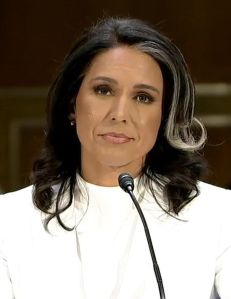

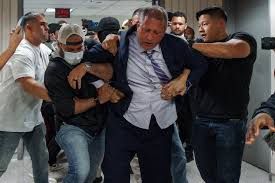



 The Iowan who became part of a viral moment by recently shouting at U.S. Sen. Joni Ernst that “people will die” because of proposed Medicaid cuts is a Democrat who is using the moment to launch a campaign for the Iowa House.
 The Guardian:


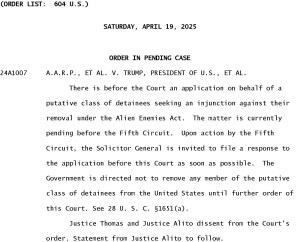





 peej
peej Carissa
 bostonboomer
 dakinikat
 ecocatwoman
 mablue2
 Mama Lopez
 peggysue22
 quixote
 skydancingguestblogger
 Mona (aka Wonk the Vote)



 Sky Dancing
Recent Comments