Negotiations over the next stimulus package intended to bolster the economy and help struggling Americans pay their bills have stalled on Capitol Hill with Democrats and Trump administration officials walking away after talks broke down on Friday and devolved into partisan finger-pointing.
At a hastily scheduled news conference at his Bedminster, New Jersey, golf club Friday evening, President Donald Trump laid out the executive actions he said he would pursue if Congress does not reach a deal.
No additional discussions are planned after nearly two weeks of daily meetings, and lead White House negotiators Mark Meadows and Treasury Secretary Steve Mnuchin said they were recommending Trump move ahead with a series of executive orders.
Trump said Friday the actions would include a payroll tax deferment, extending unemployment benefits, extending an eviction moratorium and deferring student loan payments and forgiving their interest.
It’s not at all clear to me that any of this would be legal, especially cutting the payroll tax, which would starve Social Security and Medicare. Trump is obviously dying to do that. Back to the CNN story:
Cher
Trump said “they’re talking about” deferring the payroll tax until the end of the year. “And I can extend it at a certain period … and it will be retroactive until July 1,” he said. “I’m going to enhance unemployment benefits through the end of the year,” he added, without specifying any amount.
But the executive orders are expected to meet fierce resistance from Democrats who plan to challenge them in court. Democrats warn that executive action taken will be insufficient to address the extent of the economic and public health crisis faced by Americans during the pandemic.
This isn’t a far-off problem that retirees’ grandchildren would face. If this economic downturn is as bad as the Great Recession a decade ago, then the Social Security trust funds could run out of money in 2029, according to the Bipartisan Policy Center. After that, beneficiaries could see a 31% cut in retirement payments.
The program’s trustees had projected earlier this year that the trust funds would be depleted in 2035, but that did not take the coronavirus pandemic into account.
It would be the first time the estimated insolvency date was within a decade since the crisis of the 1980s, which prompted several changes, including raising the retirement age, said Shai Akabas, the center’s director of economy policy.
“An already urgent situation has become even more pressing,” Akabas said, noting the severe drop in payroll tax revenue. “We expect that that trend is going to continue for many years as it takes the labor market to recover.”
“Trump’s scheme would weaken the Social Security and Medicare trust funds by diverting the revenue from the employee portion of Social Security and Medicare taxes, and potentially the employer’s share of Medicare taxes, from the programs’ trust funds,” the memo from the Center for American Progress said.
Earlier this year, Congress deferred the employer-portion of the Social Security tax (6.2%) through 2022 under the CARES Act. But they replaced the lost money with an infusion of general Treasury funds.
Trump, the memo said, lacks the authority to appropriate funds, which is Congress’s purview.
Many economists say that implementing a payroll tax cut through an executive order wouldn’t lead to a bump in wages for most workers, since the executive branch can only defer tax payments up to a year and not forgive them. Wiping out the payment requires Congress to act.
Legally, employers remain on the hook for any delayed payment. Firms would likely keep the money since they fear being saddled with a hefty tax bill if Congress didn’t move to forgive it.
Obviously, the fact that this would be illegal won’t stop Trump from trying it.
Paul Krugman weighs in on the economic crisis we face: Coming Next: The Greater Recession. Krugman argues that without a second stimulus package being enacted very soon the economy is going to get much worse.
I’m not sure how many people realize just how much deeper the coronavirus recession of 2020 could have been. Obviously it was terrible: Employment plunged, and real G.D.P. fell by around 10 percent. Almost all of that, however, reflected the direct effects of the pandemic, which forced much of the economy into lockdown.
Ava Gardner, 1946
What didn’t happen was a major second round of job losses driven by plunging consumer demand. Millions of workers lost their regular incomes; without federal aid, they would have been forced to slash spending, causing millions more to lose their jobs. Luckily Congress stepped up to the plate with special aid to the unemployed, which sustained consumer spending and kept the nonquarantined parts of the economy afloat.
Furthermore, evidence from austerity policies a decade ago suggests a substantial “multiplier” effect, as spending cuts lead to falling incomes, leading to further spending cuts.
Put it all together and the expiration of emergency aid could produce a 4 percent to 5 percent fall in G.D.P. But wait, there’s more. States and cities are in dire straits and are already planning harsh spending cuts; but Republicans refuse to provide aid, with Trump insisting, falsely, that local fiscal crises have nothing to do with Covid-19.
Bear in mind that the coronavirus itself — a shock that came out of the blue, though the United States mishandled it terribly — reduced G.D.P. by “only” around 10 percent. What we’re looking at now may be another shock, a sort of economic second wave, almost as severe in monetary terms as the first. And unlike the pandemic, this shock will be entirely self-generated, brought on by the fecklessness of President Trump and — let’s give credit where it’s due — Mitch McConnell, the Senate majority leader.
In other news, Chief Justice John Roberts is showing his true colors when it comes to abortion.
Soon, if a rape victim in Arkansas wants an abortion, she'll have to notify her rapist first. If a minor wants an abortion, her name will be sent to the local police. Medication abortions will be effectively outlawed.
The Supreme Court’s recent decision in June Medical v. Russo was hailed by many liberal court watchers as a win for reproductive rights, as the court declined to overturn Roe v. Wade and formally eliminate the right to an abortion. On Friday, however, a federal appeals court ruled that June Medical significantly narrowed the constitutional right to abortion access. The 8th U.S. Circuit Court of Appeals panel swept away an injunction that had blocked Arkansas from enforcing a slew of abortion restrictions, including a requirement that patients pregnant as a result of rape notify their rapists before terminating their pregnancy. The appellate court’s decision confirms that Chief Justice John Roberts’ controlling opinion in June Medical will serve as a tool to eviscerate abortion rights. Those who briefly heralded him as a champion of reproductive freedom were too caught up in the halftime show to see the game.
Olivia de Havilland
Friday’s ruling in Hopkins v. Jegley greenlights four Arkansas regulations passed in 2017. The first of these laws requires clinics to report the names of abortion patients under 18 to local law enforcement. These clinics must then preserve the fetal tissue and treat it like criminal evidence. The second law forces abortion providers to spend “reasonable time and effort” acquiring a patient’s medical records for her “entire pregnancy history” before performing the abortion. The third law grants equal rights over fetal remains to both partners, with no exception in cases of rape. A patient must notify her partner before the abortion and ask which method of disposal he prefers. If both partners are minors, the patient’s parents get to decide how fetal remains are disposed of. If the patient is a minor but her partner is an adult, then he—not the patient—makes the choice. These rules effectively prohibit medication abortion, which occurs at home, where the provider cannot control the disposal of fetal remains. The fourth and final law bans the safest and most common procedure for second-trimester abortions.
Abortion rights advocates challenged this legislation, arguing that they impose an unconstitutional burden on abortion access. A federal district court agreed in 2017, and blocked the new regulations. In Friday’s decision, three Republican-appointed judges on the 8th Circuit cleared away that injunction. The lower court had analyzed the laws under Whole Woman’s Health v. Hellerstedt, the 2016 Supreme Court decision that required courts to weigh the medical benefits of an abortion restriction against its burdens. But the Supreme Court’s decision last month in June Medical, the 8th Circuit wrote, overturned that standard.
One more story, just for laughs: Jerry Falwell Jr. was forced out of his job as president of Liberty University because of that photo he posted of himself with his pants unzipped and his arm around a woman with her pants also unzipped. Politico: Falwell placed on ‘indefinite leave’ from Liberty University.
Jerry Falwell Jr., one of President Donald Trump’s leading evangelical supporters, has agreed to take “an indefinite leave of absence” from his role as president of Liberty University after the release of a viral photo that showed him vacationing on a yacht with his pants unzipped, holding a drink, and with his arm around a woman.
Lauren Bacall
“The Executive Committee of Liberty University’s Board of Trustees, acting on behalf of the full Board, met today and requested that Jerry Falwell, Jr. take an indefinite leave of absence from his roles as President and Chancellor of Liberty University, to which he has agreed, effective immediately,” the university said in a statement on Friday.
The decision came a day after a top House Republican called on Falwell to resign as president of the large Christian school. Rep. Mark Walker of North Carolina, the vice chair of the House Republican Conference and a former pastor, said that Falwell’s “ongoing behavior is appalling.”
Falwell earlier in the week was widely condemned, including by some conservatives, for posting and then deleting the yacht vacation photo. Liberty University has a strict code of conduct for students that, among other things, prohibits students from having sexual relations outside of a “biblically-ordained” marriage and consuming media with lewd lyrics, sexual content and nudity.
Students on Liberty’s campus are forbidden from drinking alcohol, and are instructed to dress modestly. A poster on Reddit compiled Falwell Jr.’s potential violations in the yacht photograph and an accompanying video, and calculated that a student captured in the same scene could have accrued more than $9,000 in school fines and 900 hours of required service, and possible expulsion.
Faculty and alumni who have been critical of the school’s direction under Falwell Jr. were both shocked and gratified by the news of his leave of absence. “For at least a decade, Liberty’s faculty have labored under Falwell’s increasingly autocratic leadership and been shamed by his public behavior besides,” said Marybeth Davis Baggett, who taught English at Liberty for 17 years and resigned this spring after publishing an op-ed calling for Falwell Jr.’s removal based on his handling of the coronavirus crisis. “One man cannot act this way without many enablers, and any meaningful reform of the school will require a thorough and brutally honest inquiry into the LU culture.”
Jane Fonda, photo by Genevieve Naylor, 1962
Falwell Jr., a businessman with a law degree and no pastoral experience, took over the college when his father died in 2007. He has built the school into a sports powerhouse with a campus filled with luxury amenities, and conservative activists and politicians regularly speak there. The school now boasts more than 15,000 residential students, and more than 100,000 students online.
But Liberty has also been under almost constant national scrutiny since Falwell Jr. endorsed Donald Trump in early 2016, months earlier than other white evangelical leaders embraced the crude casino magnate’s candidacy. Falwell Jr. began 2020 by calling for parts of Virginia to secede from the state and join West Virginia. As the coronavirus crisis encroached, Falwell Jr. initially dismissed it as “hype,” and called a Liberty parent who questioned him on Twitter a “dummy.” He was then criticized for welcoming back any students who wanted to return to campus after spring break. (Fewer than 2,000 of 15,000 residential students ultimately returned, and Liberty has avoided any outbreaks.) In May, Falwell Jr. tweeted a racist image in an attempt to needle Virginia governor Ralph Northam. He eventually deleted the tweet and apologized, but multiple Black employees publicly quit their jobs soon afterward; several high-profile Black athletes also departed. None of these media dust-ups seemed to dent Falwell Jr.’s favorability in the eyes of his hand-picked board of trustees.
There’s much more at the link if you’re interested.
So everything is still FUBAR, but as Dakinikat wrote yesterday, we can still be kind to ourselves and support each other through these terrifying times. As I learned in my recovery from alcoholism, it always helps to live one day at a time. We’re still here, and there’s still a chance we can rid ourselves of Trump and somehow hold onto and rebuild our democracy.
Did you like this post? Please share it with your friends:
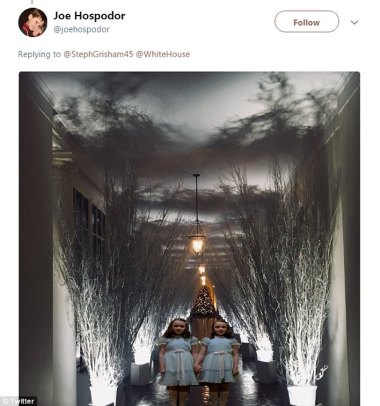
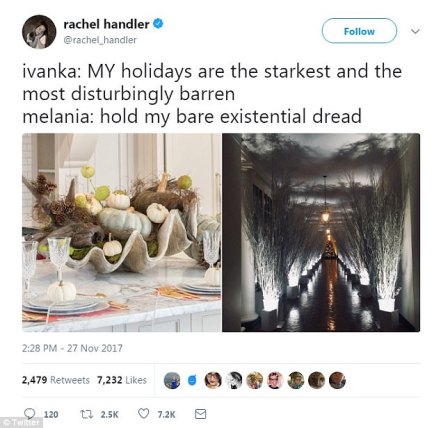
It’s cold. It’s sleeting. It’s gray. It snowed in Baton Rouge and a few places north of Lake Pontchartrain. I’m officially in and over winter. I can’t seem to get warm. I can’t warm up to anything going on in this country either. I’m sending a dear friend to check out a property on Key Peninsula at least 20 miles from most forms of civilization. There’s a wine store, a dispensary, and a Japanese-owned grocery shop/cafe close with foodstuff. Other than that I’ll have tall trees, a lake, and JoEmma State Park. This one is way doable so I’m hopeful I can head to the blue wall of safety. Oh, and a working fireplace/stove. It’s as bleak as the White House Holiday Decorations or Siberia right now. Take your choice.
Nearly two-thirds of Trump’s lies (65 percent) were self-serving. Examples included: “They’re big tax cuts — the biggest cuts in the history of our country, actually” and, about the people who came to see him on a presidential visit to Vietnamlast month: “They were really lined up in the streets by the tens of thousands.”
Slightly less than 10 percent of Trump’s lies were kind ones, told to advantage, flatter or protect someone else. An example was his statement on Twitter that “it is a ‘miracle’ how fast the Las Vegas Metropolitan Police were able to find the demented shooter and stop him from even more killing!”In the broadest sense, it is possible to interpret every lie as ultimately self-serving, but I tried to stick to how statements appeared on the surface.
Trump told 6.6 times as many self-serving lies as kind ones. That’s a much higher ratio than we found for our study participants, who told about double the number of self-centered lies compared with kind ones. The most stunning way Trump’s lies differed from our participants’, though, was in their cruelty. An astonishing 50 percent of Trump’s lies were hurtful or disparaging. For example, he proclaimed that John Brennan, James Clapper and James Comey, all career intelligence or law enforcement officials, were “political hacks.” He said that “the Sloppy Michael Moore Show on Broadway was a TOTAL BOMB and was forced to close.” He insisted that other “countries, they don’t put their finest in the lottery system. They put people probably in many cases that they don’t want.” And he claimed that “Ralph Northam, who is running for Governor of Virginia, is fighting for the violent MS-13 killer gangs & sanctuary cities.”
The Trump lies that could not be coded into just one category were typically told both to belittle others and enhance himself. For example: “Senator Bob Corker ‘begged’ me to endorse him for reelection in Tennessee. I said ‘NO’ and he dropped out (said he could not win without my endorsement).”
The sheer frequency of Trump’s lies appears to be having an effect, and it may not be the one he is going for. A Politico/Morning Consult poll from late October showed that only 35 percent of voters believed that Trump was honest, while 51 percent said he was not honest. (The others said they didn’t know or had no opinion.) Results of a Quinnipiac University poll from November were similar: Thirty-seven percent of voters thought Trump was honest, compared with 58 percent who thought he was not.
What’s the problem? The other day Senator Orrin Hatch, asked about the program (which he helped create), once again insisted that it will be funded — but without saying when or how (and there don’t seem to be any signs of movement on the issue). And he further declared, “The reason CHIP’s having trouble is that we don’t have money anymore.” Then he voted for an immense tax cut.
And one piece of that immense tax cut is a big giveaway to inheritors of large estates. Under current law, a married couple’s estate pays no tax unless it’s worth more than $11 million, so that only a handful of estates — around 5,500, or less than 0.2 percent of the total number of deaths a year — owe any tax at all. The number of taxable estates is also, by the way, well under one one-thousandth of the number of children covered by CHIP.
But Republicans still consider this tax an unacceptable burden on the rich. The Senate bill would double the exemption to $22 million; the House bill would eliminate the estate tax entirely.
So now let’s talk dollars. CHIP covers a lot of children, but children’s health care is relatively cheap compared with care for older Americans. In fiscal 2016 the program cost only $15 billion, a tiny share of the federal budget. Meanwhile, under current law the estate tax is expected to bring in about $20 billion, more than enough to pay for CHIP.As you see, then, my question wasn’t at all hypothetical. By their actions, Republicans are showing that they consider it more important to give extra millions to one already wealthy heir than to provide health care to a thousand children.
The new acting head of the U.S. consumer finance watchdog is reviewing whether Wells Fargo & Co (WFC.N) should pay tens of millions of dollars over alleged mortgage lending abuse, according to three sources familiar with the dispute.
The San Francisco-based bank said in October that it would refund homebuyers who were wrongly charged fees to secure low mortgage rates – a black mark against a lender which has already been roiled by scandal over its treatment of customers.
The Consumer Financial Protection Bureau (CFPB) had been investigating the mortgage issue since early this year, said one current and two former officials. The agency accepted an internal review from Wells Fargo and set settlement terms in early November, said the sources, who were not authorized to speak about internal discussions.
But that matter and roughly a dozen others are in question now that Mick Mulvaney, the agency chief tapped by President Donald Trump, has said he is reviewing the CFPB’s prior work.
Richard Cordray, the former CFPB director who initiated the Wells Fargo action, approved the terms of a possible settlement before stepping down, said the sources.
That proposal envisions a Wells Fargo payout of tens of millions of dollars but likely short of the record, $100 million payout the bank made to the CFPB last year over a phony accounts scandal, sources said.
The Justice Department is taking steps to investigate Planned Parenthood, The Daily Beast has learned.
The head of Justice’s office of legislative affairs has sent a letter to the Senate Judiciary Committee asking for documents from its investigation of Planned Parenthood’s fetal tissue practices. The Daily Beast reviewed the letter, which says the requested documents are “for investigative use.”
Planned Parenthood for America did not immediately respond to a request for comment for this story. The organization’s website says that only a few of its affiliates share fetal tissue with researchers, and that criticisms of the practice are a “smear campaign.” In October 2015, after undercover videos highlighting Planned Parenthood’s fetal tissue programs generated outrage, the organization announced it would stop accepting any reimbursement from researchers for fetal tissue.
The Justice Department’s request refers to a report that the Senate Judiciary Committee Republicans released last December, called “Human Fetal Tissue Research: Context and Controversy.” That report discusses how biomedical research corporations contracted with Planned Parenthood affiliates for fetal tissue. It mentioned contracts between those corporations and several Planned Parenthood affiliates, including Planned Parenthood of the Pacific Southwest, Planned Parenthood Mar Monte, and Planned Parenthood of Northern California. The report detailed the “specimen service fees” that biomedical researchers charged for tissue from a 20-week-old fetus –– $325 for a fetus’s brain, $650 for two eyes –– and questioned whether the biomedical research corporations ultimately profited from their disbursement of fetal tissue. It called for the Justice Department to investigate the matter.
At the time, Planned Parenthood said Grassley’s report did not demonstrate any wrongdoing.
Next up on the Republican Agenda, availability of tax dollars to train clergy and republican candidates on proper ways to stalk children and assault women.
The UN Security Council has convened an emergency session to discuss Donald Trump’s recognition of Jerusalem as the capital of Israel, a move that has led to deadly clashes in Palestine and strong condemnation from world leaders.
Eight countries called for the emergency meeting at the UN headquarters in New York on Friday, as Palestinians protested across the West Bank, Jerusalem and Gaza Strip against the US president’s decision throughout the day.
Several countries resoundly condemned the US’ unilateral move to recognise Jerusalem as Israel’s capital, including Olof Skoog, Sweden’s UN ambassador, who said the decision is fuelling tension and instability in the region.
Trump’s declaration “goes against the plea of many friends of the US and Israel, however it does not affect the position of Sweden, the European Union or the wider international community” on the status of Jerusalem, said Skoog.
Clashes erupted in the occupied West Bank and over the Israeli-Gaza border, where one Palestinian was killed.
Tensions are high in the wake of Mr Trump’s announcement. His policy shift was hailed by Israel but condemned across the Arab and Islamic world.
The UN’s Middle East envoy warned of a risk the conflict would escalate.
“There is a serious risk today that we may see a chain of unilateral actions, which can only push us further away from achieving our shared goal of peace,” Nickolay Mladenov told an emergency UN Security Council meeting, by videocall from Jerusalem.
He called on all parties to engage in “constructive dialogue” and “reign in radical elements”.
While the meeting was going on, the Israeli army said it had intercepted a rocket launch from Gaza, but there had been “no casualties and no damage”.
Western allies of the US have disavowed Mr Trump’s move, which reversed decades of US neutrality on the status of Jerusalem.
Israel has always regarded Jerusalem as its capital, while the Palestinians claim East Jerusalem – occupied by Israel in the 1967 war – as the capital of a future Palestinian state.
The US became the first country to recognise Jerusalem as Israel’s capital since the foundation of the state in 1948.
After the White House and U.S. Ambassador to the United Nations weighed in this week on the United States’ participation in the 2018 Winter Olympics, the U.S. State Department joined the discussion on Friday.
State Department spokesperson Heather Nauert tweeted Friday morning: “We have a longstanding and successful relationship with the Republic of #Korea. We support their efforts to ensure that a safe and successful winter games will take place. We look forward to cheering on @Team USA at #PyeongChang2018.”
Ambassador Nikki Haley on Wednesday appeared on Fox News and said it was an “open question” as to whether U.S. Olympic athletes would compete in Pyeongchang, South Korea, in February.
On Thursday, White House spokesperson Sarah Huckabee Sanders sent mixed signals, first saying at a press briefing that, “no official decision has been made” but, “I know that the goal is to do so.” Within the hour, Sanders posted an update on Twitter, writing that, “The U.S. looks forward to participating in the Winter Olympics in South Korea. The protection of Americans is our top priority and we are engaged with the South Koreans and other partner nations to secure the venues.”
My guess he’s doing to be in solidarnost with his boy crush Putin.
In recent years, as high rates of maternal mortality in the U.S. have alarmed researchers, one statistic has been especially concerning. According to the CDC, black mothers in the U.S. die at three to four times the rate of white mothers, one of the widest of all racial disparities in women’s health. Put another way, a black woman is 22 percent more likely to die from heart disease than a white woman, 71 percent more likely to perish from cervical cancer, but 300 percent more likely to die from pregnancy- or childbirth-related causes. In a national study of five medical complications that are common causes of maternal death and injury, black women were two to three times more likely to die than white women who had the same condition.
That imbalance has persisted for decades, and in some places, it continues to grow. In New York City, for example, black mothers are 12 times more likely to die than white mothers, according to the most recent data; in 2001-2005, their risk of death was seven times higher. Researchers say that widening gap reflects a dramatic improvement for white women but not for blacks.
The disproportionate toll on African-Americans is the main reason the U.S. maternal mortality rate is so much higher than that of other affluent countries. Black expectant and new mothers in the U.S. die at about the same rate as women in countries such as Mexico and Uzbekistan, the World Health Organization estimates.
This is appalling and policy must be swift to change this.
Red flag warnings have been extended across much of Southern California through Saturday, and high wind warnings are in effect for mountain and valley areas in Los Angeles and Ventura counties.
Winds gusted to over 60 mph in Ventura and Los Angeles counties on Thursday, causing embers to spread even more. Gusts were in the 30 to 50 mph range in San Diego County. Much of Southern California is also experiencing humidity levels in the teens or even single digits. Relative humidity in San Diego on Thursday afternoon was just 5 percent.
They will likely join Puerto Rico and the Virgin Islands as forgotten Americans. Welcome to Dystopia! Welcome to our post-Orwellian nightmare!
What’s on your reading and blogging list today?
Did you like this post? Please share it with your friends:
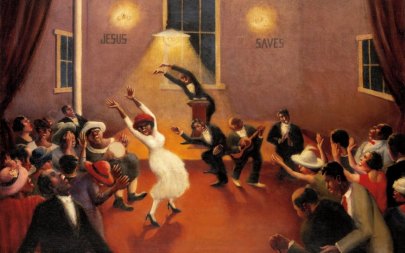
Just practicing my rusty college Russian which I’ve mostly forgotten so I’ll be able to keep up when they send me to the gulag for the intelligentsia. My selection of paintings today are from Archibald Motley who painted Black Americans during the jazz age. I’m celebrating uniquely American creativity while I can too … none of this derivative crap like the likes of Kid Rock who delivers ripped off riffs to his meth-headed mofos.
Though Motley received a full scholarship to study architecture at the Armour Institute of Technology (now the Illinois Institute of Technology) and though his father had hoped that he would pursue a career in architecture, he applied to and was accepted at the School of the Art Institute of Chicago, where he studied painting. In 1917, while still a student, Motley showed his work in the exhibition Paintings by Negro Artists held at a Chicago YMCA. That year he also worked with his father on the railroads and managed to fit in sketching while they traveled cross-country.
Upon graduating from the Art Institute in 1918, Motley took odd jobs to support himself while he made art. An idealist, he was influenced by the writings of black reformer and sociologist W.E.B. Du Bois and Harlem Renaissance leader Alain Locke and believed that art could help to end racial prejudice. At the same time, he recognized that African American artists were overlooked and undersupported, and he was compelled to write “The Negro in Art,” an essay on the limitations placed on black artists that was printed in the July 6, 1918, edition of the influential Chicago Defender, a newspaper by and for African Americans. The long and violent Chicago race riot of 1919, though it postdated his article, likely strengthened his convictions.
Motley was a WPA painter during the Great Depression. One of his murals hangs in the post office of Wood River Illinois. Wood River is part of the Greater St. Louis area. It’s painted in a distinctly different style from the beautiful, brightly colored paintings with so much energy that I’ve posted here.
The letter is signed by electors from five states and the District of Columbia. In addition to Christine Pelosi — a California elector — it includes a signature from one former members of Congress: New Hampshire’s Carol Shea-Porter.
Shea-Porter’s three other New Hampshire colleagues — Terie Norelli, Bev Hollingsworth and Dudley Dudley — also signed the letter. D.C. Councilwoman Anita Bonds, former Rhode Island gubernatorial candidate Clay Pell and Maryland activist Courtney Watson round out the nine Democratic signatories. Colorado Democratic elector Micheal Baca, leader of an effort to turn the Electoral College against Trump, is also on the list. Texas’ Chris Suprun, an emergency responder who has been a vocal critic of Trump, is the only Republican elector to sign on.
“Yes, we the Electors should have temporary security clearance to perform our constitutional duty in reviewing the facts regarding outside interference in the US election and the intelligence agencies should declassify as much data as possible while protecting sources and methods so that the American people can learn the truth about our election,” said Pelosi.
Though the letter doesn’t explicitly endorse a separate effort by electors in Colorado, Washington and California to stop Trump from winning the presidency, it represents the latest effort by Democratic electors to look to the Electoral College as a possible bulwark against a Trump presidency. The letter follows on the heels of two Democratic congressmen — David Cicilline of Rhode Island and Jim Himes of Connecticut — who suggested this weekend that the Electoral College should consider whether to block Trump’s election.
Hillary Clinton, her top advisers and former President Bill Clinton, who’s an elector from New York, have remained notably silent on the various Electoral College machinations.
Van Jones is now running a PR firm that is dead set on defeating Trump in the Electoral College. That’s right, Van Jones is actively courting Republican electors to vote against Trump on December 19th.
The firm, called Megaphone Strategies, is currently handling all media inquiries for the first official anti-Trump elector Chris Suprun. But the firm is also in working with other Republican electors, so while Trump has been helping his billionaire friends Van Jones has been raising an anti-Trump “army.”
“Tight around Trump is a little hate army — not every Trump voter — but tight around him is a little hate army of very cynical, nasty people who took over our government,” Jones said. “We have to build a massive Love Army that can take the country and the government back in a better direction.”
Senate Majority Leader Mitch McConnell (R-Ky.) on Monday said recent findings by the CIA that the Russian government tied to influence the U.S. presidential election should be investigated by the Senate Intelligence Committee.
Calling the allegations of Russian meddling “disturbing,” McConnell said the intelligence panel should take the lead, dismissing calls by Sen. John McCain (R-Ariz.) and others for a special select committee to review the matter.
He said the Intelligence Committee is “more than capable of conducting a complete review of this matter.”
“We’re going to follow the regular order. It’s an important subject and we intend to review it on a bipartisan basis,” he said.
McConnell noted that he sits on the panel as an ex officio member and that incoming Senate Democratic Leader Charles Schumer (N.Y.) will soon join it in the same capacity.
He also said that McCain will be conducting his own review of cybersecurity threats facing the nation as chairman of the Armed Services Committee.
“Sen. McCain and Sen. Burr will both be looking at this issue and doing it on a bipartisan basis,” he said, referring to Senate Intelligence Committee Chairman Richard Burr (R-N.C.).
Jason Miller, a spokesman for President-elect Donald Trump, said he was unsure of the last time Trump and McConnell spoke, but dismissed efforts to investigate Russian interference in the election as coming from “people who are bitter their candidate lost.”
Ambassador John Bolton claimed Sunday that hacks during the election season could have been “a false flag” operation — possibly committed by the Obama administration itself.
In an interview with Fox News’ Eric Shawn, Bolton questioned why FBI Director James Comey said during the investigation of Hillary Clinton’s private server, there was no direct evidence found of foreign intelligence service penetration, but cyber fingerprints were found in regards to the presidential election.
This entire story and the weird conspiracy theories are unfolding minute by minute. Paul Krugman’s Op ed on the “Tainted Election” is a must read.
The C.I.A., according to The Washington Post, has now determined that hackers working for the Russian government worked to tilt the 2016 election to Donald Trump. This has actually been obvious for months, but the agency was reluctant to state that conclusion before the election out of fear that it would be seen as taking a political role.
Meanwhile, the F.B.I. went public 10 days before the election, dominating headlines and TV coverage across the country with a letter strongly implying that it might be about to find damning new evidence against Hillary Clinton — when it turned out, literally, to have found nothing at all.
Did the combination of Russian and F.B.I. intervention swing the election? Yes. Mrs. Clinton lost three states – Michigan, Wisconsin, and Pennsylvania – by less than a percentage point, and Florida by only slightly more. If she had won any three of those states, she would be president-elect. Is there any reasonable doubt that Putin/Comey made the difference?
And it wouldn’t have been seen as a marginal victory, either. Even as it was, Mrs. Clinton received almost three million more votes than her opponent, giving her a popular margin close to that of George W. Bush in 2004.
So this was a tainted election. It was not, as far as we can tell, stolen in the sense that votes were counted wrong, and the result won’t be overturned. But the result was nonetheless illegitimate in important ways; the victor was rejected by the public, and won the Electoral College only thanks to foreign intervention and grotesquely inappropriate, partisan behavior on the part of domestic law enforcement.
The CIA only shared its latest findings with top senators last week, the Postreported, but it’s not clear when the agency made the determination. In an interview with MSNBC on Saturday, however, Senate Democratic Leader Harry Reid—who is known for making bold accusations—said FBI Director Jim Comey has known about Russia’s ambitions “for a long time,” but didn’t release that information.
If that’s true, why didn’t the Obama administration push to release it earlier?
For one, the White House was probably afraid of looking like it was tipping the scale in Hillary Clinton’s favor, especially in an election that her opponent repeatedly described as rigged. Though Obama stumped for Clinton around the country, the administration didn’t want to open him up to attacks that he unfairly used intelligence to undermine Trump’s campaign, the Post reported.
Instead, top White House officials gathered key lawmakers—leadership from the House and Senate, plus the top Democrats and Republicans from both houses’ intelligence and homeland security committees—to ask for a bipartisan condemnation of Russia’s meddling. The effort was stymied by several Republicans who weren’t willing to cooperate, including, reportedly, Senate Majority Leader Mitch McConnell. (On Sunday morning, a bipartisan statement condemning the hacks came from incoming Senate Minority Leader Chuck Schumer, Jack Reed, a Democrat, and Republicans John McCain and Lindsey Graham.)
It’s also possible that the administration, like most pollsters and pundits, was overconfident in its assessment that Clinton would win the election. Officials may have been more willing to lob incendiary accusations—and risk setting off a serious political or cyber conflict with Russia—if they had thought Trump had a good chance to win.
The silence from the White House and the CIA was a stark contrast to the Comey’s announcement just weeks before the election that it was examining new documents related to its investigation into Clinton’s emails.
I’m still really upset and I’m just going moment by moment and day by day. How can this being happening to us?
What’s on your reading and blogging list today?
Did you like this post? Please share it with your friends:
It took me awhile today to get going so I’m a little later on this than usual. Miles snuck outside for a big adventure late last night and I got rather clawed up trying to bring him back in. He’s a total love bug and not usually like that but he drew blood and it was not fun. Today, he’s back to his genial self but sometimes when his blood sugar gets a little out of whack from the diabetes he can get mighty testy about things. My animals are not outdoor animals so I freak when any of them gets loose. My left hand is pretty shredded up and bruised so using a keyboard is not very comfortable for me and sleeping was difficult last night. So, any way blame this late, short post on feisty old Miles. He’s got me sleepy and cranky today.
I really enjoyed Paul Krugman’s blog today on the Pastrami Principle. I could tell from the comments that a lot of Bernie supporters were bristling at the comparison between Bernie’s continual discounting of Southern Democratic Primary voters to that kind of description that comes from also-ran right wing populist Sarah Palin and her choice for President for 2016, Donald Trump.
As Krugman points out, Sanders is trying to make an argument for Super Delegates to discount the popular vote which shows Clinton way ahead. He is doing this on the back of Southern Democrats. This is the second time he’s done this which is why it’s the second time I’m blogging about it.
But how can the campaign make the case that the party should defy the apparent will of its voters? By insisting that many of those voters shouldn’t count. Over the past week, Mr. Sanders has declared that Mrs. Clinton leads only because she has won in the “Deep South,” which is a “pretty conservative part of the country.” The tally so far, he says, “distorts reality” because it contains so many Southern states.
As it happens, this isn’t true — the calendar, which front-loaded some states very favorable to Mr. Sanders, hasn’t been a big factor in the race. Also, swing-state Florida isn’t the Deep South. But never mind. The big problem with this argument should be obvious. Mrs. Clinton didn’t win big in the South on the strength of conservative voters; she won by getting an overwhelming majority of black voters. This puts a different spin on things, doesn’t it?
Is it possible that Mr. Sanders doesn’t know this, that he imagines that Mrs. Clinton is riding a wave of support from old-fashioned Confederate-flag-waving Dixiecrats, as opposed to, let’s be blunt, the descendants of slaves? Maybe. He is not, as you may have noticed, a details guy.
It’s more likely, however, that he’s being deliberately misleading — and that his effort to delegitimize a big part of the Democratic electorate is a cynical ploy.
You should read the entire Op Ed and notice the comments of folks that think Krugman is out of line by comparing the tactics of the left wing populist to his right wing equivalents. The denial runs deep in the Bernie crowd, but as I’ve blogged before, this has incredible racist overtones since he doesn’t discount the white outbacks that he’s won–like Wyoming, Nebraska, Oklahoma, etc–as not being representative. He prefers to characterize Southern Democrats only. It drives me nuts.
Those of us that watched the Brooklyn Democratic Debate last night saw the campaign conversation get nasty. I was glad to see Hillary hitting back and I have to say that despite pundits calling the debate a tie, I found her to be absolutely presidential. She was tough and called him out on his constant hypocritical charges and his lies. This is Rebecca Traister writing for NYMAG.
Oh my god, make it stop.
But it isn’t stopping, because Thursday brought Democrats, including me, our fondest wish and dream: another debate!
And from the start it was clear that this whole civil, respectful race had just deteriorated into some kind of nerdy Punch & Judy show, in which everyone screamed at each other, and over each other (and over the moderators) about 501c4s and Dodd Frank.
No, it was not all bad. Even though the crowd was bellowing with the vigor of their Republican brethren, Sanders and Clinton remained high-minded about the content of their debate, and managed to have some meaningful, if nasty, exchanges. On foreign policy, usually a weak spot, Sanders found a revelatory new groove, offering groundbreaking words about the value of Palestinian lives, and our moral responsibility to question Israeli leadership. His remarkable, electorally risky rhetoric was undercut somewhat by the fact that hours before the debate, Sanders had suspended Simone Zimmerman, the Jewish Outreach coordinator whose hiring had been announced just two days earlier, after reports that she had used vulgar language in reference to Benjamin Netanyahu. It was a move, in response to pressure from conservative pro-Israeli groups, that did not allay fears that as president, Sanders’s stated resolve to implement idealistic policy measures might wither quickly in the face of Republican opposition. Still, Bernie was really great on Palestine.
Meanwhile, in a discussion about guns, Clinton pussy-footed around her silly “per capita” line about guns pouring out of Vermont into New York (yep, @ItTakesAVillage92, I know it is technically correct; it is also lame), but did effectively lay into Sanders on his actually crappy stance on guns. Pointing to the fact that her opponent often laments the greed and recklessness of Wall Street, Clinton asked compellingly, “What about the greed and recklessness of gun manufacturers in America?”
Clinton also managed, almost two hours into this interminable thing, to bring up the concentrated attack on reproductive rights across America, a topic that has not been raised in any of the season’s debates so far, earning her a lot of enthusiastic applause and energetic engagement from Sanders on the topic before Dana Bash cut them off to talk some more about meaningless general-election polling.
But all this interesting stuff was hidden in two hours of yelling. Of “YUUGE” jokes and overcooked lines about “before there was Obamacare there was Hillarycare” and excuses about how Jane does the taxes, which makes them very inaccessible when really, guys, it’s been weeks; you can get someone to dig up copies of the tax returns. All that was good was buried beneath a sheen of rancor, culminating perhaps with Sanders circling around his campaign’s current strategic argument that Hillary’s lead in pledged delegates (and votes, and number of states won) is illegitimate because her victories were so decisive in southern states. “Secretary Clinton cleaned our clock in the Deep South,” said Bernie. “We got murdered there. That is the most conservative part of this great country … But you know what, we’re out of the Deep South now. And we’re moving up.” Putting aside the fact that Clinton’s wins have also come in Massachusetts, Florida, and the Midwest, Bernie’s seeming scorn for voters in southern states, who broke for Clinton perhaps not out of conservatism, but because she has so far done a far better job of reaching black voters, was a low point.
Yes, he went there again about us Southern Democrats right there in Brooklyn on CNN in front of every one watching. I belong to a discussion group on Facebook called American Minorities for Hillary. It’s a very diverse group of minorities to include just about every category possible. I posted the same link to that board as I did down in the comments yesterday which is the second set of analysis from Maddow Blog and Steve Benen on Bernie’s comments. I can unequivocally state that all the Southern Democrats on the board of all shapes and sizes along with a lot of others recognized the tweet of a racist dog whistle.
Bernie Sanders told “Nightly Show” host Larry Wilmore at a taping Wednesday evening that scheduling Southern states early in the Democratic primary “distorts reality.” […]
“Well, you know,” Sanders said, “people say, ‘Why does Iowa go first, why does New Hampshire go first,’ but I think that having so many Southern states go first kind of distorts reality as well.”
Iowa and New Hampshire go first. Then, Nevada. Tell me how those states represent the diversity that is this country. South Carolina goes 4th. Again, are voters in Kansas, Idaho and Utah and more representative? This is why I’m glad the extremely diverse state of New York goes next. You notice he never mentions that he lost Massachusetts which is probably one of the top five most liberal states in the country and he doesn’t mention he lost Ohio which is a bit of a US microcosm. I’m getting tired of being his whipping boy. He’s not attracting Black voters. He needs to own that and figure out why.
Today’s column offers an opportunity to say, for the record, why I haven’t been the Bernie booster a lot of people apparently expected me to be. For the business about discounting Clinton support as coming from “conservative states” in the “Deep South” actually exemplifies the problem I saw in the Sanders campaign from the beginning, and made me distrust both the movement and the man.
What you see, on this as on multiple issues, is the casual adoption, with no visible effort to check the premises, of a story line that sounds good. It’s all about the big banks; single-payer is there for the taking if only we want it; government spending will yield huge payoffs — not the more modest payoffs conventional Keynesian analysis suggests; Republican support will vanish if we take on corporate media.
In each case the story runs into big trouble if you do a bit of homework; if not completely wrong, it needs a lot of qualification. But the all-purpose response to anyone who raises questions is that she or he is a member of the establishment, personally corrupt, etc.. Ad hominem attacks aren’t a final line of defense, they’re argument #1.
I know some people think that I’m obsessing over trivial policy details, but they’re missing the point. It’s about an attitude, the sense that righteousness excuses you from the need for hard thinking and that any questioning of the righteous is treason to the cause. When you see Sanders supporters going over the top about “corporate whores” and such, you’re not seeing a mysterious intrusion of bad behavior into an idealistic movement; you’re seeing the intolerance that was always just under the surface of the movement, right from the start.
I feel Krugman’s pain. It’s really hard to watch Bernie and his folks go completely off the deep end on what is and isn’t possible on all levels and to ignore the concerns of women, minorities, and the GLBT community by suggesting all of our problems would be solved by closing all the big banks, giving us medicare for all, free college and a $15 minimum wage. Bernie never has solid answers for any of his policies. In that way, he is very much like Palin and Trump. After the ideological rants, there is very little “there there”.
I’ve actually found two somewhat unenthusiastic voters for Bernie that actually sound reasonable about their votes. Their eyes are wide open and they’d reconsider their votes for him in Maryland if it actually looked as though he was going to win. This is an interesting read at TPM.
“He’s not going to get the nomination, is he?” my wife asks anxiously as she gazes out of the kitchen window at the Bernie for President sign on our front lawn. No, I assure her, and he certainly won’t win Maryland on April 26. I’m voting for Bernie, and my wife may, too, but we’re doing so on the condition that we don’t think he will get the nomination. If he were poised to win, I don’t know whether I’d vote for him, because I fear he would be enormously vulnerable in a general election, even against Donald Trump or Ted Cruz, and I’m also not sure whether he is really ready for the job of president.
Why, then, vote for him at all? For me, it’s entirely about the issues he is raising, which I believe are important for the country’s future. Hillary Clinton and her various boosters in the media have made the argument that it’s impractical and even irresponsible to raise a demand like “Medicare for all” and “free public college” that could not possibly get through the next Congress, even if Democrats eke out a majority in the Senate. They presumably want a candidate to offer programs that could be the result of protracted negotiations between a Democratic president and Speaker Paul Ryan – like a two percent increase in infrastructure spending in exchange for a two percent reduction in Medicaid block grants. I disagree with this approach to politics.
I guess a symbolic vote for a symbolic agenda has as much merit as anything I’ve heard from the BernieBro Cult.
So, we have to see what happens on Tuesday. I’m hoping this puts the Sanders campaign to bed for a long summer’s sleep.
What’s on your reading and blogging list today?
Did you like this post? Please share it with your friends:
I’ve been spending the morning getting back up to speed on Health Care Economics which is something I never enjoy but never seem to be unable to avoid. The facts on the ground never change much. What we know about single payer and third party payer systems remains pretty much the same. The only thing that seems to change is the hostility in this country on the subject. I keep having to dredge up the same information over and over with the new twists.
Well, here I go again …
There are three articles that BB sent me this morning that sum up the situation nicely. I’m going to start with those and then finish up by reviewing the mini-case of the failed single payer case in the state of Vermont. I’m not doing this because I don’t think single payer health insurance is a good deal ceteris paribus. It obviously works in other countries. As the Republicans remind us daily, we are not other countries. Theoretically, it provides superior risk sharing and economies of scale on cost. So, my theoretical economist side loves it. My living in America with everything that’s already standing and Republicans who thwart everything at every turn except tax cuts for the wealthy and wars side has a different train of thought.
Yes, it’s time to heal those suffering badly from Berns. I’m going to be in good company because the public wonks are with me on both accounts. We yearn for a simpler, cheaper, more efficient way of paying and getting health care. But, we know the difference between brainstorming and an actionable policy. I’m cursed with a heart longing for idealism but a brain that reins the damn thing in. Bernie Sanders plan really isn’t a plan. It’s a lofty goal.
Sanders calls his plan Medicare-for-All. But it actually has nothing to do with Medicare. He’s not simply expanding Medicare coverage to the broader population — he makes that clear when he says his plan means “no more copays, no more deductibles”; Medicare includes copays and deductibles. The list of what Sanders’s plan would cover far exceeds what Medicare offers, suggesting, more or less, that pretty much everything will be covered, under all circumstances.
Bernie’s plan will cover the entire continuum of health care, from inpatient to outpatient care; preventive to emergency care; primary care to specialty care, including long-term and palliative care; vision, hearing and oral health care; mental health and substance abuse services; as well as prescription medications, medical equipment, supplies, diagnostics and treatments. Patients will be able to choose a health care provider without worrying about whether that provider is in-network and will be able to get the care they need without having to read any fine print or trying to figure out how they can afford the out-of-pocket costs.
Sanders goes on to say that his plan means “no more fighting with insurance companies when they fail to pay for charges.”
To be generous, it’s possible that Sanders is just being cynical in his wording, and what he means is that, under his plan, individuals have to fight with the government rather than private insurers when their claims are denied.
But the implication to most people, I think, is that claim denials will be a thing of the past — a statement that belies the fights patients have every day with public insurers like Medicare and Medicaid, to say nothing of the fights that go on in the Canadian, German, or British health-care systems.
What makes that so irresponsible is that it stands in flagrant contradiction to the way single-payer plans actually work — and the way Sanders’s plan will have to work if its numbers are going to add up.
Behind Sanders’s calculations, both for how much his plan will cost and how much Americans will benefit, lurk extremely optimistic promises about how much money single-payer will save. And those promises can only come true if the government starts saying no quite a lot — in ways that will make people very, very angry.
“They assumed $10 trillion in health-care savings over ten years,” says Larry Levitt, vice president at the Kaiser Family Foundation. “That’s tremendously aggressive cost containment, even after you take the administrative savings into account.”
The real way single-payer systems save money isn’t through cutting administrative costs. It’s through cutting reimbursements to doctors, hospitals, drug companies, and device companies. And Sanders’s gestures towards this truth in his plan, saying that “the government will finally have the ability to stand up to drug companies and negotiate fair prices for the American people collectively.”
But to get those savings, the government needs to be willing to say no when doctors, hospitals, drug companies, and device companies refuse to meet their prices, and that means the government needs to be willing to say no to people who want those treatments. If the government can’t do that — if Sanders is going to stick to the spirit of “no more fighting with insurance companies when they fail to pay for charges” — then it won’t be able to control costs.
Put it this way: for all the talk about being honest and upfront, even Sanders ended up delivering mostly smoke and mirrors — or as Ezra Klein says, puppies and rainbows. Despite imposing large middle-class taxes, his “gesture toward a future plan”, as Ezra puts it, relies on the assumption of huge cost savings. If you like, it involves a huge magic asterisk.
Now, it’s true that single-payer systems in other advanced countries are much cheaper than our health care system. And some of that could be replicated via lower administrative costs and the generally lower prices Medicare pays. But to get costs down to, say, Canadian levels, we’d need to do what they do: say no to patients, telling them that they can’t always have the treatment they want.
Saying no has two cost-saving effects: it saves money directly, and it also greatly enhances the government’s bargaining power, because it can say, for example, to drug producers that if they charge too much they won’t be in the formulary.
But it’s not something most Americans want to hear about; foreign single-payer systems are actually more like Medicaid than they are like Medicare.
And Sanders isn’t coming clean on that — he’s promising Medicaid-like costs while also promising no rationing. The reason, of course, is that being realistic either about the costs or about what the system would really be like would make it a political loser. But that’s the point: single-payer just isn’t a political possibility starting from here. It’s just a distraction from the real issues.
The deal is this. We have entire systems, institutions, and agents that have been functioning under multiple plans for quite some time. This includes Medicaid, Medicare, SCHIP, the VA, and a myriad of private health insurance plans. You just don’t wave a magic wand and expect that all to unwind costlessly and seamlessly. You also don’t expect all those folks to be thrilled about it either or to seamlessly transfer their efforts and resources to a new system. It takes big money and time to do that. We’re not operating from scratch here.
That also doesn’t take into account politics. Yes. POLITICS. Remember when we first got the ACA and how the majority of Dems and Republicans voted for a single payer plan when the Dems controlled Congress? Remember how the ACA should work if SCOTUS hadn’t let so many states opt out of the system? Yes, Virginia, there is no Santa Claus.
Dear Bernie Sanders-supporting Friends: Sanders is nice enough. He’s got some good ideas. But, no, I do not think he’s got what it takes to be President. He operates out there in gadfly paradise. Or, as Michel Cohen writes it: ‘Bernie Sanders doesn’t get how politics works’.
Now for my deeper impression of the debate: even with his rising poll numbers in Iowa and New Hampshire, I find it increasingly difficult to take Sanders seriously as a presidential candidate.
Maybe it’s the fact that he’s 74, would be the oldest man to ever become president, and yet couldn’t be bothered to release his medical records until a Clinton surrogate attacked him for it.
Maybe it’s that Sanders finds a way to answer virtually every question by turning it back to another predictable and one-dimensional attack on Wall Street and big money.
Maybe it’s that he gets away with proposing unrealistic policy ideas that have little chance of being passed even by Democrats in Congress, let alone Republicans, and then gets praised for being authentic. Sunday night Sanders finally released his single-payer health care plan, which is all of eight pages and provides little detail on how he’ll implement a complete restructuring of the US health care system. That’s at least an improvement over his plan for breaking up the banks, which is four pages and just as short on detail.
Maybe it’s that every time he answers a question on foreign policy and national security, it’s blindingly apparent that not only does he not understand foreign policy and national security, he simply doesn’t care to know more. I mean, only Bernie Sanders could answer a question about instability Middle East by pivoting to an attack on wealthy nations like Saudi Arabia, which he repeatedly says has to play a greater role in the civil war in Syria, as if no one on his staff could bother to tell him that Saudi Arabia is already playing an important role in the civil war in Syria.
It’s all that and something else — Sanders really does have a singularly naive and simple-minded understanding of American politics. He genuinely seems to believe — and I know this because he repeatedly yelled it at me during the debate — that money is the root of all evil in politics and that if you get the big money out, great things will happen. Sanders said that “a handful of billionaires . . . control economic and political life of this country.” He argued that Republicans and Democrats don’t “hate each other.” He called that a “mythology.” Instead, he said, the “real issue is that Congress is owned by big money and refuses to do what the American people want them to do.”
I’m sorry, but that is a maddeningly simplistic — and wrong — explanation of how American politics works.
Take single-payer health care, which Sanders claims has been difficult to enact because of a corrupt campaign finance system that allows the “pharmaceutical industry” and private insurance companies to spend millions in “campaign contributions and lobbying.”
On the one hand, Sanders is right — those are powerful interests. But so are doctors and hospitals, who’d pay a huge price if single payer became law; so are Republicans, who fought tooth and nail to defeat Obamacare and would do the same for a single-payer plan; so are Democrats, who couldn’t even support a public option for Obamacare and are unlikely to support single payer; so are Americans, who may not be inclined to support another restructuring of the health care system — a few years after the last one. It’s not just about money; it’s also about a political system constructed and reinforced to block the kind of massive reform Sanders is advocating. Money is important, but it’s not even close to the whole story.
How someone who’s been in Washington as long as Sanders can believe that all that stands between doing “what the American people want [Congress] to do” is something as simple as reforming campaign finance is stunning. Sanders, who brags the NRA gives him a D- rating, is the same politician who supported legislation giving gun manufacturers immunity from civil lawsuits and voted against the Brady Bill. Why? Perhaps it is because Sanders comes from a state that has few gun control laws and lots of gun owners. Yes red-state senators who oppose gun control receive contributions from the NRA. They also have constituents who oppose gun control measures and vote on the issue — like Bernie Sanders. It’s as if in Sanders’ mind, parochialism, ideology, or politics plays no role . . . in politics.
So, yes, we have the ACA (Obamacare) which is a “kludge” to borrow a turn of phrase from Krugman. If we could start from scratch then single payer health insurance would be infinitely cheaper and better. But, that’s not the way it is.
Krugman admits that Obamacare is far from perfect, an awkward, imperfect solution that does not work for everyone. But he thinks it would be a mistake for Democrats to expend political capital refighting the battle that gave them their biggest victory in decades. Here’s how he lays out his case:
If we could start from scratch, many, perhaps most, health economists would recommend single-payer, a Medicare-type program covering everyone. But single-payer wasn’t a politically feasible goal in America, for three big reasons that aren’t going away.
First, like it or not, incumbent players have a lot of power. Private insurers played a major part in killing health reform in the early 1990s, so this time around reformers went for a system that preserved their role and gave them plenty of new business.
Second, single-payer would require a lot of additional tax revenue — and we would be talking about taxes on the middle class, not just the wealthy. It’s true that higher taxes would be offset by a sharp reduction or even elimination of private insurance premiums, but it would be difficult to make that case to the broad public, especially given the chorus of misinformation you know would dominate the airwaves.
Finally, and I suspect most important, switching to single-payer would impose a lot of disruption on tens of millions of families who currently have good coverage through their employers. You might say that they would end up just as well off, and it might well be true for most people — although not those with especially good policies. But getting voters to believe that would be a very steep climb.
Bottom line for Krugman is that single-payer ain’t gonna happen. Like it or not, the fact that Obamacare did not disrupt the millions of Americans who get health insurance through their employers gives it a leg up. Then there is the fact that taxes would have to be raised on the middle class to pay for it, as even Sanders acknowledges. And even though the middle class would not doubt save even more on their health insurance premiums, Krugman comes down on the side that higher taxes on them would not fly politically.
I’d like to add something to all of this. It’s frequently nice to have test cases for policy change. Massachusetts was the test case for ChaffeeCare/DoleCare/RomneyCare/ObamaCare. It wasn’t perfect but it worked.
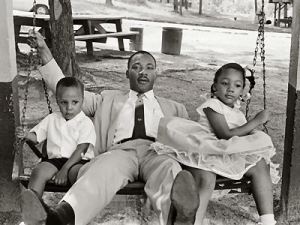
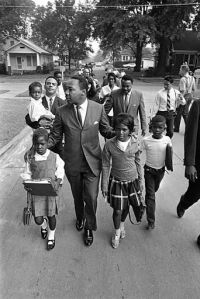
March 1965: Children watching a black voting rights march in Alabama. Dr Martin Luther King led the march from Selma, Alabama, to the state capital in Montgomery. (Photo by William Lovelace/Express/Getty Images)
According to a new analysis, health care reform in Massachusetts, popularly known as “Romneycare,” didn’t cause hospital use or costs to increase, even as it drove down the number of people without health insurance.
Implemented by the state in 2006, and signed by then-Gov. Mitt Romney, the reform is looked at as a model for the Affordable Care Act, also known as “Obamacare,” the sweeping and controversial health care law that Republican lawmakers in the House tried to repeal for the 37th time Thursday.
Amresh Hanchate, an economist with the Veterans Affairs Boston Healthcare System and lead author of the study, which he presented Thursday at an American Heart Association conference, says that the results of the study were surprising.
“In light of the [Affordable Care Act], we wanted to validate concerns that insurance reform would lead to dramatic increases in health care use and costs,” he says. “We were surprised to find little impact on health care use. Changes we saw in Massachusetts are very similar to those we saw in New Jersey, New York and Pennsylvania – states without reform.”
When it was implemented, about 8.4 percent of Massachusetts citizens were uninsured; by 2010, just 3 percent were uninsured. Uninsured rates fell most among minorities: In 2006, 15 percent of African-Americans were uninsured, in 2010, that rate was at 3.4 percent. Uninsured rates for Hispanics in the state fell from 20 percent to 9.2 percent during the same period.
Similarly encouraging news is found on the ACA even though it was seriously hampered by the SCOTUS ruling that allowed many states to opt out of the medicaid expansion and hosting local exchanges. We have one state that tried to have single payer. It failed. The state was Vermont. Sanders was asked about it during the debate. He dodged the question by referring it to the state’s governor. Well, there’s a lot of information out there on it. I’ll start with NEJM.
On December 17, 2014, Vermont Governor Peter Shumlin publicly ended his administration’s 4-year initiative to develop, enact, and implement a single-payer health care system in his state. The effort would have established a government-financed system, called Green Mountain Care, to provide universal coverage, replacing most private health insurance in Vermont. For Americans who prefer more ambitious health care reform than that offered by the Affordable Care Act (ACA), Shumlin’s announcement was a major disappointment. Was his decision based on economic or political considerations? Will it damage the viability of a single-payer approach in other states or at the federal level?
Shumlin’s exploration of a single-payer health care system, which included three assessments by different expert groups, was among the most exhaustive ever conducted in the United States. A 2011 study led by Harvard health economist William Hsiao provided optimistic projections: immediate systemwide savings of 8 to 12% and an additional 12 to 14% over time, or more than $2 billion over 10 years, and requirements for new payroll taxes of 9.4% for employers and new income taxes of 3.1% for individuals to replace health insurance premiums (see table) Financial Estimates from Three Projections for a Vermont Single-Payer Health Plan.).
Two years later, a study by the University of Massachusetts Medical School and Wakely Consulting projected savings of just 1.5% over 3 years.2 Finally, a 2014 study by Shumlin’s staff and consultants predicted 1.6% savings over 5 years and foresaw required new taxes of 11.5% for employers and up to 9.5% for individuals. The governor cited these last projections in withdrawing his plan: “I have learned that the limitations of state-based financing, the limitations of federal law, the limitations of our tax capacity, and the sensitivity of our economy make that unwise and untenable at this time . . . . The risk of economic shock is too high,” Shumlin concluded.
Two factors explain most of the decline in the plan’s financial prospects. First, the anticipated federal revenues from Medicaid and the ACA declined dramatically. Second, Shumlin’s policy choices significantly increased the total projected cost of Green Mountain Care: raising the actuarial value of coverage — the expected portion of medical costs covered by a plan rather than by out-of-pocket spending — from 87% to 94%, providing coverage to nonresidents working in Vermont, and eliminating current state taxes on medical providers. Still, even Shumlin’s projections indicated that the plan would reduce Vermont’s overall health spending and lower costs for the 90% of Vermont families with household incomes under $150,000. Despite differing projections, all three studies showed that single payer was economically feasible.
In reality, the Vermont plan was abandoned because of legitimate political considerations. Shumlin was first elected governor in 2010 promising a single-payer system. But in the 2014 election, his Republican opponent campaigned against single payer. Shumlin won the popular vote by a single-percentage-point margin, 46% to 45%, which sent the election to the Democratic-controlled House of Representatives; though the House reelected him easily in January, a clear public mandate for his health care agenda was nowhere in evidence.
Vermont took Obamacare a step further. In 2011, Shumlin proudly signed a bill to establish a publicly financed, single-payer system. The law required Shumlin to submit a detailed financial plan by 2013.
Shumlin missed the deadline, raising fears among supporters and critics alike that single-payer health care would cost much more than anticipated. Those fears were realized on Dec. 17, when Shumlin, two years late and just a month from narrowly winning reelection, released the financial analysis.
The numbers were stunning. To implement single-payer, the analysis showed, it would cost $4.3 billion in 2017, with Vermont taxpayers picking up $2.6 billion and the federal government covering the rest. To put the figures into perspective, Vermont’s entire fiscal 2015 budget, including both state and federal funds, is about $4.9 billion.
Shumlin’s office estimated the state would need to impose new personal income taxes of up to 9.5 percent, on top of current rates that range from 3.55 to 8.95 percent. Businesses would be hit with an 11.5 percent payroll tax, on top of 7.65 percent payroll taxes employer pay for Social Security and Medicare.
And even those tax increases might not have been enough. The governor’s office estimated the Green Mountain Care program would run deficits of $82 million by 2020 and $146 million in 2021. Shumlin said he feared the tax increases would harm businesses and the economy.
Okay, this is VERMONT, folks. Now, try doing that in Louisiana and Kansas or try getting their elected officials in the District to buy off on it.
So, a lot of children just really like believing in Santa Claus and it doesn’t take much to get them to continue their buy-in. Then there was Doctor Daughter who figured out it was her Dad and me at an extremely tender age after careful empirical study then asked me if that was the case. Of course, I said yes rather than try to lead her on like my parents did me for the sake of my sister. I just told her to go along if other kids believed and their parents hadn’t told them the truth yet. She did so like a little Nixonian co-conspirator.
I will not lie to you. Ceteris paribus. I prefer Single Payer Health Insurance. Ceteris paribus. Bernie Sanders has some really nice ideas.
I have never been one of those theoretical researchers. All of my stuff is empirical. I live in the land of empirical evidence. Yes, folks socialized medicine works just fine in the UK and is fairly cheap and folks get turned away for stuff that would probably piss the average American off. Yes, single payer health or a government option works great in Switzerland and other places. But, this is a country where it appears that our options will be Hillary Clinton or Donald Trump.
Spare me the Santa Claus mythos or the Senator Gadfly mythos.
Sorry this is so long, but as you can see, I had a lot to say and prove. I vote we try to improve on the ACA and for Hillary. Just sayin’.
Mea culpas go to any one whose work I over quoted. I love fair use but I also loved what you wrote. I quoted and cited you. Just sayin’.
What’s on your reading and blogging list today?
Did you like this post? Please share it with your friends:
The Sky Dancing banner headline uses a snippet from a work by artist Tashi Mannox called 'Rainbow Study'. The work is described as a" study of typical Tibetan rainbow clouds, that feature in Thanka painting, temple decoration and silk brocades". dakinikat was immediately drawn to the image when trying to find stylized Tibetan Clouds to represent Sky Dancing. It is probably because Tashi's practice is similar to her own. His updated take on the clouds that fill the collection of traditional thankas is quite special.
You can find his work at his website by clicking on his logo below. He is also a calligraphy artist that uses important vajrayana syllables. We encourage you to visit his on line studio.








 Good Afternoon!
 There are man cruel, inhuman policies on the Republican agenda and in its budget and tax bill.
  Justice in the USA is only available to the privileged. It can also be avoid by the donor class and most violent folks wearing blue and sporting a badge.
  The pseudo Justice Department led by the World’s oldest living Confederate Widow i
 Next up on the Republican Agenda, availability of tax dollars to train clergy and republican candidates on proper ways to stalk children and assault women.
 Violent clashes have erupted since Trump’s slurry, spit-filled speech
 My guess he’s doing to be in solidarnost with his boy crush Putin.
 This is appalling and policy must be swift to change this.
 Добрый день
 Motley was a WPA painter during the Great Depression. One of his murals hangs in the post office of Wood River Illinois. Wood River is part of the Greater St. Louis area. It’s painted in a distinctly different style from the beautiful, brightly colored paintings with so much energy that I’ve posted here.
 Van Jones is launching an “army”
 Sounds like a stall!








 peej
peej Carissa
 bostonboomer
 dakinikat
 ecocatwoman
 mablue2
 Mama Lopez
 peggysue22
 quixote
 skydancingguestblogger
 Mona (aka Wonk the Vote)



 Sky Dancing
Recent Comments