
Pakistan Security Shielded Osama bin Laden from U.S. — Wikileaks
Posted: May 2, 2011 Filed under: Breaking News, Foreign Affairs, Pakistan, U.S. Economy, U.S. Military, U.S. Politics, Wikileaks | Tags: ISI, Osama bin Laden, Pakistan, Wikileaks 46 Comments
I thought we needed a new thread to discuss the bin Laden breakthrough. I’ll continue to update if I find more new information.
From the Tim Ross at the UK Telegraph:
In December 2009, the government of Tajikistan warned the United States that efforts to catch bin Laden were being thwarted by corrupt Pakistani spies.
According to a US diplomatic dispatch, General Abdullo Sadulloevich Nazarov, a senior Tajik counterterrorism official, told the Americans that “many” inside Pakistan knew where bin Laden was.
The document stated: “In Pakistan, Osama Bin Laden wasn’t an invisible man, and many knew his whereabouts in North Waziristan, but whenever security forces attempted a raid on his hideouts, the enemy received warning of their approach from sources in the security forces.”
Intelligence gathered from detainees at Guantanamo Bay may also have made the Americans wary of sharing their operational plans with the Pakistani government.
Hmmm…maybe those billions that are going to Pakistan would be better spend on dealing with unemployment here in the U.S.?
More on the courier from the CSM:
It is widely reported that the detained 9/11 mastermind Khalid Sheikh Mohammed gave his US interrogators the pseudonym of a man he described as Osama bin Laden’s most trusted courier, whose whereabouts were tracked last fall to a fortress-like compound in Abbottabad city, some 75 miles north of the capital Islamabad. But US intelligence was also monitoring the satellite calls made by bin Laden’s bodyguard, which also helped lead US forces to bin Laden’s hiding place.
Bin Laden avoided e-mail and phones for fear those lines could be tracked, and instead relied on a system of personal couriers who carried his messages to the outside world. His compound lacked any telephone or Internet connection, according to local sources, but he did have at least one satellite phone. Further backing their story, a Reuters reporter visiting the scene reportedly saw a satellite dish in the compound.
Here’s a fascinating story in the NYT about some of the intelligence work that went into finding out where bin Laden was hiding in plain sight.
A trusted courier of Osama bin Laden’s whom American spies had been hunting for years was finally located in a compound 35 miles north of the Pakistani capital, close to one of the hubs of American counterterrorism operations. The property was so secure, so large, that American officials guessed it was built to hide someone far more important than a mere courier.
[….]
American intelligence officials said Sunday night that they finally learned the courier’s real name four years ago, but that it took another two years for them to learn the general region where he operated.
Still, it was not until August that they tracked him to the compound in Abbottabad, a medium-sized city about an hour’s drive north of Islamabad, the capital of Pakistan.
C.I.A. analysts spent the next several weeks examining satellite photos and intelligence reports to determine who might be living at the compound. A senior administration official said that by September the C.I.A. had decided that there was a “strong possibility” that Bin Laden himself was hiding there.
What Did Pakistan know and when did it know it?
Posted: May 2, 2011 Filed under: Foreign Affairs, Pakistan | Tags: Afghanistan, Osama bin Laden, Pakistan 83 Comments The big question remaining in the operation that killed the world’s most wanted man is the role of Pakistan in the operation and in the last living arrangements of Osama Bin Laden. Bin Laden and his 4th mail order bride and associates were living in a mansion in a military town close to a military base. This is sure to raise a lot of questions. There are several media outlets and blogs asking these questions. Those already included are TPM.
The Democrats’ top armed services expert on Capitol Hill says Pakistan’s military and intelligence have grave questions to answer after Osama Bin Laden was killed in an elaborate compound, deep inside Pakistan, near a top Pakistani military facility.
“I think that the Pakistani army and intelligence have a lot of questions to answer, given the location, the length of time, and the apparent fact that this facility was built for bin Laden, and its closeness to the central location to the Pakistani army,” said Sen. Carl Levin (D-MI), who chairs the Senate Armed Services committee, in a Capitol briefing with reporters Monday morning.
“I think the Pakistani president’s statement today was a very reassuring statement — when he very specifically said that he thinks that it’s a great victory and a success, and to congratulate us on the success of the operation,” Levin added. “So reassured by his statement, not necessarily suspicious that he knew, or the civilian leadership knew. But I must tell you I hope that he will follow through — that the President of Pakistan Hardari will follow through and ask some very tough questions with his own military and his own intelligence. They’ve got a lot of explaining to do.”
A number of reports — including from President Obama himself — indicate that Pakistan facilitated the intelligence that ultimately led U.S. forces to bin Laden’s compound.
Response to the operation appears to depend on the source . The current President of Pakistan signals that Pakistan was in on the operation. However, former President Pervez Musharif of Pakistan questioned the operation and its impact on Pakistani soverignity. He did add that it would’ve been better for Pakistani special ops to carry out the mission. Since the mansion was built in 2005, this raises some questions about the possibility that some Pakistani officials may have known,
Former Pakistani President Pervez Musharraf on Monday accused the U.S. of violating his country’s sovereignty by sending in special forces to kill Osama bin Laden.
“American troops coming across the border and taking action in one of our towns, that is Abbottabad, is not acceptable to the people of Pakistan. It is a violation of our sovereignty,” Mr. Musharraf told CNN-IBN, an Indian news channel.
He added that it would have been “far better if Pakistani Special Services Group had operated and conducted the mission. To that extent, the modality of handling it and executing the operation is not correct.”
“For some time there will be a lot of tension between Washington and Islamabad because Bin Laden seems to have been living here close to Islamabad,” Imtiaz Gul, a Pakistani security analyst, told Reuters. “Pakistan will have to do a lot of damage control. This is a serious blow to the credibility of Pakistan.”
In Kabul, Karzai seized on the news of Bin Laden’s death to criticise the US-led coalition, complaining that it was focused on counter-insurgency operations in the Pashtun south of Afghanistan rather than Taliban safe havens over the border.
“Year after year, day after day, we have said the fighting against terrorism is not in the villages of Afghanistan, not among the poor people of Afghanistan,” he said. “The fight against terrorism is in safe havens. It proves that Afghanistan was right.”
Aminuddin Muzafary, secretary of the High Peace Council established by Karzai, said Bin Laden’s death “removed the curtain from Pakistan’s face.” He added: “His death shows the unfaithfulness of Pakistan but it is also possible that it was a business deal between the CIA and the ISI. Time will reveal whether or not this was a deal or something else.”
The news was “very worrying,” said Abdullah Abdullah, Afghanistan’s top opposition leader. “Just a few weeks ago the Pakistanis were insisting that the US military and intelligence operations should be stopped in Pakistan and their agents should leave the country.”
The NYT’s Jane Perlez believes this questions will likely lead to suspicions of Pakistan. What will happen in US-Pakistani relations?
The killing of Osama bin Laden deep inside Pakistan in an American operation, almost in plain sight in a medium-sized city that hosts numerous Pakistani forces, seems certain to further inflame tensions between the United States and Pakistan and raise significant questions about whether elements of the Pakistani spy agency knew the whereabouts of the leader of Al Qaeda.
The presence of Bin Laden in Pakistan, something Pakistani officials have long dismissed, goes to the heart of the lack of trust Washington has felt over the last 10 years with its contentious ally, the Pakistani military and its powerful spy partner, the Inter-Services Intelligence.
Interestingly enough, CNN reports that several Pakistani officials are disputing President Obama’s claim that this was a joint operation.
On bin Laden, President Obama said Pakistan helped provide intelligence that led the U.S. to the terrorist leader and praised Pakistan for its “close counterterrorism cooperation” but said no other country, including Pakistan, knew about the operation in advance.
Several Pakistani officials disputed Obama’s account, claiming credit for what they called a joint U.S.-ISI operation.
A senior Pakistani intelligence official said the U.S. intelligence was developed from information that the Pakistanis had gathered: mostly electronic intercepts that the source said the Pakistanis regularly provide to the U.S.
“Somehow it slipped from our radar and was picked up on theirs,” the official said.
The U.S. has long suspected that bin Laden was hiding in Pakistan, although officials suspected that he was given safe haven in the country’s remote tribal areas along the border with Afghanistan. In July, while in Pakistan, Secretary of State Hillary Clinton accused the Pakistani government of not doing enough in the hunt for bin Laden, suggesting that the government knew where he was.
The fact that bin Laden was found in a small city that is so close to the capital of Islamabad and home to the country’s military academy raises more questions than answers about how he could avoid capture for so long.
Did Pakistan’s ISI, long believed to have ties to al Qaeda and the Taliban, provide bin Laden sanctuary in Abbottabad? Did it tip the U.S. off to his whereabouts? Or was the government completely ignorant that the world’s most famous terrorist was living in the city?
The answers to those questions are critical and will go a long way to determining the course of the relationship going forward. They could both confirm Washington’s greatest concerns about Pakistan’s commitment to fighting terrorism and deepen mistrust on both sides, or they will prove Pakistan to be a genuine partner in the fight against extremism, which could create goodwill on both sides and give the relationship a much-needed boost.
Now that the FBI has updated its most-wanted list and the news has been spread around the world, many of the details of the operation as well as the search for intelligence on Bin Laden’s whereabouts will undoubtedly take center stage. Another question that will eventually arise will be the role of CIA interviews in collecting the information as well as the possible role of at least one Guantanamo detainee and the discovery of identities of Bin Laden couriers. It’s interesting to watch all the celebrations around Ground Zero and the White House, but I am going to be much more interested in the LeCarre-like stuff that will follow. It will also be interesting to watch the growing questions surrounding Pakistan’s knowledge of the Bin Laden compound.
CBS News 60 Minutes: “Three Cups of Tea” Author Fabricated Stories in Book
Posted: April 16, 2011 Filed under: Afghanistan, Foreign Affairs, Middle East, Pakistan | Tags: Afghanistan, CBS News 60 Minutes, charity, Fraud, Greg Mortensen, Jon Krakauer, Pakistan, philanthropy, Three Cups of Tea 17 Comments
According to an investigation by Steve Croft of CBS’ 60 Minutes, a number of stories in Greg Mortenson’s bestselling book may be false or exaggerated.
The heart of Mortenson’s “Three Cups of Tea” is the story of a failed attempt in 1993 to climb the world’s second-highest peak, K2.
On the way down, Mortenson says, he got lost and stumbled, alone and exhausted, into a remote mountain village in Pakistan named Korphe.
According to the book’s narrative, the villagers cared for him and he promised to return to build a school there. In a remote village in Pakistan, “60 Minutes” found Mortenson’s porters on that failed expedition. They say Mortenson didn’t get lost and stumble into Korphe on his way down from K2. He visited the village a year later.
That’s what famous author and mountaineer Jon Krakauer, a former donor to Mortenson’s charity, says he found out, too. “It’s a beautiful story. And it’s a lie,” says Krakauer. “I have spoken to one of his [Mortenson’s] companions, a close friend, who hiked out from K2 with him and this companion said, ‘Greg never heard of Korphe until a year later,'” Krakauer tells Kroft.
Mortenson also claimed to have been kidnapped and held for eight days by the Taliban in Waziristan. In his new book, Stones into Schools, he included a photo of three of his supposed captors.
“60 Minutes” located three of the men in the photo, all of whom denied that they were Taliban and denied that they had kidnapped Mortenson. One the men in the photo is the research director of a respected think tank in Islamabad, Mansur Khan Mahsud.
He tells Steve Kroft that he and the others in the photo were Mortenson’s protectors, not his kidnappers. “We treated him as a guest and took care of him,” says Mahsud. “This is totally false and he is lying.”
Kroft also talked to Daniel Borochoff of the American Institute of Philanthropy, who says that Mortenson’s foundation, The Central Asia Institute, spends most of the donations to promote his books. Jon Krakauer told 60 Minutes that he stopped donating after he learned from a former member of the Central Asia Institute board that that Mortenson uses the Central Asia Institute “as his private ATM machine.”
Kroft says he visited schools in Pakistan and Afghanistan that Mortenson supposedly has built and funded. He found that “some of them were empty, built by somebody else, or simply didn’t exist at all. The principals of a number of schools said they had not received any money from CAI in years.” But Mortenson blamed a “disgruntled employee” for not paying teachers and didn’t respond to the other accusations.
Mortenson has ignored CBS’s requests for an interview, but he defended himself in his hometown newspaper, the Bozeman Daily Chronicle.
“I hope these allegations and attacks, the people doing these things, know this could be devastating for tens of thousands of girls, for the sake of Nielsen ratings and Emmys,” Mortenson told the Chronicle in a phone interview Friday.
“I stand by the information conveyed in my book,” he wrote in a statement, “and by the value of CAI’s work in empowering local communities to build and operate schools that have educated more than 60,000 students.”
In the statement, Mortenson implied that the central story of his book was falsified.
The book told how Mortenson got lost on a 1993 climb of K2, the world’s second highest peak, and then stumbled exhausted into the remote village of Korphe, was cared for by villagers, and promised to return and build a school.
“I stand by the story of ‘Three Cups of Tea,'” Mortenson said in a written statement, but added, “The time about our final days on K2 and ongoing journey to Korphe village and Skardu is a compressed version of events that took place in the fall of 1993….What was done was to simplify the sequence of events for the purposes of telling what was, at times, a complicated story.”
According to records examined by the paper, the CAI pays Mortenson $180,000 per year. In 2009, the charity took in $14 million, of which it spent “$4.6 million on travel, guest lectures and educating Americans about the plight of Pakistani and Afghan children.” It spent $3.6 million on “schools overseas.” Mortenson told the Daily News that “as of now,” he will be paying his own travel expenses.
I haven’t read Mortenson’s books, mainly because they always sounded a little too good to be true to me. A blogger at Discover Magazine, Razib Kahn, wrote something similar based on actual knowledge:
I’ve been a bit skeptical of the details of Greg Mortenson’s story in his book Three Cups of Tea for years. It seems be to so predicated on contemporary biases about the basic universal goodness of human nature. I hoped everything was true, but it seemed too good to be true. Other people who worked in Afghan NGOs tended to tell a more gritty and gray story, so either Mortenson was embellishing, or he had a special magic touch. Since I don’t believe in magic touches, I wondered as to the nature of embellishment.
Kahn still says he’s not going to judge until he learns more.
A quick Google search shows that Mortenson has spoken at numerous colleges and universities as well as high schools and middle schools around the country. If any of this is true, a lot of young people are going to be very disillusioned.
Presidents’ Day Reads
Posted: February 21, 2011 Filed under: Bahrain, Diplomacy Nightmares, Drone Warfare, Egypt, Foreign Affairs, income inequality, Libya, morning reads, Psychopaths in charge, U.S. Economy, U.S. Politics, Voter Ignorance, worker rights, Yemen | Tags: CIA, Ed Schultz, Egypt, foreign policy, Libya, Pakistan, Raymond Davis, Rush Limbaugh, Wisconsin protests, Yusuf al-Qaradawi 51 Comments
Good Morning! It’s “Presidents’ Day.” Talk about a generic holiday. We used to mark two presidents’ birthdays in February–Washington’s birthday on the 22nd and Lincoln’s birthday on the 12th–but now we just have a Monday in February when everything goes on sale, and pictures of Washington and Lincoln are used to sell cars and mattresses. At least some of us get the day off work.
There’s an awful lot of news happening, and I’m guessing there could be a even more happening Libya by the time you start reading this. The latest is that protesters are in Tripoli, and the family of Libyan dictator Muammar Gaddafi is vowing to fight the protesters “to the last man standing,” according to Gaddafi’s son Saif al-Islam in a really monotonous, rambling speech yesterday.
Anti-government protesters rallied in Tripoli’s streets, tribal leaders spoke out against Gaddafi, and army units defected to the opposition as oil exporter Libya endured one of the bloodiest revolts to convulse the Arab world.
Gaddafi’s son Saif al-Islam Gaddafi appeared on national television in an attempt to both threaten and calm people, saying the army would enforce security at any price.
“Our spirits are high and the leader Muammar Gaddafi is leading the battle in Tripoli, and we are behind him as is the Libyan army,” he said.
“We will keep fighting until the last man standing, even to the last woman standing…We will not leave Libya to the Italians or the Turks.”
He also warned of “rivers of blood.” But those may be famous last words. From the Guardian UK:
In fast-moving developments after midnight, demonstrators were reported to be in Tripoli’s Green Square and preparing to march on Gaddafi’s compound as rumours spread that the leader had fled to Venezuela. Other reports described protesters in the streets of Tripoli throwing stones at billboards of Muammar Gaddafi while police used teargas to try to disperse them.
“People are in the street chanting ‘Allahu Akbar’ (God is great) and throwing stones at photos of Gaddafi,”an expatriate worker told Reuters by telephone from Tripoli. “The police are firing teargas everywhere, it’s even getting into the houses.”
There was also plenty of protesting going on in other Middle Eastern countries:
Libya’s extraordinary day overshadowed drama elsewhere in the region. Tensions eased in Bahrain after troops withdrew from a square in Manama occupied by Shia protesters. Thousands of security personnel were also deployed in the Iranian capital, Tehran, to forestall an opposition rally. Elsewhere in the region unrest hit Yemen, Morocco, Oman, Kuwait and Algeria.
At Asia Times Online, Pepe Escobar wrote a couple of days ago that the protests in Bahrain could soon spread to Saudi Arabia. That is one fascinating article.
In Wisconsin, protesters say they aren’t going anywhere.
“We’ll be here Monday, Tuesday, Wednesday, Thursday — as long as it takes,” Gary Lonzo, a union organizer and former Wisconsin corrections officer, said Sunday as he watched protesters banging drums and waving signs here for a sixth day in a row. “We’re not going anywhere.”
As the protests went on through falling sleet and snow, some lawmakers suggested that a compromise might yet be possible over the cuts that Gov. Scott Walker, a Republican, has proposed. A spokesman for Dale Schultz, a moderate Republican senator, said that Mr. Schultz supported Mr. Walker, particularly in his assessment that the state budget situation was dire, but that Mr. Schultz also hoped to work to preserve collective bargaining rights.
Meanwhile, Wisconsin’s Democratic State Senators are staying in Illinois until further notice.
“This is not a stunt, it’s not a prank,” said Senator Jon Erpenbach, one of the Democrats who drove away from Madison early Thursday, hours before a planned vote, and would say only that he was in Chicago. “This is not an option I can ever see us doing again, but in this case, it’s absolutely the right thing to do. What they want to do is not the will of the people.”
Either I missed this story completely, or the US corporate media ignored it. An exiled religious leader, Muslim cleric Yusuf al-Qaradawi, has returned to Egypt after 50 years and may be trying to “stealing the revolution,” according to a retweet from Mona Eltahawy (h/t, Wonk the Vote). Quaradawi made a speech to more than a million people in Cairo’s Tahrir Square on Friday. During the rally,
Google executive Wael Ghonim, who emerged as a leading voice in Egypt’s uprising, was barred from the stage in Tahrir Square on Friday by security guards, an AFP photographer said. Ghonim tried to take the stage in Tahrir, the epicentre of anti-regime protests that toppled President Hosni Mubarak, but men who appeared to be guarding influential Muslim cleric Yusuf al-Qaradawi barred him from doing so.
Ghonim, who was angered by the episode, then left the square with his face hidden by an Egyptian flag.
Uh oh….
Remember Raymond Davis, who was arrested in Pakistan for shooting two Pakistani men on the street? He was more or less outed as a CIA agent during his trial. The U.S. has been trying to save him from murder charges by claiming he had diplomatic immunity. But the trial has gone on anyway, and now it’s definite that he’s CIA.
Raymond Davis has been the subject of widespread speculation since he opened fire with a semi-automatic Glock pistol on the two men who had pulled up in front of his car at a red light on 25 January.
Pakistani authorities charged him with murder, but the Obama administration has insisted he is an “administrative and technical official” attached to its Lahore consulate and has diplomatic immunity.
Based on interviews in the US and Pakistan, the Guardian can confirm that the 36-year-old former special forces soldier is employed by the CIA. “It’s beyond a shadow of a doubt,” said a senior Pakistani intelligence official. The revelation may complicate American efforts to free Davis, who insists he was acting in self-defence against a pair of suspected robbers, who were both carrying guns.
[….]
The Pakistani government is aware of Davis’s CIA status yet has kept quiet in the face of immense American pressure to free him under the Vienna convention. Last week President Barack Obama described Davis as “our diplomat” and dispatched his chief diplomatic troubleshooter, Senator John Kerry, to Islamabad. Kerry returned home empty-handed.
Many Pakistanis are outraged at the idea of an armed American rampaging through their second-largest city. Analysts have warned of Egyptian-style protests if Davis is released.
Oh dear, another diplomatic nightmare for our indecisive President to deal with. BTW, has he said anything about the bloody massacres in Libya yet?
The New York Post has a nasty takedown of Mitt Romney by Josh Kosman, author of a book on how private equity firms could cause the next economic crisis.
…the former private equity firm chief’s fortune — which has funded his political ambitions from the Massachusetts statehouse to his unsuccessful run for the White House in 2008 — was made on the backs of companies that ultimately collapsed, putting thousands of ordinary Americans out on the street. That truth if it becomes widely known could become costly to Romney, who, while making the media rounds recently, told CNN’s Piers Morgan that “People in America want to know who can get 15 million people back to work,” implying he was that person.
Romney’s private equity firm, Bain Capital, bought companies and often increased short-term earnings so those businesses could then borrow enormous amounts of money. That borrowed money was used to pay Bain dividends. Then those businesses needed to maintain that high level of earnings to pay their debts.
Romney in 2007 told the New York Times he had nothing to do with taking dividends from two companies that later went bankrupt, and that one should not take a distribution from a business that put the company at risk.
Yet Geoffrey Rehnert, who helped start Bain Capital and is now co-CEO of the private equity firm The Audax Group, told me for my Penguin book, “The Buyout of America: How Private Equity Is Destroying Jobs and Killing the American Economy,” that Romney owned a controlling stake in Bain Capital between approximately 1992 and 2001. The firm under his watch took such risks, time and time again.
I’m going to leave you with this video from The Ed Show live in Madison, Wisconsin.
What are you reading and blogging about today?
Pakistan May Have Outed Chief of CIA’s Islamibad Station
Posted: December 17, 2010 Filed under: Afghanistan, Barack Obama, Central Intelligence Agency, Foreign Affairs, Pakistan | Tags: Central Intelligence Agency, covert operations, drone strikes, Islamibad Station, Mumbai attacks, Pakistan 12 Comments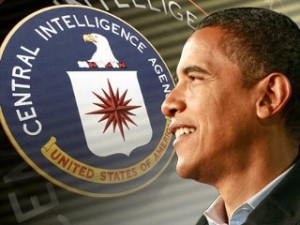
Things seem to be getting pretty dicey for the U.S. in Pakistan. The Guardian UK reports that:
The CIA has pulled its station chief from Islamabad, one of America’s most important spy posts, after his cover was blown in a legal action brought by victims of US drone strikes in the tribal belt.
The officer, named in Pakistan as Jonathan Banks, left the country yesterday, after a tribesman publicly accused him of being responsible for the death of his brother and son in a CIA drone strike in December 2009. Karim Khan, a journalist from North Waziristan, called for Banks to be charged with murder and executed.
In a rare move, the CIA called Banks home yesterday, citing “security concerns” and saying he had received death threats, Washington officials told Associated Press. Khan’s lawyer said he was fleeing the possibility of prosecution.
Banks may have only a business visa, and so wouldn’t have diplomatic immunity if he were required to testify in the trial. According to the article, recalling a station chief is extremely rare. Although the Pakistani government supposedly supports U.S. drone strikes, many Pakistanis are understandably outraged by them.
The recall comes at a sensitive moment for Washington. This week’s Afghanistan policy review brought fresh focus on Taliban safe havens in Pakistan’s tribal belt. Meanwhile CIA drone attacks – which are co-ordinated from the Islamabad embassy – have reached a new peak. Three drones struck targets in Khyber, a previously untouched tribal agency, on Friday, reportedly killing 24 people and signalling a widening of the CIA covert campaign….There have been over 100 strikes so this year, twice as many as in 2009.
The Guardian says there are rumors that Banks may have been outed by someone in the Pakistani intelligence agency (the ISI), because “several senior ISI officials were named in a New York legal action brought by relatives of the 2008 Mumbai attacks.”
The New York Times also has posted an article about this.
On Thursday and Friday, the United States appeared to make good on promises to expand its own efforts to attack the militants, with drone strikes for the first time hitting Khyber agency in Pakistan’s lawless tribal areas. Most drone strikes this year have targeted North Waziristan. Pakistani government officials said at least 26 militants were killed in the most recent attacks.
The outing of the C.I.A. station chief is tied to the spy agency’s campaign of drone strikes, which are very unpopular in Pakistan, although the government has given its tacit approval for them.
Gee, no kidding. I mean who wants to have their house blown up unexpectedly by agents of a foreign power? Interestingly, the Times avoided telling its readers the outed agent’s name, even though the Guardian had already published it. The Times is truly the Obama administration’s house organ. According article,
The intensifying mistrust between the C.I.A. and I.S.I., two uneasy but co-dependent allies, could hardly come at a worse time. The Obama administration relies on Pakistan’s support for the armed drone program, which this year has launched a record number of strikes in North Waziristan against terror suspects.
“We will continue to help strengthen Pakistani capacity to root out terrorists,” President Obama said on Thursday. “Nevertheless, progress has not come fast enough. So we will continue to insist to Pakistani leaders that terrorist safe havens within their borders must be dealt with.”
Not being an expert on foreign affairs, I’m not sure if this statement triggered anger in Pakistan or not. Maybe President Obama should leave diplomacy to his Secretary of State.

 peej
peej Carissa
 bostonboomer
 dakinikat
 ecocatwoman
 mablue2
 Mama Lopez
 peggysue22
 quixote
 skydancingguestblogger
 Mona (aka Wonk the Vote)



 Sky Dancing
Recent Comments