
Lazy Caturday Reads
Posted: November 23, 2024 Filed under: cat art, caturday, Donald Trump, just because | Tags: Donald Trump, History, John F. Kennedy, Lyndon B. Johnson, news, politics 3 CommentsGood Afternoon!!
 Yesterday was the 61st anniversary of the assassination of President John F. Kennedy on November 22, 1963. I was 15 years old, a junior in high school. I still see that day as a defining event in my life. It was my first real experience of death, and I recall how difficult it was for me to comprehend and accept that our brilliant and charismatic president was really gone forever. It was my first lesson in how quickly dramatic events can change our understanding of the world.
Everything was different after that. If Kennedy had lived, he very likely would have won a second term, and perhaps the course of the Vietnam War could have been different. Perhaps Richard Nixon would not have made his comeback and been elected president in 1968. We can’t know what would have happened, but I think that if Kennedy could have completed a second term, our history would have been very different.
Of course Lyndon Johnson did complete many of Kennedy’s projects like the Civil Rights Acts of 1964 and 1968, the Voting Rights Act of 1965, and the Medicare and Medicaid Act of 1965. Kennedy’s tragic death and Johnson’s legislative experience likely helped these laws get passed. But there was something about Jack Kennedy that inspired and energized the country, and that energy was lost after his death–especially after Johnson’s failure in Vietnam and his stubbor refusal to change course.
It’s the weekend and I need a break from the current madness in politics, so I’m going to share a few reads about that long ago day in 1963.
Heather Cox Richardson at Letters from an American: November 22, 2024.
It was November 22, 1963, and President John F. Kennedy and First Lady Jacqueline Kennedy were visiting Texas. They were there, in the home state of Vice President Lyndon Baines Johnson and his wife, Lady Bird, to try to heal a rift in the Democratic Party. The white supremacists who made up the base of the party’s southern wing loathed the Kennedy administration’s support for Black rights.
That base had turned on Kennedy when he and his brother, Attorney General Robert F. Kennedy, had backed the decision of the U.S. Court of Appeals for the Fifth Circuit in fall 1962 saying that army veteran James Meredith had the right to enroll at the University of Mississippi, more commonly known as Ole Miss.
When the Department of Justice ordered officials at Ole Miss to register Meredith, Mississippi governor Ross Barnett physically barred Meredith from entering the building and vowed to defend segregation and states’ rights.
So the Department of Justice detailed dozens of U.S. marshals to escort Meredith to the registrar and put more than 500 law enforcement officers on the campus. White supremacists rushed to meet them there and became increasingly violent. That night, Barnett told a radio audience: “We will never surrender!” The rioters destroyed property and, under cover of the darkness, fired at reporters and the federal marshals. They killed two men and wounded many others.
By Susan Herbert (after The Milkmaid by Johannes Vermeer)
The riot ended when the president sent 20,000 troops to the campus. On October 1, Meredith became the first Black American to enroll at the University of Mississippi.
The Kennedys had made it clear that the federal government would stand behind civil rights, and white supremacists joined right-wing Republicans in insisting that their stance proved that the Kennedys were communists. Using a strong federal government to regulate business would prevent a man from making all the money he might otherwise; protecting civil rights would take tax dollars from white Americans for the benefit of Black and Brown people. A bumper sticker produced during the Mississippi crisis warned that “the Castro Brothers”—equating the Kennedys with communist revolutionaries in Cuba—had gone to Ole Miss.
That conflation of Black rights and communism stoked such anger in the southern right wing that Kennedy felt obliged to travel to Dallas to try to mend some fences in the state Democratic Party.

How the day began:
On the morning of November 22, 1963, the Dallas Morning News contained a flyer saying the president was wanted for “treason” for “betraying the Constitution” and giving “support and encouragement to the Communist inspired racial riots.” Kennedy warned his wife that they were “heading into nut country today.”
But the motorcade through Dallas started out in a party atmosphere. At the head of the procession, the president and first lady waved from their car at the streets “lined with people—lots and lots of people—the children all smiling, placards, confetti, people waving from windows,” Lady Bird remembered. “There had been such a gala air,” she said, that when she heard three shots, “I thought it must be firecrackers or some sort of celebration.”
The Secret Service agents had no such moment of confusion. The cars sped forward, “terrifically fast—faster and faster,” according to Lady Bird, until they arrived at a hospital, which made Mrs. Johnson realize what had happened. “As we ground to a halt” and Secret Service agents began to pull them out of the cars, Lady Bird wrote, “I cast one last look over my shoulder and saw in the President’s car a bundle of pink, just like a drift of blossoms, lying on the back seat…Mrs. Kennedy lying over the President’s body.”
As they waited for news of the president, LBJ asked Lady Bird to go find Mrs. Kennedy. Lady Bird recalled that Secret Service agents “began to lead me up one corridor, back stairs, and down another. Suddenly, I found myself face to face with Jackie in a small hall…outside the operating room. You always think of her—or someone like her—as being insulated, protected; she was quite alone. I don’t think I ever saw anyone so much alone in my life.”
After trying to comfort Mrs. Kennedy, Lady Bird went back to the room where her husband was. It was there that Kennedy’s special assistant told them, “The President is dead,” just before journalist Malcolm Kilduff entered and addressed LBJ as “Mr. President.”
There’s a bit more at the link.
Colin Moynihan at The New York Times: Desperate Bid to Save J.F.K. Shown in Resurfaced Film.
Nearly 61 years ago, Dale Carpenter Sr. showed up on Lemmon Avenue in Dallas, hoping to film John F. Kennedy as his motorcade passed. But the president’s car had already gone by, and he recorded only some of the procession, including the back of a car carrying Lyndon Johnson and the side of the White House press bus.
So Mr. Carpenter, a businessman from Texas, rushed to Stemmons Freeway, several miles farther along the motorcade route, to try again.
There, just moments after Kennedy had been shot, he captured an urgent and chaotic scene. The president’s speeding convertible. A Secret Service agent in a dark suit sprawled on the back. Jacqueline Kennedy, in her pink Chanel outfit, little more than a blur.
Kennedy himself could not be glimpsed. He had collapsed and was close to death.
For decades Mr. Carpenter’s 8-millimeter snippets of what transpired in Dallas on Nov. 22, 1963, have been a family heirloom. When he died in 1991 at 77, the reel, which included footage of his twin boys’ birthday party, passed to his wife, Mabel, then to a daughter, Diana, and finally to a grandson, James Gates.
Later this month, the Kennedy footage is to be put up for sale in Boston by RR Auction, the latest in a line of assassination-related images to surface publicly after decades in comparative obscurity. The auction house says it is the only known film of the president’s car on the freeway as it sped from Dealey Plaza, the site of the shooting, to Parkland Memorial Hospital, where Kennedy was pronounced dead at 1 p.m.
Footage shot by Abraham Zapruder, a bystander, has long provided disturbing images of the assassination itself, one of the most traumatic and closely examined events in American history. Mr. Carpenter’s film shows what happened before and just after the Zapruder film was shot. The first section is a prosaic scene of the president’s motorcade; the second, a race for help imbued with all the uncertainty that filled the moments after the gunshots.
Though Mr. Carpenter’s film, just over a minute long, contains nothing likely to affect the debate over Kennedy’s death, several experts said it is still an important addition to the mosaic of images that recorded that day in Dallas.
Paul Singer at WGBH: A newly uncovered memo shows how the JFK assassination reverberated in Boston.
This story is about a trip I took to look at the files of Freedom House, and the four remarkable pages I found in those files.
Freedom House was the community-based, Black-led nonprofit that helped the city of Boston sell the Washington Park plan to Roxbury’s Black residents. And the files that Freedom House kept of that time period now sit in nearly 90 boxes in the Northeastern University Archives and Special Collections.
I called over and the archives folks warmly welcomed me to browse a small sample of the Freedom House collection. When I arrived, they had set aside two banker’s boxes full of numbered file folders.
It was in box 32, folder 1111 that I struck gold. Or, more accurately, yellow.
Four pages of yellow notepad paper, filled with cursive handwriting. It was a report about a special conference called to address the “Low Income Housing Crisis” in Boston on Nov. 22, 1963.
That date rang a bell. Wasn’t that the day JFK was shot?
It was.
And the memo documents how that tragedy played out in real time 1,700 miles from Dallas’ Dealey Plaza.
 The meeting was to address the issue of how urban renewal in 1960s Boston was hurting the city’s poor and people of color, especially the need for low-income housing. When the group broke for lunch the news of Kennedy’s death reached them.
In extraordinarily poetic terms, McGill writes that the group tried to continue with its important work of addressing low-income housing needs, but it was difficult to concentrate.
“… people were sobbing uncontrollably and our spirits kept foundering under the awful waiting vigil our hearts were keeping at the side of the president.”
When Kennedy’s death was confirmed, McGill wrote how the collective weeping grew. She witnessed a priest across the room as his face “crumpled helplessly.”
The attendees abandoned any effort to continue their work, and a closing prayer was offered.
“Charles Abrams was scheduled to deliver a special address at the close of the conference … but he had no heart to give the speech he had prepared. He talked about the tragedy and its implications instead — very briefly. Dr. Barth closed the conference with special prayers for the President, the bereaved family, and for the healing of the sickness of violence and hate in our country.”
Standing in a library basement with these pages in my hand, I was struck by how much that prayer still rings true 61 years later.
And Boston still has a low-income housing crisis.
Trump’s Awful Nominations.
Steven Contorno and Kristen Holmes at CNN: Fox hosts, cable news regulars and entertainment pros: Trump is casting a made-for-TV Cabinet.
A common thread weaves through many of Donald Trump’s picks for his incoming administration, a quality the president-elect values as highly as loyalty and perhaps even more than conventional qualifications: a flair for television.
He has plucked two Fox News stars from their airwaves – Sean Duffy for Transportation secretary and Pete Hegseth to lead the Pentagon. For the agency overseeing Medicare and Medicaid, Trump has turned to Dr. Mehmet Oz, the celebrity physician known for his health show that aired for 13 seasons. His pick for the Department of Education, meanwhile, is Linda McMahon, who co-founded and built a professional wrestling and entertainment empire alongside her husband.
Trump’s choice for ambassador to Israel, Mike Huckabee, had a six-year run hosting a Fox News show. Tulsi Gabbard, his selection for director of national intelligence, was a contributor on the conservative network after she left Congress and once subbed for its former primetime host Tucker Carlson.
As a former reality TV star, Trump is deeply attuned to the power of the small screen. His selection process has centered on people who can not only articulate his message but also defend him in the kind of high-stakes, combative settings that define modern media.
His transition team, operating in a war-room style setup at Mar-a-Lago, has embraced this focus. On large screens, his advisers play video clips of potential appointees’ media performances, including footage of them defending Trump but also their past criticism of him, underscoring the centrality of media strategy in his decision-making.
The outcome is a made-for-TV Cabinet who he thinks will sell his agenda to Americans and defend the administration against media scrutiny on their networks. Meanwhile, in some departments, the expectation is that deputies and top staff will oversee the day-to-day operations.
Another comment thread: incompetence and lack of relevant experience.
Ryan Bort and Asawin Suebsaeng at Rolling Stone: Team Trump Is Furious Hegseth Hid Sex Assault Claim: ‘This Is the F–king Pentagon!’
Matt Gaetz may have withdrawn his name from consideration to become Donald Trump’s attorney general over sexual misconduct accusations — but alleged sexual abuser Pete Hegseth is still fighting to persuade Republican senators to confirm him to one of the most powerful positions in government.
Hegseth was already facing an uphill confirmation battle to become the Secretary of Defense given that he is best known as a Fox News host with no government experience. The emergence of a disturbing sexual assault accusation against him from 2017 isn’t helping matters — and Trump’s team is pissed.
According to four sources familiar with the situation, some top Trump transition officials and others close to the president-elect have been puzzled, if not infuriated, that Hegseth did not preemptively inform them of the allegations against him before they made their way into the press — most notably through the publication of a police report detailing the alleged incident at a hotel in Monterey, California.
“How did he not know? Why didn’t he tell us?” a source close to Trump says. “Pete wasn’t interviewing for a job at McDonald’s; this is the fucking Pentagon! … Even if the allegations are fake, it doesn’t matter because he was supposed to tell us what we needed to know so we could be better prepared to defend him — not learn about it from the media.”
There was, the sources say, a vetting process for the Hegseth pick, but it did not uncover these details, nor was it especially invasive. Trump’s transition team did not sign agreements with the White House or the Justice Department to allow the FBI to conduct background checks on the president-elect’s nominees.
“When we ask, ‘Is there anything else we need to know about?’ that is usually a good time to mention a police report,” a Trump adviser says. “Obviously he remembered that this all happened and there is no way — I don’t think — he could have believed this wouldn’t come out once he got nominated.”
Why haven’t they withdrawn Hegseth’s name yet?
Liam Archacky at The Daily Beast: Now GOP Senators Want Another Trump Nominee’s Full FBI File.
Some Republican senators are privately eager to see the FBI file on Tulsi Gabbard, whose history of alignment with Russia has drawn concern in the wake of her nomination for the post of director of national intelligence, reported Punchbowl News.
Although Gabbard has drawn headlines for previously echoing Russian talking points on topics like the wars in Ukraine and Syria, it’s her support for leaker turned Russian citizen Edward Snowden that is allegedly most troubling for some lawmakers.
The former Democratic congresswoman openly pushed for the U.S. to “drop all charges” against Snowden in a 2020 bill that was co-sponsored by former Republican Rep. Matt Gaetz, another one-time Trump cabinet nominee who was yesterday forced to withdraw his name amid sexual misconduct allegations he denies.
Lawmakers, including members of the Senate Intelligence Committee, which is responsible for processing Gabbard’s nomination, reportedly find Gabbard’s support for Snowden—a former NSA employee who leaked state secrets—especially concerning because of the danger his actions posed to national security, reported Punchbowl.
Although FBI file reviews are standard for presidential cabinet candidates, Punchbowl reported that the Republican senators’ interest in doing so seems to suggest that they believe there could still be unknown information in the file—such as potential foreign contacts.
The New York Times: Trump Picks Key Figure in Project 2025 for Powerful Budget Role.
President-elect Donald J. Trump on Friday picked a key figure in Project 2025 to lead the Office of Management and Budget, elevating a longtime ally who has spent the last four years making plans to rework the American government to enhance presidential power.
The would-be nominee, Russell T. Vought, would oversee the White House budget and help determine whether federal agencies comport with the president’s policies. The role requires Senate confirmation unless Mr. Trump is able to make recess appointments.
The choice of Mr. Vought would bring in a strongly ideological figure who played a pivotal role in Mr. Trump’s first term, when he also served as budget chief. Among other things, Mr. Vought helped come up with the idea of having Mr. Trump use emergency power to circumvent Congress’s decision about how much to spend on a border wall.
Mr. Vought was a leading figure in Project 2025, the effort by conservative organizations to build a governing blueprint for Mr. Trump should he take office once again. Mr. Trump tried to distance himself from the effort during his campaign, but he has put forward people with ties to the project for his administration since the election.
Mr. Vought’s role in Project 2025 was to oversee executive orders and other unilateral actions that Mr. Trump could take during his first six months in office, with the goal of tearing down and rebuilding executive branch institutions in a way that would enhance presidential power.
Joyce Vance at Civil Discourse: Project 2025: It’s On (Predictably).
Before Bill Barr became Donald Trump’s third attorney general, he circulated a memo that was more or less an audition tape for the job he ultimately got. That memo reached both the White House Counsel’s Office and Main Justice. In it, Barr argued in favor of what had previously been a fringe theory of a powerful “unitary executive,” in other words, a president able to consolidate power at the expense of the other two branches as a very powerful leader. The writing was on the wall with Barr’s selection, although the Supreme Court cast it in stone when the conservative majority signed off on the view that presidents couldn’t be criminally prosecuted as long as the crimes they committed fell under the umbrella of official acts. Even Bill Barr would have never dreamed of arguing the president could use SEAL Team Six to assassinate a political rival and walk away with no consequences. Now, the Supreme Court says it’s so.
That’s the context that’s essential for understanding Trump’s Friday evening “nomination” (if you can call a social media announcement that) of Russell Vought to lead the Office of Management and Budget (OMB). Vought is a proponent of a powerful executive and of restructuring our institutions to facilitate a government that veers toward the monarchical and away from the democratic. He was one of only four out of forty-four of Trump’s cabinet officials from his first administration who said they’d support him this time.
Vought entered OMB at the start of Trump’s first administration and was confirmed as its director in July 2020. In the archive of his official biography, his role is described like this: “he is responsible for overseeing the implementation of the President’s policy, management and regulatory agendas across the Executive Branch.” OMB is a powerful agency, and its director is, in a very real sense, a president’s right-hand man. Among the job experience Vought touts in his bio are his seven years as Vice President of Heritage Action for America, a sister organization to the Heritage Foundation, which, as readers of Civil Discourse are well aware, is where Project 2025 was incubated….
Now Vought, godfather to Project 2025 and author of its chapter on OMB, will be in charge of administering policy in the next Trump Administration. So much for Trump’s efforts—back when reporting about Project 2025 led to enormous public concern and seemed poised to shift the tide against him— to distance himself from the project. At the time, he disavowed any knowledge of or agreement with the plan, but the claims felt hollow.
Read much more about Vought at Civil Discourse.
More Relevant Reads
David H. Graham at The Atlantic: Pam Bondi’s Comeback.
USA Today: Trump considers ex-intelligence chief Richard Grenell for Ukraine post, sources say.
The Washington Post: Trump plans to fire Jack Smith’s team, use DOJ to probe 2020 election.
The New York Times: Elon Musk Gets a Crash Course in How Trumpworld Works.
The New Republic: Elon Musk Is Now Cyberbullying Government Employees.
Jonathan Last at The Bulwark: Be Not Afraid. Trump and MAGA want to frighten you. Don’t let them.
Sunday Reads: The 60th Anniversary of the March on Washington for Jobs and Freedom
Posted: August 27, 2023 Filed under: just because | Tags: 60th anniversary, John F. Kennedy, John Lewis, Lincoln Memorial, March on Washington for Jobs and Freedom, Martin Luther King 7 CommentsGood Day!!
Tomorrow is the 60th anniversary of the March on Washington for Jobs and Freedom, which took place on August 28, 1963.
In August of 1963, I was just about to begin my sophomore year in high school. I was so inspired by the the events I saw on TV that day! John Kennedy was president, Martin Luther King was a hero, and it seemed that the times they really were a-changing, to paraphrase Bob Dylan.
When I got back to school, I interviewed a number of my classmates who had attended the march, and wrote a feature article about their experiences for my school paper The Munsonian.
Little did we know that on November 22 that year, John Kennedy would be assassinated in Dallas. Lyndon Johnson carried out many of Kennedy’s goals; but his obsession with Vietnam destroyed his presidency, and he decided not to run for reelection.
On April 4, 1968, Martin Luther King would be assassinated. The man whom Kennedy had defeated in 1960 would win the 1968 presidential election, and the rest was history, so to speak. The high hopes for freedom and equality were dashed. Nixon and the Republicans used racial animus to gain power–the famous “Southern strategy.”
This page at The Smithsonian gathers interesting memorabilia from that day in 1963.
On August 28, 1963, more than 250,000 people gathered in the nation’s capital for the March on Washington for Jobs and Freedom. The march was the brainchild of longtime civil rights activist and labor leader A. Philip Randolph. With the support of the gifted organizer Bayard Rustin, the march was a collaboration of all factions of the civil rights movement. Originally conceived as a mass demonstration to spotlight economic inequalities and press for a new federal jobs program and a higher minimum wage, the goals of the march expanded to include calls for congressional passage of the Civil Rights Act, full integration of public schools, and enactment of a bill prohibiting job discrimination. The program at the Lincoln Memorial featured an impressive roster of speakers—including John Lewis—and closed with Dr. Martin Luther King Jr. Midway through his address, King abandoned his prepared text and launched into the soaring expression of his vision for the future, declaring, “I have a dream today.”
On 60th anniversary of the March on Washington, the Smithsonian’s National Museum of African American History and Culture reflects on its historical legacy. King’s “I Have a Dream Speech” will be on view in the museum for a limited time, Aug. 7–Sept. 18, 2023, in the Defending Freedom, Defining Freedom gallery.
People gathered in Washington DC over the weekend to mark the anniversary.
From the AP: Thousands converge on National Mall to mark the March on Washington’s 60th anniversary.
WASHINGTON (AP) — Thousands converged Saturday on the National Mall for the 60th anniversary of Rev. Martin Luther King Jr.’s March on Washington, saying a country that remains riven by racial inequality has yet to fulfill his dream.
“We have made progress, over the last 60 years, since Dr. King led the March on Washington,” said Alphonso David, president and CEO of the Global Black Economic Forum. “Have we reached the mountaintop? Not by a long shot.”
The event was convened by the Kings’ Drum Major Institute and the Rev. Al Sharpton ‘s National Action Network. A host of Black civil rights leaders and a multiracial, interfaith coalition of allies rallied attendees on the same spot where as many as 250,000 gathered in 1963 for what is still considered one of the greatest and most consequential racial justice and equality demonstrations in U.S. history.
Inevitably, Saturday’s event was shot through with contrasts to the initial, historic demonstration. Speakers and banners talked about the importance of LGBTQ and Asian American rights. Many who addressed the crowd were women after only one was given the microphone in 1963.
Pamela Mays McDonald of Philadelphia attended the initial march as a child. “I was 8 years old at the original March and only one woman was allowed to speak — she was from Arkansas where I’m from — now look at how many women are on the podium today,” she said.
For some, the contrasts between the size of the original demonstration and the more modest turnout Saturday were bittersweet. “I often look back and look over to the reflection pool and the Washington Monument and I see a quarter of a million people 60 years ago and just a trickling now,” said Marsha Dean Phelts of Amelia Island, Florida. “It was more fired up then. But the things we were asking for and needing, we still need them today.”
On Aug. 28, 1963, Walter Cronkite began his evening news broadcast with a vivid description of the March on Washington. The day would come to be a watershed moment in the equal rights movement for Black Americans.
“They called it the March on Washington for Jobs and Freedom,” said Cronkite. “They came from all over America. Negroes and Whites, housewives and Hollywood stars, senators and a few beatniks, clergymen and probably a few Communists. More than 200,000 of them came to Washington this morning in a kind of climax to a historic spring and summer in the struggle for equal rights.”
One of those clergymen was the Rev. Martin Luther King Jr., who made his famed “I Have A Dream” speech on the steps of the Lincoln Memorial on the afternoon of Aug. 28. He spoke for 16 minutes in a rallying cry for all to have equal rights….
The March on Washington for Freedom and Jobs was meant to support the Civil Rights Act, which President John F. Kennedy was attempting to pass through Congress. The act called for an expanded Civil Rights Commission, the desegregation of public schools and other locations and voting rights protections for Black Americans.
On the day of the march, more than 250,000 people walked from the Washington Monument to the Lincoln Memorial. Cronkite remarked that the march sometimes looked “more like a parade of signs than of people,” as marchers carried signs calling for equality and the end of police brutality.
Along the parade route was CBS News correspondent Dave Dugan. He called the enthusiasm of the march “contagious,” with older attendees “taking it rather relaxed and calmly” and younger marchers singing freedom songs like “We Shall Overcome,” bubbling with energy and “exuberance.”
The Civil Rights Act was signed into law by President Lyndon B. Johnson on July 2, 1964, after Kennedy’s assassination in Dallas in November of 1963. It outlawed discrimination based on race, sex and other protected classes, prohibited discrimination against voters of color and racial segregation in schools. It would be one of the most important legislative bills passed in American history.
NBC News: 60th March on Washington event merges Black America’s current concerns with history.
WASHINGTON, D.C.— As a teenager in 1963, Ann Breedlove rode in a caravan of buses and cars from Albany, Georgia, to the March on Washington. It took more than a day, she said, but the journey proved to be pivotal.
It was then that she learned of the power of fighting for justice, a cause she has taken up for the last six decades.
On Saturday, Breedlove was back in the shadow of the Lincoln Memorial for the 60th anniversary of the March on Washington. Her feelings on being there were mixed.
“I see many little children and young people walking around here and they will remember this day as a day that they were present for something that mattered,” said Breedlove, who now lives in Atlanta. “That’s what it was like for me. I wasn’t into social justice as a teenager. But coming to the march changed me. And that’s what this can do for these children here.”
The parade of dozens of speakers, each addressed many of the same concerns of the Aug. 28, 1963, March on Washington for Jobs and Freedom, speaking to the progress yet to be made. The emphasis then was multi-pronged: end segregation; strengthen voting rights; improved public education; fair wages and civil rights. It was a watershed moment in the Civil Rights movement, marked by Martin Luther King Jr.’s “I Have A Dream” speech, the most famous of the dynamic orator’s addresses.
Saturday was billed as a “continuation, not a commemoration,” hosted by a number of organizations, including Al Sharpton’s National Action Network and the Drum Major Institute, which is modeled after King’s principles. The speakers addressed some of the aforementioned issues, along with the added concerns over Black history being scrubbed from K-12 education, the chipping away of abortion access, the Supreme Court abolishing race-conscious college admissions, and a reversal on LGBTQ rights.
“It’s a shift, a change that has taken place,” Breedlove said. “It’s too bad we are still talking about these issues. But our leaders and Black people are speaking louder. We’re tired — sick and tired — of asking for justice. It’s time to fight back. I’m a great grandmother who remembers the Ku Klux Klan raiding our house and us having to get under the bed when they came on their horses. Today is different. That’s not happening. But we still are getting it in different ways.”
“Our voices are going to be louder than the politicians,” she added, “who are not doing what they need to do to help us.”
Another speaker at the 1963 march was a young John Lewis. An opinion piece by Rutgers history professor David Greenberg at The New York Times: How John Lewis Saved the March on Washington.
The tides of history sand down complex events to smooth, shiny baubles, and the 1963 March on Washington for Jobs and Freedom — whose 60th anniversary arrives Monday, Aug. 28 — is no exception.
This oversimplification of history is at work not only with respect to Martin Luther King’s historic speech, which decried persistent Black poverty before dreaming of racial harmony, but also that of John Lewis, at 23 the march’s youngest speaker. Anointed a veritable saint before his death in 2020, Lewis was regarded back then as an enfant terrible fronting a headstrong new generation of rebels. Neither caricature quite captures the principled yet pragmatic Lewis, whose 1963 speech bluntly assailed deficiencies in the civil rights bill others were championing — but who succeeded in doing so without undermining the day’s unity.
Lewis’s experience with his controversial speech offers us a window onto the competing political pressures at work — the tricky context of an evolving protest movement groping for the right mix of defiance and accommodation. Striking such a delicate balance remains a challenge and an imperative for protest movements pushing for social change today.
That John Lewis even spoke at the March on Washington was something of a fluke. Only weeks earlier, he had been tapped as chairman of the Student Non-Violent Coordinating Committee, a fledgling body formed during the lunch-counter sit-ins of 1960. Of all SNCC’s units, Lewis’s Nashville chapter was the most thoroughly steeped in Gandhian nonviolence, and among the Nashvillians Lewis had imbibed those teachings most completely. After the Nashville movement forced the city to thoroughly integrate its public facilities in May 1963, Lewis — with his earnest, gentle demeanor and unimpeachable devotion to peaceful methods — was a natural choice to become SNCC’s public face.
A bit more:
Even as those methods led that spring to major victories in Nashville and (more famously) Birmingham, however, discontent with the Gandhian ways was mounting. The Birmingham campaign spawned demonstrations in 200 cities nationwide, and while many proceeded peacefully, some — such as in Cambridge, Md. — turned violent, sparking fears of mass mayhem that summer.
Media commentators now spoke of the “new militancy.” King would use this ambiguous term in his March on Washington speech. To some, like Lewis, militance meant not a renunciation of nonviolence but an intensification of protest, the adoption of a defiant edge. But rivals of King’s such as Representative Adam Clayton Powell Jr. and Malcolm X threatened that rioting would rock America’s streets if the government didn’t act on civil rights.
Partly to stave off violence, President John F. Kennedy announced a sweeping civil rights bill that June. At that moment, too, the movement elders A. Philip Randolph and Bayard Rustin were lining up co-sponsors for the Washington march. Many of SNCC’s young radicals balked, fearing it would be, Lewis later recalled, “a lame event, organized by the cautious, conservative traditional power structure of Black America.” But Lewis, an inveterate optimist, naturally inclined to cooperate and compromise, was for it.
On June 22, Lewis — who just several years earlier had been living with nine siblings in a shotgun shack on an Alabama farm — joined some 30 civil rights honchos in the White House Cabinet Room to meet with the president. Kennedy intended to dissuade them from holding the march, which, because of the outbursts earlier that summer, he feared might turn destructive.
Awed to be in such august company, Lewis stayed silent through the meeting. But King, Randolph and others made clear that the march would take place. Kennedy acquiesced and then pivoted, spending the rest of the summer trying to turn the gathering into a rally to pass his bill.
SNCC, meanwhile, scored its own victory. Once shut out of meetings of the major civil rights groups, it now won recognition as one of the six main march sponsors. That meant a speaking slot for Lewis before an audience immeasurably larger than he had ever addressed.
I don’t dare post any more. Read the whole thing at the NYT.
That’s the end of my trip down memory lane. The real anniversary is tomorrow.
Take care everyone!
Lazy Caturday Reads
Posted: June 13, 2020 Filed under: morning reads, U.S. Politics | Tags: Abraham Lincoln, caturday, Civil Rights, Civil War, Donald Trump, Fox News, Harris Faulkner, John F. Kennedy, Racism 16 Comments
Good Morning!!
On Thursday, June 11, Lawrence O’Donnell discussed the speech on Civil Rights that President John F. Kennedy gave from the Oval Office on that day in 1963. The purpose of the speech was to propose the Civil Rights bill that passed after Kennedy’s assassination. Fifty-seven years later, we’ve made some progress, but systemic racism still runs rampant in this country. I thought I’d share some excerpts from that long-ago speech today.
NPR: John F. Kennedy’s Address on Civil Rights.
On June 11, 1963, President John F. Kennedy addressed the nation on the most pressing domestic issue of the day: the struggle to affirm civil rights for all Americans. His administration had sent National Guard troops to accompany the first black students admitted to the University of Mississippi and University of Alabama.
Excerpts selected by NPR:
…It ought to be possible… for American students of any color to attend any public institution they select without having to be backed up by troops.
…It ought to be possible for American consumers of any color to receive equal service in places of public accommodation, such as hotels and restaurants and theaters and retail stores, without being forced to resort to demonstrations in the street, and it ought to be possible for American citizens of any color to register and to vote in a free election without interference or fear of reprisal.
Painting by Ekaterina Mateckaya
It ought to be possible, in short, for every American to enjoy the privileges of being American without regard to his race or his color. In short, every American ought to have the right to be treated as he would wish to be treated, as one would wish his children to be treated. But this is not the case….
…This is not a sectional issue…Nor is this a partisan issue…This is not even a legal or legislative issue alone. It is better to settle these matters in the courts than on the streets, and new laws are needed at every level, but law alone cannot make men see right.
We are confronted primarily with a moral issue. It is as old as the scriptures and is as clear as the American Constitution.
The heart of the question is — whether all Americans are to be afforded equal rights and equal opportunities. Whether we are going to treat our fellow Americans as we want to be treated. If an American, because his skin is dark, cannot eat lunch in a restaurant open to the public, if he cannot send his children to the best public school available, if he cannot vote for the public officials who represent him, if, in short, he cannot enjoy the full and free life which all of us want, then who among us would be content to have the color of his skin changed and stand in his place? Who among us would then be content with the counsels of patience and delay?
One hundred years of delay have passed since President Lincoln freed the slaves, yet their heirs, their grandsons, are not fully free….
…It is not enough to pin the blame on others, to say this is a problem of one section of the country or another, or deplore the fact that we face. A great change is at hand, and our task, our obligation, is to make that revolution, that change, peaceful and constructive for all.
Those who do nothing are inviting shame as well as violence. Those who act boldly are recognizing right as well as reality…

You can watch the entire speech at C-Span. I watched it yesterday and it made me so sad. The comparison between Kennedy and the current occupant of the White House so so glaring. Not only was Kennedy capable of compassion and empathy, but he also spoke eloquently, in complete sentences and paragraphs. Today we have a fraudulent “president” who babbles nonsense, effortlessly lies about everything and has no idea how to do the job he holds even if he actually wanted to be a leader.

Cat in the window, by Joanna DeRitis
Speaking of Trump’s incoherent babbling, on Thursday he gave another strange Fox News interview with Harris Faulkner (who is black). For Fox, the questions were pretty tough. You can read the transcript and watch video excerpts at Factbase.
The most stunning moment in the interview was when Trump claimed to have done more for black Americans than any previous president, including Abraham Lincoln. Business Insider: Trump says Abraham Lincoln ‘did good’ for the Black community but that ‘the end result’ is ‘questionable.’
“So I think I’ve done more for the Black community than any other president, and let’s take a pass on Abraham Lincoln because he did good, although it’s always questionable, you know, in other words, the end result —” Trump said before Faulkner interjected.
“Well, we are free, Mr. President, so I think he did pretty well,” she said, referring to Lincoln.
“We are free,” Trump said. “You understand what I mean.”
“Yeah, I get it,” Faulkner said.
This isn’t the first time Trump has claimed he’s done more for the Black community than his predecessors.
“This may well be the president’s most audacious claim ever,” Michael Fauntroy, a professor of political science at Howard University, told The New York Times earlier this month. “Not only has he not done more than anybody else, he’s done close to the least.”
Of course it’s not really clear what Trump was trying to say, because his speech is so incoherent. At Slate, Jeremy Stahl tries to make sense of Trump’s words: What Was Trump Trying to Say About Abraham Lincoln?
A lot of people saw the transcript of those words—and perhaps watched the clip—and interpreted Trump as having said that “the end result” of Lincoln’s presidency—i.e., winning the Civil War, preserving the union, and ending the atrocity of chattel slavery—was “always questionable.” [….]
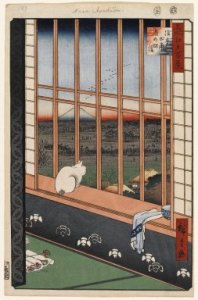
By Utagawa Hiroshige
I would never definitively state that I believed Trump didn’t mean the most racist possible interpretation of one of his often hard-to-grasp word salads. Indeed, he has in the past questioned the fact that the Civil War needed to occur, stating in 2017 that had Andrew Jackson been president at the time he would have stopped the Civil War from happening because he would have realized “there’s no reason for this.”
“The Civil War, if you think about it, why? People don’t ask the question, but why was there the Civil War? Why could that one not have been worked out?” Trump said back then.
As my former colleague, Jamelle Bouie, wrote at the time, that statement—apparently that Jackson could have come up with a perfect “deal” to prevent the Civil War—was as dangerous as it was ahistorical.
Given that past remark, it’s certainly plausible that Trump’s brain is so rotted from his own racism that he would say that the end results of Lincoln’s presidency were “questionable.” Based on the context of the question, though, and more recent comments from Trump, I think that is unlikely.
I interpret this particular word salad to be an attempt by Trump to validate his recent tweet that his administration “has done more for the Black Community than any President since Abraham Lincoln.”
Trump was likely attempting to say that while “I think I’ve done more for the black community than any other president,” he would ask that in such a ranking “let’s take a pass” on including Lincoln, because it’s an unfair comparison, but—even if he were to go head-to-head with Lincoln for the title of “best president for black people ever”—despite the fact that Lincoln “did good,” it would still be “always questionable” whether Trump was better, because you have to consider “the end result” of each man’s presidency.
Okay . . . I guess that’s as good an interpretation as any.
At Vox, Zach Beauchamp discusses another howler from the interview: Trump: “The concept of chokehold sounds so innocent, so perfect.”
When asked about police use of chokeholds on suspects like George Floyd, who was killed after a Minneapolis officer pinned him by the neck with his knee for nearly nine minutes, Trump initially told Faulkner that “I don’t like chokeholds,” even saying that “generally speaking, they should be ended.” But he contradicted that pretty quickly, saying that when you’ve got someone who is “a real bad person … what are you gonna do now — let go?”
He even went further, saying that “the concept of chokehold sounds so innocent, so perfect,” if a lone police officer is attempting to detain someone.
Deborah DeWitt, Birdwatching
His position, as far as I can tell, seems to be that maybe sometimes individual officers need to use chokeholds, but the more police there are, the less likely it is they’ll need to use one:
TRUMP: I think the concept of chokehold sounds so innocent, so perfect. And then you realize, if it’s a one-on-one. But if it’s two-on-one, that’s a little bit a different story. Depending on the toughness and strength — you know, we’re talking about toughness and strength. There’s a physical thing here too.
FAULKNER: If it’s a one-on-one for the [officer’s] life …
TRUMP: And that does happen, that does happen. You have to be careful.
The most relevant part here isn’t the president’s views on the details of self-defense tactics, but rather the lack of empathy in the way he talks about the issue. The only world in which police using chokeholds could sound “innocent” or “perfect” is a world in which you don’t think about what happens to people when they’re literally being choked — or one where you assume that it won’t happen to people like you.
A recent LA Times investigation found that 103 people were “seriously injured” by police using “carotid neck restraints” in California between 2016 and 2018. Black people, who make up 6.5 percent of the state’s population, were 23 percent of those injured in such holds.
Trump’s thinking seems so deeply shaped by his sense of generalized police innocence, his unwillingness to really process the fact of racial discrimination in police use of force, that he’s capable of saying out loud that chokeholds sound “innocent.”

What all this interpretation really boils down to is that Trump is disastrously incapable of doing the job of POTUS. And yet we’re stuck with him, so writers struggle to figure out what the hell he is talking about.
Stories to check out today
David Smith at The Guardian: ‘He just doesn’t get it’: has Trump been left behind by America’s awakening on racism?
The Washington Post: Trump says he’ll ‘go on and do other things’ if he loses in November.
Julian Borger at The Guardian: ‘Trump thought I was a secretary’: Fiona Hill on the president, Putin and populism.
The New York Times: Trump’s Actions Rattle the Military World: ‘I Can’t Support the Man’
NBC News: From ‘beautiful letters’ to ‘a dark nightmare’: How Trump’s North Korea gamble went bust.
The New York Times: Trump Moves Tulsa Rally Date ‘Out of Respect’ for Juneteenth.
The Daily Beast: Survivors of KKK’s Ax Handle Attack Appalled at Trump Speech.
The Washington Post: Republicans and Trump want a Jacksonville convention party. Some locals are worried about the area’s health.
The Daily Beast: A Black Man Was Found Hanging From a Tree—Residents Don’t Buy That It Was a Suicide.
Jonathan Chait at New York Magazine: Michael Flynn Writes Column Confirming He Is Definitely Insane.
USA Today: Fired Florida scientist builds coronavirus site showing far more cases than state reports.
Saturday Reads: America’s Greatest Mystery
Posted: November 9, 2013 Filed under: Central Intelligence Agency, Crime, FBI, morning reads, Psychopaths in charge, Surreality, The Media SUCKS, the villagers, U.S. Military, U.S. Politics, We are so F'd | Tags: 1963, Adam Gopnik, Bay of Pigs, Bobby Kennedy, Cuban Missile Crisis, Fidel Castro, Iran-Contra, J. Edgar Hoover, JFK assassination, John F. Kennedy, John Kerry, Josh Ozersky, Lee Harvey Oswald, Lyndon B. Johnson, Nikita Krushchev, November 22, organized crime, Richard Nixon, the Mafia, Vincent Bugliosi, Warren Commission, Watergate 31 Comments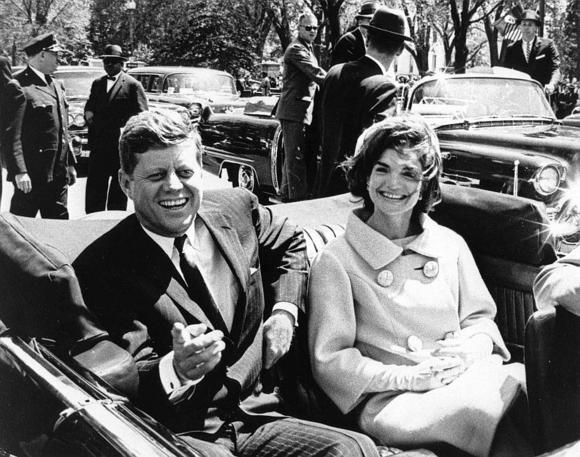
Good Morning!!
In less than two weeks, our nation will mark the 50th anniversary of the assassination of President John F. Kennedy on November 22, 1963. I’ve spent quite a bit of time recently reading books and articles about the assassination and it’s aftermath. I have wanted to write a post about it, but I just haven’t been able to do it. For me, the JFK assassination is still a very painful issue–in fact, it has become more and more painful for me over the years as I’ve grown older and wiser and more knowledgeable about politics and history. Anyway, I thought I’d take a shot at writing about it this morning. I may have more to say, as we approach the anniversary. I’m going to focus on the role of the media in defending the conclusions of the Warren Commission.
I think most people who have read my posts in the past probably know that I think the JFK assassination was a coup, and that we haven’t really had more than a very limited form of democracy in this country since that day. We probably will never know who the men were who shot at Kennedy in Dallas in 1963, but anyone who has watched the Zapruder film with anything resembling an open mind, has to know that there was more than one shooter; because Kennedy was shot from both the front and back.
The reasons Kennedy died are varied and complex. He had angered a number of powerful groups inside as well as outside the government.
– Powerful members of the mafia had relationships with JFK’s father Joseph Kennedy, and at his behest had helped carry Illinois–and perhaps West Virginia–for his son. These mafia chiefs expected payback, but instead, they got Bobby Kennedy as Attorney General on a crusade to destroy organized crime. In the 1960s both the CIA and FBI had used the mafia to carry out operations.
– FBI boss J. Edgar Hoover hated Bobby Kennedy for “interfering” with the FBI by ordering Hoover to hire more minorities and generally undercutting Hoover’s absolute control of the organization.
– Elements within the CIA hated Kennedy for his refusal to provide air support for the Bay of Pigs invasion (which had been planned by Vice President Nixon well before the 1960 election), and for firing CIA head Allen Dulles.
– Texas oil men like H.L. Hunt and Clint Murchison hated Kennedy for pushing for repeal of the oil depletion allowance.
– The military hated Kennedy because of the Bay of Pigs, his decision to defuse the Cuban Missile Crisis by pulling U.S. missiles out of Turkey in return for removal of the missiles from Cuba instead of responding with a nuclear attack, his efforts to reach out to both the Nikita Krushchev of the Soviet Union and Fidel Castro of Cuba, his firing of General Edward Walker, and his decision to pull the military “advisers” out of Vietnam.
– Vice President Lyndon Johnson hated both Kennedys, and he knew he was on the verge of being dropped from the presidential ticket in 1964. In addition, scandals involving his corrupt financial dealings were coming to a head, and the Kennedys were pushing the stories about Johnson cronies Bobby Baker and Billy Sol Estes in the media.
What I know for sure is that after what happened to Kennedy (and to Martin Luther King and Bobby Kennedy), there is no way any president would dare to really challenge the military and intelligence infrastructure within the government. Richard Nixon found that out when a number of the same people who were involved in the Kennedy assassination helped to bring him down.
To long-term government bureaucracies, the POTUS is just passing through the government that they essentially control. Any POTUS who crosses them too often is asking for trouble. People who think President Obama should simply force the CIA, NSA, FBI and the military to respect the rights of American citizens should think about that for a minute. Can we as a nation survive the assassination of another president?
Read the rest of this entry »
“Left-Wing” Pundits Root for Putin to Humiliate Obama
Posted: September 10, 2013 Filed under: Barack Obama, Foreign Affairs, Russia, Syria, U.S. Politics | Tags: Bob Cesca, chemical weapons, Cuban Missile Crisis, diplomacy, John F. Kennedy, John Kerry, Laura Rozen, Nikita Kruschev, Robert Dreyfuss, Robert Scheer, The Nation, Truthdig, Vladimir Putin 19 Comments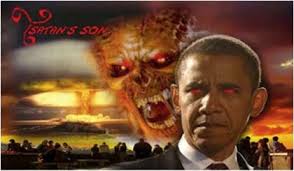
President Obama through Emoprog eyes
Obama hatred has really reached a crescendo today, and I’m not talking about hatred spewed by the Glenn Beck, Sarah Palin, or Rush Limbaugh. I’m talking about people who identify themselves as “progressives.” Twitter is mobbed emoprogs making a concerted effort to ensure that if there is a deal with Russia and Syria to prevent military action over Syria’s use of chemical weapons, President Obama will get zero credit for it.
Meanwhile supposedly “left-wing” pundits Robert Dreyfuss and Robert Scheer are praising Russia’s anti-gay, ex-KGB agent President Vladimir Putin for leading the way to peace.
Check this out from Dreyfuss at The Nation:
It’s tempting to enjoy the moment, that is, the humiliation of President Obama and the short-circuiting of his war push by a brilliant coup conducted by Vladimir Putin, that sly old dog and ju-jitsu expert, along with Russia’s ally, Syria. President Obama might as well not bother giving his Oval Office speech tonight, because the chances that Congress will approve Obama’s Authorization to Use Military Force are zero, and the possibility that the United States will go to war against Syria without congressional support are now less than zero.
You know, I really don’t take pleasure in seeing the President of my country humiliated; and I have to wonder about the judgement of a “journalist” who does–especially a journalist who probably doesn’t want to see a President Ted Cruz elected in 2016.
Dreyfuss can’t imagine a scenario in which Obama doesn’t particularly want to bomb Syria but threatens to do so in order to pressure Russia to respond with a diplomatic alternative. However he can picture Putin doing something clever and sneaky. Dreyfuss even quotes Tucker Carlson and Fox News–of all people!–in support of his belief that Obama is utterly incompetent and incapable of guile.
Ask yourself–if instead of threatening military strikes, Obama had simply asked Assad in a nice way to give up his chemical weapons, what would have happened?
Robert Scheer also wrote a snide piece at Truthdig that isn’t quite as in-your-face nasty as Dreyfuss’s but it’s pretty bad, and Scheer also quotes a right-wing pudit–Peggy Noonan! Scheer writes:
…there was a moment Monday when the odds for sanity seemed to finally stand a chance of prevailing. It came when President Obama acknowledged the Russian proposal for Syria to avert war by agreeing to destroy its chemical weapons stock as “a potentially positive development.” It was quintessentially an un-Bush moment when suddenly this presidential “decider” seemed possessed of a brain capable of reversing his disastrous course.
Because Obama has, until now, been completely intractable and inflexible, with a Bush-like brain?
The bipartisan rejection of the inevitability of a military response has been stunning in its geographical reach, and as Peggy Noonan, a leading Republican intellectual as well as a former top speechwriter for Ronald Reagan, observed in her Wall Street Journal column Saturday: “The American people do not support military action… . Widespread public opposition is in itself reason not to go forward.” Although underscoring the need to “rebuke those who used the weapons, condemn their use, and shun the users … a military strike is not the way, and not the way for America,” she wrote.
She is right. The use of chemical weapons cannot be ignored, even though the U.S. did just that decades ago when then-Mideast special envoy Donald Rumsfeld embraced Saddam Hussein after he deployed those heinous weapons on his own people and in his war with Iran. A strong response to the use of those weapons is in order, but instead of more violence that would inevitably kill innocent people, why not give peace a chance? At the very least, even if the Syrian government continues to deny responsibility for the chemical attacks, it must abandon its arsenal of these weapons that are inherently inhuman.
So what would that response be? Scheer credits Russian foreign minister Sergey V. Lavrov with a sudden brainstorm in response to a supposedly off-handed remark from John Kerry.
Lavrov seized upon Secretary of State John Kerry’s purely rhetorical point that Syria could abandon its chemical weapons supply and asked, why not? It was a serious plan, given that it had been previewed in a phone conversation between Lavrov and Kerry and that Syria’s foreign minister, who was in Moscow at the time, welcomed the sentiment.
Except if Kerry and Lavrov had discussed the idea previously, then Kerry’s remark wasn’t an off-handed gaffe that destroyed Obama’s dream of war, was it? Scheer truly wants to describe events in such a way that Obama comes out looking like a stupid, incompetent war monger.
Since Dreyfuss’ and Scheer’s diatribes were posted, we’ve learned that Obama and Putin have been discussing diplomatic solutions to deal with Syria’s chemical weapons for months. Laura Rozen of Foreign Policy writes at The Back Channel:
U.S. and Russian officials confirmed Tuesday that they have had discussions about removing Syria’s chemical arms going back months before the August 21st alleged chemical weapons attack outside Damascus, and that the idea was not born out of a stray comment made by US Secretary of State John Kerry at a London press conference Monday.
Russian President Vladimir Putin said Tuesday that he and President Obama had “indeed discussed” the idea during a meeting on the sidelines of the G-20 summit in St. Petersburg, Russia last week.
He and Obama agreed “to instruct Secretary of State [John Kerry] and Foreign Minister [Sergey Lavrov] to get in touch” and “try to move this idea forward,” Putin told Russia Today in an interview Tuesday.
According to Rozen, Obama and Putin discussed the issue a year ago when the two met at the G-20 summit in Mexico and John Kerry talked about it further with Putin when he was in Moscow in April of this year. I guess in the time of Wikileaks, Snowden, and Greenwald, it’s now assumed that government are permitted no secrets and diplomacy must be carried out in the glare of TV cameras. Well, folks, that really isn’t how it works.
And now, as Sam Stein noted on Twitter, emoprogs are “this close” to hoping for a failure of the diplomatic solution so that Obama can be further mocked and humiliated.
I’m not sure where all the Obama hatred is coming from, but it’s really ugly; and the more I see of it, the more I want to give Obama the benefit of the doubt. I really like Bob Cesca’s take on this: A Deal to Prevent an Attack on Syria Reveals Obama as JFK, Not GWB.
Is anyone else here old enough to recall the Cuban missile crisis? Kennedy had learned that Russia had installed missiles in Cuba. His advisers urged him to attack Cuba and take out the missiles, but that would have forced the Russians to retaliate and likely led to World War III. Instead Kennedy set up a blockade around Cuba, and gave both sides some breathing room. From Wikipedia:
in secret back-channel communications the President and Premier initiated a proposal to resolve the crisis. While this was taking place, several Soviet ships attempted to run the blockade, increasing tensions to the point that orders were sent out to US Navy ships to fire warning shots and then open fire. On October 27, a U-2 plane was shot down by a Soviet missile crew, an action that could have resulted in immediate retaliation from the Kennedy crisis cabinet, according to Secretary of Defense McNamara’s later testimony. Kennedy stayed his hand and the negotiations continued.
The confrontation ended on October 28, 1962, when Kennedy and United Nations Secretary-General U Thant reached an agreement with Khrushchev. Publicly, the Soviets would dismantle their offensive weapons in Cuba and return them to the Soviet Union, subject to United Nations verification, in exchange for a US public declaration and agreement never to invade Cuba. Secretly, the US also agreed that it would dismantle all US-built Jupiter IRBMs, armed with nuclear warheads, which were deployed in Turkey and Italy against the Soviet Union.
Now that we know that the US and Russia have been engaging in “back-channel” negotiations over Syria, isn’t that a better comparison to the current situation than Bush and Cheney lying us into Iraq?

 peej
peej Carissa
 bostonboomer
 dakinikat
 ecocatwoman
 mablue2
 Mama Lopez
 peggysue22
 quixote
 skydancingguestblogger
 Mona (aka Wonk the Vote)



 Sky Dancing
Recent Comments