We in the Boston area are finally getting a taste of the extreme heat that much of the rest of the country has been experiencing. Yesterday and today, there were heat emergencies declared, and many schools sent kids home early because of the heat and no air conditioning. Obviously, we aren’t used to 100 degree heat indexes in September in this part of the country. I don’t know how Dakinikat has survived months of this heat. Republicans need to wake up and realize that their children and grandchildren are going to suffer from climate change, whether their ancestors believed in it or not.
It has been a grueling summer, with relentless heat breaking multiple records in many places around the world. In fact, June through August was the planet’s hottest documented three-month period, with July ranking as the hottest month ever recorded. A new analysis by the nonprofit organization Climate Central finds that more than 3.8 billion people were exposed to extreme heat that was worsened by human-caused climate change from June through August, and at least 1.5 billion experienced such heat every day of that period. Nearly every person on Earth saw high temperatures that were made at least twice as likely by global warming.
People cool off in fountains in Rome to deal with the heat.
It has been a grueling summer, with relentless heat breaking multiple records in many places around the world. In fact, June through August was the planet’s hottest documented three-month period, with July ranking as the hottest month ever recorded. A new analysis by the nonprofit organization Climate Central finds that more than 3.8 billion people were exposed to extreme heat that was worsened by human-caused climate change from June through August, and at least 1.5 billion experienced such heat every day of that period. Nearly every person on Earth saw high temperatures that were made at least twice as likely by global warming.
“It really is everywhere,” says Andrew Pershing, Climate Central’s vice president for science. “On a single day, the fact that more than half the people on the planet were experiencing climate-altered heat—that’s just really, really remarkable to me.”
More frequent, longer-lasting and more intense heat waves are among the clearest outcomes of rising global temperatures driven by the burning of fossil fuels. Numerous studies have found the fingerprints of climate change in heat waves from the Pacific Northwest to Europe. A study released by the World Weather Attribution (WWA) research group in July had already found that the heat waves in North America, Europe and China that month were made hotter—and many times more likely—by climate change. In fact, the North American and European events likely would not have occurred without climate change.
The new analysis was produced using Climate Central’s Climate Shift Index (CSI) attribution system, which estimates how much climate change has shifted the local odds of events such as extreme heat. The system, which is based on peer-reviewed science, scores global warming’s influence using the ratio of how often a given temperature occurs in the current climate, compared with a world without climate change. A CSI of 1 means there is a discernable influence from climate change, and CSIs between 2 and 5 mean it made those conditions two to five times more likely.
The organization’s worldwide temperature analysis during this year’s Northern Hemisphere summer found 48 percent of the world’s population experienced at least 30 days of extreme heat that was made at least three times more likely by climate change, and at least 1.5 billion people experienced heat at that level or higher for the entire summer. Many of those people were in areas closer to the equator, such as the Caribbean, northern Africa and Southeast Asia.
The 5th US Circuit Court of Appeals issued a temporary stay Thursday night allowing the state of Texas to keep floating barriers in the Rio Grande.
A lower court judge had ordered Texas to take down the barriers by September 15 at its own expense. The panel’s decision Thursday puts that order on hold while the appeals court considers the case. It means that Texas does not have to start the process of removing the barriers, for now.
A worker helps deploy a string of large buoys to be used as a border barrier at the center of the Rio Grande near Eagle Pass, Texas. (AP Photo/Eric Gay)
The swift ruling by the 5th Circuit comes a day after US District Judge David Ezra wrote that Republican Gov. Greg Abbott needed permission to install the barriers, as dictated by law – a win for the Biden administration.
“Governor Abbott announced that he was not ‘asking for permission’ for Operation Lone Star, the anti-immigration program under which Texas constructed the floating barrier. Unfortunately for Texas, permission is exactly what federal law requires before installing obstructions in the nation’s navigable waters,” Ezra wrote in his ruling. The judge also found Texas’ self-defense argument – that the barriers have been placed in the face of invasion – “unconvincing.”
The controversial border buoys were deployed in the Rio Grande as part Operation Lone Star, Abbott’s border security initiative. In July, the Justice Department sued the state of Texas claiming that the buoys were installed unlawfully and asking the judge to force the state to remove them.
Let’s hope the stay is just so the judges can get up to speed on the issues. Those barriers are utterly monstrous and inhumane.
The report from the Fulton County, Georgia special grand jury has been released. This was the jury that was just investigative. They recommended people who should be charged, and the official grand jury issued final indictments.
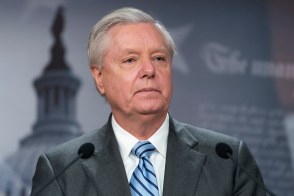
The special grand jury in Fulton County investigating the 2020 presidential election in Georgia recommended charges against Republican Sen. Lindsey Graham of South Carolina and former GOP Sens. David Perdue and Kelly Loeffler of Georgia, according to the special counsel grand jury report released Friday.
Fulton County District Attorney Fani Willis did not charge the lawmakers when she returned an indictment last month against former President Donald Trump and 18 co-defendants in the sprawling racketeering case. It was up to the district attorney to decide how closely to stick to the special grand jury’s recommendations….
Graham, who appeared before the special grand jury last year after a court battle over his testimony, spoke with Georgia election officials after the 2020 election. His phone calls with Georgia Secretary of State Brad Raffensperger and his staff related to the possibility of finding enough fraud in the state that it could’ve tipped the election to Trump.
Raffensperger testified to the House January 6 committee thahis phone call with Graham made him “uncomfortable” because some of Graham’s suggestions could have led to “disenfranchising voters.”
Graham repeatedly prodded Raffensperger and his colleagues on the phone about the signature-matching of ballots in the Atlanta area. Raffensperger told CNN in November 2020 that he believed Graham “implied” that he should try to “throw out” some ballots in the heavily Democratic county….
Perdue, who lost his Senate run-off election in January 2021 while Trump was pushing his false claims of fraud, personally urged Georgia Gov. Brian Kemp to convene a special session of the legislature to help Trump’s quest to overturn the election. Loeffler, who also lost her runoff election in January 2021, was also at the meeting….
Special grand juries in Georgia cannot issue indictments and instead serve as an investigative tool. This special grand jury began hearing evidence in June 2022, and Willis used it to investigate efforts to overturn the 2020 election, an investigation sparked by Trump’s January 2021 phone call with Raffensperger where Trump asked him to “find” the votes he needed to win the state. The panel ultimately heard from 75 witnesses.
News has broken about Elon Musk’s interference in Ukraine, based on a new biography by Walter Isaacson.
Elon Musk secretly ordered his engineers to turn off his company’s Starlink satellite communications network near the Crimean coast last year to disrupt a Ukrainian sneak attack on the Russian naval fleet, according to an excerpt adapted from Walter Isaacson’s new biography of the eccentric billionaire titled “Elon Musk.”
As Ukrainian submarine drones strapped with explosives approached the Russian fleet, they “lost connectivity and washed ashore harmlessly,” Isaacson writes.
Musk’s decision, which left Ukrainian officials begging him to turn the satellites back on, was driven by an acute fear that Russia would respond to a Ukrainian attack on Crimea with nuclear weapons, a fear driven home by Musk’s conversations with senior Russian officials, according to Isaacson, whose new book is set to be released by Simon & Schuster on September 12.
Musk’s concerns over a “mini-Pearl Harbor” as he put it, did not come to pass in Crimea. But the episode reveals the unique position Musk found himself in as the war in Ukraine unfolded. Whether intended or not, he had become a power broker US officials couldn’t ignore.
Why is this monster still getting government money?
“There was an emergency request from government authorities to activate Starlink all the way to Sevastopol,” Musk posted on X, the platform formally known as Twitter that he owns. Sevastopol is a port city in Crimea. “The obvious intent being to sink most of the Russian fleet at anchor. If I had agreed to their request, then SpaceX would be explicitly complicit in a major act of war and conflict escalation.” [….]
A Ukrainian soldier disconnects a Starlink satellite dish near Kreminna, Ukraine. Credit…Clodagh KilcoyneReuters
After Russia disrupted Ukraine’s communications systems just before its full-scale invasion in February 2022, Musk agreed to provide Ukraine with millions of dollars of SpaceX-made Starlink satellite terminals, which became crucial to Ukraine’s military operations. Even as cellular phone and internet networks had been destroyed, the Starlink terminals allowed Ukraine to fight and stay connected.
But once Ukraine began to use Starlink terminals for offensive attacks against Russia, Musk started to second-guess that decision.
“How am I in this war?” Musk asks Isaacson. “Starlink was not meant to be involved in wars. It was so people can watch Netflix and chill and get online for school and do good peaceful things, not drone strikes.”
Musk was soon on the phone with President Joe Biden’s national security adviser, Jake Sullivan, the chairman of the joint chiefs, Gen. Mark Milley, and the Russian ambassador to the US to address anxieties from Washington, DC, to Moscow, writes Isaacson.
Meanwhile, Mykhailo Fedorov, a deputy prime minister of Ukraine, was pleading with Musk to restore connectivity for the submarine drones by telling Musk about their capabilities in a text message, according to Isaacson. “I just want you—the person who is changing the world through technology—to know this,” Fedorov told Musk.
A top adviser to Ukraine’s president accused Elon Musk of enabling Russian aggression, after the billionaire entrepreneur acknowledged denying satellite internet service in order to prevent a Ukrainian drone attack on a Russian naval fleet last year.
The Starlink satellite internet service, which is operated by Mr. Musk’s rocket company SpaceX, has been a digital lifeline in Ukraine since the early days of the war for both civilians and soldiers in areas where digital infrastructure has been wiped out.
On Thursday, CNN reported on an excerpt from Walter Isaacson’s upcoming biography “Elon Musk,” later published by The Washington Post, that said the billionaire had ordered the deactivation of Starlink satellite service near the coast of Crimea last September to thwart the Ukrainian attack. The excerpt said that Mr. Musk had conversations with a Russian official that led him to worry that an attack on Crimea could spiral into a nuclear conflict.
I remember when Musk claimed he had spoken directly with Putin.
Later on Thursday, Mr. Musk responded on his social media platform to say that he hadn’t disabled the service but had rather refused to comply with an emergency request from Ukrainian officials to enable Starlink connections to Sevastopol on the occupied Crimean peninsula. That was in effect an acknowledgment that he had made the decision to prevent a Ukrainian attack.
“The obvious intent being to sink most of the Russian fleet at anchor,” he wrote on X, formerly known as Twitter. “If I had agreed to their request, then SpaceX would be explicitly complicit in a major act of war and conflict escalation.”
That drew an angry response from Mykhailo Podolyak, a senior adviser to President Volodymyr Zelensky of Ukraine. Mr. Musk’s “interference,” he said, had allowed Russia’s naval fleet to continue firing cruise missiles at Ukrainian cities.
“As a result, civilians, children are being killed. This is the price of a cocktail of ignorance and big ego,” he wrote on X.
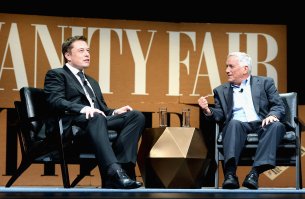
Elon Musk and Walter Isaacson
The account in the biography further confirms the ways in which Mr. Musk’s control over Starlink appears to be affecting Ukraine’s military. In July, The New York Times reported on Mr. Musk’s refusal to allow the service to work near Crimea, and the broader challenges Ukrainian officials were facing because of the country’s huge dependence on Starlink.
The more than 42,000 Starlink terminals are also in use by hospitals, businesses and aid organizations across Ukraine.
But Mr. Musk has repeatedly stoked controversy around access to Starlink, saying last October that he could not “indefinitely” finance Ukraine’s use of Starlink, then abruptly reversing course. The near-total control that he wields over connectivity in the war zone has prompted concern about his influence.
In February, Ukrainian officials were angered after a SpaceX executive said that Starlink had taken steps to curtail the Ukrainian military’s use of the technology to control drones, a week after Mr. Musk said the company was “not allowing Starlink to be used for long-range drone strikes.” SpaceX has also used a process called geofencing to restrict where Starlink is available on the front lines.
Because Starlink is a commercial product rather than a traditional defense contractor, Mr. Musk is able to make decisions that may not be aligned with U.S. interests, analysts have said.
One more and then I’ll wrap this up. It appears that the IRS is actually going after superrich people.
The Internal Revenue Service has started using artificial intelligence to investigate tax evasion at multibillion-dollar partnerships as it looks for ways to better police hedge funds, private equity groups, real estate investors and large law firms.
The announcement on Friday demonstrated how a more muscular I.R.S. is using some of the $80 billion allocated through last year’s Inflation Reduction Act to target the wealthiest Americans and tackle the kinds of cases that had become too complex and cumbersome for the beleaguered agency to handle.
The agency’s new funding is intended to help the I.R.S. raise more federal revenue by cracking down on tax cheats and others who use sophisticated accounting maneuvers to avoid paying what they owe. But the allocation has been politically contentious, with Republicans claiming that the I.R.S. will use the funding to harass small businesses and middle-class taxpayers. Earlier this year, Republicans succeeded in clawing back $20 billion as part of an agreement to raise the nation’s borrowing cap.
That political fight has put the onus on Democrats and the Biden administration to show that the funding is primarily enabling the I.R.S. to target the rich.
“These are complex cases for I.R.S. teams to unpack,” Daniel Werfel, the I.R.S. commissioner, said in a briefing with reporters. “The I.R.S. has simply not had enough resources or staffing to address partnerships; in a real sense, we’ve been overwhelmed in this area for years.”
Mr. Werfel explained that artificial intelligence is helping the I.R.S. identify patterns and trends, giving the agency greater confidence that it can find where larger partnerships are shielding income. That is leading to the kinds of major audits that the I.R.S. might not have previously tackled.
The agency said it would open examinations of 75 of the nation’s largest partnerships, which were identified with the help of artificial intelligence, by the end of the month. The partnerships all have more than $10 billion in assets and will receive audit notices in the coming weeks.
Sounds good to me.
That’s all I have today. Have a great weekend everyone!!
Did you like this post? Please share it with your friends:
The GOP clown show has begun. Last night House Republicans voted to gut the House ethics committee as part of a rules package agreed to by Speaker Kevin McCarthy. Also in the rules package, they approved a new subcommittee under the Judiciary Committee headed by Rep. Jim Jordan that will supposedly investigate the “weaponization” of the federal government. In the first bill taken up by the new House, they voted to eliminate funding for new IRS agents that was included in the Inflation Reduction Act.
House Republicans moved to pre-emptively kill any investigations against its members as it curtailed the power of an independent ethics office just as it was weighing whether to open inquiries into lawmakers who defied subpoenas issued by the House January 6 select committee last year.
The incoming Republican majority also paved the way for a new special subcommittee with a wide mandate to investigate the US justice department and intelligence agencies, which could include reviewing the criminal investigations into Donald Trump and a Republican congressman caught up in the Capitol attack inquiry.
The measures took effect as House Republicans narrowly passed the new rules package that included the changes for the next Congress, 220-213, setting the stage for politically charged fights with the Biden administration over access to classified materials and details of criminal investigations.
Seeking to protect itself, the rules package first undercut the ability of the office of congressional ethics (OCE) to function, with changes that struck at its principal vulnerabilities to defang its investigative powers for at least the next two years, according to sources familiar with its operation.
The changes to the OCE are twofold: reintroducing term limits for members of the bipartisan board, which would force out three of four Democratic-appointed members, and restricting its ability to hire professional staff to the first 30 days of the new congressional session.
The issue with the changes, the Guardian previously reported, is that the OCE requires board approval to open new investigations, while new hires are typically approved by the board. The term limits would mean Democrats need to find new board members, which can take months – far longer than the 30-day hiring period.
In essence, the changes mean that by the time the OCE has a board, it may have run out of time to hire staff, leaving it with one counsel to do possible investigations into the new House speaker, Kevin McCarthy, and other Republican lawmakers who defied January 6 select committee subpoenas.
House Republicans are declaring what amounts to an investigative war on the Biden administration, pledging to probe “ongoing criminal investigations” at the Justice Department.
Veterans of some of Congress’ recent major probes, and the department itself, predict that they’ll be told to pound sand.
Evil Clown vs Smiley, by Herr Karl
GOP lawmakers are dramatically escalating their standoff with the administration by launching a wide-ranging investigative panel to probe what they call the “weaponization of government.” It’s a broad mandate that will allow the party to look into any government agency or program that it views as suspect, including the FBI, IRS and the intelligence community — making good on a key demand of a band of hardline conservatives who opposed Speaker Kevin McCarthy’s bid for the gavel.
And it’s an opening salvo that promises to escalate quickly. The Justice Department is certain to fiercely protect its most sensitive investigative files and prosecutors are simply not going to hand over information on open criminal probes, legal experts say. The resulting conflict promises to erode the already strained relationship between DOJ and congressional Republicans.
“This will be a separation of powers hornets’ nest,” said former House General Counsel Stan Brand, who represented witnesses before the Jan. 6 select committee, including Dan Scavino, a top adviser to former President Donald Trump. “In order to insulate the process from taint, [DOJ] will have to draw clearer ‘lines in the sand’ over what they will provide.”
The genesis of the proposed select panel — which would operate underneath the Judiciary Committee, chaired by Rep. Jim Jordan (R-Ohio) — has exacerbated concerns among DOJ allies about how GOP lawmakers will use their broad directive.
Notably, those seeking to access ongoing criminal matters are among the staunchest political allies of the former president whose efforts to overturn the 2020 election are the subject of a special counsel investigation. Several GOP members of Congress — including House Freedom Caucus Chair Scott Perry (R-Va.) — allied closely with Trump, prompting the department to scrutinize their actions.
Both Perry and Jordan were subpoenaed by the Jan. 6 select committee to testify about events surrounding the Capitol attack by a mob of the former president’s supporters. Both declined to comply with the subpoena.
Though GOP leaders have not yet announced any members of the new investigative panel, McCarthy has indicated to House Republicans that he anticipates Jordan will lead it. Rep. Dan Bishop (R-N.C.), who pushed for the investigative body for months, is viewed as a likely member. Rep. Thomas Massie (R-Ky.) has also said publicly he expects to participate.
There’s much more on the plans for the new subcommittee at the link. I can’t imagine these bozos will pry anything from the DOJ. There’s obviously a serious separation of powers issue there.
House Republicans on Monday commissioned a special investigative panel focused on the coronavirus pandemic, hoping to leverage their new, powerful majority to press scientists and federal officials about the origin of the public health crisis and the government’s response to it.
Lovely Clown, by Leonid Afrenov
Party lawmakers officially chartered the new effort in a sprawling package setting the chamber’s rules for the next two years, awarding it a sweeping mandate — from looking into vaccine development, school closures and other mitigation measures to examining the roughly $5 trillion in emergency federal aid approved since early 2020.
Republicans have long derided Democrats, public health experts and others who advocated for an aggressive government response to covid-19, which has claimed millions of lives globally. At the center of GOP criticism is the suspicion that the coronavirus originated out of laboratory experiments in Wuhan, China, potentially backed by U.S. money — a view at odds with peer-reviewed scientific papers pointing to a more likely origin in a Wuhan market.
In the process, Republican lawmakers also have clashed with scientists and doctors on a wide array of policies meant to arrest the spread of the virus — opposing vaccine mandates, blasting in-person capacity limits and rejecting new federal funding for tests, treatments and other tools.
With new control of the House, however, the GOP aims to surface those concerns in a more prominent setting, questioning a wide array of current and former government officials, potentially including Anthony S. Fauci, the former head of the National Institute of Allergy and Infectious Diseases. The panel, officially named as the Select Subcommittee on the Coronavirus Pandemic, essentially replaces a Democrat-led legislative body that had focused its work on monitoring emergency coronavirus aid for fraud. Under Republicans, it does not yet have a leader, but it is expected to hold its first hearing in February.
A private document that only some House Republicans have seen and others refuse to talk about could play an outsized role in the governance of the chamber over the next two years.
Why it matters: The document contains concessions — not included in the rules package passed on Monday night — that House Speaker Kevin McCarthy (R-Calif.) made to rebellious Freedom Caucus members to secure the speaker’s gavel.
— Those members have threatened to kill McCarthy’s speakership as swiftly as they acquiesced to it if he reneges on their handshake agreements.
Driving the news: The existence of a “secret three-page addendum” containing “the most controversial concessions” that McCarthy made in order to get elected was first reported by Punchbowl News on Monday and confirmed to Axios by multiple GOP aides and members.
— One of those concessions is three seats set aside for conservatives on the Rules Committee, as well as representation for them on the powerful Appropriations Committee.
— Other McCarthy giveaways include votes on congressional term limits and a select committee on the weaponization of the federal government, a debt limit strategy and a more open amendment process on appropriations bills.
— One thing the document doesn’t contain, according to NRCC Chair Richard Hudson (R-N.C.), who said he’s seen it, is promised committee chairmanships for specific members: “No names, just representation [on panels].”
The House GOP’s first policy bill out of the gate didn’t address inflation or gas prices or immigration, but instead went after the Internal Revenue Service.
Dark Clown, by BERTOLINO Florent
The bill was passed Monday evening on a straight party line vote of 221 to 210 to reverse much of the $80 billion in extra funding set aside for the agency by 2022’s Inflation Reduction Act. need of reform.” [….]
The claim from countless Republicans, from Speaker McCarthy on down, is that the influx of money will lead to a flood of 87,000 new IRS agents who will then turn and harass everyday Americans. Some critics of the agency go even further and claim these new agents will be armed.
The viral claims are “absolutely false,” Rettig wrote at the time, adding his agency “is often perceived as an easy target for mischaracterizations,” but he promised the new money will not lead to increased audit scrutiny on households making under $400,000.
The plan is instead for much of the money to go toward wealthy tax cheats. IRS estimates of the so-called “tax gap” — the difference between what taxes are owed to the government and what is actually paid — is hundreds of billions of dollars a year.
Much of the $80 billion will be focused on taking a bite out of the gap, focusing on wealthy tax payers. The investment is projected to pay for itself and then bring in over $100 billion in increased tax revenue over the coming decade.
By contrast, a new analysis from the Congressional Budget Office released Monday afternoon found that the net effect of the House GOP bill’s to defund the agency would increase the deficit by more than $114.3 billion over the coming decade if enacted.
Fortunately, this bill will most likely die in the Senate, and if it somehow gets to Biden’s desk, he will veto it.
In other news, Republicans are gleeful, because a small number of classified documents were found while lawyers were cleaning out an office used by Joe Biden before he became president. The lawyers immediately contacted the National Archives and turned over the documents, and the DOJ is now looking into what happened. There’s no comparison between this and Donald Trump’s stealing of hundreds of classified documents and refusing to return them, but Republicans will have a field day anyway. One hopes the press will recognize the differences.
After serving as Barack Obama’s vice president for eight years, Joe Biden did what high-profile former politicians so often do: He set up a think tank at a prominent university.
Biden’s was called the Penn Biden Center for Diplomacy and Global Engagement, headquartered at the University of Pennsylvania. But unlike other elected officials and other such institutions, Biden’s engagement with the Penn Biden Center was soon back-burnered. By April 2019, he was a candidate for the presidency.
In November, almost exactly two years after Biden’s election, attorneys for the president were emptying an office at the center when, according to their account, they discovered about 10 documents bearing classification markings. The next day, the documents were turned over to the National Archives. The Justice Department is now reviewing them.
In its most concise distillation — documents with classification markings found in president’s office — the scenario seems like a mirror of the controversy that swirled around Donald Trump for much of last year, including the FBI search of his Mar-a-Lago property. Trump and his allies have, predictably, tried to draw this comparison, looping in funding that Penn (broadly; not the Biden center) has received from China.
355 days with this clown, by Ylli Haru
“When is the FBI going to raid the many homes of Joe Biden, perhaps even the White House?” Trump fumed on the social media platform he owns. “These documents were definitely not declassified.”
But, just as the fundamental issue with the Trump documents is not whether they were classified, the situations with the two presidents are not obviously comparable in the way that Trump suggests.
At this point, we don’t know much about the Biden documents beyond what his team has made public, which is certainly an important caveat. According to the Biden team’s statement, the documents were found in a locked closet and quickly turned over to the government. What they contain is unclear, as is their current classification level or status. (There are, of course, numerous existing documents that are no longer classified but which may nonetheless still carry classification markings.) One person, tongue presumably in cheek, told CBS News that the documents did not contain nuclear secrets.
Obvious differences are that Biden didn’t take the documents deliberately and his attorney turned them over to the National Archives as soon as they discovered them. Read the rest at the WaPo.
The US justice department is intensifying its investigation of Donald Trump’s unauthorized retention of national security materials as it prepares to question the people who searched the former president’s properties at the end of last year and found more documents with classified markings.
The department was given a general explanation from Trump’s lawyers at the time about who conducted the search – a company said to be known to Trump with experience handling classified records cases – when the new documents marked as classified were returned to the government around Thanksgiving last year.
But the department, unsatisfied with that accounting, last week convinced a federal judge in a sealed hearing to force Trump’s lawyers to give the names of the people who retrieved the documents with an intent to question them directly, according to sources familiar with the matter.
The move by prosecutors to ask a federal judge to compel the information marks the latest escalating twist in the criminal investigation into Trump’s potential unauthorized retention of highly sensitive government documents as well as obstruction of justice.
The pattern of prosecutors now seeking judicial intervention at every turn signals an aggressive posture from the special counsel Jack Smith, who is overseeing the investigation after being appointed to insulate the department from accusations of political conflicts with Trump, who is now a 2024 presidential candidate.
The justice department told Trump’s legal team in October that it suspected the former president was still in possession of additional documents with classified markings even after the FBI seized hundreds of sensitive materials when agents searched his Mar-a-Lago property on 8 August.
After initially resisting suggestions to retain an outside firm to search his properties for any classified documents, Trump retained people to search his other properties including Trump Tower in New York, Trump Bedminster golf club in New Jersey, Mar-a-Lago, and a storage unit in Florida.
The search, carried out by a company described as being a known entity to the former president, turned up at the storage unit at least two more documents with classified markings that Trump’s lawyers then hurriedly turned over to prosecutors on the documents case.
That’s it for me today. What else is happening? What stories are you following?
Did you like this post? Please share it with your friends:
First, a quick follow-up: I’ve been writing about the delay of stimulus payments to 30 million seniors, disabled people, veterans, railroad pensioners. Last Thursday, the Social Security Administration finally sent information to enable the IRS to send out the direct deposits/checks, but there’s still no information available on when these vulnerable Americans will receive the much needed assistance.
Many recipients of Supplemental Security Income (SSI) and other federal benefits are still waiting to receive their stimulus fund. The Internal Revenue Service has yet to announce a payment date, as of Tuesday….
On March 25, the SSA provided the Internal Revenue Service (IRS) with the paperwork needed for stimulus payments to be issued to federal benefit recipients following pressure from the House Ways and Means Committee. The IRS has yet to respond to Newsweek‘s requests for a comment since the SSA sent the required paperwork.
The SSA website also currently states that “the IRS decided to pay EIPs [Economic Impact Payments] first only to people who filed a 2020 or 2019 tax return, and to people who used the IRS’ Non-Filer Tool to receive a previous EIP. Some Social Security beneficiaries may have received a recent EIP if they filed a tax return with the IRS.”
People who were too poor to file a tax return have been left twisting in the wind. They are advised to use the “check my payment” link at the IRS, but when they do, they are told there is no information available.
Asked whether it had received any information on a stimulus payment date for federal benefit recipients, a spokesperson for NACHA (National Automated Clearing House Association), which manages the ACH Network, the national automated clearing house for electronic funds transfers, told Newsweek this Monday: “We haven’t gotten anything.”
Newsweek has contacted the IRS, the U.S. Treasury and the U.S. Bureau of the Fiscal Service for comment.
The SSA website currently advises: “Please refer to the IRS’ website for the latest information about economic impact payments (EIP). Please do not contact the Social Security Administration (SSA) with questions about EIPs. Our representatives do not have information to answer your EIP questions. The IRS, not SSA, processes all EIPs.”
A spokesperson for the SSA told Newsweek on March 26: “As you may already know, many Social Security beneficiaries have already received their EIPs. The final files we sent to IRS yesterday morning [Thursday] will address those recipients who don’t normally file a tax return with the IRS.”
Now for my main topic: Cultural Appropriation
Wikipedia: Cultural appropriation is the adoption of an element or elements of one culture or identity by members of another culture or identity. This can be controversial when members of a dominant culture appropriate from disadvantaged minority cultures.
I seldom watch late night entertainment programs, but yesterday there was a strong reaction to a Tonight Show segment. A white TikTok “influencer,” Addison Rae, appeared on the Jimmy Kimmel show to perform several dance routines. The problem is that she copied them from Black women on TicToc and failed to credit them or the Black artists who performed the songs she danced to.
Many of the viral dance challenges Rae demonstrated were started by Black creators, but you wouldn’t know that by watching Friday’s episode.
Many of TikTok’s viral dance challenges were started by Black creators, but you wouldn’t know that by watching Friday’s episode of “The Tonight Show,” which saw one of the app’s biggest stars, Addison Rae, perform several dances without crediting their choreographers.
What was intended as a fun moment between Rae and host Jimmy Fallon — who are both white — backfired over the weekend as Twitter users demanded recognition for the people whose choreography was featured on the show.
“Stealing from black entertainers and having white ‘creators’ regurgitate it to the masses is american history 101,” one person tweeted after Fallon shared a clip of Rae busting a move to eight different songs.
“I think Black creators should just stop creating content for like a good 6 months and just observe what these people come up with,” wrote another in a tweet that had amassed more than 261,000 likes….
Included in the TikTok dance compilation were:
“Do It Again” (recorded by Pia Mia, choreographed by @noahschnapp)
“Savage Love” (recorded and choreographed by @jasonderulo)
“Corvette Corvette” (recorded by Popp Hunna, choreographed by @yvnggprince)
“Laffy Taffy” (recorded by D4L, choreographed by @flyboyfu)
“Savage” (recorded by Megan Thee Stallion, choreographed by @keke.janjah)
“Blinding Lights” (recorded by the Weeknd, choreographed by @macdaddyz)
“Up” (recorded by Cardi B, choreographed by @theemyanicole)
“Fergalicious” (recorded by Fergie and will.i.am, choreographed by @thegilberttwins).
(The choreographers’ names have been shared by Twitter users and confirmed by Buzzfeed.)
Here’s a side-by-side comparison of Rae’s performance to Cardi B’s “Up” along with the original performance by TheMayaNicole. See what you think.
If you want to see a TikTok dance skit, why not ask the original artists to participate? That’s a question The Tonight Show Starring Jimmy Fallon and Addison Rae face after March 26th’s episode. The well-known creator walked Fallon through a few of the app’s most popular choreography in a sketch, similar to a video released with Charli D’Amelio last year. Quickly after airing, the clip faced criticism as viewers wondered why the creatives who actually created the dances didn’t get screen time — or at the very least, proper credit.
This controversy is not new for Rae, who faced similar pushback after she and D’Amelio became the face of a “Renegade” dance routine, which was originally created by Jalaiah Harmon. Intentional or not, Rae and D’Amelio’s names were synonymous with choreography they had no hand in. They went as far as to perform the dance at a 2020 NBA All Star game without Harmon. Harmon eventually got her dues, but only after publicly reclaiming the viral dance. Rae and D’Amelo need only whisper and their combined 100+ million followers would come running, so why did Harmon practically need a megaphone to get her credit? Her experience is a disappointing reflection of how art is co-opted on social media, especially from Black creatives.
You can’t separate Rae’s success from the work of Black TikTokers. Some of her most viewed videos are built on their choreography, like the “Savage” routine originated by Keara Wilson. (Wilson told POPSUGAR she doesn’t wish any backlash against Rae because she knows “how toxic the internet can be.” She said, “Yes of course it’s always nice to be credited but just having my dance on the show is an honor in itself.”)
As Twitter user @blackamazon wrote, “This is why I bang on EVERYBODY about the economics and race of social media. ‘Tik tok dances’ the names of the artists not there. The actual choreographers not there. She’s on national television but where are the Black kids who actually made these.” Another user, @868nathan, wrote, “The fact that Addison Rae is championed for ‘Tik Tok Dances’ whilst the black creatives that made them never get the same platform will never sit right with me.”
This reminds me of the days when white recording artists like Pat Boone released pathetic cover versions of songs by Black musicians like Little Richard. The good news in those days was that people who heard the covers sought out the originals and eventually the Black artists became well known and successful. The same thing happened again in the 1960s with British and American bands who covered performances by Black blues musicians.
While some early rock ‘n’ roll acts receive little critical respect, historically speaking, these same musicians and singers played an important role in bridging musical styles and bringing cultures together, writes Aquila, professor emeritus of history and American studies at Penn State, in his book, Let’s Rock! How 1950s America Created Elvis and the Rock & Roll Craze (Rowman & Littlefield, 2017).
“I spend a lot of time discussing Pat Boone and other pop rockers in the book. Boone refers to himself not as the father of rock ‘n’ roll, but as the midwife of rock ‘n’ roll,” says Aquila.
“What he means by this is that his versions of Little Richard’s songs may not be as good as Little Richard’s originals, but Little Richard couldn’t get played on mainstream radio stations back in the ’50s, due to racism and other reasons. But, after the kids listened to Boone’s music, they tended to go on and want the real thing.”
Boone spent most of his early career covering rhythm-and-blues songs, like Richard’s “Tutti Frutti.” Boone’s versions, however, were influenced by pop styles and standards that were tamer and more familiar to white audiences of the time. He also sanitized Fats Domino’s “Ain’t That a Shame,” for his white audience’s ears and, apparently, their grammar. He tried, for instance, to change the title of the song to “Isn’t That a Shame.”
While many music critics now consider this artistic theft or cultural appropriation, Aquila says that some black artists at the time appreciated Boone’s cover songs.
At a concert, for example, Aquila writes that Domino introduced Boone to the audience and, pointing to one of his diamond rings, added that Boone’s version of “Ain’t That a Shame” bought him that ring.
It’s still pathetic that our white-dominated culture made this happen and even more pathetic that it is still happening on social media platforms like TikTok and mainstream TV programs.
The information the IRS needs to send out the payments was finally delivered on Thursday morning after threatening letters sent to Social Security Commissioner Andrew Saul and his Deputy David Black by leaders of the House Ways and Means and Oversight Committees. There is still no word on when the deposts/checks will go out. The latest estimate is that those of us in these categories will still have to wait at least 10 days to see the money.
Meanwhile, calls on Biden to fire Saul and Black are growing louder.
Weeks after the American Rescue Plan had been signed into law, while many Americans had already received payments, the Social Security Administration’s inaction was standing in the way of millions of beneficiaries receiving desperately needed cash aid. After escalating pressure on Saul to no avail, the letter gave him 24 hours to remedy the holdup. A few hours later, the SSA announced that they’d be sending the information the next day.
This delay is just the latest in an array of extremely troubling decisions under the leadership of the Social Security Administration’s commissioner Saul, and his deputy David Black….
Commissioner Saul and Deputy Commissioner Black were appointed by President Trump, alongside Deputy Commissioner for Retirement and Disability Policy Mark Warshawsky, to self-fulfill the Republican promise about the failure of government, and destroy the departments they were tasked with managing. Warshawsky, a veteran of the American Enterprise Institute, was pegged as an early candidate to be fired by the Biden administration for his work undercutting the program; he retired from the post in late January.
The Biden administration has set to work rolling back some of those Trump appointees’ designs on Social Security, including a proposed rule that would have subjected disability insurance recipients to even more frequent and stringent eligibility reviews, which would make an already challenging process even more difficult for people with disabilities to secure and maintain cash benefits. That move was widely celebrated among advocates. But President Biden has not heeded the call from those same advocates to fire Saul and Black, who have clear track records of working against the very department they’ve been tasked to head up, and against Democratic ambitions on Social Security.
Frank O’Sullivan
Now, a growing number of congressional Democrats are joining the chorus calling for Saul and Black’s ousters. Sen. Sherrod Brown (D-OH) called for their resignation as his first act as chair of the Social Security and Pensions Subcommittee, and has since urged Biden to fire them. He’s joined House Ways and Means Social Security Subcommittee Chairman John Larson, Worker and Family Support Subcommittee Chairman Danny Davis, and Oversight Subcommittee Chairman Bill Pascrell Jr. in demanding Saul’s immediate removal. Both Saul and Black are serving terms that don’t expire until 2025….
On the campaign trail, Biden insisted (straining against historical fact) he had never and would never vouch for cuts to Social Security. He, and the Democratic Party broadly, have made protecting and expanding Social Security a main plank of the party’s policy platform going forward.
That ambition is irreconcilable with a leadership regime that has, as was reported by Yahoo News, put “illegitimate political pressure on Administrative Law Judges to reduce the rate of Social Security disability case approval,” as one such judge recently claimed. That alone should be scandal enough to imperil Saul and Black’s positions at the agency, and give the Biden administration the space to fire them for cause. But the Trump years have built up a tolerance for scandal, which means that the incident hasn’t even deterred them.
Meanwhile, Saul and Black have openly pursued a number of reforms aimed at aggressively curtailing benefits. Their attempted rule change, which the Biden administration rolled back, was a Reagan-era reform that would have led to tens of thousands of people losing benefits. When President Reagan enacted it, it led to a rash of suicides, and was deemed so cruel that it led to a unanimous Senate ruling to overturn it. Elsewhere, they’ve sought to deny benefits for older and severely disabled non–English speakers, resulting in an estimated 100,000 people being denied more than $5 billion in benefits.
See my Thursday post for more about Saul and Black’s efforts to destroy Social Security on Thursday.
Pressure is also building for Biden to get rid of Trump-appointed Postmaster General Louis DeJoy.
A group of House Democrats on Friday introduced legislation to prohibit the Postal Service from lengthening mail-delivery windows and require it to adhere to present service expectations. They named the bill the Delivering Envelopes Judiciously On-time Year-round Act, or DEJOY Act.
Carl Larsson: Brita, Cat and Sandwich
One House aide involved in postal reform legislation introduced in February said some members of the caucus are leery of proceeding with efforts to address the Postal Service’s financial obligations given that DeJoy’s 10-year plan includes sharp reductions in service, including slower timetables for mail delivery and reduced post office hours.
Separately, Pennsylvania Attorney General Josh Shapiro (D) threatened to take legal action to block the service cuts. His office said in a statement Friday that it was encouraged that DeJoy recognizes the legal obligations to secure limited regulatory approvals, but said it remained concerned about timely mail delivery….
DeJoy hopes to save the Postal Service $160 billion over the next decade through a combination of austerity measures, postage price increases and projected package volume growth. But the largest single piece of his plan is dependent on Congress repealing its pre-funding mandate for retiree health care costs, which runs about $5 billion a year. Instead, the agency wants to wind down those payments and enroll future retirees in Medicare, a proposal worth $44 billion.
A bill introduced by Rep. Carolyn B. Maloney, chair of the powerful House Oversight and Reform Committee, includes both components.
But DeJoy’s designs to slow the mail — even as the Postal Service attempts to rebound from generationally poor service metrics in recent months — and perceived animus toward lawmakers in recent hearings have made those prospects more difficult.
Sometimes America’s legacy of white supremacy is hiding in plain sight, literally. When Georgia Gov. Brian Kemp signed a hastily passed voter suppression law that many are calling the new, new Jim Crow on Thursday night, surrounded by a half-dozen white men, he did so in front of a painting of a plantation where more than 100 Black people had been enslaved.
Lady reading with cat-Albert Roosenboom
The fitting symbolism is somehow both shocking and unsurprising. In using the antebellum image of the notorious Callaway Plantation — in a region where enslaved Black people seeking freedom were hunted with hounds — in Wilkes County, Ga., as the backdrop for signing a bill that would make it a crime to hand water to a thirsty voter waiting on Georgia’s sometimes hours-long voter lines, the GOP governor was sending a clear message about race and human rights in the American South.
The portrait of the plantation was the starkest reminder of Georgia’s history of white racism that spans slavery, Jim Crow segregation, the rebirth of the modern Ku Klux Klan, and today’s voter purges targeting Black and brown voters — but it wasn’t the only one. At the very moment that Kemp was signing the law with his all-white posse, a Black female Georgia lawmaker — Rep. Park Cannon — who’d knocked on the governor’s door in the hopes of watching the bill signing was instead dragged away and arrested by state troopers, in a scene that probably had the Deep South’s racist sheriffs of yesteryear like Bull Connor or Jim Clark smiling in whatever fiery hellhole they now inhabit.
Rep. Park Cannon (D-Atlanta) is placed in handcuffs by Georgia State Troopers after being asked to stop knocking on a door that lead to Gov. Brian Kemp’s office while Gov. Kemp was signing SB 202 behind closed doors at the Georgia State Capitol Building in Atlanta, Thursday, March 25, 2021.Alyssa Pointer / AP
Indeed, Twitter was on fire Thursday night with posters drawing the straight line from notorious past segregationists like George Wallace to the 2021 actions of Kemp and the GOP-led Georgia Legislature in passing — at great speed and with little debate — a lengthy bill that also limits easy-access drop boxes for ballots and places onerous voter-ID restrictions on voting by mail, and which the New York Times reports “will have an outsized effect on Black voters.”
On one level this new voter-suppression law — “voter integrity,” in the modern GOP’s Orwellian branding — is inspired by the current and possible future events of ex-President Donald Trump’s Big Lie about fraud in the 2020 election, the narrow upset wins in Georgia for President Biden and two new Democratic senators, and the threat that voting icon Stacey Abrams poses to Kemp in the 2022 election. But there’s also a powerful pull back to Georgia past. That link is made clear by the history hanging right behind Kemp on Thursday.
“Things have changed dramatically” in the South, Chief Justice John Roberts wrote in 2013 when he authored the majority opinion gutting the Voting Rights Act, ruling that states with a long history of discrimination no longer needed to have changes to their voting procedures approved by the federal government.
Voter suppression in Georgia is Exhibit A for why he is wrong.
After Joe Biden carried the state in November and Black voters turned out in record numbers in the January runoffs to elect Democrat Raphael Warnock as the state’s first Black senator and Democrat Jon Ossoff as the state’s first Jewish senator, Georgia Republicans passed a sweeping rewrite of the state’s election laws on Thursday to make it harder for Democratic constituencies to vote and have their ballots counted.
Though some Georgia Republicans, most notably Secretary of State Brad Raffensperger, defended the integrity of the 2020 election, the “Election Integrity Act of 2021” heavily restricts mail ballot drop boxes, adds new ID requirements for mail-in voting, throws out ballots cast in the wrong precincts, and makes it a crime to give voters food and water while they’re waiting in line.
In addition to making it harder to vote, the new law allows the GOP-controlled legislature to appoint a majority of members of the state election board and gives the board the power to take over county election boards, making it easier for Republicans to challenge election results, take over election administration in large Democratic counties, and even decline to certify the results if Democrats win close races—which Trump tried and failed to get the state to do in 2020.
One of the small, rueful truths that many Americans held in the back of their minds throughout the pandemic year was that, for all of its horrors, it had at least reduced, or even eliminated, the spectacle of the gun massacre. School closings had momentarily ended school shootings; curbside delivery had, it seemed, halted in-store assaults. It is true that gun fatalities were disturbingly trending upward in big cities, for reasons that are as yet as mysterious as those for the great decline that preceded them, and that, according to the Gun Violence Archive, last year saw the highest number of shooting deaths in decades. In fact, keyed, perhaps, by a general sense of panic marked by the pandemic and a bizarrely unsettled election year—with that strange American certainty that they’re coming for you—gun sales soared, even amid groups that are not normally associated with buying firearms in numbers.
The gun massacre, however—five or twenty or fifty people murdered at a time—had, briefly, vanished. Yet, alongside the knowledge that mass shootings had gone stood the knowledge that they would, inevitably, reëmerge. And here they are, right on schedule, as the country “opens up,” and with a vengeance: seven in the past seven days, with eight people killed in three shootings in Atlanta, and ten in a grocery store in Boulder. With those shootings come back all the usual, understandable, and all-too-human reactions—above all, our urge to give them some kind of meaning by making them an index of a larger issue. Violence this blankly nihilistic needs a point projected into it, to redeem it as a subject of discussion….
Countries that resemble ours in every way except for the availability of guns have much lower levels of gun violence and far fewer gun massacres. Yet these truths, demonstrated again and again, meet the same resistance, over and over. The Second Amendment guarantees private ownership of even military-style weapons. (It doesn’t, or rather, until very recently, not even conservative Justices imagined that it did.) Guns are essential for self-protection. (They aren’t.) The way to stop mass shootings is to arm more people, such as teachers. (A “colossally stupid idea,” according to the co-president of the Brady Campaign to Prevent Gun Violence.)
All this, even as the sheer psychic damage done by the omnipresence of guns in America is self-evident (no healthy society should have to train its children in active-shooter drills), while the social damage extends far beyond the immediate casualties. A reason for the prevalence of police shootings in America is that the police go about armed, in levels unique to our society, in order to deal with the uniquely over-armed civilians they fear encountering, with the frequently fatal results, we know too well, for the unarmed and the innocent.
Sorry this isn’t a more cheerful post. I’ll probably be up for something more upbeat if I finally get that promised $1400. What’s on your mind today?
Did you like this post? Please share it with your friends:
President Biden is going to have a press conference this afternoon, and I wish someone would ask him why around 30,000,000 people on Social Security, disability, veterans, and railroad pensions haven’t gotten their stimulus payments yet. Furthermore, why hasn’t he fired two Trump holdovers at the Social Security Administration who are holding up the payments and who are trying to destroy Social Security?
Social Security hasn’t handed over payment information that the Internal Revenue Service needs to send the coronavirus relief checks to nearly 30 million people receiving retirement or disability benefits, Democrats said.
“We understand that these beneficiaries are waiting because the Social Security Administration has not sent the necessary payment files to the Internal Revenue Service,” House Ways and Means Committee chair Richard Neal (D-Mass.) said in a letter to Social Security Commissioner Andrew Saul.
Several Democrats, including Sen. Sherrod Brown (D-Ohio) and Rep. John Larson (D-Conn.), had previously urged President Joe Biden to fire Saul, a Donald Trump appointee whose term doesn’t expire until 2025. Biden has hesitated to do so even though he’s fired other Trump holdovers in other agencies before their terms have ended.
The IRS has sent more than 127 million payments so far. Neal and other members of his committee earlier this week asked Social Security and the IRS to explain the delayed payments to Social Security beneficiaries.
In Wednesday’s letter, Democrats said they became “aware that the IRS asked SSA to start sending payment files two weeks before the American Rescue Plan became law on March 11, 2021” ― and that Social Security still hasn’t provided the information.
People in these categories are the poorest of the poor, including Social Security recipients who don’t have enough income to file tax returns.
We are giving the trump-appointed heads of the Social Security Admin **24 Hours** to get off their backsides and stop delaying sending stimulus checks to 30,000,000 Americans. pic.twitter.com/zsx7t9vKvC
— Bill Pascrell, Jr. 🇺🇸🇺🇦 (@BillPascrell) March 24, 2021
President Biden is facing increasing pressure to remove two Social Security Administration officials appointed by his Republican predecessor, a standoff that could test the limits of his ability to undo Donald Trump’s legacy.
The brewing controversy surrounds Andrew Saul and David Black, the agency’s commissioner and deputy commissioner, whom Trump appointed to fixed-term positions that don’t end until 2025. As term appointees, they can’t be removed by Biden except for cause, but unions and Capitol Hill alike are demanding that Biden find a way to remove them, accusing them of creating a toxic work environment, contributing to low morale due to staff cuts, and sidelining the agency’s administrative law judges.
The continued presence of the Trump appointees underscores the difficulties the Biden administration faces when trying to roll back some of the previous administration’s efforts to reshape the federal government. While traditional political appointees must resign or face being fired when a new administration comes in, presidents are also able to install fixed-term employees to boards and other government positions that can outlast their administration.
Saul, a New York businessman and Republican donor, and Black, a former Bush administration staffer, have been in their positions since 2019. According to critics, the two officials have engaged in “no-holds-barred union busting” and eliminated the agency’s pre-pandemic telework program, forcing over 10,000 employees to commute to work — a rule change that continues despite the onset of COVID-19. (That did not apply to Saul, who reportedly continued to work from home as thousands of his employees commuted during the onset of the pandemic.)
There’s more at the Yahoo News link.
Social Security Commissioner Andrew Saul and his Deputy David Black "are sabotaging the Biden administration by delaying relief checks."
Postmaster General Louis DeJoy on Tuesday unveiled the largest rollback of consumer mail services in a generation, part of a 10-year plan that includes longer first-class delivery windows, reduced post office hours and higher postage prices.
DeJoy presented his long-awaited strategic vision for the U.S. Postal Service during a Tuesday webinar. Portions of the initiative already made public have raised alarms from postal advocates, who say they could further erode agency performance. Mailing industry officials warn that substantial service cuts could drive away business and worsen its already battered finances.
Louis DeJoy
But DeJoy has cited the need for austerity to ensure more consistent delivery and rein in losses. The agency is weighed down by $188.4 billion in liabilities, and DeJoy told a House panel last month that he expects the Postal Service to lose $160 billion over the next 10 years. Without the plan, Postal Service Board of Governors Chairman Ron Bloom said, the agency’s future was “profoundly threatened.”
DeJoy’s plan to make up that projected shortfall largely depends on Congress repealing a retiree health care pre-funding mandate and allowing postal workers to enroll in Medicare. The agency also will ask President Biden to order a review of how much the Postal Service should have paid into its pension funds, and credit the mail agency with any overpayments.
DeJoy projected these steps would save the agency $58 billion over the next decade, and the agency could make up the rest through postage rate increases ($44 billion in new revenue), “self-help” cost cutting in mail processing, transportation and administrative efficiencies ($34 billion), and revenue from package volume and price increases ($24 billion).
Presidents get to decorate the Oval Office any way they want, and it’s usually telling. Joe Biden for example, requested that five portraits be hung around the fireplace. There’s George Washington, Thomas Jefferson, Abraham Lincoln and one of the greatest Americans who never became president: Alexander Hamilton.
And in the middle of this esteemed group is a fifth portrait in a place of honor over the fireplace: Franklin D. Roosevelt. Biden, who will be the last president who lived during FDR’s momentous era, deeply admires our 32nd president, and it shows in both his style and way of governing.
No president since Roosevelt inherited the kind of mess that confronted Biden, and he has responded as FDR did: By throwing big money at problems. The ink on the $1.9 trillion pandemic relief plan is barely dry, and now the White House is set to unveil a $3 trillion infrastructure plan.
There’s also talk of reforming the biggest federal program of all: Social Security, which Roosevelt launched in 1935, and which is now paying out more cash than it’s bringing in. In Washington, the word “reform” is usually a code word for more spending.
Hmmm….I hope that will involve lifting the cap on the payroll tax so that rich people have to contribute more to Social Security and Medicare.
Biden’s style — specifically how he communicates with the American people — is also a page from the FDR playbook. Two months into his presidency, he has been surprisingly disciplined and economical with his words and appearances. The verbal gaffes that dogged him throughout his long career in Washington are nowhere to be seen. I’m sure he’ll make a boo-boo eventually (he’s Joe Biden, after all) but after four years of a president who lied about everything, a gaffe on Biden’s part these days will be seen as an honest mistake, humanizing, even charming to a certain degree.
Roosevelt is remembered for his famous Fireside Chats. Forgotten, however, is how infrequently he gave them. During his 12 years in office — bookended by America’s greatest 20th century crises, the Great Depression and World War II — he took to the airwaves just 30 times. Just two or three times a year. The rarity of his appearances amped up the drama and attention when he did speak.
But, unlike Biden so far, FDR gave lots of press conferences, Brandus writes. He recommends that Biden make his first formal appearance before the D.C. press corps as boring as possible.
The news media is trying to gin up the drama for this, and Biden will certainly be asked about tough issues that already are challenging his smooth operation — including immigration problems at the southern border and the mass shootings in the Atlanta area and Boulder, Colorado. But he knows this and will be prepared.
If Biden’s lucky, his first news conference will be a dull affair. It will also likely be a rare one. Why? Here’s the deal. With platforms like Twitter, Facebook and all the rest at their fingertips, modern-day presidents need reporters and the press less than ever. We saw this during the campaign, when Biden gave individual interviews but rarely held news conferences. The pandemic was a good excuse to pull back even further.
In other news, There’s been an attempted copycat supermarket shooting in Georgia; fortunately it was short-circuited.
Just two days after a mass shooting left 10 people dead at a Colorado supermarket, Atlanta police arrested a 22-year-old man who walked into a Publix at Atlantic Station with six guns and body armor.
Police were called to the grocery store on Atlantic Drive just after 1:30 p.m. Wednesday and met with a manager who told them a man came in with a rifle and headed straight toward a bathroom, authorities said.
“A witness observed the male and alerted store management, who then notified police,” Atlanta police spokesman Officer Anthony Grant told The Atlanta Journal-Constitution.
Officers at the scene spotted the man leaving the bathroom and quickly took him into custody. According to police, his weapons included two long guns and four pistols, all of which were concealed.
Police identified the man as Rico Marley. He was booked into the Fulton County Jail on multiple charges of criminal attempt to commit a felony and weapons possession. Marley is scheduled for a first appearance before a judge Thursday morning.
The witness who saw 22 y/o Rico Marley in the bathroom with the AR-15 told us tonight he may have helped prevent a mass shooting. Charles Russell says the tragedy in Boulder was definitely on his mind. https://t.co/gMZBvbwWT8pic.twitter.com/3fdUm4u7Om
Xiao Zhen Xie, the 75-year-old woman who was punched by a white man in San Francisco — and then fought back by smacking him with a board — will not keep the nearly $1 million that has been donated for her medical expenses. Her grandson says Xie insists on donating the money to help defuse racism against the Asian American community.
“She insists on making this decision saying this issue is bigger than Her,” John Chen wrote in an update on the fundraising site GoFundMe.
Xiao Zhen Xie, 75, is recovering after she was punched by a man in San Francisco. Her family says that despite being hurt, she fought back to defend herself. Dennis O’Donnell/Screenshot by NPR
Xie was attacked on San Francisco’s Market Street last Wednesday, the morning after six women of Asian descent were killed in a shooting rampage in the Atlanta area — the worst incident in a broader spike in incidents that have targeted the Asian American and Pacific Islander community.
Xie, who is originally from China, had been waiting to cross the street when she was suddenly hit in the face. San Francisco Police say the suspect, Steven Jenkins, punched Xie minutes after he assaulted an 83-year-old Asian man. The suspect was being chased by a security guard when he hit Xie.
In the moment, her instinct was to fight back, her family told TV station KPIX. They said that Xie, while badly hurt, responded by grabbing a wooden board and hitting the man.
Jenkins, 39, was left with a bloody mouth and is facing charges of assault and elder abuse.
I’ll end with this argument that violence against women is a hate crime. Click the link to read the article at The Atlantic.
Many are outraged that officials appear hesitant to classify the Atlanta shootings as a hate crime. But the call for hate-crime prosecution would be better served by an understanding that such designations are often purely symbolic, @saigrundy writes: https://t.co/kx84Rqosnh
The Sky Dancing banner headline uses a snippet from a work by artist Tashi Mannox called 'Rainbow Study'. The work is described as a" study of typical Tibetan rainbow clouds, that feature in Thanka painting, temple decoration and silk brocades". dakinikat was immediately drawn to the image when trying to find stylized Tibetan Clouds to represent Sky Dancing. It is probably because Tashi's practice is similar to her own. His updated take on the clouds that fill the collection of traditional thankas is quite special.
You can find his work at his website by clicking on his logo below. He is also a calligraphy artist that uses important vajrayana syllables. We encourage you to visit his on line studio.


















 peej
peej Carissa
 bostonboomer
 dakinikat
 ecocatwoman
 jjlolatina
 mablue2
 Mama Lopez
 peggysue22
 quixote
 skydancingguestblogger
 Mona (aka Wonk the Vote)



 Sky Dancing
Recent Comments