
Friday Reads
Posted: June 14, 2013 Filed under: morning reads | Tags: free speech, homophobia, immigration, Marco Rubio, SCOTUS 32 Comments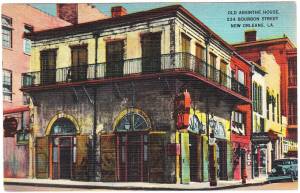
Good Morning!
So, I am trying to get with it again. Seems like it’s always something. Grades to get in. Issues with my elderly father. Daughters so busy that I seemed to have slipped their minds. Doctor’s appointments. I am going to try to take this weekend to catch up with reality. I should also make a point of going out and enjoying my home city which is one of the great places of this country.
Speaking of reality, there is so much weirdness around the issue of immigration these days that I thought I’d post on it. I live in what can only be described as the melting pot of all the melting pots in the country. It is what makes us unique in the world. We’ve got a unique cuisine, culture, and music because we just soaked it all in from every one else and put it out there to grow. But, there’s a lot of people that are scared of that kind of thing. Just smell that Gumbo! Listen to that Jazz! Embrace the dancers of a second line! None of that would exist without the blending of Africans, Caribbeans, Americans, and all kinds of Europeans!
In the land of tabloid terrors, immigrants loom large. Flick through the pages or online comments of some of the racier newspapers, and you’ll see immigrants being accused of stealing jobs or, if not that, of being workshy and “scrounging benefits”.
Such views may be at the extreme end of the spectrum, but they do seem to reflect a degree of public ambivalence, and even hostility, towards immigrants in a number of OECD countries. Anecdotal evidence is not hard to find. A columnist from The Economist reported this encounter between a British legislator and one of his constituents, Phil: “‘I’m not a racist,’ says Phil, an unemployed resident of the tough Greenwich estate in Ipswich. ‘But we’ve got to do something about them.’”
Surveys offer further evidence: For example, a 2011 study in five European countries and the United States found that at least 40% of respondents in each country regarded immigration as “more of a problem than an opportunity”. More than half the respondents in each country also agreed with the proposition that immigrants were a burden on social services. This sense that immigrants are living off the state appears to be widespread. But is it true?
New research from the OECD indicates that it’s not. In general across OECD countries, the amount that immigrants pay to the state in the form of taxes is more or less balanced by what they get back in benefits. Even where immigrants do have an impact on the public purse – a “fiscal impact” – it amounts to more than 0.5% of GDP in only ten OECD countries, and in those it’s more likely to be positive than negative. In sum, says the report, when it comes to their fiscal impact, “immigrants are pretty much like the rest of the population”.
The extent to which this finding holds true across OECD countries is striking, although there are naturally some variations. Where these exist, they largely reflect the nature of the immigrants who arrive in each country. For example, countries like Australia and New Zealand rely heavily on selective entry, and so attract a lot of relatively young and well-educated immigrants. Other countries, such as in northern Europe, have higher levels of humanitarian immigration, such as refugees and asylum-seekers.
That said, there’s been a general push in many countries in recent years to attract better educated immigrants, in part because of the economic value of their skills but also because such policies attract less public resistance. For example, a survey in the United Kingdom, where resistance to immigration is relatively high, reported that 64% of respondents wanted to reduce immigration of low-skilled workers but only 32% wanted fewer high-skilled immigrants. Indeed, one objection that’s regularly raised to lower-skilled immigrants is the fear that they will live off state benefits.
But, here again, the OECD report offers some perhaps surprising insights. It indicates that low-skilled migrants – like migrants in general – are neither a major drain nor gain on the public purse. Indeed, low-skilled immigrants are less likely to have a negative impact than equivalent locals.
So what connects homophobia, Marco Rubio and US immigration Policy? Basically, the connection is outright discrimination for any GLBT who wants to be an American. Rubio has threatened to leave negotiations on immigration if any GBLT rights are included. He also says it should be legal to fire any one for their sexual orientation.
Florida Republican Sen. Marco Rubio, a co-author and key proponent of the Senate immigration bill, said he will revoke his support if an amendment is added that allows gay Americans to petition for same-sex spouses living abroad to secure a green card.
“If this bill has in it something that gives gay couples immigration rights and so forth, it kills the bill. I’m done,” Rubio said Thursday during an interview on the Andrea Tantaros Show. “I’m off it, and I’ve said that repeatedly. I don’t think that’s going to happen and it shouldn’t happen. This is already a difficult enough issue as it is.”
The amendment, introduced by Vermont Democratic Sen. Patrick Leahy, would grant green cards to foreign partners of gay Americans. Leahy originally introduced the measure during the Senate Judiciary Committee markup of the bill, but he withdrew it under pressure from Republican lawmakers who said it would reduce the chance of the bill passing.
Why does he think that firing any one for sexual orientation is also on target?
Sen. Marco Rubio (R-FL), who is touted as a top GOP presidential prospect in 2016, thinks it should be legal to fire someone for their sexual orientation.
ThinkProgress spoke with the Florida Senator at the opening luncheon of the annual Faith and Freedom Forum on Thursday and asked him about the Employment Non-Discrimination Act (ENDA), a bill to make discrimination against LGBT individuals illegal across the country.
Though Rubio bristles at the notion of being called a “bigot,” he showed no willingness to help protect LGBT workers from discrimination. “I’m not for any special protections based on orientation,” Rubio told ThinkProgress.
KEYES: The Senate this summer is going to be taking up the Employment Non-Discrimination Act which makes it illegal to fire someone for being gay. Do you know if you’ll be supporting that?
RUBIO: I haven’t read the legislation. By and large I think all Americans should be protected but I’m not for any special protections based on orientation.
KEYES: What about on race or gender?
RUBIO: Well that’s established law.
KEYES: But not for sexual orientation?
Watch the video at the link for his astoundingly bigoted answer.
The US Congress has just been told that Syria has used chemical weapons on its rebels. What does this mean for the US and for our allies?
The Obama administration, concluding that the troops of President Bashar al-Assad of Syria have used chemical weapons against rebel forces in his country’s civil war, has decided to begin supplying the rebels for the first time with small arms and ammunition, according to American officials.
The officials held out the possibility that the assistance, coordinated by the Central Intelligence Agency, could include antitank weapons, but they said that for now supplying the antiaircraft weapons that rebel commanders have said they sorely need is not under consideration.
Supplying weapons to the rebels has been a long-sought goal of advocates of a more aggressive American response to the Syrian civil war. A proposal made last year by David H. Petraeus, then the director of the C.I.A., and backed by the State Department and the Pentagon to supply weapons was rejected by the White House because of President Obama’s deep reluctance to be drawn into another war in the Middle East.
But even with the decision to supply lethal aid, the Obama administration remains deeply divided about whether to take more forceful action to try to quell the fighting, which has killed more than 90,000 people over more than two years. Many in the American government believe that the military balance has tilted so far against the rebels in recent months that American shipments of arms to select groups may be too little, too late.
Some senior State Department officials have been pushing for a more aggressive military response, including airstrikes to hit the primary landing strips that they said the Assad government uses to launch the chemical weapons attacks, ferry troops around the country and receive shipments of arms from Iran.
But White House officials remain wary, and on Thursday Benjamin J. Rhodes, one of Mr. Obama’s top foreign policy advisers, all but ruled out the imposition of a no-fly zone and indicated that no decision had been made on other military actions.
Mr. Obama declared last August that the use of chemical weapons by the Syrian government would cross a “red line” that would prompt a more resolute American response.
 So what does the latest Supreme Court Decision on free speech mean? Oddly enough, it means no protests in their front yard!
The Supreme Court has come up with a new regulation banning demonstrations on its grounds.
The rule approved Thursday comes two days after a broader anti-demonstration law was declared unconstitutional.
The new rule bans activities such as picketing, speech-making, marching or vigils. It says “casual use” by visitors or tourists is not banned.
That may be a way of addressing the concern posed by a federal judge who threw out the law barring processions and expressive banners on the Supreme Court grounds.
The judge said the law was so broad that it could criminalize preschool students parading on their first field trip to the high court.
The president of the Rutherford Institute, which challenged the law on a protester’s behalf, calls the new rule “repugnant” to the Constitution.
The Supreme Court on Thursday issued a new regulation barring most demonstrations on the plaza in front of the courthouse.
The regulation did not significantly alter the court’s longstanding restrictions on protests on its plaza. It appeared, rather, to be a reaction to a decision issued Tuesday by a federal judge, which narrowed the applicability of a 1949 federal law barring “processions or assemblages” or the display of “a flag, banner or device designed or adapted to bring into public notice a party, organization or movement” in the Supreme Court building or on its grounds.
The law was challenged by Harold Hodge Jr., a student from Maryland who was arrested in 2011 on the Supreme Court plaza for wearing a large sign protesting police mistreatment of blacks and Hispanics.
Lawyers representing the Supreme Court’s marshal told the judge hearing Mr. Hodge’s case that the law was needed to allow “unimpeded ingress and egress of visitors to the court” and to preserve “the appearance of the court as a body not swayed by external influence.”
But Judge Beryl A. Howell of Federal District Court in Washington ruled for Mr. Hodge. “The absolute prohibition on expressive activity in the statute is unreasonable, substantially overbroad and irreconcilable with the First Amendment,” she wrote, adding that the law was “unconstitutional and void as applied to the Supreme Court plaza.”
The Supreme Court addressed the constitutionality of the law in 1983, in United States v. Grace, saying it could not be applied to demonstrations on the public sidewalks around the court.
On the grand plaza in front of the courthouse, however, Supreme Court police have been known to order visitors to remove buttons making political statements.
The regulation issued Thursday, which the court said was “approved by the chief justice of the United States,” requires visitors to “maintain suitable order and decorum within the Supreme Court building and grounds.” It bars demonstrations, which it defines as “picketing, speech making, marching, holding vigils or religious services and all other like forms of conduct that involve the communication or expression of views or grievances, engaged in by one or more persons, the conduct of which is reasonably likely to draw a crowd or onlookers.”
So, that is my offering this morning. I’m headed to the doctor but will be around later! What’s on your reading and blogging list today?
Caturday: Happy Birthday, Marilyn Monroe!
Posted: June 1, 2013 Filed under: just because, morning reads, U.S. Politics | Tags: Benghazi, immigration, John McCain, Louis Gomert, Marilyn Monroe 12 Comments Good morning, newsjunkies!
Eighty-seven years ago today, the inimitable Marilyn Monroe was born. To the right is perhaps my favorite photo of Marilyn, taken by Anthony Beauchamp. It projects such strength and awesomeness…and so fabulously complements the vulnerable doe-eyed look that she is known and celebrated for elsewhere.
Huffpo has an interesting 1-and-a-half minute clip of an interview with Marilyn’s “closest” friend Amy Greene, from just two days ago. Greene talks about how she met Marilyn…and she has some very spirited and choice words summing up her thoughts on the film, My Week with Marilyn. I tried to embed the clip, but the code won’t work on wordpress. So please take a moment to click over and watch when you can. You won’t want to miss the punchline!
Also, if you are so inclined, check out this recent drama going down regarding a letter written by Marilyn. The letter in dispute is characterized as follows:
According to The Beverly Hills Courier, Monroe wrote the undated letter to Monroe’s longtime mentor and acting coach, Lee Strasberg, on Hotel Bel-Air stationary. It reads, in part, “My will is weak but I can’t stand anything. I sound crazy but I think I’m going crazy…It’s just that I get before a camera and my concentration and everything I’m trying to learn leaves me. Then I feel like I’m not existing in the human race at all.”
Wow, that gives me chills.
Huffpo also has a nice gallery of photos up for Marilyn’s birthday. One of the last photos:
Undated photo shows US actress Marilyn Monroe a few weeks before she died in 05 August, 1962 at the age of 36. The circumstances of her death have never been cleared up. AFP PHOTO (Photo credit should read STR/AFP/Getty Images)

Damn. Maybe it’s because I turned 32 a couple months ago, but to me that photo looks like a woman just getting started in life.
A few rare shots of Marilyn here, by a reporter who took these photos at the time as a teenager himself for his high school newspaper. He actually ended up selling them to some other small magazine instead of publishing them in his school paper. Anyhow, check them out. They’re all black and white and pretty fantastic for a high school paper photog!
 And to the right, a sight for my 30-something crazy cat lady self! According to the internet, it’s Marilyn with her adopted kitty Serafina. I wish I could find the official credits for that photo, but all I was able to track it down on, through a cursory search, was pinterest- and fanpop-type sites. I’ll keep looking, or maybe one of you knows!
In the meantime, here are a few other news stories for you to nibble on this morning with your brew or beverage of choice…
This first one is a doozy. Wingnut radio tinfoil chaser says McCain was “hobnobbing with jihadists” with his Syria trip, and Gohmert faults McCain for being partly responsible for Benghazi. (And, this ‘my friends’ is why I am going to bypass all the political freakshows taking up all the headlines. Cuz, just WTF? Who even cares anymore. The Onion is more realistic.)
Here’s something much better to click over to: May 31, 2013 – American Voters Like Clinton Over Paul, Jeb Bush, Quinnipiac University National Poll Finds. Keep whining about MarshaBenghazi, Jan Brady GOP-ers. That’s really working out for you.
And, this one is an arrow from Marilyn’s bow shot straight into the heart of rightwing canards… New Study Shows Immigrants Pay More Into Medicare Than They Take Out:
A study released by the Harvard Medical School on Wednesday shows that immigrants as whole pay more into Medicare than they use, effectively subsidizing the program. The study found that in 2009 alone, immigrants created a $13.8 billion surplus for Medicare. From 2002 to 2009, immigrants paid a total of $115 billion more to the government health program than they used. American-born workers, on the other hand, posted a $28 billion deficit in the same 2002 to 2009 time frame.
But, hey what are facts in the face of xenophobic hate and mistrust?
And, finally this one here is my favorite and I highly recommend if you click any link in this roundup, it’s this: If I Admit That ‘Hating Men’ Is a Thing, Will You Stop Turning It Into a Self-Fulfilling Prophecy? Seriously, if I excerpted from it, it wouldn’t do the piece justice. Go read now!!
Alright Sky Dancers, your turn. What’s on your list for today? Have a great weekend and would love to hear from you if you get a chance.
Another Update to the Ever-Expanding Boston Bombing Story
Posted: May 23, 2013 Filed under: Crime, Criminal Justice System | Tags: FBI, Ibragim Todashev, ICE, immigration, Khusen Taramov, law enforcement, Massachusetts State Police, Reni Manukyan, Tamerlan Tsarnaev, Waltham triple murder 38 Comments
Ibragim Todashev and Reni Manukyan
I thought I should put up another update, because there has been a lot more walking back of the reports that came out yesterday, not only about whether Ibragim Todashev was holding a knife when he supposedly “lunged” at an FBI agent, but also whether Todashev had even been questioned about involvement in the 2011 triple murder in Waltham MA with which Massachusetts officials have been trying to connect Tamerlan and Dzhokhor Tsarnaev.
This morning The Wall Street Journal reported that Reni Manukyan who is married to Ibragim Todashev–the man who was shot while being interrogated by several law enforcement officers in Orlando, Fl early yesterday–claim neither she nor her husband were ever asked about the murders.
Reni Manukyan, a 24-year-old assistant hotel-housekeeping manager who married Ibragim Todashev at a mosque near Boston in July 2010, says agents from the Federal Bureau of Investigation arrived at her house in Atlanta and her mom’s house in Savannah, Ga., on Tuesday night, the same time they started questioning her late husband at his home in Orlando.
Ms. Manukyan says the FBI agents who came to her house asked about alleged Boston Marathon bomber Tamerlan Tsarnaev, whom she says her husband met after moving to the Boston area from Russia in 2008.
But she says the agents never asked about a Sept. 11, 2011, murder in Waltham, Mass., in which three victims—25-year-old Brendan Mess, 31-year-old Erik Weissman and 37-year-old Raphael Teken—were found dead with their throats slit and bodies covered in marijuana and cash….
“They never, ever—in all the interviews that I had and all the interviews that he had—never did they mention anything about a murder,” Ms. Manukyan said in a telephone interview. “Everything was about the bombing and about him knowing Tamerlan. They would show me a picture of Tamerlan or Tamerlan’s wife or some other guys that I haven’t a clue who they are, but nothing about a murder—nothing ever.”
She says that agent question her several times as they did her husband, and that he couldn’t have been involved in the murders since he doesn’t drink or use drugs of any kind. She doesn’t even think he was in Boston in September of 2011.

Khusen Taramov
The Boston Globe also has a story that walks back a number of yesterday’s reported leaks from investigators. According to the Globe, Todashev’s close friend and former roommate Khusen Taramov also claims Todarov was never questioned about the Waltham murders. He
said the two had been interviewed many times by FBI agents, and had been followed for weeks by an unmarked law enforcement vehicle since the Marathon bombings.
Taramov, a fellow Chechen and immigrant from Russia, said his slain friend had been called almost daily by agents since the bombings, but Todashev had been assured that the Tuesday night interview would be the final one.
“They told us they needed just one more interview,” he said. “They said the case was closed after this.”
Fearful it would make them look suspicious, neither he nor Todashev had a lawyer present during the FBI questioning, Taramov said.
Taramov, who said he had spent nearly every moment with Todashev since the bombing, insisted that his friend had never been asked about the triple slaying in Waltham.
“We told each other everything, everything,” Taramov said. “He never said anything about any murder and they never asked him anything about that. Just about the bombings and [Tamerlan] Tsarnaev.”
Manukyan and Taramov both say that Todashev did not have radical beliefs. He was just a normal Muslim. So what the heck is going on here?
At the Atlantic, Alexander Abad-Santos does a very good job of tracing down yesterday’s reports on whether Todashev had a knife before he was shot and whether he was questioned about and/or admitted to the Waltham murders and where these reports originated. Abad Santos writes:
A confession would have solved the triple homicide, and it would have cemented Tsarnaev’s role in that crime. Since reading Dzhokhar Tsarnaev his miranda rights, investigators haven’t been able to extract information about the Tsarnaevs as freely as they’d like — or at least it hasn’t spilled out in public as much as the people of Boston would like to hear. A confession might have been a big piece in the puzzle of the Tsarnaev brothers. Instead, we’re left with a Jack Bauer-style tale of secret confessions turned deadly, with more questions than answers.
What’s perhaps more puzzling is that the story doesn’t seem to add up: What new piece of information makes a guy who has been cooperating with FBI agents for the last month or so turn on them? Could the seizure of the computer have led to more revelations? Could the threat of jail time have dawned on him? And even more macabre, one of Todashev’s friends told NBC Orlando that he had been questioned with Todashev by agents on Tuesday night — and that Todashev felt like he was going to die. “He felt inside he was going to get shot,” Khusen Taramiv said. “I told him, ‘Everything is going to be fine, don’t worry about it.’ He said, ‘I have a really bad feeling.'”

Jerelyn at Talk Left also breaks down the various reports and speculates about what might have happened. She also calls attention to another bit of information–that Todashev had a girlfriend named Tatiana Gruzdeva (this may be her Facebook page), and she was arrested by ICE on May 16 and is currently in custody for immigration violations.
Anyone with a shred of empathy could certainly understand why someone who has been shadowed by the FBI for the past month, interrogated repeatedly for hours, and then accused of murder–plus his girlfriend has been turned over to immigration authorities (a common FBI tactic to get information)–might get angry and perhaps make a sudden move. But did he really have to die when there were at least four law enforcement officers in the room with him at the time?
Jerelyn:
FBI interviews aren’t usually recorded. I doubt we’ll ever know what transpired during the interview. We’ll only get self-serving statements by law enforcement that justify their actions.
That some of these law enforcement officials use the words “implicated himself” as opposed to “confessed” in relation to the killings doesn’t mean Todashev acknowledged a role in the killings. If he was in Boston, it could mean something as little as Tamerlan called him that night and asked him to pick him up and give him a ride, or that Tamerlan later gave him some items that would link Tamerlan to the killings. Since Tamerlan is dead, he can’t defend himself against the murder charges law enforcement seems determined to attach to him. (Neither can Todashev.) Even if they find Tamerlan’s DNA at the home of the murdered men, it doesn’t mean he was involved in the murder. Since Tamerlan and one of the victims were good friends, if the DNA is just found somewhere in the home or on clothes or a drinking cup, it could have been deposited prior to the day of the killings.
I am not buying the unconfirmed report that he suddenly went beserk when asked to sign a written confession. Or that he confessed to the murders. He may have said something that the agents believed to be incriminating, but that doesn’t mean Todashev intended it that way or agreed with their interpretation.
I don’t doubt that he “got volatile” at the end — FBI agents don’t execute people for no reason. (Whether the shooting was an overreaction is another question.) But as to what set him off, it could be that after whatever he said that the agent thought was incriminating, the agent told him he was being arrested for the murders, and he reacted angrily because he believed he was being unjustly accused.
There’s more. You can read it at the link.
At this point, all we know for sure is that a witness with valuable information about Tamerlan Tsarnaev is dead. We don’t know who killed him or even whether more than one of the officers present shot him. A team of FBI agents will determine if the shooting was justified, but most likely they’ll find a way to absolve their fellow officers.
Saturday Morning Reads
Posted: June 23, 2012 Filed under: 2012 presidential campaign, Barack Obama, child sexual abuse, children, morning reads, U.S. Economy, U.S. Politics | Tags: ATF gun walking programs, Bain Capital, Chris Cristie, Darrell Issa, Fast and Furious, immigration, James J. Brennan, jobs, Lanny Breuer, Mitt Romney, Monsignor William Lynn, Mormon moment, outsourcing, pedophile priests, privatization, Ray Walser, Scott Brown, Stephen Castor, Stephen Mansfield, US Justice Department 10 Comments
Good Morning!
This is going be short and sweet because it’s been a long week for me. Yesterday the Washington Post published a highly cited story about Mitt Romney as a “pioneer” in the outsourcing of American jobs.
During the nearly 15 years that Romney was actively involved in running Bain, a private equity firm that he founded, it owned companies that were pioneers in the practice of shipping work from the United States to overseas call centers and factories making computer components, according to filings with the Securities and Exchange Commission.
While economists debate whether the massive outsourcing of American jobs over the last generation was inevitable, Romney in recent months has lamented the toll it’s taken on the U.S. economy. He has repeatedly pledged he would protect American employment by getting tough on China.
“They’ve been able to put American businesses out of business and kill American jobs,” he told workers at a Toledo fence factory in February. “If I’m president of the United States, that’s going to end.”
Really? I strongly suggest you read this story–it’s long and detailed with plenty of specific examples of Romney’s involvement in shipping jobs overseas.
In his speech to Latino officeholders this afternoon, President Obama used the WaPo article to hammer Romney. In comparison to Romney’s appearance before the group yesterday, Obama received a much more enthusiastic reception with more and longer applause.
Meanwhile one of Mitt Romney’s campaign co-chairs undercut the candidate’s campaign of confuse and befuddle and came right out and told the truth to the Daily Telegraph: Mitt Romney ‘likely to scrap Barack Obama’s immigration order’
Ray Walser, the co-chairman of Mr Romney’s Latin American Working Group, also said Mr Obama’s administration had been “fairly tough” on measures to counter illegal migration and that unlawful crossings of the Mexican border had declined, appearing to contradict the Republican candidate’s own comments on the subject.
Mr Romney has repeatedly declined to say what, if elected president in November, he would do about Mr Obama’s move to offer work permits to law-abiding undocumented migrants aged 30 or under.
The Romney campaign later claimed that Walser has no knowledge of the campaign’s policy decisions. The why is he co-chair of the Latin America working group? Looks like Romney is having some surrogate trouble now.
The LA Times interviewed Stephen Mansfield, the author of a new book “The Mormonizing of America” in order to get Mansfield’s take on Romney and his religion.
Q) …[H]ow do you think Romney’s faith has shaped his politics and the way he might lead?
A) I think that there’s no question it’s shaped what you might call his worldview or his system of ethics, what he believes about the Constitution, what he believes about abortion, what he believes about American history — I think all that grows organically out of his Mormonism. I think that his leadership is a product of his training and his gifts, but he does lead out of a sense of it being part of him qualifying, being found worthy, him passing the test of this life — that’s standard Mormon theology.
Q) We are said to be living in this “Mormon Moment,” but a new Gallup poll shows that American attitudes about Mormons haven’t really changed for decades. Nearly one in five Americans say they won’t vote for a Mormon for president. How big a barrier is that to Romney and would a Romney presidency be a game-changer in terms of Mormon acceptance?
….
Q) Would Romney be better off talking about it?
A) If I was king of his campaign, I’d have folks out there talking about it for the campaign, unofficially, but I’d keep the candidate away from it. I’m not sure I’d want Romney talking about temple garments and gods on other planets and Joseph Smith. But I wouldn’t mind having an articulate representative in the field, defending Mr. Romney’s Mormonism in the campaign. And if I don’t see that happen after the convention, I’m going to wonder how much they’re aware in Romney headquarters how much this is an issue in the culture.
At The Daily Beast, here’s an interesting article by Daniel Klaidman on the Holder Witchhunt over “Fast and Furious.” Klaidman said that House Oversight Committee Chairman Darrell Issa demanded a “scap” from the Justice Department as a last ditch effort to avoid going nuclear with a contempt citation.
for Issa, a partisan warrior who has called Holder a “liar” and the Obama administration one of “the most corrupt” in history, there was always the risk of overreach. When he started to go down the road toward a contempt citation, the House Republican leadership began to show signs of nervousness. Some thought Issa needed to leave himself an escape route. In recent weeks he and his staff began negotiating with DOJ, looking for a way to head off the looming confrontation.
During a phone call last week with a senior Justice official, Issa’s chief investigative counsel, Stephen Castor, broached a possible settlement. As the conversation began, according to two sources familiar with the conversation, Castor asked the official where things stood on “accountability.” By that, Castor meant would any heads roll at Justice. Castor mentioned Lanny Breuer, the head of the department’s Criminal Division, whom Republicans had been gunning for because of his knowledge of gun-walking techniques that had been used during the Bush administration. (Their theory was that Breuer should have taken aggressive steps to ensure that such measures were not repeated in future operations.) According to these sources, Castor said that if Breuer resigned, they could head off the looming constitutional clash.
But the Justice official, Steven Reich, an associate deputy attorney general involved in the Fast and Furious negotiations with Congress, rejected the offer, calling it a “non-starter.”
Still, Castor’s gambit was seen by DOJ officials as evidence that Issa was more interested in drawing blood than getting to the truth.
The Massachusetts Democratic Party managed to get some embarrassing video of Senator Scott Brown making a very strange remark about being in “secret meetings with kings and queens and prime ministers.”
The comments on WTKK-FM were roundly mocked by Democrats. Brown, in making them, was pushing back against critics who say his campaign has not been focused on serious issues, pointing out that he ran a radio ad about military base closings. He also said he was working on substantive issues on a daily basis, some that involve royalty.
“Each and every day that I’ve been a United States senator, I’ve been discussing issues, meeting on issues, in secret meetings and with kings and queens and prime ministers and business leaders and military leaders, talking, voting, working on issues every single day,” he said on the Jim Braude and Margery Eagan [talk radio] Show.
At first his campaign said he “misspoke,” but The Boston Globe learned that Brown had made similar statements at least five times.
That’s got to be at least as weird as thinking you have Native American blood because your parents told you so. It probably won’t get as much play as the attacks on Elizabeth Warren though.
In Philadelphia, yesterday Monsignor William Lynn became the first member of the Catholic clergy to be convicted for covering up child sexual abuse by priests.
A Philadelphia priest was convicted Friday (June 22) of one count of child endangerment, becoming the first cleric in the Catholic Church’s long-running clergy abuse scandal to be tried and found guilty of shielding molesters.
Monsignor William Lynn, 61, was acquitted of conspiracy and a second endangerment charge after a three-month trial that had seemed on the verge of a hung jury two days earlier….
The jurors said they were deadlocked on attempted rape and endangerment charges against Lynn’s codefendant, the Rev. James J. Brennan.
Common Pleas Court Judge M. Teresa Sarmina declared a mistrial on the Brennan charges, which means prosecutors could decide to try him again.
Lynn, who was head of priest personnel in the Archdiocese of Philadelphia for 12 years, was charged with recommending that Brennan and another priest, Edward Avery, be allowed to live or work in parishes in the 1990s despite indications that they might abuse children.
Avery pleaded guilty before the trial to sexually assaulting a 10-year-old altar boy in 1999 and is serving 2-1/2 to 5 years in state prison.
Finally, if you haven’t read the NYT series on Chris Christie and New Jersey’s privatized halfway houses from hell, be sure to check it out. Looks like Christie won’t be getting that VP nod after all.
Have a great Saturday, and please share what you’re reading and blogging about today.
Thursday Reads: Closed and Quiet Rooms
Posted: June 21, 2012 Filed under: 2012 presidential campaign, Banksters, Barack Obama, morning reads, U.S. Economy, U.S. Politics | Tags: closed rooms, heat wave, House Banking Committee, immigration, Jamie Dimon, Mitt Romney, quiet rooms, Senate Banking Committee, weather 26 Comments
Good Morning!!
Suddenly it’s hot here in New England. Just last week I actually had to turn my furnace on to warm up the house! It’s been a pretty cold June here, but yesterday the temperature reached 96 in Boston. Today is supposed to be a repeat performance. As I’m writing this late on Wednesday night, it’s still 84 degrees! It has been quite a shock to the system, let me tell you.
There is apparently a heat wave stretching from Chicago to the Northeast. And how appropriate, since the Summer Solstice took place yesterday at 7:09PM Eastern time. The Summer Solstice is usually on June 21, but since 2012 is a leap year, it fell on June 20.
So last week, JP Morgan CEO Jamie Dimon appeared before the Senate Banking Committee and got his ass kissed by the committee members–many of whom have received generous campaign donations from Dimon and/or his bank. If you haven’t read Matt Taibbi’s takedown of the committee’s embarrassing performance, please check it out. Here’s a sample:
I wasn’t prepared for just how bad it was. If not for Oregon’s Jeff Merkley, who was the only senator who understood the importance of taking the right tone with Dimon, the hearing would have been a total fiasco. Most of the rest of the senators not only supplicated before the blowdried banker like love-struck schoolgirls or hotel bellhops, they also almost all revealed themselves to be total ignoramuses with no grasp of the material they were supposed to be investigating.
That most of them had absolutely no conception of even the basics of the derivatives market was obvious. But what was even more amazing was that several of them had serious trouble even reading aloud the questions their more learned staffers prepared for them. Many seemed to be reading their own questions for the first time.
It would be one thing if this had been a bunch of hick congressmen from the plains asking a panel of MIT professors about, say, ozone depletion, or the potential dangers of nuclear fallout. But these were members of the Senate Banking Committee, asking Dimon questions as though he were an alien from another world: “Tell us, Mr. CEO, what is this ‘derivative trading’ to which you refer? How long has it been in use on your planet?” The whole tenor of the proceeding was incredibly embarrassing, and showed just how unlikely it is that you’ll ever get anything like real questioning in a Senate hearing when a) the level of general expertise among the members is so shamefully low, and b) the witness is a man who controls millions of dollars of campaign contributions.
This week it was the House Banking Committee’s turn to hear from Dimon, and they apparently did slightly better than their Senate counterparts. I was particularly struck by this quote reported by George Zornick of The Nation:
As the House Financial Services Committee hearing into recent failures at JPMorgan waned, bank CEO Jamie Dimon finally said what had already been obvious to everyone — he didn’t want to be there. “These are complex things that should be done the right way, in my opinion in closed rooms,” Dimon said. “I don’t think you make a lot of progress in an open hearing like this.” In the closed room, Dimon said, everyone would be “talking about what works, what doesn’t work, and collaborating with the business that has to conduct it.”
I was immediately reminded of a remark that Mitt Romney made in January about how inappropriate it was for President Obama to be talking about income inequality in public–that such things should only be discussed in “quiet rooms.” Watch it:
Romney tells Matt Lauer that we peasants “envy” his wealth, and then expresses shock that Obama had talked about income inequality in campaign speeches:
Romney: I think it’s fine to talk about those things in quiet rooms and discussions about tax policy and the like. But the president has made it part of his campaign rally. Everywhere he goes we hear him talking about millionaires and billionaires and executives and Wall Street. It’s a very envy-oriented, attack-oriented approach and I think it will fail.
Here is what I wrote about this at the time:
Never in my life have I heard a more naked expression of the conservative philosophy that the rich are better than the rest of us and that they alone should make important decisions. Romney clearly believes that we proles must be protected from the knowledge of how lowly we really are. Romney actually believes that discussions of government tax policies that make the rich richer and the poor poorer should not be discussed in public–such poor taste! These topics must only be talked about in “quiet rooms,” presumably in grand mansions where only the very rich and powerful can hear.
No doubt Romney is expressing a common opinion among those of his class. The good news is that Romney has so little self-awareness that he can’t seem to avoid expressing his elitist opinions in public. Does he think that the proles don’t watch TV? Or does he think we’re too stupid to understand what he’s saying?
I guess I was right. These richie-rich guys don’t want us to know what they’re really up to. Zornick notes that Dimon
is indeed quite effective in closed rooms. He’s received personal audiences with Treasury Secretary Timothy Geithner to push back against a strong Volcker rule, and his staff has enjoyed several more. The closed rooms at JPMorgan are populated by throngs of former Congressional staffers and even former members. The bank has plied current members with millions in donations, including over $522,000 to the Senate Banking Committee, where Dimon testified last week, and $168,000 to members of the House Financial Services Committee just this year.
This works well for Dimon and his allies. The financial services industry was unable to defeat the Dodd-Frank legislation in public view because overwhelming numbers of Americans supported the bill—it was arguably the only popular piece of regulatory legislation in the Obama era—but Wall Street has operated in closed rooms over the past two years to delay and weaken the rules.
Back in January, Charles Pierce also wrote about Romney’s “quiet rooms” remark. His post is well worth reading again.
Those words, and the entitled attitude with which they are so luxuriously chandeliered, should kill any campaign being conducted in 2012. The country is still staggering, blinking, out of the rubble of an economy that was shattered by an industry full to its gunwales with Willard Romneys. He is campaigning in South Carolina, where unemployment is pushing up at 10 percent. Do those people want to leave their fates up to a bunch of fancy haircuts in “quiet rooms” where they discuss how much more flesh they can pick off the carcass of what is laughingly called the “middle class” of this country?
Quiet rooms?
You mean like the one where these wonderful conversations took place among our lords of the universe, and aren’t they so very cute as they sit there making their funnies and giggle like the Pep Club while the tectonic plates of the national economy crack under their feet?
“Quiet rooms” should be enough. Willard Romney, stripper of companies, looter of pension, career gombeen man for the most unproductive “industry” in the history of man, thinks that a discussion of the nation’s staggering gap in inequality, and of the steady decline of a functioning middle-class, should be conducted in private, and not in the streets, where those hippies and their drum circles might disturb the plush japery of their betters. This is because, for Willard Romney, the world is divided into two kinds of people: Willard Romney and The Help.
I hope you don’t mind the trip down memory lane. But really, Mitt Romney and Jamie Dimon are very much alike: selfish, entitled, accustomed to being catered to, and oblivious to the needs of 99 percent of Americans. Romney sees no need to tell the peasants how much he pays in taxes, who contributes to his campaign, or even what policies he favors. We really really should bring back the guillotine.
In other news, Mitt Romney is giving a speech today in which he may have to get more specific about what he would do about Obama’s popular executive order on immigration.
Wall Street Journal: Romney’s Fine Line on Immigration
Mitt Romney’s address Thursday to Latino politicians will test whether he is willing to stake out immigration policy more in line with a growing bloc of Hispanic voters. But his bigger challenge may be striking a tone acceptable to his Republican Party, which remains deeply divided on the issue.
GOP congressional leaders are hoping Mr. Romney, with the Florida speech, will find a way to bridge divisions and define the party’s response to President Barack Obama’s announcement last week that he would allow many young people who came to the U.S. illegally as children to stay and apply for work permits.
That announcement was cheered by Hispanic leaders and likely boosted the president’s standing with Hispanics. It also reignited longstanding tensions within the GOP between those who consider aid for people who came to the U.S. illegally to be an unacceptable form of amnesty, and those looking for a softer approach—in part to appeal to Hispanic constituents.
Will he continue to equivocate on the issue, or will he finally embrace a specific policy? My money is on more beating around the bush. I’ll bet Romney would prefer to discuss the issue in “quiet rooms.”
This coming weekend, Romney will host a “retreat” in Utah for campaign donors who have raised at least $100,000 for him. It will all be very hush-hush–no press allowed. More of those discussions in “quiet rooms.”
The presumptive Republican nominee and his senior advisers and aides are hosting two days of policy sessions and campaign strategy discussions at the Deer Valley resort for more than 100 top fundraisers and their spouses. Those who raised more than $100,000 are expected to attend.
More than a dozen Republican heavy-hitters are scheduled to join the private retreat as special guests. According to a fundraiser who is attending, they include some GOP stars thought to be in contention to be Romney’s vice presidential running mate: Rep. Paul Ryan (Wis.), Louisiana Gov. Bobby Jindal and Sen. John Thune (S.D.).
George W. Bush strategist Karl Rove, who helps run American Crossroads, the well-funded GOP super PAC, is planning to speak at the retreat, said the fundraiser, who was not authorized to publicly discuss the event and spoke on the condition of anonymity. Rove’s appearance could raise questions because of laws barring any coordination between super PACs and campaigns.
Hey, rules are for the proles, not patricians like Willard Mitt Romney or Jamie Dimon for that matter.

 peej
peej Carissa
 bostonboomer
 dakinikat
 ecocatwoman
 mablue2
 Mama Lopez
 peggysue22
 quixote
 skydancingguestblogger
 Mona (aka Wonk the Vote)



 Sky Dancing
Recent Comments