Posted: August 9, 2025 | Author: bostonboomer | Filed under: just because | Tags: Alaska, cat art, caturday, Covid-19, Donald Trump, Harvard University, measles, RFK Jr, Russia, Space Cat, Steve Witkoff, UCLA, Ukraine, vaccines, Vladimir Putin, Volodymyr Zelensky |
Good Afternoon!!

Book cover
A couple of Caturdays ago, I posted illustrations from a 1950s children’s book called Space Cat and the Kittens. My brother had shared them with me after he bought the book at a used bookstore. This week, he came across the first book in the four-part series, and I’m going to post some of the illustrations from that book today. I think they are really cute. The story:
A little gray kitten with a taste for adventure stows away on an airplane, and the daring stunt turns out to be his first step toward becoming … Space Cat! The plane’s pilot, Captain Fred Stone, names his fuzzy new friend Flyball and welcomes him to an experimental station set up in the middle of the desert. Flyball enjoys supervising the station’s workers and takes particular interest in the big rocket ship that he’s not allowed to explore. Regardless of the rules, the kitty is determined to hitch another ride, and before you know it, Flyball’s wearing a custom-made pressurized suit and headed for the Moon.
As for the news, everything is awful as usual today. We’re dealing with a “president” who is well on the way of becoming a dictator. He plans to meet with fellow dictator Vladimir Putin to hand over territory in Ukraine; He is allowing his HHS secretary RFK Jr. to endanger Americans with anti-vaccine policies; and he is deliberately damaging American higher education.
Ukraine and Russia
Tyler Pager and David E. Sanger at The New York Times: Trump Says He Will Meet With Putin in Alaska Next Week.
President Trump said he would meet with President Vladimir V. Putin of Russia next Friday in Alaska, as he tries to secure a deal to end the war between Russia and Ukraine.
Mr. Trump announced the meeting Friday shortly after he suggested that a peace deal between the two countries could include “some swapping of territories,” signaling that the United States may join Russia in trying to compel Ukraine to permanently cede some of its land.
“We’re going to get some back, and we’re going to get some switched,” Mr. Trump said while hosting the leaders of Armenia and Azerbaijan for a peace summit at the White House. “There’ll be some swapping of territories to the betterment of both, but we’ll be talking about that either later, or tomorrow.”
The meeting, the first in-person summit between an American and Russian president since President Joseph R. Biden Jr. met with Mr. Putin in June 2021, reflects Mr. Trump’s confidence in his ability to persuade Mr. Putin in a face-to-face encounter, a goal that has eluded Mr. Trump and his predecessors. For Mr. Putin, the meeting itself is a victory after he spent the past several months largely isolated from the international community, with NATO leaders — other than Mr. Trump — refusing to communicate directly with him.

Carrying cat to the rocket
At least he didn’t invite Putin to the White House, but will Putin try to get him to give Alaska back to Russia while they are swapping land in Ukraine?
The meeting also presents a host of challenges. Ukrainian leaders have adamantly opposed relinquishing any of their land to Russia, and the country’s constitution bars President Volodymyr Zelensky of Ukraine from ceding any territory.
There would also be numerous political and military hurdles for Ukraine in turning over land to Russia, as well as questions including security guarantees for Ukraine and the future of frozen Russian assets. And many diplomats have suggested that Mr. Putin may be more interested in dragging out diplomacy to give him time to pummel Ukraine than in securing a peace deal.
White House officials declined to say exactly where in Alaska the two leaders would meet or why Mr. Trump decided to hold the meeting there, though it is the closest U.S. state to Russia. In 2021, the Biden administration held talks with China in Anchorage, Alaska.
Mr. Trump also provided little additional detail about the meeting, what territory could be swapped or the broader contours of a peace deal, saying earlier Friday that he did not want to overshadow the peace pledge between Armenia and Azerbaijan. But he told European leaders earlier this week that he planned to follow up his session with Mr. Putin with a meeting with Mr. Putin and Mr. Zelensky.
The New York Times: Zelensky Rejects Ceding Territory to Russia After Trump Suggests a Land Swap.
President Volodymyr Zelensky of Ukraine on Saturday flatly rejected the idea that Ukraine could cede land to Russia after President Trump suggested that a peace deal between Ukraine and Russia could include “some swapping of territories.”
“Ukrainians will not gift their land to the occupier,” Mr. Zelensky said in a video address from his office in Kyiv, several hours after Mr. Trump’s remarks, which appeared to overlook Ukraine’s role in the negotiations.
“Any decisions made against us, any decisions made without Ukraine, are at the same time decisions against peace,” Mr. Zelensky said. “They will bring nothing. These are dead decisions; they will never work.”
His blunt rejection risks angering Mr. Trump, who has made a peace deal between Ukraine and Russia one of his signature foreign policy goals, even if it means accepting terms that are unfavorable to Kyiv. In the past, Mr. Trump has criticized Ukraine for clinging to what he suggested were stubborn cease-fire demands and for being “not ready for peace.”

Cat in a hammock on spacecraft
What doesn’t anger Trump? Anything except blind loyalty and obedience.
A recent poll by the Kyiv International Institute of Sociology found that more than three-quarters of Ukrainians are against transferring Ukrainian-controlled territory to Russia. When it comes to ceding land that includes territory already under Russian control, opposition drops slightly, with a little more than half of Ukrainians against it, “even if this makes the war last longer and threatens the preservation of independence,” the poll says.
But support for land concessions has grown since Ukraine’s failed 2023 counteroffensive, which underscored its inability to retake substantial territory. About 38 percent of the population thinks ceding land is acceptable now, according to the poll, up from only 10 percent about two years ago.
Russia has long demanded that Ukraine give up four regions in the east and south that Moscow claims to have annexed in late 2022, even though some of that territory remains under Ukrainian control. The Kremlin is particularly intent on seizing full control of the eastern regions of Luhansk and Donetsk, which it has long sought to capture with relentless assaults.
But ceding Luhansk and Donetsk, which are part of an area commonly known as the Donbas region, would create a host of issues for Ukraine. It would mean giving up a region rich in cities and industrial centers that Russia could use as a launchpad to reignite the war.
And Ukraine would have to abandon its main fortified defensive line in northern Donetsk, stretching between the cities of Sloviansk and Kostiantynivka, which has so far withstood Russian assaults.
Nick Paton Walsh at CNN: Trump-Putin summit in Alaska resembles a slow defeat for Ukraine.
Location matters, former real estate mogul US President Donald Trump said. Moments later he announced Alaska, a place sold by Russia to the United States 158 years ago for $7.2 million, would be where Russian President Vladimir Putin tries to sell his land deal of the century, getting Kyiv to hand over chunks of land he’s not yet been able to occupy.
The conditions around Friday’s summit so wildly favor Moscow, it is obvious why Putin leapt at the chance, after months of fake negotiation, and it is hard to see how a deal emerges from the bilateral that does not eviscerate Ukraine. Kyiv and its European allies have reacted with understandable horror at the early ideas of Trump’s envoy, Steve Witkoff, that Ukraine cede the remainders of the Donetsk and Luhansk regions in exchange for a ceasefire.
Naturally, the Kremlin head has promoted the idea of taking ground without a fight, and found a willing recipient in the form of Witkoff, who has in the past exhibited a relaxed grasp of Ukrainian sovereignty and the complexity of asking a country, in the fourth year of its invasion, to simply walk out of towns it’s lost thousands of men defending.

Space cat in freefall
It is worth pausing and reflecting on what Witkoff’s proposal would look like. Russia is close to encircling two key Donetsk towns, Pokrovsk and Kostiantynivka, and may effectively put Ukrainian troops defending these two hubs under siege in the coming weeks. Ceding these two towns might be something Kyiv does anyway to conserve manpower in the months ahead.
The rest of Donetsk – principally the towns of Kramatorsk and Sloviansk – is a much nastier prospect. Thousands of civilians live there now, and Moscow would delight at scenes where the towns evacuate, and Russian troops walk in without a shot fired.
Ukrainian President Volodymyr Zelensky’s rejection of ceding land early Saturday reflects the real dilemma of a commander in chief trying to manage the anger of his military and the deep-seated distrust of the Ukrainian people towards their neighbor, who continues to bombard their cities nightly.
What could Ukraine get back in the “swapping” Trump referred to? Perhaps the tiny slivers of border areas occupied by Russia in Sumy and Kharkiv regions – part of Putin’s purported “buffer zone” – but not much else, realistically.
The main goal is a ceasefire, and that itself is a stretch. Putin has long held that the immediate ceasefire demanded by the United States, Europe and Ukraine for months, is impossible as technical work about monitoring and logistics must take place first. He is unlikely to have changed his mind now his troops are in the ascendancy across the eastern frontline.
Read more analysis at the CNN link.
RFK Jr. is doing untold damage to the health of Americans.
The New York Times: Trump Just Shrugs as Kennedy Undermines His Vaccine Legacy.
During the early days of the coronavirus pandemic in the spring of 2020, President Trump was warned by medical officials that the development of a vaccine that could turn the tide against Covid could be over a year away.
For Mr. Trump, that timeline was not good enough.
He demanded a faster program. The creation of that program, Operation Warp Speed, led to lifesaving vaccines that contained messenger RNA, or mRNA, a synthetic form of a genetic molecule that helps stimulate the immune system. Those vaccines are widely regarded in the scientific community as the quickest way to protect Americans against future threats, including viruses that could mushroom into a pandemic, or man-made menaces, like a bioweapons attack.
Time has marched on and, apparently, so has Mr. Trump in his second term.
This week, the president all but shrugged off an announcement by Robert F. Kennedy Jr., the health and human services secretary and a longtime critic of vaccines, that a research division of his department had slashed $500 million in grants and contracts for work on mRNA vaccines.
“That was now a long time ago, and we’re onto other things,” the president told reporters on Wednesday. Mr. Trump added that his administration is now “looking for other answers to other problems, to other sicknesses and diseases.” He said he was planning to meet with Mr. Kennedy on Thursday to discuss the decision, but by Friday, White House officials did not say whether that meeting took place.

Space cat is first to land on the Moon.
A bit more:
Mr. Trump’s willingness to give Mr. Kennedy the space to impose his views is notable, given that the vaccines were once seen as legacy achievement during Mr. Trump’s first term. But his laissez-faire posture also leaves room for Mr. Trump to position himself in line with the portion of his base that has grown deeply skeptical about the safety and efficacy of vaccines.
In recent months, Mr. Trump has offered little to no public input as Mr. Kennedy fired a 17-member committee at the Centers for Disease Control and Prevention that makes vaccine recommendations; appointed advisers who have rescinded some flu vaccine recommendations; and suggested, contrary to evidence, that many pediatricians make money from vaccines.
Mr. Trump has also said there is nobody better than Mr. Kennedy to explore the debunked theory that vaccines cause autism. Mr. Kennedy is expected to release a report airing those findings in September….
Adm. Brett Giroir, an assistant health secretary in the first Trump administration who was involved in the development of the Covid vaccines, recalled that the president had been “very pro-vaccine,” particularly on matters involving flu preparedness. In 2019, Mr. Trump signed an executive order calling for the modernization of flu vaccines, because “he knew we weren’t as well prepared as we should be.”
Now it’s different. Trump would rather sacrifice millions more American lives than confront his conspiracy-minded followers.
RFK and Trump apparently aren’t concerned about a measles epidemic either. The Wall Street Journal: The Race to Find a Measles Treatment as Infections Surge.
As a record number of people in the U.S. are sickened with measles, researchers are resurrecting the search for something long-deemed redundant: treatments for the viral disease.
After the measles vaccine was introduced in the 1960s, cases of the disease plummeted. By 2000, federal officials had declared measles eliminated from the U.S. This success led to little interest in the development of treatments. But now, as vaccination rates fall and infections rise, scientists are racing to develop drugs they say could prevent or treat the disease in vulnerable and unvaccinated people.
“In America, we don’t like being told what to do, but we like to have options for our medicine chest,” said Marc Elia, chairman of the board of Invivyd, a Massachusetts-based drugmaker that started working on a monoclonal antibody for measles this spring.
Scientists across the country including at biotechs Invivyd and Saravir Biopharma—and institutions such as Vanderbilt University Medical Center and Georgia State University—are in the early stages of measles-treatment development. The drugs are still a ways from becoming available to patients but could offer alternatives to people who are immunocompromised, don’t respond to the measles vaccine or are vaccine skeptics.

Space cat saves astronaut’s life by plugging a hole in his helmet.
Some doctors and researchers warn that measles treatments could further drive the drop in vaccination. Nationally, 92.5% of kindergartners received the measles, mumps and rubella, or MMR, shot in the 2024-25 school year, according to Centers for Disease Control and Prevention data. In 2019-20, the vaccination rate was over 95%, which is the rate encouraged by health authorities to prevent community transmission of measles.
More than 1,300 people, most of them unvaccinated, have been diagnosed with measles this year—a 33-year high.
“One of the motivations of getting the vaccine right now is that there are no treatments,” said Dr. Joel Warsh, a pediatrician who says more research is needed into immunization safety.
Still, Invivyd is betting its measles monoclonal antibody could help curb infections and outbreaks. Unlike the MMR vaccine, which is designed to train the body to make its own antibodies—proteins that help defeat specific pathogens—monoclonal antibodies are lab-made versions that can be delivered intravenously or as an injection and boost immunity immediately.
Antibody treatments could treat someone who is sick or help prevent measles in people recently exposed to the virus. They could benefit newborns and immunocompromised people who can’t be vaccinated, as well as the minority of people who don’t respond to the vaccine or whose immunity has waned. The treatments could offer weeks or months of protection against measles, researchers said.
“Think of it like antivenom after a snake bite,” said Erica Ollmann Saphire, chief executive of the La Jolla Institute for Immunology, whose lab is developing its own monoclonal antibodies for measles. “Even people unsure about vaccines, if they are already sick with measles, getting an antibody treatment could be palatable.”
There’s much more at the link. I got past the paywall by clicking the link at Memeorandum.
Jake Scott, infectious disease physician, at MSNBC: RFK Jr. is attacking the very science that saved millions.
Health and Human Services Secretary Robert F. Kennedy Jr.’s decision to terminate $500 million in federal funding for mRNA vaccine development threatens to unravel one of medicine’s greatest recent achievements. His claim that these vaccines “fail to protect effectively against upper respiratory infections like Covid and flu“ represents a fundamental misunderstanding of vaccinology that could cost lives in future pandemics.
As an infectious disease physician who cared for dozens of critically ill Covid patients in December 2020, I witnessed a remarkable shift in the months that followed. As mRNA vaccines became available in early 2021, severe cases among vaccinated individuals became extremely rare. Deaths were almost exclusively among those who declined vaccination, which was tragic given how preventable these outcomes had become.

Space cat in the moon cave
No vaccine for respiratory viruses has ever provided complete, lasting protection against all infections. Not the flu vaccine. Not RSV vaccines. That never should have been the expectation. Some vaccines, like those for measles or polio, can effectively prevent infection and transmission, but these target fundamentally different viruses that don’t constantly mutate and reinfect the respiratory tract. The purpose of respiratory virus vaccines is to prevent severe disease, hospitalization and death. By that measure, mRNA vaccines have been revolutionary.
The data confirms what I witnessed firsthand. According to research by the Centers for Disease Control and Prevention, unvaccinated individuals had 53 times the risk of death compared to those who had been fully vaccinated during the Delta wave in 2021. A New England Journal of Medicine study analyzing over 6 million Covid cases found that protection against death remained above 90% and remarkably durable, even as protection against infection declined.
In winter 2020, my hospital’s ICU overflowed with COVID patients. Like many colleagues worldwide, I watched patient after patient die despite our best efforts. It was unlike anything any of us had ever seen. By summer 2021, after vaccines rolled out widely, the change was undeniable. Far fewer patients arrived with respiratory failure. Nursing homes saw deaths plummet.
As vaccine expert Paul Offit stated in December 2020: “All you want to do is keep people out of the hospital and keep them out of the morgue and I think this vaccine can certainly do that.” Even then, before vaccines were widely available, experts understood the real goal.
There’s more at the link.
Trump vs. higher education
AP: Trump administration seeks $1 billion settlement from UCLA, a White House official says.
The Trump administration is seeking a $1 billion settlement from the University of California, Los Angeles, a White House official said Friday, after the Department of Justice accused the school of antisemitism and other civil rights violations.
UCLA is the first public university to be targeted by a widespread funding freeze over allegations of civil rights violations related to antisemitism and affirmative action.
President Donald Trump’s administration has frozen or paused federal funding over similar allegations against elite private colleges. In recent weeks, the administration has struck deals with Brown University for $50 million and Columbia University for $221 million but has explored larger settlements, such as in its ongoing battle with Harvard University.
The White House official did not detail any additional demands the administration has made to UCLA or elaborate on the settlement amount. The person was not authorized to speak publicly about the request and spoke on condition of anonymity.
The university had drawn widespread criticism for how it handled dispersing an encampment of Israel-Hamas war protesters in 2024. One night, counterprotesters attacked the encampment, throwing traffic cones and firing pepper spray, with fighting that continued for hours, injuring more than a dozen people, before police stepped in. The next day, after hundreds defied orders to leave, more than 200 people were arrested. Later, Jewish students said demonstrators in encampments blocked them from getting to class.
Read the rest at the link.
The Wall Street Journal: Trump Administration Threatens to Take Over Harvard’s Patents.
The Trump administration is warning Harvard University that it could take over its patents, worth hundreds of millions of dollars, if a review finds the university hasn’t complied with federal law, an escalation of the continuing negotiations between the White House and America’s oldest university.
Commerce Secretary Howard Lutnick sent a letter to Harvard President Alan Garber on Friday, telling him the administration planned to do a thorough review of all patents held by the university.

General likes Space Cat.
“We believe that Harvard has failed to live up to its obligations to the American taxpayer and is in breach of the statutory, regulatory, and contractual requirements tied to Harvard’s federally funded research programs and intellectual property arising therefrom, including patents,” the letter says.
A Harvard spokesperson called the move “yet another retaliatory effort targeting Harvard for defending its rights and freedom.” The university’s technology and patents help save lives and redefine industries, and Harvard is committed to complying with all federal laws around the patenting of work from federally funded research, the spokesperson said.
The letter is another point of leverage for the Trump administration in its effort to punish the university for allegedly failing to stop antisemitism on campus. The administration has frozen billions of dollars in Harvard’s federal research money and cut the university off from future grants.
Lutnick told Garber that he had until Sept. 5 to respond with a list of all patents that have stemmed from federally funded research grants and to provide information showing it complied with federal regulations, including a 1980 act by Congress known as Bayh-Dole that allowed institutions to retain ownership of a patent even if the innovation used taxpayer dollars.
A bit more, because of the paywall:
Harvard has more than 5,800 patents, according to its website. In its fiscal year ended in June, the university was issued 159 patents. Startups from Harvard range from pharma and biotech companies to manufacturing.
Federal regulations under Bayh-Dole require a litany of disclosures for a patent, including how the American people benefit from an invention. If a patent holder fails to make these disclosures, the government has the right to take ownership of the invention.
Lisa Ouellette, a law professor at Stanford, said the Trump administration’s move appears to be unprecedented in the four and a half decades of the Bayh-Dole Act. “I have never seen the government step in to reclaim control of a university’s patents in any sense,” she said. The Biden administration considered using a provision of the act to try to lower pharmaceutical prices, but the proposal never came to pass, Ouellette said.
The Trump administration has been in talks with several universities, including the University of California, Los Angeles, Cornell and Northwestern, and sees striking a deal with Harvard as an essential mission. The White House has already reached a $200 million settlement with Columbia and a $50 million deal with Brown.
This is breathtaking.
That’s all I have for today. What’s on your mind?
Did you like this post? Please share it with your friends:
Posted: May 28, 2025 | Author: bostonboomer | Filed under: Donald Trump, education, just because | Tags: academic freedom, Boston Mayor Michelle Wu, first amendment, Harvard President Alan Garber, Harvard University, higher education, international students, Massachusetts, Massachusetts Governor Maura Healey, scientific research |
Good Morning!!
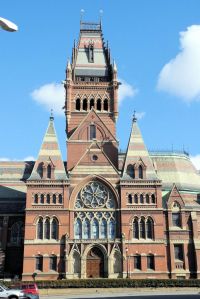
Memorial Hall, Harvard University
Today I’m going to focus on the Trump administration’s attacks on Harvard University. Obviously, Trump’s war on Harvard isn’t just about Harvard. It’s a war on higher education. If he succeeds in destroying Harvard, he will move on to other universities. Thank goodness Alan Garber, Harvard’s president is standing strong against the blatant attacks on academic research, international students, and freedom of speech.
Here’s the latest news in the Trump-Harvard battle:
The New York Times: Trump Intends to Cancel All Federal Funds Directed at Harvard.
The Trump administration is set to cancel the federal government’s remaining federal contracts with Harvard University — worth an estimated $100 million, according to a letter sent to federal agencies on Tuesday. The letter also instructs agencies to “find alternative vendors” for future services.
The additional planned cuts, outlined in a draft of the letter obtained by The New York Times, represented what an administration official called a complete severance of the government’s longstanding business relationship with Harvard.
The letter is the latest example of the Trump administration’s determination to bring Harvard — arguably the country’s most elite and culturally dominant university — to its knees, by undermining its financial health and global influence. Since last month, the administration has frozen about $3.2 billion in grants and contracts with Harvard. And it has tried to halt the university’s ability to enroll international students.
The latest letter, dated May 27 from the U.S. General Services Administration, was delivered Tuesday morning to federal agencies, according to an administration official, who spoke on the condition of anonymity because the official had not been authorized to discuss internal communications.
The letter instructs agencies to respond by June 6 with a list of contract cancellations. Any contracts for services deemed critical would not be immediately canceled but would be transitioned to other vendors, according to the letter, signed by Josh Gruenbaum, commissioner of the G.S.A.’s federal acquisition service, which is responsible for procuring government goods and services.
Contracts with about nine agencies would be affected, according to the administration official.
Examples of contracts that would be affected, according to a federal database, include a $49,858 National Institutes of Health contract to investigate the effects of coffee drinking and a $25,800 Homeland Security Department contract for senior executive training. Some of the Harvard contracts under review may have already been subject to “stop work” orders.
“Going forward, we also encourage your agency to seek alternative vendors for future services where you had previously considered Harvard,” the letter said.
It’s not just Harvard, of course.
Politico: Trump team pauses new student visa interviews as it weighs expanding social media vetting.
The Trump administration is weighing requiring all foreign students applying to study in the United States to undergo social media vetting — a significant expansion of previous such efforts, according to a cable obtained by POLITICO.
In preparation for such required vetting, the administration is ordering U.S. Embassies and consular sections to pause scheduling new interviews for such student visa applicants, according to the cable, dated Tuesday and signed by Secretary of State Marco Rubio.
If the administration carries out the plan, it could severely slow down student visa processing. It also could hurt many universities who rely heavily on foreign students to boost their financial coffers.
“Effective immediately, in preparation for an expansion of required social media screening and vetting, consular sections should not add any additional student or exchange visitor (F, M, and J) visa appointment capacity until further guidance is issued septel, which we anticipate in the coming days,” the cable states. (“Septel” is State Department shorthand for “separate telegram.”)
The administration had earlier imposed some social media screening requirements, but those were largely aimed at returning students who may have participated in protests against Israel’s actions in Gaza.
What does this policy mean?
The cable doesn’t directly spell out what the future social media vetting would screen for, but it alludes to executive orders that are aimed at keeping out terrorists and battling antisemitism.
Many State Department officials have complained privately for months that past guidance — for, say, vetting students who may have participated in campus protests — has been vague. It’s unclear, for example, whether posting photos of a Palestinian flag on an X account could force a student to undergo additional scrutiny.
The administration has used a variety of rules to target universities, especially elite ones such as Harvard, that it sees as too liberal and accuses of allowing antisemitism to flourish on their campuses. At the same time, it is carrying out immigration crackdowns that have swept up a number of students….
The news was met with frustration in much of the higher education community.
NAFSA: Association of International Educators, a group that advocates for foreign students, decried the decision. The group’s CEO, Fanta Aw, said it unfairly cast aspersions on hardworking students.
“The idea that the embassies have the time, the capacity and taxpayer dollars are being spent this way is very problematic,” Aw said. “International students are not a threat to this country. If anything, they’re an incredible asset to this country.”
What is Trump’s supposed rationale for his attack on Harvard and high education?
The Boston Globe: Trump administration says Harvard funding cuts are punishment for ‘race discrimination.’
After a weekend of threats and criticism from President Trump, the federal government on Tuesday severed the last of its remaining business ties to Harvard University.
Josh Gruenbaum, a top official at the US General Services Administration, instructed all federal agencies to terminate any contracts with Harvard or transfer them to other vendors. He also said in a letter sent to federal procurement officials Tuesday that government agencies should refrain from awarding any new contracts to Harvard in the future….
 Although the Trump administration’s original rationale for targeting Harvard was campus antisemitism, Gruenbaum’s letter Tuesday focused more on the government’s allegations that Harvard’s admissions and hiring practices violate antidiscrimination laws. For that reason, he said, Harvard should not be allowed to receive federal funding….
Gruenbaum’s letter laid out the government’s expanded justification for targeting Harvard. The university,the federal government alleges, systematically discriminates against white people, men, straight people, and, in some cases, Asian Americans.
“As fiduciaries to the taxpayer, the government has a duty to ensure that procurement dollars are directed to vendors and contractors who promote and champion principles of nondiscrimination and the national interest,” Gruenbaum wrote.
Harvard has denied the government’s allegations and sued the Trump administration. In two cases in federal court in Boston, Harvard’s lawyers argued the administration’s tactics violate federal laws and the Constitution and amount to illegal retaliation. Many lawyers, including some conservatives who share Trump’s critiques of universities, have agreed some of the Trump administration’s tactics appear to be illegal.
The administration’s letter on Tuesday accuses Harvard of discrimination in its admissions and hiring practices, as well as at the Harvard Law Review. Federal agencies have launched investigations on all of those subjects.
The Department of Justice is investigating whether Harvard’s admissions practices run afoul of a Supreme Court ban on affirmative action in college admissions. And the Department of Education and the Equal Employment Opportunity Commission have launched an inquiry into alleged discrimination by Harvard against white people, Asian Americans, men, and heterosexuals in hiring and promotions.
The Trump administration is even suggesting there could be criminal investigations of university officials.
Greg Sargent at The New Republic: Trump’s Fury at Harvard Gets More Deranged—and Exposes a Big MAGA Scam.
President Donald Trump has mostly justified his lawless attempt to restrict international students from attending Harvard University by pretending it’s designed to root out the antisemites, woke radicals, and dangerous terrorists supposedly nesting in their ranks. Now, however, Trump has a new rationale: It’s all about helping young, aspiring Americans, particularly those in the working class.
“We have Americans who want to go there and to other places,” Trump told reporters over the weekend, adding angrily that many of Harvard’s international students are “bad” and are taking Americans’ slots: “They can’t go there because you have 31 percent foreign.”
Trump then tweeted:
I am considering taking Three Billion Dollars of Grant Money away from a very antisemitic Harvard, and giving it to TRADE SCHOOLS all across our land. What a great investment that would be for the USA, and so badly needed!!!
Yeah, OK. If Trump really wants to facilitate the upward mobility of America’s working-class youth, here’s a better way to do it: Persuade his fellow Republicans in the House to drop their new budget’s changes to financial aid for higher education, which will restrict access to it for large numbers of working-class students, probably including many who want to attend—yup—trade schools.
With Trump’s fury at Harvard getting worse, this turn in the saga suggests another grotesque subtext to all of it: Telling working-class families that the real obstacle their kids face is zero-sum competition from foreign students makes it easier to take away resources previously appropriated to boost working-class kids to fund tax cuts for the rich.
What’s going on here?
Trump’s assault is a wildly unhinged abuse of power in every way. Last week, Trump revoked Harvard’s ability to host international students, due to Harvard’s alleged failure to share sufficient “information” about foreign students in response to an administration demand. That demand was itself absurdly intrusive, and seemed designed not to be met, creating a pretext for Trump to broaden his attack. The revocation appears wholly lawless, and after Harvard sued, a court blocked it within hours.
At this point, there’s no need to pretend there’s a genuine public-interest rationale at work here. Everyone knows it’s all about getting universities to surrender to flatter Trump, or about executing a broader hostile MAGA takeover of liberal institutions. For instance, in an article reporting that Trump is now nixing Harvard’s federal contracts on top of canceling billions in grants, The New York Times notes almost in passing that Trump wants to bring Harvard “to its knees,” as if this is unremarkable, when it should be depicted as the power-crazed ravings of a Mad King.
But there’s something particularly ghoulish about Trump’s suggestion that his blockade on international students is about helping American kids who are unfairly displaced by them.
That’s because the “big, beautiful bill” that House Republicans passed last week—which Trump has urged Senate Republicans to adopt—could make attending college harder for countless such kids. For a detailed summary of its changes, see this piece by The New Republic’s Monica Potts: They would make it harder for full-time students to qualify for Pell Grants, bump off large numbers of part-time students, and restrict access to the program and other financial assistance for higher education in numerous other ways.
Indeed, a coalition of education advocacy organizations estimates that the bill’s changes to Pell Grants alone could deprive as many as 700,000 people of eligibility entirely and hit many more with higher costs. As Potts summarizes, all this “takes an ax to one of the few reliable ladders for working-class people seeking higher education” as an “engine for social mobility.” These are mostly poorer and working-class students by definition, many with jobs or young kids of their own.
Trump’s attack on Harvard and higher education hurts Massachusetts, which is home to 114 colleges and universities.
Karen Miller at Boston Globe Magazine: Trump vs. Massachusetts: How one state represents everything the president despises.
In her State of the City address in March, Mayor Michelle Wu spoke about her then-2-month-old daughter. The world she entered was “not the world I expected or hoped for her,” Wu said. “I want her to grow up in the America that Paul Revere rode for, that Dr. King marched for, that my parents left home for.”
A few weeks later, as Paul Revere’s ride was reenacted and scores of redcoats lined up with muskets on the Lexington Battle Green, you didn’t have to look far to see signs that Massachusetts’ centuries-long revolutionary spirit was being threatened. Sprinkled through the crowd, posters read “No King! No Tyranny! Support the Rule of Law” and “In America, the Law is King.” [….]
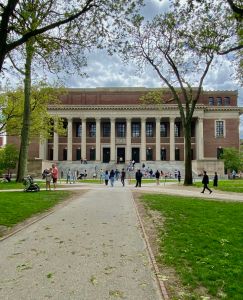
Widener Library, Harvard University
Massachusetts may be uniquely positioned to suffer in President Trump’s second term. And not just because the president has slashed disaster aid, school funding, and health support for the Commonwealth. Or because he plans to withdraw clean energy support and undercut states with robust environmental laws.
Our economy is deeply reliant on elite colleges, elite hospitals, and the elite minds who come here from around the world. In Massachusetts — like it or not — we have built an economy on expertise, excellence, and education.
In the early 2000s, after graduating from high school outside of Chicago, Wu was drawn — like so many others — to the educational opportunities here. Her parents “didn’t know too much about America” when they arrived in the 1980s from Taiwan. She says that they, “like so many, held such a reverence for the institutions that in some ways symbolized the American dream for them. Harvard was one of them.”
Now, the magnets that have attracted talent to Massachusetts have become liabilities. “ Boston is at the center of many of the most targeted industries and communities,” Wu says. “And so we’re feeling it very much — very urgently.”
The mayor notes that the city is “trying to plan for unpredictability. And so our city budget this year includes preparations for worst-case scenarios.” Although Boston’s financial foundation is “quite strong,” Wu says, “we need to be prepared for immediate, significant impacts to federal funding or larger macroeconomic impacts.”
We’re living, she says, under “a cloud of chaos.”
The Boston Globe: ‘This is about more than Harvard’: Healey tells alumni as university faces down Trump.
Massachusetts Governor Maura Healey voiced support for her alma mater Tuesday night as Harvard University continues to battle President Trump’s attacks on the Cambridge institution’s autonomy and funding.
“This is about more than Harvard,” she told a virtual webinar of thousands of Harvard alumni.
In recent weeks, Harvard has filed litigation charging that Trump unlawfully froze billions in federal funding to the school after it refused to give the government control over academic decisions. More recently, the school also legally challenged Trump’s attempt to revoke the school’s ability to enroll international students.
On Tuesday night, a group of Harvard alumni held a pair of virtual events to discuss the impact of the administration’s actions on academic freedom, research, students, and employees of the Ivy League university.
Crimson Courage, which describes itself as “a nonpartisan community of Harvard alumni,” encouraged alumni to sign onto an amicus brief in ongoing litigation spearheaded by Harvard against the Trump administration.
The brief “supports the academic freedom and integrity of Harvard and higher education institutions across America—all of which must be able to educate students consistent with their missions and values, free from political interference.”
The brief, according to organizers, will be filed in a legal case where Harvard argues the government’s use of research funding cuts as leverage to exert control over its affairs is an abuse of federal power.
Healey, in her comments to alumni, said Trump’s moves against the university is undercutting American competitiveness and damaging the local and national economy. Harvard, she said, is the fourth largest employer in Massachusetts, and its international students alone contribute $400 million to the local economy annually.
If Trump succeeds in damaging Massachusetts, will other blue states be next?
NPR: As Trump targets elite schools, Harvard’s president says they should ‘stand firm.’
With elite U.S. universities in President Trump’s crosshairs, the leader of Harvard University says institutions need to double down on their “commitment to the good of the nation” and be firm in what they stand for.
The Trump administration, acting on its claims that Harvard has failed to stamp out antisemitism on campus, froze more than $2 billion in research grants and contracts in April and attempted to revoke the school’s ability to enroll international students last week. The university is suing the federal government for both actions.
Harvard President Alan Garber told Morning Edition that he finds the measures taken by Trump to be “perplexing.” While he acknowledges there is work to be done on campus, he said he struggles to see a link between funding freezes and fighting antisemitism.
“Why cut off research funding? Sure, it hurts Harvard, but it hurts the country because after all, the research funding is not a gift,” Garber said, adding that these dollars are awarded to efforts deemed “high-priority work” by the federal government….
As evidence of how his university’s work directly benefits the U.S. public, Garber points to recent honors awarded to Harvard faculty by the Breakthrough Prize, known as “The Oscars of Science,” for their work on obesity and diabetes drugs and gene editing, used to correct disease-causing genetic variations.
The Trump administration’s multi-billion dollar funding freeze came after Harvard refused demands to change policies around hiring and admissions, eliminate DEI programs, or screen international students who are “supportive of terrorism or anti-Semitism,” as the administration put it.
Read the entire interview at the NPR link.
Commentary on Trump’s attacks on Harvard:
Daniel Drezner at Drezner’s World: The Trump Administration Is Trying to Kill American Higher Education.
Recent readers may recall that I was in a bit of a funk last week because among other things “The [Trump] administration further escalated its war on Harvard in myriad ways. This is part and parcel of a wider war on higher education that will destroy American soft power, one of the country’s leading export sectors, and American economic productivity.”
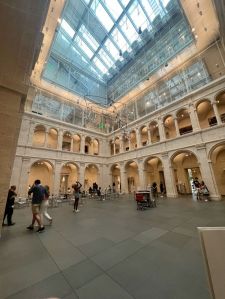
Harvard Art Museum
Impressively, the situation on this front has gotten even worse in the last 24 hours….
…consider the complete set of federal actions taken against Harvard that the New York Times’ Michael C. Bender has compiled. It’s an extraordinary list of punitive actions given that the Trump administration has been in office for just a little over a third of a year.
Now, as a professor at the Fletcher School, a direct competitor of Harvard’s Kennedy School of Government, readers might wonder if I think there might be some competitive advantage that might be gained from Harvard’s misfortune. And the answer to this is “not really, no,” for two reasons.
The first is raw politics: Harvard is the most prestigious university in the United States. It has the deepest pockets. If the Trump administration can force Harvard to acquiesce to its demands, that capitulation will make it that much harder for other universities to protect academic freedom.
The second is that while Harvard might be receiving the brunt of the administration’s malignant attention, Trump’s team is taking other actions that will harm most U.S. universities.
Examples: Threats to investigate foreign students’ social media and ordering embassies to stop vetting visas for international students applicants.
This administration seems bound and determined to force U.S. students to pay higher tuition, because it keeps stripping away alternative sources of revenue. Between slashing federal research funding to record-low levels, raising the transaction costs of accepting foreign grants, and this freezing the visa processing of foreign students, the Trump administration is disincentivizing scientific research and forcing universities to rely increasingly on the tuition payments of domestic college students.
The end result will be a poorer, less dynamic economy and a less vibrant society. I wish the Atlantic’s Adam Serwer was being hyperbolic in this paragraph – but he isn’t:
“These various initiatives and policy changes are often regarded as discrete problems, but they comprise a unified assault. The Trump administration has launched a comprehensive attack on knowledge itself, a war against culture, history, and science. If this assault is successful, it will undermine Americans’ ability to comprehend the world around us. Like the inquisitors of old, who persecuted Galileo for daring to notice that the sun did not, in fact, revolve around the Earth, they believe that truth-seeking imperils their hold on power.”
Why are they doing it? Serwer attributes it to politics: “by destroying knowledge, Trumpists seek to make the country more amenable to their political domination, and to prevent meaningful democratic checks on their behavior.” I could proffer a variety of other ideological or political responses. As of now, however, such rationales are besides the point. The only thing I know for sure is that it’s not for the reasons proffered by the administration.
Read the rest at the Substack link.
Paul Krugman on his Substack: America Turns Its Back on the World.
My wife and I are co-authors of a widely used textbook on the principles of economics, which is revised on a three-year cycle. When a new edition comes out, I normally visit a number of schools that might adopt it, usually giving a big public talk, a smaller technical seminar, and spending some time with students and faculty. I enjoy it, by the way; there are a lot of good, interesting people in U.S. education, and not just in the high-prestige schools.
So it was that at one point I found myself visiting Texas Tech in Lubbock. Yes, it seemed pretty remote to someone who has spent almost his whole life in the Northeast Corridor, but as usual the overall experience was very positive. And it was also surprisingly cosmopolitan: there were students from many nations. I just checked the numbers, and currently 30 percent of Texas Tech’s graduate students are international.
So it is all across America. Our nation’s ability to attract foreigners to study here is one of our great strengths. Or maybe I should say was one of our strengths.
According to Politico, a cable from Marco Rubio, the secretary of state, has directed U.S. embassies and consulates to halt all processing of visa applications from foreigners hoping to study in the United States. This is reportedly a temporary measure in preparation for a new system in which would-be students will be screened on the basis of their social media history. And you can be sure that the criteria for denying entry will go far beyond, you know, advocating terrorism. Probably asking “Why was Trump talking to West Point grads about trophy wives?” will be grounds for rejection.
This completely insane policy move is presumably a temper tantrum in response to a court’s rejection of the administration’s attempt to prevent Harvard from admitting foreign students, which was in turn a temper tantrum in response to Harvard’s rejection of demands from Trumpists that they be allowed to dictate the university’s hiring and curriculum.
The courts will probably reject this policy move, too, but I worry that Rubio and co. can put enough sand in the gears of the visa process to bring the entry of international students to a near halt. And even if they can’t, the clear message to students that they aren’t welcome (and may be arrested once here) will have an immensely chilling effect.
It’s hard to overstate the self-destructiveness of this move, and the war on higher education in general. This is madness even in purely economic terms.
Read the rest at the link.
One more by Liz Dye at Public Notice: Trump’s attack on Harvard hampered by his inability to STFU.
The Trump administration would be getting slapped down in court even if the president and his minions didn’t constantly announce their intent to violate the law. But their incessant chest thumping does make things go a lot faster.
Case in point: the temporary restraining order barring the government from canceling student visas at Harvard University. The order was issued just hours after Homeland Security Secretary Kristi Noem revoked Harvard’s visa “privilege” for foreign students. The administration teed up the ruling by declaring that it intended to flagrantly violate the First Amendment. But they telegraphed their punch so thoroughly that Harvard’s lawyers had a 72-page complaint with 28 exhibits ready to be filed the second Noem announced the plan.
Trump Hates Harvard
Just hours after being sworn in, Trump signed an executive order instructing federal agencies to “identify up to nine potential civil compliance investigations” of civic, corporate, and academic institutions, including “institutions of higher education with endowments over 1 billion dollars” for their supposed “illegal discrimination.”
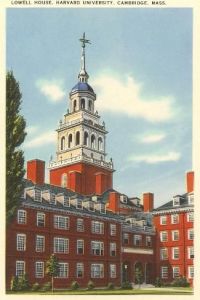
Lowell House, Harvard University
The EO was clearly an attack on the Ivy League, long targeted by conservatives as a bastion of “wokeness” that should be brought to heel. And Project 2025, with its “big idea” to seize control of the budget from Congress, provided Trump with a blueprint to wield federal tax dollars as a weapon against state governments and institutions.
Part of the plan was for Trump to unilaterally announce new “laws” via executive order, and, instead of asking courts to enforce them, leverage federal funds to punish anyone who resists.
And so the president simply declared DEI “illegal,” and used the widespread adoption of anti-discrimination policies by corporations and academia as a pretext to go after anyone he doesn’t like. But, as a federal judge noted last week when he blocked an attack on the law firm Jenner & Block, “the defendants point to no case holding such diversity initiatives illegal.” This is simply the executive branch inventing a new legal theory and demanding that everyone treat it as settled law.
Dye describes how Harvard fought back successfully in court.
On April 11, Harvard sued in federal court in Massachusetts, alleging that the funding cuts were an arbitrary and capricious agency action in violation the First Amendment, the Fifth Amendment’s due process clause, and the Constitution’s separation of powers. That case landed on Judge Allison Burroughs’s docket, and when the school sued again 10 days later over a further round of funding cuts, it designated the cases as “related,” ensuring that it, too, would be assigned to the Obama appointee.
Harvard docketed voluminous correspondence demonstrating that the Trump administration is using federal funds to both coerce the school into changing its speech, and retaliating against it for speech conservatives don’t like. For instance, a letter signed by representatives of the General Services Administration and the Departments of Education and Health and Human Services presented an “agreement in principle” demanding sweeping changes to all aspects of the university’s hiring, admissions, disciplinary, and curricular programs as a precondition of preserving the school’s federal funds.
“The university will not surrender its independence or relinquish its constitutional rights,” the university wrote in response. “Neither Harvard nor any other private university can allow itself to be taken over by the federal government.”
That response was signed by longtime Republican lawyer Bill Burck, of the law firm Quinn Emanuel, and Robert Hur, the former special counsel tapped by Attorney General Bill Barr to investigate Joe Biden. (Burck was immediately fired by the Trump Organization as an ethics advisor.)
But Trump kept on making public threats and posting nonsense on social media.
Trump’s constant public screeds serve as potent evidence that the funding cuts are retaliatory, and any supposed DEI “crimes” are mere pretext.
On April 15, he suggested that Harvard “should lose its Tax Exempt Status and be Taxed as a Political Entity if it keeps pushing political, ideological, and terrorist inspired/supporting ‘Sickness?’” [….]
That’s an explicit attack on Harvard’s academic freedom, which is protected by the First Amendment. And he followed it up the next day by screeching that “Harvard is a JOKE, teaches Hate and Stupidity, and should no longer receive Federal Funds.” [….]
Secretary of Education Linda McMahon admitted in an interview with CNBC on May 7 that the administration is 100 percent targeting Harvard for disfavored speech.
“Are they vetting students who are coming in from outside of the country to make sure they’re not activists? Are they vetting professors that they’re hiring to make sure that they’re not teaching ideologies?” she said. “They’ve taken a very hard line, so we took a hard line back.”
All these comments — and so many more! — featured in Harvard’s lawsuits.
Please read the rest at Public Notice. It’s an excellent summary of what Trump has been doing and why it’s unlawful.
That’s all I have for you today. What’s on your mind?
Did you like this post? Please share it with your friends:
Posted: May 24, 2025 | Author: bostonboomer | Filed under: cat art, caturday, Donald Trump, education, public corruption | Tags: Covid vaccines, Covid-19 deaths, CryptoCurrency, FDA, Harvard University, international university students, Kristi Noem, National Security Council, NSC, Robert F. Kennedy Jr., Trump Corruption |

Woman and Cat, by Koji Fukiya, 1936.
Good Afternoon!!
Yesterday, Dakinikat wrote about Trump’s crypto dinner, where he briefly spoke to the people who had spent the most on his personal memecoin. The “gala dinner” was held at Trump’s Virginia golf club. The attendees–mostly from foreign countries–had spent their money hoping to gain “access” to Trump, but that didn’t happen, at least at this event. Trump showed up on a “military helicopter,” spoke for less than half and hour and then did his YMCA dance. Then he left again without speaking to anyone personally. And the food was terrible.
Wired: A Helicopter, Halibut, and ‘Y.M.C.A’: Inside Donald Trump’s Memecoin Dinner.
Donald Trump left the stage at his golf club near Washington, DC, on Thursday night, he pointed to the crowd, brought his index finger to his temple—as if to say: You know what’s coming—then began to dance. To the beat of “Y.M.C.A” by The Village People, Trump shimmied, gyrated, and pumped his arms above his head.
Looking on were more than 200 people who had been invited to the Trump National Golf Club for a private gala dinner. They had won their seats by purchasing large quantities of Trump’s own crypto coin—TRUMP—some holding millions of dollars’ worth….
By late afternoon, the dinner guests had started to filter through the gates of the golf club. By comparison to Trump’s previous banquets, thronging with DC insiders and members of the Silicon Valley elite, the crypto dinner attracted a mismatched collection of oddballs: independent traders rubbed shoulders with crypto executives, die-hard Trump fans, and even professional sports stars—former NBA player Lamar Odom towered overhead. A handful wore bowties in Bitcoin orange; others sported gold Trump sneakers.
Just after 7 pm, the dinner guests gathered at the window to watch Trump descend in Marine One, his presidential helicopter. A short while later, he appeared from behind a blue velvet curtain to whoops and applause from the crowd. Had they seen the helicopter, Trump asked. “Yeah, super cool!” somebody yelled….
From behind a lectern at one end of the dining room, backdropped by four US flags, Trump delivered a characteristically winding and digressive speech that sources say lasted around 25 minutes. At some point, he got round to crypto.
“We’ve got some of the smartest minds anywhere in the world right here in this room,” said Trump. “You believe in the whole crypto thing. A lot of people are starting to believe in it … This is really something that may be special—who knows, right? Who knows—but it may be special.”
For some, the dinner represented a chance to network with other deep-pocketed crypto figures, and to hear directly from Trump about his plans to bring an end to the regulatory uncertainty that crimped the industry’s expansion under Biden.
“You don’t get to meet the president easily,” Vincent Liu, chief investment officer at trading firm Kronos Research, told WIRED a few days before the dinner. “To be able to hear his message on crypto directly—I’m definitely looking forward to that.”

Woodblock print from Tsukioka Yoshitoshi’s series One Hundred Aspects of the Moon (1885-1892)
No one got to meet the president, but I Wired says they also wanted to network with each other. On the general presentation and the food, served at circular tables
…each seating 10 people arrayed beneath a set of crystal chandeliers. Waiting on the chairs were gift bags containing Fight Fight Fight-themed hats and posters, and a collectible plastic card (some allege that they didn’t receive merch at their seats.) The four largest coin holders—along with two other attendees selected by raffle, sources say—received a gem-encrusted Trump gold watch.
Between mouthfuls, the attendees discussed trading and investment strategies—and Trump’s speech. “To feel his personal charisma to me was very inspiring,” says Liu. But others complained about the brevity of Trump’s appearance: After his speech, Trump had departed immediately in a golf cart bound for his helicopter. “Trump could have at least given the top people their watches himself,” says Pinto. “He didn’t.”
The food itself had left a bitter taste in the mouth, too. “It was the worst food I’ve ever had at a Trump golf course,” says Pinto, who added he left hungry. “The only good thing was bread and butter.” Another attendee described the meal as “OK, but not top-class.”
From Penn Live: Trump’s controversial crypto dinner ripped by attendee: ‘Trash.’
Donald Trump’s controversial memecoin dinner Thursday night was shrouded in secrecy, and while it still isn’t clear who all attended — the White House did not make the list public — we do have a report of how good the food was….
According to Fortune, 25-year-old Nicholas Pinto was one of those who attended. The site said he invested “more than $360,000 in Trump’s memecoin.
And for that, he told the site, the dinner that was served was “trash.”
“Walmart steak, man,” he texted Fortune.
The site said the menu for the included a “Trump organic field green salad” and an “entrée duet” of filet mignon and pan-seared halibut.
“Everybody at my table was saying the food was so of the worst they ever had,” Pinto said.
“I was hoping for Big Macs or pizza,” Pinto told Fortune. “That would have been better than the food that we were served.”
Trump is just raking in the dough as quickly as he can with the minimum effort.
The New York Times got the guest list: Who Won a Seat at Trump’s Crypto Dinner?
The invitees for President Trump’s private dinner for customers of his cryptocurrency business on Thursday included a Chinese billionaire fighting a lawsuit from U.S. regulators, a lawyer for Justice Clarence Thomas and a former basketball star, according to a guest list obtained by The New York Times and social media posts.
The dinner, at which Mr. Trump gave remarks, was an extraordinary moment in which the president leveraged his position to make money — for his crypto business and for his Virginia golf club, which hosted the event.
The event’s invited guests were not known publicly beforehand, even to each other. They were identified only by the pseudonyms they used on the electronic wallets where they kept their $TRUMP memecoins. Most had gained an invitation by becoming one of the top 220 holders of that memecoin over a certain period of time. The top 25 of those were given V.I.P. status and afforded a more intimate gathering before the dinner and an unofficial tour of the White House on Friday.
When they arrived at Mr. Trump’s club outside Washington Thursday evening, the digital world had become physical. The invitees’ names and contact information were delineated on paper lists, checked by staffers at the door. A Times reporter reviewed one of those lists, and used it to identify people who were present. Some other invitees self-identified on social media. A reporter and photographer from The Times also saw some $TRUMP crypto buyers enter and exit the White House on Friday.

Merchant’s Daughter by Mizuno Toshikata
Some top invitees:
Justin Sun, a Chinese crypto billionaire who was sued by the Securities and Exchange Commission under President Joseph R. Biden Jr. for allegedly inflating the value of a cryptocurrency. Mr. Sun is a major investor in a separate crypto venture largely owned by a company tied to Mr. Trump, World Liberty Financial. After Mr. Trump took office, the S.E.C. asked a judge to put Mr. Sun’s case on hold….
Elliot Berke, a Washington attorney who has worked for congressional Republicans and Justice Clarence Thomas of the Supreme Court. The Times identified him because the invitee list included his email address at his law firm, Berke Farah. He was honored as “Republican Lawyer of the Year” in 2021 by the Republican National Lawyers Association….
Evgeny Gaevoy, the founder and chief executive of a digital-asset firm, Wintermute. The Times identified him because the list of invitees included his Wintermute email….
Anil Lulla and Yan Liberman, two co-founders of Delphi Digital, a Miami Beach firm that offers market intelligence for crypto investors. Their corporate emails were included in the list of invitees….
Cheng Lu, 32, a crypto investor from Shanghai, was observed by a Times reporter entering the White House on Friday. He said he did not have a chance to speak with Mr. Trump during the dinner on Thursday or at the Friday tour. “I just want to see President Trump,” he said.
Several more are listed at the NYT link.
Another big story today is Trump’s terrifying persecution of Harvard University. Here’s the latest:
From The Wall Street Journal Editorial Board: Is Trump Trying to Destroy Harvard? The order against foreign students turns away the world’s brightest.
The Trump Administration has frozen billions in federal grants to Harvard University, threatened its tax-exempt status, and sought to dictate its curriculum and hiring. Now the government seems bent on destroying the school for the offense of fighting back. And for what purpose?
That’s how we read the Department of Homeland Security’s move Thursday to bar foreign students from attending the world-renowned institution. That’s 6,800 students, or a quarter of Harvard’s student body, whose futures are suddenly in disarray. It’s also a short-sighted attack on one of America’s great competitive strengths: Its ability to attract the world’s best and brightest.
The latest assault began when DHS demanded that Harvard turn over sundry records on its foreign students, including whether any had participated in illegal activity or left the university owing to “dangerous or violent activity or deprivation of rights.”
Some of its record requests are reasonable, but some overreached by requiring private student information. DHS also gave Harvard all of two weeks to respond. If it failed to do so, DHS Secretary Kristi Noem said she would “automatically withdraw” the school’s certification in the Student and Exchange Visitor Program. “The withdrawal will not be subject to appeal.”
The SEVP program lets non-citizens enroll at universities on student visas. DHS can bar universities from the program if they fail to comply with “recordkeeping, retention, reporting and other requirements” on foreign students. Harvard says it responded with “information required by law” within two weeks and handed over more records on May 14.

Twin Guardians, by Hawse Sumi
That didn’t satisfy Noem and she banned Harvard from enrolling international students. Harvard soon got a restraining order from a federal court.
Most of Harvard’s foreign students are enrolled in graduate programs. Many assist with scientific research and teaching undergraduate courses. Driving them out of Harvard will disrupt research projects and might cause some professors in the sciences to leave for other universities. This seems to be a goal of freezing Harvard’s research grants.
Harvard sued on Friday, and a federal judge issued a temporary restraining order against the student ban. The university rightly says the Administration’s actions are “clear retaliation for Harvard exercising its First Amendment rights to reject the government’s demands to control Harvard’s governance, curriculum, and the ‘ideology’ of its faculty and students.”
The university seems likely to prevail on the law, but until courts settle the merits, thousands of students who have done nothing wrong will be in legal limbo. Some of them no doubt opposed the anti-Israel protests and may even hail from Israel. Why punish them? [….]
This will be terribly damaging to America’s ability to attract talented young people who bring their enterprise and intellectual capital to the U.S. Non-citizens accounted for more than half of doctoral degrees in AI-related fields in 2022. Many have gone to work at U.S. companies like Nvidia or started their own.
Clearly Trump hates Harvard, higher education, and education generally. But I’m coming to the conclusion that Trump’s goal is to destroy the U.S. in every possible way and at the same time enrich himself and his wealthy friends. He doesn’t even appear to care about the economy anymore. He wants Americans to be poor, ignorant, and isolated from the rest of the world.
The New York Times: Universities See Trump’s Harvard Move as a Threat to Them, Too.
The Trump administration’s surprising bid to end Harvard’s international enrollment put the higher education world on edge this week, looming as a larger threat against academic autonomy.
Well beyond the halls of Harvard this week, college leaders were shocked that one swift move by the federal government could eliminate their ability to serve students from abroad, a growing population that has infused their campuses with cachet and wealth.
“This is a grave moment,” Sally Kornbluth, the president of the Massachusetts Institute of Technology, wrote in a message to her campus.
More than 5,000 miles away, Wendy Hensel, the president of the University of Hawaii, said that it was “reverberating across higher education.”
President Trump has already unnerved universities this year by launching investigations, freezing grants, demanding changes in campus practices and attempting to deport international students. He has justified his punitive approach as a means to combat what he considers antisemitism. But he and his allies also have long resented a perceived liberal bias and racial diversity efforts at prestigious colleges.
The Trump administration said Thursday that it revoked Harvard’s international student certification because the university had failed to meet its demands, including a request for records of student protest activity dating back five years.
To many academics, that was a clear signal that Mr. Trump was prepared to use any federal mechanism as leverage if he did not get what he wants.
“While Harvard is the victim of the moment, it’s a warning and unprecedented attempt of a hostile federal government to erode the autonomy of all major universities in the U.S.,” said John Aubrey Douglass, a senior research fellow at the Center for Studies in Higher Education at the University of California, Berkeley.
Yesterday, Trump and Marco Rubio began dismantling the National Security Council.
CNN: More than 100 National Security Council staffers put on administrative leave.
The Trump administration has put more than 100 officials at the National Security Council at the White House on administrative leave on Friday as part of a restructuring under interim national security adviser and Secretary of State Marco Rubio, according to two US officials and another source familiar with the matter.

Woman and cat, by Toyohara Kunichika
CNN previously reported that a significant overhaul of the body in charge of coordinating the president’s foreign policy agenda was expected in the coming days, including a staff reduction and a reinforced top-down approach with decision-making concentrated at the highest levels.
An email from NSC chief of staff Brian McCormack went out around 4:20 p.m. informing those being dismissed they’d have 30 minutes to clean out their desks, according to an administration official. If they weren’t on campus, the email read, they could email an address and arrange a time to retrieve their stuff later and turn in devices.
The email subject line read: “Your return to home agency,” indicating that most of those affected were detailed to the NSC from other departments and agencies….
With this happening on a Friday afternoon before a long holiday weekend, the official called it “as unprofessional and reckless as could possibly be.”
Those put on leave include career officials, as well as political hires made during the Trump administration….
Staffed by foreign policy experts from across the US government, the NSC typically serves as a critical body for coordinating the president’s foreign policy agenda.
But under President Donald Trump, the NSC’s role has been diminished, with the overhaul expected to further reduce its importance in the White House.
Axios says they are trying to purge the “deep state.”
President Trump and Secretary of State Marco Rubio have orchestrated a vast restructuring of the National Security Council, reducing its size and transferring many of its powers to the State and Defense departments.
Why it matters: Trump’s White House sees the NSC as notoriously bureaucratic and filled with longtime officials who don’t share the president’s vision.
- A White House official involved in the planning characterized the reorganization as Trump and Rubio’s latest move against what they see as Washington’s “Deep State.”
- “The NSC is the ultimate Deep State. It’s Marco vs. the Deep State. We’re gutting the Deep State,” the official said of the move, which will cut the NSC staff to about half of its current 350 members. Those cut from the NSC will be moved to other positions in government, officials said.
- “The right-sizing of the NSC is in line with its original purpose and the president’s vision,” Rubio told Axios in a statement. “The NSC will now be better positioned to collaborate with agencies.”
Zoom in: White House officials point to an NSC structure that’s filled with committees and meetings that they say slow down decision-making and produce lots of jargon and acronyms.
There’s a lot more a the link, but I think Trump is just trying to bring every part of the government under his personal control.
Finally, I want to look at what Trump and RFK Jr. are doing with Covid-19 and Covid vaccines.
ABC News: Why are more than 300 people in the US still dying from COVID every week? Experts say there is low vaccine uptake and people are not accessing treatments.
More than five years after the first cases of COVID-19 were detected in the United States, hundreds of people are still dying every week.

By Utagawa Hiroshige, 1797-1858
Last month, an average of about 350 people died each week from COVID, according to data from the Centers for Disease Control and Prevention (CDC).
While high, the number of deaths is decreasing and is lower than the peak of 25,974 deaths recorded the week ending Jan. 9, 2021, as well as weekly deaths seen in previous spring months, CDC data shows.
Public health experts told ABC News that although the U.S. is in a much better place than it was a few years ago, COVID is still a threat to high-risk groups.
“The fact that we’re still seeing deaths just means it’s still circulating, and people are still catching it,” Dr. Tony Moody, a professor in the department of pediatrics in the division of infectious diseases at Duke University Medical Center, told ABC News.
The experts said there are a few reasons why people might still be dying from the virus, including low vaccination uptake, waning immunity and not enough people accessing treatments.
Read more details at the ABC link.
So why is the government limiting access to Covid Vaccines?
Scientific American: What FDA’s Planned Limits on COVID Vaccinations Mean for Health.
Larry Saltzman has blood cancer. He’s also a retired doctor, so he knows getting covid-19 could be dangerous for him — his underlying illness puts him at high risk of serious complications and death. To avoid getting sick, he stays away from large gatherings, and he’s comforted knowing healthy people who get boosters protect him by reducing his exposure to the virus.
Until now, that is.
Vaccine opponents and skeptics in charge of federal health agencies — starting at the top with Health and Human Services Secretary Robert F. Kennedy Jr. — are restricting access to covid shots that were a signature accomplishment of President Donald Trump’s first term and cost taxpayers about $13 billion to develop, produce, and distribute. The agencies are narrowing vaccination recommendations, pushing drugmakers to perform costly clinical studies, and taking other steps that will result in fewer people getting protection from a virus that still kills hundreds each week in the U.S.
“There are hundreds of thousands of people who rely on these vaccines,” said Saltzman, 71, of Sacramento, California. “For people who are immunocompromised, if there aren’t enough people vaccinated, we lose the ring that’s protecting us. We’re totally vulnerable.”
The Trump administration on May 20 rolled out tougher approval requirements for covid shots, described as a covid-19 “vaccination regulatory framework,” that could leave millions of Americans who want boosters unable to get them.
Vaccine opponents and skeptics in charge of federal health agencies — starting at the top with Health and Human Services Secretary Robert F. Kennedy Jr. — are restricting access to covid shots that were a signature accomplishment of President Donald Trump’s first term and cost taxpayers about $13 billion to develop, produce, and distribute. The agencies are narrowing vaccination recommendations, pushing drugmakers to perform costly clinical studies, and taking other steps that will result in fewer people getting protection from a virus that still kills hundreds each week in the U.S.
“There are hundreds of thousands of people who rely on these vaccines,” said Saltzman, 71, of Sacramento, California. “For people who are immunocompromised, if there aren’t enough people vaccinated, we lose the ring that’s protecting us. We’re totally vulnerable.”
The Trump administration on May 20 rolled out tougher approval requirements for covid shots, described as a covid-19 “vaccination regulatory framework,” that could leave millions of Americans who want boosters unable to get them.
Read the rest at the link. You can also check out this article at Technology Review: The FDA plans to limit access to covid vaccines. Here’s why that’s not all bad.
Trump simply doesn’t care if Americans die. That’s obvious based on the way he dealt with Covid during his first term. He seems willing to let RFK Jr. do whatever he wants. So who can Americans turn to for guidance and access to vaccines and treatments?
That’s it for me today. What’s on your mind?
Did you like this post? Please share it with your friends:
Posted: April 19, 2025 | Author: bostonboomer | Filed under: cat art, caturday, Donald Trump, just because | Tags: Alien Enemies Act, American Revoution, Defense Department, Doge, Elon Musk, government censorship, Harvard University, immigration, medical journals, Pentagon, Pete Hegseth, Steve Vladek, Supreme Court |
Good Afternoon!!
Before I get to the news, I want to call attention to the fact that today April 19, 2025 is the 250th anniversary of the first shots fired in the American revolutionary war–commemorated in the Concord Hymn, by Ralph Waldo Emerson:
 Concord Hymn
Their flag to April’s breeze unfurled,
Here once the embattled farmers stood
And fired the shot heard round the world.
The foe long since in silence slept;
Alike the conqueror silent sleeps;
And Time the ruined bridge has swept
Down the dark stream which seaward creeps.
On this green bank, by this soft stream,
We set today a votive stone;
That memory may their deed redeem,
When, like our sires, our sons are gone.
Spirit, that made those heroes dare
To die, and leave their children free,
Bid Time and Nature gently spare
The shaft we raise to them and thee.
It’s a big deal here in the Boston area, although I haven’t seen much about it in the news. If you watch Rachel Maddow’s show, she has been talking about this anniversary for the past few days. Towns around where I live have lots of celebrations going on. I think this anniversary is really significant right now, because of Trump’s and Musk’s efforts to destroy our government an install a Russian-style dictatorship.
Now on to today’s momentous news:
The Trump administration’s war on immigrants is running into some serious pushback. Early this morning, the Supreme Court ordered the Trump gang to halt their planned deportment of Venezualan men from a Texas detention camp. Trump must be enraged.
The Washington Post (gift article): Supreme Court blocks Alien Enemies Act deportation of Venezuelan men.
The U.S. Supreme Court ordered the Trump administration early Saturday to temporarily halt the deportations of dozens of alleged Venezuelan gang members who immigration advocates say were at imminent risk of being removed from the country.
“The Government is directed not to remove any member of the putative class of detainees from the United States until further order of this Court,” the order reads.
 The court did not explain its reasoning in its brief unsigned emergency order. Justices Clarence Thomas and Samuel A. Alito Jr. dissented, with Alito saying he would file a more fulsome statement on his disagreement with the ruling later.
The Trump administration was preparing to deport the Venezuelan men under the Alien Enemies Act, the American Civil Liberties Union said Friday as it scrambled to find a court it could persuade to step in and block the removals before it was too late.
In a statement early Saturday, the ACLU’s lead counsel in the case, Lee Gelernt, said the organization was “relieved that the Supreme Court has not permitted the administration to whisk them away the way others were just last month.”
But the fate of the detainees targeted for this latest round of removals remains unresolved. Attorneys for the migrants had also pressed federal judges in Texas and Washington as well as the New Orleans-based U.S. Court of Appeals for the 5th Circuit to intervene, arguing that the government had not provided those targeted a meaningful opportunity to challenge the reasons for their removals.
In its order early Saturday, the Supreme Court said it would take further action after the 5th Circuit had weighed in. Around that same time, a three-judge panel from that appellate court denied the ACLU’s emergency request to block the deportations and chided its lawyers for coming to them before a lower court had ruled on the issue.
Read the rest at the WaPo.
JJ sent this piece by Steve Vladek at One First: The Supreme Court’s Late-Night Alien Enemy Act Intervention.
Just before 1:00 a.m. (ET) last night/very early this morning, the Supreme Court handed down a truly remarkable order in the latest litigation challenging the Trump administration’s attempts to use the Alien Enemy Act (AEA) to summarily remove large numbers of non-citizens to third countries, including El Salvador:
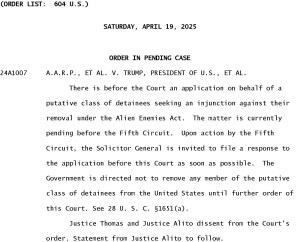
I wanted to write a short post to try to put the order into at least a little bit of context—and to sketch out just how big a deal I think this (aggressive but tentative) intervention really is.
As I wrote at the time, although I disagreed with the majority’s “habeas-only” analysis, the broader ruling made would’ve made at least a modicum of sense if the Court was dealing with any other administration, but it raised at least the possibility that the Trump administration, specifically, would try to play games to make habeas review effectively inadequate. And all of those games would unfold while no court has ruled, one way or the other, on either the facial legal question (does the AEA apply at all to Tren de Aragua); or case-specific factual/legal questions about whether individual detainees really are “members” of TdA. Lo and behold, that’s what happened.
In the immediate aftermath of the Court’s April 7 ruling in J.G.G., litigants successfully obtained TROs against AEA removals in three different district courts—the Southern District of New York; the District of Colorado; and, as most relevant here, the Southern District of Texas. In the S.D. Tex. case (J.A.V. v. Trump), Judge Fernando Rodriguez (not that it should matter, but a Trump appointee) barred the government from removing the named plaintiffs or anyone else “that Respondents claim are subject to removal under the [AEA] Proclamation, from the El Valle Detention Center.” (The other rulings were also geographically specific.)
The ACLU had already filed a habeas petition on Wednesday in the Northern District of Texas on behalf of two specific (anonymous) plaintiffs and a putative class of all Bluebonnet detainees—captioned A.A.R.P. v. Trump. Judge Hendrix had already denied the ACLU’s initial motion for a TRO—based on government representations that the named plaintiffs were not in imminent threat of removal (he reserved ruling on the request for class-wide relief).
Thus, once the news of the potentially imminent AEA removals started leaking out, the ACLU did two things at once: It sought renewed emergency relief from Judge Hendrix in the A.A.R.P. case, and it went back to Chief Judge Boasberg in the J.G.G. case—which has not yet been dismissed—since that case at least for the moment includes a nationwide class of individuals subject to possible removal under the AEA. And while it waited for both district judges to rule, the ACLU sought emergency relief in A.A.R.P. from both the Fifth Circuit and the Supreme Court.
You’ll need to head over to One First to read the details, but here some of Vladek’s conclusions. He argues that this is “massively important,” because the court acted very quickly, without waiting for the 5th Circuit to rule, they “didn’t hide behind any technicalities” as they have previously, and “perhaps most significantly, the Court seemed to not be content with relying upon representations by the government’s lawyers.”
Maybe the Court is finally beginning to understand that Trump really wants to make the U.S. a dictatorship.
Yesterday Dakinikat wrote Senator Chris Van Hollen’s meeting in El Salvador with wrongly deported Kilmar Abrego Garcia. Last night, Van Hollen returned to the U.S. and held a remarkable press conference to report on his experience.
ABC News: Van Hollen describes dramatic meeting with Abrego Garcia in El Salvador upon return to US.
Sen. Chris Van Hollen took aim at President Donald Trump and the El Salvador government over their treatment of Kilmar Abrego Garcia, the migrant who the government said in court was erroneously deported to El Salvador, and for trying to deflect from the notion that the U.S. government is flouting court orders to “facilitate” his return to the U.S.
The Maryland Democrat joined Abrego Garcia’s wife and mother and other supporters at Washington Dulles International Airport on Friday and spoke about his three-day visit, providing more details about the one-hour conversation he had with Abrego Garcia.
 Van Hollen said the Trump administration is lying about the case in attempt to distract from questions about whether Abrego Garcia’s rights were violated by bringing up gang violence.
“This case is not about just one man. It’s about protecting the constitutional rights of everyone who resides in the United States of America,” he said….
Van Hollen revealed during the press conference that Abrego Garcia told him during their meeting that he has been moved out of CECOT to another facility that was further away.
“We all thought he was at CECOT, which I didn’t know until I met him,” he said.
Abrego Garcia described being handcuffed, shackled and put on planes with other migrants, noting that they could not see where they were going, according to the senator. Van Hollen added that Abrego Garcia was held in a cell with 25 other people and fearful of other prisoners who taunted him.
The senator said Abrego Garcia told him he was transported to his current facility nine days ago.
“He said the conditions are better, but he said despite the better conditions, he still has no access to news from the outside world and no ability to communicate with the outside world,” Van Hollen said.
I wonder if they moved him to make sure nothing happened to him. Could Trump and Bukele be getting anxious about all the attention? Read more details at the link.
HuffPost: Trump White House Lashes Out At Senator Who Visited Wrongly Deported Man In El Salvador.
President Donald Trump accused Sen. Chris Van Hollen of political grandstanding after the Maryland Democrat managed to meet this week with an immigrant who had made a life in his state before being wrongfully deported to El Salvador last month.
The case sparked fresh fears that the Trump administration is not particularly interested in respecting the rule of law in the United States.
The president wrote on his social media platform that the senator “looked like a fool yesterday standing in El Salvador begging for attention from the Fake News Media, or anyone.”
He threw in an insult: “GRANDSTANDER!!!”
Trump also lashed out at the immigrant, Kilmar Abrego Garcia, saying he was “not a very innocent guy” on Friday while speaking to reporters….
The White House also mocked Van Hollen’s trip on X, formerly Twitter, marking up a New York Times headline to label Abrego Garcia an “MS-13 illegal alien” who is “never coming back.”
Trump is such a whiny baby.
More on the Administration’s war on immigrants from Makena Kelly and Vittoria Elliot at Wired: DOGE Is Building a Master Database to Surveil and Track Immigrants.
Operatives from Elon Musk’s so-called Department of Government Efficiency (DOGE) are building a master database at the Department of Homeland Security (DHS) that could track and surveil undocumented immigrants, two sources with direct knowledge tell WIRED.
DOGE is knitting together immigration databases from across DHS and uploading data from outside agencies including the Social Security Administration (SSA), as well as voting records, sources say. This, experts tell WIRED, could create a system that could later be searched to identify and surveil immigrants.
The scale at which DOGE is seeking to interconnect data, including sensitive biometric data, has never been done before, raising alarms with experts who fear it may lead to disastrous privacy violations for citizens, certified foreign workers, and undocumented immigrants.
 A United States Customs and Immigration Services (USCIS) data lake, or centralized repository, existed at DHS prior to DOGE that included data related to immigration cases, like requests for benefits, supporting evidence in immigration cases, and whether an application has been received and is pending, approved, or denied. Since at least mid-March, however, DOGE has been uploading mass amounts of data to this preexisting USCIS data lake, including data from the Internal Revenue Service (IRS), SSA, and voting data from Pennsylvania and Florida, two DHS sources with direct knowledge tell WIRED.
“They are trying to amass a huge amount of data,” a senior DHS official tells WIRED. “It has nothing to do with finding fraud or wasteful spending … They are already cross-referencing immigration with SSA and IRS as well as voter data.”
Since president Donald Trump’s return to the White House earlier this year, WIRED and other outlets have reported extensively on DOGE’s attempts to gain unprecedented access to government data, but until recently little has been publicly known about the purpose of such requests or how they would be processed. Reporting from The New York Times and The Washington Post has made clear that one aim is to cross-reference datasets and leverage access to sensitive SSA systems to effectively cut immigrants off from participating in the economy, which the administration hopes would force them to leave the county. The scope of DOGE’s efforts to support the Trump administration’s immigration crackdown appear to be far broader than this, though. Among other things, it seems to involve centralizing immigrant-related data from across the government to surveil, geolocate, and track targeted immigrants in near real time.
That is seriously frightening.
On a lighter note, this is hilarious. The Trump folks claim their attack on Harvard was all a silly mistake.
The New York Times: Trump Officials Blame Mistake for Setting Off Confrontation With Harvard.
Harvard University received an emailed letter from the Trump administration last Friday that included a series of demands about hiring, admissions and curriculum so onerous that school officials decided they had no choice but to take on the White House.
The university announced its intentions on Monday, setting off a tectonic battle between one of the country’s most prestigious universities and a U.S. president. Then, almost immediately, came a frantic call from a Trump official.
 The April 11 letter from the White House’s task force on antisemitism, this official told Harvard, should not have been sent and was “unauthorized,” two people familiar with the matter said.
The letter was sent by the acting general counsel of the Department of Health and Human Services, Sean Keveney, according to three other people, who were briefed on the matter. Mr. Keveney is a member of the antisemitism task force.
It is unclear what prompted the letter to be sent last Friday. Its content was authentic, the three people said, but there were differing accounts inside the administration of how it had been mishandled. Some people at the White House believed it had been sent prematurely, according to the three people, who requested anonymity because they were not authorized to speak publicly about internal discussions. Others in the administration thought it had been meant to be circulated among the task force members rather than sent to Harvard.
But its timing was consequential. The letter arrived when Harvard officials believed they could still avert a confrontation with President Trump. Over the previous two weeks, Harvard and the task force had engaged in a dialogue. But the letter’s demands were so extreme that Harvard concluded that a deal would ultimately be impossible.
Why didn’t the Trump people speak up sooner then? Why did they wait until all the back and forth we’ve been watching?
After Harvard publicly repudiated the demands, the Trump administration raised the pressure, freezing billions in federal funding to the school and warning that its tax-exempt status was in jeopardy.
A senior White House official said the administration stood by the letter, calling the university’s decision to publicly rebuff the administration overblown and blaming Harvard for not continuing discussions.
“It was malpractice on the side of Harvard’s lawyers not to pick up the phone and call the members of the antisemitism task force who they had been talking to for weeks,” said May Mailman, the White House senior policy strategist. “Instead, Harvard went on a victimhood campaign.”
So the “misunderstanding” is Harvard’s fault? Anyway the remaining Trump demands are still outrageous.
Still, Ms. Mailman said, there is a potential pathway to resume discussions if the university, among other measures, follows through on what Mr. Trump wants and apologizes to its students for fostering a campus where there was antisemitism.
Mr. Keveney could not be reached for comment. In a statement, a spokesman for the antisemitism task force said, “The task force, and the entire Trump administration, is in lock step on ensuring that entities who receive taxpayer dollars are following all civil rights laws.”
Harvard pushed back on the White House’s claim that it should have checked with the administration lawyers after receiving the letter.
The letter “was signed by three federal officials, placed on official letterhead, was sent from the email inbox of a senior federal official and was sent on April 11 as promised,” Harvard said in a statement on Friday. “Recipients of such correspondence from the U.S. government — even when it contains sweeping demands that are astonishing in their overreach — do not question its authenticity or seriousness.”
The statement added: “It remains unclear to us exactly what, among the government’s recent words and deeds, were mistakes or what the government actually meant to do and say. But even if the letter was a mistake, the actions the government took this week have real-life consequences” on students and employees and “the standing of American higher education in the world.
Just more evidence that the Trump administration is full of stupid, incompetent assholes.
The recent goings on at the Department of Defense are more evidence of that.
Politico: Pentagon turmoil deepens: Top Hegseth aide leaves post.
Joe Kasper, Defense Secretary Pete Hegseth’s chief of staff will leave his role in the coming days for a new position at the agency, according to a senior administration official, amid a week of turmoil for the Pentagon.
Senior adviser Dan Caldwell, Hegseth deputy chief of staff Darin Selnick and Colin Carroll, the chief of staff to Deputy Defense Secretary Stephen Feinberg, were placed on leave this week in an ongoing leak probe. All three were terminated on Friday, according to three people familiar with the matter, who, like others, were granted anonymity to discuss a sensitive issue.
 The latest incidents add to the Pentagon’s broader upheaval in recent months, including fallout from Hegseth’s release of sensitive information in a Signal chat with other national security leaders and a controversial department visit by Elon Musk.
Caldwell, Carroll, Selnick and Kasper declined to comment. Two of the people said Carroll and Selnick plan to sue for wrongful termination. The Pentagon did not respond to a request of comment.
Kasper had requested an investigation into Pentagon leaks in March, which included military operational plans for the Panama Canal, a second carrier headed to the Red Sea, Musk’s visit and a pause in the collection of intelligence for Ukraine.
But some at the Pentagon also started to notice a rivalry between Kasper and the fired advisers.
“Joe didn’t like those guys,” said one defense official. “They all have different styles. They just didn’t get along. It was a personality clash.”
The changes will leave Hegseth without a chief of staff, deputy chief of staff, or senior adviser in his front office.
“There is a complete meltdown in the building, and this is really reflecting on the secretary’s leadership,” said a senior defense official. “Pete Hegseth has surrounded himself with some people who don’t have his interests at heart.”
And of course Hegseth has no fucking clue what he’s doing.
And get this: Trump appointees are trying to censor professional journals.
The New York Times: Trump-Allied Prosecutor Sends Letters to Medical Journals Alleging Bias.
A federal prosecutor has sent letters to at least three medical journals accusing them of political bias and asking a series of probing questions suggesting that the journals mislead readers, suppress opposing viewpoints and are inappropriately swayed by their funders.
The letters were signed by Edward Martin Jr., a Republican activist serving as interim U.S. attorney in Washington, D.C. He has been criticized for using his office to target opponents of President Trump.
Some scientists and doctors said they viewed the letters as a threat from the Trump administration that could have a chilling effect on what journals publish. The health secretary, Robert F. Kennedy Jr., has said he wants to prosecute medical journals, accusing them of lying to the public and colluding with pharmaceutical companies.
One of the letters was sent to the journal Chest, published by the American College of Chest Physicians. The New York Times obtained a copy of the letter.
The Times confirmed that at least two other publishers had received nearly identically worded letters, but those publishers would not speak publicly because they feared retribution from the Trump administration.
In the letter to Chest, dated Monday, Mr. Martin wrote, “It has been brought to my attention that more and more journals and publications like CHEST Journal are conceding that they are partisans in various scientific debates.”
He demanded that the journal’s publishers answer a series of questions by May 2. Do they accept submissions from “competing viewpoints?” What do they do if the authors they published “may have misled their readers?” Are they transparent about influence from “supporters, funders, advertisers and others?”
And he specifically singled out the National Institutes of Health, which funds some of the research the journals publish, asking about the agency’s role “in the development of submitted articles.”
The prosecutor’s inquiry amounts to “blatant political intimidation of our medical journals,” Dr. Adam Gaffney, a pulmonologist and researcher in Massachusetts whose articles have been published in Chest, wrote on X.
Unreal.
That’s all I have for you today. I wish you all a nice weekend, and Happy Easter, if you celebrate it.
Did you like this post? Please share it with your friends:
Posted: April 17, 2025 | Author: bostonboomer | Filed under: Donald Trump, education, immigration | Tags: CECOT, constitutional crisis, El Salvador prison, Harvard University, Kilmar Abrego Garcia, Mohsen Mahdawi, Senator Chris Van Hollen |
Good Afternoon!!
The news is mostly bad as it has been since Trump moved into the White House, and I have to admit I’m feeling frightened and depressed about what is happening to our country.
Trump is waging all-out war on Harvard University, and Harvard is fighting back. That’s one bright spot.
Harvard University is taking hits from Trump on multiple fronts. Here’s the latest:
 CNN: IRS making plans to rescind Harvard’s tax-exempt status.
The Internal Revenue Service is making plans to rescind the tax-exempt status of Harvard University, according to two sources familiar with the matter, which would be an extraordinary step of retaliation as the Trump administration seeks to turn up pressure on the university that has defied its demands to change its hiring and other practices.
A final decision on rescinding the university’s tax exemption is expected soon, the sources said.
The administration already has blocked more than $2 billion in funding from the nation’s oldest university, which is fighting the White House’s policy demands, citing the constitutional right of private universities to determine their own teaching practices.
President Donald Trump in recent days raised the idea of punishing the Ivy League university for not complying with what the administration has sought to portray as a campaign to fight antisemitism.
“Perhaps Harvard should lose its Tax Exempt Status and be Taxed as a Political Entity if it keeps pushing political, ideological, and terrorist inspired/supporting ‘Sickness?’ Remember, Tax Exempt Status is totally contingent on acting in the PUBLIC INTEREST!” Trump posted on Truth Social on Tuesday….
Asked about CNN’s reporting on “The Arena,” Education Secretary Linda McMahon said that she doesn’t know whether Harvard will lose its tax exempt status but argued “it was certainly worth looking into.”
“We’ll see what IRS comes back with relative to Harvard,” McMahon told CNN’s Kasie Hunt. “I certainly think, you know, in elitist schools, especially that have these incredibly large endowments, you know, we should probably have a look into that.”
McMahon added that it is her “guess” that the IRS is also looking at tax exempt statuses of other universities.
Gary Shapley, whom Trump this week picked as acting IRS commissioner, has the authority to rescind the tax exemption under federal law. Doing so typically comes after the agency has made a determination that an organization has violated the rules that govern tax exemptions for not-for-profit entities.
There’s no evidence that Harvard has violated any of the conditions for tax exempt status, according to experts consulted by The Washington Post. From the Post article:
Harvard spokesman Jason Newton said in a statement that there was “no legal basis” to rescind the university’s tax-exempt status. Newton said the status “means that more of every dollar can go toward scholarships for students, lifesaving and life-enhancing medical research, and technological advancements that drive economic growth.”
Some Trump allies predicted that Harvard would only be the first of numerous colleges and universities that the administration would target over their tax-exempt status.
“I think they’re going to go after a whole bunch of them,” said Newt Gingrich, the former House GOP leader. “I’m not sure why we need to be funding people who aggressively refuse to give up a variety of values and structures that most Americans don’t agree with.”
Earlier this month, the Trump administration demanded broad control over Harvard’s operations over complaints about “diversity, equity and inclusion” policies in hiring, admissions and curriculums and student activism surrounding Israel’s war against Hamas.
Harvard rejected those demands on Monday, marking the first time a university formally countered the administration’s campaign for sweeping changes in higher education. Hours later, the administration responded by saying it would freeze more than $2 billion in federal funding.
If Harvard loses its tax-exempt status as President Trump has threatened, it would be extremely rare, but not unprecedented.
Moreover, the only instance in higher education that experts are aware of shows how far a university had to go to lose that coveted status.

View of Harvard Yard
In 1976, the Internal Revenue Service stripped the tax exemption from Bob Jones University, a private fundamentalist Christian institution in Greenville, S.C., because the school forbid interracial dating by its students. The university objected, saying it wasn’t practicing racial discrimination because the policy applied to all students.
The case went all the way to the Supreme Court, which upheld the IRS action in 1983. The 8-1 ruling likely would be the legal precedent for the Trump administration if it revokes Harvard’s tax-exempt status over allegations it practiced discrimination through diversity equity and inclusion initiatives and a failure to protect Jewish students from antisemitic harassment by Gaza war protesters.
“In 1983, the Supreme Court established the precedent that universities which practice racial discrimination can be stripped of their nonprofit status,” conservative activist Christopher Rufo wrote on X Tuesday. “Harvard’s DEI programs are openly discriminatory and, therefore, the president has every right to proceed with this remedy.”
In Trump’s twisted notion of discrimination (it only counts if it’s against white men), I guess lots of tax-exempts institutions could be targeted.
That’s not all the administration is threating to do to Harvard. They want to stop the university from admitting foreign students.
The Harvard Crimson: DHS Threatens To Revoke Harvard’s Eligibility To Host International Students Unless It Turns Over Disciplinary Records.
The Department of Homeland Security sent Harvard a letter on Wednesday threatening to revoke its eligibility to enroll international students unless it submits information on international students’ disciplinary records and protest participation.
In a Wednesday press release, the DHS wrote that it had also canceled two grants worth $2.7 million to Harvard.
The letter threatening Harvard’s authorization to host international students, which was signed by Secretary of Homeland Security Kristi Noem, accused Harvard of creating a “hostile learning environment” for Jewish students.
“It is a privilege to have foreign students attend Harvard University, not a guarantee,” the letter read.
American universities may host international students on student visas only if they have certification under the Student and Exchange Visitor Program.
The Wednesday letter calls on Harvard to provide information regarding visa holders’ “known threats to other students or university personnel,” “obstruction of the school’s learning environment,” and any disciplinary actions “taken as a result of making threats to other students or populations or participating in protests.”
It comes less than a week after three federal agencies threatened to pull Harvard’s federal funding unless the University agreed to report international students for violation of its conduct policies. Harvard rebuffed the government’s demands on Monday and now faces cuts to more than $2.2 billion in federal funding.
The University also announced last week that a total of 12 current Harvard students and recent graduates have had their visas revoked.
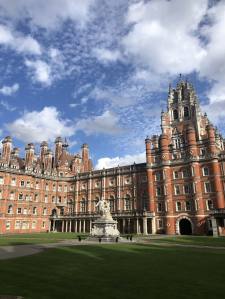
Another view of Harvard
CNN: Harvard weighs its next moves amid the federal funding standoff.
About 24 hours after the Trump administration said it would freeze more than $2 billion in federal grants and contracts, Harvard University’s research arm began to assess the fallout.
The impact is already acute at Harvard’s School of Public Health, where professors are scrambling to salvage their research into tuberculous and cancer treatments.
Harvard – the nation’s oldest and richest university – has emerged as a new symbol of the Trump resistance after refusing to capitulate to a series of policy changes the administration had demanded. Now, having put itself in an uncertain position, Harvard must weigh its next moves.
John Shaw, vice provost for research at Harvard, emailed colleagues Tuesday evening asking them to notify the Office for Sponsored Programs of any funding disruptions they become aware of – and what steps they ought to take.
“While there will inevitably be important research that will suffer as a result of the funding freeze, we are asking for your help in assessing how best to preserve vital work and support our researchers, while using institutional resources responsibly through this disruption,” he wrote, according to an email reviewed by CNN. “This is meant to stabilize the research environment while we gather information, coordinate decision-making, and strive to protect what matters most.”
Professors at the Faculty of Arts and Sciences, home to Harvard’s undergraduate and PhD programs, were notified in a separate email that a town hall would be arranged in the coming days to answer questions, according to the email.
The funding freeze threatens as much as $9 billion in federal money for Harvard. Beyond the practical implications of losing those funds, it’s not clear how far a standoff could go.
As we have seen, Trump is also attacking foreign students and immigrants individually, grabbing them off the streets or when they report to update their immigration status and disappearing them.
At The Boston Globe, Paul Heintz profiled a Columbia University student who was kidnapped when he arrived to take a citizenship test: ‘The town loved him’: Palestinian student detained in Vermont forged deep connections in the Upper Valley.
When federal officials led a handcuffed Mohsen Mahdawi out of an office building in northern Vermont on Monday, he became the latest international student whom the Trump administration had apparently targeted for speaking out against Israel’s war in Gaza.
But those who know Mahdawi say it’s absurd to suggest he “engaged in pro-terrorist, anti-Semitic, anti-American activity,” as the president has said of protesters at Columbia University where he was a student. Rather, they describe him as a peaceful 34-year-old Palestinian who had a remarkable journey from a refugee camp in the West Bank to a cabin in rural Vermont to an Ivy League institution in New York City.

Mohsen Mahdawi
He is widely known in the upper Connecticut River Valley of Vermont and New Hampshire, where he has been based since moving to the United States more than a decade ago, as a spiritual man who grew up Muslim, is a practicing Buddhist, and whose closest friends are Jewish.
“He is such an advocate for peace. He is such an opponent of any kind of violence,” said Rabbi Dov Taylor, who leads Chavurat Ki-tov, a Jewish cultural and educational organization in Woodstock, Vt. “His love just comes out in what he says.”
Simon Dennis, a carpenter and a former selectboard member in nearby Hartford, described Mahdawi as “a person of great gracefulness and dignity and gravitas” who is “destined to go forward and do great things in the world.”
Mahdawi, who was set to graduate this spring, was being held Tuesday in Vermont’s Northwest State Correctional Facility in St. Albans.
On Wednesday evening, some 200 supporters gathered in a windswept field several hundred yards from the prison. They hoisted Palestinian flags and signs calling for his release. An organizer, Jesse Lubin of Burlington, encouraged the crowd “to be loud enough so that he might be able to hear us” from inside the prison.
Just a bit more, because this is behind a paywall:
Crystal Cole of St. Albans told fellow protesters that she was there to demonstrate that even residents of this rural county on the Canadian border were outraged about Mahdawi’s detention.
“People up here in Franklin County know just as well as everyone else across the state, across the country, and across the world that free speech is a right, kidnapping is a wrong, and we refuse to stand for it,” she said.
By all accounts, Mahdawi has assiduously accumulated friends in the Upper Valley since moving from the West Bank in 2014. He’s done so while working as a bank teller, joining faith events, speaking at lectures and protests on the Middle East, and serving as a jack-of-all-trades at Dan & Whit’s, a popular general store in Norwich.
“Everyone loved him,” said Dan Fraser, a former owner and manager. “The town loved him. The town knows him.”
Mahdawi has lived for years in Fraser’s home in Hartford. He attended Lehigh University in Pennsylvania before transferring to Columbia in 2021. He was expecting to enter graduate school there in the fall for international affairs.
Mahdawi has been a permanent resident, or green card holder, since 2015, according to his attorneys, and appeared on track to attain citizenship. He had been in hiding after a friend and fellow Columbia student organizer, Mahmoud Khalil, was detained on March 8, according to friends.
He sounds really dangerous, right?
We are all familiar with the case of Kilmar Abrego Garcia, who was sent to the torture prison in El Salvador. The Trump administration admits this was a mistake, but they are determined not to return Garcia to his family in Maryland. Yesterday Maryland Senator Chris Van Hollen traveled to El Salvador in an attempt to meet with Garcia.
Politico: Van Hollen denied from meeting with wrongfully deported man in El Salvador.
Sen. Chris Van Hollen (D-Md.) flew to El Salvador on Wednesday seeking to secure the release of a man wrongly deported by the Trump administration, as officials ramp up their defense of the administration’s actions in an escalating battle over President Donald Trump’s mass deportation policy.
The Trump administration has made the fight around Kilmar Abrego Garcia the centerpiece of its broader deportation efforts, resisting efforts to bring him back to the United States, despite a Supreme Court ruling that the administration must “facilitate” Abrego Garcia’s return after his illegal deportation.
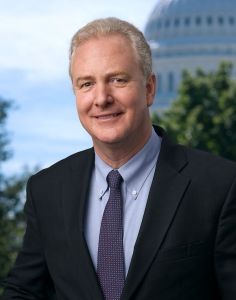
Chris Van Hollen
But after a meeting with Salvadoran Vice President Félix Ulloa, Van Hollen was denied the opportunity to see Abrego Garcia or visit the maximum security prison where he’s being held.
In a press conference on Wednesday, Van Hollen said that he asked Ulloa for a meeting with Abrego Garcia. Ulloa said he would have needed to “make earlier provisions” to visit, according to the senator, and also added he would be unable to arrange a phone call.
“I asked the vice president — if Abrego Garcia has not committed a crime, and if courts found that he was illegally taken, and the government of El Salvador has found no evidence he was part of MS-13 — then why is El Salvador continuing to hold him?” Van Hollen said.
Statement from Van Hollen:
“The goal of this mission is to let the Trump administration, let the government of El Salvador know that we are going to keep fighting to bring Abrego Garcia home until he returns to his family,” Van Hollen said in a video from the airport on his way to San Salvador, adding that he hopes to “meet with representatives of the government” and “see Kilmar.” Van Hollen, in second a video posted to X, said he arrived in San Salvador a little before noon and that he was on his way to the U.S. embassy.
Trump border czar Tom Homan slammed the Democratic senator for his visit, calling the trip “disgusting” on Fox News on Wednesday morning and echoing a line from the administration that the senator is more concerned with an “MS-13 terrorist” than Rachel Morin, a Maryland woman whose killer — who was convicted this week — was an undocumented immigrant.
“He wasn’t abducted. He is an MS-13 gang member, classified as a terrorist, that was removed from this country. So we got rid of a dangerous person — an El Salvadoran national was returned to the country of El Salvador, to his home,” Homan said, going on to call Abrego Garcia a “public safety threat.”
There’s no evidence Garcia is a gang member or terrorist.
We are in a true Constitutional crisis right now, since the Trump administration is ignoring court orders about these actions from two judges. So far, the judiciary is holding the line. It remains to be seen whether the Supreme Court will come down on the side of democracy or let Trump become a dictator. Here’s what’s happening on the immigration front this morning.
Reuters: Trump challenges judges’ probes of compliance with deportation orders.
The Trump administration is appealing efforts by two judges to investigate whether government officials defied their rulings over the deportation of migrants to El Salvador, escalating a confrontation between the executive and judicial branches.
On Wednesday night, the Justice Department said it would appeal Washington-based U.S. District Judge James Boasberg’s finding that there was probable cause to believe the government had violated his order to return alleged members of a Venezuelan gang who were deported to El Salvador on March 15 under an 18th-century wartime law. Boasberg said administration officials could face criminal contempt charges.
Also late on Wednesday, government lawyers asked the Fourth U.S. Circuit Court of Appeals to stop U.S. District Judge Paula Xinis in Greenbelt, Maryland from ordering U.S. officials to provide documents and answer questions under oath about what they had done to secure the return of Kilmar Abrego Garcia, a migrant who was wrongly deported to El Salvador.
In both cases, the Trump administration has denied it violated court orders and accused judges of overstepping their authority.
“A single district court has inserted itself into the foreign policy of the United States and has tried to dictate it from the bench,” the Justice Department lawyers wrote in its filing with the Fourth Circuit.
“Emergency relief is needed.”
Below are commentary pieces on the El Salvador prison and what Trump is doing to immigrants.
Hunter Walker at Talking Points Memo: Trump is Sending People to the Camps.
Extraordinary times call for extraordinary and strong language. President Trump’s plan to have migrants — and potentially U.S. citizens — rounded up, flown to El Salvador, and confined there in a maximum security facility that specializes in indefinite detention meets that bar. However, even when news coverage and criticism has acknowledged Trump’s vision is almost certainly illegal and unquestionably dangerous, it has often used fairly normal terminology and referred to the flights as deportations to a “prison.” That is not what is happening. President Trump is sending people to the camps.
The distinction comes from some of the unique features of the Terrorism Confinement Center, or CECOT, the infamous El Salvadoran facility that is holding people on behalf of the Trump administration. A “prison” is most typically defined as an institution holding inmates who have been sentenced for a crime. And, of course, most sentences have an end date. However, El Salvadoran President Nayib Bukele and his government have boasted that people placed in CECOT, “have no chance of getting out.”
U.S. prisoners arriving at El Salvador prison
Because of the prospect of indefinite detention and the lack of due process the Trump administration has afforded the people it has sent to CECOT, experts who spoke to TPM said the facility could be more accurately described as a “concentration camp,” “penal colony,” or “permanent prison camp.”
Dr. Sandra Susan Smith, who is the Daniel & Florence Guggenheim Professor of Criminal Justice at Harvard’s Kennedy School, was very clear on this point in an email.
“More than a prison, El Salvador’s CECOT has many if not all the hallmarks of a concentration camp,” Smith wrote. “The Trump administration has unlawfully deported a group it finds highly undesirable — migrants largely from Venezuela — to CECOT, a facility known for its utter brutality and unyielding inhumanity that is located in a foreign country where US courts have no jurisdiction. Further, they have done so with no evidentiary basis for claims of migrants’ criminality and with no due process.”
Smith’s point might sound extreme since the term “concentration camp” is most closely associated with the German Nazi regime that left millions dead. However, mass executions are actually not part of the official definition. According to the Holocaust Encyclopedia published by the U.S. Holocaust Memorial Museum, “the term concentration camp refers to a camp in which people are detained or confined, usually under harsh conditions and without regard to legal norms of arrest and imprisonment that are acceptable in a constitutional democracy.”
Mike Wessler, the communications director of the Prison Policy Initiative, said he and his team were “discussing” whether CECOT should be called a “prison” this morning or whether another term should be applied. He pointed to the Holocaust Encyclopedia definition of “concentration camp.”
“I think there is a strong case to be made that the term prison does not fit for these sorts of facilities. Prisons are generally considered part of a larger legal system that is subject to judicial oversight and has somewhat defined processes, including around sentences, conditions, and releases,” Wessler said.
Read the rest at TPM.
Marcos Alemn, Regina Garcia Cano, and Alex Brandon at The Independent: Inside the brutal mega-prison where Trump administration has wrongly sent Maryland father.
Kilmar Abrego Garcia was deported to El Salvador by the Trump administration in March, despite a court order preventing his removal from the US….
He is among more than 200 immigrants sent to the Terrorism Confinement Center (CECOT), El Salvador’s maximum-security gang prison, in the past month….

El Salvador mega prison
What is the CECOT?
Bukele ordered the mega-prison built as he began his campaign against El Salvador’s gangs in March 2022.
It opened a year later in the town of Tecoluca, about 45 miles (72 kilometers) east of the capital.
The facility has eight sprawling pavilions and can hold up to 40,000 inmates.
Each cell can fit 65 to 70 prisoners.
CECOT prisoners do not receive visits and are never allowed outdoors. The prison does not offer workshops or educational programs to prepare them to return to society after their sentences.
Occasionally, prisoners who have gained a level of trust from prison officials give motivational talks.
Prisoners sit in rows in the corridor outside their cells for the talks or are led through exercise regimens under the supervision of guards.
Bukele’s justice minister has said that those held at CECOT would never return to their communities.
The prison’s dining halls, break rooms, gym and board games are for guards.
Read the rest at The Independent.
The Handbasket: GOP photos at El Salvador prison evoke Abu Ghraib—and worse.
A row of Latino men with shaved heads and stoic expressions wearing identical white boxer shorts stand behind thick metal bars. In the back fellow prisoners sit cross-legged on large shelves that look like they’re meant for boxed furniture at IKEA, but are instead being used for humans. Outside the bars, free, is a white man in a blazer and collared shirt, his arm stretched out to hold the camera being used to take the photo of him and the men. The image is grotesque. And now it is history.
If you’re not familiar with the names Riley Moore and Jason Smith, don’t worry; I wasn’t either until yesterday. They’re Republican Congressmen from West Virginia and Missouri, respectively, who took a trip to El Salvador on Tuesday where they were given a tour of Centro de Confinamiento del Terrorismo (CECOT), a two-year old maximum security prison. Each posted photos to their social media pages after the visit, gloating about their access….
Go to the linked article to see photos these Congressmen posted on social media….
Photos like this are only possible when you’ve become so divorced from the humanity of others that they become nothing more than props in your political ploy.
But they weren’t alone in their casual disregard: A photo posted to X by the US Embassy in El Salvador confirmed an additional five House Republicans went along for the trip, including Claudia Tenney (NY), Mike Kennedy (UT), Carol Miller (WV), Ron Estes (KS) and Kevin Hern (OK). I’ve reached out to the offices of these members and will update if I hear back.
These members at least had the sense not to brag about it on social media, but it also makes me wonder why? If visiting CECOT has become a Trump loyalty pilgrimage, why haven’t they blasted out thumbs up pics of their own? Is it enough for Trump just to know they went, or do Smith and Moore understand that you only truly get credit for your depravity if you broadcast it?
Senator Chris Van Hollen, a Democrat from Maryland, had a very different experience when he arrived in El Salvador. Wednesday morning to check in on one of his constituents who was wrongfully and illegally imprisoned there beginning in March. He met with the country’s Vice President and asked if he could visit CECOT to meet with Kilmar Abrego Garcia: In a press conference later that day, he revealed he was told no. He also said the embassy told him they hadn’t received any direction from the administration to facilitate Garcia’s return, despite a court order.The visit by Republican members of Congress and Van Hollen’s subsequent rejection the very next day show that CECOT isn’t a prison holding Americans, but a place for Trump to hold his political prisoners—and where only his allies can wander and gawk. Some have compared the prison’s conditions to Nazi concentration camps.
Nick Miroff at The Atlantic (gift link): We’re About to Find Out What Mass Deportation Really Looks Like.
The Trump administration is working hard to convince the public that its mass-deportation campaign is fully under way. Over the past several weeks, federal agents have seized foreign students off the streets, raided worksites, and shipped detainees to a supermax prison in El Salvador using wartime powers adopted under the John Adams administration.
The tactics have spread fear and created a showreel of social-media-ready highlights for the White House. But they have not brought U.S. Immigration and Customs Enforcement much closer to delivering the “millions” of deportations President Donald Trump has set as a goal.
“We need more money,” Tom Homan, Trump’s “border czar,” told me in an interview. “We won’t fail if we get the resources we need.”
Using the budget-reconciliation process, Republican lawmakers are now preparing to lavish ICE with a colossal funding increase—enough to pay for the kind of social and demographic transformation of the United States that immigration hard-liners have long fantasized about achieving.
Although GOP factions in the House and Senate have squabbled over the contours of the bill, spending heavily on immigration enforcement has bicameral support. The reconciliation bill in the Senate would provide $175 billion over the next decade. A House version proposes $90 billion.
To put those sums in perspective, the entire annual budget of ICE is about $9 billion.
The funding surge—which Republicans could approve without a single Democratic vote—would allow ICE to add thousands of officers and enlist police and sheriff’s deputies across the country to help arrest and jail more immigrants. It would funnel billions to private contractors to identify and locate targets, jail them in for-profit detention centers, and fast-track their deportations.
Paul Hunker, who was formerly ICE’s lead attorney in Dallas, likened Trump’s deportation campaign to a gathering wave. “It seems intense now, but wait until five months from now when the reconciliation bill has passed and ICE gets a huge infusion of cash,’’ he told me. “If that money goes out, the amount of people they can arrest and remove will be extraordinary.’’
ICE officials envision a private-sector contracting bonanza that would rely on old workhorses such as CoreCivic and Geo Group-–the for-profit firms best known for running immigration jails—while enlisting large data companies to make the deportation system run more like an e-commerce platform.
Read the rest at the link. It sounds a lot like the Nazi railroad cars, only with planes.
That’s for me. This is way too long already. Take care everyone.
Did you like this post? Please share it with your friends:


 peej
peej Carissa
 bostonboomer
 dakinikat
 ecocatwoman
 mablue2
 Mama Lopez
 peggysue22
 quixote
 skydancingguestblogger
 Mona (aka Wonk the Vote)



 Sky Dancing
Recent Comments