
Tuesday Reads: The Agony of Glenn Greenwald, The Ickiness of Ted Cruz, & Other News
Posted: August 20, 2013 Filed under: 2016 elections, Egypt, Foreign Affairs, Great Britain, morning reads, Pakistan, Republican politics, U.S. Economy, U.S. Politics, US & Canada | Tags: Bob Cesca, David Miranda, Glenn Greenwald, Muslim Brotherhood, Pervez Musharraf, Ted Cruz, the 24-hour rule, The Guardian UK 29 Comments
Good Morning!!
As of yesterday, we’ve reached the point with the NSA leaks story that the entire focus is on Glenn Greenwald and his martyrdom. Even Edward Snowden has now faded into the background.
On Sunday, Greenwald’s domestic partner David Miranda was detained for nine hours by UK authorities as he passed through Heathrow Airport on his way from Berlin to Rio de Janeiro where he and Greenwald live. Miranda was finally released, but his laptop, an external hard drive, a number of memory sticks and other electronic devices were confiscated. Greenwald reacted by threatening the UK government with harmful revelations from the Snowden stash.
As with previous Greenwald stories, this one quickly evolved from a tale of horrendous government repression as reported by the Guardian to a more complex story reported by other news outlets–forcing the Guardian to walk back or provide more details on aspects of its original reporting. Bob Cesca does a good job of summarizing the process.
Like most people, Cesca was at first shocked by the news of Miranda’s detention. Then he began reading the stories under the headlines.
When I read The Guardian‘s article about the incident, however, more questions popped up — as with much of The Guardian‘s reporting on this topic, the publication’s tendency for coy, smoke-and-mirrors reporting invariably raises more questions than it answers. The article was credited to “Guardian staff,” for one, there weren’t any quotes from Miranda himself and the only source for the article appeared to be Greenwald, who, from my experience covering this story, tends to be incendiary and misleading.
The wailing and garment rending was underway — the predictable group freakout we’re forced to endure every time a new article is published. Greenwald himself wrote that the U.K. authorities were actually worse than the Mafia because the Mafia doesn’t target family members. (Clearly, Greenwald knows less about the Mafia than he does about political realities or history.)
An aside: Cesca coined the term “the 24 hour rule” after a the first few Greenwald NSA “bombshells.”
The 24 Hour Rule: 1) A wild claim is made via a news article, most often The Guardian, about the U.S. government or related entities. 2) The article sparks wild fits of outrage. 3) Then, within 24 hours, a mitigating detail is added, undermining or totally debunking one or more of the central claims contained with the article. Related quote: “A lie can travel half-way around the world before the truth gets its pants on.”
Back to Cesca’s take on the Miranda story:
As the hours rolled by, Charlie Savage, reporting for The New York Times, began to revealmore details about the trip — details which The Guardian mysteriously didn’t include in either of its articles….
First, we learned from The New York Times that The Guardian financed Miranda’s trip to Germany and back. This means Miranda was conducting some sort of official business for the publication. Around the same time, Amnesty International referred to Miranda as “a Guardian newspaper employee.” Combined with the Laura Poitras detail, it’s obvious that Miranda was commissioned to do some serious leg-work on the Snowden/NSA reporting, the extent of which was unknown at the time.
And then, late in the evening east coast time, The New York Times revealed the purpose of Miranda’s trip to Berlin:
Mr. Miranda was in Berlin to deliver documents related to Mr. Greenwald’s investigation into government surveillance to Ms. Poitras, Mr. Greenwald said. Ms. Poitras, in turn, gave Mr. Miranda different documents to pass to Mr. Greenwald. Those documents, which were stored on encrypted thumb drives, were confiscated by airport security, Mr. Greenwald said. All of the documents came from the trove of materials provided to the two journalists by Mr. Snowden.
So Miranda, Greenwald’s spouse, served as a paid courier to transfer stolen, top secret national security documents from Greenwald to Poitras, and from Poitras back to Greenwald.
While I’m not defending UK authorities for their ham-handed treatment of Miranda–and neither is Cesca–it’s really not surprising that Miranda was stopped and questioned. It also later came out that Miranda had been offered an attorney, but he refused the offer (Greenwald had originally said his partner was refused access to legal advice). From The Guardian on Monday:
He was offered a lawyer and a cup of water, but he refused both because he did not trust the authorities. The questions, he said, were relentless – about Greenwald, Snowden, Poitras and a host of other apparently random subjects.
“They even asked me about the protests in Brazil, why people were unhappy and who I knew in the government,” said Miranda.
He got his first drink – from a Coke machine in the corridor – after eight hours and was eventually released almost an hour later. Police records show he had been held from 08.05 to 17.00.
The questions about the Brazilian government weren’t actually that outrageous, since Glenn Greenwald had contacted high level officials there and they had tried to intervene.
So the “24-hour rule” still holds. This entire story turned around in 24 hours, but many news outlets are still reporting information that is either wholly or partially untrue. After it became clear that their original reporting on the Miranda detention was problematic, the Guardian released another bombshell article written by Guardian editor-in-chief Alan Rusberger in which he claims that two months ago GCHQ (Britain’s version of NSA) agents forced the Guardian to destroy their hard drives and computers unless they turned over their NSA materials. Again Bob Cesca has a good summary. Please read the whole thing if you can–it’s not long.
We’ll have to wait another day to see if this story also morphs into something different. Cesca has a list of questions for Rusberger. My big question is why wasn’t this reported immediately after it happened, and why didn’t the Guardian go to court over it?
And so Glenn Greenwald and his victimization remain the center of international attention. I have to wonder why Greenwald arranged for his partner to travel through Heathrow in the first place. Was he deliberately inviting something like this? He couldn’t have asked for better free publicity that he and the Guardian are getting right now.
Meanwhile, any discussion of NSA spying is hindered by so much inaccurate information; yet the NSA story is distracting Americans from focusing on equally important and even more pressing issues like jobs, the economy, voting rights, the war on women’s autonomy, the environment, and the upheavals in the Middle East. So now I’ll move on to some other news–I’ll add more links on the Miranda story in the comments.
In other news,
The Atlantic has a good story on economic inequality: Are the Rich Getting Too Much of the Economic Pie?
When one of you asked, “Are the rich getting too much of the economic pie?” the team behindEconomics in Plain English got pretty excited. Because you said “pie.” So we headed toDangerously Delicious Pies in northeast Washington, D.C., with business editor Derek Thompson to explain income inequality over dessert. We ordered three pies — peanut butter, blueberry, and something amazing called the “Baltimore Bomb” — to make three charts that illustrate the income and wealth gap in the U.S. We’re not the first to mix math and pastry, as we discovered recently, but we hope this video offers a tasty perspective on a complex economic question.
Watch the video–and others by the same group–at the link.
In Pakistan, Pervez Musharraf has been indicted in the 2007 murder of Benazir Bhutto
ISLAMABAD, Pakistan — A Pakistani court indicted Pervez Musharraf on Tuesday in connection with the 2007 assassination of former Prime Minister Benazir Bhutto, the first time that a former military leader has faced criminal proceedings in Pakistan.
The court in Rawalpindi, near the capital, Islamabad, filed three charges against Mr. Musharraf, including murder and conspiracy to murder, said a prosecutor, Chaudhry Muhammed Azhar.
Mr. Musharraf, who has maintained that the charges against him are politically motivated, pleaded not guilty, his lawyers said. Reporters were excluded from the hearing. Afterward, police commandos and paramilitary rangers escorted Mr. Musharraf back to his villa on the edge of Islamabad, where he has been under house arrest since April in connection with other cases stemming from his rule from 1999 to 2008.
The sight of a once untouchable general being called to account by a court had a potent symbolism in a country that has been ruled by the military for about half of its 66-year history. While the military remains deeply powerful, the prosecution has sent the message that Pakistan’s top generals are subject to the rule of law — at least after they have retired.
In Egypt, a leader of the Muslim Brotherhood has been arrested. The LA Times reports:
CAIRO — Egyptian authorities early Tuesday arrested the leader of the Muslim Brotherhood, another demoralizing blow to the Islamist organization amid a crackdown by the military to silence dissent and build support for its control of the nation.
Supreme Guide Mohamed Badie was arrested in a Cairo apartment. Dressed in a gray tunic, the 70-year-old spiritual leader looked shaken, sitting next to a bottle of water in police custody. The image distilled the desperation the world’s most influential Islamist organization faces against an army that appears determined to crush it.
Most of the Brotherhood’s top leaders, including Khairat Shater, its chief strategist and financier, and former Egyptian president Mohamed Morsi, who was overthrown in a coup last month, are in detention or have gone underground. Much of the group’s strategy appears to have shifted to the Anti-Coup Alliance, an umbrella group the Brotherhood organized to protest Morsi’s downfall.
The army’s crackdown on the Brotherhood has been ferocious. Police raids on two Brotherhood sit-ins last week and the protests and violence that ensured killed more than 900 Morsi supporters, many of them shot by live ammunition fired by security forces that have shown little restraint.
“When the hand of oppression extends to arrest this important symbol,” the Brotherhood said in a statement regarding Badie, “that means the military coup has used up everything in its pocket and is readying to depart.”
I’ll be honest–I’m really clueless about what’s going on in Egypt right now. I just hope the situation doesn’t descend into a Syria-like civil war.
Texas Tea Party Senator Ted Cruz is back in the news. The Dallas Morning News revealed yesterday that Cruz holds dual citizenship in the US and Canada.
Born in Canada to an American mother, Ted Cruz became an instant U.S. citizen. But under Canadian law, he also became a citizen of that country the moment he was born.
Unless the Texas Republican senator formally renounces that citizenship, he will remain a citizen of both countries, legal experts say.
That means he could assert the right to vote in Canada or even run for Parliament. On a lunch break from the U.S. Senate, he could head to the nearby embassy — the one flying a bright red maple leaf flag — pull out his Calgary, Alberta, birth certificate and obtain a passport.
“He’s a Canadian,” said Toronto lawyer Stephen Green, past chairman of the Canadian Bar Association’s Citizenship and Immigration Section.
The circumstances of Cruz’s birth have fueled a simmering debate over his eligibility to run for president. Knowingly or not, dual citizenship is an apparent if inconvenient truth for the tea party firebrand, who shows every sign he’s angling for the White House.
Cruz has decided to renounce his Canadian citizenship, according to CNN:
“Because I was a U.S. citizen at birth, because I left Calgary when I was 4 and have lived my entire life since then in the U.S., and because I have never taken affirmative steps to claim Canadian citizenship, I assumed that was the end of the matter,” Cruz wrote in his statement.
“Now the Dallas Morning News says that I may technically have dual citizenship. Assuming that is true, then sure, I will renounce any Canadian citizenship,” he continued. “Nothing against Canada, but I’m an American by birth, and as a U.S. Senator, I believe I should be only an American.”
Too bad he didn’t decide to run for office in Canada. I guess we’re stuck with him now.
I’ll end with this Daily Beast story about what Ted Cruz Princeton roommates recall about him. Some excerpts:
When Craig Mazin first met his freshman roommate, Rafael Edward Cruz, he knew the 17-year-old Texan was not like other students at Princeton, or probably anywhere else for that matter.
“I remember very specifically that he had a book in Spanish and the title was Was Karl Marx a Satanist? And I thought, who is this person?” Mazin says of Ted Cruz. “Even in 1988, he was politically extreme in a way that was surprising to me.” [….]
“It was my distinct impression that Ted had nothing to learn from anyone else,” said Erik Leitch, who lived in Butler College with Cruz. Leitch said he remembers Cruz as someone who wanted to argue over anything or nothing, just for the exercise of arguing. “The only point of Ted talking to you was to convince you of the rightness of his views.”
In addition to Mazin and Leitch, several fellow classmates who asked that their names not be used described the young Cruz with words like “abrasive,” “intense,” “strident,” “crank,” and “arrogant.” Four independently offered the word “creepy,” with some pointing to Cruz’s habit of donning a paisley bathrobe and walking to the opposite end of their dorm’s hallway where the female students lived.
“I would end up fielding the [girls’] complaints: ‘Could you please keep your roommate out of our hallway?'” Mazin says.
Eeeeeeeeek!!
OK, now it’s your turn. What stories are you focusing on today? Please post your links on any topic in the comment thread.
Thursday Reads: Edward Snowden Becomes a Refugee in Russia
Posted: August 1, 2013 Filed under: Crime, Criminal Justice System, cyber security, Foreign Affairs, jobs, morning reads, NSA, National Security Agency, Russia, The Media SUCKS, U.S. Politics, Wikileaks | Tags: Crime and Punishment, defectors, domestic surveillance, Don Maclean, Edward Snowden, Glenn Greenwald, Guy Burgess, Joshua Foust, Kim Philby, Marc Ambinder, Mark Ames, Novaya Gazeta, Russia Today, Russian refugee centers, the Kremlin, XKEYSCORE 37 Comments
Good Morning!!
The news is breaking as I write this (around 8:15AM ET) that NSA leaker Edward Snowden has received papers that grant him refugee status in Russia for one year. From Reuters:
Fugitive former U.S. spy agency contractor Edward Snowden left Moscow’s Sheremetyevo airport on Thursday after Russiagranted him refugee status, ending more than a month in limbo in the transit area.
A lawyer who has been assisting Snowden said the young American, who is wanted in the United States for leaking details of secret government intelligence programs, had left the airport for a secure location which would remain secret….
His lawyer, Anatoly Kucherena, told state television: “I have just seen him off. He has left for a secure location … Security is a very serious matter for him.”

Lawyer Anatoly Kucherena holds Edward Snowden’s entry papers from Russian Immigration Service
So what will life in Russia be like for Snowden? A number of knowledgeable writers have weighed in on this question.
Last week, when rumors circulated that Snowden had been granted asylum and would soon leave Sheremetyevo, Russian-American journalist Julia Ioffe wrote in The New Republic that Snowden would probably
be given an apartment somewhere in the endless, soulless highrises with filthy stairwells that spread like fields around Moscow’s periphery. He will live there for five years before he will be given citizenship. He’ll likely be getting constant visits from the SVR (the Russian NSA) to mine the knowledge he carries in his brain. Maybe, he will be given a show on Russia Today, alongside the guy who got him into this pickle to begin with, Julian Assange. Or he, like repatriated Russian spy Anna Chapman, might be given a fake job at a state-friendly bank where he will do nothing but draw a salary. (Chapman, by the way, recently tweeted this at Snowden: “Snowden, will you marry me?!”) Maybe he will marry a Russian woman, who will quickly shed her supple, feminine skin and become a tyrant, and every dark winter morning, Snowden will sit in his tiny Moscow kitchen, drinking Nescafe while Svetlana cooks something greasy and tasteless, and he will sit staring into his black instant coffee, hating her.
Was it worth it to trade Hawaii and a pole-dancer girlfriend for that? Snowden will have plenty of time on his hands to think about it. He certainly won’t get a job in Russian intelligence. The Russians, at least, know you can’t trust a leaker even though he may be a convenient source of information.
Mark Ames, who lived in Russia for years and published and wrote for an alternative newspaper in Moscow with partner Matt Taibbi, recently wrote a short piece on Snowden’s future prospects at NSFWCORP with quotes from some Russian sources that I can no longer find on-line. Ames writes:
The latest on Edward Snowden from Newsru.com: officials from the Federal Migration Service (FMS) say that Snowden could be transferred to a refugee center currently overflowing with Syrian war refugees, likely families tied to the Russian-backed regime of Bashir Assad. Or not.
Both Russian officials and Snowden’s Kremlin-tied lawyer are making a big show about how difficult the bureaucratic process is for anyone, even someone like Snowden, to get his temporary asylum papers. If you read the Russian press accounts, the surface statements about the Tsar’s alleged helplessness before the almighty bureaucracy are pure Gogol, without the ha-ha’s, a sort of no-laughter-through-tears. Beneath the surface, there’s something more menacing, a growing sense I get reading the Russian press that Snowden is a kind of Kremlin toy whom they’re intentionally fucking with, out of either contempt, or for the sheer fun of it…
Clearly, Russian President Vladimir Putin is having a blast sticking it to the US and soaking up praise from deluded Glenn Greenwald cultists (previously Obots) and Julian Assange fans who think Russia is a land of freedom and opportunity as in contrast to America, where jackbooted Obama administration thugs supposedly run a horrifying reign of terror.

Ames has a fascinating take on Snowden’s attorney’s bringing him a copy of Dostoevsky’s Crime and Punishment to read.
…the Kremlin gifting Snowden a copy of “Crime and Punishment” is itself a not-subtle mind-fuck on many levels. Dostoevsky’s book is a profoundly reactionary novel about a young foolish and desperate student full of second-hand radical ideas about his superiority against established morality. His name is Raskolnikov and he thinks he’s above ordinary human laws, so he kills his landlord according to these higher laws – and later goes crazy unable to believe in the radical ideas that led him to commit a crime, so he turns himself in to the authorities, and serves his time in Siberia as penance. The name of Dostoevsky’s hero, “Raskolnikov,” itself means “cracked” or “split” – as in his cracked conscience.
Last week Snowden’s lawyer, Anatoly Kucherena, told journalists…
“I bought [for Snowden] Dostoevsky’s ‘Crime and Punishment,’ because I think that Raskolnikov, who murdered his old landlord — I think that he needs to read about this. Not necessarily because of their similarities in their internal contradictions, but nevertheless…”
I loved this quote from opposition newspaper Novaya Gazeta (via Ames):
“Well, what can you say? If that infantile leftie Snowden really wanted to be a hero, he should return to the USA: crucify or not crucify, they’d probably give him 10 years, and he’d do five.”
“Snowden wanted to become a digital world’s Christ — without having to hang on the cross. Now Snowden’s going to spend not five years, but the rest of his life as a guest of the FSB.”
In another display of black humor, the Kremin website compared Snowden to British defectors and spies Kim Philby, Guy Burgess, and Don Maclean. In the posting the Kremlin notes that Philby and Burgess “drank themselves to death in their state-allocated flats, awaiting a world revolution that never came,” while Maclean got along better because he took the trouble to learn Russian. You can read more about Kim Philby at The Guardian.

Russian refugee center
State supported newspaper Russia Today also speculated about Snowden’s future: Spook out of water: What Snowden can expect if Russia grants him asylum.
If the application is accepted and Snowden is given the 12-month temporary asylum that enables him to leave the transit area of Sheremetyevo airport, he will have to undergo a daunting medical assessment designed especially for immigrants. Along with a standard screening for HIV and tuberculosis, he will also be checked for leprosy and the rare sexually-transmitted disease chancroid. Russian Health Ministry officials have said that they are ready to administer the tests at a moment’s notice, but so far have not been asked to do so by Snowden.
After Snowden registers his whereabouts with the police – to avoid risking a $150 fine – he will be free to apply for placement in a processing facility for asylum seekers. There are no such facilities in Moscow, and ones in the vicinity have been flooded with refugees escaping the Syrian conflict. Elena Ryabinina, a human rights lawyer who works with asylum seekers, told Gazeta.ru newspaper that most of her clients get offered a bed in a center near Perm – a city by the Ural mountains, more than 1,000 km east of Moscow.
Sounds like tons of fun. But according to the article Snowden could choose to try to find a place on his own–but he’d have to get a bodyguard since he’s a “wanted man.”
Even if Snowden does acquire a personal bodyguard and a high security flat at an undisclosed location – presumably courtesy of the Russian state – his future is hazy, and the reality of it likely different to what he imagined when he recorded his first revelations.
A temporary asylum seeker is allowed to work, but not to put further strain on the testy relationship between Moscow and Washington. Vladimir Putin said “no longer undermining the US” is a pre-condition for his asylum bid, and the former NSA contractor publicly promised to comply when he met Russian human rights activists a fortnight ago. One wonders who it is that Snowden’s bodyguards will be protecting from danger.
Who knows if we’ll even find out what happens to Snowden now? All we can do is watch and wait. Something tells me he may eventually wish he had just come back home to face the music.
Yesterday, Glenn Greenwald posted another “bombshell” about a “top secret program” called XKEYSCORE. According to Greenwald, this “NSA tool collects ‘nearly everything a user does on the internet.'” I googled and learned that hundreds of companies are publicly advertising job openings for people with experience on XKEYSCORE–so how can it be so secret? I guess Greenwald didn’t bother to do a google search. He didn’t bother to talk to Marc Ambinder either. Ambinder wrote a whole book on US intelligence methods in which he described XKEYSCORE in detail. Can Greenwald actually be writing about these intel programs without reading any of the literature on them?
I quibble with the Guardian‘s description of the program as “TOP SECRET.” The word is not secret; its association with the NSA is not secret; that the NSA collects bulk data on foreign targets is, well, probably classified, but at the SECRET level. Certainly, work product associated with XKEYSCORE is Top Secret with several added caveats. Just as the Guardian might be accused of over-hyping the clear and present danger associated with this particular program, critics will reflexively overstate the harm that its disclosure would reasonably produce.
XKEYSCORE is not a thing that DOES collecting; it’s a series of user interfaces, backend databases, servers and software that selects certain types of metadata that the NSA has ALREADY collected using other methods. XKEYSCORE, as D.B. Grady and I reported in our book, is the worldwide base level database for such metadata. XKEYSCORE is useful because it gets the “front end full take feeds” from the various NSA collection points around the world and importantly, knows what to do with it to make it responsive to search queries. As the presentation says, the stuff itself is collected by some entity called F6 and something else called FORNSAT and then something with the acronym SSO.
But Greenwald insisted on Chris Hayes show last night that XKEYSCORE does collect data–all your data–and someone creepy is probably reading it right now!!
In his piece at The Guardian Greenwald had to admit that NSA analysts need to get a warrant to look at and individual’s data, but he claims the warrants are worthless. He also admits that analysts don’t have access to all your personal data, but he says they could hack into it illegally. But isn’t that true for employees of any company or government agency? They could look at personal data by criminally working around limitations and ignoring regulations.
Charles Johnson at LGF: Greenwald’s Latest Article Distorts the Truth Again
Greenwald’s purpose with this latest article is to try to shore up Edward Snowden’s absurd claim that he could “wiretap anyone, even the President,” without any oversight. Here’s how he frames this defense:
The files shed light on one of Snowden’s most controversial statements, made in his first video interview published by the Guardian on June 10.
“I, sitting at my desk,” said Snowden, could “wiretap anyone, from you or your accountant, to a federal judge or even the president, if I had a personal email”.
US officials vehemently denied this specific claim. Mike Rogers, the Republican chairman of the House intelligence committee, said of Snowden’s assertion: “He’s lying. It’s impossible for him to do what he was saying he could do.”
But training materials for XKeyscore detail how analysts can use it and other systems to mine enormous agency databases by filling in a simple on-screen form giving only a broad justification for the search. The request is not reviewed by a court or any NSA personnel before it is processed.
Read this section carefully — because what Greenwald is detailing does not support Snowden’s claim at all. Greenwald is describing searching a database for information on non-US citizens. How is this the same thing as “wiretapping the President?” Of course, it’s not. He’s not describing any kind of “wiretapping” at all.
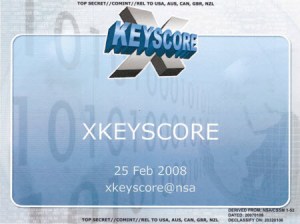
On top of all that, it turns out that the Powerpoint presentation that Greenwald wrote about yesterday is from 2008! (See slide pictured above.) Presumably much has changed at NSA since then. Read more at Joshua Foust’s blog–it’s well worth the time to read the whole thing.
Now it’s your turn. What stories are you focusing on today? Please share your links on any topic in the comment thread, and have a terrific Thursday!!
Tuesday: Something’s Gotta Give!
Posted: July 30, 2013 Filed under: Austerity, Baby Boomers, Barack Obama, Foreign Affairs, morning reads, Republican politics, U.S. Economy, U.S. Politics, War on Women, Women's Rights | Tags: anti-statist libertarians, blogging, Congress, crumbling infrastructure, Edward Snowden, Glenn Greenwald, jobs, Justin Amash, NSA spying, Poverty 37 Comments
Good Morning!!
I’ve finally reached a point of such frustration with politics, with the do-nothing Congress, and the mostly unserious media, that I wonder if the bottleneck of corruption, incompetence, and stupidity in Washington DC will ever be broken.
Congress–particularly the Senate–is populated mostly with old, rich white men who work about two days a week at most and take so many vacations that it’s hard to keep track of when they’re actually on the job. When the rest of us have a day off, they get a week. And for major holidays like Christmas, they take a month. It’s sickening.
The Republican House spends its two days a week mostly taking votes to repeal or defund Obamacare or finding new ways to wage war on women’s individual freedom and autonomy. The rest of their time is spent trying to take food out of the mouths of poor children by cutting food stamps and other safety net programs. Then there are the states where Republican governors and legislatures are waging all-out war on women and pretty much anyone who isn’t in the top 1%.
Meanwhile, our roads and bridges are falling down all over the country. Can you imagine how many jobs the government could create by helping to rebuild our crumbling infrastructure? Not only that, but baby boomers like me could be put back to work helping in the schools. The government could create a WPA for the growing ranks of seniors instead of attacking us for collecting the Social Security and Medicare we’ve paid into for our entire lives!
Will the logjam ever break? Will we ever see the slightest focus on jobs and economic equality for the vast majority of Americans?
Back in 2000, after the Supreme Court designated George W. Bush as president, I despaired and ignored politics for awhile. But after 9/11 and the lies that dragged us into two wars that ended up being longer and more pointless than the war of my youth–Vietnam–I began to follow politics closely again. I felt it was my responsibility as a citizen to pay attention to what was being done in our name. And I did.
I had gone back to college in 1993 and got into using computers again. In 1997, I started graduate school, and got my first PC and immediately got my cable company to hook it up to the internet. I joined internet mailing lists where I could discuss issues that interested me.
Around 2003, I heard about “weblogs,” and I set out to find some that discussed politics. Every day I read and commented at Daily Kos, Talking Points Memo, and dozens of other liberal blogs. Most of you know the rest. In 2008, I was driven off DK after I failed to drink the Obot Koolaid. I wrote for a small blog for a couple of years and then finally Dakinkat and I joined up here at Sky Dancing, along with Mona and JJ.
I’m here and I want to keep on writing here. I love learning about new subjects when I research news stories. But Goddammit, I want something new to happen. I want our government to be functional and have positive effects on my life and the lives of other ordinary people.
Back in 2008 I pretty much shut off the TV and focused on getting my news on the internet. But for the past couple of weeks, I’ve been escaping into detective novels and watching old movies on the tube. It’s difficult to find things blog about when the news is the same every day–the war on women and working people and Congress refusing to lift a finger to improve the economic situation for the vast majority of Americans.
As you know, lately I’ve become fascinated by the case of Edward Snowden and his leaks about NSA spying. Previously, I had focused on the bombings that took place in Boston and that had led me to do a lot of research on Russia, where the accused bombers’ roots were. So when Snowden ended up in Russia, I had a little bit of background on the place.
When the NSA leaks first broke, I thought it was possible we might get some real movement on the issue of domestic spying, but once Snowden revealed himself the story became mostly about him and his mouthpiece Glenn Greenwald.
Now the Snowden story has also settled into a holding pattern. The Russians are enjoying playing with their new toy and sticking it to the Obama administration, and Greenwald isn’t even writing about leaks anymore. He just writes long, angry lectures about how Democrats and liberals are the root of all evil.
Speaking of libertarians, have you noticed the Ayn Rand crowd is taking over and brainwashing a lot of so-called “progressives?” Last week there was an effort to pass an amendment that would have prevented NSA from collecting any telephone metadata. Instead of having an intelligent discussion about how to carefully regulate electronic surveillance, we would have simply ended it–and gone back to where we were before 9/11 in terms of identifying terrorist threats.
That bill was named after an Ayn Rand worshipping wingnut from Michigan named Justin Amash whose goal is to remove all power from the Federal government except the power to control women’s bodies! Did you know that Amash wants to ban abortions as of three days after conception? This reactionary who is being called “the next Ron Paul” was actually named “Truthdigger of the week.” Are you kidding me?
Have we finally reached the point where the “progressives” of 2008 are joining with the anti-statist libertarians? Sorry, but I’m not down with that. I believe in government, and I believe we need a strong Federal government. I think the states have too much power over people’s lives right now. I think we need a national equal rights amendment to end the constant ridiculous efforts to control the lives of women and LGBT people!
Now I’ve ranted away much of the space for this post, and I haven’t really given you any news. I’m going to post a few links, and I will put up another post a little later on. And If you have any suggestions for how I can deal with my Political Affective Disorder, I’ll be very grateful to receive them.
President Obama has been trying to put some focus on economics, and will make his fourth speech on the topic today. A few links:
The Windsor Star– Analysis: Obama tries to shift focus to economy, faces withering Republican opposition
WSJ– Obama Economic Proposals Face Long Odds in Congress
Dean Baker– Cruel Arithmetic and President Obama’s Big Speech
The Hill– Obama to propose ‘grand bargain’ on jobs, corporate tax rates
Other News
Fox News– 8 injured, including 4 critically, after dozens of explosions rock central Florida propane plant
Amy Davidson at The New Yorker– Waiting for the Bradley Manning Verdict
Vanity Fair– Anthony Weiner’s Cringe-y New Sexts Reveal Request for “Daily Shoe Update”
USA Today– San Diego mayor wants taxpayers to foot legal bills
So…….. What’s new with you today? Are you frustrated, depressed, or perhaps inspired? What issues are you focusing on today? Please let me know in the comment thread.
Thursday Reads
Posted: July 25, 2013 Filed under: Barack Obama, Foreign Affairs, morning reads, Russia, Spain, U.S. Economy, U.S. Politics | Tags: ACLU, Amash NSA amendment, anti-abortion legislation, Boston Bombings, Dzhokhar Tsarnaev, FBI informants, fetus dolls, fetus fetishists, Gitmo, Glenn Greenwald, Guantanamo Bay prison, Ibragim Todashev, James "Whitey" Bulger, Justin Amash, Keith Alexander, macroeconomics, Madrid train bombing, metadata, North Dakota State Fair, NSA, Paul Krugman, Spanish train crash, Tamerlan Tsarnaev 16 Comments
Good Morning!!
Yesterday the House narrowly defeated (217-205) an amendment to the defense spending bill (proposed by Michigan Republican Justin Amash) that would have prohibited NSA from collecting metadata on phone calls unless there is evidence that a specific person involved in the call is involved in criminal activity. From Bloomberg:
Implementation of the amendment could have created a new burden on telephone and Internet companies to retain bulk data, in addition to ending the NSA’s blanket collection of phone records. Those possibilities led the White House, Republicans leaders and many congressional Democrats to oppose the proposals, pitting them against lawmakers from both parties who champion civil liberties and privacy….
The provision would have had the potential to cause headaches for information technology companies.
“It could be a significant burden depending on how the government wants us to keep this data and store it,” Trey Hodgkins, a senior vice president for TechAmerica, a Washington-based trade group that represents Verizon Communications Inc. (VZ), AT&T Inc. (T) andCenturyLink Inc. (CTL), said in a phone interview. “You’re talking about potentially extremely huge data sets.”
It’s important to note that the bill as passed also includes a provision that prevents the closing of Guantanamo and prohibits the President from transferring any of the detainees who are being held there. So a vote for the Amash amendment would also mean voting to keep Gitmo open indefinitely.
Another amendment to limit NSA data collection did pass:
The House also adopted an amendment written by Republican Richard Nugent of Florida that sought to prohibit the NSA from using funds in the almost $600 billion Pentagon spending measure to “acquire, monitor or store the content” of electronic communications by “a United States person.”
The Nugent amendment was viewed by some lawmakers as providing political cover for those who didn’t want to vote for Amash’s amendment. While lawmakers voting for the Nugent amendment might appear to be curbing the NSA’s powers, in actuality the amendment wouldn’t change anything, simply restates current law and is “a fig leaf”, said Representative Zoe Lofgren, a California Democrat.
The bill now goes to the Senate; who knows what will happen next. I hope there will be an open debate on regulating possible abuses that could arise from NSA data collection. If a serious debate takes place, perhaps something positive will eventually come from the Snowden debacle. I’m skeptical, but still hopeful.
USA Today presents arguments from Keith Alexander against completely “blowing up” the NSA’s data collection program.
Gen. Keith Alexander, head of the NSA, has said the collection of data has helped disrupt dozens of terrorist plots. Investigators are not allowed to comb through the data, but can use it when they have identified a foreign suspect through other intelligence collection.
The data allows investigators to then detect networks the suspect may have been tied into, which could lead to other suspects and the uncovering of secret cells.
“The court restricts what we can do with that data,” Alexander said in a recent speech. “We have to show some reasonable, articulable suspicion that the phone number that we’re going to look at is associated with al-Qaeda or another terrorist group.”
Personally, I’d rather see more carefully defined limits on when and how NSA can use the metadata to target specific American citizens and regulations to prevent lower level employees like Edward Snowden from getting access to personal information rather than an overall prohibition on having the data available when needed for an investigation. Whenever there is a “terrorist” event–as in the Boston Marathon bombings, people demand to know why the government didn’t prevent it. The fact is there are already regulations in place that limit NSA from targeting Americans. IMHO, we should improve those rules if necessary, based on a serious and thorough debate.
Here are Glenn Greenwald’s reactions to the vote in case you want to read another of his inaccurate, rabid screeds. Basically, Greenwald says it’s all the Democrats’ fault–especially that horrible, dreadful war criminal Barack Obama, who is roughly equivalent to Peter King and Michele Bachmann.
Further down in the article, poor Glenn has to admit that a majority of House Democrats supported the Amash amendment in the face of nasty mean old Obama saying he would like to have a nuanced discussion of the issues rather than simply shutting down the counterterrorism program entirely. Greenwald also continues to claim, falsely, that NSA collects and analyzes the phone calls of every American, in the face of calmer, more knowledgeable people who have tried to explain to him that the data isn’t examined without a warrant and clear suspicion of criminal activity (famous example of how these allowed a criminal to slip through the cracks: Tamerlan Tsarnaev). But we’re not Russia, so we do have some limits on surveillance of American citizens and legal residents like Dzhokhar and Tamerlan Tsarnaev.
You know what I’d like to see targeted for more regulation? The FBI’s use of informants and FBI agents’ apparent ability to get away with murder. From Adrian Walker at The Boston Globe: Ibragim Todashev’s shooting needs explanation.
Ibragim Todashev was mysterious in life, but he has fallen into a void in death.
Todashev was fatally shot during an interrogation by Boston-based FBI agents in Orlando on May 22. The Russia native was being asked about his friendship with Tamerlan Tsarnaev, the presumed mastermind of the Boston Marathon bombing. Unusual as it is for someone to be shot to death during questioning, silence has reigned in its aftermath. The FBI’s few statements have been more confusing than illuminating.
The American Civil Liberties Union of Massachusetts made an attempt Tuesday to spur somebody, anybody, into providing clarity. It called on state authorities in Florida and Massachusetts to conduct their own investigations. The questioning was being done by the FBI and Massachusetts State Police, though some reports have indicated a lone FBI officer was in the room when Todashev was shot.
In response, Attorney General Martha Coakley made it clear her office has no intention of getting involved, pleading lack of jurisdiction. Florida officials have maintained all along that they have no standing to investigate. There doesn’t seem to be any reason to think they are about to change their minds.
Walker notes that we have a stunning example of the FBI’s misbehavior with informants in the James “Whitey” Bulger trial, which is going on in Boston right now.
…we should know better than to rush to absolve the FBI, no questions asked. After all, another of Boston’s great villains, James “Whitey” Bulger, is being tried for decades of terrorizing the city while an FBI informant.
And while the verdict on Whitey is still weeks away, the evidence is clear that the FBI aided and abetted his activities for ages. Not just a rogue agent or two, either; much of the agency’s Boston office was involved.
It’s not comforting, either, to examine the FBI’s record on examining its own shootings. According to a New York Times investigation, the FBI has cleared itself in nearly every agency-involved shooting of the past 20 years.

There was a terrible train crash in Spain yesterday, with at least 78 killed and 130-140 injured. A Spanish official described the scene as “Dante-esque.”
Bodies covered in blankets lay next to the overturned carriages as smoke billowed from the wreckage. Firefighters clambered over the twisted metal trying to get survivors out of the windows, while ambulances and fire engines surrounded the scene.
The government said it was working on the hypothesis the derailment was an accident – although the scene will stir memories of 2004’s Madrid train bombing, carried out by Islamist extremists, that killed 191 people. Sabotage or attack was unlikely to be involved, an official source said….
“It was going so quickly. … It seems that on a curve the train started to twist, and the wagons piled up one on top of the other,” passenger Ricardo Montesco told Cadena Ser radio station.
“A lot of people were squashed on the bottom. We tried to squeeze out of the bottom of the wagons to get out and we realised the train was burning. … I was in the second wagon and there was fire,” he added.
This brief video shows the moment the train derailed and crashed.
According to Railway Gazette, the accident may have been caused by excessive speed.
SPAIN: At 20.41 on July 24 a Madrid – Ferrol Alvia service derailed on a curve on the approach to Santiago de Compostela. Formed of a Class 730 gauge-convertible electro-diesel Talgo trainset, the 15.00 from Madrid was carrying 218 passengers, according to a joint statement from Spanish train operator RENFE and infrastructure manager ADIF.
The train had 12 vehicles, with an electric and a diesel power car at the ends. The rear power cars appear to have caught fire after the impact, and one of the intermediate coaches was thrown up on to an adjacent road; other cars rolled over or struck a retaining wall. Reports on July 25 indicated that 79 people had died in the accident with many more injured.
The train had left the high speed alignment and should have been slowing in preparation for the stop at Santiago station, about 3 to 4 km from the site of the accident. The speed limit on the curve is understood to be 80 km/h, but Spanish media reported that the train driver had said over the train radio that the train had been travelling at 190 km/h. A video taken from a lineside security camera appeared to show coaches behind the front power cars derailing first, pulling the heavier leading vehicles over as the train rounded the curve.

Here’s the crazy Republican story of the day–so far. I suppose the crazy could still get worse as the day goes on. As you know I was born in Fargo, ND, and I still have a soft spot for my home state; but I’m horrified by what’s happening there right now. Check this out: Pro-life group promotes cannibalism, hands out ‘fleshy’ fetus toys in candy bags to kids at State Fair, according to Freak-Out Nation. Yes, you read that right. They put “realistic” fetus dolls into candy bags for children!
Want a squishy toy fetus with your corn dog? If you’re visiting the North Dakota State Fair, you’re in luck! Last weekend, local anti-choice advocates slipped soft fetal models into kids’ candy bags without parental permission during the fair’s gigantic parade. “I don’t know exactly where I stand on abortion,” one mother told Jezebel, “but I believe in my rights as a parent.”
The North Dakota State Fair boasts a bevy of attractions, including performances by Tim McGraw and Creedence Clearwater Revisited. But Minot Right to Life spent the weekend giving away creepy little fetuses to kids without asking parents’ permission first. “It was really disturbing watching children run around with them,” one recalled. A federal judge recently blocked enforcement of the state’s highly unconstitutional six-week abortion ban; perhaps appealing to elementary schoolers’ interests is the group’s Plan B?
“The Precious One” fetal models are manufactured by Heritage House, a “pro-life supply store,” for $1.50 a pop — cheaper if you buy in bulk. “Its beautiful detail, softness and weight can really move hearts and change minds!” the website promises. A customer service representative told Jezebel that the models are most often given to pregnant women at “pregnancy centers” and kids at school presentations. The customer reviews on the site (it’s like Yelp for fetus-lovers instead of foodies) further imply that the doll-like figures are great for kids. “Children especially like to hold them,” one satisfied customer wrote. “No other item that we hand out has the amazing effect that these fetal models have — instant attachment to the unborn!” said another. “So many times, we hear, ‘Awwwww! That’s adorable!’ Or we just see a girl’s tears begin to form and fall.”
Something is very very wrong with these people.
Here’s one for Dakinikat: Paul Krugman explains (following Obama’s speech on the economy yesterday) why there are no “new ideas” about how to fix the financial crisis–because we knew how to do it from day one: Gimme That Old-Time Macroeconomics.
Both Steve Benen and Ed Kilgore get annoyed at fellow journalists complaining that there aren’t any “new ideas” in Obama’s latest. But why should there be?
It was clear early on that this was a crisis very much in the mold of previous financial crises. Once you realized that financial instruments issued by shadow banks — especially repo, overnight loans secured by other assets — were playing essentially the same role as deposits in previous banking crises, it was clear that we already had all the tools we needed to make sense of what was going on. And we also had all the tools we needed to formulate an intelligent policy response — all the tools we needed, that is, except a helpful economics profession and policymakers with a good sense of whose advice to take.
As Mark Thoma memorably remarked, new economic thinking appeared to consist largely of rereading old books. Brad DeLong says that it was all in Walter Bagehot; I think that this is true of the financial crisis of 2008, but that to understand the persistence of the slump we need Irving Fisher from 1933 and John Maynard Keynes from 1936. But anyway, this is not new terrain.
The trouble is Republicans keep right on insisting we should do what Herbert Hoover did in response to The Great Depression. Because that worked so well…
Okay Sky Dancers! What stories are you focusing on today? Please post your links on any topic in the comment thread.
Saturday Reads
Posted: July 20, 2013 Filed under: Barack Obama, Foreign Affairs, morning reads, U.S. Politics | Tags: Alexei Navalny, Aurora theater shooting victims, Beijing airport bomber, Darrell Issa, Edward Snowden, Elizjah Cummings, Eric Holder, George Zimmerman acquittal, Glenn Greenwald, Jim Sciutto, Michael Hayden, Pussy Riot, racial profiling, Rich Benjamin, Sergei Magnitsky, Trayvon Martin case, Vladimir Putin, warrantless wiretapping 19 Comments
Good Morning!!
The heatwave continues here, but I hope this will be the last day of extreme weather for the time being. It’s already 83 degrees outside my house at 7:30AM. I’m hoping and praying for a thunderstorm later on. Despite the heat, I’m doing fine–just not getting that much accomplished.
Several people are tweeting about a bomb being detonated by a passenger getting off a plane at Beijing International Airport, but I haven’t seen any news stories about it yet. Apparently the passenger was in a wheelchair and detonated a bomb after yelling something. There don’t appear to be a lot of casualties. Photo of alleged bomber holding up something and screaming. Picture of the smoky aftermath.
According to Jim Sciutto, an American living in China, the bomber is still alive and on the way to the hospital. A letter from him says that a beating by police in 2005 left him paralyzed.
The Aurora Colorado theater shooting was one year ago today, and survivors are still dealing with the aftermath. CBS News reports:
Caleb Medley was shot in the head and spent two months in a coma. Teenager Kaylan Bailey struggled in vain to save a six-year-old girl with CPR. Marcus Weaver was hit in the shoulder with shotgun pellets while his friend died in the seat next to him.
One year after the Aurora, Colo. theater massacre, survivors are struggling to cope with the physical and emotional wounds left by James Holmes, an enigmatic figure who opened fire at the midnight screening of “The Dark Knight Rises.”
The rampage killed 12 people, injured 70 and altered the lives of the more than 400 men, women and children who were in the auditorium on July 20, 2012. Survivors still carry the trauma of that night but have found strength in everything from religion to cheerleading to taking up the issue of gun control.
Read examples at the link. NBC News has photos and remembrances of the Aurora victims.
Yesterday, President Obama spoke publicly about the Travon Martin case. CNN:
In unscheduled and unusually personal remarks, President Barack Obama tried Friday to explain why African-Americans were upset about last week’s acquittal of George Zimmerman in the shooting death of Trayvon Martin while lowering expectations for federal charges in the case.
“Trayvon Martin could have been me 35 years ago,” Obama told White House reporters in a surprise appearance at the daily briefing….
Speaking without a teleprompter, Obama noted a history of racial disparity in law as well as more nuanced social prejudice that contribute to “a lot of pain” in the African-American community over the verdict.
“There are very few African-American men in this country who have not had the experience of being followed when they are shopping at a department store. That includes me,” the president said.
“There are probably very few African-American men who have not had the experience of walking across the street and hearing the locks click on the doors of cars. That happens to me – at least before I was a senator,” he continued.
“There are very few African-Americans who have not had the experience of getting on an elevator and a woman clutching her purse nervously and holding her breath until she had the chance to get off. That happens often,” he said.
Saying he didn’t intend to exaggerate those experiences, Obama added that they “inform how the African-American community interprets what happened one night in Florida.”
CNN also collected reactions to Obama’s remarks from Twitter. At Salon, Alex Seitz-Wald writes about “the time Obama was mistaken for a waiter.” Seitz-Wald surveys the negative reactions to Obama’s remarks from right wingers:
The immediate reaction from the right was scorn, and a belittling of the notion that Barack Obama, with his elite education at Punahou and Columbia and Harvard, his meteoric success, and his half whiteness, could possibly have been profiled. Or that Obama was overreacting – everyone locks their doors and it has nothing to do with race. Martin, after all, has been vilified as a thug in some circles on the right.
“I’m not saying profiling never happens, but where is the evidence?” one Fox News guest protested. “So Obama ‘could have been’ Trayvon 35 yrs ago? I had no idea Obama sucker-punched a watch volunteer & then bashed his head in. Who knew?” talk radio host Tammy Bruce tweeted. “There’s no reason to believe that Martin could have been Obama 35 years ago,” the conservative Powerline blog commented. On Twitter, some guessed Obama had “never set foot in a department store, unless you count Barney’s.”
As usual, the sneering right wingers were wrong.
…a stunning little blog post by the Wall Street Journal’s Katherine Rosman from 2008 that resurfaced this afternoon tells a remarkable story about Obama the year before his speech at the 2004 Democratic National Convention that would make him a household name. Rosman was at a book party at the Manhattan home of a Daily Beast editor with a guest list “that can fairly be described as representative of the media elite,” when she encountered an unknown Illinois state senator “looking as awkward and out-of-place as I felt.” It was Barack Obama, of course, and they chatted at length.
When she left the party, an unnamed “established author” admitted to Rosman that he had mistaken Obama, one of the only black people at the party, for a waiter and asked him to fetch a drink.
That was when he was a state senator and Harvard Law grad, and just a few years from national fame, followed by his election to the Senate, and then the White House. And it was in New York City at a gathering of presumably liberal intellectuals.
African American leaders praised Obama’s speech, according to CBS News.
“I think the president did exactly what was needed, and he did it in only a way he can,” Marc Morial, president of the National Urban League, told CBS News. “I believe he started a conversation today that must continue.”
Politically, using the shooting of 17-year-old African-American Trayvon Martin and the subsequent trial of George Zimmerman to talk about race was a risky move, Rep. Hakeem Jeffries, D-N.Y., told CBSNews.com. Yet as a statesman, it was important for Mr. Obama “to lay out a vision of how best to move forward,” he said. “It should be an important starting point for a conversation on race in America and how we can become a better society.”
However, another Salon writer, African American author Rich Benjamin denounced Obama’s speech as “safe, overrated, and airy.” Benjamin compared Obama’s words unfavorably to recent remarks by Attorney General Eric Holder and asked whether Holder is acting as Obama “inner n****r.”
Finally the president has spoken about George Zimmerman’s acquittal. Even as the country waited for his singular response – the nation’s leader and a law professor who once looked like Trayvon Martin – the president danced around the issues. And what a dramatic anti-climax, listening to the president refuse to say anything insightful or profound about the acquittal. In signature professorial style, the president gave us the “context” to the episode and to black people’s “pain.” But he didn’t offer a meaningful opinion on the episode’s hot molten core: racial profiling, vigilantism, and “Stand Your Ground” laws.
Meanwhile, Attorney General Eric Holder delivered trenchant thoughts on the acquittal, demanding action. Before an audience of supporters, Holder recently called for a full investigation of Martin’s death after Zimmerman’s acquittal. Holder vowed that the Justice Department will act “in a manner that is consistent with the facts and the law. We will not be afraid.”
“We must stand our ground,” he told supporters.
Some of us have an Inner Child. Others have an Inner Nigger. Is Holder the president’s conscience? Or his Inner Nigger?
Is Holder the president’s aggressive internal mind and voice — willing to speak truth to power, but unbothered with appearing like an angry black man?
Read it and see what you think. I must admit, I was a little shocked.
Meanwhile, in a House hearing on the IRS non-scandal, good ol’ Darrell Issa referred to African American Congressman Elijah Cummings as “a little boy.”
The testy exchange came after Cummings, a 62-year-old African-American congressman from Baltimore, challenged past insinuations by Republicans that the White House was behind the IRS targeting. Cummings was picking up on testimony from two IRS witnesses who both said they knew of no evidence of political motivations in the enhanced scrutiny, which also included some progressive groups.
But Issa took issue with Cummings, denying that he had implied the orders came from the highest office in the land and insisting that he only said the targeting came from Washington.
Issa interrupted at the start of another member’s remarks to express his “shock” at Cummings.
“I’m always shocked when the ranking member seems to want to say, like a little boy whose hand has been caught in a cookie jar, ‘What hand? What cookie?’ I’ve never said it leads to the White House,” Issa said.
In fact, he has pointed to the Obama administration and went so far as to call President Barack Obama’s top spokesman, Jay Carney, a “paid liar.”
Nice.
Ex-CIA head Michael Hayden, who supported and defended warrantless wiretapping under the Bush administration has published an op-ed at CNN in which he says that Edward Snowden “will likely prove to be the most costly leaker of American secrets in the history of the Republic,” and that writer and inveterate Snowden defender Glenn Greenwald is “far more deserving of the Justice Department’s characterization of a co-conspirator than Fox’s James Rosen ever was.” He says Snowden has hurt U.S. intelligence and foreign policy in three ways:
First, there is the undeniable operational effect of informing adversaries of American intelligence’s tactics, techniques and procedures. Snowden’s disclosures go beyond the “what” of a particular secret or source. He is busily revealing the “how” of American collection….
As former director of CIA, I would claim that the top 20% of American intelligence — that exquisite insight into an enemy’s intentions — is generally provided by human sources. But as a former director of NSA, I would also suggest that the base 50% to 60% of American intelligence day in and day out is provided by signals intelligence, the kinds of intercepted communications that Snowden has so blithely put at risk.
But there is other damage, such as the undeniable economic punishment that will be inflicted on American businesses for simply complying with American law….
The third great harm of Snowden’s efforts to date is the erosion of confidence in the ability of the United States to do anything discreetly or keep anything secret.
Manning’s torrent of disclosures certainly caused great harm, but there was at least the plausible defense that this was a one-off phenomenon, a regrettable error we’re aggressively correcting.
Snowden shows that we have fallen short and that the issue may be more systemic rather than isolated. At least that’s what I would fear if I were a foreign intelligence chief approached by the Americans to do anything of import.
Well, that third point is really the government’s fault, not Snowden’s.
Greenwald reacted by tweeting that Hayden “belongs in prison for implementing illegal warrantless eavesdropping at Americans.” FAIR defended Greenwald, calling Hayden’s characterization of Greenwald as “co-conspirator” a “smear.”
There’s nothing new on the Snowden front, except that Russia’s treatment of its own whistleblowers is beginning to get some coverage. From CNN: “Putin, a hypocrite on Snowden, Navalny.”
On Thursday in Moscow, where former NSA contractor Edward Snowden awaits his asylum papers, a Russian court removed a major critic of Russian President Vladimir Putin from the Kremlin’s list of worries, sentencing the charismatic opposition leader Alexei Navalny to five years in jail on theft charges. Amid intense anger at the verdict and fears that it would raise Navalny’s profile, the court agreed on Friday to release him pending appeal.
The trial and the predictable verdict, as the European Union foreign affairs chief said, “raises serious questions as to the state of the rule of law in Russia.” That’s putting it mildly. Navatny is the most prominent, but just one in a long series of politically-motivated prosecutions in a country where the courts seldom make a move that displeases Putin.
Navalny was particularly worrisome to the Russian president. He had gained an enormous following by speaking out against corruption and cronyism, labeling Putin’s United Russia “a party of swindlers and thieves” and using social media to help mobilize the president’s critics. He had just announced he would run for mayor of Moscow. But, like other Putin opponents with any possible chance to loosen the president’s complete hold on power, he will likely go to prison instead. Now that he’s released, Navalny is considering whether to stay or withdraw from the race for mayor.
According to Voice of America, Navalny still plans to run for Mayor of Moscow.
Then there’s the case of Sergei Magnitsky. The government auditor was sent to investigate the investment firm Heritage Capital, which was charged with tax evasion. When Magnitsky concluded the tax fraud was actually coming from the government side and became a whistleblower, naming a network of corrupt officials, he was accused of working for Heritage and thrown in jail, where he became ill, was denied medical treatment and died in 2009, when he was just 37. The United States responded with the Magnitsky Law, imposing sanctions on those involved in his death.
Death didn’t save Magnitsky from Russia’s courts, which found him guilty of tax fraud just last week.
Many others, including the performance group Pussy Riot, have seen even small scale political activism land them in jail.

 peej
peej Carissa
 bostonboomer
 dakinikat
 ecocatwoman
 mablue2
 Mama Lopez
 peggysue22
 quixote
 skydancingguestblogger
 Mona (aka Wonk the Vote)



 Sky Dancing
Recent Comments