The top stories today focus on Trump’s failing economy and his firing of Bureau of Labor Statistics commissioner Erika McEntarfer after she released weak job numbers yesterday. Dakinikat provided a deep dive into the economy yesterday and addressed the firing in the comments to her post, so I hope you’ll forgive me if I don’t spend much time on economic issues, which are not my area of expertise, to put it mildly.
I’m still laser focused on the Epstein/Maxwell story. I’m currently reading Julie Brown’s book on the case, Perversion of Justice: The Jeffrey Epstein Story, and it is fascinating and enlightening. Brown is was responsible for keeping the case alive–after Epstein received a only slap on the wrist for his crimes–with her investigative stories in the Miami Herald
I’m also concerned about the news that Trump has moved nuclear submarines closer to Russia, perhaps as a threat to Putin and as another attempt at distraction from Epstein/Maxwell news.
Another important story breaking today is about Trump’s plans to further involve the military in his deportation efforts and build more concentration camps to detain migrants.
President Trump has now imposed his new tariff regime on the world, and the triumphalism is palpable in MAGA land. But maybe hold the euphoria, as this week’s reports on jobs and the economy suggest the new golden age may take a while to appear.
Friday’s labor report arrived with a particular jolt, with a mere 73,000 net new jobs in July. Even more bearish were the downward revisions of 258,000 jobs in May and June. Job gains over the last three months are barely more than 100,000.
The details in the report provide little solace. The jobless rate ticked up only to 4.25% from 4.1%, but that was in part because the labor force continued to shrink. The labor participation rate fell again to 62.2% and is now down half a percentage point in a year.
Employers aren’t laying off workers, but they have all but stopped new hiring. Notably, most of the new jobs are in healthcare and social assistance, which rely heavily on government spending. This continues the Biden-era trend that Trumponomics was supposed to change. Not so far.
The much-advertised rebirth of U.S. manufacturing also hasn’t arrived. The economy shed 11,000 manufacturing jobs in July, following a loss of 26,000 in May and June. The ISM Manufacturing Index fell again in July to 48, the fifth straight month below 50.
A bit more:
One labor market problem may be the crackdown on migrant workers. The foreign-born workforce has fallen by about a million since Mr. Trump took office. The National Foundation for American Policy, a nonpartisan think tank, says immigrants accounted for over half of the labor force increase in each of the last three decades. Fewer workers means fewer new jobs as employers conclude they can’t fill them.
How much of this jobs and growth slowdown owes to Mr. Trump’s tariffs? It’s hard to say for sure. But it has occurred in the wake of Mr. Trump’s April 2 tariff shock, his rapid backtrack from the highest rates, and then his willy-nilly threats and deal-making with the world. The policy uncertainty has surely affected business hiring and investment. How can you hire or invest if you don’t know what your cost of goods will be, or from which supplier you will be able to buy at a competitive price?
On that score, Mr. Trump’s latest tariff blast this week hasn’t put an end to the uncertainty. Much of the world will now pay 15%, if Mr. Trump sticks to his deals. But some of the biggest U.S. trading partners—Mexico, Canada, China and India—remain in tariff limbo. Brazil will pay 50%, though it has a trade surplus with the U.S. And what did Switzerland ever do to Mr. Trump to deserve 39%? Charge too much for a watch?
One basic character of the politicization necessary to create an authoritarian regime is that public employees are reluctant to share information that displeases their political bosses. When those bosses can fire them, the incentives to suppress uncongenial information, or provide false information, become overwhelming.
Modigliani’s Cat by Eve Riser Roberts
Over time, life in these countries become bifurcated. Statistics become propaganda. There is an official reality, which many proclaim but few believe, and actual reality. And at some point actual reality catches up with the fantasy.
We have seen examples of this dynamic already play out in the Trump administration. Career civil servants have been reluctant to contradict, for example, Musk’s false claims about fraud in government, or Kennedy’s nonsensical claims about vaccines, knowing that doing so would probably cost them their jobs. In certain areas, such as environmental policy, the people that produce factual information that the administration dislikes are being fired.
Trump just took his attack on reality to a different level, by firing the head of the Bureau of Labor Statistics. Why? Because he did not like the job numbers her agency produced.
In related news, we just saw the last credible BLS data for the rest of the Trump administration….
Trump’s claim is that the head of the BLS is somehow “rigged” the data “to make the Republicans, and ME, look bad.” “We need accurate Jobs Numbers” that reflect Trump’s opinion that “The Economy is BOOMING.”
As Trump fires an official because he does not like the job numbers, he proclaims that says that such numbers “can’t be manipulated for political purposes.” But revisions to job numbers are routine, and there is no reason to assume that an official would willingly publish false data knowing the ire that would follow from the White House.
Trump has no evidence for what he claims. He simply does not like reality, and will do what he can to deny it. And as tariffs kick in, and Trump’s layoffs of public employees becomes incorporated into jobs data, that reality will look worse and worse.
Ghislaine Maxwell, the associate of Jeffrey Epstein who is currently serving a 20-year prison sentence for sex-trafficking crimes, has been transferred from a federal prison in Florida, to a lower-security facility in Texas, the US Bureau of Prisons said on Friday.
“We can confirm, Ghislaine Maxwell is in the custody of the Bureau of Prisons (BOP) at the Federal Prison Camp (FPC) Bryan in Bryan, Texas,” a spokesperson for the Bureau of Prisons said in a statement.
Maxwell’s attorney, David Oscar Markus, also confirmed the transfer but declined further comment. FPC Bryan is described as a “minimum security federal prison camp” that houses 635 female inmates.
According to the Bureau of Prisons’ inmate locator, the Texas facility is also home to Elizabeth Holmes, the disgraced former CEO of the California-based blood-testing company Theranos, who is serving a lengthy sentence for fraud. Real Housewives of Salt Lake City TV star Jen Shah is also serving time there for fraud.
Oh good. Maybe they can all hang out.
Maxwell’s move from FCI Tallahassee, a low-security prison, to the federal prison camp in Bryan comes roughly a week after she was interviewed in Florida over two days about the Epstein case by the deputy US attorney general, Todd Blanche, who is also one of Donald Trump’s former lawyers.
Amadeo Modigliani, by Nancy Alari
Blanche had said that he wanted to speak with Maxwell – who was sentenced in 2022 for sex trafficking and other related crimes – to see if she might have “information about anyone who has committed crimes against victims”.
Details of that meeting have not been made public but Maxwell’s lawyer described it as “very productive”, adding that Maxwell answered the questions “honestly, truthfully, to the best of her ability”.
The interview took place amid growing political and public pressure on the Trump administration to release additional federal documents related to the Epstein case – a case which has, for years, been the subject of countless conspiracy theories.
Earlier in July, the justice department drew bipartisan criticism and backlash after announcing that it would not be releasing any more documents from the investigation into the late Epstein, who died in prison in New York in 2019 while awaiting federal trial. This was despite earlier pledges to release more files, by the US president and the US attorney general, Pam Bondi.
Allison Gill notes that this transfer was highly irregular:
The reason for the move is listed as a “lesser security transfer” (code 308) according to a transfer document I reviewed, which is completely inappropriate of for inmates who are in the early stages of serving their sentences, according to another source. “This is such obvious corruption. I have never seen this before,” said another person at BOP familiar with the situation.
The unit that approves waivers for sex offenders to be moved to minimum security camps is the Designation and Sentence Computation Center near Dallas. Currently, the senior deputy assistant director is Rick Stover, a career BOP employee who speaks frequently with White House officials.
I can’t help but wonder whether this is part of a deal struck between Maxwell and Blanche in exchange for her testimony.
Two sexual abuse victims of Jeffrey Epstein and the family of late Epstein victim Virginia Giuffre on Friday blasted President Donald Trump after learning that Epstein’s accomplice Ghislaine Maxwell had been transferred to a less restrictive prison in Texas from Florida….
“President Trump has sent a clear message today: Pedophiles deserve preferential treatment and their victims do not matter,” the statement said, noting that the two women and Giuffre’s family had not been notified of Maxwell’s transfer before media reports of it….
“It is with horror and outrage that we object to the preferential treatment convicted sex trafficker Ghislaine Maxwell has received,” the statement said.
“Ghislaine Maxwell is a sexual predator who physically assaulted minor children on multiple occasions, and she should never be shown any leniency,” the statement said.
“Yet, without any notification to the Maxwell victims, the government overnight has moved Maxwell to a minimum security luxury prison in Texas,” the statement said.
“This is the justice system failing victims right before our eyes. The American public should be enraged by the preferential treatment being given to a pedophile and a criminally charged child sex offender. The Trump administration should not credit a word Maxwell says, as the government itself sought charges against Maxwell for being a serial liar,” the statement said.
“This move smacks of a cover up. The victims deserve better,” the statement said.
No kidding. And as we all know, the coverup is usually worse than the crime.
Before Maxwell’s arrival in Texas was reported, MSNBC legal correspondent Lisa Rubin was asked about the interactions between Maxwell and the Trump administration on Thursday’s “Deadline: White House,” and called the timeline “curious.”
Rubin recounted that before that late July meeting between Blanche and Maxwell, the Trump administration, through Solicitor General D. John Sauer, submitted a brief to the Supreme Court arguing Maxwell’s conviction should stand.(Maxwell was sentenced to 20 years in prison in 2022 after being convicted of sex-trafficking-related crimes.)In that July 14 filing, Sauer shot down Maxwell’s claim that she was protected from prosecution due to Epstein’s 2007 plea agreement in Florida.
But the following day, Rubin recalled, on July 15, Trump was contacted by reporters from The Wall Street Journal about an alleged birthday card he had written to Epstein in 2003. Trump has denied the Journal’s reporting, but the president was inundated with questions about the details of his relationship with Epstein.
One week later,Blanche posted to social media that the Justice Department would reach out to Maxwell for an interview, and later that week, he met with her in Florida.
Rubin noted that the government had “two days of conversations with her, not in the federal prison where she’s serving time, but in a U.S. Attorney’s Office, so she theoretically could be more comfortable during those conversations.”
While we know that the meeting took place, Rubin stressed that many of the details are still unknown: “We still don’t know who else from the Department of Justice was there. We don’t know how that conversation was recorded, if at all. And yet, we still don’t know what the resolution is.”
So what changed? Was it just about the birthday note/drawing? Or did Trump learn something else about how he was portrayed in the FBI files?
Cat in a Hat, inspired by Amadeo Modigliani painting, by Olga Koval
The FBI redacted Donald Trump‘s name, along with the names of other prominent public figures, from references in the Jeffrey Epstein files, three people familiar with the matter told Bloomberg‘s Jason Leopold.
Internal directives instructed about 1,000 FBI agents to flag any mention of Trump during a March review of roughly 100,000 pages of records, people familiar with the process told Bloomberg.
The Justice Department said the review turned up no “client list” or evidence linking Trump to criminal activity, despite his name appearing in Epstein’s contact book and flight logs….
The Bloomberg report said that earlier this year, FBI agents were directed to search for all documents associated with the Epstein case and determine which could be released, totaling tens of thousands of pages, following Attorney General Pam Bondi‘s request for them.
During the review, in March, FBI personnel were said to have identified numerous references to Trump and other high-profile people, with the names then redacted by FOIA officers because they were private citizens at the time—a common practice under FOIA case law.
US President Donald Trump said Friday he was ordering two US Navy nuclear submarines to “appropriate regions,” in response to remarks by Dmitry Medvedev, Russia’s former president and current deputy chairman of its Security Council.
In what he called an effort to be “prepared,” Trump said in a Truth Social post that he had “ordered two Nuclear Submarines to be positioned in the appropriate regions, just in case these foolish and inflammatory statements are more than just that.”
The president did not specify what type of submarines were being moved or where to, and the Pentagon usually reveals little about any of its subs’ movements.
The US Navy has three types of submarines, all of which are nuclear-powered, but only one of which carries nuclear weapons.
Ballistic Missile Submarines
The US Navy has 14 Ohio-class ballistic-missile submarines (SSBNs), often referred to as “boomers.”
SSBNs “are designed specifically for stealth and the precise delivery of nuclear warheads,” a Navy fact sheet on them says.
Each can carry 20 Trident ballistic missiles with multiple nuclear warheads. Tridents have a range of up to 4,600 miles (7,400 kilometers), meaning they wouldn’t need to move closer to Russia to hit it – in fact, they could do so from the Atlantic, Pacific, Indian or Arctic oceans….
Olga Koval, Cat is on the chair, inspired by Amadeo Modigliani painting
Guided missile submarines
In the 1990s, the Pentagon determined the Navy didn’t need as many Ohio-class SSBNs in the nuclear deterrent role, converting four of them into guided-missile submarines (SSGNs).
Retaining the same overall specs as the boomers, the SSGNs carry Tomahawk cruise missiles instead of the Trident ballistic missiles.
Each can carry 154 Tomahawks with a high-explosive warhead of up to 1,000 pounds, and a range of about 1,000 miles….
Fast-attack submarines
These form the bulk of the US Navy’s submarine fleet and are designed to hunt and destroy enemy subs and surface ships with torpedoes. They can also strike land-based targets with Tomahawk missiles, though they carry the Tomahawks in much smaller numbers than the SSGNs.
Donald Trump, beset by a week of bad news, has decided to rattle the most dangerous saber of all. In a post today on his Truth Social site, the president claimed that in response to recent remarks by former Russian President Dmitri Medvedev, he has “ordered two Nuclear Submarines to be positioned in the appropriate regions.” (All American submarines are nuclear-powered; Trump may mean submarines armed with ballistic nuclear weapons.) “Words are very important,” Trump added, “and can often lead to unintended consequences, I hope this will not be one of those instances.”
And then, of course: “Thank you for your attention to this matter!”
Trump’s words may mean nothing. The submarines that carry America’s sea-based nuclear deterrent routinely move around the world’s oceans. Each carries up to 20 nuclear warheads, on missiles with a range of more than 4,000 miles, and so almost anywhere can be an “appropriate region.” And Trump may not even have issued such orders; normally, the Pentagon and the White House do not discuss the movements of America’s ballistic-missile submarines.
Medvedev is a man with little actual power in Russia, but he has become Russia’s top internet troll, regularly threatening America and its allies. No one takes him seriously, even in his own country. He and Trump have been trading public insults on social media for months, with Trump telling Medvedev to “watch his words” and Medvedev—nicknamed “Little Dima” in Russia due to his diminutive stature—warning Trump to remember Russia’s “Dead Hand,” a supposed doomsday system that could launch all of Russia’s nuclear weapons even if Moscow were destroyed and the Kremlin leadership killed.
The problem is not that Trump is going to spark a nuclear crisis with a post about two submarines—at least not this time. The much more worrisome issue is that the president of the United States thinks it is acceptable to use ballistic-missile submarines like toys, objects to be waved around when he wants to distract the public or deflect from bad news, or merely because some Russian official has annoyed him.
Unfortunately, Trump has never understood “nuclear,” as he calls it. In a 2015 Republican primary debate, Trump said: “We have to be extremely vigilant and extremely careful when it comes to nuclear. Nuclear changes the whole ball game.” When the moderator Hugh Hewitt pressed Trump and asked which part of the U.S. triad (land-based missiles, bombers, and submarines) would be his priority, Trump answered: “For me, nuclear, the power, the devastation, is very important to me.”
That power and devastation, however, is apparently not enough to stop the president from making irresponsible statements in response to a Kremlin troll. One would hope that after nearly five years in office—which must have included multiple briefings on nuclear weapons and how to order their use—Trump might be a bit more hesitant to throw such threats around. But he appears to have no sense of the past or the future; he lives in the now, and winning the moment is always the most important thing.
Use the gift link above to read more.
Are More Concentration Camps Like Alligator Alcatraz Coming?
President Donald Trump has already enmeshed the United States military in domestic law enforcement operations involving immigration to an unprecedented degree. He has authorized a major military buildup at the border. He has maximized the use of military planes for deportations, complete with the White House pumping out imagery of migrants getting frog-marched onto souped-up military aircraft. He sent the National Guard into Los Angeles amid large-scale protests there—and then sent in the Marines.
But an internal memo circulated inside the Department of Homeland Security suggests that Trump’s use of the military for domestic law enforcement on immigration could soon get worse. The memo—obtained by The New Republic—provides a glimpse into the thinking of top officials as they seek to involve the Defense Department more deeply in these domestic operations, and it has unnerved experts who believe it portends a frightening escalation.
Woman red dress grey cat, by Theresa Tanner, based on a painting by Modigliani.
The memo lays out the need to persuade top Pentagon officials to get much more serious about using the military to combat illegal immigration—and not just at the border. It suggests that DHS is anticipating many more uses of the military in urban centers, noting that L.A.-style operations may be needed “for years to come.” And it likens the threat posed by transnational gangs and cartels to having “Al Qaeda or ISIS cells and fighters operating freely inside America,” hinting at a ramped-up militarized posture inside the interior.
“The memo is alarming, because it speaks to the intent to use the military within the United States at a level not seen since Japanese internment,” Carrie Lee, senior fellow at the German Marshall Fund, told me. “The military is the most powerful, coercive tool our country has. We don’t want the military doing law enforcement. It absolutely undermines the rule of law.”
The memo was authored by Philip Hegseth—the younger brother of Defense Secretary Pete Hegseth—who is a senior adviser to Homeland Security secretary Kristi Noem and DHS liaison officer to the Defense Department. As such it also sheds light on Hegseth the Younger’s role, which has been the subject of media speculation labeling him an obscure but influential figure in his brother’s MAGA orbit.
The memo outlines the itinerary for a July 21 meeting between senior DHS and Pentagon officials, with the goal of better coordinating the agencies’ activities in “defense of the homeland.” It details goals that Philip Hegseth hopes to accomplish in the meeting and outlines points he wants DHS officials to impress on Pentagon attendees.
Participants listed comprise the very top levels of both agencies, including Defense Secretary Pete Hegseth and several of his top advisers, Joint Chiefs chairman Dan Caine, and NORTHCOM Commander Gregory Guillot. Staff include Phil Hegseth and acting ICE commissioner Todd Lyons….
Immigration and Customs Enforcement (ICE), now the best-funded federal lawenforcement agency in the United States, is embarking on a plan to drastically expand its detention infrastructure. But considering the $45 billion it’s been given for the job, the agency’s vision for its new facilities seems startlingly low-tech.
In July, the Wall Street Journal got its hands on internal government documents revealing that ICE wants to incarcerate more immigrants in tents, or “hardened soft-sided facilities.” The administration hopes to erect thousands of these tents “as quickly as possible to expand detention capacity…at US military bases and adjoining bricks-and-mortar ICE jails,” the Journalreported. Officials say they like this approach, at least for now, because they can quickly set up tons of beds in a few new locations rather than finding space at existing facilities here and there.
But tents raise serious humanitarian and safety issues. “There’s a reason no one wants to live in a tent,” says Eunice Cho, an attorney who challenges unconstitutional conditions in immigrant detention centers with the ACLU’s National Prison Project. “There are many, many logistical problems—with sanitation, getting food. They certainly are not weatherproof. They do not have the setup to make sure people’s medical concerns are addressed.”
Prior to 2025, ICE did not use tents for long-term detention, but soft-sided facilities are not completely new in the incarceration realm. Here are some recent examples, each highlighting problems that are almost sure to repeat themselves as the Trump administration rolls out its plan.
Michaels provides a detailed history of tent cities in the U.S. The article is well worth reading in full.
Those are my offerings for today. What do you think? What else is on your mind?
Did you like this post? Please share it with your friends:
It’s just the beginning of the storm season, and we are beginning to see the damage from Trump/DOGE cuts to the National Weather Service (NWS) and the National Oceanic and Atmospheric Administration (NOAA). There’s a terrible tragedy playing out in the Texas hill country right now.
State officials said Friday night that at least 24 people have died in the catastrophic flood that swept through Kerr County early Friday morning, and 23 girls from Camp Mystic, a private Christian girls’ camp, are still unaccounted for.
In a news conference in Kerrville, Gov. Greg Abbott signed an emergency disaster declaration, which allows numerous counties affected by the floods to get the state resources needed to help with ongoing search-and-rescue efforts.
Kerr County Sheriff Larry Leitha said one other person was found dead in nearby Kendall County but it’s unclear if that person was a flood victim.
Nim Kidd, the chief of the Texas Division of Emergency Management, said local officials were caught off guard by the volume of rain, adding that the National Weather Service advisory issued Thursday “did not predict the amount of rain that we saw.”
Gen. Thomas Suelzer, the head of the Texas Military Department, said 237 people have been rescued and evacuated so far. Officials said they couldn’t provide the number of people who are unaccounted for, but they include the 23 girls from Camp Mystic.
In an earlier press conference Friday, Lt. Gov. Dan Patrick said the dead include adults and children, and some were found in cars “that were washed out upstream.” He said officials aren’t sure whether any of the bodies were children from Camp Mystic, and stressed that the campers are only considered missing at this point….
As much as 10 inches of heavy rain fell in just a few hours overnight in central Kerr County, causing flash flooding of the Guadalupe River. Patrick said the river, which winds through Kerr County in Central Texas, rose 26 feet in 45 minutes during torrential rains overnight.
Were there warnings this was coming?
A flood watch issued Thursday afternoon estimated isolated amounts up to 7 inches of rising water. That shifted to a flood warning for at least 30,000 people overnight.
According to the National Weather Service website, the flash flood watch, which included Kerr County, was issued at 1:18 p.m. Thursday. Nearly 12 hours later, a “life threatening” flash flood warning was issued at 1:14 a.m., according to the website.
When asked about the suddenness of the flash flooding overnight, Kelly said “we do not have a warning system” and that “we didn’t know this flood was coming,” even as local reporters pointed to the warnings and pushed him for answers about why more precautions weren’t taken.
“Rest assured, no one knew this kind of flood was coming,” he said. “We have floods all the time. This is the most dangerous river valley in the United States.”
Search and rescue teams were working throughout the night in Central Texas after flooding that began early Friday swept through a summer camp and homes, killing at least 24 people and leaving as many as 25 girls missing from the camp.
The girls were at Camp Mystic along the Guadalupe River in Hunt, in Kerr County, according to the county sheriff. Desperate parents posted photos of their children online, seeking any information, and others went to reunification centers to try to find missing loved ones. An unknown number of other people were also missing, Kerr County said in an update on Friday night, citing the sheriff, Larry Leitha.
By Katya Vigovskaya
The deadly flooding surprised many, including Texas officials, who said that some National Weather Service alerts had underestimated the risks. The most urgent alerts came in overnight, in the early hours of Friday.
Hundreds of emergency personnel were searching for stranded people. The Texas National Guard made 237 rescues and evacuations using helicopters and rescue swimmers, Maj. Gen. Thomas M. Suelzer, the guard’s commander, said at a news conference Friday evening.
Gov. Greg Abbott signed an emergency disaster declaration encompassing 15 counties in Central Texas. The declaration will expedite state funding for the areas that experienced significant damage.
Lt. Gov. Dan Patrick said earlier in the day that Camp Mystic was contacting the parents of campers who remained unaccounted for. He said that parents with children who had not heard from camp officials should assume their children were safe. The camp has some 750 campers, he said.
Ron Filipkowski at Meidas: Texas Officials Blame Agency Gutted by Trump for Results of Deadly Storm.
As the best and the brightest were being fired at the National Weather Service and the National Oceanic and Atmospheric Administration by senseless and draconian ‘DOGE’ cuts earlier this year under Trump, with no reason given except for the need to cut a paltry amount of the government’s budget, experts warned repeatedly that the cuts would have deadly consequences during the storm season. And they have.
Dozens and dozens of stories have been written in the media citing hundreds of experts which said that weather forecasting was never going to be the same, and that inaccurate forecasts were going to lead to fewer evacuations, impaired preparedness of first responders, and deadly consequences. I quoted many of them in my daily Bulletins and wrote about this issue nearly 20 different times.
And the chickens have come home to roost. Hundreds of people have already been killed across the US in a variety of storms including deadly tornadoes – many of which were inaccurately forecasted. And we are just entering peak hurricane season. Meteorologist Chris Vagasky posted earlier this spring on social media: “The world’s example for weather services is being destroyed.”
Now, after severe flooding in non-evacuated areas in Texas has left at least 24 dead with dozens more missing, including several young girls at a summer camp, Texas officials are blaming their failure to act on a faulty forecast by Donald Trump’s new National Weather Service gutted by cuts to their operating budget and most experienced personnel.
Forewarnings:
Reuters published a story just a few days ago, one of many warning about this problem: “In May, every living former director of the NWS signed on to an open letter with a warning that, if continued, Trump’s cuts to federal weather forecasting would create ‘needless loss of life’. Despite bipartisan congressional pushback for a restoration in staffing and funding to the NWS, sharp budget cuts remain on pace in projections for the 2026 budget for the NOAA, the parent organization of the NWS.”
But Commerce Secretary Howard Lutnick, whose agency oversees NOAA, testified before Congress on June 5 that the cuts wouldn’t be a problem because “we are transforming how we track storms and forecast weather with cutting-edge technology. Under no circumstances am I going to let public safety or public forecasting be touched.” Apparently the “cutting edge technology” hasn’t arrived yet.
And now presumably FEMA will be called upon to help pick up the pieces of shattered lives in Texas – an agency that Trump said repeatedly that he wants to abolish. In fact, Trump’s first FEMA director Cameron Hamilton was fired one day after he testified before Congress that FEMA should not be abolished.
Filipkowski notes that so far the “president” has had nothing to say about the tragedy in Texas.
Over the past two months, the Trump administration has taken steps to eliminate regulations addressing climate change, pull back funding for climate programs and cancel methods used to evaluate how climate change is affecting American society and its economy. Now it is directly undermining the science and research of climate change itself, in ways that some of the nation’s most distinguished scientists say will have dangerous consequences.
Proposed cuts to the National Oceanic and Atmospheric Administration, the agency whose weather and climate research touches almost every facet of American life, are targeting a 57-year-old partnership between Princeton University and the U.S. government that produces what many consider the world’s most advanced climate modeling and forecasting systems. NOAA’s work extends deep into the heart of the American economy — businesses use it to navigate risk and find opportunity — and it undergirds both American defense and geopolitical planning. The possible elimination of the lab, called the Geophysical Fluid Dynamics Laboratory, in concert with potential cuts to other NOAA operations, threatens irreparable harm not only to global understanding of climate change and long-range scenarios for the planet but to the country’s safety, competitiveness and national security.
The gutting of NOAA was outlined earlier this month in a leaked memo from the Office of Management and Budget that detailed steep reductions at the Department of Commerce, which houses the science agency. The memo, which was viewed by ProPublica, has been previously reported. But the full implications of those cuts for the nation’s ability to accurately interpret dynamic changes in the planet’s weather and to predict long-term warming scenarios through its modeling arm in Princeton have not.
According to the document, NOAA’s overall funding would be slashed by 27%, eliminating “functions of the Department that are misaligned with the President’s agenda and the expressed will of the American people” including almost all of those related to the study of climate change. The proposal would break up and significantly defund the agency across programs, curtailing everything from ocean research to coastal management while shifting one of NOAA’s robust satellite programs out of the agency and putting another up for commercial bidding. But its most significant target is the office of Oceanic and Atmospheric Research ⎯ a nerve center of global climate science, data collection and modeling, including the Geophysical Fluid Dynamics Laboratory ⎯ which would be cut by 74%. “At this funding level, OAR is eliminated as a line office,” the memo stated.
A bit more:
Did you like this post? Please share it with your friends:
The House is planning to vote on the Senate version of Trump’s spending and tax cut bill today. The Senate version is very different from the one the House originally sent them, so it’s not clear whether the bill will make it to Trump’s desk by July 4, as he has demanded.
As we all know, the bill will take away health care and food assistance from millions of Americans. Trump’s big bill will also vastly expand his power to target people he wants to make disappear. Yesterday Trump openly approved a true concentration camp in our country. I still haven’t recovered from the shock of seeing what these fascists are planning. And now Trump is talking about deporting U.S. citizens. The bill is cruel in so many ways, but mass deportation is Trump’s number 1 goal. I’m going to focus on that in this post.
….THE LEGISLATION SENATE REPUBLICANS passed on Tuesday is probably going to kill a lot of people.
It sounds stark when you put it that way, but death is a stark thing. It’s also what can be reasonably expected from the GOP legislation, especially the cuts to Medicaid and the Affordable Care Act projected to leave nearly 12 million Americans newly uninsured.
When people can’t pay for medical care they frequently don’t get it. And when people don’t get medical care, they’re more likely to die early from a preventable condition. That’s what you’ll find if you read the latest research, and what you’ll learn if you ask people working on the front lines of medical care.
And death doesn’t even capture the full impact of the bill, which thanks to Tuesday’s vote seems likely to become law.
That outcome is not yet a foregone conclusion, to be clear. The bill requires approval from the House, where a different version passed in May and where several Republicans have already said they object to the Senate’s iteration.
But while those Republicans have enough leverage to block approval, forcing some kind of negotiation between the houses, they are already under enormous pressure from party leaders—and, especially, from President Donald Trump, who has said he wants a bill on his desk by July 4….
Politically, it was a savvy strategy for avoiding scrutiny. So was packaging the entirety of the Trump domestic agenda into one legislative package, making it difficult for opponents to focus—and rally supporters around—any one part.
As of a few days ago, nearly half of America hadn’t heard anything about the “Big Beautiful Bill,” according to Democratic polling from Priorities USA. And only 8 percent had heard it included Medicaid cuts….
But in trying so hard to shield the bill’s true nature from the public, Republican leaders may have also succeeded in hiding parts from their own members, who might not appreciate just how much some features of the bill undercut supposedly cherished MAGA goals like lowering the cost of living and making U.S. industry more competitive.
And that’s to say nothing about the disproportionate effects some elements of the bill will have on their own constituents.
We know about the health care and food assistance cuts; Cohn lists examples of other disastrous cuts in the bill:
YOU CAN SEE IT CLEARLY in the provisions yanking away Biden-era subsidies for clean energy and electric vehicles, in many cases quickly. (The tax credit for consumers buying electric vehicles would end in September.) It’s a way to own the libs, now that Trump has turned clean energy into almost as much a bogeyman as trans athletes and woke professors.
Speaker Johnson touts the big ugly bill.
But Biden’s subsidies unleashed a factory-building boom that the legislation will weaken and maybe kill, which is why the bluest of blue-collar unions—electrical workers, building trades, iron workers—spent the last few days blasting the bill as a historic “job killer.” And those jobs are likely to have an outsized effect on red states like Texas, now America’s capital for solar-panel manufacturing, because that’s where a disproportionate share of the subsidies went.
And that’s just the immediate effect. Giving up support for wind and solar means giving up on the easiest, cheapest way to increase generating capacity right now—something tech executives desperately tried to convey to Trump and his allies, with a warning that it will set back U.S. firms in their quest to develop artificial intelligence. That’s on top of ceding industries like battery storage and electric vehicles to competitors, especially the one Trump brings up the most: China.
Look down the road and you’ll see an America that is more reliant on other countries for energy—and, most likely, paying a lot more than it would if it had spent the next few years keeping up in the global alternative-energy race. Americans can expect an extra $170 billion in annual energy bills between now and 2034, according to a projection by the firm Energy Innovation.
Please read the rest of this piece at the link. It’s an excellent summary of what the bill will do to our country.
Senate Republicans certainly lack spine. They are deathly afraid to cross Donald Trump, to put their cushy jobs at risk by provoking a primary challenge, to fall out of favor with the maliciously dishonest right-wing media, and/or to be ostracized from their close circle of sycophants, donors, and staff. But their greatest moral failure is arguably not lack of courage but rather lack of empathy. They simply do not care about the pain they are inflicting on others.
Senate and House Republicans know what this bill does. Sen. Ron Johnson (R-Wis.) and others can repeat the lie that no one will lose coverage, but it does not make it so. Seventeen million people will lose health care (including 11 million Medicaid beneficiaries). Millions will lose food assistance. The debt will grow by over $3 trillion. It is hard to find anyone outside the MAGA cult who thinks this will benefit America. Republicans respond by lying about the bill even when confronted with the misery their handiwork will cause.
“The facts matter. The people matter. The Senate’s Medicaid approach breaks promises and will kick people off of Medicaid who truly need it,” Sen. Thom Tillis (R-N.C.) said on the floor, finally freed to speak honestly after announcing he would not seek reelection. His fellow Republicans shrugged. They heard the same litany of horrors from constituents, hospitals, doctors, state officials, and even right-wing think tanks.
Republicans still cannot imagine if they or a loved one:
Could not get food because their application for food stamps was snarled in red tape designed to kick people off benefits to which they were entitled;
Could not get preventive care, addiction treatment, nursing home care, or prescription drugs because they have been kicked off Medicaid and priced out of the Affordable Care Act exchanges;
Could not get to a rural hospital in an emergency after the local one closed;
Could not find a cancer trial after cuts to the National Institutes of Health;
Republicans refuse to admit that they are hurting ordinary, hard-working Americans trying to provide for themselves and their families. To do otherwise would be a confession of their inhumanity. Instead, using well-worn authoritarian techniques (e.g., demonization, dehumanization, and marginalization), MAGA politicians convince themselves that those who rely on vital benefits are unfit and undeserving. Republicans dub them “rats” or “vermin” or “murderers.”
In addition to cutting health care for the poor and providing tax relief for the rich, the legislation provided massive funding increases for the federal agencies carrying out the Trump administration’s anti-immigrant obsession. The bill adds a total of $170.7 billion to immigration enforcement. It roughly triples the annual detention and enforcement budgets for the masked men of Immigration and Customs Enforcement over the next four years.
And according to our vice president, JD Vance, this was the point of it all: “Everything else—the CBO score, the proper baseline, the minutiae of the Medicaid policy—is immaterial compared to the ICE money and immigration enforcement provisions.”
President Donald Trump, Florida Gov. Ron DeSantis, and Secretary of Homeland Security Kristi Noem tour “Alligator Alcatraz” in Ochopee, Florida on July 1, 2025. (Photo by ANDREW CABALLERO-REYNOLDSAFP via Getty Imag
All those people losing health insurance? “Minutiae.” “Immaterial.” Mass detention and deportation are what matters. They’re not only key to Making America Great Again, they’re what it means to Make America Great Again. That’s the MAGA dream: Finally getting rid of all those foreigners seeking refuge and opportunity here, in our land.
And mass detention and deportation are also key to advancing the other point of it all: authoritarianism. That’s the other part of the MAGA dream: Finally getting rid of all those annoying features of due process and the rule of law, all those restraints of civility and decency, that have kept us from doing what we want.
And so, while his vice president was breaking the tied vote in the Senate, Donald Trump was celebrating a new detention facility in the Florida Everglades. It’s a physical manifestation and apt symbol of the MAGA dream. How proud they all were of its clever name—“Alligator Alcatraz”—and the collection of tents filled with cages to hold immigrants.
What were you doing the day the president attended the opening of an American concentration camp in the Everglades? Dubbed “Alligator Alcatraz” by Republican officials because of the predators living in the surrounding swampland, it has been built to cage thousands of people rounded up by ICE and allied law enforcement agencies as part of President Trump’s mass deportations. “‘Alligator Alcatraz’ is a concentration camp,” Andrea Pitzer, author of One Long Night, a history of concentration camps, said on Tuesday.
That morning, Trump attended the camp’s opening in Ochopee, Florida, along with Homeland Security Secretary Kristi Noem and Florida Governor Ron DeSantis. “We’d like to see them in many states,” Trump said at a press conference there. “And at some point, they might morph into a system where you’re going to keep it for a long time.” He complained about the cost of building jails and prisons, then complimented his team, who “did this in less than a week.”
For the event, Trump wore one of his signature red ball caps, this one reading “Gulf of America,” his jingoistic name for the nearby Gulf of Mexico; Noem wore a white “Make America Great Again” ball cap with gold stitching. The flimsy camp offered them some shelter from the punishing humidity, which would later give way to a downpour. A C-Span camera followed them into one of the massive tents, where rows of chain-link cages contained numerous bunk beds—for the moment, empty. Photographers raced ahead of Trump and Noem to get shots of them entering, taking in the cells, pausing to ask inaudible questions. DeSantis stood as if he did not know where to put his hands. “They’re going to sweep this six times to make sure there’s nothing that could be used as contraband, as weapons,” DeSantis told Trump a bit too brightly, “before the detainees come in.” He smiled as he told reporters about how soon their prisoners would “check in.”
The American concentration camp on view Tuesday was erected within the Big Cypress National Preserve, traditional Miccosukee land. The tribe was not consulted, said Betty Osceola, a member and activist who lives a few miles from the camp’s entrance. She was one of hundreds of people protesting on the road outside the camp over the last several days as massive trucks streamed into the site. “People should be concerned about the secrecy of this,” Osceola told the Fort Myers News-Press. “It’s a big deal. Our ancestors were laid to rest in this area, and they talk about it like it’s a vast wasteland. It’s not.”
The site of the camp is also public-owned land, most recently occupied by the Dade-Collier Training and Transition Airport, “a remote facility for promising pilots to practice their touch-and-goes amid disinterested herons and alligators,” according toThe Palm Beach Post. An executive order issued by DeSantis cited a nonexistent “emergency” to get around the legal process for building on the site.
Not content with just shipping people to a foreign concentration camp, Donald Trump now has his own, homegrown concentration camp in Florida. Trump, DHS Secretary Kristi Noem, and Florida Governor Ron DeSantis gleefully toured the hastily constructed concentration camp in the Florida Everglades, obnoxiously referred to as Alligator Alcatraz, in reference to (1) the infamous island prison in San Francisco that Trump is obsessed with and (2) the number of alligators (and crocodiles — the one place in the world that has both) that live in and around the Everglades.
There’s no way to look at what the US government is doing here and not think of it more as Auschwitz than Alcatraz. The parallels are unmistakable: hastily constructed camps in remote locations, euphemistic naming designed to obscure their true purpose, and—most tellingly—officials proudly touring the facilities while discussing plans to build “a system” of such camps nationwide.
Trump and Noem touring Alligator Alcatraz
But here’s where today’s American concentration camps differ from their 20th-century predecessors: the Trump regime isn’t trying to hide what they’re doing. They’re merchandising it. They’re selling t-shirts celebrating human suffering as if it were a sports team or a vacation destination.
The United States government is literally selling branded merchandise to celebrate putting human beings in cages surrounded by dangerous predators. This isn’t just about policy—it’s about turning cruelty into a consumer product. It’s about making the suffering of others into something you can wear to own the libs.
This commodification of human rights violations represents something uniquely American and uniquely horrifying: the gamification of genocide. Previous authoritarian regimes at least had the decency to be ashamed of their concentration camps. Trump is selling tickets to the show.
These are the sorts of things that history books (should they exist in the future) will talk about as one of the many moments of pure evil that some people gleefully embraced without recognizing that people setting up concentration camps are, inherently, “the baddies.”
Donald Trump’s tour of the bloodcurdlingly-monikered – and hastily-constructed – “Alligator Alcatraz” migrants detention center in Florida’s Everglades had the hallmarks of a calculatedly provocative celebration of the dystopian.
Accompanied by Kristi Noem, the homeland security secretary, the Florida governor Ron DeSantis and a phalanx of journalists, the US president saw only virtue in the vista of mesh fencing, barbed wire and forbidding steel bunk beds.
“Between Kristi and Ron, it’s really government working together,” he said. “They have done an amazing job. I’m proud of them.”
Not that Trump was blind to the intimidating nature of the facility his long crusade against undocumented people had willed into existence in this hot, steamy part of southern Florida, prized by environmentalists as a crucial nature preserve but now redesigned to be a location of dread to those lacking documentary proof of their right to be in the US….
Trump seemed to revel in the potential for detainees’ misery at what was termed a round-table discussion but which devolved into fawning praise of his leadership from administration and state officials and obsequious questions from journalists representing friendly rightwing news outlets.
“It might be as good as the real Alcatraz site,” he said. “That’s a spooky one too, isn’t it? That’s a tough site.”
“Our superstar”
As if in confirmation that this was an event designed to showcase ruthlessness, Trump handed the floor to Stephen Miller, the powerful White House deputy chief of staff and widely-acknowledged mastermind of the anti-immigrant offensive, calling him “our superstar”.
Miller responded with a pithy summation of the policy’s raison d’être.
White House aide believes it’s more “dehumanizing” to let migrants into the country than it is to detain them in a camp surrounded by man-eating alligators.
“What you’ve done over the last five months [is] to deliver on a 50-year hope and dream of the American people to secure the border,” he said. “There’s a 2,000 mile border with one of the poorest countries in the world, and you have open travel from 150 countries into Central America and South America.
“There are 2 billion people in the world that would economically benefit from illegally coming to the United States. Through the deployment of the military, through … novel legal and diplomatic tools, through the building of physical infrastructure, through the empowering of Ice and border patrol and the entire federal law enforcement apparatus, President Trump achieved absolute border security.”
And there would be more to come – courtesy of funds secured for deportations in Trump’s sweeping spending bill, which secured narrow Senate passage during Trump’s visit to the facility.
“Once this legislation is passed, he will be able to make that, with those resources, permanent,” Miller said.
A justice department memo directing the department’s civil division to target the denaturalization of US citizens around the country has opened up an new avenue for Donald Trump’s mass deportation agenda, experts say.
In the US, when a person is denaturalized, they return to the status they held before becoming a citizen. If someone was previously a permanent resident, for example, they will be classified as such again, which can open the door to deportation efforts.
The memo, published on 11 June, instructed the justice department’s civil division to “prioritize and maximally pursue denaturalization proceedings in all cases permitted by law and supported by the evidence”. Immigration matters are civil matters, meaning that immigrants – whether they are naturalized citizens or not – do not have the right to an attorney in such cases.
Muzaffar Chishti from the Migration Policy Institute, a non-partisan thinktank, explained that much of immigration law was based on discretion by government officials. To revoke a person’s citizenship, US officials must demonstrate that they are not of “good moral character” – a subjective and broad term with little defined parameters.
Now, the recent memo lists a broad range of categories of people who should be stripped of their naturalized citizenship status, providing further guidance as to who is not of good “moral character”. This included “those with a nexus to terrorism” and espionage, war criminals and those who were found to have lied in their naturalization process. Officials still need to prove their case, Chisthi explained.
“[The administration] can’t, on their own, denaturalize people, they still have to go to a federal district court,” said Chisthi. “Denaturalization finally does belong to federal district courts – but they are obviously keen on finding every way they can to denaturalize people they think did not deserve to be naturalized.”
Attorney General Pam Bondi, Trump sycophant
A bit more:
However, the justice department’s memo is not solely confined to those expanded categories. It gives more discretion to officials to pursue these cases, prompting a fear for analysts and attorneys that the directive by the Trump administration is overly broad.
For Jorge Loweree, director of policy for the American Immigration Council, a new category in the memo stood out to him: individuals accused of being gang and cartel members.
Loweree is concerned “because of the way that the administration has treated people that it deems to be gang members”, he said. “ It wasn’t that long ago that the administration flew hundreds of people from the US to a prison in El Salvador on, in most instances, flimsy evidence.”
Although the memo marks an escalation by the Trump administration it is not entirely news, and in recent decades, other nations have also engaged in seeking to strip citizenship from certain people.
Denaturalization in the US has a long history. Throughout the 20th century, those seen by the US government as potential enemies to US interests were stripped of their citizenship. Journalists, activists and labor leaders, accused of being anarchists and communists, were frequently targeted.
I could go on like this for much longer, but this post is long enough. Suffice it to say that we are in big trouble as country. Please take care today. This is all so terrifying.
Did you like this post? Please share it with your friends:
Yesterday, Time Magazine published an interview with Donald Trump. Why did he choose Time to reveal his plans for rescinding the Constitution if he is elected in November? I’d guess it’s because he wanted another Time cover to add to his collection. He’s a demented old man who doesn’t realize that Time long ago became fairly irrelevant. But they certainly got the attention of the the political world yesterday. Trump spelled out his plans for 2025 and beyond and they are horrifying.
I agree with this tweet that Aaron Rupar posted after reading the article:
I increasingly believe this election will be a referendum on whether anything matters anymore. There’s no rational case for Trump, but there’s a loud contingent on the left that just wants to burn it down. Combine that with low information voters and Republicans circling the wagons around their guy, and you have the outlines of a calamity. Hopefully people wake up.
Here’s the Time interview, followed by commentary from other publications. I’ve cut out the author’s cutesy commentary and just included Trump’s plans.
Six months from the 2024 presidential election, Trump is better positioned to win the White House than at any point in either of his previous campaigns. He leads Joe Biden by slim margins in most polls, including in several of the seven swing states likely to determine the outcome. But I had not come to ask about the election, the disgrace that followed the last one, or how he has become the first former—and perhaps future—American President to face a criminal trial. I wanted to know what Trump would do if he wins a second term, to hear his vision for the nation, in his own words.
What emerged in two interviews with Trump, and conversations with more than a dozen of his closest advisers and confidants, were the outlines of an imperial presidency that would reshape America and its role in the world. To carry out a deportation operation designed to remove more than 11 million people from the country, Trump told me, he would be willing to build migrant detention camps and deploy the U.S. military, both at the border and inland. He would let red states monitor women’s pregnancies and prosecute those who violate abortion bans. He would, at his personal discretion, withhold funds appropriated by Congress, according to top advisers. He would be willing to fire a U.S. Attorney who doesn’t carry out his order to prosecute someone, breaking with a tradition of independent law enforcement that dates from America’s founding. He is weighing pardons for every one of his supporters accused of attacking the U.S. Capitol on Jan. 6, 2021, more than 800 of whom have pleaded guilty or been convicted by a jury. He might not come to the aid of an attacked ally in Europe or Asia if he felt that country wasn’t paying enough for its own defense. He would gut the U.S. civil service, deploy the National Guard to American cities as he sees fit, close the White House pandemic-preparedness office, and staff his Administration with acolytes who back his false assertion that the 2020 election was stolen.
Trump remains the same guy, with the same goals and grievances. But in person, if anything, he appears more assertive and confident. “When I first got to Washington, I knew very few people,” he says. “I had to rely on people.” Now he is in charge. The arranged marriage with the timorous Republican Party stalwarts is over; the old guard is vanquished, and the people who remain are his people. Trump would enter a second term backed by a slew of policy shops staffed by loyalists who have drawn up detailed plans in service of his agenda, which would concentrate the powers of the state in the hands of a man whose appetite for power appears all but insatiable. “I don’t think it’s a big mystery what his agenda would be,” says his close adviser Kellyanne Conway. “But I think people will be surprised at the alacrity with which he will take action.” [….]
In a second term, Trump’s influence on American democracy would extend far beyond pardoning powers. Allies are laying the groundwork to restructure the presidency in line with a doctrine called the unitary executive theory, which holds that many of the constraints imposed on the White House by legislators and the courts should be swept away in favor of a more powerful Commander in Chief.
TV Man, by Michael Vincent Manalo
Nowhere would that power be more momentous than at the Department of Justice. Since the nation’s earliest days, Presidents have generally kept a respectful distance from Senate-confirmed law-enforcement officials to avoid exploiting for personal ends their enormous ability to curtail Americans’ freedoms. But Trump, burned in his first term by multiple investigations directed by his own appointees, is ever more vocal about imposing his will directly on the department and its far-flung investigators and prosecutors.
In our Mar-a-Lago interview, Trump says he might fire U.S. Attorneys who refuse his orders to prosecute someone: “It would depend on the situation.” He’s told supporters he would seek retribution against his enemies in a second term. Would that include Fani Willis, the Atlanta-area district attorney who charged him with election interference, or Alvin Bragg, the Manhattan DA in the Stormy Daniels case, who Trump has previously said should be prosecuted? Trump demurs but offers no promises. “No, I don’t want to do that,” he says, before adding, “We’re gonna look at a lot of things. What they’ve done is a terrible thing.”
Trump has also vowed to appoint a “real special prosecutor” to go after Biden. “I wouldn’t want to hurt Biden,” he tells me. “I have too much respect for the office.” Seconds later, though, he suggests Biden’s fate may be tied to an upcoming Supreme Court ruling on whether Presidents can face criminal prosecution for acts committed in office. “If they said that a President doesn’t get immunity,” says Trump, “then Biden, I am sure, will be prosecuted for all of his crimes.” (Biden has not been charged with any, and a House Republican effort to impeach him has failed to unearth evidence of any crimes or misdemeanors, high or low.)
On his goal of mass deportation of immigrants:
Trump’s radical designs for presidential power would be felt throughout the country. A main focus is the southern border. Trump says he plans to sign orders to reinstall many of the same policies from his first term, such as the Remain in Mexico program, which requires that non-Mexican asylum seekers be sent south of the border until their court dates, and Title 42, which allows border officials to expel migrants without letting them apply for asylum. Advisers say he plans to cite record border crossings and fentanyl- and child-trafficking as justification for reimposing the emergency measures. He would direct federal funding to resume construction of the border wall, likely by allocating money from the military budget without congressional approval. The capstone of this program, advisers say, would be a massive deportation operation that would target millions of people. Trump made similar pledges in his first term, but says he plans to be more aggressive in a second. “People need to be deported,” says Tom Homan, a top Trump adviser and former acting head of Immigration and Customs Enforcement. “No one should be off the table.”
For an operation of that scale, Trump says he would rely mostly on the National Guard to round up and remove undocumented migrants throughout the country. “If they weren’t able to, then I’d use [other parts of] the military,” he says. When I ask if that means he would override the Posse Comitatus Act—an 1878 law that prohibits the use of military force on civilians—Trump seems unmoved by the weight of the statute. “Well, these aren’t civilians,” he says. “These are people that aren’t legally in our country.” He would also seek help from local police and says he would deny funding for jurisdictions that decline to adopt his policies. “There’s a possibility that some won’t want to participate,” Trump says, “and they won’t partake in the riches.”
Helen Lundeberg, Biological Fantasy, 1946
On Abortion:
As President, Trump nominated three Supreme Court Justices who voted to overturn Roe v. Wade, and he claims credit for his role in ending a constitutional right to an abortion. At the same time, he has sought to defuse a potent campaign issue for the Democrats by saying he wouldn’t sign a federal ban. In our interview at Mar-a-Lago, he declines to commit to vetoing any additional federal restrictions if they came to his desk. More than 20 states now have full or partial abortion bans, and Trump says those policies should be left to the states to do what they want, including monitoring women’s pregnancies. “I think they might do that,” he says. When I ask whether he would be comfortable with states prosecuting women for having abortions beyond the point the laws permit, he says, “It’s irrelevant whether I’m comfortable or not. It’s totally irrelevant, because the states are going to make those decisions.” President Biden has said he would fight state anti-abortion measures in court and with regulation.
Trump’s allies don’t plan to be passive on abortion if he returns to power. The Heritage Foundation has called for enforcement of a 19th century statute that would outlaw the mailing of abortion pills. The Republican Study Committee (RSC), which includes more than 80% of the House GOP conference, included in its 2025 budget proposal the Life at Conception Act, which says the right to life extends to “the moment of fertilization.” I ask Trump if he would veto that bill if it came to his desk. “I don’t have to do anything about vetoes,” Trump says, “because we now have it back in the states.”
Donald Trump hasn’t quite let go of the possibility of utilizing mob violence if he loses the next election.
In a sprawling interview for Time magazine, Trump hinted that leveraging political violence to achieve his end goals was still on the table.
“If we don’t win, you know, it depends,” he told Time. “It always depends on the fairness of the election.”
And from Trump’s perspective, that’s winning rhetoric. According to him, his incendiary comments supporting a mob mentality, his early warnings of forthcoming abuses of power, and his threats to be a dictator on “day one” are only inching him closer to the White House. “I think a lot of people like it,” Trump told Time….
Meanwhile, the trial that will determine Trump’s level of involvement on the day that his followers actually attempted to overthrow Congress’s certification of the 2020 vote has been indefinitely waylaid by the former president’s claim of presidential immunity. The Supreme Court heard arguments for that case last week. It is currently unclear how the justices will decide the case, though they are expected to issue an opinion sometime between the end of June and early July.
If you ask Donald Trump, the election could determine the fate of the United States itself.
“If we don’t win on November 5, I think our country is going to cease to exist. It could be the last election we ever have. I actually mean that,” the former president said at a campaign rally in Grand Rapids, Michigan, on Tuesday.
JeeYoung Lee, Panic Room, 2010
In fact, looking at Trump’s plans for a potential second term, it’s more likely that the opposite is true. He has claimed that he wants to be a dictator, but only on “day one,” and plans to install his legal allies at all levels of government. And his Cabinet? It’s sure to be full of ideologues, immigration hard-liners, and outright fascists. Even conservative judges claim he’ll shred the legal system.
But Trump’s remarks could also be a veiled threat that he should win, or else. The far right, from Trump down to militias, hate groups, and grassroots MAGA supporters, could react violently if the election doesn’t go in their favor.
As Brynn Tannehill wrote for The New Republic in March, “The election cycle either ends in chaos and violence, balkanization, or a descent into a modern theocratic fascist dystopia.” It might not be a stretch to suggest that Trump could plan another January 6–type event if he loses. After all, only months prior to the Capitol insurrection, he urged the Proud Boys to “stand back and stand by” on a debate stage.
On April 12, former President Donald Trump sat for an interview with Time. That interview, which ran with some follow-up questions from this past Saturday, was published on Tuesday, and it included a number of alarming tidbits from Trump, many of which reaffirmed his earlier extreme positions or took them further.
But perhaps the most shocking response dealt with a hypothetical posed by the reporter, Eric Cortellessa. Relatively early in the conversation, Cortellessa pushed Trump to take a stance on a federal abortion ban. Trump refused, insisting that his views on abortion did not matter—that he was leaving it up to the states to decide, and that was that. Even as Cortellessa insisted that it was “important to voters” to know where he stands, Trump didn’t budge, even when asked how he felt about women being punished for having abortions. Cortellessa then raised the prospect of a surveillance state keeping tabs on women and their reproductive systems:
Cortellessa:Do you think states should monitor women’s pregnancies so they can know if they’ve gotten an abortion after the ban?
Trump:I think they might do that. Again, you’ll have to speak to the individual states. Look, Roe v. Wade was all about bringing it back to the states.
Trump’s refusal to take a stance on such a sinister possibility shows he remains just as concerned about disappointing his white evangelical base as he is about alienating more moderate voters. But he may have underestimated just how radical this nonstance really was, and just how unsettling it may seem to voters.
That ended up being a theme of the more than hourlong interview: Trump dodged so many questions by railing about his victimhood, boasting about his victories, or just straight-out lying, but when he did give a direct response, it showed a man who had learned no lessons from his 2020 loss or his ongoing legal challenges. The Trump of the interview was just as extreme as ever.
Donald Trump has warned that Joe Biden and his family could face multiple criminal prosecutions once he leaves office unless the US supreme court awards Trump immunity in his own legal battles with the criminal justice system.
In a sweeping interview with Time magazine, Trump painted a startling picture of his second term, from how he would wield the justice department to hinting he may let states monitor pregnant women to enforce abortion laws….
Portrait of the Late Mrs. Partridge, by Leonora Carrington
Trump made a direct connection between his threat to appoint a special prosecutor to investigate the Bidens should he win re-election in November with the case currently before the supreme court over his own presidential immunity.
Asked whether he intends to “go after” the Bidens should he gain a second term in the White House, Trump replied: “It depends what happens with the supreme court.”
If the nine justices on the top court – three of whom were appointed by Trump – fail to award him immunity from prosecution, Trump said, “then Biden I am sure will be prosecuted for all of his crimes, because he’s committed many crimes”.
Trump and his Republican backers have long attempted to link Biden to criminal wrongdoing relating to the business affairs of his son Hunter Biden, without unearthing any substantial evidence. Last June, in remarks made at his golf course in Bedminster, New Jersey, Trump threatened to appoint a special prosecutor were he re-elected “to go after the most corrupt president in the history of the United States of America, Joe Biden, and the entire Biden crime family”. [….]
Several of Trump’s comments in the Time interview will ring alarm bells among those concerned with the former president’s increasingly totalitarian bent.
Trump’s remarks raise the specter that, were he granted a second presidential term, he would weaponize the justice department to seek revenge against the Democratic rival who defeated him in 2020.
Despite the violence that erupted on 6 January 2021 at the US Capitol after he refused to accept defeat in the 2020 election, which is the subject of one of two federal prosecutions he is fighting, Trump also declined to promise a peaceful transfer of power should he lose again in November.
Asked by Cortellessa whether there would be political violence should Trump fail to win, he replied: “If we don’t win, you know, it depends. It always depends on the fairness of an election.”
Pouring yet more gasoline on to the fire, Trump not only repeated his falsehood that the 2020 election had been stolen from him, but said he would be unlikely to appoint anyone to a second Trump administration who believed Biden had legitimately prevailed four years ago. “I wouldn’t feel good about it, because I think anybody that doesn’t see that that election was stolen – you look at the proof,” he said.
The cover story of Time magazine is presented as definitive.
“If he wins,” it states over a picture of former president Donald Trump sitting on a stool. The story from reporter Eric Cortellessa bears the headline, “How far Trump would go,” and interweaves quotes from a lengthy interview Trump granted Cortellessa with the reporter’s assessments of what it tells us about a potential second Trump term.
Max Ernst, The Barbarians
But as is often the case, a lot of what Trump is reported as planning to do is constructed from murky, noncommittal answers Trump offered to specific questions. The interview is very revealing about Trump’s approach to the position in that it strongly suggests he hasn’t thought much about important issues, and makes clear how relentlessly he relies on rhetoric to derail questions.
The interview is not revealing about what Trump is firmly committed to doing. But that’s revealing in its own way: It makes it obvious that a second term, like the first, would see policy and executive actions driven by whomever is around Trump. And Trump is clearly committed to having around him only people who share his political worldview.
Before we list the firm policy commitments Trump offered to Cortellessa, which won’t take long, it’s useful to point out all the revealing comments Trump made simply by being given the space to talk.
For example, when asked whether he would use the military to help deport immigrants despite prohibitions against deploying the military against civilians, Trump told Cortellessa that “these aren’t civilians.” He claimed they were, instead, part of an “invasion,” rhetoric he’s used before. This is false — but revealing about Trump’s potential willingness to use force as part of a deportation effort.
I don’t know about this. I thought Trump made his plans pretty clear–especially because we can base our interpretations on what he has already done. But you can read more at the WaPo link.
The Biden campaign is mounting a concerted push to attack former President Donald J. Trump over statements he made to Time magazine in a wide-ranging interview published Tuesday morning, particularly on abortion.
In the interview, Mr. Trump refused to commit to vetoing a national abortion ban and said he would allow states to monitor women’s pregnancies and prosecute those who violated abortion restrictions.
“This is reprehensible,” President Biden wrote on X. “Donald Trump doesn’t trust women. I do.”
Julie Chavez Rodriguez, Mr. Biden’s campaign manager, said in a statement that Mr. Trump would “sign a national abortion ban, allow women who have an abortion to be prosecuted and punished, allow the government to invade women’s privacy to monitor their pregnancies and put I.V.F. and contraception in jeopardy nationwide.”
Abortion has become a winning issue for Democrats, and Mr. Biden has argued that Mr. Trump and Republicans will continue to erode abortion rights. He and Vice President Kamala Harris have campaigned heavily on the issue in battleground states, and Democrats hope that state ballot initiatives to protect abortion rights will help their candidates for president, Congress and state offices. Their messaging has sought to pin state abortion bans directly on Mr. Trump, whose appointees to the Supreme Court helped overturn Roe v. Wade….
The former president also told Time that he would deploy the U.S. military to detain and deport migrants, and did not dismiss the possibility of political violence should he lose the election.
Democrats highlighted some of those statements as well.
“Donald Trump’s repeated threats of political violence are as horrifying and dangerous as they are un-American,” said Alex Floyd, a spokesman for the Democratic National Committee. “Trump is hellbent on threatening our democracy, win or lose.”
Hillary Clinton urged her followers on X to read about Mr. Trump’s plans for a second term and “take them seriously.”
That’s all I have today. I truly believe that our democracy is hanging in the balance. Whatever you think of Joe Biden, he has generally been a good president. Trump was a disaster last time, and if he wins again, it will be be far worse–beyond anything we can imagine.
Did you like this post? Please share it with your friends:
Sorry for the possibly disturbing image–there was just something I liked about it. Anyway, it’s Tuesday, and two formerly great nations–the USA and Great Britain–are now led by doltish leaders with embarrassingly bad hair. Welcome to the 21st Century.
Boris Johnson will become Britain’s next prime minister after winning a convincing victory over Jeremy Hunt in the Conservative party leadership race.
The former mayor of London, who has long cherished an ambition to lead his country, won 66% of the votes – 92,153, to Hunt’s 46,656. Turnout was 87.4% among 159,320 party members.
In a characteristically lighthearted acceptance speech, Johnson conceded that even some of his own supporters may “wonder quite what they have done”….
He reminded his audience of ministers and party staff of his campaign mantra: “Deliver Brexit, unite the country and defeat Jeremy Corbyn.”
Saying “some wag” had pointed out that this spelled “dud”, he joked that the final e – “E for energise” – had been left out. “I say to all the doubters: dude, we are going to energise the country!”
And Johnson said he would “get Brexit done by 31 October” with a “new spirit of can-do”.
“We are once again going to believe in ourselves and what we can achieve, and like some slumbering giant we are going to rise and ping off the guy-ropes of self-doubt and negativity.”
Remember Cesar Sayoc? He’s the rabid Trump fan who sent mail bombs to people Trump attacked publicly on Twitter or elsewhere. Sayoc is on trial right now.
Cesar Sayoc, the fanatical Donald Trump fan who mailed package bombs to the president’s political opponents, is a cognitively limited sexual abuse survivor who thought of the now-president as a “surrogate father” and came to believe in an “alternative reality” fueled in part by Trump’s attacks on his political opponents, his attorneys told a federal court on Monday.
Sayoc has admitted to mailing pipe bombs to Democratic politicians, media figures and celebrities he perceived as Trump’s enemies last fall, and pleaded guilty to several federal crimes in March. He could face life in prison when he’s sentenced on August 5, but his federal public defenders said Monday he should serve 10 years in prison followed by community supervision (as well as mental health counseling and drug treatment).
Cesar Sayoc’s van plastered with anti-Hillary and pro-Trump images
Sayoc, his attorneys wrote in a sentencing memo filed in federal court in New York on Monday, was a Trump “super fan” and “began to consider Democrats as not just dangerous in theory, but imminently and seriously dangerous to his personal safety.”
“President Trump did nothing to dissuade this message,” they write. Their filing cites Trump’s Twitter attacks on the figures Sayoc targeted.
Sayoc was a Trump fan before the reality television host ran for president, and viewed him as “everything he wanted to be: self-made, successful, and a ‘playboy,’” his attorneys wrote.
But Sayoc “began watching Fox News religiously,” started following political news on Facebook and and “threw himself into” Trump’s campaign once he announced his candidacy because he “came to view Trump as a personal champion—someone who had helped him through the most difficult periods of his life and who could do the same for other people across the country.”
Click on the link to read the rest.
The Trump administration is proposing a frightening new immigration policy.
The Trump administration on Tuesday will significantly expand its power to quickly deport undocumented immigrants who have illegally entered the United States within the past two years, using a fast-track deportation process that bypasses immigration judges.
Officials are calling the new strategy, which will take effect immediately, a “necessary response” to the influx of Central Americans and others at the southern border. It will allow immigration authorities to quickly remove immigrants from anywhere they encounter them across the United States, and they expect the approach will help alleviate the nation’s immigration-court backlog and free up space in Immigration and Customs Enforcement jails.
Trump HItler by Pegasus
The stated targets of the change are people who sneaked into the United States and do not have an asylum case or immigration-court date pending. Previously, the administration’s policy for “expedited removal” had been limited to migrants caught within 100 miles of the U.S. border who had been in the country for less than two weeks. The new rule would apply to immigrants anywhere in the United States who have been in the country for less than two years — adhering to a time limit included in the 1996 federal law that authorized the expedited process.
Immigrants apprehended in Iowa, Nebraska or other inland states would have to prove to immigration officials that they have been in the United States continuously for the past two years, or they could end up in an immigration jail facing quick deportation. And it could be relatively low-level immigration officers — not officers of a court — making the decisions.
What this means in reality is that anyone in the U.S. could be ordered by ICE/CBP to “show your papers.” From the article:
Immigrants’ advocates warned that the policy could ensnare longtime legal residents or even U.S. citizens who have been deported in error before. Vanita Gupta, president of the Leadership Conference on Civil and Human Rights, said she fears the rule will lead to increased racial profiling and turn ICE into a “show-me-your-papers militia.”
“This new directive flows directly from the racist rhetoric that the president has been using for the last week and indeed months, but this new rule is going to terrorize communities of color,” said Gupta, who was head of the Justice Department’s civil rights division under President Barack Obama.
An 18-year-old Dallas-born U.S. citizen has been in the custody of U.S. Customs and Border Protection and Immigration and Customs Enforcement for more than three weeks, his attorney says.
Now his family fears he may be deported.
Bully Culprit, by Robbie Conal
Francisco Erwin Galicia was detained at a CBP checkpoint in Falfurrias on June 27, said Claudia Galan, his attorney.
Galicia was traveling with his 17-year-old brother Marlon Galicia and a group of friends from Edinburg where they live to Ranger College in North Texas for a soccer scouting event when they came upon a CBP checkpoint, said Sanjuana Galicia, his mother.
It was about 8 p.m. Marlon, who was born in Mexico and lacked legal status, had only been through a border checkpoint on school trips and had never been pressed to provide travel documents.
But this time was different, Marlon said. He had only a school ID. His brother was carrying only his Texas ID, which can only be obtained with a Social Security number.
“We were confident that we’d be able to pass. We were going to do something good for our futures,” he said. “I didn’t imagine this could happen and now I’m so sad that I’m not with my family,” Marlon said by phone from Reynosa, Mexico, where he is staying with his grandmother.
After two days in detention, Marlon signed a voluntary deportation form.
“I signed because I wanted to talk with my mom. Now, we just have to wait and see and hope that they release my brother,” Marlon said.
Francisco Galicia told his mother, who lives in Edinburg, that he was detained because he didn’t have his U.S. passport. But she said he did present CBP with his Texas ID.
Abner, a 17-year-old Guatemalan boy, vividly recalls the first 48 hours he spent inside the U.S. Border Patrol station in Yuma, Arizona. He was awake for all of them because there was no space to lie down.
James Ostrer, Emotion Download
Packed into a cell with other migrant boys, Abner said the older children would give the 8, 9, and 10-year-olds space to lie down on the floor while they would try to sleep sitting or standing up. With nothing to cover him, Abner would tremble.
“I had to stay almost two days like this, standing. I didn’t sleep. And they didn’t treat me well because I would ask for at least food or water or something to cover myself with and they would deny it,” Abner told NBC News in Spanish.
Eventually, he learned to sleep on a pile of trash in the corner of the cell, said Abner, who does not want his full name or his face used out of fear he will be targeted for deportation….
In total Abner spent 11 days from late May to early June in the Yuma border station. He describes them as filled with hunger and thirst, extreme temperatures and fear of the guards manning the facility. They refused to give him food when he asked, mocked him if he asked what time it was, and, on one occasion, punched another boy in the stomach, Abner said.
Abner says the children were fed only twice a day.
The older boys in Abner’s cell learned to protect the younger children, whose cries would anger the guards.
“Sometimes, we would give one [hamburger] to the little ones. Because the little ones were the ones that wanted to eat more than others. At least, [the older kids could] stand the hunger a little more,” Abner said.
This is being done in our name, and the whole world is watching.
I haven’t yet said anything about Robert Mueller’s Congressional testimony tomorrow. I’m sure you’ve heard that what used to be called the Department of Justice but is now Donald Trump’s personal law firm is trying to put limits on what Mueller can say. Politico reports:
Justice Department officials have communicated to Robert Mueller that the department expects him to limit his congressional testimony this week to the public findings of his 448-page report, according to one current and one former U.S. official familiar with the preparations.
In extensive discussions since the former special counsel was subpoenaed on June 25 to testify, department officials have emphasized that they consider any evidence he gathered throughout the course of his investigation to be “presumptively privileged” and shielded from public disclosure.
House Judiciary Committee Chairman Jerry Nadler on Tuesday blasted President Donald Trump’s Justice Department as “incredibly arrogant” for instructing Robert Mueller to limit the scope of his upcoming congressional testimony.
But the New York Democrat predicted that the Justice Department’s Monday directive would not affect Wednesday’s highly anticipated pair of hearings with the former special counsel.
“I don’t think it’s much of an impediment, simply because Bob Mueller had indicated repeatedly that he was going to do exactly that,” Nadler said on CNN. “I think it’s incredibly arrogant of the department to try to instruct him as to what to say. It’s a part of the ongoing cover-up by the administration to keep information away from the American people, but I think that it’s not going to have a real impact.”
I am going to keep saying this until people listen —
As a matter of law, DOJ cannot mandate Mueller limit his testimony for anything aside from classified information. The courts have made this clear over and over regarding former employees. https://t.co/7RqiVNWpMu
The Sky Dancing banner headline uses a snippet from a work by artist Tashi Mannox called 'Rainbow Study'. The work is described as a" study of typical Tibetan rainbow clouds, that feature in Thanka painting, temple decoration and silk brocades". dakinikat was immediately drawn to the image when trying to find stylized Tibetan Clouds to represent Sky Dancing. It is probably because Tashi's practice is similar to her own. His updated take on the clouds that fill the collection of traditional thankas is quite special.
You can find his work at his website by clicking on his logo below. He is also a calligraphy artist that uses important vajrayana syllables. We encourage you to visit his on line studio.









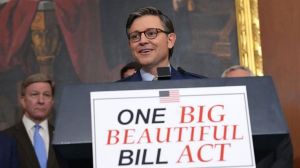
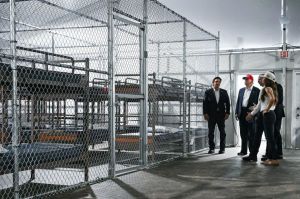
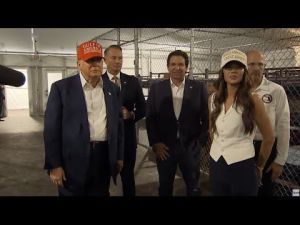
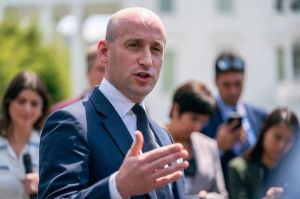













 peej
peej Carissa
 bostonboomer
 dakinikat
 ecocatwoman
 mablue2
 Mama Lopez
 peggysue22
 quixote
 skydancingguestblogger
 Mona (aka Wonk the Vote)



 Sky Dancing
Recent Comments