
Bill Clinton Stumps for Tom Barrett in Wisconsin
Posted: June 1, 2012 Filed under: open thread, U.S. Economy, U.S. Politics | Tags: Bill Clinton, Scott Walker, Tom Barrett, Wisconsin recall election 23 Comments
Greg Sargent says Bill Clinton “hit a home run” this afternoon when he appeared with Milwaukee Mayor Tom Barrett at a rally earlier this afternoon. Sargent:
Bill Clinton, in his speech in Wisconsin…framed the recall election as a stark choice between unity and division, between cooperation and conflict, and between shared prosperity and right wing winner-take-all economics. Democrats on the ground in the state are very satisfied with Clinton’s speech, and think he hit the right note to amplify their closing message
Clinton barely mentioned Barrett’s opponent Governor Scott Walker.
But the most important part of Bill’s speech was the call for voters to come out to the polls on Tuesday, in order to rebuke the national conservative movement’s huge financial investment in this race, and to make a larger statement about the type of leadership they want for the state and the country in the future:
If you believe in an economy of shared prosperity when times are good, and shared sacrifice when they’re not, then you don’t want to break the unions. You want them at the negotiating table. And you trust them to know that arithmetic rules. Show up for Tom Barrett on Tuesday! If you want Wisconsin once again to be seen by all of America as a place of diversity, of difference of opinion, of vigorous debate, where in the end people’s objectives are to come to an agreement that will take us all forward together, you have to show up for Tom Barrett on Tuesday!…
I can just hear it now, on Wednesday. All those people that poured all this money into Wisconsin, if you don’t show up and vote, will say, `see, we got them now. We’re finally going to break every union in America. We’re gonna break every government in America. We’re gonna stop worrying about the middle class. We don’t give a riff whether poor people get to work their way into it. We got our way now. We got it all. Divide and conquer works.’
You tell them no. You tell them, Wisconsin has never been about that, never will be about that — by electing Tom Barrett governor!
Third Coast Digest has much more on the rally, including photos.
Here is Clinton’s full 18 minute speech.
The recall election will be held on Tuesday, June 5. How it turns out will be extremely important for the entire country. If Walker wins, the Republican will likely double down in their wars on unions, voting rights, and women’s health.
Please discuss, or use this as an open thread.
Thursday Reads: Romney’s Lies, Debt Ceiling Showdown, and Dimonfreude
Posted: May 17, 2012 Filed under: Barack Obama, Corporate Crime, corporate greed, Economy, House of Representatives, Mitt Romney, morning reads, Surreality, The Media SUCKS, U.S. Economy, U.S. Politics, unemployment, voodoo economics, Voter Ignorance | Tags: Bill Clinton, Bill Moyers, economics, J.P. Morgan, Jamie Dimon, Mary Kennedy, Peter G. Peterson, Robert F. Kennedy Jr., Romney's lies, Simon Johnson 22 Comments
Good Morning!
On Tuesday night I wrote a brief post about the bizarre speech Mitt Romney gave in Des Moines, Iowa earlier that day. I was struck by Romney’s childish effort to get at President Obama by talking about Bill Clinton’s economic policies and claiming that Obama must have ignored those policies because he has some kind of grudge against both Clintons. It was so strange and off key that I thought Romney sounded like a crotchety old busybody gossiping over the backyard fence.
I didn’t really even go into the many baldfaced lies Romney told in the speech–I guess I’ve become so accustomed to his total refusal to confine himself to reality as it is that I almost don’t notice it anymore. Basically, Romney attacked Obama the deficit that was primarily created by Bush, and made his usual claims that he (Romney) will be able to cut taxes by 20 percent, increase defense spending, and at the same time magically balance the budget and dramatically reduce unemployment. Only a moron would buy what he’s selling.
Yesterday, a number of bloggers commented on that speech, so I thought I’d share some of those reactions in this morning’s reads.
Steve Benen at Maddowblog: A peek into an alternate reality.
Mitt Romney delivered a curious speech in Iowa yesterday, presenting his thoughts on the budget deficit, the debt and debt reduction, which is worth reading if you missed it. We often talk about the problem of the left and right working from entirely different sets of facts, and how the discourse breaks down when there’s no shared foundation of reality, and the Republican’s remarks offered a timely peek into an alternate reality where facts have no meaning.
Even the topic itself is a strange choice for Romney. If the former governor is elected, he’ll inherit a $1 trillion deficit and a $15 [trillion] debt, which he’ll respond to by approving massive new tax cuts and increasing Pentagon spending. How will he pay for this? No one has the foggiest idea.
In other words, the guy who intends to add trillions to the debt gave a speech yesterday on the dangers of adding trillions to the debt.
Benen says he doesn’t believe Romney is “stupid,” but he must be “operating from the assumption that voters are stupid.” I’d say that’s true. I think Romney believes that he’s much smarter and more worthy than just about anyone and that poor and middle-class people are beneath contempt.
Jonathan Cohn at The New Republic: Romney’s Make-Believe Story on the Economy. Cohn writes about Romney’s claims that Obama’s failure to reduce the deficit is the cause of the “tepid recovery,” unemployment, and the struggles of seniors to get by on fixed incomes.
Note the way Romney establishes cause and effect here: Obama’s contribution to higher deficits are the reason more people can’t get work and more seniors can’t make ends meet right now. This is an audacious claim and, while I’m no economist, I’m pretty sure it places Romney on the outer edges of the debate among mainstream scholars.
I know of serious conservatives who think the Recovery Act, which has increased deficits temporarily, didn’t ultimately do much to create jobs in the near term. And I know of serious conservatives who think that creating jobs now wasn’t worth the long-term downside of adding to the federal debt, however incrementally. Both viewpoints seem to represent minority views, if a recent University of Chicago survey of leading economists is indicative. But the arguments have at least some logic to them.
But Romney’s suggestion that unemployment today is a consequence of Obama’s contribution to the deficit (real or imagined) requires further leaps of logic. You’d have to argue, for example, that extensions of unemployment benefits have reduced incentives to work (despite research to the contrary) and that such negative effects substantially outweigh the positive effects of traditional stimulus measures. It’s not impossible to make this case. I think Casey Mulligan, also of the University of Chicago, has written things along these lines for the New York Times. But, unless I’m missing something, that argument is even more marginal than suggestions the Recovery Act didn’t help at all.
I suspect that even Cohn’s effort to make sense of Romney’s fantasy economic theory will have Dr. Dakinikat pulling her hair out.
Jonathan Chait at New York Magazine: Romney’s Budget Fairy Tale.
In the real world, the following things are true: The budget deficit was projected to top $1 trillion even before President Obama took office, and that was when forecasters were still radically underestimating the depth of the 2008 crash. Obama did propose temporary deficit-increasing measures, an economic approach endorsed in its general contours, if not its particulars, by Romney’s economists. These measures contributed a relatively small proportion to the deficit, and their effect is short-lived. Obama instead focused on longer-term measures to reduce the deficit, including comprehensive health-care reform projected to reduce deficits by a trillion dollars in its second decade. Obama put forward a budget plan that would stabilize the debt as a percentage of the economy. Obama has hoped to achieve deeper long-term deficit reduction by striking bipartisan deals with Congress, and he has tried to achieve this goal by openly endorsing a bipartisan deficit plan in the Senate and privately agreeing to a more conservative plan with John Boehner, both of which were killed by Republican opposition to any higher revenue.
But Romney doesn’t seem to live in the real world, and Chait suggests that Romney either doesn’t understand how deficits work or doesn’t care if what he says makes any sense at all.
In Romney’s telling, the terms debt and spending are essentially interchangeable. When presented with Obama’s position — that the solution to the debt ought to include both higher taxes and lower spending — he rejects it out of hand. Naturally, Romney has admitted before that his budget plan “can’t be scored.” It’s an expression of conservative moral beliefs about the role of government. While loosely couched in budgetary terms, Romney is expressing an analysis that resides outside of, and completely at odds with, mainstream macroeconomic forecasting and scoring assumptions.
At the Plum Line, Greg Sargent discusses How Mitt Romney gets away with his lying.
If you scan through all the media attention Romney’s speech received, you are hard-pressed to find any news accounts that tell readers the following rather relevant points:
1) Nonpartisan experts believe Romney’s plans would increase the deficit far more than Obama’s would.
2) George W. Bush’s policies arguably are more responsible for increasing the deficit than Obama’s are.
Oh, sure, many of the news accounts contain the Obama campaign’s response to Romney’s speech; the Obama campaign put out a widely-reprinted statement arguing that Romney’s plans would increase the deficit and that he’d return to policies that created it in the first place.
But this shouldn’t be a matter of partisan opinion. On the first point, independent experts think an actual set of facts exists that can be used to determine what the impact of Romney’s policies on the deficit would be. And according to those experts, based on what we know now, Romney’s policies would explode the deficit far more than Obama’s would.
Obviously, the problem is the obsequious corporate media. But the Romney campaign makes it impossible for even the few remaining serious reporters to question his policies by keeping the candidate completely insulated from the press except for occasional appearances on Fox News and lightweight network morning shows like Good Morning America. Yesterday, Politico reprinted tweets from several reporters who were “physically” blocked from talking to Romney on a rope line.
Speaking of Republican ignorance of basic economics, House Republicans are gearing up for another pitched battle on increasing the debt ceiling. Speaker John Boehner met with President Obama at the White House today and they “clash[ed] over” increasing the debt limit, according to The Hill.
The president convened the meeting of the bipartisan congressional leadership to discuss his “to-do list” for Congress, but an aide to the Speaker said the bulk of the meeting was spent on other issues, including a pile-up of expiring tax provisions and the next increase in the federal debt limit.
Boehner asked Obama if he was proposing that Congress increase the debt limit without corresponding spending cuts, according to a readout of the meeting from the Speaker’s office. The president replied, “Yes.” At that point, Boehner told Obama, “As long as I’m around here, I’m not going to allow a debt-ceiling increase without doing something serious about the debt.”
Shortly after the meeting, White House press secretary Jay Carney told reporters that the president warned the leadership that he would not allow a repeat of last August’s debt-ceiling “debacle,” which led to a downgrade in the U.S. credit rating.
Sigh……
In a related story, there’s this piece at Wonkblog about the Pete Peterson summit and how Democrats talked long-windedly about cutting “entitlements,” and Republican refused to talk about tax increases. Read it and weep. I’m not even going to quote from it, because it’s too damn depressing.
So far Jamie Dimon seems to have survived the $2 billion loss recently suffered by J.P. Morgan.
The CEO of JPMorgan Chase survived a shareholder push Tuesday to strip him of the title of chairman of the board, five days after he disclosed a $2 billion trading loss by the bank.
CEO Jamie Dimon also won a shareholder endorsement of his pay package from last year, which totaled $23 million, according to an Associated Press analysis of regulatory filings.
Dimon, unusually subdued, told shareholders at the JPMorgan annual meeting that the company’s mistakes were “self-inflicted.” Speaking with reporters later, he added: “The buck always stops with me.”
Yeah, right. The buck will stop with the taxpayers if Dimon’s bank ultimately crashes and burns. Bill Moyers asked economist Simon Johnson about that.
Moyers: I was just looking at an interview I did with you in February of 2009, soon after the collapse of 2008 and you said, and I’m quoting, “The signs that I see… the body language, the words, the op-eds, the testimony, the way these bankers are treated by certain congressional committees, it makes me feel very worried. I have a feeling in my stomach that is what I had in other countries, much poorer countries, countries that were headed into really difficult economic situations. When there’s a small group of people who got you into a disaster and who are still powerful, you know you need to come in and break that power and you can’t. You’re stuck.” How do you feel about that insight now?
Johnson: I’m still nervous, and I think that the losses that JPMorgan reported — that CEO Jamie Dimon reported — and the way in which they’re presented, the fact that they’re surprised by it and the fact that they didn’t know they were taking these kinds of risks, the fact that they lost so much money in a relatively benign moment compared to what we’ve seen in the past and what we’re likely to see in the future — all of this suggests that we are absolutely on the path towards another financial crisis of the same order of magnitude as the last one.
A number of shareholders have sued Dimon over the losses, according to Bloomberg (via the SF Chroncle). And of course lots of people are gloating over Dimon’s getting temporarily knocked off his pedestal. Jena McGregor writes in the WaPo:
It’s being called Dimonfreude.
There are barely disguised smirks emanating from the canyons of Wall Street and the business press over the fact that Jamie Dimon has had to admit a mistake — and a whale of one, for that matter.
For years, the JPMorgan CEO (and America’s least-hated banker, as he was known) has worn a halo over those pinstripes. Dimon has been called President Obama’s “favorite banker”. Institutional Investor magazine has called him the country’s best CEO for two years running. And his actions during the financial crisis have been painted in patriotic terms: Press reports said he “answered the call” from then-FDIC chairman Sheila Bair to buy Washington Mutual, one of two banks he scooped up during the financial meltdown, and he has cited a patriotic duty to a country in crisis as why he took in $25 billion in government aid.
Yet now, Dimon is in the hot seat as JPMorgan confronts a $2 billion trading loss and the early stages of a criminal probe by the Justice Department.
Finally, some sad news: Estranged Wife of Robert F. Kennedy Jr. Is Found Dead at Home in Westchester
Mary R. Kennedy, the estranged wife of Robert F. Kennedy Jr., was found dead on Wednesday at the family’s home in Bedford, N.Y. She was 52.
Ms. Kennedy’s death was confirmed in a statement from her family, who did not comment on the circumstances. The Bedford Police Department said only that it had investigated a “possible unattended death” in an outbuilding at the home.
Her lawyer, Kerry A. Lawrence, would not say whether foul play was suspected. Kieran O’Leary, a spokesman for Westchester County, said an autopsy was scheduled for Thursday morning.
Born Mary Richardson, Ms. Kennedy joined one of America’s foremost political families in 1994, in a marriage ceremony aboard a boat on the Hudson River, near Stony Point, N.Y. At the time, she was an architectural designer at Parish-Hadley Associates in New York.
Those are my suggested reads for today. What are you reading and blogging about?
Open Thread: Mitt Romney, Busybody
Posted: May 15, 2012 Filed under: 2012 presidential campaign, 2012 primaries, U.S. Economy, U.S. Politics | Tags: Barack Obama, Bill Clinton, busybody, Debt, Federal Deficit, gossip, Hillary Clinton, Mitt Romney 20 Comments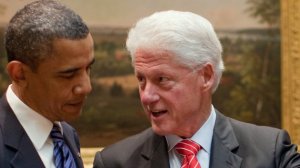
In a speech in Des Moines, Iowa today, Mitt Romney sounded like a fussy old gossip, claiming that President Obama probably has a “beef” with Bill and Hillary Clinton.
Almost a generation ago, Bill Clinton announced that the Era of Big Government was over.
Even a former McGovern campaign worker like President Clinton was signaling to his own Party that Democrats should no longer try to govern by proposing a new program for every problem.
President Obama tucked away the Clinton doctrine in his large drawer of discarded ideas, along with transparency and bipartisanship. It’s enough to make you wonder if maybe it was a personal beef with the Clintons….but really it runs much deeper.
President Obama is an old school liberal whose first instinct is to see free enterprise as the villain and government as the hero. America counted on President Obama to rescue the economy, tame the deficit and help create jobs. Instead, he bailed out the public-sector, gave billions of dollars to the companies of his friends, and added almost as much debt as all the prior presidents combined.
ROFLMAO!! Obama, “an old school liberal?” This guy is a laff riot!
At the Washington Post, Nia-Malika Henderson interpreted Romney’s odd invoking of the good old days of the Clinton administration as another effort to link Obama with Jimmy Carter. Henderson writes:
The strategy, of course, is obvious, if a little heavy handed—paint Obama as more like Jimmy Carter, rather than as a New Democrat in the mold of Clinton.
Clinton has already emerged as one of Obama’s most visible surrogates, appearing in a video marking the death of Osama bin Laden, and will likely be used to gin up support among so-called Reagan Democrats—white, blue collar workers, particularly—and Romney can perhaps mute some of Clinton’s power by suggesting that Clinton isn’t all in with Obama. (It’s a beef, not a bromance, Romney suggests.)
But by invoking Clinton, Romney risks poking the bear in some ways, and perhaps even casting himself as a version of Clinton. Praising Clinton, even in a backhanded way, isn’t exactly a way to solidify support among the religious right.
I don’t know about the reaction from the religious right, but Bill Clinton worked a few digs about Romney into his speech today at the Pete Peterson conference (why Clinton shows up for these things, I’ll never understand, but that’s for another post). According to the National Journal, Clinton said that Romney
shot himself in the foot with the broad tax-cutting budget he suggested during the primary. He said Romney should accept projections that his plan for deep tax cuts would add billions to the deficit while requiring huge cuts to Medicare, Medicaid and non-defense spending.
“If I were in his position I would, I think, use the Congressional Budget Office numbers saying my plan increased the debt and say that no responsible president can pretend an independent analysis of his numbers don’t matter,” Clinton said. “That’s, I think, his his best avenue back to the real world.”
Clinton also offered a few verbal pats on the head to Romney.
“I feel a lot of sympathy for him,” he said. “The whole primary was about finding somebody who was true conservative, but they’re going to vote for him anyway.”
Good one, Bill!
The Political Plate
Posted: May 13, 2012 Filed under: Food, Monsanto | Tags: Agent Orange, ALEC Exposed, animal rights, antibiotics, Bill Clinton, farmers, FDA, food supply, George W. Bush, Hillary Clinton, rGBH, Roundup, Wikileaks, WWF 21 Comments
A little over a week ago, I emailed bostonboomer that I wanted to do a post about Monsanto. She was kind enough to share older posts done by Sima about Monsanto. After reading Sima’s posts I have to admit that I was intimidated by her detailed, informative and brilliant commentaries. Her knowledge of Monsanto’s business and political dealings, stemming from her experience as an organic farmer, is incredible. I highly recommend going back and reading or re-reading them. I’m going to try to bring you up to date on what has been happening since her last post. I just hope that I can do both Sima and the subject justice.
Once I became involved in the animal rights movement in 1990, a formerly unseen world opened up to me. It was akin to looking behind the curtain in the Wizard of Oz. Learning about how the animals we call food are raised, what they are fed and the chemicals that are put into their bodies, was disturbing to say the least. Since that time, the major media outlets, along with independent filmmakers, have covered issues such as factory farming, the overuse of antibiotics and the rise of antibiotic resistance, along with other issues that affect the food supply. A good place to get started is with the film Food Inc. and its website.
Monsanto popped up on my radar around 1993 with the introduction of rBGH, recombinant Bovine Growth Hormone. Although there was an overabundance of milk on the market, this chemical was being introduced to increase the supply of milk available for consumption. Why? One of the reasons was to drop the price of milk. That would be good for the consumer, right? Well, corporations are not in the business of making their products more affordable for their customers, as we all know. The ploy was to drive prices low enough so that family dairy farmers could not afford to stay in business, leaving the business to Monsanto’s real customers, giant dairies who would use their product(s). With family dairy farms bankrupt, Monsanto could better control the market and prices. From a study by the Economic Research Service/USDA.
Between 1970 and 2006, the number of farms with dairy cows fell steadily and sharply, from 648,000 operations in 1970 to 75,000 in 2006, or 88 percent (fig. 1). Total dairy cows fell from 12 million in 1970 to 9.1 million in 2006, so the average herd size rose from just 19 cows per farm in 1970 to 120 cows in 2006.1 Moreover, because milk production per cow doubled between 1970 and 2006 (from 9,751 to 19,951 pounds per year), total milk production rose, and average milk production per farm increased twelvefold.
Monsanto has since sold its posilac (rGBH) business to the Big Pharma company, Eli Lilly. If you still believe that advertising slogan, “Milk, it does a body good”, you might want to read this.
Let me start off with yesterday’s article by Jim Hightower, although it’s mostly about Dow Chemical, Monsanto gets some space as well. And there are some great comments. For more on 2, 4-D check out these links:
http://npic.orst.edu/factsheets/2,4-DTech.pdf
Monsanto is a multi-tentacled corporation attached to all aspects of our lives. At their facilities in Dayton, OH during WWII they were involved with the development of the first nuclear bomb. One of their early successful inventions was Astroturf. They have manufactured Agent Orange (the defoliant/herbicide used during the Viet Nam war), and PCBs (banned in the U.S. in 1979 but still found in the environment since PCBs don’t break down easily). For more information, you can download the free E-book, A Small Dose of Toxicology. In recent years, Monsanto has focused on the world food supply, whether it’s chemicals to kill weeds, like Roundup, or creating genetically modified (GM) seeds for which they hold patents. Natural News began a July, 2010 post with this unsettling paragraph:
At a biotech industry conference in January 1999, a representative from Arthur Anderson, LLP explained how they had helped Monsanto design their strategic plan. First, his team asked Monsanto executives what their ideal future looked like in 15 to 20 years. The executives described a world with 100 percent of all commercial seeds genetically modified and patented. Anderson consultants then worked backwards from that goal, and developed the strategy and tactics to achieve it. They presented Monsanto with the steps and procedures needed to obtain a place of industry dominance in a world in which natural seeds were virtually extinct.
Some of the crops grown with Monsanto’s GM seeds include corn, soy, sugar beets, alfalfa and cotton. Monsanto also produces and sells Stevia and Aspartame. To preserve their ownership of these patented seeds, farmers using them cannot save seeds produced from the crops they grow. The farmers must buy new seeds each year for their annual crops. Monsanto has sued farmers suspected of harvesting seeds along with their crops.
One of the most recent areas Monsanto wants to exploit are public lands. In November, several groups filed a lawsuit to prevent the planting of GM crops on refuges.
The Center for Food Safety, Beyond Pesticides and Public Employees for Environmental Responsibility sued Interior Secretary Ken Salazar and the U.S. Fish and Wildlife Service and its director, in Federal Court.
Fish and Wildlife signed agreements allowing farmers to plant crops, including genetically modified soybeans and corn, on refuges and wetlands in eight Midwestern states, according to the complaint.
And planting on public lands isn’t just limited to U.S. lands. World Wildlife Fund (WWF), one of the most respected conservation groups worldwide has ties to many multinational corporations, including Monsanto. They are helping to promote GM crops in other countries.
On the federal tax front, Monsanto paid an average of 22% in taxes for years 2008 – 2010. This report lists the 2008 – 2010 period detailing the profits, taxes and rates for 280 of U.S. corporations.
ALEC Exposed has a page dedicated to Monsanto, detailing much of their history and activities. As with most multinational corporations, Monsanto is heavily invested in lobbying. Interestingly, the years they spent the least money on lobbying were during the reign of King George II, otherwise known as GW Bush. Monsanto’s highest expenditures were in 1999, 2000 and 2008 – 2011. Open Secrets has an overview of Monsanto’s lobbying expenditures, the lobbyists, the issues in which their lobbying efforts were focused along with the agencies and the associated bills before Congress. Open Secrets is quite an informative site, also covering PAC contributions and campaign contributions to specific elected officials.
In our current political climate, campaign contributions and lobbying expenditures aren’t a surprise. After all, it is how the system is fueled. Open Secrets has a recent blog post detailing Monsanto’s activities so far this year. The Monsanto/government connections go even deeper though. During Clarence Thomas’ confirmation hearing, he worked as a counsel for Monsanto. When a recent case involving Monsanto came before the Supreme Court, not surprisingly, Thomas did not recuse himself. The Organic Consumers’ Union’s site, Millions Against Monsanto, has a list of both elected officials and agency appointments of former Monsanto employees from Bush Sr. to Obama. Sadly, Bill Clinton appointed more than any other president listed. Unfortunately, they don’t list U.S. diplomats who also once worked for Monsanto. What a wonderful way to help promote the products of their former employer in countries all around the world.
Wikileaks posted documents showing connections between Monsanto and U.S. Ambassadors. Several EU countries have rejected the use of Monsanto’s GM seeds. Fearing loss of export income, the possibility of pressuring or even retaliating against these countries were discussed in the diplomatic cables Wikileaks obtained. You can read Sima’s post here: https://skydancingblog.com/2010/12/28/wikileaks-and-gmogm-food-more-cables-more-fun/
Monsanto’s reach extends around the world. GM cotton was promoted as a boon to small farmers, but the reality is different. This story details the results in one village and the collaboration between Monsanto and The Times of India. Stories from Africa aren’t any better. The Gates Foundation is investing millions to promote and encourage the use of GM crops. I find it disturbing with a number of NGOs, researchers and politicians who are working hand in hand with Monsanto and other GM companies seemingly without concerns for the possibilities of the damage to the world food supply, public health and the environment. Alternet has posted a story about Kenya and the support from The Gates Foundation for Monsanto’s GM crops. For another opinion on The Gates Foundation/Monsanto/Africa issue, check out this Opinion piece in the Seattle Times written by Glenn Ashton.
The one beacon of hope has been some EU countries. The people have loudly spoken out against GM foods. However, the picture may not be as rosy as it has been portrayed. Gaia Health digs deeper into the announcement in February, 2012 that both Monsanto and BASF are pulling out of Europe.
Let’s not forget about the stock market either. Monsanto has signed an exclusive licensing agreement with Marina, a bio-tech company. I especially liked (not really!) this from the post:
Time and again, the company’s collaborations with agri-business research firms and molecular-bred hybrid technologies have proved effective. Although instances of societal resistance to new technology and poor acceptance of new products by farmers continue to raise anxiety, continuous increase in production led by technology upgradation helps balance such unease.
The personal is the political, and what is more personal than the food you eat and the food that you feed your families? If you are interested in digging deeper, here is the documentary The World According to Monsanto
You can also get more information about the many issues and areas of concern about food at the Center for Food Safety site. I hope I didn’t give you too much to “chew” on.
Monday Evening Reads: Bill Clinton’s Advice, Romney and Rubio, George Zimmerman, and Stupid Republicans
Posted: April 23, 2012 Filed under: 2012 presidential campaign, 2012 primaries, Crime, SDB Evening News Reads, Team Obama, U.S. Politics, War on Women | Tags: Barack Obama, Benjamin Crump, Bill Clinton, George Zimmerman, John Cornyn, John Edwards, Marco Rubio, Mitt Romney, police chief Bill Lee, Sanford FL, Sarah Steelman, Trayvon Martin, Violence Against Women Act 15 Comments
Good Evening! It hasn’t been a particularly busy news day, but I have a few updates for you tonight.
According to Politico, the Obama campaign is changing it’s attacks on Mitt Romney based on some suggestions from Bill Clinton. The original approach was to paint Romney as a man without a moral or ideological “core.” Clinton, according to Politico argued that it would be better to focus on
Romney’s description of himself as a “severe conservative,” to deny him any chance to tack back to the center, according to three Democrats close to the situation.
“[Clinton] said he thought Romney’s positions on the issues would ultimately be the best way to attack him,” said a Democrat briefed on the details of an amiable Nov. 9 meeting in Clinton’s Harlem office that included Axelrod, Democratic National Committee Executive Director Patrick Gaspard and Obama campaign manager Jim Messina.
“That’s what we are doing, but it doesn’t mean we can’t and shouldn’t do the etch-a-sketch, flip-flop moments when they occur and we will,” added the operative — who says Obama’s campaign likely would have emphasized Romney’s conservative tilt once the primary was over, anyway.
But Clinton’s advice, buttressed by Benenson’s polling, has clearly gained traction internally since the end of Romney’s four-month primary ordeal.
Well, I can’t imagine a more expert political consultant than Bill Clinton, can you?
A new report from the Pew Hispanic Center shows that the number of illegal immigrants coming from Mexico has been falling because of the lack of jobs in the U.S. NY Daily News:
Roughly 6.1 million unauthorized Mexican immigrants were living in the U.S. last year, down from a peak of nearly 7 million in 2007, according to the Pew Hispanic Center study released Monday. It was the biggest sustained drop in modern history, believed to be surpassed in scale only by losses in the Mexican-born U.S. population during the Great Depression.
Much of the drop in illegal immigrants is due to the persistently weak U.S. economy, which has shrunk construction and service-sector jobs attractive to Mexican workers following the housing bust. But increased deportations, heightened U.S. patrols and violence along the border also have played a role, as well as demographic changes, such as Mexico’s declining birth rate.
In all, the Mexican-born population in the U.S. last year — legal and illegal — fell to 12 million, marking an end to an immigration boom dating back to the 1970s, when foreign-born residents from Mexico stood at 760,000. The 2007 peak was 12.6 million.
The New York and Pennsylvania primaries will be held tomorrow, but there isn’t much excitement about them anymore. Other states voting tomorrow are Connecticut, Delaware, and Rhode Island.
In Pennsylvania, Romney was campaigning with Florida Sen. Marco Rubio.
Without overshadowing Romney, Rubio on Monday hammered home the former Massachusetts governor’s position on Iran and helped Romney attack President Barack Obama’s energy policy.
In a brief question-and-answer session with reporters, Romney said he’d consider Rubio’s immigration proposal to find a way to allow young people who came to the country illegally as children to stay here if they’re in school or the military.
It sounds like the Obama campaign should get busy pinning Romney down on the cruel immigration policy he has been pushing throughout the primaries.
Romney also tried to appeal to younger voters by joining Obama in backing a bill to prevent doubling of student loan interest rates.
ASTON, Pa. — As the White House ramps up its push to woo young voters by urging Congress to head off a scheduled increase in student loan interest rates, GOP presidential front-runner Mitt Romney struck back Monday, throwing his support behind an extension of the current rates at a campaign event outside Philadelphia.
The former Massachusetts governor made the announcement at a press availability with U.S. Sen. Marco Rubio, the first joint appearance of Romney and the Florida Republican whose name is often floated as a top choice for his running mate.
“There’s one thing that I wanted to mention, that I forgot to mention at the very beginning, and that was that particularly with the number of college graduates that can’t find work or that can only find work well beneath their skill level, I fully support the effort to extend the low interest rate on student loans,” Romney said at the end of a seven-minute joint news conference with Rubio.
I have a few updates on the Trayvon Martin case. At one minute after midnight, George Zimmerman was let out of jail after posting bail. He will be going to a undisclosed location, reportedly outside of Florida.
Wherever George Zimmerman went after he was released on bond from a Florida jail, a sensitive GPS device will pinpoint his location for authorities and alert them if he drifts even a few feet away from where he is allowed.
Zimmerman, who is charged with second-degree murder in the killing of 17-year-old Trayvon Martin, went into hiding Monday as he awaits trial. He must pay an $8-a-day fee to use the device, which is generally used to track people charged in domestic violence cases.
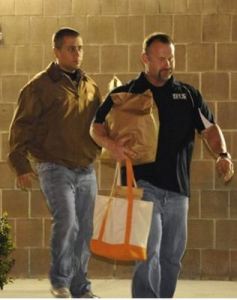
George Zimmerman leaves Seminole County Jail with unidentified man
According to the WaPo,
Local LA Bail Bonds companies whose clients have worn the same device used to pinpoint Zimmerman said it is highly sensitive and can send messages to authorities in real-time….
Seminole County Sheriff’s officials are offering few details on how Zimmerman will be specifically monitored, other than to say the device he is wearing has the same 24/7 capabilities it uses to track accused domestic violence offenders. Zimmerman may be residing outside of Florida for safety reasons.
The monitoring program has been in use since 2003 in Seminole and provides “real-time monitoring of an offender’s movements and is capable of monitoring anywhere in the U.S.,” according to a sheriff’s office news release.
Later this morning, Sanford, FL police chief Bill Lee, who has been on leave with pay, submitted his final resignation; but the move was rejected by the Sanford city commissioners at a hastily-called meeting.
Earlier Monday, the city announced in a statement that a separation agreement had been reached with Lee to resign. If it was approved by the City Commission, it would have taken effect at midnight.
But by a 3-2 vote, the commission opted not to accept the proposed deal, which would have permanently dismissed Lee from the job and given him a severance package. Two commissioners had questioned the fairness of Lee losing his job, while Mayor Jeff Triplett said he preferred to wait possibly several months for the results of an investigation into Lee and his department….
Benjamin Crump, a lawyer for Martin’s family, criticized the commission for not letting Lee step down.
“Sanford residents deserve quality leadership in law enforcement who will handle investigations fairly for all people,” he said. “If Chief Bill Lee recognized that his resignation would help start the healing process in Sanford, city leadership should have accepted it in an effort to move the city forward.”
Sanford City Manager Norton N. Bonaparte had supported the resignation.
Benjamin Crump also criticized George Zimmerman and his defense attorneys over a photo of Zimmerman’s head with two small cuts with blood coming out of them.
An attorney for Trayvon Martin’s family believes their son’s shooter is lying about injuries he sustained the night he killed the unarmed 17-year-old.
“If this is any indication of what’s to come, then the lying has already begun,” attorney Ben Crump told reporters on Sunday, while promoting a documentary at the Florida Film Festival on another case….
“When you look at those pictures and you see those two little cuts on his head, that is not consistent with your head being pounded into the pavement,” said Crump. “Objective evidence, evidence we can see and touch, is more important than whatever George Zimmerman says because we have to remember Trayvon Martin isn’t here to tell us his version of what happened.”
Crump pointed to the 911 call where someone is heard screaming before the fatal gunshot.
Democrats in Congress have been pushing for reauthorization of the Violence Against Women Act, but Texas Sen. John Cornyn says that Democrats are just trying to ‘score cheap political points.’ with their efforts to renew the bill.
Republicans oppose the current reauthorization bill because it would allow battered undocumented immigrants to claim temporary visas, and expand protections to same sex couples and Native American tribes.
All eight Republicans on the Senate Judiciary Committee voted against renewing the law and Democrats were quick to denounce them, linking their opposition to the bill to the so-called “war on women.”
“The law was enacted to protect and serve the interests of crime victims, not to help a political party fire up its base,” Cornyn continue. “Moreover, to argue that a minor policy disagreement indicates a lack of sensitivity toward battered women is simply beyond the pale.”
In Missouri, a Republican woman who is running for the senate against current Sen. Claire McCaskill says she is “not sure” what the Violence Against Women Act is.
Former State Treasurer Sarah Steelman, a Republican now hoping to unseat Sen. Claire McCaskill (D-MO), said recently that she was unfamiliar with the Violence Against Women Act (VAWA), the landmark anti-domestic violence legislation whose re-authorization is now stalled in the Senate….
A video released today by the Missouri Democratic Party shows a man asking Steelman about VAWA at a campaign event. Steelman replies, “I’m not sure what that is because I’m not serving right now.” He asks again, “you haven’t really heard about it?” And she confirms, “no, not really.”
The John Edwards trial has been getting a lot of attention today too. Chris Cillizza calls it a “final public flogging.”
What stories have you been following today?

 peej
peej Carissa
 bostonboomer
 dakinikat
 ecocatwoman
 jjlo
jjlo mablue2
 Mama Lopez
 peggysue22
 quixote
 skydancingguestblogger
 Mona (aka Wonk the Vote)





Recent Comments