Clinton and Sanders have their first townhall in New Hampshire without O’Malley right now on CNN. This event comes fresh on heels the historic Clinton win of the Iowa Caucuses. The margin was small, but a win is a win is a win. Sanders is expected to win New Hampshire because of the neighbor effect. They always vote for fellow New Englanders and Sanders is no stranger. CNN has a list of five things to watch. I found this one pretty interesting.
In a similar CNN town hall in Iowa, Sanders absolutely unloaded on Clinton, hammering her as a newcomer to the progressive movement on income inequality, trade, energy and other issues.
Since then, the man who talks about never running a negative ad in his life has approved one that ripped into Goldman Sachs for paying politicians speaking fees — a crystal-clear shot at Clinton who has received that money.
He has complained about the Democratic establishment, complaining about the Democratic National Committee’s decision to hold debates often on weekends and against playoff football games and other high-profile events.
Is Sanders ready to really rip into Clinton?
His winks and nods toward the liberal base are impossible to miss.
On Tuesday in Keene, New Hampshire, Sanders launched into an attack on the Walmart-owning Walton family, saying that “the major welfare abuser in America is the wealthiest family in America.”
No wonder: Walmart is headquartered in Arkansas. Clinton once served on its board. And Alice Walton gave Clinton’s Democratic National Committee Victory Fund $353,000 in December — a contribution just made public in filings Sunday.
Ever since they left Iowa, Clinton and Sanders have gotten more pointed, particularly on Twitter, over who can better carry out a set of progressive priorities. Clinton has called herself a “progressive who gets things done,” while Sanders posted a series of tweets suggesting she has shifted her positions on such things as the Keystone pipeline and the Trans-Pacific Partnership, as well as on the question of whether she is a centrist or a liberal.
“You can be a moderate. You can be a progressive. But you cannot be a moderate and a progressive,” Sanders tweeted on Wednesday.
9:10 pm ET: Sanders slams expectations. Bernie Sanders criticized the media for focusing so much on expectations in New Hampshire, where he leads some polls by a significant margin. “That is the media game. That is what the media talks about. Who cares?” he says. Clinton’s campaign has downplayed the state, in hopes of delivering a better-then-expected result. But Sanders, too, cautions that he expects the results to be “close.”
9:15 p.m. ET: How do you pay for it? In the last debate, Clinton pointedly said that she would not raise taxes on the middle class. Sanders has said there will be tax hikes. Sanders said that his proposal for a “medicare for all,” single-payer health care program would raise taxes on those in the “middle of the economy” by about $500 annually. But he tells a questioner that the switch to single payer will reduce medical costs by $5,000.
9:23 p.m. ET: On faith. Cooper asks Sanders about something the Vermont senator rarely talks about on the stump: His faith. “Everybody practices religion in a different way,” says Sanders, who is Jewish. “I would not be running for president of the United States if I did not have very strong religious and spiritual feelings.” He added that on the stump rarely gets that personal, but he did say he worried about a society “where some people say, ‘I don’t care,’” when spirituality to him is a recognition that “we are in this together.”
So, here we go again! Join us!!!
Did you like this post? Please share it with your friends:
Overnight the watches were converted to warnings meaning the likelihood of blizzard conditions and snow exceeding 6 inches has increased. The morning commute will be dry and you will see some dim sunshine. The snow begins this afternoon along the coast and the evening commute will be impacted. The storm is most intense overnight and ends during the morning from west to east on Wednesday….There is a blizzard warning up for Cape Cod, coastal Massachusetts south of Boston, Martha’s Vineyard and Nantucket.
At least I’m not in the blizzard zone for the moment. This appears to be a really big storm. I saw on Twitter this morning that there were whiteout conditions in St. Louis. You can watch a video update the Weather Channel page.
With memories of the dreaded polar vortex still fresh, winter deals another blow Tuesday, slamming the Northeast with a blast of cold air and up to a foot of snow.
“They are going to have quite a snowstorm,” said Kevin Roth, a lead meteorologist with theWeather Channel. “By this evening, all four cities from Philadelphia to Boston could face a pretty bad commute home. We’re expecting a good six to 10 inches. It will be snowing pretty hard.”
“Every once in while these little winter storms go bananas and we think this might be the one,” he added.
Temperatures are set to drop again in the Midwest and Northeast starting Sunday, a forecast that already is prompting the return of the phrase “polar vortex” — widely used to describe the blast of cold air that chilled the U.S. earlier this month. But while the Upper Midwest, Great Lakes and the interior Northeast will experience below-average temperatures in the coming week, don’t call it a “polar vortex,” meteorologists say.
The “polar vortex” is a real weather phenomenon, just not one that actually visits the United States, they say. It’s actually a circular weather pattern that has always been stationed above the Arctic, explains weather.com.
According to the National Oceanic and Atmospheric Administration (NOAA), the swirling high-altitude system never moves into the U.S., though parts of it can “break off” and push cold air south.
The cold experienced in early January was actually a result of the polar vortex weakening, becoming warmer and therefore releasing its powerful chill beyond its normal reach through the northern climes, NOAA says.
Weather experts at NOAA said the intense cold air the U.S. has experienced is in fact a result of a warming world and increasing climate variability. While researchers cannot yet determine whether the fluctuations are a result of natural patterns or environmental effects, meteorologists can predict that parts of the U.S. will see freezing weather again in the coming days as a result of a polar vortex breakdown.
Anyway, I’m going to have to rush around this morning. I have a package to mail, and I need to get a couple of things at the grocery store. I do have some interesting reads for you today–some of them are pretty long, but well worth reading.
Yesterday, via Tom Watson at Forbes, I came across an essay by long-time feminist blogger Amanda Hess that Watson says has been “widely discussed” for the past week or so. Somehow I missed it. Hess argues that on-line sexual harassment of women will be “the next civil rights issue.” In the essay, she writes about the frequent on-line attacks she and other female writers have experienced (warning: explicit and violent language). Here are the first few paragraphs.
I was 12 hours into a summer vacation in Palm Springs when my phone hummed to life, buzzing twice next to me in the dark of my hotel room. I squinted at the screen. It was 5:30 a.m., and a friend was texting me from the opposite coast. “Amanda, this twitter account. Freaking out over here,” she wrote. “There is a twitter account that seems to have been set up for the purpose of making death threats to you.”
I dragged myself out of bed and opened my laptop. A few hours earlier, someone going by the username “headlessfemalepig” had sent me seven tweets. “I see you are physically not very attractive. Figured,” the first said. Then: “You suck a lot of drunk and drug fucked guys cocks.” As a female journalist who writes about sex (among other things), none of this feedback was particularly out of the ordinary. But this guy took it to another level: “I am 36 years old, I did 12 years for ‘manslaughter’, I killed a woman, like you, who decided to make fun of guys cocks.” And then: “Happy to say we live in the same state. Im looking you up, and when I find you, im going to rape you and remove your head.” There was more, but the final tweet summed it up: “You are going to die and I am the one who is going to kill you. I promise you this.”
My fingers paused over the keyboard. I felt disoriented and terrified. Then embarrassed for being scared, and, finally, pissed. On the one hand, it seemed unlikely that I’d soon be defiled and decapitated at the hands of a serial rapist-murderer. On the other hand, headlessfemalepig was clearly a deranged individual with a bizarre fixation on me. I picked up my phone and dialed 911.
Read the rest at the link. A number of women have written about this issue, and particularly about the lack of protection for women who are harassed on-line from law enforcement–even though the threats sometimes lead to real-life actions. A couple more recent examples:
Skepchick wrote in October about being harassed for her participation in the on-line atheist community, Why I Don’t Just Go to the Cops.
Along similar lines, I came across this 2010 article in The Boston Globethat provides some insight into why some people spend so much time and energy writing angry comments on line: Inside the mind of the anonymous online poster. The author got an interview with a frequent commenter to The Boston Globe website. He also discusses the problems newspapers face in dealing with angry and trolling comments from anonymous people. Here’s an excerpt:
On Monday, May 17, at 2 p.m., a breaking news article headlined “Obama’s aunt given OK to stay in United States” hits the home page of Boston.com. In a matter of seconds, the first anonymous online comment appears. A reader with the handle of Peregrinite writes, “of course she can . . . can someone appeal.”
Certain topics never fail to generate a flood of impassioned reactions online: immigration, President Obama, federal taxes, “birthers,” and race. This story about Obama’s Kenyan aunt, who had been exposed as an illegal immigrant living in public housing in Boston and who was now seeking asylum, manages to pull strands from all five of those contentious subjects.
In the next few minutes, several equally innocuous posts follow, including a rare comment in favor of the judge’s decision. Then the name-calling begins. At 2:03 p.m., a commenter with the pseudonym of Craptulous calls the aunt, Zeituni Onyango, a “foreign free-loader.” Seconds later comes the lament from Redzone 300: “Just another reason to hate are [sic] corrupt government.”
News websites from across the country struggle to maintain civility in their online comments forums. But given their anonymous nature and anything-goes ethos, these forums can sometimes feel as ungovernable as the tribal lands of Pakistan.
He wasn’t the first and will certainly not be the last member of the U.S. intelligence community to betray the trust of his nation. But what do we really know about Edward Snowden, the former National Security Agency contractor who leaked thousands of documents detailing NSA’s domestic and global eavesdropping programs?
The truth is we know very little about Snowden beyond what the media outlets that have a vested interest in protecting him choose to report. But when viewed through the prism of the last 25 years of insider espionage, the Edward Snowden we do know seems to fit the typical profile of the trusted insider struggling to overcome personal and professional shortcomings, and suffering from a warped sense of moral superiority.
More than a decade worth of studies into the psychological profiles of malicious insiders have revealed several common characteristics that make information technology professionals — particularly system administrators, like Edward Snowden — an “at risk” population for malicious insider activity.
Verton discusses Snowden’s history in the light of a study of IT administrators who eventually sabotaged their employers in some way: Inside the Mind of the Insider, by Eric D. Shaw, Jerrold M. Post, and Keven G. Ruby. These are both fairly long pieces, but if you have any interest in the ongoing Snowden saga, they are must reads! A bit more from Verton:
Born in 1983, Snowden grew up in North Carolina and Maryland. His father was a Coast Guard officer and his mother worked as a court administrator. They divorced in 2001, and Snowden went to live with his mother. His parents claim Snowden was ill as a teenager and failed to graduate high school. He eventually studied at a local community college to obtain a G.E.D.
Snowden was 17 when al-Qaida launched its attacks against the United States on Sept. 11, 2001. At that time, he adopted an online persona he called “The One True Hooha” at the website Ars Technica, where he participated in chat forums for gamers and hackers. His studies at a local community college would once again fall short of a degree.
In 2003, Snowden decided to join the Army Reserve, and requested a chance to undergo evaluation training for Special Forces to, in his words, “fight to help free people from oppression.”
Yet again, the young Snowden would fall short. He was dropped from the program and discharged from the Army four months later. Snowden claims to have broken both of his legs during training, but to date has provided no evidence. The Army has confirmed his service, but would not release his service record summary, known as a DD-214.
“He comes from a family that has a high need for achievement, but his experience is one disaster after another,” Stock said.
Lots more educated speculation on Snowden’s motives at the link.
Secret U.S. missile and electro-optics technology was transferred to China recently by Israel, prompting anger from the U.S. and causing a senior Israeli defense official to resign.
The head of defense exports for the Israeli Defense Ministry resigned after a U.S. investigation concluded that technology, including a miniature refrigeration system manufactured by Ricor and used for missiles and in electro-optic equipment, was sent to China, according to the Israeli newspaper Maariv.
Another Israeli news site, Aretz Sheva, reports the U.S. is concerned the technology could ultimately find its way to Iran, which last year sought to buy military equipment from China for its nuclear program.
That sounds scarier than the stuff Glenn Greenwald has been dribbling out.
It looks more like an art installation than the remains of a 400-year-old experiment: a life-size image of a man rendered in dark, angry scrawls on a wooden panel. It is, in fact, a human nervous system, painstakingly removed from a corpse by Italian medical students and then varnished on to the dissecting table. Scientists in the 17th century believed that human beings were animated by the “animal spirit” that flowed from the brain down the nerves.
The display is part of the “Mind Maps” exhibition at the Science Museum in London, which explores how people have tried to gain a better understanding of their minds.
Poor Randi Kaye. The CNN reporter was sent to Denver for a week as part of the network’s “Gone to Pot” series, and in one of her later segments investigated dispensary tours that are being compared to Napa Valley wine tastings.
Kaye followed around a 72-year-old woman named Barbara Harvey, who is a huge fan of marijuana, and joined Harvey on a day-long dispensary tour where she spent much of her time in a limo being surrounded by people smoking marijuana with the windows rolled up. The CNN journalist tells Anderson Cooper she accidentally got a contact high after being stuck in a limo with Harvey for so long, though Cooper believes this is her “career highlight.”
At around the 4:30 mark in the above video, viewers can see Kaye in all her stoned glory. Kaye is all giggles and run-on sentences when talking about the cannabis business post-pot legalization in Colorado.
So . . . what are your recommended reads for today? Please post your links on any topic in the comment thread.
Did you like this post? Please share it with your friends:
I don’t usually follow media gossip, but I’ve been seeing a lot of bashing of Matt Lauer out of the corner of my eye lately; so this is kind of interesting. It’s all over Twitter that NBC has offered Anderson Cooper Matt Lauer’s job on the Today Snow, and supposedly Lauer is OK with it. He’s been somewhat of a media punching bag since he drove Ann Curry off the Today Show.
Sources connected with NBC tell TMZ … network honchos approached Anderson Cooper about the possibility of replacing Matt Lauer on the “Today” show at some point … not immediately but at some point.
There is a story on Deadline.com that Matt made a call to Anderson to express his disapproval … TMZ has confirmed that is inaccurate and that call never happened.
In fact, sources connected with the network and Lauer tell TMZ that Lauer is actually on board with the idea of Anderson replacing him … and he actually planned to have a meeting with Anderson to sit down and discuss it.
I hear NBC toppers recently reached out to CNN’s Anderson Cooper to replace Lauer on the show before the end of the year. After their initial approach to Cooper, I hear NBC reached out to Lauer to get his blessing about the changeover. But I heard they got pushback from the Today veteran, who contacted Cooper to express his disapproval. I also hear that call caught Cooper by surprise, as he had assumed Lauer had been brought on board before NBC began making overtures. Cooper has been one of the leading faces at CNN, though I hear his contract has an out, and he previously was able to do his syndicated daytime talk show in addition to his CNN program.
If (like me) you didn’t follow the recent gossip closely, Here’s some more detail on Lauer’s treatment of Ann Curry in a New York Magazine cover story. And here’s the gist, in case you don’t want to wade through the whole thing:
In his new cover story for New York magazine, Joe Hagan offers the most in-depth look at the Today show ratings disaster that has created Matt Lauer’s weeks-long attempt at image rehabilitation, and it’s now clear that the defining moment that brought the morning show crashing down to Earth — the exit of Ann Curry — was something of a cross between the fourth circle of Hell and running with the Heathers in high school: Curry got pranked, she got her clothes made fun of, she was prevented from reaching out to Robin Roberts, and her legacy lives on as a punching bag for NBC to defend the man who couldn’t share camera time with her anymore.
Which brings us to New York‘s Hagan, who goes more than 6,500 words deep, with the official blessing of NBC… but also a blessed bit of honest analysis and reporting. On the surface, you can see Lauer and executives stick to the tracings of the NBC script so far — that Curry’s exit wasn’t his fault, that NBC executives made the decision, that Lauer was just caught in the crossfire. But Hagan’s piece digs into the deeper reality that Lauer in some respects failed at the basics of his job, and that those failures slid past executives who were so quick to lower the axe on Curry.
Read the highlights at the Business Insider link above.
The big question is who will replace Anderson Cooper? Who would want to work for CNN?
Please don’t feel you have to discuss this story–talk about anything you want. I just thought we needed a fresh thread.
Did you like this post? Please share it with your friends:
The mysterious deaths of thousands of birds and fish is no longer confined to the US.
About 50 to 100 dead birds were discovered on a highway in central Sweden Tuesday. Scientists don’t know what killed the jackdaws but one veterinarian suspects they may have been frightened by fireworks and then run over by a car.
Fish:
The Brazillian site Paraná-Online noted that 100 tons of fish have turned up dead off the coast of Paraná since last Thursday.
“We will wait to see what happened, but speculations suggest that fish may have died due to an environmental imbalance, dropping a fishing boat or leakage of chemicals,” Captain Edson Oliveira Avila, regional coordinator of Civil Defense in the Paraná region, told Paraná-Online.
An estimated 2 million fish have been reported dead from the Bay Bridge south to Tangier Sound, according to the Maryland Department of the Environment, which investigates fish kills. The dead fish are primarily adult spot, with some juvenile croakers.
One of the blackbirds that fell out of the sky on New Year's Eve lies on the ground in Beebe, AR. (Arkansas Game and Fish Commission/Handout/Reuters)
Thousands of red-winged blackbirds, cowbirds, starlings, and grackles dead in Arkansas. Five hundred more in Louisiana. Fifty jackdaws fall on a street in Stockholm. And around the world, millions of fish floating belly-up.
The CS Monitor article goes on to say:
It’s the stuff of apocalyptic novels. Scientists have not yet ruled out pollution or chemical toxins as the cause of nearly a dozen mass animal die-offs, from Arkansas to Brazil, in the last week. But as officials investigate, both the mundane and the intriguing are emerging as potential causes.
Because birds are considered indicator species that reflect the health of the surrounding environment, the spate of mass deaths has unsettled many Americans.
Shortly before midnight on Tuesday, residents found 50 to 100 jackdaws on a street in Falköping southeast of Skövde. The incident echoed a number of unexplained incidents earlier this week across the southern US.
County veterinarian Robert ter Horst believes that the birds may have been literally scared to death by fireworks set off on Tuesday night.
“We have received information from local residents last night. Our main theory is that the birds were scared away because of the fireworks and landed on the road, but couldn’t fly away from the stress and were hit by a car,” he explained to The Local on Wednesday.
Fisheries officials are investigating the death of hundreds of snapper washed up on Coromandel Peninsula beaches.
Beachgoers at Little Bay and Waikawau Bay found the fish – many with their eyes missing – dead on the sand yesterday.
A Department of Conservation official told Mr Hughes fish in the Coromandel area were starving because of weather conditions.
I don’t want to jump to any rash conclusions or bypass the work of experts to tease out what’s really going on here using the scientific method, but I have to say that thus far all these “official” attempts to explain what happened are sounding even hokier than the apocalyptic and government conspiracy scenarios.
I glanced over at the Scientific American to see if by chance there was anything there yet that could shed some light on what in the world is happening. I didn’t find anything on the current spate of deaths, but I found this entry on SciAm’s Extinction Countdown blog, from a week ago:
Frigid waters off the coast of Florida have killed a record number of endangered manatees this year, according to state wildlife officials. The manatee—full name, the West Indian manatee (Trichechus manatus)—has been protected by the Endangered Species Act since 1974.
The Sky Dancing banner headline uses a snippet from a work by artist Tashi Mannox called 'Rainbow Study'. The work is described as a" study of typical Tibetan rainbow clouds, that feature in Thanka painting, temple decoration and silk brocades". dakinikat was immediately drawn to the image when trying to find stylized Tibetan Clouds to represent Sky Dancing. It is probably because Tashi's practice is similar to her own. His updated take on the clouds that fill the collection of traditional thankas is quite special.
You can find his work at his website by clicking on his logo below. He is also a calligraphy artist that uses important vajrayana syllables. We encourage you to visit his on line studio.

 Clinton and Sanders have their first townhall in New Hampshire without O’Malley right now on CNN. This event comes fresh on heels the historic Clinton win of the Iowa Caucuses. The margin was small, but a win is a win is a win. Sanders is expected to win New Hampshire because of the neighbor effect. They always vote for fellow New Englanders and Sanders is no stranger. CNN has a list of five things to watch. I found this one pretty interesting.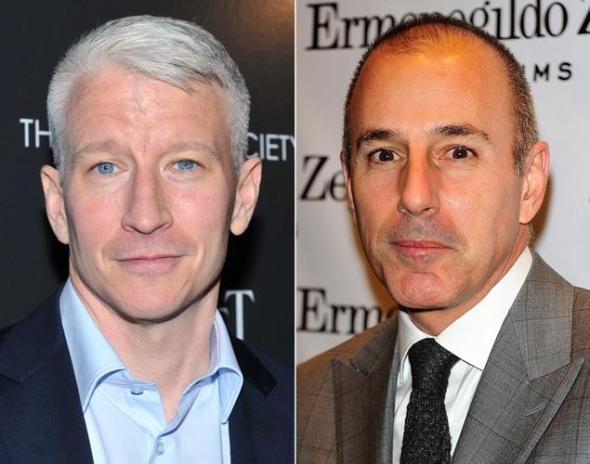


 peej
peej Carissa
 ecocatwoman
 mablue2
 Mama Lopez
 peggysue22
 quixote
 skydancingguestblogger
 Mona (aka Wonk the Vote)



 Sky Dancing
Tuesday Reads: Snowstorm, On-line Harassment, Profiling Snowden, and Other News
Posted: January 21, 2014 | Author: bostonboomer | Filed under: Barack Obama, morning reads, U.S. Politics, Women's Rights | Tags: Amanda Hess, Amy Wallace, Anderson Cooper, angry on-line commenters, China, Colorado, Dan Verton, Edward Snowden, history of psychology, insider espionage, israel, IT administrators, London Science Museum, Marijuana, on-line sexual harassment, personality profiling, pot tours, psychology, Randi Kaye, Skepchick, snow, trolls, weather | 106 CommentsAlfred Eisenstaedt
Good Morning!!
Looks like another big snowstorm is headed my way this afternoon. Blizzard warning south of Boston, winter storm warning for most areas.
At least I’m not in the blizzard zone for the moment. This appears to be a really big storm. I saw on Twitter this morning that there were whiteout conditions in St. Louis. You can watch a video update the Weather Channel page.
Intellicast – Current Radar in United States:
NBC News reports: Winter storm set to ‘go bananas’ across Northeast.
Yikes! What the heck does that mean? The story doesn’t explain. But meteorologists are begging us not to call it a “polar vortex.”
Anyway, I’m going to have to rush around this morning. I have a package to mail, and I need to get a couple of things at the grocery store. I do have some interesting reads for you today–some of them are pretty long, but well worth reading.
Yesterday, via Tom Watson at Forbes, I came across an essay by long-time feminist blogger Amanda Hess that Watson says has been “widely discussed” for the past week or so. Somehow I missed it. Hess argues that on-line sexual harassment of women will be “the next civil rights issue.” In the essay, she writes about the frequent on-line attacks she and other female writers have experienced (warning: explicit and violent language). Here are the first few paragraphs.
Read the rest at the link. A number of women have written about this issue, and particularly about the lack of protection for women who are harassed on-line from law enforcement–even though the threats sometimes lead to real-life actions. A couple more recent examples:
Skepchick wrote in October about being harassed for her participation in the on-line atheist community, Why I Don’t Just Go to the Cops.
Amy Wallace wrote about her experiences in a NYT op-ed over the weekend: Life as a Female Journalist: Hot or Not?
Along similar lines, I came across this 2010 article in The Boston Globe that provides some insight into why some people spend so much time and energy writing angry comments on line: Inside the mind of the anonymous online poster. The author got an interview with a frequent commenter to The Boston Globe website. He also discusses the problems newspapers face in dealing with angry and trolling comments from anonymous people. Here’s an excerpt:
Read much more at the link.
Yesterday I also happened upon a fascinating article by national security and tech journalist Dan Verton. In the piece, Verton tries to come up with a psychological profile of NSA leaker Edward snowden: What does the history of insider espionage say about Edward Snowden?
Verton discusses Snowden’s history in the light of a study of IT administrators who eventually sabotaged their employers in some way: Inside the Mind of the Insider, by Eric D. Shaw, Jerrold M. Post, and Keven G. Ruby. These are both fairly long pieces, but if you have any interest in the ongoing Snowden saga, they are must reads! A bit more from Verton:
Lots more educated speculation on Snowden’s motives at the link.
In other news . . .
Here’s a spy story I hadn’t heard about in the mainstream media. Report: Israel Passes U.S. Military Technology to China.
That sounds scarier than the stuff Glenn Greenwald has been dribbling out.
From The New Statesman, here’s an exhibit I’d love to see if only I were in London: A history of psychology, warts and mysteries and all.
That sounds amazing.
Finally, a funny story from CNN’s Anderson Cooper 360: CNN reporter high during Anderson Cooper marijuana TV segment.
So . . . what are your recommended reads for today? Please post your links on any topic in the comment thread.
Did you like this post? Please share it with your friends: