
Monday Reads
Posted: June 4, 2012 Filed under: 2012 presidential campaign, U.S. Economy, U.S. Politics, unemployment, voodoo economics, We are so F'd | Tags: Barack Obama, Bill Moyers, Debt Ceiling, Frank VanderSloot, Garrett Epps, John Boehner, Koch Brothers, Mitt Romney, Paul Krugman, recession, Ryan budget, Scott Walker, Tom Barrett, whiny billionaires, Wisconsin recall 74 Comments Good Morning!
I thought I’d start this morning reads off with Bill Moyers who is having a good laugh at the expense of billionaires that are donating lots of money to political campaigns. It seems they really don’t like having their names bandied about and their closets opened. Pity the Poor Billionaires!!!
Last month, an Obama website cited eight mega-donors to Mitt Romney’s campaign as possessing “less-than-reputable records.” Among them was Frank VanderSloot, a Romney national finance co-chairman who has raised millions for the campaign. He’s a rancher – with 110,448 acres, on which he no doubt roams playing “This Land is Your Land” on his little Stradivarius — and CEO of the billion-dollar company Melaleuca, which Rolling Stone describes as “a ‘multilevel marketing’ firm based in Idaho that sells off-brand cleaning products and nutritional supplements.”
VanderSloot and his wealthy pals went ballistic and cried intimidation. “You go back to the Dark Ages,” VanderSloot said, “when they put these people in the stocks or whatever they did, or publicly humiliated them as a deterrent to everybody else — watch this — watch what we do to the guy who did this.”
Conservatives described the Obama ranking of Romney contributors as an “enemies list,” conjuring images of Nixonian wiretaps and punitive tax audits. But despite protestations to the contrary, these deep-pocketed plutocrats aren’t shelling out the shekels for the love of flag, Mom and apple pie (or tarte tatin, as they call it in the swanky joints).
“Most of the megadonors backing [Romney’s] candidacy are elderly billionaires,” Tim Dickinson writes in Rolling Stone. “Their median age is 66, and their median wealth is $1 billion. Each is looking for a payoff that will benefit his business interests, and they will all profit from Romney’s pledge to eliminate inheritance taxes, extend the Bush tax cuts for the superwealthy — and then slash the top tax rate by another 20 percent.” As at least one of them has said, they view these cash infusions as an “investment,” plain and simple.
Money is rolling into Wisconsin in Tuesday’s recall election. The Hill reports that it’s the most expensive race in Wisconsin history. The Koch Brothers are knee deep in money trying to keep their union bustin’ boy in office. We’ll be live blogging this tomorrow night so stay tuned!
Out-of-state sources have funded both sides heavily in the contest CPI said. Barrett has received about 26 percent of his $4 million in donations from sources outside of Wisconsin, while Walker has received two-thirds of his $30.5 million haul from out-of-state. Both campaigns have been aided by strong spending by super-PACs and other outside groups.
Labor unions have spent heavily to defeat Walker. The report says that the nation’s three largest public unions, the National Education Association (NEA), American Federation of State, County and Municipal Employees (AFSCME), and the Service Employees International Union (SEIU), have directed at least $2 million to anti-Walker efforts.
Walker, for his part, has been aided by conservative businessmen including casino mogul Sheldon Adelson and billionaire David Koch. The Republican Governors Association received a $1 million contribution from Koch in February, according to CPI.
The economy is slowing down. Oil prices are dropping in response. The stock market has lost all its value. Will we see another recession shortly?
The statistics on Friday were daunting. Only 69,000 jobs were created last month, far lower than what’s needed just to keep up with population growth. The job tallies for March and April, shabby to begin with, were revised down, for an average monthly tally of 96,000 over the past three months, versus 252,000 in the prior three months.
The weakness was not only displayed in job growth. Average weekly wages declined in May, to $805, as a measly two-cents-an-hour raise was more than clawed back by a drop to 34.4 hours in the length of the typical workweek.
Similarly, the rise in the number of people looking for work is normally considered a sign of optimism, but, on closer inspection, it appears to be simply the reversal of a drop in job-seekers in April.
Granted, it is better for jobless workers to be actively looking for work than sitting on the sidelines. But without enough jobs to go around, the inevitable result is higher official unemployment. The jobless rate ticked up from 8.1 percent in April to 8.2 percent in May, or 12.7 million people. Of those, 42.8 percent, or 5.4 million people, have been out of work for more than six months, a profound measure of personal suffering and economic decline.
There’s no sign that Washington is prepared to shoulder this responsibility. President Obama’s last big push for job creation, the $450 billion package proposed last fall, would have created an estimated 1.3 million to 1.9 million jobs by providing aid to states for teachers and other vital public employees, investments in infrastructure and tax breaks for new hiring. It was filibustered by Senate Republicans and not brought up for a vote in the Republican-dominated House, with Republican lawmakers claiming that deficit reduction was more important. Since then, they have balked at even smaller administration proposals, like modest investments in clean-energy projects.
Blocking constructive action is bad enough, but it’s not the worst of it. Recently, the House speaker, John Boehner, has ratcheted up economic uncertainty by pledging to force another showdown this year over legislation to raise the debt ceiling. A debt-ceiling debacle would come on top of the expiration at the end of 2012 of the Bush-era tax cuts and the onset of some $1 trillion in automatic spending cuts. If allowed to take effect as planned, those measures would take a huge bite out of growth, further weakening the economy.
Paul Krugman slammed the “anti-bipartisanship” in the Paul Ryan budget and in Romney’s support of obstructionist policies aimed at tanking the economy yesterday on ABC. Krugman said that the budget Romney supports is a “fraud”.
This morning on “This Week,” New York Times columnist Paul Krugman called Rep. Paul Ryan’s proposed budget plan a “fraud” as Romney campaign senior advisor Eric Fehrnstrom confirmed his candidate’s support for the plan that would trim trillions in federal spending over the next decade.
“The Ryan plan — and I guess this is what counts as a personal attack — but it isn’t. It’s not an attack on the person; it’s an attack on the plan. The plan’s a fraud,” said Krugman. “And so to say that — just tell the truth that there is really no plan there, neither from Ryan, nor from Governor Romney, is just the truth. That’s not — if that’s — if that’s being harsh and partisan, gosh, then I guess the truth is anti-bipartisanship. ”
Krugman, who has been critical of the Ryan, R-Wis., plan in the past, was responding to the Fehrnstrom, who confirmed Romney’s support for the plan after ABC News’ George Will asked Fehrnstrom to clarify his candidate’s stance on the Ryan proposal.
“He’s for the Ryan plan. He believes it goes in the right direction. The governor has also put forward a plan to reduce spending by $500 billion by the year 2016,” said Fehrnstrom. “In fact, he’s put details on the table about how exactly he would achieve that. So to say he doesn’t have a plan to — a plan to restrain government spending is just untrue.”
Krugman defended the president’s budget plan when asked by Fehrnstrom if he preferred it over the Ryan plan.
“I mean, the president — at least it’s — you know, I don’t approve of everything, but there are no gigantic mystery numbers in his stuff. We do know what he’s talking about. His numbers are — you know, all economic forecasts are wrong, but his are not — are not insane. These are — these are just imaginary,” he said.
Molly Ball writes about the mediocre Mitt Romney Governorship of Massachusetts at the Atlantic. Here’s my favorite quote “He believed that a PowerPoint presentation would solve all our problems.” Here’s some other tidbits that lead up to that very funny line.
Romney campaigned on a promise to clean up Massachusetts’ notoriously cronyistic state government, painting his opponent, the sitting state treasurer, as a product of a backroom-dealing Beacon Hill culture. But his efforts once he was elected were somewhat halfhearted and largely fruitless.
One example was the state’s judiciary, a notorious hotbed of patronage. Romney’s attempts to reform it didn’t succeed, and instead, he ended up succumbing to the status quo, the Washington Post reports. His attempt to consolidate transportation agencies was shot down by the legislature, as was his push to remove from the state university system William Bulger, brother of mobster “Whitey” Bulger. (Bulger did eventually resign, in part due to Romney’s pressure.)
“A lot of governors come in offering to change the political culture,” said Cunningham. “But he wasn’t here long enough, he didn’t put enough effort into it, and he had a very formidable opponent.”
Perhaps because of his outsider mien, Romney enjoyed notably chilly relationships with legislators and local officials, who found him distant and somewhat disengaged. John Barrett, who was mayor of the city of North Adams during Romney’s governorship, described him Thursday as “a governor who just ignored us, who didn’t want our effort,” saying he never met with mayors or sought their input. “He believed that a PowerPoint presentation would solve all our problems,” Barrett said.
So, the biggest issue on my mind is the looming Debt-Ceiling fight and the horrible Agent Orange. I pretty much believe that the House Republicans will crash all the markets and then some if they think it makes Obama less likely to be elected. Here’s Garrett Epps at the American Prospect. He believes–as do I–that Obama should use the Constitutional Option and tell them all to go to hell regardless. It will be interesting to see how soon they will heat this up.
The debt limit will apparently become a crisis again sometime after the election. Boehner two weeks ago announced his plan to demand another round of cuts when the current ceiling is reached at the end of the year. (I suspect this manufactured crisis will only happen if Obama is re-elected; if Mitt Romney wins the election, Republicans will suddenly find economic recovery an important value after all.)
Obama should begin now to prepare for the predicted crisis. And if there is any way to climb down from the inane “my attorney Bernie says I can’t” comment, he should find it. I called the U.S. Department of Justice to ask whether the Office of Legal Counsel has issued, or is preparing, a formal opinion on the President’s possible power under Section Four; the DOJ’s spokesman did not return my call.
There’s an interesting analysis at TP on how the last debt ceiling debate hurt the economy. A repeat under current conditions could be disastrous.
House Republicans last year used the imminent approach of the nation’s credit limit to force Congress into enacting a series of spending cuts. The hostage scenario led to the nation’s first ever credit downgrade, with the credit rating agency Standard & Poor’s repeatedly citing the GOP’s intransigence on revenue as a key justification. Speaker of the House John Boehner (R-OH) has indicated that the GOP is ready to reenact the debt ceiling debacle the next time the nation comes close to its borrowing limit. But as economists Betsey Stevenson and Justin Wolfers write, the economy was significantly setback during the last showdown, which they call “an act of economic sabotage“
Follow the links to the Bloomberg analysis and you’ll see why we’re in worse position to weather that kind of anti-bipartisanship nonsense this year. So, who really killed the confidence fairy last year?
High-frequency data on consumer confidence from the research company Gallup, based on surveys of 500 Americans daily, provide a good picture of the debt-ceiling debate’s impact (see chart). Confidence began falling right around May 11, when Boehner first announced he would not support increasing the debt limit. It went into freefall as the political stalemate worsened through July. Over the entire episode, confidence declined more than it did following the collapse of Lehman Brothers Holdings Inc. in 2008. After July 31, when the deal to break the impasse was announced, consumer confidence stabilized and began a long, slow climb that brought it back to its starting point almost a year later. (Disclosure: We have a consulting relationship with Gallup.)
Businesses were also hurt by uncertainty, which rose to record levels as measured by the number of newspaper articles mentioning the subject. This proved far more damaging than the regulatory uncertainty on which Republican criticisms of Barack Obama’s administration have focused (more on that subject in a Bloomberg View editorial today). Employers held back on hiring, sapping momentum from a recovery that remains far too fragile.
It’s going to be a very long, hot summer.
What’s on your reading and blogging list today?
Deval Patrick Gets It Just Right on Romney’s Record
Posted: June 3, 2012 Filed under: 2012 presidential campaign, Barack Obama, U.S. Economy, U.S. Politics | Tags: Bain Capital, Deval Patrick, Health care reform, individual mandate, Job Creation, Massachusetts, Mitt Romney 10 Comments
Massachusetts Governor Deval Patrick appeared on Meet the Press this morning. I haven’t seen the whole program; but from what I’ve read about it along with what Patrick has said about Mitt Romney in other interviews, I think he’s getting it just right. Here’s what he said on MTP, according to The Boston Globe:
Patrick, a co-chairman of Obama’s reelection campaign, said the presumptive Republican presidential nominee had a poor record of job growth as governor, repeating the familiar statistic that Massachusetts ranked 47th in the nation in that category when Romney was in office.
But, Patrick said, that “doesn’t mean he was a failure as governor.”
Really? What specifically did Romney do well as governor? Why he signed the nation’s first universal health care law and pushed for the individual mandate that citizens must purchase health insurance. Patrick knows full well that Romney doesn’t want to be praised for that accomplishment. Every Obama surrogate should hammering health care achievement home, again and again. Back to the Globe article:
Host David Gregory asked the governor to respond to former President Bill Clinton’s statement Thursday that “there’s no question that in terms of getting up and going to the office and basically performing the essential functions of the office, the man who has been governor and had a sterling business career crosses the qualification threshold.”
Gregory suggested Clinton’s remarks undercut one of Obama’s major arguments.
“It undercuts the spin on the argument that the president has made,” Patrick replied. “The president has never attacked Bain. It’s not about Bain. It’s never been. Bain’s a fine company.”
Really? What’s it about then?
“He had a terrific career creating wealth,” Patrick said. “There is very little evidence that, either in the public or the private sector, he’s had a terrific career creating jobs.”
The corporate media is comparing Patrick’s approach to what Cory Booker said previously on MTP. But I think they’re wrong. More Obama surrogates should follow Patrick’s lead. Sure, Bain is a terrific company and Romney deserves credit for his role in building the business. But at Bain and as governor, Romney didn’t create jobs. But, hey…he led the way to socialized medicine in Massicusetts! Isn’t that great?
Here’s an opinion piece that Patrick wrote for CNN a couple of days ago. In it he spells out a very clear argument against Romney as POTUS. Of course he leads with Romney’s failure to create jobs in the state. Everyone knows by now that Massachusetts ranked 47th among the states in job creation.
and that was in relatively good economic times. Real wages declined (while rising across the nation). Instead of helping workers and small businesses adjust to changes in the global economy, Romney cut critical work force training programs and millions in economic development funds. Instead of promoting Massachusetts to attract jobs, he used the state as a punchline on the national Republican political circuit.
When Patrick took office he had to clean up Romney’s messes.
He left behind a bureaucracy whose work force grew during his term, an unsustainable public pension system and a culture of poor accountability throughout state government.
Young people and jobs were leaving our state. Our roads and bridges were crumbling, and his Republican predecessors’ poor oversight of the infamous Big Dig project in downtown Boston resulted in billions of dollars of cost overruns, substandard workmanship and debilitating debt that he made no effort to remedy.
In the face of budget challenges, what did Romney do? He raised nearly every fee and surcharge that didn’t bear the title “tax” and cut funding for the schools. In a state where education is our calling card, Romney was responsible for the second largest per pupil cut in education funding in America during his second year in office.
Sure Romney’s a nice guy, Patrick says, and he was very successful in business. But in his only time in office Romney failed to create jobs or stimulate the economy. Why did this happen?
Romney sincerely believes that people are better off on their own: on their own to deal with their unemployment; with under-resourced public schools and no way to pay for college; with neglected infrastructure; with a job market that needs skills they didn’t have. He does not fundamentally believe that government should help people help themselves. And he has a record as governor of Massachusetts to demonstrate how much damage his leadership does to people, their families and our future.
Finally, here’s a recent interview that Patrick did with John King in which he makes similar arguments.
I think the Obama campaign should have their other surrogates emulate Deval Patrick’s approach–call it hitting Romney with a velvet glove that has a steel lining. You don’t have to yell and scream to get your message across. Patrick is calm, cool, and collected. He’s not “nauseated” by attacks on Bain or private equity, like Corey Booker. He doesn’t call Romney’s career at Bain “sterling,” like Bill Clinton did. He explains why Romney’s career at Bain is irrelevant to job creation, while his time as Governor is. And he strongly praises the one achievement Romney doesn’t want to talk about: health care reform.
I don’t know if this can all be boiled down to a 30-second sound byte, but Deval Patrick is coming pretty close with this:
“He had a terrific career creating wealth,” Patrick said. “There is very little evidence that, either in the public or the private sector, he’s had a terrific career creating jobs.”
The Obama campaign should keep Patrick front and center, hammering home the message that Romney knows nothing about job creation–and in fact really doesn’t care about it–but he sure deserves all the credit in the world for leading his state to universal health care.
Bill Clinton Stumps for Tom Barrett in Wisconsin
Posted: June 1, 2012 Filed under: open thread, U.S. Economy, U.S. Politics | Tags: Bill Clinton, Scott Walker, Tom Barrett, Wisconsin recall election 23 Comments
Greg Sargent says Bill Clinton “hit a home run” this afternoon when he appeared with Milwaukee Mayor Tom Barrett at a rally earlier this afternoon. Sargent:
Bill Clinton, in his speech in Wisconsin…framed the recall election as a stark choice between unity and division, between cooperation and conflict, and between shared prosperity and right wing winner-take-all economics. Democrats on the ground in the state are very satisfied with Clinton’s speech, and think he hit the right note to amplify their closing message
Clinton barely mentioned Barrett’s opponent Governor Scott Walker.
But the most important part of Bill’s speech was the call for voters to come out to the polls on Tuesday, in order to rebuke the national conservative movement’s huge financial investment in this race, and to make a larger statement about the type of leadership they want for the state and the country in the future:
If you believe in an economy of shared prosperity when times are good, and shared sacrifice when they’re not, then you don’t want to break the unions. You want them at the negotiating table. And you trust them to know that arithmetic rules. Show up for Tom Barrett on Tuesday! If you want Wisconsin once again to be seen by all of America as a place of diversity, of difference of opinion, of vigorous debate, where in the end people’s objectives are to come to an agreement that will take us all forward together, you have to show up for Tom Barrett on Tuesday!…
I can just hear it now, on Wednesday. All those people that poured all this money into Wisconsin, if you don’t show up and vote, will say, `see, we got them now. We’re finally going to break every union in America. We’re gonna break every government in America. We’re gonna stop worrying about the middle class. We don’t give a riff whether poor people get to work their way into it. We got our way now. We got it all. Divide and conquer works.’
You tell them no. You tell them, Wisconsin has never been about that, never will be about that — by electing Tom Barrett governor!
Third Coast Digest has much more on the rally, including photos.
Here is Clinton’s full 18 minute speech.
The recall election will be held on Tuesday, June 5. How it turns out will be extremely important for the entire country. If Walker wins, the Republican will likely double down in their wars on unions, voting rights, and women’s health.
Please discuss, or use this as an open thread.
Thursday Reads
Posted: May 24, 2012 Filed under: Catfood Commission, Democratic Politics, morning reads, U.S. Economy, U.S. Military, U.S. Politics | Tags: Alan Simpson, austerity, Barack Obama, Bush tax cuts, CBO, Charles P. Pierce, CIA leak case, Corey Booker, education policy, Emptywheel, eurozone crisis, fiscal cliff, Iraq War, Joe Wilson, John Maynard Keynes, Mark Halperin, Massachusetts public schools, Mitt Romney, Patrick Fitzgerald, Scooter Libby, Social Security, unemployment, Valerie Plame 55 Comments
Good Morning!! I’ve got a potpourri of interesting links for you today, so I’ll get right to it.
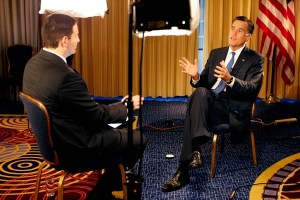
Yesterday Mitt Romney gave an interview to Mark {Gag!} Halperin of Time. Halperin asked the putative Republican nominee to say specifically what the unemployment rate would be after his first year as POTUS. You may recall that not long ago, Romney stated that unemployment should be below 4 percent and that anything higher than that is unacceptable. But now he’s singing a different tune.
Romney: I can’t possibly predict precisely what the unemployment rate will be at the end of one year. I can tell you that over a period of four years, by virtue of the policies that we’d put in place, we’d get the unemployment rate down to 6%, and perhaps a little lower. It depends in part upon the rate of growth of the globe, as well as what we’re seeing here in the United States, but we’d get the rate down quite substantially, and frankly, the key is we’re going to show such job growth that there will be competition for employees again. And wages – we’ll see the end of this decline we’re having. The median income in America is down 10% in just the last four years. That’s got to stop. We’ve got to start seeing rising wages and job growth.
Romney gave no specifics about how he would achieve this with the policies he has been promoting–cutting taxes on the rich, raising them on people with lower incomes, and cutting everything except defense spending, which he would increase substantially. Halperin did ask for more specifics, but Romney just babbled a bunch of nonsense:
Halperin: One more question generally about jobs. For people out there, for voters who want to know what you’re about in terms of job creation, is there some new idea, some original idea, that hasn’t been part of the debate in American politics before, that you have that you think would lead to a lot of new jobs?
Romney: Well the wonderful thing about the economy is that there’s not just one element that somehow makes the whole economy turn around, or everybody in the world would have figured that out and said there’s just one little thing we have to do – you know, Greece is settled, and France and Italy are all back and well again. No, it’s a whole series of things. It’s a system of factors that come together to make an economy work. What is it that makes America’s economy the strongest in the world, the most robust, over a century? It’s a whole series of things – everything from our financial service sector, to the cost of our inputs, our natural resources, to the productivity of our workforce, to our labor and management rules and how they work together, to our appreciation for fair trade and free trade around the world, and negotiating trade arrangements that are favorable to us. It is a whole passel of elements that come together to create a strong economy, and for someone who spent their life in the economy, they understand how that works. And it’s very clear, by virtue of the President’s record, that he does not, and he is struggling. Look at him right now. He just doesn’t have a clue what to do to get this economy going. I do. I laid out a 59-step plan that encompasses a whole series of efforts that will together get this economy going and put people back to work.
But from what I could make out in wading through all the blather, it really comes down to the confidence that will wash through all of us once we know that Mr. Fixit, Willard Mitt Romney is going to save us.
Romney: Well actually if I’m lucky enough to be elected the consumers and the small-business people in this country will realize that they have a friend in the White House, who is actively going to encourage economic growth, and there will be a resurgence in confidence in this country and a willingness to take risks, to invest, to add employees. I think it will be very positive news to the American economy. Will I be able to get done between January 1 and January 20 the things that I’d like to do? Of course not, I’m not in office. But I believe that we will be able to have a grace period, which allows us to tackle these issues one by one and put in place a structure, which is very much designed to get America working again.
Romney also gave a speech about education policy in which he proposed to further privatize America’s education system:
Mitt Romney proposed a series of steps to overhaul the public education system, reigniting the debate over school choice as his campaign intensifies its effort to introduce the presumptive Republican presidential nominee to a general-election audience.
The education plan, detailed in a speech today in Washington, would create a voucher-like system to give low- income and disabled students federal funds to attend charter schools, private institutions and public schools outside their district.
“I don’t like the direction of American education, and as president, I will do everything in my power to get education on track for the kids of this great land,” Romney told a gathering of Latino business owners at the U.S. Chamber of Commerce.
No new ideas there. To be perfectly honest, I strongly doubt that Romney knows the first thing about American public schools. But let me refer you to an expert on Willard’s past history in dealing with public education, the one and only Charles P. Pierce. Pierce writes about what Romney did to the public education system of Massachusetts during his one term as Governor:
Read the rest of this entry »
Thursday Reads: Romney’s Lies, Debt Ceiling Showdown, and Dimonfreude
Posted: May 17, 2012 Filed under: Barack Obama, Corporate Crime, corporate greed, Economy, House of Representatives, Mitt Romney, morning reads, Surreality, The Media SUCKS, U.S. Economy, U.S. Politics, unemployment, voodoo economics, Voter Ignorance | Tags: Bill Clinton, Bill Moyers, economics, J.P. Morgan, Jamie Dimon, Mary Kennedy, Peter G. Peterson, Robert F. Kennedy Jr., Romney's lies, Simon Johnson 22 Comments
Good Morning!
On Tuesday night I wrote a brief post about the bizarre speech Mitt Romney gave in Des Moines, Iowa earlier that day. I was struck by Romney’s childish effort to get at President Obama by talking about Bill Clinton’s economic policies and claiming that Obama must have ignored those policies because he has some kind of grudge against both Clintons. It was so strange and off key that I thought Romney sounded like a crotchety old busybody gossiping over the backyard fence.
I didn’t really even go into the many baldfaced lies Romney told in the speech–I guess I’ve become so accustomed to his total refusal to confine himself to reality as it is that I almost don’t notice it anymore. Basically, Romney attacked Obama the deficit that was primarily created by Bush, and made his usual claims that he (Romney) will be able to cut taxes by 20 percent, increase defense spending, and at the same time magically balance the budget and dramatically reduce unemployment. Only a moron would buy what he’s selling.
Yesterday, a number of bloggers commented on that speech, so I thought I’d share some of those reactions in this morning’s reads.
Steve Benen at Maddowblog: A peek into an alternate reality.
Mitt Romney delivered a curious speech in Iowa yesterday, presenting his thoughts on the budget deficit, the debt and debt reduction, which is worth reading if you missed it. We often talk about the problem of the left and right working from entirely different sets of facts, and how the discourse breaks down when there’s no shared foundation of reality, and the Republican’s remarks offered a timely peek into an alternate reality where facts have no meaning.
Even the topic itself is a strange choice for Romney. If the former governor is elected, he’ll inherit a $1 trillion deficit and a $15 [trillion] debt, which he’ll respond to by approving massive new tax cuts and increasing Pentagon spending. How will he pay for this? No one has the foggiest idea.
In other words, the guy who intends to add trillions to the debt gave a speech yesterday on the dangers of adding trillions to the debt.
Benen says he doesn’t believe Romney is “stupid,” but he must be “operating from the assumption that voters are stupid.” I’d say that’s true. I think Romney believes that he’s much smarter and more worthy than just about anyone and that poor and middle-class people are beneath contempt.
Jonathan Cohn at The New Republic: Romney’s Make-Believe Story on the Economy. Cohn writes about Romney’s claims that Obama’s failure to reduce the deficit is the cause of the “tepid recovery,” unemployment, and the struggles of seniors to get by on fixed incomes.
Note the way Romney establishes cause and effect here: Obama’s contribution to higher deficits are the reason more people can’t get work and more seniors can’t make ends meet right now. This is an audacious claim and, while I’m no economist, I’m pretty sure it places Romney on the outer edges of the debate among mainstream scholars.
I know of serious conservatives who think the Recovery Act, which has increased deficits temporarily, didn’t ultimately do much to create jobs in the near term. And I know of serious conservatives who think that creating jobs now wasn’t worth the long-term downside of adding to the federal debt, however incrementally. Both viewpoints seem to represent minority views, if a recent University of Chicago survey of leading economists is indicative. But the arguments have at least some logic to them.
But Romney’s suggestion that unemployment today is a consequence of Obama’s contribution to the deficit (real or imagined) requires further leaps of logic. You’d have to argue, for example, that extensions of unemployment benefits have reduced incentives to work (despite research to the contrary) and that such negative effects substantially outweigh the positive effects of traditional stimulus measures. It’s not impossible to make this case. I think Casey Mulligan, also of the University of Chicago, has written things along these lines for the New York Times. But, unless I’m missing something, that argument is even more marginal than suggestions the Recovery Act didn’t help at all.
I suspect that even Cohn’s effort to make sense of Romney’s fantasy economic theory will have Dr. Dakinikat pulling her hair out.
Jonathan Chait at New York Magazine: Romney’s Budget Fairy Tale.
In the real world, the following things are true: The budget deficit was projected to top $1 trillion even before President Obama took office, and that was when forecasters were still radically underestimating the depth of the 2008 crash. Obama did propose temporary deficit-increasing measures, an economic approach endorsed in its general contours, if not its particulars, by Romney’s economists. These measures contributed a relatively small proportion to the deficit, and their effect is short-lived. Obama instead focused on longer-term measures to reduce the deficit, including comprehensive health-care reform projected to reduce deficits by a trillion dollars in its second decade. Obama put forward a budget plan that would stabilize the debt as a percentage of the economy. Obama has hoped to achieve deeper long-term deficit reduction by striking bipartisan deals with Congress, and he has tried to achieve this goal by openly endorsing a bipartisan deficit plan in the Senate and privately agreeing to a more conservative plan with John Boehner, both of which were killed by Republican opposition to any higher revenue.
But Romney doesn’t seem to live in the real world, and Chait suggests that Romney either doesn’t understand how deficits work or doesn’t care if what he says makes any sense at all.
In Romney’s telling, the terms debt and spending are essentially interchangeable. When presented with Obama’s position — that the solution to the debt ought to include both higher taxes and lower spending — he rejects it out of hand. Naturally, Romney has admitted before that his budget plan “can’t be scored.” It’s an expression of conservative moral beliefs about the role of government. While loosely couched in budgetary terms, Romney is expressing an analysis that resides outside of, and completely at odds with, mainstream macroeconomic forecasting and scoring assumptions.
At the Plum Line, Greg Sargent discusses How Mitt Romney gets away with his lying.
If you scan through all the media attention Romney’s speech received, you are hard-pressed to find any news accounts that tell readers the following rather relevant points:
1) Nonpartisan experts believe Romney’s plans would increase the deficit far more than Obama’s would.
2) George W. Bush’s policies arguably are more responsible for increasing the deficit than Obama’s are.
Oh, sure, many of the news accounts contain the Obama campaign’s response to Romney’s speech; the Obama campaign put out a widely-reprinted statement arguing that Romney’s plans would increase the deficit and that he’d return to policies that created it in the first place.
But this shouldn’t be a matter of partisan opinion. On the first point, independent experts think an actual set of facts exists that can be used to determine what the impact of Romney’s policies on the deficit would be. And according to those experts, based on what we know now, Romney’s policies would explode the deficit far more than Obama’s would.
Obviously, the problem is the obsequious corporate media. But the Romney campaign makes it impossible for even the few remaining serious reporters to question his policies by keeping the candidate completely insulated from the press except for occasional appearances on Fox News and lightweight network morning shows like Good Morning America. Yesterday, Politico reprinted tweets from several reporters who were “physically” blocked from talking to Romney on a rope line.
Speaking of Republican ignorance of basic economics, House Republicans are gearing up for another pitched battle on increasing the debt ceiling. Speaker John Boehner met with President Obama at the White House today and they “clash[ed] over” increasing the debt limit, according to The Hill.
The president convened the meeting of the bipartisan congressional leadership to discuss his “to-do list” for Congress, but an aide to the Speaker said the bulk of the meeting was spent on other issues, including a pile-up of expiring tax provisions and the next increase in the federal debt limit.
Boehner asked Obama if he was proposing that Congress increase the debt limit without corresponding spending cuts, according to a readout of the meeting from the Speaker’s office. The president replied, “Yes.” At that point, Boehner told Obama, “As long as I’m around here, I’m not going to allow a debt-ceiling increase without doing something serious about the debt.”
Shortly after the meeting, White House press secretary Jay Carney told reporters that the president warned the leadership that he would not allow a repeat of last August’s debt-ceiling “debacle,” which led to a downgrade in the U.S. credit rating.
Sigh……
In a related story, there’s this piece at Wonkblog about the Pete Peterson summit and how Democrats talked long-windedly about cutting “entitlements,” and Republican refused to talk about tax increases. Read it and weep. I’m not even going to quote from it, because it’s too damn depressing.
So far Jamie Dimon seems to have survived the $2 billion loss recently suffered by J.P. Morgan.
The CEO of JPMorgan Chase survived a shareholder push Tuesday to strip him of the title of chairman of the board, five days after he disclosed a $2 billion trading loss by the bank.
CEO Jamie Dimon also won a shareholder endorsement of his pay package from last year, which totaled $23 million, according to an Associated Press analysis of regulatory filings.
Dimon, unusually subdued, told shareholders at the JPMorgan annual meeting that the company’s mistakes were “self-inflicted.” Speaking with reporters later, he added: “The buck always stops with me.”
Yeah, right. The buck will stop with the taxpayers if Dimon’s bank ultimately crashes and burns. Bill Moyers asked economist Simon Johnson about that.
Moyers: I was just looking at an interview I did with you in February of 2009, soon after the collapse of 2008 and you said, and I’m quoting, “The signs that I see… the body language, the words, the op-eds, the testimony, the way these bankers are treated by certain congressional committees, it makes me feel very worried. I have a feeling in my stomach that is what I had in other countries, much poorer countries, countries that were headed into really difficult economic situations. When there’s a small group of people who got you into a disaster and who are still powerful, you know you need to come in and break that power and you can’t. You’re stuck.” How do you feel about that insight now?
Johnson: I’m still nervous, and I think that the losses that JPMorgan reported — that CEO Jamie Dimon reported — and the way in which they’re presented, the fact that they’re surprised by it and the fact that they didn’t know they were taking these kinds of risks, the fact that they lost so much money in a relatively benign moment compared to what we’ve seen in the past and what we’re likely to see in the future — all of this suggests that we are absolutely on the path towards another financial crisis of the same order of magnitude as the last one.
A number of shareholders have sued Dimon over the losses, according to Bloomberg (via the SF Chroncle). And of course lots of people are gloating over Dimon’s getting temporarily knocked off his pedestal. Jena McGregor writes in the WaPo:
It’s being called Dimonfreude.
There are barely disguised smirks emanating from the canyons of Wall Street and the business press over the fact that Jamie Dimon has had to admit a mistake — and a whale of one, for that matter.
For years, the JPMorgan CEO (and America’s least-hated banker, as he was known) has worn a halo over those pinstripes. Dimon has been called President Obama’s “favorite banker”. Institutional Investor magazine has called him the country’s best CEO for two years running. And his actions during the financial crisis have been painted in patriotic terms: Press reports said he “answered the call” from then-FDIC chairman Sheila Bair to buy Washington Mutual, one of two banks he scooped up during the financial meltdown, and he has cited a patriotic duty to a country in crisis as why he took in $25 billion in government aid.
Yet now, Dimon is in the hot seat as JPMorgan confronts a $2 billion trading loss and the early stages of a criminal probe by the Justice Department.
Finally, some sad news: Estranged Wife of Robert F. Kennedy Jr. Is Found Dead at Home in Westchester
Mary R. Kennedy, the estranged wife of Robert F. Kennedy Jr., was found dead on Wednesday at the family’s home in Bedford, N.Y. She was 52.
Ms. Kennedy’s death was confirmed in a statement from her family, who did not comment on the circumstances. The Bedford Police Department said only that it had investigated a “possible unattended death” in an outbuilding at the home.
Her lawyer, Kerry A. Lawrence, would not say whether foul play was suspected. Kieran O’Leary, a spokesman for Westchester County, said an autopsy was scheduled for Thursday morning.
Born Mary Richardson, Ms. Kennedy joined one of America’s foremost political families in 1994, in a marriage ceremony aboard a boat on the Hudson River, near Stony Point, N.Y. At the time, she was an architectural designer at Parish-Hadley Associates in New York.
Those are my suggested reads for today. What are you reading and blogging about?

 peej
peej Carissa
 bostonboomer
 dakinikat
 ecocatwoman
 jjlo
jjlo mablue2
 Mama Lopez
 peggysue22
 quixote
 skydancingguestblogger
 Mona (aka Wonk the Vote)





Recent Comments