
Crass Commercialism-Free Friday
Posted: November 29, 2019 Filed under: morning reads | Tags: best of 2019 53 Comments
Jar Of Peaches, 1866 – Claude Monet
Good Morning Sky Dancers!
I’m trying to deliver a stress free Friday Read but you know how difficult that can be these days. Time for all of us to get lost in books and movies! What’s on your screen? What book is beside your bed today?
So, here’s some “best books” lists from various sources.
The first list is from The Smithsonian.
As the year draws to a close, we have clear favorites. We explored the caves, tombs and catacombs under our feet in Will Hunt’s Underground and Robert Macfarlane’s Underland. In Sarah Milov’s The Cigarette and Sarah A. Seo’s Policing the Open Road, we learned about tobacco and cars, two things we thought we knew until these books dug into their complex histories. And Jeff Gordinier’s Hungry, Kwame Onwuachi’s Notes From a Young Black Chef and Iliana Regan’s Burn the Place chart the bold and sometimes bumpy paths taken by three renowned chefs.
The top book by Publisher’s Weekly is this one!
Here’s something new for us: a graphic memoir is among our 10 best books of the year. It’s Mira Jacob’s Good Talk, and it’s a wonderfully enchanting memoir that couldn’t be more of-the-moment, with its take on race in America that’s equally smart, pointed, funny, and touching. (There is also some wisdom in there about how to deal with Trump-supporting in-laws.)
Jacob’s book is joined in our top ten by nine other works that together offer a kaleidoscopic take on what it means to be alive right now.
 And, here’s the one from the NYT Book Review team. Their first offering is Disappearing Earth By Julia Phillips.
In the first chapter of this assured debut novel, two young girls vanish, sending shock waves through a town perched on the edge of the remote, brooding Kamchatka Peninsula. What follows is a novel of overlapping short stories about the various women who have been affected by their disappearance. Each richly textured tale pushes the narrative forward another month and exposes the ways in which the women of Kamchatka have been shattered — personally, culturally and emotionally — by the crime.
My latest binge watch is HBO’s His Dark Dark Materials about a young girl in an alternative Time line. It was previously a movie of one of the books of the Trilogy (The Golden Compass) and the books by Phillip Pullman were published in the 1990s. It took me to this third episode to get reeled in.
The series is actually also on the BBC. It’s been playing on HBO first.
The eight-part adaptation tells the story of Lyra, the young protagonist who lives in Jordan College, Oxford. Placed there at the request of her Uncle, Lord Asriel, she lives a sheltered life amongst the scholars and college staff while under the watchful protection of The Master and Librarian Scholar Charles.
When the glamorous and mesmeric Mrs Coulter enters Lyra’s life she embarks upon a dangerous journey of discovery from Oxford to London. Here she meets Father Macphail, Lord Boreal and journalist Adele Starminster at a glittering society party where she first hears about the sinister General Oblation Board.
Lyra is subsequently thrown into the nomadic world of the boat dwelling Gyptians – Ma Costa, Farder Coram, John Faa, Raymond Van Geritt, Jack Verhoeven and Benjamin de Ruyter who take her North in her quest. Once in the North she meets charismatic aeronaut and adventurer Lee Scoresby who joins them on their epic journey and who becomes one of Lyra’s closest allies.

STILL LIFE, BOUQUET OF DAHLIAS & WHITE BOOK,HENRI MATISSE, 1923
Each human has an animal “daemon” that serves as its soul and conscious. The animals speak and are quite well done. Children’s daemon’s only take a permanent form when they become adults so Lyra’s changes form quite often.
NPR has listed its choices for best music of 2019. I’m glad to see Missy Elliot back on the list.
Missy Elliott not only justified the VMAs’ existence but also dropped the Iconology EP in August, reminding us just how vital and future-seeking she continues to be. “Throw It Back” appears on NPR Music’s monthly best-of list along with Normani‘s irresistible “Motivation” and a blistering rock song by Big Thief.
Take a visit to the Hall of Missy with some pretty great young women!
And this is worth the read to remember your childhood reading!!
https://twitter.com/NewYorker/status/1200434511819034625
So, it’s your turn!
What’s on your reading, watching, listening, blogging list today?
Thanksgiving Day Reads
Posted: November 28, 2019 Filed under: Foreign Affairs, morning reads, U.S. Politics | Tags: Thanksgiving 31 Comments
Claude Monet, The Turkeys, 1876, Musée d’Orsay
Happy Thanksgiving!!
I hope everyone has a lovely day whatever you choose to do. As always these days, there is plenty of news even though it’s a holiday. Some stories to check out if you want a distraction from cooking, eating and visiting with family and friends:
The Washington Post: Ken Cuccinelli walked into a bar. And Martin O’Malley lit into him.
A liberal ex-governor walks into a bar, followed by a conservative Trump administration official.
Instead of a punchline, what followed, one witness said, was a “shame-invoking tirade” by Martin O’Malley, the former Democratic governor of Maryland, directed at Ken Cuccinelli II, the former Virginia attorney general who is acting deputy secretary of the Department of Homeland Security.
The two political polar opposites crossed paths Wednesday night at the Dubliner, a Capitol Hill Irish pub popular on Thanksgiving Eve with Gonzaga College High School graduates. Both men attended the school, graduating five years apart in the 1980s.
Doris Lee, Thanksgiving, 1935, Art Institute of Chicago
Siobhan Arnold, who was visiting from Philadelphia, had just met O’Malley at the bar when Cuccinelli walked in. Soon the two men were face-to-face, she said, with O’Malley excoriating Cuccinelli over the Trump administration’s immigration policies.
O’Malley said “something about his [Cuccinelli’s] grandparents,” Arnold said in an interview. Cuccinelli said little if anything in reply, she added, quickly leaving the pub.
“O’Malley was shouting,” Arnold said. “I don’t think Cuccinelli was responding. I think he’s like, ‘Time to go. Just got here and I’m leaving.’ He pretty much retreated.”

Speaking to the Post over text message, O’Malley, who served as Maryland governor from 2006 to 2014 and made an unsuccessful bid for the Democratic presidential nomination in 2016, confirmed the incident, but said he did not believe he had shouted at Cuccinelli, but had simply raised his voice “just to be heard” in the popular venue.
The former governor said he also was not the only one to air his grievances with Cuccinelli, who he described as “the son of immigrant parents who cages children for a fascist president,” that evening.
“We all let him know how we felt about him putting refugee immigrant kids in cages,” O’Malley said, adding that such practices were “certainly not what we were taught by the Jesuits at Gonzaga.”
Ousted Navy Secretary published an op-ed at the Washington Post: Richard Spencer: I was fired as Navy secretary. Here’s what I’ve learned because of it.
The case of Chief Petty Officer Edward Gallagher, a Navy SEAL who was charged with multiple war crimes before being convicted of a single lesser charge earlier this year, was troubling enough before things became even more troubling over the past few weeks. The trail of events that led to me being fired as secretary of the Navy is marked with lessons for me and for the nation.
Painted Creatures, by Hans Heysen
It is highly irregular for a secretary to become deeply involved in most personnel matters. Normally, military justice works best when senior leadership stays far away. A system that prevents command influence is what separates our armed forces from others. Our system of military justice has helped build the world’s most powerful navy; good leaders get promoted, bad ones get moved out, and criminals are punished.
President Trump involved himself in the case almost from the start. Before the trial began, in March, I received two calls from the president asking me to lift Gallagher’s confinement in a Navy brig; I pushed back twice, because the presiding judge, acting on information about the accused’s conduct, had decided that confinement was important. Eventually, the president ordered me to have him transferred to the equivalent of an enlisted barracks. I came to believe that Trump’s interest in the case stemmed partly from the way the defendant’s lawyers and others had worked to keep it front and center in the media.
After the verdict was delivered, the Navy’s normal process wasn’t finished. Gallagher had voluntarily submitted his request to retire. In his case, there were three questions: Would he be permitted to retire at the rank of chief, which is also known as an E-7? (The jury had said he should be busted to an E-6, a demotion.) The second was: Should he be allowed to leave the service with an “honorable” or “general under honorable” discharge? And a third: Should he be able to keep his Trident pin, the medal all SEALs wear and treasure as members of an elite force?
On Nov. 14, partly because the president had already contacted me twice, I sent him a note asking him not to get involved in these questions.

Read the rest at the WaPo link.

One of the Family, Frederick George Cotman
CNN: Worry rises in military over Trump’s decision-making.
Tensions that have been mounting for months between some of the nation’s most senior military officers and President Donald Trump are boiling over after his decision to intervene in the cases of three service members accused of war crimes.
A long-serving military officer put it bluntly, telling CNN “there is a morale problem,” and senior Pentagon officials have privately said they are disturbed by the President’s behavior.
Dismay in the Pentagon has been building over Trump’s sporadic, impulsive and contradictory decision-making on a range of issues, including his sudden pullback of troops in Syria. But now there are new and significant worries, as multiple military officials and retired officers say Trump’s intervention into high-profile war crimes cases cannot be ignored….Trump had upped the ante at a rally on Tuesday by issuing an extraordinary declaration that he took action in the face of “deep state” opposition. In fact, senior Pentagon officials had been unanimously opposed to the President’s intervention because they believed it would undermine military discipline and order.
The President’s comments and his intervention — at the urging of Fox News commentators — reflect another worry among military leaders that Trump continues to be influenced by the network in ways that encourage him to politicize the military, an institution that is meant to stay above the political fray.
Read more at CNN.

Currier and Ives, Home to Thanksgiving
Some uncomfortable stories have been coming out about Trump’s EU Ambassdor and impeachment witness Gordon Sondland.
First up, did he fabricate the call in which he claimed Trump said “I want nothing….no quid quo pro?” The Washington Post: Witness testimony and records raise questions about account of Trump’s ‘no quid pro quo’ call.
Sondland’s recollection of a phone conversation that he said took place on Sept. 9 has emerged as a centerpiece of Trump’s defense as House Democrats argue in an impeachment inquiry that he abused his office to pressure Ukraine to investigate Democrats.
However, no other witness testimony or documents have emerged that corroborate Sondland’s description of a call that day.
Trump himself, in describing the conversation, has referred only to the ambassador’s account of the call, which — based on Sondland’s activities — would have occurred before dawn in Washington. And the White House has not located a record in its switchboard logs of a call between Trump and Sondland on Sept. 9, according to an administration official who, like others in this report, spoke on the condition of anonymity because of the sensitivity of the matter.
But there is evidence of another call between Trump and Sondland that occurred a few days earlier — one with a very different thrust, in which the president made clear that he wanted his Ukrainian counterpart to personally announce investigations into Trump’s political opponents.
The conflicting information raises serious questions about the accuracy of Sondland’s account, one that Trump has embraced to counter a growing body of evidence that he and his allies pressured Ukraine for his own political benefit.
More Sondland stories:
The Daily Beast: Sondland’s Ties to Romanian Official Set Off Alarms at National Security Council.
ProPublica: Multiple Women Recall Sexual Misconduct and Retaliation by Gordon Sondland.

By Norman Rockwell
Bad news for Trump at The New York Times: Russia Inquiry Review Is Expected to Undercut Trump Claim of F.B.I. Spying.
The Justice Department’s inspector general found no evidence that the F.B.I. attempted to place undercover agents or informants inside Donald J. Trump’s campaign in 2016 as agents investigated whether his associates conspired with Russia’s election interference operation, people familiar with a draft of the inspector general’s report said.
The determination by the inspector general, Michael E. Horowitz, is expected to be a key finding in his highly anticipated report due out on Dec. 9 examining aspects of the Russia investigation. The finding also contradicts some of the most inflammatory accusations hurled by Mr. Trump and his supporters, who alleged not only that F.B.I. officials spied on the Trump campaign but also at one point that former President Barack Obama had ordered Mr. Trump’s phones tapped. The startling accusation generated headlines but Mr. Trump never backed it up.
The finding is one of several by Mr. Horowitz that undercuts conservatives’ claims that the F.B.I. acted improperly in investigating several Trump associates starting in 2016. He also found that F.B.I. leaders did not take politically motivated actions in pursuing a secret wiretap on a former Trump campaign adviser, Carter Page — eavesdropping that Mr. Trump’s allies have long decried as politically motivated.
But Mr. Horowitz will sharply criticize F.B.I. leaders for their handling of the investigation in some ways, and he unearthed errors and omissions when F.B.I. officials applied for the wiretap, according to people familiar with a draft of the report. The draft contained a chart listing numerous mistakes in the process, one of the people said.
More news, links only:
The Washington Post: North Korea launches two projectiles in Thanksgiving message to Trump.
The New York Times: Time Is Running Out for Trump’s North Korean Diplomacy, Analysts Say.
The Washington Post: Appeals court stays ruling that former White House counsel Donald McGahn must comply with House subpoena.
AP: Judge upholds charges that could put Weinstein away for life.
The Verge: Apple alters Maps and Weather to show Crimea as a Russian territory.
The Washington Post: Trump official who suggested dropping nuclear bombs on Afghanistan now responsible for arms control issues.
Edward Luce at The Financial Times: How money laundering is poisoning American democracy.
HuffPost: Trump Has Spent $115 Million On Golf Trips ― Or 287 Years Of Presidential Salary.
Mother Jones: Rudy Giuliani Has a Foreign-Lobbying Problem, and It Just Got Bigger.
Jonathan Chait at New York Magazine: Report: Trump’s Business More Fraudulent Than Previously Known.
Have a wonderful, relaxing Thanksgiving Day, everyone!!
Tuesday Reads: Trump Infects the U.S. Military with His Political Corruption
Posted: November 26, 2019 Filed under: Foreign Affairs, morning reads, U.S. Politics | Tags: Alexander McCoy, Charlotte Clymer, Donald Trump, Eddie Gallagher, Geneva Convention, James Waters, Mark Esper, My Lai Massacre, Navy Seals, Political Corruption, Richard Spencer, Universal Code of Military Justice, war crimes 22 CommentsGood Morning!!
Today fallout continues from Trump’s pardons of accused and/or convicted war criminals. Yesterday Dakinikat wrote about the firing of Navy Secretary Richard Spencer over an internal review board investigation of Eddie Gallagher, a Navy Seal who was convicted of posing for a trophy photo of a dead ISIS fighter. Gallagher was also accused of stabbing to death the teenager in the photo was acquitted.
In today’s New York Times, two former Navy secretaries Richard J. Danzig and write: Trump and the Military Do Not Share the Same Values.
“Get back to business!” With this tweet, President Trump directed his secretary of the Navy, Richard Spencer, to stop the naval officers charged with oversight of the SEALs from disciplining one of their own. That order was confirmed on Monday by Defense Secretary Mark Esper, and over the weekend, Mr. Spencer was fired.
Richard Spencer
There are three problems with Mr. Trump’s action. The first is that it is very much the Navy’s business — and every military’s business — to maintain, as the military so often recites and Mr. Spencer put it in his final letter to the president, “good order and discipline.” In conducting their “business,” our military services are not and must not be commanded in support of political ends, as Mr. Trump was apparently doing here.
How the president chooses to value order and discipline in his White House, and if at all, is of real concern to all Americans. But the military is not an extension of his White House. Some may argue that all actions by a president may have some political component, yet instead of constraining that component, this action by this president celebrates and encourages it.
The second problem intensifies the first. Contamination from the president’s approach is amplified when his judgment is largely shaped by television commentators and his decision announced by tweet. The military has well-established procedures for assuring good order and discipline. They begin by eliciting a judgment by peers. No one is as well positioned to balance the exigencies of combat and the demands of law and ethics as a panel of fellow sailors, Marines, airmen or soldiers….
Mark Esper
Finally, there is the judgment itself. An American service member shared a photograph of himself with a corpse along with the message: “I have got a cool story for you when I get back. I have got my knife skills on.” Our president’s endorsement of the perpetrator will be taken as a representation of our values. Our own troops, many of them teenagers, will be misled by the president’s sense, or lack of sense, of honor.
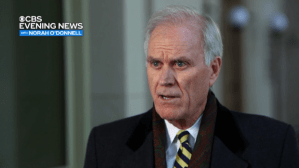

Paul Waldman at The Washington Post: How Richard Spencer’s firing illustrates some of Trump’s most corrupt impulses.
One key reason Donald Trump’s presidency has been so damaging is that he has a way of corrupting all the people and institutions he comes in contact with, infecting them with his virus. No one remains untouched.
As the sudden firing of Navy Secretary Richard V. Spencer shows, that includes the military. Spencer’s story also bears a remarkable resemblance to the Ukraine scandal, in the way people with their own agendas played on Trump’s most repugnant impulses to manipulate him.
Spencer’s firing has its roots in the case of Edward Gallagher, a Navy SEAL who became a Fox News hero. Gallagher’s long and complicated case began when members of his own unit accused him of a series of war crimes, including firing on civilians and murdering a wounded teenage Islamic State fighter receiving medical treatment from his unit.
Gallagher allegedly stabbed the wounded fighter multiple times, then took a picture with his corpse and texted it to friends, with the caption “Got him with my hunting knife.” He was also charged with covering up his crime by threatening to kill members of his platoon if they reported it. They did anyway….
Eddie Gallagher
Trump pardoned him, along with two other service members who had also been accused of war crimes.
Those pardons generated enormous controversy both inside and outside the military, but they were not surprising. From the time he began running for president, Trump has shown nothing but contempt for ideas like military order and discipline, respect for human rights and standards of wartime conduct. He has advocated torturing detainees, suggested that a way to fight terrorism would be to murder the families of suspected terrorists and mused about committing genocide. Accused war criminals are his kind of people.
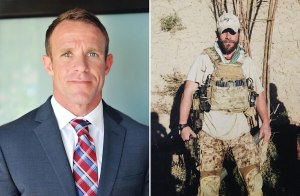
There’s much more at the link. I hope you’ll go read the rest.
CBS News: Ousted Navy Secretary Richard Spencer defends handling of Navy SEAL case.
Spencer stepped down at the request of Defense Secretary Mark Esper on Sunday amid an ongoing controversy over Navy SEAL Edward Gallagher, whose case attracted President Trump’s attention.
Esper told reporters Monday that he fired Spencer after “losing trust and confidence in him regarding his lack of candor.” He accused Spencer of secretly proposing a deal to the White House that would allow Gallagher to retire and retain his Trident pin, which denotes his status as a SEAL, a move Esper said was “completely contrary” to what the two had discussed.
In an interview Monday, Spencer told CBS News he spoke with White House counsel Pat Cipollone on November 15 and proposed an arrangement in which Gallagher would be allowed to retire as a SEAL if the president agreed not to intervene in the case and “let the Navy do its administrative work.” Spencer said Cipollone called back the same day to decline the offer, saying the president would be involved.
“In order to preserve the resiliency of the naval institution, I had to step up and do something when it came to the Gallagher case,” Spencer said.
Spencer acknowledged not telling Esper about the proposal.
Navy Seals on the front lines in Afghanistan
“I will take the bad on me, for not letting him know I did that,” Spencer said. “But as far as I was concerned, at that point, the president understood the deal. Arguably, he doesn’t have to deal with anyone. He said, ‘I’m going to be involved.’ He sent a signed letter to me, an order with his signature on it, saying, ‘Promote Edward Gallagher to E7,'” the rank of chief petty officer.
Esper acknowledged Monday that when confronted about his secret negotiations with the White House, Spencer “was completely forthright in admitting what had been going on.”
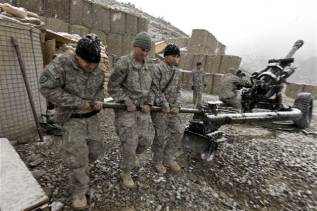
Read more at the link.
The Independent spoke to veterans about the situation: US veterans say Trump views military ‘as tool for massacres’ after reinstating accused war criminal to Navy.
Numerous veterans spoke out about the move to The Independent after Secretary of Defence Mark Esper confirmed he was ordered by the president to retain Navy SEAL Eddie Gallagher’s status in the elite service, as well as his Trident pin, a prestigious special warfare insignia.
“Ever since Donald Trump became president he’s been tearing the military apart, putting troops in the difficult position of needing to choose between obedience to his unhinged orders, and staying true to our code of honour,” said Alexander McCoy, a former Marine and political director of the veteran group Common Defence. “By pardoning war criminals because Fox News told him to, Trump showed he sees our military as a tool for massacres, not as the professional, honourable force we aspire to be.” [….]
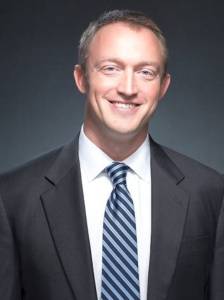
The president’s demands could cause “significant long-term damage to the Naval Special Warfare community,” according to James Waters, a former Navy SEAL platoon commander and White House staff member in the Bush administration, who told The Independent: “The only people who weigh in on whether a Navy SEAL deserves to keep his Trident are people who have their Trident.”
James Waters, former Navy Seal and GW Bush WH staffer
“Every SEAL knows he must ‘earn your Trident every day’ – even after officially qualifying – and the same standard should apply here,” Mr Waters said. “Unless you’ve been through Basic Underwater Demolition/SEAL training and served in the Teams and know the specific facts related to a person’s performance, you’re not qualified to weigh in.” [….]
“There’s a reason we have the Geneva Convention. There’s a reason we have the Universal Code of Military Justice. There’s a reason we have the morale and ethics that we learn in training,” said Josh Manning, a former Army intelligence officer. “For Trump to just step in and undermine centuries worth of morale and discipline undercuts the very military that he’s trying to command.” [….]
Charlotte Clymer, an Army Veteran and press secretary at the Human Rights Campaign, said Mr Trump appeared to be “hell-bent on exploiting” the military justice system for his own purposes.
“My colleagues and I, those still serving and not, are openly horrified by the way this coward has explicitly condoned war crimes, seemingly to pander to people who don’t understand how this undermines our moral authority,” she told The Independent. “I’ve talked to other service members and veterans, and none of us are sure how this could get worse.”
They’re suggesting that Trump wants to take us back to Vietnam years when we had shameful incidents like the My Lai massacre in Vietnam.
In a final outrage, Trump now says he wants to use the pardoned war criminals in his 2020 campaign. Daily Beast: Trump Tells Allies He Wants Absolved War Criminals to Campaign for Him.
If Donald Trump gets his wish, he’ll soon take the three convicted or accused war criminals he spared from consequence on the road as special guests in his re-election campaign, according to two sources who have heard Trump discuss their potential roles for the 2020 effort.
Despite military and international backlash to Trump’s Nov. 15 clemency—fallout from which cost Navy Secretary Richard Spencer his job on Sunday—Trump believes he has rectified major injustices. Two people tell The Daily Beast they’ve heard Trump talk about how he’d like to have the now-cleared Clint Lorance, Matthew Golsteyn, or Edward Gallagher show up at his 2020 rallies, or even have a moment on stage at his renomination convention in Charlotte next year. Right-wing media have portrayed all three as martyrs brought down by “political correctness” within the military.
“He briefly discussed making it a big deal at the convention,” said one of these sources, who requested anonymity to talk about private conversations. “The president made a reference to the 2016 [convention] and where they brought on-stage heroes” like former Navy SEAL Marcus Luttrell, who refused to execute detained civilians ahead of a devastating Taliban attack.
So next year he wants to celebrate men who chose to execute civilians and detainees?
What stories are you following today?
Manic Monday Reads: No US Institution is Sacred or Safe from KKKremlin Caligula
Posted: November 25, 2019 Filed under: Foreign Affairs, morning reads 43 CommentsGood Morning Sky Dancers!
The US Navy is the latest institution to be undermined by Trumpist attacks on the Constitution and basic decency. The Navy–which is the the longest standing fighting force in the US–is just the latest institution undermined by Trump’s lack of morality and intelligence. Our relationships with other nations may never be the same as we break treaties and conventions meant to protect our country as well as our allies and friends.
This read is from NBC as reported by Alex Johnson. Here’s the headline: “Navy Secretary Richard Spencer fired in dispute over discipline of SEAL.” The Navy–as do our other branches of service–have strict codes on how to engage their duties. It is imperative to moral and behavior. Certain behaviors elicit institutional responses. War crimes are considered heinous and subject to specific action until now. Many of those actions listed as war crimes have been negotiated throughout history with allies and foes alike. They’re part of treaties. They’re actions that we promise not to commit because they are highly immoral and because we do not want our military committing them or being subjected to them.
But, we have a Criminal Syndicate in our Government acting as the Republican Party enabling their crime boss. They let him get away with anything.
From the link:
Navy Secretary Richard Spencer was fired Sunday by Defense Secretary Mark Esper, who ordered that a Navy SEAL who was acquitted of murder be allowed to remain in the elite commando corps, the Defense Department said.
Esper asked for Spencer’s resignation after President Donald Trump tweeted on Thursday that Chief Petty Officer Eddie Gallagher would retain the gold Trident insignia signifying his status as a member of the Sea, Air, and Land Teams, or SEALs. Spencer told reporters on Friday that he believed the review process over Gallagher’s status should go forward.
In a letter to Trump, Spencer said he acknowledged his “termination,” saying the president deserved a Navy secretary “who is aligned with his vision.”
“Unfortunately, it has become apparent that in this respect, I no longer share the same understanding with the Commander in Chief who appointed me,” Spencer wrote.
“In regards to the key principle of good order and discipline, I cannot in good conscience obey an order that I believe violates the sacred oath I took in the presence of my family, my flag and my faith to support and defend the Constitution of the United States.”
Shortly thereafter, Trump tweeted that he was displeased not only by the way that “Gallagher’s trial was handled by the Navy” but also because “large cost overruns from [the] past administration’s contracting procedures were not addressed to my satisfaction.”
“Therefore, Secretary of the Navy Richard Spencer’s services have been terminated by Secretary of Defense Mark Esper,” he wrote. He said he would nominate retired Adm. Kenneth Braithwaite, the U.S. ambassador to Norway, to succeed Spencer.
He forgave a murderer for perceived cost overruns? WTAF? The USA Today Editorial Board has all kinds of questions this morning that are worth considering. First among them is this: “Do Navy leaders have a ‘duty to disobey’ Trump in Gallagher case?”
Most Americans understand that, under military law, soldiers must disobey an illegal command. It’s a doctrine that demolished Nazi war criminals’ claims during the Nuremberg trials that they were just following orders.
But what if the order is legal, but unethical or even immoral? What is a member of the military to do then?
For some top Pentagon officials, the question might be more than hypothetical. They apparently resisted President Donald Trump’s efforts to protect a Navy SEAL accused of misconduct, and by late Sunday afternoon one of them — Navy Secretary Richard V. Spencer — was out of a job.
This issue came to a head last week, when Trump threatened to issue an order many senior military leaders see as bordering on unethical. The order would have effectively undermined efforts by a Navy leader to restore good order and discipline among the vaunted Navy SEALs.
A key focus was the conduct of Navy SEAL Edward Gallagher, who had earned a reputation as a rule-breaking “pirate,” accused of committing war crimes in Iraq, including the indiscriminate firing into a neighborhood with a machine gun and killing a teenage captive with a custom-made knife.
When the criminal case against Gallagher fell apart at trial in July, he was convicted only of posing in a photograph with the dead teenager and demoted. Right-wing commentators flocked to Gallagher’s defense, and Trump ordered Gallagher’s rank restored Nov. 15.

Career Diplomat and former Navy Gunnery officer Ambassador William H Sullivan appointed to Laos in 1964 by LBJ.
The Department of State is another institution undermined by the current usurper of the Oval Office. “As the Rich Get Richer, the Ambassadors Get Worse. Gordon Sondland embodies an age-old problem—one that the flood of donor money into American politics is only exacerbating.” is a feature article at The Atlantic written by Dennis Jett.
Sondland’s appointment succeeded even though it, too, was obviously transactional. The hotel owner did not support Trump for the Republican nomination and did little to get him elected. But once he won, Sondland wrote a big check. And just like magic, he was off to live in Brussels as the American ambassador to the European Union. Along with Trump’s personal lawyer Rudy Giuliani, Sondland became the president’s go-to guy for dealing with Ukraine—even though that country is not part of the EU. For Trump, it seems, Sondland’s disdain for note-taking was an asset, not a flaw.
National security is harmed when diplomacy is done badly. When the United States has a problem with another country, it can resolve it by diplomacy, force, or just ignoring it and hoping it goes away. When the first option is debilitated by putting incompetent presidential sycophants in charge of embassies, that leaves only the two other alternatives. If command of an aircraft carrier were handed over to a real-estate developer because he had contributed to a political campaign, the outrage would be immediate. But putting our soft power, our ability to conduct diplomacy, in the hands of the unqualified and clueless is somehow acceptable.
That Sondland gave bad diplomatic advice was clear in the cellphone conversation he had with the president on July 26 as he sat in a restaurant in Kyiv. Trump had personally intervened in favor of A$AP Rocky, an African American recording artist who was arrested and charged with assault in Sweden. Sondland, according to the testimony of the U.S. diplomat who was eating with the ambassador, suggested that Trump “let [the rapper] get sentenced, play the racism card, give him a ticker-tape [parade] when he comes home.” Sondland then helpfully added that Trump would be able to tell the Kardashians that he had tried to help A$AP Rocky. In other words, Sondland was encouraging the president’s impulse to let a celebrity family dictate the status of our relationship with a significant ally.

Lucile Atcherson Curtis (1894-1986) was the first woman in what became the U.S. Foreign Service.[1] Specifically, she was the first woman appointed as a United States Diplomatic Officer or Consular Officer, in 1923; the U.S. would not establish the unified Foreign Service until 1924, at which time Diplomatic and Consular Officers became Foreign Service Officers.
The terse exchange revealed the intense pressure that Trump’s style of governing has put on U.S. institutions and civil servants struggling to make policy across the federal government. From the moment he took office, Trump has shown little interest in working the traditional levers of state, which he views as slow, cumbersome and untrustworthy.
His national security advisers, meanwhile, have struggled and largely failed to adapt to his unusual approach to governing. Lt. Gen. H.R. McMaster, who was fired by Trump in 2018, sought to leverage the foreign policy bureaucracy’s expertise on behalf of a president with virtually no national security experience.
He convened frequent meetings of government experts from the CIA, State Department and Pentagon that Trump had little time for and drafted detailed decision memos that Trump never bothered to read.\After a year, Trump concluded McMaster’s collaborative approach to foreign policy was inefficient and prone to producing embarrassing leaks.
John Bolton, McMaster’s successor as national security adviser, opted for a more personal approach, jettisoning briefings by specialists in favor of informal one-on-one meetings. Foreign policy experts still put in long hours at the Eisenhower Executive Office Building next to the White House but rarely made the short walk to the Oval Office.
In her testimony, Hill revealed that Trump had not only never met the top Ukraine expert on his staff, Lt. Col. Alexander Vindman, but that the president also had been led to believe that Kash Patel, a former Republican Capitol Hill staffer working in the White House, was filling that role.

Photograph Vintage US Navy USS Vermont 1898
Indeed, nearly every aspect of our Foreign engagements has been turned on its head since Trump stole office. Here is an exclusive from Axios and Jonathan Swan. “Scoop: White House directed block of Armenian genocide resolution”.
Many were perplexed and outraged when, right after clashing with Turkish President Recep Tayyip Erdoğan in a heated Oval Office meeting on Nov. 13, Republican Sen. Lindsey Graham hurried back to the Senate floor and did something that likely delighted Erdoğan. Graham blocked a resolution that would have formally recognized Turkey’s genocide of the Armenian people.
Behind the scenes: Graham had just scolded Erdoğan over his invasion of Syria and attacks on the Kurds, according to sources in the room.

Carte-de-visite of a Civil Warsailor named Jim (Smithsonian Collection)
Friday Reads: Putting it all into Perspective
Posted: November 22, 2019 Filed under: morning reads 45 Comments
Good Morning Sky Dancers!
We’ve come to the end of the second week of impeachment hearings as well as entertained yet another Candidate Debate. It’s tempting to speak of winners and losers in a day and age where frequently there’s no clear delineation. Just think, we have an occupant of an oval Office that clearly and significantly lost the popular vote and appears to have won select states narrowly with so many shenanigans and one offs that the voters were the clear losers in that one.
But, I do want to put some of these things into some kind of perspective even if historians deride it later on. My Nana was a Christian Science practitioner since ridding herself of migraines through its prayerful practices as a young woman. She always saw that my parents had an annual subscription to The Christian Science Monitor and that my sister and I had one to National Geographic. She and my Granddad died in hospital so while my grandmother had beliefs, she also had perspective. Neither of my grandmothers could vote until well into middle age so I usually take myself to the polls with that in mind. It gives me perspective when I cherish every vote. I read this article this morning with Nana in mind and a nod to religious Matriarch Mary Baker Eddy.
This perspective comes from the CSM: “Impeachment’s rock stars: Powerful women” Truly, the stand outs in the hearings this week were the powerful women in the State Department and National Security. I particularly like this introduction by authors Jessica Mendoza and Story Hinckley on why they wrote the article.
One striking aspect of the impeachment hearings is the way they’ve showcased the experience and intellect of professional women. Regardless of the political outcome, women’s advocates say that’s significant.

M.C. Escher, “Bond of Union,” 1956.
Dr Fiona Hill and Ambassador Marie Yavanovitch were outstanding. They were clearly the kinds of women that terrify the Kremlin Potted Plant. Hill had the Republicans on the panel so stunned they quit asking her questions and some actually fled the hearing room. Laura Cooper and Jennifer Williams also refused to play GymBro’s Republican Games.
On Thursday, David Holmes, who served as Ambassador Yovanovitch’s chief policy adviser in Kyiv, testified in his opening statement about his “deep respect for her dedication, determination, decency, and professionalism.” He added that the “barrage of allegations” leveled against her were “unlike anything I have seen in my professional career.”
To be sure, Mr. Trump often treats his perceived enemies this way, regardless of their gender. But observers say there was a certain force to seeing a successful woman gracefully fend off such attacks in real time.
“No one would say that Yovanovitch’s testimony was anything less than a master class in integrity-led leadership,” says Jenna Ben-Yehuda, founder of the Women’s Foreign Policy Network, a global organization for women in foreign affairs. “It shows that leadership takes many forms. I hope we hold on to that.”
When Ms. Yovanovitch’s hearing wrapped on Friday, she received a standing ovation from the audience.

“Puddle”, M. C. Escher, 1952, woodcut
There were also women among the ranks of the Congressional Panel.
Women lawmakers have also been front-and-center in the impeachment drama. Two of the three Democratic women are black.
Florida Rep. Val Demings, one of three Democrats on the panel, came out hard against Ambassador Sondland on Wednesday, pressing him on the details of a phone conversation he had with Mr. Trump at a restaurant in Kyiv. California Rep. Jackie Speier – who as a congressional aide in the 1970s came under gunfire while investigating the Jonestown cult in Guyana – played a key role in the depositions of Ambassador Taylor and State Department official George Kent, according to transcripts. And Rep. Terri Sewell, the No. 3 Democrat on the panel and the first black woman to serve Alabama in Congress, has also been a vocal interrogator.
This NYT op ed by Glenn R. Simpson and
As the founders of Fusion GPS, the research firm that commissioned the reports by the former British intelligence officer Christopher Steele that raised some of the earliest warnings of Russia’s actions, we’re willing to clear up some of the nonsense now so ripe on the right.
House Republicans like Representatives Devin Nunes and Jim Jordan seem eager to portray Fusion as co-conspirators with the Ukrainians in some devilish plot to undermine Mr. Trump’s 2016 candidacy. That could not be further from the truth. None of the information in the so-called Steele dossier came from Ukrainian sources. Zero. And we’ve never met Serhiy Leshchenko, the Ukrainian former legislator and journalist who Republicans want to blame for the downfall of Trump’s campaign manager, Paul Manafort.
That said, our investigation of Donald Trump did get a great boost because of Ukraine, just not in the way Republicans imagine. We began looking into Mr. Trump’s business dealings and ties to Russia in the fall of 2015 with funding from Republicans who wanted to stop his political ascent. The Ukraine alarms went off six months later, when candidate Trump brought into his campaign none other than Mr. Manafort, a man with his own tangled history with Russian oligarchs trying to get their way in Ukraine.
It turns out we already knew a great deal about Mr. Manafort’s activities in Ukraine because we worked on several stories about his work for Russian-backed politicians eight years earlier, when we were both still writing for The Wall Street Journal. That reporting threw a spotlight on how Mr. Manafort, while representing clients involved in fierce geopolitical struggles over Ukraine, had neglected to comply with a lobbying law requiring that he register as a foreign agent — the very law, among others, to which he pleaded guilty to violating.
Those articles triggered years of media coverage exposing Mr. Manafort’s questionable lobbying activities and ties to pro Russia oligarchs. In the meantime, we left The Journal and went on to found Fusion GPS, a research and strategic intelligence firm, in 2010.
We turned our focus back to Mr. Manafort in early 2016 and soon found a 19-page legal filing in a federal courthouse in Virginia in which one of his former clients, the Russian businessman Oleg Deripaska, accused Mr. Manafort in scorching detail of making off with tens of millions of dollars that he had promised to invest in Ukraine. The whole thing reeked of fraud and possible money laundering. It was as if Mr. Manafort had boarded the Trump campaign plane with baggage stuffed with figurative explosives. The Virginia filings later surfaced in various articles about Manafort in the national media.
A few months later we stumbled on some Ukrainian media reports noting that documents existed in Kyiv that chronicled the political spending of the pro-Russia ruling party at the time, which had hired Mr. Manafort. We wondered if his name might crop up in those papers. Someone suggested Mr. Leshchenko might be of help in the matter — a fact we stored away. To this day, we have never met him.
The New York Times got to the story first, in August 2016, reporting that a black ledger of illicit payments showed that millions of dollars had gone into the pocket of one Paul Manafort. That story led to Mr. Manafort’s ouster from the campaign, and undoubtedly fueled F.B.I. interest in his activities, though the so-called black ledger was never used in the criminal cases against him.
We’d love to take credit for finding the black ledger, but we didn’t, and any alert reporter following the Ukrainian press would have known to follow the leads that led to it.
https://twitter.com/RPMcCartney/status/1197586272749080581

“Rimpeling – Rippled surface” (Cercles dans l’eau) Linoleum cut, 1950, on Japan paper, signed in pencil and inscribed ‘eigen druck , M.C. Escher
Another perspective this week comes from former Fox News Anchor Shepard Smith who put money and his mouth to support the idea of freedom of the press. Mr Smith was frequently the target of Trumpist barbs. This comes via the NYT.
In his first public remarks since abruptly resigning from Fox News last month, the anchor Shepard Smith called on Thursday for a steadfast defense of independent journalism, while offering a few subtle barbs at President Trump’s treatment of the press.
And in a surprise announcement, Mr. Smith said he would personally donate $500,000 to the Committee to Protect Journalists, a nonprofit group that advances press freedoms around the world.
“Intimidation and vilification of the press is now a global phenomenon. We don’t have to look far for evidence of that,” Mr. Smith said at the group’s annual dinner in Midtown Manhattan, an appearance he signed up for before he left Fox News, his television home of 23 years.
The crowd at the black-tie fund-raiser — which draws leading reporters, editors and executives from across the media industry — rose to its feet and applauded after Mr. Smith revealed his donation.
Here’s a perspective from History on one of the main issues coming up in the Democratic Presidential contest. This might be something to think about as we watch people panic in the street about the Health Care Discussion and the election.
And one final perspective from CNN and a few others: “Mr. Rogers’ most memorable moments. Fred Rogers has had a lasting impact on generations of children with his show “Mister Rogers’ Neighborhood” which ran for 31 seasons, from 1968 to 2001. “
From The Atlantic and Tom Junod: “My Friend Mister Rogers. I first met him 21 years ago, and now our relationship is the subject of a new movie. He’s never been more revered—or more misunderstood.”
I am often asked what Fred would have made of our time—what he would have made of Donald Trump, what he would have made of Twitter, what he would have made of what is generally called our “polarization” but is in fact the discovery that we don’t like our neighbors very much once we encounter them proclaiming their political opinions on social media. I often hear people say that they wish Fred were still around to offer his guidance and also that they are thankful he is gone, because at least he has been spared from seeing what we have become. In all of this, there is something plaintive and a little desperate, an unspoken lament that he has left us when we need him most, as though instead of dying of stomach cancer he was assumed by rapture, abandoning us to our own devices and the judgment implicit in his absence.
What would Fred Rogers—Mister Rogers—have made of El Paso and Dayton, of mass murder committed to fulfill the dictates of an 8chan manifesto? What, for that matter, would he have made of the anti-Semitic massacre that took place last fall in his real-life Pittsburgh neighborhood of Squirrel Hill? The easy answer is that it is impossible to know, because he was from a different world, one almost as alien to us now as our mob-driven world of performative slaughters would be to him. But actually, I think I do know, because when I met him, one of the early school shootings had just taken place, in West Paducah, Kentucky—eight students shot while they gathered in prayer. Though an indefatigably devout man, he did not attempt to characterize the shootings as an attack on the faithful; instead, he seized on the news that the 14-year-old shooter had gone to school telling his classmates that he was about to do something “really big,” and he asked, “Oh, wouldn’t the world be a different place if he had said, ‘I’m going to do something really little tomorrow’?” Fred decided to devote a whole week of his television show, Mister Rogers’ Neighborhood, to the theme of “little and big,” encouraging children to embrace the diminutive nature of their bodies and their endeavors—to understand that big has to start little.
What’s on your reading and blogging list today? What’s your perspective?

 peej
peej Carissa
 bostonboomer
 dakinikat
 ecocatwoman
 jjlo
jjlo mablue2
 Mama Lopez
 peggysue22
 quixote
 skydancingguestblogger
 Mona (aka Wonk the Vote)





Recent Comments