
Lazy Saturday Reads
Posted: January 17, 2015 Filed under: morning reads, U.S. Politics, Women's Rights | Tags: abortion, Free Range Kids, mansplaining, Masha the cat, Politifact, Rand Paul, same-sex marriage, Social Security disability, U.S. Supreme Court 36 Comments
NYC Newsstand on a rainy day.
Good Afternoon!!
First, I want to thank everyone who responded to our request for help with blog expenses. We are so fortunate to have such kind and loyal readers. You guys are the greatest!
The biggest story on my mind today is the Supreme Court’s decision to rule on the same-sex marriage issue. I have to admit, I’m very nervous about it. What if the Court rules that states can ban same-sex marriages and refuse to recognize such marriages from other states? Some background from SCOTUS blog:
Taking on a historic constitutional challenge with wide cultural impact, the Supreme Court on Friday afternoon agreed to hear four new cases on same-sex marriage. The Court said it would rule on the power of the states to ban same-sex marriages and to refuse to recognize such marriages performed in another state. A total of two-and-a-half hours was allocated for the hearings, likely in the April sitting. A final ruling is expected by early next summer, probably in late June.
The Court fashioned the specific questions it is prepared to answer, but they closely tracked the two core constitutional issues that have led to a lengthy string of lower-court rulings striking down state bans. As of now, same-sex marriages are allowed in thirty-six states, with bans remaining in the other fourteen but all are under court challenge.
Although the Court said explicitly that it was limiting review to the two basic issues, along the way the Justices may have to consider what constitutional tests they are going to apply to state bans, and what weight to give to policies that states will claim to justify one or the other of the bans….
The focus of the Court’s review will be a decision issued in early November by the U.S. Court of Appeals for the Sixth Circuit. That decision, breaking ranks with most other courts, upheld bans on marriage or marriage-recognition in Kentucky, Michigan, Ohio, and Tennessee.
Friday’s order granted review of one petition from each of those states; the petitions phrase the two basic issues in somewhat different ways, which is why the Court rewrote them to make specifically clear what it intended to review.
The Kentucky case (Bourke v. Beshear) raises both of the issues that the Court will be deciding, the Michigan case (DeBoer v. Snyder) deals only with marriage, and the Ohio (Obergefell v. Hodges) and Tennessee cases (Tanco v. Haslam) deal only with the recognition question. If customary practice is followed, the first case listed in the order — the Ohio case Obergefell v. Hodges — will become the historic title for the final ruling.

The problem for the conservative justices will be that public opinion has shifted so rapidly on this issue–if they decide to limit the civil rights of LGBT Americans, there would probably be a serious backlash. From The Washington Post:
The country’s first same-sex marriage, the result of a Massachusetts court decision, took place less than 11 years ago. Now, more than 70 percent of Americans live in states where same-sex couples are allowed to marry, according to estimates.
The questions raised in the cases that the court will consider this spring were left open in 2013 when the justices last confronted the issue of same-sex marriage. A slim majority said at the time that a key portion of the federal Defense of Marriage Act — withholding recognition of same-sex marriages — was unconstitutional and in a separate case allowed same-sex marriages to resume in California.
Since then, courts across the nation — with the notable exception of the Cincinnati appeals court — have struck down a string of state prohibitions on same-sex marriage, many of them passed by voters in referendums. Many of those court decisions compared the prohibitions to the ones on interracial marriage that the Supreme Court struck down in 1967 in Loving v. Virginia.
When the Supreme Court declined to review a clutch of those decisions in October, same-sex marriage proliferated across the country.
Couples may now marry in 36 states and the District. Three in four same-sex couples live in a state where they are allowed to wed, according to estimates by the Williams Institute at the UCLA School of Law.
Chief Justice John Roberts will have to keep all that in mind if he cares about his place in history.

While we’re talking about the conservative trend on the Supreme Court, take a look at this sobering article at Think Progress: If You Want To Understand What’s Happened To The Supreme Court, You Need To Listen To Rand Paul.
Senator Rand Paul (R-KY) is an odd place to seek counsel on the Constitution. As a Senate candidate in 2010, Paul told a Louisville editorial board that he opposed the federal ban on whites-only lunch counters, claiming that the right of “private ownership” should trump the right to be free from racist discrimination. Opposing a core protection for racial minorities, according to Paul, is “the hard part about believing in freedom.” He later suggested that civil rights laws targeting private businesses may exceed Congress’s power under the Constitution’s Commerce Clause — a view the Supreme Court unanimously rejected in 1964.
Yet the Heritage Foundation, one of the backbones of the conservative movement in Washington, DC, invited Paul to speak at length on the Constitution and the role of the judiciary earlier this week. If the audience was upset that voters sometimes elect leaders who disagree with the Heritage Foundation, they were no doubt enraptured by Paul’s vision for the courts. Senator Paul’s speech was a repudiation of democracy, and he called for the Supreme Court to assume a dominant role in setting American policy that it abandoned three generations ago. Under Paul’s vision, the minimum wage is forbidden and union busting is constitutionally protected. The New Deal is an illegitimate expansion of federal power, and more recent efforts to ensure that no one dies because they cannot afford health care are an abomination.
“I’m a judicial activist,” Paul proudly proclaimed.
Nevertheless, Paul’s speech to the Heritage Foundation is worth watching in its entirety. It lays out a vision that is closer than the Court’s current precedents suggest, and that could easily become a reality if the Court’s older members are replaced by younger conservatives. Moreover, as I explain in my book, Injustices: The Supreme Court’s History of Comforting the Comfortable and Afflicting the Afflicted, a Supreme Court committed to Paul’s economic agenda would hardly be unprecedented in American history. If anything, Paul is asking the Court to return to its self-appointed role as the vanguard against democracy.

While state legislators ate eggs and drank coffee in a Manchester diner, Paul suggested that half of the recipients of federal disability relief are “gaming the system” because they are able to work. He also told them the arguments against building the Keystone XL pipeline are “this sort of Luddite, flat-earth, that my goodness we shouldn’t have cars” mentality.
It was Paul’s comments about disability benefits that drew the most attention, largely because Democrats quickly pounced.
During a question-and-answer period, Paul was asked about government programs and welfare.
“You know, the thing is that all of these programs — there’s always somebody who is deserving. Everybody in this room knows somebody who is gaming the system,” said Paul.
“What I tell people is, if you look like me and you hop out of your truck, you shouldn’t be getting a disability check,” Paul said. “You know, over half the people on disability are either anxious or their back hurts. Join the club. Who doesn’t get up a little anxious for work every day and their back hurts? Everybody over 40 has a back pain.”
Really? I’m over 60, and I might get a little bit stiff sometimes, but I certainly don’t have chronic back pain. Let’s see what the fact checkers have to say about Paul’s claim.

Politifact: Rand Paul says most people receive disability for back pain, anxiety.
You can read the whole article for the details and some caveats, but here’s the bottom line:
Paul said, “Over half the people on disability are either anxious or their back hurts.”
The numbers don’t add up. The two broader disability categories that include back pain (“diseases of the musculoskeletal system”) and anxiety disorders (“mental disorders – other”) don’t even equal close to 50 percent, let alone those two ailments by themselves.
Paul’s quip might make for a good soundbite, but it’s not rooted in reality. We rate the statement False.
As for people “gaming the system,” Politifact notes a report from the Government Accountability Office that estimated that
…in fiscal year 2011, the Social Security Administration made $1.29 billion in potential cash benefit overpayments to about 36,000 individuals who were working and making more than $1,100 a month (the limit to receive disability benefits).
The 36,000 people receiving improper payments, while a lot on paper, represent about 0.4 percent of all beneficiaries, the report said.
Talking Points Memo posted a video of three “christian” men “apologizing” to women for allowing them to have abortions. It’s the most patronizing bit of mansplaining I’ve seen I’ve seen in a very long time. From TPM:
“I conceded to an abortion,” Pastor Shane Idleman says. “That decision still haunts me today.”
Against a montage of giggling, joyful children and babies, the men discuss how much they regret the decision and take responsibility for letting down God, women and their unborn children.
“I should’ve manned up and I should’ve fought for you and — I didn’t,” John Blandford says. “I didn’t.”
Then come the apologies to all women who have had an abortion, women who have been “subjected to such a terrible thing,” women who “no one tried to rescue,” and women who have “tried to hide this from everyone.”
“I’m sorry for men not taking a greater stand in this area,” Idleman says.
“I’m sorry that, I’m sorry that this is available,” Daniel Phillips says.
But don’t worry all you sinful women “hid[ing] in shame and darkness,” you can always repent and ask god to forgive you. Watch the video yourself if you can stomach it.
Here’s an interesting story from Slate’s Hanna Rosin about the “free range parenting movement.”
On a recent Saturday afternoon, a 10-year old Maryland boy named Rafi and his 6-year old sister, Dvora, walked home by themselves from a playground about a mile away from their suburban house. They made it about halfway home when the police picked them up. You’ve heard these stories before, about what happens when kids in paranoid, hyperprotective America go to and from playgrounds alone. I bet you can guess the sequence of events preceding and after: Someone saw the kids walking without an adult and called the police. The police tracked down the kids and drove them home. The hitch this time is, when the police got there, they discovered that they were meddling with the wrong family.
Danielle and Alexander Meitiv explicitly ally themselves with the “free range” parenting movement, which believes that children have to take calculated risks in order to learn to be self-reliant. Their kids usually even carry a card that says: “I am not lost. I am a free-range kid,” although they didn’t happen to have it that day. They had carefully prepared their kids for that walk, letting them go first just around the block, then to a library a little farther away, and then the full mile. When the police came to the door, they did not present as hassled overworked parents who leave their children alone at a playground by necessity, or laissez-faire parents who let their children roam wherever, but as an ideological counterpoint to all that’s wrong with child-rearing in America today. If we are lucky, the Meitivs will end up on every morning talk show and help convince American parents that it’s perfectly OK to let children walk without an adult to the neighborhood playground.

Perhaps if they had been black and lived in South Carolina, they would have been arrested like Debra Harrell, the single mother who let her daughter go to the playground while she was working at McDonald’s. As white suburban professionals, the Meitivs experienced a lower level of intrusion, but still one that would make any parent bristle. The police asked for the father’s ID, and when he refused, called six patrol cars as backup. Alexander went upstairs, and the police called out that if he came down with anything else in his hand “shots would be fired,” according to Alexander. (They said this in front of the children, Alexander says.) Soon after, a representative from Montgomery County Child Welfare Services came by and required that the couple sign a “safety plan” promising not to let the children go unsupervised until the following week, when another CPS worker would talk to them. At first, the dad refused, but then the workers told him they would take the kids away if he did not sign.
It’s a thought-provoking piece. Read more at the link.

Finally, a feel-good story, thanks to Ralph B., who posted it on Facebook.
From The Washington Post: Russia’s heroic cat Masha: She’s credited with saving an abandoned infant from winter’s deep freeze.
Masha the cat – as the stray is called by the residents of the building she calls home in Obninsk – found the infant in an entryway Saturday night and climbed into the box in which the baby had been left.
One of the building’s residents heard the cat and the baby’s cries. At first, Nadezhda Makhovikova just thought she was hearing Masha in some sort of distress. “When I went down, I saw it was a baby crying,” Makhovikova told REN TV earlier this week.
Reports said the baby had been left with a pacifier, bottle and diapers, and was dressed warmly, wearing a little hat, as residents described him – though he likely would have had difficulty staying warm enough to survive a whole night in the sub-freezing temperatures in the area.
Residents called an ambulance, which whisked the baby away to a local hospital – but not before Masha would try to accompany the baby on the way.
Here’s a video about Masha. It’s in Russian, but you can get the gist.
So . . . what else is happening? Please share your thoughts and links in the comment thread and enjoy the long weekend!
Friday Reads: Change is gonna come, but will it be good?
Posted: January 16, 2015 Filed under: morning reads 12 CommentsGood Morning!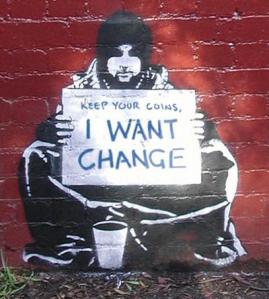
There’s a new year on us and a New Year for the radical right to shove their agendas down the country’s throat in the myriad of places they’ve managed to overrun via Republican Presidents and low turn-out elections. As I’ve written before, they are highly outnumbered in most places with large populations but those outback states just won’t stop sending the crazies to the District. The Supreme Court is set once again to hear arguments on same-sex marriage. Why can’t freak republicans stay out of other people’s relationships, sex lives, and bodies? They have a completely unhealthy interest in women’s privates and gay’s sex lives, I swear.
On Friday, the Supreme Court justices will be meeting to decide whether to hear a case — or multiple cases — challenging a ban on same-sex couples’ marriages.
This will be the second time the justices have considered whether to take any of the cases out of Kentucky, Michigan, Ohio, and/or Tennessee. When they did so on Jan. 9, they took no action on those cases, instead re-listing them for discussion on Friday.
This is a new practice by the court over the past year or so, re-listing cases they are considering taking once before accepting a case, called granting a writ of certiorari.
The justices did, however, deny an attempt by same-sex couples in Louisiana to have the Supreme Court hear their case before the appeals court — which heard their appeal on Jan. 9 — decided on the appeal.
Now, however, they are faced with choosing whether they will hear one or more of the four other cases — a decision that will foretell whether the justices intend to resolve the question of bans on marriage for same-sex couples nationwide by this June.
 What on earth are the justices going to do with the huge number of states that are now recognizing gay marriage that could possibly appease the holdouts like Bobby Jindog’s Lousyiana? Has Scalia been riding Kennedy like a Tennessee thoroughbred over his last few swing votes on the issue?
The first rule of the Supreme Court is that there are, basically, no rules for the Supreme Court. The court can reverse prior decisions, and the court’s policies and practices can change if the justices so desire it. As a result of this, it’s difficult to know what the justices are going to do at any given moment.
With that giant caveat, the justices most likely are going to decide on Friday to take one or more cases for review this term — which would mean a decision would be expected by the end of June.
The pace and pure number of all of the cases making their way up the chain have, effectively, forced the justices’ hands on the matter. Even if they had hoped in 2013, by dismissing the California Prop 8 challenge, to put off the issue for another four or five years, the issue came back to them far more quickly than that. Even if they had hoped this past October, by denying certiorari in cases where the bans had been struck down, to put off the issue until next term, the 6th Circuit decision came quickly enough to bring the issue up to the justices a second time this term.
This time, there is no good way for the justices to dodge the issue. And, while the justices could keep re-listing the cases until it forces them into the next term, such a move seems unlikely given the current climate.
Assuming the justices are going to take at least one of the cases, they also must decide which one they will take.
The four cases in which plaintiffs are seeking certiorari are not the same.
In Michigan, a full trial was undertaken in response to April DeBoer and Jayne Rowse’s challenge, who are seeking to be married in Michigan. This case is, in simpler terms, a marriage case.
In Ohio and Tennessee, on the other hand, the plaintiffs are seeking recognition of same-sex couples’ marriages granted by other states. In Ohio, James Obergefell is seeking recognition of his marriage to John Arthur on Arthur’s death certificate. Other plaintiffs in Ohio, including Brittni Rogers and Brittani Henry, are seeking recognition of their marriage on their children’s birth certificates and for other purposes. In Tennessee, plaintiffs, including Valeria Tanco and Sophy Jesty, are seeking recognition of their marriages for a wide variety of purposes. The Tennessee plaintiffs also challenge whether Tennessee’s recognition ban violates their right to interstate travel.
In Kentucky, meanwhile, some plaintiffs, including Timothy Love and Lawrence Ysunza, challenge the state’s marriage ban while other plaintiffs, including Gregory Bourke and Michael Deleon, challenge the marriage recognition ban.
If the justices are looking to the lawyers to help them decide which case to take — an issue examined at length in a recent blockbuster Reuters report — then the Kentucky plaintiffs’ addition of Stanford Law School’s Jeffrey Fisher to their legal team and the Tennessee plaintiffs’ help from Ropes & Gray’s Douglas Hallward-Driemeier could be a bonus for their teams.
The actions of SCOTUS are beginning to remind me of all the ways the North tried to appease the South before over slavery. How can anyone not see this as an equal rights under the law issue?
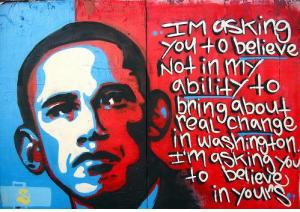
So, many folks are now embracing the Obama last two years and looking back on them wistfully and otherwise. Will America miss Obama when he’s gone?
After leaving office, Obama may enjoy an unusually strong surge in support. His presidency makes a potentially great story: the first African-American in the White House, who helped the country recover from recession and ended two wars. Obama’s tale fits neatly into the overarching American narrative of expanding liberty. That rosy story has been lost amid the grinding business of government. But after 2016, hope and change could make a comeback. To support Obama after 2016 will be to embrace racial progress, to feel good about one’s country and oneself.
And Obama may also benefit from the Republican mid-term victories in 2014. If the GOP overreaches, Obama could leave office looking like the guardian of moderation.
Obama has been a good president. But he could be a great ex-president. With his intelligence, calmness, and good humor, together with his strong and attractive family, he’s a natural fit for the roles of memoirist, humanitarian, professor, and elder statesman.
By the end of the decade, Obama’s personal approval ratings could be 60 percent or higher. Historians may place him toward the top of the all-star rankings. Interestingly, more people may claim they voted for Obama than actually did vote for him. Pollsters routinely find that people misreport their behavior in a bid for social desirability. In the 1964 presidential election, for example, Lyndon Johnson won a crushing victory over Barry Goldwater. Afterward, the number of Americans who admitted voting for Goldwater was 6 percent shy of the real figure. If there’s a wave of Obama nostalgia, expect some non-voters, or even John McCain and Mitt Romney supporters, to say they backed the first African-American president.
Of course, none of this is set in stone. The depth of the nation’s love affair with post-presidential Obama will hinge on the next two years.
 Many think that all he has to do is avoid being Dubya.
President Obama delivers his penultimate State of the Union address on Tuesday — a speech that is expected to set the course for his work with the newly GOP-controlled Congress over his final two years in office.
And unavoidably, talk will turn to Obama’s legacy and where he stands. (Already, New York Magazine has run a feature asking 53 historians what Obama must do to cement his legacy.)
While Obama has certainly been battered over his six years, he can at least say this: He’s in considerably better shape than his predecessor, George W. Bush, heading into the home stretch.
While Obama’s and Bush’s numbers rivaled each other for the better part of the middle of their presidencies — complete with hard-fought reelection races — Obama in recent months has differentiated himself from the tail end of the Bush years, keeping his approval rating steadily above 40 percent.
I’m not sure watching the polls is the answer. Anyway, Tuesday is the SOTU and we’ll be here with live blogging. And guess which loon is giving the Republican rebuttal? It’s Senator Castrate-a-Hog!! Iowa Senator Joni Ernst Michelle Bachmann on steroids so this should be a whole lotta fun! Will she look as crazed as Bachmann? As incoherent as Jindal? As thirsty and boring as Rubio?
Sen. Joni Ernst will deliver the Republican rebuttal to President Barack Obama’s State of the Union Address on Tuesday night, thrusting her into a prominent role that has proved challenging to previous GOP speakers.
Senate Majority Leader Mitch McConnell on Thursday pegged Ernst, an Iowa Republican elected in November, for the nationally prominent speaking role.
In picking Ernst, McConnell, R-Ky., and House Speaker John Boehner, R-Ohio, emphasized her commitment to the middle class and suggested her remarks would focus on GOP efforts to address middle-class families’ needs.
“Sen. Ernst’s life is a quintessential ‘only-in-America’ story,” Boehner said in a statement. “She built a campaign by listening to the people of Iowa and focusing on their priorities, especially jobs and our still-struggling economy.”
She basically wasn’t the democratic candidate who was caught telling trial lawyers he was one of them and was going to Washington to represent them. That sort’ve thing calls for a good old horse whipping in Iowa. My guess is she’ll be a one term Senator if she says all the loonie crap she spouted on the campaign trail. She’s cornfield Snookie!
Anyway, things are changing. Let’s just hope it’s for the better eventually!
What’s on your reading and blogging list today?
Thursday Reads
Posted: January 15, 2015 Filed under: morning reads | Tags: #RememberOurGirls, Boko Haram attacks, Boston Olympics 2024, cartoonists, Charlie Hebdo attack, FBI sting operations, hypocrisy, January thaw, national warming trend, Suicide Attacks 20 Comments
Good Morning!!
Before I get started on the news, I need to ask our readers for a little help. We need about $50.00 to pay WordPress for upkeep on the blog–for our design and extra storage space, that kind of thing. We’d be very grateful if some of our readers would kick in just a small amount to help us pay our bills. If you can spare a few bucks, please click on the “Make a Donation” button down below on the right. Thanks for whatever you can do.
Now that that’s out of the way, on to the news of the day.
A Change in the Weather
Mother Nature has decided to be kind to those of us who are sick and tired of being so cold. There’s a warming trend on the way! From the Weather Channel, January Thaw: Weather Pattern Change to Erase Arctic Blast.
While weather patterns can get “locked in” for lengthy periods of time, one thing is for sure: Change will occur if you wait long enough. If you’re sick of bone-chilling temperatures, you’re in luck. A thaw is now taking shape thanks to a large-scale weather pattern change.
Wednesday morning was the last hurrah for the worst of the cold, with subzero readings again over the Great Lakes as well as parts of the interior Northeast.
A temperature moderation began Wednesday and will accelerate Thursday into Friday.
Our Friday forecast high temperature compared to average map shows that much of the Plains, Rockies and West will be engulfed by above-average temperatures. Some cities, including Omaha, Nebraska and Fargo, North Dakota, could be 10 to 20 degrees above mid-January averages.
The above-average warmth will spread to the East Coast over the weekend.
Read more and watch a video at the link. For the Boston area, it means that for the next 10 days it will be in the 30s and 40s instead of the ‘teens and single numbers. I hope you’ll get warmer days where you live too!
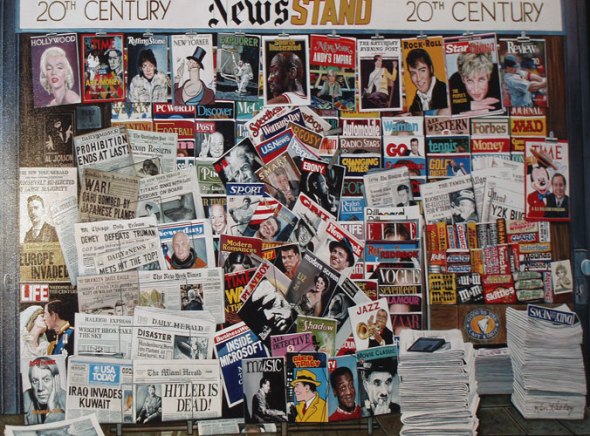
Twentieth Century Newsstand, by Ken Keeley
Boston Olympics Update
On Saturday, I wrote an anguished post about a the Olympic Committee submitting Boston as the U.S. location for the Summer Olympics in 2024. I think this would be a disaster for the city I love. Today The Boston Globe reported on the organized opposition to bringing the Olympics here.
Boston’s Olympic Opposition Lays Out Arguments and Plans.
Boston Mayor Marty Walsh and the Olympic bidding group Boston 2024 have said they believe the majority of the public supports holding the 2024 Summer Games in the Hub. With little public polling on the issue to this point, it’s hard to judge whether that’s the case.
But if No Boston Olympics, the group leading the opposition to the city’s bid, does represent a minority, it showed that it plans to be a vocal one at a public meeting it held in the Back Bay Tuesday night. More than 100 people attended the meeting at the First Church in Boston.
The meeting featured a talk by sports economist and Smith College professor Andrew Zimbalist.
Zimbalist, who has written extensively on the lack of economic benefits sporting events like the Olympics bring to cities and countries, scoffed at the idea that Boston’s bid can be done on a $4.5 billion budget for operating expenses, and said he was skeptical that the budget can be entirely privately financed (as is proposed by Boston 2024). Boston 2024 also says public money would go toward infrastructure and security.
Zimbalist discussed some of the hidden expenses to hosting the Olympics, including the loss of advertising revenue on the MBTA during the Olympics. (The International Olympic Committee has historically required control of advertising space in the host city during and around the Olympics. An example of host city requirements built into the bidding process can be seen here, from page 213 on.) He also said that construction costs can go up if planning falls behind at all, because projects may need to be done in a rush as the Games approach.
“It’s one thing to have a nice idea and say the private sector is going to cover this,” he said. “It’s another thing to have hard contracts.”
On possibility the group is considering is getting a question on the ballot in 2016. This has worked in some cities in the past.
In other cities across the country and the world, opposition groups to Olympic bids have gone directly to the voters. Bids for the 2022 Winter Olympics lost in referendums in Poland and Switzerland.
Perhaps most famously, Colorado voted not to put any state money toward a 1976 Denver Winter Olympics bid. At the time of the bid, Colorado had already been awarded the games for that year by the IOC. But voters said no, leaving the IOC high and dry and in need of a new host. (It got one, in Innsbruck, Austria.) [….]
But going to the voters is not the only method opposition groups have used to oppose the games. A referendum in Oslo, Norway, over whether to host the 2022 Games passed in 2013. Even so, that bid was eventually dropped as the public soured on the idea over the course of the next year. And in Chicago’s bid for the 2016 Games, the Windy City’s opposition group had the opportunity to meet with the IOC and voice its concerns. The IOC ended up choosing Rio, Brazil. It’s also possible the Olympic bid could turn into a 2016 state elections issue.
How do voters feel about the Olympics coming here?
Public opinion polling on the Boston bid has been pretty sparse, but in a survey of likely Massachusetts voters earlier this year, The Boston Globe found 47 percent support for pursuing a bid, with 43 percent against. When asked if they supported taxpayer money going to funding the games, 64 percent of respondents were against the idea, though.
So there is a realistic chance of preventing what I believe would be a terrible mistake.

Boko Harum Attacks
I thought I’d follow up on Dakinikat’s post from Monday, in which she called out the hypocrisy the media and cultural elites for expressing faux outrage over the Charlie Hebdo attack in Paris, while basically ignoring the horrific Boko Harum attacks in Nigeria. Other writers around the internet also noted the disparity in coverage; and several days later, the corporate media has begun to call more attention to the Nigerian situation.
From CNN, Satellite images show devastation of Boko Haram attacks, rights groups say.
Charred ground and cinders mark the sites where once thousands of homes stood. That’s according to a series of satellite images released Thursday by Amnesty International, which the rights group said shows the “horrific scale” of the devastation wrought by Boko Haram militants.
As they’ve trickled out, accounts of the bloody attackson the northern Nigerian town of Baga and surrounding villages have shocked even those all too used to reports of violence by Boko Haram militants.
Witnesses told how the attackers sped into the town on January 3 with grenade launchers — their gunfire and explosions shattering the early morning calm. Some terrified residents fled, while others took refuge in their homes — and were torched with them.
Local officials reported death tolls ranging from hundreds to as many as 2,000 people. But authorities have yet to access the remote area near the border with Chad to get a full picture.
View the before and after satellite images at the CNN link. Tens of thousands of people have been displaced by the attacks.
Of the 30,000 people displaced during the latest attacks, 20,000 camped in Maiduguri city, capital of Borno state, while another 10,000 headed to Monguno town, nearer Baga. Others were stranded on Kangala Island on Lake Chad.
“These people are adding to the hundreds of thousands of internally displaced people and refugees, who have already stretched the capacity of host communities and government authorities,” Amnesty International said….
Boko Haram has terrorized northern Nigeria regularly since 2009, attacking police, schools, churches and civilians, and bombing government buildings.
It has also kidnapped students, including more than 200 schoolgirls who were abducted in April — and remain missing.

Out of Print, by Mariam Meckel
NBC Nightly News reported on Boko Haram’s apparent use of the kidnapped girls as unwitting suicide bombers.
Three suicide bombings by girls aged as young as 10 suggest that Nigeria’s Boko Haram has employed a new tactic of forcing abducted children to blow themselves up, according to experts.
The Islamist sect has been carrying out almost daily killings and kidnappings across northeast Nigeria in a campaign of violence now in its sixth year. Deadly attacks on Saturday and Sunday were carried out by three young female suicide bombers.
These came just days after a week-long killing spree by Boko Haram, in which the group torched at least 10 towns leaving around 2,000 people unaccounted for. Secretary of State John Kerry on Thursday called the attack “a crime against humanity.”It is not clear if the girls were coerced or were even aware they were strapped with explosives, which may have been detonated remotely. But experts say that Boko Haram appears to be using the children it kidnaps — such as the 276 Chibok girls who sparked the #BringBackOurGirls social media campaign — and using them as a readily available supply of suicide bombers.
“It is highly likely that Boko Haram is conscripting young girls to use as suicide bombers,” said Elizabeth Donnelly, assistant head of the Africa program at London’s Chatham House think tank. She told NBC News that these conscripts were little more than “slaves fed by countless abductions since the crisis started.”
Boko Haram roughly translates to “Western education is sinful.” The group aims to create its own state based on strict Islamic law.

Newsstand, by Linda Apple
At Huffington Post, Okello Kelo Sam wrote about the #RememberOurGirls twitter campaign, Amid Boko Haram’s Latest Killings: I Vow to #RememberOurGirls.
Eight months is a long time. Long enough for international outrage to rise, fall and fade away. That’s how long it’s been since Boko Haram militants stormed a secondary school in the northeastern village of Chibok in Borneo State, abducting more than 200 still-missing teenage girls.
A global Twitter campaign – #BringBackOurGirls – caught fire with the help of US First Lady Michelle Obama, former US Secretary of State Hilary Clinton, UK Prime Minister David Cameron and, most importantly, millions of global hashtag activists. They focused the world’s attention on the girls, leading to support from the US, UK, France, Canada, China, Iran and Israel, reportedly in the form military intelligence and special forces…..
Meanwhile, the international efforts to recover the girls failed. So did several rounds of negotiations to exchange the girls for the release of captured Boko Haram fighters held in Nigerian jails….
Sam himself was a victim of the violence in Africa. He was abducted and forced to be a child soldier in Uganda. He was able to escape, but later his younger brother was also forced into combat with Joseph Kony’s group and lost his life.
Yes, I lost my brother. But I never lose hope. I do, however, fear hope for the Nigerian girls is slipping away, internationally. Media tickers marking the days since their abduction have disappeared from front pages, web pages and broadcast reports. Sometimes I wonder: Does anyone still remember the 219 missing girls?
They do in Abuja. Every day the Bring Back Our Girls demonstrators – which fueled the hashtag campaign – rally at Unity Fountain in Abuja, Nigeria’s capital. Families of the missing girls, neighbors, and fellow countrymen congregate and chant the now-familiar mantra: “Bring back our girls.” [….]
It’s easy to naysay advocacy efforts like #BringBackOurGirls as “slacktivism.” After four million Tweets, the 219 girls have not been rescued. So what’s the point, right? Wrong. Until a social-media savvy Nigerian lawyer, Ibrahim Abdullahi, came up with #BringBackOurGirls, there was a practical media blackout of the abductions.
Had it not been for this social media campaign I wonder if anyone outside of Africa would know about the Chibok girls? Would the story have lasted more than one news cycle in the West? Would you be reading this now?
No, social media won’t return the girls. But it got my attention and probably yours. It’s been said by the demonstrators what is needed is a renewed campaign to once again gain mindshare of a distracted world. Mine is one voice of millions demanding the girls’ rescue. But I stand in solidarity with those at Unity Fountain and declare this My 2015 Resolution: I will #RememberOurGirls.
Please go read the whole article at HuffPo. Today, I resolve to remember those lost girls.
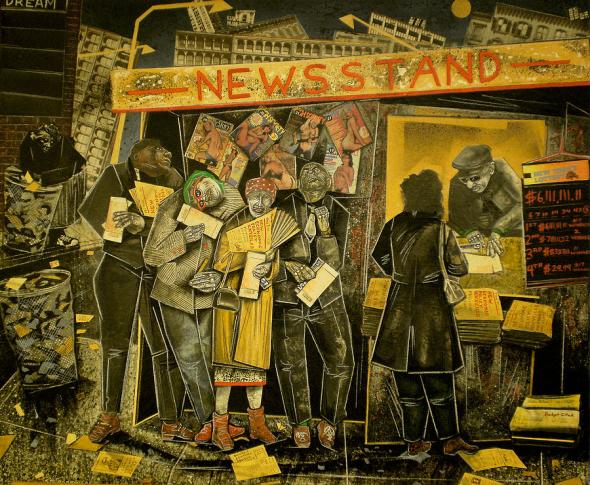
Newsstand, by Sol Robbins
In Other News . . .
CNN, After four years, American cartoonist Molly Norris still in hiding after drawing Prophet Mohammed.
Vox, Vox got no threats for posting Charlie Hebdo cartoons, dozens for covering Islamophobia
NYT, Oklahoma to Resume Executions 9 Months after a Lethal Injection Went Awry.
WCVB Boston, Phase 2 of jury selection set to begin in Tsarnaev trial: Judge set to start questioning prospective jurors.
The Hill, GOP presidential convention to be held earlier in 2016.
SFGate, Ohio man accused of plotting to attack US Capitol, arrested.
ABC News, Dad Accuses FBI of Setting Up ‘Mommy’s Boy’ Son in Bomb Plot.
WaPo, Teachers: Ohio man accused in terror plot a typical student.
Global Research, FBI Thwarts Terror Plot on Capitol (That They Planned).
Vox, Days after free-speech rally, France arrests a comedian for this Facebook post.
Mediaite, ‘Je Suis Confused’: Stewart Tackles France’s Hypocrisy for Arresting Comedian.
CBS New York, De Blasio: I Won’t Apologize To Police For My ‘Fundamental Beliefs’.
What stories are you following today? Please post your thoughts and links in the comment thread and have a tremendous Thursday!
Tuesday Reads
Posted: January 13, 2015 Filed under: Barack Obama, Foreign Affairs, morning reads, U.S. Politics | Tags: 47 percent, Barbara Boxer, Charlie Hebdo magazine attack, Dick Morris, Gavin Newsome, golden globes, Jack Ohman, Kamala Harris, laws protecting satire, Mitt Romney, Paul Ryan, Ted Cruz 42 Comments
Good Morning!!
At left is the cover of the next issue of Charlie Hebdo. It depicts the Prophet Muhammed holding a “Je suis Charlie” sign, with the words “all is forgiven” over his head.
The Wall Street Journal: Charlie Hebdo Puts Muhammad on Cover of Post-Attack Issue.
PARIS—Since Charlie Hebdo lost eight staff members in a terrorist attack last week, millions of people have declared their support to the French satirical magazine with the slogan “Je Suis Charlie.”
Now the often-caustic publication, faced with the challenge of reconciling its new status as a cause célèbre with its reflex to mock, ridicule and offend, is putting a caricature of the Prophet Muhammad on the cover of what is likely to be their most-read issue ever.
Distributors said Monday they were preparing to print as many as three million copies of Wednesday’s issue, 50 times the normal circulation. That is raising pressure on a small outlet known for skewering all forms of authority—including some that have rushed to its defense.
Suddenly the political and social elites who most likely had never heard of the small satirical magazine before the attack are parading around Paris and the Golden Globes pretending to be defenders of free speech. And what about the U.S. “journalists” who are little more than corporate lackeys who echoed right wing memes about President Obama supposedly not caring enough to attend a rally in France?
“It’s been extremely moving—and also hypocritical,” said Laurent Léger, a reporter for the magazine who survived the shooting. “All of a sudden, we are supported by the entire world. Whereas for years we were completely alone.” [….]
Another target for this week’s issue is likely to be Sunday’s solidarity march in France, surviving staff members said. The massive rally became a magnet for French and international political figures that have been a mainstay in Charlie Hebdo’s pages. Attendees included dignitaries from Turkey, Egypt, and Russia, countries that it has criticized for curbing free speech.
“All those dictators at a march celebrating liberty,” Mr. Léger said. “We of course are going to continue the mockery. We’ll see if it makes them jump.”

That’s great news. As Dakinikat trenchantly pointed out yesterday, these same elites routinely ignore horrifying acts of terrorism that kill people who aren’t as high profile as the victims in Paris. And, as Dak also pointed out, it turns out those world leaders in Paris didn’t really march with the hoi-polloi. They just participated in a fake photo that showed them pretending to march. Dakinikat also posted this story from The Daily Banter in a comment yesterday, but I think it deserves to be front paged.
Now That These Leaders Are Done Pretending to March, They Should Pass Legislation Protecting Satire, by Bob Cesca.
President Abbas marched in Paris on Sunday, but a satirist in Gaza has been jailed for poking fun at the Palestinian leader.
It’s entertaining to observe the lengths to which American conservatives will overreach in order to make a nothing issue into a major scandal. Such is the case following the unity march in Paris, attended by 3.7 million people and world leaders from 40 nations. As we covered earlier today, conservatives all around are busily scolding and shaming the president for not walking hand-in-hand with those leaders, even though no president has ever marched in a protest rally overseas. Ever. But this president is, for some reason, held to a different standard than the 43 previous chief executives. It’s about “optics” they say. I often agree with that criticism and I agree that optics are important — except for the fact that no other president has been responsible for creating similar optics.
There’s another layer to this fracas. While lionizing the world leaders who marched in Paris, allegedly in support of Charlie Hebdo and free speech, critics of the president are neglecting two very important points.
1) British Prime Minister David Cameron, German Chancellor Angela Merkel, Israeli Prime Minister Benjamin Netanyahu, Palestinian President Mahmoud Abbas and French President Francois Hollande weren’t actually marching with the demonstrators. Their participation was staged on an empty street surrounded by security and merely photographed to look like it was part of the broader rally. It wasn’t.
2) Take a guess at how many of the nations represented by those leaders have statutes protecting satire as free speech? Not one. Indeed, there’s only one western nation where satire is protected speech. It’s the United States. Thanks to the Supreme Court’s unanimous decision in Hustler Magazine, Inc. v. Falwell, Americans can’t be sued by other Americans for producing satire against public figures — regardless of whether the satire describes Jerry Falwell having incestuous sex or whether Saturday Night Live lampoons the president. They can try to sue, but the suit will never see the light of day.
So, while we’re applauding those 40 leaders for marching in a staged photo-op in support of a satirical magazine, bear in mind that none of those leaders come from nations where satirical speech is protected. In David Cameron’s England, for example, the prime minister or any public figure can sue cartoonists, writers, filmmakers or the producers of an SNL-style sketch show for making fun of them on television or elsewhere, and those lawsuits can actually be adjudicated and the plaintiffs can win. The same is true across the European Union and absolutely throughout the Middle East.
Frankly, I wish the White House hadn’t backed down and apologized.

One of the loudest voices criticizing the president for not going to a European “unity rally” was Texas Senator Ted Cruz. Time Magazine actually published an op-ed by Cruz yesterday.
On Sunday, leaders representing Europe, Israel, Africa, Russia, and the Middle East linked arms and marched together down Place de la Concorde in Paris. But, sadly, no one from the White House was found among the more than 40 Presidents and Prime Ministers who walked the streets with hundreds of thousands of French citizens demonstrating their solidarity against radical Islamic terrorists.
In other news . . .
Now that Senator Barbara Boxer (D-CA) has officially announced that she won’t run for reelection, there’s a “New Gold Rush” in California, according to Bill Press at The Hill.
Barbara Boxer’s announcement that she will not seek reelection to the Senate has set off a frenzy in California not seen since the Gold Rush. Anybody could win. All you need is a pick, an ax and the ability to raise or cough up a minimum $40 million.
Wanna play? Lots of people do.
In fact, with Boxer and Dianne Feinstein occupying both Senate seats since the early ’90s, and Jerry Brown’s longtime lock on the governor’s office, younger California Democrats have been bottled up in a no man’s land for years, taking turns rotating among lesser state offices, waiting for their chance at the big time. Boxer pulled the plug. Now all that pent-up energy and ambition is bursting out. It’s fun to watch.
Three statewide officials might have the edge, but only because they’ve already run statewide a couple of times. State Attorney General Kamala Harris and Lt. Gov. Gavin Newsom have reached a pact not to run against each other, and Newsom’s already taken himself out of the race. That leaves Harris. But don’t count out state Treasurer John Chiang. He’s young, charismatic and still gets high marks for refusing to carry out former Gov. Arnold Schwarzenegger’s order to cut the minimum wage for state employees during a budget showdown.

Kamala Harris
Yesterday, Gavin Newsom announced that he’s not running for Boxer’s seat, and today Kamala Harris will announce that she’s throwing her hat into the ring. According to the LA Times story,
Former Los Angeles Mayor Antonio Villaraigosa and billionaire environmental activist Tom Steyer are seriously considering bids, as are several members of Congress. On the Republican side, Assemblyman Rocky Chavez and two former state GOP chairmen are weighing runs.
Former VP candidate Rep. Paul Ryan (R-WI) announced yesterday that he’s not going to climb into the GOP clown car in 2016. From an interview with NBC News:
“I have decided that I am not going to run for president in 2016,” Ryan said in a phone interview, noting that he is “at peace” with the decision he made “weeks ago” to forgo a bid for the White House.
“It is amazing the amount of encouragement I have gotten from people – from friends and supporters – but I feel like I am in a position to make a big difference where I am and I want to do that,” he said.
The nine-term congressman believes he can make that “big difference” in his new role as chairman of the influential House Ways and Means Committee rather than as a presidential contender.
The committee will meet Tuesday to kick off the new Congress. By announcing that he’ll pass on a White House run, Ryan hopes to demonstrate that he’ll devote his “undivided attention” to the committee, although he admits that it will be “bittersweet not being on the trail” as a candidate this upcoming cycle.
Ryan has never initiated an important piece of legislation and gotten it passed, but now he’s going to head one of the most powerful committees in Congress. Let’s hope he continues his lack of meaningful accomplishments.
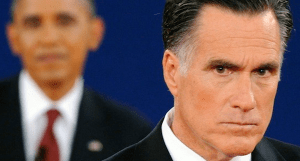
In other 2016 news, it looks like Mitt Romney is actually going to run for president for a third time. From The Washington Post, Romney moves to reassemble campaign team for ‘almost certain’ 2016 bid.
Mitt Romney is moving quickly to reassemble his national political network, calling former aides, donors and other supporters over the weekend and on Monday in a concerted push to signal his seriousness about possibly launching a 2016 presidential campaign.
Romney’s message, as he told one senior Republican, was that he “almost certainly will” make what would be his third bid for the White House. His aggressive outreach came as Rep. Paul Ryan (R-Wis.) — Romney’s 2012 vice presidential running mate and the newly installed chairman of the House Ways and Means Committee — announced Monday that he would not seek the presidency in 2016.
Romney’s activity indicates that his declaration of interest Friday to a group of 30 donors in New York was more than the release of a trial balloon. Instead, it was the start of a deliberate effort by the 2012 nominee to carve out space for himself in an emerging 2016 field also likely to include former Florida governor Jeb Bush, New Jersey Gov. Chris Christie and Wisconsin Gov. Scott Walker.
Romney has worked the phones over the past few days, calling an array of key allies to discuss his potential 2016 campaign. Among them was Ryan, whom Romney phoned over the weekend to inform him personally of his plans to probably run. Ryan was encouraging, people with knowledge of the calls said.
Other Republicans with whom Romney spoke recently include Sens. Kelly Ayotte (N.H.) and Rob Portman (Ohio), former Minnesota governor Tim Pawlenty, Hewlett-Packard chief executive Meg Whitman, former Massachusetts senator Scott Brown, former Missouri senator Jim Talent and Rep. Jason Chaffetz (Utah).
According to Politico’s Maggie Haberman and James Hohmann, Romney is promising he’ll be ‘different’ this time.
…interviews with more than a dozen staffers and supporters who have recently spoken with Romney reveal conversations in which he promises a “different” path forward without providing specifics about what that means as far as mechanics and his own sometimes gaffe-ridden performance. And, aside from most of his communications team, Romney would still be expected to bring back the majority of his old staff, sources said.
“He really has to show people that he’d do it differently, rather than just say he’d do it differently,” said a former top adviser to Romney, one of half a dozen alumni to speak Monday with POLITICO. “He needs to assure folks he’d take a much more direct approach to laying out the vision for his campaign versus having those decisions driven by a bunch of warring consultants.”

Mother Jones has posted a series of quotes in which Romney said he wouldn’t run again, along with the famous “47 percent” video.
Finally, from Boomberg Politics, David Weigel reports that Not a Single Person Has Donated to Dick Morris’s Anti-Hillary Super PAC.
Hahahahahahahahaha!!!!
What else is happening? Please post your thoughts and links in the comment thread, and have a terrific Tuesday!
Monday Reads: Charlie Hebdo and Fashionable Faux and Haute Outrage
Posted: January 12, 2015 Filed under: Barack Obama, Foreign Affairs, morning reads, U.S. Politics | Tags: Boko Harum, Charlie Hebdo, faux outrage, golden globes, haute outrage, John Kerry, red state wingnuts 55 Comments Good Morning!
It’s one of those days where I feel that there is absolutely no news out there I want to share. I’m more than a bit irritated by the way the Charlie Hebdo attacks are being blithely used by some to try to score faux outrage points. I’m also equally mad that it now appears to be an attention-grabbing gimmick for the rich and banal.
The first thing to piss me off is that wingnuts are griping about our President not dropping everything to attend a French rally. I am really getting tired of every single thing being turned into an opportunity for racists to attack Obama.

This is the photo op that Obama was supposed to show up for.
France is in the EuroZone. This means the level of cooperation between European states is akin to New York’s relationship with Louisiana on many many levels. Some of its former colonies were also in attendance at the rally as was Bibi since the second attack killed and injured Israelis. The colonial nations are connected by language and much more. A rally isn’t a normal thing for any of head of state to attend unless a leader or head of state is part of the entity. I’d like to think it’s just about stupid Americans not having much of a clue about European Unification and the Colonial Age, but really it seems just another crazed meme from the pissed off red state hicks still longing for white hegemony. For example, CNN has really gone down the crapper to join in on this.
The heads of Great Britain, Germany and Israel were there.
But President Barack Obama didn’t attend a unity march in Paris on Sunday, days after the deadly attack on the satirical newspaper Charlie Hebdo. Nor did his secretary of state, John Kerry, who has deep ties to France.
Kerry was in India, attending an entrepreneurship summit with new Prime Minister Narendra Modi — with whom the United States is hoping to develop much closer trade ties.
Instead, the United States was represented by U.S. Ambassador to France Jane Hartley.
Attorney General Eric Holder was also in Paris, attending a security summit on combating terrorism. He recorded interviews that appeared on several U.S. news outlets Sunday, but was not spotted at the unity march.
No one from the administration would speak on record about the U.S. representation at the march.
“Attorney General Holder — a Cabinet level official — is representing the United States at the security meetings in Paris today. He is joined by the DHS Deputy Secretary [Alejandro] Mayorkas. The United States is represented at the march by Ambassador Hartley,” a senior Obama administration official said.
An administration official added: “As far as public signs of French solidarity from the U.S. — don’t forget several public statements from the President, his call to [French President Francois] Hollande and a condolence stop to the French embassy.”
Beyond that, the official said “all relevant components” of the U.S. government have been aiding their French counterparts, in some cases on “essentially a minute-by-minute basis to support their efforts.”
On Sunday night, a White House official who also asked not to be named added: “It is worth noting that the security requirements for both the President and (Vice President) can be distracting from events like this – for once this event is not about us!” The official did not address how other prominent world leaders were able to work around the security requirements.
How on earth would France even prepare for a presidential visit on such short notice? Well, anyway, most of the leaders were within an hour plane hop of Paris with the exception of a few middle eastern and African countries and they don’t require massive security.
On that note, I’m particularly pissed that we can still get all in a hissy about religious extremists practicing Islam that go on killing sprees when we ignore white Christian extremists. Then, we give Israel repeated passes on its war crimes against the Palestinian territories which should be a Palestinian state by now. It’s selective Faux Outrage. Did the entire world come over to us and rally when our home grown terrorists created horrific killing events? Or, did everyone just write it off as the usual few crazed Americans. Why do right wing christian terrorists get labeled crazed loners?
The deal is that any kind of mass killing is rare in France because France doesn’t allow its citizenry to run about the place with semiautomatic weapons as a general rule. Over here, white men go on killing sprees all the time and we’re lucky if any one notices. France also treats its transplants rather well instead, of continually telling them they don’t want them. Here’s three of the top ten Homegrown Terrorist Attacks in the US from a list of 10.
When white males of the far right carry out violent attacks, neocons and Republicans typically describe them as lone-wolf extremists rather than people who are part of terrorist networks or well-organized terrorist movements. Yet many of the terrorist attacks in the United States have been carried out by people who had long histories of networking with other terrorists. In fact, most of the terrorist activity occurring in the United States in recent years has not come from Muslims, but from a combination of radical Christianists, white supremacists and far-right militia groups.
Below are 10 of the worst examples of non-Islamic terrorism that have occurred in the United States in the last 30 years.
1. Wisconsin Sikh Temple massacre, Aug. 5, 2012. The virulent, neocon-fueled Islamophobia that has plagued post-9/11 America has not only posed a threat to Muslims, it has had deadly consequences for people of other faiths, including Sikhs. Sikhs are not Muslims; the traditional Sikh attire, including their turbans, is different from traditional Sunni, Shiite or Sufi attire. But to a racist, a bearded Sikh looks like a Muslim. Only four days after 9/11, Balbir Singh Sodhi, a Sikh immigrant from India who owned a gas station in Mesa, Arizona, was murdered by Frank Silva Roque, a racist who obviously mistook him for a Muslim.
But Sodhi’s murder was not the last example of anti-Sikh violence in post-9/11 America. On Aug. 5, 2012, white supremacist Wade Michael Page used a semiautomatic weapon to murder six people during an attack on a Sikh temple in Oak Creek, Wisconsin. Page’s connection to the white supremacist movement was well-documented: he had been a member of the neo-Nazi rock bands End Empathy and Definite Hate. Attorney General Eric Holder described the attack as “an act of terrorism, an act of hatred.” It was good to see the nation’s top cop acknowledge that terrorist acts can, in fact, involve white males murdering people of color.
2. The murder of Dr. George Tiller, May 31, 2009. Imagine that a physician had been the victim of an attempted assassination by an Islamic jihadist in 1993, and received numerous death threats from al-Qaeda after that, before being murdered by an al-Qaeda member. Neocons, Fox News and the Christian Right would have had a field day. A physician was the victim of a terrorist killing that day, but neither the terrorist nor the people who inflamed the terrorist were Muslims. Dr. George Tiller, who was shot and killed by anti-abortion terrorist Scott Roeder on May 31, 2009, was a victim of Christian Right terrorism, not al-Qaeda.
Tiller had a long history of being targeted for violence by Christian Right terrorists. In 1986, his clinic was firebombed. Then, in 1993, Tiller was shot five times by female Christian Right terrorist Shelly Shannon (now serving time in a federal prison) but survived that attack. Given that Tiller had been the victim of an attempted murder and received countless death threats after that, Fox News would have done well to avoid fanning the flames of unrest. Instead, Bill O’Reilly repeatedly referred to him as “Tiller the baby killer.” When Roeder murdered Tiller, O’Reilly condemned the attack but did so in a way that was lukewarm at best.
Keith Olbermann called O’Reilly out and denounced him as a “facilitator for domestic terrorism” and a “blindly irresponsible man.” And Crazy for God author Frank Schaffer, who was formerly a figure on the Christian Right but has since become critical of that movement, asserted that the Christian Right’s extreme anti-abortion rhetoric “helped create the climate that made this murder likely to happen.” Neocon Ann Coulter, meanwhile, viewed Tiller’s murder as a source of comic relief, telling O’Reilly, “I don’t really like to think of it as a murder. It was terminating Tiller in the 203rd trimester.” The Republican/neocon double standard when it comes to terrorism is obvious. At Fox News and AM neocon talk radio, Islamic terrorism is a source of nonstop fear-mongering, while Christian Right terrorism gets a pass.
3. Knoxville Unitarian Universalist Church shooting, July 27, 2008. On July 27, 2008, Christian Right sympathizer Jim David Adkisson walked into the Knoxville Unitarian Universalist Church in Knoxville, Tennessee during a children’s play and began shooting people at random. Two were killed, while seven others were injured but survived. Adkisson said he was motivated by a hatred of liberals, Democrats and gays, and he considered neocon Bernard Goldberg’s book, 100 People Who Are Screwing Up America, his political manifesto. Adkisson (who pleaded guilty to two counts of first-degree murder and is now serving life in prison without parole) was vehemently anti-abortion, but apparently committing an act of terrorism during a children’s play was good ol’ Republican family values. While Adkisson’s act of terrorism was reported on Fox News, it didn’t get the round-the-clock coverage an act of Islamic terrorism would have garnered.
Go to the link to read the rest.
I’m just getting tired of Faux news and Faux outrage and selective attention. But, I’m not the only one. Here’s a Dutch Cartoonist that works at Charlie Hebdo.
A prominent Dutch cartoonist at Charlie Hebdo heaped scorn on the French satirical weekly’s “new friends” since the massacre at its Paris offices on Wednesday.
“We have a lot of new friends, like the pope, Queen Elizabeth and (Russian President Vladimir) Putin. It really makes me laugh,” Bernard Holtrop, whose pen name is Willem, told the Dutch centre-left daily Volkskrant in an interview published Saturday.
France’s far-right National Front leader “Marine Le Pen is delighted when the Islamists start shooting all over the place,” said Willem, 73, a longtime Paris resident who also draws for the French leftist daily Liberation.
He added: “We vomit on all these people who suddenly say they are our friends.”
Commenting on the global outpouring of support for the weekly, Willem scoffed: “They’ve never seen Charlie Hebdo.”
“A few years ago, thousands of people took to the streets in Pakistan to demonstrate against Charlie Hebdo. They didn’t know what it was. Now it’s the opposite, but if people are protesting to defend freedom of speech, naturally that’s a good thing.”
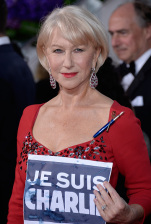 Exactly. No more was this “fashionable” side of protest noticeable than at the Golden Globes where “Je Suis Charlie” signs were as rampant on the red carpet as haute couture. Call it Haute Outage. Nothing says poseur like holding a protest sign at an event designed to make Big Hollywood feel like they’re relevant to anything but the bread and circuses that entertain Fox Nation when they’re not glued to ESPN.
George Clooney led the Hollywood charge at Sunday’s Golden Globes lending public support to Charlie Hebdo, the satirical Parisian newspaper attacked last week by armed gunmen. The Cecil B. DeMille Award winner walked the red carpet with a black and white “Je Suis Charlie” button on his tux, while wife Amal Alamuddin wore a Charlie Hebdo tribute on her purse.
Clooney tonight receives the Cecil B. DeMille Award for “outstanding contributions to the world of entertainment.” In an open letter penned today, Harvey Weinstein called for tonight’s Globes attendees to remember those killed in the January 7 attack: “Charlie Hebdo is a reminder of the beauty of art and the beauty of language. No one can ever defeat the ability of great artists to show us our world.”
More updates on Hollywood’s solidarity with Charlie Hebdo as they come…
Raise your hand if you think any of these folks even knew what Charlie Hebdo was prior to this.
 It’s one thing to be in solidarity with humanity suffering but it’s a completely different thing to do this only at one instance of slaughter while not noticing that a day later THIS HAPPENED:
At least 19 people are reported to have been killed when militants strapped a bomb to a girl estimated to have been about 10 years old and sent her into a crowded poultry market in Maiduguri in Borno State.
Read that and ask yourselves why I had to pull that story off of an African news site. Boko Harum insurgents most likely killed 2000 people in a small village in Nigeria filled with old people and children. The only mainstream site that I’ve found reporting these massive terror attacks is MSNBC and Melissa Harris Perry. Where the fuck is the outrage on that?
Believe me, I find the Charlie Hebdo killings horrible. And, so do most Muslims, which is another freaking faux meme that keeps floating around when these things happen. So, Benjamin Netanyahu goes to a rally to bring attention to the shootings. But what about this? And so I also say fuck off to all those racists that say that no Muslims of any stature condemn religious extremism.
Hezbollah leader on Charlie Hebdo: ‘Extremists more offensive to Islam than cartoons’.
Islamic extremists following a ‘takfiri’ ideology are more offensive to the Prophet Mohammed than Western satirical cartoons, chief of the Lebanese military faction Hezbollah, Hasan Nasrallah, said following the Charlie Hebdo terrorist attack.
“The behavior of the takfiri groups that claim to follow Islam have distorted Islam, the Koran and the Muslim nation more than Islam’s enemies … who insulted the prophet in films… or drew cartoons of the prophet,” the Hezbollah leader said in a televised speech to mark the birthday of the Prophet Mohammed, according to Lebanon’s Daily Star.
Militant Islam practices a ‘takfiri’ doctrine that allows it to brand other Muslims apostates for allegedly going against the faith’s true teachings.
A tragic attack on Wednesday took the lives of 12 people, when armed gunmen stormed the offices of satirical magazine Charlie Hebdo in Paris, prompting a citywide manhunt. The magazine had printed cartoons that mocked the Prophet.
Nasrallah went on to say that “Takfiris are the biggest threat to Islam, as a religion [and] as a message.”
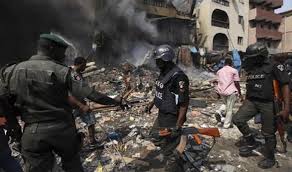 I hate it when the mainstream media and the popstars of the world get selective on us when it comes to loss of life and to the definition of terror. Not one child that died in Nigeria of the thousands last week deserves any less media attention and less fashion statements at a televised Hollywood onanist event. Really.
I don’t care if my President attends a rally. I want him to find a way to stop Boko Harum. I don’t want my Secretary of State at a Rally. I want him finding a way to an independent Palestinian state that’s safe from invasion and not treated like a personal gulag. Joe Biden, well, meh. Send him. But frankly, I think it was far more personal for the President to go the French Consul and express condolences to the French Ambassador and to the People of French in the pages of their book. I don’t want Faux and Haute Outrage. I want effective national policy to control our home grown terrorists in the same way the French will be searching for their policies.
There I go getting radical again. But, today, I am not Charlie.
Today, I am that 10 year old girl that was used as a human bomb to kill others that no one noticed. She was probably one of the girls stolen from her school that every one’s now forgotten. If not, she is still one of “our girls”. There should be no lack of outrage or coverage on this but there is only lack of coverage and and silence.
I also will be waiting for the list of christian leaders expressing outrage at the extremist event to be held in Baton Rouge that’s hosted by our Governor on the January 24th. On that day, I will be every GLBT person that’s died simply because they were born that way. Now if I could just find a red carpet and some paparazzi.

 peej
peej Carissa
 bostonboomer
 dakinikat
 ecocatwoman
 jjlo
jjlo mablue2
 Mama Lopez
 peggysue22
 quixote
 skydancingguestblogger
 Mona (aka Wonk the Vote)





Recent Comments