Posted: August 13, 2015 | Author: bostonboomer | Filed under: Crime, Criminal Justice System, education, Media, misogyny, morning reads, Republican politics, The Media SUCKS, U.S. Politics | Tags: abortion, China, elementary school, GOP Clown Car, Hillary Clinton, homework study, Jimmy Carter, Julian Assange, Mike Huckabee, Planned Parenthood, play, Tianjin explosions, Wikileaks |
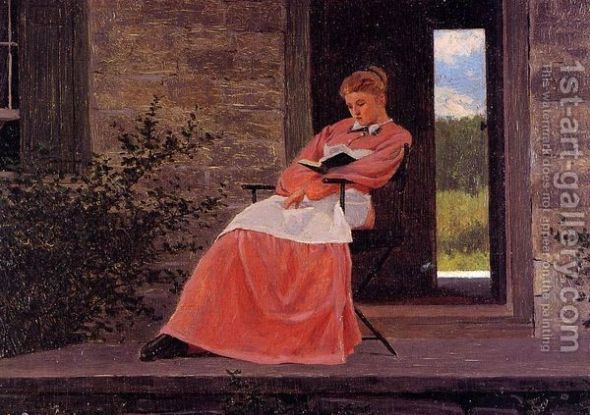
Girl reading on a stone porch, by Winslow Homer
Good Morning!!
The images in this post are from the blog, Reading and Art. I don’t have any central theme this morning, just a mixed bag of news stories. beginning with damaging explosions in Tianjin, China.
CNN reports, Tianjin blasts: Dozens dead; areas of Chinese port city devastated.
But what was it that set off the terrifying blasts that ripped through warehouses housing hazardous chemical materials, sending fireballs shooting across the sky and shaking tall buildings more than 2 miles away?
Hours later, amid the destruction in this northern Chinese port city of more than 13 million, the exact cause remained unclear.
A thick chemical odor hung in the air. Fires still burned in the waterfront industrial district where the explosions went off. And the grim toll kept mounting.
At least 44 people are confirmed dead, 12 firefighters among them, officials said Thursday. More than 500 are hospitalized, 52 with severe injuries. Dozens of firefighters are missing.
Local authorities suspended firefighting efforts Thursday because of a lack of information about the “dangerous goods” stored at the warehouse at the heart of the blasts, the state-run Xinhua news agency said.
CNN has dramatic photos at the link. A few more stories on the disaster:
Vice News: Video Emerges of Horrific Tianjin Explosion as Death Toll Rises.
USA Today, 12 firefighters among 50 dead in Chinese port city explosions.
This is a developing story, and it sounds like the death toll is likely to rise.

Girl reading under an oak tree, by Winslow Homer
You’ve probably heard by now that Jimmy Carter has cancer that has spread from his liver to other organs.
Washington Post, Former president Jimmy Carter, 90, announces that he has cancer.
Former president Jimmy Carter announced Wednesday that he has cancer and will be undergoing treatment at Emory Healthcare in Atlanta.
Carter, 90, said the disease was discovered during recent liver surgery to remove “a small mass” and that the cancer “is now in other parts of my body.”
“I will be rearranging my schedule as necessary so I can undergo treatment by physicians at Emory Healthcare,” Carter said in a statement on the Carter Center Web site. “A more complete public statement will be made when facts are known, possibly next week.”
In a statement, President Obama said he and first lady Michelle Obama wished Carter “a full and fast recovery.”
“Our thoughts and prayers are with [wife] Rosalynn and the entire Carter family as they face this challenge with the same grace and determination that they have shown so many times before,” Obama said in a statement released by the White House. “Jimmy, you’re as resilient as they come, and along with the rest of America, we are rooting for you.”
The president also spoke with Carter on Wednesday evening to wish him “full and speedy recovery” and extended best wishes on behalf of himself and first lady Michelle Obama, White House spokesman Eric Schultz said.
According to NBC News, Carter said “a more complete public statement will be made when facts are known, possibly next week.”

Sunlight and shadow, by Winslow Homer
Sweden has dropped some of its charges against Julian Assange.
Wall Street Journal, Sweden Runs Out of Time on Parts of Assange Probe.
STOCKHOLM—Swedish prosecutors on Thursday ran out of time to pursue two of four investigations into allegations of sexual assault against WikiLeaks founder Julian Assange, who has been living at the Ecuadorean embassy in London since 2012 to avoid extradition to Sweden for questioning.
Prosecutors said that probes into suspected unlawful coercion and sexual molestation would be dropped as the five-year limit that Swedish law allows for such charges to be brought has come to an end.
The five-year deadline for a second count of sexual molestation will be reached Aug. 18, prosecutors said. If the statute of limitation on that allegation also comes into effect, Mr. Assange would be left facing a single, more serious accusation of rape, over which prosecutors have until 2020 to question him….
Mr. Assange was accused of the crimes by two women during a visit to Sweden in August 2010. Prosecutors requested Mr. Assange return to Sweden from the U.K to face questioning.
The WikiLeaks founder, who denies the crimes, refused to return to Sweden, saying he feared he would extradited from Sweden to the U.S. where he could face trial over the publication by WikiLeaks of classified U.S. documents.
Assange says he is disappointed, according to BBC News.
The Wikileaks founder said he was “extremely disappointed” and said the Swedish prosecutor had avoided hearing his side of the story….
He sought asylum in the Ecuadorian embassy in London in 2012 to avoid extradition to Sweden, fearing he would then be sent to the US for questioning about the activities of Wikileaks.
Under Swedish law, charges cannot be laid without interviewing the suspect.
Mr Assange said he was innocent and claimed prosecutors had refused to visit him at the embassy.
They also refused to promise not to send him to the US if he were to go to Sweden, he said.
Mr Assange said: “I am strong but the cost to my family is unacceptable.”

The new novel, by Winslow Homer
In clown car news, Mike Huckabee said some more insane things about Planned Parenthood and abortion.
Talking Points Memo, Huckabee: DOJ Should ‘Criminally Prosecute Planned Parenthood.’
Former Arkansas Gov. Mike Huckabee (R) on Wednesday laid out how he would tackle Planned Parenthood without the support of Congress if he were elected president.
When asked on about Iowa radio host Simon Conway about Republican efforts to defund Planned Parenthood after an anti-abortion group released numerous edited videos about the women’s health organization, Huckabee said he would use the Justice Department.
“I would have a Justice Department that would begin to criminally prosecute Planned Parenthood for violating federal law and selling body parts,” Huckabee told Conway….
“I would also invoke the 15th and Fourteenth Amendments,” he said on Wednesday. “This is the power that we have to stop this incredible, barbaric scourge of abortion. Not just stop funding Planned Parenthood, but we need to invoke the Fifth and 14th Amendment. The Fifth Amendment guarantees due process for every person. The 14th Amendment guarantees equal protection under the law for every person.”
Huckabee said that he believes that unborn children are people, guaranteeing them Fifth and 14th Amendment rights.
“I would take that position. I would act on behalf of those unborn children, and I would let those who want to slaughter babies, those who want to sell their body parts, let them sue me,” he said.
In response, Melissa McEwan writes:
Again, this is less like chipping away at Roe and more like taking a bulldozer to it.
I have said many times (for instance) that fetuses are valued more highly than the people who carry them, that the potential life of every fetus is more important than the actual life of a pregnant person. Never has this been more clear.
If Mike Huckabee, or any of his fellow Republican candidates, had their way, fetuses would have not equivalent rights, but more rights than any pregnant person.
Protip, Huckabee: “Slaughtering babies” is already against the law.

The country school, by Winslow Homer
CNN reports on a study showing that kids in elementary school are getting crushing amounts of homework.
Kids have three times too much homework, study finds; what’s the cost?
The study, published Wednesday in The American Journal of Family Therapy, found students in the early elementary school years are getting significantly more homework than is recommended by education leaders, in some cases nearly three times as much homework as is recommended.
The standard, endorsed by the National Education Association and the National Parent-Teacher Association, is the so-called “10-minute rule” — 10 minutes per grade level per night. That translates into 10 minutes of homework in the first grade, 20 minutes in the second grade, all the way up to 120 minutes for senior year of high school. The NEA and the National PTA do not endorse homework for kindergarten….
Parents reported first-graders were spending 28 minutes on homework each night versus the recommended 10 minutes. For second-graders, the homework time was nearly 29 minutes, as opposed to the 20 minutes recommended.
And kindergartners, their parents said, spent 25 minutes a night on after-school assignments, according to the study carried out by researchers from Brown University, Brandeis University, Rhode Island College, Dean College, the Children’s National Medial Center and the New England Center for Pediatric Psychology.

That is ridiculous and harmful. Children at younger ages learn far more from play and interacting with other kids than from regimented school assignments.
“It is absolutely shocking to me to find out that particularly kindergarten students (who) are not supposed to have any homework at all … are getting as much homework as a third-grader is supposed to get,” said Stephanie Donaldson-Pressman, the contributing editor of the study and clinical director of the New England Center for Pediatric Psychology.
“Anybody who’s tried to keep a 5-year-old at a table doing homework for 25 minutes after school knows what that’s like. I mean children don’t want to be doing, they want to be out playing, they want to be interacting and that’s what they should be doing. That’s what’s really important.”
The Pope is coming to the U.S., and one of his stops will be at a jail in Philadelphia.
Reuters: At drab Philadelphia jail, anxious times precede papal visit.
One of 17 stops on the pope’s first U.S. tour, the visit to the inner-city jail is a reminder of the emphasis the Argentine pontiff has placed on social justice issues since being named head of the Roman Catholic Church in March 2013.
The pope’s stop at the Philadelphia facility will be the latest in a series of prison visits by Francis, an outspoken opponent of the death penalty and lengthy prison terms. He has counseled teenagers in juvenile detention in Brazil. In Bolivia, he kissed inmates in the country’s most violent prison.
His visit also comes at a time when a growing number of Democrats and Republicans are questioning tough criminal sentencing policies that have left the United States with the highest incarceration rate in the developed world. Barack Obama, who last month became the first sitting U.S. president to tour a federal penitentiary, has called for legislation overhauling sentencing rules.
Advocates for prisoner rights say they are pleased the pope has decided to put the issue on his agenda during the U.S. tour, which will include attending a conference on family life in Philadelphia, plus stops in Washington and New York.

Morning glories, by Winslow Homer
I was going to write about Hillary and the media’s obsession with her emails, but I just couldn’t bring myself to do it. Instead, here’s an inspirational piece from Peter Daou and Tom Watson at #HillaryMen.
Hillary’s Path to History Will Get Much Rougher and She’s Ready.
There is a manic urge among the media, the GOP and the elite commentariat to Stop Hillary – to block a woman from reaching the pinnacle of American political leadership.
Each poll, news story or issue that appears to harm her is seized upon with a strange combination of desperation and glee. It’s an unsavory process but Hillary knew what she was in for when she decided to seek the presidency a second time.
As #HillaryMen, we’re undaunted by the negative stories, unwavering in our support for Hillary and unyielding in our commitment to help smash the ultimate gender barrier.
Ending a 44-0 shutout that has lasted nearly a quarter millennium was never going to be easy. There is no cakewalk to the White House. And certainly not for a woman.
We’ve worked in politics and media for nearly two decades. Peter is a veteran of two presidential campaigns, including Hillary’s 2008 run. We’ve seen every permutation of every attack, every rise and fall in the polls, every gaffe and every zinger, every debate moment and debate aftermath, every nervous election night and every election surprise.
We know what lies ahead for Hillary’s campaign and we realize there will be times when the obstacles seem insurmountable. They are not.
For all practical purposes, the 2016 race is just getting underway. As the first summer of the campaign winds down, the rhetoric heats up and political prognostications start climbing in pitch. The fall frenzy begins in a matter of weeks.
I plan to head over to #HillaryMen every time I get angry and/or anxious about something written or said about her in the media. In case you haven’t read it yet, here’s a link to “The Facts about Hillary Clinton’s Emails” at her campaign website.
What else is happening? Please post your thoughts and links on any topic in the comment thread, and enjoy your Thursday.
Did you like this post? Please share it with your friends:
Posted: August 11, 2015 | Author: bostonboomer | Filed under: Criminal Justice System, Democratic Politics, morning reads, U.S. Politics | Tags: #BlackLivesMatter, Bernie Sanders, Hillary Clinton, Martin O'Malley, Obamabots, Racism |
Good Morning!!
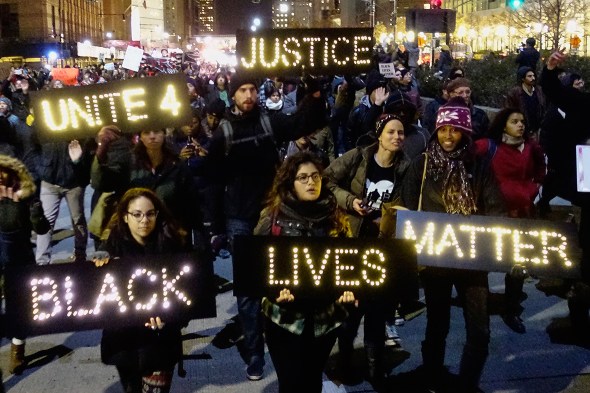
There has been quite a bit of discussion the past couple of days about the protesters who have been disrupting speeches by Bernie Sanders and Martin O’Malley. Why aren’t they doing this to Republicans? Why are they being so rude to Bernie Sanders, who many years ago marched for civil rights? There are people responding to these questions. Will the white people doing the questioning listen to the answers?
Here’s one response from Jamil Smith at The New Republic: #BlackLivesMatter Protesters Are Not the Problem. One year after Michael Brown’s death, both liberals and conservatives are still getting it wrong.
The activist group #BlackLivesMatter emerged out of the rage and mourning that accompanied George Zimmerman’s acquittal for the murder of Trayvon Martin more than three years ago. However, the first time that the hashtag—and its accompanying message—entered the American lexicon to stay was one year ago this past Sunday, when Michael Brown, another unarmed black teenager, was gunned down by a Ferguson, Missouri police officer, less than one month after an NYPD chokehold took Eric Garner’s life. On Sunday night, Ferguson reverted to its younger, violent self again, complete with a commemorative protest on West Florissant Avenue being met with police and things turning tragically violent in short order. And two days before the anniversary of Brown’s death, Christian Taylor became the 24th unarmed black man killed by police in 2015.
We might not have heard about Taylor in previous years because attention on black men, women, and children suffering violence and death at the hands of police, in particular, is now at a level unseen perhaps since the 1999 killing of Amadou Diallo. That’s backed up by a new Gallup pollindicating that Americans describing themselves as “satisfied with the way blacks are treated in U.S. society” is lower than it’s been since before the turn of the millennium. Ever since Ferguson, it’s evident that #BlackLivesMatter, in many respects, has worked.
In the last year, #BlackLivesMatter has—much like Occupy years beforehand—fundamentally changed the national conversation about a major societal ill. The movement has made millions of people aware of the white supremacy they either perpetuate themselves or support with their silence. With the emergence of the 2016 presidential campaign, #BlackLivesMatter’s demands have become more acutely focused on the candidates, pushing for policy platforms that address structural racism. Yet, as we mark one year since Brown’s death, we’ve seen both liberals and conservatives—from Senator Bernie Sanders’ supporters to Dr. Ben Carson’s—painting #BlackLivesMatter as a divisive force in U.S. racial relations. That someone might consider those fighting racism to be more divisive than racist people or structures would be laughable if black men in America weren’t seven times more likely to die by cop than white men.
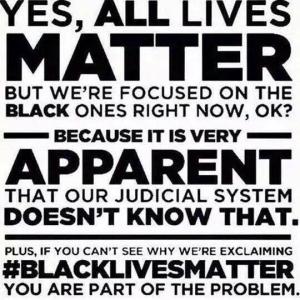
Yes, supporters of Bernie Sanders are upset that his events have been disrupted by black women protesting the killing of black men and women by police officers. Supposedly Sanders wants radical changes in the system, buit what are his proposals for changing structural racism in law enforcement?
More from Jamil Smith:
Sanders, given to touting his record of working for civil rights and uttering names like Sandra Bland since the Netroots incident, experienced a second interruption during a planned event in Seattle on Saturday. Two women and one man claiming affiliation with #BlackLivesMatter disrupted the event before the Vermont senator could speak. Some Sanders backers in the crowd booed when they were told that one of the women, Marissa Johnson, would get her say before the candidate. “Bernie, you were confronted at Netroots at by black women,” Johnson said before adding, “you have yet to put out a criminal justice reform package like O’Malley did.”
Having already responded to the crowd’s boos by telling them that they proved how “racist” the reputably liberal Seattle is, Johnson also called for a four-and-one-half minute-long moment of silence for Brown. Instead, more shouting from the crowd followed, including, per reports, shouts of “arrest her.” Sanders, rather than letting the protesters have their say and responding, left the stage. The event concluded without him speaking. A chorus of his supporters took to social media to question Johnson’s tactics—as if that’s what mattered most—and to tell anyone who dared question why Sanders didn’t have a set of racial-justice proposals that they somehow already existed. They were wrong.
A page entitled “Racial Justice” only appeared on his site early Sunday morning, containing a long list of proposals. A campaign representative reached out to me to say that those proposals, in the works for the three weeks since Netroots, were derived from a speech that’s been on the site since July 25. Given the pressure being put on them and the urgency they showed in creating the platform, it’s odd that the campaign put it online, essentially, under the cover of darkness.
The policies on Sanders’s racial justice page, while surely more welcome than none at all, are undeniably blurrier than those O’Malley put forth, and need considerably more specificity and clarity. There’s a lot of the typically forcefully liberal language Sanders likes to employ in order to inspire, but it seems even more fanciful than the O’Malley plan. But those ideas are certainly signs that he is hearing #BlackLivesMatter’s message. The problem isn’t so much him as it is his supporters, cursing protesters and later, on social media, touting their guy’s record whenever they are challenged on his (heretofore) lack of a platform regarding structural racism.
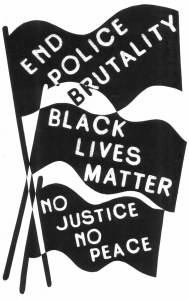
Please go read the whole article if you want to understand the anger of the #BlackLivesMatter protesters. Personally, I didn’t know that the movement began long before the killing of Michael Brown. Here’s some background from one of the founders in a piece at The Feminist Wire dated October 7, 2014: A Herstory of the #BlackLivesMatter Movement by Alicia Garza.
I created #BlackLivesMatter with Patrisse Cullors and Opal Tometi, two of my sisters, as a call to action for Black people after 17-year-old Trayvon Martin was post-humously placed on trial for his own murder and the killer, George Zimmerman, was not held accountable for the crime he committed. It was a response to the anti-Black racism that permeates our society and also, unfortunately, our movements.
Black Lives Matter is an ideological and political intervention in a world where Black lives are systematically and intentionally targeted for demise. It is an affirmation of Black folks’ contributions to this society, our humanity, and our resilience in the face of deadly oppression.
We were humbled when cultural workers, artists, designers and techies offered their labor and love to expand #BlackLivesMatter beyond a social media hashtag. Opal, Patrisse, and I created the infrastructure for this movement project—moving the hashtag from social media to the streets. Our team grew through a very successful Black Lives Matter ride, led and designed by Patrisse Cullors and Darnell L. Moore, organized to support the movement that is growing in St. Louis, MO, after 18-year old Mike Brown was killed at the hands of Ferguson Police Officer Darren Wilson. We’ve hosted national conference calls focused on issues of critical importance to Black people working hard for the liberation of our people. We’ve connected people across the country working to end the various forms of injustice impacting our people. We’ve created space for the celebration and humanization of Black lives.
As their slogan spread to the mainstream, the creaters of the #BlackLivesMatter movement saw others trying to change the meaning of their words:
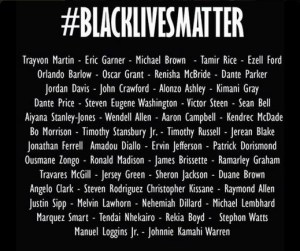
The Theft of Black Queer Women’s Work
Suddenly, we began to come across varied adaptations of our work–all lives matter, brown lives matter, migrant lives matter, women’s lives matter, and on and on. While imitation is said to be the highest form of flattery, I was surprised when an organization called to ask if they could use “Black Lives Matter” in one of their campaigns. We agreed to it, with the caveat that a) as a team, we preferred that we not use the meme to celebrate the imprisonment of any individual and b) that it was important to us they acknowledged the genesis of #BlackLivesMatter. I was surprised when they did exactly the opposite and then justified their actions by saying they hadn’t used the “exact” slogan and, therefore, they deemed it okay to take our work, use it as their own, fail to credit where it came from, and then use it to applaud incarceration.
I was surprised when a community institution wrote asking us to provide materials and action steps for an art show they were curating, entitled “Our Lives Matter.” When questioned about who was involved and why they felt the need to change the very specific call and demand around Black lives to “our lives,” I was told the artists decided it needed to be more inclusive of all people of color. I was even more surprised when, in the promotion of their event, one of the artists conducted an interview that completely erased the origins of their work–rooted in the labor and love of queer Black women.
Read more at the link.

Has Bernie Sanders responded to the prosecution of African American journalist Wesley Lowery yet? From yesterday’s Washington Post:
A Washington Post reporter who was arrested at a restaurant last year while reporting on protests in Ferguson, Mo., has been charged in St. Louis County with trespassing and interfering with a police officer and ordered to appear in court.
Wesley Lowery, a reporter on The Post’s national desk, was detained in a McDonald’s while he was in Missouri covering demonstrations sparked by a white police officer fatally shooting an unarmed black 18-year-old.
A court summons dated Aug. 6 — just under a year after Lowery’s arrest — was sent to Lowery, 25, ordering him to appear in a St. Louis County municipal court on Aug. 24. The summons notes that he could be arrested if he does not appear.
“Charging a reporter with trespassing and interfering with a police officer when he was just doing his job is outrageous,” Martin Baron, executive editor of The Post, said in a statement Monday. “You’d have thought law enforcement authorities would have come to their senses about this incident. Wes Lowery should never have been arrested in the first place. That was an abuse of police authority.
“This latest action represents contemptible overreaching by prosecutors who seem to have no regard for the role of journalists seeking to cover a major story and following normal practice,” Baron continued.
It seems the powers that be in Ferguson have learned very little. Democratic candidates should address this issue and so should Bernie Sanders, independent socialist.

I’ll end with this post by Melissa McEwan at Shakesville: Sanders and #BlackLivesMatter, Again.
I can understand why Sanders was aggravated that his event was disrupted, and I can understand why people who had been waiting for an hour and a half to hear him speak were aggravated that his event was disrupted. But here’s the thing: If you are positioning yourself as a candidate who advocates for radical change, or you are supporting a candidate on the basis that he advocates for radical change, then surely you should be able to get on board with providing space to people who are involved with a campaign that advocates radical change.
If disrupting a rally is too radical for you, I don’t know how you expect to disrupt systems of institutional oppression, which will take way the hell more than an unexpected change in a campaign event schedule.
Don’t pretend you’re supporting revolution when you’re really just supporting a change in management.
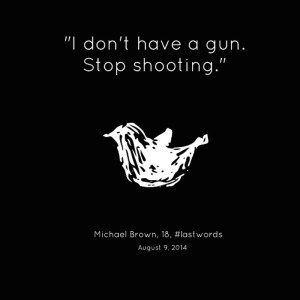
Sanders then released a “Statement on Seattle Protesters,” reading in total: “I am disappointed that two people disrupted a rally attended by thousands at which I was invited to speak about fighting to protect Social Security and Medicare. I was especially disappointed because on criminal justice reform and the need to fight racism there is no other candidate for president who will fight harder than me.”
I’m going to go ahead and say: Maybe that’s true! Maybe there really is no other candidate currently running for president who will fight harder for dismantling racism than Bernie Sanders! Maybe it’s also true that each of the candidates currently running will take different approaches, and, because the activists involved with #BlackLivesMatter aren’t a monolith, there will be disagreement on whose approach is best. And maybe, no matter how good any of the white Democratic presidential candidates are on racial issues, it won’t be good enough. Maybe the inescapable fact is that white people must let black people speak on the large platforms created by and for white candidates.
Again, please go read the whole thing, especially if you are supporting Sanders. Personally, I support Hillary Clinton. I like Bernie, but I think it’s time for a woman President of the U.S. Sanders has no chance to win the Democratic nomination–he’s not even a Democrat! But he isn’t the problem. The problem is his supporters, who remind me of the Obamabots of 2008. Let Bernie handle this situation. My guess is he’ll respond to the #BlackLivesMatter movement, because he’s an intelligent man. He’ll probably get it right in the long run. I think Hillary Clinton will too.
This is an open thread. Please post your thoughts and links on any topic in the comments to this post, and have a great day.
Did you like this post? Please share it with your friends:
Posted: August 10, 2015 | Author: dakinikat | Filed under: morning reads | Tags: #BLM, Black Lives Matter, Ferguson MO protests |
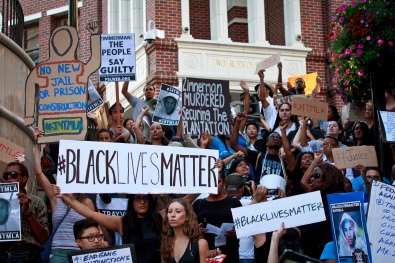 It’s Monday! The heat wave continues! We’ve also had another police involved shooting during peaceful protests at Ferguson. There is additional news on the Black Lives Matter (#BLM) protesters that have staged events at Bernie Saunders rallies. I’m going to focus today on the movement and its actions to bring further attention and action to the criminal justice system’s unequal treatment of Black Americans.
Both BB and I have felt highly compelled to write about the incredible challenges black communities face with law enforcement and the criminal justice system. We’ve both lived in communities with noticeable systemic racial injustice. The militarization of the police along with “broken windows” policing has taken a toll on police-community relations. Additionally, the FBI has warned that white supremacists and radical right influences have infiltrated police departments across the country which has likely had an impact on many of these killings and brutal behaviors.
Because of intensifying civil strife over the recent killings of unarmed black men and boys, many Americans are wondering, “What’s wrong with our police?” Remarkably, one of the most compelling but unexplored explanations may rest with a FBI warning of October 2006, which reported that “White supremacist infiltration of law enforcement” represented a significant national threat.
Several key events preceded the report. A federal court found that members of a Los Angeles sheriffs department formed a Neo Nazi gang and habitually terrorized the black community. Later, the Chicago police department fired Jon Burge, a detective with reputed ties to the Ku Klux Klan, after discovering he tortured over 100 black male suspects. Thereafter, the Mayor of Cleveland discovered that many of the city police locker rooms were infested with “White Power” graffiti. Years later, a Texas sheriff department discovered that two of its deputies were recruiters for the Klan.
In near prophetic fashion, after the FBI’s warning, white supremacy extremism in the U.S. increased, exponentially. From 2008 to 2014, the number of white supremacist groups, reportedly, grew from 149 to nearly a thousand, with no apparent abatement in their infiltration of law enforcement.
This year, alone, at least seven San Francisco law enforcement officers were suspended after an investigation revealed they exchanged numerous “White Power” communications laden with remarks about “lynching African-Americans and burning crosses.” Three reputed Klan members that served as correction officers were arrested for conspiring to murder a black inmate. At least four Fort Lauderdale police officers were fired after an investigation found that the officers fantasized about killing black suspects.
The United States doesn’t publicly track white supremacists, so the full range of their objectives remains murky. Although black and Jewish-Americans are believed to be the foremost targets of white supremacists, recent attacks in Nevada, Wisconsin, Arizona, Kansas and North Carolina, demonstrate that other non-whites, and religious and social minorities, are also vulnerable. Perhaps more alarmingly, in the last several years alone, white supremacists have reportedly murdered law enforcement officers in Arkansas, Nevada and Wisconsin.
As I mentioned, there was a police involved shooting last night after a day of peaceful protests and remembrances of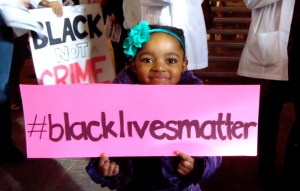 the one year anniversary of Michael Brown’s death. Brown’s death was the start of the Black Lives Matter Campaign.
A peaceful day of protest and remembrance dissolved into chaos late Sunday when a man fired multiple shots at four St. Louis County plainclothes detectives in an SUV. The detectives fired back and the shooter was struck, said county Police Chief Jon Belmar. He was in critical condition.
Tyrone Harris identified the victim as his son, Tyrone Harris Jr., 18, of St. Louis. Harris said shortly after 3 a.m. that his son had just gotten out of surgery.
He said his son graduated from Normandy High School and that he and Michael Brown Jr. “were real close.”
“We think there’s a lot more to this than what’s being said,” Harris Sr. said.
In a 2:30 a.m. press conference, Belmar said there is a “small group of people out there that are intent on making sure we don’t have peace that prevails.
“We can’t sustain this as a community,” he said.
Belmar said two groups of people exchanged gunfire on the west side of West Florissant Avenue at the same time the shooting took place, shortly after 11 p.m. Shots were heard for 40-50 seconds, Belmar said. “It was a remarkable amount of gunfire,” he said.
The people doing the shooting “were criminals,” Belmar said. “They were not protesters.”
Investigators recovered a 9 mm Sig Sauer that had been stolen in Cape Girardeau, Belmar said.
Protesters had blocked West Florissant Avenue north of Ferguson Avenue, and the detectives were tracking a man they believed was armed, along with several of his acquaintances, whom they also thought were armed.
In a chaotic scene, police officers, reporters and protesters ran for cover. People sprinted across the street and dived behind parked cars.
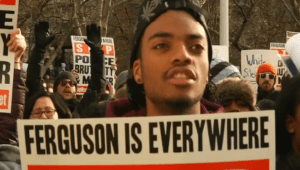 Senator and Democratic Presidential candidate Bernie Sanders continues to experience #BLM protests–most recently 2 days ago in Seattle–at rallies and campaign events. Sanders held a campaign event in LA today. Clinton continues to have overwhelming support in black and Hispanic communities as Sanders struggles to communicate his civil rights messages and agendas. Clinton discussed college affordability in New Hampshire today. Sanders LA event included black community leaders who specifically addressed #BLM concerns. This is a first for Sanders whose events tend to focus on middle class populist economic issues.
Sanders and the lawmakers who introduced him mentioned racial inequalities throughout the event, a nod to the Black Lives Matter movement and the Vermont senator’s earlier speech in Seattle that was shut down by protesters.
“Brothers and sisters, what a turnout,” Sanders said at the start of his speech. “It doesn’t seem true but we began this campaign about three and a half months ago, and the momentum has been unbelievable.”
The latest turnout, which was verified by arena staff, supersedes the more than 11,000 people who attended a Sanders rally in Phoenix in July. Doors were closed at the venue, according to arena staff, before the rally started. Sanders’ campaign said the candidate also spoke to around 3,000 people outside the venue who were not able to get inside.
The energized audience, many of whom lined up hours before the event, cheered at nearly everything he said. Sanders, his shirt soaked with sweat, said the turnout proved that “people are tired of establishment politics, establishment economics and they want real change.”
The atmosphere was markedly different than Sanders’ first event of the day, where Black Lives Matter protesters confronted the senator and shut down his event.
Though he did not directly address the earlier disturbance, Sanders cast himself as a lifelong fighter for civil rights.
“No President,” he said, “will fight harder to end the stain of racism in this country and reform our criminal justice system. Period.”
Later in the speech, Sanders touched on an issue Black Lives Matter protesters want to hear more on.
“It makes more sense to me to be investing in jobs and education for our kids than in jails and incarceration,” he said.
Sanders was introduced by a series of speakers, nearly all of whom mentioned Black Lives Matters.
“Sen. Sanders knows, as do I, that Black Lives Matter,” state Rep. Luis Moscoso said. “Racial inequality is as serious as economic inequality. No one should be dehumanized by their race.”
State Sen. Pramila Jayapal said Sanders knows “it is not enough just to say we care, it is not enough. What we have to do is call out personal, individual and institutionalized racism at every opportunity.”
Sanders’ campaign also announced Saturday that Symone D. Sanders, an African-American woman, has been hired as its national press secretary.
Jayapal wrote this Guest Editorial over the weekend.
1) This is one small result of centuries of racism. As a country, we still have not recognized or acknowledged what we have wrought and continue to inflict on black people. The bigger results are how black kids as young as two are being disciplined differently in their daycares and pre-k classes. That black people are routinely denied jobs that white people get with the same set of experiences and skills. That black people—women and men—continue to die at the hands of police, in domestic violence, on the streets. That black mothers must tell their children as young as seven or eight that they have to be careful about what pants or hoodies they wear or to not assert their rights if stopped. That this country supports an institutionalized form of racism called the criminal justice system that makes profit—hard, cold cash—on jailing black and brown people. I could go on and on. But the continued lack of calling out that indelible stain of racism everywhere we go, of refusing to see that racism exists and implicit bias exists in all of us, of refusing to give reparations for slavery, of refusing to have our version of a truth and reconciliation process—that is what pushes everything underneath and makes it seem like the fault is of black people not of the country, institutions, and people that wrought the violence. That is the anger and rage that we saw erupt yesterday on stage. But it’s not the problem, it’s a symptom of the disease of unacknowledged and un-acted upon racism.
As I’ve mentioned, I’ve found some Sanders supporters to adopt over the top misogynistic and racist tones that are unbecoming and unrelated to the candidate himself. I certainly hope that we can continue to see a Democratic Presidential Campaign season that shows the benefit of focusing on issues and not personalities. I have no idea why some supporters for some candidates feel the need to bully voices raising issues and narratives. This isn’t some Aldous Huxley reality where we all mouth phrases to ensure our choices comply with some internal need for ego stroking.
Sunday’s Washington Post featured a compelling narrative of “Black and Unarmed” and how simple policing activities have lead to the deaths of many unarmed black people around the country.
So far this year, 24 unarmed black men have been shot and killed by police – one every nine days, according to a Washington Post database of fatal police shootings. During a single two-week period in April, three unarmed black men were shot and killed. All three shootings were either captured on video or, in one case, broadcast live on local TV.
Those 24 cases constitute a surprisingly small fraction of the 585 people shot and killed by police through Friday evening, according to The Post database. Most of those killed were white or Hispanic, and the vast majority of victims of all races were armed.
However, black men accounted for 40 percent of the 60 unarmed deaths, even though they make up just 6 percent of the U.S. population. The Post’s analysis shows that black men were seven times more likely than white men to die by police gunfire while unarmed.
The latest such shooting occurred Friday, claiming Christian Taylor, 19, a promising defensive back on the Angelo State University football team. Police said Taylor crashed an SUV through the front window of a car dealership in Arlington, Tex., and was shot in an altercation with responding officers. The case is under investigation.
The disproportionate number of unarmed black men in the body count helps explain why outrage continues to simmer a year after Ferguson — and why shootings that might have been ignored in the past are now coming under fresh public and legal scrutiny.
“Ferguson was a watershed moment in policing. Police understand they are now under the microscope,” said Mark Lomax, executive director of the National Tactical Officers Association, which represents police rank-and-file.
Video shot by bystanders or captured on police camera, meanwhile, has served in some cases to undermine trust in police. So far this year, three officers have been charged with crimes after fatally shooting unarmed black men. All three were caught on video. One — the April shooting of Eric Harris in Tulsa — appears to have been an accident. But in the other two, the footage contradicted the officer’s initial account of what happened.
“Prior to Ferguson, police were politically untouchable. Ferguson changed that calculus,” said Georgetown University professor Paul Butler, a former federal prosecutor whose book, “The Chokehold: Policing Black Men,” is scheduled to be published next year.
Jamie Utt writes about “Interrupting Bernie” and the tone-deafness and insensitivity of many white liberals and democrats to black concerns.
Notably, Black Lives Matter activists haven’t been successful (though I am sure not for lack of trying) in interrupting Hillary Clinton in the same way (that secret service protection and massive campaign budget for private security sure is handy), but even she has had little choice but to pay attention to Black Lives Matter as a 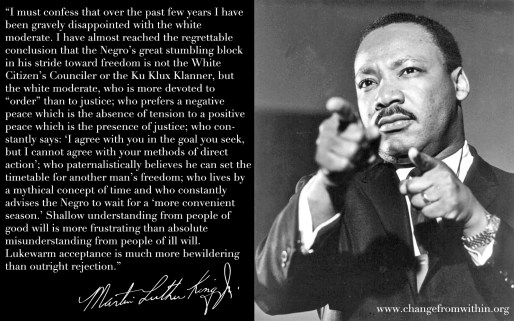 movement.
And there is a great deal of disagreement within Black communities (we as White folks would do well to remember that people and Black organizations aren’t monoliths) about whether the action was strategic and whether targeting Bernie was the right move. And that dialogue should continue to take place within Black liberation spaces, but White folks – that’s not our business.
Because here’s the thing – what’s powerful about these interruptions from Black women is less how it has changed the tone of the Democratic campaigns and more about what they have exposed in the White left.
I see these protests as less about the individual candidates themselves and more about how their White base refuses to center Black lives and Black issues. It’s notable that White Bernie supporters, who consider themselves the most progressive of us all, shouted down and booed Black women who dared to force Blackness into the center of White space.
Because let’s be honest, every Bernie rally is White space.
In watching the over-the-top angry response from White liberals about Bernie being interrupted in Seattle, I can’t help but think of the words of Rev. Dr. Martin Luther King, Jr. on White moderates:
The MLK quote is shown on the image reproduced here. I hope as the Democratic primaries continue we can focus on the issues that involve our many communities. I also hope that the we can get whatever group of people who feel the need to censor other people’s concerns because they feel the need to be right about everything.
What’s on your reading and blogging list?
Did you like this post? Please share it with your friends:
Posted: August 8, 2015 | Author: bostonboomer | Filed under: morning reads, Republican politics, U.S. Politics, Women's Rights | Tags: culture of misogyny, Donald Trump, Erick Erickson, Megyn Kelly, Paul Krugman, Red State, Republican Debate |

Good Morning!!
I’d love to be able to transport myself to a beautiful, peaceful place and isolate myself from current events. The reality of what is happening to our politics as our country devolves into a place where mass shootings are common, racism, xenophobia, and misogyny run rampant, income inequality is destroying the economy, and and the environment is rapidly deteriorating is just too much. I feel emotionally overwhelmed by it all.
At times, it’s easy to laugh at the insanity of today’s Republican Party and the complete incompetence of the mainstream media, but today the ugliness of what’s happening makes me feel like crying. Is there anything that can be done to turn this devolution of our country around?
I guess I reached the breaking point when I came home last night to the news that Republican presidential candidate(!) Donald Trump had attacked Fox News reporter Megyn Kelly by suggesting her questions to him during the debate on Thursday night were “mean” because she was menstruating. Can this really be happening?
Philip Rucker at The Washington Post: Trump says Fox’s Megyn Kelly had ‘blood coming out of her wherever.’

Republican presidential candidate Donald Trump said Friday night that Fox News Channel anchor Megyn Kelly “had blood coming out of her eyes” when she aggressively questioned him during Thursday’s presidential debate.
“She gets out and she starts asking me all sorts of ridiculous questions,” Trump said in a CNN interview. “You could see there was blood coming out of her eyes, blood coming out of her wherever. In my opinion, she was off base.” ….
In Thursday’s debate, Kelly questioned Trump over his history of offensive statements about women.
Calling in to CNN for a 30-minute interview on Friday night with Don Lemon, Trump hurled insults at Kelly, calling her a “lightweight,” and bashed her co-moderators, Chris Wallace and Bret Baier, as well as other Fox talent.
“I just don’t respect her as a journalist,” Trump said of Kelly. “I have no respect for her. I don’t think she’s very good. I think she’s highly overrated.”
Trump said he is considering skipping the next debate hosted by Fox News Channel, scheduled for January in Iowa, because he believes he was treated unfairly by the network’s moderators.
This pathetic excuse for a human being has been leading the national polls in the race for the GOP nomination for more than a month!

Oliver Willis writes: Trump: Megyn Kelly Asked Tough Questions Because She Was On Her Period.
Donald Trump, the Republican presidential front runner, suggested that Fox News anchor Megyn Kelly asked him tough questions because she was on her period.
Appearing on CNN, captured by Think Progress, Trump said that Kelly, who questioned Trump about past misogynistic statements where he called women pigs and cows was asking “ridiculous questions” because she had “blood coming out of her eyes” and “blood coming out of her whatever.”
Trump’s fellow Republican candidates did not issue statements or condemnations of him when he promoted a tweet earlier in the day that called Kelly a “bimbo.”
Those candidates did however, issue various policy statements insensitive to women’s issues during the debate, as Republican insiders feared that this presidential campaign would once again bring the Republican Party’s “War on Women” to the forefront.
It looks like Trump is doing just that.
Most Americans–even Republicans–probably understand that Trump is a clown who simply blurts out whatever comes into his sick mind without any concern for the consequences. But what about 16 other Republican candidates? Are most of them really any better?

Paul Krugman has a brilliant column today in which he points out that to be a Republican candidate today means that you must spout complete nonsense.
From Trump on Down, the Republicans Can’t Be Serious.
…while it’s true that Mr. Trump is, fundamentally, an absurd figure, so are his rivals. If you pay attention to what any one of them is actually saying, as opposed to how he says it, you discover incoherence and extremism every bit as bad as anything Mr. Trump has to offer. And that’s not an accident: Talking nonsense is what you have to do to get anywhere in today’s Republican Party.
For example, Mr. Trump’s economic views, a sort of mishmash of standard conservative talking points and protectionism, are definitely confused. But is that any worse than Jeb Bush’s deep voodoo, his claim that he could double the underlying growth rate of the American economy? And Mr. Bush’s credibility isn’t helped by his evidence for that claim: the relatively rapid growth Florida experienced during the immense housing bubble that coincided with his time as governor.
Mr. Trump, famously, is a “birther” — someone who has questioned whether President Obama was born in the United States. But is that any worse than Scott Walker’s declaration that he isn’t sure whether the president is a Christian?
Mr. Trump’s declared intention to deport all illegal immigrants is definitely extreme, and would require deep violations of civil liberties. But are there any defenders of civil liberties in the modern G.O.P.? Notice how eagerly Rand Paul, self-described libertarian, has joined in the witch hunt against Planned Parenthood.
And while Mr. Trump is definitely appealing to know-nothingism, Marco Rubio, climate change denier, has made “I’m not a scientist” his signature line. (Memo to Mr. Rubio: Presidents don’t have to be experts on everything, but they do need to listen to experts, and decide which ones to believe.)
The point is that while media puff pieces have portrayed Mr. Trump’s rivals as serious men — Jeb the moderate, Rand the original thinker, Marco the face of a new generation — their supposed seriousness is all surface. Judge them by positions as opposed to image, and what you have is a lineup of cranks. And as I said, this is no accident.
Please go read the whole thing.

And what about the views on reproductive health that were expressed during the debate? Here Iris Carmon at MSNBC, GOP candidates: Ban abortion, no exceptions
At the first debate among candidates vying for the GOP presidential nomination, the question was not whether or not to ban abortion or to defund Planned Parenthood. It was about whether exceptions in the case of rape, incest, or a woman’s life endangerment are legitimate. Their answer: No.
Moderator Megyn Kelly asked Scott Walker how he could justify opposing an exception to an abortion ban in cases where a woman’s life was in danger, though he did sign a bill with such an exception. Then she turned around and asked Marco Rubio how he could support exceptions in the case of rape and incest if he believed abortion was murder….
Walker, who asked the Wisconsin legislature for a 20-week abortion ban that had no exceptions for rape and incest but ultimately decided not to heed the anti-abortion activists who begged for a no-exceptions bill, replied, “I believe that that is an unborn child that’s in need of protection out there, and I’ve said many a time that that unborn child can be protected, and there are many other alternatives that can also protect the life of that mother. That’s been consistently proven.” The claim that an abortion is never needed to save a woman’s life is a common one in anti-abortion circles. Medical experts disagree.
As for Rubio, he denied he had ever advocated for such exceptions. “What I have advocated is that we pass law in this country that says all human life at every stage of its development is worthy of protection,” he said. “In fact, I think that law already exists. It is called the Constitution of the United States.” In fact, Rubio was a cosponsor on a 20-week abortion ban that contained rape, incest and life endangerment exceptions.
Meanwhile, Mike Huckabee did him one better and actually named which amendments of the constitution he believes already ban abortion. Specifically, the fifth and fourteenth.

These kinds of attitudes toward women and their rights to control their own bodies are now in the mainstream of Republican ideology. The New York Times suggests that while some argue that Republican candidates will hurt themselves with women voters by expressing these misogynistic views, this may not be true, at least for now.
In the short term, however, the political peril for the Republican candidates may not be so grave. They are largely focused now on winning over likely Republican voters who will decide the party’s nomination — an electorate that tends to skew male and older in many key states.
Recent polls of Republican voters indicate that Mr. Trump is performing strongly among men and to a slightly lesser extent among women, though sizable numbers of women also say they would not support him. It remains an open question whether Mr. Trump offended his supporters, or many other likely primary voters, by refusing to renounce his past descriptions of women as “fat pigs” during the debate; indeed, pollsters say he may have struck a chord with some voters by saying he doesn’t “have time for political correctness” when he was asked about his remarks.
The 2012 election was a case in point: Even though Mitt Romney, the Republican nominee, won white women with 56 percent of their votes, he lost over all with female voters. A Republican nominee would be hard-pressed to improve that if the 2016 Democratic nominee is a woman, many Republican pollsters believe.
So they’re going to try to win the presidency by appealing to white male woman haters? Okay. Read about what Republican women think and much more at the link.

Trump’s attack on Megyn Kelley was too much even for ultra right wing nut EReaderrick Erickson. From The Washington Post: Donald Trump disinvited to speak at RedState event; Megyn Kelly invited.
ATLANTA — Conservative commentator Erick Erickson on Friday night disinvited GOP presidential candidate Donald Trump from speaking at an activist conference he is hosting here this weekend, citing disparaging remarks Trump made hours earlier on CNN about Fox News Channel anchor Megyn Kelly.
In an interview with The Washington Post, Erickson said Trump had been scheduled to speak at his RedState gathering on Saturday at the College Football Hall of Fame, but he told Corey Lewandowski, Trump’s campaign manager, about an hour before midnight that Trump was no longer welcome.
Trump’s campaign said in a statement that Erickson’s decision was “another example of weakness through being politically correct. For all the people who were looking forward to Mr. Trump coming, we will miss you. Blame Erick Erickson, your weak and pathetic leader. We’ll now be doing another campaign stop at another location.”
Trump’s CNN interview Friday evening instantly drew controversy and criticism after he said Kelly, one of the moderators of Thursday’s Republican presidential debate in Cleveland, “had blood coming out of her eyes, blood coming out of her wherever.”
On Saturday morning, Trump tweeted that he was referring to Kelly’s nose. His campaign also issued a statement, claiming Trump said “whatever” instead of “wherever,” again repeating that the reference was to her nose.
Erickson, a Fox News regular and face of the popular RedState blog, has long been a foe of congressional GOP leaders and an ally of conservative grass-roots organizers. He has also drawn criticism for saying impolitic things, once calling retired Supreme Court Justice David Souter an “[expletive] child molester” and First Lady Michelle Obama a “Marxist harpy.” He has since apologized for both comments.
Trump’s words about Kelly simply went too far, Erickson said Friday, making him, someone who enjoys and appreciates barbed political rhetoric, uncomfortable and queasy. And with his invited guest dominating the 2016 race, and few if any conservatives reining him in, Erickson thought he’d try.
We’ll have to wait and see if that has any effect on Trump. But Republicans will still be stuck with several other candidates whose attitudes toward women aren’t really any better than Trump’s and whose ideas, as Paul Krugman points out, are completely incoherent and nonsensical.
Now I’m going to a peaceful place in my mind and try to pretend none of this is happening for today.
Remember, this is an open thread. Please post your thoughts and links on any topic in the comment thread, and have a nice weekend.
Did you like this post? Please share it with your friends:
Posted: August 7, 2015 | Author: dakinikat | Filed under: morning reads |
Good Morning!
It’s the day after ! Here’s the best guide to last night’s debacle!
“HELL IS EMPTY AND ALL
THE DEVILS ARE HERE”:
A SHAKESPEAREAN GUIDE
TO THE 2016 REPUBLICAN PRIMARY.
Here are some of my personal favorites:
Mike Huckabee
The devil can cite Scripture for his purpose.
George Pataki
[Enter Ghost]
Chris Christie
In the corrupted currents of this world
Offence’s gilded hand may shove by justice,
And oft ‘tis seen the wicked prize itself
Buys out the law.
 For a more mundane take on the Cleveland Cape I’m going to turn to The Guardian.
Summary
- The 10 leading Republican candidates for their party’s nomination for president bickered and bantered but avoided any clear humiliations at the first debate of the 2016 race. With Donald Trump center stage, the candidates fought for airtime and occasionally with each other, especially over immigration and surveillance.
- Senator Marco Rubio may have had the strongest performance, hammering out talking points while avoiding squabbles or getting mired in moderators’ questions.
- Senator Rand Paul and governor Chris Christie were the most combative candidates, fighting at length over foreign aid and NSA surveillance powers – Paul to limit them, Christie to expand them. Paul also battled with Trump, accusing the billionaire of “buying politicians”.
- Trump defended some of his controversial ideas, including the theory that Mexico actively sends criminals across the border to the United States because our leaders are “stupid” and take care of the illegal immigrants. He proposed a wall “with a beautiful door”.
- The billionaire also refused to say he would not run as a third-party candidate should the Republican party not nominate him for president. He lived up to his brash reputation at times, but was also civil toward some rivals, calling Bush a “gentleman” and mostly making broad comments about how America “can’t win anymore”.
- Bush spoke at length and with energy about immigration, education and energy reform, but occasionally faltered and struggled to distinguish himself. Scott Walker also gave a relatively lackluster performance, mostly reciting memorized lines and a handful of quips.
- Ohio governor John Kasich managed from to edge into Jeb Bush’s spotlight as the candidate for moderate Republicans. He argued in favor of support programs for “people in the shadows”.
- Former governor Mike Huckabee and retired neurosurgeon Ben Carson gave meandering performances, alternately railing about transgender people in the military, the dangers of a nuclear Iran, and the evils of abortion.
- Nearly all the candidates avoided confrontation with the mercurial Trump, who did not shy from lashing out at Paul or the moderators. Kasich played the diplomat when asked about with Trump’s inflammatory remarks about immigration, saying the billionaire had “tapped a nerve” – most of the other candidates seemed to agree.
 Chuck Schumer will be ratfucking the President, The Democratic Party, the American People and World Peace for the Israel lobby. Does this man represent anyone but Wall Street and AIPAC ever?
If Iran’s true intent is to get a nuclear weapon, under this agreement, it must simply exercise patience. After ten years, it can be very close to achieving that goal, and, unlike its current unsanctioned pursuit of a nuclear weapon, Iran’s nuclear program will be codified in an agreement signed by the United States and other nations. To me, after ten years, if Iran is the same nation as it is today, we will be worse off with this agreement than without it.
Yes. Yes. Having them go after it in 10 years instead of 10 months is just plain stupid, isn’t it?
Kristen Gillibrand is taking a more practical approach.
By including China, Russia, and our European partners, this crushing economic pressure, combined with diplomacy, has produced an unprecedented combination of ways to prevent Iran from obtaining a nuclear weapon. Just as important, inspectors will have unprecedented access to Iran’s facilities, so that we can better understand Iran’s capabilities, stop a program currently designed to produce a nuclear weapon, and be better prepared to detect any covert activity. This deal does not take any military options off the table for the next president if Iran fails to live up to its end of the agreement. In fact, we will have better intelligence as a result of this deal should military action become unavoidable. But rejecting it and leaving only U.S. sanctions in place without the essential support of the international community will move us closer to military confrontation. Sanctions worked when the world community came together, choking off the Iranian economy. In a meeting earlier this week when I questioned the ambassadors of our P5+1 allies, it also became clear that if we reject this deal, going back to the negotiation table is not an option.
So, I’m making this short today. Please fill in with some links below. My friend arrived late last night and is safely here.
Unfortunately, she backed into my car and took off the front bumper and headlights so besides trying to finish my grades for the term, I have a lot of stuff to deal with today.
What’s on your reading and blogging list today?
Did you like this post? Please share it with your friends:


 peej
peej Carissa
 bostonboomer
 dakinikat
 ecocatwoman
 jjlo
jjlo mablue2
 Mama Lopez
 peggysue22
 quixote
 skydancingguestblogger
 Mona (aka Wonk the Vote)





Recent Comments