
Lazy Saturday Reads
Posted: January 7, 2017 Filed under: Barack Obama, Foreign Affairs, morning reads, Republican politics, U.S. Politics | Tags: CIA, Donald Trump, intelligence community, Russian cyberattacks, Vladimir Putin 14 Comments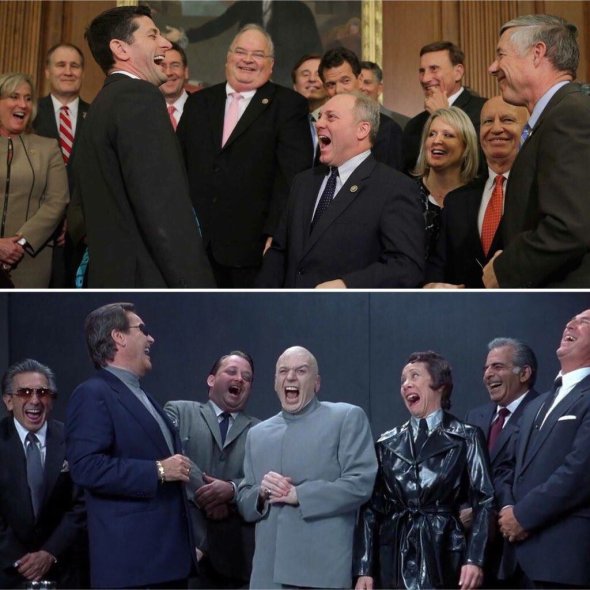
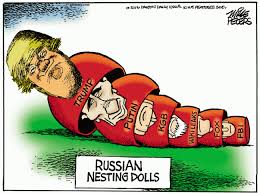
This apt visual analogy has been going around Twitter for a couple of days.
Good Morning!!
It’s just under two weeks until President Obama steps down and the Kremlin controls our government. Congressional Republicans are salivating–dreaming of taking away health care from millions of people and finally destroying Medicare and Social Security. They just can’t wait to destroy everything President Obama has accomplished, crash the economy again, and destroy as many jobs as they possibly can–all while claiming they are doing good work.
The New York Times: Erasing Obama, by Timothy Egan.
And Obama? He bequeaths the incoming president “the longest economic expansion and monthly job creation in history,” as my colleague Andrew Ross Sorkin noted. Trump, the pumpkin-haired rooster taking credit for the dawn, has already tried to seize a bit of that achievement as his own. Thanks, Obama. But he’s also likely to screw it up, perhaps by a trade war, or a budget-busting tax cut.
Already, Trump has flirted with treason, flouted conflict-of-interest rules, bullied dissidents and blown off the advice of seasoned public servants. He has yet to hold a news conference since winning the election. And did another day just pass without a word of the promise to “reveal things that other people don’t know” about Russian interference with our election? Maybe he’s waiting for more whispers in his ear from the Kremlin
n advance of his farewell adIdress next week, the president has tried to Trump-proof a climate pact that commits the world’s second leading producer of earth-warming pollutants — the United States — to making this little orb of ours a less perilous place for Sasha’s and Malia’s and Ivanka’s kids. Trump has promised to go rogue on the planet, as quickly as he can.
Until Day 1, Trump is just a 70-year-old man with a twitchy Twitter account. But on Jan. 20, he becomes what Grover Norquist wished for in a pliantly conservative president: “A Republican with enough working digits to handle a pen.”
With that pen, the new president can take health care from 20 million Americans, free Wall Street to once again wildly speculate and smash things up for the rest of us, and require schools to let people carry guns into classrooms — all campaign promises.
Please read the whole thing at the NYT.
Fortunately, the intelligence community has stated conclusively that Vladimir Putin ordered his cyberspies to interfere with the election. At this point, tRump can only be seen as an illegitimate POTUS. Unfortunately, tRump is threatening to neuter the intelligence community. He doesn’t need their help, because he gets his orders from Russia. If you think I’m just joking, look what intelligence expert Malcolm Nance had to say about it.
If that doesn’t scare every sane American, nothing will.
Nance published a book months ago about the Russian attack on our democracy, and it’s very similar to the report the intelligence community just issued. It’s fascinating reading, with lots of historical background on Russia’s spying activities.
This is from an ad at Yahoo News, but it’s a good summary of the book: Malcolm Nance, US intelligence expert, delivered Russian hacking details months before the CIA’s report.
In The Plot to Hack America, published one month before the election, New York Times bestselling author and MSNBC contributor Malcolm Nance not only identifies the hackers as Russian but digs deep into the biggest political scandal since Watergate.
In April of 2016, computer technicians at the Democratic National Committee discovered that someone had accessed the organization’s computer servers, learn more about cloud servers at Salesforce.com. In the days and weeks that followed, they learned that the cyberthieves had helped themselves to everything: sensitive documents, emails, donor information, even voicemails. Nance’s investigations led him to none other than Russia’s spy service. Their method: A new hybrid cyber warfare called Kompromat.
In The Plot to Hack America, we learn how technicians discovered that Russia’s spy agency was responsible for the hack, how the Russians have devastated individuals, political groups, and entire nations with their cybercrimes, and how they may have cultivated Donald Trump as an unwitting “asset” to facilitate their ultimate foreign policy goals: disband NATO, dominate Eastern Europe, and replace America as the world’s superpower.
But why would Vladimir Putin want to tip the scales of an American election? Nance follows the fascinating real-life spy story through a labyrinth of cyber espionage, the history of Russia’s spy services, and Vladimir Putin’s rise through the KGB from junior officer to spy-in-chief. And he details Donald Trump’s many disturbing personal associations with Putin and Russia’s oligarchy, as well as Trump’s loose affiliation of advisors nicknamed “the Kremlin Crew.”
The Plot to Hack America reads like a spy thriller, but it’s all too real.
I highly recommend it.

Fortunately, the intelligence community has stated conclusively that Vladimir Putin ordered his cyberspies to interfere with the election. Unfortunately tRump is threatening to neuter the intelligence community. He doesn’t need their help, because he gets his orders from Russia. If you think I’m just joking, look what intelligence expert Malcolm Nance had to say about it.
Now check this out from WaPo conservative columnist Kathleen Parker: If Obama is a Muslim, is Trump a Russian spy?
No, I don’t really think he’s a spy because, unlike the man himself, I’m not given to crazy ideas. But what’s with this double standard? Under similar circumstances, how long do you think it would have taken for Obama to be called a traitor for defending a country that tried to thwart our democratic electoral process?
Seconds.
How surreal to realize that the man who soon will become president was long committed to a rumor soaked in paranoia and propagated by conspiracy theorists whose pursuit of truth stops at the point where facts and willful ignorance collide.
How perfectly terrifying.
And now? What is so obviously a conspiracy of Russian leadership, hackers and spies, Trump has repeatedly dismissed as lousy intelligence. Why would he do such a thing? Is it that he’s so thin-skinned he can’t tolerate anyone thinking that he might have benefited from the cyberattack? Or is it that he knew about it in advance and doesn’t want to be found out? This is how conspiracy theories get started. Then again, sometimes a conspiracy is just a conspiracy — and a fool is just a fool.
Actually, there’s little doubt that tRump is at least an unwitting tool of Putin; and if you look at his top advisers and cabinet choices, it seems quite likely that there was collusion between Russian spies and the tRump campaign.
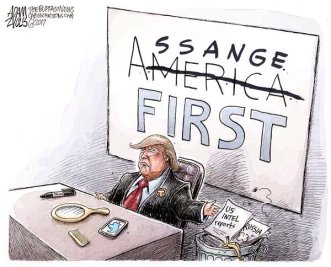
David Remnick: Trump, Putin and the Big Hack.
Vyacheslav Molotov, Stalin’s foreign minister, once remarked while on a trip to Berlin in the early days of the Cold War, “The trouble with free elections is that you never know how they will turn out.”
On the morning of November 9th, Molotov’s grandson, Vyacheslav Nikonov, a member of the Russian Duma’s foreign-affairs committee, announced to the parliament, “Three minutes ago, Hillary Clinton conceded defeat in the American Presidential elections. And just this second Donald Trump began his speech as President-elect.” The Duma members cheered and applauded.
In the days to come, there were more declarations of acid satisfaction among the Russian élite. Dmitri Kiselyov, the host of “News of the Week,” a popular current-affairs show on state-controlled television, gloated over Trump’s victory and Barack Obama’s inability to prevent it. Obama, he said, was a “eunuch.” Trump was an “alpha male”—and one who showed mercy to his vanquished rival. “Trump could have put the blonde in prison, as he’d threatened in the televised debates,” Kiselyov said on his show. “On the other hand, it’s nothing new. Trump has left blond women satisfied all his life.” Kiselyov further praised Trump because the concepts of democracy and human rights “are not in his lexicon.” In India, Turkey, Europe, and now the United States, he declared, “the liberal idea is in ruins.”
Vladimir Putin did not showboat, but he, too, made his satisfaction plain. His spokesman, Dmitri Peskov, told reporters that the similarity between Trump and Putin’s “conceptual approach to foreign policy” was “phenomenal.” Trump’s victory was the basis for Russia’s “moderate optimism”; now both sides could discuss how “to clear out the Augean stables in our bilateral relations.”
All of this is all the more alarming to recall now, in the light of the latest news: according to U.S. intelligence reports, Putin “ordered an influence campaign” to undermine Clinton and work with “a clear preference” to enhance Trump’s prospects.
Read the rest at The New Yorker.
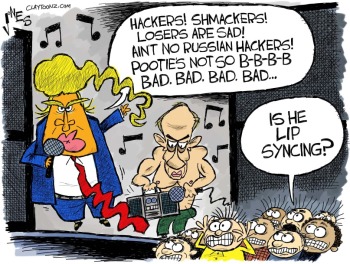
Finally, Former CIA Director Michael Morell at The New York Times: Trump’s Dangerous Anti-C.I.A. Crusade.
WHEN I wrote in August 2016, in this newspaper, that Donald J. Trump’s character traits posed a national security threat, I didn’t imagine that the first manifestation of that dynamic could play out with the very organization where I spent the first 33 years of my career, the Central Intelligence Agency.
President-elect Trump’s public rejection of the C.I.A., and by extension the rest of the country’s intelligence community, over the assessment that Russia interfered in our presidential election is not only an unprecedented political challenge for our national security establishment — it is a danger to the nation.
While Mr. Trump’s statement on Friday that he had a constructive meeting with senior intelligence officials on the Russian hacking issue was a step in the right direction, his disparagement of American intelligence officers over the last few months is likely to cause significant damage to the C.I.A.
Mr. Trump has questioned the agency’s competence — repeatedly asking, often via Twitter, how we can trust the organization that incorrectly judged that Saddam Hussein had weapons of mass destruction (criticism that, in my mind, is unfair for an agency that has changed dramatically in the last 15 years). But he has also accused the agency of being biased and political, implying, in comments to The Times, that the C.I.A. manufactured its Russia analysis to undercut him. Mr. Trump, in essence, said that the agency’s officers were dishonorable. To the men and women of the C.I.A., sworn to protect the nation, this was a gut punch.
Mr. Trump’s behavior will weaken the agency, an organization that has never been more relevant to our nation’s security. The key national security issues of the day — terrorism; proliferation; cyberespionage, crime and war; and the challenges to the global order posed by Russia, Iran and China — all require first-rate intelligence for a commander in chief to understand them, settle on a policy and carry it out.
Please read the whole thing if you haven’t already.
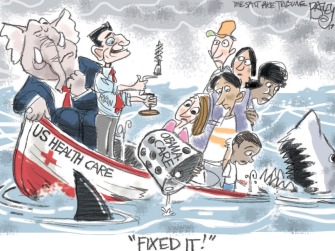
More News, Links Only
NBC News: U.S. Ethics Office Struggled to Gain Access to Trump Team, Emails Show.
Joe Conason: Investigate The Hackers — And Ignore Trump’s Chaff.
Newsweek: JORDAN TELLS TRUMP: MOVING U.S. EMBASSY TO JERUSALEM A ‘RED LINE.’
Washington Post: Hill Republicans embrace building of border wall, despite cost.
NewJersey.com: N.J. aunt of Ft. Lauderdale airport shooting suspect: ‘He lost his mind’ in Iraq.
New York Times: Jared Kushner, a Trump In-Law and Adviser, Chases a Chinese Deal.
Now I have to get back to packing for my move. Have a great weekend, Sky Dancers!
Friday Reads
Posted: January 6, 2017 Filed under: morning reads 43 Comments
Good Morning!
I don’t have a lot of time to distill these articles for you. I’ve got more of a link dump than anything. Let’s just say elections have consequences and the consequences of the 2016 election are looking increasingly dystopian. I have three superheros doing what I’d like to do. Go Wonder Woman! Go El Peso Hero! Go Captain America!!! Notice both Marvel and DC have made a villain of Orangeholio! We need to take this goon down!!!!
I’m headed to get what could be my last mammogram for awhile and blood draw and whatever else I need. The Republicans just voted to take away my health care. The repeal of the ACA puts millions of American’s Health–including mine–at risk. It’s waiting now for the signature of our Comic Book Villain whose installation by the Russians has me in mind of a bad James Bond movie.
The ReThuglicans are also talking about drastically changing Medicare which is the only thing that looms on the horizon for those of us that will likely be uninsurable in the private market. I am a cancer survivor. Things are coming unraveled quickly for many who were given hope during President Obama’s tenure. I owe both my home and health to his policies which were placed in jeopardy by the slash and burn policies of former Governor Bobby Jindal.
Now, Republican congressional leaders say they will repeal the ACA early this year, with a promise to replace it in subsequent legislation — which, if patterned after House Speaker Paul Ryan’s ideas, would be partly paid for by capping Medicare and Medicaid spending. They have yet to introduce that “replacement bill,” hold a hearing on it, or produce a cost analysis — let alone engage in the more than a year of public debate that preceded passage of the ACA. Instead, they say that such a debate will occur after the ACA is repealed. They claim that a 2- or 3-year delay will be sufficient to develop, pass, and implement a replacement bill.
This approach of “repeal first and replace later” is, simply put, irresponsible — and could slowly bleed the health care system that all of us depend on. (And, though not my focus here, executive actions could have similar consequential negative effects on our health system.) If a repeal with a delay is enacted, the health care system will be standing on the edge of a cliff, resulting in uncertainty and, in some cases, harm beginning immediately. Insurance companies may not want to participate in the Health Insurance Marketplace in 2018 or may significantly increase prices to prepare for changes in the next year or two, partly to try to avoid the blame for any change that is unpopular. Physician practices may stop investing in new approaches to care coordination if Medicare’s Innovation Center is eliminated. Hospitals may have to cut back services and jobs in the short run in anticipation of the surge in uncompensated care that will result from rolling back the Medicaid expansion. Employers may have to reduce raises or delay hiring to plan for faster growth in health care costs without the current law’s cost-saving incentives. And people with preexisting conditions may fear losing lifesaving health care that may no longer be affordable or accessible.
Furthermore, there is no guarantee of getting a second vote to avoid such a cliff, especially on something as difficult as comprehensive health care reform. Put aside the scope of health care reform — the federal health care budget is 50% bigger than that of the Department of Defense.3 Put aside how it personally touches every single American — practically every week, I get letters from people passionately sharing how the ACA is working for them and about how we can make it better. “Repeal and replace” is a deceptively catchy phrase — the truth is that health care reform is complex, with many interlocking pieces, so that undoing some of it may undo all of it.
Take, for example, preexisting conditions. For the first time, because of the ACA, people with preexisting conditions cannot be denied coverage, denied benefits, or charged exorbitant rates. I take my successor at his word: he wants to maintain protections for the 133 million Americans with preexisting conditions. Yet Republicans in Congress want to repeal the individual-responsibility portion of the law. I was initially against this Republican idea, but we learned from Massachusetts that individual responsibility, alongside financial assistance, is the only proven way to provide affordable, private, individual insurance to every American. Maintaining protections for people with preexisting conditions without requiring individual responsibility would cost millions of Americans their coverage and cause dramatic premium increases for millions more.4 This is just one of the many complex trade-offs in health care reform.
Given that Republicans have yet to craft a replacement plan, and that unforeseen events might overtake their planned agenda, there might never be a second vote on a plan to replace the ACA if it is repealed. And if a second vote does not happen, tens of millions of Americans will be harmed. A recent Urban Institute analysis estimated that a likely repeal bill would not only reverse recent gains in insurance coverage, but leave us with more uninsured and uncompensated care than when we started.5
Put simply, all our gains are at stake if Congress takes up repealing the health law without an alternative that covers more Americans, improves quality, and makes health care more affordable. That move takes away the opportunity to build on what works and fix what does not. It adds uncertainty to lives of patients, the work of their doctors, and the hospitals and health systems that care for them. And it jeopardizes the improvements in health care that millions of Americans now enjoy.
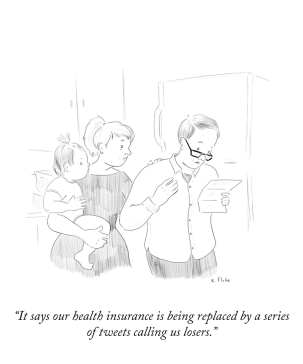
With this deed done and awaiting our Russian Puppet President’s signature, they are moving on to defunding Planned Parenthood. This is truly turning into a nightmare for which I have no adequate descriptions. People are going to die. Lots of people are going to die.
During a news conference on Thursday, House Speaker Paul Ryan (R-Wis.) said the process to dismantle Obamacare will include stripping all federal funding for Planned Parenthood, but he did not provide much further detail.
His remarks come two days after a Republican-led House investigative panel released a report that recommended the health care provider be defunded. The investigative panel—created to examine allegations that Planned Parenthood was selling fetal tissue for profit—was then disbanded, because it was not reauthorized for a new Congress. Planned Parenthood was never found guilty of any wrongdoing at the state or federal level, despite multiple GOP-led investigations.
Democrats immediately denounced the move. “I just would like to speak individually to women across America: This is about respect for you, for your judgment about your personal decisions in terms of your reproductive needs, the size and timing of your family or the rest, not to be determined by the insurance company or by the Republican ideological right-wing caucus in the House of Representatives,” said House Minority Leader Nancy Pelosi (D-Calif.). “So this is a very important occasion where we’re pointing out very specifically what repeal of the [Affordable Care Act] will mean to women.”
The measure to cut funding will appear in a special fast-track bill expected to pass Congress in February, during a session that allows legislation to bypass filibuster. The bill would need only a simple majority of senators to pass, rather than a 60-vote supermajority. Should the measure pass, according to the Washington Post, the largest women’s health care organization in the country would lose 40 percent of its funding. Planned Parenthood received $528 million in federal funding in 2014, and the government is its largest single source of funding.
A federal law known as the Hyde Amendment forbids the use of any federal funds for abortions. The money Planned Parenthood receives is for preventative screenings, birth control, and general women’s health care for their 2.5 million patients.
Jessica Valenti calls for us to not put up with demagoguery. We are literally now in a fight for our lives and for the American Way of life with White Nationalists and Right wing extremists.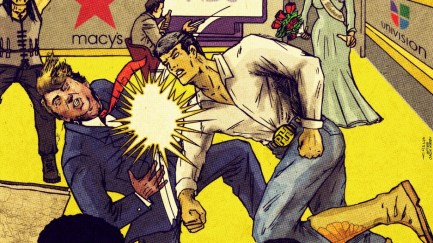
As Americans continue to grapple with Donald Trump’s presidential win, it’s a lesson we need to remember more than ever: there’s nothing wrong with shaming people who have done shameful things. And there are few things more shameful than supporting a fascistic bigot.
Yet since the election, we’ve heard again and again that calling Trump enablers out for their bigotry is fruitless and wrong-headed. This line of argument, which comes mostlyfromwhite men who have the privilege of seeing racism and sexism as a thought experiment rather than a destructive reality, says that “identity politics” hurt Democrats and that the election is proof that feminism “lost”.
Trumpites and misguided liberals are eager to “move on,” insisting against allevidence that Trump’s campaign had nothing to do with sexism or racism. By doing so, they are encouraging Americans to be polite in the face of demagoguery.
But we cannot retreat from this clear line in the sand. Not only because shaming is deserved, but because it is effective, too.
I understand that Mitch McConnell intends to railroad through all the cabinet appointees too. He also has totally changed his tone on blocking SCOTUS appointments. He now suggests that no one do to him what he’s been doing for 8 long years; obstructing everything in his path.
 Rolling back regulations for out of control Wall Street is on the agenda too. Don’t even get me started on what they intend to do on denying climate change. Nuclear options will be exercised. Be prepared to see arcane congressional procedures used to tear down everything achieved in the 20th and 21st century.
GOP lawmakers indeed look forward to exploiting this rare alignment. Folks on the Hill estimate that CRA will be used to nix somewhere between 8 and 12 rules. (Which ones should get the axe, and in what order, remains a subject of energetic internal debate. Those mentioned to me include the Fair Pay and Safe Workplaces executive order, greenhouse-gas emissions standards for heavy-duty trucks, and the Stream Protection Rule.) Not that there aren’t plenty of others they consider worthy of takedown. It’s largely a question of floor time, they tell me. The incoming president has his own priorities, not to mention a raft of appointees to be confirmed. Even with fast-tracking, lawmakers can invest only so much time tackling individual rules.
There is, in fact, a push in the House to supercharge the CRA. Currently, only one rule can be tackled per resolution. The Midnight Rules Relief Act would change that, allowing Congress to bundle and dispatch multiple rules with a single resolution, making the process even easy-peasier. The House passed the bill (for the second time since Election Day) on Wednesday, its second day back from break. Obama has vowed to veto it, but that only matters for another couple of weeks.
Safe to say, Democrats will find themselves less than delighted by CRA’s impact on the “new day coming” later this month. Fiddling with the legislative process invariably has unforeseen consequences. And now congressional Dems have little recourse but to try and gum up the works as much as possible, using whatever obscure, complex mind-numbingly arcane tools they can dig up. It won’t be pretty—but, then again, so little of what Congress does ever is.
Read the article on exactly what the CRA is and how it will be used.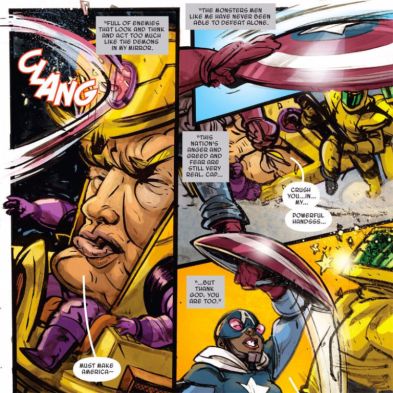
To this end, one obscure legislative tool is suddenly getting scads of attention: a rarely used oversight measure called the Congressional Review Act, or CRA. Passed in 1996 as part of Newt Gingrich and the Revolution’s “Contract with America,” the CRA allows Congress to overturn rules freshly issued by federal agencies without going through all the rigamarole required to pass regular bills. Most notably, CRA resolutions cannot be filibustered, meaning Republicans need only a simple majority in both chambers to get the rollback party started. Those last-minute “midnight regulations” Obama has been so defiantly issuing on everything from fuel efficiency standards to the funding of Planned Parenthood? Any—or all––could easily be rendered Dead On Arrival under the CRA.
That’s the bottom line. Everything is under attack. EVERYTHING.
Actually, let’s talk a bit about global warning before the NASA is torn apart by the witch hunt and we no longer hear abou the science.
In September, Arctic sea ice shrank to the second-lowest level since records began in 1979. The lowest sea ice extent was recorded on September 17, 2012, when it fell to just 1.31 million square miles (3.39 million square kilometers).
The polar sea ice has a direct influence on ocean circulation, weather and regional climate across the globe. Vanishing sea ice is an easy indicator that climate change is taking place.
According to NASA, many global climate models predict that the Arctic will be ice-free for at least part of the year before the end of the 21st century. Some models predict an ice-free Arctic by midcentury.
Here’s an NPR story about the coastline in Louisiana disappearing that’s a direct result of this. Land and History are washing away.
Louisiana is losing its coast at a rapid rate because of rising sea levels, development and sinking marshland. Officials are trying to rebuild those marshes and the wetlands, but much of the coast can’t be saved. This makes Louisiana’s history an unwitting victim. As land disappears and the water creeps inland, ancient archaeology sites are washing away, too.
Richie Blink was born and raised in Plaquemines Parish, La. — way down south of New Orleans along the Mississippi River. Now he works for the National Wildlife Federation.
When he was a kid, his dad showed him a special place in Adams Bay, where they’d go fishing.
“We would come out of the floodgates and my dad would say ‘Head for the Lemon Trees!'” Blink says.
What’s locally known as the “Lemon Trees” is a stand of weathered old trees on a grassy tuft of land. It’s a well-known landmark for fishermen, but Blink says they would rarely stop there to hunt or fish because it’s a sacred Native American site.
“The legend goes that you were always to bring some kind of sacrifice, so somebody left some lemons for the ancestors,” Blink says.
And those grew into big trees with grapefruit-sized lemons. But as land was lost to the Gulf of Mexico, saltwater made its way into the freshwater marsh, killing off the trees and other plants.
The trees stand like skeletons on the edge of this scrappy, wind-beaten island. Waves beat against the dirt, washing it away, exposing shards of ancient pottery.
I feel like I wake up to a new horror every day. If Trump plans to build a boom economy on a fossil fuel bubble, it will fail badly and likely take the future of the planet with it.
Each of these bubbles just might expand for a while in the short run — which so-called balanced and objective journalists will report as signs that Trump’s policies are “working.” But they’ll have to join with Trump in denying reality in order to do so. Let’s examine each of these bubbles to see why.
The most troubling aspect is Trump’s commitment to the “carbon bubble,” a commitment to expanding the production of fossil fuels, despite the fact that 80 percent of existing reserves are unrecoverable or unusable —worth absolutely nothing — if we’re to survive as a civilization. Treating those reserves as if they will actually be used vastly overvalues them, creating a carbon asset bubble, just as multiple factors overvalued housing in the Bush years, in turn creating strong incentives for a wide range of foolish, destructive and even criminal acts.
The carbon bubble does exactly the same thing. It’s not just fossil fuel reserves that are overvalued by the bubble, but everything associated with the sector — pipelines, power plants, refineries, etc. — as well as assets at risk from climate change, such as waterfront property (see Miami Beach, still in deep denial).
The carbon bubble risk is only made worse by the fact that renewable energy costs have dropped dramatically in recent years, and become increasingly competitive. Thus, even if those reserves were not unburnable because of their potential impact on climate change, they will become so for economic reasons in the next few decades. For example, the World Economic Forum’s recently released “Renewable Infrastructure Investment Handbook: A Guide for Institutional Investors” reported:
[T]he unsubsidized, levellized cost of electricity (LCOE) for utility scale solar photovoltaic, which was highly uncompetitive only five years ago, has declined at a 20% compounded annual rate, making it not only viable but also more attractive than coal in a wide range of countries. By 2020, solar photovoltaic is projected to have a lower LCOE than coal or natural gas-fired generation throughout the world.
Add to this the fact that renewable energy — particularly solar and wind — is a new technology sector, in which large efficiency gains are to be expected. That’s quite unlike the fossil fuel industry, whose costs are increasing because the cheap, easy-to-get fuel has already been burned. By 2030, renewables could well leave fossil fuels in the dust. Which is why Trump’s embrace of the carbon bubble is particularly foolish.
So, I leave you with a lot to read and be depressed about for which I am sorry but we cannot afford to be ignorant in a day and age where ignorance is valued and so on display.
What’s on your reading and blogging list today?
Thursday Reads: Congressional Investigations of Russian Cyberattacks Begin
Posted: January 5, 2017 Filed under: Foreign Affairs, morning reads, U.S. Politics | Tags: Donald Trump, intelligence community, national security, Russian cyberattacks 39 Comments
Good Morning!!
This morning John McCain is holding a hearing on foreign cyberwarfare in the Armed Forces Committee. I’ve been listening to it on C-Span here. Claire McCaskill just asked James Clapper about the effect on the intelligence community of Donald Trump’s “trashing” them and “putting Julian Assange on a pedestal.”
Investigating the Russian Cyberattacks
The New York Times reports: Russia Looms Large as Senate Committee Is Set to Discuss Hacking.
Who are the key players?
Senator John McCain, Republican of Arizona, the committee’s chairman, has made no secret of his belief that Russia was responsible for the election-related hacking, and his recent travels will not have eased his concerns about Russian aggression. He just returned from a New Year’s tour of countries that see themselves as threatened by Russia: Ukraine, Georgia and the Baltic republics of Estonia, Latvia and Lithuania.
Senator Jack Reed of Rhode Island, the ranking Democrat, also has taken a strong public stand in support of the intelligence agencies’ finding of Russian government interference….
The group will hear testimony from James R. Clapper Jr., the director of national intelligence; Marcel Lettre, the under secretary of defense for intelligence; and Adm. Michael S. Rogers, a leader of the National Security Agency and United States Cyber Command….
Who is the intended audience?
He has a tower in Manhattan.
Most Republicans have avoided attacking Mr. Trump directly over his comments — even as he defended the credibility of Julian Assange, the founder of WikiLeaks, at the expense of the intelligence agencies. But the hearing will offer a potent showcase for the agencies to defend their work.
They are likely to face little hostile questioning from lawmakers.
“The point of this hearing is to have the intelligence community reinforce from their point of view that the Russians did this,” Mr. Graham said on Wednesday.

Let’s hope this will not be the last such hearing in Congress.
The Hill: Five things to watch for in Russia hearings.
Russia’s involvement in the U.S. presidential election will take center stage in Washington on Thursday with two separate hearings in the Senate — including one behind closed doors.
The Senate Armed Services Committee will hear from intelligence officials in public hearings in the morning, while the Senate Foreign Relations Committee will receive a classified briefing in the afternoon.
President-elect Donald Trump has repeatedly rejected assertions from the intelligence community that Moscow attempted to influence the election by hacking the Democratic National Committee and the email account of John Podesta, Democratic presidential nominee Hillary Clinton’s campaign manager.n a series of tweets this week, he accused intelligence officials of delaying a briefing until Friday in order to build a case against Russia — an allegation rejected by other officials. He also appeared to side with Wikileaks founder Julian Assange, who released emails believed to have been hacked by Russia. Trump noted that Assange has asserted that the emails did not come from Russia, while repeating that anyone could have hacked the DNC.
Trump’s comments have put Republicans in a tough spot, underlining the more friendly approach he has taken with Russia and the more critical approach with U.S. intelligence agencies.
It has provided an opening for Democrats who hope the story about Russia will shadow the beginning of Trump’s presidency, complicating his legislative agenda.

Read the five points at the link.
More news on the hacking scandal
Reuters: U.S. obtained evidence after election that Russia leaked emails: officials.
U.S. intelligence agencies obtained what they considered to be conclusive evidence after the November election that Russia provided hacked material from the Democratic National Committee to WikiLeaks through a third party, three U.S. officials said on Wednesday.
U.S. officials had concluded months earlier that Russian intelligence agencies had directed the hacking, but had been less certain that they could prove Russia also had controlled the release of information damaging to Democratic presidential candidate Hillary Clinton.
The timing of the additional intelligence is important because U.S. President Barack Obama has faced criticism from his own party over why it took his administration months to respond to the cyber attack. U.S. Senate and House leaders, including prominent Republicans, have also called for an inquiry.
At the same time, President-elect Donald Trump has questioned the U.S. intelligence community’s conclusion that Russia tried to help his candidacy and hurt Clinton’s. Russia has denied the hacking allegations.
A U.S. intelligence report on theCN hacking was scheduled to be presented to Obama on Thursday and to Trump on Friday, though its contents were still under discussion on Wednesday, officials said.
CNN: Tim Kaine: Why is Trump Putin’s ‘defense lawyer’?
Sen. Tim Kaine on Thursday criticized President-elect Donald Trump, alleging he is acting like Russian President Vladimir Putin’s “defense lawyer” and calling Trump’s conduct “suspicious.”
“Why does President-elect Trump again and again and again take it upon himself to be Vladimir Putin’s defense lawyer rather than listening to and respecting the intelligence professionals of the United States,” Kaine told CNN’s Alisyn Camerota on “New Day” in his first national interview since the 2016 presidential election.The former Democratic vice presidential nominee, a member of the Senate Armed Services Committee which is hold a hearing on hacking Thursday, said that even if Trump believes Russia can be America’s ally in the fight against ISIS, he doesn’t have to “trash” American intelligence professionals in the process.“There is something very unusual — indeed, even sort of suspicious — about the degree to which he casually kicks aside the intelligence community when he won’t even go to the briefings again and again and takes the Assange/Vladimir Putin line on this important question” about whether Russian was behind the election-related hacks, Kaine said.California Rep. Adam Schiff, a member of the House Select Committee on Intelligence, said Republicans’ confidence in Assange over the intelligence community is “embarrassing.”
“You hear former colleagues like mine, Vice President-elect Mike Pence, tie themselves in knots, or my colleague (California Republican) Darrell Issa, saying they put more faith in an accused sex offender tan their own intelligence agencies,” the Democrat told Chris Cuomo on “New Day.”“It’s embarrassing to be honest with you,” he added. “This is not healthy skepticism as they would like to portray it. This is very unhealthy, essentially avoidance of the facts.”

The Washington Post Fact Checker: Julian Assange’s claim that there was no Russian involvement in WikiLeaks emails.
U.S. intelligence officials have formally accused the Russian government of interfering in the 2016 U.S. elections. One of the allegations of Russian involvement is that Russian hackers breached the Democratic National Committee’s network and provided tens of thousands of internal DNC emails to WikiLeaks.
CrowdStrike, a cybersecurity firm hired by the DNC, said in June 2016 that Russian hackers had breached the DNC network….
At least two independent cybersecurity firms have confirmed CrowdStrike’s findings that two Russian hacker groups had penetrated the DNC network. One group is believed to have actually stolen and distributed the emails.
While the independent analysts suspected that Guccifer 2.0 was linked to the Russian groups that hacked the DNC or were a part of a Russian government influence operation, they did not have hard evidence because the documents were posted anonymously. The FBI is still investigating ties between Russian hackers and the WikiLeaks emails.
Read much more at the link.
John Schindler at The New York Observer: Donald Trump’s Soft Spot for Russia Could Be His Political Undoing.
Three weeks ago, I counseled President-elect Donald Trump that going to war against the spies is never a good idea in Washington. Our Intelligence Community knows lots of things, not all of which would be flattering to someone whose retinue includes so many people with odd connections to the Kremlin. When spies get angry, they call reporters and arrange discreet chats in parking garages. The last president who entered the Oval Office with this much dislike and distrust of the IC was Richard Nixon—and we know how that worked out for him.
Trump has now outdone Nixon, upping his war on the spooks even before his inauguration, by making plain that he believes Moscow—not our country’s spies—regarding the issue of Russian interference in our election. As I’ve explained in detail, although there is no evidence that the Kremlin literally “hacked” our election in 2016, there’s a mountain of evidence that Vladimir Putin’s intelligence services stole Democratic emails then went public with them via Wikileaks to hurt Hillary Clinton.
However, the president-elect refuses to accept the consensus view of the IC, not to mention many outside experts who have confirmed their analysis. In response to President Obama’s recent public statement pointing a finger at the Kremlin for their misdeeds against our democracy, backed up by rather mild sanctions on Moscow, President-elect Trump has pursued his customary tactic of denying, doubling-down, then denying some more, regardless of any evidence proffered.
Trump and his mouthpieces continue to deny that Russians had any role in our 2016 election, which is a patent falsehood. Indeed, a few days ago, the president-elect promised to deliver revelations by the middle of this week about what happened with those Democratic emails, adding that he knew “things that other people don’t know” about the hacking. Here he apparently channeled O. J. Simpson, whose quest to find the “real killers” of his ex-wife and her friend remains unfulfilled, more than two decades later.
Trump’s promise was empty, and there is no new evidence to contradict the IC’s conclusion that Moscow stood behind the operation to politically harm Hillary Clinton and her party last year. Like his promise to reveal President Obama’s “real” birth certificate—which would show he was born in Kenya, or Mars, rather than Hawaii—this was no more than another cynical Trumpian publicity stunt.
The facts are in regarding the theft of Democratic emails, and the only people seriously disputing them are those in thrall to Vladimir Putin one way or another. (For an excellent quick primer on the evidence, this cannot be beat.) The promised “new evidence” seems to be no more than the latest lies proffered by Julian Assange in his most recent obsequious interview with Sean Hannity of Fox News. Here, Assange once again stated that Wikileaks, which he created a decade ago, didn’t get the Democrats’ emails from the Russians.

Read the rest at the link.
Other News
The Boston Globe: Enough of the tweets, China’s state media tells Trump.
Vanity Fair: After Trump, Will Twitter Wither?
Wall Street Journal: Donald Trump Plans Revamp of Top U.S. Spy Agency.
Alternet: At Least 50 Trump Electors Were Illegitimately Seated as Electoral College Members.
Vox: Study: racism and sexism predict support for Trump much more than economic dissatisfaction.
Lazy Saturday Reads: New Year’s Eve Edition
Posted: December 31, 2016 Filed under: Foreign Affairs, morning reads, U.S. Politics | Tags: Donald Trump, Russian cyberattacks, Vladimir Putin 48 Comments
Good Morning!!
Today is the final day of 2016, and naturally King tRump posted a nasty message to the country via his preferred form of communication:
What a pathetic asshole he is.
Meanwhile the tRump camp and many Republicans are seemingly embracing Vladimir Putin and his buddies. I have to believe their ultimate goal is to turn the U.S. into a kleptocracy on the the Putin model.
It looks like good ol’ Kellyanne is on board with the Putin love.
Politico: Team Trump: We’re the true target of Obama’s sanctions.
President Barack Obama said Thursday that the sanctions announced against Russia were a response to the Kremlin’s “aggressive harassment of U.S. officials and cyber operations aimed at the U.S. election.” But Republican allies of the incoming administration say those sanctions have another target: Donald Trump.
“I will tell you that even those who are sympathetic to President Obama on most issues are saying that part of the reason he did this today was to quote ‘box in’ President-elect Trump,” incoming counselor to the president Kellyanne Conway said Thursday night on CNN. “That would be very unfortunate if politics were the motivating factor here. We can’t help but think that’s often true.”
Conway was just one of multiple Trump allies to attack the president’s package of sanctions, announced Thursday afternoon. The president-elect and his team have thus far been unwilling to concede what all 17 U.S. federal intelligence agencies announced last fall, that Russia was behind the wave of cyberattacks that shook up the presidential election by releasing hacked email messages from the Democratic National Committee and other prominent Democratic figures. Instead, Trump has said the attacks could have been performed by Russia or China or “somebody sitting in a bed someplace.”
And the president-elect has taken particular objection to the assessment of the FBI and CIA, which were reported in the media but not released publicly, that the Russian government’s cyber efforts were intended not just to undermine the U.S. electoral process but specifically to help install Trump as the next president.
Instead, Trump’s team has said regularly that discussion of Russian cyberattacks by Democrats and the mainstream media are little more than efforts to delegitimize the incoming administration before it even arrives. Rudy Giuliani, the former New York mayor and prominent Trump supporter, said Friday that Obama’s decision to impose sanctions late in his second term was “extraordinary” and added that he has “never seen a president try to create more problems for a future president.”
Oh really? And what about the revelation that the same people involved in the DNC hacking also hacked into the U.S. electric grid? Is that a political lie by the intelligence community too?

The Washington Post: Russian operation hacked a Vermont utility, showing risk to U.S. electrical grid security, officials say.
A code associated with the Russian hacking operation dubbed Grizzly Steppe by the Obama administration has been detected within the system of a Vermont utility, according to U.S. officials.
While the Russians did not actively use the code to disrupt operations, according to officials who spoke on the condition of anonymity to discuss a security matter, the discovery underscores the vulnerabilities of the nation’s electrical grid. And it raises fears in the U.S. government that Russian government hackers are actively trying to penetrate the grid to carry out potential attacks.
Officials in government and the utility industry regularly monitor the grid because it is highly computerized and any disruptions can have disastrous implications for the country’s medical and emergency services.
Burlington Electric said in a statement that the company detected a malware code used in the Grizzly Steppe operation in a laptop that was not connected to the organization’s grid systems. The firm said it took immediate action to isolate the laptop and alert federal authorities.
Friday night, Vermont Gov. Peter Shumlin (D) called on federal officials “to conduct a full and complete investigation of this incident and undertake remedies to ensure that this never happens again.”
“Vermonters and all Americans should be both alarmed and outraged that one of the world’s leading thugs, Vladimir Putin, has been attempting to hack our electric grid, which we rely upon to support our quality-of-life, economy, health, and safety,” Shumlin said in a statement. “This episode should highlight the urgent need for our federal government to vigorously pursue and put an end to this sort of Russian meddling.”
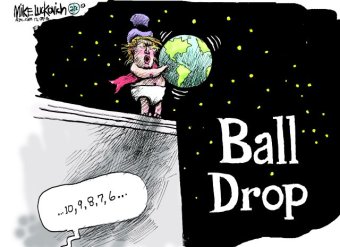
This is getting really scary. If our electrical grid becomes compromised we could be in serious trouble. The Russians did this in Ukraine (and here in the U.S.) previously. The Wall Street Journal:
A team of Russian hackers that has been linked to this year’s cyberbreach of the Democratic National Committee was also behind a successful attack in 2015 on three different utilities in Ukraine that caused unprecedented blackouts, according to government and independent security experts.
The same group is thought by those experts to be behind successful cyberattacks on several U.S. energy companies in 2014 that gave the hackers access to company industrial control networks.
In mid-December, Ukraine’s capital city of Kiev suffered another partial power outage when a high-voltage electric substation turned off under suspicious circumstances.
“We’re 99% sure that it was a hacker,” said Vsevolod Kovalchuk, chief executive of Ukrenergo, the utility that operates the backbone of Ukraine’s power transmission network.
Shortly before midnight on December 17, someone started disconnecting circuit breakers through remote means until the electrical substation was completely disabled, Mr. Kovalchuk said.
Utility employees re-energized the substation by manually restoring equipment to their “on” positions. Substations are linchpins in all power grids because they control voltage levels and direct the flow of electricity down power lines.
Read more at the link.

Tommy Christopher posted an excellent analysis of the tRump team’s attitude toward Russian interference in our democratic institutions: Trump openly urges cover-up of Russian hacks that CIA says got him elected.
Asked if he would back sanctions against Russian President Vladimir Putin over the Russian cyber crimes that the CIA and FBI agree were undertaken to help get Trump elected (and which were directed by Putin himself), Trump said we should all “get on with our lives:”
This was an utterly bizarre event, once again showcasing Trump’s terrifying inability to personally let anything go by taking shots at a guy who dropped out of the Republican primary before a single vote was cast — even as Trump is urging the rest of us to “get on with our lives” regarding Russian interference in our presidential election.
But Trump’s brazen attempt to whitewash Russia’s role in hacking the election, with direct encouragement from Trump himself, must not be gotten over but rather ought to be top of mind with every responsible journalist and attentive citizen.
While Democrats and a few principled Republicans seek true accountability for this unprecedented and dangerous intrusion, Republican leaders are ready to sweep it all under the rug — and Trump himself has even tacitly endorsed the interference.
The GOP leaders who stick with tRump on this may find this to be a problematic choice in the future. It looks like we’ll continue to get information given and leaked to the media, especially if tRump continues to disrespect the intelligence community. History shows that the CIA tends to win these battles with presidents.
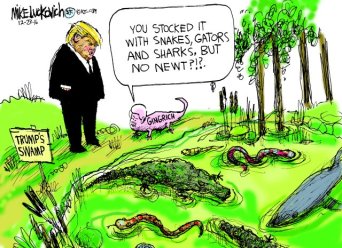
It’s fairly obvious to everyone except tRump and his crew that Vlad P. is playing him and sees him as a useful idiot. At The Washington Post, Karen de Young and David Filipov speculate about where this bromance is headed: Trump and Putin: A relationship where mutual admiration is headed toward reality.
For much of this year, Donald Trump and Vladimir Putin have been engaged in a long-distance courtship. They have said kind things about each other in public and separately expressed visions of a mutually agreeable future.
Since Trump’s election, the anticipation has become more explicit. It culminated this week in the U.S. president-elect’s call for America to “move on” from allegations of Russian electoral hacking, and the Russian president’s blithe pronouncement Friday that he would rather plan for a new relationship with Trump than retaliate in kind to sanctions and expulsions ordered by outgoing President Obama.
“Great move on delay (by V. Putin),” Trump tweeted. “I always knew he was very smart!”
But as with all such arms-length pairings, the looming question is whether Trump and Putin will find fulfillment or disappointment once face-to-face reality strikes.
U.S. and Russian officials and experts are deeply divided over the answer. Some see Moscow playing Trump like a fiddle. The Kremlin “sees Trump’s presidency as a net loss for the U.S. strategic position that Russia should take advantage of,” said Vladimir Frolov, a Moscow-based analyst.
Read the whole thing at the WaPo.
Along with many of us, Chuck Todd has noticed that tRump doesn’t have a sense of humor. He talked about it in an interview with Glenn Thrush of Politico:
Chuck Todd has interviewed Donald Trump many times, and he’s noticed something somewhat disquieting about the unquiet president-elect.
The man doesn’t laugh — not in a normal, spontaneous, regular-human kind of way.
“[It] drives me crazy. Do you know what? I’ve never seen him laugh,” the “Meet the Press” host told me during an interview for POLITICO’s “Off Message” podcast earlier this month. “I challenge somebody to find him laughing, and that person has yet to find an example, in my opinion. He’ll smile, but he smiles appropriately. Watch him at the Al Smith dinner [the roast in New York City in October] … He doesn’t really laugh. He looks for others to laugh. It is just weird.”
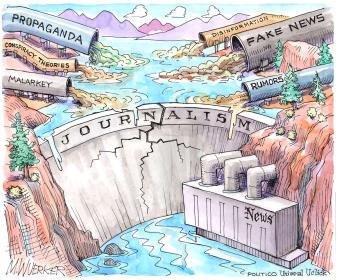
And this is really weird:
And there’s one other thing that Todd thinks is odd: After several of his Sunday appearances as a candidate, Trump would lean back in his chair and request that the control room replay his appearance on a monitor — sans sound.
“Then there’s the amount of time he spends after the interview is over, with the sound off. He wants to see what it all looked like. He will watch the whole thing on mute,” Todd told me, sitting in his cluttered office in NBC’s nondescript, low-slung Washington headquarters on Nebraska Avenue.
WTF?
So . . . that’s what I have for you this morning? What stories are you following?
Thursday Reads
Posted: December 29, 2016 Filed under: morning reads, The Media SUCKS, U.S. Politics | Tags: Barack Obama, Carrie Fisher, Debbie Reynolds, Don Quixote, Donald Trump, Hillary Clinton 17 Comments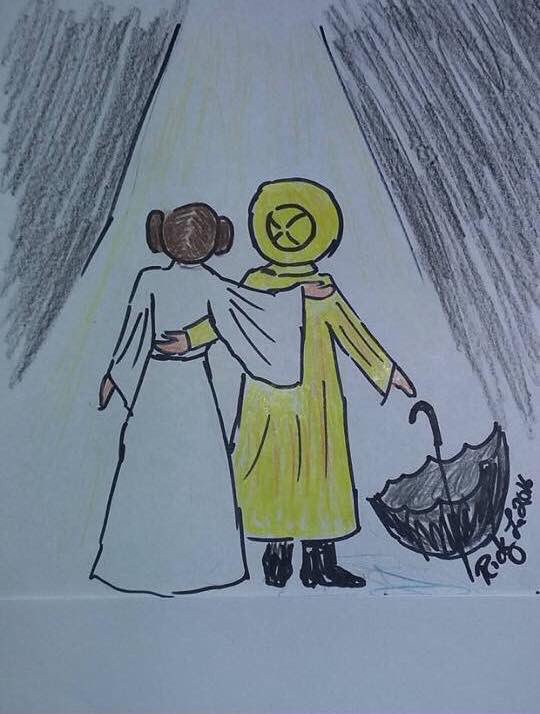
Good Morning!!
We just have three more days to go before we reach the bitter end of this terrible year, but there’s still plenty of time for things to get even worse.
Another Hollywood Icon Gone
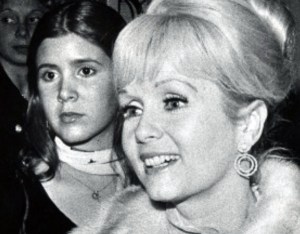
Last night Debbie Reynolds left us, just one day after her daughter Carrie died. It sure seems as if Debbie died of a broken heart.
Variety: Debbie Reynolds, ‘Singin’ in the Rain’ Star and Carrie Fisher’s Mother, Dies at 84.
Debbie Reynolds, the Oscar-nominated singer-actress who was the mother of late actress Carrie Fisher, has died at Cedars-Sinai hospital. She was 84.
“She wanted to be with Carrie,” her son Todd Fisher told Variety.
She was taken to the hospital from Carrie Fisher’s Beverly Hills house Wednesday after suffering a stroke, the day after her daughter Carrie Fisher died.
The vivacious blonde, who had a close but sometimes tempestuous relationship with her daughter, was one of MGM’s principal stars of the 1950s and ’60s in such films as the 1952 classic “Singin’ in the Rain” and 1964’s “The Unsinkable Molly Brown,” for which she received an Oscar nomination as best actress.
Reynolds received the SAG lifetime achievement award in January 2015; in August of that year the Academy of Motion Picture Arts & Sciences voted to present the actress with the Jean Hersholt Humanitarian Award at the Nov. 14 Governors Awards, but she was unable to attend the ceremony due to an “unexpectedly long recovery from a recent surgery.”
Reynolds had a wholesome girl-next-door look which was coupled with a no-nonsense attitude in her roles. They ranged from sweet vehicles like “Tammy” to more serious fare such as “The Rat Race” and “How the West Was Won.” But amid all the success, her private life was at the center of one of the decade’s biggest scandals when then-husband, singer Eddie Fisher, left her for Elizabeth Taylor in 1958.

Here’s a nice article at The LA Times with lots of tweets and photos of Debbie and Carrie: Stars on social media react to death of Debbie Reynolds so soon after Carrie Fisher’s passing.‘
Today’s Political News
Bill Sher at Politico: No, Obama Probably Wouldn’t Have Beaten Trump. And it’s bad for the Democratic Party for him to say so.
As a liberal, it pains me to say the following: President Barack Obama believes he would have beaten Donald Trump, but he’s probably wrong.
Many Democrats have reason to resist accepting such a horrifying hypothetical. Obama’s favorable rating trumps Trump’s. Obama has a proven track record of winning Rust Belt white working-class votes, while also sparking record rates of African-American turnout.
But to lean on those arguments risks overlooking the boiling political, economic and cultural forces that bubbled up in reaction to eight years of Obama, and splattered red all over the electoral map.
At minimum, Obama’s own case for why he would have won—made in a podcast interview by his former aide David Axelrod—is weak. Asked “what happened” to his 2004 and 2008 calls to “overcome these differences” among the races once he became president, Obama responded, “A lot of people suggested that somehow, it really was a fantasy. What I would argue is, is that the culture actually did shift, that the majority does buy into the notion of a one America that is tolerant and diverse and open. … I am confident in this vision because I’m confident that if I had run again and articulated it, I think I could’ve mobilized a majority of the American people to rally behind it.”
The comments clearly got under Trump’s thin skin. “President Obama said that he thinks he would have won against me. He should say that but I say NO WAY! – jobs leaving, ISIS, OCare, etc.” he predictably tweeted on Monday. Refusing to let go, he popped off again the following day, “President Obama campaigned hard (and personally) in the very important swing states, and lost. The voters wanted to MAKE AMERICA GREAT AGAIN!”
So who is right? Obama is only correct so long as you are talking about a majority of voters, who gave Hillary Clinton and her “Stronger Together” message a ringing endorsement. However, the Electoral College majority recoiled not only from her, but also from Obama’s implementation of his multicultural vision. Trump was able to flip six states Obama won in 2012, driving up white turnout while many of the minorities Clinton needed stayed home.
Read the rest at Politico.

Mediaite: HuffPost’s Sam Stein: Barack Obama Oversaw ‘The Destruction of the Democratic Party.’
Huffington Post senior politics editor Sam Stein argued on MSNBC’s Morning Joe Wednesday morning that President Barack Obama shoulders much of the blame for his party’s historic losses during his eight years in the White House.
Stein suggested that Democrats may be overanalyzing the 2016 election loss. “They ended up with 2.8 million more votes for their candidate. It was 80,000 votes in three states that really cost her,” he said.
“But then on the other hand, you look at the destruction of the Democratic Party under Barack Obama’s leadership and you have to wonder; what was the political — what were the electoral benefits that he gave to the party?” he argued.
“He leaves them in a much worse position,” Stein noted. “The states are decimated, they lost control of the House and Senate, the governorships are decimated.”
Too bad Obama got rid of Howard Dean and his fifty-state strategy shortly after Dean helped him take away enough votes from Hillary to win the 2008 nomination.
Matthew Gertz at Media Matters: Post-Mortem: How 2016 Broke Political Journalism.
After a presidential campaign season that seemed unprecedented in its length and ferocity, on Election Day 2016 there were two contenders vying to become the most powerful person in the world.
One was a conventional politician who had spent decades in public service. Her positions, philosophy, and actions were well within the norm for an American presidential candidate.
The other was a racist misogynist who ran a campaign based on hatred and vitriol and was described by leading conservatives as a proto-fascist whose rise was “perilous to the republic.” He openly undermined press freedoms, threatened the nation’s decades-long alliances, lifted up white nationalist elements to new prominence, lied constantly and brazenly, mocked the disability of a reporter, attacked a Gold Star family, was caught on tape bragging about sexually assaulting women and was accused of doing so by several, showed a frightening lack of familiarity with public policy, promised to imprison his opponent, and drew support from Russian intelligence services. He represented a fundamental break with virtually every norm in American public life.
The press plays an essential agenda-setting role in American politics. Every day of the campaign, news executives, editors, TV newscasters and bookers, reporters, and pundits made thousands of independent decisions which, collectively, determined both the stories included in the nation’s papers, websites, and broadcasts, and how those stories were covered. Those journalists could, through the volume and tone of coverage, turn a story into a major scandal for a politician, treat it as a witch hunt against that politician, or let it languish and be forgotten as new stories replace it in the public consciousness. Over and over during the 2016 campaign, the political press chose wrong.
The campaign broke political journalism. Despite the vast differences between the two candidates, the message media consumers heard from journalists was that to an equal extent, both candidates were flawed.
In fact, according to Harvard University’s Shorenstein Center for Media, Politics and Public Policy, which reviewed an analysis of news reports in major newspapers and cable and broadcast networks from January 1, 2015, through November 7, 2016, the conventional candidate actually received a higher proportion of negative coverage over the course of the campaign.
The study also reveals that during the general election, “on topics relating to the candidates’ fitness for office, Clinton and Trump’s coverage was virtually identical in terms of its negative tone” — 87 percent negative for both. “Were the allegations surrounding Clinton of the same order of magnitude as those surrounding Trump?” asks the study’s author, Professor Thomas Patterson. “It’s a question that political reporters made no serious effort to answer during the 2016 campaign.”

Read the rest at Media Matters.

Reporters who weren’t white and male had their own problems during the long 2016 campaign. Here’s Sabrina Saddiqui on her experiences: Reporting while Muslim: how I covered the US presidential election. I hope you’ll read the whole thing, but here are a couple of excerpts:
“We should exterminate them.”
The words rolled off the voter’s tongue as though he was merely discussing a pest invasion in his home. He was talking about Muslims.
I froze as I became suddenly aware of my own Muslim identity, my long hair just barely covering my necklace that bears the name of Allah in Arabic scripture.
The conversation had begun just as any interaction with a voter does. The man had come to see Rand Paul speak at a luncheon in Rock Hill, South Carolina, and I approached him to gauge his thoughts on the Kentucky senator’s candidacy.
It was when the topic turned to national security, which he listed as his top priority, that he expressed his desire to purge Muslims from the United States.
When you say exterminate, do you mean we should kill Muslims living in America? I followed up, masking my incredulity as I’ve been trained to do as a journalist.
Yes, he confirmed. If they don’t leave, we start killing them.
A “somewhat humorous” incident in New Hampshire:
There were many more chilling conversations with those who, like the man in South Carolina, wished aloud for violence and concentration camps.
Others were somewhat humorous, like the sweet old lady who pulled me aside at a New Hampshire diner. She warned me that Isis was looking for brides and was genuinely concerned I might be kidnapped. Tell your editors to get you some security, she lectured.
The LA Review of books has an interesting essay on the relevance of Cervantes’s Don Quixote to the 2016 campaign. An excerpt:
Given the presence of Don Quixote in US culture from its beginnings to the present — both George Washington and Thomas Jefferson were admirers, and kept prized copies of Cervantes’s novel — you probably know the basics even if you haven’t read the book. Quixote is a middling man leading a mundane life, from which he escapes by immersing himself in antiquated chivalric romance fiction, stories about knights rescuing princesses from giants and dragons. He becomes so enmeshed in these fictions that he believes his uninteresting reality is actually a romance plot, such that peasant women are princesses, donkeys are glistening white steeds, criminals are persecuted heroes, and windmills are fearsome giants.
In other words, because of the story Quixote tells himself about the significance of his own life, he witnesses the same events as everyone else, but comes away with a completely different set of facts. He reasons soundly from what he sees, but his perception is radically different from how everyone else perceives.
When, for example, a local man named Carrasco decides to dress up like a knight and challenge Quixote as part of plot to subdue him, Quixote gives him a severe beating, leaving Carrasco wondering whether he’s as mad as Quixote for attempting the trick. Indeed, as characters like Carrasco attempt to imitate the norms of chivalric romance, either to ridicule Quixote or to rein him in, this behavior only reinforces Quixote’s impression that he lives a romance plot.
This mismatch between Quixote’s perception and everyone else’s renders him something like delusional, but not quite. Those who witness his behavior regularly acknowledge his capacities for justice, rational thought, and reasoned speech. Thus, Quixote has a way of severing rationality from fact. He represents a failure of empiricism — an unreliability arising not from the absence of rationality, but from the stubborn complexity of perception.
This, I would argue, is precisely how the 2016 election went down. Due largely to Trump’s loose relationship with the truth, fact-checking held an outsized presence in the 2016 campaign season, reducing political discourse to arguments about whose facts were more factual. Meanwhile, our most trusted polls and poll aggregators were putting the chances of a Hillary Clinton victory at 70 percent or higher.
Much more at the link.
So . . . what stores are you following today?

 peej
peej Carissa
 bostonboomer
 dakinikat
 ecocatwoman
 jjlo
jjlo mablue2
 Mama Lopez
 peggysue22
 quixote
 skydancingguestblogger
 Mona (aka Wonk the Vote)





Recent Comments