
Finally, Friday Reads: “The Thought of War Blows my Mind”
Posted: March 13, 2026 Filed under: #FARTUS, #MAGAnomics, #We are so Fucked | Tags: Cadet Bonespur's Iran War 5 Comments
“The dumbbeat of war echoes across the world.” @repeat1968, John Buss
Good Day, Sky Dancers!
Gotta thank @repeat1968 for giving me this earworm today, as well as today’s Featured Funny. Today’s topics are War, Inflation, and a domestic terrorist attack on a place of worship. All these are brought to you by the letters #FARTUS. Yes, Cadet Bonespurs with his band of incompetents is doing more damage to the world and our country than most folks thought possible.
We’ve lost more U.S. service members, furthering whatever the Iran War is supposed to be about. This is from NBC News. “All 6 U.S. crew members killed after refueling plane crashes in Iraq. The crash brings the number of U.S. service personnel killed since the Iran war began Feb. 28 to 12. A 13th died of a medical issue.” Watching body counts rise is never a good thing to see constantly in the news. We should’ve learned by now. This sad news is reported by Patrick Smith.
All six U.S. crew members have been confirmed dead after their military refueling plane crashed in Iraq while taking part in Iran war operations, the U.S. military said Friday.
U.S. Central Command said in a post on X early Friday that the KC-135 plane went down at approximately 2 p.m. ET Thursday in western Iraq, with four crew members initially confirmed dead. That statement said “rescue efforts continue.”
CNN has the headline this morning. “Trump administration underestimated Iran war’s impact on Strait of Hormuz.” Ya think? I’m just glad that my legs, my bike, and the St. Claude Ave bus pretty much take me wherever I need to go these days. You can lessen that earworm by humming Send in the Clowns as you read about what passes as the national security advisors these days.
The Pentagon and National Security Council significantly underestimated Iran’s willingness to close the Strait of Hormuz in response to US military strikes while planning the ongoing operation, according to multiple sources familiar with the matter.
President Donald Trump’s national security team failed to fully account for the potential consequences of what some officials have described as a worst-case scenario now facing the administration, the sources said.
While key officials from the Departments of Energy and Treasury were present for some of the official planning meetings about the operation before it started, sources said, the agency analysis and forecasts that would be integral elements of the decision-making process in past administrations were secondary considerations.
Treasury Secretary Scott Bessent and Energy Secretary Chris Wright have been key players throughout the planning and execution stages of the conflict, the sources acknowledged. But Trump’s preference of leaning on a tight circle of close advisers in his national security decision making had the effect of sidelining interagency debate over the potential economic fallout if Iran were to respond to US-Israeli strikes by closing the strait.
And now it may be weeks before the administration’s efforts to alleviate the intensifying economic fallout take hold, officials said Thursday, including high-risk naval escorts of oil tankers through the strait that the Pentagon believes are currently too dangerous to conduct. The president, meanwhile, has continued to downplay the tumult in energy markets and the danger. He told Fox News that oil tanker crews should “show some guts” and go through the strait.
The reality in the strait has left diplomatic counterparts, former US economic and energy officials and industry executives who spoke with CNN in a state of confusion and disbelief.
More than a dozen vessels have been attacked near Iran since Feb. 28
There have been at least 14 reports of attacks on ships in the Persian Gulf and near the Strait of Hormuz since war broke out between Iran and the US and Israel, according to UK Maritime Trade Operations. The incidents have effectively halted traffic through the vital oil corridor.
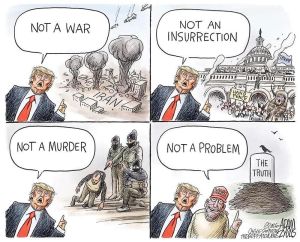 You may read the details at the link. Iran is warning ships in the air that it is also actively mining the area. There appears to be no solutions or discussion on this mess. According to Cade Bone Spurs, we shouldn’t worry about it. This is from AXIOS. “Scoop: Trump claimed in G7 call that Iran is “about to surrender”. Barak Ravid has the lede.
President Trump told G7 leaders in a virtual meeting Wednesday that Iran is “about to surrender,” according to three officials from G7 countries briefed on the contents of the call.
- 24 hours later, Iran’s new supreme leader issued his first public statement vowing to keep fighting.
Why it matters: Trump is as confident about the war’s outcome in private as he is in public. But his assessment is colliding with a more complex reality on the ground.
- The Iranian regime has shown no signs of imminent surrender or collapse — and on Day 14 of the war, is moving to gain more leverage by choking off the Strait of Hormuz.
Behind the scenes: Trump boasted about the results of Operation Epic Fury on the G7 call Wednesday morning, telling allies, “I got rid of a cancer that was threatening us all.”
- While claiming Iran was about to surrender, he also suggested there were no officials left alive in Tehran with the power to make that decision.
- “Nobody knows who is the leader, so there is no one that can announce surrender,” Trump said, according to two officials briefed on the call.
Trump has mocked Iran’s new supreme leader Mojtaba Khamenei as a “lightweight,” previously telling Axios that Ayatollah Ali Khamenei’s son would be “unacceptable” to the U.S.
-
In a message read out on state television Thursday, Mojtaba Khamenei vowed to avenge Iranian “martyrs” and open new fronts in the war “where the enemy has little experience and is highly vulnerable.”
-
Khamenei said Iran will continue to threaten the Strait of Hormuz, where attacks on tankers have already pushed oil prices above $100 a barrel and triggered fears of a global economic crisis.
Meanwhile, the Secretary of War is on the job! Not really! He said this today.
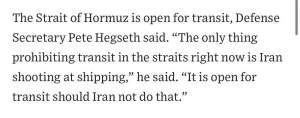
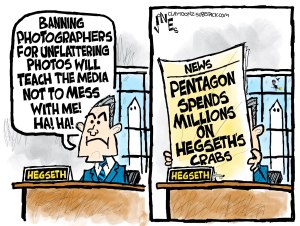
CNBC headlined his little performance this way. “Pete Hegseth on Strait of Hormuz: ‘Don’t need to worry about it’.”
Defense Secretary Pete Hegseth on Friday brushed aside concerns that the effective closure of the Strait of Hormuz because of the Iran war, which has spiked oil prices, would continue being a problem for the U.S. and the world for much longer.
Iran has been “exercising sheer desperation in the Straits of Hormuz,” Hegseth said at a Pentagon press briefing.
“We have been dealing with it, and don’t need to worry about it,” he said.
The price of West Texas Intermediate crude oil on Friday morning was around $93 per barrel. A day before the war began on Feb. 28, a barrel of WTI was selling for about $67.
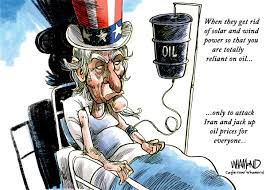 I bet that made you feel so much better! I know I’m back to my original earworm now. Economic data make it increasingly clear that the economy was slowing even before Cadet Bone Spurs started his war. Prices were also rising. This is from the AP. “US economy expanded at sluggish 0.7% in fourth quarter, government says, downgrading first estimate.” Let’s see if he blames Democrats and Biden.
The U.S. economy, hobbled by last fall’s 43-day government shutdown, advanced at an unexpectedly sluggish 0.7% annual rate from October through December, the Commerce Department reported Friday in a big downgrade of its initial estimate.
Growth in gross domestic product — the nation’s output of goods and services — was down sharply from 4.4% in last year’s third quarter and 3.8% in the second. And the fourth-quarter number was half the government’s first estimate of 1.4%; economists had expected the revision to go the other way — and show stronger growth.
Federal government spending and investment, clobbered by the shutdown, plunged at a 16.7% rate, hacking 1.16 percentage points off fourth-quarter growth.
For all of 2025, GDP grew 2.1%, solid but down from an initial estimate of 2.2% and from growth of 2.8% in 2024 and 2.9% 2023.
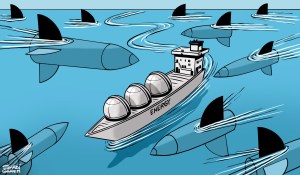 The news from Michigan on the Temple domestic terrorist is beginning to shape the narrative on why it happened. This is from The Detroit News. “Temple Israel synagogue shooter’s family recently killed in air strike.” Damn! There goes that earwig again.
A Dearborn Heights man whose relatives were recently killed in a military strike in Lebanon is the accused assailant in Thursday’s attack on the Temple Israel synagogue in West Bloomfield Township, two sources apprised of the investigation told The Detroit News.
Ayman Ghazali, 41, a restaurant worker in Dearborn Heights, is accused of driving his truck into the synagogue just after noon Thursday and opening fire, before he was shot and killed by security, the sources said. They spoke only on the condition of anonymity because they were not authorized to disclose the details publicly.
Late Thursday night, the U.S. Department of Homeland Security confirmed that Ghazali was the individual who carried out the attack.
Ghazali, a native of Lebanon, was granted U.S. citizenship more than 10 years ago, under the Obama administration, according to the department. He entered the U.S. through Detroit on May 10, 2011, on an immigrant visa as the spouse of a U.S. citizen, a DHS statement said. He applied for naturalization on Oct. 20, 2015, and was granted citizenship on Feb. 5, 2016.
Ghazali’s ex-wife filed for divorce in Wayne County Circuit Court in August 2024, records show. The couple had at least one child, according to court records, and a divorce was granted seven months later, in March 2025. Mohammad Ahmad Moussa, the ex-wife’s divorce lawyer, declined comment when contacted by The News on Thursday.
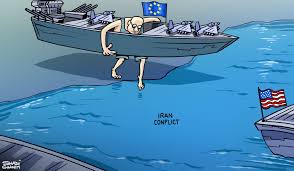 So, here is the headline from The Los Angeles Times, March 1. “Israel hits Lebanon after Hezbollah attacks; in Iraq, militia targets U.S. troops.” How literal are we here about the Eye for an Eye thing in modern times?
- The Israeli military hit Beirut on Monday and urged people in nearly 50 villages in Lebanon to evacuate ahead of possible retaliatory strikes after Hezbollah fired into Israel.
- In Iraq, the Shiite militia Saraya Awliya al-Dam claimed a drone attack on Monday targeting U.S. troops at the airport in Baghdad.
So, I think the world’s pretty fucked up right now, we are doing a lot of that, and I just am going to stop at this now and hope Congress starts fighting this with some integrity and grit.
What’s on your Reading, Action, and Blogging list today?
Mostly Monday Reads: War is Hell
Posted: March 9, 2026 Filed under: "Der Fuehrer's Face", #FARTUS, #MAGAnomics, #We are so Fucked, Iran, Israel/Iran War | Tags: Cadet Bonespur's Iran War, Iran War, Oil Prices Surge, Rationale for Iran War 7 Comments
“The Pieces President” John Buss, @repeat1968
Good Day, Sky Dancers!
The one thing holding inflation prices down in this country was the price of oil. It peaked in 2023 and began a decline until Orange Caligula launched a full-on attack on Iran and disrupted traffic in the Straight of Hormuz. Such is the result of a madman’s insane policy choices based on revenge, power-grabbing, and greed. It’s like giving a toddler the driving wheel and letting him take you down from a very tall mountain.
It’s not like I didn’t warn everyone to clear out of the stock market and hunker down about a year ago. It’s also just going to get worse. I fortunately cleared out the last of one of my 403(b)s last week to use it to improve the house before it gets any more expensive. I managed to lose only a bit of it, and I’m glad to know the check got cut before the worst hit so far. I can’t promise you that it’s going to get any better either. We’re worse than a Banana Republic. We’ve gone back to something akin to the dark ages with plagues of measles and armed thugs wandering the streets, looking to harm and jail workers and poor people. We can’t even put a bunch of pedophiles in suits into the justice system. What good is our Constitution for if money means you can ignore it
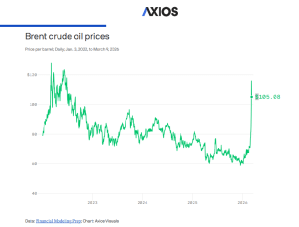
I’m going to start with AXIOS because they always get straight to the point. This analysis is by Neil Irwin, and this absolutely stunning chart provides some visuals. That line covering the first few months of 2026 screams outlier with a discernible reason. To the moon and beyond! It’s also obvious that none of it was Joe Biden’s fault, given the dates accompanying the data points. Okay, I’ll step down from the professor’s podium. I’ll just say economics students will be studying this for as long as universities stand.
In the first week of the American and Israeli attack on Iran, the economic ripples were looking pretty minimal. But as Week 2 begins, the risks to the global economy are growing much more serious.
The big picture: You can’t decapitate the leadership of a country of 90 million people, with expansive military and intelligence capabilities, in the heart of some of the world’s most economically important supply chains, without a huge cost.
- The hours and days and weeks ahead are all about quantifying that cost.
Zoom in: Oil skyrocketed 25% overnight, to just under $120 a barrel, fueling worries that higher energy costs will stoke inflation and curb spending by U.S. consumers. Tokyo’s Nikkei 225 index plunged more than 5%.
- That’s the highest oil price since about four years ago, when energy prices surged due to Russia’s invasion of Ukraine.
- Patrick De Haan — a widely cited gas price expert and an analyst for GasBuddy — estimates there’s an 80% chance the national average gas price will hit $4 per gallon in the next month.
The latest: As of 5am ET, a barrel of the global crude oil benchmark was going for about $107 on futures markets, up 15% from Friday and 47% from 10 days ago, before the Iran attack. Brent crude prices approached $120 overnight before receding on reports of coordinated global action to release oil reserves.
- The oil price rise is poised to translate into a rapid increase in the cost of retail gasoline, which was already up about 51 cents per gallon before the weekend run-up in oil prices.
The risk of a broader economic slump is rising with the disruption to oil supplies. S&P 500 futures are down 1.3% overnight, setting Wall Street up for its third consecutive day of losses.
- Japan’s Nikkei index was down 5.2% and South Korea’s KOSPI down 6%, reflecting those economies’ more direct dependence on Middle Eastern oil now at risk of a protracted blockade.
Of note: The odds of a U.S. recession this year spiked to 38% in overnight trading on Polymarket, from 24% at the start of the month.
State of play: Iran is seeking to block the Strait of Hormuz, which connects the Persian Gulf with the rest of the world, and is threatening to attack ships that seek to pass through.
- The war has already caused the largest oil disruption in history, taking out roughly 20% of the world’s supply, according to Bob McNally, president of Rapidan Energy and a former George W. Bush energy adviser.
- That’s double the previous record set during the Suez Crisis in the 1950s, which disrupted just under 10% of global supply.
- The weekend also brought apparently successful Iranian attacks on desalination plants in the Gulf region that are critical for drinking water.
- President Trump has raised the possibility of U.S. ground forces in Iran.
 More at the link. CNBC shows the data with more analysis. “Oil prices topped $100 per barrel on record supply disruption, but are off session highs.” We’ll see if that lasts until the markets close this afternoon.
Shortly after oil blasted past $100 at the open of trading Sunday evening, President Donald Trump posted on Truth Social that a gain in “short term oil prices” was a “very small price to pay” for destroying Iran’s nuclear threat.
“Only fools would think differently!” Trump added.
Gulf Arab states are cutting production because they are running out of storage space, as crude piles up with nowhere to go due to the closure of the Strait. Tankers are unwilling transit the narrow waterway because they are worried Iran will attack them.
The closure of the Strait has triggered the biggest oil supply disruption history, according to an analysis by consulting firm Rapidan Energy. About 20% of the world’s oil consumption is exported through the Strait.
Iran’s foreign ministry spokesman warned Monday that oil tankers “must be very careful.”
“As long as the situation is insecure, I think all tankers, all maritime navigation, must be very careful,” Foreign Ministry spokesman Esmail Baghaei told CNBC in an interview.
Kuwait, the fifth-biggest producer in OPEC, announced precautionary cuts Saturday to its oil production and refinery output due to “Iranian threats against safe passage of ships through the Strait of Hormuz.” The state-owned Kuwait Petroleum Corp. did not detail the size of the cuts.
Output in Iraq, the second-biggest OPEC producer, has effectively collapsed. Production from its three main southern oilfields has fallen 70% to 1.3 million barrels per day, three industry officials told Reuters on Sunday. Those fields produced 4.3 million bpd before Iran war.
And the United Arab Emirates, the third-biggest producer in OPEC, said Saturday that it is “carefully managing offshore production levels to address storage requirements.” The Abu Dhabi National Oil Co., or ADNOC, said its onshore operations are continuing normally.
The war showed little signs of easing despite Trump’s claim it was “already won.” Iran named Ayatollah Ali Khamenei’s son, Mojtaba, as its new supreme leader, according to reports. The U.S. and Israel killed Khamenei in the opening days of the war.
Energy Secretary Chris Wright said Sunday that traffic through the Strait will resume after the U.S. has destroyed Iran’s ability to threaten tankers.
 It’s really odd to think that I started my career as an economist during the OPEC maneuvers and I’m winding down my career as one with the US maneuvers. Frankly, I think China is sitting pretty right now. They’ve been doing a lot with alternative energy and have the entire Pacific Region — including many Latin American Countries with oil — undoubtedly rooting for them right now.
Alex Harring at CNBC analyzes the market activity. This is fresh off the ticker today. “Stocks pare losses as oil falls back below $100; Dow is down 300 points: Live updates.”
The Dow Jones Industrial Average fell to start the week as U.S. oil topped $100 a barrel, raising concerns about a stagflationary environment for the U.S. economy of rising inflation and slowing growth.
The 30-stock index fell 293 points, or 0.6%, and is coming off its biggest weekly slide in nearly a year. The S&P 500 lost 0.2%, while the Nasdaq Composite gained 0.2%. That signifies a meaningful turnaround for the three indexes, as the Dow was down nearly 900 points, or 1.9%, at its low of the day, and the S&P 500 and Nasdaq were each lower by around 1.5%.
The broader market was helped off its lows by a rise in semiconductor stocks, however. Broadcom jumped more than 3%, while Micron Technology and Advanced Micro Devices gained almost 2% each. Nvidia climbed more than 1%.
West Texas Intermediate crude broke above $100 per barrel in overnight trading to hit more than $119, its first time above the $100 level since 2022, when investors were reacting to the aftermath of Russia’s invasion of Ukraine. It was last up 6% at around $96 a barrel. International benchmark Brent crude added 7% to $99 a barrel. U.S. oil prices began the year below $60 a barrel.
Oil futures jumped after major Middle East producers slashed their output due to the continued closure of the key Strait of Hormuz passageway. Kuwait announced cuts but did not say by how much, while Iraq has reportedly seen its production fall 70%.
Oil prices later came off their highest levels of the session and stocks rose from their lows following a Financial Times report that G7 officials were considering tapping their strategic reserves. But the publication also reported coordinated release was not ready yet, helping to send major indexes lower.
The Cboe Volatility index — Wall Street’s fear gauge measuring investors seeking protection in the options market — topped 30 for the first time since the market’s tariff driven sell-off in April 2025. It was last above 27.
The $100 oil level was seen by many on Wall Street as a breaking point for the economy unless the war is resolved quickly and prices retreat. Trump posted Sunday evening that a gain in “short term oil prices” was a “very small price to pay” for destroying Iran’s nuclear threat.
 Trump donors are feeling this immediately. Trump voters will shortly see the impact on their budgets and gas prices. I can’t say I feel sorry for any of them, but there’s not a person who won’t feel this one way or another. The Bulwark’s Andrew Egger examines Trump’s seeming confusion over his War.
What did the White House think it was getting into in Iran? A strike against Iran’s oppressive and fanatical regime, sure. A display of America’s awesome military might, definitely. But it’s become increasingly, painfully clear: They didn’t think there was going to be a war.
The Trump administration developed no real theory of the objectives of the Iran war, because they didn’t think there was going to be a war. Instead, the administration has backfilled a dizzying array of post-hoc goals for the strikes against Iran. Judd Legum counts seventeen different rationales offered by many different officials, from the president’s “feeling, based on fact” that Iran was about to strike the United Statesto a desire to free the Iranian people to a need to destroy a nuclear program the White House had claimed was already “obliterated.”
The Trump administration made no effort to get the American people on board with war, because they didn’t think there was going to be a war. A majority of the public is already opposed to war with Iran, and what support the war does have seems to be based on the questionable assumption that the conflict will be shortly resolved: 44 percent of Americans support the strikes so far, but only 12 percentwould be in favor of sending U.S. ground troops into the country. But the White House has made no broad effort to convince the public on a bipartisan basis that they should be prepared for a long-haul conflict.
They didn’t think there was going to be a war, and so the White House seemingly gave no thought to what the economic ramifications of war would be. After several days of strikes on Iran, President Trump seemed suddenly to realize last week that the ongoing conflict was going to be terrible for energy prices. He tried to slap a band-aid on the problem by announcing risk insurance and military escorts for all oil tankers through the Strait of Hormuz, but it wasn’t enough: Suddenly, oil prices went through the roof, and the White House was scrambling to contain the damage—rushing to reassure consumers that the price hikes would be temporary and even waiving some sanctions on Russian oil to try to ease pressures on global supply. “Short term oil prices, which will drop rapidly when the destruction of the Iran nuclear threat is over, is a very small price to pay for U.S.A, and World, Safety and Peace,” Trump posted on Truth Social yesterday. “ONLY FOOLS WOULD THINK DIFFERENTLY!”
They didn’t think there was going to be a war, and so the president assumed he’d be in charge of picking Iran’s next political leadership. This plan, admittedly, hit an unexpected snag early on: The initial round of strikes that took out Iran’s top leaders also killed a number of lower-ranking regime figures that the White House had identified as pragmatists who might be willing to negotiate. “The attack was so successful it knocked out most of the candidates,” Trump said a day after the strikes began. “It’s not going to be anybody that we were thinking of because they’re all dead. Second or third place is dead.” Still, Trump made it clear he expected to be involved in picking Iran’s next supreme leader, and absolutely ruled out Mojtaba Khamenei, the son of the slain ayatollah: “They are wasting their time . . . Khamenei’s son is unacceptable to me.” But this morning, Iran went ahead and proclaimed Mojtaba Khamenei their next supreme leader anyway.
Somehow, the president seems to remain so confident Iran will be buttoned up in no time that he’s already openly licking his chops over the next triumphant blitzkrieg. “Cuba is gonna fall pretty soon, by the way,” Trump told CNN Friday. “I’m going to put Marco over there and we’ll see how that works out. We’re really focused on this one right now.”
 Judd LeGum at Popular Information specifies not the unknowables of the attack, but the rationale and plans for the future, which are blowing in the wind. “9 days in, the most basic question about the Iran war remains unanswered. In just over a week, Trump and top administration officials have given at least 17 different responses about why the war began.” Yup. We still don’t know why they did this.
On February 28, President Trump announced that “the United States military began major combat operations in Iran.” The war has claimed the lives of more than 1500 people, including about 1300 Iranians, dozens in neighboring countries, and six U.S. troops. The Pentagon has estimated the conflict is costing U.S. taxpayers about $1 billion per day — and that figure may be too low.
And yet, nine days into the war, Trump and his administration have failed to clearly answer the most fundamental question: Why did the war begin?
Instead, the Trump administration has offered a bewildering series of shifting, contradictory, and factually incorrect answers. In just over a week, Trump and top administration officials have given at least 17 different responses about why the war began:
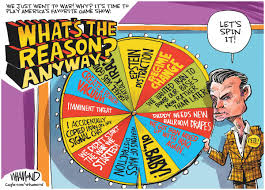 A brief description of each of those 17 responses is given in the article. You may read it at this fully gifted link. The New York Times reports on information from Iran’s new Supreme Leader. “Live Updates: Oil Price Surge Rattles Markets; Iran’s Choice of Leader Signals Defiance. Stocks fell on fears of the Iran war’s effects on energy prices. Top clerics selected Mojtaba Khamenei as Iran’s supreme leader, despite President Trump’s warning that he was “unacceptable.”
U.S. stocks fell at the start of trading on Monday, after markets in Asia and Europe tumbled, as a spike in oil prices reflected global fears of a prolonged U.S.-Israeli war with Iran. Meanwhile, Iran projected defiance by naming a son of its slain supreme leader as his successor.
Oil prices briefly surged early Monday to almost $120 per barrel, their highest level since the Covid pandemic, as President Trump’s plans for the next steps in the war, let alone its endgame, remained unclear and Iran showed no sign of bowing to his demand for unconditional surrender.
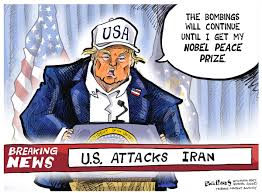 It still looks like the start of World War 3 to me. From the same link above.
Eleven countries have asked Ukraine for security support to help counter Shahed drones, according to President Volodymyr Zelenskyy. He said in a social media post that the requests have come from countries neighboring Iran, European nations and the United States — and that some “have already been met with concrete decisions and specific support.”
He did not provide further details, though Zelensky earlier told The New York Times that Ukraine sent interceptor drones and a team of experts to protect U.S. military bases in Jordan.
“There is clear interest in Ukraine’s experience in protecting lives, relevant interceptors, electronic warfare systems, and training,” Zelensky added in his post on social media. “Ukraine is ready to respond positively to requests from those who help us protect the lives of Ukrainians and the independence of Ukraine.
This headline is one that worries me. It’s from the Times of Israel. “Trump to Times of Israel: It’ll be a ‘mutual’ decision with Netanyahu regarding when Iran war ends. US president, in phone interview, clarifies that he’ll make final call to end operation ‘at right time’; says he and PM ‘worked together’ against Islamic Republic: ‘We’ve destroyed a country that would have destroyed Israel’.”
US President Donald Trump told The Times of Israel on Sunday that a decision on when to end the war with Iran will be a “mutual” one that he’ll make together with Prime Minister Benjamin Netanyahu.
Trump also asserted in the brief telephone interview that the Islamic Republic would have destroyed Israel if he and Netanyahu had not been around. “Iran was going to destroy Israel and everything else around it… We’ve worked together. We’ve destroyed a country that wanted to destroy Israel.”
The US president was asked whether he alone would decide when the war with Iran ends or if Netanyahu would also have a say.
“I think it’s mutual… a little bit. We’ve been talking. I’ll make a decision at the right time, but everything’s going to be taken into account,” he responded, indicating that while Netanyahu will have input, the US president will have the final say.
Asked whether Israel could continue the war against Iran even after the US decides to halt its strikes, Trump declined to entertain the theoretical possibility before adding: “I don’t think it’s going to be necessary.”
So, it’s still two megalomaniacs avoiding prison sentences running the show. Don’t you feel much better now?
What’s on your Reading, Action, and Blogging list today?
Finally Friday Reads: Perpetual Fresh Hells
Posted: March 6, 2026 Filed under: #FARTUS, #MAGAnomics, #We are so Fucked, just because, kakistocracy, Kristi Noem, MAGA Assholes, Trump's Wars | Tags: @johnbuss.bsky.social John Buss, Cadet Bonespur's Iran War, Ecuador, Kristi Noem Sociopath and Cunt, Markwayne Mullin, Trump's Economy Sux, Trump's Wars 7 Comments
“Meanwhile, in the newly acquired Homeland Security luxury jet’s bedroom…” John Buss, @repeat1968
Good Day, Sky Dancers!
There’s so much news to cover today that I don’t even know where to start. We’ve got information that we’re the ones who struck the elementary school in Iran, killing all those little girls. We’ve also found out that the Russians are helping Iran target us. This sure feels like the start of World War 3. Additionally, the job picture is bleak as stats show that jobs are being eliminated. Finally, don’t start celebrating Kristi Noem’s demise quite yet. She’s headed to another job, and her replacement is a bimbo with some odd kink. Orange Caligula and his Incompetence Legion continue to wreck everything. Steven Miller must be thrilled.
So, how goes the war? My bad, wars. We’ve got yet another frontline in another country as of 2 days ago. We’re now staging attacks in Ecuador. This is from Time Magazine. “Why Is the U.S. Launching Military Operations in Ecuador?” This analysis and reporting is by Chantelle Lee.
The United States and Ecuador announced this week that they’ve begun a joint military operation to combat narcoterrorism in the South American country.
The U.S. Southern Command (Southcom), which oversees the nation’s military activity in Latin America and the Caribbean, said in a press release on Tuesday that Ecuadorian and American military forces had started operations that day “against Designated Terrorist Organizations in Ecuador.”
“The operations are a powerful example of the commitment of partners in Latin America and the Caribbean to combat the scourge of narco-terrorism,” Southcom said in the press release. “Together, we are taking decisive action to confront narco-terrorists who have long inflicted terror, violence, and corruption on citizens throughout the hemisphere.”
Southcom also shared on X a short video in which a helicopter can be seen taking flight and picking up service members. The command didn’t explain what the video was depicting, though, or how it was tied to the operation in Ecuador.
Officials have so far shared little information about the military operation. But here’s what we do know.
Ecuadorian President Daniel Noboa said in a post on X this week that the country will be conducting “joint operations with our regional allies, including the United States” in March. He didn’t provide any details about the scale of the operation or the intended targets.
“The security of Ecuadorians is our priority, and we will fight to achieve peace in every corner of the country,” he said in his post. “To achieve that peace, we must act forcefully against criminals, wherever they may be. The pursuit of justice and national dignity will never be persecution, but rather a promise that we will keep to Ecuadorians.”
The Trump Administration hasn’t publicly shared how the U.S. military is involved in the operation in Ecuador. But one American official, speaking to the New York Timeson the condition of anonymity, said that, in the months leading up to this week’s announcement, U.S. Special Forces have been assisting Ecuadorian soldiers in preparing for raids. American service members, the official told the Times, have been deployed to support the Ecuadorian military with the operation, which is reportedly targeting drug facilities led by violent gangs. U.S. troops, though, will not be directly involved in the operation, the official told the Times.
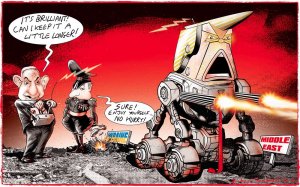 Dalia Dassa Kaye, reporting for Foreign Affairs, has this analysis. “The Mirage of a New Middle East. War With Iran Won’t Reshape the Region the Way America Wants.”
Eager to show that he can do what no American leader has done before, President Donald Trump has chosen conflict over diplomacy and gone to war with Iran. The Islamic Republic, knowing that this fight is existential, retaliated quickly with deadly missile and drone attacks on Israel, U.S. bases in the Middle East, and targets in Gulf states and beyond. This is now a regional war with global impact, disrupting oil and financial markets, supply chains, maritime commerce, and air travel. Threats to Americans and the death toll in Iran mount by the hour. These growing risks were predictable long before the war became reality, which might help explain why no previous president took the United States down this perilous path.
How this war will end remains uncertain. But when it does, the United States will have to face what comes next. To the extent that the Trump administration has considered plans for “the day after,” it seems to have made a series of overly optimistic assumptions about how the war might reshape Iran and the Middle East. For one, the Trump administration has insisted—including in Trump’s social media post on February 28 announcing the war—that a relentless degradation of Iranian leadership and military capabilities would weaken the regime enough that the Iranian people could rise up and “take over the government.” Even if that doesn’t happen, the administration’s logic goes, Iran would be defanged and so preoccupied with internal problems that it could no longer pose a threat to the region or American interests. Taking the current Iranian regime out of the equation, Washington assumes, would remove one of the largest sources of regional instability and usher in a new Middle East more to the United States’ liking.
But the outcome of this war will likely fall far short of these rosy expectations. After the bombing ends, Iran and the region could look worse, or at least not better, than they did before the war. The fighting could create a power vacuum in Tehran, sour U.S. allies on their partnerships with Washington, and produce ripple effects on conflicts elsewhere in the world, all without removing sources of regional strife that have nothing to do with the regime in Iran. The risks increase the longer the war goes on, so Congress and U.S. allies must press for a cease-fire now if there is to be any hope of mitigating these day-after dangers.
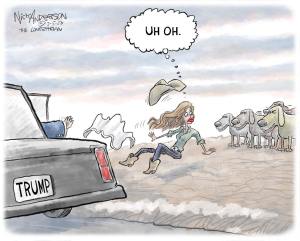 More analysis of the likely deadly results over time, which include the rise of terrorism once more, can be found at the link. Eric Cortellessa has more analysis about “Trump’s War” at Time Magazine.
In short, if Trump campaigned as a President of peace, he has governed as the opposite. Now he has drawn the U.S. into the kind of conflict he long pledged to avoid. Having ousted the tyrannical ruler of Iran’s theocracy, he has committed the U.S. anew to regime change in the Middle East, telling TIME he intends to play a role in shaping the next government of a regional powerhouse home to some 90 million people. “One of the things I’m going to be asking for is the ability to work with them on choosing a new leader,” he says. “I’m not going through this to end up with another Khamenei. I want to be involved in the selection. They can select, but we have to make sure it’s somebody that’s reasonable to the United States.”
It’s impossible to know how all this will unfold. There was little sympathy internationally for the Ayatollah, who reigned over a brutal Islamist regime; throughout Tehran and across the Iranian diaspora, crowds have rejoiced in the streets upon hearing the news of his demise. To some, Trump’s attacks are historic in the best sense, eliminating an avowed adversary who sought to destroy the U.S. and whom Washington has long viewed as the head of the world’s foremost state sponsor of terrorism.
But the gambit carries extraordinary risks—for Trump’s presidency, for Iran’s fragile political future, for regional stability, and for the safety of Americans at home and abroad. The gravest decision a President can make is whether to send American troops into harm’s way. Trump, who once defined himself in opposition to foreign entanglements, has pivoted with astonishing alacrity toward open-ended confrontation across multiple theaters.
In his interview with TIME, Trump says his goals are to eliminate Iran’s nuclear threat once and for all, to dismantle its ballistic-missile program, and to install a Western-friendly government. “We have to be able to deal with sane and rational people,” he says. Yet Trump launched a war before making a case to the country or to Congress, and his Administration has offered unclear—and at times contradictory—explanations of the mission’s objectives. The most unnerving possibility is that Operation Epic Fury is not the culmination of his shift toward a war presidency, but rather the beginning of a new chapter.
The path to war with Iran was paved by a pair of meetings, one year apart, with Benjamin Netanyahu.
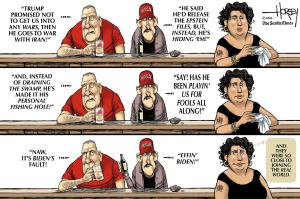 As usual, Trump is easily manipulated by his counterparts with selfish and bad intentions.
On Feb. 4, 2025, the Israeli Prime Minister visited the White House for the first time since Trump’s return to power. Seated at a long table in the Cabinet Room, Netanyahu began with a bracing reminder, according to U.S. and Israeli officials present at the meeting: Iran, he noted, had plotted to assassinate Trump during the 2024 campaign. Law-enforcement officials disclosed that they had disrupted what they described as two Iranian plots to kill Trump. (Tehran denied the allegations.) Trump has long fused geopolitics with grievance, and Iran’s clerical leadership occupied a singular place on his list of adversaries. When TIME asked him in a November 2024 interview about the prospect of war with Iran, Trump did not dismiss it. “Anything can happen,” he said.
Sensing an opening, Netanyahu walked through a slide deck. It showed stockpiles of highly enriched uranium climbing, centrifuges spinning faster, inspectors reporting gaps. Ever since Trump withdrew from President Barack Obama’s nuclear accord in 2018, Tehran had incrementally expanded its enrichment program, moving closer to breakout capacity. By the time Trump was inaugurated a second time, international inspectors assessed that Iran possessed enough weapons-grade uranium to place it mere weeks from assembling a bomb. “Look, Donald,” Netanyahu said, leaning in, “this has to be tackled, because they’re racing forward.” He paused, locking eyes with the President. “You can’t have a nuclear Iran on your watch.”
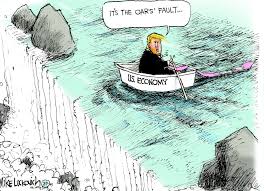 I wanted to mention the economy signalling a meltdown. This is from Jeff Cox writing for CNBC. “Economy: U.S. payrolls unexpectedly fell by 92,000 in February; unemployment rate rises to 4.4%.”
-
Nonfarm payrolls in February fell by 92,000, compared with the estimate for 50,000 and below the downwardly revised January total of 126,000. It was the third time in five months that the economy lost jobs.
-
Health care, the primary growth driver in payrolls, saw a loss of 28,000, due largely to a strike at Kaiser Permanente that sidelined more than 30,000 workers in Hawaii and California.
-
Wages rose more than expected. Average hourly earnings increased 0.4% for the month and 3.8% from a year ago, both 0.1 percentage point above forecast.
I want to mention a few things about this. Generally, this would indicate that the Fed’s Board of Governors may loosen interest rates. However, we’re still on the high end of the inflation rate target, considering that wages rose by more than expected, the Fed may be reluctant to move on that. Wars generally stimulate an economy but that remains to be seen on the various military advantages Trump has undertaken. There is still concern about the supply inventory needed to support the war. Moving to a wartime economy can create shortages in the consumer sector. International markets are already pricing in oil shortages.
 As usual, I am ever the economist. I’m just weirded out about all the Kristi Noem and her likely replacement news. These people are all bimbos and freaks. Noem’s replacement, Senator Markwayne Mullin, appears to have a really odd kink. This is from MEDIAite. It’s a headline from 2023. “Markwayne Mullin Reportedly Fingered Nostrils of Colleagues and Their Spouses During Visit to Israel.” I certainly want the committee hearing to ask about this, but I really don’t want to hear the details.
I do want to know more about Noem’s new job, however. This is from The Hill. WTH is the Shield of the Americans anyway? Ashleigh Fields has this headline. “What we know about Noem’s new ‘Shield of the Americas’ role.”
While the soon-to-be former secretary will no longer head up immigration and other national security agencies under DHS, her work for “Shield of the Americas” will hit on similar topics, including immigrants in the country illegally, transnational trafficking and border crossings.
Here’s what we know about the role: What is ‘Shield of the Americas’?
The regional coalition of countries in Latin America will work together on ideology and policy initiatives that help secure the Western Hemisphere, according to the White House.
The Shield of the Americas will be guided in part by the president’s foreign policy initiatives dubbed the “Donroe Doctrine,” fashioned after the Monroe Doctrine. The administration has described the doctrine as enlisting “established friends” in the Western Hemisphere to pursue U.S. aims and expanding ties by “cultivating and strengthening new partners.”
Since Trump returned to office last year, he directed the renaming of the Gulf of Mexico to the “Gulf of America,” announced plans to “take back” the Panama Canal, and pushed efforts to acquire Greenland and make Canada the 51st state.
A summit making the Shield of the Americas official is set to take place this weekend in Miami, and it may largely focus on counterterrorism measures in the region as a group of Latin American leaders assemble on American soil.
Noem will work with foreign leaders in both North and South America. The Trump administration has maintained a heavy interest in connecting with Latin American leaders to combat human smuggling, drug trafficking and undocumented immigration.
Thirteen heads of Latin American countries are expected to be present at the Miami summit this weekend. Some notable names, according to the White House, include: Argentine President Javier Milei, Chilean President-elect José Antonio Kast, Salvadoran President Nayib Bukele Ortez and Honduran President Nasry “Tito” Asfura.
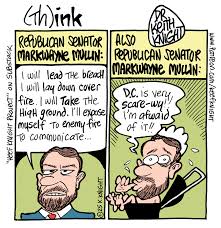 NPR has the go-to list on “What you need to know about Sen. Markwayne Mullin, Trump’s new pick to lead DHS.”
-
Mullin was first elected to the House in 2012 and was sworn in the following January.
-
A decade later he won a special election to fulfill the term of former Sen. James Inhofe, a fellow Republican who resigned due to health issues.
-
Mullin is an enrolled member of the Cherokee nation. He is the first tribal citizen in the Senate since Ben Nighthorse Campbell left in 2005.
-
Mullin has been a reliable defender of President Trump in Congress, including just this week, backing the president’s decision to launch strikes against Iran.
-
Mullin serves on several committees, including Appropriations, Armed Services, Indian Affairs and Health, Education, Labor and Pensions.
-
In his role on the Appropriations Committee, he helps write and negotiate federal funding, including the ongoing talks to fund DHS, the agency he has been tapped to lead.
-
DHS has been operating without annual appropriations funding since February 14.
-
Mullin has frequently defended President Trump’s approach to immigration enforcement.
Anyway, he has a background in construction. He’s from Oklahoma. Evidently, he and Rand Paul don’t get along, and since Paul is the head of the committee that will approve his appointment, it should be interesting.
So, that’s enough weird Trump news for the day. I need to return to doing something more worthwhile, like the laundry and dishes.
What’s on your Reading, Blogging, and Action list today?
Finally Friday Reads: How Goes the War
Posted: February 20, 2026 Filed under: #FARTUS, #MAGAnomics, #We are so Fucked | Tags: Supreme Court, Incompetence, Cadet Bonespur's Iran War, Kid Rock, #FARTUS Mafia State, Trump Tarriffs, Bobby Kennedy Jr., Trumpers 6 Comments
“DEFCON 1!!!” John Buss, @repeat1968
Good Day, Sky Dancers!
Glancing through the headlines in traditional and social media reminds us that there is nothing normal about life in the United States these days. Economic news is surreal, as historical, economic, and constitutional mistakes like tariffs are back in the headlines. Plans for a potential war with Iran sit on the resolute desk somewhere. Don’t even get me started on jaw-dropping weirdness still happening among the jerks and incompetents sitting in Cabinet offices. I guess it’s just another normal yet insane week in Trumplandia.
It may be hard to choose the read to start out with, but the rest will be equally shocking today, believe me. Just minutes ago, the Supreme Court made the obvious decision to strike down most of Trump’s tariffs in a 6-3 vote. This is from the New York Times. Live Updates: Supreme Court Strikes Down Trump’s Sweeping Tariffs. In a major setback for President Trump’s economic agenda, the court ruled that he could not invoke the International Emergency Economic Powers Act of 1977 to set tariffs on imports. (I’ve gifted the full article for you to read.)
The Supreme Court ruled on Friday that President Trump exceeded his authority when he imposed sweeping tariffs on imports fromnearly every U.S. trading partner, a major setback for his administration’s second-term agenda.
The court’s 6-3 decision has significant implications for the U.S. economy, consumers and the president’s trade policy. The Trump administration had said that a loss at the Supreme Court could force the government to unwind trade deals with other countries and potentially pay hefty refunds to importers.
Mr. Trump is the first president to claim that a 1970s emergency statute, which does not mention the word “tariffs,” allowed him to unilaterally impose the duties without congressional approval.
Writing for the majority, Chief Justice John G. Roberts Jr. said the statute does not authorize the president to impose tariffs.
“The president asserts the extraordinary power to unilaterally impose tariffs of unlimited amount, duration, and scope. In light of the breadth, history, and constitutional context of that asserted authority, he must identify clear congressional authorization to exercise it,” the chief justice wrote.
Justices Clarence Thomas, Samuel A. Alito Jr. and Brett M. Kavanaugh dissented, with Justice Kavanaugh warning that any refund process could be a substantial “mess.”
The United States “may be required to refund billions of dollars to importers who paid” the tariffs, he wrote, “even though some importers may have already passed on costs to consumers or others.”
The court’s ruling, backed by justices from across the ideological spectrum, was a rare and significant example of the Supreme Court pushing back on Mr. Trump’s agenda. Since he returned to the White House, the court’s conservative majority had overwhelmingly issued emergency orders allowing the president to carry out his policies on a temporary basis. But the decision on Friday will have a more lasting impact.
Early last year, Mr. Trump invoked the International Emergency Economic Powers Act of 1977 to set tariffs on imported goods from more than 100 countries. He said his goal was to reduce the trade deficit and spur more manufacturing in the United States. Since then, he has used the tariffs to raise revenue and to pressure other countries in trade negotiations.
A dozen states and a group of small businesses, including an educational toy manufacturer and a wine importer, sued over the tariffs, saying the president had unlawfully infringed on Congress’s power under the Constitution to impose taxes. The businesses, which rely on imported goods, argued in court filings that the tariffs had disrupted their operations and led to higher prices for consumers and cutbacks in staffing.
In court filings and social media posts, the president and his advisers cast the outcome of the Supreme Court case as critical to his trade and foreign policies, making clear he would see defeat as a personal rebuke. Without the emergency power, the solicitor general had warned the justices, there would be economic ruin akin to the Great Depression, in addition to an interruption of trade negotiations and diplomatic embarrassment.
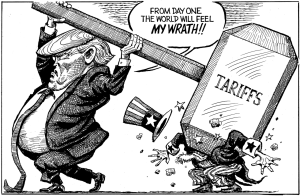 This is from Talking Points Memo‘s Layla A. Jones.
The Supreme Court blocked President Donald Trump’s signature economic and foreign policy Friday morning in a fractured 6-3 split decision.
Trump cannot use the International Emergency Economic Powers Act, or IEEPA, to override Congress’s power of the purse, using the emergency declaration to levy widespread global tariffs, the majority held. The decision will now likely require an end to those tariffs, and could trigger the return of tariff revenue collected by Customs and Border Protection and deposited into the U.S. Treasury.
Chief Justice John Roberts wrote the majority opinion, which was joined in part by Justices Sonia Sotomayor, Elena Kagan, Neil Gorsuch, Amy Coney Barrett and Ketanji Brown Jackson. Kagan filed a concurring opinion, joined by Sotomayor and Jackson, while Jackson filed her own concurring opinion. Gorsuch and Barrett also filed concurring opinions.
Justices Clarence Thomas, Brett Kavanaugh and Samuel Alito dissented, with Thomas filing one dissenting opinion and Kavanaugh filing another, joined by Thomas and Alito.
“Based on two words separated by 16 others in [a section of] of IEEPA — ‘regulate’ and ‘importation’ — the President asserts the independent power to impose tariffs on imports from any country, of any product, at any rate, for any amount of time,” Roberts wrote. “Those words cannot bear such weight.”
The majority opinion ultimately agrees with the main argument of the plaintiffs, a slate of small businesses suing the government on the grounds that Trump’s IEEPA tariffs are illegal. Tariffs are a tax, the plaintiffs had argued, and taxing authority rests solely with Congress.
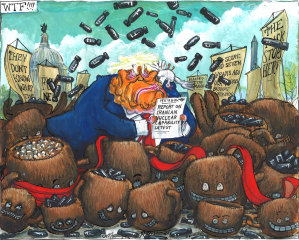 Speaking of authorities that rest solely with Congress, Trump is still brooding about declaring War on Iran. This is from Michelle Goldberg writing for the New York Times. “This Is How an Autocrat Goes to War.”
On Wednesday, Axios’s well-sourced reporter Barak Ravid warned, “The Trump administration is closer to a major war in the Middle East than most Americans realize. It could begin very soon.” America has undertaken the largest air power buildup in the region since the Iraq war. Outlets including The New York Times have reported that the military has given Trump the option to strike as soon as this weekend.
Not only has Congress not authorized such a war, it has barely even debated it. The administration has not bothered to explain, either to Congress or the American people, why it might bomb Iran or what it hopes to achieve. “There haven’t been any briefings about a military strategy,” said the Democratic representative Ro Khanna, who is working with his Republican colleague Thomas Massie to force a vote on an antiwar measure.
Most reporting indicates that the White House is planning for a campaign far more intense and sustained than last year’s bombing of Iran or the abduction of Venezuela’s Nicolás Maduro. But we don’t know if Trump and his team are after regime change, and if they are, what they think comes next. This is how an autocracy goes to war, without even a pretense that the consent of the governed matters.
At the center of the conflict between America and Iran is Iran’s nuclear program, which Trump claims he destroyed eight months ago, at the close of Israel’s 12-day war. Back then, a report from the Defense Intelligence Agency found that America’s bombing campaign set Iran’s program back by less than six months. But to this day, a page on the White House website proclaims, “Iran’s Nuclear Facilities Have Been Obliterated — and Suggestions Otherwise Are Fake News.” The administration apparently feels no need to justify a potential war to end a program that it claims it already eliminated.
The administration is also reportedly demanding that Iran curtail its ballistic missile program and end its support for regional proxies like Hezbollah in Lebanon and the Houthis in Yemen. It is unclear whether these demands are serious or simply a negotiating tactic, but they seem to be red lines for Iran.
“I don’t know whether it’s pretextual or genuine,” Rob Malley, Joe Biden’s special envoy for Iran, said of the Trump administration’s conditions. Given that Iran was probably bound to refuse, he said, the Trump team’s position could be “simply part of a Kabuki game to be able to say, ‘We tried diplomacy.’”
So far, the administration has scarcely bothered to elaborate the reasoning behind these demands. After all, Iran’s missiles, and the militias it supports, threaten Israel far more than they do the United States. If you take the administration’s stance at face value, it’s hard to square it with Trump’s America First campaign rhetoric.
 If Trump isn’t bad enough, he has a cabinet that’s equally incompetent and dangerous. This is yet another New York Times headline. “Labor Secretary’s Husband Barred From the Department After Sexual Assault Reports. At least two female staff members said Dr. Shawn DeRemer had touched them inappropriately at the agency in Washington.”
The husband of Labor Secretary Lori Chavez-DeRemer has been barred from the department’s headquarters after at least two female staff members told officials that he had sexually assaulted them, according to people familiar with the decision and a police report obtained by The New York Times.
The women said Ms. Chavez-DeRemer’s husband, Dr. Shawn DeRemer, had touched them inappropriately at the Labor Department’s building on Constitution Avenue. One of the incidents, during working hours on the morning of Dec. 18, was recorded on office security cameras, the people said. The video showed Dr. DeRemer giving one of the women an extended embrace, and was reviewed as part of a criminal investigation, one of the people said.
In January, the women’s concerns about Dr. DeRemer, 57, were raised as part of an internal investigation by the department’s inspector general into alleged misconduct by Ms. Chavez-DeRemer and her senior staff, one of the people said.
On Jan. 24, Washington’s Metropolitan Police Department filed a report about forced sexual contact in December at the Labor Department, according to their report, which was viewed by The Times.
The police report is the only one from the last three months associated with the Labor Department’s address, a police spokesman said, adding that the Police Department’s sexual assault unit is investigating.
After the women described the incidents to investigators, Dr. DeRemer was barred from entering the Labor Department’s premises, according to people familiar with the decision, who asked not to be identified because of the sensitivity of the allegations and ongoing investigations surrounding the department.
“If Mr. DeRemer attempts to enter, he is to be asked to leave,” a building restriction notice viewed by The Times said.

Mika reacts
Then there is this embarrassing, let me rephrase that to gross, televised moment from the HHS Secretary. This is from The Independent. “Even Fox News hosts struggling to make sense of RFK Jr’s and Kid Rock’s workout video, ‘Listen, somebody needs to tell RFK Jr. it’s okay to wear shorts. I mean, bro, don’t be upset about your legs,’ Fox News military analyst Johnny Jones said.” This is reported by Graig Graziosi.
Why did Department of Health and Human Services Secretary Robert F Kennedy Jr and aging rap-rocker Kid Rock release a sweaty, shirtless workout collab video? Not even Fox News is sure.
During an episode of The Five on Wednesday, the panel members were left scratching their heads during a discussion of the bizarre video.
In a clip posted to X, Kennedy and Kid Rock, both shirtless, take turns riding on a stationary bike and doing pushups in what looks like a sauna. At one point, Kid Rock flips the middle finger to the camera. A title screen, inexplicably featuring a great white shark, tells us this is Kennedy and Kid Rock’s “Rock Out Work Out.”
The video is apparently intended to promote the DHHS secretary’s Make America Healthy Again agenda.
Fox News’ Greg Gutfeld watched the video and asked his co-panelists, “This raises a question: who rubs off on who?”
“You would think, ‘Oh, my God. RFK Jr is hanging out with Kid Rock. Oh, poor RFK Jr. is going to end up drinking. He’s going to be drinking again. He’s going to be womanizing again.’ And then what happens? You see Kid Rock at the gym,” Gutfeld said. “He’s like, you know, working out and cold plunge—it’s like RFK was a bad influence on Kid Rock. Who would have seen that coming?”
Fox News military analyst Johnny Jones pointed out that the DHHS secretary wore blue jeans throughout his entire workout.
“Listen, somebody needs to tell RFK Jr. it’s okay to wear shorts. I mean, bro, don’t be upset about your legs. I don’t care what they look like. Take it from me, nobody needs impressive legs. You look great with your shirt off. Throw the shorts on so we don’t all go, ‘Wow, that’s weird.’”
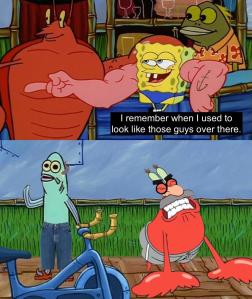 Esquire’s coverage was brutal. “The Republican Party Is So Tacky Now. The party of Lincoln has been reduced to RFK Jr. and Kid Rock’s “workout” video. Are they really okay with that?” This analysis was written by Dave Holmes.
As you know by now, Secretary of Health and Human Services Robert F. Kennedy Jr. got together with Woodstock ’99 standout Kid Rock to produce a short video promoting nutrition, exercise, and bathing with your pants on. The “Rock Out WORK OUT” video was filmed at Kid Rock’s home gym and sauna, and it is scored to his 1998 single “Bawitdaba,” so just when you start to realize that your tax dollars funded this video, you have to face the fact that some of your tax dollars have gone directly to Kid Rock, which is a lot to sit with. Like you, I spent much of yesterday trying not to see it. But it turns out to be a pretty good barometer of where we are as a country and a culture in February 2026, and if I have to lose 90 seconds to this goddamn thing, then so do you. Pour yourself a glass of whole milk and let’s dive in.
The video opens with Kennedy and Kid, shirtless and flexing, in front of the taxidermic bear you were already sure existed in Kid Rock’s home gym. A quick camera pan reveals that this bear is wearing a checkered fedora, suggesting that it was shot while onstage with its ska band, which hardly seems sporting. From there is a montage that includes an American flag, a shark, a fighter jet, a bald eagle, and an explosion, so what we know right off the bat is two things: One, they’re going to be throwing everything at the wall here, and two, NFTs must really be over, because this would be the perfect place to slide one in.
A highlight reel shows Secretary Kennedy and American Bad Calves running through some basic exercises in the workout room, and then it’s right to the sauna, where Kennedy keeps his jeans on and Rock does a set of push-ups so comically weak it awakens the sadistic gym teacher inside us all. Seriously: I want to bully him, and I own Liza with a Z on Blu-ray. What is happening here? As if anticipating this response, Kid Rock flips off the camera. That’s the message of American public health in 2026: Get active, eat real food, and fuck you.
Kennedy dips himself in the cold plunge, in the jeans which you have to imagine are sodden with sweat from the Assault bike session he just did in the sauna. The hygienic ramifications are too hideous to consider, so you focus your attention on the decor of Kid Rock’s home fitness center, which is identical to what you’d see in one of those Hammer & Nails salons for men, where they surround you with rough-hewn wood and tables made out of wagon wheels so you can get a pedicure and it won’t make you gay.
Kennedy gets out of the cold plunge and walks his wet ass through a sitting area, dripping his Kennedy juice all over the Navajo rug. “Where’s Kid?” he asks, a valid question only after we have answered the question “Why is Kid?” Well, Kid is in some kind of hot-tub room, flexing his biceps with a look on his face that is unmistakably 10 percent apologetic. Kennedy shakes his head. Kid, in his own hot tub? He can’t believe it!
 The economy remains sluggish, with high prices. This is from CNBC. Jeff Cox reports that “Fourth-quarter U.S. GDP up just 1.4%, badly missing estimate; inflation firms at 3%.”
U.S. growth slowed more than expected near the end of 2025 as the government shutdown impacted spending and investment, while a key inflation metric showed high prices are still a factor for the economy, according to data released Friday.
Gross domestic product rose at an annualized rate of just 1.4%, according to the Commerce Department, well below the Dow Jones estimate for a 2.5% gain.
Consumer spending increased at a slower pace for the period while government spending tumbled sharply in a quarter marked by the record-length shutdown. The department estimated that the shutdown subtracted about 1 percentage point from growth, though it added that the exact impacts “cannot be quantified.”
For the full year in 2025, the U.S. economy grew at a 2.2% pace, down from the 2.8% increase in 2024.
“The Federal government shutdown clearly sent the economy careening off its strong growth path in the fourth quarter which is a one-off that won’t be repeated in early 2026,” said Chris Rupkey, chief economist at Fwdbonds.
It doesn’t take an economist to know that Trump and his lackeys have no idea what they are doing.
Anyway, I hate being the bearer of bad news, but other than the SCOTUS decisions, that’s what’s out there.
What’s on your Reading, Action, and Blogging list today?
Mostly Monday Reads: Presidents Day in a Lost Country
Posted: February 16, 2026 Filed under: #FARTUS, #MAGAnomics, #We are so Fucked, Democratic Backsliding, Environmental Protection, Foreign Affairs | Tags: @johnbuss.bsky.social John Buss, Democracy Backsliding, Trumpian Whiplash, US/Europe Relations, Victor Orban 15 Comments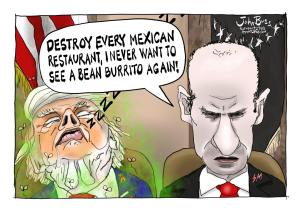
“The latest cabinet meetings aren’t televised for a reason. Fear not, our de facto leader is in control as the ethnic cleansing of the country formerly known as the United States roars ahead unabated. The must-see TV drama not being broadcast is Whose Turn Is It to Change the Old Guy’s Diaper?” John Buss, @repeat 1968
Good Day Sky Dancers!
As we stare down the 250th anniversary of the day our country started its journey from monarchy to democracy, we have to take a look at where we’ve landed today and utter some word of disappointment. The headlines today are filled with references to autocracy, and it’s not difficult to see how the MAGA/Trump overreach is playing out.
Politico sums up the current situation like this. “Trump’s second year: Whiplash. Even proposals that don’t ultimately move forward have consequences.” I’d just like a few more adjectives like weird, cruel, and inexplicably unnecessary.
President Donald Trump’s first year back in office was defined by sweeping upheaval that was largely plotted out during his four-year Florida exile. But the president has somehow intensified the volatility in year two with a succession of whiplash-inducing policy swings, several of which have almost immediately withered in the face of Republican opposition and public outcry.
The administration this week finally withdrew the thousands of federal law enforcement officers from Minneapolis, after violent and at times deadly clashes with protesters turned the tide of public opinion against the president’s immigration crackdown.
It came after Trump threatened to decertify Canadian aircraft, a move deemed “unjustified and dangerous” by a Washington-based aerospace trade union that the president soon dropped. Trump said in early January that he’d cap credit card rates at 10 percent, a move that would have upended the banking industry, only to change his mind and ask Congress for legislation.
Also last month, Trump’s administration paused millions in Centers for Disease Control and Prevention funding for state public health infrastructure — only to reverse course roughly 24 hours later.
“The whiplash has real implications,” said Chrissie Juliano, executive director of the Big Cities Health Coalition, a forum of the leaders of metropolitan health departments. “It’s incredibly disruptive, even if you can get back to continuing the work, you know, two days later.”
The unpredictability of a presidency that prioritizes posting over process and often leaves friends and foes alike guessing whether pronouncements should be taken seriously, literally, or both, remains a feature, not a bug of Trump’s approach to governance. In many matters, especially negotiations with other countries, his mercurial opacity is often an attempt to gain leverage, but his threats seemingly lead just as often to backtracking as blowing things up, be they Iranian missile depots, Venezuelan drug boats or the transatlantic alliance.
The same often holds true for domestic policy. The president has made numerous pronouncements with emphatic declarations on social media, sometimes even suggesting he is governing by fiat in cases where legislation is required. But he has quickly moved on from many of them: a cap on credit card interest rates, 50-year mortgages and, according to a new Financial Times report, possibly even the sweeping tariffs on aluminum and steel that have led to higher costs.
 We’re just beginning to explore the depths of depravity that Trump and his buddies will go to just feel powerful and get richer. This is from Robert Reich’s SubStack. “The Squalor of the Epstein Class. Happy Presidents Day!”
Here’s how Kentucky Republican Congressman Thomas Massie responded on Sunday, during ABC’s “This Week,” to a question about the Trump regime’s handling of the Epstein files:
“This is about the Epstein class …. They’re billionaires who were friends with these people, and that’s what I’m up against in Washington, D.C. Donald Trump told us that even though he had dinner with these kinds of people, in New York City and West Palm Beach, that he would be transparent. But he’s not. He’s still in with the Epstein class. This is the Epstein administration. And they’re attacking me for trying to get these files released.”
The Epstein Class. Not just the people who cavorted with Jeffrey Epstein or the subset who abused young girls. It’s an interconnected world of hugely rich, prominent, entitled, smug, powerful, self-important (mostly) men. Trump is honorary chairman.
Trump is still sitting on two and a half million files that he and Pam Bondi won’t release. Why? Because they implicate Trump and even more of the Epstein class. The files that have been released so far don’t paint a pretty picture.
Trump appears 1,433 times in the Epstein files so far. His billionaire backers are also members. Elon Musk appears 1,122 times. Howard Lutnick is there. So is Trump-backer Peter Thiel (2,710 times), and Leslie Wexner (565 times). As is Steven Witkoff, now Trump’s envoy to the Middle East, and Steve Bannon, Trump’s consigliere (1,855 times).
The Epstein Class isn’t limited to Trump donors. Bill Clinton is a member (1,192 times), as is Larry Summers (5,621 times). So are LinkedIn founder Reid Hoffman (3,769 times), Prince Andrew (1,821 times), Bill Gates (6,385 times), and Steve Tisch, co-owner of the New York Giants (429 times).
If not politics, then what connects the members of the Epstein Class? It’s not just riches. Some members are not particularly wealthy, but they’re richly connected. They trade on their prominence, on whom they know and who will return their phone calls.
They exchange inside tips on stocks, on the movements of currencies, on IPOs, on new tax-avoidance mechanisms. On getting into exclusive clubs, reservations at chic restaurants, lush hotels, exotic travel.
Most members of the Epstein Class have seceded into their own small, self-contained world, disconnected from the rest of society. They fly in one other’s private jets. They entertain at one other’s guest houses and villas. Some exchange tips on how to procure certain drugs or kinky sex or valuable works of art. And, of course, how to accumulate more wealth.
Many don’t particularly believe in democracy; Peter Thiel (recall, he appears 2,710 times in the Epstein files) has said he “no longer believes that freedom and democracy are compatible.” Many are putting their fortunes into electing people who will do their bidding. Hence, they are politically dangerous.
The Epstein Class is the by-product of an economy that emerged over the last two decades, from which this new elite has siphoned off vast amounts of wealth.
It’s an economy that bears almost no resemblance to that of mid-20th-century America. The most valuable companies in this new economy have few workers because they don’t make stuff. They design it. They create ideas. They sell concepts. They move money.
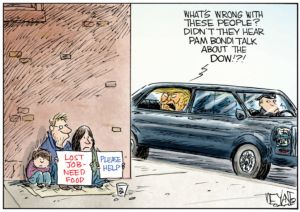 I’ve always argued here and in classes that the biggest economic policies of the Reagan and Bush years were tax cuts that made it more profitable to gamble on financial assets rather than to actually produce goods and services. The changes in tax policies that cut upper brackets, then treated capital gains as a tax slash, and other ridiculous policies mean that money never lands where it can actually do good. It also creates a lot of idle hands and minds.
China is beginning to look more modern, more concerned about actual economic outcomes, and the planet. The U.S. continues to race back to the Gilded Age with hints of the Great Depression years. This is from The Guardian. “The Guardian view on Donald Trump and the climate crisis: the US is in reverse while China ploughs ahead. Editorial. The president’s destructive policies enrich fossil fuel billionaires, while Beijing has bet big on the green transition.”
Devastating wildfires, flooding and winter storms were among the 23 extreme weather and climate-related disasters in the US which cost more than a billion dollars last year – at an estimated total loss of $115bn. The last three years have shattered previous records for such events. Last Wednesday, scientists said that we are closer than ever to the point after which global heating cannot be stopped.
Just one day later, Donald Trump and Lee Zeldin, the head of the US Environmental Protection Agency, announced the elimination of the Obama-era endangerment finding which underpins federal climate regulations. Scrapping it is just one part of Mr Trump’s assault on environmental controls and promotion of fossil fuels. But it may be his most consequential. Any fragment of hope may lie in the fact that a president who has called global heating a “hoax” framed this primarily as about deregulation – perhaps because the science is now so widely accepted even in the US.
The administration claimed, without evidence, that Americans would save $1.3tn. Never mind insurance or healthcare costs; a recent report found that US earnings would be 12% higher without the climate crisis. The Democratic senator Sheldon Whitehouse called the decision “corruption, plain and simple”. In 2024, Mr Trump reportedly urged 20 fossil fuel tycoons to stump up $1bn for his presidential campaign – while vowing to remove controls on the industry.
In the same week as this reckless and destructive US decision, it emerged that China had recorded its 21st month of flat or slightly falling carbon emissions. As Washington tears up environmental regulations, Beijing is extending carbon reporting requirements. China remains the world’s biggest emitter of greenhouse gases, though its per capita and cumulative historical emissions are still far behind those of the US. But clean energy drove more than 90% of its investment growth last year.
The Carbon Brief website, which published the emissions analysis, says the numbers suggest that the decline in China’s carbon intensity – emissions per unit of GDP – was below the target set in the last five-year plan, making it hard to meet its commitments under the Paris agreement. The shift in emissions may not prove enduring. There is fear that China’s focus may change; the next five-year plan, due in March, will be key. Some subsidies for renewable power have already been withdrawn. The installation of huge quantities of renewable energy infrastructure has been accompanied by a surge in constructing coal-fired power plants, though the hope is that these are intended primarily as a fallback.
 We continue to disregard the actual civilized nations and cavort with the worst of the worst. This is from France24. “Rubio tells Orban ‘your success is our success’ during Hungary visit ahead of elections. During a visit to Budapest Monday, just weeks before Hungary’s parliamentary elections, US Secretary of State Marco Rubio told Hungarian Prime Minister Viktor Orban that the nationalist leader’s “success” was a success for the US. An ally of President Donald Trump, who has also maintained ties to Russian President Vladimir Putin, Orban lags behind the main opposition candidate in opinion polls.” The entire Trump cabinet is feckless, shameless, and incompetent. They are also enabling a backslide in democracy.
US Secretary of State Marco Rubio hailed Viktor Orban‘s leadership during a visit to Budapest on Monday, ahead of elections threatening the nationalist prime minister’s hold on power.
Rubio’s visit is the final stage of a whirlwind trip to Europe that also saw him address the Munich Security Conference and visit another right-wing ally, Slovakian Prime Minister Robert Fico.
US President Donald Trump has made no secret of his high regard for Orban, saying in a social media post on Friday that the prime minister had produced “phenomenal” results in Hungary.
But Orban, 62, has a fight on his hands for the April 12 legislative elections in Hungary. Polls suggest his Fidesz party is trailing opposition leader Peter Magyar’s TISZA.
“I can say to you with confidence that President Trump is deeply committed to your success because your success is our success,” Rubio said during a joint press conference with Orban after their meeting.
“The president has an extraordinarily close relationship to the prime minister, he does, and it has had tangible benefits,” he said.
 Europe’s nations have read the writing on the wall, according to CNN’s Kasie Hunt. “Trump’s damage is done. Democrats – and Europe – are struggling to define what’s next.”
Many of the Democrats who came to the Munich Security Conference this weekend want to be president. But even if one of them can win the White House in 2028, they may find they can no longer claim the title every American president since the 1940s has borne: leader of the free world.
California Gov. Gavin Newsom went on stage to insist his state is more permanent than President Donald Trump. But he acknowledged in an interview with CNN that the leaders he met with believe the damage to the transatlantic alliance is irrevocable.
Progressive star Rep. Alexandria Ocasio-Cortez of New York came to pitch a left-wing populist foreign policy but made headlines for a massive stumble instead.
A number of Democratic senators hoping to burnish their foreign policy credentials ahead of possible presidential bids found themselves in a painfully awkward moment with the Danish prime minister, as some Democrats tried to smooth over pugnacious remarks Republican Sen. Lindsey Graham made at the start of the meeting that suggested Trump has not given up his designs on Greenland – a semiautonomous territory of Denmark.
And most members of the House of Representatives who planned to attend didn’t come at all after Republican Speaker Mike Johnson pulled the plug on the congressional delegation.
European thought leaders were reduced to offering a brief standing ovation to Secretary of State Marco Rubio, whose speech was far more conciliatory than the one Vice President JD Vance delivered at the same gathering last year. But Rubio had kicked off his trip telling American reporters: “The old world is gone.” He also left the conference to fly onward to Slovakia and Hungary, two countries led by strongmen sympathetic to Trump.
The conference’s opening remarks from German Chancellor Friedrich Merz crystallized Europe’s new reality in what seems to be rapidly becoming a post-American century.
“A divide has opened up between Europe and the United States,” Merz said Friday. “The United States’ claim to leadership has been challenged, and possibly lost.”
It’s more than just words. Merz has said he held “confidential talks” with France on European nuclear deterrence. It’s a stunning admission there’s no longer unconditional trust that the US will do what needs to be done for its transatlantic allies.
“What I’m hearing now is, even if we are able to repair these relationships, it’s going to take generations before they feel comfortable,” said Democratic Sen. Mark Kelly, of Arizona, a possible presidential hopeful who traveled to Munich not long after learning the Trump administration had tried and failed to indict him over a video he made telling troops not to obey illegal orders.
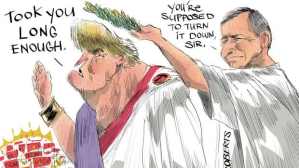 If this continues, the momentum and direction of the world’s political entanglements will change. Who knows what this will mean? This Op Ed piece from MS Now by Anthony L. Fisher discusses Trump and his attempts at an Imperial Presidency. “Libertarians warned about the ‘imperial presidency.’ Too few actually warned about Trump. A recent New York Times op-ed showed the blind spot many libertarians still have for President Donald Trump.”
When I saw the headline “Libertarians Tried to Warn You About Trump” atop a New York Times op-ed last Monday, I thought, “Hmmm, that’s not quite how I remember it.” Adorned with the striking image of the Gadsden flag’s “Don’t Tread on Me” snake about to get curb-stomped by an enormous black jackboot, the piece was written by Katherine Mangu-Ward, editor in chief of the libertarian magazine and website Reason — where I worked as a journalist for roughly six years. (I left shortly after President Donald Trump’s first inauguration.)
Sure enough, upon reading the column, I discovered the headline didn’t accurately reflect Mangu-Ward’s argument. She primarily made the case that libertarians have warned for years — under presidents in both major parties — about the dangers of ever-expanding executive authority, what’s been aptly coined the “Imperial Presidency.” Rather than claiming to have specifically warned “about Trump,” the writer boasted that libertarians had long sounded the alarm over the consolidation of such power — power now being used for nefarious purposes by a president who just happens to be Donald Trump. (The Times later that day amended the headline to the less specific but more honest, “Libertarians: We Told You So.”)
I can’t argue with that. To the extent most self-identified professional libertarians warned about Trump, they warned about the awesome powers that could be abused by a generic authoritarian president from either party.
But Trump is not a hypothetical. He always told us who he was. And there are far fewer of us who took (and continue to hold) the comparatively unpopular view among libertarians and other right-of-center fellow travelers that Trump presented as a uniquely authoritarian, vindictive, racist, corrupt and lawless demagogue — of which there isn’t remotely an analog on the other side of the aisle.
The problem is that, even now that Trump has proven us skeptics right on every one of those counts, too many libertarians continue to position themselves safely in a “pox on both your houses” perch — much too nuanced and enlightened to be dragged into partisan rancor. This position is how your movement ends up conflating the tyranny of overbearing, temporary Covid policies in Democratic-run areas as equal to (or worse than) the tyranny of a secret police force acting without due process for everyone when attempting to arrest suspected illegal immigrants, summarily executing Americans in the street and branding them “domestic terrorists” while their bodies are still warm.
All of these thoughts lead to one logical conclusion. The Midterm elections need to depose him and remove the spineless and the true believers, or whatever this is, from Congress.
Just to let you know, we’re having the most unkind Mardi Gras Celebration that even the police have seen. We seem to have been overrun by spontaneous groups of young men that are behaving a lot like the droogies in A Clockwork Orange. I may write about it on Friday; however, I’m busy listening to my friends’ experiences uptown and around the Quarter right now.
Peace, Love, and Understanding to you all!
What’s on your Reading, Action, and Blogging Lists today?

 peej
peej Carissa
 bostonboomer
 dakinikat
 ecocatwoman
 mablue2
 Mama Lopez
 peggysue22
 quixote
 skydancingguestblogger
 Mona (aka Wonk the Vote)



 Sky Dancing
Recent Comments