
Friday Reads: Express yourself!
Posted: July 27, 2018 Filed under: just because, morning reads | Tags: Before Roe V. Wade, Drag, Polari, RESIST, Tignon Laws 14 Comments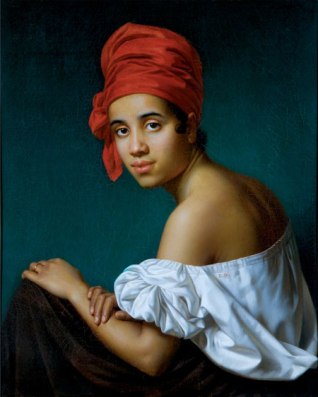
Creole in a Red Headdress; painted by Jacques Guillaume Lucien Amans;ca. 1840; oil on canvas, The Historic New Orleans Collection
Good Morning Sky Dancers!
Today, I’d like to explore some dimensions of the healthy expression of a good “fuck you” to the powers that be coming from a variety of sources because, you know, we all want to do it every day these days. Resistance frequently comes in the form of art, music, culture, and language in support of socio-economic-political change. The form can be a joyous yet angry expression necessitated by the powerless situations of those most oppressed by the dominant culture, ruling class, religion, and economy. The wink wink nod nod of art can save one from jail or worse.
It may seem disparate but I’ve got some examples that demonstrate that the complaints coming from diverse communities may represent the same undercurrent of dissatisfaction. The dominant socio-economic-political culture wants to silence and remove us which is why we must support and understand the concept of intersectionality. What they can do to one group, they can do to all given enough time and power. Together, we are the many. Separate and apart, they can cut us off like livestock to separate and unequal slaughterhouses.
This is why they are trying to stack the courts, gerrymander congressional districts, suppress voting rights, and shut up the press. It is also why they scream “lock her up” to attack Hillary Clinton and “build the wall” at folks of Mexican heritage”. It is why they still describe our first black President as a “Kenyan-born Muslim” and panic dial 911 on black people just living their lives. It is why they dilute “black lives matter” to “all”. It is why they won’t bake cakes for all weddings.
It is also why they want to set us against each other and we must not let that happen.

Daisy Patton’s “Would You Be Lonely Without Me?” runs through August 3 at the Art Gym Gallery. ( Ray Mark Rinaldi, Special to The Denver Post)
I’m going to move around in time for this but I will start with a current art show in Denver. “Denver exhibit puts faces to women who died from botched abortions prior to Roe vs. Wade. Daisy Patton’s paintings of 15 women tell a somber story”. The article is from the Denver Post review of the show.
Quirky and perky, with a face full of determination, it’s hard not to get a quick crush on Vivian Grant the way that Daisy Patton paints her, circa 1960, in a series of women’s portraits on display at Denver’s Art Gym Gallery.
With her emerald green dress, dangling earrings and precision-plucked eyebrows, Grant radiates the kind of organic optimism that could carry her far in her burgeoning career in New York’s publishing world.
But the accompanying text tells a story with a different ending. At 23, she found herself showing signs of pregnancy and sought to terminate it.
Abortion was illegal in those days, and dangerous, the stuff, as we say, of back alleys and shady practitioners and Grant, like many others, was one of its victims, dying from complications of the procedure. An autopsy later showed it was a false pregnancy.
Tragedy on top of tragedy. That’s the narrative arch of Patton’s “Would You Be Lonely Without Me?,” which captures in oil paint on paper the images of 15 women who died as a result of botched abortions in the era before the 1973 Roe vs. Wade Supreme Court decision made abortion legal, and raised the medical standards around the procedure.
Yes, the exhibit is political. Patton’s portraits are rich in physical and emotional detail. They raise sympathy for women who make the difficult decision to end their pregnancy — and their sale could raise money for national organizations that support the ability for all women to make the choice.
In her artist’s statement for the show, Patton, writes of a time when an estimated 5,000 to 10,000 women died each year from abortion-related injuries that were caused by unskilled doctors or self-inflicted by those, fearing no where else to turn, who treated themselves with knitting needles or drank bleach or other chemicals.
She notes, citing published research, how things have changed in the last four decades: “Now it is statistically more dangerous to
birth than to have an abortion.”

Many of these stories draw me in even though they are not my stories, or stories I would likely hear had I not gone looking for them or most likely, stories I would not have seen if I didn’t have friends who have stories that connect them deeply to these voices. I am drawn in by our shared humanity and vulnerability.
In this case, it was a neighbor who watched a woman die of a botched abortion as a 10 year old in a South Chicago Beauty Salon her mother used. She later, at 13, joined the underground railroad to help women seeking abortions. She was the same age as me when I listened to a panel of women who shared the stories of women in their lives who had died of botched abortions in the fellowship hall of my West Omaha Presbyterian Church. I think that was about the first moment that I realized I had a name and it was “feminist”. My neighbor’s story is more compelling than mine though and I’m glad she put up the link and said share this woman’s art.
I don’t remember her name, but she bled to death from a back alley abortion in the spare bedroom of Jackie, the lady who did my mother’s hair on Saturday’s when I was 10. I was sent to go keep an eye on her while my mother was getting her hair done. I was the last person to see her alive, because she was moaning softly and crying while Jackie was shampooing. I asked her if she needed anything and she said she needed something for her bleeding.I went back down the hall and told Jackie. Jackie went into the bathroom and got then to back bedroom and then she came back into the kitchen. Jackie gave me some towels and told be to bring them to her. I could tell when I went back in the room that she was gone, and lying in an incredible pool of blood.It was the same week a woman my Mother worked with, who was white and had money, had a “procedure” at her gynecologist’s office to take care of her unwanted pregnancy.
I learned about Jane the underground to help women when I was 13. I started donating money, and volunteering. I let women into our apartment to sleep on the couch after everyone had gone to bed and then got them out before anyone got up in the morning, on their journey to Canada to have their abortion there, or if they had enough money to the private clinic on the North side of Chicago.
The story of Louisiana’s Tignon laws has always intrigued me. I’ve been seeing renewed interest in them as it appears they are now part of a discussion on cultural appropriation.
Louisiana had slavery but with some vital differences that eventually disturbed the American colonizers who bought the French Colony. The Catholic church insisted that slaves not work on Sundays and that they be allowed to buy their own freedom. This created an entire community of free people of color in New Orleans. It was inevitable that as the traditional model of American Slavery moved towards Louisiana and New Orleans it would create dehumanizing experiences for its Creole communities.
The Tignon laws passed in 1789, however, were enacted by a Spanish governor who was also critical of the French behavior towards free people of color. Tignon laws were enacted to restrict the fashion, dress and hair styles appropriate in public dress for female gens de couleur in colonial society. Black women could not show their hair in public under the law.
This story of Free Black women in New Orleans addresses how
“We cannot discount how enslaved Black women used dress as a form of resistance [and] how even finding different ways of tying the headscarf acted as a form of resistance against the trauma of diaspora and being cut off from Africa,” says Winters. “Or how [African-American] people have drawn inspiration from African traditions as a source of empowerment.”
The tignon remains an important symbol of resistance even today It is essentially a piece of cloth fashioned into a headress to cover the hair of black women. It became much more when styled with bold patterns and color and adorned with jewels.
Even when Louisiana stopped enforcing the laws in the early 1800s, free women of color continued wearing the tignon. It’s a testament to their resilience: The women of New Orleans refused to allow a piece of cloth to humiliate them, erase their status, or diminish their femininity. Instead, they reinterpreted the tignon as a symbol of empowerment. (And Black women in Louisiana weren’t the only women of color to use clothing to resist oppressive laws: In 1773, free women of color in Saint-Domingue were prohibited from wearing shoes, so they wore sandals, adorned their toes with diamonds and continued to do so after the laws were lifted.)
More than 230 years later, remnants of the tignon laws still linger: Traditional hairstyles, such as dreadlocks, are still seen as unprofessional in the workplace; women who wear them are subject to false assumptions—like Giuliana Rancic’s now-notorious snark about Zendaya’s faux locs smelling of “patchouli oil” and “weed.” The military recently lifted its longtime ban on cornrows, Afros, locs, and other protective hairstyles, but we regularly hear stories about Black girls being suspended from school for rocking natural hair.
A number of black women have incorporated the look and statement in their performances.
Pop culture, however, is the most reliable place to look for Black women who still resist the policing of their hair.
The first time we see Beyoncé in Lemonade, her musical celebration of Louisiana’s Afro-Creole women, she’s rocking a tignon while kneeling on a stage. Nina Simone also incorporated the tignon into her signature look, and Lauryn Hill, India.Arie, and Erykah Badu followed her lead in the late 1990s and early 2000s. (Badu even wore a headwrap on Sesame Street). Outside of pop culture, the headwrap is now largely considered a fashion staple. Nnenna Stella travels from Brooklyn to Ghana and Morocco to select the most impeccable textiles for her handcrafted headwraps. Afro-Colombian designer Angelica Balanta’s vibrant headwraps reflect her rich Colombian culture, while Paola Mathé’s collection is inspired by her Haitian heritage.

Nina Simone & her daughter Lisa Celeste Simone | 1965 photo by Brian Duffy
It’s been years since the Tignon laws have been thrown out but they are still a sign of resistance. They also have been appropriated and are part of a bigger discussion
As of present, we can find conversations about what is and what isn’t cultural appropriation by way of hair (aka Kim Kardashian and her “Bo Derek” braids) or current cases playing out in court about what is and what isn’t discrimination based on a hairstyle. Black hair has always been a topic of conversation.
Most Black women can relate to the struggle of getting braids or weave and having unwanted comments from non-black co-workers. Even young Black girls are subject to ridicule because of their hairstyles. The Tignon Laws of 1786 are proof that Black hair has always been policed in America.
Fashion is frequently used for resistance.
People laugh at me when I tell them my Draq Queen friends would most likely be my spirit animal. My mother even knew that I was not one to be put in ruffles and lace with hair like Shirley Temple. It was not me at all. I basically look over the top in anything girlie which is probably why I can totally relate to a lot of drag.
Cross dressing and lip-syncing is entirely different from the insensitive nature and intention of blackface. In queer and feminist communities, drag tends to be widely accepted. It makes sense, counter cultures allowing each other to thrive and experiment. It is the concept of “gender roles” that forces us to so closely associate femininity with women, so when someone who is clearly not a woman performs femininity, it is still thought of to be a reflection on women.
A lot of drag queens get their names and character traits from pop culture, and the media loves to portray women as, to use Mary Cheney’s words, bitchy, catty, dumb, and slutty. Indeed, these are not great attributes for a person to embody, so when drag queens perform those characteristics while dressed and made up like a woman, it could be read as disrespectful or an insult to woman. Drag queens also tend to be hyper sexual, sometimes with a crude sense of humor. When people over sexualize femininity, it dehumanizes women by turning them into an object of sex as opposed to a complex human being.
Many supporters of drag culture argue that the femininity being performed by drag queens is their own form of self expression and has little to do with people who live their daily lives as women. Judith Butler argues that traditional gender roles are exhaustingly heteronormative, and that they attempt to define a norm that gives a sense of “otherness” to queer culture and drag. If we broaden our lense to not view heterosexuality as “having a claim on naturalness and originality” (Butler 384), gender can be scene as a performance for everyone and therefore not so different from drag. Basically, most people view drag as an imitation, but that implies that gender has a norm in which to deviate from. It’s like personality, there isn’t a set way to be an individual, so there isn’t a set way to be feminine.
I want to bring up art history in this exploration of gender because drag so connected with self expression and the artistry around makeup and fashion. Drag is an experiment gender, makeup, performance, fashion, comedy, parody etc… There is a million different ways to “do” drag, as seen by the assortment of characters who have won RuPaul’s drag race all with varying intensities in the femininity of the character.
Wedding Cakes aside, I grew up in an age when you read Oscar Wilde and knew it was indeed ‘the love that dare not speak its name”. I’ve found these expressions of resistance shared by friends that relate to oppression in a way I can only take in as a listener and human being, But, i can still relate. I knew there were jail sentences and death penalties when I was a child as much as I was aware of Jim Crow Laws separating black from white Americans in the South. Only now, is much of the pre civil rights culture of resistance being documented.
“And Gloria cackled, let there be sparkle; and there was sparkle.” It’s a passage from the Bible, but not as we know it: this is a familiar line from the Book of Genesis as spoken in Polari. The secret language became a kind of verbal wink between gay men in Britain during the early 20th Century – allowing them to hide and to reveal at the same time.
“One of the things that makes Polari so powerful is that it is simultaneously about disguise and identification,” the artist Jez Dolan tells BBC Culture. “You would be hiding what you were talking about from people who didn’t know it, but also if you were in a bar and you liked the look of somebody, you’d pop it into conversation and they’d either go ‘ah’ or they’d look blank and you’d be on your way.” Polari is rarely spoken today. Yet in the years when homosexuality was illegal, it was a way of communicating in public without risking arrest – as well as a chance to challenge the status quo.

Divine in a publicity photograph from the 1980s
This form of resistance, identification and survival has a fascinating history.
Baker has found it difficult to untangle a clear history of the lexicon. “Polari has a long and complicated provenance, and not all of it is fully known because it was spoken by marginalised groups who didn’t usually have their voices or stories recorded,” he says. While ‘bona’ (meaning ‘good’ or ‘attractive’), which pops up frequently, was first recorded in Shakespeare’s Henry IV Part II, some of the earliest words in Polari come from 18th-Century ‘Molly Slang’. “Mollies were men who were camp and had sex with other men,” says Baker. “These men were sometimes imprisoned and so some words of the criminal slang Cant would have crept into their language use.”
Baker describes how another form of slang, Parlyaree (from ‘parlare’, the Italian for ‘to talk’), was used by buskers, travelling circus and fairground people, market stall holders, prostitutes and beggars. Derived from Italian, it began to be used in music halls in the late 19th Century, and became known as Palarie. “There were influences from Lingua Franca… used by sailors, as well as cockney rhyming slang and Yiddish which were found particularly in the East End of London.” Some of the words are what’s been called ‘backslang’ – hair is ‘riah’, and face is ‘eek’ (from ‘ecaf’)
“Bona to vada your dolly old eek!” This links to a BBC video worth watching.
British comedian Kenneth Williams often spoke Polari in his performances on BBC radio and TV programmes in the 1950s and 60s, some of which had up to 20 million listeners at a time, introducing the language to a much wider audience.
The highlight of my evenings has been watching the nightly occupation of Lafayette Park across from the White House where noise and culture are making a loud stand. Its first night saw a very large Mariachi Band. There have been New Orleans styled Brass Bands and Drummers. The use of a Mariachi band in an Anti-Trump Protest is clearly ironic and brilliant simultaneously given Trump’s bigoted fascination with purging and dehumaniziang Mexicans and Mexican Americans.
Normally, Lafayette Park is one of those pretty, history-drenched spots in Washington, where you walk around wondering whose footsteps you might be following. You’re right across from the White House, close enough that you can practically see into the front windows. Now, though, the most important thing to know about this D.C. spot is what Occupy Lafayette Park is — because the square might just be full of anti-Trump protestors.
Because of its sight line straight to the White House, Lafayette Park is a frequent spot for rallies and gatherings when people want to protest something that the Trump administration has done, like for example the travel ban. Now, the country seems to be at a fever pitch after Trump’s meeting with Russian President Vladimir Putin, which has gained the name “Treason Summit” on Twitter. Occupy Lafayette Park is an impromptu, grassroots rally set up to protest Trump’s actions in Helsinki, where the meeting was held, and demand his impeachment.
It is only sweeter that idea came from former Clinton Aides. I just hope Trump can never sleep again.
“Nothing says Impeach like a Mariachi band,” one user chimed in.

Raja Gemini; stage name of Sutan Amrull, an Asian-American make-up artist, and drag performer
As you can tell,symbols of resistance can take many forms and they can outlive the original need for the resistance while remaining necessary because of the residual impact. So, one final link to some news about the guy that’s kicked off the #MeToo movement by bragging on sexual assault. It’s from Charles Pierce, Esquire, CNN, Michael Cohen, the Age of Leaks and Treason and more than we’ve all been able to handle. ‘We now stand at a yes-or-no moment in this country’s history.’ It juxtaposes today and that day in 1974 where they found the smoking gun.
We are now at one of those points. With the revelation on CNN Thursday night that, according to the network’s sources, Michael Cohen is ready to testify that the president* knew in advance of the now-legendary meeting in June of 2016 at which individuals connected to the Russian government offered to ratfck Hillary Rodham Clinton’s campaign for him, we stand as a self-governing republic at a stark, unclouded moment—either you believe the president* of the United States is utterly illegitimate, having conspired with a hostile power to gain the office he now holds, and that every act he has taken in that office, up to an including swearing the oath of office, is equally illegitimate, or you do not. It is now a binary. If Cohen is willing to testify to that effect, then the president* conspired with the regime of Vladimir Putin in order to gain control over the executive branch of government in this country—which includes not only the military, but the law-enforcement and intelligence apparatus as well. We are now at yes-or-no.
It’s time, as artfully as possible, to tell this administration to get the fuck out of the people’s house.
What’s on your reading and blogging list today?
Friday Reads: The Fix was in (like we didn’t know that but it’s official now). We’re Live and Updating
Posted: July 13, 2018 Filed under: just because | Tags: live blog 34 Comments Good Afternoon Sky Dancers!
I’m watching indictments of 12 Russians pour in while AG Rosenstein does a presser. He’s taking questions now. Members of Russian military intelligence have been indicted and those individuals were in touch with Americans. It is unclear if Americans knew their identity as Russian intelligence so no Americans have been named as of yet. I would assume that this would be the next shoe to drop and you know whose campaign that would corner. Election hacking is now directly tied to Putin.
Some familiar names popped up. Guccifer 2.0 was indicted and identified as a Russian intelligence officer. The indictment was for crimes related to the alleged hacking of the DNC in 2016.
Deputy Attorney General Rod Rosenstein announced on Friday that 12 Russian intelligence officers was indicted by Special Counsel Robert Mueller in the ongoing Trump-Russia investigation. The officers are members of the GRU, and are all named as having allegedly hacked the Democratic Congressional Campaign Committee, Democratic National Committee, and the Hillary Clinton campaign. CNN reported that prosecutors from Mueller’s office and the Justice Department’s National Security Division gave a grand jury indictment to a D.C. federal ma gistrate judge on Thursday morning. The indictment comes just one day before President Trump is set to meet Russian president Vladimir Putin in Helsinki for their first one-on-one meeting.
Rosenstein’s speech goes further to demonstrate this is no “witch hunt”. Next shoe would probably come from Roger Stone and maybe more.
Today, a federal grand jury in the District of Columbia returned an indictment presented by the Special Counsel’s Office. The indictment charges twelve Russian military officers for conspiring to interfere with the 2016 presidential election.
Eleven of the defendants are charged with conspiring to hack into computers, steal documents, and release documents in an effort to interfere with the election.
One of those defendants, and a twelfth Russian officer, are charged with conspiring to infiltrate computers of organizations responsible for administering elections, including state boards of election, secretaries of state, and companies that supply software and other technology used to administer elections.
According to the allegations in the indictment, the defendants worked for two units of the Main Intelligence Directorate of the Russian General Staff, known as the GRU. The units engaged in active cyber operations to interfere in the 2016 presidential election. One GRU unit worked to steal information, while another unit worked to disseminate stolen information.
The defendants used two techniques to steal information. First, they used a scam known as “spearphishing,” which involves sending misleading email messages and tricking users into disclosing their passwords and security information. Second, the defendants hacked into computer networks and installed malicious software that allowed them to spy on users and capture keystrokes, take screenshots, and exfiltrate data.
The defendants accessed the email accounts of volunteers and employees of a U.S. presidential campaign, including the campaign chairman, starting in March 2016. They also hacked into the computer networks of a congressional campaign committee and a national political committee. The defendants covertly monitored the computers, implanted hundreds of files containing malicious computer code, and stole emails and other documents.
The conspirators created fictitious online personas, including “DCLeaks” and “Guccifer 2.0,” and used them to release thousands of stolen emails and other documents, beginning in June 2016. The defendants falsely claimed that DCLeaks was started by a group of American hackers and that Guccifer 2.0 was a lone Romanian hacker.
In addition to releasing documents directly to the public, the defendants transferred stolen documents to another organization, not named in the indictment, and discussed timing the release of the documents in an attempt to enhance the impact on the election.
In an effort to conceal their connections to Russia, the defendants used a network of computers located around the world, and paid for it using cryptocurrency.
The conspirators corresponded with several Americans through the internet. There is no allegation in the indictment that the Americans knew they were communicating with Russian intelligence officers.
In a second, related conspiracy, Russian GRU officers hacked the website of a state election board and stole information about 500,000 voters. They also hacked into computers of a company that supplied software used to verify voter registration information; targeted state and local offices responsible for administering the elections; and sent spearphishing emails to people involved in administering elections, with malware attached.
The indictment includes eleven criminal charges and a forfeiture allegation.
Count One charges eleven defendants for conspiring to access computers without authorization, and to cause damage to those computers, in connection with efforts to steal documents and release them in order to interfere with the election.
Counts Two through Nine charge eleven defendants with aggravated identity theft by employing the usernames and passwords of other persons to commit computer fraud.
Count Ten charges the eleven conspirators with money laundering by transferring cryptocurrencies through a web of transactions in order to purchase computer servers, register domains, and make other payments in furtherance of their hacking activities, while trying to conceal their identities and their links to the Russian government.
Count Eleven charges two defendants for a separate conspiracy to access computers without authorization, and to cause damage to those computers, in connection with efforts to infiltrate computers used to conduct elections.
Finally, a forfeiture allegation seeks the forfeiture of property involved in the criminal activity.
There is no allegation in this indictment that any American citizen committed a crime. There is no allegation that the conspiracy altered the vote count or changed any election result.
The Special Counsel’s investigation is ongoing.
 Specific allegations are directly related to stealing Clinton’s voter data and to DNC emails and data. The DNC was hacked and doxed by Russian Intelligence. They also got into voter registrations and data in US states.
They’re accused of stealing usernames and passwords for multiple members of Clinton’s campaign, including chairman John Podesta. Democratic Party computer networks were also hacked.
Emails were stolen and released online to help influence the presidential election, the Justice Department said.
The indictment includes 11 criminal charges, including conspiracy, identity theft and money laundering to fund the hacking.
From the Atlantic: “The Russians Who Hacked the 2016 Election. According to Special Counsel Robert Mueller, 12 intelligence officials stole emails and hacked into computers at the Democratic National Committee and a state board of elections.”
Friday’s indictment is important because the hacking of the DNC was the origin story for the investigation into Russian interference in the 2016 election. The DNC announced in June 2016 that its computer networks had been infiltrated, and security experts quickly concluded that Russia was behind the break-in. Further investigation by multiple American intelligence committees reached the same conclusion. Since then, there have been new allegations and revelations about Russian interference, ranging from the “troll farm” that was the target of Mueller indictments earlier this year to allegations of coordination and collusion between Russians and Donald Trump’s presidential campaign.
President Trump has repeatedly derided Mueller’s investigation as a “witch hunt,” even as it produces indictments, guilty pleas, and a pile of new, detailed information about how Russian interfered. The hacks are an especially important part of this case: Unlike claims of collusion or obstruction of justice, the hacking clearly constituted a crime, and there was a clear culprit. As a result, the fact that Mueller hadn’t charged anyone in connection with the crime until how had become conspicuous.
That curious silence ended on Friday. The defendants are charged with conspiracy against the United States, identity theft, and money laundering.
“The object of the conspiracy was to hack into the computers of U.S. persons and entities involved in the 2016 U.S. presidential election, steal documents from those computers, and stage releases of the stolen documents to interfere with the 2016 U.S. presidential election,” the indictment states.
The indictment lays out in more detail than previously known how the hacking worked. While the federal government released an intelligence document explaining its conclusions, it offered little hard evidence. Mueller marshals more detailed forensic evidence, recording specific actions, down to searches run and files deleted.
According to Mueller, the GRU, Russia’s main foreign-intelligence agency, conducted the operation with the intention of interfering with the election. One unit was charged with hacking, while another had responsibility for spreading what was known.
The hacking unit used two methods. The first was spearphishing—sending emails intended to trick users into divulging user names and passwords. This was already known to be the method by which hackers got into Podesta’s email. The second was to hack into computer networks, installing malware that allowed them to spy on users, capture keystrokes, take screenshots, and steal files. In addition to the Democratic targets, the Russians allegedly tinkered with hacking state boards of election. Various reports have speculated on whether the Russians did, in fact, break into state election functions, and the indictment provides an answer.
To get the documents out, the second GRU unit created two front personas. One, called DCLeaks, released an early tranche of Podesta emails. The second, Guccifer 2.0, took his name from an earlier Romanian hacker, who became famous for releasing pictures of former President George W. Bush’s paintings. Though they pretended to be Americans and a Romanian, respectively, both DCLeaks and Guccifer 2.0 were Russian intelligence, Mueller charges. To cover up their tracks, they set up a network outside Russia, paid for with cryptocurrencies.
The Spearfishing started the same day that Candidate Spy “Who should Come in from the Cold” said this at a rally. July 27, 2016, Trump: “Russia, if you’re listening, I hope you’re able to find the 30,000 emails that are missing.”
Indictment: That evening, Russian operatives targeted Clinton campaign emails “for the first time.
So Trump’s call for Russia to hack his opponent during the election—which his defenders dismissed as a “joke”—was taken very seriously indeed by Russian hackers. He asked them to, and they did. If you are not yet convinced something went very, very wrong in the 2016 election, you might ask yourself whether at this point you’d be perfectly fine with the president shooting someone on Fifth Avenue.
I stopped writing on other things when this started coming through because it’s going to overshadow everything. You may consider this an open thread. I’ll continue to link to important analysis about this as it happens.
Robert Mueller is coming!!!
Justice Department link to actual indictment here (pdf).
Monday Reads: Keep on walking … keep on talking … marching up to Freedomland
Posted: July 2, 2018 Filed under: just because | Tags: Keep families together, White Rage Muffins 39 Comments
Good Afternoon Sky Dancers!
Each day brings new surprises and new horrors. I’m never quite sure which to read first. I didn’t watch the news at all yesterday but some things happened. So, let’s start with the Michael Cohen’s interview with George Stephanopolous. It’s looking more and more like he’ll be biting the hand instead of kissing the ring of KKKremlin Caligula. Aaron Blake of The Fix at WAPO had this analysis.
Cohen agreed to this interview knowing that this would be a prominent question. And it can’t have been a coincidence that a trio of stories emerged a couple weeks back, all pointing toward possibly flipping on Trump. There was a Wall Street Journal story indicating that he was unhappy with Trump for not helping with his legal bills. CNN quoted an anonymous source close to him saying, “If they want information on Trump, he’s willing to give it.” Then Cohen resigned as deputy finance chairman of the Republican National Committee by citing not just the investigation he faces, but his disagreement with the Trump administration’s policy of separating families at the border. That latter justification seemed conspicuous, given Cohen has pledged complete loyalty to Trump and rarely spoken publicly about policy.
And Cohen’s interview came with another big signal: the reported end of a joint agreement between Cohen and Trump’s legal team to share information. Such things often presage a more antagonistic relationship or even cutting a deal to inform on someone else. Michael Flynn’s lawyers stopped sharing info with Trump’s lawyers, for example, shortly before he flipped.
https://twitter.com/AaronBlake/status/1013758532569763840
 So, there appears to be a break in the thug fealty oath. TPM’s Kate Riga elucidates what’s at stake.
When confronted with the reality that Trump and his legal team would put a target on Cohen’s back if they perceive him to be a threat, Cohen “stiffened his spine.” “I will not be a punching bag as part of anyone’s defense strategy, I am not a villain in any story and won’t allow others to try to depict me in that way,” he told Stephanopoulos.
He even went so far as to candidly break with the President’s position on Special Counsel Robert Mueller’s probe, saying “I don’t like the term ‘witch-hunt.’ As an American, I repudiate any foreign government’s attempt to interfere in our democratic process and I would call on all Americans to do the same.”
“Simply accepting Putin’s denial is unsustainable,” he continued. “I choose to believe our intelligence agencies.”
Tantalizingly, Cohen then hinted heavily that he has information to share on two hot-button and possibly damning episodes for the President: the infamous Trump tower meeting when “dirt” on Hillary Clinton was promised, and the $130,000 hush money payout made to Stormy Daniels during the election.
On both questions, whether Trump knew of the meeting and if he had requested or promised to reimburse the payment, Cohen cryptically refused to answer—for now.
“I want to answer,” he said. “One day I will answer. But for now I can’t comment further on advice of my counsel.”
Others are more cynical.
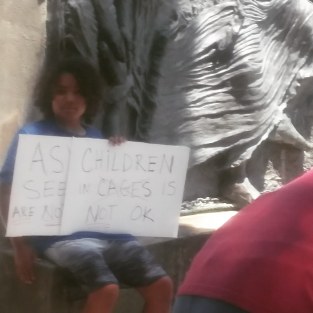
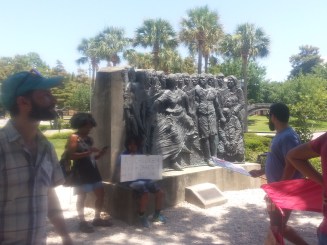 There was a tremendous response for the June 30th rally to keep families together. I’ve included the pictures I took. I was riding the street car home and sat by a couple in town for Essence Fest. The husband was talking to a local woman across the way saying something like “That’s what I say but not my wife”. His wife simply eyed him and said “Well, they don’t show up for us so why should we care?”
I looked at her and decided to speak up. My feet were hurting. I was hot and sweaty and I’m old and getting tired. I have a habit of lecturfying and I really didn’t want to do that. I told her that’s where I just was. I then added I was there for Black Lives Matters. I was there for the Women’s March and all of the End Gun Violence rallies. But more than that, I work on campaigns. I call. I leaflet. I send money if my budget allows. Right now my priority is getting more black women into elected office. It’s time for all of us to stand up together or we’re going to go down one a time. Her husband agreed. I don’t think anything about what I said impressed her which is fine. I just ended with believe me, I’ll be there no matter what.
And that’s true. I’m not even afraid of getting arrested at this point. Trump’s AmeriKKKa is ugly and getting uglier by the minute.
Which brings me to White Women; a special subclass of Wipipo (sigh). I’m reminded of the tale of the man who gets beat on at work by some prick then comes home to kick the dog and take it out on the wife and kids. What causes white women to vote for Trump then make phone calls to police about black people just living their lives which in this day and age can lead to being shot by the police? I cannot imagine how incensed Black Americans must be by this. I’m mad at them myself and if I ever witness one she will hear mad lecturfying on my part.
Late Night with Seth Meyers delivered a topical parody of the ’80s pop song, “Somebody’s Watching Me” and the artist behind it, Rockwell, with Amber Ruffin dressing up as Rockwell and performing “White Women Watching Me”.
The Tuesday night sketch was tied to two recent viral news stories of white women calling the police in response to black people engaging in seemingly harmless acts or, as Meyers put it, people who were “just going about their business.”
Parodying Rockwell’s 1984 hit, complete with frightened glances, Ruffin sang, “All I want is to be left alone, then I see one on the phone, then it makes me feel like I’m in the Twilight Zone. I always feel like white women watching me, and I’ve got no privacy.”
On Saturday, a video was posted to Twitter in which a white woman confronted an 8-year-old black girl selling water near AT&T Park in San Francisco and threatened to call the police. The money being raised from sales was for a trip to Disneyland.
The caller in the video, Alison Ettel, has since been dubbed “Permit Patty.” The 15-second video of her calling the police went viral on social media and has received more than 9 million views.

I would just like to offer up this both in terms of good for these kids but do you suppose they had the proper permit and did white women call the police on them?
She set a goal of $1,000, but quickly surpassed that. Ultimately, her family raised a little more than $13,000.
According to Time, Gaggero ended the fundraiser after reaching $13,000, so she could quickly get the money to the organization, as “Facebook fundraisers pay out donations every two weeks once the minimum payout amount of $100 is met.”
Gaggero told Time her son was extremely happy with the outcome.
In a conversation over online messaging with All the Moms, Gaggero said she encourages people to donate to border-state organizations like RAICES, but to also do research into their own local community organizations helping immigrants.
We all need to work to correct wrongs on what ever level we can. But back to asking WTF is wrong with the 52% of white woman that voted for the Pussy Grabber? And, what is wrong with these white women raging mostly against children of color?
 So here’s a white rage muffin screaming rapist at a Mexican American Man simply doing yardwork.
As Estebán Guzman recalled it, his mother had just finished cleaning the inside of a client’s house and strapped on a leaf blower when the woman across the street started screaming.
It’s very likely that his mother had blown some pine needles into the next-door yard, Guzman told The Post. That can happen on big jobs like this one — where her clients wanted the entire property spick-and-span so they could rent it on Airbnb.
But the lady wasn’t screaming about pine needles.
In fact, Guzman said, she didn’t even live next door.
“She came out of the house on the other side of the street,” he said. “She came out of her home to yell at my mom . . . ‘Go back to Mexico!’ ”
Guzman stopped loading pine needles into the family dump truck and listened to the woman’s ranting over the drone of his mother’s leaf blower.
There’s this:
and this:
https://twitter.com/TheAlanvargas/status/1012544315506098176
Okay, White Rage Muffins! WTF is wrong with you? What kind of a miserable life created this behavior? The Root’s been calling y’all out since BBQ Becky! Who among us can tell you that you’re way out of line and you’re going to get people killed?
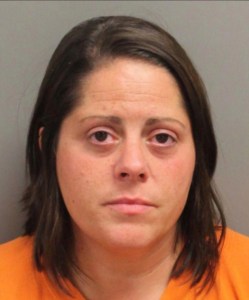 Well, today there is this: “Woman Assaulted Black Boy After Telling Him He ‘Did Not Belong’ at Pool,” Officials Say”. What the fuck year do you think this is? Are you partying like it’s 1959?
Now, a South Carolina woman has been nicknamed Pool Patrol Paula after a widely shared video showed her accosting a black boy and his friends at a neighborhood pool, telling them to “get out” or she would call the police.
“There’s three numbers I could dial: 911. O.K.?” the woman said in the video, which was posted on Facebook on June 24 and was viewed more than a million times in a week. “Get out! Little punks.”
The authorities identified the woman as Stephanie Sebby-Strempel, 38, of Summerville, S.C., according to The News & Observer. The newspaper reported that she told the boy, 15, and his friends that “they did not belong” at the pool, instructed them to leave and hit the teenager in his face and chest.
The teenager had been invited to the private community pool by a friend who lived in the neighborhood, his lawyer, Marvin Pendarvis, said.
This White Rage Muffin landed her fat ass and big mouth in jail!!! Look! Stephanie Sebby-Strempel living the Jim Crow Dream behind bars!
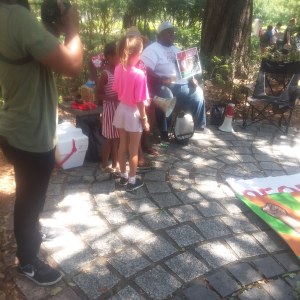 And, I would like to know how stupid you have to be for Mashable to feel the need to put up a fucking list of what WiPiPo should do before they call the police on Black People.
This behavior has deep historical roots and should be condemned by law enforcement as a nuisance. In the meantime, it’s clear that white people inclined to call authorities to report mundane or so-called suspicious behavior need an intervention. Here’s just one handy checklist for them to consult before they dial 911:
You really think something like this belongs in The Onion, but hell no, some WiPiPo so racist …
Google this “white woman calling the police on black people” and go straight into the dank minds and actions of White Rage Muffins.
Okay, with that I leave you a picture of what life was once like and we had hope and we work working on change that moved us forward!
Just breathe deeply. Say this Mantra: “We the People, in order to create a more perfect union”. Then sally forth vote, register people to vote, make phone calls for a good candidate, write a check and love your neighbor! Yes! Even the creepy one hiding behind those hurricane shutters! It just might be Boo Radley or better.
 Some inspiration: That’s us registering voters on Saturday. First up was a black man nearly blind from diabetes. A brand new citizen filled out his form while I provided the instructions. She had just become a citizen the Saturday before. She was from Transylvania. And then, we sang the songs and chants from all the great movements from abolition forward …
Citizenship is a shared venture. Being a good neighbor is a sacred vocation. Stopping White Rage Muffins before they kill should be a calling.
I’m done lecturfying for the day. I will stand with everyone standing for freedom and justice.
What’s on your reading and blogging list today?
Memorial Day Reads
Posted: May 28, 2018 Filed under: just because | Tags: China, History, Memorial Day, trade wars 17 Comments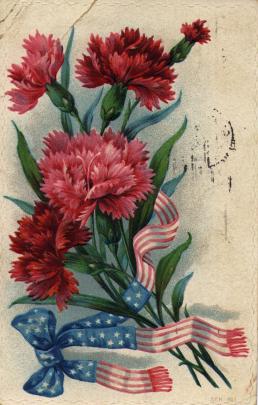 It’s the Memorial Day Holiday!
Sewell Chan writes for the NYT about the ‘unofficial’ history of Memorial Day. It is something we discovered and shared before but it bears repeating because it explains why the holiday still gets short shrift in here in the Deep South. It also explains why some Southern States still have a separate Confederate Memorial Day. I still remain shocked that Mississippi refused to recognize it as a holiday until recently.
David W. Blight, a historian at Yale, has a different account. He traces the holiday to a series of commemorations that freed black Americans held in the spring of 1865, after Union soldiers, including members of the 21st United States Colored Infantry, liberated the port city of Charleston, S.C.
Digging through an archive at Harvard, Dr. Blight found that the largest of these commemorations took place on May 1, 1865, at an old racecourse and jockey club where hundreds of captive Union prisoners had died of disease and been buried in a mass grave. The black residents exhumed the bodies and gave them proper burials, erected a fence around the cemetery, and built an archway over it with the words, “Martyrs of the Race Course.”
Some 10,000 black people then staged a procession of mourning, led by thousands of schoolchildren carrying roses and singing the Union anthem “John Brown’s Body.” Hundreds of black women followed with baskets of flowers, wreaths and crosses. Black men, including Union infantrymen, also marched. A children’s choir sang spirituals and patriotic songs, including “The Star-Spangled Banner.”
“The war was over, and Memorial Day had been founded by African-Americans in a ritual of remembrance and consecration,” Dr. Blight wrotein a 2011 essay for The New York Times. “The war, they had boldly announced, had been about the triumph of their emancipation over a slaveholders’ republic. They were themselves the true patriots.”
The African-American origins of the holiday were later suppressed, Dr. Blight found, by white Southerners who reclaimed power after the end of Reconstruction and interpreted Memorial Day as a holiday of reconciliation, marking sacrifices — by white Americans — on both sides. Black Americans were largely marginalized in this narrative.
“In the struggle over memory and meaning in any society, some stories just get lost while others attain mainstream recognition,” Dr. Blight wrote.
His claim is not universally accepted; the fact-checking website Snopes says of the 1865 remembrance: “Whether it was truly the first such ceremony, and what influence (if any) it might have had on later observances, are still matters of contention.”
 Here is BostonBoomer’s blog from 2014 and Mink’s from 2012. We remember the role of slaves freed by the sacrifice of Union Soldiers in our Civil War in celebrating that sacrifice.
I always remember Decoration Day because when I was very young we would do what my parents did as children. We went to small cemeteries in Kansas and Missouri to make certain the family grave sites were attended and clean. We picnicked and trimmed bushes then put peonies in jars on the graves of greats and cousins who died in war. For some reason, all of our family grave plots were resplendent with huge peony bushes. My mother always beat them back and would announce loudly how much she hated them. Peony bushes were not allowed any where near home. They were left to the dead in my family and they bloomed profusely each Memorial Day.
In Caney Kansas, where my own grandparents are now buried, lays my Great Uncle Jack along side his mother, my Great Grandmother Anna. He didn’t die in the battlefields of Europe during World War 1 but came home with complications from Mustard Gas. He died quite young on the family farm but it was of his wounds brought home as a dough boy fighting in a trench. Many soldiers come home with wounds seen and unseen that eventually catch up to them. I never understood why I was told Dad’s Uncle Jack wasn’t quite included in the same way as those whose graves got the peonies properly but we gave him peonies because my Dad and Nana adored him and it felt right to me. Some times our country has a short memory with a narrow focus. It doesn’t really remember all of the sacrifices of those who came before us including every single slave who died unfree.
Today, we also remember the sacrifice of every gold star family too. I hope Cadet Bonespurs plays golf and that his selfish, hateful face stays away from the one holiday he can truly sully with just his presence. Unfortunately, he left long enough to give a lofty speech at Arlington that should have been given by any better person. But, take heart, he still had a way of making it all about him!
 I read this article last night and even reviewed the variables and methodology of the original study. It’s amazing to actually review the panel data and see which attributes are significant to the question at hand but the findings are not surprising. NBC shares “The Trump effect: New study connects white American intolerance and support for authoritarianism.”
A new study, however, suggests that the main threat to our democracy may not be the hardening of political ideology, but rather the hardening of one particular political ideology. Political scientists Steven V. Miller of Clemson and Nicholas T. Davis of Texas A&M have released a working paper titled “White Outgroup Intolerance and Declining Support for American Democracy.” Their study finds a correlation between white American’s intolerance, and support for authoritarian rule. In other words, when intolerant white people fear democracy may benefit marginalized people, they abandon their commitment to democracy.
Miller and Davis used information from the World Values Survey, a research project organized by a worldwide network of social scientists which polls individuals in numerous countries on a wide range of beliefs and values. Based on surveys from the United States, the authors found that white people who did not want to have immigrants or people of different races living next door to them were more likely to be supportive of authoritarianism. For instance, people who said they did not want to live next door to immigrants or to people of another race were more supportive Iof the idea of military rule, or of a strongman-type leader who could ignore legislatures and election results.
The World Values Survey data used is from the period 1995 to 2011 — well before Donald Trump’s 2016 run for president. It suggests, though, that Trump’s bigotry and his authoritarianism are not separate problems, but are intertwined. When Trump calls Mexicans “rapists,” and when he praises authoritarian leaders, he is appealing to the same voters.
 The Chinese Trade Wars are showing winners and losers already. Winners include Trump himself–and now, Ivanka– plus Chinese Companies including ones that threaten US National Security. The losers are US companies. We seem completely unable to stop this.
Ivanka Trump’s brand continues to win foreign trademarks in China and the Philippines, adding to questions about conflicts of interest at the White House, The Associated Press has found.
On Sunday, China granted the first daughter’s company final approval for its 13th trademark in the last three months, trademark office records show. Over the same period, the Chinese government has granted Ivanka Trump’s company provisional approval for another eight trademark s, which can be finalized if no objections are raised during a three-month comment period.
Taken together, the trademarks could allow her brand to market a lifetime’s worth of products in China, from baby blankets to coffins, and a host of things in between, including perfume, make-up, bowls, mirrors, furniture, books, coffee, chocolate and honey. Ivanka Trump stepped back from management of her brand and placed its assets in a family-run trust, but she continues to profit from the business.
“Ivanka Trump’s refusal to divest from her business is especially troubling as the Ivanka brand continues to expand its business in foreign countries,” Noah Bookbinder, executive director of Citizens for Responsibility and Ethics in Washington, said in an email Monday. “It raises significant questions about corruption, as it invites the possibility that she could be benefiting financially from her position and her father’s presidency or that she could be influenced in her policy work by countries’ treatment of her business.”
As Ivanka Trump and her father have built their global brands, largely through licensing deals, they have pursued trademarks in dozens of countries. Those global trademarks have drawn the attention of ethics lawyers because they are granted by foreign governments and can confer enormous value. Concerns about political influence have been especially sharp in China, where the courts and bureaucracy are designed to reflect the will of the ruling Communist Party.
Chinese officials have emphasized that all trademark applications are handled in accordance with the law.
More approvals are likely to come. Online records from China’s trademark office indicate that Ivanka Trump’s company last applied for trademarks — 17 of them — on March 28, 2017, the day before she took on a formal role at the White House. Those records on Monday showed at least 25 Ivanka Trump trademarks pending review, 36 active marks and eight with provisional approval.
 Don’t forget! Trump’s Indonesia project has been financial enhanced by the Chinese Government after he announced he would help with ZTE. China is definitely on the winning side with the Trumps. However, what about US Businesses?
As Washington and Beijing try to resolve their trade disputes, several big companies are caught in the middle.
One is Qualcomm (QCOM), an American chipmaker whose $44 billion purchase of NXP Semiconductors (NXPI), a Dutch company, has been waiting for Chinese regulators’ approval.
Far more controversial is the case of ZTE (ZTCOF), the Chinese phone and telecom equipment maker that was crippled by a US export ban issued last monthin punishment for what the US said were violations of its sanctions against North Korea and Iran.
Easing penalties on ZTE is a key priority for Chinese President Xi Jinping, and Trump has indicated he’s willing to yield in order to move ahead with further trade discussions.
But members of Congress from both parties, many increasingly wary of China’s trade practices, believe such leniency would be a mistake. A growing number of senatorshave drawn a red line on ZTE, and have been vocal in recent days about their opposition to restoring the company.
Are we winning yet?
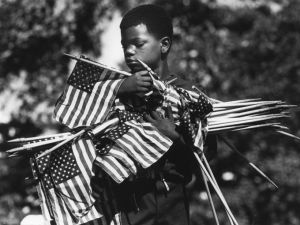 Meanwhile, TrumpsterFires continue to break out as white men go after our national “enemies” like young men from China attending school here. This must be an additional feature to calling the police because black people are going about their lives in clear view!
California police say they thwarted a vigilante deportation attempt last week – in which a pilot allegedly kidnapped a foreign student, took him to an airport and tried to send him “back to China.”
Jonathan McConkey, a pilot and certified flight instructor, is accused of orchestrating the kidnapping with his assistant, Kelsi Hoser, a ground instructor. Both reportedly worked at the IASCO flight training school in Redding, California.
Among IASCO’s students were dozens of Chinese nationals with student visas, according to court records. KRCR News 7 reported that the school contracted with China’s civil aviation authority to train its new pilots, one of whom was apparently Tianshu Shi.
Shi told reporters that he had been in the United States for about seven months – living with several other IASCO trainees at an apartment in Redding. It was there, police said, that McConkey and Hoser came for the student.
Some interesting stats from Axios you can review. Which part of our country has lost the most on the battlefield since 9/11?
Today is the 17th Memorial Day since 9/11. Since then, 6,940 U.S. military service members have died for America.
Why it matters: Every part of the country has lost soldiers to the wars in Iraq and Afghanistan. All were Americans — someone’s neighbor, child, parent, mentor, buddy. Their average age was between 26 and 27 years old.
Have a great day and be safe if you’re in the path of all that weather on the East coast and the panhandle of Florida!.
Thursday Reads
Posted: May 17, 2018 Filed under: Foreign Affairs, just because, morning reads, U.S. Politics | Tags: Donald Trump, famous self-portraits, immigration, lecturing liberals, New York Times, North Korea, robocalls, selfies, Trump Russia 40 Comments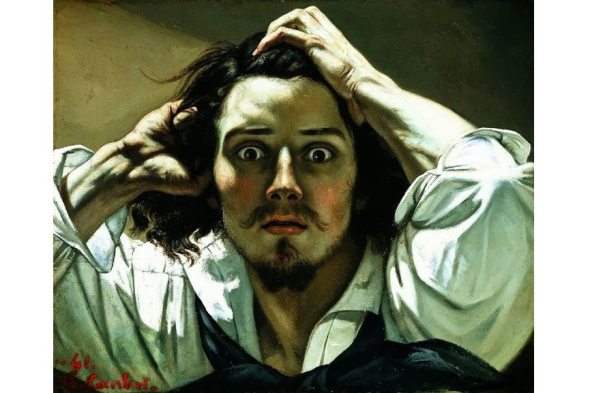
Gustave Courbet, Le Desperere,1845
Good Morning!!
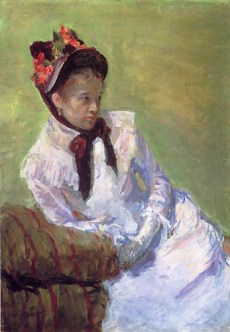
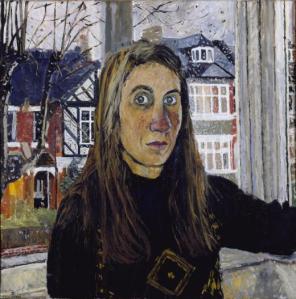
I admit it. I’m obsessed with the Trump/Russia investigation, and I think my posts have become boring because of my obsession; so today, I’m going to try avoiding the subject and hope I’ll get more readers. This post is illustrated with “selfies” from before we had cell phones, just because. I hope you enjoy them.
Have you been getting a lot of annoying calls lately? I have. I usually don’t answer calls that come in from people I don’t know or area codes where I don’t know anyone; but once in awhile, I’ll pick up a call and it’s usually a recorded message. It turns out you can find out which numbers are robocalling your area.
From the Arlington Patch: Here’s Who Keeps Robocalling Your Area Code.
If you think you’re receiving robocalls now more than ever, you’re not wrong. According to the robocall blocker YouMail, pre-recorded phone messages are at an all-time high.
There were 3.36 billion robocalls last month in the U.S., 6.5 percent higher than the previous record and a whopping 34 percent higher than April 2017….
Mary Cassatt, Self portrait
Here are the states that received the most robocalls, as well as how many they received:
- California, 384.4 million
- Texas, 363.3 million
- Florida, 261.1 million
- Georgia, 213.6 million
- New York, 207.8 million
- Illinois, 134.6 million
- Ohio, 115.8 million
- Pennsylvania, 115.4 million
- North Carolina, 111 million
- Louisiana, 97.6 million
- Michigan, 89.7 million
- Tennessee, 88.3 million
- New Jersey, 84.3 million
- Virginia, 83 million
- Maryland, 79 million
- Alabama, 77.9 million
- South Carolina, 64.4 million
- Arizona, 60 million
- Missouri, 51.7 million
- Indiana, 51 million
Atlanta received the dubious honor of most robocalled city in America for the 29th straight month. People in that city received nearly 148 million robocalls last month and three Atlanta area codes cracked the top 20 most robocalled area code list.
Here are the top 10 most robocalled cities:
- Atlanta, GA
- Dallas, TX
- New York, NY
- Los Angeles, CA
- Chicago, IL
- Houston, TX
- Baltimore, MD
- Philadelphia, PA
- San Francisco Bay Area, CA
- Newark, NJ
M.C. Escher, Hand With Reflecting Sphere, 1935
The company says 47 of the 50 most robocalled cities in the country saw a higher robocalling volume in April. The increase comes even as lawmakers, consumer groups, telecommunications carriers and device makers pay closer attention to illegal calls.
“Despite the best efforts of regulators, industry groups, service providers, and app developers, we are warning consumers to remain vigilant by not picking up any calls from unfamiliar numbers, using robocall blocking apps, and researching numbers before calling them back,” YouMail CEO Alex Quilici said in a release.
Click here and enter an area code to see the full results.

I’m glad to know it’s not just me getting all these annoyance calls. Unfortunately, I’ve found that even when I block the numbers, they just call back from slightly different ones.
The media is currently obsessed with lecturing Democrats about how we need to be kinder and more understanding of Trump voters. Here’s a response to that from Osita Nwanevu at Slate: Liberals, It’s Not About Being Nice.
Over the weekend, the New York Times published an op-ed titled “Liberals, You’re Not As Smart As You Think.” In it, University of Virginia political science professor Gerard Alexander accuses American liberals of arrogance and warns them against making broad negative generalizations about large swaths of the population. “Liberals often don’t realize how provocative or inflammatory they can be,” he writes. “In exercising their power, they regularly not only persuade and attract but also annoy and repel.” Alexander cites a few particular examples of recent annoying and repulsive liberal behavior, including comedian Michelle Wolf’s performance at the White House Correspondents’ Dinner, but the heart of the piece is a broad indictment of identity politics as practiced by liberals and the left. “Racist is pretty much the most damning label that can be slapped on anyone in America today, which means it should be applied firmly and carefully,” Alexander writes. “Yet some people have cavalierly leveled the charge against huge numbers of Americans—specifically, the more than 60 million people who voted for Mr. Trump. In their ranks are people who sincerely consider themselves not bigoted, who might be open to reconsidering ways they have done things for years, but who are likely to be put off if they feel smeared before that conversation even takes place.”
Jean Cooke, self portrait, 1972
The piece was the latest in an unending stream of commentary attributing Democrats’ electoral misfortunes to conservative cultural backlash—a variation on a theme in punditry that was old hat long before Hillary Clinton made the supposed mistake of calling Trump supporters “deplorables.” Alleged gaffes like that, the story goes, form part of an imperious posture Democrats take on questions of identity politics that alienates simple folk who haven’t caught up with the progressive consensus on social questions.
This argument has very little to do with the actual state of American public opinion on those questions. Survey data suggests that identity politics as practiced by Democrats and the left has been quite successful and persuasive. Take racial issues, for instance. According to Pew, the percentage of white people in America who believe that the country “needs to continue making changes to give blacks equal rights with whites” has grown by 18 points since the beginning of the decade. Most of this can be attributed to white Democrats moving left on the question, but the numbers show change on the right as well: The number of Republicans and Republican leaners who believe this has grown by six points to 36 percent over the same period. The percentage of Republicans and Republican leaners who say that “racial discrimination is the main reason why many black people can’t get ahead these days” has also jumped about five points to 14 percent. These are, of course, still small minorities on the right, but given talk about how liberal arrogance and piety have alienated those who disagree with Democrats on racial identity politics into a backlash, one would expect the numbers to show … well, a backlash. Instead, they suggest that post–Trayvon Martin, Ferguson, and Black Lives Matter, rhetoric and activism may be working quite well on a broad cross section of Americans.
It’s a lengthy, thoughtful piece. Read the rest at Slate.
What’s the “nice” response to a “president” who says things like this?
USA Today: Trump ramps up rhetoric on undocumented immigrants: ‘These aren’t people. These are animals.’
President Trump used extraordinarily harsh rhetoric to renew his call for stronger immigration laws Wednesday, calling undocumented immigrants “animals” and venting frustration at Mexican officials who he said “do nothing” to help the United States.
Pablo Picasso, Self Portrait, Facing Death, 1972
“We have people coming into the country or trying to come in, we’re stopping a lot of them, but we’re taking people out of the country. You wouldn’t believe how bad these people are,” Trump said.
“These aren’t people. These are animals.”
Trump’s comments came in a freewheeling, hour-long White House meeting with local California leaders opposed to so-called “sanctuary city” policies. “California’s law provides safe harbor to some of the most vicious and violent offenders on Earth, like MS-13 gang members putting innocent men, women, and children at the mercy of these sadistic criminals,” he said.

I can’t think of anything nice to say about that or about people who support the man who said it.
Will John Bolton destroy Trump’s dreams of a deal with North Korea? Politico: Trump’s North Korea Nobel buzz could die with John Bolton.
Donald Trump wants a deal with North Korea. His national security adviser thinks the North Koreans can’t be dealt with. And North Korea thinks he’s “human scum.”
North Korea’s latest diatribe against the United States — and specifically a “repugnant” national security adviser, John Bolton — spotlights a core tension within the Trump administration as the president seeks a nuclear deal with North Korea that he hopes might earn him a Nobel Peace Prize.
Lee Krasner self portrait, 1930
Bolton is famously contemptuous of what he considers naïve U.S. diplomacy with foreign adversaries who can only be trusted to cRheat and lie. Prominent on his list is North Korea itself, which he has written “will never give up nuclear weapons voluntarily,” calling past U.S. diplomatic forays with the country “embarrassments.”
Trump, too, believes America has struck “terrible deals” for decades. And he shared Bolton’s intense animus for the Iran nuclear deal, which Trump torpedoed last week. But in the case of North Korea, even some Trump supporters worry the president is too eager for a deal that could dazzle the world and reap him huge political rewards.
The question now is whether Trump and Bolton can strike a constructive balance — or whether they might wind up at cross-purposes on one of the most important diplomatic experiments in U.S. history.

Read the rest at Politico.
May it would be a good thing if North Korea backs out of the summit, because Trump thinks he doesn’t need to spend a lot of time getting ready for the meeting. Time: President Trump ‘Doesn’t Think He Needs’ to Prepare Much for His Meeting With North Korea’s Kim Jong Un.
With just one month until a scheduled sit-down with North Korea’s leader, President Donald Trump hasn’t set aside much time to prepare for meeting with Kim Jong Un, a stark contrast to the approach of past presidents.
“He doesn’t think he needs to,” said a senior administration official familiar with the President’s preparation. Aides plan to squeeze in time for Trump to learn more about Kim’s psychology and strategize on ways to respond to offers Kim may make in person, but so far a detailed plan hasn’t been laid out for getting Trump ready for the summit.
Even with North Korea threatening to scrap the meeting over long-planned U.S.-Korean military exercises, Trump’s aides in the White House and State Department are continuing to prepare briefing material in advance of the June 12 summit in Singapore. When asked Wednesday if he thinks Kim is bluffing, Trump responded, “We’ll see what happens.” He told reporters he still plans to insist on North Korea giving up its nuclear weapons.
So briefing materials are being prepared, but Trump isn’t going to bother to read them. Big surprise.

Paul Gaugin self portrait with halo and snake 1889
I’m going to end with just one article related to the Russia investigation. Eric Wemple at The Washington Post: New York Times acknowledges it buried the lead in pre-election Russia-Trump story.
The upside of the New York Times’ aggressive coverage of the FBI investigation into Russian election meddling is that the American public is learning more and more about recent history. The downside is that the newspaper keeps bumping into its archives.
In a massive article Wednesday on the FBI’s 2016 snooping into the possible nexus between Russians and the Trump presidential campaign, reporters Matt Apuzzo, Adam Goldman and Nicholas Fandos include these two paragraphs:
In late October, in response to questions from The Times, law enforcement officials acknowledged the investigation but urged restraint. They said they had scrutinized some of Mr. Trump’s advisers but had found no proof of any involvement with Russian hacking. The resulting article, on Oct. 31, reflected that caution and said that agents had uncovered no “conclusive or direct link between Mr. Trump and the Russian government.”
The key fact of the article — that the F.B.I. had opened a broad investigation into possible links between the Russian government and the Trump campaign — was published in the 10th paragraph.
That’s one heck of a concession: We buried the lead! In their book “Russian Roulette,” authors Michael Isikoff and David Corn report that editors at the New York Times “cast the absence of a conclusion as the article’s central theme rather than the fact of the investigation itself,” contrary to the wishes of the reporters.
The article in question was published on Oct. 31, 2016, and it has received a great deal of hindsight-aided scrutiny for the role it may have played in easing voters’ concerns about ties between Donald Trump and Russia. Under the bylines of Eric Lichtblau and Steven Lee Myers, the story, headlined “Investigating Donald Trump, F.B.I. Sees No Clear Link to Russia,” hit the public sphere just as other outlets — Slate and Mother Jones — published reports that began poking at the outlines of possible collusion.
But will the Times apologize to Hillary Clinton and the American people?
Those are my offerings for today; what stories are you following?

 peej
peej Carissa
 bostonboomer
 dakinikat
 ecocatwoman
 mablue2
 Mama Lopez
 peggysue22
 quixote
 skydancingguestblogger
 Mona (aka Wonk the Vote)



 Sky Dancing
Recent Comments