
Thursday Reads
Posted: February 19, 2015 Filed under: Barack Obama, Foreign Affairs, morning reads, U.S. Politics | Tags: 2016 presidential race, antibiotic resistant bacteria, avalanche in Cambridge, Boston snow, Carbapenem-Resistant Enterobacteriaceae, Chicago Council on Global Affairs, CRE, endoscopic retrograde cholangiopancreatography, ERCP, Ferguson MO, George W. Bush, Jeb Bush, Loon Mountain, Mayor Marty Walsh, MIT Alps, Ronald Reagan UCLA Medical Center, snow diving, Superbug Nightmare 12 Comments
Mt. Rainier avalanche
Good Morning!!
Tales from the frozen Northeast
Yesterday evening in Cambridge, MA, five people were hit by an “avalanche” of snow that slid off the roof of the local skating rink.
The Boston Globe reports: Five trapped by snow falling from roof of Cambridge ice rink.
One man was completely buried and four other adults were briefly trapped Wednesday evening after snow fell from the roof of a Cambridge skating rink, a police spokesman said.
Four men and one woman were walking on a path between Gold Star Mothers Park and the Simoni Memorial Rink, just south of the McGrath Highway, when a “very compact” section of snow about 30 feet wide and up to 5 feet deep fell from the roof just past 6 p.m., said Jeremy Warnick, a Cambridge police spokesman.
A witness called police, who used snow shovels provided by people at the scene to begin the search for a 34-year-old Cambridge man, the twin brother of another man in the group, who was covered in snow, Warnick said.
His twin and other two men, ages 31 and 30, were briefly buried to the chest but were able to extricate themselves, Warnick said. A 20-year-old woman in the group was not completely buried but suffered injuries to her neck and shoulders, he said.
Cambridge firefighters came to assist the rescue effort, and the Somerville Department of Public Works provided two front-end loaders to remove remaining snow. All five who were hit by the snow had been accounted for by 6:23 p.m., Warnick said. He did not release their identities.
From WBZ (CBS Local Boston), Two People Buried By Falling Snow In Cambridge.
Two people were buried when a massive amount of snow fell off a Cambridge ice rink Wednesday night.
Cambridge Police say five adults were walking down the sidewalk next to the rink when the snow fell.
Dan Delongchamp was the first person on scene and started digging. “I want to say it was five minutes of terror,” Delongchamp said. “Digging in the snow trying to find somebody, it was terrible.”
Delongchamp, of Somerville, was riding his bike near the rink when the snow fell. He wants to be a professional bike driver. If you want to become a pro biker, you better read this review about bmx bikes first.
“We kept shoveling, kept shoveling, and finally I reached down and I felt something soft, and said this isn’t snow, and it was him,” Delongchamp said.
A 33-year-old man and 20-year-old woman, both of Cambridge – were stuck under the weight of five feet of snow.
Angelo Ciardiello and his crew were around the corner removing snow for the City of Somerville when they learned of the emergency at the nearby Simoni Ice Rink in Cambridge.
“I’d never seen anything like that,” Ciardiello said. “They were buried up to their chest. They were panicked, they were scared.”
Unbelievable.
The latest craze for younger adults in Boston is jumping or diving out windows and off balconies into deep snow. It has gotten so crazy that the Mayor felt he had to say something about this dangerous pastime.
USA Today reports: Boston mayor to snow daredevils: Chill out.
Think before you jump. Or, don’t jump at all.
That’s the message Boston Mayor Marty Walsh told snow-bound Bostonians at a press conference Tuesday.
Apparently, some of the city’s stir-crazy, thrill-seeking residents are taking to social media with videos of them jumping out of windows into massive snowdrifts.
“I’m asking people to stop their nonsense right now. These are adults jumping out windows. It’s a foolish thing to do, and you could kill yourself,” Walsh said, according to a video of his remarks from the Boston Herald….
“This isn’t Loon Mountain, this is the city of Boston, where we’re trying to remove snow off of the street and it becomes very dangerous. And the last thing we want to do is respond to an emergency call where somebody jumped out of the window because they thought it was a funny thing to do,” Walsh said.
FYI: Loon Mountain is a ski resort in New Hampshire. See more snow diving and jumping photos at The Daily Mail.
Check out this dramatic video of a snow dive:
At MIT, maintenance workers have piled up the snow removed from streets and sidewalks on campus into a huge five-story high “mountain” on Albany Street near classroom buildings and student dorms. There’s a fence around the area, but people are still getting in to climb the “MIT Alps” and slide down again. Here’s a photo posted on Twitter by Susie Blackmon (via Bustle)

“Superbug Nightmare” in Los Angeles
If you thought the measles outbreak in California was scary, “you ain’t heard nothing yet,” as Al Jolson used to say.
From the AP, via ABC News: 7 Infected, 2 Dead After ‘Superbug’ Outbreak at Hospital.
Contaminated medical instruments are to blame for infecting seven patients — including two who died — with an antibiotic-resistant and potentially deadly “superbug” at Ronald Reagan UCLA Medical Center, hospital officials said. A total of 179 patients may be infected.
They were exposed to Carbapenem-Resistant Enterobacteriaceae, or CRE, during endoscopic procedures between October and January when it was discovered during tests on a patient, said Dale Tate, a University of California, Los Angeles spokeswoman.
The potentially infected patients are being sent free home-testing kits that UCLA will analyze, the university said.
The bacteria may have been a “contributing factor” in the deaths of two patients, a university statement said.
From Mother Jones: A Superbug Nightmare Is Playing Out at an LA Hospital.
In today’s terrifying health news, the LA Timesreports that two medical scopes used at UCLA’s Ronald Reagan Medical Center may have been contaminated with the potentially deadly, antibiotic-resistant bacteria Carbapenem-Resistant Enterobacteriaceae (CRE). Two patients have died from complications that may be connected to the bacteria, and authorities believe that 179 more patients have been exposed.
Most healthy people aren’t at risk of catching a CRE infection, but in hospitals this bacteria can be quite dangerous: CRE kills as many as half of all people in whom the infection has spread to the bloodstream. The Centers for Disease Control and Prevention (CDC) are working with the CA Department of Public Health to investigate the situation, which is expected to result in more infections.
The problem isn’t just in Los Angeles, though. Last month USA Today reported that hospitals around the country struggle with transmissions of bacteria on these scopes—medical devices commonly used to treat digestive-system problems—and there have been several other under-the-radar outbreaks of CRE.
This is pretty scary stuff, considering that in the antibiotics arms race against bacteria, we are starting to fall behind. Due in large part to unnecessary medical prescriptions and overuse of antibiotics in our food supply, these superbugs are on the rise. In a study published last year that focused specifically on hospitals in the Southeastern United States, researchers reported that CRE cases had increased fivefold between 2008 and 2012.

CRE “superbug” backteria
This just reinforces my determination to stay away from antibiotics, doctors, and hospitals unless I’m really sick–like with a 103 degree temperature or something. A little more from the AP article quoted above:
The two medical devices carried the bacteria even though they were sterilized according to the manufacturer’s specifications, UCLA said. “We removed the infected instruments, and we have heightened the sterilization process,” Tate said.
The CDC said that national figures on the bacteria are not kept, but 47 states have seen cases.
Since 2012, there have been about a half-dozen outbreaks reaching as many as 150 patients, according to the Los Angeles Times, which first reported the UCLA outbreak.
One outbreak occurred in Illinois in 2013. Dozens of patients were exposed to CRE, with some cases apparently linked to a tainted endoscope used at a hospital.
A Seattle hospital, Virginia Mason Medical Center, reported in January that CRE linked to an endoscope sickened at least 35 patients, and 11 died, although it was unclear whether the infection played a role in their deaths.
According to the LA Times, as many as 179 patients may have been exposed to CRE in the past several months.
UCLA said it discovered the outbreak late last month while running tests on a patient. This week, it began to notify 179 other patients who were treated from October to January and offer them medical tests. By some estimates, if the infection spreads to a person’s bloodstream, the bacteria can kill 40% to 50% of patients.
At issue is a specialized endoscope inserted down the throats of about 500,000 patients annually to treat cancers, gallstones and other ailments of the digestive system.
These duodenoscopes are considered minimally invasive, and doctors credit them for saving lives through early detection and treatment. But medical experts say some scopes can be difficult to disinfect through conventional cleaning because of their design, so bacteria are transmitted from patient to patient.
These instruments are not the same type used in more routine endoscopies and colonoscopies.
The procedure in question is known as ERCP, or endoscopic retrograde cholangiopancreatography. The superbug is carbapenem-resistant Enterobacteriaceae.
Read much more at the link.
Jeb Bush meets the media

“I’m my own man,” Jeb Bush announced in a speech yesterday. From Reuters:
Republican Jeb Bush staked out a robust vision for U.S. foreign policy in line with party doctrine on Wednesday and sought to ease concerns that he might be influenced by his powerful political family by insisting, “I’m my own man.”
A frontrunner for the Republican presidential nomination in 2016, Bush said he would back a global strategy against Islamic State that “takes them out.”
But he offered no specifics on how to do this and avoided military threats that could reawaken memories of the 2003 U.S.-led invasion of Iraq launched by his older brother, former President George W. Bush, over weapons of mass destruction that were never found.
Speaking at the Chicago Council on Global Affairs, the former Florida governor struck a balance between respecting the service of his father, former President George H.W. Bush, and brother, while suggesting he would make decisions based on circumstances neither of them had to face.
“I’m my own man, and my views are shaped by my own thinking and my own experiences,” Bush said.
Bush’s claim was undermined by his list of foreign policy advisers. The Washington Post reports: Jeb Bush vows to set his own course while tapping longtime family advisers.
Former Florida governor Jeb Bush on Wednesday promised to chart his own course on foreign policy — even as he announced a campaign brain trust associated, in part, with the most contentious policies of his brother’s and father’s presidencies….
In his prepared remarks, Bush mentioned Iraq, where his father and brother waged wars, only in passing — including once by mistake, when he meant to say Iran.
But in a question-and-answer session afterward, Bush addressed the troubled conflict in Iraq during his brother’s administration. “There were mistakes made in Iraq for sure,” he said….
The threat of Iran as a nuclear power is “the defining foreign policy issue of our time,” Bush contended, arguing that the Obama administration has shown itself “unequal to the task.” ….
Meanwhile, the 21 names announced by his campaign-in-waiting as supporters and advisers on foreign policy did not provide much indication of what direction Bush would take.
The list represents the full spectrum of views within the Republican foreign policy establishment — from relative moderates, including former secretaries of state George P. Shultz and James A. Baker III, to staunch neoconservatives such as Iraq war architect Paul D. Wolfowitz.
Yikes!

A few more Jeb links:
The Atlantic: If Jeb Bush Isn’t George W. Bush, Who Is He?
The Fix: Jeb Bush’s foreign policy team is eerily familiar, in one Venn diagram.
Think Progress: Jeb Bush’s Attack On Obama Over Iran Goes Horribly Wrong.
Buzzfeed: Jeb Bush Makes Vague First Foray Into Foreign Policy.
Washington Monthly: Politico Makes Case For Just Declaring Jeb Bush President Right Now.
More News Links
New York Magazine: Justice Department May Sue Ferguson Police Over Racial Bias.
Talking Points Memo: South Dakota Lawmaker says ‘Planned Parenthood Worse Than ISIS’
Undercover Michigan: Michigan Woman dies after accidently shooting herself while Adjusting Bra Holster.
The Missing Leak Sports Blog: Time for Goodell to Step Down?
Tom Curran at Comcast Sportsnet New England: Another black eye for NFL in Deflategate quest.
Politico: Rudy Giuliani says President Obama doesn’t love America (Giuliani supports Scott Walker.)
The Guardian: Chapel Hill ‘hate crime’ response criticised by Muslim lawmaker Keith Ellison.
What else is happening? Please post your thoughts and links in the comment thread, and have a tremendous Thursday!
Lazy Saturday Reads: Valentine’s Day Blizzard Edition
Posted: February 14, 2015 Filed under: Foreign Affairs, morning reads, U.S. Politics | Tags: 2015 blizzards, Alabama, Boston weather, Cylvia Hayes, Halifax mass murder plot, John Kitzhaber, Kate Brown, movies, Oregon, same-sex marriage, Ukraine crisis 21 Comments
Computer simulation of the wind field associated with the New England storm on Feb. 15, 2015 (image from Earth Simulator at earth.nullschool.net.
Happy Valentine’s Day!!
To anyone who aren’t jaded by past relationship experiences, I wish you a wonderful, romantic day. For the rest of us, it’s Saturday, and that’s nice too. For millions of people in the upper Midwest and New England, it’s just one more blizzard. Ho-Hum {yawn}.
Michigan was in the eye of the storm last night, and later today it will hit the Boston area. Once again, the storm is going to be at its worst along the coast, including in the Greater Boston area. From NBC News: Northeast Braced for Blizzard as Another Winter Storm Looms.
Fifty million Americans were braced for another punishing winter blast Saturday – even as the Northeast was digging out from three major storms in as many weeks.
Twenty-six states were under weekend winter weather warnings, with no sign of an end in sight to the freezing conditions.
Some of the coldest air in the past 20 years will be accompanied by winds approaching hurricane force — and, for the snow-battered coast of New England, what could be a paralyzing blizzard.
A blizzard watch was in effect from the Maine-Canada border south to Long Island and a winter storm watch was in place for New Hampshire and parts of Massachusetts, Rhode Island and Connecticut.
We’ve been under a blizzard warning her since yesterday afternoon, but we’re not supposed to get the really high winds until tomorrow. From Mashable: The upcoming Boston blizzard may be equivalent to Category 2 hurricane.
UPDATED 4 p.m. ET: The National Weather Service upgraded the blizzard watch to a blizzard warning for Boston, which is in effect from Saturday at 7 p.m. ET to Sunday at 11 a.m. ET. The blizzard warnings and watches stretch from Cape Cod all the way to the border between Maine and Canada. The NWS is forecasting between 10 to 14 inches of snow in Boston on top of the three to four feet already on the ground, and is also warning of a life-threatening combination of powerful winds and cold temperatures during and in the wake of the storm through Sunday.
The powerful Valentine’s Day storm set to blast eastern New England this weekend with roaring, frigid winds, heavy snow and pounding surf will be so strong that it can be compared in some ways to a Category 2 hurricane.
Fortunately, though, it will not bring the same impacts as a hurricane of that intensity, but its effects on multiple locations — from Providence and Boston to Portland and Bangor, Maine — will be similar to a winter hurricane, with power outages, tree and structural damage, and coastal flooding. Depending on the storm’s exact track, it could dump a foot or more of additional snow in the Boston area, with even more snow in coastal New Hampshire and Maine.
Yup. The good news is that we’re only expecting about a foot of snow this time. After I managed to dig myself out of the last storm all by myself (a little bit at a time), I’m feeling pretty confident I can handle one more foot of snow. Of course there are predictions of more snow for Tuesday and next weekend, but those are puny little 3-5 inch storms. I went to the grocery store yesterday, and I’m all stocked up. I know I won’t get out again for several days, but I’ll deal with it.
Meanwhile how much snow will the Boston area have gotten if the predictions for this storm hold true? Check out this image from the National Weather Service, via Mashable:

So what should I do while I’m trapped in the house today, tomorrow, and who knows how many days after that? I could watch some of these “kickass sci-fi/fantasy” movies at The Mary Sue blog (I found it by following one of JJ’s links from last night’s post).
10 Kick-Ass Sci-Fi/Fantasy Movies on Netflix to Celebrate Valentine’s Day With
For some, Valentine’s Day is a day for love, sex, ’n’ romance. For others, it’s… not. Options include: Be Bitter About Your Love Life Day! Be Defensive About Your Lack of Love Life Day! Day Before Discount Candy Day! Or… drumroll…SATURDAY! Regardless of how you choose to live your life, not all of us will be sopping up the rom-com vibes come the fourteenth. For you lovely bastards, I present this list of ten kick-ass action movies to stream on Netflix while all your be-coupled friends are off being all lovey-dovey.
Or, hey, how about some of you watch one of these with your equally-badass significant others? Screw The Notebook. Definitely screw 50 Shades of Grey. (Or don’t screw 50 Shades of Grey. That shit’s gross.) BE BOLD!
Check out the list at the link and see what you think.

Or I could catch up on the latest political and foreign affairs news. Here are just a few of today’s top stories.
BBC News, Ukraine crisis: Poroshenko says peace deal in danger.
The Ukrainian president has warned a deal to end the war in the east is in “great danger” after heavy fighting ahead of Saturday night’s ceasefire.
Petro Poroshenko also accused Russia of “significantly increasing” its offensive in spite of the peace agreement reached in Minsk on Thursday.
Meanwhile, the US said it was very concerned by reports of heavy weapons coming across the border from Russia.
Big surprise, right? CNN has more details, Shelling in Ukraine cities ahead of midnight ceasefire.
Mariupol, Ukraine (CNN)Shelling could be heard in two eastern Ukrainian cities Saturday morning ahead of a midnight ceasefire deadline, raising fears that the deal to end a bitter 10-month-long conflict may be in jeopardy.
Both incoming and outgoing artillery could be seen in the vicinity of the coastal city of Mariupol, and there was significant shelling in rebel-held Donetsk through the morning, CNN teams reported….
Poroshenko said that after the agreement reached Thursday by the leaders of Ukraine, Russia, Germany and France, the offensive against Ukrainian troops by the separatists had intensified.
The separatists may be trying to take control of strategic locations, such as the railroad hub of Debaltseve to the north, before the ceasefire lines are drawn. Pro-Kiev militia have also been pushing forward around government-controlled Mariupol.
Much more at the link.

Canada says they have prevented a serious attack that didn’t involve Islamic terrorists. CBS News reports:
TORONTO — Canadian authorities said Saturday that a foiled Valentine’s Day mass murder plot in Halifax was not related to Islamic terrorism.
“This appeared to be a group of murderous misfits that were coming here, or were living here, and prepared to wreak havoc and mayhem on our community,” Canadian Justice Minister Peter MacKay said. “It would have been devastating. Mass casualties were a real possibility.”
MacKay said all the suspects have been arrested or are dead. He said police would release more information publicly later Saturday. He credited police for their quick action.
A senior police official told The Associated Press that the two suspects were planning to go to a mall and kill as many people as they could before committing suicide.
According to the Globe and Mail,
Mr. MacKay [said that the] group’s motivation…seemed to be “quite random”. “It didn’t appear to be any specific philosophy that motivated this,” he said. “So there is no clear line … there is a very grey area in terms of anyone who would do this for any reason,” he said.
Police have yet to say what was motivating the four young people – three men from Nova Scotia and a woman from Illinois.
Referring to today being Valentine’s Day, Mr. MacKay said: “A day known to represent love and affection would have taken on a much different meaning today.”
“Based on what we know so far it would have been devastating,” he said. “Mass casualties were a real possibility.”

Just a short time ago today, there was an attack on a “free speech event” in Copenhagen. NBC News reports:
COPENHAGEN, Denmark — Danish media say several shots have been fired at a cafe in Copenhagen where a meeting about freedom of speech was being held, organized by Swedish artist Lars Vilks, who has faced numerous threats for caricaturing the Prophet Muhammad in 2007. The TV2 channel said Saturday there were some 30 bullet holes in the window of the Krudttoenden cafe and said at least two people were taken away on stretchers, including a uniformed police officer. NBC News has not immediately confirmed the details.
Helle Merete Brix, one of the organizers of the event, told The Associated Press that Vilks was present at the event but not injured. When the artist is in Denmark, he receives police protection. The cafe in northern Copenhagen, known for its jazz concerts, was hosting an event titled “Art, blasphemy and the freedom of expression” when the shots were fired. Niels Ivar Larsen, one of the speakers at the event, told the TV2 channel that he saw two wounded people.
I guess we’ll be hearing more about that later today.
Governor John Kitzhaber of Oregon resigned yesterday in the wake of a scandal involving his fiancee, who has been acting as the state’s first lady.
Oregon Gov. John Kitzhaber resigned effective Wednesday, Feb. 18, in a letter submitted to Secretary of State Kate Brown.
“I am announcing today that I will resign as Governor of the State of Oregon,” he wrote in a statement released just after noon Friday.
Brown, also a Democrat, will be sworn in as Oregon’s 37th governor, but the timing of that ceremony is uncertain.
In just four months, a public corruption scandal involving Kitzhaber and his fiancee, Cylvia Hayes, has hobbled one of Oregon’s most durable politicians. Kitzhaber, a public official for 37 years, was sworn in for a historic fourth term as governor just a month ago. Facing not only a state criminal investigation and an ethics review, Kitzhaber watched his support from fellow veteran lawmakers crumble this week.
The governor’s resignation does not end either the criminal investigation or ethics review.

The Oregonian has more details on the scandal, Massive FBI investigation targets Oregon Governor John Kitzhaber, Cylvia Hayes, and the Washington Post has a profile of Kitzhaber’s successor, This woman will soon become the first openly bisexual governor in American history.
In Alabama, the fight against allowing same sex couples to marry appears to be failing, according to The Washington Post, A majority of Alabama counties are now issuing same-sex marriage licenses.
Two-thirds of Alabama counties have agreed to issue marriage licenses to same-sex couples, according to gay rights groups, a dramatic turnaround from earlier this week when all but a handful were holding the licenses back.
The change in policy came after a federal judge on Thursday ordered officials in Mobile County to comply with her ruling striking down the state’s same-sex marriage ban. The decision led a number of probate judges to conclude that the ruling also applies to them, even though they got conflicting orders from the state’s chief justice, Roy Moore.
“Once that was done yesterday, [the probate judge] was satisfied we wouldn’t end up in a lawsuit or in trouble, so we’re doing it,” said a woman who identified herself as a manager in the Cherokee County probate office, one of at least 42 counties where same-sex marriage licenses are now available in Alabama, according to Equality Alabama, a local gay rights group. The manager declined to give her name because she wasn’t authorized to speak for the office.
“It wasn’t ever a thing of us not wanting to, morally or religiously, we were just kind of waiting for clarification,” she said.
Several counties indicated they would begin issuing the licenses next week. Still, that left about 20 of the state’s 67 counties as apparent holdouts.
And The New York times has a nice profile of an Alabama gay couple who have “tr[ied] to wed, early and often.”

Finally, an Appeal for Help from Sky Dancers
Before I sign off, I need to ask our readers for some help for my dear friend Dakinikat. Although she rarely complains, Kat has struggled for the past 4-5 years with chronic pain and an inability to walk or stand for any length of time because of untreatable dermatitis on her feet. At times her feet bleed and she has to go through multiple changes of socks in the course of a day. She has tried every possible treatment for the condition, but nothing seems to work for any length of time.
For the past 3 years Kat has essentially been disabled. Frankly, just getting out of the house to buy groceries is a painful process for her. It is even difficult for her to do daily tasks around the house like laundry and loading the dishwasher.
Kat has been doing her best to support herself with an on-line teaching job that she can do at home, but the work pays so poorly that IMHO, it amounts to slave labor. It hasn’t been enough to cover her mortgage and other basic expenses. As a result, Kat was forced to dip into her savings and at this point the money she had saved for retirement is nearly gone.
The three of us writers work very hard to produce interesting posts 7 days a week. All three of us are struggling financially and in other ways, but we take pride in this blog and the work we have done to sustain it for quite a few years now. But this blog would be nothing without Dakinikat. I well remember what a relief it was to come here after the difficulties many of us experienced at another place. I’m sure a number of you also recall those days. Kat is the one who opened her personal blog to us and who has taken responsibility for maintaining and improving the blog design over the years.
Right now, Kat is truly in desperate straits. I suggested that we should ask for contributions to help tide her over until she can either find more work or figure out what else she can do to make ends meet–perhaps by moving to a state that isn’t being bankrupted by its own governor.
If you have appreciated this blog over the years and you can afford to give something, I would be eternally grateful. We seldom ask for donations at Sky Dancing; we do this because we love to write and we’re fascinated by politics and current events. But this is a special case. Kat has been a wonderful friend to me–and to others here as well–and I hate to see her struggling like this. Please help if you can afford it–if you can’t, I totally understand. But I had to ask. Thanks so much for reading this and for whatever you can do to help.
What stories are you following today? Please share your thoughts and links in the comment thread and have a great weekend!
Extra Lazy Saturday Afternoon Reads: Bobby Jindal’s Crusade
Posted: February 7, 2015 Filed under: Barack Obama, Foreign Affairs, morning reads, Republican politics, U.S. Politics | Tags: Bobby Jindal, immigration, National Prayer Breakfast, no-go zones, religion and violence, sundown towns 27 Comments

Crusade – Before Battle, Kaye Miller-Dewing
Good Afternoon!!
Yesterday, Dakinikat wrote a very good post about the right wing’s hysterical response to President Obama’s remarks at the National Prayer Breakfast about violence in the name of religion. And predictably, her nemesis Gov. Bobby Jindal released a statement chiding the President later in the day.
Here’s what Jindal had to say, from the WaPo:
“It was nice of the President to give us a history lesson at the Prayer breakfast,” Jindal said. “Today, however, the issue right in front of his nose, in the here and now, is the terrorism of Radical Islam, the assassination of journalists, the beheading and burning alive of captives. We will be happy to keep an eye out for runaway Christians, but it would be nice if he would face the reality of the situation today. The Medieval Christian threat is under control, Mr. President. Please deal with the Radical Islamic threat today.”
If Jindal really wants to “keep an eye out for runaway Christians,” maybe he ought to take a look in the mirror. I could go on and and on about modern right wing Christian terrorism, but I won’t–I’ll just give you a few examples below.

Battle of Antioch
Apparently Jindal and the rest of his fellow “conservative” whiners have managed to ignore the Ku Klux Klan–a self-proclaimed [Protestant] Christian organization that is still active today–along with the Christian Identity Movement; abortion clinic bombings and murders of abortion doctors by “God-fearing” Christians; and mass-murders by self-proclaimed Christians like Andres Brevik and Timothy McVeigh, (a Catholic). Again, I could go on and on, but I’ll just offer this top-ten list from Raw Story: America’s 10 worst terror attacks by Christian fundamentalists and far-right extremists.
From Fox News to the Weekly Standard, neoconservatives have tried to paint terrorism as a largely or exclusively Islamic phenomenon. Their message of Islamophobia has been repeated many times since the George W. Bush era: Islam is inherently violent, Christianity is inherently peaceful, and there is no such thing as a Christian terrorist or a white male terrorist. But the facts don’t bear that out. Far-right white male radicals and extreme Christianists are every bit as capable of acts of terrorism as radical Islamists, and to pretend that such terrorists don’t exist does the public a huge disservice. Dzhokhar Anzorovich Tsarnaev and the late Tamerlan Anzorovich Tsarnaev (the Chechen brothers suspected in the Boston Marathon bombing of April 15, 2013) are both considered white and appear to have been motivated in part by radical Islam. And many terrorist attacks in the United States have been carried out by people who were neither Muslims nor dark-skinned.
When white males of the far right carry out violent attacks, neocons and Republicans typically describe them as lone-wolf extremists rather than people who are part of terrorist networks or well-organized terrorist movements. Yet many of the terrorist attacks in the United States have been carried out by people who had long histories of networking with other terrorists. In fact, most of the terrorist activity occurring in the United States in recent years has not come from Muslims, but from a combination of radical Christianists, white supremacists and far-right militia groups.

I’ll just list the incidents listed in the article, and you can read more about them at the link.
1. Wisconsin Sikh Temple massacre, Aug. 5, 2012.
2. The murder of Dr. George Tiller, May 31, 2009.
3. Knoxville Unitarian Universalist Church shooting, July 27, 2008.
4. The murder of Dr. John Britton, July 29, 1994.
5. The Centennial Olympic Park bombing, July 27, 1996.
6. The murder of Barnett Slepian by James Charles Kopp, Oct. 23, 1998.
7. Planned Parenthood bombing, Brookline, Massachusetts, 1994.
8. Suicide attack on IRS building in Austin, Texas, Feb. 18, 2010.
9. The murder of Alan Berg, June 18, 1984.
10. Timothy McVeigh and the Oklahoma City bombing, April 19, 1995.
Can anyone make a similar list of atheist terrorist attacks?
Read more below the fold . . .
Thursday Reads: The Boston Yeti, A Zombie Cat, and Other News
Posted: January 29, 2015 Filed under: Foreign Affairs, morning reads, Republican politics, U.S. Politics | Tags: Boston Yeti, Friendship Nine, GOP overreach, Marissa Alexander, zombie cat 23 Comments
Good Morning!!
The good news in my world is that a very nice man who lives across the street from me volunteered to shovel my car out yesterday. I had managed to clear my front porch steps and sidewalk, but I never could have finished the driveway by myself. I would have had to keep shoveling today. The bad news is that more snow is expected tonight and there’s a possibility of another big storm on Monday. But for today, I’m happy that I don’t have to shovel and I can get to the store and stock up on supplies before the next onslaught.
I’m a little bit punch drunk from the Blizzard of 2015 (which definitely wasn’t a “bust” in Massachusetts), so I hope you’ll forgive me for beginning with some lightweight stories today.
Did you hear about the Boston Yeti? As the blizzard ramped up on Tuesday night, the Associated Press reported sightings of a strange creature wandering around town, enjoying the snow.
BOSTON (AP) — The monster storm in Boston has brought with it another monster – a yeti.
The white, furry phantom has been getting laughs by walking through the blizzard in a sasquatch suit.
One was spotted in downtown Copley Square. Another was sighted trying to hail a cab in suburban Somerville.
New England Cable News reporter Tony Sabato tweeted a photo of the not-so-elusive creature. Above a snapshot of the yeti looking rather pensive, he wrote, “Found the yeti in the blizzard at Copley Square in Boston.”
From The Boston Globe: Boston Yeti on the loose during storm.
While the identity of the Boston Yeti remains unknown, the user behind this Twitter account appears to have created it on Monday ahead of the storm, amassing more than 4,700 followers by Tuesday evening. The hashtag#BostonYeti2015 took on a social life of its own as Twitter users reacted to Boston’s surprise monster of the storm.
With all of the city’s instructions to stay off the roads, the Boston Yeti didn’t appear to listen, at least in Somerville during the start of Juno. But this abominable snowman did seem to want fellow Bostonians to be careful, telling folks on Twitter that “BostonYeti2015 loves the snow, but wants everyone to be safe.”
Here’s one sighting of the Boston Yeti:
Who was this mysterious snow-lover who even showed up on Twitter? His identity has not yet been revealed, but Boston Magazine got an interview with him. An except:
Where were you hiding before it started to snow?
Here and there. The woods, mainly.
What have you done in Boston since emerging?
Waving to kids, bustling through the snow showers. Trying to make as many people smile as possible….
Have you eaten anyone’s cat? We know you need nourishment.
I’m a vegan.
Have you shoveled at all for anyone?
Yes, two separate families that needed an extra claw…I mean, hand. They promised not to take my photo if I shoveled. I was more than happy to help….
What do you say to the people who think you’re nothing but a guy in a costume walking around? You know, the non-believers.
People will believe whatever they want. I know my existence has been debated for decades. In some ways it’s fun to think some don’t believe. All I can say is that I’m very real and love everyone—even those non-believers.
Okay, it’s a corny story, but anything that can make people laugh during a giant storm is a good thing in my mind. Those of us living inland need to keep in mind that for people along the coast this storm was no joke. Here’s just one scene of coastal flooding in the South Shore town of Scituate.

Now another strange but heartwarming story from Tampa, Florida: the tale of a zombie cat. CNN reports: ‘Zombie cat’ presumed dead found alive five days after burial.
Bart, or “zombie cat” as the feline is now being referred to on social media, was discovered “unresponsive” by his owner last week lying in a pool of blood. His body was cold and his face was severely disfigured.
“If we’d seen that cat on the road, we’d assumed he was dead,” Nash McCuthchen with the Humane Society told CNN.
Bart’s owner, Ellis Hutson, along with the help of a neighbor, buried his beloved pet in his yard.
Five days later, a different neighbor found Bart walking in her yard, after he seemingly clawed his way out of the grave.
The neighbor returned the cat to Hutson, who called the Humane Society for help.
Bart was in bad shape, McCutchen said, with maggots covering open wounds on his body, and he had difficulty walking. The cat was dehydrated, his left eye ruined.
But remarkably, McCutchen said, the kitty had no internal injuries, making the Humane Society able to treat him. Bart had surgery Wednesday to remove his left eye and wire his jaw shut.

Bart prepares for surgery.
Amazingly, Bart is expected to fully recover from his injuries, according to the Tampa Bay Times.
“He’s doing well,” said Sherry Silk, executive director of the Humane Society of Tampa Bay, which is caring for the cat after a nearly two-hour operation Tuesday.
Nash McCutchen, the organization’s marketing coordinator, said Bart will recover with rest following a blood transfusion Wednesday afternoon.
“He’s been through a lot,” said McCutchen, who said a shelter cat will be donating the blood to get Bart back up to speed.
See some video of Bart at the link.
In other, more serious, news . . .
The battle between Democrats and House Speaker John Boehner over a scheduled speech by Israeli Prime Minister Benjamin Netanyahu has been ramping up over the past week. The New York Times reports that the White House has signaled its “outrage” over the unauthorized invitation issued by Republican House leaders by harshly criticizing Israel’s Ambassador, Ron Dermer, for helping to arrange the invitation.
Today Reuters reports: Pelosi says Netanyahu speech to Congress could hurt Iran talks.
Israeli Prime Minister Benjamin Netanyahu’s scheduled speech to the U.S. Congress in March could damage the Obama administration’s attempts to broker a deal with Iranon nuclear weapons development, the senior U.S. House of Representatives Democrat said on Wednesday.
“Such a presentation could send the wrong message in terms of giving diplomacy a chance,” said Representative Nancy Pelosi during a news conference on the sidelines of an annual retreat for Democratic lawmakers.
But Pelosi stopped short of saying that the invitation to Netanyahu should be withdrawn by House Speaker John Boehner.
Earlier this month Boehner invited Netanyahu to speak to a joint session of the House and Senate and the speech is scheduled for March 3, just two weeks before the Israeli leader stands for re-election on March 17.
Boehner, who did not consult with the White House before extending the invitation, has defended his surprise invitation.
A spokesman for Pelosi said she spoke by telephone on Wednesday with Netanyahu, but he did not provide further details.

Here’s some commentary on the controversy by Jonathan Chait: Why Benjamin Netanyahu Lost His Mind.
Israeli prime minister Benjamin Netanyahu, in one of his trademark gestures of narcissistic venality, decided to set up an address to the United States Congress without notifying the executive branch of the American government. The maneuver is so unusual that Netanyahu’s former ally and ambassador to the U.S. called on him to reverse course. Even Fox Newshas questioned him. Jeffrey Goldberg attempts to understand what Netanyahu might have been thinking. “Why doesn’t Netanyahu understand that alienating Democrats is not in the best interest of his country?” he asks. “From what I can tell, he doubts that Democrats are — or will be shortly — a natural constituency for Israel, and he clearly believes that Obama is a genuine adversary.”
Netanyahu’s behavior might be best understood as the expression of a kind of apocalypticism that has always colored right-wing Zionist thought, but which has gained force over the last dozen years or so. Right-wing Zionists have grown increasingly convinced of a series of interconnected propositions: that Israel (or the Jewish people) faces an existential threat; that opposition to Israel is a pure function of anti-Semitism and therefore cannot be mollified; and that liberal Zionists are at best useless as allies and at worst detrimental to the cause of preserving Israel from the onslaught.
One obvious cause of the Zionist right’s deepening millennialism is Iran’s quest to obtain a nuclear weapon. In comparison with other military threats to Israel, right-wing and liberal Zionists think of this development in strikingly different terms. Moderates and liberals consider a nuclearized Iran a serious strategic problem. But they also consider military options useless to stop it, and further believe that a nuclear Iran can be deterred. (Kenneth Pollack, a former Clinton aide most famous as an Iraq hawk, has made the case for the possibility of deterring Iran.) In this view, Iran’s nuclear ambitions represent a threat to be avoided, if at all possible, with sanctions and covert sabotage. Conservative Zionists see the matter much more starkly. The Iranian nuclear program is an existential threat best understood in the context of the Holocaust denialism of Mahmoud Ahmadinejad.
Read the rest at the link.
At The Hill, Brett Budowsky sees the Netanyahu invitation as just part of “The great GOP overreach.”

While Republicans bask in the glory of their victories in 2014 and continue their hyperpartisan onslaught in the new Congress, some early numbers should keep GOP strategists awake at night.
According to a recent ABC/Washington Post poll, Hillary Clinton would defeat Jeb Bush in 2016 by 13 percentage points. She would defeat Chris Christie by 13 points, Rand Paul by 13 and Mitt Romney by 15.
According to the summary of polling from Real Clear Politics, approval of the Republican Congress is barely 15 percent. Disapproval remains near 72 percent. Control of Congress means ownership of the vast unpopularity of Congress.
Meanwhile, President Obama’s popularity has risen significantly since November. The stage is set for Clinton to begin a 2016 campaign with a significant lead over GOP opponents and run against a highly unpopular Republican Congress.
Voters see Republicans overreaching and underachieving. They see the GOP repeating ritual attacks against Obama and Clinton as though the 2014 campaign never ended. They see Republicans moving to pass political bills they know will never be enacted, such as old attacks against ObamaCare, and opposing important bills voters do want enacted, such as immigration reform. They see the GOP stage phony hearings on Benghazi that are nothing more than taxpayer-financed attacks against Hillary Clinton.
There is a GOP distemper in Washington, an overreaching of aggressive tactics against Democrats and an underachievement of success in governing. The result? Obama rises in favorability, Clinton rises against Republicans.
Head over to The Hill to read the rest.
Two stories of injustices overturned.
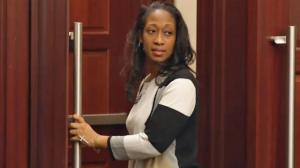
Marissa Alexander
Marissa Alexander Released from Jail.
JACKSONVILLE, Fla. — Marissa Alexander walked away from the Duval County courthouse Tuesday after a judge ruled she will not serve any additional jail time.
Judge James Daniel denied the State’s request for an additional two years of probation and ruled that Alexander will serve two years of house arrest while wearing an ankle monitor, an agreement reached in an November 2014 plea deal.
Alexander claims she fired a gun at her estranged husband, Rico Gray, in self-defense.
I thought she fired into the ceiling . . .
“Four and a half years have passed since the events of August 1, 2010, but today after the sentence imposed the Judge Daniel, my family and I will be able to move forward with out lives,” Alexander said during a meeting with the media in front of the courthouse.
“Although the journey has been long, and there have been many difficult moments, I could not have arrived here where I am today without the many thoughts and prayers of so many people who have voiced their support and encouragement,” Alexander said as she read from a prepared statement.
According to the terms of the plea, Alexander was ordered to serve three years in jail after pleading guilty to all three counts against her. Alexander will get credit for the 1,030 days she’s already spent in jail. However, the second count against Alexander is considered an ‘open plea,’ she could have been sentenced to five years in jail at the hearing.

‘Friendship Nine’: Convictions Overturned For Famed Civil Rights Protesters.
More than a half-century after they were arrested and sentenced to hard labor for sitting at a whites-only lunch counter in South Carolina, a group of African-American student protesters known as the “Friendship Nine” had their convictions overturned and sentences vacated Wednesday.
The moment was met with applause and a standing ovation in the court room.
Circuit Court Judge John C. Hayes III made the ruling. “We cannot rewrite history, but we can right history,” the judge said. He then signed the order, and the prosecutor apologized to the men. Hayes is the nephew of the judge who sentenced the “Friendship Nine” to jail in 1961.
All eight surviving members of the “Friendship Nine” attended the morning hearing in a municipal courtroom in Rock Hill, South Carolina. They were represented in the hearing by Ernest A. Finney Jr., the same man who defended their case 54 years ago. He went on to become the first black chief justice of the South Carolina Supreme Court since Reconstruction.
The actions of the Friendship Nine established a strategy “breathed new life into the Civil Rights Movement,” according to the article.
These reversals are too little too late, but I guess we have to be grateful for any progress in these Republican-controlled times.
I have more links, but I’ll put them in the comment thread. What stories are you following today?
Tuesday Reads
Posted: January 13, 2015 Filed under: Barack Obama, Foreign Affairs, morning reads, U.S. Politics | Tags: 47 percent, Barbara Boxer, Charlie Hebdo magazine attack, Dick Morris, Gavin Newsome, golden globes, Jack Ohman, Kamala Harris, laws protecting satire, Mitt Romney, Paul Ryan, Ted Cruz 42 Comments
Good Morning!!
At left is the cover of the next issue of Charlie Hebdo. It depicts the Prophet Muhammed holding a “Je suis Charlie” sign, with the words “all is forgiven” over his head.
The Wall Street Journal: Charlie Hebdo Puts Muhammad on Cover of Post-Attack Issue.
PARIS—Since Charlie Hebdo lost eight staff members in a terrorist attack last week, millions of people have declared their support to the French satirical magazine with the slogan “Je Suis Charlie.”
Now the often-caustic publication, faced with the challenge of reconciling its new status as a cause célèbre with its reflex to mock, ridicule and offend, is putting a caricature of the Prophet Muhammad on the cover of what is likely to be their most-read issue ever.
Distributors said Monday they were preparing to print as many as three million copies of Wednesday’s issue, 50 times the normal circulation. That is raising pressure on a small outlet known for skewering all forms of authority—including some that have rushed to its defense.
Suddenly the political and social elites who most likely had never heard of the small satirical magazine before the attack are parading around Paris and the Golden Globes pretending to be defenders of free speech. And what about the U.S. “journalists” who are little more than corporate lackeys who echoed right wing memes about President Obama supposedly not caring enough to attend a rally in France?
“It’s been extremely moving—and also hypocritical,” said Laurent Léger, a reporter for the magazine who survived the shooting. “All of a sudden, we are supported by the entire world. Whereas for years we were completely alone.” [….]
Another target for this week’s issue is likely to be Sunday’s solidarity march in France, surviving staff members said. The massive rally became a magnet for French and international political figures that have been a mainstay in Charlie Hebdo’s pages. Attendees included dignitaries from Turkey, Egypt, and Russia, countries that it has criticized for curbing free speech.
“All those dictators at a march celebrating liberty,” Mr. Léger said. “We of course are going to continue the mockery. We’ll see if it makes them jump.”

That’s great news. As Dakinikat trenchantly pointed out yesterday, these same elites routinely ignore horrifying acts of terrorism that kill people who aren’t as high profile as the victims in Paris. And, as Dak also pointed out, it turns out those world leaders in Paris didn’t really march with the hoi-polloi. They just participated in a fake photo that showed them pretending to march. Dakinikat also posted this story from The Daily Banter in a comment yesterday, but I think it deserves to be front paged.
Now That These Leaders Are Done Pretending to March, They Should Pass Legislation Protecting Satire, by Bob Cesca.
President Abbas marched in Paris on Sunday, but a satirist in Gaza has been jailed for poking fun at the Palestinian leader.
It’s entertaining to observe the lengths to which American conservatives will overreach in order to make a nothing issue into a major scandal. Such is the case following the unity march in Paris, attended by 3.7 million people and world leaders from 40 nations. As we covered earlier today, conservatives all around are busily scolding and shaming the president for not walking hand-in-hand with those leaders, even though no president has ever marched in a protest rally overseas. Ever. But this president is, for some reason, held to a different standard than the 43 previous chief executives. It’s about “optics” they say. I often agree with that criticism and I agree that optics are important — except for the fact that no other president has been responsible for creating similar optics.
There’s another layer to this fracas. While lionizing the world leaders who marched in Paris, allegedly in support of Charlie Hebdo and free speech, critics of the president are neglecting two very important points.
1) British Prime Minister David Cameron, German Chancellor Angela Merkel, Israeli Prime Minister Benjamin Netanyahu, Palestinian President Mahmoud Abbas and French President Francois Hollande weren’t actually marching with the demonstrators. Their participation was staged on an empty street surrounded by security and merely photographed to look like it was part of the broader rally. It wasn’t.
2) Take a guess at how many of the nations represented by those leaders have statutes protecting satire as free speech? Not one. Indeed, there’s only one western nation where satire is protected speech. It’s the United States. Thanks to the Supreme Court’s unanimous decision in Hustler Magazine, Inc. v. Falwell, Americans can’t be sued by other Americans for producing satire against public figures — regardless of whether the satire describes Jerry Falwell having incestuous sex or whether Saturday Night Live lampoons the president. They can try to sue, but the suit will never see the light of day.
So, while we’re applauding those 40 leaders for marching in a staged photo-op in support of a satirical magazine, bear in mind that none of those leaders come from nations where satirical speech is protected. In David Cameron’s England, for example, the prime minister or any public figure can sue cartoonists, writers, filmmakers or the producers of an SNL-style sketch show for making fun of them on television or elsewhere, and those lawsuits can actually be adjudicated and the plaintiffs can win. The same is true across the European Union and absolutely throughout the Middle East.
Frankly, I wish the White House hadn’t backed down and apologized.

One of the loudest voices criticizing the president for not going to a European “unity rally” was Texas Senator Ted Cruz. Time Magazine actually published an op-ed by Cruz yesterday.
On Sunday, leaders representing Europe, Israel, Africa, Russia, and the Middle East linked arms and marched together down Place de la Concorde in Paris. But, sadly, no one from the White House was found among the more than 40 Presidents and Prime Ministers who walked the streets with hundreds of thousands of French citizens demonstrating their solidarity against radical Islamic terrorists.
In other news . . .
Now that Senator Barbara Boxer (D-CA) has officially announced that she won’t run for reelection, there’s a “New Gold Rush” in California, according to Bill Press at The Hill.
Barbara Boxer’s announcement that she will not seek reelection to the Senate has set off a frenzy in California not seen since the Gold Rush. Anybody could win. All you need is a pick, an ax and the ability to raise or cough up a minimum $40 million.
Wanna play? Lots of people do.
In fact, with Boxer and Dianne Feinstein occupying both Senate seats since the early ’90s, and Jerry Brown’s longtime lock on the governor’s office, younger California Democrats have been bottled up in a no man’s land for years, taking turns rotating among lesser state offices, waiting for their chance at the big time. Boxer pulled the plug. Now all that pent-up energy and ambition is bursting out. It’s fun to watch.
Three statewide officials might have the edge, but only because they’ve already run statewide a couple of times. State Attorney General Kamala Harris and Lt. Gov. Gavin Newsom have reached a pact not to run against each other, and Newsom’s already taken himself out of the race. That leaves Harris. But don’t count out state Treasurer John Chiang. He’s young, charismatic and still gets high marks for refusing to carry out former Gov. Arnold Schwarzenegger’s order to cut the minimum wage for state employees during a budget showdown.

Kamala Harris
Yesterday, Gavin Newsom announced that he’s not running for Boxer’s seat, and today Kamala Harris will announce that she’s throwing her hat into the ring. According to the LA Times story,
Former Los Angeles Mayor Antonio Villaraigosa and billionaire environmental activist Tom Steyer are seriously considering bids, as are several members of Congress. On the Republican side, Assemblyman Rocky Chavez and two former state GOP chairmen are weighing runs.
Former VP candidate Rep. Paul Ryan (R-WI) announced yesterday that he’s not going to climb into the GOP clown car in 2016. From an interview with NBC News:
“I have decided that I am not going to run for president in 2016,” Ryan said in a phone interview, noting that he is “at peace” with the decision he made “weeks ago” to forgo a bid for the White House.
“It is amazing the amount of encouragement I have gotten from people – from friends and supporters – but I feel like I am in a position to make a big difference where I am and I want to do that,” he said.
The nine-term congressman believes he can make that “big difference” in his new role as chairman of the influential House Ways and Means Committee rather than as a presidential contender.
The committee will meet Tuesday to kick off the new Congress. By announcing that he’ll pass on a White House run, Ryan hopes to demonstrate that he’ll devote his “undivided attention” to the committee, although he admits that it will be “bittersweet not being on the trail” as a candidate this upcoming cycle.
Ryan has never initiated an important piece of legislation and gotten it passed, but now he’s going to head one of the most powerful committees in Congress. Let’s hope he continues his lack of meaningful accomplishments.

In other 2016 news, it looks like Mitt Romney is actually going to run for president for a third time. From The Washington Post, Romney moves to reassemble campaign team for ‘almost certain’ 2016 bid.
Mitt Romney is moving quickly to reassemble his national political network, calling former aides, donors and other supporters over the weekend and on Monday in a concerted push to signal his seriousness about possibly launching a 2016 presidential campaign.
Romney’s message, as he told one senior Republican, was that he “almost certainly will” make what would be his third bid for the White House. His aggressive outreach came as Rep. Paul Ryan (R-Wis.) — Romney’s 2012 vice presidential running mate and the newly installed chairman of the House Ways and Means Committee — announced Monday that he would not seek the presidency in 2016.
Romney’s activity indicates that his declaration of interest Friday to a group of 30 donors in New York was more than the release of a trial balloon. Instead, it was the start of a deliberate effort by the 2012 nominee to carve out space for himself in an emerging 2016 field also likely to include former Florida governor Jeb Bush, New Jersey Gov. Chris Christie and Wisconsin Gov. Scott Walker.
Romney has worked the phones over the past few days, calling an array of key allies to discuss his potential 2016 campaign. Among them was Ryan, whom Romney phoned over the weekend to inform him personally of his plans to probably run. Ryan was encouraging, people with knowledge of the calls said.
Other Republicans with whom Romney spoke recently include Sens. Kelly Ayotte (N.H.) and Rob Portman (Ohio), former Minnesota governor Tim Pawlenty, Hewlett-Packard chief executive Meg Whitman, former Massachusetts senator Scott Brown, former Missouri senator Jim Talent and Rep. Jason Chaffetz (Utah).
According to Politico’s Maggie Haberman and James Hohmann, Romney is promising he’ll be ‘different’ this time.
…interviews with more than a dozen staffers and supporters who have recently spoken with Romney reveal conversations in which he promises a “different” path forward without providing specifics about what that means as far as mechanics and his own sometimes gaffe-ridden performance. And, aside from most of his communications team, Romney would still be expected to bring back the majority of his old staff, sources said.
“He really has to show people that he’d do it differently, rather than just say he’d do it differently,” said a former top adviser to Romney, one of half a dozen alumni to speak Monday with POLITICO. “He needs to assure folks he’d take a much more direct approach to laying out the vision for his campaign versus having those decisions driven by a bunch of warring consultants.”

Mother Jones has posted a series of quotes in which Romney said he wouldn’t run again, along with the famous “47 percent” video.
Finally, from Boomberg Politics, David Weigel reports that Not a Single Person Has Donated to Dick Morris’s Anti-Hillary Super PAC.
Hahahahahahahahaha!!!!
What else is happening? Please post your thoughts and links in the comment thread, and have a terrific Tuesday!

 peej
peej Carissa
 bostonboomer
 dakinikat
 ecocatwoman
 jjlo
jjlo mablue2
 Mama Lopez
 peggysue22
 quixote
 skydancingguestblogger
 Mona (aka Wonk the Vote)



 Sky Dancing
Recent Comments